

The Economic Burden of Adults with Major Depressive Disorder in the United States (2019)
Open accessThe DOI matches its Crossref record; 9 of the 30 references it cites were found in a registry or an index; 6 of the 21 sources its claims cite were checked for support.
Abstract
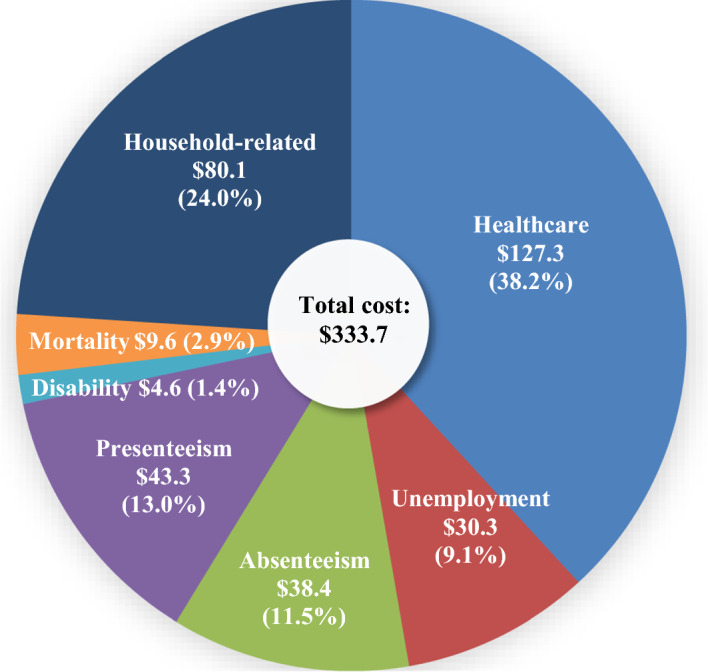
INTRODUCTION: Previous societal burden estimations for major depressive disorder (MDD) often fail to account for several hidden cost components. This study provides a comprehensive evaluation of societal costs for adults with MDD in the United States (USA) in 2019. The potential impact of a more effective, rapid-acting MDD therapy vs standard of care on the economic burden of MDD was estimated to illustrate the utility of such a framework in evaluating new interventions. METHODS: This study used a prevalence-based human capital approach. Incremental costs (2019 US dollars) per individual with MDD were derived from national survey inputs and published literature and included incremental healthcare costs and indirect costs. For each cost component, the societal costs were extrapolated by multiplying the per-patient costs by the number of individuals with MDD. The impact of a more effective, rapid-acting novel therapy on the economic burden of MDD was then simulated on the basis of these inputs. RESULTS: In 2019, the number of adults with MDD in the USA was estimated at 19.8 million (62.7% female; 32.9% severe MDD), and the incremental societal economic burden of MDD was estimated at $333.7 billion ($382.4 billion in 2023 US dollars), or $16,854 per adult with MDD. The primary cost drivers were healthcare costs ($127.3 billion; 38.1%), household-related costs ($80.1 billion; 24.0%), presenteeism ($43.3 billion; 13.0%), and absenteeism ($38.4 billion; 11.5%). In the simulated scenario, a hypothetical novel therapy with a 50.0% early response rate was associated with a 7.7% reduction in the economic burden of MDD relative to standard of care over 12 months. CONCLUSIONS: The economic burden of MDD is substantial and extends beyond healthcare costs, underscoring the impact of MDD across multiple aspects of life. Such a broad societal perspective should be considered in assessing the impact of the advent of effective, rapid-acting MDD therapies.
Overview
CoChat Summary
TL;DR
This study estimates the 2019 societal economic burden of major depressive disorder (MDD) among US adults at $333.7 billion, or $16,854 per adult with MDD, with most costs driven by indirect components. A hypothetical simulation suggests a more effective, rapid-acting therapy could reduce the incremental economic burden by 7.7%.
Key findings
- The total incremental economic burden of MDD in US adults in 2019 was $333.7 billion ($382.4 billion in 2023 USD), or $16,854 per adult with MDD; indirect costs accounted for 61.9% ($206.4 billion) of the total.
- Household-related costs were $80.1 billion (24.0% of total burden), representing 38.8% of all indirect costs and borne by adults without MDD living with an adult with MDD.
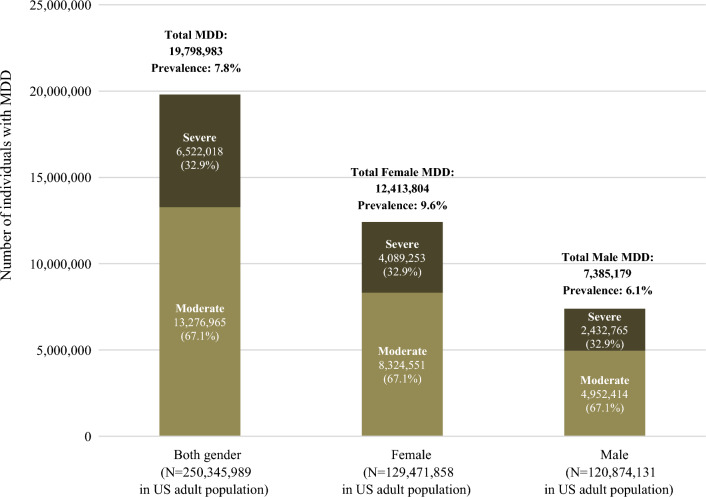
- MDD prevalence among US adults was 7.8%, equivalent to 19.8 million adults; 67.1% had moderate and 32.9% had severe symptoms, and 62.7% of the MDD population were female.
- In a simulation assuming a novel therapy with early response of 50.0% versus 19.8% for standard care, the incremental economic burden fell to $308.0 billion, a 7.7% reduction; sensitivity analyses ranged from $254.4 billion to $418.6 billion.
Methods
- Prevalence-based human capital approach using a bottom-up method: average per-patient incremental costs were multiplied by the estimated number of US adults with MDD.
- Cost components included healthcare costs, unemployment, absenteeism, presenteeism, disability, all-cause mortality, and household-related costs, stratified by gender and MDD severity where available.
- Inputs came from national survey data (NSDUH, NHANES), US Census Bureau data, claims-based studies, and published literature; a hypothetical simulation assessed the impact of a rapid-acting novel MDD therapy.
Limitations
- The paper states that cost estimates should be interpreted as associations rather than causation, and that reliance on multiple literature-based estimates may under- or overestimate certain cost components.
- The paper states that MDD prevalence used NSDUH major depressive episode data as a proxy, with possible self-report bias, and that individuals with mild depressive symptoms (PHQ-9 score <10) were assumed not to qualify for MDD, potentially missing some burden.
- The paper states that the novel therapy simulation was hypothetical, assumed all treated patients would switch to the novel therapy, and did not account for long-term life-course effects; the text also makes evident that the study was funded by Biogen Inc. and Sage Therapeutics, Inc., with several authors employed by or consulting for industry.
Model-written summary. Check it against the paper before relying on it.
Integrity signals
Registry
Cites
Statistics
Figures
Verification
Claims the paper makes
3 Valid · 3 Not valid · 13 Not checked · 62 Own results and interpretations
At least one cited source doesn’t support this claim or points to a different paper, and none confirmed it — see the verdicts below.
In the paper
“The current estimate of total incremental costs of MDD in 2019 represents a 3.5% increase in the burden compared with a prior estimate in 2018 (when standardized to 2019 values), with 36.0% of the total incremental costs of MDD in 2019 coming from novel components not previously included in the prior estimate (i.e., unemployment, all-cause mortality, householdrelated costs) [8].”
§ The Economic Burden of Adults with Major Depressive Disorder in the United States (2019) > DISCUSSION
What the sources say
- Disputedcites [8] Greenberg PE, Fournier AA, Sisitsky T, et al. The economic burden of adults with major depressive disorder in the United States (2010 and 2018). Pharmacoeconomics. 2021;39(6):653-65. sourceExperimental — accuracy not yet measured
Our copy of Greenberg et al. (2021) reports only a 2010-vs-2018 comparison in year 2020 values: the incremental burden rose from $US236.6B to $US326.2B, an increase of 37.9% (§3.2 MDD Costs: 2010 vs. 2018; Abstract), with the 2018 composition being 35% direct, 4% suicide-related and 61% workplace costs — no 2019 estimate and no 3.5% figure appear anywhere. The claim's 'novel components' are also contrary to what the paper says: §4.2 Limitations states that 'potentially important cost categories were not incorporated into the methodology, thereby resulting in understated estimates' (student/career effects, caregiver burden, quality-of-life), and its only mortality component is suicide-related cost with 50% of suicides attributed to MDD (§2.4), not all-cause mortality, unemployment or household-related costs. Searches for '2019 values / 3.5%', 'unemployment, all-cause mortality, household-related costs' returned nothing supporting the attributed numbers. (LLM, conf=0.68)
Checked by a reasoning model — may be wrong.
plainstates an association- Asserted: passes — The authors put it forward as true.
- Checkable: passes — It can be checked against evidence.
- Load-bearing: unclear — It is unclear whether the paper’s conclusions depend on it.
- Based: passes — The paper gives a reason why it holds.
- Disputed
The cited sources support only part of this claim — read each source’s verdict below.
In the paper
“one of the key differentiators of the current study from previous estimations of the economic burden of MDD [8,33,34] was the consideration of household-related costs.”
§ The Economic Burden of Adults with Major Depressive Disorder in the United States (2019) > DISCUSSION
What the sources say
- Supportedcites [8] Greenberg PE, Fournier AA, Sisitsky T, et al. The economic burden of adults with major depressive disorder in the United States (2010 and 2018). Pharmacoeconomics. 2021;39(6):653-65. source
The citation identifies this paper as a previous estimate of MDD’s economic burden, rather than attributing the citing study’s household-cost analysis to it. The Introduction describes an update of earlier estimates focused on direct, suicide-related, and workplace costs; the Limitations section notes that caregiver burdens were not incorporated. This supports the stated distinction. (LLM, conf=0.91)
- Not checked yetcites [33] Chow W, Doane MJ, Sheehan J, et al. Clinical brief. Economic burden among patients with major depressive disorder: an analysis of healthcare resource use, work productivity, and direct and indirect costs by depression severity. Am J Manag Care. 2019. (Supplements and Featured Publica- tions. February 2019). https://www.ajmc.com/view/ economic-burden-mdd.
- Partly supportedcites [34] Jain S, Gupta S, Li VW, et al. Humanistic and eco- nomic burden associated with depression in the United States: a cross-sectional survey analysis. BMC Psychiatry. 2022;22(1):542. sourceExperimental — accuracy not yet measured
The Background identifies this as a study of depression’s economic burden, and Methods > Measures describes its work-productivity and healthcare-utilization measures. It therefore supports citing the paper as earlier economic-burden research, but our copy does not report a monetary cost estimate. The statement about household-related costs is the citing authors’ description of their own study, not a finding attributed to this source. (LLM, conf=0.79)
plain- Asserted: passes — The authors put it forward as true.
- Checkable: passes — It can be checked against evidence.
- Load-bearing: passes — The paper’s conclusions depend on it.
- Based: passes — The paper gives a reason why it holds.
- Supported
The cited sources support only part of this claim — read each source’s verdict below.
In the paper
“Given that MDD is highly comorbid with other mental and physical health conditions [7,43]”
§ The Economic Burden of Adults with Major Depressive Disorder in the United States (2019) > DISCUSSION
What the sources say
- Partly supportedcites [7] Hasin DS, Sarvet AL, Meyers JL, et al. Epidemiology of adult DSM-5 major depressive disorder and its specifiers in the United States. JAMA Psychiat. 2018;75(4):336-46. sourceExperimental — accuracy not yet measured
The Discussion and Table 2 report substantial comorbidity between MDD and other psychiatric disorders, including anxiety and substance use disorders. The passages do not establish comorbidity with physical health conditions; the physical conditions found in the References are titles of other works. Page numbers are not available in our copy. (LLM, conf=0.85)
- Not checked yetcites [43] Iosifescu DV, Nierenberg AA, Alpert JE, et al. The impact of medical comorbidity on acute treatment in major depressive disorder. Am J Psychiatry. 2003;160(12):2122-7. source
plainstates an association- Asserted: passes — The authors put it forward as true.
- Checkable: passes — It can be checked against evidence.
- Load-bearing: passes — The paper’s conclusions depend on it.
- Based: passes — The paper gives a reason why it holds.
- Partly supported
A result the paper reports from its own data — it cites no other source for it, so there is none to check. The quote shows it is in the paper.
In the paper
“The total incremental economic burden of adults with MDD in the USA in 2019 was estimated at $333.7 billion (equivalent to $382.4 billion in 2023 USD), or $16,854 per adult with MDD (Table 1); women with MDD accounted for 52.6% of the total burden.”
- Also stated in: § DISCUSSION · plain
“The total incremental costs associated with MDD in 2019 amounted to $333.7 billion (equivalent to $382.4 billion in 2023 USD), or $16,854 per adult with MDD, which was driven by indirect costs (61.9%),”
§ The Economic Burden of Adults with Major Depressive Disorder in the United States (2019) > Economic Burden of MDD
plain- Asserted: passes — The authors put it forward as true.
- Checkable: passes — It can be checked against evidence.
- Load-bearing: passes — The paper’s conclusions depend on it.
- Based: passes — The paper gives a reason why it holds.
- Also stated in: § DISCUSSION · plain
A result the paper reports from its own data — it cites no other source for it, so there is none to check. The quote shows it is in the paper.
In the paper
“The total incremental economic burden of adults with MDD in the USA in 2019 was estimated at $333.7 billion (equivalent to $382.4 billion in 2023 USD), or $16,854 per adult with MDD (Table 1); women with MDD accounted for 52.6% of the total burden.”
§ The Economic Burden of Adults with Major Depressive Disorder in the United States (2019) > Economic Burden of MDD
hedged- Asserted: passes — The authors put it forward as true.
- Checkable: passes — It can be checked against evidence.
- Load-bearing: passes — The paper’s conclusions depend on it.
- Based: passes — The paper gives a reason why it holds.
48 more claims
Create a free account to see all 81 claims and to verify the 15 references still open.
- Probably not a substantial claim. 15
- It may state two separate claims as one. 17
- The quote only partly states this claim. 5
Claims other papers make about this one
Each is checked against this paper’s own text: does it say what the citing paper says it does?
The cited source says what the claim attributes to it.
In the citing paper
“This finding suggested that the immense economic burden caused by depressive disorder may have deteriorated in recent decades, which aligns with the findings from a 2019 study [19].”
Self-check
Percentages, sums and reported differences re-computed from the paper’s own numbers.
Each contradiction between two passages listed here was confirmed by an independent check.
Rated minor: it would not touch a result — a value no result rests on, a p-value that stays on the same side of the significance level, or a conflict that is clerical, resolved elsewhere in the paper, or outside its own findings.
In the paper
§ The Economic Burden of Adults with Major Depressive Disorder in the United States (2019) > CONCLUSIONS
“| Disability | $4,621,054,657 | $2,834,898,257 | $1,786,156,400 |”
§ The Economic Burden of Adults with Major Depressive Disorder in the United States (2019) > DISCUSSION
“Employed male with MDD 4,686,307 $242 $1,764,389,407 [12]”
Rated minor: it would not touch a result — a value no result rests on, a p-value that stays on the same side of the significance level, or a conflict that is clerical, resolved elsewhere in the paper, or outside its own findings.
In the paper
§ The Economic Burden of Adults with Major Depressive Disorder in the United States (2019) > DISCUSSION
“A third of the total count of suicides in the USA in 2019 (30,899 out of 45,861 suicides) were attributed to MDD”
§ The Economic Burden of Adults with Major Depressive Disorder in the United States (2019) > Mortality
“In 2019, there were an estimated 30,899 incremental deaths among adults with MDD in the USA, of which 15,272 were estimated to be due to suicide, accounting for one-third of all suicides that year.”
Citations
Cites
Mental health and the COVID-19 pandemic
Pfefferbaum, B., & North, C. S. (2020) · New England Journal of Medicine · doi:10.1056/nejmp2008017 · Cited by 4,378 · cited 17×
“A third of the total count of suicides in the USA in 2019 (30,899 out of 45,861 suicides) were attributed to MDD, which accounted for 50% of the excess all-cause deaths among adults with MDD in 2019.”
BackgroundInfluentialPrevalence of and Risk Factors for Lifetime Suicide Attempts in the National Comorbidity Survey
Kessler, R. C., Borges, G., & Walters, E. E. (1999) · Archives of General Psychiatry · doi:10.1001/archpsyc.56.7.617 · Cited by 2,514
Self-citationPrevalence of depression symptoms in US adults before and during the COVID-19 pandemic
Ettman, C. K., Abdalla, S. M., Cohen, G. H., Sampson, L., Vivier, P. M., & Galea, S. (2020) · JAMA Network Open · doi:10.1001/jamanetworkopen.2020.19686 · Cited by 2,138
“Pandemic fear” and COVID-19: mental health burden and strategies
Ornell, F., Schuch, J. B., Sordi, A. O., & Kessler, F. H. P. (2020) · Brazilian Journal of Psychiatry · doi:10.1590/1516-4446-2020-0008 · Cited by 1,852 · cited 1×
“The pandemic has brought fundamental changes to the lifestyle, work routine, and social relationships of the US population, and there could be long-lasting effects even after the pandemic subsides [47].”
BackgroundEpidemiology of Adult DSM-5 Major Depressive Disorder and Its Specifiers in the United States
Hasin, D. S., Sarvet, A. L., Meyers, J. L., Saha, T. D., Ruan, W. J., Stohl, M., & Grant, B. F. (2018) · JAMA Psychiatry · doi:10.1001/jamapsychiatry.2017.4602 · Cited by 1,737 · cited 1×
“Given that MDD is highly comorbid with other mental and physical health conditions [7, 43], which may exert reciprocal impacts on disease severity and management, the burden of MDD is likely partially embodied in the economic assessments of other mental and physical health conditions.”
BackgroundMokdad (2018) · doi:10.1001/jama.2018.0158 · Cited by 1,517
Cost of Lost Productive Work Time Among US Workers With Depression
Stewart, W. F. (2003) · JAMA · doi:10.1001/jama.289.23.3135 · Cited by 1,421 · cited 2×
“The number of workdays missed due to presenteeism associated with reduced productivity while at work was based on prior literature estimates [21].”
BackgroundMethodThe Economic Burden of Adults with Major Depressive Disorder in the United States (2010 and 2018)
Greenberg, P. E., Fournier, A.-A., Sisitsky, T., Simes, M., Berman, R., Koenigsberg, S. H., & Kessler, R. C. (2021) · PharmacoEconomics · doi:10.1007/s40273-021-01019-4 · Cited by 838
Self-citationGrenard, J. L., Munjas, B. A., Adams, J. L., Suttorp, M., Maglione, M., McGlynn, E. A., & Gellad, W. F. (2011) · Journal of General Internal Medicine · doi:10.1007/s11606-011-1704-y · Cited by 635
Lakdawalla, D. N., Doshi, J. A., Garrison, L. P., Phelps, C. E., Basu, A., & Danzon, P. M. (2018) · Value in Health · doi:10.1016/j.jval.2017.12.007 · Cited by 540
Research works printed but not linked: 2
- Voller C, Hickey C, Tan R, et al. Assessing the onset of efficacy and tolerability of pharmacological treatments in major depressive disorder: a system- atic literature review and descriptive analysis. [un- published manuscript]. 2023.
- Chitnis A, O'Callaghan L, Fournier AA, et al. Impact of living with an adult with major depressive dis- order among households in the United States. J Affect Disord. 2023. (in press).
Cited by
Management of Depression in Adults: A Review
Simon, G. E., Moise, N., & Mohr, D. C. (2024) · JAMA · doi:10.1001/jama.2024.5756 · Cited by 234
Chen, X.-D., Li, F., Zuo, H., & Zhu, F. (2025) · Depression and Anxiety · doi:10.1155/da/5553491 · Cited by 97
“This fi nding suggested that the immense economic burden caused by depressive disorder may have deteriorated in recent decades, which aligns with the fi ndings from a 2019 study [19].”
Wu, Y., Song, J., Zhang, Q., Yan, S., Sun, X., Mei, L., Yi, W., Pan, R., Li, Y., Jin, X., et al. (2022) · Environmental Pollution · doi:10.1016/j.envpol.2022.120445 · Cited by 76
Stolfi, F., Abreu, H., Sinella, R., Nembrini, S., Centonze, S., Landra, V., Brasso, C., Cappellano, G., Rocca, P., & Chiocchetti, A. (2024) · Frontiers in Psychiatry · doi:10.3389/fpsyt.2024.1422939 · Cited by 64
Exploring depression in adults over a decade: a review of longitudinal studies
de Sousa, R. D., Zagalo, D. M., Costa, T., de Almeida, J. M. C., Canhão, H., & Rodrigues, A. (2025) · BMC Psychiatry · doi:10.1186/s12888-025-06828-x · Cited by 44
“Depression leads to reduced workforce productivity, increased healthcare expenditures, and significant disability-related costs, further amplifying its societal toll [5, 5–10].”
Xu, Q., Qiao, Z., Kan, Y., Wan, B., Qiu, X., & Yang, Y. (2025) · Journal of Affective Disorders · doi:10.1016/j.jad.2025.120018 · Cited by 41
Depression and cardiovascular disease: mind the gap in the guidelines
Armon, D. B., Buhayer, A., Miteva, K., Meinlschmidt, G., Dobretz, K., Zuccarella‐Hackl, C., Appenzeller‐Herzog, C., Mach, F., & Battegay, E. J. (2025) · European Heart Journal · doi:10.1093/eurheartj/ehaf479 · Cited by 32
Kamra, V., Kumar, P., & Mohammadian, M. (2022) · Intelligent Systems with Applications · doi:10.1016/j.iswa.2023.200208 · Cited by 36
Abbas, U., Hussain, N., Tanveer, M., Laghari, R. N., Ahmed, I., & Rajper, A. B. (2025) · PLoS ONE · doi:10.1371/journal.pone.0323126 · Cited by 33
“These disorders contribute significantly to the global burden of disease, leading to impaired daily functioning [5] and substantial economic costs estimated at $382.4 billion [6].”
InfluentialAntidepressants and Weight Gain: An Update on the Evidence and Clinical Implications
Moss, L., Laudenslager, M., Steffen, K. J., Sockalingam, S., & Coughlin, J. W. (2025) · Current Obesity Reports · doi:10.1007/s13679-024-00598-5 · Cited by 23
“…clinically significant depression (estimated yearly prevalence rates in 2021 of 5% of adults worldwide and 8.3% in the U.S.), and the myriad of consequences, both at the individual and societal level, include absenteeism, wages lost, disability costs, and, at its most severe, suicide [9, 13, 14].”
InfluentialRobledo‐Montaña, J., Díaz-García, C., Martínez, M., Ambrosio, N., Montero, E., Marín, M. J., Virto, L., Muñoz‐López, M., Herrera, D., Sanz, M., et al. (2024) · Journal of Neuroinflammation · doi:10.1186/s12974-024-03213-5 · Cited by 20
Mental Health Promotion and Prevention: Best Practices in Public Health
OECD (2025) · OECD eBooks · doi:10.1787/88bbe914-en · Cited by 26
Stubbs, B., Ma, R., Solmi, M., Veronese, N., Damme, T. V., Romano, E., Stewart, R. J., Mossaheb, N., López‐Gil, J. F., Firth, J., et al. (2025) · European Psychiatry · doi:10.1192/j.eurpsy.2025.10074 · Cited by 18
Vascular endothelial growth factor: a key factor in the onset and treatment of depression
Wang, J., Meng, F., Wang, L., & Li, Z. (2025) · Frontiers in Cellular Neuroscience · doi:10.3389/fncel.2025.1645437 · Cited by 17
Intravenous ketamine versus esketamine for depression: a systematic review and meta-analysis
Elmosalamy, A., Tarikogullari, I., Patarroyo-Rodríguez, L., Wilson, G., Voort, J. L. V., Kung, S., Frye, M. A., & Singh, B. (2025) · Therapeutic Advances in Psychopharmacology · doi:10.1177/20451253251394127 · Cited by 17
Wolinsky, D. I., Mayhugh, R. E., Surujnarain, R., Thrul, J., Vandrey, R. G., & Strickland, J. C. (2025) · Journal of Affective Disorders · doi:10.1016/j.jad.2025.119829 · Cited by 15
Bottaccioli, A. G., Bologna, M., & Bottaccioli, F. (2025) · International Journal of Molecular Sciences · doi:10.3390/ijms26062759 · Cited by 19
Jog, M., Norris, V., Pfeiffer, P., Taraku, B., Kozikowski, S. D., Schneider, J., Boucher, M., Iacoboni, M., Woods, R., & Narr, K. L. (2025) · JAMA Network Open · doi:10.1001/jamanetworkopen.2025.31189 · Cited by 16
Tong, Z., Jie, X., Chen, Z., Deng, M., Li, X., Zhang, Z., Pu, F., Xie, Z., Xu, Z., & Wang, P. (2024) · European Journal of Medicinal Chemistry · doi:10.1016/j.ejmech.2024.116674 · Cited by 13
Kommer, A., Claßen, P. C., Schleicher, E. M., Weinmann‐Menke, J., Kostev, K., & Labenz, C. (2025) · Clinical Kidney Journal · doi:10.1093/ckj/sfaf186 · Cited by 11
“Importantly, CKD and depression pose a major societal and economic burden to healthcare systems worldwide [5 , 6 ].”
Avanceña, A. L. V., Vuong, L., Kahn, J. G., & Marseille, E. A. (2025) · Translational Psychiatry · doi:10.1038/s41398-025-03556-4 · Cited by 10
“In the US, an estimated 21 million adults or 8.3% of the adult population have MDD [2], and the annual health, social, and economic costs total $330 billion [3].”
InfluentialHain, D. T., Tredici, A. L. D., Griggs, R. B., Law, R. A., Mabey, B., Johnson, H. L., Taber, K. J., Lynch, K. G., Gutin, A., & Oslin, D. W. (2025) · Frontiers in Pharmacology · doi:10.3389/fphar.2025.1658616 · Cited by 10
Ali, S., Alemu, F. W., Owen, J. J., Eells, T. D., Antle, B. F., Lee, J. T., & Wright, J. H. (2024) · JAMA Network Open · doi:10.1001/jamanetworkopen.2024.44599 · Cited by 10
Laurent, N., Bellamy, E. L., Hristova, D., & Houston, A. (2025) · Frontiers in Nutrition · doi:10.3389/fnut.2025.1549782 · Cited by 11
Classic Psychedelics for the Treatment of Depression: Potential Benefits and Challenges
Ghaznavi, S., & Richter, S. G. (2025) · Drugs · doi:10.1007/s40265-025-02172-2 · Cited by 10
Heinrich, M., Zagorscak, P., Kampisiou, C., Bohn, J., Schulze, L., Schaeuffele, C., Brose, A., & Knaevelsrud, C. (2025) · BMC Psychiatry · doi:10.1186/s12888-025-06564-2 · Cited by 11
Qi, Q., Xue, Y., Madani, N. A., Tangang, R. T., Yu, F., Nair, A. A., Romeiko, X. X., Luo, G., Brackett, I., Thorncroft, C. D., et al. (2025) · Environment International · doi:10.1016/j.envint.2025.109348 · Cited by 9
Impact of living with an adult with depressive symptoms among households in the United States
Greenberg, P. E., O’Callaghan, L., Fournier, A.-A., Gagnon‐Sanschagrin, P., Maitland, J., & Chitnis, A. S. (2023) · Journal of Affective Disorders · doi:10.1016/j.jad.2023.12.040 · Cited by 9
Self-citationBarlati, S., Nibbio, G., Bellomo, A., Carpiniello, B., Colombo, C., Giorgi, S. D., Deste, G., Maina, G., Martinotti, G., Tortorella, A. A. V., et al. (2025) · European Psychiatry · doi:10.1192/j.eurpsy.2025.10073 · Cited by 10
“It also represents an essential source of disability, producing a significant socio-economic burden that extends well beyond direct healthcare costs [4].”
Ji, I. S., Cheng, M. C. H., Teopiz, K. M., Dri, C. E., Wong, S., Le, G. H., Rhee, T. G., Guillen-Burgos, H. F., Lo, H. K. Y., Zheng, Y. J., et al. (2025) · Journal of Psychiatric Research · doi:10.1016/j.jpsychires.2025.10.056 · Cited by 8
Lu, W., Tang, X., Huang, C., Wei, M., Bai, C., Fan, X., & Wu, D. (2025) · BMC Psychiatry · doi:10.1186/s12888-025-07628-z · Cited by 9
“A research report stated that the socioeconomic burden of Major Depressive Disorder (MDD) in the United States was estimated to be $333.7 billion in 2019 [2].”
InfluentialBenrimoh, D. A., Azeez, A., Batail, J.-M. V., Xiao, X., Buchanan, D. M., Bandeira, I. D., Geoly, A. D., Keynan, N. Y., Kratter, I. H., & Williams, N. (2024) · npj Mental Health Research · doi:10.1038/s44184-024-00099-2 · Cited by 9
Nowrouzi‐Kia, B., Bani‐Fatemi, A., Jackson, T., Li, A., Chattu, V. K., Lytvyak, E., Deibert, D., Dennett, L., Ferguson-Pell, M., Hagtvedt, R., et al. (2024) · Journal of Occupational Rehabilitation · doi:10.1007/s10926-024-10246-3 · Cited by 9
Martella, M., Minutiello, E., & Gianino, M. M. (2024) · Health Services Insights · doi:10.1177/11786329241282526 · Cited by 7
“8 In addition, relevant healthcare costs were attributed to anxiety disorders, mainly on a population level, due to the high prevalence of such diseases.”
BackgroundLeigh, E., Taylor, L., Cole, V. L., & Smith, P. A. (2025) · Journal of Affective Disorders · doi:10.1016/j.jad.2025.03.058 · Cited by 8
“Given the rise in the incidence of depression during adolescence (Shorey et al., 2022) and the long-term individual and economic burden of the disorder (Greenberg et al., 2023), improving treatment outcomes is a priority.”
Lin, S., Du, Y., Xia, Y., Cai, N., Weng, S., Zhou, L., Xiao, L., & Wang, G. (2025) · Appetite · doi:10.1016/j.appet.2025.107939 · Cited by 7
The impact of air pollution on mental health: Evidence from Texas
Barnor, K. (2025) · Journal of Environmental Economics and Management · doi:10.1016/j.jeem.2025.103198 · Cited by 11
Rovers, J. J. E., van Zeijl, N. T., Tendolkar, I., Dols, A., & van Eijndhoven, P. (2026) · BJPsych Open · doi:10.1192/bjo.2025.10946 · Cited by 7
“10,11 12 – 14 Notably, similar relapse rates have been reported following successful pharmacotherapy in the STAR*D trial, underscoring the chronic and recurrent nature of MDD. 15 However, patients receiving ECT typically represent a subgroup with more severe, chronic or otherwise distinct forms of…”
Cheah, X. Y., Tan, C. J. W., Yeo, B. S. Y., Lim, N. E., Tan, Q. W., Teoh, M. Z. X., Tan, B. K. J., Rawtaer, I., Teo, N. W. Y., & Charn, T. C. (2025) · International Forum of Allergy & Rhinology · doi:10.1002/alr.23528 · Cited by 7
Hinton, J. B., Sefcik, R., Burdyny, M. R., Raina, R., & Riley, P. M. (2025) · Journal of Pediatric Orthopaedics · doi:10.1097/bpo.0000000000003045 · Cited by 7
Gergues, M. M., Lalani, L. K., & Kheirbek, M. A. (2024) · Neuropsychopharmacology · doi:10.1038/s41386-024-01942-y · Cited by 8
Razidlo, J. A., Cataldo, N., & Wenthur, C. J. (2025) · ACS Pharmacology & Translational Science · doi:10.1021/acsptsci.5c00462 · Cited by 6
Global economic burden of depression in 154 countries from 2025 to 2050
Cao, Z., Luo, Y., Jiao, L., Chen, W., Prettner, K., Kühn, M., Bloom, D. E., Jamison, D. T. T., Bärnighausen, T., & Chen, S. (2026) · Nature Medicine · doi:10.1038/s41591-026-04548-7 · Cited by 9
Self-citationIshikawa, Y., Sugio, T., Shiga, K., Izumi, K., Minato, K., Kitazawa, M., Hanashiro, S., Takemura, R., Uchida, H., & Kishimoto, T. (2025) · Journal of Affective Disorders Reports · doi:10.1016/j.jadr.2025.100877 · Cited by 7
Qu, D., Che, L., Chen, P., Zhu, A., Cai, T., Wu, Z., Li, W., Lin, J. A., Liu, B., Zhang, Q., et al. (2026) · Molecular Psychiatry · doi:10.1038/s41380-026-03467-w · Cited by 6
“Beyond individual suffering, depression also imposes substantial societal and economic burdens, including lost productivity, elevated healthcare utilization, and an increased risk of comorbidities such as cardiovascular disease and suicide [3].”
Ferensztajn‐Rochowiak, E., Rybakowski, F., Michalak, M., Kopeć, D., Minelli, A., Potier, M., Dierssen, M., Manchia, M., Bel, J. P., Squassina, A., et al. (2026) · Journal of Affective Disorders · doi:10.1016/j.jad.2026.121859 · Cited by 6
Muzyk, A. J., Syed, F. Z., Zhou, H., Cong, J., Tabuteau, H., & Zhao, Y. (2024) · Journal of Medical Economics · doi:10.1080/13696998.2024.2382641 · Cited by 6
Denche-Zamorano, Á. M., Salas-Gómez, D., Parraça, J. A., Tomás-Carús, P., Adsuar, J. C., & My works are correct, B. M. I. A. A. I. S. R. L. M. T. I. D. A.-M. (2024) · Journal of Personalized Medicine · doi:10.3390/jpm14080855 · Cited by 6
Moon, J., An, Y., Jeon, S. W., & Cho, S. J. (2024) · Frontiers in Public Health · doi:10.3389/fpubh.2024.1495663 · Cited by 8
Interplay between genes and social environment: from epigenetics to precision medicine
Caporali, S., Russo, S., Leist, M., Wirtz, P. H., & Amelio, I. (2025) · Cell Death Discovery · doi:10.1038/s41420-025-02580-z · Cited by 7
“Research has shown that mental health problems, including common conditions like depression and anxiety, and more severe conditions such as psychosis, place a signi fi cant burden on healthcare systems [16, 17].”
Rahmanian, M., Fathi, M., Eftekhari, M., Vakili, K. G., Deravi, N., Yaghoobpoor, S., Sharifi, H., Zeinodini, R., Babajani, A., & Niknejad, H. (2024) · Medical Hypotheses · doi:10.1016/j.mehy.2024.111468 · Cited by 5
Gee, N. R., Townsend, L. D., Friedmann, E., Barker, S., & Mueller, M. K. (2025) · Healthcare · doi:10.3390/healthcare13151819 · Cited by 5
Giguère, S., Fortier, A., Azrak, J., Giguère, C., Potvin, S., & Dumais, A. (2025) · Journal of Personalized Medicine · doi:10.3390/jpm15080338 · Cited by 5
Troppoli, T. A., & Thompson, S. M. (2025) · Biological Psychiatry · doi:10.1016/j.biopsych.2025.10.036 · Cited by 7
Major Depressive Disorder: A General Overview
Wang, T. (2024) · SHS Web of Conferences · doi:10.1051/shsconf/202419303007 · Cited by 5
Hagarty, D. P., Dawoud, A., Guerrero, A. B., Phillips, K., Strong, C. E., Jennings, S. D., Crawford, M., Martinez, K., Csernecky, O., Saland, S. K., et al. (2024) · Neuropharmacology · doi:10.1016/j.neuropharm.2024.110008 · Cited by 5
Flinkenflügel, K., Borgers, T., Klug, M., Mummendey, M. M., Leehr, E. J., Meinert, S., Gruber, M., Repple, J., Kircher, T. T. J., Opel, N., et al. (2025) · Neuropsychopharmacology · doi:10.1038/s41386-025-02070-x · Cited by 6
“Depression is characterized by chronicity and recurrence, leading to severe impairment in social and occupational domains [2].”
Macroeconomics of Mental HealthPreprint
Abramson, B., Boerma, J., & Tsyvinski, A. (2024) · SSRN Electronic Journal · doi:10.2139/ssrn.4793015 · Cited by 15
Dahrendorff, J., Pages, K. P., Currier, G. W., Sarker, M. H., Graham, Z., Louis‐Jacques, A. F., Dagne, G. A., & Uddin, M. (2025) · BMC Medical Genomics · doi:10.1186/s12920-025-02240-2 · Cited by 4
“MDD is frequently recurrent [3, 4] and associated with a significant disease burden imposing substantial direct (e.g., healthcare utilization) and indirect (e.g., lost productivity) costs on individuals, employers, and society at large [5, 6].”
Gong, Z., Yang, J., Wang, Y., Liang, W., Luo, S., Li, X., & Yue, G. (2025) · Scientific Reports · doi:10.1038/s41598-025-27535-3 · Cited by 4
Khan, A., Ronan, P. J., & Rahman, S. (2026) · Journal of Neuroimmune Pharmacology · doi:10.1007/s11481-026-10279-w · Cited by 4
“In 2019 alone, the number of adults with pain and MDD in the United States was estimated at around 20 million (Greenberg et al. 2023 ; Rikard 2023 ).”
Rovers, J. J. E., van Eijndhoven, P., Abbot, C. M., Árgyelán, M., Bouckaert, F., Brunoni, A. R., Espinoza, R. T., van Exel, E. R., Gazdag, G., van den Heuvel, L. L., et al. (2026) · American Journal of Psychiatry · doi:10.1176/appi.ajp.20250641 · Cited by 4
Insights for the Next Generation of Ketamine for the Treatment of Depressive Disorder
Martins, A. C. F., Badenoch, B., & Gomes, R. D. S. (2025) · Journal of Medicinal Chemistry · doi:10.1021/acs.jmedchem.4c02467 · Cited by 4
Santis, J. P. D., Salani, D. A., Williams, R. S., Weidlich, C. P., & Oliveira, G. C. D. (2025) · Issues in Mental Health Nursing · doi:10.1080/01612840.2024.2442454 · Cited by 4
“Greenberg et al. (2023) reported that the main drivers of the economic burden were healthcare costs ($127.3 billion; 38.1%), day-to-day household costs ($80.1 billion; 24%), lost productivity ($43.3 billion; 13%), and absenteeism from work (38.4 billion; 11.5%).”
InfluentialRamadan, B., & Waes, V. V. (2025) · Neurophysiologie Clinique · doi:10.1016/j.neucli.2025.103055 · Cited by 5
“These mental illnesses are the leading contributors of the global economic-related burden [28,31,32,59].”
Current state of nutritional psychiatry: A scoping review of randomized controlled trials
Nagamine, T. (2025) · World Journal of Methodology · doi:10.5662/wjm.v15.i4.104664 · Cited by 4
Zainal, N. H., Rajendra, S. J., Doren, N. V., Salamanca-Sanabria, A., Curtiss, J. E., & Keng, S. (2025) · BMC Psychiatry · doi:10.1186/s12888-025-07372-4 · Cited by 4
“At the societal level, the economic costs of these common mental disorders can amount to between 20.5 and 333.7 billion USD [15, 16].”
InfluentialThe effects of venlafaxine on depressive-like behaviors and gut microbiome in cuprizone-treated mice
Du, C., Zhang, T., Feng, C., Sun, Q., Chen, Z., Shen, X., Liu, Y., Dai, G., Zhang, X., & Tang, N. (2024) · Frontiers in Psychiatry · doi:10.3389/fpsyt.2024.1347867 · Cited by 4
Miegel, F. S., Lohse, L., Jelinek, L., Scheunemann, J., Gabbert, T., Schauenburg, G., Bittner, L., Mostajeran, F., Kühn, S., Gallinat, J., et al. (2024) · Acta Psychiatrica Scandinavica · doi:10.1111/acps.13731 · Cited by 4
“Drop-outs and patients who participated in at least one FlowVR session showed no differences in sex ( χ 2 [2] = 4.289, p = 0.117), age ( t [50] = 0.269, p = 0.789), or formal education ( χ 2 [4] = 6.320, p = 0.176).”
InfluentialTwait, E. L., Smit, A. P., Beran, M., Rissanen, I. L., & Geerlings, M. I. (2024) · Journal of Affective Disorders · doi:10.1016/j.jad.2024.12.077 · Cited by 4
Cha, D. S., Kleine, N., Teopiz, K. M., Vincenzo, J. D. D., Ho, R., Galibert, S. L., Samra, A., Zilm, S. P. M., Cha, R. H., d’Andrea, G., et al. (2024) · Expert Opinion on Pharmacotherapy · doi:10.1080/14656566.2023.2298340 · Cited by 4
Regression and decomposition with ordinal health outcomes
Wu, Q., & Kaplan, D. M. (2025) · Journal of Health Economics · doi:10.1016/j.jhealeco.2025.103012 · Cited by 4
Le, P. H., Le, L. K., Perez, J. K., Rajaratnam, S. M. W., & Mihalopoulos, C. (2025) · BJPsych Open · doi:10.1192/bjo.2025.10077 · Cited by 4
“2,3,8,27 The findings of the present study supplemented this by highlighting the impact of insomnia on work productivity in people with depressive symptoms.”
Liu, K., Zhang, J., Hu, Y.-Q., & Zhang, J. (2025) · Journal of Affective Disorders · doi:10.1016/j.jad.2025.120916 · Cited by 4
Kuang, J., Xie, J., & Yan, Z. (2025) · MIS Quarterly · doi:10.25300/misq/2025/18897 · Cited by 3
Thyroid and depression: Insights from a retrospective real world clinical cohort
Baweja, R., Eisele, C. D., Breitzig, M., Free, M. F., Kalyoncu, A., Singh, B., Frye, M. A., Waschbusch, D. A., Liao, D., & Saunders, E. F. H. (2026) · Psychoneuroendocrinology · doi:10.1016/j.psyneuen.2026.107809 · Cited by 5
Matsumoto, Y., Sakurai, H., Aoki, Y., Takaesu, Y., Okajima, I., Tachimori, H., Murao, M., Maruki, T., Tsuboi, T., & Watanabe, K. (2024) · Frontiers in Psychiatry · doi:10.3389/fpsyt.2024.1321611 · Cited by 3
Trends and factors associated with depression among adults in the United States
Inungu, J. N., MaloneBeach, L., Sultana, S., & Younis, M. Z. (2024) · European Journal of Environment and Public Health · doi:10.29333/ejeph/15676 · Cited by 5
“At the societal level, depression contributes to substantial economic costs owing to lost productivity, increased healthcare utilization, and disability [9, 10].”
Masand, P. S., Clayton, A. H., Parikh, M., Laliberté, F., Germain, G., Mahendran, M., Martínez, C., & Nabulsi, N. A. (2025) · Journal of Medical Economics · doi:10.1080/13696998.2025.2457872 · Cited by 3
Farrand, P. A., Raue, P. J., Ward, E. C., Healey, S., & Baker, J. (2025) · Academia Mental Health and Well-Being · doi:10.20935/mhealthwellb7785 · Cited by 3
Skolnick, S., Brouwer, A. F., Cheng, C., & Tam, J. (2026) · Tobacco Control · doi:10.1136/tc-2025-059896 · Cited by 3
“28 However, the potential economic impacts of a nicotine standard from a societal perspective remain unknown.”
Clayton, A. H., Parikh, M., Yee, T., Mercer, D., Haiyan, S., Cummings, N., Rava, A., Hayes, O., & Nabulsi, N. A. (2025) · Current Medical Research and Opinion · doi:10.1080/03007995.2025.2465617 · Cited by 3
Lee, J., Choi, S., Lee, D.-E., Kang, H.-W., Lee, J., & Kim, J.-H. (2025) · International Journal of Molecular Sciences · doi:10.3390/ijms26052162 · Cited by 4
Li, L., Xu, Q., Pang, L., Liu, Y., & Lu, Y. (2025) · Frontiers in Pharmacology · doi:10.3389/fphar.2025.1519865 · Cited by 5
Dyer, R. L., Zimmerman, K. M., Zhao, X., Xie, Q., Dahl, C. J., Quanbeck, A., & Goldberg, S. B. (2026) · Psychological Services · doi:10.1037/ser0000980 · Cited by 3
Wu, L. C., Segal, Z. V., & Farb, N. A. S. (2025) · Journal of Affective Disorders · doi:10.1016/j.jad.2025.03.106 · Cited by 2
Association between psychosocial safety climate and depression risk among Korean workers
Cho, S. K., Cho, S., Dollard, M. F., Loh, M. Y., & Kang, M. (2025) · Epidemiology and Health · doi:10.4178/epih.e2025044 · Cited by 2
“In the United States, the economic burden of major depressive disorder among adults rose from US$236 billion in 2010 to US$326 billion in 2018, with workplace costs constituting a significant proportion of this increase [5].”
Depression unveiled: a comprehensive review of pathophysiology and treatment advances
Skosana, P., Naidoo, M., Nabyoma, J., & Mushipe, T. (2025) · SA pharmaceutical journal. · doi:10.36303/sapj.3284 · Cited by 3
Hormonal Contraceptives and Depression: A Proteomic Analysis Using Neuronal Models
Thilmany, S., Thomas, A., Reinders, Y., Shakeri, F., Vogel, M., Sickmann, A., Scholl, C., & Thevis, M. (2025) · PROTEOMICS - CLINICAL APPLICATIONS · doi:10.1002/prca.70017 · Cited by 2
Lampros, M. G., Symeou, S., Αλεξίου, Γ., Voulgaris, S., & Mammis, A. (2025) · Neurosurgical Review · doi:10.1007/s10143-025-03814-5 · Cited by 2
Unveiling Major Depressive Disorder Through TMS-EEG: From Traditional to Emerging Approaches
Stango, A., Fracassi, C., Cesareni, A., Borroni, B., & Zazio, A. (2025) · Biomedicines · doi:10.3390/biomedicines13102474 · Cited by 2
Anderson, B., & O’Grady, M. A. (2025) · The Journal of Behavioral Health Services & Research · doi:10.1007/s11414-025-09975-x · Cited by 2
Shapiro, M. O., Threeton, E. M., Morris, P. E., & Raines, A. M. (2026) · Journal of Behavioral and Cognitive Therapy · doi:10.1016/j.jbct.2025.100553 · Cited by 2
The Impact of Redlining on Mental Health
Davidson, T. M., Linde, S., Walker, R. J., Campbell, J. A., & Egede, L. E. (2026) · Psychiatric Services · doi:10.1176/appi.ps.20250473 · Cited by 2
Fragola, N. R., Lancashire, L., Visser‐Rogers, J. K., Sharp, E. W., Blewitt, C. O., Goddeeris, M. M., & Fajgenbaum, D. C. (2026) · Psychiatry Research Communications · doi:10.1016/j.psycom.2026.100259 · Cited by 2
ГЕНДЕРНІ ТА ВІКОВІ ОСОБЛИВОСТІ ЯКОСТІ ЖИТТЯ ХВОРИХ НА ДЕПРЕСИВНІ РОЗЛАДИ
Belov, O. (2021) · Здобутки клінічної і експериментальної медицини · doi:10.11603/1811-2471.2021.v.i1.11990 · Cited by 2
Social function scores and influencing factors in patients with residual depressive symptoms
Liao, Z.-L., Pu, X.-L., Zheng, Z.-Y., & Luo, J. (2024) · World Journal of Psychiatry · doi:10.5498/wjp.v15.i1.98630 · Cited by 2
Pittman, R. D., Sutton, S. S., Magagnoli, J., & Cummings, T. H. (2025) · Journal of Comparative Effectiveness Research · doi:10.57264/cer-2024-0187 · Cited by 2
Masand, P. S., Parikh, M., Ta, J. T., Zanardo, E., Lejeune, D., Martínez, C., Laliberté, F., & Nabulsi, N. A. (2025) · Journal of Medical Economics · doi:10.1080/13696998.2025.2470014 · Cited by 2
“MDD is a leading cause of disability worldwide 14 ; in the United States, the estimated annual economic burden of MDD is $333.7 billion, with $86 billion stemming from the lost productivity of individuals with MDD 15 .”
InfluentialNan, J., Purpura, S., Jaiswal, S., Afshar, H., Maric, V., Manchanda, J. K., Taylor, C. T., Ramanathan, D., & Mishra, J. (2026) · NPP—Digital Psychiatry and Neuroscience · doi:10.1038/s44277-026-00062-3 · Cited by 1
“Besides the negative health impacts of depression, its socio-economic cost burden was recently estimated at greater than $380 billion with healthcare as the major cost driver alongside household and work-related costs [3].”
Metadata
- Authors
- Greenberg, P., Chitnis, A., Louie, D., Suthoff, E., Chen, S.-Y., Maitland, J., Gagnon-Sanschagrin, P., Fournier, A.-A., & Kessler, R. C.
- Affiliations
- Analysis Group (United States) (US)
- Biogen (United States) (US)
- Sage Therapeutics (United States) (US)
- Harvard University (US)
- Corresponding author
- Maitland, Jessica
- Venue
- Advances in Therapy
- Published
- 2023-07-31
- Volume
- 40
- Issue
- 10
- Pages
- 4460-4479
- ISSN
- 0741-238X (ISSN-L)
- 1865-8652
- PMC
- PMC10499687
- OpenAlex
- W4385396235
- Semantic Scholar
- 6f15a8f1dec40f79608a12b353fb9bb720abe9e0
- Cited by
- 223
- References
- 30
- Citations by year
- 2026: 90 · 2025: 89 · 2024: 35 · 2023: 3
- FWCI
- 64.23
- Type
- journal article
- Language
- en
- Open access
- hybrid
- doi.org
- Licence
- cc-by-nc
- creativecommons.org/licenses/by-nc/4.0 (tdm)
- creativecommons.org/licenses/by-nc/4.0 (vor)
- Locations
- Advances in Therapy (publishedVersion, cc-by-nc)
- PubMed Central (publishedVersion, cc-by-nc)
- PubMed (publishedVersion)
- Funders
- Biogen
- Sage Therapeutics
- Topics
- Health Sciences › Medicine › Psychiatry and Mental health › Mental Health Treatment and Access
- Social Sciences › Economics, Econometrics and Finance › Economics and Econometrics › Health Systems, Economic Evaluations, Quality of Life
- Health Sciences › Medicine › Pharmacology (medical) › Treatment of Major Depression
- Keywords
- major depressive disorder, economic burden, social costs, health care costs, indirect costs, presenteeism, absenteeism, household costs, rapid-acting antidepressants, cost-effectiveness, prevalence, United States
- MeSH terms
- Financial Stress, Adult, Depressive Disorder, Major, Major Depressive Disorder, Female, Humans, Male, United States, Prevalence, Health Care Costs, Cost of Illness
About these checks
Registry, retraction, Cites and statistics results are computed, not judged, with one exception: a printed reference that no index lists is read once by a model before it counts as a citation error. Claims are extracted by a model and kept only when their quote appears verbatim in the text; each cited source is then checked, with a model’s help, for whether it says what the claim relies on. Those verdicts can be wrong — read the claim’s quote and the cited source before relying on one.
The claim verdicts this report counts are experimental: their accuracy is not yet measured.
A language model drew the claims from the paper on 2026-10-05, under version 3 of the claim definition (model deepseek-v4.1-flash, prompt extract-v3).
A second model labelled each claim on 2026-10-05 (model jev-1.13-20260917, definition revision gold-guideline-v0.2).
Cited sources are checked with a language model’s help (qwen3.8-omni-flash and gpt-6-sol).
Statistics and arithmetic are recomputed, not judged.
Confidence bands are shown only for fields calibrated on our annotated test set. None is calibrated yet, so no band is shown.
What counts as a claim ›How we measure confidence ›How we check this ›
Are you an author, or do you see a problem with this page? Request a review
Data sources
Bibliographic data: Semantic Scholar, OpenAlex, Crossref.
Contains information from the Semantic Scholar Academic Graph Datasets, made available under the ODC Attribution License (ODC-BY 1.0).
Semantic Scholar’s data is described in: Kinney, R., et al. (2023). The Semantic Scholar Open Data Platform. arXiv:2301.10140.
