

The DOI matches its Crossref record; 2 of the 2 references it cites were found in a registry or an index.
Online group projects in higher education: persistent challenges and implications for practice
Open accessAbstract
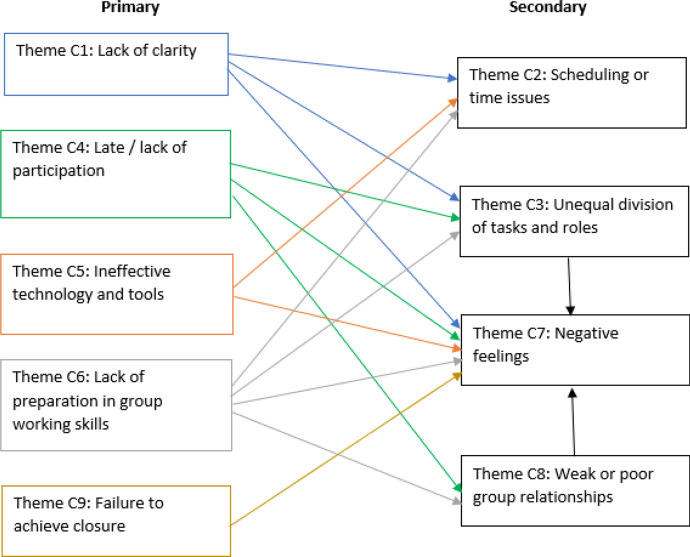
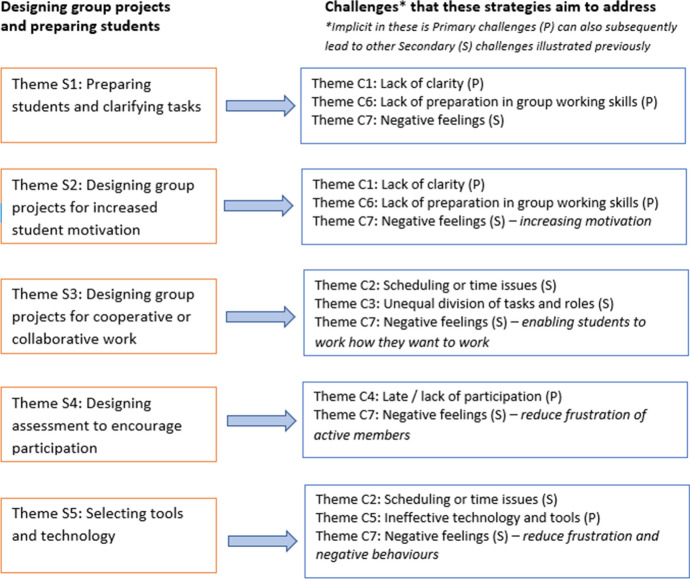
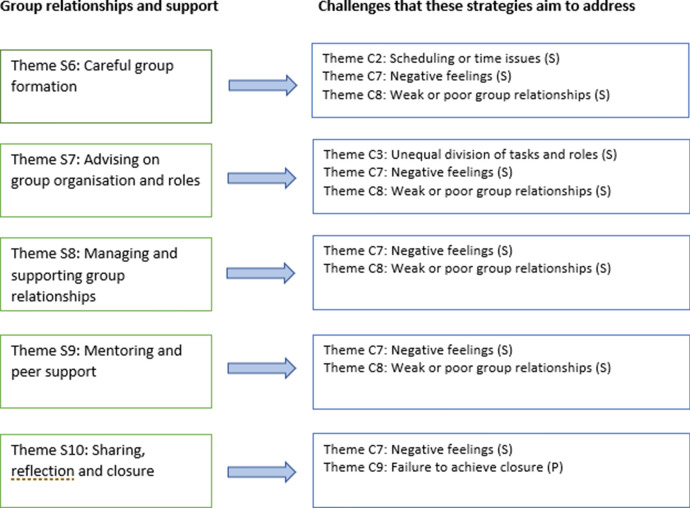
With the rapid adoption of online learning across higher education, there is an urgent need to identify its challenges and ways of addressing them. Online group projects, in particular, present significant issues for educators. This paper presents the findings of a systematic literature review identifying the key challenges of online group projects, together with strategies to address them. From a corpus of 114 recent papers, the 57 most relevant were analysed, to identify themes related to challenges and strategies. Key challenges were: low and uneven participation by students; a lack of clarity and preparation for students; and poor relationships. Strategies for addressing challenges were: careful design of projects, particularly regarding fair assessment; clear guidance and preparation of students; and practical and emotional support throughout, to encourage confidence and engagement. The findings of this review will enable educators to design and facilitate online group projects which students find rewarding and valuable.
Overview
The claims and statistics of this paper haven’t been checked yet.
Run the check — free, no account needed. It reads the open-access text and checks the sources it cites.
Integrity signals
Registry
Cites
Statistics
Figures
Verification
Claims the paper makes
The claims and statistics of this paper haven’t been checked yet.
Run the check — free, no account needed. It reads the open-access text and checks the sources it cites.
Claims other papers make about this one
Each is checked against this paper’s own text: does it say what the citing paper says it does?
The source backs part of the claim, not all of it — or backs it for a different population, condition or comparison.
In the citing paper
“Donelan and Kear (2023) emphasise that balancing individual accountability with collective group responsibility is a persistent issue in online education, especially when task visibility is limited.”
From Exploring the experiences of social loafing in group work among online psychology students (2025) · cites this paper as Donelan and Kear (2023)
Experimental — accuracy not yet measured
Self-check
Percentages, sums and reported differences re-computed from the paper’s own numbers.
The self-check needs the paper’s full text.
Citations
Cites
Critical Inquiry in a Text-Based Environment: Computer Conferencing in Higher Education
Garrison, D. R., Anderson, T., & Archer, W. (1999) · The Internet and Higher Education · doi:10.1016/s1096-7516(00)00016-6 · Cited by 6,619
Developmental sequence in small groups.
Tuckman, B. W. (1965) · Psychological Bulletin · doi:10.1037/h0022100 · Cited by 5,778
Research works printed but not linked: 82
- Alden, J. (2011). Assessment of individual student performance in online team projects. Online Learning., 15(3), 5. · DOI
- An, H., & Kim, S. (2009). The benefits and limitations of online group work in a teacher education program. Journal of Technology and Teacher Education, 17(2), 2465–2472.
- An, H., Kim, S., & Kim, B. (2008). Teacher perspectives on online collaborative learning: factors perceived as facilitating and impeding successful online group work. Contemporary Issues in Technology and Teacher Education., 8(1), 65–83.
- Andreasen, L. B., & Nielsen, J. L. (2013). Dimensions of problem based learning: Dialogue and online collaboration in projects. Journal of Problem Based Learning in Higher Education, 1(1), 20.
- Aouine, A., & Mahdaoui, L. (2020). Integration of examination strategies in e-learning platform for assessment of collaborative activities. International Journal of Information and Communication Technology Education, 16(1), 30–49. · DOI
- Aouine, A., Mahdaoui, L., & Moccozet, L. (2019). A workflow-based solution to support the assessment of collaborative activities in e-learning. The International Journal of Information and Learning Technology, 36(2), 124–156. · DOI
- Bakir, N., Humpherys, S., & Dana, K. (2020). Students’ perceptions of challenges and solutions to face-to-face and online group work. Information Systems Education Journal, 18(5), 75–88.
- Bergeron, K., & Melrose, S. (2006). Online graduate study health care learners’ perceptions of group work and helpful instructional behaviors. Journal of Educational Technology, 3(1), 71–77.
- Brindley, J. E., Walti, C., & Blaschke, L. M. (2009). Creating effective collaborative learning groups in an online environment. The International Review of Research in Open and Distributed Learning. https://doi.org/10.19173/irrodl.v10i3.675 · DOI
- Brown, L. A., Eastham, N. P., & Ku, H.-Y. (2008). A performance evaluation of the collaborative efforts in an online group research project. Performance Improvement Quarterly, 19(3), 121–140. https://doi.org/10.1111/j.1937-8327.2006.tb00381.x · DOI
- Cameron, B. A., Morgan, K., Williams, K. C., & Kostelecky, K. L. (2009). Group projects: student perceptions of the relationship between social tasks and a sense of community in online group work. American Journal of Distance Education, 23(1), 20–33. https://doi.org/10.1080/08923640802664466 · DOI
- Chandler, K. (2022). Adapting voice-centred relational method to understand students’ experiences of synchronous online tuition. International Journal of Research & Method in Education. https://doi.org/10.1080/1743727X.2022.2120980 · DOI
- Chang, B. (2018). Active knowledge sharing in online group work. New Horizons in Adult Education & Human Resource Development, 30(3), 41–59. · DOI
- Chang, B., & Kang, H. (2016). Challenges facing group work online. Distance Education, 37(1), 73–88. https://doi.org/10.1080/01587919.2016.1154781 · DOI · Paper page
- Cheng, E. W. L. (2017). Students working online for group projects: A test of an extended theory of planned behaviour model. Educational Psychology, 37(9), 1044–1056. https://doi.org/10.1080/01443410.2016.1150424 · DOI
- Choi, H., & Kang, M. (2010). Applying an activity system to online collaborative group work analysis: Online group work analysis. British Journal of Educational Technology, 41(5), 776–795. https://doi.org/10.1111/j.1467-8535.2009.00978.x · DOI
- Delaney, D., Kummer, T.-F., & Singh, K. (2019). Evaluating the impact of online discussion boards on student engagement with group work: Evaluating impact of online discussion boards. British Journal of Educational Technology, 50(2), 902–920. https://doi.org/10.1111/bjet.12614 · DOI
- Donelan, H., & Kear, K. (2018). Creating and collaborating: students’ and tutors’ perceptions of an online group project. The International Review of Research in Open and Distributed Learning. https://doi.org/10.19173/irrodl.v19i2.3124 · DOI
- Ekblaw, R. (2016). Effective use of group projects in online learning. Contemporary Issues in Education Research., 9(3), 8.
- Fiock, H. (2020). Designing a community of inquiry in online courses. The International Review of Research in Open and Distributed Learning, 21(1), 135–153. · DOI
- Fisher, M., Tucker, D., & Silverberg, D. (2005). Quality issues of group work and leadership emergence in e-learning: Case study. Journal of Educational Technology Systems, 33(4), 367–384. https://doi.org/10.2190/5V4H-V8DN-TBCM-UN0L · DOI
- Flannery, K. A., & Malita, M. (2014). An Interdisciplinary team project: psychology and computer science students create online cognitive tasks. College Teaching, 62(4), 143–149. https://doi.org/10.1080/87567555.2014.956040 · DOI
- Gunawardena, C., & Zittle, F. (1997). Social presence as a predictor of satisfaction within a computer-mediated conferencing environment. American Journal of Distance Education, 11(3), 8–26. · DOI · Paper page
- Gusenbauer, M., & Haddaway, N. R. (2019). Which academic search systems are suitable for systematic reviews or meta-analyses? Evaluating retrieval qualities of Google Scholar, PubMed, and 26 other resources. Research Synthesis methods. https://doi.org/10.1002/jrsm.1378 · DOI · Paper page
- Haresnape, J. (2015). Student perceptions of an assessed, online, collaborative activity. Practitioner Research in Higher Education, 9(1), 18–37.
- Hathorn, L. G., & Ingram, A. L. (2002). Online collaboration: Making It Work. Educational Technology, 42(1), 33–40.
- Herrington, J., Reeves, T. C., & Oliver, R. (2010). A guide to authentic elearning. Routledge.
- Hiltz, S. R., & Goldman, R. (Eds.). (2005). (2005) Learning Together Online: Research on Asynchronous Learning Networks. Erlbaum.
- Hou, H.-T., & Wu, S.-Y. (2011). Analyzing the social knowledge construction behavioral patterns of an online synchronous collaborative discussion instructional activity using an instant messaging tool: A case study. Computers & Education, 57(2), 1459–1468. https://doi.org/10.1016/j.compedu.2011.02.012 · DOI
- Hrastinski, S. (2006). The relationship between adopting a synchronous medium and participation in online group work: An explorative study. Interactive Learning Environments, 14(2), 137–152. https://doi.org/10.1080/10494820600800240 · DOI
- Hur, J. W., Shen, Y. W., & Cho, M.-H. (2020). Impact of intercultural online collaboration project for pre-service teachers. Technology, Pedagogy and Education, 29(1), 1–17. https://doi.org/10.1080/1475939X.2020.1716841 · DOI
- Hurst, G. A. (2020). Online group work with a large cohort: challenges and new benefits. Journal of Chemical Education, 97, 2706–2710. · DOI
- Jahng, N., Nielsen, W. S., & Chan, E. K. H. (2010). Collaborative learning in an online course: a comparison of communication patterns in small and whole group activities. Journal of Distance Education, 24(2), 39–58.
- Ke, F. (2010). Examining online teaching, cognitive, and social presence for adult students. Computers & Education, 55(2010), 808–820. · DOI
- Kear, K., Donelan, H., & Williams, J. (2014). Using wikis for online group projects: Student and tutor perspectives. The International Review of Research in Open and Distributed Learning. https://doi.org/10.19173/irrodl.v15i4.1753 · DOI
- Kleinsasser, R., & Hong, Y.-C. (2016). Online group work design: processes, complexities, and intricacies. TechTrends, 60(6), 569–576. https://doi.org/10.1007/s11528-016-0088-6 · DOI
- Kreijns, K., Kirschner, P. A., & Jochems, W. (2003). Identifying the pitfalls for social interaction in computer-supported collaborative learning environments: A review of the research. Computers in Human Behavior, 19(3), 335–353. · DOI
- Kritzer, J., & Bogan, J. (2020). Favorability of strategies to facilitate online group work. Journal of Educators Online, 17(2), 2.
- Kumi-Yeboah, A., Yuan, G., & Dogbey, J. (2017). Online collaborative learning activities: The perceptions of culturally diverse graduate students. Online Learning Journal, 21(4), 5–28.
- Lee, S. J., Ngampornchai, A., Trail-Constant, T., Abril, A., & Srinivasan, S. (2016). Does a case-based online group project increase students’ satisfaction with interaction in online courses? Active Learning in Higher Education, 17(3), 249–260. · DOI
- Lin, C.-L., Hou, H.-T., & Tsai, C.-C. (2016). Analyzing the social knowledge construction and online searching behavior of high school learners during a collaborative problem solving learning activity: A multi-dimensional behavioral pattern analysis. The Asia-Pacific Education Researcher, 25(5–6), 893–906. https://doi.org/10.1007/s40299-016-0317-y · DOI
- Lou, Y. (2004). Learning to solve complex problems through between-group collaboration in project-based online courses. Distance Education, 25(1), 49–66. https://doi.org/10.1080/0158791042000212459 · DOI
- Lou, Y., & Kim MacGregor, S. (2004). Enhancing project-based learning through online between-group collaboration. Educational Research and Evaluation, 10(4–6), 419–440. https://doi.org/10.1080/13803610512331383509 · DOI
- Lowes, S. (2014.). How much ‘group’ is there in online group work. Journal of Asynchronous Learning Networks. 18(1) · DOI
- Mallet, D. G. (2008). Asynchronous online collaboration as a flexible learning activity and an authentic assessment method in an undergraduate mathematics course. EURASIA Journal of Mathematics, Science and Technology Education, 4(2), 1. · DOI
- Mandernach, B. J., Donnelli, E., & Dailey, A. (2007). Student-centered collaborative learning in the online classroom: perceptions of virtual group projects. Journal on School Educational Technology, 3(2), 31–37.
- McConnell, D. (2005). Examining the dynamics of networked e-learning groups and communities. Studies in Higher Education, 30(1), 25–42. https://doi.org/10.1080/0307507052000307777 · DOI
- McConnell, D. (2006). E-learning Groups and Communities. Open University Press.
- Melrose, S., & Bergeron, K. (2007). Instructor immediacy strategies to facilitate group work in online graduate study. Australasian Journal of Educational Technology. https://doi.org/10.14742/ajet.1277 · DOI
- Morgan, K., Cameron, B. A., & Williams, K. C. (2009). Student perceptions of social task development in online group project work. The Quarterly Review of Distance Education, 10(3), 285–294.
- Morgan, K., Williams, K. C., Cameron, B. A., & Wade, C. E. (2014). Faculty perceptions of online group work. The Quarterly Review of Distance Education, 15(4), 37–41.
- Newman, M., & Gough, D. (2020). Systematic reviews in educational research: methodology, perspectives and application. In O. Zawacki-Richter, M. Kerres, S. Bedenlier, M. Bond, & K. Buntins (Eds.), Systematic reviews in educational research. Wiesbaden: Springer VS.
- Oliveira, I., Tinoca, L., & Pereira, A. (2011). Online group work patterns: How to promote a successful collaboration. Computers & Education, 57(1), 1348–1357. https://doi.org/10.1016/j.compedu.2011.01.017 · DOI
- Oliver, R., Herrington, A., Herrington, J., & Reeves, T. C. (2007). Representing authentic learning designs supporting the development of online communities of learners. Journal of Learning Design, 2(2), 1–21. · DOI
- Olson, J., & Kalinski, R. (2017). Making student online teams work. The Quarterly Review of Distance Education, 18(4), 1–22.
- Papanikolaou, K., & Boubouka, M. (2010). Promoting collaboration in a project-based e-learning context. Journal of Research on Technology in Education, 43(2), 135–155. https://doi.org/10.1080/15391523.2010.10782566 · DOI
- Paulus, T. M. (2005). Collaborative and cooperative approaches to online group work: The impact of task type. Distance Education, 26(1), 111–125. · DOI
- Payne, B. K., & Monk-Turner, E. (2006). Students’ perceptions of group projects: The role of race, age, and slacking. College Student Journal, 40, 132–139.
- Rapanta, C., Botturi, L., Goodyear, P., Guàrdia, L., & Koole, M. (2020). Online university teaching during and after the Covid-19 crisis: refocusing teacher presence and learning activity. Postdigital Science and Education. https://doi.org/10.1007/s42438-020-00155-yAccessed24/7/2020 · DOI
- Remesal, A., & Colomina, R. (2013). Social presence and online collaborative small group work: A socioconstructivist account. Computers & Education, 60(1), 357–367. https://doi.org/10.1016/j.compedu.2012.07.009 · DOI
- Rezaei, A. (2017). Features of successful group work in online and physical courses. The Journal of Effective Teaching, 17(3), 5–22.
- Roberts, T., & McInnerney, J. (2007). Seven problems of online group learning (and Their Solutions). Educational Technology and Society, 10(4), 257–268.
- Robinson, K. (2013). The interrelationship of emotion and cognition when students undertake collaborative group work online: An interdisciplinary approach. Computers & Education, 62, 298–307. https://doi.org/10.1016/j.compedu.2012.11.003 · DOI
- Rockinson-Szapkiw, A., & Wendt, J. (2015). Technologies that assist in online group work: A comparison of synchronous and asynchronous computer mediated communication technologies on students’ learning and community. Journal of Educational Multimedia and Hypermedia., 24(3), 263–279.
- Scherling, S. E. (2011). Designing and fostering effective online group projects. Adult Learning, 22(2), 13–18. https://doi.org/10.1177/104515951102200202 · DOI
- Shiue, Y., Chiu, C., & Chang, C. (2010). Exploring and mitigating social loafing in online communities. Computers in Human Behavior, 26(4), 768–777. https://doi.org/10.1016/j.chb.2010.01.014 · DOI
- Smallwood, A. M. K., & Brunner, B. R. (2017). Engaged learning through online collaborative public relations projects across universities. Journalism & Mass Communication Educator, 72(4), 442–460. https://doi.org/10.1177/1077695816686440 · DOI
- Smith, G. G., Sorensen, C., Gump, A., Heindel, A. J., Caris, M., & Martinez, C. D. (2011). Overcoming student resistance to group work: Online versus face-to-face. The Internet and Higher Education, 14(2), 121–128. https://doi.org/10.1016/j.iheduc.2010.09.005 · DOI
- Stepanyan, K., Mather, R., & Dalrymple, R. (2014). Culture, role and group work: A social network analysis perspective on an online collaborative course: SNA perspective on an online collaborative course. British Journal of Educational Technology, 45(4), 676–693. https://doi.org/10.1111/bjet.12076 · DOI
- Suzuki, C., Ishida, K., Yoshihara, S., Schultheis, K., & Riedhammer, B. (2014). A quantitative and qualitative evaluation of student participants’ contribution to carrying out an online international collaborative project on education. Proceedings of the 2014 EUROCALL Conference, Groningen, The Netherlands, 345–351. https://doi.org/10.14705/rpnet.2014.000243 · DOI
- Tan, Y., & Molinari, C. (2017). Being mindful may not make you a team player: does meditation help or hurt online group work? Journal of Educators Online. https://doi.org/10.9743/jeo.2017.14.2.4 · DOI
- Thomas, W. R., & MacGregor, S. K. (2005). Online project-based learning: how collaborative strategies and problem solving processes impact performance. Journal of Interactive Learning Research, 16(1), 83–107.
- Tuckman, B. W., & Jensen, M. C. (1977). Stages of small group development revisited. Group and Organizational Studies, 2, 419–427. · DOI · Paper page
- Wade, C. E., Cameron, B. A., & Morgan, K. (2016). Key components of online group projects. The Quarterly Review of Distance Education, 17(1), 33–41.
- Wade, C. E., Cameron, B. A., Morgan, K., & Williams, K. C. (2011). Are interpersonal relationships necessary for developing trust in online group projects? Distance Education, 32(3), 383–396. https://doi.org/10.1080/01587919.2011.610288 · DOI
- Williams, K. C., Morgan, K., & Cameron, B. A. (2011). How do students define their roles and responsibilities in online learning group projects? Distance Education, 32(1), 49–62. https://doi.org/10.1080/01587919.2011.565498 · DOI
- Wong, B., Chiu, Y., Copsey-Blake, M., & Nikolopoulou, M. (2022). A mapping of graduate attributes: What can we expect from UK university students? Higher Education Research & Development, 41(4), 1340–1355. https://doi.org/10.1080/07294360.2021.1882405 · DOI
- Yilmaz, R., & Yilmaz, G. K. (2020). Vertical versus shared e-leadership approach in online project-based learning: A comparison of self-regulated learning skills, motivation and group collaboration processes. Journal of Computing in Higher Education, 32, 628–654. https://doi.org/10.1007/s12528-020-09250-2 · DOI
- Yu, C.-P., & Kuo, F.-Y. (2012). Investigating the development of work-oriented groups in an e-learning environment. Educational Technology & Society, 15(3), 164–176.
- Yu, Z., & Li, M. (2022). A bibliometric analysis of community of Inquiry in online learning contexts over twenty-five years. Education and Information Technologies. https://doi.org/10.1007/s10639-022-11081-w · DOI
- Zhang, K., Peng, S. W., & Hung, J. (2009). Online collaborative learning in a project-based learning environment in Taiwan: A case study on undergraduate students’ perspectives. Educational Media International, 46(2), 123–135. https://doi.org/10.1080/09523980902933425 · DOI
- Zhu, Y., Gareis, E., Bazzoni, J. O., & Rolland, D. (2005). A collaborative online project between New Zealand and New York. Business Communication Quarterly, 68(1), 81–96. https://doi.org/10.1177/1080569904273715 · DOI
Cited by
Sorted by citations
Higher Education's Generative Artificial Intelligence Paradox: The Meaning of Chatbot Mania
Rudolph, J., Mohamed Ismail, F. M., & Popenici, S. (2024) · Journal of University Teaching and Learning Practice · doi:10.53761/54fs5e77 · Cited by 189
Exploring the use of regular reflections in student collaboration: a case study in higher education
Schürmann, V., Bodemer, D., & Marquardt, N. (2025) · Frontiers in Education · doi:10.3389/feduc.2025.1526487 · Cited by 12
Exploring the experiences of social loafing in group work among online psychology students
Puccini, O., & Newell, S. (2025) · Journal of University Teaching and Learning Practice · doi:10.53761/dqvkp589 · Cited by 1
“Donelan and Kear (2023) emphasise that balancing individual accountability with collective group responsibility is a persistent issue in online education, especially when task visibility is limited.”
Influential
Metadata
- Authors
- Donelan, H., & Kear, K.
- Affiliations
- The Open University (GB)
- Corresponding author
- Kear, Karen
- Venue
- Journal of Computing in Higher Education
- Published
- 2023-03-24
- Volume
- 36
- Issue
- 2
- Pages
- 435-468
- ISSN
- 1042-1726 (ISSN-L)
- 1867-1233
- PMC
- PMC10038701
- OpenAlex
- W4360829889
- Cited by
- 75
- References
- 2
- Citations by year
- 2026: 24 · 2025: 34 · 2024: 14 · 2023: 3
- FWCI
- 55.48
- Type
- journal article
- Language
- en
- Open access
- hybrid
- doi.org
- Locations
- Journal of Computing in Higher Education (publishedVersion, cc-by)
- PubMed Central (publishedVersion, cc-by)
- PubMed (publishedVersion)
- Open Research Online (The Open University) (submittedVersion, cc-by)
- Topics
- Social Sciences › Education › Online and Blended Learning
- Social Sciences › Education › Problem and Project Based Learning
- Social Sciences › Psychology › Developmental and Educational Psychology › Innovative Teaching and Learning Methods
- Keywords
- online learning, higher education, student participation, project design, fair assessment, student guidance, student relationships, student engagement, online collaboration
About these checks
Registry, retraction, Cites and statistics results are computed, not judged, with one exception: a printed reference that no index lists is read once by a model before it counts as a citation error. Claims are extracted by a model and kept only when their quote appears verbatim in the text; each cited source is then checked, with a model’s help, for whether it says what the claim relies on. Those verdicts can be wrong — read the claim’s quote and the cited source before relying on one.
Statistics and arithmetic are recomputed, not judged.
Confidence bands are shown only for fields calibrated on our annotated test set. None is calibrated yet, so no band is shown.
What counts as a claim ›How we measure confidence ›How we check this ›
Are you an author, or do you see a problem with this page? Request a review
