

Envisioning patient safety in Telehealth: a research perspective
Open accessThe DOI matches its Crossref record; 49 of the 49 references it cites were found in a registry or an index.
Abstract
This article explores the need for research into patient safety in large-scale Telehealth systems faced with the perspective of its development extended to healthcare systems. Telehealth systems give rise to significant advantages in improving the quality of healthcare services as well as bringing about the possibility of new types of risk. A theoretical framework is proposed for patient safety for its approach as an emerging property in complex socio-technical systems (CSTS) and their modelling in layers. As regards this framework, the differential characteristic Telehealth elements of the system have been identified, with a greater emphasis on the level of Telehealth system and its typical subsystems. The bases of the analysis are based on references in the literature and the experience accumulated by the researchers in the area. In particular, a case describing an example of Telehealth to control patients undergoing treatment with oral anticoagulants is used. As a result, a series of areas of research into and topics regarding Telehealth patient safety are proposed to cover the detectable gaps. Both the theoretical and practical implications of the study are discussed and future perspectives are reflected on.
Overview
The claims and statistics of this paper haven’t been checked yet.
Free: it reads the open-access text and checks the first 5 claims that cite a source we can check. Create a free account to check every claim.
Integrity signals
Registry
Cites
Statistics
Figures
Verification
Claims the paper makes
The claims and statistics of this paper haven’t been checked yet.
Free: it reads the open-access text and checks the first 5 claims that cite a source we can check. Create a free account to check every claim.
Claims other papers make about this one
Each is checked against this paper’s own text: does it say what the citing paper says it does?
The source backs part of the claim, not all of it — or backs it for a different population, condition or comparison.
In the citing paper
“However, despite its central relevance, patient safety remains an underexplored aspect in telehealth, with notable gaps in regulatory frameworks and a lack of comprehensive guidelines in the literature regarding its implementation and monitoring [3].”
From Patient safety risk associated with synchronous telehealth: A scoping review (2025) · cites this paper as [3]
Experimental — accuracy not yet measured
Self-check
Percentages, sums and reported differences re-computed from the paper’s own numbers.
The self-check needs the paper’s full text.
Citations
Cites
To Err Is Human: Building a Safer Health System
(2000) · National Academies Press eBooks · doi:10.17226/9728 · Cited by 14,044
Wall, A. (2000) · British Journal of Healthcare Management · doi:10.12968/bjhc.2000.6.9.19311 · Cited by 5,903
A model for types and levels of human interaction with automation
Parasuraman, R., Sheridan, T. B., & Wickens, C. D. (2000) · IEEE Transactions on Systems, Man, and Cybernetics - Part A: Systems and Humans · doi:10.1109/3468.844354 · Cited by 4,195 · cited 1×
“The ICTs offer a great potential for improving patient safety when facilitating the acquisition, communication and analysis of information, which facilitates the decision-making process and its implementation [3, 13, 34, 52].”
BackgroundNoncommunicable diseases country profiles 2011.
Alwan, A., Armstrong, T. P., Cowan, M. J., & Riley, L. M. (2011) · Cited by 1,880
Work system design for patient safety: the SEIPS model
Carayon, P., Schoofs Hundt, A., Karsh, B.-T., Gurses, A. P., Alvarado, C. J., Smith, M., & Flatley Brennan, P. (2006) · Quality in Health Care · doi:10.1136/qshc.2005.015842 · Cited by 1,795 · cited 1×
“[59].”
Ash, J. S. (2003) · Journal of the American Medical Informatics Association · doi:10.1197/jamia.m1471 · Cited by 1,789 · cited 2×
“However, it is also known that systems based on ICT introduce new sources and types of risk to the patient safety as it can have a significant bearing on the increase in systematic complexity [28, 29].”
BackgroundTo Err is Human: Building a Safer Health System in 1999.
Stefl, M. E. (2001) · PubMed · Cited by 1,738
Boulos, M., Wheeler, S., Tavares, C., & Jones, R. (2011) · BioMedical Engineering OnLine · doi:10.1186/1475-925x-10-24 · Cited by 1,071
Harrison, M. I., Koppel, R., & Bar-Lev, S. (2007) · Journal of the American Medical Informatics Association · doi:10.1197/jamia.m2384 · Cited by 691
Darkins, A., Ryan, P., Kobb, R., Foster, L., Edmonson, E., Wakefield, B., & Lancaster, A. E. (2008) · Telemedicine and e-Health · doi:10.1089/tmj.2008.0021 · Cited by 597 · cited 4×
“Notable examples include the case of the Telehealth network for the Veterans Administration in the USA [16]; the 3 Million Lives project in the UK [17] and the EIP-AHA (European Innovation Partnership on Active and Healthy Ageing) initiative of the European Union which include the commitment to provide services for pe…”
BackgroundInfluentialPatient Safety: Achieving a New Standard for Care
(2004) · National Academies Press eBooks · doi:10.17226/10863 · Cited by 510
Transforming healthcare: a safety imperative
Leape, L., Berwick, D., Clancy, C., Conway, J., Gluck, P., Guest, J., Lawrence, D., Morath, J., O'Leary, D., O'Neill, P., et al. (2009) · Quality and Safety in Health Care · doi:10.1136/qshc.2009.036954 · Cited by 485 · cited 1×
“The main is that the transformation processes of healthcare systems to improve the quality of care for chronic patients and fragile elderly people based on Telehealth involves a great cultural change in the Healthcare sector [64].”
BackgroundToward Trustworthy Software Systems
Hasselbring, W., & Reussner, R. (2006) · Computer · doi:10.1109/mc.2006.142 · Cited by 136 · cited 1×
“The effective development of Telehealth depends on the capacity to get the confidence of the actors involved as it is necessary for the systems to present the property of safety as well as security, correct working, availability, trust, performance, and privacy [56].”
BackgroundSociotechnical systems analysis in health care: a research agenda
Carayon, P., Bass, E. J., Bellandi, T., Gurses, A. P., Hallbeck, M. S., & Mollo, V. (2011) · IIE Transactions on Healthcare Systems Engineering · doi:10.1080/19488300.2011.619158 · Cited by 128 · cited 2×
“The analysis based on CSTS theory has been used previously for the approach to questions related to medical errors by some authors such as Carayon [50].”
BackgroundMethodSalvador, C. H., Carrasco, M. P., de Mingo, M. A. G., Carrero, A. M., Montes, J. M., Martin, L. S., Cavero, M. A., Lozano, I. F., & Monteagudo, J. L. (2005) · IEEE Transactions on Information Technology in Biomedicine · doi:10.1109/titb.2004.840067 · Cited by 125 · cited 1×
“With the help of personal biomedical devices and wearable sensors, Telehealth applications may be used for telemonitoring the state of the patents whilst, at the same time, increasing their adherence to their treatment [7–11].”
MethodSelf-citationEvaluation of a Telemedicine Service for the Secondary Prevention of Coronary Artery Disease
Blasco, A., Carmona, M., Fernández-Lozano, I., Salvador, C. H., Pascual, M., Sagredo, P. G., Somolinos, R., Muñoz, A., García-López, F., Escudier, J. M., et al. (2012) · Journal of Cardiopulmonary Rehabilitation and Prevention · doi:10.1097/hcr.0b013e3182343aa7 · Cited by 115 · cited 1×
“With the help of personal biomedical devices and wearable sensors, Telehealth applications may be used for telemonitoring the state of the patents whilst, at the same time, increasing their adherence to their treatment [7–11].”
MethodSelf-citationThomas, N. (2013) · Journal of Renal Care · doi:10.1111/j.1755-6686.2013.12030.x · Cited by 115
Kun, L. G. (2001) · Computer Methods and Programs in Biomedicine · doi:10.1016/s0169-2607(00)00135-8 · Cited by 107 · cited 1×
“The name Telehealth encapsulates a wide range of distance healthcare services and applications using Information and Communications Technologies (ICT) for home care, long-term care, prevention, health promotion, selfcare and support for the integration of social and healthcare services [1–4].”
BackgroundSelf-citationFuture delivery of health care: Cybercare
Koop, C. E., Mosher, R., Kun, L., Geiling, J., Grigg, E., Long, S., Macedonia, C., Merrell, R., Satava, R., & Rosen, J. (2008) · IEEE Engineering in Medicine and Biology Magazine · doi:10.1109/memb.2008.929888 · Cited by 97
Self-citationEvaluating telemedicine systems and services
Taylor, P. (2005) · Journal of Telemedicine and Telecare · doi:10.1258/1357633054068955 · Cited by 92 · cited 1×
“Nevertheless, as some authors have noted, the questions of safety for Telehealth cover many more aspects [32] such as those related to interoperability [33, 34].”
BackgroundCarrasco, M. P., Salvador, C. H., Sagredo, P. G., Marquez-Montes, J., de Mingo, M. A. G., Fragua, J. A., Rodriguez, M. C., Garcia-Olmos, L. M., Garcia-Lopez, F., Carrero, A. M., et al. (2008) · IEEE Transactions on Information Technology in Biomedicine · doi:10.1109/titb.2008.926429 · Cited by 72
Self-citationAnzai, K., Ban, N., Ozawa, T., & Tokonami, S. (2011) · Journal of Clinical Biochemistry and Nutrition · doi:10.3164/jcbn.d-11-00021 · Cited by 70
Car, J., Black, A. D., Anandan, C., Cresswell, K. M., Pagliari, C., Mckinstry, B., Procter, R., Majeed, A., & Sheikh, A. (2008) · Cited by 66
Medical and Care Compunetics 2
Bos, L. (2005) · UWA Profiles and Research Repository (UWA) · Cited by 42
Patient Safety: Making it Happen! Luxembourg Declaration on Patient Safety
Declaration, L. (2005) · Italian Journal of Public Health · doi:10.2427/5955 · Cited by 40
Gabrielian, S. E., Yuan, A. H., Andersen, R., McGuire, J., Rubenstein, L. V., Sapir, N., & Gelberg, L. (2013) · Medical Care · doi:10.1097/mlr.0b013e31827808f6 · Cited by 40 · cited 1×
“It is also necessary to consider different environments used by the actors implicated, with a special focus on patients at home, be they urban, suburban or rural [19].”
BackgroundSalvador, C. H., Ruiz-Sanchez, A., Gonzalez de Mingo, M. A., Carmona RodrÍguez, M., Carrasco, M. P., Sagredo, P. G., Fragua, J. A., Caballero-Martinez, F., GarcÍa-Lopez, F., Marquez-Montes, J., et al. (2008) · IEEE Transactions on Information Technology in Biomedicine · doi:10.1109/titb.2008.910750 · Cited by 34 · cited 2×
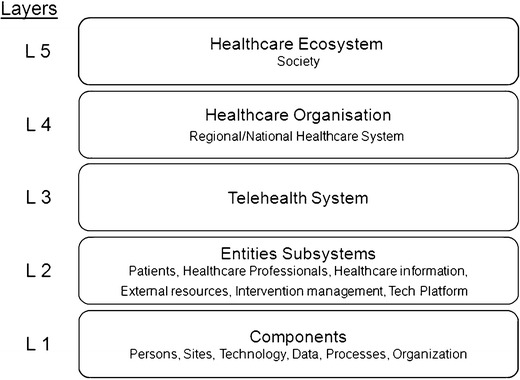
“For example, in the presented case of the application in oral anticoagulation therapy (OAT), it has served as a guideline for the systematic analysis of the Components of each Entity Subsystem as displayed in Table 1.”
BackgroundSelf-citationThe doctor will see you ALWAYS
Smith, J. M. (2011) · IEEE Spectrum · doi:10.1109/mspec.2011.6027250 · Cited by 32 · cited 1×
“The development of wearable devices and mobile broadband communications systems make the individual a connection node within Telehealth networks, with the smart phone and tablet terminals as support platforms for Apps and connectivity with biomedical devices and intelligent environments [20].”
BackgroundSystem safety as an emergent property in composite systems
Black, J., & Koopman, P. (2009) · 2009 IEEE/IFIP International Conference on Dependable Systems & Networks · doi:10.1109/dsn.2009.5270316 · Cited by 32 · cited 1×
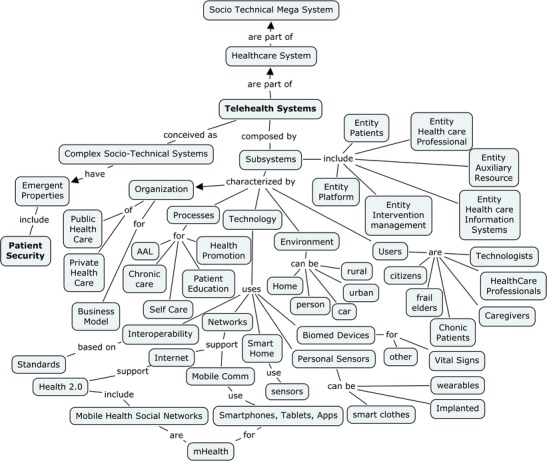
“This phenomenon is known as emerging properties [46, 51].”
Incorporating Safety in Early System Architecture Trade Studies
Dulac, N., & Leveson, N. G. (2009) · Journal of Spacecraft and Rockets · doi:10.2514/1.37361 · Cited by 27
Interoperability: the cure for what ails us [Government Affairs]
Kun, L. G. (2007) · IEEE Engineering in Medicine and Biology Magazine · doi:10.1109/memb.2007.289126 · Cited by 22
Self-citationUnderstanding change in complex socio-technical systems
Rouse, W. B., & Serban, N. (2011) · Information Knowledge Systems Management · doi:10.3233/iks-2012-0184 · Cited by 20
Safety evaluation and management of complex systems: A system engineering approach
Guillerm, R., Demmou, H., & Sadou, N. (2012) · Concurrent Engineering · doi:10.1177/1063293x12446665 · Cited by 18 · cited 1×
“This approximation is usually implemented systematically and reduces or eliminates only the most obvious vulnerabilities [58].”
BackgroundCarranza, N., Ramos, V., Lizana, F. G., García, J., Pozo, A., & Monteagudo, J. L. (2010) · Telemedicine Journal and e-Health · doi:10.1089/tmj.2010.0036 · Cited by 15
Self-citationPatient Safety Considerations in Developing Large Telehealth Networks
Darkins, A. W. (2012) · Clinical Risk · doi:10.1258/cr.2012.012006 · Cited by 13 · cited 1×
“Getting back to the healthcare domain itself, according to Adam Darkins, Director of Telehealth of the Veterans Administration program, to guarantee that Telehealth programsmaintain or improve the levels of patient safety it is necessary to adopt an approximation of systems in a healthcare transformation [42].”
MethodImproving outcomes with interoperable EHRs and secure global health information infrastructure.
Kun, L. G., Coatrieux, G., Quantin, C., Beuscart, R., & Mathews, R. (2008) · PubMed · Cited by 13
Self-citationLaracy, J. R. (2017) · International Journal of Communications Network and System Sciences · doi:10.4236/ijcns.2017.105005 · Cited by 11
Improving outcomes with interoperable EHRs and secure global health information infrastructure
Kun, L. G., Beuscart, R., Coatrieux, G., & Quantin, C. (2007) · Conference proceedings · doi:10.1109/iembs.2007.4353759 · Cited by 10 · cited 3×
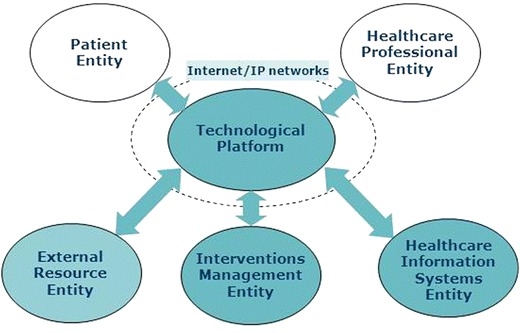
“The architecture PITES [44], developed in the Telemedicine Unit of the Instituto de Salud Carlos III (Carlos 3 Health Institute), has been used in this work as a reference for the solution architecture as it has application experience in a large number of research projects and trials with chronic patients [34].”
BackgroundMethodSelf-citationEnvisioning Patient Safety in the Year 2025: Eight Perspectives
Henriksen, K., Oppenheimer, C. C., Leape, L. L., Hamilton, K. D., Bates, D. W., Sheridan, S. E., Bruley, M. E., Gaba, D. M., Wears, R. L., & Schyve, P. M. (2008) · Cited by 10
Personalized Use of ICT – From Telemonitoring to Ambient Assisted Living
Thomas, N., & Reiner, W. (2013) · Studies in health technology and informatics · doi:10.3233/978-1-61499-256-1-145 · Cited by 7
The use of technology to transform the home into a safe-haven.
Kun, L. G. (2007) · PubMed · Cited by 6
Self-citationPITES: Telemedicine and e-Health Innovation Platform
Luis, J., Carrasco, M., Muoz, A., Sagredo, P. G., Sánchez-de-Madariaga, R., & Carlos, H. (2013) · InTech eBooks · doi:10.5772/57021 · Cited by 5
Information Highway to the Home and Back: A Smart Systems Review
Manning, B. R. M., & Kun, L. G. (2009) · Series in biomedical engineering · doi:10.1007/978-3-642-01387-4_2 · Cited by 3
Self-citationProtection of the health care and public health critical infrastructure and key assets
Kun, L. G. (2008) · IEEE Engineering in Medicine and Biology Magazine · doi:10.1109/memb.2008.930615 · Cited by 3
Self-citationPITES: Telemedicine and e-health innovation platform
Monteagudo, J. L., & Hernandez-Salvador, C. (2014) · doi:10.4321/repisalud.5444 · Cited by 3
Self-citationKun, L. G. (2008) · IEEE Engineering in Medicine and Biology Magazine · doi:10.1109/memb.2008.930619 · Cited by 2
Self-citationInvestigating Incidents of EHR Failures in China: Analysis of Search Engine Reports
Jianbo, L., Pengcheng, G., Kaihua, G., Lu, X., & Sittig, D. F. (2013) · Studies in health technology and informatics · doi:10.3233/978-1-61499-289-9-1210 · Cited by 2 · cited 1×
“The growing incorporation of information and communications technologies (ICT) in healthcare has extended the concern for patient safety to eHealth systems [28–30].”
BackgroundHealth and environmental interoperability
Kun, L. G., & Vallero, D. A. (2015) · AccessScience · doi:10.1036/1097-8542.yb110168 · Cited by 2 · cited 3×
“A perspective of evolution towards Telehealth systems with a large internal and relational complexity can be deduced from the aforementioned jointly with the interdependency with other systems within the healthcare ecosystem itself and with other external domains such as social services, education, industry, telecommu…”
BackgroundSelf-citationIST at the Service of a Changing Europe by 2020: Learning from World Views
Pascu, C. (2006) · Cited by 1
Research works printed but not linked: 4
- Kun LG. Enhancing the effectiveness of the public health system against terrorist threats through the use of information technologies. IEEE-USA position statement approved by their Board of Directors. 2004 http://www.ieeeusa.org/policy/POSITIONS/publichealth.asp. Accessed 17 Aug 2013.
- Barabási A Linked: How everything is connected to everything else 2002
- Rouse W B, Boff K R and Sanderson P. Complex Socio-Technical Systems: Understanding and Influencing the Causality of Change (Tennenbaum Institute on Enterprise Systems) IOS Press 2012. ISBN-13: 978–1614990819.
- Reivo J. The nature of security and risk in complex socio-technical systems Master’s thesis. Digital culture Department of Art and Culture StudiesUniversity of Jyväskylä. December 2011.
Cited by
eHealth and quality in health care: implementation time
Ossebaard, H. C., & Van Gemert-Pijnen, L. (2016) · International Journal for Quality in Health Care · doi:10.1093/intqhc/mzw032 · Cited by 142
Telehealth in Primary Health Care: A Scoping Review of the Literature.
Beheshti, L., Kalankesh, L. R., Doshmangir, L., & Farahbakhsh, M. (2022) · PubMed · Cited by 172
A novel wireless paper-based potentiometric platform for monitoring glucose in blood
Cánovas, R., Parrilla, M., Blondeau, P., & Andrade, F. J. (2017) · Lab on a Chip · doi:10.1039/c7lc00339k · Cited by 64
Hassan, L., Swarbrick, C., Sanders, C., Parker, A., Machin, M., Tully, M. P., & Ainsworth, J. D. (2017) · Research Involvement and Engagement · doi:10.1186/s40900-017-0063-1 · Cited by 52
“the notion of using digital devices to contribute to diagnostic, monitoring, surveillance and safety purposes is well-established [23, 24].”
BackgroundCybercare 2.0: meeting the challenge of the global burden of disease in 2030
Rosen, J. M., Kun, L., Mosher, R. E., Grigg, E., Merrell, R. C., Macedonia, C., Klaudt-Moreau, J., Price-Smith, A., & Geiling, J. (2016) · Health and Technology · doi:10.1007/s12553-016-0132-8 · Cited by 33
“Cybercare employs IT for planning, implementing, training, and working in a homecare environment (i.e., telehealth [41] for elder citizens with chronic conditions [42]); for patients to use health-related social media, websites, blogs, and phone apps for education; and for wearable devices that…”
BackgroundSelf-citation
Metadata
- Authors
- Monteagudo, J. L., Salvador, C. H., & Kun, L.
- Affiliations
- Instituto de Salud Carlos III (ES)
- National Defense University (US)
- Corresponding author
- Monteagudo, José Luis
- ORCID
- Kun, Luis
- Venue
- Health and Technology
- Published
- 2014-04-10
- Volume
- 4
- Issue
- 2
- Pages
- 79-93
- ISSN
- 2190-7188 (ISSN-L)
- 2190-7196
- PMC
- PMC4133015
- OpenAlex
- W2139319079
- Cited by
- 19
- References
- 49
- Citations by year
- 2026: 2 · 2025: 3 · 2022: 2 · 2021: 2 · 2019: 1 · 2018: 1 · 2017: 2 · 2016: 2 · 2015: 3 · 2014: 1
- FWCI
- 2.64
- Type
- journal article
- Language
- en
- Open access
- hybrid
- doi.org
- Locations
- Health and Technology (publishedVersion, cc-by)
- Europe PMC (PubMed Central) (publishedVersion, cc-by)
- PubMed Central (publishedVersion, cc-by)
- PubMed (publishedVersion)
- LA Referencia (Red Federada de Repositorios Institucionales de Publicaciones Científicas) (submittedVersion, cc-by)
- Funders
- Ministerio de Economía y Competitividad
- Topics
- Health Sciences › Medicine › Public Health, Environmental and Occupational Health › Telemedicine and Telehealth Implementation
- Health Sciences › Medicine › Public Health, Environmental and Occupational Health › Patient Safety and Medication Errors
- Health Sciences › Health Professions › Health Information Management › Electronic Health Records Systems
- Keywords
- patient safety, telemedicine, socio-technical systems, complex socio-technical systems, healthcare risk, oral anticoagulants, remote patient monitoring, research gaps
About these checks
Registry, retraction, Cites and statistics results are computed, not judged, with one exception: a printed reference that no index lists is read once by a model before it counts as a citation error. Claims are extracted by a model and kept only when their quote appears verbatim in the text; each cited source is then checked, with a model’s help, for whether it says what the claim relies on. Those verdicts can be wrong — read the claim’s quote and the cited source before relying on one.
Statistics and arithmetic are recomputed, not judged.
Confidence bands are shown only for fields calibrated on our annotated test set. None is calibrated yet, so no band is shown.
What counts as a claim ›How we measure confidence ›How we check this ›
Are you an author, or do you see a problem with this page? Request a review
Data sources
Bibliographic data: Semantic Scholar, OpenAlex, Crossref.
Contains information from the Semantic Scholar Academic Graph Datasets, made available under the ODC Attribution License (ODC-BY 1.0).
Semantic Scholar’s data is described in: Kinney, R., et al. (2023). The Semantic Scholar Open Data Platform. arXiv:2301.10140.
