

Why is the Skeleton Still in the Hospital Closet? A Look at the Complex Aetiology of Protein-Energy Malnutrition and its Implications for the Nutrition Care Team
Open accessThe DOI matches its Crossref record; 39 of the 40 references it cites were found in a registry or an index.
Abstract
Extract: The acknowledgement of protein-energy malnutrition (PEM) as one of “…the most serious nutritional problems of our time” was actually made by Dr Butterworth Jr in 1974 in his seminal article, “the skeleton in the hospital closet” (1). In most cases, major health problems prevalent in the 1970s have been addressed and improved, such as vast improvements in vaccination rates, pain management and contraception efficacy (2-4). But when it comes to PEM, the continuing high prevalence across all settings (10 – 65% in our home-dwelling, hospitalised and institutionalised elderly) (5-8) and hefty economic burden (>USD$156 billion per annum) (9-11) at first appears to suggest that medicine and medical nutrition therapy may have failed to achieve any significant improvement in the past 40 years. However, PEM (the unintentional loss of lean tissues caused by inadequate energy, protein and nutrient intake) is unique compared with many other medical and nutritional problems, due to not only having a deeply complex physiological cause, but also a multifactorial environmental, economic and psychosocial origin. Furthermore, PEM is often underdiagnosed and/or overlooked in the presence of similar conditions such as sarcopenia (age-related loss of muscle mass and physical function) and cachexia (loss of muscle mass due to disease-related increases in proinflammatory cytokines and a prolonged acute phase protein response) (7). Beyond the economic consequences of PEM, the high prevalence is significant for the individual, who may experience broad health problems such as decreased cardiac, respiratory, hepatic, and immune function; decreased quality of life; and a significantly increased risk of hospitalisation, institutionalisation and mortality (6, 12). Therefore, a renewed examination of what we have learned about the complex aetiology of PEM over the past 40 years and its implications for practice may be useful in helping to prevent and manage this long-term geriatric syndrome across the continuum of care.
Overview
The claims and statistics of this paper haven’t been checked yet.
Free: it reads the open-access text and checks the first 5 claims that cite a source we can check. Create a free account to check every claim.
Integrity signals
Registry
Cites
Statistics
Figures
Verification
Claims the paper makes
The claims and statistics of this paper haven’t been checked yet.
Free: it reads the open-access text and checks the first 5 claims that cite a source we can check. Create a free account to check every claim.
Claims other papers make about this one
Each is checked against this paper’s own text: does it say what the citing paper says it does?
The source backs part of the claim, not all of it — or backs it for a different population, condition or comparison.
In the citing paper
“A sufficient increase in dietary protein and energy intake to meet individualised requirements and cease the loss of lean tissues will reverse malnutrition [3, 5].”
From Is telehealth effective in managing malnutrition in community-dwelling older adults? A systematic review and meta-analysis. (2018) · cites this paper as [5]
Experimental — accuracy not yet measuredThe cited source says what the claim attributes to it.
In the citing paper
“Individualised and long-term nutrition support is required to overcome these barriers and enable the older adult to meet their energy and protein requirements; thus, the current usual care of short term treatment during a health care admission is insufficient to properly treat malnutrition in many cases [5, 6].”
From Is telehealth effective in managing malnutrition in community-dwelling older adults? A systematic review and meta-analysis. (2018) · cites this paper as [5]
Self-check
Percentages, sums and reported differences re-computed from the paper’s own numbers.
The self-check needs the paper’s full text.
Citations
Cites
Plotkin, S. (2014) · Proceedings of the National Academy of Sciences · doi:10.1073/pnas.1400472111 · Cited by 642
The Skeleton in the Hospital Closet
BUTTERWORTH, C. E. (1974) · Nutrition Today · doi:10.1097/00017285-197403000-00001 · Cited by 336
Causes of Weight Loss in a Community Nursing Home
Morley, J. E., & Kraenzle, D. (1994) · Journal of the American Geriatrics Society · doi:10.1111/j.1532-5415.1994.tb06853.x · Cited by 318 · cited 1×
“Research has found depression to be further associated with weight loss, and malnourished community-dwelling older adults are significantly more likely to have higher depression scores (OR=4.38; 95%CI: 2.23-8.64) (31-34).”
Influential(2009) · Nutrition & Dietetics · doi:10.1111/j.1747-0080.2009.01383.x · Cited by 305
Pathophysiology: Concepts of altered health states
Hinchliff, S. M. (1982) · International Journal of Nursing Studies · doi:10.1016/0020-7489(82)90037-2 · Cited by 295
Malnutrition in alcoholic and virus-related cirrhosis
Caregaro, L., Alberino, F., Amodio, P., Merkel, C., Bolognesi, M., Angeli, P., & Gatta, A. (1996) · The American Journal of Clinical Nutrition · doi:10.1093/ajcn/63.4.602 · Cited by 266
Agarwal, E., Ferguson, M., Banks, M., Bauer, J., Capra, S., & Isenring, E. (2012) · Clinical Nutrition · doi:10.1016/j.clnu.2011.08.002 · Cited by 212
Malnutrition and Depression among Community-dwelling Elderly People
Cabrera, M. A. S., Mesas, A. E., Garcia, A. R. L., & de Andrade, S. M. (2007) · Journal of the American Medical Directors Association · doi:10.1016/j.jamda.2007.07.008 · Cited by 199
Factors Associated With Low Body Mass Index and Weight Loss in Nursing Home Residents
Blaum, C. S., Fries, B. E., & Fiatarone, M. A. (1995) · The Journals of Gerontology Series A: Biological Sciences and Medical Sciences · doi:10.1093/gerona/50a.3.m162 · Cited by 197
A Capsule History of Pain Management
Meldrum, M. L. (2003) · JAMA · doi:10.1001/jama.290.18.2470 · Cited by 193 · cited 1×
“In most cases, major health problems prevalent 17 in the 1970s have been addressed and improved, such as vast improvements in vaccination rates, 18 pain management and contraception efficacy (4-6).”
Nitrogen balance, protein loss, and the open abdomen*
Cheatham, M. L., Safcsak, K., Brzezinski, S. J., & Lube, M. W. (2007) · Critical Care Medicine · doi:10.1097/01.ccm.0000250390.49380.94 · Cited by 192 · cited 1×
“Losses also occur through internal or gastrointestinal bleeding, stomas, fistulae or surgically placed drains for the removal of intra-abdominal fluid, which may contain up to 12g of protein per litre of fluid drained (13, 27).”
Evaluating and treating unintentional weight loss in the elderly.
Huffman, G. B. (2002) · PubMed · Cited by 189
Protein-Losing Enteropathy: Case Illustrations and Clinical Review
Umar, S. B., & DiBaise, J. K. (2010) · American Journal of Gastroenterology · doi:10.1038/ajg.2009.561 · Cited by 189 · cited 1×
“Nutrient losses may occur during gastrointestinal dysfunction such as diarrhoea, steatorrhoea, vomiting and protein losing enteropathy, which may cause a loss of up to 60% of the albumin pool (26).”
Nutritional Management of Short Bowel Syndrome in Adults
Sundaram, A., Koutkia, P., & Apovian, C. M. (2002) · Journal of Clinical Gastroenterology · doi:10.1097/00004836-200203000-00003 · Cited by 168 · cited 1×
“77 Chronic conditions include those that affect the stomach, intestine, pancreas and liver such as 78 cystic fibrosis, inflammatory bowel disease, short bowel syndrome, pancreatitis, hepatic 79 cirrhosis or bariatric surgery (20-25).”
Marshall, S., Bauer, J., & Isenring, E. (2014) · Journal of Human Nutrition and Dietetics · doi:10.1111/jhn.12167 · Cited by 159
Self-citationUnder-nutrition in older people: a serious and growing global problem!
Visvanathan, R. (2003) · PubMed · Cited by 158
Malnutrition and depression in the institutionalised elderly
Smoliner, C., Norman, K., Wagner, K.-H., Hartig, W., Lochs, H., & Pirlich, M. (2009) · British Journal of Nutrition · doi:10.1017/s0007114509990900 · Cited by 157 · cited 1×
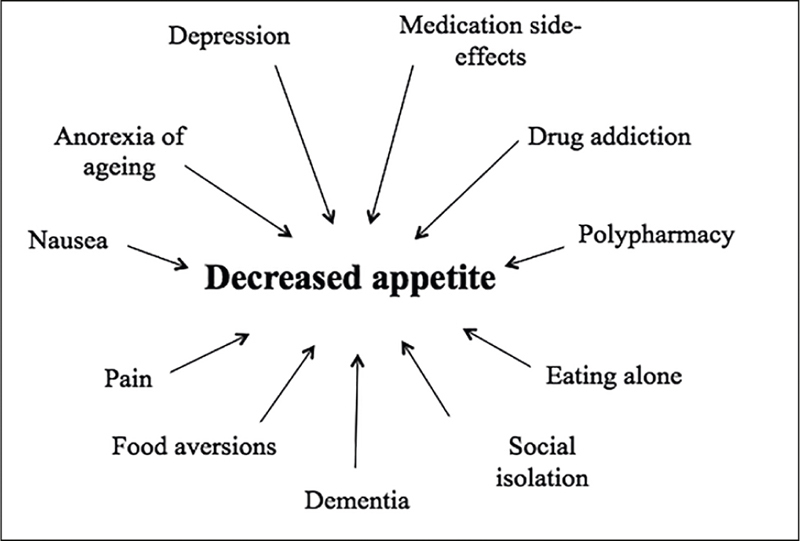
“The association between depression and nutritional status 99 is multifactorial and it is unclear if it is a cause and consequence of malnutrition in older adults 100 (30).”
Burnham, J. M., Shults, J., Semeao, E. J., Foster, B. J., Zemel, B. S., Stallings, V. A., & Leonard, M. B. (2005) · American Journal of Clinical Nutrition · doi:10.1093/ajcn/82.2.413 · Cited by 154
Kushner, R. (2000) · Journal of Parenteral and Enteral Nutrition · doi:10.1177/0148607100024002126 · Cited by 149 · cited 1×
“77 Chronic conditions include those that affect the stomach, intestine, pancreas and liver such as 78 cystic fibrosis, inflammatory bowel disease, short bowel syndrome, pancreatitis, hepatic 79 cirrhosis or bariatric surgery (20-25).”
Guest, J. F., Panca, M., Baeyens, J.-P., de Man, F., Ljungqvist, O., Pichard, C., Wait, S., & Wilson, L. (2011) · Clinical Nutrition · doi:10.1016/j.clnu.2011.02.002 · Cited by 138
Elia, M., Stratton, R. J., Russell, C. A., Green, C., & Pang, F. (2006) · ePrints Soton (University of Southampton) · Cited by 109
Depressive symptoms and risk for malnutrition among hospitalized elderly people
German, L., Feldblum, I., Bilenko, N., Castel, H., Harman‐Boehm, I., & Shahar, D. R. (2008) · The journal of nutrition health & aging · doi:10.1007/bf02982661 · Cited by 102
(2004) · PubMed · Cited by 100
Economic Burden of Community‐Based Disease‐Associated Malnutrition in the United States
Snider, J. T., Linthicum, M. T., Wu, Y., LaVallee, C., Lakdawalla, D., Hegazi, R. A. F., & Matarese, L. E. (2014) · Journal of Parenteral and Enteral Nutrition · doi:10.1177/0148607114550000 · Cited by 92
Dentition status, malnutrition and mortality among older service housing residents
Saarela, R. K. T., Soini, H., Hiltunen, K., Muurinen, S., Suominen, M. H., & Pitkälä, K. H. (2013) · The journal of nutrition health & aging · doi:10.1007/s12603-013-0358-3 · Cited by 83 · cited 1×
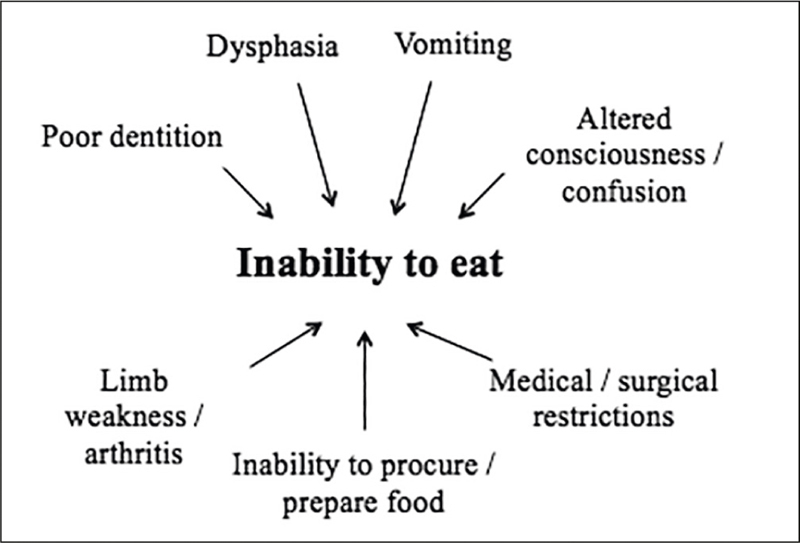
“Regarding dentition, 57 edentulousness, which is common in older adults, has been found to increase the risk of PEM 58 (18).”
Gender Differences in Factors Associated with Nutritional Status of Older Medical Patients
Castel, H., Shahar, D., & Harman-Boehm, I. (2006) · Journal of the American College of Nutrition · doi:10.1080/07315724.2006.10719523 · Cited by 82
Heersink, J. T., Brown, C. J., Dimaria-Ghalili, R. A., & Locher, J. L. (2010) · Journal of Nutrition For the Elderly · doi:10.1080/01639360903574585 · Cited by 77 · cited 3×
“perhaps due to its influence on behaviours and attitudes (28).”
InfluentialOptimising nutrition in residential aged care: a narrative review
Agarwal, E., Marshall, S., Miller, M., & Isenring, E. (2016) · Maturitas · doi:10.1016/j.maturitas.2016.06.013 · Cited by 74
Self-citationDion, N., Cotart, J.-L., & Rabilloud, M. (2007) · Nutrition · doi:10.1016/j.nut.2007.01.009 · Cited by 53
Protein-energy malnutrition in the rehabilitation setting: Evidence to improve identification
Marshall, S. (2016) · Maturitas · doi:10.1016/j.maturitas.2016.01.014 · Cited by 53 · cited 1×
“…often underdiagnosed and/or overlooked in the presence of similar conditions such as sarcopenia (age-related loss of muscle mass and physical function) and cachexia (loss of muscle mass due to disease-related increases in proinflammatory cytokines and a prolonged acute phase protein response) (7).”
Self-citationMalnutrition in adults with cystic fibrosis
Dray, X., Kanaan, R., Bienvenu, T., Desmazes-Dufeu, N., Dusser, D. J., Marteau, P. R., & Hubert, D. (2004) · European Journal of Clinical Nutrition · doi:10.1038/sj.ejcn.1602039 · Cited by 52 · cited 1×
“Chronic conditions include those that affect the stomach, intestine, pancreas and liver such as cystic fibrosis, inflammatory bowel disease, short bowel syndrome, pancreatitis, hepatic cirrhosis or bariatric surgery (20-25).”
Marshall, S., Bauer, J., Capra, S., & Isenring, E. (2013) · The Journal of nutrition, health and aging · doi:10.1007/s12603-013-0341-z · Cited by 42 · cited 2×
“6 with education regarding malnutrition, they can improve the nutrition status, quality of life and 137 physical function of their care-recipients (38).”
Self-citationExocrine Pancreatic Function in Protein-Calorie Malnutrition Disease of Adults
Tandon, B. N., GEORGE, P. K., SAMA, S. K., Ramachandran, K., & Gandhi, P. C. (1969) · American Journal of Clinical Nutrition · doi:10.1093/ajcn/22.11.1476 · Cited by 42 · cited 1×
“77 Chronic conditions include those that affect the stomach, intestine, pancreas and liver such as 78 cystic fibrosis, inflammatory bowel disease, short bowel syndrome, pancreatitis, hepatic 79 cirrhosis or bariatric surgery (20-25).”
Potts, M., & Campbell, M. (2009) · The Global Library of Women s Medicine · doi:10.3843/glowm.10376 · Cited by 38 · cited 1×
“In most cases, major health problems prevalent 17 in the 1970s have been addressed and improved, such as vast improvements in vaccination rates, 18 pain management and contraception efficacy (4-6).”
Marshall, A. P., Wake, E., Weisbrodt, L., Dhaliwal, R., Spencer, A., & Heyland, D. K. (2015) · Australian Critical Care · doi:10.1016/j.aucc.2015.10.001 · Cited by 38 · cited 1×
“In order to provide suitable and proactive intervention, emerging research supports the 130 integration of multidisciplinary formal and informal care for malnourished patients (36-39).”
Community Covariates of Malnutrition Based Mortality Among Older Adults
Lee, M. R., & Berthelot, E. R. (2010) · Annals of Epidemiology · doi:10.1016/j.annepidem.2010.01.008 · Cited by 21 · cited 1×
“109 Using nationally representative data, communities in the USA with higher levels of social 110 isolation, such as lack of access to telephones and cars, socioeconomic disadvantage and higher 111 levels of disability among the older adult population were found to have high rates of 112 malnutrition-related mortality…”
Correa, B., Leandro‐Merhi, V. A., Fogaça, K. P., & de Oliveira, M. R. M. (2009) · The journal of nutrition health & aging · doi:10.1007/s12603-009-0171-1 · Cited by 19 · cited 1×
“131 Engaging the family and friends of malnourished persons as a critical part of the nutrition care 132 team may be a cost-effective way of ensuring patients receive highly individualised and cost133 effective care across settings and in the long term (37, 40).”
Marshall, S., Reidlinger, D. P., Young, A., & Isenring, E. (2017) · Journal of Human Nutrition and Dietetics · doi:10.1111/jhn.12397 · Cited by 13 · cited 2×
“Engaging the family and friends of malnourished persons as an integral part of the nutrition care team may be a cost-effective way of ensuring patients receive highly individualised care across settings and in the long term (37, 40).”
Self-citationWright, J. (2010) · British Journal of School Nursing · doi:10.12968/bjsn.2010.5.7.78291 · Cited by 5
Cited by
Crichton, M., Craven, D., Mackay, H., Marx, W., de van der Schueren, M., & Marshall, S. (2018) · Age and Ageing · doi:10.1093/ageing/afy144 · Cited by 175
Self-citationCrichton, M., Marshall, S., Marx, W., McCarthy, A. L., & Isenring, E. (2019) · Journal of the Academy of Nutrition and Dietetics · doi:10.1016/j.jand.2019.06.009 · Cited by 102
Self-citationFood insecurity increases the risk of malnutrition among community-dwelling older adults
Grammatikopoulou, M. G., Gkiouras, K., Theodoridis, X., Tsisimiri, M., Markaki, A. G., Chourdakis, M., & Goulis, D. G. (2018) · Maturitas · doi:10.1016/j.maturitas.2018.10.009 · Cited by 110
Marx, W., Kelly, J. T., Crichton, M., Craven, D., Collins, J., Mackay, H., Isenring, E., & Marshall, S. (2018) · Maturitas · doi:10.1016/j.maturitas.2018.02.012 · Cited by 91
Self-citationDahl, C., Crichton, M., Jenkins, J., Nucera, R., Mahoney, S., Marx, W., & Marshall, S. (2018) · Nutrients · doi:10.3390/nu10020137 · Cited by 68
Self-citation
Metadata
- Authors
- Marshall, S.
- Affiliations
- Bond University (AU)
- Corresponding author
- Marshall, S.
- ORCID
- Marshall, S.
- Venue
- The Journal of nutrition, health and aging
- Publisher
- Elsevier BV
- Published
- 2018-01
- Volume
- 22
- Issue
- 1
- Pages
- 26-29
- ISSN
- 1279-7707 (ISSN-L)
- PMC
- PMC12880408
- OpenAlex
- W2591653508
- Cited by
- 33
- References
- 40
- Citations by year
- 2026: 3 · 2025: 2 · 2024: 3 · 2023: 3 · 2022: 2 · 2021: 3 · 2020: 3 · 2019: 6 · 2018: 6
- FWCI
- 3.44
- Type
- journal article
- Language
- en
- Open access
- hybrid
- doi.org
- Licence
- cc-by-nc-nd
- www.elsevier.com/tdm/userlicense/1.0/ (tdm)
- www.elsevier.com/legal/tdmrep-license (tdm)
- creativecommons.org/licenses/by-nc-nd/4.0/ (vor, 2172 d)
- Locations
- The journal of nutrition health & aging (publishedVersion, cc-by-nc-nd)
- Europe PMC (PubMed Central) (publishedVersion, cc-by-nc-nd)
- PubMed (publishedVersion)
- PubMed Central (publishedVersion, cc-by-nc-nd)
- e-publications@bond (Bond University) (submittedVersion, cc-by-nc-nd)
- Bond University Research Portal (Bond University) (submittedVersion, cc-by-nc-nd)
- Figshare (submittedVersion, cc-by)
- Topics
- Health Sciences › Medicine › Physiology (medical) › Nutrition and Health in Aging
- Health Sciences › Nursing › Nutrition and Dietetics › Clinical Nutrition and Gastroenterology
- Health Sciences › Nursing › Nutrition and Dietetics › Dietetics, Nutrition, and Education
- Keywords
- protein-energy malnutrition, etiology, geriatric syndromes, sarcopenia, cachexia, underdiagnosis, older adults, economic burden, medical nutrition therapy, continuum of care, quality of life
About these checks
Registry, retraction, Cites and statistics results are computed, not judged, with one exception: a printed reference that no index lists is read once by a model before it counts as a citation error. Claims are extracted by a model and kept only when their quote appears verbatim in the text; each cited source is then checked, with a model’s help, for whether it says what the claim relies on. Those verdicts can be wrong — read the claim’s quote and the cited source before relying on one.
Statistics and arithmetic are recomputed, not judged.
Confidence bands are shown only for fields calibrated on our annotated test set. None is calibrated yet, so no band is shown.
What counts as a claim ›How we measure confidence ›How we check this ›
Are you an author, or do you see a problem with this page? Request a review
Data sources
Bibliographic data: Semantic Scholar, OpenAlex, Crossref.
Contains information from the Semantic Scholar Academic Graph Datasets, made available under the ODC Attribution License (ODC-BY 1.0).
Semantic Scholar’s data is described in: Kinney, R., et al. (2023). The Semantic Scholar Open Data Platform. arXiv:2301.10140.
