

Teaching Mindfulness to Teachers: a Systematic Review and Narrative Synthesis
Open accessThe DOI matches its Crossref record; 66 of the 66 references it cites were found in a registry or an index; 2 of the 108 sources its claims cite were checked for support.
Abstract
School teachers report high levels of stress which impact on their engagement with pupils and effectiveness as a teacher. Early intervention or prevention approaches may support teachers to develop positive coping and reduce the experience and impact of stress. This article reviews research on one such approach: mindfulness-based interventions (MBIs) for school teachers. A systematic review and narrative synthesis were conducted for quantitative and qualitative studies that report the effects of MBIs for teachers of children aged 5-18 years on symptoms of stress and emotion regulation and self-efficacy. Twelve independent publications were identified meeting the inclusion criteria and these gave a total of 13 samples. Quality appraisal of the identified articles was carried out. The effect sizes and proportion of significant findings are reported for relevant outcomes. The quality of the literature varied, with main strengths in reporting study details, and weaknesses including sample size considerations. A range of MBIs were employed across the literature, ranging in contact hours and aims. MBIs showed strongest promise for intermediary effects on teacher emotion regulation. The results of the review are discussed in the context of a model of teacher stress. Teacher social and emotional competence has implications for pupil wellbeing through teacher-pupil relationships and effective management of the classroom. The implications for practice and research are considered.
Overview
CoChat Summary
TL;DR
This systematic review and narrative synthesis examined 12 publications (13 samples) of mindfulness-based interventions (MBIs) for teachers of children aged 5–18 years. MBIs showed strongest promise for improving teacher emotion regulation, with mixed evidence for reducing stress and increasing self-efficacy.
Key findings
- Across 12 publications and 13 samples, data came from 589 participants, mostly qualified teachers in mainstream settings, mostly in the USA with some Canada and UK studies. Quality varied; strengths included reporting study details, while weaknesses included limited consideration of sample size and analytical reliability.
- For stress, 49 effect sizes ranged from 0.01 to 2.12; 44% of anxiety/depression effects were significant, 60% of general/occupation-specific stress results were significant, and 50% of burnout results across three studies were significant. For example, Beshai et al. (2016) reported a significant stress reduction (PSS: t(48) = 6.32, p < 0.001), and Jennings et al. (2013) reported significant improvement in physical symptoms (F(1, 47) = 10.2, p = 0.002).
- For emotion regulation, four quantitative studies produced eight effect sizes ranging from 0.43 to 1.56, with 63% significant. Jennings et al. (2013) found a significant effect on ERQ reappraisal (F(1, 47) = 10.9, p = 0.002), and Taylor et al. (2016) found significant improvement in efficacy for regulating emotions (F(1, 54) = 7.06, p < 0.05).
- For self-efficacy, five studies produced effect sizes from 0.07 to 0.87, with 29% significant; Jennings et al. (2013) found significant effects on student engagement (F(1, 47) = 10.3, p = 0.002) and instruction (F(1, 47) = 11.6, p = 0.001), and Poulin et al. (2008) found a significant overall self-efficacy effect (F = 4.88, p < 0.05). Mindfulness/self-compassion effect sizes ranged from 0.04 to 1.77, with 39% significant.
Methods
- Systematic search conducted in September 2015 from 1966 onward across PsycINFO, Web of Science, and ERIC, combining mindfulness intervention terms with teacher/school terms, plus hand and citation searches. Database searches returned 607 papers and manual searches 18; after duplicates, 600 titles/abstracts were screened, 17 full texts assessed, 5 excluded, and 12 papers included.
- Inclusion criteria covered MBIs delivered to qualified or trainee teachers of children aged 5–18 in mainstream or special provision, assessing teacher stress, self-efficacy, or emotion regulation; quantitative, qualitative, and mixed-methods designs were eligible. Exclusions included higher education or pre-school teachers, single-session mindfulness studies, and interventions with large components of related therapies.
- Quality was appraised independently by two researchers using QATSDD, with initial agreement of 91.6% by Cohen’s kappa. Effect sizes (Cohen’s d) were computed from published data; because of the small number of studies and heterogeneity, no meta-analysis was conducted and findings were narratively synthesised.
Limitations
- The paper states that the search strategy may have introduced selection bias, identified studies mainly from developed English-speaking countries (mostly the USA), excluded grey/unpublished literature, and left publication bias unknown, though the authors argue publication bias was unlikely to have meaningfully affected effect sizes.
- The paper states that the literature had small sample sizes, insufficient statistical power, absence of active controls, non-blind and self-selecting teachers, only three studies with fidelity checks, no follow-up comparisons of emotion regulation beyond 3 months, and little data on classroom or pupil outcomes.
- Evident from the text: the reviewed MBIs varied in aims, content, duration, and delivery, and outcome measures differed across studies, making it difficult to isolate mindfulness-specific effects from additional emotion-management instruction or to compare findings directly.
Model-written summary. Check it against the paper before relying on it.
Integrity signals
Registry
Cites
Statistics
Figures
Verification
Claims the paper makes
1 Valid · 2 Not valid · 71 Not checked · 69 Own results and interpretations
A result the paper reports from its own data — it cites no other source for it, so there is none to check. The quote shows it is in the paper.
In the paper
“The quality assessment of the literature suggested that strengths lie in the reporting of study details, including aims, recruitment and data collection procedures.”
§ Teaching Mindfulness to Teachers: a Systematic Review and Narrative Synthesis > Results
hedged- Asserted: passes — The authors put it forward as true.
- Checkable: passes — It can be checked against evidence.
- Load-bearing: unclear — It is unclear whether the paper’s conclusions depend on it.
- Based: passes — The paper gives a reason why it holds.
In the paper
“On the whole, the body of literature was weakened by little consideration of sample size in terms of analysis, or the reliability of the analytical process (with the exception of Taylor et al. 2016).”
§ Teaching Mindfulness to Teachers: a Systematic Review and Narrative Synthesis > Results
What the sources say
- Not checked yetcites Taylor et al. 2016 matched to “Examining Ways That a Mindfulness-Based Intervention Reduces Stress in Public School Teachers: a Mixed-Methods Study” (2016) source
plain- Asserted: passes — The authors put it forward as true.
- Checkable: passes — It can be checked against evidence.
- Load-bearing: unclear — It is unclear whether the paper’s conclusions depend on it.
- Based: passes — The paper gives a reason why it holds.
None of the sources cited for this claim have been checked yet.
In the paper
“In addition, only studies by Jennings et al. (2011, 2013) included user involvement (i.e. feedback from teachers on the intervention) in the design.”
§ Teaching Mindfulness to Teachers: a Systematic Review and Narrative Synthesis > Results
What the sources say
- Not checked yetcites Jennings et al. 2011
- Not checked yetcites Jennings et al. 2013 matched to “Improving classroom learning environments by Cultivating Awareness and Resilience in Education (CARE): Results of a randomized controlled trial.” (2013) source
plain- Asserted: passes — The authors put it forward as true.
- Checkable: passes — It can be checked against evidence.
- Load-bearing: unclear — It is unclear whether the paper’s conclusions depend on it.
- Based: passes — The paper gives a reason why it holds.
A result the paper reports from its own data — it cites no other source for it, so there is none to check. The quote shows it is in the paper.
In the paper
“Forty-nine effect sizes, ranging from 0.01 to 2.12, were generated on the effects of a MBI on teacher stress, including psychological and physical symptoms, perceived stress and/or burnout (see Table 2).”
§ Teaching Mindfulness to Teachers: a Systematic Review and Narrative Synthesis > Results > Effects of MBIs
plain- Asserted: passes — The authors put it forward as true.
- Checkable: passes — It can be checked against evidence.
- Load-bearing: passes — The paper’s conclusions depend on it.
- Based: passes — The paper gives a reason why it holds.
None of the sources cited for this claim have been checked yet.
In the paper
“Eight-week programmes based on MBSR and/or MBCT were examined in six studies (Beshai et al. 2016; Flook et al. 2013; Frank et al. 2015; Gold et al. 2010; Napoli 2004; Poulin et al. 2008).”
§ Teaching Mindfulness to Teachers: a Systematic Review and Narrative Synthesis > Results > Mindfulness Programmes
plain- Asserted: passes — The authors put it forward as true.
- Checkable: passes — It can be checked against evidence.
- Load-bearing: unclear — It is unclear whether the paper’s conclusions depend on it.
- Based: passes — The paper gives a reason why it holds.
55 more claims
Create a free account to see all 143 claims and to verify the 106 references still open.
- It may state two separate claims as one. 63
- Probably not a substantial claim. 26
- The quote only partly states this claim. 1
Claims other papers make about this one
Each is checked against this paper’s own text: does it say what the citing paper says it does?
The cited source says what the claim attributes to it.
In the citing paper
“Other systematic reviews and meta-analyses have also provided promising results for mindfulness-based programs (Emerson et al., 2017; Hwang et al., 2017; Klingbeil & Renshaw, 2018; Lomas et al., 2017; Zarate et al., 2019)”
From Intervention Programs Targeting the Mental Health, Professional Burnout, and/or Wellbeing of School Teachers: Systematic Review and Meta-Analyses (2023) · cites this paper as Emerson et al., 2017
The cited source says what the claim attributes to it.
In the citing paper
“Five reviews have used a formal tool to assess risk of bias in included studies; four concluded that the overall quality of studies assessing mindfulness interventions were varied (Emerson et al., 2017; Hwang et al., 2017; Lomas et al., 2017; Zarate et al., 2019)”
From Intervention Programs Targeting the Mental Health, Professional Burnout, and/or Wellbeing of School Teachers: Systematic Review and Meta-Analyses (2023) · cites this paper as Emerson et al., 2017
In the citing paper
“While it connects teacher well-being with student development, it primarily emphasizes program delivery rather than organizational integration”
From Mapping the landscape of mindfulness research in educational workplaces: a bibliometric and conceptual analysis (2020–2024) (2026) · cites this paper as Emerson et al., 2017
Statistics that don’t add up
Each reported p-value recomputed from its test statistic and degrees of freedom, each partial η² from its F, and each ratio, mean difference or B printed with a p checked against its own confidence interval.
Rated minor: it would not touch a result — a value no result rests on, a p-value that stays on the same side of the significance level, or a conflict that is clerical, resolved elsewhere in the paper, or outside its own findings.
In the paper
“t(33) = 3.71, p = 0.03”
§ Teaching Mindfulness to Teachers: a Systematic Review and Narrative Synthesis > Results > Effects of MBIs
Reported p = .03 · recomputed p < .001
Rated minor: it would not touch a result — a value no result rests on, a p-value that stays on the same side of the significance level, or a conflict that is clerical, resolved elsewhere in the paper, or outside its own findings.
In the paper
“t(23) = 2.66, p = 0.03”
§ Teaching Mindfulness to Teachers: a Systematic Review and Narrative Synthesis > Results > Effects of MBIs
Reported p = .03 · recomputed p = .014
Rated minor: it would not touch a result — a value no result rests on, a p-value that stays on the same side of the significance level, or a conflict that is clerical, resolved elsewhere in the paper, or outside its own findings.
In the paper
“t(33) = 4.36, p = 0.02”
§ Teaching Mindfulness to Teachers: a Systematic Review and Narrative Synthesis > Results > Effects of MBIs
Reported p = .02 · recomputed p < .001
Rated minor: it would not touch a result — a value no result rests on, a p-value that stays on the same side of the significance level, or a conflict that is clerical, resolved elsewhere in the paper, or outside its own findings.
In the paper
“t (33) = 1.10, p = 0.40”
§ Teaching Mindfulness to Teachers: a Systematic Review and Narrative Synthesis > Results > Effects of MBIs
Reported p = .4 · recomputed p = .279
Statistics recomputed
Every reported test result, recomputed from its test statistic and degrees of freedom. A result shows as not adding up only once an independent check has confirmed it.
- Doesn’t add upt(33) = 3.71reported p = .03 · recomputed p < .001
“t(33) = 3.71, p = .03”
- Doesn’t add upt(33) = 4.36reported p = .02 · recomputed p < .001
“t(33) = 4.36, p = .02”
- Doesn’t add upt(33) = 1.1reported p = .4 · recomputed p = .279
“t (33) = 1.10, p = .40”
- Doesn’t add upt(23) = 2.66reported p = .03 · recomputed p = .014
“t(23) = 2.66, p = .03”
- Not confirmedF(1, 53) = 7.11reported p < .01 · recomputed p = .010
“F(1, 53) = 7.11, p < .01”
27 more recomputed tests
Create a free account to see every test the Stats check recomputed.
Self-check
Percentages, sums and reported differences re-computed from the paper’s own numbers.
Each contradiction between two passages listed here was confirmed by an independent check.
Rated minor: it would not touch a result — a value no result rests on, a p-value that stays on the same side of the significance level, or a conflict that is clerical, resolved elsewhere in the paper, or outside its own findings.
In the paper
§ Teaching Mindfulness to Teachers: a Systematic Review and Narrative Synthesis > Introduction
“The traditional format for delivery of a MBI is eight weekly 2.5-h sessions”
§ Teaching Mindfulness to Teachers: a Systematic Review and Narrative Synthesis > Results > Mindfulness Programmes
“shorter sessions (75–120 min rather than 180 min standard)”
Rated minor: it would not touch a result — a value no result rests on, a p-value that stays on the same side of the significance level, or a conflict that is clerical, resolved elsewhere in the paper, or outside its own findings.
In the paper
§ Teaching Mindfulness to Teachers: a Systematic Review and Narrative Synthesis > Results > Effects of MBIs
“All quantitative studies reported the influence of MBIs for teachers on measures of mindfulness and self-compassion (Table 5).”
§ Teaching Mindfulness to Teachers: a Systematic Review and Narrative Synthesis > Results > Measures
“In addition, mindfulness was measured in eight studies, using one of two measures: the Five Facet Mindfulness Questionnaire (n = 7; FFMQ) or the original form, the Kentucky Inventory of Mindfulness Skills (n = 1; KIMS). Data for teachers’ self-compassion was available for three studies”
Rated minor: it would not touch a result — a value no result rests on, a p-value that stays on the same side of the significance level, or a conflict that is clerical, resolved elsewhere in the paper, or outside its own findings.
In the paper
§ Teaching Mindfulness to Teachers: a Systematic Review and Narrative Synthesis > Results > Effects of MBIs
“consistently reported medium–large and significant effects on the ‘observe’ (Flook et al. 2013; Frank et al. 2015; Jennings et al. 2011—study 1; Jennings et al. 2013; Poulin et al. 2008)”
§ Teaching Mindfulness to Teachers: a Systematic Review and Narrative Synthesis > Results > Effects of MBIs
“Significant increase in mindfulness (describe subscale: t(9) = 2.53, p = 0.032) and self-compassion (SCS humanity: t(9) = 3.42, p = 0.008) in intervention group.”
Rated minor: it would not touch a result — a value no result rests on, a p-value that stays on the same side of the significance level, or a conflict that is clerical, resolved elsewhere in the paper, or outside its own findings.
In the paper
§ Teaching Mindfulness to Teachers: a Systematic Review and Narrative Synthesis > Results > Effects of MBIs
“Frank et al. (2015) reported significant changes from within-group analyses for the intervention group on subscales ‘acknowledgement’, ‘remaining calm’, and ‘present moment focus’”
§ Teaching Mindfulness to Teachers: a Systematic Review and Narrative Synthesis > Results > Effects of MBIs
“Significant differences between intervention and control groups on change scores (post-pre) indicated intervention effect for self-efficacy in acknowledgement”
Citations
Cites
Statistical Power Analysis for the Behavioral Sciences
Muller, K. (1989) · Technometrics · doi:10.1080/00401706.1989.10488618 · Cited by 99,167
Statistical power analysis for the behavioral sciences
(1990) · Computers, Environment and Urban Systems · doi:10.1016/0198-9715(90)90050-4 · Cited by 65,269
Statistical Power Analysis for the Behavioral Sciences (2nd ed.).
Lachenbruch, P. A., & Cohen, J. (1989) · Journal of the American Statistical Association · doi:10.2307/2290095 · Cited by 37,395
Gross, J. J., & John, O. P. (2003) · Journal of Personality and Social Psychology · doi:10.1037/0022-3514.85.2.348 · Cited by 11,929 · cited 3×
“(2013) reported a large and significant effect on one of two subscales on a general measure of emotion regulation (Emotion Regulation Questionnaire, ERQ; Gross and John 2003); changes on the ‘reappraisal’ subscale reflected teachers’ ability to regulate their emotions and consequently reappraise stressful situations i…”
BackgroundInfluential(2008) · Medical Entomology and Zoology · Cited by 7,477
Mindfulness: A proposed operational definition.
Bishop, S. R., Lau, M., Shapiro, S., Carlson, L., Anderson, N. D., Carmody, J., Segal, Z. V., Abbey, S., Speca, M., Velting, D., et al. (2004) · Clinical Psychology: Science and Practice · doi:10.1093/clipsy.bph077 · Cited by 7,234
Teacher efficacy: capturing an elusive construct
Tschannen-Moran, M., & Hoy, A. W. (2001) · Teaching and Teacher Education · doi:10.1016/s0742-051x(01)00036-1 · Cited by 6,839 · cited 1×
“Similarly, when delivered across occupational settings, there have been reported positive effects of MBIs on stress and wellbeing (health care providers, Escuriex and Labbé 2011; health care professionals, Irving et al. 2009; working adults, Virgili 2013).”
BackgroundThe Development and Validation of a Scale to Measure Self-Compassion
NEFF, K. D. (2003) · Self and Identity · doi:10.1080/15298860309027 · Cited by 6,436 · cited 2×
“Data for teachers’ selfcompassion was available for three studies (Beshai et al. 2016; Flook et al. 2013; Roeser et al. 2013) using a version of the Self-compassion Scale (SCS, Neff 2003).”
BackgroundMethodPositive Psychology Progress: Empirical Validation of Interventions.
Seligman, M. E. P., Steen, T. A., Park, N., & Peterson, C. (2005) · American Psychologist · doi:10.1037/0003-066x.60.5.410 · Cited by 5,947 · cited 1×
“This is routine in psychological interventions (and in MBIs) where the readiness for intervention, and the personal decision to engage, is deemed important to outcomes as well as reflecting ethical practice (Lyubomirsky et al. 2011; Seligman et al. 2006; Seligman et al. 2005).”
BackgroundMethods of Meta-Analysis: Correcting Error and Bias in Research Findings
Schmidt, F. L., & Hunter, J. E. (2015) · doi:10.4135/9781483398105 · Cited by 5,542
Research works printed but not linked: 4
- Bricheno P Brown S Lubansky R Teacher wellbeing: a review of the evidence 2009 London Teacher Support Network
- Derogatis LR SCL-90-R (Symptom Checklist-90-R): administration, scoring, and procedures manual 1994 Minnetonka, MN National Computer Systems
- Midgley C Maehr ML Hruda LZ Anderman E Anderman L Freeman KE Manual for the Patterns of Adaptive Learning Scales (PALS) 2000 Ann Arbor, MI University of Michigan
- National Association of Schoolmasters Union of Women Teachers (NASUWT Teachers’ satisfaction and wellbeing in the workplace 2013 London ComRes
Cited by
Items 101–200 of 256
Odescalchi, C., Paleczek, L., & Gasteiger‐Klicpera, B. (2024) · European Journal of Special Needs Education · doi:10.1080/08856257.2024.2370149 · Cited by 17
“Teacher skills that contribute to improved emotional regulation, positive social interactions and supportive relationships between peers and adults are particularly important (Emerson et al. 2017; Ewe and Aspelin 2022; Vidmar and Kerman 2016).”
BREATHE-EASE Goals for Reducing Special Education Teacher Burnout
Ruble, L. A., McGrew, J. H., Dueber, D., & Salyers, M. P. (2024) · Teacher Education and Special Education The Journal of the Teacher Education Division of the Council for Exceptional Children · doi:10.1177/08884064241288262 · Cited by 10
“Furthermore, mindfulness can enhance emotional regulation skills, allowing teachers to respond to challenging situations with greater composure and less reactivity (Emerson et al., 2017).”
Achtsamkeit in den Grundschulen einer ganzen Stadt fördern – ein NRW-Landesmodellprojekt
Altner, N., Erlinghagen, M., Körber, D., Cramer, H., & Dobos, G. J. (2018) · Gruppe Interaktion Organisation Zeitschrift für Angewandte Organisationspsychologie (GIO) · doi:10.1007/s11612-018-0417-7 · Cited by 14
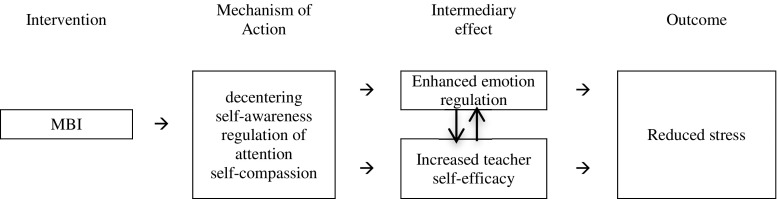
“Emerson et al. (2017) fanden Bezüge zwischen achtsamkeitsbasierten Interventionen, zunehmender Selbstbewusstheit und Selbstmitgefühl, intermediären Effekten von wachsender Gefühlsregulation und Selbstwirksamkeit sowie als Ergebnis einem reduzierten Stresserleben.”
BackgroundMindfulness and its relevance for sports coaches adopting nonlinear pedagogy
Kee, Y. H. (2019) · International Journal of Sports Science & Coaching · doi:10.1177/1747954119830819 · Cited by 12
Mindfulness Measures for Children and Adolescents: a Systematic Review
Bender, S. L., Lawson, T., & Palacios, A. M. (2022) · Contemporary School Psychology · doi:10.1007/s40688-022-00433-5 · Cited by 17
“In addition to positive outcomes found for youth, a recent systematic review concluded that it is effective in reducing teachers’ stress levels (Emerson et al., 2017).”
BackgroundYang, L., Gao, T., Zhang, C., He, S., & Gao, J. (2023) · Mindfulness · doi:10.1007/s12671-023-02135-2 · Cited by 8
“, overwork) in classroom instruction, classroom management, and relationships with children (Emerson et al., 2017).”
BackgroundApplying Mindfulness-Based Practices in Child Psychiatry
Mathis, E. T., Dente, E., & Biel, M. G. (2018) · Child and Adolescent Psychiatric Clinics of North America · doi:10.1016/j.chc.2018.11.004 · Cited by 10
Romano, L. E., & Chang, D. F. (2022) · Education Sciences · doi:10.3390/educsci12110778 · Cited by 13
“In fact, little is known about the effects of these interventions on instruction and specifically student outcomes despite the pivotal role teachers play in upholding/deconstructing inequities in their classrooms [32,33].”
BackgroundMethodHan, X., Jiao, M., & Perey, G. M. (2025) · Frontiers in Psychology · doi:10.3389/fpsyg.2025.1599585 · Cited by 17
Mindfulness influence on psychological wellbeing: in search of cultural adaptations
Paz, R., & Davidovitch, N. (2025) · Frontiers in Psychology · doi:10.3389/fpsyg.2025.1550949 · Cited by 13
Klusmann, B., Sanderman, R., & Schroevers, M. J. (2022) · Teaching and Teacher Education · doi:10.1016/j.tate.2022.103950 · Cited by 18
Liberman, T., Bidegain, M., Berriel, A., López, F. M., Ibarra, A., Pisani, M., Polero, S., Brito, G., Pereira, A. C., López, S., et al. (2024) · Mindfulness · doi:10.1007/s12671-024-02380-z · Cited by 9
“In the education field, research addresses the impact of these practices on students and teachers (Emerson et al., 2017; Meiklejohn et al., 2021, Schonert-Reichl & Roeser, 2016; Sleilaty, 2022; Zenner et al., 2014).”
‘Making space’: a study into the use of mindfulness for alternative school teachers
Preston, K. E., & Spooner‐Lane, R. (2019) · Journal of Psychologists and Counsellors in Schools · doi:10.1017/jgc.2019.4 · Cited by 10
“A recent review of the literature (Emerson et al., 2017), which identified eight studies on both general and occupation-specific stress, found that 60% of the results were significant, although these results were reported in both low- (Gold et al., 2010) and high-quality (Jennings et al., 2013)…”
BackgroundMethodResultInfluential(Re)Envisioning Mindfulness for Leadership Retention
Kim, D. J., & Pendola, A. (2022) · NASSP Bulletin · doi:10.1177/01926365221079050 · Cited by 8
“For example, while mindfulness outcomes may support improvements in interpersonal trust (Emerson et al., 2017), this may be seen as a broader aspect of school climate, which is associated with positive working conditions and student achievement (Burkhauser, 2017).”
BackgroundBeing present: a longitudinal study on the role of mindfulness on engagement and burnout in teachers
Shemueli, R. G., Tzafrir, S. S., Pérez, B. R., & Bahamonde, D. (2023) · Academia Revista Latinoamericana de Administración · doi:10.1108/arla-01-2023-0011 · Cited by 9
Janssen, M., Heerkens, Y. F., HEIJDEN, B. I. J. M. V. D., Korzilius, H. P. L. M., Peters, P., & Engels, J. A. (2024) · Mindfulness · doi:10.1007/s12671-024-02477-5 · Cited by 12
“Emerson et al. (2017) also found an improvement in teachers’ self-efficacy.”
Fosco, S. L. D., Schussler, D. L., Brown, M. A., Mahfouz, J., Levit‐Binnun, N., Cantrell, T., Cherkowski, S. L., Frazier, T., Jennings, P. A., & Krisch, K. (2025) · Psychology in the Schools · doi:10.1002/pits.23453 · Cited by 9
“Such programs have shown promising improvement including in emotional exhaustion, emotion regulation, and physical health (Emerson et al. 2017).”
Joss, D. (2025) · Mindfulness · doi:10.1007/s12671-025-02585-w · Cited by 7
“There have been increasing amounts of research on providing mindfulness training to teachers, which have been shown to have strong effects on improving teacher emotion regulation (Emerson et al., 2017).”
Lestage, P., & Bergugnat, L. (2019) · Journal de Thérapie Comportementale et Cognitive · doi:10.1016/j.jtcc.2019.02.001 · Cited by 10
“[88] Emerson LM, Leyland A, Hudson K, Rowse G, Hanley P, Hugh-Jones S.”
BackgroundHeredia, L., Ventura, D., Torrente, M., & Vicens, P. (2024) · Mind Brain and Education · doi:10.1111/mbe.12419 · Cited by 9
Malik, K., Annapally, S. R., Shilla, Y. A., Khanna, A., Kaurr, R., & Boban, A. (2025) · PLoS ONE · doi:10.1371/journal.pone.0317351 · Cited by 11
Sun, J., Kusumaningsih, S. N., & Yang, R. (2025) · Social and Emotional Learning Research Practice and Policy · doi:10.1016/j.sel.2025.100087 · Cited by 8
Matiz, A., Pascut, S., Fabbro, F., & Crescentini, C. (2025) · Mindfulness · doi:10.1007/s12671-025-02573-0 · Cited by 7
“…(von Beames et al., 2023; Denuwara et al., 2022; Der Embse et al., 2019; Pau-del et al., 2022), mindfulness-based interventions (MBIs) have generally proven to be effective in improving teachers’ well-being (Emerson et al., 2017; Hwang et al., 2017; Klingbeil & Renshaw, 2018; Zarate et al., 2019).”
BRiTE Mind: Introducing Mindfulness to Cultivate Personal and Professional Resilience in Teachers
Correia, H. (2020) · Springer eBooks · doi:10.1007/978-981-15-5963-1_10 · Cited by 8
Toma, G., Rubie-Davies, C. M., & Fevre, D. L. (2022) · Journal of Workplace Learning · doi:10.1108/jwl-09-2021-0123 · Cited by 9
Abbott, P., Nixon, G., Stanley, I., & D’Ambruoso, L. (2024) · Frontiers in Public Health · doi:10.3389/fpubh.2023.1309649 · Cited by 8
Art as Meditation: A Mindful Inquiry into Educator Well-Being
Crowder, R., Lock, J., Hickey, E., McDermott, M., Simmons, M., Wilson, K., Leong, R., & Silva, N. D. (2020) · The Qualitative Report · doi:10.46743/2160-3715/2020.4061 · Cited by 12
“Creating drawings helps participants comprehend their entire situation—or what Freire (1996) referred to as conscientization in Pedagogy of the Oppressed—the capacity to use available resources, and their ability to respond to stressful situations, an empowering meaning-making process.”
BackgroundIttner, D., & Hascher, T. (2021) · Springer eBooks · doi:10.1007/978-3-030-73644-6_14 · Cited by 6
Zhou, L., & Xie, L. (2025) · SAGE Open · doi:10.1177/21582440251370442 · Cited by 11
“For educators, mindfulness fosters emotional balance and strengthens teacher-student relationships, improving their ability to address student needs (Emerson et al., 2017; Lee et al., 2024).”
Zhang, P., & Zhang, H. (2026) · Frontiers in Psychology · doi:10.3389/fpsyg.2025.1764648 · Cited by 11
“…to operate partly via enhanced ER—have been synthesized in systematic reviews, and recent mediation-focused studies explicitly identify ER as a pathway through which such programs reduce stress and improve teacher well-being and classroom climate (Emerson et al., 2017; Rombouts et al., 2025).”
Interventions for Developing Wisdom
Ferrari, M., Kim, J. J., & Morris, S. (2022) · Cambridge University Press eBooks · doi:10.1017/9781009085724.016 · Cited by 5
Phan, M. L., Renshaw, T. L., Rodríguez, M. M. D., McClain, M. B., Moo, E. L., Humphries, A., & Parker, B. (2025) · Contemporary School Psychology · doi:10.1007/s40688-025-00540-z · Cited by 16
“According to Emerson et al. (2017 ), who examined 13 peer-reviewed studies looking at the utility of MBIs in boost - ing teachers’ skills of emotion regulation and perceived self-efficacy, MBIs could be potentially useful as a stress reduction technique for teachers.”
Achtsamkeit in der Schule (AISCHU) – Evaluation der Weiterbildung für Lehrkräfte zur Stressreduktion
Kraft, J., Kaltwasser, V., & Kohls, N. (2021) · Prävention und Gesundheitsförderung · doi:10.1007/s11553-021-00870-9 · Cited by 11
“Die in unserer Pilotstudie festgestellten Effektstärken lassen im Vergleich mit anderen Studien [4, 11] durchaus den Rückschluss zu, dass das AISCHU-Programm sowohl in einem offenen, selbstgewählten, als auch in einem geschlossenen, über das Schulamt angebotenen Format hohe Wirksamkeit erzielen kann.”
Li, C., Haegele, J. A., Au, H. L., & Kam, W. K. K. 甘. (2021) · Journal of Teaching in Physical Education · doi:10.1123/jtpe.2019-0203 · Cited by 6
Mindful Educators: Compassion, Community, and Adaptability Are Key
Dunn, M. S., & Larson, K. E. (2023) · International Journal of Learning Teaching and Educational Research · doi:10.26803/ijlter.22.2.20 · Cited by 4
Teaching Mindfulness with Children: Being a Mindful Role Model
Albrecht, N. J. (2018) · The Australian journal of teacher education · doi:10.14221/ajte.v43.n10.1 · Cited by 4
Incorporating Mindfulness Practice for Better Performance in Work and Daily Life
Urcola‐Pardo, F. (2023) · Integrated science · doi:10.1007/978-3-031-15959-6_16 · Cited by 6
Keleynikov, M., Benatov, J., & Berger, R. (2021) · Preprints.org · doi:10.20944/preprints202112.0364.v1 · Cited by 3
“It has previously been observed that MBIs have effective outcomes on teachers’ mental health during routine (see for review; [36]) and during the COVID-19 outbreak [37].”
BackgroundInfluentialMindfulness in a Business Context, What Future? Bibiliometric Review
Esteves, L., Franco, M., & Rodrigues, M. M. M. (2025) · Journal of the Knowledge Economy · doi:10.1007/s13132-025-02663-3 · Cited by 5
“Accessed at http:// www. mindf ulexp erien ce. org). competences and emotional regulation (Choi & Leroy, 2015; Demarzo et al., 2015; Emerson et al., 2017; Korber & McNaughton, 2018), and in promoting pro-social behaviour (Donald et al., 2019, 2020), contributing to individual, collective or…”
Rombouts, M., Lensen, J. H., Kraiss, J. T., Duinhof, E. L., Monshouwer, K., Stoltz, S. E. M. J., Scholte, R. H. J., Speckens, A. E. M., & Kleinjan, M. (2025) · Mindfulness · doi:10.1007/s12671-025-02662-0 · Cited by 7
“In addition, research showed that the MBSR program increased teachers’ self-efficacy (Emerson et al., 2017; Lensen et al., 2024).”
InfluentialPredictors of musculoskeletal disorders among special education teachers in Sabah, Malaysia
Jeffree, M. S., Rahim, A. A. A., Daud, D. M. A., Pang, N. T. P., Sazali, M. F., Sudi, S. B., Liau, S. N., Wong, E. E. L., Peter, H., Amat, S. Z. A., et al. (2024) · Heliyon · doi:10.1016/j.heliyon.2024.e30873 · Cited by 15
Cheung, R. Y. M., Chan, S. K. C., Chui, H. T., Ngai, S. Y. S., & Chan, W. M. (2025) · Mindfulness · doi:10.1007/s12671-025-02514-x · Cited by 4
“Consistent with existing research demonstrating the psychological benefits of mindfulness-based practice for teachers (Emerson et al., 2017; Klingbeil & Renshaw, 2018; Krame, 2021), our findings indicated that NL-MBT improved teachers’ tendency to be mindful and their subjective wellbeing, and…”
Block, R., Critchley, L., Snell, A., Davie, C., & Manchester, R. A. (2025) · Journal of American College Health · doi:10.1080/07448481.2025.2503835 · Cited by 4
“21,22”
Resilience in Education: Addressing Addiction and Cultivating Mindfulness for Well-Being
Singha, R. (2025) · Advances in higher education and professional development book series · doi:10.4018/979-8-3693-1099-1.ch011 · Cited by 3
Engagement in Mindfulness Exercises during Large Lectures and Students’ Writing Self-Efficacy
Drewery, D., Stewart, N. W., & Wilson, A. W. (2022) · The Canadian Journal for the Scholarship of Teaching and Learning · doi:10.5206/cjsotlrcacea.2022.1.10945 · Cited by 6
A workplace wellness program protects against COVID-19 effects on mental wellbeing
Toma, G., Rubie-Davies, C. M., & Fevre, D. M. L. (2023) · Journal of Workplace Behavioral Health · doi:10.1080/15555240.2023.2237674 · Cited by 5
Enhancing Cognitive, Emotional, and Social Outcomes: Mindfulness and Self-Care in Education
Tsarkos, A. (2024) · Advances in educational technologies and instructional design book series · doi:10.4018/979-8-3693-3613-7.ch006 · Cited by 6
Romano, L. E., Colaianne, B. A., & Baelen, R. N. (2025) · Social and Emotional Learning Research Practice and Policy · doi:10.1016/j.sel.2025.100092 · Cited by 6
Munk, K., Rosenblum, R. K., Blackburn, S., & Donahue, E. (2021) · The Journal of School Nursing · doi:10.1177/10598405211059189 · Cited by 9
“Significant findings of meta-analyses and systematic reviews of teacher-focused mindfulness interventions include improvements in perceived stress, selfefficacy, emotional awareness and regulation, and measures of well-being; decreases in reactivity, depression, anxiety, and psychological distress; and improvements in…”
BackgroundMindfulness-Based Interventions in SchoolsPreprint
Renshaw, T. L. (2019) · PsyArXiv (OSF Preprints) · doi:10.31234/osf.io/wc2pt · Cited by 3
Weare, K., & Huppert, F. A. (2019) · Oxford University Press eBooks · doi:10.1093/obo/9780199828340-0236 · Cited by 5
The Contribution of Social Support and Resilience to Preschool Teacher’s Stress
Maharani, E. A., & Dinni, S. M. (2022) · Journal of Educational Health and Community Psychology · doi:10.12928/jehcp.v11i4.24262 · Cited by 4
Baelen, R. N., Galla, B. M., & Maynard, R. A. (2025) · Social and Emotional Learning Research Practice and Policy · doi:10.1016/j.sel.2025.100113 · Cited by 5
Postareff, L., Parpala, A., Nokelainen, P., Kosenkranius, M., Puhakka, I., Pylväs, L., Rintala, H., Räisänen, M., & Wallin, A. (2025) · JMIR Research Protocols · doi:10.2196/65428 · Cited by 4
“Recent reviews on teachers’ mindfulness interventions [28,29,48] show that while the length of the intervention varies greatly across interventions, mindfulness interventions for teachers are commonly 8 weeks long.”
Romano, L. E. (2025) · Behavioral Disorders · doi:10.1177/01987429251335309 · Cited by 2
“While mindfulness is not new to teacher education, the majority of interventions to date have focused on improving educator wellbeing (e.g., Emerson et al., 2017).”
Wang, H., Cha, Y.-Y., Wen, Y.-Y., & Lim, C. P. (2025) · Review of Educational Research · doi:10.3102/00346543251363570 · Cited by 7
“It involves observing one’s thoughts, emotions, and bodily sensations without getting caught up in them or reacting to them (Emerson et al., 2017; Roeser, 2016; Roeser et al., 2012, 2013, 2022).”
Compassion satisfaction and compassion fatigue among teachers: Mixed study
Vančová, V., Halamová, J., & Strnádelová, B. (2025) · Teaching and Teacher Education · doi:10.1016/j.tate.2025.105350 · Cited by 3
Fostering Flourishing: Positive Psychology Principles in Educational Settings
Karakasidou, E., Karampas, K., Papadimitriou, A., & Athanasiades, C. (2024) · Advances in early childhood and K-12 education · doi:10.4018/979-8-3693-8312-4.ch001 · Cited by 3
Infusing Taoist Principles into Early Literacy Professional Learning
Zhang, C. (2024) · Journal of Literacy Research · doi:10.1177/1086296x241300349 · Cited by 2
“A few studies reported the positive impact of mindfulness practices on teachers ’ emotional well-being (Emerson et al., 2017; Van Gordon et al., 2015), classroom climate (e.g., Beuchel et al., 2022; Meyer & Eklund, 2020), and children ’ s behaviors (Singh et al., 2013).”
The Relational Impact of Mindfulness Through the Lens of the MIRROR Model
Karremans, J. C., van der Schans, K. L., & Leavitt, C. E. (2025) · Springer eBooks · doi:10.1007/978-3-031-91451-5_13 · Cited by 5
Preparing resilient educators: A narrative review on CBT-based workshops for pre-service teachers
Gal, C. (2025) · Evaluation and Program Planning · doi:10.1016/j.evalprogplan.2025.102721 · Cited by 3
Achtsamkeit in der Bildung: Empirische Befunde und neuronale Wirkmechanismen
Hölzel, B. K. (2022) · Springer eBooks · doi:10.1007/978-3-658-37473-0_5 · Cited by 3
Introduction to Acceptance and Commitment Practices
Holland, M. L., Brock, S. E., Oren, T., & van Eckhardt, M. (2021) · Springer eBooks · doi:10.1007/978-3-030-83492-0_2 · Cited by 4
Preservice Teachers and Perceived Stress: A Comparative Study
Evans, K. (2019) · STARS (University of Central Florida) · Cited by 2
Intervenções em Mindfulness para Síndrome de Burnout em Professores: uma revisão integrativa
Santos, K. D. A., & da Silva, J. P. (2021) · Contextos Clínicos · doi:10.4013/ctc.2021.141.12 · Cited by 4
Mindful Matters: Addressing Barriers To Classroom-Based Mindfulness
Munk, K. (2020) · San José State University ScholarWorks (San Jose State University) · doi:10.31979/etd.pwrg-4g67 · Cited by 3
“Emerson et al. (2017) provided a systematic review of studies involving teachers of children ages five to 18, which examined the effectiveness of MBIs in reducing teachers’ stress and improving emotion regulation, self-efficacy, mindfulness, and self-compassion.”
BackgroundResultInfluentialDoren, N. V., & Roeser, R. W. (2021) · PsyArXiv (OSF Preprints) · doi:10.31234/osf.io/sm5fp · Cited by 2
Embracing Mindfulness-Based Professional Development in Early Childhood Education
Giles, D. (2024) · San José State University ScholarWorks (San Jose State University) · doi:10.31979/etd.umvt-hdnm · Cited by 4
Die neuronale Basis von Meditation und Achtsamkeit im Bildungskontext
Michaelsen, M. M., & Esch, T. (2021) · Springer eBooks · doi:10.1007/978-3-658-30832-2_5 · Cited by 6
A Comparative Review of Research on Mindfulness in Pre/Post Covid-19 Education
Fu, F., Haratyan, F., & Yanling, Z. (2023) · British Journal of Education · doi:10.37745/10.37745/bje.2013/vol11n3124 · Cited by 4
“Mindfulness", Emerson et al. (2017) gives the first systematic review based on 13 studies.”
Tabassum, I., Rana, M. R., & Gull, F. (2024) · Journal of Development and Social Sciences · doi:10.47205/jdss.2024(5-i)34 · Cited by 4
Mindfulness in the business context: a multi-level model
Esteves, L., Franco, M., & Rodrigues, M. M. M. (2024) · International journal of organizational analysis · doi:10.1108/ijoa-04-2024-4466 · Cited by 4
Murphy, S., & Samuel, V. M. (2025) · Pastoral Care in Education · doi:10.1080/02643944.2025.2464531 · Cited by 6
“Systematic reviews have shown that mindfulness-based interventions are encouraging approaches in improving teacher wellbeing and lowering stress (Emerson et al., 2017; Hwang et al., 2017).”
Homeroom Teachers and Their Role in Addressing Students' Needs
Raphaelli-Hirsch, R., Assor, A., Linchevski, I., Levit‐Binnun, N., & Mahfouz, J. (2025) · Psychology in the Schools · doi:10.1002/pits.70078 · Cited by 4
“While previous research has explored the benefits of mindfulness for teacher well ‐ being (Emerson et al. 2017), this study uniquely positions mindfulness as a facilitator of SDT ‐ aligned teaching practices.”
InfluentialExploring Mindfulness in Teachers from the Self-Determination Theory Perspective
Siacor, K. H. (2025) · Springer eBooks · doi:10.1007/978-981-95-3133-2_3 · Cited by 3
Laurent, H. K., Roeser, R. W., & Schonert-Reichl, K. A. (2026) · Psychology in the Schools · doi:10.1002/pits.70142 · Cited by 1
“Meta‐analyses of research on teacher MBPs show medium‐sized positive impacts on teachers' mindfulness skills and self‐reported stress and mental health, but more variable impacts on physical measures of stress and burnout (e.g., Emerson et al. 2017; Klingbeil and Renshaw 2018; Zarate et al. 2019).”
Boral, K., Mondal, K. K., & Borah, H. (2026) · American Journal of Health Education · doi:10.1080/19325037.2025.2609308 · Cited by 1
“Additionally, reviews by Lomas et al. (2017) and Emerson et al. (2017) have focused on the impact of mindfulness on the mental well-being and performance of teachers, highlighting the relevance of these practices for key educational stakeholders.”
Chano, J., Mohamad, B., Noirid, S., Yurayat, P., Nonsuwan, A., Thanapatmeemanee, H., Tuaypar, M., Leamthaisong, N., Chookhampaeng, C., Sirisittanapak, S., et al. (2026) · Frontiers in Education · doi:10.3389/feduc.2026.1765432 · Cited by 1
Jahromi, A. Z., Brown, J. L., & Jennings, P. A. (2026) · Mindfulness · doi:10.1007/s12671-025-02749-8 · Cited by 2
Bişog, L. P., Huțul, T., & Karner‐Huțuleac, A. (2026) · Psychological Reports · doi:10.1177/00332941261450869 · Cited by 1
Tomlin, L., Budden, T., Simpson, A., Kingdon, T., Gucciardi, D. F., Jeftic, I., Dimmock, J. A., Norsworthy, C., Borelli, J. L., Brophy‐Herb, H. E., et al. (2026) · Teaching and Teacher Education · doi:10.1016/j.tate.2026.105810 · Cited by 2
Glavey, E. M. (2020) · Journal of International Crisis and Risk Communication Research · Cited by 1
(En) pleine conscience : revue critique du concept
Kotsou, I., & Leys, C. (2023) · HEGEL - HEpato-GastroEntérologie Libérale · doi:10.3917/heg.132.0146 · Cited by 2
Achtsamkeit und pädagogische Professionalität in der Lehrer*innenbildung
Weghaupt, D. (2024) · Achtsamkeit - Bildung - Medien · doi:10.1515/9783839470022 · Cited by 5
Together, We SOAR: A curriculum on compassion, community, and human development for K-12 teachers
Colaianne, B. A., Terroso, B., Heindel, N., & Hoover, B. K. (2025) · Social and Emotional Learning Research Practice and Policy · doi:10.1016/j.sel.2025.100078 · Cited by 2
SEYREK, Ö. D., Genç, A., & Ersanlı, E. (2025) · Psychology in the Schools · doi:10.1002/pits.23440 · Cited by 2
“…levels of mindfulness among educators mitigate fatigue, anxiety, stress, and burnout, thereby positively affecting self ‐ efficacy (Regehr et al. 2013; Harnett et al. 2016; Dave et al. 2020; Emerson et al. 2017; Carroll et al. 2022; Hidajat et al. 2023; Kuyken et al. 2022; Moyano et al. 2023).”
Effectiveness of Mindfulness-Based Interventions in Education: A Review
Camacho, C. R. (2025) · IGI Global eBooks · doi:10.4018/979-8-3373-0705-3.ch018 · Cited by 2
Engagement in actions beyond basic professional duties – measurement and correlates
Bożek, A., Malinowska, D., & Tokarz, A. (2019) · Konference psychologie práce a organizace · doi:10.5817/cz.muni.p210-9488-2019-2 · Cited by 1
Stresszkezelés és kiégésmegelőzés hatékony módszereinek szakirodalmi áttekintése
Salavecz, G., Pálinkás-Holovits, Z., Handa, O., Vig, K., Rusznyák-Pethő, A., & Szabó, G. (2020) · Egészségfejlesztés · doi:10.24365/ef.v61i2.591 · Cited by 1
A Positive Psychology Perspective on Stimulating Foreign Language Learning Motivation
Teng, L. (2021) · Journal of Innovation and Social Science Research · doi:10.53469/jissr.2021.08(09).16 · Cited by 1
Bardach, L., Klassen, R. M., & Perry, N. E. (2020) · PsyArXiv (OSF Preprints) · doi:10.31234/osf.io/g73nc · Cited by 6
Meditation and the Inner Life of Today’s Educator
Nicklasson, S. (2021) · Dominican Scholar (Dominican University of California) · doi:10.33015/dominican.edu/2021.edu.13 · Cited by 1
Pinela, C. (2022) · PDXScholar (Portland State University) · doi:10.15760/etd.7931 · Cited by 2
Mindfulness and leadership: a beginner's guide
Brackmann, P. L. (2021) · Digital Repository Service (Northeastern University) · doi:10.17760/d20412724 · Cited by 3
Guillaumée, T., Lutz, A., Duclos, A., Rimmelé, T., Barret, N., Berland, A., Rode, G., Lilot, M., & Schlatter, S. (2024) · Research Square · doi:10.21203/rs.3.rs-4486967/v1 · Cited by 1
Balayar, B. (2024) · University of North Texas Digital Library (University of North Texas) · doi:10.12794/metadc2332541 · Cited by 1
Felver, J. C., & Wang, Q. (2024) · ECNU Review of Education · doi:10.1177/20965311241306764 · Cited by 2
“…at risk for mental health problems (Steiner & Woo, 2021), and because teachers comprise an essential element of the school contextual milieu; SBMP supporting teacher well-being may thus have important implications for student academic achievement and school climate (Emerson et al., 2017).”
Leader Self-Renewal: Mind, Body, Spirit Connection Inherent in Sustainable Leadership
Roberts, L. (2018) · Digital Commons - University of South Florida (University of South Florida)
Kittsteiner, J., Hoja, S., & Jansen, P. (2019) · Deutsche Sporthochschule Köln · doi:10.15495/ojs_25678221_21_60
Internal Factors of Work Satisfaction of Employees in Manufacturing Companies in the Czech Republic
Lovasová, V., & Kushch, O. (2019) · Konference psychologie práce a organizace · doi:10.5817/cz.muni.p210-9488-2019-18
Metadata
- Authors
- Emerson, L.-M., Leyland, A., Hudson, K., Rowse, G., Hanley, P., & Hugh-Jones, S.
- Affiliations
- University of Sheffield (GB)
- University of Leeds (GB)
- University of Huddersfield (GB)
- Corresponding author
- Emerson, Lisa-Marie
- Venue
- Mindfulness
- Published
- 2017-02-23
- Volume
- 8
- Issue
- 5
- Pages
- 1136-1149
- ISSN
- 1868-8527 (ISSN-L)
- 1868-8535
- PMC
- PMC5605579
- OpenAlex
- W2590774814
- Cited by
- 258
- References
- 66
- Citations by year
- 2026: 22 · 2025: 42 · 2024: 37 · 2023: 27 · 2022: 25 · 2021: 38 · 2020: 27 · 2019: 28 · 2018: 11 · 2017: 1
- FWCI
- 2.81
- Type
- journal article
- Language
- en
- Open access
- hybrid
- doi.org
- Locations
- Mindfulness (publishedVersion, cc-by)
- Europe PMC (PubMed Central) (publishedVersion, cc-by)
- PubMed Central (publishedVersion, cc-by)
- PubMed (publishedVersion)
- University of Huddersfield Repository (University of Huddersfield) (acceptedVersion)
- White Rose Research Online (University of Leeds, The University of Sheffield, University of York) (acceptedVersion)
- Huddersfield Research Portal (University of Huddersfield) (submittedVersion, cc-by)
- Griffith Research Online (submittedVersion, cc-by)
- Funders
- University of Sheffield
- Topics
- Social Sciences › Psychology › Clinical Psychology › Mindfulness and Compassion Interventions
- Health Sciences › Medicine › Public Health, Environmental and Occupational Health › Occupational Health and Burnout
- Social Sciences › Psychology › Developmental and Educational Psychology › Student Stress and Coping
- Keywords
- mindfulness-based interventions, teacher stress, school teachers, emotion regulation, teacher self-efficacy, teacher well-being, teacher-student relationship, classroom management, socioemotional skills
About these checks
Registry, retraction, Cites and statistics results are computed, not judged, with one exception: a printed reference that no index lists is read once by a model before it counts as a citation error. Claims are extracted by a model and kept only when their quote appears verbatim in the text; each cited source is then checked, with a model’s help, for whether it says what the claim relies on. Those verdicts can be wrong — read the claim’s quote and the cited source before relying on one.
The claim verdicts this report counts are experimental: their accuracy is not yet measured.
A language model drew the claims from the paper on 2026-10-05, under version 3 of the claim definition (model deepseek-v4.1-flash, prompt extract-v3).
A second model labelled each claim on 2026-10-05 (model jev-1.13-20260917, definition revision gold-guideline-v0.2).
Statistics and arithmetic are recomputed, not judged.
Confidence bands are shown only for fields calibrated on our annotated test set. None is calibrated yet, so no band is shown.
What counts as a claim ›How we measure confidence ›How we check this ›
Are you an author, or do you see a problem with this page? Request a review
Data sources
Bibliographic data: Semantic Scholar, OpenAlex, Crossref.
Contains information from the Semantic Scholar Academic Graph Datasets, made available under the ODC Attribution License (ODC-BY 1.0).
Semantic Scholar’s data is described in: Kinney, R., et al. (2023). The Semantic Scholar Open Data Platform. arXiv:2301.10140.
