

Teaching Mindfulness to Teachers: a Systematic Review and Narrative Synthesis
Open accessThe DOI matches its Crossref record; 66 of the 66 references it cites were found in a registry or an index; 2 of the 108 sources its claims cite were checked for support.
Abstract
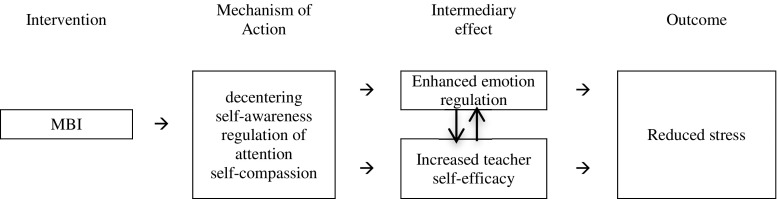
School teachers report high levels of stress which impact on their engagement with pupils and effectiveness as a teacher. Early intervention or prevention approaches may support teachers to develop positive coping and reduce the experience and impact of stress. This article reviews research on one such approach: mindfulness-based interventions (MBIs) for school teachers. A systematic review and narrative synthesis were conducted for quantitative and qualitative studies that report the effects of MBIs for teachers of children aged 5-18 years on symptoms of stress and emotion regulation and self-efficacy. Twelve independent publications were identified meeting the inclusion criteria and these gave a total of 13 samples. Quality appraisal of the identified articles was carried out. The effect sizes and proportion of significant findings are reported for relevant outcomes. The quality of the literature varied, with main strengths in reporting study details, and weaknesses including sample size considerations. A range of MBIs were employed across the literature, ranging in contact hours and aims. MBIs showed strongest promise for intermediary effects on teacher emotion regulation. The results of the review are discussed in the context of a model of teacher stress. Teacher social and emotional competence has implications for pupil wellbeing through teacher-pupil relationships and effective management of the classroom. The implications for practice and research are considered.
Overview
CoChat Summary
TL;DR
This systematic review and narrative synthesis examined 12 publications (13 samples) of mindfulness-based interventions (MBIs) for teachers of children aged 5–18 years. MBIs showed strongest promise for improving teacher emotion regulation, with mixed evidence for reducing stress and increasing self-efficacy.
Key findings
- Across 12 publications and 13 samples, data came from 589 participants, mostly qualified teachers in mainstream settings, mostly in the USA with some Canada and UK studies. Quality varied; strengths included reporting study details, while weaknesses included limited consideration of sample size and analytical reliability.
- For stress, 49 effect sizes ranged from 0.01 to 2.12; 44% of anxiety/depression effects were significant, 60% of general/occupation-specific stress results were significant, and 50% of burnout results across three studies were significant. For example, Beshai et al. (2016) reported a significant stress reduction (PSS: t(48) = 6.32, p < 0.001), and Jennings et al. (2013) reported significant improvement in physical symptoms (F(1, 47) = 10.2, p = 0.002).
- For emotion regulation, four quantitative studies produced eight effect sizes ranging from 0.43 to 1.56, with 63% significant. Jennings et al. (2013) found a significant effect on ERQ reappraisal (F(1, 47) = 10.9, p = 0.002), and Taylor et al. (2016) found significant improvement in efficacy for regulating emotions (F(1, 54) = 7.06, p < 0.05).
- For self-efficacy, five studies produced effect sizes from 0.07 to 0.87, with 29% significant; Jennings et al. (2013) found significant effects on student engagement (F(1, 47) = 10.3, p = 0.002) and instruction (F(1, 47) = 11.6, p = 0.001), and Poulin et al. (2008) found a significant overall self-efficacy effect (F = 4.88, p < 0.05). Mindfulness/self-compassion effect sizes ranged from 0.04 to 1.77, with 39% significant.
Methods
- Systematic search conducted in September 2015 from 1966 onward across PsycINFO, Web of Science, and ERIC, combining mindfulness intervention terms with teacher/school terms, plus hand and citation searches. Database searches returned 607 papers and manual searches 18; after duplicates, 600 titles/abstracts were screened, 17 full texts assessed, 5 excluded, and 12 papers included.
- Inclusion criteria covered MBIs delivered to qualified or trainee teachers of children aged 5–18 in mainstream or special provision, assessing teacher stress, self-efficacy, or emotion regulation; quantitative, qualitative, and mixed-methods designs were eligible. Exclusions included higher education or pre-school teachers, single-session mindfulness studies, and interventions with large components of related therapies.
- Quality was appraised independently by two researchers using QATSDD, with initial agreement of 91.6% by Cohen’s kappa. Effect sizes (Cohen’s d) were computed from published data; because of the small number of studies and heterogeneity, no meta-analysis was conducted and findings were narratively synthesised.
Limitations
- The paper states that the search strategy may have introduced selection bias, identified studies mainly from developed English-speaking countries (mostly the USA), excluded grey/unpublished literature, and left publication bias unknown, though the authors argue publication bias was unlikely to have meaningfully affected effect sizes.
- The paper states that the literature had small sample sizes, insufficient statistical power, absence of active controls, non-blind and self-selecting teachers, only three studies with fidelity checks, no follow-up comparisons of emotion regulation beyond 3 months, and little data on classroom or pupil outcomes.
- Evident from the text: the reviewed MBIs varied in aims, content, duration, and delivery, and outcome measures differed across studies, making it difficult to isolate mindfulness-specific effects from additional emotion-management instruction or to compare findings directly.
Model-written summary. Check it against the paper before relying on it.
Integrity signals
Registry
Cites
Statistics
Figures
Verification
Claims the paper makes
1 Valid · 2 Not valid · 71 Not checked · 69 Own results and interpretations
A result the paper reports from its own data — it cites no other source for it, so there is none to check. The quote shows it is in the paper.
In the paper
“The quality assessment of the literature suggested that strengths lie in the reporting of study details, including aims, recruitment and data collection procedures.”
§ Teaching Mindfulness to Teachers: a Systematic Review and Narrative Synthesis > Results
hedged- Asserted: passes — The authors put it forward as true.
- Checkable: passes — It can be checked against evidence.
- Load-bearing: unclear — It is unclear whether the paper’s conclusions depend on it.
- Based: passes — The paper gives a reason why it holds.
In the paper
“On the whole, the body of literature was weakened by little consideration of sample size in terms of analysis, or the reliability of the analytical process (with the exception of Taylor et al. 2016).”
§ Teaching Mindfulness to Teachers: a Systematic Review and Narrative Synthesis > Results
What the sources say
- Not checked yetcites Taylor et al. 2016 matched to “Examining Ways That a Mindfulness-Based Intervention Reduces Stress in Public School Teachers: a Mixed-Methods Study” (2016) source
plain- Asserted: passes — The authors put it forward as true.
- Checkable: passes — It can be checked against evidence.
- Load-bearing: unclear — It is unclear whether the paper’s conclusions depend on it.
- Based: passes — The paper gives a reason why it holds.
None of the sources cited for this claim have been checked yet.
In the paper
“In addition, only studies by Jennings et al. (2011, 2013) included user involvement (i.e. feedback from teachers on the intervention) in the design.”
§ Teaching Mindfulness to Teachers: a Systematic Review and Narrative Synthesis > Results
What the sources say
- Not checked yetcites Jennings et al. 2011
- Not checked yetcites Jennings et al. 2013 matched to “Improving classroom learning environments by Cultivating Awareness and Resilience in Education (CARE): Results of a randomized controlled trial.” (2013) source
plain- Asserted: passes — The authors put it forward as true.
- Checkable: passes — It can be checked against evidence.
- Load-bearing: unclear — It is unclear whether the paper’s conclusions depend on it.
- Based: passes — The paper gives a reason why it holds.
A result the paper reports from its own data — it cites no other source for it, so there is none to check. The quote shows it is in the paper.
In the paper
“Forty-nine effect sizes, ranging from 0.01 to 2.12, were generated on the effects of a MBI on teacher stress, including psychological and physical symptoms, perceived stress and/or burnout (see Table 2).”
§ Teaching Mindfulness to Teachers: a Systematic Review and Narrative Synthesis > Results > Effects of MBIs
plain- Asserted: passes — The authors put it forward as true.
- Checkable: passes — It can be checked against evidence.
- Load-bearing: passes — The paper’s conclusions depend on it.
- Based: passes — The paper gives a reason why it holds.
None of the sources cited for this claim have been checked yet.
In the paper
“Eight-week programmes based on MBSR and/or MBCT were examined in six studies (Beshai et al. 2016; Flook et al. 2013; Frank et al. 2015; Gold et al. 2010; Napoli 2004; Poulin et al. 2008).”
§ Teaching Mindfulness to Teachers: a Systematic Review and Narrative Synthesis > Results > Mindfulness Programmes
plain- Asserted: passes — The authors put it forward as true.
- Checkable: passes — It can be checked against evidence.
- Load-bearing: unclear — It is unclear whether the paper’s conclusions depend on it.
- Based: passes — The paper gives a reason why it holds.
55 more claims
Create a free account to see all 143 claims and to verify the 106 references still open.
- It may state two separate claims as one. 63
- Probably not a substantial claim. 26
- The quote only partly states this claim. 1
Claims other papers make about this one
Each is checked against this paper’s own text: does it say what the citing paper says it does?
The cited source says what the claim attributes to it.
In the citing paper
“Other systematic reviews and meta-analyses have also provided promising results for mindfulness-based programs (Emerson et al., 2017; Hwang et al., 2017; Klingbeil & Renshaw, 2018; Lomas et al., 2017; Zarate et al., 2019)”
From Intervention Programs Targeting the Mental Health, Professional Burnout, and/or Wellbeing of School Teachers: Systematic Review and Meta-Analyses (2023) · cites this paper as Emerson et al., 2017
The cited source says what the claim attributes to it.
In the citing paper
“Five reviews have used a formal tool to assess risk of bias in included studies; four concluded that the overall quality of studies assessing mindfulness interventions were varied (Emerson et al., 2017; Hwang et al., 2017; Lomas et al., 2017; Zarate et al., 2019)”
From Intervention Programs Targeting the Mental Health, Professional Burnout, and/or Wellbeing of School Teachers: Systematic Review and Meta-Analyses (2023) · cites this paper as Emerson et al., 2017
In the citing paper
“While it connects teacher well-being with student development, it primarily emphasizes program delivery rather than organizational integration”
From Mapping the landscape of mindfulness research in educational workplaces: a bibliometric and conceptual analysis (2020–2024) (2026) · cites this paper as Emerson et al., 2017
Statistics that don’t add up
Each reported p-value recomputed from its test statistic and degrees of freedom, each partial η² from its F, and each ratio, mean difference or B printed with a p checked against its own confidence interval.
Rated minor: it would not touch a result — a value no result rests on, a p-value that stays on the same side of the significance level, or a conflict that is clerical, resolved elsewhere in the paper, or outside its own findings.
In the paper
“t(33) = 3.71, p = 0.03”
§ Teaching Mindfulness to Teachers: a Systematic Review and Narrative Synthesis > Results > Effects of MBIs
Reported p = .03 · recomputed p < .001
Rated minor: it would not touch a result — a value no result rests on, a p-value that stays on the same side of the significance level, or a conflict that is clerical, resolved elsewhere in the paper, or outside its own findings.
In the paper
“t(23) = 2.66, p = 0.03”
§ Teaching Mindfulness to Teachers: a Systematic Review and Narrative Synthesis > Results > Effects of MBIs
Reported p = .03 · recomputed p = .014
Rated minor: it would not touch a result — a value no result rests on, a p-value that stays on the same side of the significance level, or a conflict that is clerical, resolved elsewhere in the paper, or outside its own findings.
In the paper
“t(33) = 4.36, p = 0.02”
§ Teaching Mindfulness to Teachers: a Systematic Review and Narrative Synthesis > Results > Effects of MBIs
Reported p = .02 · recomputed p < .001
Rated minor: it would not touch a result — a value no result rests on, a p-value that stays on the same side of the significance level, or a conflict that is clerical, resolved elsewhere in the paper, or outside its own findings.
In the paper
“t (33) = 1.10, p = 0.40”
§ Teaching Mindfulness to Teachers: a Systematic Review and Narrative Synthesis > Results > Effects of MBIs
Reported p = .4 · recomputed p = .279
Statistics recomputed
Every reported test result, recomputed from its test statistic and degrees of freedom. A result shows as not adding up only once an independent check has confirmed it.
- Doesn’t add upt(33) = 3.71reported p = .03 · recomputed p < .001
“t(33) = 3.71, p = .03”
- Doesn’t add upt(33) = 4.36reported p = .02 · recomputed p < .001
“t(33) = 4.36, p = .02”
- Doesn’t add upt(33) = 1.1reported p = .4 · recomputed p = .279
“t (33) = 1.10, p = .40”
- Doesn’t add upt(23) = 2.66reported p = .03 · recomputed p = .014
“t(23) = 2.66, p = .03”
- Not confirmedF(1, 53) = 7.11reported p < .01 · recomputed p = .010
“F(1, 53) = 7.11, p < .01”
27 more recomputed tests
Create a free account to see every test the Stats check recomputed.
Self-check
Percentages, sums and reported differences re-computed from the paper’s own numbers.
Each contradiction between two passages listed here was confirmed by an independent check.
Rated minor: it would not touch a result — a value no result rests on, a p-value that stays on the same side of the significance level, or a conflict that is clerical, resolved elsewhere in the paper, or outside its own findings.
In the paper
§ Teaching Mindfulness to Teachers: a Systematic Review and Narrative Synthesis > Introduction
“The traditional format for delivery of a MBI is eight weekly 2.5-h sessions”
§ Teaching Mindfulness to Teachers: a Systematic Review and Narrative Synthesis > Results > Mindfulness Programmes
“shorter sessions (75–120 min rather than 180 min standard)”
Rated minor: it would not touch a result — a value no result rests on, a p-value that stays on the same side of the significance level, or a conflict that is clerical, resolved elsewhere in the paper, or outside its own findings.
In the paper
§ Teaching Mindfulness to Teachers: a Systematic Review and Narrative Synthesis > Results > Effects of MBIs
“All quantitative studies reported the influence of MBIs for teachers on measures of mindfulness and self-compassion (Table 5).”
§ Teaching Mindfulness to Teachers: a Systematic Review and Narrative Synthesis > Results > Measures
“In addition, mindfulness was measured in eight studies, using one of two measures: the Five Facet Mindfulness Questionnaire (n = 7; FFMQ) or the original form, the Kentucky Inventory of Mindfulness Skills (n = 1; KIMS). Data for teachers’ self-compassion was available for three studies”
Rated minor: it would not touch a result — a value no result rests on, a p-value that stays on the same side of the significance level, or a conflict that is clerical, resolved elsewhere in the paper, or outside its own findings.
In the paper
§ Teaching Mindfulness to Teachers: a Systematic Review and Narrative Synthesis > Results > Effects of MBIs
“consistently reported medium–large and significant effects on the ‘observe’ (Flook et al. 2013; Frank et al. 2015; Jennings et al. 2011—study 1; Jennings et al. 2013; Poulin et al. 2008)”
§ Teaching Mindfulness to Teachers: a Systematic Review and Narrative Synthesis > Results > Effects of MBIs
“Significant increase in mindfulness (describe subscale: t(9) = 2.53, p = 0.032) and self-compassion (SCS humanity: t(9) = 3.42, p = 0.008) in intervention group.”
Rated minor: it would not touch a result — a value no result rests on, a p-value that stays on the same side of the significance level, or a conflict that is clerical, resolved elsewhere in the paper, or outside its own findings.
In the paper
§ Teaching Mindfulness to Teachers: a Systematic Review and Narrative Synthesis > Results > Effects of MBIs
“Frank et al. (2015) reported significant changes from within-group analyses for the intervention group on subscales ‘acknowledgement’, ‘remaining calm’, and ‘present moment focus’”
§ Teaching Mindfulness to Teachers: a Systematic Review and Narrative Synthesis > Results > Effects of MBIs
“Significant differences between intervention and control groups on change scores (post-pre) indicated intervention effect for self-efficacy in acknowledgement”
Citations
Cites
Statistical Power Analysis for the Behavioral Sciences
Muller, K. (1989) · Technometrics · doi:10.1080/00401706.1989.10488618 · Cited by 99,167
Statistical power analysis for the behavioral sciences
(1990) · Computers, Environment and Urban Systems · doi:10.1016/0198-9715(90)90050-4 · Cited by 65,269
Statistical Power Analysis for the Behavioral Sciences (2nd ed.).
Lachenbruch, P. A., & Cohen, J. (1989) · Journal of the American Statistical Association · doi:10.2307/2290095 · Cited by 37,395
Gross, J. J., & John, O. P. (2003) · Journal of Personality and Social Psychology · doi:10.1037/0022-3514.85.2.348 · Cited by 11,929 · cited 3×
“(2013) reported a large and significant effect on one of two subscales on a general measure of emotion regulation (Emotion Regulation Questionnaire, ERQ; Gross and John 2003); changes on the ‘reappraisal’ subscale reflected teachers’ ability to regulate their emotions and consequently reappraise stressful situations i…”
BackgroundInfluential(2008) · Medical Entomology and Zoology · Cited by 7,477
Mindfulness: A proposed operational definition.
Bishop, S. R., Lau, M., Shapiro, S., Carlson, L., Anderson, N. D., Carmody, J., Segal, Z. V., Abbey, S., Speca, M., Velting, D., et al. (2004) · Clinical Psychology: Science and Practice · doi:10.1093/clipsy.bph077 · Cited by 7,234
Teacher efficacy: capturing an elusive construct
Tschannen-Moran, M., & Hoy, A. W. (2001) · Teaching and Teacher Education · doi:10.1016/s0742-051x(01)00036-1 · Cited by 6,839 · cited 1×
“Similarly, when delivered across occupational settings, there have been reported positive effects of MBIs on stress and wellbeing (health care providers, Escuriex and Labbé 2011; health care professionals, Irving et al. 2009; working adults, Virgili 2013).”
BackgroundThe Development and Validation of a Scale to Measure Self-Compassion
NEFF, K. D. (2003) · Self and Identity · doi:10.1080/15298860309027 · Cited by 6,436 · cited 2×
“Data for teachers’ selfcompassion was available for three studies (Beshai et al. 2016; Flook et al. 2013; Roeser et al. 2013) using a version of the Self-compassion Scale (SCS, Neff 2003).”
BackgroundMethodPositive Psychology Progress: Empirical Validation of Interventions.
Seligman, M. E. P., Steen, T. A., Park, N., & Peterson, C. (2005) · American Psychologist · doi:10.1037/0003-066x.60.5.410 · Cited by 5,947 · cited 1×
“This is routine in psychological interventions (and in MBIs) where the readiness for intervention, and the personal decision to engage, is deemed important to outcomes as well as reflecting ethical practice (Lyubomirsky et al. 2011; Seligman et al. 2006; Seligman et al. 2005).”
BackgroundMethods of Meta-Analysis: Correcting Error and Bias in Research Findings
Schmidt, F. L., & Hunter, J. E. (2015) · doi:10.4135/9781483398105 · Cited by 5,542
Research works printed but not linked: 4
- Bricheno P Brown S Lubansky R Teacher wellbeing: a review of the evidence 2009 London Teacher Support Network
- Derogatis LR SCL-90-R (Symptom Checklist-90-R): administration, scoring, and procedures manual 1994 Minnetonka, MN National Computer Systems
- Midgley C Maehr ML Hruda LZ Anderman E Anderman L Freeman KE Manual for the Patterns of Adaptive Learning Scales (PALS) 2000 Ann Arbor, MI University of Michigan
- National Association of Schoolmasters Union of Women Teachers (NASUWT Teachers’ satisfaction and wellbeing in the workplace 2013 London ComRes
Cited by
Items 201–256 of 256
Ρούκστουλ, Σ.-Σ., & Kalogiannakis, M. (2020) · Διεθνές Συνέδριο για την Ανοικτή & εξ Αποστάσεως Εκπαίδευση · doi:10.12681/icodl.2291 · Cited by 1
Rivers, J. S. (2020) · ScholarlyCommons (University of Pennsylvania)
Al-Khudhairy, M., Rubayan, A. B., Khayari, D. A., Al-Shahri, A., & Subhi, N. A. (2020) · Journal of international oral health · doi:10.4103/jioh.jioh_333_19
A Study of Ontario Full-day Kindergarten Educators’ Responses to Children’s Emotions
Balter, A.-S. (2021) · TSpace (University of Toronto) · Cited by 4
Progress in Education for Students with Intellectual Disabilities in Saudi Arabia: Evaluating Status
Alshamri, K. H. (2020) · Journal of the American Academy of Special Education Professionals · doi:10.64546/jaasep.443
Adaptive Coping: Psychological Mindfulness for Teachers
Low, R. (2021) · Springer eBooks · doi:10.1007/978-3-030-70384-4_3
Campbell, N. (2021) · Cited by 2
Bryzgel, P. A. (2018) · Digital Repository Service (Northeastern University) · doi:10.17760/d20316449
Sternberg, R. J., & Glück, J. (2022) · Cambridge University Press eBooks · doi:10.1017/9781009085724.014
Present Moment Awareness and the Prosocial Classroom
Mackenzie, E. (2019) · American Educational Research Association Annual Meeting (AERA) · doi:10.3102/1440889
Exploring Public Perception of Mindfulness in Canadian Schools: A News Media Content Analysis
Albert, J., Whitley, J., & Klan, A. (2023) · Brock Education Journal · doi:10.26522/brocked.v32i1.956 · Cited by 2
“Many also report benefits for themselves and their own mindfulness practice (Emerson et al., 2017; Norton & Griffith, 2020).”
Jackson, J. J., Moldavan, A. M., & Valauri, A. (2023) · National Youth Advocacy and Resilience Journal · doi:10.20429/nyarj.2023.060103
Liberman1, T., Bidegain, M., Berriel, A., López, F., Ibarra, A., Pisani, M., Polero, S., Brito, G., Pereira, A. C., López, S., et al. (2023) · Research Square · doi:10.21203/rs.3.rs-2909265/v1
Abbott, P., Nixon, G., Stanley, I., & D’Ambruoso, L. (2023) · medRxiv · doi:10.1101/2023.06.19.23291616 · Cited by 1
Exploring the figured worlds of mindfulness and teaching
Diamantis, S., Graue, E., Moss, E. E., & Flook, L. (2023) · Anthropology & Education Quarterly · doi:10.1111/aeq.12478
Teachers Experiences in Mindfulness and Fitness Program: A Pilot Study
Hunt, T. N., Roberts, K., Byrd, M. M., Johnson, K., & Gipson, C. M. (2024) · OBM Integrative and Complementary Medicine · doi:10.21926/obm.icm.2401002
Mindfulness in Teaching and Education
Lo, H. H. M. (2024) · Mindfulness in behavioral health · doi:10.1007/978-3-031-51943-7_8
Singha, R. (2024) · Advances in higher education and professional development book series · doi:10.4018/979-8-3693-0343-6.ch014 · Cited by 1
Senior Leadership Team Communication and Educators’ Stress: Implications for Policymakers
Spiteri, S., & Bezzina, A. (2023) · Malta Journal of Education · doi:10.62695/rnyx7360 · Cited by 1
“Both LSE2 and LSE1 stated that “if you’re stressed you can’t work properly”, thereby affirming Burke et al.’s (1996) and Emerson et al.’s (2017) view that when educators are unable to manage stress effectively, they are most likely to negatively impact their students’ engagement, be less…”
BackgroundWeghaupt, D. (2024) · Achtsamkeit - Bildung - Medien · doi:10.1515/9783839470022-042
Jennings, P. A., Álamos, P., Baelen, R. N., Jeon, L., & Nicholas-Hoff, P. Y. (2024) · doi:10.31234/osf.io/ea284
A Bibliometric Analysis on Teacher Mindfulness
İPEK, Z. H., & Sezgin, F. (2024) · e-Kafkas Eğitim Araştırmaları Dergisi · doi:10.30900/kafkasegt.1397381
Young, T. N. (2024) · MOspace Institutional Repository (University of Missouri) · doi:10.32469/10355/105950 · Cited by 2
Molina, C. E. (2021) · University of North Texas Digital Library (University of North Texas) · doi:10.12794/metadc1833495
Trauma: Constructivist Theoretical Framework
Floyd, K. K., & Dunham, W. (2025) · Journal of Trauma Studies in Education · doi:10.70085/jtse.v4i1.137 · Cited by 7
“By building brief moments of dedicated time for easy-to-learn mindfulness practices into school routines, students and teachers become more calm, focused, and responsive while experiencing less stress and anxiety (Emerson et al., 2017).”
Level of Teachers’ Mindfulness and Its Relationship to Learners’ Academic Performance
Luis, J. (2025) · International Journal For Multidisciplinary Research · doi:10.36948/ijfmr.2025.v07i02.42158
“Emerson et al. (2019) emphasized that mindfulness training is particularly beneficial for teachers working with early-grade learners, such as those in Grades 1-3, where the need for emotional support and classroom engagement is at its peak.”
Achtsamkeit in Lehre und Bildung
Lo, H. H. M. (2025) · Springer eBooks · doi:10.1007/978-3-031-83285-7_8
PROMOTING THE WELL-BEING OF BEGINNING TEACHERS: AN ASSESSMENT
FRAGATA, J. A. M. (2025) · Cognizance Journal of Multidisciplinary Studies · doi:10.47760/cognizance.2025.v05i05.019
Assessing Stress Levels Amongst Teachers: Factors, Impacts, Coping Strategies and Teacher Well Being
Merwe, Y., & Klinck, K. (2025) · Education Journal · doi:10.11648/j.edu.20251403.16 · Cited by 4
Significance of Mindfulness on Teachers: A Review-Based Perspective
Murthy, R. K., & Balaji, G. (2025) · INTERNATIONAL JOURNAL OF RESEARCH AND ANALYTICAL REVIEWS · doi:10.56975/ijrar.v12i3.317942
Anchunda, H. Y., & Kaewurai, W. (2025) · SSRN Electronic Journal · doi:10.2139/ssrn.5364879
Mindful inclusion: strategies for holistic wellbeing in schools
Calcutt, J. (2025) · Frontiers in Education · doi:10.3389/feduc.2025.1638482
Gözütok, E. N., & Gözütok, A. S. (2025) · Uluslararası Türk Eğitim Bilimleri Dergisi · doi:10.46778/goputeb.1772648
Jakupov, M., Жартаевна, А. А., Сарбасова, Г. Ж., Baimoldina, L., & Fedorovich, O. (2025) · The Educational and Developmental Psychologist · doi:10.1080/20590776.2025.2597747
“Research indicates that mindfulness-based interventions for teachers yield substantial reductions in burnout symptoms and depressive manifestations (Emerson et al., 2022; Roeser et al., 2022).”
Harrison, R., Jones, B., Gardener, P., & Lawton, R. (2021) · Figshare · doi:10.6084/m9.figshare.14037560
Braun, S. S., Roeser, R. W., & Mashburn, A. J. (2021) · Figshare · doi:10.6084/m9.figshare.14433242
Yang, J., Xie, P., Lv, X., & Ming, X. (2025) · European Review of Applied Psychology · doi:10.1016/j.erap.2024.101052 · Cited by 2
Raghunathan, R. S., Jeon, L., Miller, J., & Johnson, S. B. (2026) · Child & Youth Care Forum · doi:10.1007/s10566-026-09922-7
“Early evidence has shown that mindfulness-based interventions may help teachers better regulate their emotions (Emerson et al., 2017; Wimmer et al., 2019).”
Advancing the Science and Practice of Mindfulness to Support Mental Health in Schools
Renshaw, T. L., Jimerson, S. R., Phan, M. L., & Franzmann, T. K. (2025) · Oxford University Press eBooks · doi:10.1093/9780190880507.003.0001
Mindfulness-Based Interventions With Parents and Educators
Thayer, A. J., Sullivan, M., Larson, M. F., & Cook, C. R. (2025) · Oxford University Press eBooks · doi:10.1093/9780190880507.003.0003
Shin, S., & Hong, H. (2026) · Advances in computational intelligence and robotics book series · doi:10.4018/407438
Ahmadi, K., & Rostami, M. (2026) · Contemporary School Psychology · doi:10.1007/s40688-026-00596-5
“Evidence from mindfulness-based interventions for in-service teachers further demonstrates consistent benefits in stress reduction, emotion regulation, and supporting occupational functioning, including self-efficacy (Emerson et al., 2017; Janssen et al., 2024).”
Brito, R., & Sellman, E. M. (2026) · British Journal of Educational Studies · doi:10.1080/00071005.2026.2669075
“…secondly, that the main purpose of this curriculum is to allow for initial ‘tasting’ or orientation to and confidence with mindfulness, so that the implementation of mindfulness throughout the community may proceed more organically and comprehensively (Bowden et al ., 2021; Emerson et al ., 2017).”
Mindfulness in teaching as a mediator between higher education teachers’ teaching and well-being
Parpala, A., Nokelainen, P., Räisänen, M., Kosenkranius, M., Puhakka, I., & Postareff, L. (2026) · Discover Psychology · doi:10.1007/s44202-026-00726-3 · Cited by 1
“Mindfulness-based interventions have been shown to lower teachers’ stress levels [19, 39, 54], and mindfulness-based practices foster problem-focused, positive coping strategies [17].”
Effects of mindfulness practice on the emotional states of students in the classroom
Carroll, A., Chen, H., Bower, J., & Sherwell, C. S. (2026) · Social Psychology of Education · doi:10.1007/s11218-026-10238-6
“…mindfulness programs have found mixed outcomes in youths, with low to moderate positive effects on their emotions and academic outcomes, not so significant as in adults as shown in controlled studies (e.g., Emerson et al., 2017 ; Horneffer-Ginter, 2022; Maynard et al., 2017; Mettler et al., 2023).”
InfluentialPalmer, K., & Rogge, R. D. (2026) · Behavioral Sciences · doi:10.3390/bs16061018
“Building on the promising findings of ACT and mindfulness-based interventions with teachers (e.g., Biglan et al., 2013; Emerson et al., 2017; Jennings et al., 2017; Paliliunas et al., 2023; Roeser et al., 2013), the study conducted a broader (Model 1) and a more fine-grained, process-focused (Model…”
Exploring the role of yoga in teachers' professional identity and pedagogical approaches
Cross, F., & Fisher, A. (2026) · Teaching and Teacher Education · doi:10.1016/j.tate.2026.105691
Anchunda, H. Y., & Kaewurai, W. (2026) · Frontiers in Education · doi:10.3389/feduc.2026.1803359
Training Programs for Development of Digital Skills and Remote Teachers’ Wellbeing
Boatcă, M. E., Drăghici, A., & Badea, A. (2026) · Lecture notes in networks and systems · doi:10.1007/978-3-032-32032-2_46
(2026) · Emerald Group Publishing Limited eBooks · doi:10.1108/978-1-80686-949-720261019
Harris, A. N. (2026) · Emerald Group Publishing Limited eBooks · doi:10.1108/978-1-80686-949-720261025
İPEK, Z. H., & Sezgin, F. (2026) · Journal of Intelligence · doi:10.3390/jintelligence14090210
“…students is consistent with earlier research demonstrating that mindfulness promotes empathic relationships and compassionate interactions within educational settings (Arendt et al., 2019; Emerson et al., 2017; Glomb et al., 2011; Jennings et al., 2011; Schussler et al., 2016; Seitz & Angel, 2020).”
Mindfulness and Educators’ Mental Health and Well-Being: Outcomes of a Two-Year Study
Jónsdóttir, B. J., Stefánsson, K. K., Kaldalóns, I. V., Frostadottir, A. D., & Jónsson, Ó. P. (2026) · School Mental Health · doi:10.1007/s12310-026-09914-x
Nguyen, T., Hidajat, T. J., Zhou, T., Ma, T., Hoang, A., Poed, S., & Edwards, E. J. (2026) · Educational Psychology Review · doi:10.1007/s10648-026-10218-4
“Narrative reviews of mindfulness-based programs that develop educators’ emotion regulation, self-awareness, self-effi - cacy, and self-compassion report similar effects (Emerson et al., 2017; Hidajat et al., 2023 ).”
Metadata
- Authors
- Emerson, L.-M., Leyland, A., Hudson, K., Rowse, G., Hanley, P., & Hugh-Jones, S.
- Affiliations
- University of Sheffield (GB)
- University of Leeds (GB)
- University of Huddersfield (GB)
- Corresponding author
- Emerson, Lisa-Marie
- Venue
- Mindfulness
- Published
- 2017-02-23
- Volume
- 8
- Issue
- 5
- Pages
- 1136-1149
- ISSN
- 1868-8527 (ISSN-L)
- 1868-8535
- PMC
- PMC5605579
- OpenAlex
- W2590774814
- Cited by
- 258
- References
- 66
- Citations by year
- 2026: 22 · 2025: 42 · 2024: 37 · 2023: 27 · 2022: 25 · 2021: 38 · 2020: 27 · 2019: 28 · 2018: 11 · 2017: 1
- FWCI
- 2.81
- Type
- journal article
- Language
- en
- Open access
- hybrid
- doi.org
- Locations
- Mindfulness (publishedVersion, cc-by)
- Europe PMC (PubMed Central) (publishedVersion, cc-by)
- PubMed Central (publishedVersion, cc-by)
- PubMed (publishedVersion)
- University of Huddersfield Repository (University of Huddersfield) (acceptedVersion)
- White Rose Research Online (University of Leeds, The University of Sheffield, University of York) (acceptedVersion)
- Huddersfield Research Portal (University of Huddersfield) (submittedVersion, cc-by)
- Griffith Research Online (submittedVersion, cc-by)
- Funders
- University of Sheffield
- Topics
- Social Sciences › Psychology › Clinical Psychology › Mindfulness and Compassion Interventions
- Health Sciences › Medicine › Public Health, Environmental and Occupational Health › Occupational Health and Burnout
- Social Sciences › Psychology › Developmental and Educational Psychology › Student Stress and Coping
- Keywords
- mindfulness-based interventions, teacher stress, school teachers, emotion regulation, teacher self-efficacy, teacher well-being, teacher-student relationship, classroom management, socioemotional skills
About these checks
Registry, retraction, Cites and statistics results are computed, not judged, with one exception: a printed reference that no index lists is read once by a model before it counts as a citation error. Claims are extracted by a model and kept only when their quote appears verbatim in the text; each cited source is then checked, with a model’s help, for whether it says what the claim relies on. Those verdicts can be wrong — read the claim’s quote and the cited source before relying on one.
The claim verdicts this report counts are experimental: their accuracy is not yet measured.
A language model drew the claims from the paper on 2026-10-05, under version 3 of the claim definition (model deepseek-v4.1-flash, prompt extract-v3).
A second model labelled each claim on 2026-10-05 (model jev-1.13-20260917, definition revision gold-guideline-v0.2).
Statistics and arithmetic are recomputed, not judged.
Confidence bands are shown only for fields calibrated on our annotated test set. None is calibrated yet, so no band is shown.
What counts as a claim ›How we measure confidence ›How we check this ›
Are you an author, or do you see a problem with this page? Request a review
Data sources
Bibliographic data: Semantic Scholar, OpenAlex, Crossref.
Contains information from the Semantic Scholar Academic Graph Datasets, made available under the ODC Attribution License (ODC-BY 1.0).
Semantic Scholar’s data is described in: Kinney, R., et al. (2023). The Semantic Scholar Open Data Platform. arXiv:2301.10140.
