

A Systematic Review of Mindfulness-Based School Interventions with Early Adolescents
Open accessThe DOI matches its Crossref record; 54 of the 54 references it cites were found in a registry or an index.
Abstract
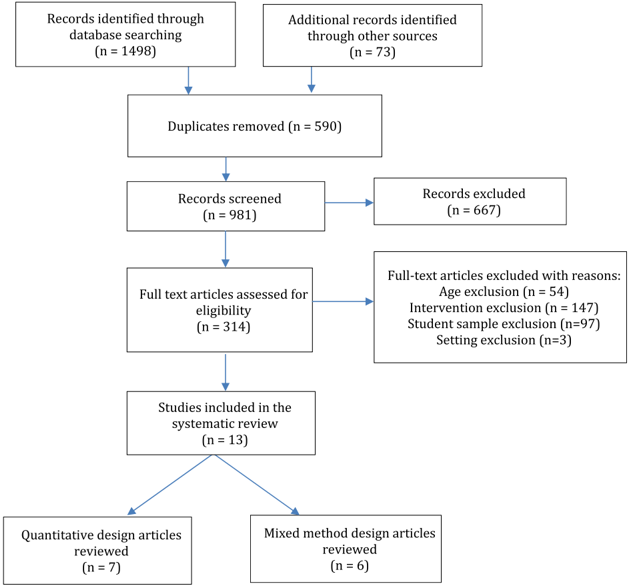
Recent research on mindfulness-based interventions (MBIs) in schools have reported effect differences across age groups of students, with early adolescent students reporting the least effect. Existing reviews, however, include students across all age ranges and largely concern intervention effects and their contributors. The exclusion of qualitative data exploring students’ experiences of learning and practising mindfulness omits valuable information that could be used to better inform implementation of MBIs. The lack of quality critique employed in the existing reviews necessitates a new review. A search carried out in nine electronic databases resulted in an initial selection of 1571 records, from which 13 papers emerged that met all inclusion criteria. The review found positive improvements reported in well-being measures in 11 of the 13 papers examined across both quantitative and qualitative data that provide support for mindfulness as a well-being school preventative program with this age group. A quality analysis critique of each paper demonstrated methodological strengths and limitations of existing MBI studies for early adolescent students, which inform ongoing conversations about whether and how MBIs meet the criteria of evidence-based practice (EBP) as an effective educational program. Findings are discussed for future research and education considerations are reviewed for educational professionals who aim to support early adolescents through the implementation of MBIs at school.
Overview
The claims and statistics of this paper haven’t been checked yet.
Free: it reads the open-access text and checks the first 5 claims that cite a source we can check. Create a free account to check every claim.
Integrity signals
Registry
Cites
Statistics
Figures

Verification
Claims the paper makes
The claims and statistics of this paper haven’t been checked yet.
Free: it reads the open-access text and checks the first 5 claims that cite a source we can check. Create a free account to check every claim.
Claims other papers make about this one
Each is checked against this paper’s own text: does it say what the citing paper says it does?
The cited source says what the claim attributes to it.
In the citing paper
“(7) Include primary studies conducted past 5 years [14,54,55].”
From Systematic Review of Mindfulness-Based Interventions in Child-Adolescent Population: A Developmental Perspective (2022) · cites this paper as [54]
Self-check
Percentages, sums and reported differences re-computed from the paper’s own numbers.
The self-check needs the paper’s full text.
Citations
Cites
Using thematic analysis in psychology
Braun, V., & Clarke, V. (2006) · Qualitative Research in Psychology · doi:10.1191/1478088706qp063oa · Cited by 194,414 · cited 2×
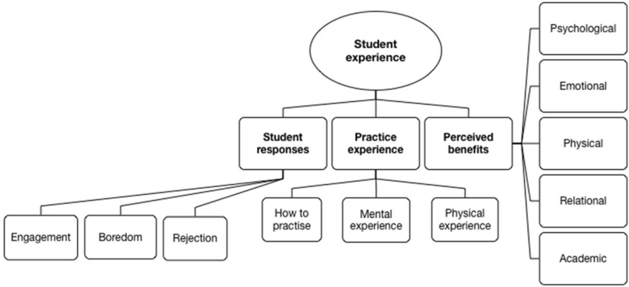
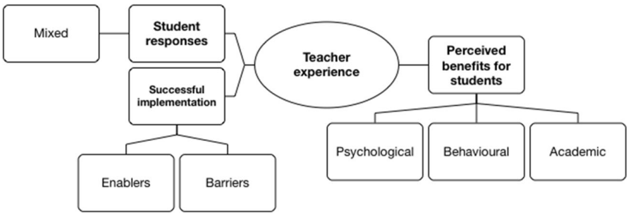
“Analysis began with (1) reading the extracted primary qualitative findings, (2) generating and reviewing initial codes to elucidate students’ experience of learning mindfulness and teachers’ experience of implementing a MBI, (3) searching for overarching themes that allow consistent patterns to emerge and (4) clusteri…”
BackgroundMethod(2001) · Cited by 25,534
Shamseer, L., Moher, D., Clarke, M., Ghersi, D., Liberati, A., Petticrew, M., Shekelle, P., Stewart, L. A., & the PRISMA-P Group (2015) · BMJ · doi:10.1136/bmj.g7647 · Cited by 13,120 · cited 1×
“The search was conducted in October 2017 under the guidelines of Preferred Reporting Items for Systematic Review and Meta-Analysis Protocols (PRISMA-P) (Shamseer et al. 2015).”
MethodMindfulness-based interventions in context: Past, present, and future
Kabat-Zinn, J. (2003) · Clinical Psychology: Science and Practice · doi:10.1093/clipsy.bpg016 · Cited by 8,615 · cited 1×
“Whilst a general consensus on a definition of mindfulness has not been reached, it has been operationalised as “paying attention on purpose, in the present moment, and non-judgementally to the unfolding of experience moment by moment” (Kabat-Zinn 2003, p.145).”
BackgroundMindfulness-based interventions in context: Past, present, and future.
Kabat-Zinn, J. (2003) · Clinical Psychology: Science and Practice · doi:10.1093/clipsy/bpg016 · Cited by 8,612
Our future: a Lancet commission on adolescent health and wellbeing
Patton, G. C., Sawyer, S. M., Santelli, J. S., Ross, D. A., Afifi, R., Allen, N. B., Arora, M., Azzopardi, P., Baldwin, W., Bonell, C., et al. (2016) · The Lancet · doi:10.1016/s0140-6736(16)00579-1 · Cited by 3,785 · cited 2×
“Significant biological, neurodevelopmental, social and psychological changes occur during the early adolescence developmental stage, the period between 11 and 14 years of age (Patton et al. 2016).”
BackgroundClinical Psychology: Science and Practice
(2021) · Clinical Psychology Science and Practice · doi:10.1111/(issn)1468-2850 · Cited by 3,672
(2001) · Cited by 3,666
Mental health of young people: A global public-health challenge
Patel, V., Flisher, A. J., Hetrick, S., & McGorry, P. (2007) · The Lancet · doi:10.1016/s0140-6736(07)60368-7 · Cited by 3,126 · cited 2×
“2015) and the shortage of mental-health professionals (Patel et al. 2007) are known to make it difficult for many young people with mental health issues to receive adequate support.”
BackgroundMindfulness-Based Cognitive Therapy for Depression: A New Approach to Preventing Relapse
HODO, D. W. (2002) · American Journal of Psychiatry · doi:10.1176/appi.ajp.159.7.1257 · Cited by 1,401
Cited by
Items 101–169 of 169
Wong, M. Y. C. (2023) · Youth · doi:10.3390/youth3040083 · Cited by 6
“…[6], a systematic review of Mindfulness-Based School Intervention summarized that the mindfulness programmes in schools were mostly body scan meditation, mindful walking and listening, as well as adaptations of well-developed mindfulness interventions like Mindfulness-Based Stress Reduction [7].”
BackgroundGülden, Ç., & Yalçın, İ. (2024) · Journal of Adolescent Research · doi:10.1177/07435584241297141 · Cited by 5
“It is challenging to provide guidance for future MBI implementation with a particular age group of students or within a specific school environment due to the wide range of student ages included in the studies (McKeering & Hwang, 2019).”
Evidence of impact underpinning Life Education Programs
Dix, K., Ahmed, S. K., Carslake, T., & Sniedze-Gregory, S. (2021) · ACEReSearch Repository (Australian Council for Educational Research) · doi:10.37517/978-1-74286-643-7 · Cited by 5
School wellbeing unveiled: insights from a systematic literature review
Simovska, V., & Primdahl, N. L. (2026) · Health Education · doi:10.1108/he-08-2025-0131 · Cited by 4
Sackett, C. R., Jenkins, A. M., & Gambrel, L. E. (2023) · Counseling Outcome Research and Evaluation · doi:10.1080/21501378.2023.2206952 · Cited by 5
School-based mindfulness: Application of the PARiHS framework to contextualize implementation
Schussler, D. L., Fosco, S. L. D., & Brown, M. A. (2024) · Journal of School Psychology · doi:10.1016/j.jsp.2024.101404 · Cited by 5
Examining the ethics of school-based mindfulness programs
Schussler, D. L., Davis, J., Fosco, S. L. D., & Kohler, K. M. (2023) · Journal of Moral Education · doi:10.1080/03057240.2023.2232121 · Cited by 5
Rebecchi, K., Lubart, T., Shankland, R., & Hagège, H. (2024) · British Journal of Educational Psychology · doi:10.1111/bjep.12694 · Cited by 11
Monsillion, J., Romo, L., & Zebdi, R. (2025) · Pediatric Reports · doi:10.3390/pediatric17020031 · Cited by 8
“Recent literature emphasizes the need for more developmentally appropriate, multidimensional tools to assess mindfulness in young populations [66,67].”
Jiang, H., & Bian, H. (2026) · Mindfulness · doi:10.1007/s12671-025-02756-9 · Cited by 2
The Toolbox Approach: Towards a Novel Flexible Way of Implementing and Testing Positive Education
Lucciarini, E., & Boniwell, I. (2023) · Springer eBooks · doi:10.1007/978-981-99-5609-8_8 · Cited by 2
Schussler, D. L., Krisch, K., Mahfouz, J., Baelen, R. N., & Gould, L. F. (2023) · Phi Delta Kappan · doi:10.1177/00317217231156230 · Cited by 2
The Effects of Replacing Traditional Punishment with Mindfulness Practices in Schools
Ahmed, M., Akbar, G., & Kamal, S. (2023) · International Journal of Innovation in Teaching and Learning (IJITL) · doi:10.35993/ijitl.v9i2.2926 · Cited by 3
“Phan et al. (2022), McKeering and Hwang (2018), and Ager et al. (2015) have conducted extensive work in this area, showcasing how mindfulness can foster a more conducive learning environment by addressing student stress and improving attention.”
BackgroundRoudebush, M., Murray, D. W., Netschytailo, H., & Jensen, T. M. (2024) · Journal of Adolescence · doi:10.1002/jad.12294 · Cited by 3
An Overview of Mindfulness and Its Implications for Children and Adolescents
Venkatesan, S. (2021) · Advances in psychology, mental health, and behavioral studies (APMHBS) book series · doi:10.4018/978-1-7998-8682-2.ch002 · Cited by 2
Can improving the “academic buoyancy” of secondary school students improve their school attendance?
Anderson, S. (2022) · Routledge eBooks · doi:10.4324/9781003201366-13 · Cited by 3
Liebherr, M., Brandtner, A., Brand, M., & Tang, Y. (2022) · Research Square · doi:10.21203/rs.3.rs-1669437/v1 · Cited by 2
Riggs, L. (2022) · ThinkIR: The University of Louisville's Institutional Repository (University of Louisville) · doi:10.18297/etd/3831 · Cited by 3
Magalhães, S., Carvalheiras, C., Ribeiro, C., Francisco, C., Mourisco, C., Leal, T., & Limpo, T. (2024) · Education Sciences · doi:10.3390/educsci14111155 · Cited by 2
Sousa, E. C., & Garcia-Collart, T. (2025) · Journal of the Association for Consumer Research · doi:10.1086/738477 · Cited by 2
Jobin, K., Ashok, L., Munivenkatappa, M., Andrews, J. J. T., Lakshmi, R. V., & John, S. (2025) · Journal of Education and Health Promotion · doi:10.4103/jehp.jehp_408_25 · Cited by 1
“[9,30,31] Long‑term mindfulness programs are required to sustain mental health and well‑being among adolescents rather than focusing on short‑term interventions.”
Miguez, N. D., D’Adamo, P., González, D., Fortuna, F., Jamardo, J., Fabre, B. R., & Lozada, M. (2026) · Child Care Health and Development · doi:10.1111/cch.70231 · Cited by 1
Uddin, M. S., Sofija, E., Rahman, N., Hossain, S., & Harris, P. (2026) · International Journal of Health Promotion and Education · doi:10.1080/14635240.2026.2649630 · Cited by 3
“…and Johri 2016), positive youth development (PYD) (Curran and Wexler 2017), resilience (Fenwick-Smith, Dahlberg, and Thompson 2018), mindfulness (McKeering and Hwang 2019), emotion regulation (Pedrini et al. 2022; Pickerell et al. 2023), psychological, mental health, or subjective wellbeing…”
Johansson, C., Kerekes, N., Alverlin, M., Wallin, L., Ahlström, B. H., & Karlsson, M. (2026) · The Journal of School Nursing · doi:10.1177/10598405261434602 · Cited by 2
“This is in line with prior research highlighting the bene fi ts of mindfulness interventions for children and adolescents in schools (Ager et al., 2015; Mckeering & Hwang, 2019).”
Hendry, C. F., & Breitmeyer, A. M. (2022) · Journal of Child and Adolescent Counseling · doi:10.1080/23727810.2022.2040318 · Cited by 1
Sturm, A., & Kasari, C. L. (2023) · Issues in clinical child psychology · doi:10.1007/978-3-031-20006-9_9 · Cited by 1
Duranleau, C., Rousseau, N., & Dionne, F. (2023) · Éducation et francophonie · doi:10.7202/1100074ar · Cited by 1
Edelstein, A., & Razza, R. A. (2023) · IGI Global eBooks · doi:10.4018/978-1-6684-6371-0.ch015 · Cited by 1
Achtsamkeit und pädagogische Professionalität in der Lehrer*innenbildung
Weghaupt, D. (2024) · Achtsamkeit - Bildung - Medien · doi:10.1515/9783839470022 · Cited by 5
The Essence of Mindfulness: A Detailed Primer
Salvi, D. K., Shah, R., & Tripathi, R. (2025) · Springer eBooks · doi:10.1007/978-981-96-4210-6_17 · Cited by 1
Kee, Y. H., Aye, K. M., Ferozd, R., & Li, C. (2019) · Frontiers in Psychology · doi:10.3389/fpsyg.2019.02314 · Cited by 1
Kvasnak, K., Brunton, G., Lemonde, M., Chyzzy, B., & Dick, J. A. (2021) · International Health Trends and Perspectives · doi:10.32920/ihtp.v1i2.1438 · Cited by 1
Abbott, P., D’Ambruoso, L., Shanks, R., Engdawork, K., & Mihretu, A. (2025) · Qeios · doi:10.32388/up1vr6 · Cited by 3
Brief Strategies for Strengthening Emotional Regulation
Macklem, G. L. (2020) · Springer eBooks · doi:10.1007/978-3-030-65695-9_7 · Cited by 1
Exploring Effectiveness of Implementation of the MindUP Program Through Implementor Perspectives
Jelic, M. (2021) · Scholarship@Western (Western University)
Zarei, S. (2022) · فصلنامه علمی و پژوهشی اعتیادپژوهی · doi:10.52547/etiadpajohi.16.63.245 · Cited by 1
Primdahl, N. L. (2022) · Transdisciplinary perspectives in educational research · doi:10.1007/978-3-030-95205-1_6
Campion, J. (2022) · Oxford University Press eBooks · doi:10.1093/med/9780198861478.003.0051
Primjenjivost tehnike mindfulnessa u obrazovnom kontekstu
Prijatelj, K., Bagarić, E. S., & Kukulj, I. (2022) · Nastavnička revija · doi:10.52444/nr.3.2.1 · Cited by 1
Arachchi, S. W., & Hettiarachchi, A. A. (2023) · Built-Environment Sri Lanka · doi:10.4038/besl.v14i1.7684 · Cited by 2
Incorporating Stillness During Physical Education Class
Bernstein, E. R. (2023) · Journal of Physical Education Recreation & Dance · doi:10.1080/07303084.2023.2237552
Büyüköksüz, E., & Raşit, A. V. C. I. (2023) · Journal of Qualitative Research in Education · doi:10.14689/enad.36.1810
Adaptation and Validation of the Mindful Student Questionnaire in Chinese
Wang, Q., Wu, Y., Feng, R., Hao, X., Felver, J. C., Zhang, Y., & Razza, R. A. (2024) · Mindfulness · doi:10.1007/s12671-023-02299-x
Diversidad en el neurodesarrollo
Leo-Jimenez, J. O. D., Rodríguez-Santillán, E., Valenzuela, C. C. C., Gomar, M. L. G., Alameda, A. J. C., Cortés, A. N., Moreno, M. B., Macedo, Z. B. N., Martínez, F. G., Carrillo, M. C., et al. (2024) · doi:10.52501/cc.143
Weghaupt, D. (2024) · Achtsamkeit - Bildung - Medien · doi:10.1515/9783839470022-042
Zouki, C.-J. E., Malaeb, D. N., Sakr, F., Dabbous, M., Hallit, S. R., Fekih‐Romdhane, F., & Obeïd, S. (2024) · Research Square · doi:10.21203/rs.3.rs-4522801/v1
García-Taibo, O., Ferriz-Valero, A., Rodríguez-Fernández, J. E., & Baena‐Morales, S. (2024) · Journal of Physical Education and Sport · doi:10.7752/jpes.2024.06151
Bintliff, A. V., Namanda, Z., Beinomugisha, P., Levine, R. S., Norah, N. N., & Cheung, W. W. (2024) · Springer eBooks · doi:10.1007/978-3-031-60583-3_19 · Cited by 1
Rigney, A. M., Drevon, D. D., & Hixson, M. D. (2024) · Psychology in the Schools · doi:10.1002/pits.23285
Emotieregulatie trainen binnen een schoolse context
Volkaert, B., Wante, L., Boelens, E., Weymeis, H., & Braet, C. (2024) · doi:10.1007/978-90-368-3041-6_7
Mindfulness en el aula. 60 ideas prácticas
Universidad Politécnica Salesiana, E., Sánchez, M. D. C., Sisalima, I. C. F., & (Ecuador), U. P. S. (2024) · Universidad Politécnica Salesiana Repositorio Digital (Universidad Politécnica Salesiana) · doi:10.17163/abyaups.93
Zeislmeier, A. L., Wolter, V., Eskic, J., & Hammerle, F. (2025) · Mindfulness · doi:10.1007/s12671-025-02523-w · Cited by 1
“Similarly, an instructor’s experience regarding mindfulness has been found to be positively associated with the success of the intervention (McKeering & Hwang, 2019).”
Universal school-based intervention: personal competence among public school children
Karam, E. G., Barathie, J. A., Kabalan, I., Cassir, Y., Tabet, C. C., & Melhem, N. (2025) · European Child & Adolescent Psychiatry · doi:10.1007/s00787-025-02710-z
Jaismin, Chukkali, S., Peter, A., Maurya, R. K., & Sandeep (2025) · Journal of Health Management · doi:10.1177/09720634251326491 · Cited by 4
Anderson, R. (2025) · Transpersonal Psychology Review · doi:10.53841/bpstrans.2025.26.1.39
Using Mindfulness and Movement Practices to Address the Impacts of Racial Trauma
Grimes, T. O., Perinchery, S. A., Farmer, L. B., & Melendez, E. (2025) · Professional School Counseling · doi:10.1177/2156759x251340065 · Cited by 1
“Moreover, youth may have dif fi culty managing wandering thoughts (McKeering & Hwang, 2019).”
The Effectiveness of Mindfulness-Based Interventions on Tribal Adolescent Girls in India
Devassykutty, A., & Jose, T. P. (2025) · Journal of Happiness Studies · doi:10.1007/s10902-025-00949-6
“Numerous reviews have documented the effectiveness of MBIs across age groups, including both adults (Juraga et al., 2024; Nauphal et al., 2022; Remskar et al., 2024 ) and adolescents (Engel et al., 2020; Kallapiran et al., 2015; Lin et al., 2019; McKeering & Hwang, 2019 ; Tymofiyeva et al., 2024).”
Visual arts help marginalized youth learn mindfulness and self-compassion
Coholic, D. A. (2020) · The Conversation · doi:10.64628/aam.9xdme56v6
Zouki, C.-J. E., Malaeb, D. N., Sakr, F., Dabbous, M., Hallit, S. R., Fekih‐Romdhane, F., & Obeïd, S. (2025) · International Journal of Adolescence and Youth · doi:10.1080/02673843.2025.2573645
“Nevertheless, extensive research and reviews (Fullman et al., 2018; McKeering & Hwang, 2019) confirm that well-being is highly correlated with mindfulness, reinforcing the construct validity of our translated scale.”
Byker, E. J., Crawford, E. O., & Lee, H. (2021) · Emerald Group Publishing Limited eBooks · doi:10.1108/978-1-64802-610-220251014
Kurze Strategien zur Stärkung der Emotionsregulation
Macklem, G. L. (2025) · Springer eBooks · doi:10.1007/978-3-032-07436-2_7
Development and Initial Validation of the Mindful Self-Regulated Learning Scale (m-SRLS)
Wolff, S. M. (2026) · Mindfulness · doi:10.1007/s12671-025-02754-x
A scoping review of 50 years of school-based mindfulness programs for children and adolescents
O’Neal, C. S., Begeny, J. C., & Smith, B. (2026) · Children and Youth Services Review · doi:10.1016/j.childyouth.2026.108840
Liu, Y. C., Yan, Q., Zhao, S., Ng, S., Wang, X., & Ning, Z. (2026) · Frontiers in Psychology · doi:10.3389/fpsyg.2026.1711994 · Cited by 1
“…to yield more modest By domain moderation analysis. effects and appear to depend more heavily on the simultaneous use of mindful-parenting strategies (van de Weijer-Bergsma et al., 2012; van der Oord et al., 2012 Leave-one-out sensitivity analysis. our subgroup pattern (McKeering and Hwang, 2019).”
Bowie, R. A., Pittaway, A., Casson, A., Woolley, M., & Hulbert, S. (2026) · Journal of Religious Education · doi:10.1007/s40839-026-00298-3
“This research itself was not about health, but it was oriented towards a broad idea of flourishing sympathetic to health, at a time when significant interest has been shown in other areas of spirituality, notably mind-fulness (e.g. McKeering & Hwang, 2019).”
Miksic, I., Muza, E., Marijanovic, I., Kišiček, S., & Burić, I. (2026) · Mindfulness · doi:10.1007/s12671-026-02876-w
“Although systematic reviews suggest the beneficial effects of MBIs on children and adolescents (Maynard et al., 2017; McKeering & Hwang, 2019; Phan et al., 2022), meta-analyses provide a more nuanced perspective (Fulam-barkar et al., 2023; Odgers et al., 2020; Zhang et al., 2022).”
Jobin, K., Ashok, L., Manjula, M., J, T. A. J., Vani Lakshmi, R., & John, S. (2026) · PLoS ONE · doi:10.1371/journal.pone.0355375
Kalmar, J., Baumann, I., Schleiting, E., Grünert, A., Vonderlin, E., Lindenberg, K., Neubauer, A. B., Heidenreich, T., & Mander, J. (2026) · Journal of Clinical Psychology · doi:10.1002/jclp.70216
Joshi, A., Kataria, A., & Beutell, N. J. (2026) · Qualitative Research Journal · doi:10.1108/qrj-12-2025-0455
Metadata
- Authors
- McKeering, P., & Hwang, Y.-S.
- Affiliations
- Australian Catholic University (AU)
- Corresponding author
- McKeering, Phillipa
- Venue
- Mindfulness
- Published
- 2018-07-18
- Volume
- 10
- Issue
- 4
- Pages
- 593-610
- ISSN
- 1868-8527 (ISSN-L)
- 1868-8535
- OpenAlex
- W2884299701
- Cited by
- 170
- References
- 54
- Citations by year
- 2026: 13 · 2025: 22 · 2024: 32 · 2023: 33 · 2022: 23 · 2021: 26 · 2020: 13 · 2019: 8
- FWCI
- 1.98
- Type
- journal article
- Language
- en
- Open access
- hybrid
- doi.org
- Licence
- cc-by
- creativecommons.org/licenses/by/4.0 (tdm)
- Locations
- Mindfulness (publishedVersion, cc-by)
- Research Bank (Australian Catholic University) (submittedVersion, cc-by)
- Topics
- Social Sciences › Psychology › Clinical Psychology › Mindfulness and Compassion Interventions
- Social Sciences › Education › Early Childhood Education and Development
- Health Sciences › Medicine › Public Health, Environmental and Occupational Health › School Health and Nursing Education
- Keywords
- mindfulness-based interventions, school-based intervention, early adolescents, student well-being, school prevention programs, evidence-based practice, implementation in schools
About these checks
Registry, retraction, Cites and statistics results are computed, not judged, with one exception: a printed reference that no index lists is read once by a model before it counts as a citation error. Claims are extracted by a model and kept only when their quote appears verbatim in the text; each cited source is then checked, with a model’s help, for whether it says what the claim relies on. Those verdicts can be wrong — read the claim’s quote and the cited source before relying on one.
Statistics and arithmetic are recomputed, not judged.
Confidence bands are shown only for fields calibrated on our annotated test set. None is calibrated yet, so no band is shown.
What counts as a claim ›How we measure confidence ›How we check this ›
Are you an author, or do you see a problem with this page? Request a review
Data sources
Bibliographic data: Semantic Scholar, OpenAlex, Crossref.
Contains information from the Semantic Scholar Academic Graph Datasets, made available under the ODC Attribution License (ODC-BY 1.0).
Semantic Scholar’s data is described in: Kinney, R., et al. (2023). The Semantic Scholar Open Data Platform. arXiv:2301.10140.
