

A Systematic Review of Mindfulness-Based School Interventions with Early Adolescents
Open accessThe DOI matches its Crossref record; 54 of the 54 references it cites were found in a registry or an index.
Abstract
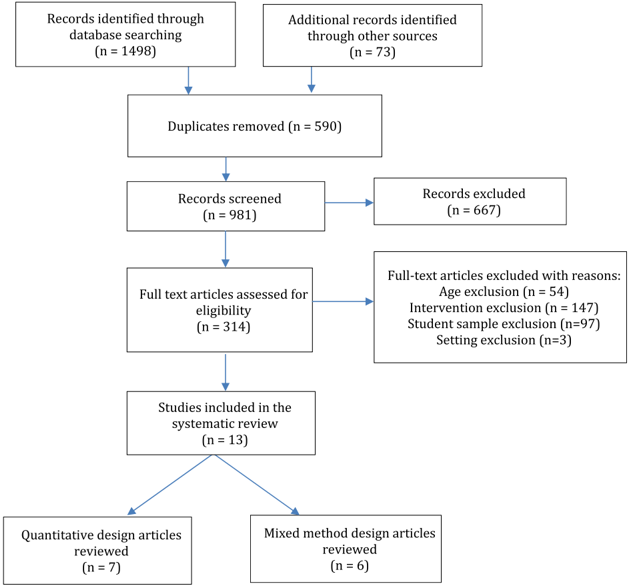
Recent research on mindfulness-based interventions (MBIs) in schools have reported effect differences across age groups of students, with early adolescent students reporting the least effect. Existing reviews, however, include students across all age ranges and largely concern intervention effects and their contributors. The exclusion of qualitative data exploring students’ experiences of learning and practising mindfulness omits valuable information that could be used to better inform implementation of MBIs. The lack of quality critique employed in the existing reviews necessitates a new review. A search carried out in nine electronic databases resulted in an initial selection of 1571 records, from which 13 papers emerged that met all inclusion criteria. The review found positive improvements reported in well-being measures in 11 of the 13 papers examined across both quantitative and qualitative data that provide support for mindfulness as a well-being school preventative program with this age group. A quality analysis critique of each paper demonstrated methodological strengths and limitations of existing MBI studies for early adolescent students, which inform ongoing conversations about whether and how MBIs meet the criteria of evidence-based practice (EBP) as an effective educational program. Findings are discussed for future research and education considerations are reviewed for educational professionals who aim to support early adolescents through the implementation of MBIs at school.
Overview
The claims and statistics of this paper haven’t been checked yet.
Free: it reads the open-access text and checks the first 5 claims that cite a source we can check. Create a free account to check every claim.
Integrity signals
Registry
Cites
Statistics
Figures

Verification
Claims the paper makes
The claims and statistics of this paper haven’t been checked yet.
Free: it reads the open-access text and checks the first 5 claims that cite a source we can check. Create a free account to check every claim.
Claims other papers make about this one
Each is checked against this paper’s own text: does it say what the citing paper says it does?
The cited source says what the claim attributes to it.
In the citing paper
“(7) Include primary studies conducted past 5 years [14,54,55].”
From Systematic Review of Mindfulness-Based Interventions in Child-Adolescent Population: A Developmental Perspective (2022) · cites this paper as [54]
Self-check
Percentages, sums and reported differences re-computed from the paper’s own numbers.
The self-check needs the paper’s full text.
Citations
Cites
Using thematic analysis in psychology
Braun, V., & Clarke, V. (2006) · Qualitative Research in Psychology · doi:10.1191/1478088706qp063oa · Cited by 194,414 · cited 2×
“Analysis began with (1) reading the extracted primary qualitative findings, (2) generating and reviewing initial codes to elucidate students’ experience of learning mindfulness and teachers’ experience of implementing a MBI, (3) searching for overarching themes that allow consistent patterns to emerge and (4) clusteri…”
BackgroundMethod(2001) · Cited by 25,534
Shamseer, L., Moher, D., Clarke, M., Ghersi, D., Liberati, A., Petticrew, M., Shekelle, P., Stewart, L. A., & the PRISMA-P Group (2015) · BMJ · doi:10.1136/bmj.g7647 · Cited by 13,120 · cited 1×
“The search was conducted in October 2017 under the guidelines of Preferred Reporting Items for Systematic Review and Meta-Analysis Protocols (PRISMA-P) (Shamseer et al. 2015).”
MethodMindfulness-based interventions in context: Past, present, and future
Kabat-Zinn, J. (2003) · Clinical Psychology: Science and Practice · doi:10.1093/clipsy.bpg016 · Cited by 8,615 · cited 1×
“Whilst a general consensus on a definition of mindfulness has not been reached, it has been operationalised as “paying attention on purpose, in the present moment, and non-judgementally to the unfolding of experience moment by moment” (Kabat-Zinn 2003, p.145).”
BackgroundMindfulness-based interventions in context: Past, present, and future.
Kabat-Zinn, J. (2003) · Clinical Psychology: Science and Practice · doi:10.1093/clipsy/bpg016 · Cited by 8,612
Our future: a Lancet commission on adolescent health and wellbeing
Patton, G. C., Sawyer, S. M., Santelli, J. S., Ross, D. A., Afifi, R., Allen, N. B., Arora, M., Azzopardi, P., Baldwin, W., Bonell, C., et al. (2016) · The Lancet · doi:10.1016/s0140-6736(16)00579-1 · Cited by 3,785 · cited 2×
“Significant biological, neurodevelopmental, social and psychological changes occur during the early adolescence developmental stage, the period between 11 and 14 years of age (Patton et al. 2016).”
BackgroundClinical Psychology: Science and Practice
(2021) · Clinical Psychology Science and Practice · doi:10.1111/(issn)1468-2850 · Cited by 3,672
(2001) · Cited by 3,666
Mental health of young people: A global public-health challenge
Patel, V., Flisher, A. J., Hetrick, S., & McGorry, P. (2007) · The Lancet · doi:10.1016/s0140-6736(07)60368-7 · Cited by 3,126 · cited 2×
“2015) and the shortage of mental-health professionals (Patel et al. 2007) are known to make it difficult for many young people with mental health issues to receive adequate support.”
BackgroundMindfulness-Based Cognitive Therapy for Depression: A New Approach to Preventing Relapse
HODO, D. W. (2002) · American Journal of Psychiatry · doi:10.1176/appi.ajp.159.7.1257 · Cited by 1,401
Cited by
Bardach, L., Klassen, R. M., & Perry, N. E. (2022) · Educational Psychology Review · doi:10.1007/s10648-021-09614-9 · Cited by 242
Public mental health: required actions to address implementation failure in the context of COVID-19
Campion, J., Javed, A., Lund, C., Sartorius, N., Saxena, S., Marmot, M., Allan, J., & Udomratn, P. (2022) · The Lancet Psychiatry · doi:10.1016/s2215-0366(21)00199-1 · Cited by 177
Phan, M. L., Renshaw, T. L., Caramanico, J., Greeson, J. M., Mackenzie, E., Atkinson‐Diaz, Z., Doppelt, N., Tai, H., Mandell, D. S., & Nuske, H. J. (2022) · Mindfulness · doi:10.1007/s12671-022-01885-9 · Cited by 251
“Furthermore, MBSIs appear to be more effective for decreases in negative mental traits (e.g., affective disturbances, anxiety) as opposed to increases in positive mental traits (e.g., positive affect, prosocial functioning; McKeering & Hwang, 2019).”
BackgroundResultMindfulness interventions in schools: Integrity and feasibility of implementation
Emerson, L.-M., de Diaz, N. N., Sherwood, A., Waters, A., & Farrell, L. (2020) · International Journal of Behavioral Development · doi:10.1177/0165025419866906 · Cited by 117
“McKeering and Hwang (2019) appropriately concluded that the state of the field is yet to meet the criteria for evidence-based practice in education settings due to small effect sizes and negative effects.”
BackgroundInfluentialHudson, K. G., Lawton, R., & Hugh‐Jones, S. (2020) · BMC Health Services Research · doi:10.1186/s12913-020-4942-z · Cited by 156
Cultivating Teacher Resilience: International Approaches, Applications and Impact
Mansfield, C. F. (2020) · Springer eBooks · doi:10.1007/978-981-15-5963-1 · Cited by 235
Effects of mindfulness interventions on depressive symptoms in adolescents: A meta-analysis
Reangsing, C., Punsuwun, S., & Schneider, J. K. (2021) · International Journal of Nursing Studies · doi:10.1016/j.ijnurstu.2020.103848 · Cited by 98
Tudor, K., Maloney, S., Raja, A., Baer, R., Blakemore, S.-J., Byford, S., Crane, C., Dalgleish, T., De Wilde, K., Ford, T., et al. (2022) · Prevention Science · doi:10.1007/s11121-022-01361-9 · Cited by 79
Roeser, R. W., Greenberg, M. T., Frazier, T., Galla, B. M., Semenov, A. D., & Warren, M. T. (2023) · Mindfulness · doi:10.1007/s12671-022-02017-z · Cited by 70
“…conducted by scholars in the field (Baelen et al., 2019; Carsley et al., 2018; Felver et al., 2016; Klingbeil et al., 2017; Maynard et al., 2015; McKeering & Hwang, 2019; Semple et al., 2017; Weare, 2019; Zenner et al., 2014; Zoogman et al., 2015), as well as the authors’ own review of the…”
Lam, K. N., & Seiden, D. Y. (2019) · Mindfulness · doi:10.1007/s12671-019-01257-w · Cited by 75
Mindfulness and contemplative approaches in education
Weare, K. (2019) · Current Opinion in Psychology · doi:10.1016/j.copsyc.2019.06.001 · Cited by 44
Porter, B., Oyanadel, C., Sáez-Delgado, F., Andaur, A., & Peñate, W. (2022) · European Journal of Investigation in Health, Psychology and Education · doi:10.3390/ejihpe12080085 · Cited by 45
“Nevertheless, the following limitations are observed: (1) Only consider primary studies with a population belonging to some specific stages of development [35,51,52]; (2) Only consider a population with a specific socioeconomic condition [45]; (3) Consider effects of MBI on specific symptoms [1]; (4) Include only qual…”
BackgroundInfluentialMonsillion, J., Zebdi, R., & Romo, L. (2023) · Children · doi:10.3390/children10050861 · Cited by 76
“Therefore, the question of whether mindfulness practices are suitable as universal preventive interventions in educational settings has been raised, and a number of MBIs have been implemented in schools in order to promote health and improve accessibility to mental health services [20].”
BackgroundCoulombe, S., Hardy, K., & Goldfarb, R. (2020) · Theory and Research in Education · doi:10.1177/1477878520988432 · Cited by 77
“However, a more recently published systematic review of the literature of school-based mindfulness interventions for early adolescents has identified 13 published articles, of which 11 reported improvements on youth wellbeing indicators (McKeering and Hwang, 2019).”
BackgroundYordanova, J., Kolev, V., Mauro, F., Nicolardi, V., Simione, L., Calabrese, L., Malinowski, P., & Raffone, A. (2020) · Scientific Reports · doi:10.1038/s41598-020-64324-6 · Cited by 46
Belfiore, C. I., Galofaro, V., Cotroneo, D., Lopis, A., Tringali, I., Denaro, V., & Casu, M. (2024) · Journal of integrative nursing and palliative care · doi:10.51847/lasijyayri · Cited by 40
“Unlike dissociation, which is a form of separating awareness from experience, mindfulness is one of the components that is defined as paying full attention to the experience of the present moment, an attitude based on acceptance, non-judgment, and openness [11].”
Gómez-Odriozola, J., & Calvete, E. (2021) · Journal of Child and Family Studies · doi:10.1007/s10826-021-01953-z · Cited by 45
Exploring Mindfulness Benefits for Students and Teachers in Three German High Schools
Luong, M. T., Gouda, S., Bauer, J., & Schmidt, S. (2019) · Mindfulness · doi:10.1007/s12671-019-01231-6 · Cited by 30
A classroom-based pilot of a self-compassion intervention to increase wellbeing in early adolescents
Seekis, V., Farrell, L. J., & Zimmer‐Gembeck, M. J. (2022) · EXPLORE · doi:10.1016/j.explore.2022.06.003 · Cited by 38
A Systematic Review of Growth Mindset Interventions Targeting Youth Social–Emotional Outcomes
Jiang, X., Mueller, C. E., & Paley, N. (2023) · School Psychology Review · doi:10.1080/2372966x.2022.2151321 · Cited by 42
“Our intent is to highlight the ways that future research in this area can be strengthened according to the McKeering and Hwang ( 2019 ) criteria.”
BackgroundMethodNagpal, M. N., & Radliff, K. M. (2023) · Child & Youth Care Forum · doi:10.1007/s10566-023-09783-4 · Cited by 35
“This is also in line with what previous reviews have reported (Cheang et al., 2019; Klingbeil et al., 2017; McKeering & Hwang, 2019).”
Mindful Coping Power: Comparative Effects on Children’s Reactive Aggression and Self-Regulation
Boxmeyer, C. L., Miller, S., Romero, D. E., Powell, N. P., Jones, S. L., Qu, L., Tueller, S., & Lochman, J. E. (2021) · Brain Sciences · doi:10.3390/brainsci11091119 · Cited by 78
Benefits of a Mindfulness-based Intervention at School from the Perspective of At-risk Children
Andreu, C. I., Araya-Véliz, C., & García‐Rubio, C. (2021) · Mindfulness · doi:10.1007/s12671-021-01624-6 · Cited by 29
Garro, A., Janal, M., Kondroski, K., Stillo, G. C., & Vega, V. (2023) · Contemporary School Psychology · doi:10.1007/s40688-022-00446-0 · Cited by 35
Why should teachers cultivate resilience through mindfulness?
Neumann, M. M., & Tillott, S. (2022) · Journal of Psychologists and Counsellors in Schools · doi:10.1017/jgc.2021.23 · Cited by 38
Liu, X., Tang, W., Xiao, R., Zhou, W., Huang, H., Lin, R., Tan, C., & Teng, X. (2022) · Child & Youth Care Forum · doi:10.1007/s10566-022-09690-0 · Cited by 36
“Moreover, MBIs have been introduced into mental health 1 3 education courses by some middle schools (refer to the following reviews: Carsley et al., 2018; McKeering & Hwang, 2019; Meiklejohn et al., 2012; Zenner et al., 2014).”
BackgroundInfluentialMartin, A. J., Ginns, P., Burns, E. C., Kennett, R., Munro‐Smith, V., Collie, R. J., & Pearson, J. (2021) · Frontiers in Psychology · doi:10.3389/fpsyg.2021.656994 · Cited by 37
“Mindfulness intervention benefits for students with negative self-beliefs have also been highlighted in several studies and reviews (Weare, 2013; Sibinga et al., 2015; McKeering and Hwang, 2019).”
BackgroundZhang, Y., Chen, S., Wu, H., & Guo, C. (2021) · Mindfulness · doi:10.1007/s12671-021-01775-6 · Cited by 32
Eisman, A. B., Kiperman, S., Rupp, L. A., Kilbourne, A. M., & Palinkas, L. A. (2021) · Translational Behavioral Medicine · doi:10.1093/tbm/ibab162 · Cited by 26
Do Group Mindfulness-Based Interventions Improve Emotion Regulation in Children? A Systematic Review
Rowland, G., Hindman, E., & Hassmén, P. (2023) · Journal of Child and Family Studies · doi:10.1007/s10826-023-02544-w · Cited by 36
Volkaert, B., Wante, L., Loeys, T., Boelens, E., & Braet, C. (2021) · School Mental Health · doi:10.1007/s12310-021-09478-y · Cited by 29
Promoting well-being in early adolescents through mindfulness: A cluster randomized controlled trial
Scafuto, F., Ghiroldi, S., Montecucco, N. F., De Vincenzo, F., Quinto, R. M., Presaghi, F., & Iani, L. (2024) · Journal of Adolescence · doi:10.1002/jad.12252 · Cited by 20
Arnaud, N., Baldus, C., Laurenz, L. J., Bröning, S., Brandt, M., Kunze, S., Austermann, M. I., Zimmermann, L., Daubmann, A., & Thomasius, R. (2020) · Trials · doi:10.1186/s13063-020-4065-1 · Cited by 22
“The selection of age-appropriate mindfulness modules for our targeted population builds on the current knowledge base of mindfulness training in non-clinical youth populations, which mainly derives from established school-based approaches [71], such as the “Learning to Breathe” manual [72, 73] and other programs [74,…”
The Impact of Delivering Mindfulness-Based Programmes in Schools: A Qualitative Study
Norton, K. R., & Griffith, G. M. (2020) · Journal of Child and Family Studies · doi:10.1007/s10826-020-01717-1 · Cited by 35
Moyes, E., Nutman, G., & Mirman, J. H. (2022) · Journal of Child & Adolescent Trauma · doi:10.1007/s40653-022-00454-5 · Cited by 19
“Although results do indicate improvements in mental health and cognition for ACE individuals of all ages through universal MBI approaches (McKeering & Hwang, 2019; Simpson et al., 2018), a potential issue is that there is no real certainty regarding the extent to which the target population will be…”
ResultCrawford, A., Sellman, E. M., & Joseph, S. (2021) · International Journal of Qualitative Methods · doi:10.1177/16094069211014771 · Cited by 22
“This movement prompted Ira Progoff, a psychotherapist, to develop Intensive Journaling Workshops.”
BackgroundDariotis, J. K., Mabisi, K., Jackson‐Gordon, R., Rose, E. J., Fishbein, D. H., & Mendelson, T. (2023) · Mindfulness · doi:10.1007/s12671-023-02147-y · Cited by 26
“A growing number of quantitative studies have assessed school-based mindfulness programs, with findings indicating promising program impacts on youth mental, cognitive, and social-emotional outcomes (Carsley et al., 2018; Maynard et al., 2017; McKeering & Hwang, 2018).”
BackgroundScafuto, F., Ghiroldi, S., Montecucco, N. F., Presaghi, F., & Iani, L. (2022) · Mindfulness · doi:10.1007/s12671-022-01920-9 · Cited by 16
“The development of self-concept and self-awareness for managing impulsivity and anger, and thus reducing externalizing problems, may require changes in neurocognitive maturity (McKeering & Hwang, 2019).”
BackgroundMindfulness in Education: Insights Towards an Integrative Paradigm
Sheinman, N., & Russo‐Netzer, P. (2021) · Springer eBooks · doi:10.1007/978-3-030-64537-3_24 · Cited by 35
Children’s perspective on fears connected to school transition and intended coping strategies
Stiehl, K. A. M., Krammer, I., Schrank, B., Pollak, I., Silani, G., & Woodcock, K. A. (2023) · Social Psychology of Education · doi:10.1007/s11218-023-09759-1 · Cited by 27
Zhou, W., & McLellan, R. (2023) · Applied Psychology Health and Well-Being · doi:10.1111/aphw.12517 · Cited by 16
Mindfulness-Based Strengths Practice (MBSP) Group Intervention: A Systematic Review
Prasath, P. R., & Morris, C. (2021) · Journal of Counselor Practice · doi:10.22229/asy1212021 · Cited by 17
“…Professor, Department of Counseling, University of Texas at San Antonio, Email: Priscilla.prasath@utsa.edu disciplines, such as counseling, coaching, medicine, and law (Chiesa & Serretti, 2009; Grossman et al., 2004; McKeering & Hwang, 2019; Niemiec, 2014; Weare, 2013; Wingert et al., 2020).”
BackgroundHutmacher, D., Eckelt, M., Bund, A., Melzer, A., & Steffgen, G. (2022) · International Journal of Environmental Research and Public Health · doi:10.3390/ijerph192012999 · Cited by 21
“Mindfulness has been proven to provide a climate of reduced stress [29], and improves well-being [30] and engagement in class [31], thus representing a promising concept to be considered in the educational context.”
Backgroundvon Salisch, M., & Voltmer, K. (2023) · Mindfulness · doi:10.1007/s12671-023-02158-9 · Cited by 18
Jobin, K., Ravichandran Nair, K., Ashok, L., Munivenkatappa, M., Jothikaran, T. A. J., Mathias, E. G., & Krishnan, P. (2025) · Clinical Epidemiology and Global Health · doi:10.1016/j.cegh.2025.101961 · Cited by 29
Mindfulness “Here and Now”: Strategies for Helping Adolescents With Autism
Beck, K. B., Conner, C. M., White, S. W., & Mazefsky, C. A. (2020) · Journal of the American Academy of Child & Adolescent Psychiatry · doi:10.1016/j.jaac.2020.07.004 · Cited by 25
Bohorquez, J. M., Parra, D. C., Saperstein, S. L., Aparicio, E. M., Lewin, A. B., & Green, K. M. (2023) · Mindfulness · doi:10.1007/s12671-023-02123-6 · Cited by 15
Baourda, V. C., Brouzos, A., & Vassilopoulos, S. P. (2024) · International Journal of Applied Positive Psychology · doi:10.1007/s41042-024-00173-2 · Cited by 19
“Also, this result is in line with the findings of mindfulness-based PPIs and the Penn Resiliency Program that have shown significant increases in young children’s optimistic explanatory style (McKeering & Hwang, 2019; Seligman et al., 2009).”
Mei, Z., Jiang, W., Zhang, Y., Luo, S., & Luo, S. (2024) · General Hospital Psychiatry · doi:10.1016/j.genhosppsych.2024.08.014 · Cited by 18
Xu, Y., & Wang, J. (2024) · Humanities and Social Sciences Communications · doi:10.1057/s41599-024-03694-y · Cited by 23
Beattie, M. M., Konttinen, H. M., Volanen, S., & Hankonen, N. E. (2022) · Social Science & Medicine · doi:10.1016/j.socscimed.2022.114748 · Cited by 13
Fèvre, C., Wodon, Q. T., Malé, C., Nayihouba, A., & Nguyen, H. C. (2021) · World Bank, Washington, DC eBooks · doi:10.1596/35969 · Cited by 22
Psychometric Properties of the Mindfulness in Teaching Scale in a Sample of Portuguese Teachers
Barata‐Gonçalves, M., Pires, L., Carona, C., Damas, C. A. M. D. C. E., Coimbra, D. D. C., de Lima, M. P., Frank, J. L., & de Oliveira, A. L. (2024) · Mindfulness · doi:10.1007/s12671-023-02283-5 · Cited by 15
“…and positive relationships, decreasing anger, stress, anxiety, attention problems or ADHD behaviors, and conduct behaviors, and improving resilience, executive function, concentration, behavior management, and sleep quality (Cheang et al., 2019; McKeering & Hwang, 2019; Phan et al., 2022).”
Addressing Ethical Concerns in Implementing Mindfulness-Based Interventions in Educational Setting
Berger, R., Tarrasch, R., & Lieblich, M. (2024) · Mindfulness · doi:10.1007/s12671-024-02332-7 · Cited by 14
“…effects on stress, anxiety, well-being, attention, positive and negative emotions, emotion regulation, academic performance, and student behavior (Emerson et al., 2020; Felver et al., 2016; McKeering & Hwang, 2019; Meiklejohn et al., 2012; Waters et al., 2015; Weare, 2016; Zenner et al., 2014).”
Untangling the threads of school wellbeing: Underlying assumptions and axes of normativity
Primdahl, N. L., & Simovska, V. (2024) · British Educational Research Journal · doi:10.1002/berj.4052 · Cited by 10
Sumner, A. L., Cartwright, T., Ballieux, H., & Edginton, T. L. (2025) · British Journal of Health Psychology · doi:10.1111/bjhp.12793 · Cited by 17
“Indeed, research has highlighted the importance of qualitative studies to better inform the implementation of well-being programmes (McKeering & Hwang, 2019).”
Hai, A. H., Franklin, C., Cole, A. H., Panisch, L. S., Yan, Y., & Jones, K. V. (2021) · Children and Youth Services Review · doi:10.1016/j.childyouth.2021.105981 · Cited by 18
Wilson, A. N., Dzugan, E., & Hutchinson, V. D. (2021) · Behavior Analysis in Practice · doi:10.1007/s40617-021-00558-8 · Cited by 12
Mischenko, P. P., Schussler, D. L., & Jennings, P. A. (2024) · Mindfulness · doi:10.1007/s12671-023-02285-3 · Cited by 11
Feasibility and Acceptability of the Mindfulness-Based OpenMind-Korea (OM-K) Preschool Program
Kim, E.-J., Jackman, M. M., Jo, S.-H., Oh, J., Ko, S.-Y., McPherson, C. L., & Singh, N. N. (2019) · Journal of Child and Family Studies · doi:10.1007/s10826-019-01483-9 · Cited by 18
Social Cognitions and Mental Health as Predictors of Adolescents’ Mindfulness Practice
Beattie, M. M., Konttinen, H. M., Volanen, S., Knittle, K. P., & Hankonen, N. E. (2020) · Mindfulness · doi:10.1007/s12671-020-01331-8 · Cited by 11
“…have found some evidence that school-basedmindfulness programs have cognitive and emotional benefits (Carsley et al. 2018; Felver et al. 2016;McKeering and Hwang 2018; Zenner Electronic supplementary material The online version of this article (https://doi.org/10.1007/s12671-020-01331-8)…”
BackgroundInfluentialReid, S., & Razza, R. A. (2021) · Journal of Child and Family Studies · doi:10.1007/s10826-021-02136-6 · Cited by 16
“Although some of these methods have been explored with children and adolescents (Fishbein et al., 2015; Hagins et al., 2013; McKeering & Hwang, 2019), results are limited and require replication.”
MethodSpyropoulou, E., & Giovazolias, T. (2022) · Current Psychology · doi:10.1007/s12144-022-03906-1 · Cited by 12
Mindfulness-Based Interventions in Schools: Assessing the Evidence Base
Marshall, T., Farrar, A., Wilson, M., Taylor, J. A., George, P., Ghose, S. S., Cosgrove, J., & Patel, N. A. (2024) · Psychiatric Services · doi:10.1176/appi.ps.20240027 · Cited by 19
Ciren, Z., Tsui, H. K. H., & Chan, S. K. W. (2025) · Adolescent Research Review · doi:10.1007/s40894-025-00270-6 · Cited by 22
“This is likely because practicing mindfulness requires a level of cognitive maturity that adolescents may not have developed (McKeering & Hwang, 2019).”
Mechanisms of Change Underlying Mindfulness-Based Practice Among Adolescents
Zhang, Y., Razza, R. A., Wang, Q., Bergen‐Cico, D., & Liu, Q. (2022) · Mindfulness · doi:10.1007/s12671-022-01881-z · Cited by 16
“The results of multiple reviews indicate both cognitive and social-emotional benefits of school-based mindfulness interventions (Felver et al., 2016; McKeering & Hwang, 2019; Waters et al., 2014; Zenner et al., 2014).”
BackgroundErdemir, N., Karanfil, F., & Şengül, R. (2024) · Psychology in the Schools · doi:10.1002/pits.23168 · Cited by 16
Utilizing Mindfulness Based CBT to Address Anger and Aggression in Middle Schools
Clark, L. B. (2020) · Journal of Child and Adolescent Counseling · doi:10.1080/23727810.2020.1719351 · Cited by 12
Intentional Solitude and Mindfulness
Leavitt, C. E., Butzer, B., Clarke, R. W., & Dvorakova, K. (2021) · Wiley eBooks · doi:10.1002/9781119576457.ch24 · Cited by 10
Social inequalities in the effects of school-based well-being interventions: a systematic review
Haataja, E., Skantz, H., Huhtiniemi, M., Nedelec, R., Soini, T., Jaakkola, T. T., Niemelä, M., Tammelin, T., & KANTOMAA, M. T. (2025) · European Journal of Public Health · doi:10.1093/eurpub/ckaf005 · Cited by 11
Coholic, D. A., Eys, M., Shaw, K., & Rienguette, M. (2023) · SAGE Open · doi:10.1177/21582440231192111 · Cited by 17
“Using both quantitative and qualitative methods can produce in-depth understanding of youths’ experiences, and qualitative data must be considered valuable information that can be used to better understand and inform implementation of MBIs (Ager et al., 2015; McKeering & Hwang, 2019).”
MethodThe Core Curricular Content of School-Based Mindfulness Programs
Schussler, D. L., Fosco, S. L. D., & Kohler, K. M. (2023) · School Mental Health · doi:10.1007/s12310-023-09623-9 · Cited by 9
Nagpal, M. N., Lin, T., Park, H., Anderman, E. M., Bihari, T. E., Madrid, L., Ford, J. L., & Subramaniam, B. (2024) · Journal of Research on Adolescence · doi:10.1111/jora.12971 · Cited by 11
García-Lorenzo, R., Carbonero, M. Á., Valdivieso-León, L., & Izar-de-la-Fuente, I. (2025) · Mindfulness · doi:10.1007/s12671-025-02518-7 · Cited by 10
“…students in terms of their stress level (Yañez-Sepúlveda et al., 2022), prevent the emergence of potential mental difficulties among their students (McKeering & Hwang, 2019) and have positive effects on student anxiety (Bazzano et al., 2018; Strohmaier & Bailey, 2023), academic performance and the…”
Jaismin, Chukkali, S., Jain, A., & Peter, A. (2023) · Journal of Indian Association for Child and Adolescent Mental Health · doi:10.1177/09731342231221606 · Cited by 15
“32,33 This schedule of activities and planned goals helped participants become more attuned to the present moment and more accepting of their feelings and experiences, which in turn reduced stress and improved their subjective well-being.”
BackgroundSicard, V., O'Kane, K. M. K., Brown, O., Butterfield, L., Kardish, R., Choi, E., Healey, K., Silverberg, N. D., Smith, A., Goldfield, G. S., et al. (2024) · Digital Health · doi:10.1177/20552076241248296 · Cited by 9
Clarke, R. D., Morris, S. L., Wagner, E. F., Spadola, C., Bursac, Z., Fava, N. M., & Hospital, M. M. (2021) · EXPLORE · doi:10.1016/j.explore.2021.03.002 · Cited by 12
Education and Mindfulness: an Early Buddhist Contribution to the Ongoing Dialog
Anālayo, B. (2022) · Mindfulness · doi:10.1007/s12671-022-01921-8 · Cited by 7
Kuru, N., Ungar, M. T., & Akman, B. (2024) · Journal of Child and Family Studies · doi:10.1007/s10826-024-02924-w · Cited by 7
“…al., 2015; Raes et al., 2014) through simple yoga movements, breathing, and the gradual focusing of attention on the body, enabling them to develop attitudes such as non-judgment, trust, acceptance, and empathy (Grossman et al., 2004; Kabat-Zinn, 2003; McKeering & Hwang, 2019; Zenner et al., 2014).”
Ventura, A. B., Kissam, B., Chrestensen, K., Tfirn, I. C., Brailsford, J., & Dale, L. P. (2023) · OBM Integrative and Complementary Medicine · doi:10.21926/obm.icm.2302022 · Cited by 10
Gagnon, M. M., Brilz, A. R., Alberts, N. M., Gordon, J. L., Risling, T., & Stinson, J. (2024) · JMIR Pediatrics and Parenting · doi:10.2196/54658 · Cited by 9
“Difficulty being still and staying engaged with meditations are common for youth [50], and many survey and focus group participants identified active forms of mindfulness, such as yoga, as beneficial.”
BackgroundJoss, D. (2025) · Mindfulness · doi:10.1007/s12671-025-02585-w · Cited by 7
McDonald, M., Waitoki, W., & Rolleston, A. K. (2021) · MAI Journal A New Zealand Journal of Indigenous Scholarship · doi:10.20507/maijournal.2021.10.2.1 · Cited by 6
Can mindfulness play a role in building social-emotional capacities among youth exposed to screens?
Kim, S., Munten, S., Stafford, S., & Kolla, N. J. (2023) · Frontiers in Psychiatry · doi:10.3389/fpsyt.2023.1165217 · Cited by 9
Takizawa, Y., Matsumoto, Y., & Ishimoto, Y. (2024) · Health Open Research · doi:10.12688/healthopenres.13467.1 · Cited by 7
Fedunina, N. Y., Vikhristyuk, O. V., & Bannikov, G. S. (2019) · Moscow University Psychology Bulletin · doi:10.11621/vsp.2019.02.121 · Cited by 9
Development of the Japanese Version of the Mindful Eating Scale ( MES )
Takahashi, M. K., Sekiya, D., Suzuki, T., & Morimoto, Y. (2023) · Japanese Psychological Research · doi:10.1111/jpr.12450 · Cited by 5
Javadian, S., Riggs, E., & Quach, J. (2025) · Mindfulness · doi:10.1007/s12671-025-02570-3 · Cited by 11
“…of children and adolescents (Carsley et al., 2018; Chi et al., 2018; Dunning et al., 2019; Felver et al., 2016; Kallapiran et al., 2015; Klingbeil et al., 2017; Maynard et al., 2017; McKeering & Hwang, 2019; Phan et al., 2022; Pozneanscaia, 2019; Zenner et al., 2014; Zoogman et al., 2015).”
Scafuto, F., Conversano, C., Presaghi, F., Santoni, G., Vaglini, I., Girardi, F., Matiz, A., & Crescentini, C. (2025) · Frontiers in Psychology · doi:10.3389/fpsyg.2025.1628048 · Cited by 6
Grunewald, N. M., & Foley‐Nicpon, M. (2023) · Psychology in the Schools · doi:10.1002/pits.23059 · Cited by 9
Magalhães, S., Carvalhais, L. S. D. A., Oliveira, P., Francisco, C., Mourisco, C., Leal, T., & Limpo, T. (2023) · Mindfulness · doi:10.1007/s12671-023-02269-3 · Cited by 8
“…are a type of intervention increasingly popular in school contexts due to their effectiveness in promoting mental well-being (Cars-ley et al., 2018; McKeering & Hwang, 2019; Mettler et al., 2023; Phan et al., 2022; Phillips & Mychailyszyn, 2022; Zenner et al., 2014), even during pandemic times…”
Beyond the Acronym: Entwining STEAM Education, Self-Regulation, and Mindfulness
Dignam, C., & Taylor, D. (2024) · Journal of STEAM Education · doi:10.55290/steam.1473884 · Cited by 10
BRiTE Mind: Introducing Mindfulness to Cultivate Personal and Professional Resilience in Teachers
Correia, H. (2020) · Springer eBooks · doi:10.1007/978-981-15-5963-1_10 · Cited by 8
Taylor, A. M., Wright, K., Roberts, R., Proeve, M. J., Turner, J., & Miller, C. L. (2024) · Early Intervention in Psychiatry · doi:10.1111/eip.13501 · Cited by 5
“…continues to grow rapidly, there continues to be a recommendation from reviews that the field requires more rig-our, including well-designed randomized controlled trials that use active control conditions (Carsley et al., 2018; McKeering & Hwang, 2019; Zenner et al., 2014; Zoogman et al., 2015).”
Delgado-Suárez, I., del Hoyo, Y. L., García‐Campayo, J., Pérez‐Aranda, A., Modrego‐Alarcón, M., Beltrán-Ruiz, M., Gascón, S., & Montero‐Marín, J. (2021) · Frontiers in Psychology · doi:10.3389/fpsyg.2021.717736 · Cited by 8
“This programme also included teachings, daily simple exercises, visualisations and specific practices to promote relaxation and increase the student’s time management ability, considered a strong predictor of academic performance (Mercanlioglu, 2010; Aeon et al., 2021).”
BackgroundGarcía-Taibo, O., Baena‐Morales, S., Llull, M. D. M. C., & Rodríguez-Fernández, J. E. (2023) · Retos · doi:10.47197/retos.v49.93401 · Cited by 9
Ancient Indian Education and Mindfulness
Anālayo, B. (2019) · Mindfulness · doi:10.1007/s12671-019-01145-3 · Cited by 5
“…in support of the efficacy of mindfulness-based interventions for improving students’ learning abilities (Carsley et al. 2018; Felver et al. 2016; McKeering and Hwang 2018; Semple et al. 2017; Zenner et al. 2014; see also Zoogman et al. 2015) as well as an overall tendency, despite some…”
BackgroundAhmed, S. K., Dabrowski, A., Dix, K., & Carslake, T. (2023) · ACEReSearch Repository (Australian Council for Educational Research) · doi:10.37517/978-1-74286-714-4 · Cited by 7
School‐Based Interventions for Reducing Disciplinary School Exclusion. An Updated Systematic Review
Valdebenito, S., Gaffney, H., Arosemena-Burbano, M. J., Hitchcock, S., Jolliffe, D., & Sutherland, A. (2025) · Campbell Systematic Reviews: Better Evidence for a Better World · doi:10.1002/cl2.70063 · Cited by 8
Sicard, V., O'Kane, K., Brown, O., Butterfield, L., Kardish, R., Choi, E., Healey, K., Silverberg, N. D., Smith, A., Goldfield, G., et al. (2022) · doi:10.2196/preprints.44757 · Cited by 4
Metadata
- Authors
- McKeering, P., & Hwang, Y.-S.
- Affiliations
- Australian Catholic University (AU)
- Corresponding author
- McKeering, Phillipa
- Venue
- Mindfulness
- Published
- 2018-07-18
- Volume
- 10
- Issue
- 4
- Pages
- 593-610
- ISSN
- 1868-8527 (ISSN-L)
- 1868-8535
- OpenAlex
- W2884299701
- Cited by
- 170
- References
- 54
- Citations by year
- 2026: 13 · 2025: 22 · 2024: 32 · 2023: 33 · 2022: 23 · 2021: 26 · 2020: 13 · 2019: 8
- FWCI
- 1.98
- Type
- journal article
- Language
- en
- Open access
- hybrid
- doi.org
- Licence
- cc-by
- creativecommons.org/licenses/by/4.0 (tdm)
- Locations
- Mindfulness (publishedVersion, cc-by)
- Research Bank (Australian Catholic University) (submittedVersion, cc-by)
- Topics
- Social Sciences › Psychology › Clinical Psychology › Mindfulness and Compassion Interventions
- Social Sciences › Education › Early Childhood Education and Development
- Health Sciences › Medicine › Public Health, Environmental and Occupational Health › School Health and Nursing Education
- Keywords
- mindfulness-based interventions, school-based intervention, early adolescents, student well-being, school prevention programs, evidence-based practice, implementation in schools
About these checks
Registry, retraction, Cites and statistics results are computed, not judged, with one exception: a printed reference that no index lists is read once by a model before it counts as a citation error. Claims are extracted by a model and kept only when their quote appears verbatim in the text; each cited source is then checked, with a model’s help, for whether it says what the claim relies on. Those verdicts can be wrong — read the claim’s quote and the cited source before relying on one.
Statistics and arithmetic are recomputed, not judged.
Confidence bands are shown only for fields calibrated on our annotated test set. None is calibrated yet, so no band is shown.
What counts as a claim ›How we measure confidence ›How we check this ›
Are you an author, or do you see a problem with this page? Request a review
Data sources
Bibliographic data: Semantic Scholar, OpenAlex, Crossref.
Contains information from the Semantic Scholar Academic Graph Datasets, made available under the ODC Attribution License (ODC-BY 1.0).
Semantic Scholar’s data is described in: Kinney, R., et al. (2023). The Semantic Scholar Open Data Platform. arXiv:2301.10140.
