

The DOI matches its Crossref record; 3 of the 3 references it cites were found in a registry or an index.
Hsp90α and cell death in cancers: a review
Abstract
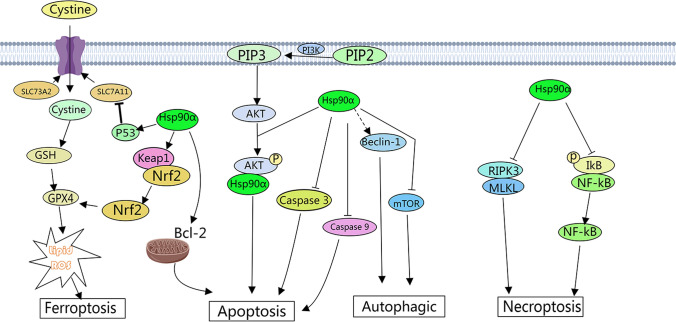
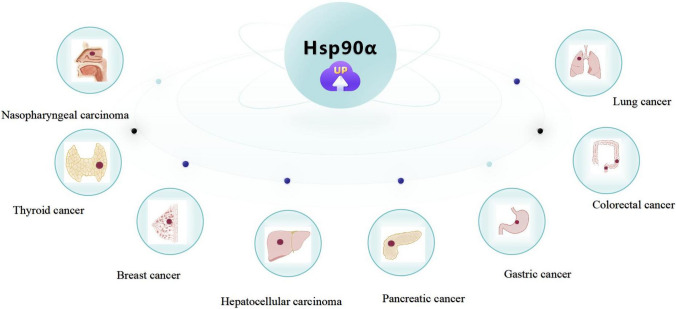
Heat shock protein 90α (Hsp90α), an important molecular chaperone, plays a crucial role in regulating the activity of various intracellular signaling pathways and maintaining the stability of various signaling transduction proteins. In cancer, the expression level of Hsp90α is often significantly upregulated and is recognized as one of the key factors in cancer cell survival and proliferation. Cell death can help achieve numerous purposes, such as preventing aging, removing damaged or infected cells, facilitating embryonic development and tissue repair, and modulating immune response. The expression of Hsp90α is closely associated with specific modes of cell death including apoptosis, necrotic apoptosis, and autophagy-dependent cell death, etc. This review discusses the new results on the relationship between expression of Hsp90α and cell death in cancer. Hsp90α is frequently overexpressed in cancer and promotes cancer cell growth, survival, and resistance to treatment by regulating cell death, rendering it a promising target for cancer therapy.
Overview
The claims and statistics of this paper haven’t been checked yet.
Run the check — free, no account needed. It reads the open-access text and checks the sources it cites.
Integrity signals
Registry
Cites
Statistics
Figures
Verification
Claims the paper makes
The claims and statistics of this paper haven’t been checked yet.
Run the check — free, no account needed. It reads the open-access text and checks the sources it cites.
Claims other papers make about this one
Each is checked against this paper’s own text: does it say what the citing paper says it does?
In the citing paper
“HSP90α is a promising target for drug development as it plays a regulatory role in cancer-related mechanisms that promote proliferation, survival and resistance to treatment [61].”
From Maceration, Soxhlet Extraction, and Steam Hydrodistillation of Anethum graveolens Seeds: Phytochemical Profiles and Cytotoxic Effects (2026) · cites this paper as [61]
Self-check
Percentages, sums and reported differences re-computed from the paper’s own numbers.
The self-check needs the paper’s full text.
Citations
Cites
Necroptosis and RIPK1-mediated neuroinflammation in CNS diseases
Yuan, J., Amin, P., & Ofengeim, D. (2019) · Nature Reviews Neuroscience · doi:10.1038/s41583-018-0093-1 · Cited by 967
The emerging role of ferroptosis in inflammation
Sun, Y., Chen, P., Zhai, B., Zhang, M., Xiang, Y., Fang, J., Xu, S., Gao, Y., Chen, X., Sui, X., et al. (2020) · Biomedicine & Pharmacotherapy · doi:10.1016/j.biopha.2020.110108 · Cited by 739
The HSP90 Family: Structure, Regulation, Function, and Implications in Health and Disease
Hoter, A., El-Sabban, M. E., & Naim, H. Y. (2018) · International Journal of Molecular Sciences · doi:10.3390/ijms19092560 · Cited by 693
Research works printed but not linked: 95
- Calderwood SK, Khaleque MA, Sawyer DB, et al. Heat shock proteins in cancer: chaperones of tumorigenesis. Trends Biochem Sci. 2006;31(3):164–72. · DOI
- Eustace BK, Sakurai T, Stewart JK, et al. Functional proteomic screens reveal an essential extracellular role for hsp90 alpha in cancer cell invasiveness. Nat Cell Biol. 2004;6(6):507–14. · DOI
- Dubey A, Prajapati KS, Swamy M, et al. Heat shock proteins: a therapeutic target worth to consider. Vet World. 2015;8(1):46–51. · DOI
- Lindquist S, Craig EA. The heat-shock proteins. Annu Rev Genet. 1988;22:631–77. · DOI
- Jackson SE. Hsp90: structure and function. Top Curr Chem. 2013;328:155–240. · DOI
- Lavery LA, Partridge JR, Ramelot TA, et al. Structural asymmetry in the closed state of mitochondrial Hsp90 (TRAP1) supports a two-step ATP hydrolysis mechanism. Mol Cell. 2014;53(2):330–43. · DOI
- Sreedhar AS, Kalmár E, Csermely P, et al. Hsp90 isoforms: functions, expression and clinical importance. FEBS Lett. 2004;562(1–3):11–5. · DOI
- Taiyab A, Rao ChM. HSP90 modulates actin dynamics: inhibition of HSP90 leads to decreased cell motility and impairs invasion. Biochim Biophys Acta. 2011;1813(1):213–21. · DOI
- Walerych D, Kudla G, Gutkowska M, et al. Hsp90 chaperones wild-type p53 tumor suppressor protein. J Biol Chem. 2004;279(47):48836–45. · DOI
- Whitesell L, Lindquist SL. HSP90 and the chaperoning of cancer. Nat Rev Cancer. 2005;5(10):761–72. · DOI · Paper page
- Suzuki R, Kikuchi S, Harada T, et al. Combination of a selective HSP90α/β inhibitor and a RAS-RAF-MEK-ERK signaling pathway inhibitor triggers synergistic cytotoxicity in multiple myeloma cells. PLoS ONE. 2015;10(12): e0143847. · DOI
- Zhang J, Zhong W, Liu Y, et al. Extracellular HSP90α interacts with ER stress to promote fibroblasts activation through PI3K/AKT pathway in pulmonary fibrosis. Front Pharmacol. 2021;12: 708462. · DOI
- Bohonowych JE, Hance MW, Nolan KD, et al. Extracellular Hsp90 mediates an NF-κB dependent inflammatory stromal program: implications for the prostate tumor microenvironment. Prostate. 2014;74(4):395–407. · DOI
- Kroemer G, Galluzzi L, Vandenabeele P, et al. Classification of cell death: recommendations of the Nomenclature Committee on Cell Death 2009. Cell Death Differ. 2009;16(1):3–11. · DOI · Paper page
- Yan J, Wan P, Choksi S, Liu ZG. Necroptosis and tumor progression. Trends Cancer. 2022;8(1):21–7. · DOI
- Marunouchi T, Nishiumi C, Iinuma S, et al. Effects of Hsp90 inhibitor on the RIP1-RIP3-MLKL pathway during the development of heart failure in mice. Eur J Pharmacol. 2021;898: 173987. · DOI
- Liu YH, Liu XM, Wang PC, et al. Heat shock protein 90α couples with the MAPK-signaling pathway to determine meiotic maturation of porcine oocytes. J Anim Sci. 2018;96(8):3358–69. · DOI
- Bruckheimer EM, Cho SH, Sarkiss M, et al. The Bcl-2 gene family and apoptosis. Adv Biochem Eng Biotechnol. 1998;62:75–105.
- Zhou X, Wen Y, Tian Y, et al. Heat shock protein 90α-dependent B-cell-2-associated transcription factor 1 promotes hepatocellular carcinoma proliferation by regulating MYC proto-oncogene c-MYC mRNA stability. Hepatology. 2019;69(4):1564–81. · DOI
- Islam A, Lv YJ, Abdelnasir A, et al. The role of Hsp90α in heat-induced apoptosis and cell damage in primary myocardial cell cultures of neonatal rats. Genet Mol Res. 2013;12(4):6080–91. · DOI
- Kliková K, Štefaniková A, Pilchová I, et al. Differential impact of bortezomib on HL-60 and K562 cells. Gen Physiol Biophys. 2015;34(1):33–42. · DOI
- Wang N, Chen S, Zhang B, et al. 8u, a pro-apoptosis/cell cycle arrest compound, suppresses invasion and metastasis through HSP90α downregulating and PI3K/Akt inactivation in hepatocellular carcinoma cells. Sci Rep. 2018;8(1):309. · DOI
- Zeng D, Gao M, Zheng R, et al. The HSP90 inhibitor KW-2478 depletes the malignancy of BCR/ABL and overcomes the imatinib-resistance caused by BCR/ABL amplification. Exp Hematol Oncol. 2022;11(1):33. · DOI
- Chatterjee M, Jain S, Stühmer T, et al. STAT3 and MAPK signaling maintain overexpression of heat shock proteins 90alpha and beta in multiple myeloma cells, which critically contribute to tumor-cell survival. Blood. 2007;109(2):720–8. · DOI
- Chua KV, Fan CS, Chen CC, et al. Octyl gallate induces pancreatic ductal adenocarcinoma cell apoptosis and suppresses endothelial-mesenchymal transition-promoted M2-macrophages, HSP90α secretion, and tumor growth. Cells. 2019;9(1):91. · DOI
- Chen JJ, Yan QL, Bai M, et al. Deoxyelephantopin, a germacrane-type sesquiterpene lactone from Elephantopus scaber, induces mitochondrial apoptosis of hepatocarcinoma cells by targeting Hsp90α in vitro and in vivo. Phytother Res. 2023;37(2):702–16. · DOI
- Tao W, Cheng X, Sun D, et al. Synthesis of multi-branched Au nanocomposites with distinct plasmon resonance in NIR-II window and controlled CRISPR-Cas9 delivery for synergistic gene-photothermal therapy. Biomaterials. 2022;287: 121621. · DOI
- Fan R, Chen C, Hu J, et al. Multifunctional gold nanorods in low-temperature photothermal interactions for combined tumor starvation and RNA interference therapy. Acta Biomater. 2023;159:324–37. · DOI
- Vanden Berghe T, Kalai M, van Loo G, Declercq W, Vandenabeele P. Disruption of HSP90 function reverts tumor necrosis factor-induced necrosis to apoptosis. J Biol Chem. 2003;278(8):5622–9. · DOI
- Chen T, Tao YN, Wu Y, et al. HSP70 attenuates neuronal necroptosis through the HSP90α-RIPK3 pathway following neuronal trauma. Mol Biol Rep. 2023;50(9):7237–44. · DOI
- Ocaña GJ, Pérez L, Guindon L, et al. Inflammatory stress of pancreatic beta cells drives release of extracellular heat-shock protein 90α. Immunology. 2017;151(2):198–210. · DOI
- Liao Y, Yang Y, Pan D, et al. HSP90α mediates sorafenib resistance in human hepatocellular carcinoma by necroptosis inhibition under hypoxia. Cancers. 2021;13(2):243. · DOI
- Wang Z, Guo LM, Wang Y, et al. Inhibition of HSP90α protects cultured neurons from oxygen-glucose deprivation induced necroptosis by decreasing RIP3 expression. J Cell Physiol. 2018;233(6):4864–84. · DOI
- Sato A, Hiramoto A, Uchikubo Y, et al. Gene expression profiles of necrosis and apoptosis induced by 5-fluoro-2′-deoxyuridine. Genomics. 2008;92(1):9–17. · DOI
- Fan CS, Chen CC, Chen LL, et al. Extracellular HSP90α induces MyD88-IRAK complex-associated IKKα/β-NF-κB/IRF3 and JAK2/TYK2-STAT-3 signaling in macrophages for tumor-promoting M2-polarization. Cells. 2022;11(2):229. · DOI
- Green DR, Llambi F. Cell death signaling. Cold Spring Harb Perspect Biol. 2015;7(12): a006080. · DOI
- Wang B, Chen Z, Yu F, et al. Hsp90 regulates autophagy and plays a role in cancertherapy. Tumour Biol. 2016;37(1):1–6. · DOI
- Xiao X, Wang W, Li Y, et al. HSP90AA1-mediated autophagy promotes drug resistancein osteosarcoma. J Exp Clin Cancer Res. 2018;37(1):201. · DOI
- Xu Z, Han X, Ou D, et al. Targeting PI3K/AKT/mTOR-mediated autophagy for tumortherapy. Appl Microbiol Biotechnol. 2020;104(2):1–13. · DOI
- Chen F, Bao H, Xie H, et al. Heat shock protein expression and autophagy after incomplete thermal ablation and their correlation. Int J Hyperth. 2019;36(1):95–103. · DOI
- Cruickshanks N, Shervington L, Patel R, et al. Can hsp90alpha-targeted siRNA combined with TMZ be a future therapy for glioma? Cancer Invest. 2010;28(6):608–14. · DOI
- Lewerenz J, Ates G, Methner A, et al. Oxytosis/ferroptosis-(Re-) emerging roles for oxidative stress-dependent non-apoptotic cell death in diseases of the central nervous system. Front Neurosci. 2018;12:214. · DOI
- Liu J, Dai E, Kang R, et al. The dark side of ferroptosis in pancreatic cancer. Oncoimmunology. 2021;10(1):1868691. · DOI
- Chen X, Kang R, Kroemer G, et al. Broadening horizons: the role of ferroptosis in cancer. Nat Rev Clin Oncol. 2021;18(5):280–96. · DOI
- Dixon SJ, Patel DN, Welsch M, et al. Pharmacological inhibition of cystine-glutamate exchange induces endoplasmic reticulum stress and ferroptosis. Elife. 2014;3: e02523. · DOI · Paper page
- Miao Z, Tian W, Ye Y, et al. Hsp90 induces Acsl4-dependent glioma ferroptosis via dephosphorylating Ser637 at Drp1. Cell Death Dis. 2022;13(6):548. · DOI
- Zhou C, Yu T, Zhu R, et al. Timosaponin AIII promotes non-small-cell lung cancer ferroptosis through targeting and facilitating HSP90 mediated GPX4 ubiquitination and degradation. Int J Biol Sci. 2023;19(5):1471–89. · DOI
- Chen C, Wang D, Yu Y, et al. Legumain promotes tubular ferroptosis by facilitating chaperone-mediated autophagy of GPX4 in AKI. Cell Death Dis. 2021;12(1):65. · DOI
- Birbo B, Madu EE, Madu CO, et al. Role of HSP90 in cancer. Int J Mol Sci. 2021;22(19):10317. · DOI
- Nakai A, Ishikawa T. Cell cycle transition under stress conditions controlled by vertebrate heat shock factors. EMBO J. 2001;20(11):2885–95. · DOI
- Suk FM, Lin SY, Lin RJ, et al. Bortezomib inhibits Burkitt’s lymphoma cell proliferation by downregulating sumoylated hnRNP K and c-Myc expression. Oncotarget. 2015;6(28):25988–6001. · DOI
- Zuehlke AD, Beebe K, Neckers L, et al. Regulation and function of the human HSP90AA1 gene. Gene. 2015;570(1):8–16. · DOI
- Song X, Wang X, Zhuo W, et al. The regulatory mechanism of extracellular Hsp90{alpha} on matrix metalloproteinase-2 processing and tumor angiogenesis. J Biol Chem. 2010;285(51):40039–49. · DOI
- Barginear MF, Van Poznak C, Rosen N, et al. The heat shock protein 90 chaperone complex: an evolving therapeutic target. Curr Cancer Drug Targets. 2008;8(6):522–32. · DOI
- Lee SJ, Lee I, Lee J, et al. Statins, 3-hydroxy-3-methylglutaryl coenzyme A reductase inhibitors, potentiate the anti-angiogenic effects of bevacizumab by suppressing angiopoietin2, BiP, and Hsp90α in human colorectal cancer. Br J Cancer. 2014;111(3):497–505. · DOI
- Maiti S, Picard D. Cytosolic Hsp90 isoform-specific functions and clinical significance. Biomolecules. 2022;12(9):1166. · DOI
- Dernovšek J, Tomašič T. Following the design path of isoform-selective Hsp90 inhibitors: small differences, great opportunities. Pharmacol Ther. 2023;245: 108396. · DOI
- Zhang Y, Ware MB, Zaidi MY, et al. Heat shock protein-90 inhibition alters activation of pancreatic stellate cells and enhances the efficacy of PD-1 blockade in pancreatic cancer. Mol Cancer Ther. 2021;20(1):150–60. · DOI
- Liu L, Deng Y, Zheng Z, et al. Hsp90 inhibitor STA9090 sensitizes hepatocellular carcinoma to hyperthermia-induced DNA damage by suppressing DNA-PKcs protein stability and mRNA transcription. Mol Cancer Ther. 2021;20(10):1880–92. · DOI
- Liu W, Li J, Zhang P, et al. A novel pan-cancer biomarker plasma heat shock protein 90alpha and its diagnosis determinants in clinic. Cancer Sci. 2019;110(9):2941–59. · DOI
- Zuo DS, Dai J, Bo AH, et al. Significance of expression of heat shock protein90alpha in human gastric cancer. World J Gastroenterol. 2003;9(11):2616–8. · DOI
- Lee HW, Kim KM. Clinical significance of heat shock protein 90α expression as a biomarker of prognosis in patients with gastric cancer. Niger J Clin Pract. 2019;22(12):1698–705. · DOI
- Liang XQ, Li KZ, Li Z, et al. Diagnostic and prognostic value of plasma heat shock protein 90alpha in gastric cancer. Int Immunopharmacol. 2021;90: 107145. · DOI
- Pan T, Yu Z, Jin Z, et al. Tumor suppressor lnc-CTSLP4 inhibits EMT and metastasis of gastric cancer by attenuating HNRNPAB-dependent Snail transcription. Mol Ther Nucleic Acids. 2021;23:1288–303. · DOI
- Ni TW, Duan XC, Wang M, et al. Alkaloid derivative ION-31a inhibits breast cancer metastasis and angiogenesis by targeting HSP90α. Bioorg Chem. 2021;115: 105201. · DOI
- Liu XY, Wang YM, Zhang XY, et al. Alkaloid derivative (Z)-3β-ethylamino-Pregn-17(20)-en inhibits triple-negative breast cancer metastasis and angiogenesis by targeting HSP90α. Molecules. 2022;27(20):7132. · DOI
- Hou Q, Chen S, An Q, et al. Extracellular Hsp90α promotes tumor lymphangiogenesis and lymph node metastasis in breast cancer. Int J Mol Sci. 2021;22(14):7747. · DOI
- Tian Y, Wang C, Chen S, et al. Extracellular Hsp90α and clusterin synergistically promote breast cancer epithelial-to-mesenchymal transition and metastasis via LRP1. J Cell Sci. 2019;132(15): jcs228213. · DOI
- Tibatan MA, Önay UE. Long non-coding RNA NKILA regulates expression of HSP90α, NF-κB and β-catenin proteins in the MCF-7 breast cancer cell line. Mol Biol Rep. 2021;48(5):4563–71. · DOI
- Chang C, Tang X, Mosallaei D, et al. LRP-1 receptor combines EGFR signalling and eHsp90α autocrine to support constitutive breast cancer cell motility in absence of blood supply. Sci Rep. 2022;12(1):12006. · DOI
- Wang YY, Liu C, Chen X, et al. Heat shock protein 90α in nipple discharge as a potential tumor marker for breast cancer. Chin J Physiol. 2021;64(5):251–6. https://doi.org/10.4103/cjp.cjp_72_21. · DOI
- Alsaeed SA, Toss M, Alsaleem M, et al. Prognostic significance of heat shock protein 90AA1 (HSP90α) in invasive breast cancer. J Clin Pathol. 2022;75(4):263–9. · DOI
- Xue N, Du T, Lai F, et al. Secreted HSP90α-LRP1 signaling promotes tumor metastasis and chemoresistance in pancreatic cancer. Int J Mol Sci. 2022;23(10):5532. · DOI
- Chen CC, Chen LL, Li CP, et al. Myeloid-derived macrophages and secreted HSP90α induce pancreatic ductal adenocarcinoma development. Oncoimmunology. 2018;7(5): e1424612. · DOI
- Mayer P, Harjung A, Breinig M, et al. Expression and therapeutic relevance of heat-shock protein 90 in pancreatic endocrine tumors. Endocr Relat Cancer. 2012;19(3):217–32. · DOI
- Xue N, Lai F, Du T, et al. Chaperone-mediated autophagy degradation of IGF-1Rβ induced by NVP-AUY922 in pancreatic cancer. Cell Mol Life Sci. 2019;76(17):3433–47. · DOI
- Wang Y, Zhang T, Zhang H, et al. Bovine hemoglobin derived peptide Asn-Phe-Gly-Lys inhibits pancreatic cancer cells metastasis by targeting secreted Hsp90α. J Food Sci. 2017;82(12):3005–12. · DOI
- Jiang H, Duan B, He C, et al. Cytoplasmic HSP90α expression is associated with perineural invasion in pancreatic cancer. Int J Clin Exp Pathol. 2014;7(6):3305–11.
- Mao M, Wang X, Sheng H, et al. Heat shock protein 90α provides an effective and novel diagnosis strategy for nasopharyngeal carcinoma. Adv Ther. 2021;38(1):413–22. · DOI
- Ye Q, Guo J, Chen Y, et al. Performance of plasma HSP90α, serum EBV VCA IgA antibody and plasma EBV DNA for the diagnosis and prognosis prediction of nasopharyngeal carcinoma. Cancer Manag Res. 2021;13:5793–802. · DOI
- Han S, Cheng Z, Zhao X, et al. Diagnostic value of heat shock protein 90α and squamous cell carcinoma antigen in detection of cervical cancer. J Int Med Res. 2019;47(11):5518–25. · DOI
- Thanner J, Bekos C, Veraar C, et al. Heat shock protein 90α in thymic epithelial tumors and non-thymomatous myasthenia gravis. Oncoimmunology. 2020;9(1):1756130. · DOI
- Huang B, Pan J, Liu H, et al. High expression of plasma extracellular HSP90α is associated with the poor efficacy of chemotherapy and prognosis in small cell lung cancer. Front Mol Biosci. 2022;9: 913043. · DOI
- Liu K, Xu SH, Chen Z, et al. TRPM7 overexpression enhances the cancer stem cell-like and metastatic phenotypes of lung cancer through modulation of the Hsp90α/uPA/MMP2 signaling pathway. BMC Cancer. 2018;18(1):1167. · DOI
- Li X, Tong X, Liu B, et al. Potential predictive value of plasma heat shock protein 90α in lung cancer. J Int Med Res. 2021;49(12):3000605211064393. · DOI
- Chen S, Yu Q, Zhou S. Plasmatic levels of HSP90α at diagnosis: a novel prognostic indicator of clinical outcome in advanced lung cancer patients treated with PD-1/PD-L1 inhibitors plus chemotherapy. Front Oncol. 2021;11: 765115. · DOI
- Arkhypov I, Özbay Kurt FG, Bitsch R, et al. HSP90α induces immunosuppressive myeloid cells in melanoma via TLR4 signaling. J Immunother Cancer. 2022;10(9): e005551. · DOI
- Zhang T, Li Q, Zhang Y, et al. Diagnostic and prognostic value of heat shock protein 90α in malignant melanoma. Melanoma Res. 2021;31(2):152–61. · DOI
- Chen WS, Lee CC, Hsu YM, et al. Identification of heat shock protein 90α as an IMH-2 epitope-associated protein and correlation of its mRNA overexpression with colorectal cancer metastasis and poor prognosis. Int J Colorectal Dis. 2011;26(8):1009–17. · DOI
- Nam HY, Lee HW. Relationship between 18F-FDG uptake and heat shock protein 90α expression in colorectal cancer. Hell J Nucl Med. 2021;24(1):10–7.
- Chen WS, Chen CC, Chen LL, et al. Secreted heat shock protein 90α (HSP90α) induces nuclear factor-κB-mediated TCF12 protein expression to down-regulate E-cadherin and to enhance colorectal cancer cell migration and invasion. J Biol Chem. 2013;288(13):9001–10. · DOI
- Chen JS, Hsu YM, Chen CC, et al. Secreted heat shock protein 90alpha induces colorectal cancer cell invasion through CD91/LRP-1 and NF-kappaB-mediated integrin alphaV expression. J Biol Chem. 2010;285(33):25458–66. · DOI
- Elzakra N, Cui L, Liu T, et al. Mass spectrometric analysis of SOX11-binding proteins in head and neck cancer cells demonstrates the interaction of SOX11 and HSP90α. J Proteome Res. 2017;16(11):3961–8. · DOI
- Ono K, Sogawa C, Kawai H, et al. Triple knockdown of CDC37, HSP90-alpha and HSP90-beta diminishes extracellular vesicles-driven malignancy events and macrophage M2 polarization in oral cancer. J Extracell Vesicles. 2020;9(1):1769373. · DOI
- Usman M, Ilyas A, Syed B, Hashim Z, et al. Serum HSP90-alpha and oral squamous cell carcinoma: a prospective biomarker. Protein Pept Lett. 2021;28(10):1157–63. · DOI
Cited by
Goldiș, C., Racoviceanu, R., Negrea-Ghiulai, R., Mioc, A., Prodea, A., Atyim, E., Maksimovic, T., Lukinich-Gruia, A. T., Pricop, M.-A., & Șoica, C. (2026) · Molecules · doi:10.3390/molecules31183337
Metadata
- Authors
- Liu, B., & Qian, D.
- Venue
- Discover Oncology
- Published
- 2024-05-10
- Volume
- 15
- Issue
- 1
- ISSN
- 2730-6011
- PMC
- PMC11087423
- Cited by
- 20
- References
- 3
- Language
- en
- Funders
- Anhui Provincial Key Research and Development Plan (202004j07020051)
- Yijishan Hospital talent and peak project (YR202122, GF2019T03, GF2019G03)
About these checks
Registry, retraction, Cites and statistics results are computed, not judged, with one exception: a printed reference that no index lists is read once by a model before it counts as a citation error. Claims are extracted by a model and kept only when their quote appears verbatim in the text; each cited source is then checked, with a model’s help, for whether it says what the claim relies on. Those verdicts can be wrong — read the claim’s quote and the cited source before relying on one.
Statistics and arithmetic are recomputed, not judged.
Confidence bands are shown only for fields calibrated on our annotated test set. None is calibrated yet, so no band is shown.
What counts as a claim ›How we measure confidence ›How we check this ›
Are you an author, or do you see a problem with this page? Request a review
Data sources
Bibliographic data: Semantic Scholar, OpenAlex, Crossref.
Contains information from the Semantic Scholar Academic Graph Datasets, made available under the ODC Attribution License (ODC-BY 1.0).
Semantic Scholar’s data is described in: Kinney, R., et al. (2023). The Semantic Scholar Open Data Platform. arXiv:2301.10140.
