

Effect of texturised soy protein and yeast on the instrumental and sensory quality of hybrid beef meatballs
Open accessThe DOI matches its Crossref record; 32 of the 32 references it cites were found in a registry or an index.
Abstract
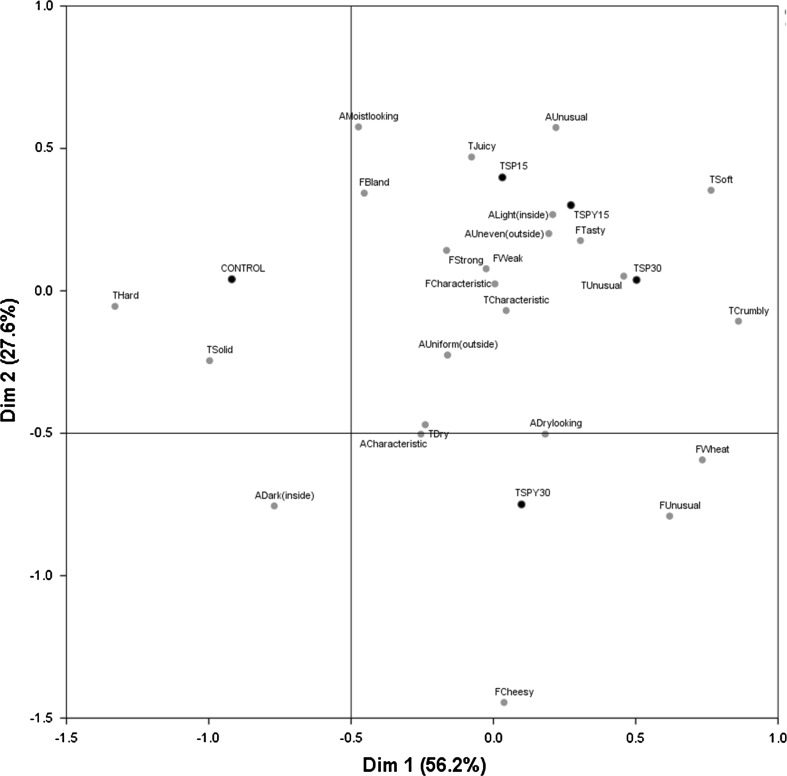
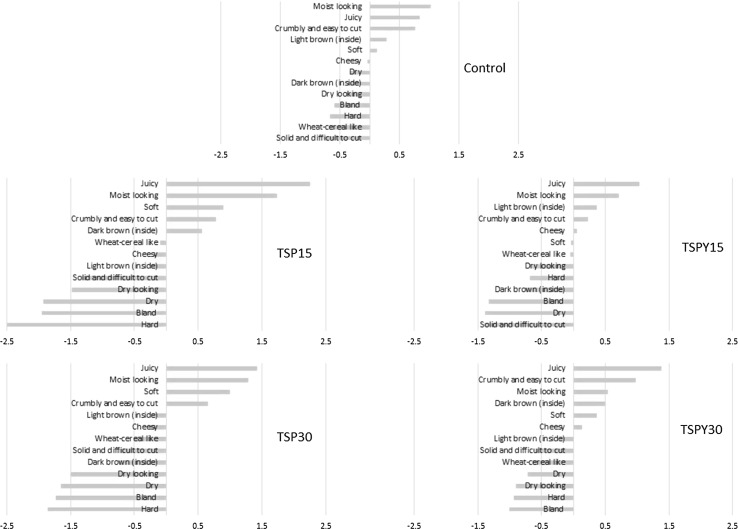
The study aimed to investigate the effect of introducing texturized soy protein (TSP) at different levels (15% and 30%) with and without nutritional yeast as flavour enhancer on the sensory and instrumental quality of beef meatballs, compared to a soy and yeast-free control. Proximate analysis, colour, instrumental texture, cook loss, and sensory quality were investigated. Sixty participants assessed the samples using Check-all-that-apply (CATA) questions and hedonic scales. Overall, the texture of all TSP-containing samples received significantly higher acceptability scores than control, while 15% TSP with yeast received the highest flavour and overall acceptability scores. Penalty-lift analysis of CATA terms identified the main drivers for liking as "moist looking", "juicy", "soft" and "crumbly and easy to cut". Control samples were significantly more often associated than the other recipes to the term "hard", a key driver for dislike and the least associated to "soft" and "crumbly and easy to cut". Adding 15-30% TSP with or without yeast inclusion could be beneficial for the development of future meat hybrids with acceptable sensory quality.
Overview
The claims and statistics of this paper haven’t been checked yet.
Free: it reads the open-access text and checks the first 5 claims that cite a source we can check. Create a free account to check every claim.
Integrity signals
Registry
Cites
Statistics
Figures
Verification
Claims the paper makes
The claims and statistics of this paper haven’t been checked yet.
Free: it reads the open-access text and checks the first 5 claims that cite a source we can check. Create a free account to check every claim.
Claims other papers make about this one
Each is checked against this paper’s own text: does it say what the citing paper says it does?
The source backs part of the claim, not all of it — or backs it for a different population, condition or comparison.
In the citing paper
“suggesting that the absence of flavor enhancers in a sample with a high percentage of soy content may lead to the detection of strong off-flavors.”
From Role of Sensory Evaluation in Consumer Acceptance of Plant-Based Meat Analogs and Meat Extenders: A Scoping Review (2020) · cites this paper as [37]
Experimental — accuracy not yet measuredThe source backs part of the claim, not all of it — or backs it for a different population, condition or comparison.
In the citing paper
“The addition of up to 15% vegetable protein is appropriate to improve healthfulness of meat products without reducing the quality of sensory attributes.”
From Role of Sensory Evaluation in Consumer Acceptance of Plant-Based Meat Analogs and Meat Extenders: A Scoping Review (2020) · cites this paper as [37]
Experimental — accuracy not yet measuredThe cited source says what the claim attributes to it.
In the citing paper
“Interestingly, the all-beef control was most frequently associated with the term “bland”.”
From Role of Sensory Evaluation in Consumer Acceptance of Plant-Based Meat Analogs and Meat Extenders: A Scoping Review (2020) · cites this paper as [37]
The cited source says what the claim attributes to it.
In the citing paper
“This suggests that the selection of control is important in understanding and interpreting consumer acceptance of hybrid products.”
From Role of Sensory Evaluation in Consumer Acceptance of Plant-Based Meat Analogs and Meat Extenders: A Scoping Review (2020) · cites this paper as [37]
The cited source says what the claim attributes to it.
In the citing paper
“Results from CATA analysis revealed that this sample was most associated with the term “tasty” and less associated with “bland”, while the 30% TSP without yeast was most associated with “wheat-cereal like””
From Role of Sensory Evaluation in Consumer Acceptance of Plant-Based Meat Analogs and Meat Extenders: A Scoping Review (2020) · cites this paper as [37]
1 more claim about this paper
Create a free account to see every claim other papers make about this one.
Self-check
Percentages, sums and reported differences re-computed from the paper’s own numbers.
The self-check needs the paper’s full text.
Citations
Cites
Bourne, M. C. (1978) · Food technology · Cited by 2,705
Hedonic scale method of measuring food preferences.
Peryam, D. R., & Pilgrim, F. J. (1957) · Food technology · Cited by 1,344
Food colorimetry: theory and applications.
Francis, F. J., & Clydesdale, F. M. (1975) · Medical Entomology and Zoology · Cited by 644
Feiner, G. (2006) · Woodhead Publishing Limited eBooks · doi:10.1533/9781845691721 · Cited by 439
Meat Products Handbook: Practical Science and Technology
Feiner, G. (2006) · Cited by 324
Low-fat meat products—technological problems with processing
Keeton, J. T. (1994) · Meat Science · doi:10.1016/0309-1740(94)90045-0 · Cited by 320 · cited 1×
“In general, high levels of soy inclusion are associated with an increase in tenderness and juiciness, with improvements in texture and moisture retention, but also with decrease in cook loss, calorific value and meat aroma (Feiner 2006; Keeton 1994).”
BackgroundReducing Meat Consumption in Today’s Consumer Society: Questioning the Citizen-Consumer Gap
de Bakker, E., & Dagevos, H. (2012) · Journal of Agricultural and Environmental Ethics · doi:10.1007/s10806-011-9345-z · Cited by 264
Sustainability and meat consumption: is reduction realistic?
Dagevos, H., & Voordouw, J. (2013) · Sustainability: Science, Practice and Policy · doi:10.1080/15487733.2013.11908115 · Cited by 256 · cited 1×
“A recent Dutch survey found that 77% of consumers considered themselves to be meat-reducers and not avoiders (Dagevos and Voordouw 2013).”
BackgroundSensory Evaluation: A practical handbook
Kemp, D. S. E., Hollowood, D. T., & Hort, D. J. (2009) · Wiley eBooks · doi:10.1002/9781118688076 · Cited by 255 · cited 1×
“Panellists were presented with a total of five samples in a sequential monadic order (Kemp et al. 2011) and all samples were evaluated in a single testing session.”
Domingo, J. L., & Nadal, M. (2017) · Food and Chemical Toxicology · doi:10.1016/j.fct.2017.04.028 · Cited by 222
Research works printed but not linked: 2
- International Agency for Research on Cancer (2015) IARC Monographs evaluate consumption of red meat and processed meat, press release, p 240
- Kaya M Gökalp H Effect of textured soy protein on the characteristics of koefte Fleischwirchaft 1990 70 646 649
Cited by
Fiorentini, M., Kinchla, A. J., & Nolden, A. A. (2020) · Foods · doi:10.3390/foods9091334 · Cited by 398
“[37] developed four types of hybrid meatballs by substituting 15% and 30% of beef with TSP in duplicates, with or without nutritional yeast, which was used as a flavor enhancer for its strong umami flavor.”
MethodAn investigation into consumer perception and attitudes towards plant-based alternatives to milk
Moss, R., Barker, S., Falkeisen, A., Gorman, M., Knowles, S., & McSweeney, M. B. (2022) · Food Research International · doi:10.1016/j.foodres.2022.111648 · Cited by 136
Effect of information on consumers’ sensory evaluation of beef, plant-based and hybrid beef burgers
Grasso, S., Rondoni, A., Bari, R., Smith, R., & Mansilla, N. (2021) · Food Quality and Preference · doi:10.1016/j.foodqual.2021.104417 · Cited by 153
Self-citationPart Meat and Part Plant: Are Hybrid Meat Products Fad or Future?
Grasso, S., & Jaworska, S. (2020) · Foods · doi:10.3390/foods9121888 · Cited by 147
“Hybrid meat products could open new business opportunities for the food industry [11], and indeed very recently, hybrid meat products have started appearing in the UK market [12].”
BackgroundSelf-citationPerspective: Soybeans Can Help Address the Caloric and Protein Needs of a Growing Global Population
Messina, M. J. (2022) · Frontiers in Nutrition · doi:10.3389/fnut.2022.909464 · Cited by 120
“If hybrid meat products increase in popularity, soy protein ingredients can contribute to their success as manufacturers have considerable experience using these combinations (119, 138).”
Backgroundvan Dijk, B., Jouppila, K., Sandell, M. A., & Knaapila, A. (2023) · Food Quality and Preference · doi:10.1016/j.foodqual.2023.104886 · Cited by 101
Broucke, K., Poucke, C. V., Duquenne, B., Witte, B. D., Baune, M., Lammers, V., Terjung, N., Ebert, S., Gibis, M., Weiß, J., et al. (2022) · Innovative Food Science & Emerging Technologies · doi:10.1016/j.ifset.2022.102992 · Cited by 94
What are the main sensory attributes that determine the acceptance of meat alternatives?
Starowicz, M., Poznar, K. K., & Zieliński, H. (2022) · Current Opinion in Food Science · doi:10.1016/j.cofs.2022.100924 · Cited by 90
Cardona, M., Izquierdo, D. F., Baviera, J. M. B., & Fernández‐Segovia, I. (2023) · European Food Research and Technology · doi:10.1007/s00217-023-04301-1 · Cited by 78
Baune, M.-C., Jeske, A.-L., Profeta, A., Smetana, S., Broucke, K., Van Royen, G., Gibis, M., Weiss, J., & Terjung, N. (2021) · Future Foods · doi:10.1016/j.fufo.2021.100081 · Cited by 59
Messina, M. J., Duncan, A. M., Glenn, A. J., & Mariotti, F. (2023) · Advances in Nutrition · doi:10.1016/j.advnut.2023.03.003 · Cited by 64
Modgil, R., Tanwar, B., Goyal, A., & Kumar, V. (2020) · Springer eBooks · doi:10.1007/978-981-15-4194-0_1 · Cited by 72
Giezenaar, C., Orr, R. E., Godfrey, A. J. R., Maggs, R., Foster, M., & Hort, J. (2024) · Food Research International · doi:10.1016/j.foodres.2024.114465 · Cited by 60
Shi, T., Cao, J., Cao, J., Zhu, F., Cao, F., & Su, E. (2023) · Food Research International · doi:10.1016/j.foodres.2023.112721 · Cited by 47
Hybrid alternative protein-based foods: designing a healthier and more sustainable food supply
Kaplan, D. L., & McClements, D. J. (2025) · Frontiers in Science · doi:10.3389/fsci.2025.1599300 · Cited by 48
“Other researchers reported that meatballs with good physiochemical and sensory properties could be created by blending texturized soy protein with beef (132).”
Sensory, emotional, and appropriateness of plant‐ and meat‐based burgers
Sogari, G., Grasso, S., Caputo, V., Gomez, M. I., Mora, C., & Schouteten, J. J. (2024) · Journal of Food Science · doi:10.1111/1750-3841.17033 · Cited by 36
“Based on previous sensory studies on meat (Grasso et al., 2017, 2019; Neville et al., 2017; Schouteten et al., 2016), 26 sensory attributes grouped into 4 sensory modalities were selected, i.e., appearance, odor, texture, and flavor (Table S2).”
Self-citationPriya, R. K., Rawson, A., Vidhyalakshmi, R., & Mohan, R. J. (2021) · Journal of Food Processing and Preservation · doi:10.1111/jfpp.16118 · Cited by 42
Niimi, J., Sörensen, V., Mihnea, M., Valentin, D., Bergman, P., & Collier, E. S. (2022) · Food Quality and Preference · doi:10.1016/j.foodqual.2022.104563 · Cited by 34
Hybridization in Meat‐Based Dual Protein Foods: Mechanisms, Challenges, and Consumer Insights
Zhang, R., Farouk, M. M., Realini, C. E., & Thum, C. (2025) · Comprehensive Reviews in Food Science and Food Safety · doi:10.1111/1541-4337.70216 · Cited by 33
Barker, S., & McSweeney, M. B. (2022) · Journal of Food Science · doi:10.1111/1750-3841.16380 · Cited by 26
Gonzalez‐Estanol, K., Orr, R. E., Hort, J., & Stieger, M. (2023) · Food Quality and Preference · doi:10.1016/j.foodqual.2023.104920 · Cited by 24
The ‘meathybrid’ concept: bridging the gap between texture, taste, sustainability and nutrition
Boukid, F., Baune, M., Terjung, N., Francis, A., & Smetana, S. M. (2024) · International Journal of Food Science & Technology · doi:10.1111/ijfs.17425 · Cited by 23
Lin, W., & Barbut, S. (2025) · Applied Food Research · doi:10.1016/j.afres.2025.100747 · Cited by 19
A Review on Sensory Parameters and Evaluation Methods of Plant-Based Protein Foods
Tireki, S., Balkaya, M., Erdem, D. E., Coşkun, G., Gunay, E., & Cekirge, M. (2024) · Food Reviews International · doi:10.1080/87559129.2024.2370944 · Cited by 19
“[69] Sixty consumers evaluated the samples using hedonic scales and CATA questions in sensory evaluation.”
Advances, applications, challenges and prospects of alternative proteins
Li, X., Cao, Q., & Liu, G. (2024) · Journal of Food Composition and Analysis · doi:10.1016/j.jfca.2024.106900 · Cited by 21
dos Santos, M., Ribeiro, W. O., Monteiro, J. D. S., dos Santos, B. A., Campagnol, P. C. B., & Pollonio, M. A. R. (2023) · Foods · doi:10.3390/foods12234226 · Cited by 17
“…an enhanced nutritional profile, as they combine essential nutrients found in meat, such as: high-quality proteins; key minerals like heme iron, zinc; as well as B-complex vitamins with dietary fibers, bioactive compounds; and an array of additional minerals and vitamins sourced from plants [1,2].”
BackgroundZhu, J., Zhu, Y., Zhang, X., Ma, W., Cao, H., Ye, X., & Chen, J. (2024) · Food Bioscience · doi:10.1016/j.fbio.2024.104984 · Cited by 19
Tkaczewska, J., Mungure, T. E., & Warner, R. D. (2024) · Critical Reviews in Food Science and Nutrition · doi:10.1080/10408398.2024.2430750 · Cited by 22
“Reducing meat consumption is easier than completely excluding meat from the diet by becoming vegetarian or vegan (Grasso et al. 2019).”
Song, Z., Kerry, J. P., Das, R. S., Tiwari, B. K., Santos, A., & Hamill, R. M. (2025) · Foods · doi:10.3390/foods14172957 · Cited by 15
“Additionally, multiple studies have demonstrated that hybrid sausages [15–17], meatballs [18], and hybrid patties [11,19–23] have significantly reduced cooking loss compared to 100% meat products.”
Singh, A., & Sit, N. (2024) · International Journal of Gastronomy and Food Science · doi:10.1016/j.ijgfs.2024.101095 · Cited by 15
Recent Developments in Sensory Assessment and Consumer Preference Techniques
Bareen, M. A., Prasannakumaran, K. M., & Sahu, J. K. (2025) · Food engineering series · doi:10.1007/978-3-031-75834-8_14 · Cited by 18
Li, Y., Liu, X., Zhang, J., Yang, Z., Zhou, C., Wu, P., Li, C., Xu, X., Tang, C., Zhou, G., et al. (2024) · Food Chemistry · doi:10.1016/j.foodchem.2024.140844 · Cited by 21
Le, T. K. Y., Nguyen, K. D., & Hoang, K. A. (2024) · International Journal of Food Science & Technology · doi:10.1111/ijfs.17089 · Cited by 14
Song, Z., Hamill, R. M., & Kerry, J. P. (2026) · Sustainable Food Technology · doi:10.1039/d5fb00723b · Cited by 12
Jeon, Y.-H., Gu, B., & Ryu, G. (2022) · Journal of the Korean Society of Food Science and Nutrition · doi:10.3746/jkfn.2022.51.10.1084 · Cited by 10
Xu, F., Zhao, Y., Han, Z., Zhang, X., Chen, B., Zhu, X., & Liu, H. (2025) · Foods · doi:10.3390/foods15010069 · Cited by 11
Japanese grape ( Hovenia dulcis ) powder as an antioxidant agent in Bologna sausages
Schaefer, S. V., do Amaral, A. M. P., Cherobin, A. K., Monteiro, L. K., Morandin, G. C., Fischer, C., Cavalheiro, D., & Sehn, G. A. R. (2022) · Journal of the Science of Food and Agriculture · doi:10.1002/jsfa.11974 · Cited by 10
“Regarding the color parameter Δ E , according to Grasso et al ., 34 values greater than 3 are perceptible to the human eye.”
Shen, J., Zhang, M., Wang, Y., MUJUMDAR, A. S., & Wang, H. (2022) · Advanced Powder Technology · doi:10.1016/j.apt.2022.103908 · Cited by 10
Health and functional advantages of cheese containing soy protein and soybean-derived casein
Messina, M. J., & Messina, V. (2024) · Frontiers in Plant Science · doi:10.3389/fpls.2024.1407506 · Cited by 11
“Although such hybrid products, such as ground beef combined with soy protein (Thrane et al., 2017; Grasso et al., 2019; Bakhsh et al., 2021), and cow ’ s milk combined with plant milks (Abdulqader et al., 2022; Wan et al., 2022) are available, they have not yet been accepted on a wide scale.”
BackgroundKaur, P., Kaur, R., Sharma, S., & Kaur, S. (2025) · Critical Reviews in Food Science and Nutrition · doi:10.1080/10408398.2025.2564890 · Cited by 11
“It presents a better texture profile with improved cooking yield (Grasso et al. 2019; Santos et al. 2022).”
Chan, E., Sinaki, N. Y., Rodas‐González, A., Tulbek, M. C., & Köksel, F. (2023) · International Journal of Food Science & Technology · doi:10.1111/ijfs.16856 · Cited by 9
Miao, X., Hastie, M., Ha, M., Shand, P. J., & Warner, R. D. (2023) · Sustainable Food Proteins · doi:10.1002/sfp2.1021 · Cited by 10
Effects of non-meat proteins on the quality of fermented sausages
Velemir, A., Mandić, S., Vučić, G., & Savanović, D. (2020) · Foods and raw materials · doi:10.21603/2308-4057-2020-2-259-267 · Cited by 9
“05), which agreed with earlier studies [13, 14].”
ResultEffect of the Addition of Soybean Protein and Insect Flours on the Quality of Cooked Sausages
Kolev, N. D., Vlahova‐Vangelova, D., Balev, D. K., Dragoev, S. G., Dimov, K. G., Petkov, E., & Popova, T. L. (2024) · Foods · doi:10.3390/foods13142194 · Cited by 7
“Grasso et al. [54] reported a significantly improved overall level of acceptance and flavour for beef meatballs containing 15% textured soy protein and yeast.”
BackgroundThe Effect of Honey Powder Addition on Chosen Quality Properties of Model Chicken Products
Bogusz, R., Onopiuk, A., Chmiel, M., Piotrowska, A., Kostyra, E., Lipińska, E., Bryś, J., Samborska, K., & Pietrzak, D. (2024) · Foods · doi:10.3390/foods13244163 · Cited by 8
Kenenbay, G., Chomanov, U., Tultabayeva, T., Tultabayev, N., Yessimbekov, Z., & Shariati, M. A. (2022) · Potravinarstvo Slovak Journal of Food Sciences · doi:10.5219/1800 · Cited by 7
“According to several scientific works, a synergistic effect could be achieved by combining different types of raw materials in the production of meat products [12], [13], [14], [15].”
BackgroundSon, S., Hun, S., Mazumder, M. A. R., Großmann, L., Kingwascharapong, P., Sai‐Ut, S., Chaikham, P., Jung, Y. H., & Rawdkuen, S. (2025) · Current Research in Food Science · doi:10.1016/j.crfs.2025.101057 · Cited by 5
“Previous research revealed that sensory characteristics and consumer acceptance of hybrid meat products might be achieved by using textured protein isolates along with pulse proteins in a product-dependent manner (Neville et al., 2017; Grasso et al., 2019; Zamuz et al., 2019).”
Vignesh, K., Yadav, D. K., Wadikar, D. D., & Semwal, A. D. (2024) · Nutrition & Food Science · doi:10.1108/nfs-05-2024-0176 · Cited by 5
Gracey, P. R., Padilla‐Zakour, O. I., & Tako, E. (2025) · Food Science & Nutrition · doi:10.1002/fsn3.70955 · Cited by 5
“The equation below was used to calculate the yield percentage of each sample (Gök et al. 2011; Grasso et al. 2019).”
Nowosad, K., Sujka, M., & Wyrostek, J. (2022) · Journal of Food Process Engineering · doi:10.1111/jfpe.14245 · Cited by 6
Câmara, A. K. F. I., Ozaki, M. M., Paglarini, C. D. S., dos Santos, M., & Pollonio, M. A. R. (2024) · Springer eBooks · doi:10.1007/978-3-031-69872-9_10 · Cited by 7
Rasul, S., Alam, M. Z., Tarique, M., Chiang, J. H., & Yuliarti, O. (2026) · Food Hydrocolloids · doi:10.1016/j.foodhyd.2026.113076 · Cited by 3
Study of the effect of plant-based components on the quality indicators of meat products
Kenenbay, S., Uzakov, Y. M., Нурсултанович, Т. А., & Omirkhan, A. A. (2025) · The Journal of Almaty Technological University · doi:10.48184/2304-568x-2025-2-99-107 · Cited by 2
Optimization Chicken Meatball Using Red Lentil Flour (Lens culinaris L.) as Filler
Rohmah, N. I., Evanuarini, H., & Thohari, I. (2023) · Asian Journal of Advances in Agricultural Research · doi:10.9734/ajaar/2023/v22i4446 · Cited by 2
“Chicken meatballs can be added with vegetables such as spinach or nuts to produce healthier meatballs [6].”
Freire, M., González‐Mohíno, A., Olegário, L. S., Estévez, M., & Ventanas, S. (2022) · Elsevier eBooks · doi:10.1016/b978-0-12-822832-6.00004-7 · Cited by 1
Innovation in Sensory Assessment of Processed Meat Products
Nurkhoeriyati, T., & Huda, N. (2024) · Springer eBooks · doi:10.1007/978-3-031-69868-2_18 · Cited by 1
APPLE POMACE AS A FUNCTIONAL FIBER RICH INGREDIENT IN MEAT
Gracey, P. R. (2024) · eCommons (Cornell University) · doi:10.7298/hhr2-sf70
Techno-functional properties of pea protein TVPs and their function as meat extender in burgers
Chan, E. (2023) · Mspace (University of Manitoba) · Cited by 2
Masijn, Q. (2025) · Lirias (KU Leuven)
Yeast Flakes as a Technological Ingredient for Salt Reduction and Flavor Enhancement in Bread
Błaszak, B., Długosz, A., Gozdecka, G., Szulc, J., & Spychała, M. (2026) · Applied Sciences · doi:10.3390/app16031198
Altêmio, A. D. C., & Fonseca, G. G. (2026) · Acta Universitatis Sapientiae Alimentaria · doi:10.47745/ausal-2025-0007
Yüksel, S., Karaoğlu, M. M., Karaçuhalılar, A., Balta, B., & Şimşek, U. (2026) · Journal of Food Science and Technology · doi:10.1007/s13197-026-06609-8
Kos, I., Džepina, I., Pleadin, J., Kudumija, N., Rako, A., Ravlić, M., Ljoljić, D. B., & Vnučec, I. (2026) · Processes · doi:10.3390/pr14060904
Prieto, N., Nosworthy, M. G., López-Campos, Ó., Agregán, R., Lorenzo, J. M., Viuda‐Martos, M., & Nieto, G. (2026) · Advances in food and nutrition research · doi:10.1016/bs.afnr.2026.03.006
The Quality of an Innovative Meat–Plant Paste with Increased Nutritional Value
Augustyńska-Prejsnar, A., Ormian, M., Topczewska, J., & RUDA, B. (2026) · Applied Sciences · doi:10.3390/app16126067
Natsume, H., & Okamoto, S. (2026) · Food Science and Technology Research · doi:10.3136/fstr.fstr-d-26-00074
Panda, S. K., Olubiyo, O. J., Cedeno, F. R. P., & Ferreira, S. (2026) · Springer eBooks · doi:10.1007/978-3-032-29927-7_9
Processing innovations for tailoring eating quality and nutrition of meat-based foods
Zhang, R., Realini, C. E., Zhang, W., & Farouk, M. M. (2026) · Advances in food and nutrition research · doi:10.1016/bs.afnr.2026.07.001 · Cited by 1
Використання структуроформуючих композицій в технології м’ясомістких посічених напівфабрикатів
Pergat, O. (2026) · Institutional Repository of National University of Food Technologies
Textural Effects of Substituting Beef With Soy Proteins in Burger Patties
Hilbig, S., Weiß, J., & Barbut, S. (2026) · Journal of Food Quality · doi:10.1155/jfq/5237360
Purna, J. B., Konika, K. F., Moon, M. A., Hossain, I., Rahman, S., & Mazumder, M. A. R. (2026) · Food Science and Technology International · doi:10.1177/10820132261496409
Rasul, S., Alam, M. Z., Tarique, M., Chiang, J. H., & Yuliarti, O. (2026) · Applied Food Research · doi:10.1016/j.afres.2026.102745
Nowak, O., Sawicki, T., & Modzelewska‐Kapituła, M. (2026) · Applied Sciences · doi:10.3390/app162110790
Beyond Protein Substitution: Repositioning Chicken Meat in the Global Protein Transition
Nassar, F. S. (2026) · Poultry Science · doi:10.1016/j.psj.2026.108129
Metadata
- Authors
- Grasso, S., Smith, G., Bowers, S., Ajayi, O. M., & Swainson, M.
- Affiliations
- University of Lincoln (GB)
- Corresponding author
- Grasso, Simona
- Venue
- Journal of Food Science and Technology
- Published
- 2019-02-25
- Volume
- 56
- Issue
- 6
- Pages
- 3126-3135
- ISSN
- 0022-1155 (ISSN-L)
- 0975-8402
- PMC
- PMC6542885
- OpenAlex
- W2915497903
- Cited by
- 65
- References
- 31
- Citations by year
- 2026: 12 · 2025: 9 · 2024: 16 · 2023: 9 · 2022: 12 · 2021: 3 · 2020: 4
- FWCI
- 3.87
- Type
- journal article
- Language
- en
- Update notices
- correction (2019-05-07)
- Open access
- hybrid
- doi.org
- Licence
- cc-by
- creativecommons.org/licenses/by/4.0 (tdm)
- Locations
- Journal of Food Science and Technology (publishedVersion, cc-by)
- PubMed Central (publishedVersion, cc-by)
- PubMed (publishedVersion)
- Lincoln Repository (University of Lincoln) (acceptedVersion)
- CentAUR (University of Reading) (acceptedVersion)
- Figshare (submittedVersion, cc-by)
- Topics
- Life Sciences › Agricultural and Biological Sciences › Animal Science and Zoology › Meat and Animal Product Quality
- Life Sciences › Agricultural and Biological Sciences › Food Science › Proteins in Food Systems
- Life Sciences › Agricultural and Biological Sciences › Food Science › Sensory Analysis and Statistical Methods
- Keywords
- nutritional yeast, beef meatballs, sensory quality, instrumental texture, cooking loss, color, flavor enhancers, consumer acceptance
About these checks
Registry, retraction, Cites and statistics results are computed, not judged, with one exception: a printed reference that no index lists is read once by a model before it counts as a citation error. Claims are extracted by a model and kept only when their quote appears verbatim in the text; each cited source is then checked, with a model’s help, for whether it says what the claim relies on. Those verdicts can be wrong — read the claim’s quote and the cited source before relying on one.
Statistics and arithmetic are recomputed, not judged.
Confidence bands are shown only for fields calibrated on our annotated test set. None is calibrated yet, so no band is shown.
What counts as a claim ›How we measure confidence ›How we check this ›
Are you an author, or do you see a problem with this page? Request a review
Data sources
Bibliographic data: Semantic Scholar, OpenAlex, Crossref.
Contains information from the Semantic Scholar Academic Graph Datasets, made available under the ODC Attribution License (ODC-BY 1.0).
Semantic Scholar’s data is described in: Kinney, R., et al. (2023). The Semantic Scholar Open Data Platform. arXiv:2301.10140.
