

Adsorption of chromium (Cr) from tannery wastewater using low-cost spent tea leaves adsorbent
Open accessThe DOI matches its Crossref record; 21 of the 21 references it cites were found in a registry or an index; 2 of the 17 sources its claims cite were checked for support.
Abstract
Leather tanning is consuming a large quantity of water and discharging a large volume of wastewater. This wastewater contains the high value of COD, BOD, TSS, TDS and heavy metals. In this study, spent tea leaves, a valueless waste produced during the manufacturing of tea beverage, were assessed for their potential to remove chromium (Cr) from tannery wastewater. Cr removal was studied by the batch process with varying adsorbent dose, contact time and pH of the solution to finding optimum conditions. The experiment results showed that maximum removal of Cr by spent tea leaves was 95.42% at 14 g/L of adsorbent dose and pH 10. The maximum adsorption capacity of Cr on tea waste was found 10.64 mg/g.
Overview
CoChat Summary
TL;DR
Spent tea leaves, a valueless tea-beverage waste, were tested as a low-cost adsorbent for removing chromium from tannery wastewater in batch experiments. Maximum Cr removal was 95.42% at pH 10 and 14 g/L adsorbent dose, with a maximum adsorption capacity of 10.64 mg/g.
Key findings
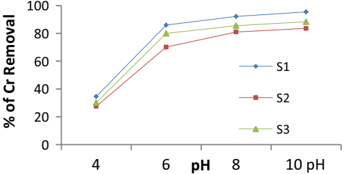
- Maximum Cr removal by spent tea leaves was 95.42% at 14 g/L adsorbent dose and pH 10; at pH 10, removals were 95.42%, 83.57%, and 88.38% for Samples S1, S2, and S3, respectively.
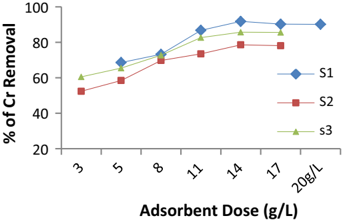
- At 14 g/L adsorbent dose, the highest Cr removals were about 91.79%, 78.60%, and 85.71% for Samples S1, S2, and S3, respectively.
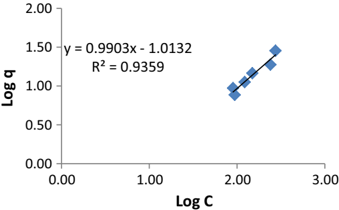
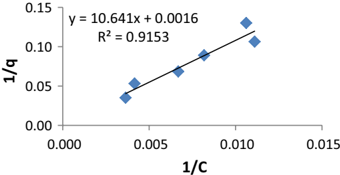
- The maximum adsorption capacity of Cr on tea waste was 10.64 mg/g; Langmuir and Freundlich isotherm R² values were 0.915 and 0.935, respectively, and the separation factor R_L was 0.448, indicating favorable adsorption.
- Tannery effluent samples had Cr concentrations of 10.35 mg/L (S1), 616.770 mg/L (S2), and 15.40 mg/L (S3), with BOD 1700, 12,600, and 2100 mg/L and COD 2490, 21,060, and 3200 mg/L, respectively.
Methods
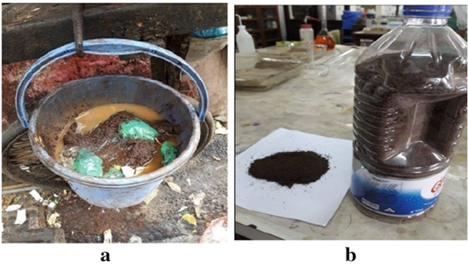
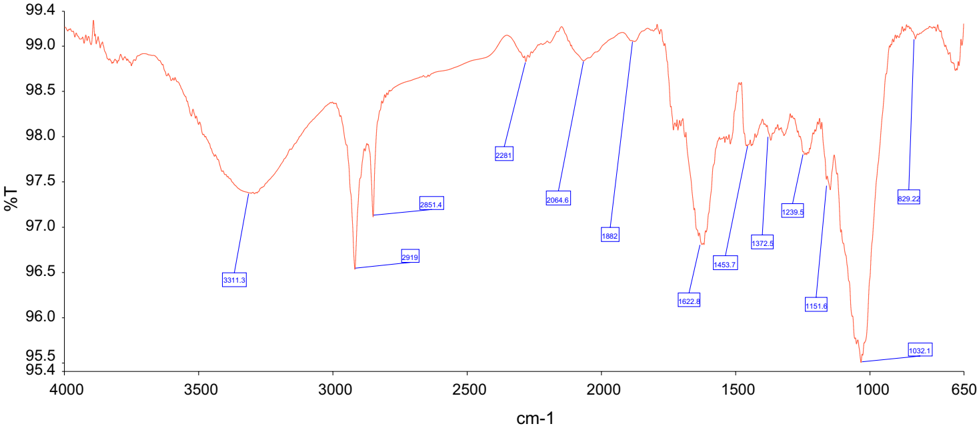
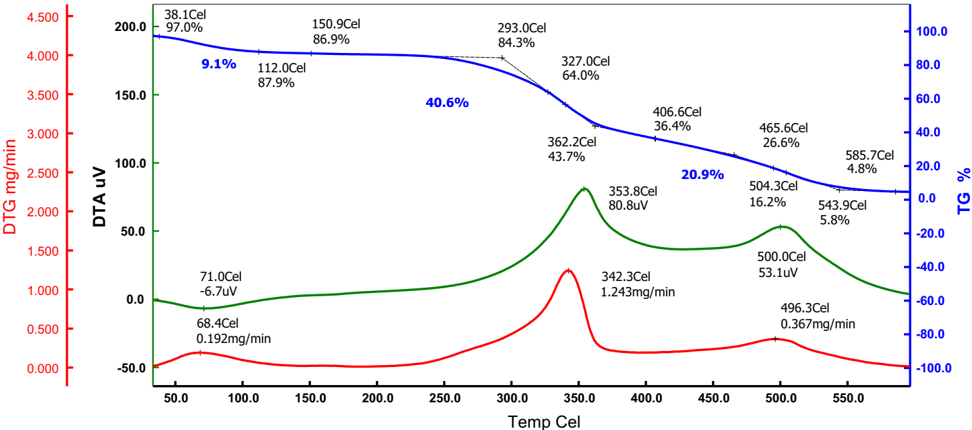
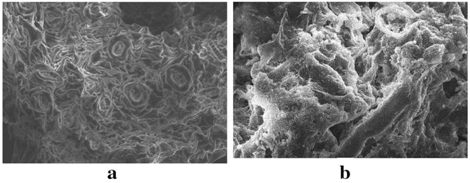
- Batch adsorption experiments used waste black tea leaves washed with boiling water, oven-dried at 105 °C for 6–8 h, and characterized by FTIR, TGA, and SEM.
- Tannery effluent was collected from three locations near the Institute of Leather Engineering and Technology, Hazaribagh, Dhaka, between November 2016 and January 2017: S1 drain near ILET main gate, S2 a tannery outlet, and S3 drain backside of ILET.
- A known volume of effluent (250 mL) was stirred with varying adsorbent dose (3–20 g/L), contact time (30–80 min; also 30–180 min in the contact-time section), and pH (4–10) at room temperature; remaining Cr was measured by atomic absorption spectrophotometer, and Langmuir and Freundlich isotherms were fitted.
Limitations
- The paper does not state limitations.
- Evident from the text: the study is limited to batch tests with three wastewater samples and one adsorbent material, with no continuous-flow or scale-up evaluation reported.
- Evident from the text: the reported optimum pH of 10 and the narrow tested ranges for dose, contact time, and pH may limit direct applicability to untreated tannery effluent without pH adjustment.
Model-written summary. Check it against the paper before relying on it.
Integrity signals
Registry
Cites
Statistics
Figures
Verification
Claims the paper makes
0 Valid · 2 Not valid · 11 Not checked · 17 Own results and interpretations
The cited sources that could be checked couldn’t confirm or dispute this claim.
In the paper
“As tea leaves consist of some functional groups associated cellulose, hemicelluloses, lignin, condensed tannins and structural proteins, these functional groups are responsible for metal uptake (Nandal et al. 2014; Wang et al. 2006; Aikpokpodion et al. 2010).”
What the sources say
- Could not verifycites Nandal et al. 2014 matched to “Climate change impact on meteorological droughts in watershed scale (case study: southwestern Iran)” (2014) sourceExperimental — accuracy not yet measured
Our copy of Nikbakht Shahbazi (2014) is entirely a meteorological-drought study of the Karun3 watershed in southwestern Iran: the Introduction (p. 2) and Materials and methods (p. 3) describe SPI at 6/12/24 months with LARS-WG5 downscaling of HadCM3 under A1B, A2 and B1 scenarios, and Results (pp. 9-10) are tables of drought-class frequencies. Searching for tea leaves, functional groups, cellulose/hemicelluloses/lignin, tannins, structural proteins and metal uptake returned no passage on the topic — the only matches were the unrelated SPI tables. Nothing in our copy supports the attributed statement, and nothing in it makes a contrary point about tea chemistry, so the claim cannot be judged against this source. (LLM, conf=0.80)
- Not checked — no full text of the sourcecites Wang et al. 2006 matched to “Coal ash conversion into effective adsorbents for removal of heavy metals and dyes from wastewater” (2006) source
- Not checked — no full text of the sourcecites Aikpokpodion et al. 2010
plainstates an association- Asserted: passes — The authors put it forward as true.
- Checkable: passes — It can be checked against evidence.
- Load-bearing: passes — The paper’s conclusions depend on it.
- Based: passes — The paper gives a reason why it holds.
- Could not verify
The cited sources that could be checked couldn’t confirm or dispute this claim.
In the paper
“As tea leaves consist of some functional groups associated cellulose, hemicelluloses, lignin, condensed tannins and structural proteins, these functional groups are responsible for metal uptake (Nandal et al. 2014; Wang et al. 2006; Aikpokpodion et al. 2010).”
What the sources say
- Could not verifycites Nandal et al. 2014 matched to “Climate change impact on meteorological droughts in watershed scale (case study: southwestern Iran)” (2014) sourceExperimental — accuracy not yet measured
Our copy of Nikbakht Shahbazi (2014) is entirely a watershed-scale meteorological drought study: it covers the Karoon/Karun3 basin, LARS-WG5 downscaling of HadCM3 A1B/A2/B1 scenarios and SPI-6/12/24 drought severity tables (Methods p. 3; Results pp. 9-10; Conclusion p. 10). Searches for 'tea leaves functional groups cellulose hemicelluloses lignin metal uptake', 'heavy metal accumulation plants biosorption' and 'tea Camellia sinensis leaf uptake' returned only drought/SPI tables, the study-area description and the reference list (p. 11, all hydrology citations) — no passage addresses tea leaf chemistry or metal uptake. The paper neither supports nor contradicts the claim; its full text is untruncated, so the topic is simply absent. (LLM, conf=0.75)
- Not checked — no full text of the sourcecites Wang et al. 2006 matched to “Coal ash conversion into effective adsorbents for removal of heavy metals and dyes from wastewater” (2006) source
- Not checked — no full text of the sourcecites Aikpokpodion et al. 2010
plainstates a cause- Asserted: passes — The authors put it forward as true.
- Checkable: passes — It can be checked against evidence.
- Load-bearing: passes — The paper’s conclusions depend on it.
- Based: passes — The paper gives a reason why it holds.
- Could not verify
A result the paper reports from its own data — it cites no other source for it, so there is none to check. The quote shows it is in the paper.
In the paper
“The value of separation factor ( R L ) for the present study is 0.448”
plain- Asserted: passes — The authors put it forward as true.
- Checkable: passes — It can be checked against evidence.
- Load-bearing: passes — The paper’s conclusions depend on it.
- Based: passes — The paper gives a reason why it holds.
A result the paper reports from its own data — it cites no other source for it, so there is none to check. The quote shows it is in the paper.
In the paper
“The experiment results showed that maximum removal of Cr by spent tea leaves was 95.42% at 14 g/L of adsorbent dose and pH 10.”
- Also stated in: § Conclusion · p. 6 · plain
“Experimental results showed that maximum removal of Cr was at optimum conditions of pH 10 and adsorbent dose of 14 g/L.”
plainstates a cause- Asserted: passes — The authors put it forward as true.
- Checkable: passes — It can be checked against evidence.
- Load-bearing: passes — The paper’s conclusions depend on it.
- Based: passes — The paper gives a reason why it holds.
- Also stated in: § Conclusion · p. 6 · plain
A result the paper reports from its own data — it cites no other source for it, so there is none to check. The quote shows it is in the paper.
In the paper
“The percentage of Cr removal is seen to increase with adsorbent dose up to 14 g/L for the samples (S1, S2 and S3).”
plainstates a cause- Asserted: passes — The authors put it forward as true.
- Checkable: passes — It can be checked against evidence.
- Load-bearing: passes — The paper’s conclusions depend on it.
- Based: passes — The paper gives a reason why it holds.
11 more claims
Create a free account to see all 30 claims and to verify the 1 reference still open.
- It may state two separate claims as one. 9
- Probably not a substantial claim. 6
Self-check
Percentages, sums and reported differences re-computed from the paper’s own numbers.
Each contradiction between two passages listed here was confirmed by an independent check.
Rated major: it would touch a result — a value a result rests on, reported and recomputed p-values on opposite sides of the significance level, two passages that conflict with no sign which is right, or a cited work retracted before this paper was published.
In the paper
“| 02 | 3 | 274.61 | 342.16 | 28.51 | 55.48 | 2.44 | 1.46 | 0.004 | 0.04 |”
Reported 28.51 · recomputed 114.053333
Rated minor: it would not touch a result — a value no result rests on, a p-value that stays on the same side of the significance level, or a conflict that is clerical, resolved elsewhere in the paper, or outside its own findings.
In the paper
§ Experimental procedure · p. 4
“contact time (30-80 min)”
§ Effect of contact time · p. 4
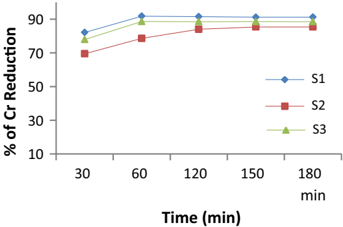
“The highest% of Cr removals were found in times 60, 150 and 60 min for Sample S1, Sample S2 and Sample S3”
Citations
Cites
Pore- and Solid-Diffusion Kinetics in Fixed-Bed Adsorption under Constant-Pattern Conditions
Hall, K. R., Eagleton, L. C., Acrivos, A., & Vermeulen, T. (1966) · Industrial & Engineering Chemistry Fundamentals · doi:10.1021/i160018a011 · Cited by 2,819
Yagmur, E., Ozmak, M., & Aktas, Z. (2008) · Fuel · doi:10.1016/j.fuel.2008.05.005 · Cited by 349
Gundogdu, A., Duran, C., Senturk, H. B., Soylak, M., Ozdes, D., Serencam, H., & Imamoglu, M. (2012) · Journal of Chemical & Engineering Data · doi:10.1021/je300597u · Cited by 222
Coal ash conversion into effective adsorbents for removal of heavy metals and dyes from wastewater
WANG, S., SOUDI, M., LI, L., & ZHU, Z. (2006) · Journal of Hazardous Materials · doi:10.1016/j.jhazmat.2005.10.034 · Cited by 218
Physicochemical characteristics of a novel activated carbon produced from tea industry waste
Gundogdu, A., Duran, C., Senturk, H. B., Soylak, M., Imamoglu, M., & Onal, Y. (2013) · Journal of Analytical and Applied Pyrolysis · doi:10.1016/j.jaap.2013.07.008 · Cited by 194
Ozdes, D., Gundogdu, A., Kemer, B., Duran, C., Senturk, H. B., & Soylak, M. (2009) · Journal of Hazardous Materials · doi:10.1016/j.jhazmat.2008.12.073 · Cited by 170
Duran, C., Özdeş, D., Gündoğdu, A., İmamoğlu, M., & Şentürk, H. B. (2010) · Analytica Chimica Acta · doi:10.1016/j.aca.2010.12.029 · Cited by 117
A Critical Review of Removal of Zinc from Wastewater
Gakwisiri, C., Raut, N. B., Al-Saadi, A. S., Al-Aisri, S., & Al-Ajmi, A. (2012) · Lecture notes in computer science · Cited by 70
(2001) · Carbon letters · Cited by 62
Arsenic Removal from Aqueous Solutions by Salvadora persica Stem Ash
Mostafapour, F. K., Bazrafshan, E., Farzadkia, M., & Amini, S. M. (2012) · Journal of Chemistry · doi:10.1155/2013/740847 · Cited by 33
Research works printed but not linked: 4
- Bhavsar K, Patel P (2014) Efficiency evaluation of tea waste for adsorption of hexavalent chromium from industrial effluent. Int J Sci Res 3(7):2319-7064 ISSN (Online Impact Factor)
- Dabanovic V, Soskic M, Durovic D, Mugosa B (2016) Investigation of heavy metals content in selected tea brands marketed in podgorica, montenegro. J Int Sci Pharm Centre Clin 7(12):4798-4804
- Dutta S (1999) An Introduction to the Principles of Leather Manufacture. Indian Leather Technologist Association, Kolkata, India
- Hussain I, Khan F, Iqbal Y, Khalil SJ (2006) Investigation of heavy metals in commercial tea brands. J Chem Soc Pak 28:246-251
Cited by
An overview of chromium removal techniques from tannery effluent
Nur-E-Alam, M., Mia, M. A. S., Ahmad, F., & Rahman, M. M. (2020) · Applied Water Science · doi:10.1007/s13201-020-01286-0 · Cited by 246
Self-citationChina, C. R., Maguta, M. M., Nyandoro, S. S., Hilonga, A., Kanth, S. V., & Njau, K. N. (2020) · Chemosphere · doi:10.1016/j.chemosphere.2020.126804 · Cited by 222
A review for tannery wastewater treatment: some thoughts under stricter discharge requirements
Zhao, C., & Chen, W. (2019) · Environmental Science and Pollution Research · doi:10.1007/s11356-019-05699-6 · Cited by 189
Fito, J., Abewaa, M., & Nkambule, T. T. I. (2023) · Applied Water Science · doi:10.1007/s13201-023-01880-y · Cited by 106
“Chromium fixation in the tanning process was 60–70%, but the weight of Cr to hides is about 2% (Nur-E-Alam et al. 2018).”
BackgroundAdvances in bioconversion of spent tea leaves to value-added products
Negi, T., Kumar, Y., Sirohi, R., Singh, S., Tarafdar, A., Pareek, S., Kumar Awasthi, M., & Alok Sagar, N. (2022) · Bioresource Technology · doi:10.1016/j.biortech.2021.126409 · Cited by 95
Rahdar, S., Taghavi, M., Khaksefidi, R., & Ahmadi, S. (2019) · Applied Water Science · doi:10.1007/s13201-019-0974-0 · Cited by 99
Bayuo, J. (2021) · Journal of Environmental Health Science and Engineering · doi:10.1007/s40201-021-00641-w · Cited by 96
Jallouli, S., Wali, A., Buonerba, A., Zarra, T., Belgiorno, V., Naddeo, V., & Ksibi, M. (2020) · Journal of Water Process Engineering · doi:10.1016/j.jwpe.2020.101642 · Cited by 90
“Water remediation treatments include: pollutant adsorption [12,13], chemical coagulation [14,15], ozonation [16–18], electrooxidation [19,20], ultrasonication [21], Fenton oxidation [22–24], photodegradation [21,24,25] and biological treatments [26,27].”
MethodFan, J., Wu, H., Liu, R., Meng, L., & Sun, Y. (2020) · Environmental Science and Pollution Research · doi:10.1007/s11356-020-11222-z · Cited by 76
Ungureanu, E. L., Mocanu, A. L., Stroe, C. A., Panciu, C. M., Berca, L., Sionel, R. M., & Mustăţea, G. (2023) · Sustainability · doi:10.3390/su15075999 · Cited by 102
Bayuo, J., Rwiza, M. J., & Mtei, K. (2022) · RSC Advances · doi:10.1039/d2ra00796g · Cited by 83
Recovery of detox tea wastes: Usage as a lignocellulosic adsorbent in Cr6+ adsorption
Çelebi, H. (2020) · Journal of environmental chemical engineering · doi:10.1016/j.jece.2020.104310 · Cited by 68
Kumar, R., Basu, A., Bishayee, B., Chatterjee, R. P., Behera, M., Ang, W. L., Pal, P., Shah, M., Tripathy, S. K., Ambika, S., et al. (2023) · Environmental Research · doi:10.1016/j.envres.2023.115881 · Cited by 67
Shaibur, M. R. (2022) · Case Studies in Chemical and Environmental Engineering · doi:10.1016/j.cscee.2022.100281 · Cited by 65
Comparative analysis of conventional to biomass-derived adsorbent for wastewater treatment: a review
Hashmi, Z., Jatoi, A. S., Nadeem, S., Anjum, A., Imam, S. M., & Jangda, H. (2022) · Biomass Conversion and Biorefinery · doi:10.1007/s13399-022-02443-y · Cited by 71
“Nur-E-Alam et al. [136] investigated the capability of biomass waste material as an adsorbent.”
Jimenez-Paz, J., Lozada-Castro, J. J., Lester, E., Williams, O. S. A., Stevens, L. A., & Barraza, J. (2022) · Journal of environmental chemical engineering · doi:10.1016/j.jece.2023.109715 · Cited by 59
A review on agro-based materials on the separation of environmental pollutants from water system
Sivaranjanee, R., Kumar, P. S., & Mahalaxmi, S. (2022) · Chemical Engineering Research and Design · doi:10.1016/j.cherd.2022.04.002 · Cited by 65
Alluhaybi, A. A., Alharbi, A., Hameed, A. M., et al. (2022) · Molecules · doi:10.3390/molecules27165087 · Cited by 45
Comprehensive technological assessment for different treatment methods of leather tannery wastewater
Nigam, M., Mishra, P., Kumar, P., Rajoriya, S., Pathak, P., Singh, S. R., Kumar, S. S., & Singh, L. (2022) · Environmental Science and Pollution Research · doi:10.1007/s11356-022-21259-x · Cited by 49
Local Scale Groundwater Vulnerability Assessment with an Improved DRASTIC Model
Mallik, S., Bhowmik, T., Mishra, U., et al. (2021) · Natural Resources Research · doi:10.1007/s11053-021-09839-z · Cited by 43
Assessment of Untreated Coffee Wastes for the Removal of Chromium (VI) from Aqueous Medium
Loulidi, I., Boukhlifi, F., Ouchabi, M., Amar, A., Jabri, M., Kali, A., & Hadey, C. (2021) · International Journal of Chemical Engineering · doi:10.1155/2021/9977817 · Cited by 46
“Nur-E-Lam [45] studied the removal of Cr(VI) from leather industry wastewater by adsorption on tea leaf waste.”
BackgroundActivated carbons from co-carbonization of waste truck tires and spent tea leaves
Guclu, C., Alper, K., Erdem, M., Tekin, K., & Karagöz, S. (2021) · Sustainable Chemistry and Pharmacy · doi:10.1016/j.scp.2021.100410 · Cited by 48
Pan, R., Bu, J., Ren, G., Zhang, Z., Li, K., & Ding, A. (2022) · Applied Sciences · doi:10.3390/app12031238 · Cited by 45
Asrat, Y., Adugna, A. T., Kamaraj, M., & Beyan, S. M. (2021) · Journal of Chemistry · doi:10.1155/2021/5554353 · Cited by 33
“(e percentage of metal sorbed increases with an increase in adsorbent dose for the heavy metals [37].”
BackgroundShaibur, M. R., Tanzia, F. K. S., Nishi, S., Nahar, N., Parvin, S., & Adjadeh, T. A. (2022) · Journal of Hazardous Materials Advances · doi:10.1016/j.hazadv.2022.100102 · Cited by 32
Bayisa, Y. M., Bullo, T. A., & Akuma, D. A. (2021) · BMC Research Notes · doi:10.1186/s13104-021-05855-7 · Cited by 30
“Factors affecting the parameters of adsorption Effect of dose of the adsorption primarily associated with the surface of the adsorbent which is interrelated to the amounts of the adsorbent and adsorption capacity increases with an increase in surface of activated carbon [10, 11].”
BackgroundIndustrial Water Demand and Wastewater Generation: Challenges for Bangladesh’s Water Industry
Gulfam-E-Jannat, S., Golui, D., Islam, S., Saha, B., Rahman, S. M., Bezbaruah, A. N., & Iskander, S. M. (2023) · ACS ES&T Water · doi:10.1021/acsestwater.3c00023 · Cited by 38
Pereira, P., Fernández, M., Cimadoro, J., et al. (2021) · Applied Microbiology and Biotechnology · doi:10.1007/s00253-020-11031-x · Cited by 26
Bullo, T. A., & Bayisa, Y. M. (2022) · Water Conservation and Management · doi:10.26480/wcm.01.2022.15.21 · Cited by 25
Khanam, R., Ashik, S. A. A., Suriea, U., & Mahmud, S. (2024) · Heliyon · doi:10.1016/j.heliyon.2024.e27821 · Cited by 28
“Although both chrome and vegetable tanning are widely used around the world, the majority of tanneries in Bangladesh produce leather that has been chrome-tanned, and as a result, they release a significant amount of chromium along with their untreated effluents into the nearby water bodies [10].”
BackgroundBayuo, J., Rwiza, M. J., Mtei, K., & Choi, J. W. (2024) · Earth and environmental sciences library · doi:10.1007/978-3-031-53688-5_11 · Cited by 33
Chromium adsorption on thermally activated adsorbent equipped from waste biomass
Hashem, M. A., Nayeen, M. J., Hossain, M. T., & Miem, M. M. (2024) · Waste Management Bulletin · doi:10.1016/j.wmb.2024.01.009 · Cited by 28
Chowdhury, S. S., Bera, B., & De, S. (2022) · Environmental Research · doi:10.1016/j.envres.2022.115145 · Cited by 21
Optimized Removal of Cr (VI) and Ni (II) From Wastewater Using Corncob-Derived Activated Carbon
Kamel, M., Bastaweesy, A. M., & Hefny, R. A. (2025) · Water Air & Soil Pollution · doi:10.1007/s11270-024-07711-3 · Cited by 23
Progress of research on aroma absorption mechanism and aroma fixation pathway of jasmine green tea
Wang, Y., Huang, Z., Zhou, T., Li, C., Sun, Y., & Pang, J. (2024) · Journal of the Science of Food and Agriculture · doi:10.1002/jsfa.13656 · Cited by 26
Mahmud, S., Manzur, T., Samrose, S., & Torsha, T. (2021) · Structures · doi:10.1016/j.istruc.2020.12.065 · Cited by 19
Elsayed, H., Tohamy, H. S., El‐Sakhawy, M., El‐Khateeb, M. A., & Nashy, E.-S. H. A. (2025) · Environmental Monitoring and Assessment · doi:10.1007/s10661-025-14340-8 · Cited by 16
“According to a study conducted by Alam et al. (Nur-E-Alam et al., 2018), tea waste was shown to have an adsorption capacity of 10.7 mg/g and a removal efficiency of 95.3% of Cr in genuine tannery effluent.”
InfluentialDey, P., Osborne, J. W., & Benjamin, L. K. (2024) · Environmental Research · doi:10.1016/j.envres.2024.119451 · Cited by 18
Efficient Removal of Pb 2+, Cu 2+ and Zn 2+ by Waste Tea‐Derived Cost‐Effective Bioadsorbent
Fatma, U. K., Nizami, G., Ahamad, S., & Hussain, M. K. (2023) · ChemistrySelect · doi:10.1002/slct.202300944 · Cited by 24
Removal of chromium (VI) from aqueous environments using composites of polyaniline-cherry leaves
Varnamkhasti, S. S., Samani, M. R., & Toghraie, D. S. (2023) · Journal of Environmental Management · doi:10.1016/j.jenvman.2023.117359 · Cited by 15
Yu, H., Tang, M., He, J. X., et al. (2024) · Journal of Water Process Engineering · doi:10.1016/j.jwpe.2024.105378 · Cited by 12
Mahmoud, M. S., Mahmoud, A. S., El-Said, M. A., & Mostafa, M. K. (2021) · Emergent Materials · doi:10.1007/s42247-021-00320-4 · Cited by 12
Ahmed, S., Shahriar, A., Rahman, N., Alam, M. Z., & Nurnabi, M. (2024) · Journal of Hazardous Materials Advances · doi:10.1016/j.hazadv.2024.100427 · Cited by 16
Ameén, F. (2023) · Biology · doi:10.3390/biology12121507 · Cited by 14
“Certain microorganisms have the capacity to accumulate heavy metals within their cells (bioaccumulation) or on their surfaces (biosorption).”
BackgroundHashem, M. A., Mim, S., Payel, S., Husne-Al-Jabeen, Sakib, M. S. R., Mizan, A., Başaran, B., Yapıcı, A. N., & Sarker, M. I. M. (2023) · Bioresource Technology Reports · doi:10.1016/j.biteb.2023.101692 · Cited by 15
Study on the Adsorption of Methylene Blue from Dye Wastewater by Humulus Japonicus Leaves
Huang, Z.-G., Wang, T., Yi, H.-Y., et al. (2021) · E3S Web of Conferences · doi:10.1051/e3sconf/202123603028 · Cited by 11
Baskaran, D., Natarajan, A. P. A., & Byun, H.-S. (2024) · Journal of Water Process Engineering · doi:10.1016/j.jwpe.2024.106101 · Cited by 10
Sangwan, P., Rishi, M. S., & Singh, G. (2021) · Toxin Reviews · doi:10.1080/15569543.2021.1906707 · Cited by 10
Review Paper. Utilization of Low-Cost Adsorbents for the Adsorption Process of Chromium ions.
Alatabe, M. J. A., & Hussein, A. A. (2021) · IOP Conference Series Materials Science and Engineering · doi:10.1088/1757-899x/1076/1/012095 · Cited by 15
Acid hydrolysis of untanned proteinous wastes from tannery industry in Bangladesh
Alam, M. N.-E., Akter, N., Fatema, K., Azad, M. A. K., Khan, M. A. A., & Chakma, S. (2020) · Journal of Scientific and Innovative Research · doi:10.31254/jsir.2020.9301 · Cited by 10
Environmental and Socio-economic Impact Assessment in Hazaribag Area of Dhaka for Tannery Relocation
Iqbal, A., Hasan, M. H., Rasheduzzman, M., et al. (2023) · Innovation journal of social sciences and economic review. · doi:10.36923/ijsser.v5i1.184 · Cited by 6
Chand, M., Kumawat, A., & Srivastava, S. (2025) · Surfaces and Interfaces · doi:10.1016/j.surfin.2025.108271 · Cited by 11
Hossain, M. A., Shahinuzzaman, M., Rahim, A., Shams, S. M. N., Moniruzzaman, M., Jamal, M. S., & Hossain, M. (2025) · Journal of Applied Electrochemistry · doi:10.1007/s10800-025-02339-5 · Cited by 5
Ouertani, R., Mahjoubi, M., Chouchane, H., et al. (2021) · Springer eBooks · doi:10.1007/978-981-16-1955-7_17 · Cited by 5
Karaca, T., & Doğan, T. H. (2022) · Biomass Conversion and Biorefinery · doi:10.1007/s13399-022-03365-5 · Cited by 4
Mia, M. A. S. (2020) · Physical Science & Biophysics Journal · doi:10.23880/psbj-16000139 · Cited by 4
“The increasing urbanization and industrialization of Savar, Dhaka, have negative implications on water quality as well as other environmental issues [1].”
BackgroundAkter, S., Rahman, N., Salma, U., Alam, M. F., Islam, M. M., Fardous, Z., Rabbi, M. A., & Sardar, M. N. (2026) · Chemical Engineering Research and Design · doi:10.1016/j.cherd.2026.01.011 · Cited by 4
Hashem, M. A., Moury, R. A., Rashid, M. H. U., Hassan, A., Maoya, M., Zahin, M. E. H., Miem, M. M., & Shahadat, M. S. (2025) · Results in Surfaces and Interfaces · doi:10.1016/j.rsurfi.2025.100632 · Cited by 7
Baskaran, D., Miriyam, B., Palani, R., & Byun, H.-S. (2024) · Biochemical Engineering Journal · doi:10.1016/j.bej.2024.109565 · Cited by 3
Kumar, V., Bhat, S. A., & Verma, P. (2024) · Elsevier eBooks · doi:10.1016/b978-0-443-21794-4.00015-6 · Cited by 4
Sustainable Chromium Encapsulation: Alkali Activation Route
Sgarlata, C., Leonelli, C., Lancellotti, I., et al. (2022) · Frontiers in Materials · doi:10.3389/fmats.2022.904580 · Cited by 3
“Considering the most typical Cr-content in tannery wastewater, around 1,000–3,000 ppm (Nur-E-Alam et al., 2018; Parañaque et al., 2020), we can propose the unfired clay formulation as appropriate for the Cr-entrapment.”
BackgroundSaigl, Z. M., & Alnaser, R. A. (2024) · International Journal of Environmental & Analytical Chemistry · doi:10.1080/03067319.2024.2357249 · Cited by 2
Tinega, J. N., Omosa, I. B., & Letema, S. C. (2023) · Journal of Agriculture Science and Technology · doi:10.4314/jagst.v23i1.5 · Cited by 2
Removal of Hexavalent Chromium by Using Sustainable Green Materials as Low-Cost Adsorbents
Li, Q., Huang, Q., Weng, F., Hu, W., Liu, J., & Luo, J. (2023) · Adsorption Science & Technology · doi:10.1155/2023/6012467 · Cited by 4
“Similar conclusions have been recorded previously [48 – 51].”
Resultmerza, M. M., AL-Bayati, R. A., & jasim, M. (2021) · Egyptian Journal of Chemistry · doi:10.21608/ejchem.2021.73650.3639 · Cited by 2
“Filtration membrane, coagulation, and, adsorption [5] flocculation [6], ion exchange [7], as well as (chlorination, ozonation) advanced oxidation [8] are only a few among them.”
BackgroundThermodynamic and kinetic study of adsorptive removal of lead by the nanocomposite loaded nanofibers
Mahmood, U., Abid, S., Qadir, M. B., Nazir, A., & Hussain, T. (2021) · TURKISH JOURNAL OF CHEMISTRY · doi:10.3906/kim-2107-67 · Cited by 8
“However, the percentage removal of NC1, NC2, NC3, and NC4 increases considerably with the increase in adsorbent dosage owing to the availability of vulnerable sites for adsorption [47].”
BackgroundLatha, H. L. M. P., Jagathy, K., Sangeetha, K., Balaji, T. N., & Sudha, P. N. (2026) · Environmental Pollution and Management · doi:10.1016/j.epm.2026.06.001 · Cited by 2
Tegegn, D. F., & Belachew, H. Z. (2025) · Environmental Monitoring and Assessment · doi:10.1007/s10661-025-14113-3 · Cited by 1
“…adsorbents necessitates the utilization of abundant and high-caliber biomass resources such as argan nutshell (El Khomri et al., 2022), tea leaves (Nur-E-Alam et al., 2018), pericarp (Ma et al., 2022), groundnut shell (Kali et al., 2024), and coffee grounds (Tran et al., 2022), which primarily…”
Sustainable Remediation of Heavy Metals through Agricultural Waste-Derived Adsorbents
Onyancha, R. B. (2024) · IntechOpen eBooks · doi:10.5772/intechopen.1006824 · Cited by 5
Solidification of tannery sludge with various binders
Ulu, F. (2022) · MANAS Journal of Engineering · doi:10.51354/mjen.1159967 · Cited by 1
Daski, F. N., & Aziz, N. A. A. (2022) · IOP Conference Series Earth and Environmental Science · doi:10.1088/1755-1315/1022/1/012066 · Cited by 1
“Therefore, many researchers investigated the probability of using spent tea leave and tea powder as adsorbents, including adsorbents for removal methylene blue (MB) from aqueous solution [7], heavy metals [8], Cr (VI) ion from tannery processing wastewater [9];[10], synthetic dyes and azo dyes [11]; [12] and polymer c…”
BackgroundCharacterization of tannery effluent and synthesis of natural coagulant
Fathima, A. S., Bhuvaneswari, R., & Jeyanthi, J. (2020) · AIP conference proceedings · doi:10.1063/5.0019492 · Cited by 1
Biosorption of heavy metals from aqueous solution using Ulva prolifera as a sustainable biosorbent
Edward, P. S., Sarangi, N. V., & Rajkumar, R. (2025) · Bioremediation Journal · doi:10.1080/10889868.2025.2581268
Samal, P. P., & Dey, S. (2025) · Environmental science and engineering · doi:10.1007/978-3-031-77884-1_2
Management of Wastewater from Tannery and Leather Processing Industries
Anthony, E., Adanlawo, O. S., & Oladoja, N. A. (2025) · Springer water · doi:10.1007/978-3-031-90314-4_6
Tegegn, D. F., & Belachew, H. Z. (2024) · Research Square · doi:10.21203/rs.3.rs-5014022/v1
Kong, L., Lv, J.-F., Li, Y., et al. (2024) · Separation Science and Technology · doi:10.1080/01496395.2024.2335335
Disparate activation routes of developing adsorbents from waste biomass: A comparative studiesPreprint
Hashem, M. A., Mim, S., Payel, S., et al. (2023) · Research Square · doi:10.21203/rs.3.rs-2669658/v1
Bista, D., Joshi, P., & Chand, P. (2023) · Research Square · doi:10.21203/rs.3.rs-2661288/v1
Adsorption & kinetic studies on removal of chromium from waste water using tea waste as biosorbent
Bhagya, M. G., & Liyakhath, A. S. (2023) · i-manager s Journal on Material Science · doi:10.26634/jms.10.4.19773
Eco-friendly Chrome Tanning of Leather using Ultrasound TechniquePreprint
Mia, M. A. S., Yeasmin, S., Nurnabi, M., et al. (2021) · Research Square · doi:10.21203/rs.3.rs-926494/v1
Self-citationRamasamy, S., Kaliyaperumal, A., & Pommanaickar, T. (2021) · Current World Environment · doi:10.12944/cwe.16.2.10
Ramasamy, S., Kaliyaperumal, A., & Pommanaickar, T. (2021) · Current World Environment · doi:10.12944/cwe.16.special-issue1.09
Jallouli, S., Wali, A., Buonerba, A., et al. (2020) · arXiv (Cornell University) · doi:10.48550/arxiv.2010.03285
“Water remediation treatments include: pollutant adsorption [12,13], chemical coagulation [14,15], ozonation [16–18], electrooxidation [19,20], ultrasonication [21], Fenton oxidation [22–24], photodegradation [21,24,25] and biological treatments [26,27].”
MethodModiri, A., Shahsavari, S., Vaziri, A., et al. (2020) · DOAJ (DOAJ: Directory of Open Access Journals)
Metadata
- Authors
- Nur-E-Alam, M., Abu Sayid Mia, M., Ahmad, F., & Mafizur Rahman, M.
- Affiliations
- Bangladesh Council of Scientific and Industrial Research (BD)
- Bangladesh University of Engineering and Technology (BD)
- Corresponding author
- Nur-E-Alam, Md.
- Venue
- Applied Water Science
- Published
- 2018-07-31
- Volume
- 8
- Issue
- 5
- ISSN
- 2190-5487 (ISSN-L)
- 2190-5495
- OpenAlex
- W2886594183
- Cited by
- 92
- References
- 21
- Citations by year
- 2026: 2 · 2025: 9 · 2024: 14 · 2023: 15 · 2022: 16 · 2021: 24 · 2020: 10 · 2019: 2
- FWCI
- 3.94
- Type
- journal article
- Language
- en
- Open access
- gold
- doi.org
- Licence
- cc-by
- creativecommons.org/licenses/by/4.0 (tdm)
- Locations
- Applied Water Science (publishedVersion, cc-by)
- DOAJ (DOAJ: Directory of Open Access Journals) (submittedVersion, cc-by-sa)
- Greater South Information System
- Funders
- BUET (1014042509)
- Topics
- Physical Sciences › Environmental Science › Water Science and Technology › Adsorption and biosorption for pollutant removal
- Physical Sciences › Environmental Science › Health, Toxicology and Mutagenesis › Chromium effects and bioremediation
- Physical Sciences › Environmental Science › Environmental Engineering › Environmental remediation with nanomaterials
- Keywords
- chromium removal, tannery wastewater, spent tea leaves, low-cost adsorbent, heavy metal adsorption, leather tanning effluent, adsorption capacity, pH effect on adsorption
About these checks
Registry, retraction, Cites and statistics results are computed, not judged, with one exception: a printed reference that no index lists is read once by a model before it counts as a citation error. Claims are extracted by a model and kept only when their quote appears verbatim in the text; each cited source is then checked, with a model’s help, for whether it says what the claim relies on. Those verdicts can be wrong — read the claim’s quote and the cited source before relying on one.
The claim verdicts this report counts are experimental: their accuracy is not yet measured.
A language model drew the claims from the paper on 2026-10-10, under version 3 of the claim definition (model deepseek-v4.1-flash, prompt extract-v3).
A second model labelled each claim on 2026-10-10 (model jev-1.13-20260917, definition revision gold-guideline-v0.2).
Cited sources are checked with a language model’s help (qwen3.8-omni-flash).
Statistics and arithmetic are recomputed, not judged.
Confidence bands are shown only for fields calibrated on our annotated test set. None is calibrated yet, so no band is shown.
What counts as a claim ›How we measure confidence ›How we check this ›
Are you an author, or do you see a problem with this page? Request a review
Data sources
Bibliographic data: Semantic Scholar, OpenAlex, Crossref.
Contains information from the Semantic Scholar Academic Graph Datasets, made available under the ODC Attribution License (ODC-BY 1.0).
Semantic Scholar’s data is described in: Kinney, R., et al. (2023). The Semantic Scholar Open Data Platform. arXiv:2301.10140.
