

Convolutional neural networks: an overview and application in radiology
Open accessThe DOI matches its Crossref record; 65 of the 65 references it cites were found in a registry or an index; 30 of the 49 sources its claims cite were checked for support.
Abstract
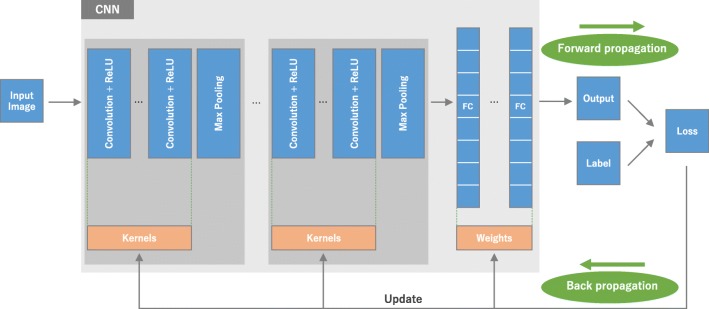
Convolutional neural network (CNN), a class of artificial neural networks that has become dominant in various computer vision tasks, is attracting interest across a variety of domains, including radiology. CNN is designed to automatically and adaptively learn spatial hierarchies of features through backpropagation by using multiple building blocks, such as convolution layers, pooling layers, and fully connected layers. This review article offers a perspective on the basic concepts of CNN and its application to various radiological tasks, and discusses its challenges and future directions in the field of radiology. Two challenges in applying CNN to radiological tasks, small dataset and overfitting, will also be covered in this article, as well as techniques to minimize them. Being familiar with the concepts and advantages, as well as limitations, of CNN is essential to leverage its potential in diagnostic radiology, with the goal of augmenting the performance of radiologists and improving patient care. KEY POINTS: • Convolutional neural network is a class of deep learning methods which has become dominant in various computer vision tasks and is attracting interest across a variety of domains, including radiology. • Convolutional neural network is composed of multiple building blocks, such as convolution layers, pooling layers, and fully connected layers, and is designed to automatically and adaptively learn spatial hierarchies of features through a backpropagation algorithm. • Familiarity with the concepts and advantages, as well as limitations, of convolutional neural network is essential to leverage its potential to improve radiologist performance and, eventually, patient care.
Overview
CoChat Summary
TL;DR
This narrative review explains the basic concepts of convolutional neural networks (CNNs) — their building blocks, training, and data requirements — and surveys their application to radiological tasks such as classification, segmentation, detection, image denoising, and report analysis. It highlights small datasets and overfitting as the two central challenges for CNN use in radiology and reviews techniques to mitigate them.
Key findings
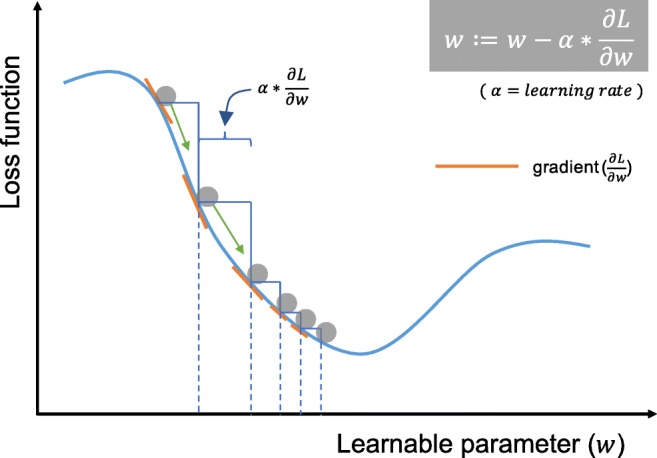
- CNN is composed of convolution, pooling, and fully connected layers; convolution and pooling perform feature extraction while fully connected layers map features to outputs, with kernels and weights learned via backpropagation and gradient descent.
- CNN differs from conventional radiomics in that it does not require hand-crafted feature extraction or expert segmentation, but is far more data hungry and computationally expensive, typically requiring GPUs.
- Reported application results cited in the review include: an ensemble of AlexNet and GoogLeNet 2D-CNNs achieving a best AUC of 0.99 for detecting pulmonary tuberculosis on 1007 chest radiographs; a CNN-based CADe system trained on ~45,000 mammography images outperforming a hand-crafted-feature CADe system at low sensitivity and matching it at high sensitivity; and a detection system built from 33,688 bounding boxes mined from radiologists' reports showing significantly improved detection accuracy with pseudo-category labels.
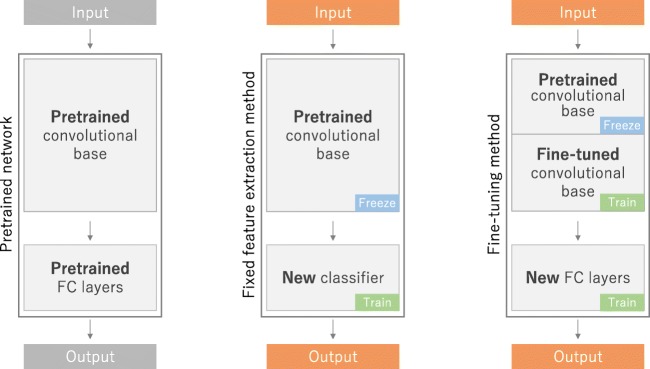
- Transfer learning from ImageNet (1.4 million images, 1000 classes) via fixed feature extraction or fine-tuning is presented as a key strategy for training on small datasets; U-net is highlighted for segmentation because it captures multiscale spatial context and can be trained end-to-end from limited data.
Methods
- Design: narrative review article (not a primary study), covering CNN concepts, training, data/label considerations, overfitting, small-dataset strategies, and radiology applications.
- Scope: applications are organized into classification, segmentation, detection, and "others" (denoising, image reconstruction, report classification); recurrent neural networks and other deep learning models are explicitly stated to be beyond the article's scope.
- Evidence base: illustrative prior studies are cited rather than systematically searched or quantitatively pooled; no new data, sample, or statistical analysis is generated by the authors.
Limitations
- Stated: the article is a perspective/overview, and other deep learning models such as recurrent neural networks for sequence models are beyond its scope; the details of improved gradient descent algorithms (momentum, RMSprop, Adam) are also stated to be beyond scope.
- Stated: whether semi-supervised techniques (pseudo-label, GANs) actually improve deep learning performance in radiology "is not clear and remains an area of active investigation," and whether medical pretrained networks would outperform ImageNet-pretrained transfer learning is likewise unclear.
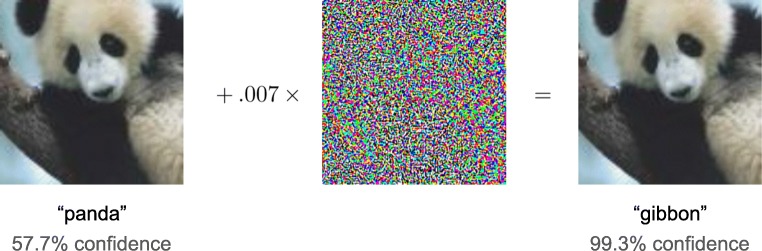
- Evident from the text: as a narrative review it reports no systematic search strategy, inclusion criteria, or quantitative synthesis, so the cited performance figures are illustrative examples rather than a comparative or exhaustive assessment; the authors also note deep learning's "black box" nature and vulnerability to adversarial examples as unresolved concerns for clinical robustness.
Model-written summary. Check it against the paper before relying on it.
Integrity signals
Registry
Cites
Statistics
Figures
Verification
Claims the paper makes
23 Valid · 11 Not valid · 6 Not checked · 47 Own results and interpretations
The sources with a verdict support this claim; the rest weren’t checked yet, have no full text we could read, or their verdicts aren’t rated yet.
In the paper
“several studies have already been published in areas such as lesion detection [7], classification [8], segmentation [9], image reconstruction [10, 11], and natural language processing [12].”
§ Convolutional neural networks: an overview and application in radiology > Introduction
What the sources say
- Not checked — no full text of the sourcecites [7] Lakhani P Sundaram B Deep learning at chest radiography: automated classification of pulmonary tuberculosis by using convolutional neural networks Radiology 2017 284 574 582 10.1148/radiol.2017162326 28436741 source
- Not checked — no full text of the sourcecites [8] Yasaka K Akai H Abe O Kiryu S Deep learning with convolutional neural network for differentiation of liver masses at dynamic contrast-enhanced CT: a preliminary study Radiology 2018 286 887 896 10.1148/radiol.2017170706 29059036 source
- Supportedcites [9] Christ PF, Elshaer MEA, Ettlinger F et al (2016) Automatic liver and lesion segmentation in CT using cascaded fully convolutional neural networks and 3D conditional random fields. In: Ourselin S, Joskowicz L, Sabuncu M, Unal G, Wells W (eds) Proceedings of Medical image computing and computer-assisted intervention – MICCAI 2016. 10.1007/978-3-319-46723-8_48 source
The citation [9] is attached to “segmentation,” not to the other listed applications. The paper’s opening page (p. 1) describes its CNN-based method for segmenting liver and lesions in CT images, so it is an example of the cited kind of study. (LLM, conf=0.95)
plain- Asserted: passes — The authors put it forward as true.
- Checkable: passes — It can be checked against evidence.
- Load-bearing: unclear — It is unclear whether the paper’s conclusions depend on it.
- Based: passes — The paper gives a reason why it holds.
Every source the paper cites for this claim was checked and supports it.
In the paper
“The results demonstrate that detection accuracy could be significantly improved by incorporating pseudo-category labels.”
§ Convolutional neural networks: an overview and application in radiology > Applications in radiology > Others
What the sources say
- Supportedcites [55] Yan K, Wang X, Lu L, Summers RM (2017) DeepLesion: automated deep mining, categorization and detection of significant radiology image findings using large-scale clinical lesion annotations. arXiv. Available online at: https://arxiv.org/pdf/1710.01766.pdf. Accessed 29 Jan 2018 source
In Results and Discussion (p. 7), the paper compares detection without categorization labels against detection with pseudo-category labels. Test accuracy rises from 59.45% to 64.30% overall, with improvements of 3–8 percentage points across the five lesion clusters. (LLM, conf=0.92)
hedgedstates a possible cause- Asserted: passes — The authors put it forward as true.
- Checkable: passes — It can be checked against evidence.
- Load-bearing: passes — The paper’s conclusions depend on it.
- Based: passes — The paper gives a reason why it holds.
- Supported
Every source the paper cites for this claim was checked and supports it.
In the paper
“As a result, U-net could be trained end-to-end from a limited number of training data.”
§ Convolutional neural networks: an overview and application in radiology > Applications in radiology > Segmentation
What the sources say
- Supportedcites [48] Ronneberger O, Fischer P, Brox T (2015) U-net: convolutional networks for biomedical image segmentation. In: Navab N, Hornegger J, Wells W, Frangi A (eds) Proceedings of Medical Image Computing and Computer-Assisted Intervention – MICCAI 2015. 10.1007/978-3-319-24574-4_28 source
The paper’s opening section states directly that U-Net can be trained end-to-end from very few images. The Conclusion likewise says it needs very few annotated images, thanks to data augmentation with elastic deformations. (LLM, conf=0.95)
hedgedstates a cause- Asserted: passes — The authors put it forward as true.
- Checkable: passes — It can be checked against evidence.
- Load-bearing: unclear — It is unclear whether the paper’s conclusions depend on it.
- Based: passes — The paper gives a reason why it holds.
- Supported
The sources with a verdict support this claim; the rest weren’t checked yet, have no full text we could read, or their verdicts aren’t rated yet.
In the paper
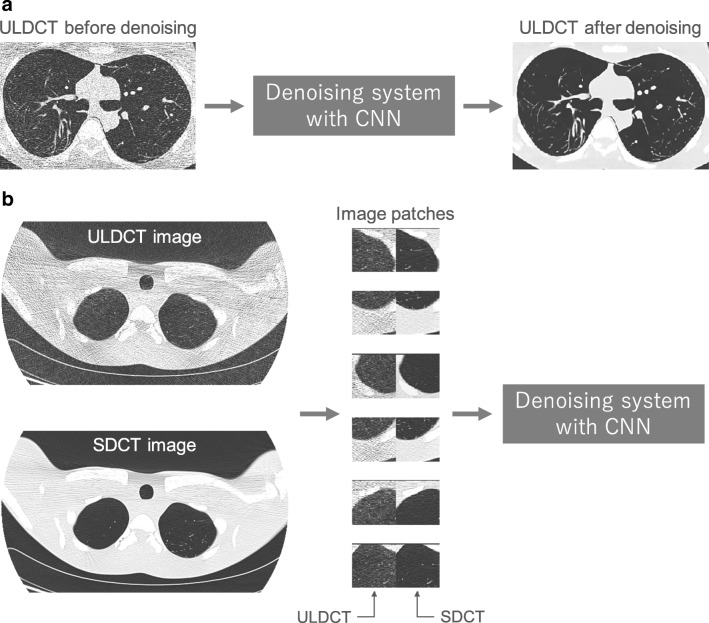
“Two previous studies showed that low-dose and ultra-low-dose CT images could be effectively denoised using deep learning [52, 53].”
§ Convolutional neural networks: an overview and application in radiology > Applications in radiology > Others
What the sources say
- Not checked — no full text of the sourcecites [52] Chen H Zhang Y Zhang W Low-dose CT via convolutional neural network Biomed Opt Express 2017 8 679 694 10.1364/BOE.8.000679 28270976 PMC5330597 source
- Supportedcites [53] Nishio M Nagashima C Hirabayashi S Convolutional auto-encoder for image denoising of ultra-low-dose CT Heliyon 2017 3 e00393 10.1016/j.heliyon.2017.e00393 28920094 PMC5577435 source
The Abstract (Materials and methods; Conclusion) reports that a convolutional auto-encoder denoised ultra-low-dose CT images of a chest phantom and performed better in visual assessments than the comparison methods. This supports the ultra-low-dose portion attributed to this study; the sentence cites two studies for the combined low-dose and ultra-low-dose claim. (LLM, conf=0.92)
hedgedstates a cause- Asserted: passes — The authors put it forward as true.
- Checkable: passes — It can be checked against evidence.
- Load-bearing: unclear — It is unclear whether the paper’s conclusions depend on it.
- Based: passes — The paper gives a reason why it holds.
The cited sources support only part of this claim — read each source’s verdict below.
In the paper
“Their study showed that U-net could effectively produce noiseless CT images from the subsampled sinogram.”
§ Convolutional neural networks: an overview and application in radiology > Applications in radiology > Others
What the sources say
- Partly supportedcites [54] Jin KH McCann MT Froustey E Unser M Deep convolutional neural network for inverse problems in imaging IEEE Trans Image Process 2017 26 4509 4522 10.1109/TIP.2017.2713099 28641250 sourceExperimental — accuracy not yet measured
The Experiments and Results section (p. 9) tests FBPConvNet on subsampled CT sinograms, and the Biomedical Dataset results (p. 13) report satisfactory removal of streaking artifacts and improved SNR. The network uses a modified U-net, but the paper does not claim its output is noiseless; the Discussion (p. 16) notes that artifacts can remain. (LLM, conf=0.88)
boostedstates a cause- Asserted: passes — The authors put it forward as true.
- Checkable: passes — It can be checked against evidence.
- Load-bearing: passes — The paper’s conclusions depend on it.
- Based: passes — The paper gives a reason why it holds.
- Partly supported
18 more claims · 8 with their cited sources checked
Create a free account to see all 87 claims and to verify the 4 references still open.
- Probably not a substantial claim. 56
- It may state two separate claims as one. 31
Citations
Cites
Deep Residual Learning for Image Recognition
He, K., Zhang, X., Ren, S., & Sun, J. (2016) · 2016 IEEE Conference on Computer Vision and Pattern Recognition (CVPR) · doi:10.1109/cvpr.2016.90 · Cited by 235,474 · cited 1×
“At present, many models pretrained on the ImageNet challenge dataset are open to the public and readily accessible, along with their learned kernels and weights, such as AlexNet [3], VGG [30], ResNet [31], Inception [32], and DenseNet [33].”
MethodVery Deep Convolutional Networks for Large-Scale Image Recognition
Simonyan, K., & Zisserman, A. (2014) · arXiv · doi:10.48550/arxiv.1409.1556 · Cited by 114,148 · cited 2×
“To perform unsupervised categorization, the following three steps were iteratively performed: (i) feature extraction using pretrained VGG16 model [30] from the lesions in the bounding box, (ii) clustering of the features, and (iii) fine-tuning of VGG16 based on the results of the clustering.”
MethodU-Net: Convolutional Networks for Biomedical Image Segmentation
Ronneberger, O., Fischer, P., & Brox, T. (2015) · Lecture notes in computer science · doi:10.1007/978-3-319-24574-4_28 · Cited by 99,404 · cited 1×
“Although segmentation based on image patch was successfully performed in deep learning, U-net of Ronneberger et al. [48] outperformed the image patch-based method on the ISBI [IEEE (The Institute of Electrical and Electronics Engineers) International Symposium on Biomedical Imaging] challenge for…”
MethodAdam: A Method for Stochastic Optimization
Kingma, D. P., & Ba, J. (2014) · arXiv · doi:10.48550/arxiv.1412.6980 · Cited by 98,946
LeCun, Y., Bengio, Y., & Hinton, G. (2015) · Nature · doi:10.1038/nature14539 · Cited by 84,126
Faster R-CNN: Towards Real-Time Object Detection with Region Proposal Networks
Ren, S., He, K., Girshick, R., & Sun, J. (2017) · IEEE Transactions on Pattern Analysis and Machine Intelligence · doi:10.1109/tpami.2016.2577031 · Cited by 73,472 · cited 1×
“The study also suggested that the detection system was built using the Faster R-CNN method [56], the lesions in the bounding box, and their corresponding pseudo-category.”
MethodFaster R-CNN: Towards Real-Time Object Detection with Region Proposal Networks
Ren, S., He, K., Girshick, R., & Sun, J. (2015) · arXiv · doi:10.48550/arxiv.1506.01497 · Cited by 70,812
Densely Connected Convolutional Networks
Huang, G., Liu, Z., Van Der Maaten, L., & Weinberger, K. Q. (2017) · 2017 IEEE Conference on Computer Vision and Pattern Recognition (CVPR) · doi:10.1109/cvpr.2017.243 · Cited by 48,566 · cited 1×
“At present, many models pretrained on the ImageNet challenge dataset are open to the public and readily accessible, along with their learned kernels and weights, such as AlexNet [3], VGG [30], ResNet [31], Inception [32], and DenseNet [33].”
MethodGoing deeper with convolutions
Szegedy, C., Liu, W., Jia, Y., Sermanet, P., Reed, S., Anguelov, D., Erhan, D., Vanhoucke, V., & Rabinovich, A. (2015) · 2015 IEEE Conference on Computer Vision and Pattern Recognition (CVPR) · doi:10.1109/cvpr.2015.7298594 · Cited by 48,562 · cited 5×
“According to the results, the best area under the curve of receiver operating characteristic curves for detecting pulmonary tuberculosis from healthy cases was 0.99, which was obtained by ensemble of the AlexNet and GoogLeNet 2D-CNNs.”
MethodInfluentialImageNet Large Scale Visual Recognition Challenge
Russakovsky, O., Deng, J., Su, H., Krause, J., Satheesh, S., Ma, S., Huang, Z., Karpathy, A., Khosla, A., Bernstein, M., et al. (2015) · International Journal of Computer Vision · doi:10.1007/s11263-015-0816-y · Cited by 39,380 · cited 1×
“…neural network (CNN), a class of artificial neural networks that has been a dominant method in computer vision tasks since the astonishing results were shared on the object recognition competition known as the ImageNet Large Scale Visual Recognition Competition (ILSVRC) in 2012 [2, 3].”
Method
Research works printed but not linked: 3
- Krizhevsky A, Sutskever I, Hinton GE (2012) ImageNet classification with deep convolutional neural networks. Adv Neural Inf Process Syst 25. Available online at: https://papers.nips.cc/paper/4824-imagenet-classification-with-deep-convolutional-neural-networks.pdf. Accessed 22 Jan 2018
- Lee DH (2013) Pseudo-label: the simple and efficient semi-supervised learning method for deep neural networks. In: Proceedings of the ICML 2013 Workshop: Challenges in Representation Learning. Available online at: http://deeplearning.net/wp-content/uploads/2013/03/pseudo_label_final.pdf. Accessed 23 Jan 2018
- Kurata Y, Nishio M, Fujimoto K et al (2018) Automatic segmentation of uterus with malignant tumor on MRI using U-net. In: Proceedings of the Computer Assisted Radiology and Surgery (CARS) 2018 congress (accepted)
Cited by
Items 3,601–3,700 of 4,673
Srinivasan, R., Iniyan, S., Santhanakrishnan, C., Subash, R., & Sudhakaran, P. (2024) · International Conference on IoT, Communication and Automation Technology (ICICAT) · doi:10.1109/icicat62666.2024.10922797 · Cited by 1
“The author discusses the basic concepts of CNN and its building blocks, such as convolution layers, pooling layers, and fully connected layers [10].”
Impact of Deep Learning Techniques on Automated Sleep Staging Diagnosis using BrainEEG Signals
Shah, S. S., Patel, J., Patel, N. A., Shah, A., Bodat, S., & Satapathy, S. K. (2025) · International Conference on Sustainable Energy Technologies and Computational Intelligence (SETCOM) · doi:10.1109/setcom64758.2025.10932612 · Cited by 1
“Fig.2 Basic structure of LSTM [22] The result is a feature map containing diverse information about the data's attributes [22].”
Preprocessing-Free Convolutional Neural Network Model for Arrhythmia Classification Using ECG Images
Prathom, C., Fukuda, R., Yokoyanagi, Y., & Okada, Y. (2025) · Technologies · doi:10.3390/technologies13040128 · Cited by 4
“Owing to their excellent performance, CNNs are employed for numerous tasks, including image classification [35].”
Improving Skin Lesion Diagnosis with Grasshopper-Optimized ResNet-50 Architecture
Changala, R., Kaur, C., Raju, G. S., Al-Ansari, A. R. M., Mary, S. S. C., & Raj, I. I. (2025) · AI-Driven Smart Healthcare for Society 5.0 · doi:10.1109/ieeeconf64992.2025.10963296 · Cited by 1
“Deep learning in dermatology needs new algorithms that can handle the difficult aspects of healthy skin image detection [6].”
Domestic violence: a survey on norms and impacts, AI detection approaches, and existing datasets
Mah, S. X., Jusoh, S., & Alfawareh, H. M. (2025) · Knowledge and Information Systems · doi:10.1007/s10115-025-02420-7 · Cited by 1
Exploiting EfficientNetB3, InceptionV3, and DenseNet121 for Enhanced Eye Disease Classification
Singh, K., Pant, H., George, J., Kumari, K., & Yadav, N. (2024) · International Conference on Progressive Innovations in Intelligent Systems and Data Science (ICPIDS) · doi:10.1109/icpids65698.2024.00064 · Cited by 1
“They are endowed with features extraction and analysis capability from raw images, and that makes them ideal in discriminating between health and diseased eye conditions [6].”
Video Forgery Detection Using Multi-scale Feature Extraction with ResNet50
Pandey, R., & Kushwaha, A. K. S. (2025) · Information systems engineering and management · doi:10.1007/978-3-031-90478-3_14 · Cited by 1
Deep Learning for Detection of Cardiovascular Disease: A Review
Biswas, S., Majumdar, A., & Chaudhuri, S. R. (2025) · Springer eBooks · doi:10.1007/978-3-031-80056-6_15 · Cited by 1
Nail disease prediction using images with YOLOv8
Reuben, K., & Muthu, A. B. A. (2025) · AIP conference proceedings · doi:10.1063/5.0269608 · Cited by 1
Efficient Federated Learning based on Hybrid Weights and Differential Privacy
Pan, J., Sang, Y., Zhang, H., et al. (2024) · International Conference on Computer, Internet of Things and Smart City (CIoTSC) · doi:10.1145/3731867.3731873 · Cited by 1
“We will further describe some properties of BRFL. [26].”
Lee, H., Kim, G., Shin, W., et al. (2025) · International Journal of Applied Earth Observation and Geoinformation · doi:10.1016/j.jag.2025.104697 · Cited by 1
Evaluating Specialized CNN Architectures for Hip Implant Loosening Detection on Radiographic Images
Gogus, E., & Yılmaz, A. (2025) · Cognitive Models and Artificial Intelligence Conference (AICCONF) · doi:10.1109/aicconf64766.2025.11064300 · Cited by 2
“Among several DL methods, convolutional neural networks (CNNs) have proved to be especially promising for this area due to their innate ability to extract hierarchical spatial features from data [6].”
Jiang, B., & Zhou, W. (2025) · PeerJ Computer Science · doi:10.7717/peerj-cs.3020 · Cited by 1
“A CNN is a model structure that gradually learns data features from low-to high-level patterns ( Yamashita et al., 2018 ).”
Öztürk, M. Y., & Çölkesen, İ. (2025) · Advances in Space Research · doi:10.1016/j.asr.2025.07.075 · Cited by 1
Multimodal Feature Inputs Enable Improved Automated Textile Identification
Gnoupa, M. G. E., Augousti, A. T., Duran, O., et al. (2025) · Textiles · doi:10.3390/textiles5030031 · Cited by 1
“Their layered architecture allows for automatic feature extraction and spatial hierarchy learning through backpropagation [13].”
Kour, P., & Mansotra, V. (2025) · Lecture notes in networks and systems · doi:10.1007/978-981-96-5784-1_7 · Cited by 1
Ado, A., Awujoola, O. J., Abdullahi, S. D., & Ibrahim, S. H. (2025) · FUDMA Journal of Sciences · doi:10.33003/fjs-2025-0902-3058 · Cited by 1
Review of Feature Extraction from Exhaled Aerosol Fingerprints to Diagnose Lung Structural Remolding
Xi, J. (2018) · Biomedical Journal of Scientific & Technical Research · doi:10.26717/bjstr.2018.11.002097 · Cited by 1
Larroza, A., Moliner, L., Alvarez-Gomez, J. M., Oliver, S., Espinós-Morató, H., Vergara, M., & Rodríguez-Álvarez, M. J. (2019) · IEEE Nuclear Science Symposium and Medical Imaging Conference (NSS/MIC) · doi:10.1109/nss/mic42101.2019.9060051 · Cited by 2
“Pooling layers are used to reduce the dimensionality of feature maps whereas fully connected layers map the extracted features into a final output such as classification [9].”
MethodHigh-Speed SRAM with Flexible Read/Write Data Width Tailored for Convolutional Neural Network
Chen, X., & Bogacz, D. (2020) · International Conference on Electronics Technology (ICET) · doi:10.1109/icet49382.2020.9119710 · Cited by 2
“CNN is the dominating algorithm when it comes to image recognition, which is one of the most popular applications of machine learning [1] [2].”
BackgroundNishiyama, K. (2020) · AIP Advances · doi:10.1063/5.0011165 · Cited by 1
Intelligent Intrusion Detection Using TensorFlow
Padhi, A., Sahoo, G., & Maity, S. (2020) · Smart innovation, systems and technologies · doi:10.1007/978-981-15-6202-0_66 · Cited by 1
Kiptoo, S., Nderu, L., & Mutanu, L. M. (2020) · International Journal of Sciences: Basic and Applied Research · Cited by 1
Computational Modeling of Object-Directed Action Prediction Development
Buğur, S., & Uğur, E. (2020) · Pamukkale University Journal of Engineering Sciences · doi:10.5505/pajes.2020.09334 · Cited by 1
Mischak, R., Schnalzer, B., Alcalde, B., et al. (2020) · Springer eBooks · doi:10.1007/978-3-658-29133-4_6 · Cited by 1
A Low-Cost IoT Platform for Crowd Density Detection in Jakarta Commuter Line
Umarghanis, S. A., Darari, F., & Wibisono, A. (2020) · International Conference on Advanced Computer Science and Information Systems · doi:10.1109/icacsis51025.2020.9263180 · Cited by 1
Mazaev, V. P., Komkov, A. A., Ryazanova, S. V., Samochatov, D. N., & Drapkina, O. M. (2020) · Современные проблемы науки и образования · doi:10.17513/spno.30478 · Cited by 3
“Требования к предварительной обработке в СНС значительно снижены по сравнению с другими алгоритмами классификаций [10].”
Nishiyama, K. (2021) · AIP Advances · doi:10.1063/5.0048631 · Cited by 1
Kumar, P., & Suresh, S. (2021) · Algorithms for intelligent systems · doi:10.1007/978-981-33-4893-6_4 · Cited by 1
COVIDz: Deep Learning for Coronavirus Disease Detection
Oukebdane, M. A., Ghouali, S., Hussein, E. K., Guellil, M. S., Dinar, A. E., Cherifi, W., Taib, A. E., & Merabet, B. (2021) · EAI/Springer Innovations in Communication and Computing · doi:10.1007/978-3-030-68936-0_17 · Cited by 1
Juncker, M., Khriss, I., Brousseau, J., Pigeon, S., Darisse, A., & Lapointe, B. (2020) · IEEE International Conference on Cognitive Informatics & Cognitive Computing (ICCI*CC) · doi:10.1109/iccicc50026.2020.9450251 · Cited by 2
“The architecture of a CNN can be broken down into two main parts [14].”
BackgroundWei, W., & Yang, X. (2021) · Chinese Medical Journal · doi:10.1097/cm9.0000000000001536 · Cited by 2
“[2] CNN has shown high diagnostic accuracy in image classi fi cation and received popularity in many other medical fi elds. of CNN and the recent CNN algorithm for hepatic fi brosis in medical imaging to improve diagnostic accuracy, which includes imaging feature extraction, convolved operation,…”
MethodSajja, P. S. (2021) · Intelligent systems reference library · doi:10.1007/978-3-030-76732-7_8 · Cited by 2
Lung Disease Detection Using CNN
Sowmya, V. (2021) · International Journal for Research in Applied Science and Engineering Technology · doi:10.22214/ijraset.2021.35595 · Cited by 1
Performance Assessment of Artificial Intelligence Medical Device Software Using Synthetic Data
Wang, H., Meng, X., Zhang, C., & Li, J. (2021) · IEEE International Conference on Real-time Computing and Robotics (RCAR) · doi:10.1109/rcar52367.2021.9517526 · Cited by 1
A Novel Approach for Face Mask Detection using Tensorflow for Covid-19
Mishra, S. K., & Ojha, N. K. (2021) · International Conference on Inventive Research in Computing Applications (ICIRCA) · doi:10.1109/icirca51532.2021.9545019 · Cited by 1
Detection of Coronavirus from Chest X-ray Images Using 2D Convolutional Neural Network
Nausheen, F., & Naidu, P. S. (2021) · Advanced technologies and societal change · doi:10.1007/978-981-16-5411-4_1 · Cited by 1
Artificial intelligence and early esophageal cancer
Li, N., & Jin, S. (2021) · Artificial Intelligence in Gastrointestinal Endoscopy · doi:10.37126/aige.v2.i5.198 · Cited by 1
An Improved Cross-Domain Sentiment Analysis Based on a Semi-Supervised Convolutional Neural Network
Lee, L., Chui, K. T., Wang, J., Fung, Y.-C., & Tan, Z. (2021) · Advances in data mining and database management book series · doi:10.4018/978-1-7998-8413-2.ch007 · Cited by 1
Predicting Fruit Fly Behaviour using TOLC device and DeepLabCut
Lee, S., Waugh, B., O'Dell, G., Zhao, X., Yoo, W.-S., & Kim, D. H. (2021) · IEEE International Conference on Bioinformatics and Bioengineering (BIBE) · doi:10.1109/bibe52308.2021.9635290 · Cited by 3
“…learning models such as the convolutional neural networks (CNN), Recurrent CNN-based models, encoder-decoder-based models, generative adversarial networks, and CNN-based active learning models have been successfully applied to image segmentation problems with notable speed and accuracy [19-25].”
BackgroundA Biometric AsymmetricCryptosystem Software Module Based on Convolutional Neural Networks
Anna, I., Ilyenko, S., & Herasymenko, M. (2021) · International Journal of Computer Network and Information Security · doi:10.5815/ijcnis.2021.06.01 · Cited by 1
“Therefore, the authors of the work for the implementation of the neural network decided to choose the activation function of the hyperbolic tangent type It is suggested to use the following approaches to generate signs by biometric cryptosystems by using neural network: Kohonen two-dimensional self-organization map (S…”
MethodCarrasco, O. C. (2021) · Journal Boliviano de Ciencias · doi:10.52428/20758944.v17i51.110 · Cited by 2
Bolder, M. F., Jung, K., & Stern, M. K. (2022) · Royal Society Open Science · doi:10.1098/rsos.210932 · Cited by 1
One Dimensional Convolutional Neural Network for Classifying Sinusitis
Wirasati, I., Rustam, Z., & Aurellia, J. E. (2022) · Advances in intelligent systems and computing · doi:10.1007/978-3-030-90633-7_47 · Cited by 1
COVID-19 Detection Model on Chest CT Scan and X-ray Images Using VGG16 Convolutional Neural Network
Latisha, S., Halim, A. C., Ricardo, R., & Suhartono, D. (2021) · International Seminar on Research of Information Technology and Intelligent Systems (ISRITI) · doi:10.1109/isriti54043.2021.9702839 · Cited by 1
Deep learning techniques for the fully automated detection and segmentation of brain MRI
Tamer, A., Youssef, A., Ibrahim, M., Aziz, M. A.-E., Hesham, Y., Elsahaer, Z. M., Eissa, M. M., Ahmed, S. A. A., & Khoriba, G. A. (2022) · International Conference on Computing and Informatics (ICCI) · doi:10.1109/icci54321.2022.9756119 · Cited by 3
Fok, W. Y. R., Grashei, M., Skinner, J. G., Menze, B. H., & Schilling, F. (2022) · EJNMMI Research · doi:10.1186/s13550-022-00894-y · Cited by 2
“Because of the weight sharing that occurs when the convolutional kernels slide across the spectrum [40, 41], the CNN becomes less susceptible than the MLP to spectral variance or drifts in spectral peak positions which can be caused by B0 inhomogeneities.”
BackgroundSENTIMENTAL ANALYSIS USING CONVOLUTIONAL NEURAL NETWORK
Bhat, N., & Nethravathi, B. (2020) · International Journal of Engineering Applied Sciences and Technology · doi:10.33564/ijeast.2020.v05i03.067 · Cited by 1
Molecular Imaging and Artificial Intelligence
Shaikh, S. (2022) · Springer eBooks · doi:10.1007/978-981-16-9535-3_24 · Cited by 1
A Low-cost Raspberry Pi-based Control System for Upper Limb Prosthesis
Masaki, W., Ikechukwu, O. M., & Abdallah, A. B. (2022) · SHS Web of Conferences · doi:10.1051/shsconf/202213903015 · Cited by 1
Valencia-Moreno, J. M., Sarabia, J. A. G., Gonzalez-Fraga, J. A., Gutiérrez-López, E., & Kober, V. I. (2022) · SPIE Applications of Digital Image Processing · doi:10.1117/12.2633799 · Cited by 1
Al-Areqi, F., & Konyar, M. Z. (2022) · DÜMF Mühendislik Dergisi · doi:10.24012/dumf.1129870 · Cited by 3
Comparison of Parameter Optimizers on COVID-19 Detection From A New Lung CT Scan Dataset
Adar, T., Delice, E. K., & Delıce, O. (2022) · Medical Technologies Congress (TIPTEKNO) · doi:10.1109/tiptekno56568.2022.9960199 · Cited by 1
“A CNN model basically consists of input, hidden and output layers; however, there are other hidden layer types such as Convolutional, activation, pooling, flatten, fully connected and dropout layers [12].”
BackgroundMethodUnsupervised Class-Expert Learning for Supporting Covid-19 Triage Based on Computed Tomography Data
Alvarenga, T. A., Santos, L. O., Rodríguez, D. Z., Ferreira, D. D., Barbosa, B. H. G., & Seixas, J. M. (2022) · Learning and Nonlinear Models · doi:10.21528/lnlm-vol20-no2-art6 · Cited by 3
Application of CNNs in Home Security
Poojary, R., Raina, R., & Sachidananda, H. K. (2022) · International Conference on Electrical and Computing Technologies and Applications (ICECTA) · doi:10.1109/icecta57148.2022.9990490 · Cited by 2
“Hyperparameters like Epochs, Learning Rate (LR), and Mini-batch size are carefully set to improve the model's performance [26].”
BackgroundPerformance Analysis of VGG19 Deep Learning Network Based Brain Image Fusion
Rajangam, V., Sangeetha, N., Karthik, R., & Mallikarjuna, K. (2022) · IGI Global eBooks · doi:10.4018/978-1-6684-7544-7.ch070 · Cited by 1
Ducut, J. D. D., de Leon, J. A., Enriquez, M. L., et al. (2023) · International Conference on Ubiquitous Information Management and Communication (IMCOM) · doi:10.1109/imcom56909.2023.10035657 · Cited by 1
“In CNN, a convolution is a type of linear operation used for extracting image features in which kernels, a small array of number is applied in the input image known as tensor, which is an array of numbers [17].”
MethodStudy of CNN deep learning model for temporal remote sensing data processing to map rabi crops
Snighal, M., Payal, A., & Kumar, A. (2022) · Journal of Geomatics · doi:10.58825/jog.2022.16.2.46 · Cited by 1
Deep Learning Methods For COVID-19 Mitigation: Applications, Challenges and Future Implications
Shah, S. B., Bhandari, A., & Shambharkar, P. G. (2022) · International Conference on Computing, Communication, and Intelligent Systems (ICCCIS) · doi:10.1109/icccis56430.2022.10037702 · Cited by 1
“…Convolutional Neural Networks(CNN), outclass traditional Machine Learning(ML) methods when it comes to image classification tasks because of their superior ability to recognize spatial hierarchies in images and extract the features that have the most importance for a particular dataset [10].”
BackgroundAircraft Noise Improvement Direction According to the Runway Operation of Gimpo Airport
Lee, M., & Lee, J. H. (2023) · Transactions of the Korean Society for Noise and Vibration Engineering · doi:10.5050/ksnve.2023.33.1.067 · Cited by 1
Retracted: Analysis of Face Mask Detection through Machine Learning Techniques in Spread of COIVD-19
Ranjan, R., & Shekhawat, S. S. (2022) · International Conference on Emerging Research in Electronics, Computer Science and Technology (ICERECT) · doi:10.1109/icerect56837.2022.10060863 · Cited by 1
RetractedPredicting Sleeping Quality Using Convolutional Neural Networks
Sathish, V. R. K., Woo, W. L., & Ho, E. S. L. (2023) · Engineering cyber-physical systems and critical infrastructures · doi:10.1007/978-3-031-21101-0_14 · Cited by 2
Research on Target Extraction System of UAV Remote Sensing Image Based on Artificial Intelligence
Xie, W. (2023) · doi:10.1109/icicacs57338.2023.10100183 · Cited by 1
“CNN is a direction of deep learning, which has a wide range of applications in feature recognition and other aspects [8-9].”
BackgroundScalable Inline Network-Intrusion Detection System with Minimized Memory Requirement
Kim, T., & Pak, W. (2023) · Electronics · doi:10.3390/electronics12092061 · Cited by 1
Klasifikasi Karakter Tulisan Aksara Jawa Menggunakan Algoritma Convolutional Neural Network
Diyasa, I. G. S. M., & Romadhon, R. (2023) · Seminar Keinsinyuran Program Studi Program Profesi Insinyur · doi:10.22219/skpsppi.v3i1.7720 · Cited by 1
“Pada penelitian ini diusulkan suatu perangkat lunak yang menggunakan model Convolutional Neural Networks (CNN) bermodul keras dengan modul pengolah citra menggunakan OpenCV untuk segmentasi [7] [8].”
BackgroundEfficient Segmentation of Tumor with Convolutional Neural Network in Brain MRI Images
Ingle, A., Roja, M. M., Sankhe, M. S., & Patkar, D. (2023) · Lecture notes in networks and systems · doi:10.1007/978-981-19-9379-4_53 · Cited by 1
Age and Gender Prediction Using Deep Learning
Yadav, S., Somavanshi, A., Haldar, T., et al. (2023) · International Journal of Innovations in Engineering and Science · doi:10.46335/ijies.2023.8.3.11 · Cited by 1
Overcoming an Evasion Attack on a CNN Model in the MIMO-OFDM Wireless Communication Channel
Komeylian, S., Paolini, C. P., & Sarkar, M. (2023) · Lecture notes in networks and systems · doi:10.1007/978-981-99-1203-2_7 · Cited by 2
Perspective Chapter: Artificial Intelligence in Multiple Sclerosis
Balasundaram, A., & Ghanta, M. K. (2024) · IntechOpen eBooks · doi:10.5772/intechopen.113299 · Cited by 4
Zhang, Y., Lobo-Mueller, E. M., Karanicolas, P. J., Gallinger, S., Haider, M. A., & Khalvati, F. (2019) · arXiv (Cornell University) · Cited by 1
Shabanian, M., Siddiqui, A., Chen, H., & DeVincenzo, J. P. (2020) · arXiv (Cornell University) · doi:10.48550/arxiv.2010.03963 · Cited by 4
Instance Segmentation of Point Clouds via Similarity Learning
Mustafa, M. (2020) · doi:10.22215/etd/2020-14214 · Cited by 1
“In this case, the pooling layer is responsible for down-sampling [41] the feature maps by reducing their spatial dimensions.”
Yang, Y., Zheng, B., Wang, Y., & Ma, X. (2020) · Research Square · doi:10.21203/rs.3.rs-75481/v1 · Cited by 1
Sadjadi, R. (2021) · Preprints.org · doi:10.20944/preprints202108.0030.v1 · Cited by 1
“AlexNet has three features that make it unique compared to other existing CNNs: overlapping pooling, rectified linear units (ReLU) nonlinearity, and multiple graphics processing units (GPUs).”
BackgroundMethodInfluentialMachine learning for quantum physics and quantum physics for machine learning
Huembeli, P. (2021) · UPCommons institutional repository (Universitat Politècnica de Catalunya) · doi:10.5821/dissertation-2117-348901 · Cited by 1
Cavitation Damage Mechanisms: Experimental Study of Cavitation in a Spool Valve.
Martin, C., Wiggert, D. C., & Medlarz, H. (1980) · Defense Technical Information Center (DTIC) · Cited by 2
Yaman, S., Karakaya, B., & Erol, Y. (2022) · Research Square · doi:10.21203/rs.3.rs-1092597/v1 · Cited by 1
Ortíz, F. (2021) · UPM Digital Archive (Technical University of Madrid) · doi:10.20868/upm.thesis.68892 · Cited by 1
Computer Science & Information Technology (CS & IT)
(2021) · doi:10.5121/csit.2021.1101 · Cited by 1
Lin, R., & Wichadakul, D. (2022) · bioRxiv (Cold Spring Harbor Laboratory) · doi:10.1101/2022.02.11.479495 · Cited by 1
“Many convolutional neural networks (CNNs), the 2D-CNNs, have been widely used for image classification and segmentation applications [18] because of their great capability for extracting features from input data.”
BackgroundDabane, G., Perrinet, L., & Daucé, E. (2021) · TechRxiv · doi:10.36227/techrxiv.16550391 · Cited by 1
Hou, Y., & Navarro‐Cía, M. (2022) · doi:10.36227/techrxiv.20272764 · Cited by 1
Detection and attribution of climate change using a neural network.
Bône, C. (2023) · EGU General Assembly Conference Abstracts · doi:10.5194/egusphere-egu23-3448 · Cited by 1
Rane, M. (2023) · medRxiv · doi:10.1101/2023.03.15.23287326 · Cited by 2
“The kernel is smaller than the original image in height and width, but reaches all three (RGB) channels [11, 40, 69].”
BackgroundGanesh, G. G., & Somasundaram, K. (2023) · Research Square · doi:10.21203/rs.3.rs-3095027/v1 · Cited by 1
Compressed Deep Neural Networks for Segmentation of Cutaneous Malignant Wounds in ImagesPreprint
da Costa, R. C. R., da Silva, B. C. A. L., de Souza, R. R., Lins, R. C., & Rodrigues, I. R. (2023) · Research Square · doi:10.21203/rs.3.rs-3266198/v1 · Cited by 1
Taheri, A., Behzadi, M. A., & Nejad, S. M. H. A. (2023) · SSRN Electronic Journal · doi:10.2139/ssrn.4600364 · Cited by 1
Atmadja, H. Y. N., Bustamam, A., & Hermawan, H. (2023) · Research Square · doi:10.21203/rs.3.rs-3432401/v1 · Cited by 1
Wu, Y., Zhang, C., Jin, Y., Xu, H., Zhou, X., Wang, X., Chong, A., Li, J., & Yan, D. (2023) · SSRN Electronic Journal · doi:10.2139/ssrn.4628275 · Cited by 1
Wu, Y., Zhang, C., Jin, Y., Xu, H., Zhou, X., Chong, A., Li, J., & Yan, D. (2023) · SSRN Electronic Journal · doi:10.2139/ssrn.4671459 · Cited by 1
Gómez-Martínez, V., Chushig-Muzo, D., Veierød, M. B., Granja, C., & Soguero-Ruíz, C. (2023) · Research Square · doi:10.21203/rs.3.rs-3781517/v1 · Cited by 2
Improving the Perception of Objects under Foggy Conditions in the Surrounding EnvironmentPreprint
Chaar, M. M., Raiyn, J., & Weidl, G. (2024) · Research Square · doi:10.21203/rs.3.rs-3821656/v1 · Cited by 1
An, A., & Wang, R. (2024) · Preprints.org · doi:10.20944/preprints202402.1103.v1
Reducing GPS orbital and clocks errors using recurrent neural networksPreprint
Bousnane, A. A., Berguig, M. C., & Dekkiche, H. (2024) · Research Square · doi:10.21203/rs.3.rs-3881623/v1 · Cited by 2
Ige, T., Kiekintveld, C., & Piplai, A. (2024) · Preprints.org · doi:10.20944/preprints202402.1567.v1 · Cited by 1
Tabaghsar, B. J., Forghani, Y., & Sheibani, R. (2024) · SSRN Electronic Journal · doi:10.21203/rs.3.rs-4115663/v1 · Cited by 1
Detection of Tongue Anomalies Using Convolutional Neural NetworksPreprint
Baybars, S. C., Duran, M. H., Tuncer, S. A., & Danacı, Ç. (2024) · SSRN Electronic Journal · doi:10.2139/ssrn.4772603 · Cited by 1
Benaichouche, S. E., Hilbel, T., Haney, A. C., et al. (2024) · SSRN Electronic Journal · doi:10.2139/ssrn.4938149 · Cited by 1
A New Pooling Method for Cnn-based Deep Learning ModelsPreprint
Turhan, K., Kalaycı, E., & Özdemir, S. (2025) · Research Square · doi:10.21203/rs.3.rs-5871802/v1 · Cited by 1
Metadata
- Authors
- Yamashita, R., Nishio, M., Do, R. K. G., & Togashi, K.
- Affiliations
- Memorial Sloan Kettering Cancer Center (US)
- Kyoto University (JP)
- Corresponding author
- Yamashita, Rikiya
- Venue
- Insights into Imaging
- Published
- 2018-06-22
- Volume
- 9
- Issue
- 4
- Pages
- 611-629
- ISSN
- 1869-4101 (ISSN-L)
- PMC
- PMC6108980
- OpenAlex
- W2809254203
- Cited by
- 4,682
- References
- 55
- Citations by year
- 2026: 390 · 2025: 701 · 2024: 915 · 2023: 889 · 2022: 772 · 2021: 592 · 2020: 312 · 2019: 97 · 2018: 12
- FWCI
- 5.66
- Type
- journal article
- Language
- en
- Open access
- gold
- doi.org
- Licence
- cc-by
- creativecommons.org/licenses/by/4.0 (tdm)
- creativecommons.org/licenses/by/4.0 (vor)
- Locations
- Insights into Imaging (publishedVersion, cc-by)
- Europe PMC (PubMed Central) (publishedVersion, other-oa)
- PubMed Central (publishedVersion, cc-by)
- PubMed (publishedVersion)
- DOAJ (DOAJ: Directory of Open Access Journals) (submittedVersion, cc-by-sa)
- Funders
- Japan Society for the Promotion of Science (JP16K19883)
- Topics
- Health Sciences › Medicine › Health Informatics › Artificial Intelligence in Healthcare and Education
- Health Sciences › Medicine › Radiology, Nuclear Medicine and Imaging › Radiomics and Machine Learning in Medical Imaging
- Physical Sciences › Computer Science › Computer Vision and Pattern Recognition › Advanced Neural Network Applications
- Keywords
- convolutional neural networks, deep learning in radiology, convolutional layers, pooling layers, small datasets, overfitting, computer-aided diagnosis, radiology image analysis
About these checks
Registry, retraction, Cites and statistics results are computed, not judged, with one exception: a printed reference that no index lists is read once by a model before it counts as a citation error. Claims are extracted by a model and kept only when their quote appears verbatim in the text; each cited source is then checked, with a model’s help, for whether it says what the claim relies on. Those verdicts can be wrong — read the claim’s quote and the cited source before relying on one.
The claim verdicts this report counts are experimental: their accuracy is not yet measured.
A language model drew the claims from the paper on 2026-10-10, under version 3 of the claim definition (model deepseek-v4.1-flash, prompt extract-v3).
A second model labelled each claim on 2026-10-10 (model jev-1.13-20260917, definition revision gold-guideline-v0.2).
Cited sources are checked with a language model’s help (gpt-6-sol).
Statistics and arithmetic are recomputed, not judged.
Confidence bands are shown only for fields calibrated on our annotated test set. None is calibrated yet, so no band is shown.
What counts as a claim ›How we measure confidence ›How we check this ›
Are you an author, or do you see a problem with this page? Request a review
Data sources
Bibliographic data: Semantic Scholar, OpenAlex, Crossref.
Contains information from the Semantic Scholar Academic Graph Datasets, made available under the ODC Attribution License (ODC-BY 1.0).
Semantic Scholar’s data is described in: Kinney, R., et al. (2023). The Semantic Scholar Open Data Platform. arXiv:2301.10140.
