

Convolutional neural networks: an overview and application in radiology
Open accessThe DOI matches its Crossref record; 65 of the 65 references it cites were found in a registry or an index; 30 of the 49 sources its claims cite were checked for support.
Abstract
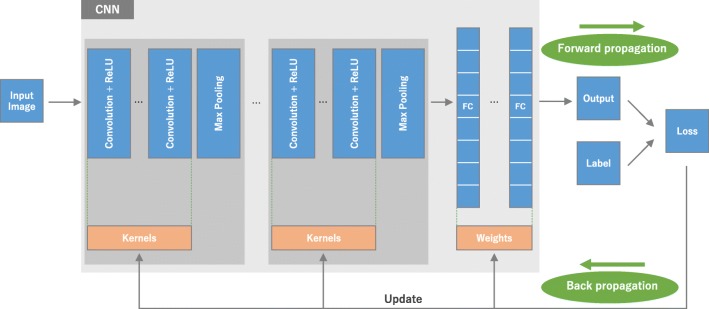
Convolutional neural network (CNN), a class of artificial neural networks that has become dominant in various computer vision tasks, is attracting interest across a variety of domains, including radiology. CNN is designed to automatically and adaptively learn spatial hierarchies of features through backpropagation by using multiple building blocks, such as convolution layers, pooling layers, and fully connected layers. This review article offers a perspective on the basic concepts of CNN and its application to various radiological tasks, and discusses its challenges and future directions in the field of radiology. Two challenges in applying CNN to radiological tasks, small dataset and overfitting, will also be covered in this article, as well as techniques to minimize them. Being familiar with the concepts and advantages, as well as limitations, of CNN is essential to leverage its potential in diagnostic radiology, with the goal of augmenting the performance of radiologists and improving patient care. KEY POINTS: • Convolutional neural network is a class of deep learning methods which has become dominant in various computer vision tasks and is attracting interest across a variety of domains, including radiology. • Convolutional neural network is composed of multiple building blocks, such as convolution layers, pooling layers, and fully connected layers, and is designed to automatically and adaptively learn spatial hierarchies of features through a backpropagation algorithm. • Familiarity with the concepts and advantages, as well as limitations, of convolutional neural network is essential to leverage its potential to improve radiologist performance and, eventually, patient care.
Overview
CoChat Summary
TL;DR
This narrative review explains the basic concepts of convolutional neural networks (CNNs) — their building blocks, training, and data requirements — and surveys their application to radiological tasks such as classification, segmentation, detection, image denoising, and report analysis. It highlights small datasets and overfitting as the two central challenges for CNN use in radiology and reviews techniques to mitigate them.
Key findings
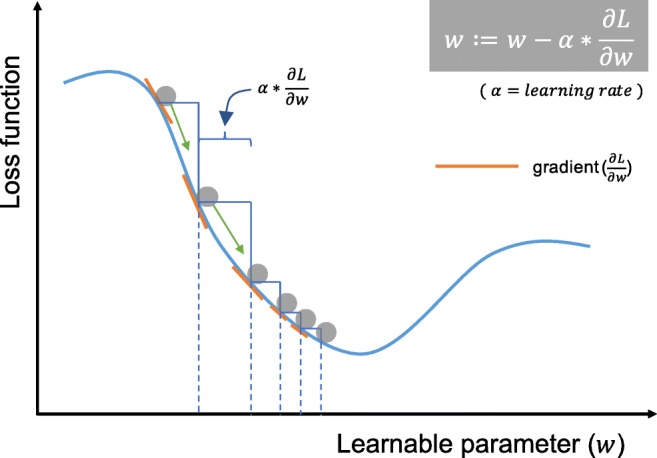
- CNN is composed of convolution, pooling, and fully connected layers; convolution and pooling perform feature extraction while fully connected layers map features to outputs, with kernels and weights learned via backpropagation and gradient descent.
- CNN differs from conventional radiomics in that it does not require hand-crafted feature extraction or expert segmentation, but is far more data hungry and computationally expensive, typically requiring GPUs.
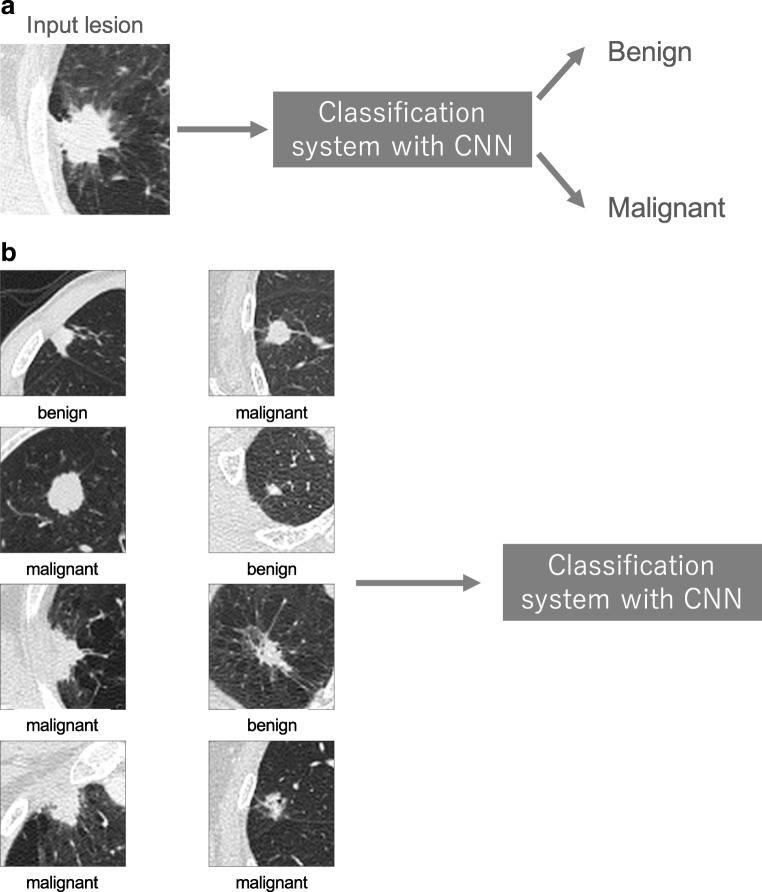
- Reported application results cited in the review include: an ensemble of AlexNet and GoogLeNet 2D-CNNs achieving a best AUC of 0.99 for detecting pulmonary tuberculosis on 1007 chest radiographs; a CNN-based CADe system trained on ~45,000 mammography images outperforming a hand-crafted-feature CADe system at low sensitivity and matching it at high sensitivity; and a detection system built from 33,688 bounding boxes mined from radiologists' reports showing significantly improved detection accuracy with pseudo-category labels.
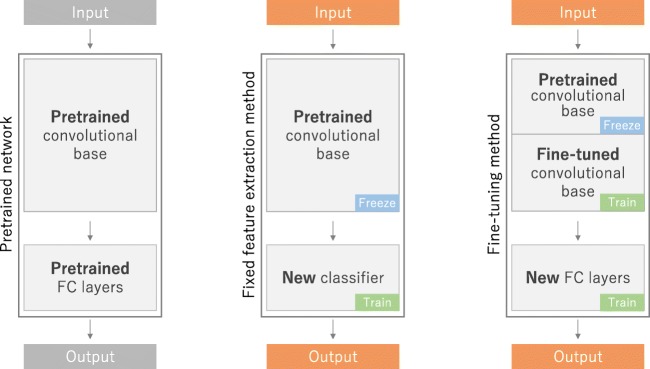
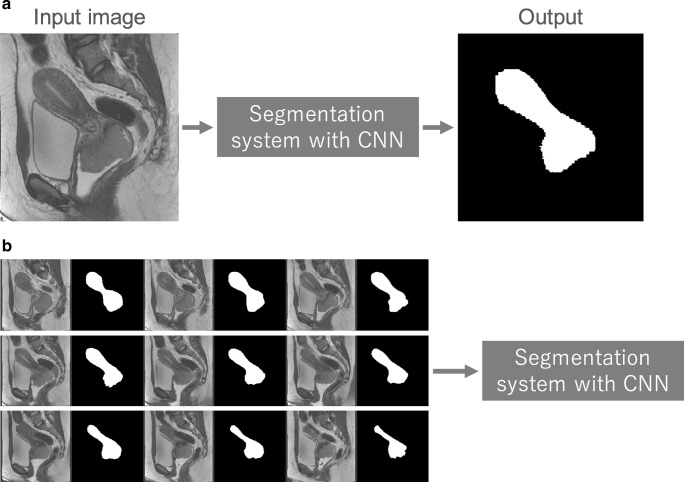
- Transfer learning from ImageNet (1.4 million images, 1000 classes) via fixed feature extraction or fine-tuning is presented as a key strategy for training on small datasets; U-net is highlighted for segmentation because it captures multiscale spatial context and can be trained end-to-end from limited data.
Methods
- Design: narrative review article (not a primary study), covering CNN concepts, training, data/label considerations, overfitting, small-dataset strategies, and radiology applications.
- Scope: applications are organized into classification, segmentation, detection, and "others" (denoising, image reconstruction, report classification); recurrent neural networks and other deep learning models are explicitly stated to be beyond the article's scope.
- Evidence base: illustrative prior studies are cited rather than systematically searched or quantitatively pooled; no new data, sample, or statistical analysis is generated by the authors.
Limitations
- Stated: the article is a perspective/overview, and other deep learning models such as recurrent neural networks for sequence models are beyond its scope; the details of improved gradient descent algorithms (momentum, RMSprop, Adam) are also stated to be beyond scope.
- Stated: whether semi-supervised techniques (pseudo-label, GANs) actually improve deep learning performance in radiology "is not clear and remains an area of active investigation," and whether medical pretrained networks would outperform ImageNet-pretrained transfer learning is likewise unclear.
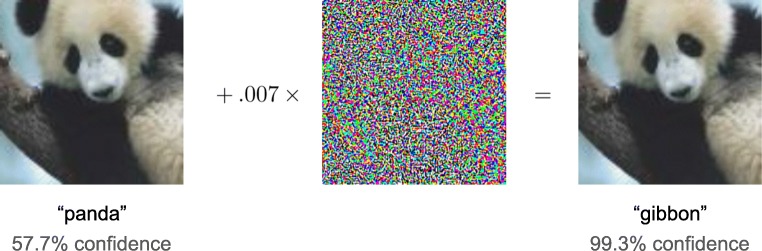
- Evident from the text: as a narrative review it reports no systematic search strategy, inclusion criteria, or quantitative synthesis, so the cited performance figures are illustrative examples rather than a comparative or exhaustive assessment; the authors also note deep learning's "black box" nature and vulnerability to adversarial examples as unresolved concerns for clinical robustness.
Model-written summary. Check it against the paper before relying on it.
Integrity signals
Registry
Cites
Statistics
Figures
Verification
Claims the paper makes
23 Valid · 11 Not valid · 6 Not checked · 47 Own results and interpretations
The sources with a verdict support this claim; the rest weren’t checked yet, have no full text we could read, or their verdicts aren’t rated yet.
In the paper
“several studies have already been published in areas such as lesion detection [7], classification [8], segmentation [9], image reconstruction [10, 11], and natural language processing [12].”
§ Convolutional neural networks: an overview and application in radiology > Introduction
What the sources say
- Not checked — no full text of the sourcecites [7] Lakhani P Sundaram B Deep learning at chest radiography: automated classification of pulmonary tuberculosis by using convolutional neural networks Radiology 2017 284 574 582 10.1148/radiol.2017162326 28436741 source
- Not checked — no full text of the sourcecites [8] Yasaka K Akai H Abe O Kiryu S Deep learning with convolutional neural network for differentiation of liver masses at dynamic contrast-enhanced CT: a preliminary study Radiology 2018 286 887 896 10.1148/radiol.2017170706 29059036 source
- Supportedcites [9] Christ PF, Elshaer MEA, Ettlinger F et al (2016) Automatic liver and lesion segmentation in CT using cascaded fully convolutional neural networks and 3D conditional random fields. In: Ourselin S, Joskowicz L, Sabuncu M, Unal G, Wells W (eds) Proceedings of Medical image computing and computer-assisted intervention – MICCAI 2016. 10.1007/978-3-319-46723-8_48 source
The citation [9] is attached to “segmentation,” not to the other listed applications. The paper’s opening page (p. 1) describes its CNN-based method for segmenting liver and lesions in CT images, so it is an example of the cited kind of study. (LLM, conf=0.95)
plain- Asserted: passes — The authors put it forward as true.
- Checkable: passes — It can be checked against evidence.
- Load-bearing: unclear — It is unclear whether the paper’s conclusions depend on it.
- Based: passes — The paper gives a reason why it holds.
Every source the paper cites for this claim was checked and supports it.
In the paper
“The results demonstrate that detection accuracy could be significantly improved by incorporating pseudo-category labels.”
§ Convolutional neural networks: an overview and application in radiology > Applications in radiology > Others
What the sources say
- Supportedcites [55] Yan K, Wang X, Lu L, Summers RM (2017) DeepLesion: automated deep mining, categorization and detection of significant radiology image findings using large-scale clinical lesion annotations. arXiv. Available online at: https://arxiv.org/pdf/1710.01766.pdf. Accessed 29 Jan 2018 source
In Results and Discussion (p. 7), the paper compares detection without categorization labels against detection with pseudo-category labels. Test accuracy rises from 59.45% to 64.30% overall, with improvements of 3–8 percentage points across the five lesion clusters. (LLM, conf=0.92)
hedgedstates a possible cause- Asserted: passes — The authors put it forward as true.
- Checkable: passes — It can be checked against evidence.
- Load-bearing: passes — The paper’s conclusions depend on it.
- Based: passes — The paper gives a reason why it holds.
- Supported
Every source the paper cites for this claim was checked and supports it.
In the paper
“As a result, U-net could be trained end-to-end from a limited number of training data.”
§ Convolutional neural networks: an overview and application in radiology > Applications in radiology > Segmentation
What the sources say
- Supportedcites [48] Ronneberger O, Fischer P, Brox T (2015) U-net: convolutional networks for biomedical image segmentation. In: Navab N, Hornegger J, Wells W, Frangi A (eds) Proceedings of Medical Image Computing and Computer-Assisted Intervention – MICCAI 2015. 10.1007/978-3-319-24574-4_28 source
The paper’s opening section states directly that U-Net can be trained end-to-end from very few images. The Conclusion likewise says it needs very few annotated images, thanks to data augmentation with elastic deformations. (LLM, conf=0.95)
hedgedstates a cause- Asserted: passes — The authors put it forward as true.
- Checkable: passes — It can be checked against evidence.
- Load-bearing: unclear — It is unclear whether the paper’s conclusions depend on it.
- Based: passes — The paper gives a reason why it holds.
- Supported
The sources with a verdict support this claim; the rest weren’t checked yet, have no full text we could read, or their verdicts aren’t rated yet.
In the paper
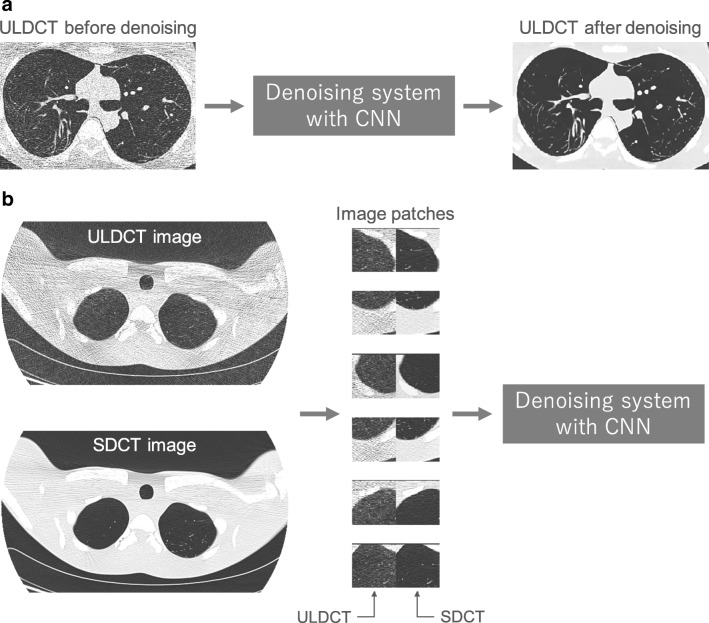
“Two previous studies showed that low-dose and ultra-low-dose CT images could be effectively denoised using deep learning [52, 53].”
§ Convolutional neural networks: an overview and application in radiology > Applications in radiology > Others
What the sources say
- Not checked — no full text of the sourcecites [52] Chen H Zhang Y Zhang W Low-dose CT via convolutional neural network Biomed Opt Express 2017 8 679 694 10.1364/BOE.8.000679 28270976 PMC5330597 source
- Supportedcites [53] Nishio M Nagashima C Hirabayashi S Convolutional auto-encoder for image denoising of ultra-low-dose CT Heliyon 2017 3 e00393 10.1016/j.heliyon.2017.e00393 28920094 PMC5577435 source
The Abstract (Materials and methods; Conclusion) reports that a convolutional auto-encoder denoised ultra-low-dose CT images of a chest phantom and performed better in visual assessments than the comparison methods. This supports the ultra-low-dose portion attributed to this study; the sentence cites two studies for the combined low-dose and ultra-low-dose claim. (LLM, conf=0.92)
hedgedstates a cause- Asserted: passes — The authors put it forward as true.
- Checkable: passes — It can be checked against evidence.
- Load-bearing: unclear — It is unclear whether the paper’s conclusions depend on it.
- Based: passes — The paper gives a reason why it holds.
The cited sources support only part of this claim — read each source’s verdict below.
In the paper
“Their study showed that U-net could effectively produce noiseless CT images from the subsampled sinogram.”
§ Convolutional neural networks: an overview and application in radiology > Applications in radiology > Others
What the sources say
- Partly supportedcites [54] Jin KH McCann MT Froustey E Unser M Deep convolutional neural network for inverse problems in imaging IEEE Trans Image Process 2017 26 4509 4522 10.1109/TIP.2017.2713099 28641250 sourceExperimental — accuracy not yet measured
The Experiments and Results section (p. 9) tests FBPConvNet on subsampled CT sinograms, and the Biomedical Dataset results (p. 13) report satisfactory removal of streaking artifacts and improved SNR. The network uses a modified U-net, but the paper does not claim its output is noiseless; the Discussion (p. 16) notes that artifacts can remain. (LLM, conf=0.88)
boostedstates a cause- Asserted: passes — The authors put it forward as true.
- Checkable: passes — It can be checked against evidence.
- Load-bearing: passes — The paper’s conclusions depend on it.
- Based: passes — The paper gives a reason why it holds.
- Partly supported
18 more claims · 8 with their cited sources checked
Create a free account to see all 87 claims and to verify the 4 references still open.
- Probably not a substantial claim. 56
- It may state two separate claims as one. 31
Citations
Cites
Deep Residual Learning for Image Recognition
He, K., Zhang, X., Ren, S., & Sun, J. (2016) · 2016 IEEE Conference on Computer Vision and Pattern Recognition (CVPR) · doi:10.1109/cvpr.2016.90 · Cited by 235,474 · cited 1×
“At present, many models pretrained on the ImageNet challenge dataset are open to the public and readily accessible, along with their learned kernels and weights, such as AlexNet [3], VGG [30], ResNet [31], Inception [32], and DenseNet [33].”
MethodVery Deep Convolutional Networks for Large-Scale Image Recognition
Simonyan, K., & Zisserman, A. (2014) · arXiv · doi:10.48550/arxiv.1409.1556 · Cited by 114,148 · cited 2×
“To perform unsupervised categorization, the following three steps were iteratively performed: (i) feature extraction using pretrained VGG16 model [30] from the lesions in the bounding box, (ii) clustering of the features, and (iii) fine-tuning of VGG16 based on the results of the clustering.”
MethodU-Net: Convolutional Networks for Biomedical Image Segmentation
Ronneberger, O., Fischer, P., & Brox, T. (2015) · Lecture notes in computer science · doi:10.1007/978-3-319-24574-4_28 · Cited by 99,404 · cited 1×
“Although segmentation based on image patch was successfully performed in deep learning, U-net of Ronneberger et al. [48] outperformed the image patch-based method on the ISBI [IEEE (The Institute of Electrical and Electronics Engineers) International Symposium on Biomedical Imaging] challenge for…”
MethodAdam: A Method for Stochastic Optimization
Kingma, D. P., & Ba, J. (2014) · arXiv · doi:10.48550/arxiv.1412.6980 · Cited by 98,946
LeCun, Y., Bengio, Y., & Hinton, G. (2015) · Nature · doi:10.1038/nature14539 · Cited by 84,126
Faster R-CNN: Towards Real-Time Object Detection with Region Proposal Networks
Ren, S., He, K., Girshick, R., & Sun, J. (2017) · IEEE Transactions on Pattern Analysis and Machine Intelligence · doi:10.1109/tpami.2016.2577031 · Cited by 73,472 · cited 1×
“The study also suggested that the detection system was built using the Faster R-CNN method [56], the lesions in the bounding box, and their corresponding pseudo-category.”
MethodFaster R-CNN: Towards Real-Time Object Detection with Region Proposal Networks
Ren, S., He, K., Girshick, R., & Sun, J. (2015) · arXiv · doi:10.48550/arxiv.1506.01497 · Cited by 70,812
Densely Connected Convolutional Networks
Huang, G., Liu, Z., Van Der Maaten, L., & Weinberger, K. Q. (2017) · 2017 IEEE Conference on Computer Vision and Pattern Recognition (CVPR) · doi:10.1109/cvpr.2017.243 · Cited by 48,566 · cited 1×
“At present, many models pretrained on the ImageNet challenge dataset are open to the public and readily accessible, along with their learned kernels and weights, such as AlexNet [3], VGG [30], ResNet [31], Inception [32], and DenseNet [33].”
MethodGoing deeper with convolutions
Szegedy, C., Liu, W., Jia, Y., Sermanet, P., Reed, S., Anguelov, D., Erhan, D., Vanhoucke, V., & Rabinovich, A. (2015) · 2015 IEEE Conference on Computer Vision and Pattern Recognition (CVPR) · doi:10.1109/cvpr.2015.7298594 · Cited by 48,562 · cited 5×
“According to the results, the best area under the curve of receiver operating characteristic curves for detecting pulmonary tuberculosis from healthy cases was 0.99, which was obtained by ensemble of the AlexNet and GoogLeNet 2D-CNNs.”
MethodInfluentialImageNet Large Scale Visual Recognition Challenge
Russakovsky, O., Deng, J., Su, H., Krause, J., Satheesh, S., Ma, S., Huang, Z., Karpathy, A., Khosla, A., Bernstein, M., et al. (2015) · International Journal of Computer Vision · doi:10.1007/s11263-015-0816-y · Cited by 39,380 · cited 1×
“…neural network (CNN), a class of artificial neural networks that has been a dominant method in computer vision tasks since the astonishing results were shared on the object recognition competition known as the ImageNet Large Scale Visual Recognition Competition (ILSVRC) in 2012 [2, 3].”
Method
Research works printed but not linked: 3
- Krizhevsky A, Sutskever I, Hinton GE (2012) ImageNet classification with deep convolutional neural networks. Adv Neural Inf Process Syst 25. Available online at: https://papers.nips.cc/paper/4824-imagenet-classification-with-deep-convolutional-neural-networks.pdf. Accessed 22 Jan 2018
- Lee DH (2013) Pseudo-label: the simple and efficient semi-supervised learning method for deep neural networks. In: Proceedings of the ICML 2013 Workshop: Challenges in Representation Learning. Available online at: http://deeplearning.net/wp-content/uploads/2013/03/pseudo_label_final.pdf. Accessed 23 Jan 2018
- Kurata Y, Nishio M, Fujimoto K et al (2018) Automatic segmentation of uterus with malignant tumor on MRI using U-net. In: Proceedings of the Computer Assisted Radiology and Surgery (CARS) 2018 congress (accepted)
Cited by
Items 3,801–3,900 of 4,673
Rana, K., Malik, N., & Öztürk, U. (2022) · Natural hazards and earth system sciences · doi:10.5194/nhess-2022-141-rc1
Performance Evaluation of Convolutional Neural Network for Lung Cancer Detection
Dhasny Lydia, M., & Prakash, M. (2022) · International Conference on Electronic Systems and Intelligent Computing (ICESIC) · doi:10.1109/icesic53714.2022.9783533
“Convolution layer is usually a combination of linear and nonlinear operation that perform the feature extraction operation [20].”
BackgroundSalah, A. T., Abd-ElAziz, M. A., Abbas, M. I., Hesham, Y., Elsahaer, Z. M., Eissa, M. M., Ahmed, S. A. A., & Khoriba, G. A. (2022) · International Mobile, Intelligent, and Ubiquitous Computing Conference (MIUCC) · doi:10.1109/miucc55081.2022.9781779
V., V. R. B., & Devi, A. J. (2022) · International Journal of Case Studies in Business IT and Education · doi:10.47992/ijcsbe.2581.6942.0177
Nguyen, M., & Wu, N. (2022) · Lecture notes in computer science · doi:10.1007/978-3-031-16912-0_5 · Cited by 2
“In turn, we believe the ideas presented are transferable to networks with more complex sequential structure, perhaps being sequential across multiple directions; we have tested this with convolutional networks [24] and recurrent networks [12] in particular.”
BackgroundPoojitha, G., Kumar, S., Vardhan, G. H., et al. (2022) · International Journal of Scientific Research in Computer Science Engineering and Information Technology · doi:10.32628/cseit228377
Hou, Y., & Navarro‐Cía, M. (2022) · doi:10.36227/techrxiv.20272764.v1
Bianco, G., Paul, T., Nisar, A., et al. (2022) · SSRN Electronic Journal · doi:10.2139/ssrn.4128913
PCA Approaches for Optimal Convolution Kernels in Convolutional Neural Networks
Lee, P., Kim, D., Lee, S. H., et al. (2021) · International Conference on Computational Science and Computational Intelligence (CSCI) · doi:10.1109/csci54926.2021.00017
“A well-trained CNN with multiple layers automatically recognizes features in a hierarchical way, starting with simple edges down to complex objects such as faces, cups, cars, cats, etc. [2]–[4].”
BackgroundA Survey on Recent Computer‐Aided Diagnosis for Detecting Diabetic Retinopathy
Priyadharsini, C., Kannan, R. J., & Hussain, F. K. (2022) · doi:10.1002/9781119841937.ch2
Raza, M. A., Wang, C., Xue, P., & Bano, S. (2020) · International Journal of Technology and Engineering Studies · doi:10.20469/ijtes.6.40002-2
Rana, K., Malik, N., & Öztürk, U. (2022) · Natural hazards and earth system sciences · doi:10.5194/nhess-2022-141-rc2
Sales Prediction Based on Machine Learning Scenarios
Mao, Q. (2022) · BCP Business & Management · doi:10.54691/bcpbm.v23i.1474
IoT Based Framework for the Detection of Face Mask and Temperature, to Restrict the Spread of Covids
Srikanteswara, R., Hegde, A. S., Abhishek, K., Sai, R. D., & Gnanadeep, M. V. (2022) · Lecture notes in networks and systems · doi:10.1007/978-981-19-2500-9_12
Classification of prostate cancer using Deep Learning approach and MobileNetV2 architecturePreprint
Mashak, N. P., Akbarizadeh, G., & Farshidi, E. (2022) · Research Square · doi:10.21203/rs.3.rs-1964155/v1 · Cited by 3
Data mining with deep learning in biomedical data
Singh, K., & Malhotra, J. (2022) · Elsevier eBooks · doi:10.1016/b978-0-323-99864-2.00018-4
Elkhuoly, O., Malhat, M. G., Keshk, A. E.-S., & Elsabaawy, M. (2022) · IJCI International Journal of Computers and Information · doi:10.21608/ijci.2022.151629.1079 · Cited by 1
Kanda, T., Wakiya, T., Ishido, K., et al. (2022) · Research Square · doi:10.21203/rs.3.rs-2047342/v1
Convolutional Neural Networks for Audio Classification: An Ensemble Approach
Dave, B., & Srivastava, K. (2022) · Lecture notes in networks and systems · doi:10.1007/978-981-19-2225-1_23 · Cited by 3
Rana, K. (2022) · Natural hazards and earth system sciences · doi:10.5194/nhess-2022-141-ac2
Rana, K. (2022) · Natural hazards and earth system sciences · doi:10.5194/nhess-2022-141-ac1
Role of Convolutional Neural Networks to Diagnosis Medical Images
Kaur, G., & Singh, S. (2022) · International Journal for Research in Applied Science and Engineering Technology · doi:10.22214/ijraset.2022.46962
Shaikh, S. (2022) · Journal of Magnetic Resonance Imaging · doi:10.1002/jmri.28466
“The three classifiers are the SVM classifier, KNN classifier, and LDA classifier, and these are important for the prediction of the ALNM of breast cancer.(8) Thus, the use of various radiomic features of the primary”
MethodLodetti, P. Z., Cardoso, B. B., Martins, M. A. I., Vasconcellos, V. D. O., Hattori, L. T., & Tomaz, K. D. (2022) · Asian Conference on Innovation in Technology (ASIANCON) · doi:10.1109/asiancon55314.2022.9908645
Abrar, A., & Rajpoot, P. (2022) · Research Square · doi:10.21203/rs.3.rs-2145172/v1
Robust deep convolutional neural network-Based Classifiers
Assem, Y., Bedair, A., Essai, M. H., & Ali, S. (2023) · SVU-International Journal of Engineering Sciences and Applications · doi:10.21608/svusrc.2022.161642.1073 · Cited by 1
Hybrid feature extraction based on PCA and CNN for oil rig classification in C-Band SAR imagery
da Silva, F. G., Ramos, L. P., Palm, B. G., et al. (2022) · doi:10.1117/12.2636274
New Data Processing Method for Acoustic Emission Signals for Metalworking Fluid Classification
Wei, X. L., & Soeffker, D. (2022) · Annual Conference of the PHM Society · doi:10.36001/phmconf.2022.v14i1.3145
Advancing photoacoustic tomography using deep learning
Rajendran, P. (2022) · DR-NTU (Nanyang Technological University) · doi:10.32657/10356/162207
Enhancing the detection performance of a vision-based window opening detector
Tien, P. W., Wei, S., Calautit, J. K., et al. (2022) · Cleaner Energy Systems · doi:10.1016/j.cles.2022.100038
Rachim, F. F., Damayanti, A., & Winarko, E. (2022) · Contemporary Mathematics and Applications (ConMathA) · doi:10.20473/conmatha.v4i2.38262
Choudhary, P., & Saxena, A. (2022) · International Journal on Future Revolution in Computer Science & Communication Engineering · doi:10.17762/ijfrcsce.v8i3.2106
Zhang, S. (2022) · Highlights in Science Engineering and Technology · doi:10.54097/hset.v16i.2066
"Developing a Machine-Learning Algorithm to Diagnose Age-Related Macular Degeneration"
Gupta, S. (2022) · International Journal of Software & Hardware Research in Engineering · doi:10.26821/ijshre.10.10.2022.101012
Implementation of the Mask-R Convolutional Neural Network on Airplane Object Detection
Isnanto, R. R., Windasari, I. P., & Ringoringo, K. J. (2022) · International Conference on Information Technology Research and Innovation (ICITRI) · doi:10.1109/icitri56423.2022.9970229
“They discuss small dataset and over-fitting, as well as techniques to minimize them [19].”
BackgroundCNN-based bus trip prediction method for the elderly in plateau cities
He, C., Wang, J., & Xiao, J. (2022) · International Conference on Electromechanical Control Technology and Transportation (ICECTT) · doi:10.1117/12.2645595
“It consists of three main layers as shown in Figure 2, namely the convolutional layer, the pooling layer and the fully connected layer [21].”
BackgroundFace Mask Detection Alert System Using CNN
Kagwade, A., Kamathe, R. S., & Hanchate, V. (2022) · Cognitive science and technology · doi:10.1007/978-981-19-2350-0_45
Soltani, M. (2022) · Journal of Clinical Images and Medical Case Reports · doi:10.52768/2766-7820/2041 · Cited by 2
“For generating each feature map, the filter is shared by all spatial locations of the input [38,52,53].”
BackgroundCOVID-19 Face Mask Detection and Identification using FaceNet
Intim, K., Wanichsombat, A., & Boonnam, N. (2022) · International Technical Conference on Circuits/Systems, Computers and Communications (ITC-CSCC) · doi:10.1109/itc-cscc55581.2022.9894928
“This technology adapts to various human needs such as agriculture in [2] industry in [3] medicine in [4] and many others.”
BackgroundFunctionalized Data Operator Model for System Analysis and Forecasting
Danko, G. L. (2022) · Applied Mathematics · doi:10.4236/am.2022.1312062
Face Expression Recognition Using Deep Learning and Cloud Computing Services
Cumhuriyet, H. H., Uslan, V., Yavaş, E., & Şeker, H. (2023) · Engineering cyber-physical systems and critical infrastructures · doi:10.1007/978-3-031-09753-9_43
Implementation of Data Science Techniques in the ACM Computing Classification System
Tomé, P. (2022) · International Conference on Electrical, Computer, Communications and Mechatronics Engineering (ICECCME) · doi:10.1109/iceccme55909.2022.9988283
Topic-Wise Speech Summarization with Emotion Classification
Anand, A., Choudhary, H., Singhania, A., et al. (2023) · Cognitive science and technology · doi:10.1007/978-981-19-2358-6_39
Health Monitoring Technology Based on Artificial Intelligence
Lü, H., Xu, Z.-D., Iseley, T., Peng, H., & Fu, L. (2023) · Springer eBooks · doi:10.1007/978-981-19-6798-6_4
Optimized Deep Convolutional Neural Network for IoT Based Healthcare Platform
Stephen, V. K., Udinookkaran, P., Vera, R. P. N. D., et al. (2022) · International Conference on Electronics, Communication and Aerospace Technology (ICECA) · doi:10.1109/iceca55336.2022.10009601
Covi-Gate: Face Mask and Temperature Detection System
Kulkarni, M., Dusane, A., Daga, S., et al. (2022) · International Conference on Computing Communication Control and automation · doi:10.1109/iccubea54992.2022.10010766
“Systems use Keras, TensorFlow, OpenCV and Deep Learning [8-11] to achieve high accuracy detections.”
MethodПРИКЛАД ВИКОРИСТАННЯ ЗГОРТКОВОЇ НЕЙРОННОЇ МЕРЕЖІ ДЛЯ РОЗПІЗНАВАННЯ НОМІНАЛУ БАНКНОТ
МАКОВЕЙЧУК, О., ЗАНФІРОВ, Р., НАУМЕНКО, А., ГАЙОВИЙ, О., & ВИЯСНІВСЬКИЙ, В. (2022) · ITSynergy · doi:10.53920/its-2022-1-3
A Facial Emotion Detection and Classification System using Convoluted Neural Networks
Omotosho, O. I., & Oyeleke, J. (2022) · doi:10.1145/3571697.3571712
“CNN is popularly used with videos, 2D images, spectrograms, Synthetic Aperture Radars [6].”
MethodLearning-based wildfire tracking with unmanned aerial vehicles
Jia, Q. (2022) · MOspace Institutional Repository (University of Missouri) · doi:10.32469/10355/93968 · Cited by 1
Image Classification Based on Deep Graph Convolutional Networks
Tang, T., Chen, X., Wu, Y., et al. (2022) · IEEE International Conference on Data Science and Advanced Analytics (DSAA) · doi:10.1109/dsaa54385.2022.10032329
“Furthermore, compared with traditional artificial-based image classification methods, image classification models based on convolutional neural networks do not require artificial feature extraction or a description of target images [4].”
BackgroundConvolutional Neural Network for COVID-19 Detection
Agarwal, P., Yadav, N., Kumar, R., & Thakur, R. (2023) · Lecture notes in networks and systems · doi:10.1007/978-981-19-6634-7_39
Artificial Intelligence and Deep Learning based Face Mask Detection System using Generic Camera
Patil, C. H., Patil, H., & Mali, S. M. (2022) · IEEE Pune Section International Conference (PuneCon) · doi:10.1109/punecon55413.2022.10014873
Predicting Invasive Ductal Carcinoma by Using Deep Convolutional Neural Network
Dong, S. (2023) · Atlantis Highlights in Computer Sciences/Atlantis highlights in computer sciences · doi:10.2991/978-94-6463-040-4_29
Application of Deep Learning Techniques for Pneumonia Detection Using Chest X-Ray Images
Vishwakarma, D., Bhandari, H., Agrawal, N., Kriti, & Rawat, J. (2023) · Advances in medical technologies and clinical practice book series · doi:10.4018/978-1-6684-6957-6.ch010
Meson spectroscopy at non-zero temperature using lattice QCD
García-Mascaraque, S. C. (2023) · Cronfa (Swansea University) · doi:10.23889/suthesis.62707
Recognition of Facial Expressions Using Convolutional Neural Networks
Cabezuelo, A. S. (2023) · Algorithms for intelligent systems · doi:10.1007/978-981-19-8742-7_5
USING MACHINE LEARNING AND IMAGE PROCESSING TECHNIQUES TO ESTIMATE THE WEIGHT OF BEEF CATTLE
Canal, G. Z., Gonçalves, A. L., Vianna, L., et al. (2023) · CONTECSI - International Conference on Information Systems and Technology Management · doi:10.5748/19contecsi/pse/agb/7013
Using of Conventional Neural Network to Diagnose Scabies by Dermoscopy
Zendah, H., & Dimililer, K. (2023) · Lecture notes in networks and systems · doi:10.1007/978-3-031-25252-5_38
Fault Detection Using Machine Learning in the Southwest Part of Bangladesh Power System
Rafi, M. S. A., Rahman, M. T., Rahman, A., et al. (2022) · International Conference on Computer and Information Technology (ICCIT) · doi:10.1109/iccit57492.2022.10055224
“Finally we have trained our network using decision tree classifier [7], convolutional neural network (CNN) [8] and gated recurrent units (GRU) [9].”
MethodExploring the application of neural networks for facial image reconstruction in recognition systems
Markin, E. I., Zuparova, V. V., & Martyshkin, A. I. (2022) · Proceedings of the Institute for System Programming of RAS · doi:10.15514/ispras-2022-34(6)-8
Automatic question generation from natural language texts
Cao, Z. (2022) · DR-NTU (Nanyang Technological University) · doi:10.32657/10356/164625
Mapas de melanina e oxiemoglobina para auxiliar redes neurais na classificação de imagens de retina
Vitor, A. R. A. S. (2022) · Digital Library of Theses and Dissertations (Universidade de São Paulo) · doi:10.11606/d.59.2022.tde-27022023-074122
Classification of Galaxies using Transfer Learning
Singh, S. P., Singh, V., Prajapati, V., Sharma, V., Sinha, J., & Astya, R. (2022) · International Conference on Advances in Computing, Communication Control and Networking (ICAC3N) · doi:10.1109/icac3n56670.2022.10074137 · Cited by 1
“[5 ] Another approach using Convolution neural network has been presented by Jianxin Wu with more convolutional layer for classification purpose.”
BackgroundMethodDeep Learning for Self-learning in Yoga and Fitness: A Literature Review
Sharma, D., Panwar, H., Goel, H., & Katarya, R. (2023) · Lecture notes in electrical engineering · doi:10.1007/978-981-19-8136-4_27
Modified Convolutional Neural Network for Fashion Classification
Mohanty, D. K., Gupta, P. D., Dey, R., & Pattnaik, S. (2022) · International Conference on Advancements in Smart, Secure and Intelligent Computing (ASSIC) · doi:10.1109/assic55218.2022.10088358
Deep Deterministic Policy Gradient (DDPG)-based Photovoltaic Power Forecasting
Li, G., Zhu, Y., Gao, J., et al. (2022) · International Conference on Information Technology in Medicine and Education · doi:10.1109/itme56794.2022.00046
“• Convolutional layer contains several convolution kernels to generate new feature maps, which convolves the network weight with the receptive field of the feature map of the previous layer, and uses the activation function to form the feature map of the next convolutional layer [18].”
BackgroundFacial Expressions Recognitions with Supervised Contrastive Learning
Wang, X. (2023) · Highlights in Science Engineering and Technology · doi:10.54097/hset.v41i.6743 · Cited by 1
Study for Performance of Un-Pretrained and Pre-trained Models based on CNN
Wang, B. (2023) · Highlights in Science Engineering and Technology · doi:10.54097/hset.v39i.6486
Human-Designed Filters May Outperform Machine-Learned Filters.
Zeng, G. L. (2022) · PubMed
CHOOSING A NEURAL NETWORK ARCHITECTURE FOR A VEHICLE AUTOPILOT
Dohadailo, O., & Uspenskyi, V. B. (2023) · Bulletin of the National Technical University KhPI Series Mathematical modeling in engineering and technologies · doi:10.20998/2222-0631.2022.01.07
Penggunaan Pre-trained Model untuk Klasifikasi Kualitas Sekrup
Rafif, M. N., Putri, D. U. K., & Awaludin, L. (2022) · IJEIS (Indonesian Journal of Electronics and Instrumentation Systems) · doi:10.22146/ijeis.78112 · Cited by 1
Computational Modeling in Various Cognitive Fields
Sun, R. (2023) · Cambridge University Press eBooks · doi:10.1017/9781108755610.027
An Optimized Approach for Emotion Detection-Based Music Recommendation System
Sabnis, M. K., & Bhatia, B. (2023) · Lecture notes in networks and systems · doi:10.1007/978-981-19-9858-4_58
Huang, Y.-J., Lin, C.-H., Miao, S., Zheng, K., Lü, L., Lu, Y., Lin, C., & Kuo, C. (2023) · doi:10.2196/preprints.48350
Deep Learning Glaucoma Detection Models in Retinal Images Capture by Mobile Devices
Rezende, R. F., Coelho, A., Fernandes, R., Camara, J., Neto, A., & Cunha, A. M. T. D. S. (2023) · Lecture notes of the Institute for Computer Sciences, Social Informatics and Telecommunications Engineering · doi:10.1007/978-3-031-32029-3_1
Comparison of Different DNN Models for Classification of Different Sports Images
Kulkarni, U., Hegade, G., Gurav, C., et al. (2023) · IEEE International Conference for Convergence in Technology (I2CT) · doi:10.1109/i2ct57861.2023.10126383
“CNN input can be changed to one-dimensional allowing internal representation of a one-dimensional sequence but usually, a two-dimensional, field or matrix [6].”
BackgroundLu, G., Li, H., & Zhang, M. (2023) · International Journal of Information Technologies and Systems Approach · doi:10.4018/ijitsa.323648 · Cited by 1
Soltanmohammadi, R., & Faroughi, S. A. (2023) · SSRN Electronic Journal · doi:10.2139/ssrn.4460459
Slikker, W., Wu, L., Xu, J., & Shafer, T. J. (2023) · Elsevier eBooks · doi:10.1016/b978-0-12-824010-6.00048-4 · Cited by 1
Zandi, F., Ebrahimpour-Komleh, H., & Homayoun, H. (2023) · doi:10.1109/ipria59240.2023.10147169 · Cited by 1
Research on X-ray Image Classification Algorithm of COVID-19 Based on FS-TResN et Model
Zheng, Y. (2022) · International Conference on Information Systems and Computing Technology (ISCTech) · doi:10.1109/isctech58360.2022.00098
Early Detection of Pathological Myopia in Fundus Images Using Deep Learning
Fatima, N., & Yadav, V. (2023) · Lecture notes in electrical engineering · doi:10.1007/978-981-99-1410-4_25
Mohammed, A., & Corzo, G. (2024) · SSRN Electronic Journal · doi:10.2139/ssrn.4494251
Advanced Research in Pediatric Radiology and Nuclear Medicine
Ng, C. K. C. (2023) · MDPI eBooks · doi:10.3390/books978-3-0365-7958-0
Shirasuna, V. Y., & Gradvohl, A. L. S. (2023) · SSRN Electronic Journal · doi:10.2139/ssrn.4504194
Yang, H. (2023) · Queensland University of Technology · doi:10.5204/thesis.eprints.241290
Pretrained CNN Architectures: A Detailed Analysis Using Bell Pepper Image DatasetsPreprint
Mathew, M. P., Elayidom, M. S., Jagathyraj, V. P., & Mahesh, T. Y. (2023) · Research Square · doi:10.21203/rs.3.rs-3146418/v1 · Cited by 2
Research on asphalt materials based on machine vision and generate adversarial networks
Song, W., & Li, H. (2023) · Highlights in Science Engineering and Technology · doi:10.54097/hset.v52i.8846
Cas2s: A Generic Deep Learning Model for Short-Term Metro Passenger Flow PredictionPreprint
Ren, B., Li, T., Li, Y., & Wen, X. (2023) · SSRN Electronic Journal · doi:10.2139/ssrn.4514450
Raharjo, A. S. G., & Sugiharti, E. (2023) · Scientific Journal of Informatics · doi:10.15294/sji.v10i3.44137
“The CNN algorithm is part of a deep learning model for processing image data, CNN is designed to be able automatically recognize patterns in images from simple patterns to complex patterns [24].”
MethodAge Analysis with Convolutional Neural Networks
Pérez‐Delgado, M., & Román‐Gallego, J. (2023) · Advances in intelligent systems and computing · doi:10.1007/978-3-031-38344-1_4 · Cited by 1
Klasifikasi Suara Untuk Memonitori Hutan Berbasis Convolutional Neural Network
Fadhillah, R. F., & Sumiharto, R. (2023) · IJEIS (Indonesian Journal of Electronics and Instrumentation Systems) · doi:10.22146/ijeis.79536
“3 Ekstraksi Fitur CNN atau Convolutional Neural Network memiliki 3 layer utama, yaitu convolutional layer, pooling layer, dan fully connected layer [13].”
Analysis of Medical Images Classification Methods: the Case of Neutrophil Nuclei
Валерьевна, Н. А., Naydenov, S. A., & Shevchenko, E. V. (2023) · Journal of Biomedical Photonics & Engineering · doi:10.18287/jbpe23.09.030302
Metadata
- Authors
- Yamashita, R., Nishio, M., Do, R. K. G., & Togashi, K.
- Affiliations
- Memorial Sloan Kettering Cancer Center (US)
- Kyoto University (JP)
- Corresponding author
- Yamashita, Rikiya
- Venue
- Insights into Imaging
- Published
- 2018-06-22
- Volume
- 9
- Issue
- 4
- Pages
- 611-629
- ISSN
- 1869-4101 (ISSN-L)
- PMC
- PMC6108980
- OpenAlex
- W2809254203
- Cited by
- 4,682
- References
- 55
- Citations by year
- 2026: 390 · 2025: 701 · 2024: 915 · 2023: 889 · 2022: 772 · 2021: 592 · 2020: 312 · 2019: 97 · 2018: 12
- FWCI
- 5.66
- Type
- journal article
- Language
- en
- Open access
- gold
- doi.org
- Licence
- cc-by
- creativecommons.org/licenses/by/4.0 (tdm)
- creativecommons.org/licenses/by/4.0 (vor)
- Locations
- Insights into Imaging (publishedVersion, cc-by)
- Europe PMC (PubMed Central) (publishedVersion, other-oa)
- PubMed Central (publishedVersion, cc-by)
- PubMed (publishedVersion)
- DOAJ (DOAJ: Directory of Open Access Journals) (submittedVersion, cc-by-sa)
- Funders
- Japan Society for the Promotion of Science (JP16K19883)
- Topics
- Health Sciences › Medicine › Health Informatics › Artificial Intelligence in Healthcare and Education
- Health Sciences › Medicine › Radiology, Nuclear Medicine and Imaging › Radiomics and Machine Learning in Medical Imaging
- Physical Sciences › Computer Science › Computer Vision and Pattern Recognition › Advanced Neural Network Applications
- Keywords
- convolutional neural networks, deep learning in radiology, convolutional layers, pooling layers, small datasets, overfitting, computer-aided diagnosis, radiology image analysis
About these checks
Registry, retraction, Cites and statistics results are computed, not judged, with one exception: a printed reference that no index lists is read once by a model before it counts as a citation error. Claims are extracted by a model and kept only when their quote appears verbatim in the text; each cited source is then checked, with a model’s help, for whether it says what the claim relies on. Those verdicts can be wrong — read the claim’s quote and the cited source before relying on one.
The claim verdicts this report counts are experimental: their accuracy is not yet measured.
A language model drew the claims from the paper on 2026-10-10, under version 3 of the claim definition (model deepseek-v4.1-flash, prompt extract-v3).
A second model labelled each claim on 2026-10-10 (model jev-1.13-20260917, definition revision gold-guideline-v0.2).
Cited sources are checked with a language model’s help (gpt-6-sol).
Statistics and arithmetic are recomputed, not judged.
Confidence bands are shown only for fields calibrated on our annotated test set. None is calibrated yet, so no band is shown.
What counts as a claim ›How we measure confidence ›How we check this ›
Are you an author, or do you see a problem with this page? Request a review
Data sources
Bibliographic data: Semantic Scholar, OpenAlex, Crossref.
Contains information from the Semantic Scholar Academic Graph Datasets, made available under the ODC Attribution License (ODC-BY 1.0).
Semantic Scholar’s data is described in: Kinney, R., et al. (2023). The Semantic Scholar Open Data Platform. arXiv:2301.10140.
