

Convolutional neural networks: an overview and application in radiology
Open accessThe DOI matches its Crossref record; 65 of the 65 references it cites were found in a registry or an index; 30 of the 49 sources its claims cite were checked for support.
Abstract
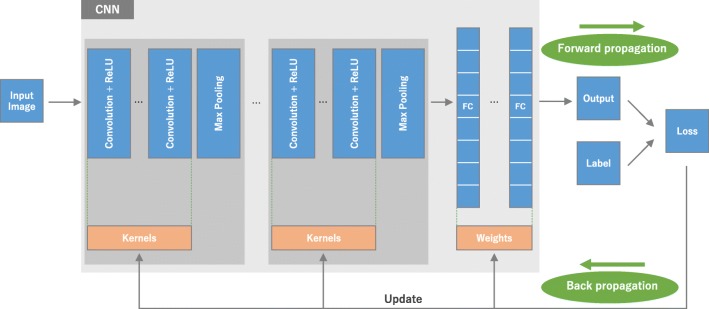
Convolutional neural network (CNN), a class of artificial neural networks that has become dominant in various computer vision tasks, is attracting interest across a variety of domains, including radiology. CNN is designed to automatically and adaptively learn spatial hierarchies of features through backpropagation by using multiple building blocks, such as convolution layers, pooling layers, and fully connected layers. This review article offers a perspective on the basic concepts of CNN and its application to various radiological tasks, and discusses its challenges and future directions in the field of radiology. Two challenges in applying CNN to radiological tasks, small dataset and overfitting, will also be covered in this article, as well as techniques to minimize them. Being familiar with the concepts and advantages, as well as limitations, of CNN is essential to leverage its potential in diagnostic radiology, with the goal of augmenting the performance of radiologists and improving patient care. KEY POINTS: • Convolutional neural network is a class of deep learning methods which has become dominant in various computer vision tasks and is attracting interest across a variety of domains, including radiology. • Convolutional neural network is composed of multiple building blocks, such as convolution layers, pooling layers, and fully connected layers, and is designed to automatically and adaptively learn spatial hierarchies of features through a backpropagation algorithm. • Familiarity with the concepts and advantages, as well as limitations, of convolutional neural network is essential to leverage its potential to improve radiologist performance and, eventually, patient care.
Overview
CoChat Summary
TL;DR
This narrative review explains the basic concepts of convolutional neural networks (CNNs) — their building blocks, training, and data requirements — and surveys their application to radiological tasks such as classification, segmentation, detection, image denoising, and report analysis. It highlights small datasets and overfitting as the two central challenges for CNN use in radiology and reviews techniques to mitigate them.
Key findings
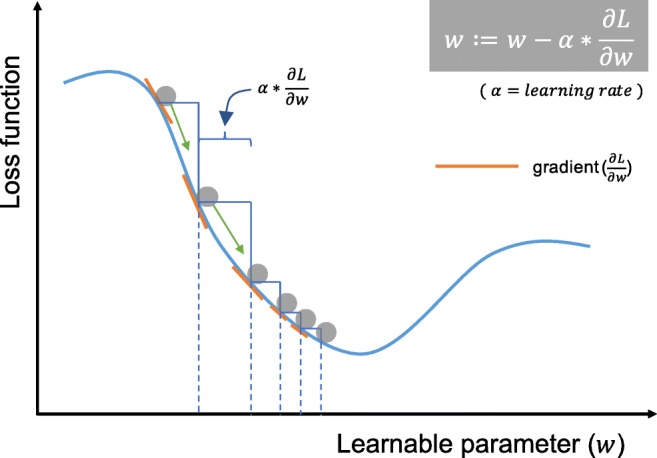
- CNN is composed of convolution, pooling, and fully connected layers; convolution and pooling perform feature extraction while fully connected layers map features to outputs, with kernels and weights learned via backpropagation and gradient descent.
- CNN differs from conventional radiomics in that it does not require hand-crafted feature extraction or expert segmentation, but is far more data hungry and computationally expensive, typically requiring GPUs.
- Reported application results cited in the review include: an ensemble of AlexNet and GoogLeNet 2D-CNNs achieving a best AUC of 0.99 for detecting pulmonary tuberculosis on 1007 chest radiographs; a CNN-based CADe system trained on ~45,000 mammography images outperforming a hand-crafted-feature CADe system at low sensitivity and matching it at high sensitivity; and a detection system built from 33,688 bounding boxes mined from radiologists' reports showing significantly improved detection accuracy with pseudo-category labels.
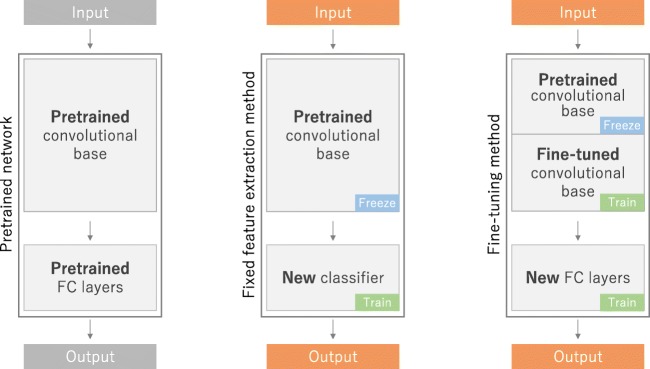
- Transfer learning from ImageNet (1.4 million images, 1000 classes) via fixed feature extraction or fine-tuning is presented as a key strategy for training on small datasets; U-net is highlighted for segmentation because it captures multiscale spatial context and can be trained end-to-end from limited data.
Methods
- Design: narrative review article (not a primary study), covering CNN concepts, training, data/label considerations, overfitting, small-dataset strategies, and radiology applications.
- Scope: applications are organized into classification, segmentation, detection, and "others" (denoising, image reconstruction, report classification); recurrent neural networks and other deep learning models are explicitly stated to be beyond the article's scope.
- Evidence base: illustrative prior studies are cited rather than systematically searched or quantitatively pooled; no new data, sample, or statistical analysis is generated by the authors.
Limitations
- Stated: the article is a perspective/overview, and other deep learning models such as recurrent neural networks for sequence models are beyond its scope; the details of improved gradient descent algorithms (momentum, RMSprop, Adam) are also stated to be beyond scope.
- Stated: whether semi-supervised techniques (pseudo-label, GANs) actually improve deep learning performance in radiology "is not clear and remains an area of active investigation," and whether medical pretrained networks would outperform ImageNet-pretrained transfer learning is likewise unclear.
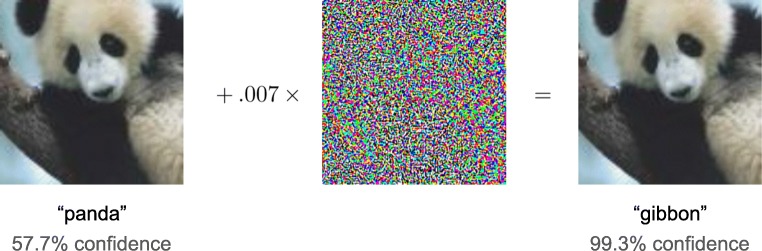
- Evident from the text: as a narrative review it reports no systematic search strategy, inclusion criteria, or quantitative synthesis, so the cited performance figures are illustrative examples rather than a comparative or exhaustive assessment; the authors also note deep learning's "black box" nature and vulnerability to adversarial examples as unresolved concerns for clinical robustness.
Model-written summary. Check it against the paper before relying on it.
Integrity signals
Registry
Cites
Statistics
Figures
Verification
Claims the paper makes
23 Valid · 11 Not valid · 6 Not checked · 47 Own results and interpretations
The sources with a verdict support this claim; the rest weren’t checked yet, have no full text we could read, or their verdicts aren’t rated yet.
In the paper
“several studies have already been published in areas such as lesion detection [7], classification [8], segmentation [9], image reconstruction [10, 11], and natural language processing [12].”
§ Convolutional neural networks: an overview and application in radiology > Introduction
What the sources say
- Not checked — no full text of the sourcecites [7] Lakhani P Sundaram B Deep learning at chest radiography: automated classification of pulmonary tuberculosis by using convolutional neural networks Radiology 2017 284 574 582 10.1148/radiol.2017162326 28436741 source
- Not checked — no full text of the sourcecites [8] Yasaka K Akai H Abe O Kiryu S Deep learning with convolutional neural network for differentiation of liver masses at dynamic contrast-enhanced CT: a preliminary study Radiology 2018 286 887 896 10.1148/radiol.2017170706 29059036 source
- Supportedcites [9] Christ PF, Elshaer MEA, Ettlinger F et al (2016) Automatic liver and lesion segmentation in CT using cascaded fully convolutional neural networks and 3D conditional random fields. In: Ourselin S, Joskowicz L, Sabuncu M, Unal G, Wells W (eds) Proceedings of Medical image computing and computer-assisted intervention – MICCAI 2016. 10.1007/978-3-319-46723-8_48 source
The citation [9] is attached to “segmentation,” not to the other listed applications. The paper’s opening page (p. 1) describes its CNN-based method for segmenting liver and lesions in CT images, so it is an example of the cited kind of study. (LLM, conf=0.95)
plain- Asserted: passes — The authors put it forward as true.
- Checkable: passes — It can be checked against evidence.
- Load-bearing: unclear — It is unclear whether the paper’s conclusions depend on it.
- Based: passes — The paper gives a reason why it holds.
Every source the paper cites for this claim was checked and supports it.
In the paper
“The results demonstrate that detection accuracy could be significantly improved by incorporating pseudo-category labels.”
§ Convolutional neural networks: an overview and application in radiology > Applications in radiology > Others
What the sources say
- Supportedcites [55] Yan K, Wang X, Lu L, Summers RM (2017) DeepLesion: automated deep mining, categorization and detection of significant radiology image findings using large-scale clinical lesion annotations. arXiv. Available online at: https://arxiv.org/pdf/1710.01766.pdf. Accessed 29 Jan 2018 source
In Results and Discussion (p. 7), the paper compares detection without categorization labels against detection with pseudo-category labels. Test accuracy rises from 59.45% to 64.30% overall, with improvements of 3–8 percentage points across the five lesion clusters. (LLM, conf=0.92)
hedgedstates a possible cause- Asserted: passes — The authors put it forward as true.
- Checkable: passes — It can be checked against evidence.
- Load-bearing: passes — The paper’s conclusions depend on it.
- Based: passes — The paper gives a reason why it holds.
- Supported
Every source the paper cites for this claim was checked and supports it.
In the paper
“As a result, U-net could be trained end-to-end from a limited number of training data.”
§ Convolutional neural networks: an overview and application in radiology > Applications in radiology > Segmentation
What the sources say
- Supportedcites [48] Ronneberger O, Fischer P, Brox T (2015) U-net: convolutional networks for biomedical image segmentation. In: Navab N, Hornegger J, Wells W, Frangi A (eds) Proceedings of Medical Image Computing and Computer-Assisted Intervention – MICCAI 2015. 10.1007/978-3-319-24574-4_28 source
The paper’s opening section states directly that U-Net can be trained end-to-end from very few images. The Conclusion likewise says it needs very few annotated images, thanks to data augmentation with elastic deformations. (LLM, conf=0.95)
hedgedstates a cause- Asserted: passes — The authors put it forward as true.
- Checkable: passes — It can be checked against evidence.
- Load-bearing: unclear — It is unclear whether the paper’s conclusions depend on it.
- Based: passes — The paper gives a reason why it holds.
- Supported
The sources with a verdict support this claim; the rest weren’t checked yet, have no full text we could read, or their verdicts aren’t rated yet.
In the paper
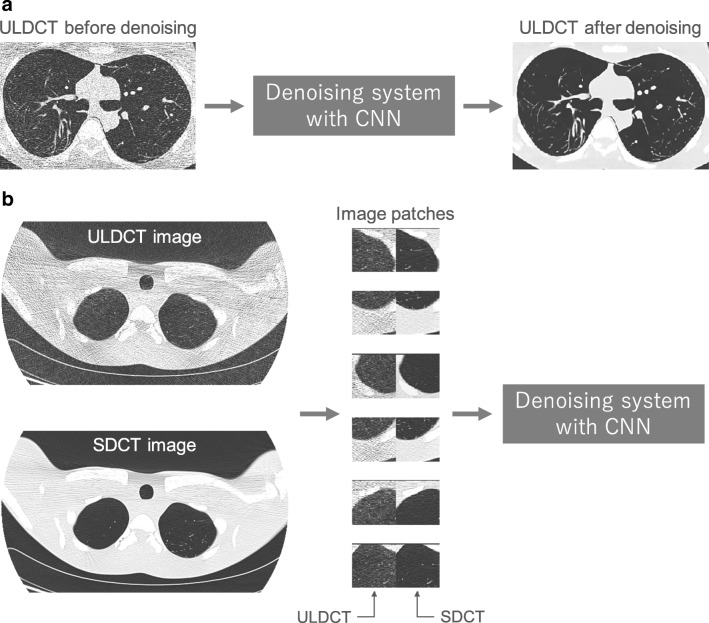
“Two previous studies showed that low-dose and ultra-low-dose CT images could be effectively denoised using deep learning [52, 53].”
§ Convolutional neural networks: an overview and application in radiology > Applications in radiology > Others
What the sources say
- Not checked — no full text of the sourcecites [52] Chen H Zhang Y Zhang W Low-dose CT via convolutional neural network Biomed Opt Express 2017 8 679 694 10.1364/BOE.8.000679 28270976 PMC5330597 source
- Supportedcites [53] Nishio M Nagashima C Hirabayashi S Convolutional auto-encoder for image denoising of ultra-low-dose CT Heliyon 2017 3 e00393 10.1016/j.heliyon.2017.e00393 28920094 PMC5577435 source
The Abstract (Materials and methods; Conclusion) reports that a convolutional auto-encoder denoised ultra-low-dose CT images of a chest phantom and performed better in visual assessments than the comparison methods. This supports the ultra-low-dose portion attributed to this study; the sentence cites two studies for the combined low-dose and ultra-low-dose claim. (LLM, conf=0.92)
hedgedstates a cause- Asserted: passes — The authors put it forward as true.
- Checkable: passes — It can be checked against evidence.
- Load-bearing: unclear — It is unclear whether the paper’s conclusions depend on it.
- Based: passes — The paper gives a reason why it holds.
The cited sources support only part of this claim — read each source’s verdict below.
In the paper
“Their study showed that U-net could effectively produce noiseless CT images from the subsampled sinogram.”
§ Convolutional neural networks: an overview and application in radiology > Applications in radiology > Others
What the sources say
- Partly supportedcites [54] Jin KH McCann MT Froustey E Unser M Deep convolutional neural network for inverse problems in imaging IEEE Trans Image Process 2017 26 4509 4522 10.1109/TIP.2017.2713099 28641250 sourceExperimental — accuracy not yet measured
The Experiments and Results section (p. 9) tests FBPConvNet on subsampled CT sinograms, and the Biomedical Dataset results (p. 13) report satisfactory removal of streaking artifacts and improved SNR. The network uses a modified U-net, but the paper does not claim its output is noiseless; the Discussion (p. 16) notes that artifacts can remain. (LLM, conf=0.88)
boostedstates a cause- Asserted: passes — The authors put it forward as true.
- Checkable: passes — It can be checked against evidence.
- Load-bearing: passes — The paper’s conclusions depend on it.
- Based: passes — The paper gives a reason why it holds.
- Partly supported
18 more claims · 8 with their cited sources checked
Create a free account to see all 87 claims and to verify the 4 references still open.
- Probably not a substantial claim. 56
- It may state two separate claims as one. 31
Citations
Cites
Deep Residual Learning for Image Recognition
He, K., Zhang, X., Ren, S., & Sun, J. (2016) · 2016 IEEE Conference on Computer Vision and Pattern Recognition (CVPR) · doi:10.1109/cvpr.2016.90 · Cited by 235,474 · cited 1×
“At present, many models pretrained on the ImageNet challenge dataset are open to the public and readily accessible, along with their learned kernels and weights, such as AlexNet [3], VGG [30], ResNet [31], Inception [32], and DenseNet [33].”
MethodVery Deep Convolutional Networks for Large-Scale Image Recognition
Simonyan, K., & Zisserman, A. (2014) · arXiv · doi:10.48550/arxiv.1409.1556 · Cited by 114,148 · cited 2×
“To perform unsupervised categorization, the following three steps were iteratively performed: (i) feature extraction using pretrained VGG16 model [30] from the lesions in the bounding box, (ii) clustering of the features, and (iii) fine-tuning of VGG16 based on the results of the clustering.”
MethodU-Net: Convolutional Networks for Biomedical Image Segmentation
Ronneberger, O., Fischer, P., & Brox, T. (2015) · Lecture notes in computer science · doi:10.1007/978-3-319-24574-4_28 · Cited by 99,404 · cited 1×
“Although segmentation based on image patch was successfully performed in deep learning, U-net of Ronneberger et al. [48] outperformed the image patch-based method on the ISBI [IEEE (The Institute of Electrical and Electronics Engineers) International Symposium on Biomedical Imaging] challenge for…”
MethodAdam: A Method for Stochastic Optimization
Kingma, D. P., & Ba, J. (2014) · arXiv · doi:10.48550/arxiv.1412.6980 · Cited by 98,946
LeCun, Y., Bengio, Y., & Hinton, G. (2015) · Nature · doi:10.1038/nature14539 · Cited by 84,126
Faster R-CNN: Towards Real-Time Object Detection with Region Proposal Networks
Ren, S., He, K., Girshick, R., & Sun, J. (2017) · IEEE Transactions on Pattern Analysis and Machine Intelligence · doi:10.1109/tpami.2016.2577031 · Cited by 73,472 · cited 1×
“The study also suggested that the detection system was built using the Faster R-CNN method [56], the lesions in the bounding box, and their corresponding pseudo-category.”
MethodFaster R-CNN: Towards Real-Time Object Detection with Region Proposal Networks
Ren, S., He, K., Girshick, R., & Sun, J. (2015) · arXiv · doi:10.48550/arxiv.1506.01497 · Cited by 70,812
Densely Connected Convolutional Networks
Huang, G., Liu, Z., Van Der Maaten, L., & Weinberger, K. Q. (2017) · 2017 IEEE Conference on Computer Vision and Pattern Recognition (CVPR) · doi:10.1109/cvpr.2017.243 · Cited by 48,566 · cited 1×
“At present, many models pretrained on the ImageNet challenge dataset are open to the public and readily accessible, along with their learned kernels and weights, such as AlexNet [3], VGG [30], ResNet [31], Inception [32], and DenseNet [33].”
MethodGoing deeper with convolutions
Szegedy, C., Liu, W., Jia, Y., Sermanet, P., Reed, S., Anguelov, D., Erhan, D., Vanhoucke, V., & Rabinovich, A. (2015) · 2015 IEEE Conference on Computer Vision and Pattern Recognition (CVPR) · doi:10.1109/cvpr.2015.7298594 · Cited by 48,562 · cited 5×
“According to the results, the best area under the curve of receiver operating characteristic curves for detecting pulmonary tuberculosis from healthy cases was 0.99, which was obtained by ensemble of the AlexNet and GoogLeNet 2D-CNNs.”
MethodInfluentialImageNet Large Scale Visual Recognition Challenge
Russakovsky, O., Deng, J., Su, H., Krause, J., Satheesh, S., Ma, S., Huang, Z., Karpathy, A., Khosla, A., Bernstein, M., et al. (2015) · International Journal of Computer Vision · doi:10.1007/s11263-015-0816-y · Cited by 39,380 · cited 1×
“…neural network (CNN), a class of artificial neural networks that has been a dominant method in computer vision tasks since the astonishing results were shared on the object recognition competition known as the ImageNet Large Scale Visual Recognition Competition (ILSVRC) in 2012 [2, 3].”
Method
Research works printed but not linked: 3
- Krizhevsky A, Sutskever I, Hinton GE (2012) ImageNet classification with deep convolutional neural networks. Adv Neural Inf Process Syst 25. Available online at: https://papers.nips.cc/paper/4824-imagenet-classification-with-deep-convolutional-neural-networks.pdf. Accessed 22 Jan 2018
- Lee DH (2013) Pseudo-label: the simple and efficient semi-supervised learning method for deep neural networks. In: Proceedings of the ICML 2013 Workshop: Challenges in Representation Learning. Available online at: http://deeplearning.net/wp-content/uploads/2013/03/pseudo_label_final.pdf. Accessed 23 Jan 2018
- Kurata Y, Nishio M, Fujimoto K et al (2018) Automatic segmentation of uterus with malignant tumor on MRI using U-net. In: Proceedings of the Computer Assisted Radiology and Surgery (CARS) 2018 congress (accepted)
Cited by
Items 4,001–4,100 of 4,673
CLASSIFICATION OF PLANT LEAF DISEASE USING ENSEMBLE DEEP TRANSFER LEARNING
Nader, A., Khafagy, M. H., & Hussien, S. A. (2024) · International journal of intelligent computing and information sciences/International Journal of Intelligent Computing and Information Sciences · doi:10.21608/ijicis.2024.278335.1331 · Cited by 1
“A kernel is a matrix that is applied to the image and multiplied with the input in order to improve the output in a desired way [23].”
MethodFake vs. Real Face Discrimination Using Convolutional Neural Networks
Eissa, K., & Schwenker, F. (2024) · Communications in computer and information science · doi:10.1007/978-3-031-57639-3_10
“Convolutional neural network (CNN) is a deep learning neural network that can efficiently process data with a grid structure, especially image and video data [1].”
BackgroundLee, H., Kwak, J. Y., & Lee, E. (2024) · SSRN Electronic Journal · doi:10.2139/ssrn.4784956
Tamper image detection using error level analysis and convolutional neural networks
Kasim, A. T., & Ebraheem, S. K. (2024) · AIP conference proceedings · doi:10.1063/5.0202365
Rathod, V. U. (2024) · Journal of Electrical Systems · doi:10.52783/jes.769
“Nonetheless, a Gaussian initial derivative can be used to approximate this ideal function roughly [24].”
BackgroundThe Deep Learning-based Intelligent System for Extracting Information from e-KTP
Fuadi, Z., Muchtar, K., Subianto, M., Riza, H., Oktiana, M., & Nizamuddin, N. (2024) · International Conference on Software Engineering and Information Technology (ICoSEIT) · doi:10.1109/icoseit60086.2024.10497510
“In feature extraction, CNN relies on two layers (convolution and pooling) and adds fully-connected layers at the end of the process [12].”
MethodValid, A. (2024) · Intellectual Technologies on Transport · doi:10.20295/2413-2527-2024-137-26-31
Pereira, P. V. L., & de Oliveira, F. G. (2024) · doi:10.5753/connect.2024.238551
CLANet: A Contrastive Learning based Attention Network for Image Forgery DetectionPreprint
Guo, Y., Jin, Y., Tian, C., & Liu, J. (2024) · Research Square · doi:10.21203/rs.3.rs-4272737/v1
Mohd, N., Singh, S., Shukla, T., Sharma, J., Kumar, S., Singh, A. P., & Rawat, S. (2024) · Advances in bioinformatics and biomedical engineering book series · doi:10.4018/979-8-3693-2426-4.ch009
Master Face Generation Using Latent Variable Evolution in Face Recognition System
Sumathi, P., Aravindh, N. L., Aravinth, M., et al. (2024) · International Journal for Research in Applied Science and Engineering Technology · doi:10.22214/ijraset.2024.61097
Widya, L. K., Rezaie, F., Lee, J., et al. (2024) · Research Square · doi:10.21203/rs.3.rs-4134332/v1
Colon Cancer Detection of Colonoscopy Images Using CNN
Sheth, C. V., & Yadav, R. (2024) · International Journal for Research in Applied Science and Engineering Technology · doi:10.22214/ijraset.2024.61465
Review on Human Detection in Catastrophe Scenarios Using UAV and Deep Learning Techniques
Sahapudeen, M. F. F., Praba, D., & Nuha, G. (2024) · International Journal of Advanced Research in Science Communication and Technology · doi:10.48175/ijarsct-18090
Application of Machine Learning to the Classification of Spectra-like Data
Sun, Y. (2023) · SZTE Repository of Dissertations (University of Szeged) · doi:10.14232/phd.11833
Making a Better Logistic Regression Model Using Ensemble Learning
Verma, S. (2024) · International Journal for Research in Applied Science and Engineering Technology · doi:10.22214/ijraset.2024.61846
Aideyan, B. (2023) · Digital Repository Service (Northeastern University) · doi:10.17760/d20652988
Optimizing Atomic Layer Deposition Using a Hybrid of Machine Learning Methods
DiBenedetto, A., Abuomar, O. “., Yanguas-Gil, Á., & Elam, J. W. (2023) · International Conference on Engineering and Emerging Technologies (ICEET) · doi:10.1109/iceet60227.2023.10525719
“After the convolutional layer, we must flatten the output tensor into a 2-dimensional tensor to prepare it for the subsequent fully connected layers [11], [12].”
BackgroundMethodInfluentialLung cancer identification using computerized tomography images
Jancy, S., Kumar, S. P., Kumar, R. S. P., et al. (2024) · AIP conference proceedings · doi:10.1063/5.0208909
Abid, A., & Zo-Afshan (2024) · Springer eBooks · doi:10.1007/978-3-031-52856-9_9
Qi, P., & Zhu, H. (2024) · Cardiff University Engineering Research Conference · doi:10.18573/conf1.x · Cited by 1
KUAN, Y. N., Goh, K. M., & Lim, L. L. (2024) · SSRN Electronic Journal · doi:10.2139/ssrn.4836392
Recognizing Handwritten Arabic Characters Using Deep Learning Techniques in Educational Platforms
Abood, A., AbdElrazek, E., & Saad, A. M. (2024) · المجلة العلمية لكلية التربية النوعية جامعة دمياط · doi:10.21608/sjeud.2024.284278.1032 · Cited by 1
“It often consists of a combination of both nonlinear and linear methods, specifically the convolution operation and the activation function (Yamashita, R., et al , 2018, 611-629 ) A convolutional layer is made up of K filters (also called kernels).”
MethodHan, H., Zeeshan, Z., Asif, M., Hasnain, A., Al‐Razgan, M., & Ali, Y. A. (2024) · SPIN · doi:10.1142/s2010324724400022
Chili Leaf Health Classification using Xception Pretrained Model
Wulandari, Y. D., Munggaran, L. C., Setiawan, F. A., et al. (2024) · SISTEMASI · doi:10.32520/stmsi.v13i3.3943
“Among the widely adopted algorithms, the Convolutional Neural Network (CNN) is notable for its architecture, encompassing layers that effectively detect features hierarchically [4].”
MethodTexture and Flag Color Extraction in Backpropagation Neural Network Architecture
Rizki, S. D., & Defit, S. (2024) · Jurnal Penelitian Pendidikan IPA · doi:10.29303/jppipa.v10i5.7146
“The Convolutional Neural Network (CNN) method is very suitable for testing an image, because the process is multi-layered, proven by 35 images, 28 images can be guessed correctly even though the expressions are only slightly different (Yamashita et al., 2018; Shafiq & Gu, 2022).”
MethodImproved bidirectional long short term memory-based QRS complex detection using autoencoder
Insani, A., & Wibowo, S. A. (2024) · Bulletin of Electrical Engineering and Informatics · doi:10.11591/eei.v13i4.7033
“In recent years, the development of deep learning is very rapid, especially in the medical field, for example its use for image analysis in radiology [12].”
BackgroundScript Generation for Silent Speech in E-Learning
Hossain, S. M. E., Khairy, S. O. F., Soosaimanickm, A., & Ramadan, R. Α. (2024) · Advances in educational technologies and instructional design book series · doi:10.4018/979-8-3693-2440-0.ch020
Rodrigues, R. B. (2023) · doi:10.47749/t/unicamp.2023.1376167 · Cited by 2
Box, J., Schnell, E., & Rutel, I. B. (2024) · Biomedical Physics & Engineering Express · doi:10.1088/2057-1976/ad57cd
UTFormer: A UAV Sensing-based Triple Attention Transformer Network for Semantic SegmentationPreprint
Liu, D., Long, H., & Liu, Z. (2024) · Research Square · doi:10.21203/rs.3.rs-4501785/v1
Modelling of a novel point diffraction interferometer design for laser guide star wavefront sensing
Holdorf, E., Rey, N. M., Cranney, J., et al. (2024) · doi:10.1117/12.3019228
“CNNs extract features from the input images, for example an edges in the intensity, and map them to the desired outputs (35).”
Comprehensive and Comparative Framework for Lung Cancer Detection Using CNN
(2024) · INTERANTIONAL JOURNAL OF SCIENTIFIC RESEARCH IN ENGINEERING AND MANAGEMENT · doi:10.55041/ijsrem35830
Exploiting Convolutional Neural Networks for Galaxy Classification
Gao, C. (2024) · Highlights in Science Engineering and Technology · doi:10.54097/5kzwfy50 · Cited by 1
[Applications] 11. Automatic Generation of Radiology Reports for Chest X-ray Images
Nishio, M., Matsuo, H., & Matsunaga, T. (2024) · Japanese Journal of Radiological Technology · doi:10.6009/jjrt.2024-2363
Self-citationDeep Learning Tactics for Neuroimaging Genomics Investigations in Alzheimer's Disease
Rajput, M. S., Shah, J., Patel, V., Rajput, N. S., & Kumar, D. (2024) · Wiley eBooks · doi:10.1002/9781394234196.ch14 · Cited by 1
Corrosion Image Classification Method Based on Efficient netV2Preprint
Zhao, Z., Bakar, E. B. A., Razak, N. B. A., et al. (2024) · SSRN Electronic Journal · doi:10.2139/ssrn.4869484
Optimizing Speech to Text Conversion in Turkish: An Analysis of Machine Learning Approaches
Gencyilmaz, I. Z., & Karaoğlan, K. M. (2024) · Bitlis Eren Üniversitesi Fen Bilimleri Dergisi · doi:10.17798/bitlisfen.1434925
“The CNN architecture is a deep learning model widely utilized for tasks like image classification [26], [27].”
MethodAutomatic Identification of Ear Patterns Based on Convolutional Neural Network
Tuama, S. A., Saud, J. H., & Rashid, O. F. (2024) · Communications in computer and information science · doi:10.1007/978-3-031-62814-6_6
Research on the adjustable range of air conditioner setting temperature considering user comfort
Xu, H., Li, L., Yu, Y., et al. (2024) · Journal of Physics Conference Series · doi:10.1088/1742-6596/2788/1/012043
“The CNN algorithm used in this paper has a structure, as shown in Figure 2, consisting of the input, convolutional, pooling, fully connected, and output layers [14].”
MethodIdentification and Detection in Building Images of Biological Growths – Prevent a Health Issue
Pereira, S., Cunha, A., & Pinto, J. (2024) · Lecture notes of the Institute for Computer Sciences, Social Informatics and Telecommunications Engineering · doi:10.1007/978-3-031-60665-6_25
Li, Y., Ren, S., & Dong, F. (2024) · IEEE International Instrumentation and Measurement Technology Conference · doi:10.1109/i2mtc60896.2024.10561103
“…sharing and sparse connections, allowing images to be directly used as input to the network, avoiding the complex feature extraction and data reconstruction processes in traditional recognition algorithms, which gives it a significant advantage in the processing of two-dimensional images [18]–[20].”
BackgroundKlein, D. S., Karmakar, S., Jonnalagadda, A., Abbey, C. K., & Eckstein, M. P. (2024) · Journal of medical imaging · doi:10.1117/1.jmi.11.4.045501 · Cited by 2
“13 Second, CNN-based CAD algorithms — models that can perform both classification (CADx) and detection simultaneously — have obtained noninferior performance relative to expert radiologists.”
derogarmoghadam, A., Molaei, M. R. K., & Hassanzadeh, M. (2023) · Archives de l'Institut d'Hessarek. · doi:10.61186/jsdp.20.3.127
Novitasari, D. C. R., Fatmawati, F., Hendradi, R., Nariswari, R., & Saputra, R. A. (2023) · JOIV International Journal on Informatics Visualization · doi:10.62527/joiv.7.4.1501 · Cited by 1
Choledochal cancer region detection in hyperspectral images using U-Net based models
Nabajja, S., & Kanojia, M. G. (2024) · International Journal of Hybrid Intelligent Systems · doi:10.3233/his-240024
“Increasing the number of filters allows the CNN to learn more diverse and complex patterns from the input data, potentially improving its ability to extract meaningful features and make accurate predictions [36].”
Artificial intelligence approaches for risk stratification of diabetic kidney disease
Chung, C. T., Tse, G., Liu, T., & Lee, S. (2024) · Elsevier eBooks · doi:10.1016/b978-0-323-95686-4.00022-8
Convolutional Neural Network-Based Brain Tumor Segmentation Using Detectron2
Galli, H., Loureiro, M., Loureiro, F. P., et al. (2024) · Lecture notes in networks and systems · doi:10.1007/978-3-031-64813-7_10
3DVT: Hyperspectral Image Classification Using 3D Dilated Convolution and Mean TransformerPreprint
Su, X., & Shao, J. (2024) · SSRN Electronic Journal · doi:10.2139/ssrn.4893536
Automated Brain Tumor Classification with Deep Learning
Kandula, V. S. K. C., & Yan, Z. (2024) · Lecture notes in computer science · doi:10.1007/978-3-031-65668-2_21
Recognition And Classification of Indian Scripts in Natural Scene Images
Engineering, D. O. C. S. A., Behera, S. S., Pattanaik, S. R., et al. (2024) · INTERANTIONAL JOURNAL OF SCIENTIFIC RESEARCH IN ENGINEERING AND MANAGEMENT · doi:10.55041/ijsrem36661
Tomimatsu, T., Yamashita, K., Sakata, T., Kamezaki, R., 池田, 龍., Shiraishi, S., & Uchiyama, Y. (2023) · Research Square · doi:10.22038/aojnmb.2024.75375.1528
“Deep convolutional neural networks (DCNNs) are based on established algorithms and have been used in the field of medical imaging (25, 26).”
MethodKurniawan, M., & Abdullah, R. G. (2024) · Jurnal Informatika dan Teknik Elektro Terapan · doi:10.23960/jitet.v12i3.4371
“[17] 3.”
Franić, N., Pivac, I., Barbir, F., & Peko, I. (2024) · International Conference on Smart and Sustainable Technologies (SpliTech) · doi:10.23919/splitech61897.2024.10612556
“Different architectures of deep neural networks allow more efficient performance for solving different tasks, transformers for natural language processing [5], convolutions for computer vision tasks [6], etc.”
BackgroundJain, R., & Khanna, K. (2024) · Journal of Student Research · doi:10.47611/jsrhs.v13i1.6303
Classification of Early Breast Cancer using Convolutional Neural Networks
Leung, K. (2024) · Journal of Student Research · doi:10.47611/jsrhs.v13i1.6255
Toward Industry 4.0 Deep Learning Applications in Manufacturing Processes
Khalifa, R. B., Mohamed, N., & Sbita, L. (2024) · Advances in chemical and materials engineering book series · doi:10.4018/979-8-3693-2999-3.ch010 · Cited by 1
The Performance of Convolutional Neural Network Architecture in Classification
(2024) · International Journal of Computer Applications Technology and Research · doi:10.7753/ijcatr1308.1011
Jinglong, D. (2024) · Mobile Networks and Applications · doi:10.1007/s11036-024-02387-9
RetractedDiabetic Retinopathy Identification Depend On Deep Learning Techniques: A comparative Study
Jwad, F. J., & Abdulmunem, A. A. (2024) · International Conference on Intelligent Systems and Computer Vision (ISCV) · doi:10.1109/iscv60512.2024.10620134
ArcDef is Loss Function for Cracks Classification
Andriyanov, N. A., Dementyiev, V. E., & Gelifakis, L. (2024) · 2018Systems of Signal Synchronization, Generating and Processing in Telecommunications (SYNCHROINFO) · doi:10.1109/synchroinfo61835.2024.10617759
“In the classification task, convolutional neural networks have gained particular popularity [18].”
BackgroundResearch on Color Evaluation Model of Tobacco Leaf Based on Machine Vision
Gan, H., & Li, Y. (2024) · Asia-Pacific Conference on Communications Technology and Computer Science (ACCTCS) · doi:10.1109/acctcs61748.2024.00082
Bird Species Classification System Using Transfer Learning
Saad, A. F., Muhaiyuddin, A. S., & Iksan, N. (2024) · Journal of Engineering Technology and Applied Science (JETAS) · doi:10.36079/lamintang.jetas-0602.651
“CNNs are a specific type of ANN that have been particularly successful in computer vision tasks, especially after achieving remarkable results in the ImageNet Large Scale Visual Recognition Competition in 2012 [37].”
MethodMansoor, M. A., & Grindem, D. J. (2024) · medRxiv · doi:10.1101/2024.08.12.24311774
Seeram, E., & Kanade, V. A. (2024) · Springer eBooks · doi:10.1007/978-3-031-64049-0_4
Development of the method of blood clot origin classification in ischemic stroke
Kozhamseitova, A. (2024) · IEEE International Conference on Smart Information Systems and Technologies (SIST) · doi:10.1109/sist61555.2024.10629352
“Additionally, a dropout layer with a rate of 0.5 is included to randomly deactivate a portion of the neurons during training, which further contributes to preventing overfitting and promotes the development of a robust network [18].”
BackgroundInfluentialAprendizado profundo Aplicado à classificação de doenças foliares do milho
Ariza, V. M. P., & Bruno, O. M. (2024) · Revista Brasileira de Computação Aplicada · doi:10.5335/rbca.v16i2.15390
Laboratory demonstration of single-camera PPPP wavefront sensing using neural networks
González-Gutiérrez, C., Bharmal, N. A., Muro, J. R., Roca, A. B., Yang, H., Fitzpatrick, L. W., Morris, T., & Juez, F. J. D. C. (2024) · International Journal of Optomechatronics · doi:10.1080/15599612.2024.2386985
“[26] CNNs are based on three different concepts: local receptive fields, shared weights and bias, and pooling.”
The Implementation of Convolutional Neural Network in Recognize Lontara Text
Arthanugraha, W., Zainuddin, Z., & Arda, A. L. (2024) · Jurnal Informatika · doi:10.31294/inf.v11i2.20328
Khalili, H., Wimmer, M. A., & Lotzmann, U. (2024) · Mathematics · doi:10.3390/math12162574
The development and use of artificial intelligence (AI) in dermatology: a narrative review
Darmawan, I., Yusharyahya, S. N., Sampurna, A. T., & Saputro, A. H. (2024) · Indonesian Journal of Biomedicine and Clinical Sciences · doi:10.22146/inajbcs.v56i3.15970
“13 Thus, CNN is highly efficient for image processing since the feature could be anywhere in the image.”
BackgroundKrupadanam, C., Narendran, R., & Thiruchelvam, V. (2024) · AIP conference proceedings · doi:10.1063/5.0229269
Classification Disease in Tomato Leaf Based on the Mix Convolution Neural Network
Hoa, N. T. T., & Quan, T. H. M. (2024) · Lecture notes in networks and systems · doi:10.1007/978-3-031-65656-9_29
Rockstroh, S., Frenzel, P., Matthes, D., Schubert, K., Wollburg, D., & Fuchs, M. (2024) · IEEE International Workshop on Sport, Technology and Research (STAR) · doi:10.1109/star62027.2024.10635918 · Cited by 1
Multiresolution Evaluation of Contourlet Transform for the Diagnosis of Skin CancerPreprint
Sikkander, A. R. M., Lakshmi, V. V., Theivanathan, G., & Radhakrishnan, K. (2024) · Research Square · doi:10.21203/rs.3.rs-4778827/v1 · Cited by 8
Detection and Classification of Hate Speech on Twitter Using Convolutional Neural Network (CNN)
Yanaputeranto, M. R., & Setiawan, E. B. (2024) · International Conference on Data Science and Its Applications (ICoDSA) · doi:10.1109/icodsa62899.2024.10652001
“Convolutional Neural Network (CNN) is a deep learning model originally developed to handle data grids such as images and study spatial feature hierarchies from simple patterns to complex patterns [15].”
BackgroundSynthesizing MRIs From CT Scans Using Deep Learning Techniques: A Comprehensive Review
Taqi, M., & Ram, P. K. (2024) · International Conference on Image Processing and Capsule Networks (ICIPCN) · doi:10.1109/icipcn63822.2024.00039 · Cited by 1
“Specifically, The diverse landscape of methodologies will be explored, with a particular focus on cutting-edge techniques such as convolutional neural networks (CNNs) [6] and generative adversarial networks (GANs).”
BackgroundYong, W., Xiangli, M., Chen, G., Wenjie, F., Jiangque, F., Le'an, Y., Qiao, J., & Li, H. (2024) · International Conference on Mechatronics, IoT and Industrial Informatics (ICMIII) · doi:10.1109/icmiii62623.2024.00124 · Cited by 2
“A significant focus lies on the development of a drone-based recognition system empowered by computer convolutional neural networks (CNN)[6-9], which constitutes a key aspect of our investigation.”
BackgroundPlant Disease Diagnosis: A Deep Learning Approach
Chauhan, D. S., & Patidar, S. (2024) · Lecture notes in electrical engineering · doi:10.1007/978-981-97-2508-3_51
Friend2User : A new CNN based method for user network and content embedding
Rekik, A., & Jamoussi, S. (2024) · Online Social Networks and Media · doi:10.1016/j.osnem.2024.100288
Han, S., Park, C., & YOU, S. (. H. (2024) · Journal of Mechanics in Medicine and Biology · doi:10.1142/s0219519424400785
Food Recognition and Segmentation Using Detectron2 Framework
Mujagić, A., Mujagić, A., & Mehanović, D. (2024) · Lecture notes in networks and systems · doi:10.1007/978-3-031-71694-2_30 · Cited by 1
Adebiyi, M. O., Olawoye, P. O., & Abiodun, M. K. (2024) · Elsevier eBooks · doi:10.1016/b978-0-443-24028-7.00028-3
A Survey of Video Action Recognition Based on Deep LearningPreprint
Gong, P., & Luo, X. (2024) · SSRN Electronic Journal · doi:10.2139/ssrn.4978362
Feature Reviews for Tomography 2023
Singh, Y., & Quaia, E. (2024) · Tomography · doi:10.3390/tomography10100118
Pereira, W. M., Silva, S., Silva, A. R. E., Rezio, L. H. F., da Silva, M. G., da Silva, N. R., & Canuto, S. (2024) · Matéria (Rio de Janeiro) · doi:10.1590/1517-7076-rmat-2024-0354
Zhang, S., Wang, X., Feng, L., Huang, S., Chen, Z., & Zhao, Z. (2024) · Journal of Systems and Software · doi:10.1016/j.jss.2024.112247
Scan-Net: A Sparsely Encoded Convolutional Autoencoder for Semantic Segmentation of Unknown Terrain
Haider, M. R., Hoxie, D. J., Gardner, S. D., et al. (2023) · SAE technical papers on CD-ROM/SAE technical paper series · doi:10.4271/2024-01-4077
Enhancing Cyclone Intensity Prediction Through Deep Learning Analysis of Imagery Datasets
Bhosale, J. D., Damre, S. S., Suryawanshi, U. V., et al. (2024) · Communications in computer and information science · doi:10.1007/978-3-031-71481-8_16
Using 2D LiDAR and RGB Camera for Human Agnostic Mapping
Khalid, F., Pickering, J. E., & Dai, Z. (2024) · International Conference on Automation and Computing (ICAC) · doi:10.1109/icac61394.2024.10718766
“The purpose of a CNN is to autonomously learn patterns and features in a hierarchical manner, from rudimentary to more complex patterns [15].”
BackgroundRevolutionizing LVH detection using artificial intelligence: the AI heartbeat project
Suchal, Z. A., Ain, N.-U., & Mahmud, A. (2024) · Journal of Hypertension · doi:10.1097/hjh.0000000000003885 · Cited by 1
A comparison of machine learning methods for queue length detection
Yeşilyurt, M. E., Güzel, M. S., & Sezer, E. A. (2024) · Communications Faculty of Sciences University of Ankara Series A2-A3 Physical Sciences and Engineering · doi:10.33769/aupse.1415447
Kumari, T. L. P., & Perumal, K. (2024) · International Journal of Data Science and Analytics · doi:10.1007/s41060-024-00662-2
Gun Detection in Images Using Convolution Neural Networks
Corson, C., Gilman, J., Shelley, W., et al. (2024) · Lecture notes in networks and systems · doi:10.1007/978-3-031-73128-0_39
Metadata
- Authors
- Yamashita, R., Nishio, M., Do, R. K. G., & Togashi, K.
- Affiliations
- Memorial Sloan Kettering Cancer Center (US)
- Kyoto University (JP)
- Corresponding author
- Yamashita, Rikiya
- Venue
- Insights into Imaging
- Published
- 2018-06-22
- Volume
- 9
- Issue
- 4
- Pages
- 611-629
- ISSN
- 1869-4101 (ISSN-L)
- PMC
- PMC6108980
- OpenAlex
- W2809254203
- Cited by
- 4,682
- References
- 55
- Citations by year
- 2026: 390 · 2025: 701 · 2024: 915 · 2023: 889 · 2022: 772 · 2021: 592 · 2020: 312 · 2019: 97 · 2018: 12
- FWCI
- 5.66
- Type
- journal article
- Language
- en
- Open access
- gold
- doi.org
- Licence
- cc-by
- creativecommons.org/licenses/by/4.0 (tdm)
- creativecommons.org/licenses/by/4.0 (vor)
- Locations
- Insights into Imaging (publishedVersion, cc-by)
- Europe PMC (PubMed Central) (publishedVersion, other-oa)
- PubMed Central (publishedVersion, cc-by)
- PubMed (publishedVersion)
- DOAJ (DOAJ: Directory of Open Access Journals) (submittedVersion, cc-by-sa)
- Funders
- Japan Society for the Promotion of Science (JP16K19883)
- Topics
- Health Sciences › Medicine › Health Informatics › Artificial Intelligence in Healthcare and Education
- Health Sciences › Medicine › Radiology, Nuclear Medicine and Imaging › Radiomics and Machine Learning in Medical Imaging
- Physical Sciences › Computer Science › Computer Vision and Pattern Recognition › Advanced Neural Network Applications
- Keywords
- convolutional neural networks, deep learning in radiology, convolutional layers, pooling layers, small datasets, overfitting, computer-aided diagnosis, radiology image analysis
About these checks
Registry, retraction, Cites and statistics results are computed, not judged, with one exception: a printed reference that no index lists is read once by a model before it counts as a citation error. Claims are extracted by a model and kept only when their quote appears verbatim in the text; each cited source is then checked, with a model’s help, for whether it says what the claim relies on. Those verdicts can be wrong — read the claim’s quote and the cited source before relying on one.
The claim verdicts this report counts are experimental: their accuracy is not yet measured.
A language model drew the claims from the paper on 2026-10-10, under version 3 of the claim definition (model deepseek-v4.1-flash, prompt extract-v3).
A second model labelled each claim on 2026-10-10 (model jev-1.13-20260917, definition revision gold-guideline-v0.2).
Cited sources are checked with a language model’s help (gpt-6-sol).
Statistics and arithmetic are recomputed, not judged.
Confidence bands are shown only for fields calibrated on our annotated test set. None is calibrated yet, so no band is shown.
What counts as a claim ›How we measure confidence ›How we check this ›
Are you an author, or do you see a problem with this page? Request a review
Data sources
Bibliographic data: Semantic Scholar, OpenAlex, Crossref.
Contains information from the Semantic Scholar Academic Graph Datasets, made available under the ODC Attribution License (ODC-BY 1.0).
Semantic Scholar’s data is described in: Kinney, R., et al. (2023). The Semantic Scholar Open Data Platform. arXiv:2301.10140.
