

The Impact of Flash Glucose Monitoring on Glycaemic Control as Measured by HbA1c: A Meta-analysis of Clinical Trials and Real-World Observational Studies
Open accessThe DOI matches its Crossref record; 36 of the 36 references it cites were found in a registry or an index.
Abstract
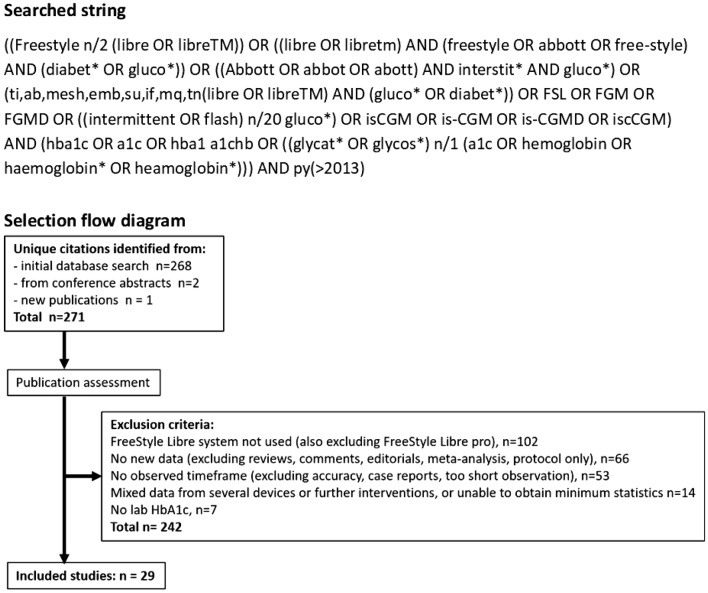
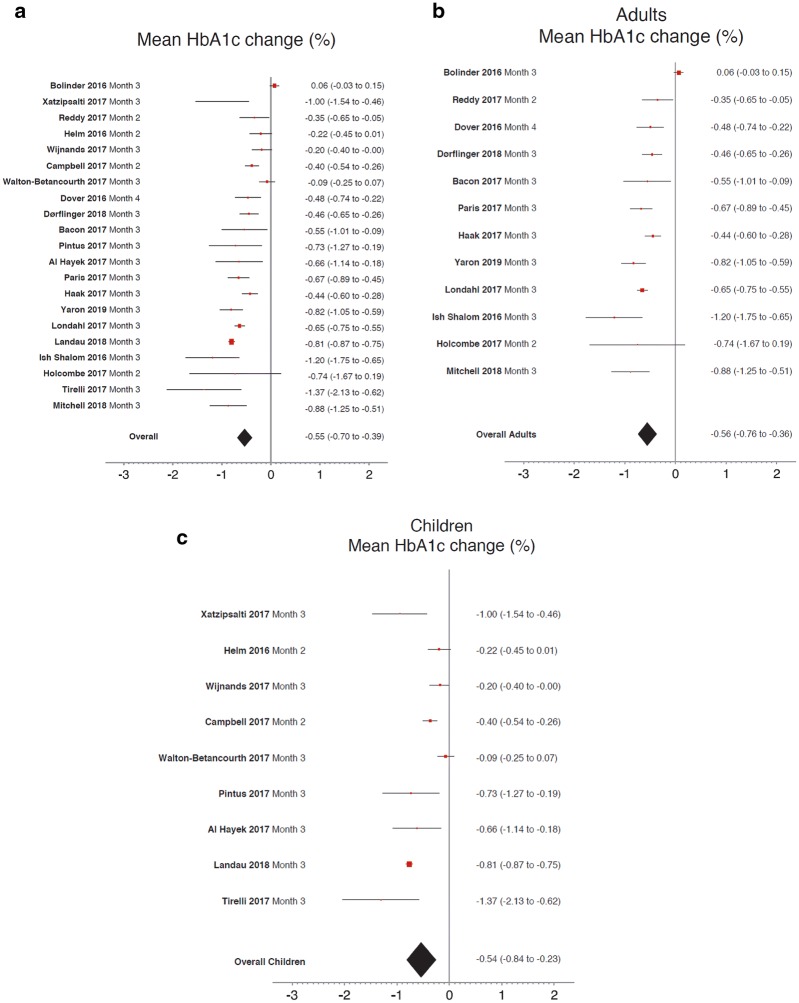
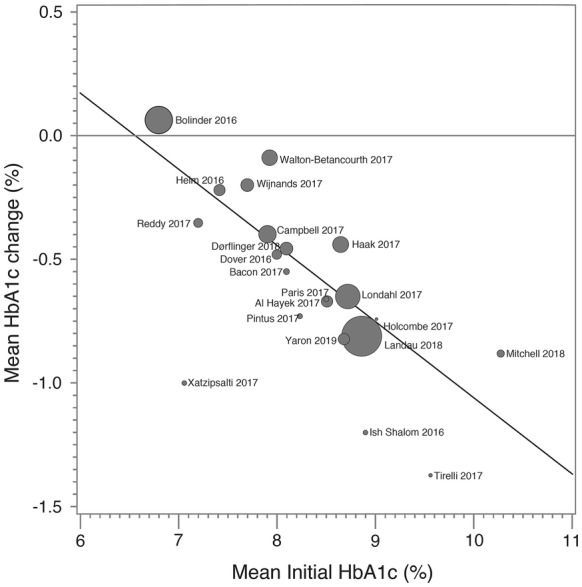
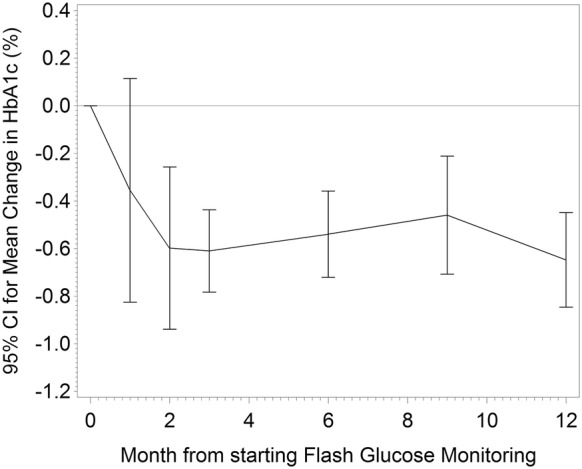
Glycated haemoglobin A1c (HbA1c) is the established standard measurement for assessment of glycaemic control in people with diabetes. Here we report on a meta-analysis of real-world observational studies on the impact of flash continuous glucose monitoring on glycaemic control as measured by HbA1c. A total of 271 studies were identified in our search, of which 29 contained data reporting changes in HbA1c over periods from 1 to 24 months that could be used in a statistical analysis. Our meta-analysis focuses on observed change in HbA1c at either 2, 3 or 4 months, in adult or paediatric subjects, as well as a longitudinal analysis up to 12 months in adult subjects. These data were drawn from 25 of the studies identified in our initial search. These reported HbA1c data up to 12 months in a total of 1723 participants with type 1 diabetes (T1D) or type 2 diabetes (T2D) using the FreeStyle Libre ® flash glucose monitoring system. Overall mean change in laboratory HbA1c across study subjects at 2–4 months was − 0.55% (95% CI − 0.70, − 0.39). Amongst the 1023 adults, mean change in HbA1c was − 0.56% (95% CI − 0.76, − 0.36); for the 447 children and adolescents, mean change in HbA1c was − 0.54% (95% CI − 0.84, − 0.23). Based on regression analysis, the degree of change in HbA1c correlated with the initial HbA1c of the study population. A longitudinal analysis in adult subjects ( n = 1276) shows that HbA1c fell within the first 2 months and changes were sustained up to 12 months. No significant differences were detected between T1D and T2D. The meta-analysis reported here confirms that starting the FreeStyle Libre system as part of diabetes care results in a significant and sustained reduction in HbA1c for adults and children with T1D and for adults with T2D. Abbott Diabetes Care.
Overview
The claims and statistics of this paper haven’t been checked yet.
Free: it reads the open-access text and checks the first 5 claims that cite a source we can check. Create a free account to check every claim.
Integrity signals
Registry
Cites
Statistics
Figures
Verification
Claims the paper makes
The claims and statistics of this paper haven’t been checked yet.
Free: it reads the open-access text and checks the first 5 claims that cite a source we can check. Create a free account to check every claim.
Self-check
Percentages, sums and reported differences re-computed from the paper’s own numbers.
The self-check needs the paper’s full text.
Citations
Cites
Measuring inconsistency in meta-analyses
Higgins, J. P. T., Thompson, S. G., Deeks, J. J., & Altman, D. G. (2003) · BMJ · doi:10.1136/bmj.327.7414.557 · Cited by 63,139 · cited 1×
“Cochran’s heterogeneity statistic (Q) and the I(2) statistic were calculated [40].”
Method(1993) · New England Journal of Medicine · doi:10.1056/nejm199309303291401 · Cited by 24,667
Dermyshi, E., Wang, Y., Yan, C., Hong, W., Qiu, G., Gong, X., & Zhang, T. (2017) · Neonatology · doi:10.1159/000454668 · Cited by 24,451
von Elm, E., Altman, D. G., Egger, M., Pocock, S. J., Gøtzsche, P. C., Vandenbroucke, J. P., & Initiative, F. T. S. (2007) · PLoS Medicine · doi:10.1371/journal.pmed.0040296 · Cited by 23,020
Meta-analysis of Observational Studies in Epidemiology<SUBTITLE>A Proposal for Reporting</SUBTITLE>
Stroup, D. F. (2000) · JAMA · doi:10.1001/jama.283.15.2008 · Cited by 20,623
von Elm, E., Altman, D. G., Egger, M., Pocock, S. J., Gøtzsche, P. C., & Vandenbroucke, J. P. (2014) · International Journal of Surgery · doi:10.1016/j.ijsu.2014.07.013 · Cited by 9,909
Turner, R. C., Fox, C., Matthews, McElroy, H. H., Cull, C. A., Holman, R. R., Neil, P., Hadden, D. R., Wright, D., Manley, E., et al. (1998) · The Lancet · Cited by 8,419
10-year follow-up of intensive glucose control in type 2 diabetes
Holman, R. R., Paul, S. K., Bethel, M. A., Matthews, D. R., & Neil, H. A. W. (2008) · New England Journal of Medicine · doi:10.1056/nejmoa0806470 · Cited by 7,751
Gupta, A., & Uribarri, J. (2016) · Hormone Research in Paediatrics · doi:10.1159/000444053 · Cited by 4,006
Research works printed but not linked: 12
- Gibb FW Stimson RH Zammitt NN Flash glucose monitoring is associated with improved glycaemic control and quality of life in people with type 1 diabetes: a large ‘real-world’ assessment Diabetologia 2018 16 S1 S391
- Xatzipsalti M Mentesidou L Kourti A Flash glucose monitoring system improves glycemic control Pediatr Diabetes. 2017 18 Suppl. 25 78
- Helm N De ML Forsman S Flash glucose monitoring improves perception and frequency of glucose monitoring leading to improved glucose control Pediatr Diabetes 2016 17 115
- Wijnands A Gys I Bevilacqua E The FreeStyle flash glucose monitoring system has limited effect on the metabolic control of children and adolescents with type 1 diabetes mellitus Pediatr Diabetes 2017 18 Suppl. 25 38
- Walton-Betancourth S Amin R A clinic-based study of the impact of flash glucose sensing technology on glycaemic control and self-monitoring of blood glucose in children and young people with type 1 diabetes Pediatr Diabetes 2017 18 Suppl. 25 47
- Bacon S O’Dwyer B Chambers C The performance and technical usability of a flash glucometer monitoring system Irish J Med Sci. 2017 186 9 S357
- Karlsson E. HbA1c after one year of use of flash glucose monitoring in patients with type 1 diabetes. Thesis, University of Orebero, Sweden.
- Abdalaziz A Lan K Bilous M Flash glucose monitoring (FGM) in people with type 1 diabetes: single centre-real-world experience Diabetes Med 2018 35 S1 168
- Löndahl M Filipsson K Lindholm E Effect of flash glucose monitoring on metabolic control and self-esteem treatment satisfaction in people with T1DM Diabetes Technol Ther. 2017 19 S1 A-81
- Holcombe A Karunakaran V Streeting J Trial of FreeStyle Libre in a local service: impact on diabetes outcomes Diabetes Med 2017 34 S1 160
- Tirelli E Frontino G Favalli V Flash glucose monitoring in noncompliant children and adolescents with type 1 diabetes Diabetes Technol Ther. 2017 19 S1 A-83
- Hey C Alkharaiji M Anyanwagu U Impact of FreeStyle Libre on glycaemic control, frequency of glucose monitoring and treatment satisfaction Diabetes Med 2018 35 Supplement 1 195
Cited by
Items 101–184 of 184
Shah, N. Z., Deshmukh, H., Wilmot, E. G., Patmore, J., Christian, P., Barnes, D., Walton, C., Ryder, R. E. J., & Sathyapalan, T. (2023) · Diabetic Medicine · doi:10.1111/dme.15070 · Cited by 6
Lizarzaburu-Robles, J. C., Ortiz, J. M. V., Asociación para la prevención, E. E. I. E. D. A. L., & Gonzales, S. G. C. (2020) · Horizonte Médico (Lima) · doi:10.24265/horizmed.2020.v20n4.14 · Cited by 7
“Un metaanálisis de 25 estudios concluyó que el uso de este dispositivo da como resultado una reducción significativa y sostenida de HbA1c para adultos y niños con diabetes tipo 1 (20).”
Gea, I. L., Lirio, M. F. M., Gómez‐Perea, A., Jiménez, A. B. A., Ceballos, L. T., Hinojosa, J. M. J., & López‐Siguero, J. P. (2022) · Journal of Clinical Medicine · doi:10.3390/jcm11020286 · Cited by 5
“The FreeStyle Libre flash glucose monitoring system was proven in the IMPACT and REPLACE studies [2,3] to reduce time in hypoglycemia below 70 mg/dL by 38% (IMPACT) and 43% (REPLACE) over 26 weeks, for adults with type 1 (T1D) or type 2 diabetes (T2D) on insulin, compared with the finger-prick method for the self-moni…”
InfluentialMorrison, A., Senior, P. A., Bubela, T. M., Farnsworth, K., Witteman, H. O., & Lam, A. P. (2022) · Canadian Journal of Diabetes · doi:10.1016/j.jcjd.2022.06.003 · Cited by 8
Torres, L. C., & Romero, C. (2022) · Journal of Clinical Nursing · doi:10.1111/jocn.16523 · Cited by 8
Rimac, D. S., Bilić-Čurčić, I., Prpić-Kriẑevac, I., Schönberger, E., Centner, M. G., Barišić, M., & Canecki-Varžić, S. (2022) · Healthcare · doi:10.3390/healthcare10091792 · Cited by 7
Zhou, Y., Deng, H., Liu, H., Yang, D., Xu, W., Yao, B., Yan, J., & Weng, J. (2020) · BMJ Open · doi:10.1136/bmjopen-2020-039400 · Cited by 7
Wong, C., de Bray, A., Hassan, N. U., Almohandes, A., Thant, K. Z., Gill, S., Gill, D., Forsdick, H., Sinclair, A. J., Karamat, M. A., et al. (2024) · Therapeutic Advances in Endocrinology and Metabolism · doi:10.1177/20420188241269133 · Cited by 5
“Improvements in sensor accuracy, usability, convenience and ultimately evidence-based improvement in glycaemia 32,33 led NHS England to approve funding for isCGM (flash glucose monitoring device, Freestyle Libre, FSL) as an alternative to CBG testing in 2017.”
MethodEnhancing Type 2 Diabetes Care With CGM Integration: Insights From an Italian Expert Group
Irace, C., Avogaro, A., Bertuzzi, F., Buzzetti, R., Candido, R., Prato, S. D., Bartolo, P. D., Fiorina, P., Giorda, C. B., & Giorgino, F. (2025) · Diabetes/Metabolism Research and Reviews · doi:10.1002/dmrr.70059 · Cited by 7
“A longitudinal analysis in adult subjects ( n = 1276) shows that HbA1c decreased within the first 2 months and changes were sustained up to 12 months [63].”
Medina, A. M. G., Yepes, C. A., Duarte-Osorio, A., Henao, D. C., Jaramillo-Parra, P., Stephens-Leal, I., García-Morales, O. M. P., Rubio, C., Salej-Durán, V., Monroy, G., et al. (2022) · Acta Médica Colombiana · doi:10.36104/amc.2022.2239 · Cited by 5
Bakker, J. J., Lameijer, A., Flores-Guerrero, J. L., Bilo, H. J. G., & van Dijk, P. R. (2022) · BMJ Open Diabetes Research & Care · doi:10.1136/bmjdrc-2022-002769 · Cited by 5
Oudah, S. K. (2024) · Journal of Biomedicine and Biochemistry · doi:10.57238/jbb.2024.7351.1094 · Cited by 7
An overview of the FreeStyle Libre monitoring system for individuals with type 1 and type 2 diabetes
Molfetta, S. D., Cutruzzolà, A., Gnasso, A., & Irace, C. (2025) · Expert Review of Medical Devices · doi:10.1080/17434440.2025.2489494 · Cited by 4
“%) and was sustained up to 12 months [43].”
Ueno, K., Chujo, D., Takahashi, N., Ohsugi, M., Ueki, K., & Kajio, H. (2020) · Diabetes Therapy · doi:10.1007/s13300-020-00859-1 · Cited by 5
Blissett, D. B., Attvall, S., & Hellmund, R. (2021) · Diabetes Therapy · doi:10.1007/s13300-021-01099-7 · Cited by 4
“In real-world studies, flash monitoring has shown reductions from baseline in haemoglobin A1c (HbA1c) [20] and hypoglycaemia [21].”
BackgroundShah, N. Z., Deshmukh, H., Wilmot, E. G., Patmore, J., Choudhary, P., Christian, P., Herring, R. A., Furlong, N. J., Saunders, S., Narendran, P., et al. (2021) · British Journal of Diabetes · doi:10.15277/bjd.2021.308 · Cited by 4
Sathyanarayanan, A., Crabtree, T. S. J., Choudhary, P., Elliott, D., Evans, M. L., Lumb, A. N., & Wilmot, E. G. (2022) · Diabetes Research and Clinical Practice · doi:10.1016/j.diabres.2022.109777 · Cited by 4
Self-citationJensen, M. H., Cichosz, S. L., Gustenhoff, P., Nikontovic, A., Hejlesen, O. K., & Vestergaard, P. (2022) · PLoS ONE · doi:10.1371/journal.pone.0274626 · Cited by 7
Adamson, K., Gibb, F. W., McLaren, J. B., Min, T., Price, H. C., Sankaranarayanan, S., & Strzelecka, A. (2024) · Diabetes Therapy · doi:10.1007/s13300-024-01629-z · Cited by 5
Levrat‐Guillen, F., & Ghazi, T. (2022) · Diabetes Therapy · doi:10.1007/s13300-022-01251-x · Cited by 4
“Although these are reported to correlate to a glucose management indicator (GMI) of 6.8% in the intervention arm, this should not necessarily be assumed to be equivalent to change in long-term laboratory HbA1c, which can differ significantly [5].”
BackgroundMethodInfluentialMario, C. D., Genovese, S., Lanza, G. A., Mannucci, E., Marenzi, G., Sciatti, E., & Pitocco, D. (2022) · Research Square · doi:10.21203/rs.3.rs-1446808/v1 · Cited by 4
Ratzki-Leewing, A., Harris, S. B., Rabasa-Lhoret, R., & Poon, Y. (2025) · Diabetes Technology & Therapeutics · doi:10.1089/dia.2024.0609 · Cited by 3
Lee, M. J., Seo, B.-J., & Cho, J. (2025) · Life · doi:10.3390/life15101543 · Cited by 5
“A previous study evaluating the effectiveness of CGM use in reducing glycated hemoglobin (HbA1c) demonstrated a 0.55% reduction in HbA1c levels after 2 to 4 months of CGM use [32,33], which is comparable to the 0.61% reduction in HbA1c observed in this study.”
InfluentialKieu, A., Govender, R. D., Östlundh, L., & King, J. (2021) · BMJ Open · doi:10.1136/bmjopen-2021-050027 · Cited by 3
Pujante, P., Felgueroso, C. A., Ares, J., Morales-Sánchez, P., Lambert, C., Escobedo, R. R., Rodríguez‐Rodero, S., Delgado, E., & Torre, E. L. M. (2022) · Endocrinología Diabetes y Nutrición · doi:10.1016/j.endinu.2021.10.008 · Cited by 3
Larson, R., Philbrick, A. M., Carlin, C., & Harris, I. M. (2023) · Journal of Pharmacy Technology · doi:10.1177/87551225231194027 · Cited by 4
Pedone, E., Laurenzi, A., Allora, A., Bolla, A. M., & Caretto, A. (2020) · Exploration of Medicine · doi:10.37349/emed.2020.00021 · Cited by 3
“00021 Page 322 levels also in T2D subjects due to a rapid and sustained reduction of hyperglycemia [57, 58].”
BackgroundDavies, A. K., Lenguerrand, E., SCOTT, E. M., Kandiyali, R., Douek, I. F., Norman, J. E., Loose, A., Sawyer, L., Timlin, L., & Burden, C. (2023) · Pilot and Feasibility Studies · doi:10.1186/s40814-023-01341-y · Cited by 4
“Systematic review data indicates that CGM devices improve clinical outcomes in non-pregnant adults with diabetes, reducing HbA1C and time in hypo/hyperglycemia [14, 15].”
BackgroundSifri, S. A., Alshaikh, A., Bin-Abbas, B. S., Sheshah, E., Sabaan, F. S. A., Aldawish, M., Al-Dubayee, M., Alzaman, N. S., Aldahash, R., ALZAHRANI, S. H., et al. (2021) · International Journal of Clinical Medicine · doi:10.4236/ijcm.2021.128028 · Cited by 4
Real‐World Accuracy of a Continuous Glucose Monitoring System after Radiologic Exposure
TELLEZ, S. E., Hornung, L. N., Smith, E., Trout, A. T., Brady, S. L., LOWE, C. M. O., Courter, J. D., Abu‐El‐Haija, M. A., & Elder, D. A. (2024) · Pediatric Diabetes · doi:10.1155/2024/2210509 · Cited by 4
“The volume of information provided by CGM systems, compared with standard self-monitoring with blood glucose meters, improves the wearer ’ s ability to optimize glycemic management while simultaneously reducing the risk of severe hypoglycemia and diabetic ketoacidosis (DKA) [2, 3, 4].”
Amuedo, S., Fuentes, E. D., Avila, R. B., Remón-Ruiz, P., Soto-Moreno, A., & Venegas-Moreno, E. M. (2025) · Nutrients · doi:10.3390/nu17020222 · Cited by 4
Sugai, K., Sasaki, J., Tomizawa, G., & Suzuki, R. (2026) · Journal of Diabetes Investigation · doi:10.1111/jdi.70233 · Cited by 2
Letissier, N. B., Rault, C. C. S., Faucher, C., Rabois, E., Durocher, L., Bouleti, C., Ragot, S., Hadjadj, S., Mosbah, H., Piguel, X., et al. (2026) · Diabetes Technology & Therapeutics · doi:10.1177/15209156261423954 · Cited by 2
“11,12 In addition, the ef fi cacy of closed-loop systems and the modi fi cation of insulin delivery based on CGM glucose data are contingent upon the accuracy and reliability of these data.”
Ampudia‐Blasco, F. J., Ugarte, E., Chico, A. I., García-Alemán, J., & Galan-Barroso, M. (2022) · Journal of Diabetes Science and Technology · doi:10.1177/19322968221087270 · Cited by 3
Matheus, A. S. D. M., Pascoal, J. B. F., Cabizuca, C. A., Tannus, L. R. M., Guimarães, R. S., Mattos, D. M. F., & Cobas, R. A. (2022) · Archives of Endocrinology and Metabolism · doi:10.20945/2359-3997000000540 · Cited by 6
“After the transition from P2 to P3, the percentage of time spent in hypoglycemia level 1 increased (8 [4-13]% vs.”
BackgroundRose, S., Galland, B. C., Styles, S. E., Wiltshire, E. J., Stanley, J., de Bock, M. I., Tomlinson, P. A., Rayns, J. A., & Wheeler, B. J. (2023) · Pediatric Diabetes · doi:10.1155/2023/1842008 · Cited by 2
Pinés-Corrales, P. J., López-García, M. C., Sanz‐Velasco, A., Moya, A. J. M., Díaz, C. G., & Blasco, L. G. (2024) · Journal of Diabetes and its Complications · doi:10.1016/j.jdiacomp.2024.108723 · Cited by 2
Diagnostik, Therapie und Verlaufskontrolle des Typ-1-Diabetes mellitus im Kindes- und Jugendalter
Holder, M., Ziegler, R., Kamrath, C., Lange, K., & Kummer, S. (2024) · Diabetologie und Stoffwechsel · doi:10.1055/a-2374-0813 · Cited by 2
Arnason, T., Cameron, A., Nour, M. A., Inman, M., & Mansell, K. D. (2022) · Practical Diabetes · doi:10.1002/pdi.2374 · Cited by 4
Koufakis, T., & Kotsa, K. (2020) · Acta Diabetologica · doi:10.1007/s00592-020-01574-w · Cited by 2
Use of Flash Glucose Monitoring in Patients on Intensive Insulin Treatment
Moon, J. S. (2020) · Journal of Korean Diabetes · doi:10.4093/jkd.2020.21.4.184 · Cited by 2
Kulkarni, G. R., Agrahari, S., & Sen, S. (2023) · International Journal of Pharmaceutical and Healthcare Marketing · doi:10.1108/ijphm-05-2022-0043 · Cited by 2
Jendle, J., Buompensiere, M. I., Holm, A. L., de Portu, S., Malkin, S. J. P., & Cohen, O. (2022) · Diabetes Therapy · doi:10.1007/s13300-022-01252-w · Cited by 2
Understanding Continuous Glucose Monitoring
Murray-Bachmann, R., Pendyaia, R., Cichosz, T., Yeung, E., & Fishman, S. L. (2024) · Contemporary Endocrinology · doi:10.1007/978-3-031-75352-7_3 · Cited by 1
Salleh, M. Z., Isa, M. R., Yasin, M. M., Azahar, N., & Lutpi, M. R. M. (2025) · Malaysian Family Physician · doi:10.51866/oa.794 · Cited by 3
González‐Pacheco, H., Rivero‐Santana, A., Ramallo‐Fariña, Y., Valcárcel‐Nazco, C., Álvarez‐Pérez, Y., García‐Pérez, L., Bello, M. Á. G., Perestelo‐Pérez, L., & Serrano‐Aguilar, P. (2023) · BMJ Open · doi:10.1136/bmjopen-2022-071334 · Cited by 2
The Application of Digital Health in Diabetes Management
Ye, J. (2023) · Highlights in Science Engineering and Technology · doi:10.54097/hset.v66i.11711 · Cited by 1
Khaleghi, S., Bayani, M. A., Ziaei, N., Salehiomran, M., & Khafri, S. (2024) · PubMed Central · doi:10.22088/cjim.15.1.4 · Cited by 2
“In individuals with normal sugar levels, glycosylated hemoglobin has a normal level; however, glycosylated hemoglobin increases as the plasma glucose level rises (16).”
BackgroundŠtechová, K., Kovács, R., Tuháčková, M., Salátová, M., Malá, Š., Piťhová, P., & Pichlerová, D. (2024) · Kontakt · doi:10.32725/kont.2024.028 · Cited by 1
Dei, A., Aldigeri, R., Bellei, G., Raffaeli, D., Bartolo, P. D., Sforza, A., Marchesini, G., Ciardullo, A. V., Manicardi, V., Bianco, M., et al. (2024) · Acta Diabetologica · doi:10.1007/s00592-024-02298-x · Cited by 2
Continuous and Intermittent Glucose Monitoring in 2020
Bode, B. W., Battelino, T., & Dovč, K. (2021) · Diabetes Technology & Therapeutics · doi:10.1089/dia.2021.2502
“A recent meta-analysis of 29 observational real-world studies, however, demonstrated that isCGM is as efficient in pediatric and adult populations, with a sustained reduction of A1c of around 0.5% (33).”
Influentialbenefits of flash glucose monitoring in the UK
Josipović, M., & Evans, M. L. (2021) · British Journal of Diabetes · doi:10.15277/bjd.2021.323
Self-citationMedical Monitoring of Preexisting DM and GDM
Kintiraki, E., & Goulis, D. G. (2022) · Springer eBooks · doi:10.1007/978-3-030-89243-2_7
Simposio 12: Utilidad del monitoreo continuo y de los infusores en diabetes mellitus tipo 2
Morosini, M. L. R. (2022) · Revista de la Sociedad Argentina de Diabetes · doi:10.47196/diab.v56i3sup.576
Suplemento XXIII Congreso Argentino de Diabetes: Número completo en PDF
de Diabetes, C. C. D. X. C. A. (2023) · Revista de la Sociedad Argentina de Diabetes · doi:10.47196/diab.v56i3sup.479
Sousa, E., Luís, T., Santos, A., Lima, C., Rangel, M., Campos, R., & Leite, A. L. (2023) · Revista Portuguesa de Endocrinologia Diabetes e Metabolismo · doi:10.26497/ao220062
“This type of strategy will allow increasing caregivers’ confidence and, at the same time, will promote the use of technological tools to improve glycemic control.”
Positioning “Time-in-Range” in the Treatment of Diabetes in India
Mohan, V., Unnikrishnan, A. G., Kesavadev, J., & Saboo, B. (2022) · International Journal of Diabetes and Technology · doi:10.4103/ijdt.ijdt_2_22
Lameijer, A. (2024) · University of Groningen research database (University of Groningen / Centre for Information Technology) · doi:10.33612/diss.1021051970
Moravej, A., Mousavi, E., Azizi, A., Amiri, A., & Sameie, A. (2024) · Brazilian journal of oral sciences/Brazilian Journal of Oral Sciences · doi:10.20396/bjos.v23i00.8671373
“Based on the results of the studies, if the HbA1c level is maintained up to 6.5%, the person is considered in the controlled diabetes group 16 .”
BackgroundInfluentialDiagnostik, Therapie und Verlaufskontrolle des Diabetes mellitus Typ 1 im Kindes- und Jugendalter
Holder, M., Kamrath, C., Lange, K., Kummer, S., & Ziegler, R. (2025) · Die Diabetologie · doi:10.1007/s11428-024-01279-6
Gupta, V. (2025) · Cureus · doi:10.7759/cureus.82061 · Cited by 3
“In a meta-analysis conducted in 2022, 25 studies reported a significant and sustained reduction in HbA1c level in adult and pediatric patients with type 1 DM (T1DM) and in adult patients with T2DM who used the FreeStyle Libre system as part of their DM care [10].”
Sobczak, C., Oser, S. M., Warman, M., Daffron, A., Buss, D., Wettergreen, S. A., Oser, T. K., Parascando, J. A., & Jortberg, B. T. (2025) · ADCES in Practice · doi:10.1177/2633559x251328956
Clinical pharmacist roles in a virtual continuous glucose monitor initiation service
Wettergreen, S. A., Sobczak, C., Jortberg, B. T., Oser, S. M., Buss, D., Parascando, J. A., Daffron, A., & Oser, T. K. (2025) · JACCP JOURNAL OF THE AMERICAN COLLEGE OF CLINICAL PHARMACY · doi:10.1002/jac5.70046
Diagnosis, Therapy and Follow-Up of Type 1 Diabetes Mellitus in Children and Adolescents
Holder, M., Ziegler, R., Kamrath, C., Lange, K., & Kummer, S. (2025) · Experimental and Clinical Endocrinology & Diabetes · doi:10.1055/a-2490-5096 · Cited by 1
“…of life, together with an increase of time-in-range (TIR) and improved HbA 1c levels The HbA 1c reduction is greatest in children and adolescents with initially higher HbA 1c levels and at the start of use, but also in the long term, especially if it is started promptly after manifestation [57].”
Shestakova, M. V., Peterkova, V. A., Galstyan, G. R., Ibragimova, L. I., Klimontov, V. V., Лаптев, Д. Н., Malaya, I. P., & Shestakova, E. A. (2025) · Diabetes Mellitus · doi:10.14341/dm13329
Chacón, R. P., Ceballos, L. T., Jiménez, A. B. A., Gómez‐Perea, A., Hinojosa, J. M. J., López‐Siguero, J. P., & Gea, I. L. (2025) · Diseases · doi:10.3390/diseases13080254
“The use of isCGM has been shown to be effective in achieving a significant reduction in HbA1C values in both children and adults [11].”
Shah, S. A., Ahmad, S., Bilal, M., Khan, Y. N., Ullah, S., & Khan, M. T. (2025) · Pakistan Journal of Health Sciences · doi:10.54393/pjhs.v6i7.3219
Hobden, B., Fakes, K., Halcomb, E., Wallis, K. A., MABERLY, G. F., Seng-Lim, K., Doran, C. M., Oldmeadow, C. J., Meyerowitz‐Katz, G., Soenen, S., et al. (2025) · BMJ Open · doi:10.1136/bmjopen-2025-105399
“27 28 Additionally, few studies have explored wearable devices for patients with type 2 diabetes in a primary care setting.”
Eer, A., Ho, R. C. Y., Hearn, T., Hachem, M., Freund, M., Burchill, L. J., Atkinson‐Briggs, S., Singh, S., Eades, S., O’Brien, R. C., et al. (2024) · Figshare · doi:10.6084/m9.figshare.26651241
Davies, A. K., Lenguerrand, E., Scott, E., Kandiyali, R., Douek, I. F., Norman, J., Loose, A., Sawyer, L., Timlin, L., & Burden, C. (2024) · Figshare · doi:10.6084/m9.figshare.26603515
Diagnostik, Therapie und Verlaufskontrolle des Diabetes mellitus im Kindes- und Jugendalter
Holder, M., Ziegler, R., Kamrath, C., Lange, K., & Kummer, S. (2025) · Diabetologie und Stoffwechsel · doi:10.1055/a-2592-7879
Al-Taie, A., Hafida, M., Abdulsattar, M., & Mahmoud, R. E. (2026) · The Egyptian Journal of Internal Medicine · doi:10.1186/s43162-026-00597-z · Cited by 1
“Furthermore, a meta-analysis found that when patients with T2DM began using the Freestyle Libre System as part of their diabetes treatment, their HbA1c levels dropped significantly and long-term [74].”
Mallik, R., Marples, O., Vijayaraghavan, S., Garrett, C. J., Chowdhury, T. A., Anderson, J., & Huda, M. S. (2026) · Primary care diabetes · doi:10.1016/j.pcd.2026.02.006
Modernes Diabetesmanagement bei Kindern und Jugendlichen mit Diabetes mellitus Typ 1
Galler, A. (2026) · Pädiatrie up2date · doi:10.1055/a-2554-2185 · Cited by 1
Diagnostik, Therapie und Verlaufskontrolle des Diabetes mellitus im Kindes- und Jugendalter
Holder, M., Kamrath, C., Lange, K., Kummer, S., & Ziegler, R. (2026) · Die Diabetologie · doi:10.1007/s11428-026-01468-5
“Die Ernährungsbe-ratung sollte sich an den kulturellen und ethnischen Familientradi-tionen orientieren, sowie an die kognitiven und psychosozialen Verhältnisse der jungen Menschen und ihrer Familien.”
Shepherd, M. E., Harris-Shapiro, J., Hines, D. W., Steele‐Adjognon, M., Lee, A., & Poon, Y. (2026) · Journal of Diabetes Science and Technology · doi:10.1177/19322968261428484
Mihich, A., Caranti, S., & Verna, R. (2026) · Indian Journal of Clinical Biochemistry · doi:10.1007/s12291-026-01421-9
McGonigle, J., Castro, M., Shilyaeva, Y., Thomas, D., & Edwards, M. (2026) · Journal of Diabetes Science and Technology · doi:10.1177/19322968261450596
Terbosh, M., Dubaj, M., Ignarska, J., Judzińska, A., `Mzabi, S. K., Kwolek, M., Osipowska, J., Piech, B., Sobczyńska, K., & Trojanowska, E. (2026) · International Journal of Innovative Technologies in Social Science · doi:10.31435/ijitss.2(50).2026.5614
Pastor, A. G., Pomares, F., & Quesada, J. A. (2026) · Primary care diabetes · doi:10.1016/j.pcd.2026.07.014
Improving Glycemic Safety in Non-ICU Wards With Continuous Glucose Monitoring
Shinde, J. R., Agarwal, N. B., Gangwar, P., & Jhawar, D. M. (2026) · International Journal of Health Sciences and Research · doi:10.52403/ijhsr.20260815
Modernes Diabetesmanagement bei Kindern und Jugendlichen mit Diabetes mellitus Typ 1
Galler, A. (2026) · Diabetes aktuell · doi:10.1055/a-2922-4498
Holder, M., Ziegler, R., Kamrath, C., Kluge, A., Kummer, S., Lange, K., & Reschke, F. (2026) · Diabetologie und Stoffwechsel · doi:10.1055/a-2874-3708
“Die Ernährungsberatung sollte durch Fachkräfte für Ernährung (Diätassistent*innen/Ökotropholog*innen) erfolgen, die über fundierte Kenntnisse in der Ernährung von Kindern und Jugendli-chen und in der Insulintherapie verfügen [75].”
Kesavadev, J., Agrawal, J., Shankar, A., & Saboo, B. (2026) · International Journal of Diabetes and Technology · doi:10.4103/ijdt.ijdt_1_26
Metadata
- Authors
- Evans, M., Welsh, Z., Ells, S., & Seibold, A.
- Affiliations
- University of Cambridge (GB)
- Abbott (United Kingdom) (GB)
- Abbott (Germany) (DE)
- Corresponding author
- Evans, Mark
- Venue
- Diabetes Therapy
- Published
- 2019-10-31
- Volume
- 11
- Issue
- 1
- Pages
- 83-95
- ISSN
- 1869-6953 (ISSN-L)
- 1869-6961
- PMC
- PMC6965602
- OpenAlex
- W2985334076
- Semantic Scholar
- fa2c3b9618ae1927bee327bcb58209361235b57b
- Cited by
- 185
- References
- 36
- Citations by year
- 2026: 15 · 2025: 20 · 2024: 23 · 2023: 26 · 2022: 40 · 2021: 33 · 2020: 28
- FWCI
- 3.87
- Type
- journal article
- Language
- en
- Open access
- gold
- doi.org
- Licence
- cc-by-nc
- creativecommons.org/licenses/by-nc/4.0 (tdm)
- creativecommons.org/licenses/by-nc/4.0 (vor)
- Locations
- Diabetes Therapy (publishedVersion, cc-by-nc)
- PubMed Central (publishedVersion, cc-by-nc)
- PubMed (publishedVersion)
- Apollo (University of Cambridge) (submittedVersion, cc-by-nc)
- Apollo (University of Cambridge) (submittedVersion)
- Apollo
- Funders
- Abbott Diabetes Care
- Topics
- Health Sciences › Medicine › Endocrinology, Diabetes and Metabolism › Diabetes Management and Research
- Health Sciences › Medicine › Endocrinology, Diabetes and Metabolism › Diabetes Management and Education
- Health Sciences › Medicine › Endocrinology, Diabetes and Metabolism › Diabetes Treatment and Management
- Keywords
- flash glucose monitoring, continuous glucose monitoring, HbA1c, glycemic control, type 1 diabetes, type 2 diabetes, FreeStyle Libre, pediatric diabetes
About these checks
Registry, retraction, Cites and statistics results are computed, not judged, with one exception: a printed reference that no index lists is read once by a model before it counts as a citation error. Claims are extracted by a model and kept only when their quote appears verbatim in the text; each cited source is then checked, with a model’s help, for whether it says what the claim relies on. Those verdicts can be wrong — read the claim’s quote and the cited source before relying on one.
Statistics and arithmetic are recomputed, not judged.
Confidence bands are shown only for fields calibrated on our annotated test set. None is calibrated yet, so no band is shown.
What counts as a claim ›How we measure confidence ›How we check this ›
Are you an author, or do you see a problem with this page? Request a review
Data sources
Bibliographic data: Semantic Scholar, OpenAlex, Crossref.
Contains information from the Semantic Scholar Academic Graph Datasets, made available under the ODC Attribution License (ODC-BY 1.0).
Semantic Scholar’s data is described in: Kinney, R., et al. (2023). The Semantic Scholar Open Data Platform. arXiv:2301.10140.
