

The Impact of Flash Glucose Monitoring on Glycaemic Control as Measured by HbA1c: A Meta-analysis of Clinical Trials and Real-World Observational Studies
Open accessThe DOI matches its Crossref record; 36 of the 36 references it cites were found in a registry or an index.
Abstract
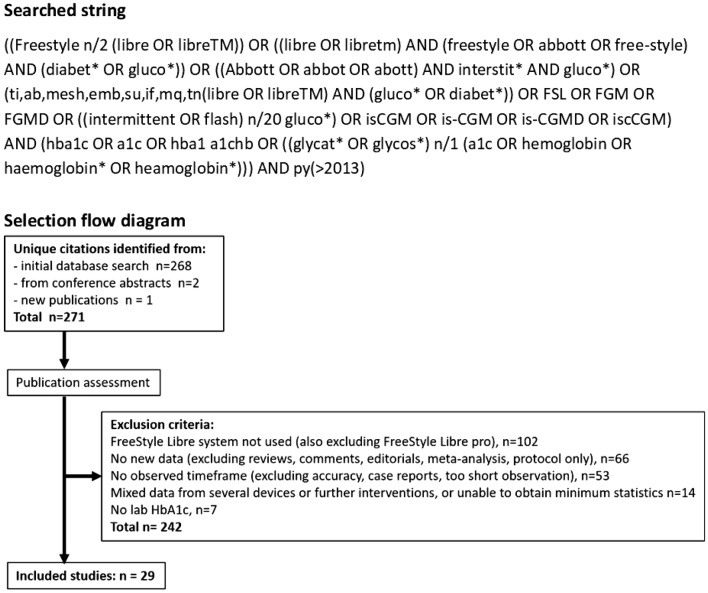
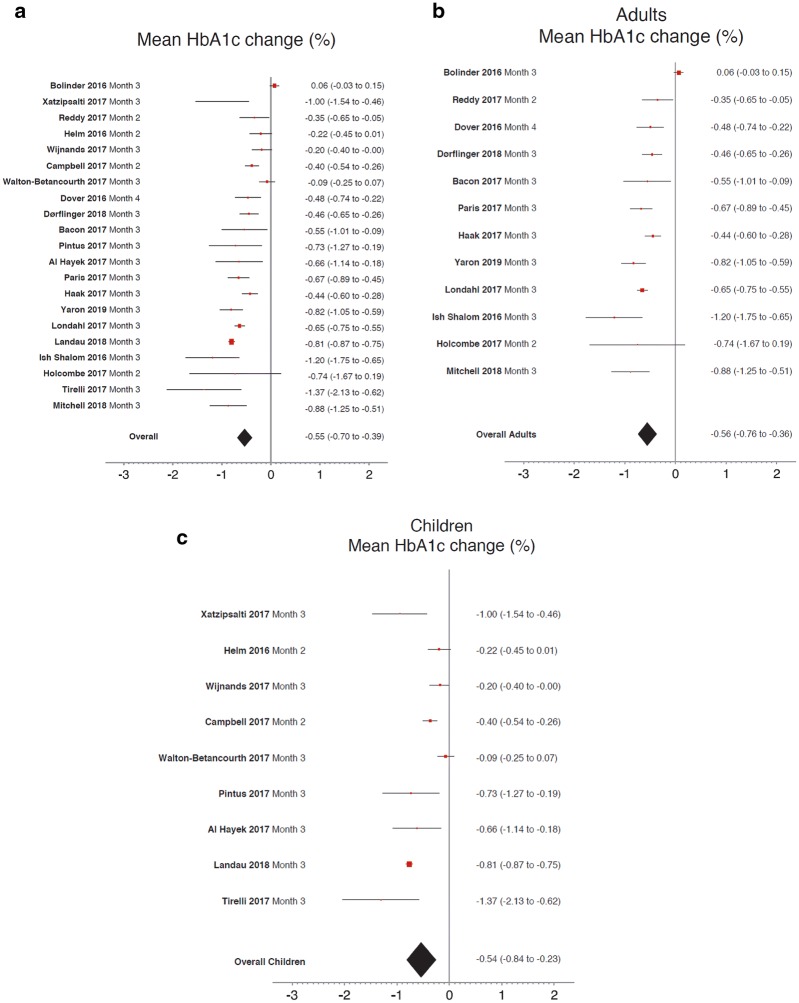
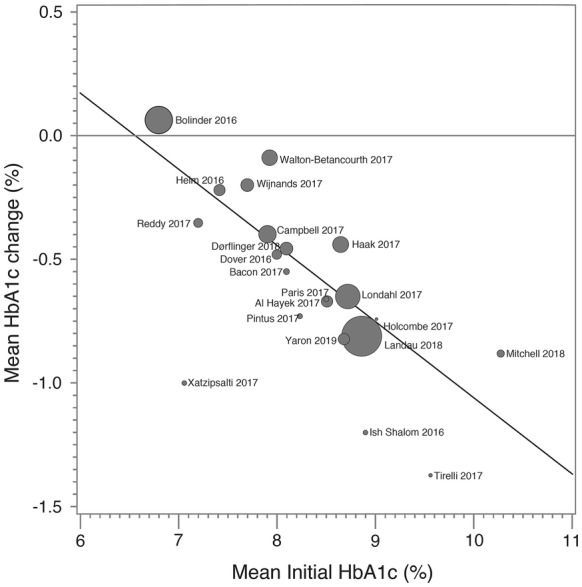
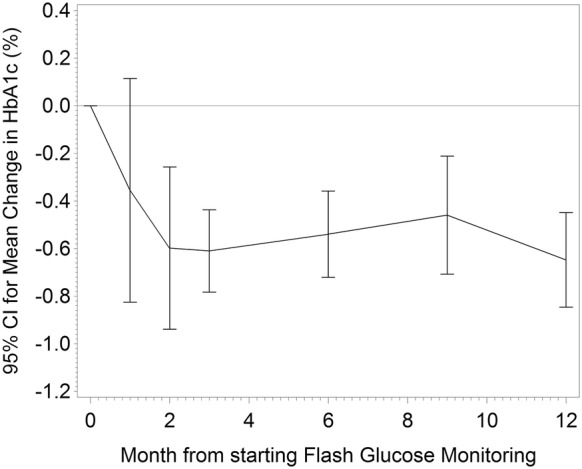
Glycated haemoglobin A1c (HbA1c) is the established standard measurement for assessment of glycaemic control in people with diabetes. Here we report on a meta-analysis of real-world observational studies on the impact of flash continuous glucose monitoring on glycaemic control as measured by HbA1c. A total of 271 studies were identified in our search, of which 29 contained data reporting changes in HbA1c over periods from 1 to 24 months that could be used in a statistical analysis. Our meta-analysis focuses on observed change in HbA1c at either 2, 3 or 4 months, in adult or paediatric subjects, as well as a longitudinal analysis up to 12 months in adult subjects. These data were drawn from 25 of the studies identified in our initial search. These reported HbA1c data up to 12 months in a total of 1723 participants with type 1 diabetes (T1D) or type 2 diabetes (T2D) using the FreeStyle Libre ® flash glucose monitoring system. Overall mean change in laboratory HbA1c across study subjects at 2–4 months was − 0.55% (95% CI − 0.70, − 0.39). Amongst the 1023 adults, mean change in HbA1c was − 0.56% (95% CI − 0.76, − 0.36); for the 447 children and adolescents, mean change in HbA1c was − 0.54% (95% CI − 0.84, − 0.23). Based on regression analysis, the degree of change in HbA1c correlated with the initial HbA1c of the study population. A longitudinal analysis in adult subjects ( n = 1276) shows that HbA1c fell within the first 2 months and changes were sustained up to 12 months. No significant differences were detected between T1D and T2D. The meta-analysis reported here confirms that starting the FreeStyle Libre system as part of diabetes care results in a significant and sustained reduction in HbA1c for adults and children with T1D and for adults with T2D. Abbott Diabetes Care.
Overview
The claims and statistics of this paper haven’t been checked yet.
Free: it reads the open-access text and checks the first 5 claims that cite a source we can check. Create a free account to check every claim.
Integrity signals
Registry
Cites
Statistics
Figures
Verification
Claims the paper makes
The claims and statistics of this paper haven’t been checked yet.
Free: it reads the open-access text and checks the first 5 claims that cite a source we can check. Create a free account to check every claim.
Self-check
Percentages, sums and reported differences re-computed from the paper’s own numbers.
The self-check needs the paper’s full text.
Citations
Cites
Measuring inconsistency in meta-analyses
Higgins, J. P. T., Thompson, S. G., Deeks, J. J., & Altman, D. G. (2003) · BMJ · doi:10.1136/bmj.327.7414.557 · Cited by 63,139 · cited 1×
“Cochran’s heterogeneity statistic (Q) and the I(2) statistic were calculated [40].”
Method(1993) · New England Journal of Medicine · doi:10.1056/nejm199309303291401 · Cited by 24,667
Dermyshi, E., Wang, Y., Yan, C., Hong, W., Qiu, G., Gong, X., & Zhang, T. (2017) · Neonatology · doi:10.1159/000454668 · Cited by 24,451
von Elm, E., Altman, D. G., Egger, M., Pocock, S. J., Gøtzsche, P. C., Vandenbroucke, J. P., & Initiative, F. T. S. (2007) · PLoS Medicine · doi:10.1371/journal.pmed.0040296 · Cited by 23,020
Meta-analysis of Observational Studies in Epidemiology<SUBTITLE>A Proposal for Reporting</SUBTITLE>
Stroup, D. F. (2000) · JAMA · doi:10.1001/jama.283.15.2008 · Cited by 20,623
von Elm, E., Altman, D. G., Egger, M., Pocock, S. J., Gøtzsche, P. C., & Vandenbroucke, J. P. (2014) · International Journal of Surgery · doi:10.1016/j.ijsu.2014.07.013 · Cited by 9,909
Turner, R. C., Fox, C., Matthews, McElroy, H. H., Cull, C. A., Holman, R. R., Neil, P., Hadden, D. R., Wright, D., Manley, E., et al. (1998) · The Lancet · Cited by 8,419
10-year follow-up of intensive glucose control in type 2 diabetes
Holman, R. R., Paul, S. K., Bethel, M. A., Matthews, D. R., & Neil, H. A. W. (2008) · New England Journal of Medicine · doi:10.1056/nejmoa0806470 · Cited by 7,751
Gupta, A., & Uribarri, J. (2016) · Hormone Research in Paediatrics · doi:10.1159/000444053 · Cited by 4,006
Research works printed but not linked: 12
- Gibb FW Stimson RH Zammitt NN Flash glucose monitoring is associated with improved glycaemic control and quality of life in people with type 1 diabetes: a large ‘real-world’ assessment Diabetologia 2018 16 S1 S391
- Xatzipsalti M Mentesidou L Kourti A Flash glucose monitoring system improves glycemic control Pediatr Diabetes. 2017 18 Suppl. 25 78
- Helm N De ML Forsman S Flash glucose monitoring improves perception and frequency of glucose monitoring leading to improved glucose control Pediatr Diabetes 2016 17 115
- Wijnands A Gys I Bevilacqua E The FreeStyle flash glucose monitoring system has limited effect on the metabolic control of children and adolescents with type 1 diabetes mellitus Pediatr Diabetes 2017 18 Suppl. 25 38
- Walton-Betancourth S Amin R A clinic-based study of the impact of flash glucose sensing technology on glycaemic control and self-monitoring of blood glucose in children and young people with type 1 diabetes Pediatr Diabetes 2017 18 Suppl. 25 47
- Bacon S O’Dwyer B Chambers C The performance and technical usability of a flash glucometer monitoring system Irish J Med Sci. 2017 186 9 S357
- Karlsson E. HbA1c after one year of use of flash glucose monitoring in patients with type 1 diabetes. Thesis, University of Orebero, Sweden.
- Abdalaziz A Lan K Bilous M Flash glucose monitoring (FGM) in people with type 1 diabetes: single centre-real-world experience Diabetes Med 2018 35 S1 168
- Löndahl M Filipsson K Lindholm E Effect of flash glucose monitoring on metabolic control and self-esteem treatment satisfaction in people with T1DM Diabetes Technol Ther. 2017 19 S1 A-81
- Holcombe A Karunakaran V Streeting J Trial of FreeStyle Libre in a local service: impact on diabetes outcomes Diabetes Med 2017 34 S1 160
- Tirelli E Frontino G Favalli V Flash glucose monitoring in noncompliant children and adolescents with type 1 diabetes Diabetes Technol Ther. 2017 19 S1 A-83
- Hey C Alkharaiji M Anyanwagu U Impact of FreeStyle Libre on glycaemic control, frequency of glucose monitoring and treatment satisfaction Diabetes Med 2018 35 Supplement 1 195
Cited by
Davies, M. J., Aroda, V. R., Collins, B. S., Gabbay, R. A., Green, J., Maruthur, N. M., Rosas, S. E., Del Prato, S., Mathieu, C., Mingrone, G., et al. (2022) · Diabetes Care · doi:10.2337/dci22-0034 · Cited by 2,104
“0 mmol/L [70–180 mg/dL]), fewer hyperglycemic and hypoglycemic episodes, and improvements in diabetes distress (336,337).”
BackgroundDavies, M. J., Aroda, V. R., Collins, B. S., Gabbay, R. A., Green, J., Maruthur, N. M., Rosas, S. E., Del Prato, S., Mathieu, C., Mingrone, G., et al. (2022) · Diabetologia · doi:10.1007/s00125-022-05787-2 · Cited by 1,048
“0 mmol/l [70–180 mg/dl]), fewer hyperglycaemic and hypoglycaemic episodes and improvements in diabetes distress [336, 337].”
Sacks, D. B., Arnold, M., Bakris, G. L., Bruns, D. E., Horvath, A. R., Lernmark, Å., Metzger, B. E., Nathan, D. M., & Kirkman, M. S. (2023) · Diabetes Care · doi:10.2337/dci23-0036 · Cited by 351
Moser, O., Riddell, M. C., Eckstein, M. L., Adolfsson, P., Rabasa-Lhoret, R., van den Boom, L., Gillard, P., Nørgaard, K., Oliver, N. S., Zaharieva, D. P., et al. (2020) · Diabetologia · doi:10.1007/s00125-020-05263-9 · Cited by 214
7. Diabetes Technology: Standards of Medical Care in Diabetes—2021
American Diabetes Association (2021) · Diabetes Care · doi:10.2337/dc21-s007 · Cited by 202
Bonora, B. M., Boscari, F., Avogaro, A., Bruttomesso, D., & Fadini, G. P. (2020) · Diabetes Therapy · doi:10.1007/s13300-020-00829-7 · Cited by 180
Deshmukh, H., Wilmot, E. G., Gregory, R., Barnes, D., Narendran, P., Saunders, S., Furlong, N., Kamaruddin, S., Banatwalla, R., Herring, R., et al. (2020) · Diabetes Care · doi:10.2337/dc20-0738 · Cited by 175
“The findings of our study are also in agreement with a recent meta-analysis[9] of 1,723 260 participants with type 1 or type 2 diabetes which showed similar reductions in HbA1c 261 following FSL use.”
BackgroundResultSacks, D. B., Arnold, M. A., Bakris, G. L., Bruns, D. E., Horvath, A. R., Lernmark, Å., Metzger, B. E., Nathan, D. M., & Kirkman, M. S. (2023) · Clinical Chemistry · doi:10.1093/clinchem/hvad080 · Cited by 208
Using Continuous Glucose Monitoring in Clinical Practice
Miller, E. M. (2020) · Clinical Diabetes · doi:10.2337/cd20-0043 · Cited by 122
“Moreover, reductions inA1Coccurearlywithuseof theFreeStyleLibre system and are sustained over time (26).”
BackgroundMoser, O., Riddell, M. C., Eckstein, M. L., Adolfsson, P., Rabasa‐Lhoret, R., Boom, L., Gillard, P., Nørgaard, K., Oliver, N. S., Zaharieva, D. P., et al. (2020) · Pediatric Diabetes · doi:10.1111/pedi.13105 · Cited by 91
Castellana, M., Parisi, C., Di Molfetta, S., Di Gioia, L., Natalicchio, A., Perrini, S., Cignarelli, A., Laviola, L., & Giorgino, F. (2020) · BMJ Open Diabetes Research & Care · doi:10.1136/bmjdrc-2019-001092 · Cited by 84
“40 Limitations of the present paper should be discussed.”
Oser, T. K., Hall, T. L., Dickinson, L. M., Callen, E., Carroll, J. K., Nease, D. E., Michaels, L., & Oser, S. M. (2022) · The Annals of Family Medicine · doi:10.1370/afm.2876 · Cited by 72
A review of flash glucose monitoring in type 2 diabetes
Krakauer, M., Botero, J. F., Lavalle-González, F. J., Proietti, A., & Barbieri, D. E. (2021) · Diabetology & Metabolic Syndrome · doi:10.1186/s13098-021-00654-3 · Cited by 71
Carlson, A. L., Daniel, T. D., DeSantis, A., Jabbour, S., Karslioglu French, E., Kruger, D., Miller, E., Ozer, K., & Elliott, T. (2022) · BMJ Open Diabetes Research & Care · doi:10.1136/bmjdrc-2021-002590 · Cited by 69
Evans, M., Welsh, Z., & Seibold, A. (2022) · Diabetes Therapy · doi:10.1007/s13300-022-01253-9 · Cited by 67
Self-citationRiveline, J.-P., Roussel, R., Vicaut, E., de Pouvourville, G., Detournay, B., Emery, C., Levrat-Guillen, F., & Guerci, B. (2022) · Diabetes Technology & Therapeutics · doi:10.1089/dia.2022.0085 · Cited by 64
Nathanson, D., Svensson, A.-M., Miftaraj, M., Franzén, S., Bolinder, J., & Eeg-Olofsson, K. (2021) · Diabetologia · doi:10.1007/s00125-021-05437-z · Cited by 61
Wilmot, E. G., Lumb, A. N., Hammond, P. J., Murphy, H. R., SCOTT, E. M., Gibb, F. W., Platts, J. K., & Choudhary, P. (2020) · Diabetic Medicine · doi:10.1111/dme.14433 · Cited by 58
Boucher, S. E., Gray, A. R., Wiltshire, E. J., de Bock, M. I., Galland, B. C., Tomlinson, P. A., Rayns, J. A., MacKenzie, K. E., Chan, H., Rose, S., et al. (2020) · Diabetes Care · doi:10.2337/dc20-0613 · Cited by 51
Elliott, T., Beca, S., Beharry, R., Tsoukas, M. A., Zarruk, A., & Abitbol, A. (2021) · Diabetes and Vascular Disease Research · doi:10.1177/14791641211021374 · Cited by 49
Baldo, F. D., Canton, C., Testa, S., Swales, H., Drudi, I., Golinelli, S., & Fracassi, F. (2020) · Journal of Veterinary Internal Medicine · doi:10.1111/jvim.15930 · Cited by 55
Oser, T. K., Litchman, M. L., Allen, N. A., Kwan, B. M., Fisher, L., Jortberg, B. T., Polonsky, W. H., & Oser, S. M. (2021) · Current Diabetes Reports · doi:10.1007/s11892-021-01408-1 · Cited by 43
Continuous glucose monitoring devices: A brief presentation (Review)
Mihai, D. A., Ștefan, S., Stegaru, D., Bernea, E. G., Văcăroiu, I. A., Papacocea, T. M., Lupușoru, M. O. D., Nica, A. E., Ştiru, O., Dragoș, D., et al. (2021) · Experimental and Therapeutic Medicine · doi:10.3892/etm.2021.11097 · Cited by 55
“Although only the newest version of the device enables alarm notifications for low or high glucose level or trends for glucose changing (if the sensor is close to the reading device), the system is useful for rapid and repeated measurements of hemoglobin A1C (43).”
BackgroundChoudhary, P., Bellido, V., Graner, M., Altpeter, B., Cicchetti, A., Durand‐Zaleski, I., & Kristensen, F. B. (2021) · Diabetes Therapy · doi:10.1007/s13300-021-01132-9 · Cited by 47
Prabhu Navis, J., Leelarathna, L., Mubita, W., Urwin, A., Rutter, M. K., Schofield, J., & Thabit, H. (2021) · Acta Diabetologica · doi:10.1007/s00592-020-01614-5 · Cited by 39
Bomholt, T., Adrian, T., Nørgaard, K., Ranjan, A. G., Almdal, T., Larsson, A. O., Vadstrup, M., Rix, M., Feldt‐Rasmussen, B., & Hornum, M. (2020) · The Nephron journals/Nephron journals · doi:10.1159/000511614 · Cited by 40
Klonoff, D. C., Gabbay, M., Moon, S. J., & Wilmot, E. G. (2025) · Journal of Diabetes Science and Technology · doi:10.1177/19322968241250357 · Cited by 36
Gordon, I., Rutherford, C., Makarounas‐Kirchmann, K., & Kirchmann, M. (2020) · Diabetes Research and Clinical Practice · doi:10.1016/j.diabres.2020.108158 · Cited by 40
Czupryniak, L., Dzida, G. J., Fichna, P., Jarosz-Chobot, P. A., Gumprecht, J., Klupa, T., Myśliwiec, M., Szadkowska, A., Bomba-Opon, D. A., Czajkowski, K., et al. (2022) · Diabetes Therapy · doi:10.1007/s13300-022-01229-9 · Cited by 44
“Importantly, the use of CGM systems is proven to reduce HbA1c in people with type 1 diabetes or type 2 diabetes [3] on intensive insulin therapy, but they are equally effective for people with type 2 diabetes on basal insulin therapy only [4, 5] or those on non-insulin therapy [4].”
BackgroundBaldo, F. D., Fracassi, F., Pires, J., Tardo, A. M., Malerba, E., Manassero, E., & Gilor, C. (2021) · Journal of Veterinary Internal Medicine · doi:10.1111/jvim.16122 · Cited by 37
“In human medicine, the use of FGMS significantly improves glycemic control.(31) In diabetic dogs, a recent study showed that use of FGMS allowed better identification of BG nadirs and hypoglycemic episodes compared to the use of a PBGM.”
MethodDanne, T., Schweitzer, M. A., Keuthage, W., Kipper, S., Kretzschmar, Y., Simon, J., Wiedenmann, T., & Ziegler, R. (2020) · Diabetes Technology & Therapeutics · doi:10.1089/dia.2020.0360 · Cited by 33
Franceschi, R., Micheli, F., Mozzillo, E., Cauvin, V., Liguori, A., Soffiati, M., & Giani, E. (2021) · Frontiers in Pediatrics · doi:10.3389/fped.2021.660173 · Cited by 41
Blood Glucose Monitoring in Adults and Children with Diabetes: Update 2021
CHENG, A. Y. Y., Feig, D. S., Ho, J., Siemens, R. L., BAJAJ, H. S., Gilbert, J. D., Houlden, R. L., Kim, J., MacKay, D., Rabi, D. M., et al. (2021) · Canadian Journal of Diabetes · doi:10.1016/j.jcjd.2021.07.003 · Cited by 41
Tan, Y. Y., Suan, E., Koh, G. C. H., Suhairi, S. B., & Tyagi, S. (2024) · Archives of Public Health · doi:10.1186/s13690-024-01459-2 · Cited by 35
Patent analysis of digital sensors for continuous glucose monitoring
Litvinova, O., Eitenberger, M., Bilir, A., Yeung, A. W. K., Parvanov, E. D., MohanaSundaram, A., Horbańczuk, J. O., Atanasov, A. G., & Willschke, H. (2023) · Frontiers in Public Health · doi:10.3389/fpubh.2023.1205903 · Cited by 42
Dover, A. R., Strachan, M. W. J., McKnight, J. A., Stimson, R. H., Mackenzie, S. D., Lyall, M. J., Wright, R. J., Forbes, S., & Gibb, F. W. (2020) · Diabetic Medicine · doi:10.1111/dme.14445 · Cited by 33
Asgharzadeh, A., Patel, M., Connock, M. J., Damery, S. L., Ghosh, I., Jordan, M., Freeman, K., Brown, A., Court, R. A., Baldwin, S., et al. (2024) · Health Technology Assessment · doi:10.3310/jypl3536 · Cited by 38
Ogawa, W., Hirota, Y., Osonoi, T., Tosaki, T., Kato, Y., Utsunomiya, K., Nishimura, R., & Nakamura, J. (2020) · Journal of Diabetes Investigation · doi:10.1111/jdi.13327 · Cited by 31
Lameijer, A., Fokkert, M. J., Edens, M. A., Gans, R. O. B., Bilo, H. J. G., & van Dijk, P. R. (2021) · BMJ Open Diabetes Research & Care · doi:10.1136/bmjdrc-2021-002124 · Cited by 32
Lameijer, A., Lommerde, N., Dunn, T. C., Fokkert, M. J., Edens, M. A., Kao, K., Xu, Y., Gans, R. O. B., Bilo, H. J. G., & van Dijk, P. R. (2021) · Diabetes Research and Clinical Practice · doi:10.1016/j.diabres.2021.108897 · Cited by 27
Eeg-Olofsson, K., Svensson, A.-M., Franzén, S., Ahmed Ismail, H., Törnblom, M., & Levrat-Guillen, F. (2023) · Diabetes and Vascular Disease Research · doi:10.1177/14791641211067418 · Cited by 29
“The Index date is the date of the first registration where the FreeStyle Libre system use is recorded in the NDR for a personwith T2DM.”
ResultInfluentialJENDLE, J. H., Eeg‐Olofsson, K., Svensson, J., Franzén, S., Lamotte, M., & Levrat‐Guillen, F. (2021) · Diabetes Therapy · doi:10.1007/s13300-021-01172-1 · Cited by 32
“A meta-analysis assessing clinical trials and realworld studies has shown improvement in glycaemic levels with the use of flash glucose monitoring in individuals with type 1 diabetes (T1D) or T2D [12].”
BackgroundUrakami, T., Yoshida, K., Kuwabara, R., Mine, Y., Aoki, M., Suzuki, J., & Morioka, I. (2022) · Journal of Diabetes Investigation · doi:10.1111/jdi.13618 · Cited by 26
Zhao, X. O., Ming, J., Qu, S., Li, H. J., Wu, J. H., Ji, L., & Chen, Y. (2021) · Diabetes Therapy · doi:10.1007/s13300-021-01166-z · Cited by 28
“According to a meta-analysis including 25 studies, flash monitoring could result in a significant and sustained reduction in HbA1c and the degree of change in HbA1c was correlated to the baseline HbA1c level of the study population [39].”
MethodKang, H. S., Park, H. R., Kim, C., & Singh‐Carlson, S. (2022) · The Science of Diabetes Self-Management and Care · doi:10.1177/26350106221116899 · Cited by 31
Jeyam, A., Gibb, F. W., McKnight, J. A., O’Reilly, J. E., Caparrotta, T. M., Höhn, A., McGurnaghan, S. J., Blackbourn, L. A. K., Hatam, S., Kennon, B., et al. (2021) · Diabetologia · doi:10.1007/s00125-021-05578-1 · Cited by 27
“Existing paediatric studies have had small sample sizes [7, 8] with heterogeneous findings.”
BackgroundFrank, J., Blissett, D. B., Hellmund, R., & Virdi, N. S. (2021) · Diabetes Technology & Therapeutics · doi:10.1089/dia.2021.0263 · Cited by 31
Howard, L. A., Lidbury, J. A., Jeffery, N. D., Washburn, S. E., & Patterson, C. A. (2021) · Journal of Veterinary Internal Medicine · doi:10.1111/jvim.16273 · Cited by 24
“Additionally, the FGMS improves glucose control, as measured by reduced glycated hemoglobin Alc (HbA1c) in human diabetic patients, as well as limit glucose variability and reduce time during which patients are hypoglycemic.(20) The lack of reliability for the FGMS in our study is likely due, in part, to a lag in the…”
BackgroundHuhn, F., Lange, K., Jördening, M., & Ernst, G. (2022) · Journal of Diabetes Science and Technology · doi:10.1177/19322968221081216 · Cited by 28
Rotondi, M. A., Wong, O. C. Y., Riddell, M. C., & Perkins, B. A. (2022) · Diabetes Care · doi:10.2337/dc21-2341 · Cited by 28
“While randomized trials examining the efficacy of these new technologies are heterogeneous (7,8), on balance, these technologies have shown improved glycemic control (9,10), reduced hypoglycemia (11,12) and DKA (11,12) events, fewer hospital admissions (11), and improved quality of life (9,11) in a variety of real-wor…”
BackgroundMachine Learning Approach to Drug Treatment Strategy for Diabetes Care
Fujihara, K., & Sone, H. (2023) · Diabetes & Metabolism Journal · doi:10.4093/dmj.2022.0349 · Cited by 28
Mario, C. D., Genovese, S., Lanza, G. A., Mannucci, E., Marenzi, G., Sciatti, E., Pitocco, D., the Expert Panel Group, Avogaro, A., Bertuzzi, F., et al. (2022) · Cardiovascular Diabetology · doi:10.1186/s12933-022-01598-2 · Cited by 26
“CGM use was demonstrated to improve patients’ quality of life, with a greater satisfaction than SMBG [30, 31, 61].”
BackgroundInfluentialContinuous Glucose Monitoring in Dogs and Cats
Baldo, F. D., & Fracassi, F. (2023) · Veterinary Clinics of North America Small Animal Practice · doi:10.1016/j.cvsm.2023.01.008 · Cited by 26
Bosi, E., Gregori, G., Cruciani, G., Irace, C., Pozzilli, P., & Buzzetti, R. (2021) · Diabetes Research and Clinical Practice · doi:10.1016/j.diabres.2021.109172 · Cited by 22
“[12] Evans M, Welsh Z, Ells S, Seibold A.”
BackgroundMiller, E. M., & Midyett, L. K. (2021) · Diabetes Technology & Therapeutics · doi:10.1089/dia.2021.0192 · Cited by 26
Flash Continuous Glucose Monitoring: A Summary Review of Recent Real-World Evidence
Bailey, C. J., & Gavin, J. R. (2020) · Clinical Diabetes · doi:10.2337/cd20-0076 · Cited by 20
Rose, L., Klausmann, G., & Seibold, A. (2021) · Diabetes Therapy · doi:10.1007/s13300-020-00978-9 · Cited by 18
Self-citationAli, N., Hamdaoui, S. E., Nefs, G., Schmidt, J. W. J. W., Tack, C. J., & de Galan, B. E. (2023) · Diabetic Medicine · doi:10.1111/dme.15167 · Cited by 21
Frank, J., Son, D., Szafranski, K., & Poon, Y. (2024) · Journal of Managed Care & Specialty Pharmacy · doi:10.18553/jmcp.2024.24025 · Cited by 25
Prato, S. D., Giorgino, F., Szafranski, K., & Poon, Y. (2024) · Diabetes Obesity and Metabolism · doi:10.1111/dom.15703 · Cited by 19
Blissett, R., Blissett, D. B., Levrat‐Guillen, F., Deshmukh, H., Wilmot, E. G., Ryder, R. E. J., Walton, C., & Sathyapalan, T. (2022) · BMJ Open Diabetes Research & Care · doi:10.1136/bmjdrc-2021-002580 · Cited by 24
Fall in prevalence of impaired awareness of hypoglycaemia in individuals with type 1 diabetes
Ali, N., Hamdaoui, S. E., Schouwenberg, B. J., Tack, C. J., & de Galan, B. E. (2023) · Diabetic Medicine · doi:10.1111/dme.15042 · Cited by 19
Stimson, R. H., Dover, A. R., Strachan, M. W. J., Wright, R. J., Forbes, S., & Gibb, F. W. (2023) · Diabetic Medicine · doi:10.1111/dme.15130 · Cited by 17
Real-World Outcomes of Glucose Sensor Use in Type 1 Diabetes—Findings from a Large UK Centre
Lee, K.-H., Gunasinghe, S., Chapman, A., Findlow, L. A., Hyland, J., Ohol, S., Urwin, A., Rutter, M. K., Schofield, J. D., Thabit, H., et al. (2021) · Biosensors · doi:10.3390/bios11110457 · Cited by 17
“9 mmol/mol) for children and adolescents, which was noted within 2 to 4 months of initiation and sustained for at least 12 months in adults [16].”
BackgroundRuissen, M. M., Montori, V. M., Hargraves, I. G., Branda, M. E., León‐García, M., de Koning, E. J. P., & Kunneman, M. (2023) · BMJ Evidence-Based Medicine · doi:10.1136/bmjebm-2022-112067 · Cited by 17
Hayek, A. A., & Dawish, M. A. A. (2021) · Advances in Therapy · doi:10.1007/s12325-021-01765-z · Cited by 18
“Nevertheless, both studies concluded that there is evidence of a reduction in HbA1c, consistent with reduced hyperglycemia [27, 28].”
BackgroundNarasaki, Y., Park, E., You, A. S., Daza, A. C., Peralta, R. A., Guerrero, Y., Novoa, A., Amin, A., Nguyen, D. V., Price, D. A., et al. (2021) · Seminars in Dialysis · doi:10.1111/sdi.13009 · Cited by 16
“Several meta-analyses of RCTs in patients with type 1 and 2 diabetes have shown that CGM provides greater reduction in HbA1c values with less hypoglycemia as compared with usual care.(21,22)”
MethodHerguido, N. G., Amuedo, S., Bellido, V., Gallardo, G. L., Losada, F., Pérez-Morales, A., Trillo, C. A. R., & Moreno, A. S. (2022) · Diabetes Technology & Therapeutics · doi:10.1089/dia.2022.0287 · Cited by 16
“13 However, even with isCGM, the glycemic targets recommended by the International Consensus of TIR 3 are often difficult to achieve.”
Moreno-Fernández, J., Sastre, J., Pinés, P. J., Calderón-Vicente, D., Gargallo, J., & Muñoz‐Rodríguez, J. R. (2023) · Endocrinología Diabetes y Nutrición (English ed ) · doi:10.1016/j.endien.2023.03.013 · Cited by 14
Urakami, T., Yoshida, K., Kuwabara, R., Mine, Y., Aoki, M., Suzuki, J., & Morioka, I. (2020) · Hormone Research in Paediatrics · doi:10.1159/000510454 · Cited by 16
Harris, S., Cimino, S., Nguyen, Y., Szafranski, K., & Poon, Y. (2025) · Diabetes Therapy · doi:10.1007/s13300-024-01677-5 · Cited by 12
“The use of FreeStyle Libre has been found to improve glycated hemoglobin (HbA1c) levels, reduce hypoglycemia, and increase the time spent in the recommended glycemic range [6–11].”
Charleer, S., Block, C. E. M. D., Bolsens, N., Huffel, L. V., Nobels, F. R. E., Mathieu, C., & Gillard, P. (2023) · Diabetes Technology & Therapeutics · doi:10.1089/dia.2022.0452 · Cited by 15
Zhang, Y., Singh, P., Ganapathy, K., Suresh, V., Karamat, M. A., Baharani, J., & Bellary, S. (2024) · BMC Nephrology · doi:10.1186/s12882-024-03763-z · Cited by 15
“Similar findings were reported from a meta-analysis of flash CMG use in participants with type 1 and type 2 diabetes, showing significant and sustained change in HbA1c [29].”
ResultEffects of unrestricted access to flash glucose monitoring in type 1 diabetes
Hansen, K. W. (2020) · Endocrinology Diabetes & Metabolism · doi:10.1002/edm2.125 · Cited by 10
Liang, B., Koye, D. N., Hachem, M., Zafari, N., Braat, S., & Ekinci, E. I. (2022) · Frontiers in Clinical Diabetes and Healthcare · doi:10.3389/fcdhc.2022.849725 · Cited by 13
Al Hayek, A., Al Dawish, M., & El Jammal, M. (2021) · Cureus · doi:10.7759/cureus.16007 · Cited by 11
“31% [22], the observed reduction in HbA1c should be interpreted cautiously as a similar reduction was reported for the control arm of an RCT in the same population [3].”
ResultAlharbi, M., Albunyan, A., Nahari, A., Azmi, F. A., Alenazi, B., Harbi, T. A., Malki, M. A., & Ahmadi, H. A. (2022) · Diabetes Therapy · doi:10.1007/s13300-022-01224-0 · Cited by 11
“39) in HbA1c at 2–4 months following the use of flash glucose monitoring across 29 studies, demonstrating significant and sustained decreases in HbA1c in adults with type 1 and type 2 diabetes as well as children with type 1 diabetes [23].”
BackgroundMethodInfluentialMolfetta, S. D., Rossi, A., Assaloni, R., Cherubini, V., Consoli, A., Bartolo, P. D., Guardasole, V., Laurenzi, A., Lombardo, F., Maffeis, C., et al. (2022) · Diabetes Research and Clinical Practice · doi:10.1016/j.diabres.2022.109867 · Cited by 14
Lameijer, A., Bakker, J. J., Kao, K., Xu, Y., Gans, R. O. B., Bilo, H. J. G., Dunn, T. C., & van Dijk, P. R. (2023) · Diabetes Research and Clinical Practice · doi:10.1016/j.diabres.2023.110735 · Cited by 12
Al Hayek, A. A., & Al Dawish, M. A. (2023) · Advances in Therapy · doi:10.1007/s12325-023-02508-y · Cited by 9
Mustonen, J., Rautiainen, P., Lamidi, M., Lavikainen, P., Martikainen, J. A., & Laatikainen, T. K. (2023) · Acta Diabetologica · doi:10.1007/s00592-023-02079-y · Cited by 15
Ratzki‐Leewing, A. A., Harris, S. B., RABASA-LHORET, R. P. R., & Poon, Y. (2025) · Diabetes Obesity and Metabolism · doi:10.1111/dom.16266 · Cited by 10
Alarcón, P. P., Felgueroso, C. A., Ares, J., Morales-Sánchez, P., Goitia, C. L., Escobedo, R. R., Rodríguez‐Rodero, S., Delgado, E., & Torre, E. L. M. (2022) · Endocrinología Diabetes y Nutrición (English ed ) · doi:10.1016/j.endien.2022.08.001 · Cited by 10
Gao, Y., Zhou, M., Xu, X., & Chen, W. Y. (2022) · Journal of Diabetes and its Complications · doi:10.1016/j.jdiacomp.2022.108314 · Cited by 13
Wright, E. E., Miller, E. M., Bindal, A., & Poon, Y. (2025) · Journal of Managed Care & Specialty Pharmacy · doi:10.18553/jmcp.2025.24253 · Cited by 10
Eer, A., Ho, R. C. Y., Hearn, T., Hachem, M., Freund, M., Burchill, L. J., Atkinson‐Briggs, S., Singh, S., Eades, S., O’Brien, R. C., et al. (2023) · BMC Health Services Research · doi:10.1186/s12913-023-10121-6 · Cited by 9
“While there is evidence that FGM improves diabetes management compared to usual care [12], a recent meta-analysis did not find FGM to be superior to CGM [13].”
BackgroundPastor, A. G., Quesada, J., Soler-Martínez, M., Carratalá‐Munuera, C., & Pomares, F. (2024) · Primary care diabetes · doi:10.1016/j.pcd.2024.04.003 · Cited by 9
Shi, L., Hellmund, R., & Abbott Diabetes Care, A. (2020) · US Endocrinology · doi:10.17925/use.2020.16.1.24 · Cited by 9
Marsters, B. L., Styles, S. E., Galland, B. C., Wiltshire, E. J., de Bock, M. I., Tomlinson, P. A., Rayns, J. A., MacKenzie, K. E., Chan, H., & Wheeler, B. J. (2020) · Pediatric Diabetes · doi:10.1111/pedi.13121 · Cited by 6
“High deprivation (8-10) 19 (30) 11 (33) 8 (26) Education or employment status”
BackgroundPeterkova, V. A., As, A., Mayorov, A. Y., Galstyan, G. R., Лаптев, Д. Н., & Chernikova, N. A. (2021) · Diabetes Mellitus · doi:10.14341/dm12753 · Cited by 11
Flash glucose monitoring: the story so far and the journey ahead
Crabtree, T. S. J., Choudhary, P., Kar, P. S., & Wilmot, E. G. (2022) · BMJ Innovations · doi:10.1136/bmjinnov-2021-000862 · Cited by 8
Emamipour, S., van Dijk, P. R., Bilo, H. J. G., Edens, M. A., van der Galiën, O., Postma, M. J., Feenstra, T., & van Boven, J. F. M. (2022) · Journal of Diabetes Science and Technology · doi:10.1177/19322968221109841 · Cited by 7
Moreno-Fernández, J., Sastre, J., Pinés, P. J., Calderón-Vicente, D., Gargallo, J., & Muñoz‐Rodríguez, J. R. (2023) · Endocrinología Diabetes y Nutrición · doi:10.1016/j.endinu.2022.12.003 · Cited by 11
Using digital tools to improve diabetes care in India with continuous glucose monitoring
Kesavadev, J., Saboo, B., Chawla, M. S., Unnikrishnan, A., Dunn, T. C., & TIWASKAR, M. H. (2025) · Therapeutic Advances in Endocrinology and Metabolism · doi:10.1177/20420188251372290 · Cited by 8
“9,40 The expert panel outlined possible challenges and patient concerns for the adoption of LibreView in diabetes clinics (Table 2).”
Chacón, R. P., Fernández, C. A., Loro, M. M., Jiménez, A. B. A., Ceballos, L. T., Hinojosa, J. M. J., López‐Siguero, J. P., & Gea, I. L. (2021) · Journal of Clinical Medicine · doi:10.3390/jcm10214913 · Cited by 10
“A meta-analysis [13] performed in 2019 analyzing results from 271 studies found a 0.”
MethodA Position Statement of the Utilization and Support Status of Continuous Glucose Monitoring in Korea
Kim, W. J., Kim, J. H., Yoo, H. J., Son, J. W., Khang, A. R., Kwon, S. K., Kim, J. H., Kim, T. H., Ryu, O. H., Park, K. H., et al. (2021) · Journal of Korean Diabetes · doi:10.4093/jkd.2021.22.4.225 · Cited by 7
Improved glucometrics in people with type 1 diabetes 1 year into the COVID-19 pandemic
Ali, N., Hamdaoui, S. E., Nefs, G., Tack, C. J., & de Galan, B. E. (2022) · BMJ Open Diabetes Research & Care · doi:10.1136/bmjdrc-2022-002789 · Cited by 7
Botelho, M. S., Galendi, J. S. C., Novo, M. A. F. M., & Nogueira, V. D. S. N. (2025) · Diabetology & Metabolic Syndrome · doi:10.1186/s13098-025-01935-x · Cited by 5
Hall, T. L., Dickinson, L. M., Warman, M. K., Oser, T. K., & Oser, S. M. (2024) · Journal of the American Association of Nurse Practitioners · doi:10.1097/jxx.0000000000001060 · Cited by 10
Yeoh, E. C. K., Png, D., Koh, P. L., Sum, C. F., Lim, S. C., Tan, H. H., Ubeynarayana, C. U., & Subramaniam, T. (2021) · Diabetic Medicine · doi:10.1111/dme.14733 · Cited by 5
Metadata
- Authors
- Evans, M., Welsh, Z., Ells, S., & Seibold, A.
- Affiliations
- University of Cambridge (GB)
- Abbott (United Kingdom) (GB)
- Abbott (Germany) (DE)
- Corresponding author
- Evans, Mark
- Venue
- Diabetes Therapy
- Published
- 2019-10-31
- Volume
- 11
- Issue
- 1
- Pages
- 83-95
- ISSN
- 1869-6953 (ISSN-L)
- 1869-6961
- PMC
- PMC6965602
- OpenAlex
- W2985334076
- Semantic Scholar
- fa2c3b9618ae1927bee327bcb58209361235b57b
- Cited by
- 185
- References
- 36
- Citations by year
- 2026: 15 · 2025: 20 · 2024: 23 · 2023: 26 · 2022: 40 · 2021: 33 · 2020: 28
- FWCI
- 3.87
- Type
- journal article
- Language
- en
- Open access
- gold
- doi.org
- Licence
- cc-by-nc
- creativecommons.org/licenses/by-nc/4.0 (tdm)
- creativecommons.org/licenses/by-nc/4.0 (vor)
- Locations
- Diabetes Therapy (publishedVersion, cc-by-nc)
- PubMed Central (publishedVersion, cc-by-nc)
- PubMed (publishedVersion)
- Apollo (University of Cambridge) (submittedVersion, cc-by-nc)
- Apollo (University of Cambridge) (submittedVersion)
- Apollo
- Funders
- Abbott Diabetes Care
- Topics
- Health Sciences › Medicine › Endocrinology, Diabetes and Metabolism › Diabetes Management and Research
- Health Sciences › Medicine › Endocrinology, Diabetes and Metabolism › Diabetes Management and Education
- Health Sciences › Medicine › Endocrinology, Diabetes and Metabolism › Diabetes Treatment and Management
- Keywords
- flash glucose monitoring, continuous glucose monitoring, HbA1c, glycemic control, type 1 diabetes, type 2 diabetes, FreeStyle Libre, pediatric diabetes
About these checks
Registry, retraction, Cites and statistics results are computed, not judged, with one exception: a printed reference that no index lists is read once by a model before it counts as a citation error. Claims are extracted by a model and kept only when their quote appears verbatim in the text; each cited source is then checked, with a model’s help, for whether it says what the claim relies on. Those verdicts can be wrong — read the claim’s quote and the cited source before relying on one.
Statistics and arithmetic are recomputed, not judged.
Confidence bands are shown only for fields calibrated on our annotated test set. None is calibrated yet, so no band is shown.
What counts as a claim ›How we measure confidence ›How we check this ›
Are you an author, or do you see a problem with this page? Request a review
Data sources
Bibliographic data: Semantic Scholar, OpenAlex, Crossref.
Contains information from the Semantic Scholar Academic Graph Datasets, made available under the ODC Attribution License (ODC-BY 1.0).
Semantic Scholar’s data is described in: Kinney, R., et al. (2023). The Semantic Scholar Open Data Platform. arXiv:2301.10140.
