

The Association Between Obesity and the 5-Year Prevalence of Morbidity and Mortality Among Adults with Type 2 Diabetes
Open accessThe DOI matches its Crossref record; 33 of the 33 references it cites were found in a registry or an index.
Abstract
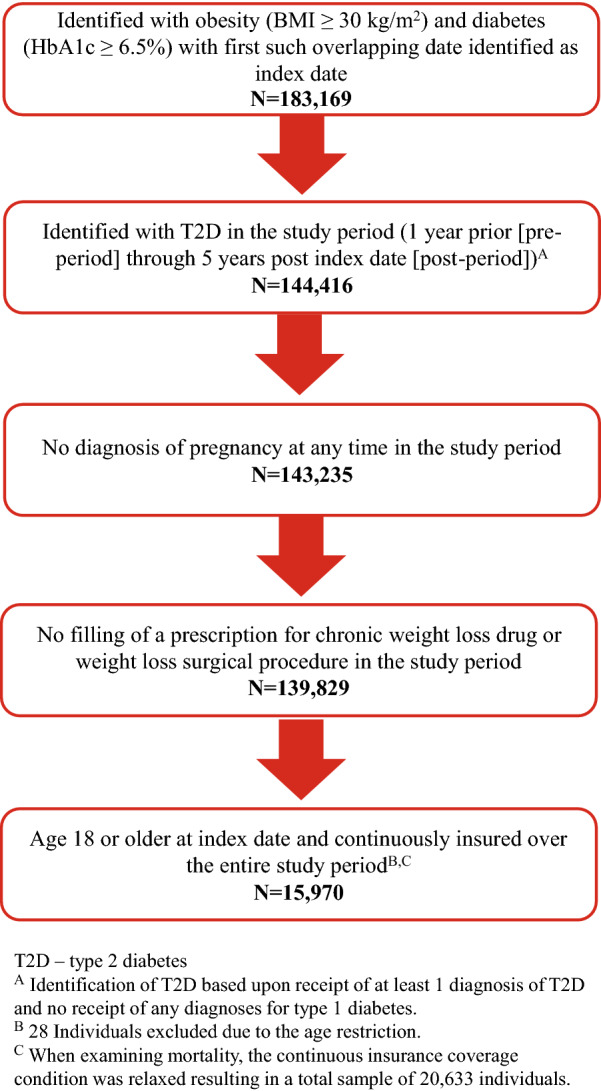
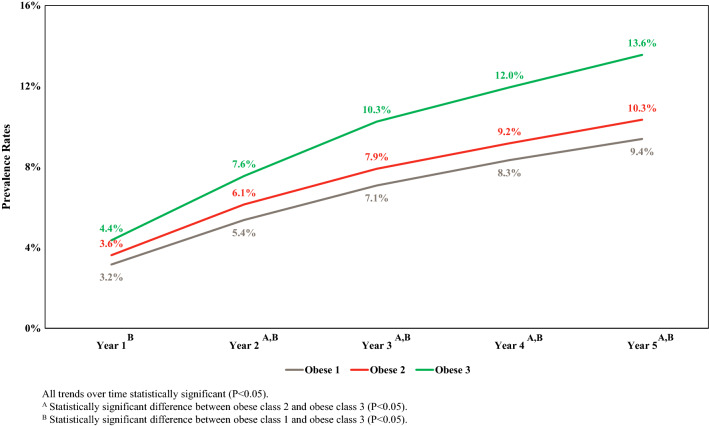
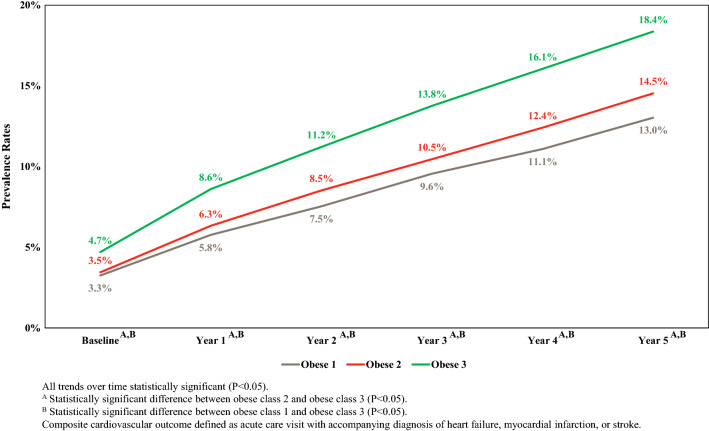
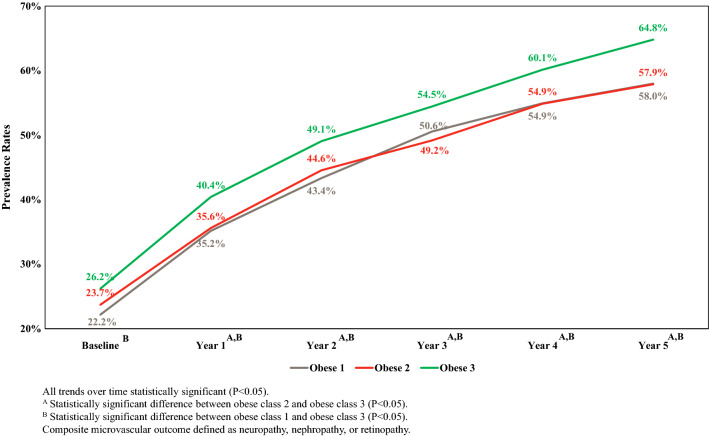
INTRODUCTION: This retrospective claims database study examined the prevalence of mortality and morbidity among adults with type 2 diabetes (T2D) and obesity. METHODS: The study used deidentified data from 2007 to 2021 from the Optum® Market Clarity Dataset. A cohort of adults with T2D and obesity were identified, and age- and sex-adjusted prevalence rates were calculated for mortality, a composite cardiovascular outcome (CCO), a composite microvascular outcome (CMO), and other complications. Results were examined overall and by obesity class (class 1, class 2, and class 3). RESULTS: For the 15,970 adults included in the study, the prevalence of CCO and CMO after 5 years was 15.3% and 60.7%, respectively. The 5-year prevalence of mortality was 10.9%. There were statistically significant differences in prevalence rates by obesity class, with obesity class 3 associated with higher rates of morbidity and mortality compared to obesity classes 1 or 2. Specifically, after 5 years, the prevalence of mortality was 9.4%, 10.3% and 13.6% for obese classes 1, 2 and 3, respectively (P < 0.05 between class 3 and class 2 or 1). Similarly, For obesity classes 1, 2 and 3, the 5-year prevalence of CCO was 13.0%, 14.5% and 18.4% and the rates for CMO were 58.0%, 57.9% and 64.8%, respectively (both P < 0.05 between class 3 and class 2 or 1). Regarding other complications, differences in the prevalence of atherosclerotic cardiovascular disease (ASCVD) and obstructive sleep apnea (OSA) were statistically significantly higher with increasing obesity class. CONCLUSIONS: The results indicate that for a cohort of adults with T2D and obesity, obesity class 3 is associated with significantly higher mortality and morbidity, including CCO, CMO, ASCVD and OSA. These findings suggest that treatment which reduces obesity among individuals with T2D may have significant health benefits, although additional studies are needed to confirm the results.
Overview
The claims and statistics of this paper haven’t been checked yet.
Free: it reads the open-access text and checks the first 5 claims that cite a source we can check. Create a free account to check every claim.
Integrity signals
Registry
Cites
Statistics
Figures
Verification
Claims the paper makes
The claims and statistics of this paper haven’t been checked yet.
Free: it reads the open-access text and checks the first 5 claims that cite a source we can check. Create a free account to check every claim.
Claims other papers make about this one
Each is checked against this paper’s own text: does it say what the citing paper says it does?
The source backs part of the claim, not all of it — or backs it for a different population, condition or comparison.
In the citing paper
“Among individuals with T2D, obesity increases mortality risk by sevenfold when also increases the risk for micro- and macrovascular complications, suggesting that the co-existence of obesity with T2D accelerate the disease process [5–7].”
From Oral glucagon-like peptide-1 receptor agonists and combinations of entero-pancreatic hormones as treatments for adults with type 2 diabetes: where are we now? (2024) · cites this paper as [6]
Experimental — accuracy not yet measuredThe source backs part of the claim, not all of it — or backs it for a different population, condition or comparison.
In the citing paper
“Among individuals with T2D, obesity increases mortality risk by sevenfold when also increases the risk for micro- and macrovascular complications, suggesting that the co-existence of obesity with T2D accelerate the disease process [5–7].”
From Oral glucagon-like peptide-1 receptor agonists and combinations of entero-pancreatic hormones as treatments for adults with type 2 diabetes: where are we now? (2024) · cites this paper as [6]
Experimental — accuracy not yet measuredIn the citing paper
“Among individuals with T2D, obesity increases mortality risk by sevenfold when also increases the risk for micro- and macrovascular complications, suggesting that the co-existence of obesity with T2D accelerate the disease process [5–7].”
Self-check
Percentages, sums and reported differences re-computed from the paper’s own numbers.
The self-check needs the paper’s full text.
Citations
Cites
Health effects of overweight and obesity in 195 countries over 25 years
Collaborators, T. G. 2. O. (2017) · New England Journal of Medicine · doi:10.1056/nejmoa1614362 · Cited by 7,918
(2020) · PubMed · Cited by 2,642
Economic Costs of Diabetes in the U.S. in 2017
American Diabetes Association (2018) · Diabetes Care · doi:10.2337/dci18-0007 · Cited by 2,528
Obesity, Metabolic Syndrome, and Cardiovascular Disease
Grundy, S. M. (2004) · The Journal of Clinical Endocrinology & Metabolism · doi:10.1210/jc.2004-0372 · Cited by 1,371 · cited 1×
“cost related to obesity, making the case that obesity leads to ASCVD by increasing key risk factors, including high cholesterol, high blood pressure and hyperglycemia, as well as ‘‘emerging’’ risk factors, including atherogenic lipid levels, insulin resistance, chronic inflammation and a tendency toward blood clotting…”
BackgroundLeon, B. M. (2015) · World Journal of Diabetes · doi:10.4239/wjd.v6.i13.1246 · Cited by 1,215 · cited 1×
“Given that cardiovascular disease is the most common cause of death and illness among individuals with diabetes [26], our finding that obesity class 3 is associated with a statistically significantly higher prevalence of the CCO highlights the fact that individuals in this weight category constitute a unique treatment…”
BackgroundKhan, S. S., Ning, H., Wilkins, J. T., Allen, N., Carnethon, M., Berry, J. D., Sweis, R. N., & Lloyd-Jones, D. M. (2018) · JAMA Cardiology · doi:10.1001/jamacardio.2018.0022 · Cited by 1,072 · cited 2×
“Likewise, other research has shown that the lifetime risk of cardiovascular events rises as BMI increases from obesity class 1 to 3 [12].”
BackgroundMethodEpidemiology of Obesity and Diabetes and Their Cardiovascular Complications
Bhupathiraju, S. N., & Hu, F. B. (2016) · Circulation Research · doi:10.1161/circresaha.115.306825 · Cited by 945 · cited 1×
“Obesity has been shown to increase the risk of cardiovascular disease directly by altering the structure and function of heart tissues and possibly indirectly by increasing the risk of related comorbidities, such as dyslipidemia and hypertension [27, 28].”
BackgroundLife Expectancy and Mortality Rates in the United States, 1959-2017
Woolf, S. H., & Schoomaker, H. (2019) · JAMA · doi:10.1001/jama.2019.16932 · Cited by 930 · cited 1×
“9% rate previously estimated over the time period from 2010 to 2017 for the average US adult age 55 to 64 years [23].”
BackgroundInteractions Between Obesity and Obstructive Sleep Apnea
Romero-Corral, A., Caples, S. M., Lopez-Jimenez, F., & Somers, V. K. (2010) · Chest · doi:10.1378/chest.09-0360 · Cited by 787 · cited 13×
“The prevalence of OSA was more than fivefold higher in this US population relative to the 5.45% prevalence found in a study in that UK study [22].”
ResultInfluentialPrevalence and co-prevalence of comorbidities among patients with type 2 diabetes mellitus
Iglay, K., Hannachi, H., Joseph Howie, P., Xu, J., Li, X., Engel, S. S., Moore, L. M., & Rajpathak, S. (2016) · Current Medical Research and Opinion · doi:10.1185/03007995.2016.1168291 · Cited by 511 · cited 1×
“T2D has been correlated with overweight/obesity, as well as with hypertension, hyperlipidemia, chronic kidney disease and cardiovascular disease [9].”
BackgroundLeitner, D. R., Frühbeck, G., Yumuk, V., Schindler, K., Micic, D., Woodward, E., & Toplak, H. (2017) · Obesity Facts · doi:10.1159/000480525 · Cited by 431 · cited 1×
“Together, diabetes and obesity have been shown to increase mortality risk by sevenfold [13, 14].”
BackgroundDirect medical costs of obesity in the United States and the most populous states
Cawley, J., Biener, A., Meyerhoefer, C., Ding, Y., Zvenyach, T., Smolarz, B. G., & Ramasamy, A. (2021) · Journal of Managed Care & Specialty Pharmacy · doi:10.18553/jmcp.2021.20410 · Cited by 400
Cirrhosis: Diagnosis and Management.
Smith, A. D., Baumgartner, K., & Bositis, C. M. (2019) · PubMed · Cited by 375
Younossi, Z. M., Loomba, R., Rinella, M. E., Bugianesi, E., Marchesini, G., Neuschwander‐Tetri, B. A., Serfaty, L., Negro, F., Caldwell, S. H., Ratziu, V., et al. (2018) · Hepatology · doi:10.1002/hep.29724 · Cited by 357 · cited 9×
“ASCVD 81.9 (81.3–82.5) 77.1a,c (76.1–78.0) 81.5a,b (80.4–82.6) 85.5b,c (84.3–86.6) Atrial fibrillation 9.2 (8.8–9.7) 7.7c (7.1–8.3) 8.7b (7.9–9.5) 12.7b,c (11.7–13.8) Liver cirrhosis 24.3 (23.6–24.9) 20.2c (19.3–21.1) 21.9b (20.7–23.1) 28.7b,c (27.3–30.2) NASH/NAFLD 20.9 (20.2–21.5) 17.0a,c (16.2–17.9) 20.5a,b (19.3–2…”
ResultInfluentialObstructive sleep apnea and obesity: implications for public health
McFarlane, S. I. (2017) · Sleep Medicine and Disorders: International Journal · doi:10.15406/smdij.2017.01.00019 · Cited by 266 · cited 12×
“The prevalence of OSA was more than fivefold higher in this US population relative to the 5.45% prevalence found in a study in that UK study [22].”
BackgroundInfluentialCostanzo, P., Cleland, J. G. F., Pellicori, P., Clark, A. L., Hepburn, D., Kilpatrick, E. S., Perrone-Filardi, P., Zhang, J., & Atkin, S. L. (2015) · Annals of Internal Medicine · doi:10.7326/m14-1551 · Cited by 199 · cited 1×
“ASCVD and Atrial Fibrillation Prior research has found that having overweight or obese is associated with a higher risk of cardiovascular events among individuals with T2D [31].”
BackgroundRassen, J. A., Bartels, D. B., Schneeweiß, S., Patrick, A. R., & Murk, W. K. (2018) · Clinical Epidemiology · doi:10.2147/clep.s181242 · Cited by 151 · cited 1×
“Consistent with prior research which has utilized claims and EMR data [20], the ‘‘lookback period’’ was defined as a fixed time period of the 1 year prior to the index date, and prevalence was defined as the number of patients identified with the complication of interest over the year(s) of interest post index date or…”
ResultCardiovascular Disease and Type 2 Diabetes: Has the Dawn of a New Era Arrived?
Abdul-Ghani, M., DeFronzo, R. A., Del Prato, S., Chilton, R., Singh, R., & Ryder, R. E. J. (2017) · Diabetes Care · doi:10.2337/dc16-2736 · Cited by 145
Obesity and Atrial Fibrillation: Epidemiology, Pathophysiology and Novel Therapeutic Opportunities
Vyas, V. S., & Lambiase, P. D. (2019) · Arrhythmia & Electrophysiology Review · doi:10.15420/aer.2018.76.2 · Cited by 139 · cited 1×
“Likewise, obesity has been shown to be a major, independent risk factor for the cause and progression of atrial fibrillation due to the associations between obesity and inflammation, fat deposition around the heart, fibrosis of the atrial myocardium, dysfunction of the nervous system concomitant with sleep apnea and e…”
BackgroundInsulin resistance, glucose intolerance and diabetes mellitus in obstructive sleep apnoea.
Kent, B. D., McNicholas, W. T., & Ryan, S. (2015) · PubMed · doi:10.3978/j.issn.2072-1439.2015.08.11 · Cited by 126 · cited 12×
“The prevalence of OSA was more than fivefold higher in this US population relative to the 5.45% prevalence found in a study in that UK study [22].”
ResultInfluentialObesity, Metabolic Syndrome and Diabetic Nephropathy
Maric, C., & Hall, J. E. (2011) · Contributions to nephrology · doi:10.1159/000324941 · Cited by 121 · cited 2×
“In addition, research has shown that diabetic nephropathy is becoming an increasingly important cause of morbidity and mortality worldwide as the prevalence of T2D increases, largely due to the increase in the prevalence of obesity [30].”
BackgroundCentral Obesity is Associated With Neuropathy in the Severely Obese
Callaghan, B. C., Reynolds, E., Banerjee, M., Chant, E., Villegas-Umana, E., & Feldman, E. L. (2020) · Mayo Clinic Proceedings · doi:10.1016/j.mayocp.2020.03.025 · Cited by 115 · cited 2×
“8% for those with obesity and diabetes [29].”
BackgroundMethodOldridge, N. B., Stump, T. E., Nothwehr, F. K., & Clark, D. O. (2001) · Journal of Clinical Epidemiology · doi:10.1016/s0895-4356(01)00350-x · Cited by 113
Doehner, W., Gerstein, H. C., Ried, J., Jung, H., Asbrand, C., Hess, S., & Anker, S. D. (2020) · European Heart Journal · doi:10.1093/eurheartj/ehaa293 · Cited by 92 · cited 1×
“In contrast, data from the ORIGIN trial revealed that for individuals with obesity class 1, 2 or 3, the unadjusted all-cause mortality rate declined as obesity class increased, although there was no statistically significant difference in the adjusted mortality rate between the three classes [25].”
ResultNutritional issues in patients with obesity and cirrhosis
Schiavo, L., Busetto, L., Cesaretti, M., Zelber-Sagi, S., Deutsch, L., & Iannelli, A. (2018) · World Journal of Gastroenterology · doi:10.3748/wjg.v24.i30.3330 · Cited by 82 · cited 8×
“ASCVD 81.9 (81.3–82.5) 77.1a,c (76.1–78.0) 81.5a,b (80.4–82.6) 85.5b,c (84.3–86.6) Atrial fibrillation 9.2 (8.8–9.7) 7.7c (7.1–8.3) 8.7b (7.9–9.5) 12.7b,c (11.7–13.8) Liver cirrhosis 24.3 (23.6–24.9) 20.2c (19.3–21.1) 21.9b (20.7–23.1) 28.7b,c (27.3–30.2) NASH/NAFLD 20.9 (20.2–21.5) 17.0a,c (16.2–17.9) 20.5a,b (19.3–2…”
ResultInfluentialObesity: the 'huge' problem in cardiovascular diseases.
Ashraf, M. J., & Baweja, P. S. (2013) · Missouri medicine · Cited by 59
Boye, K. S., Lage, M. J., Shinde, S., Thieu, V. T., & Bae, J. P. (2021) · Diabetes Therapy · doi:10.1007/s13300-021-01084-0 · Cited by 54 · cited 1×
“Furthermore, research has shown that, among individuals with T2D in the USA, the proportion of individuals with obesity is rising [4].”
BackgroundSelf-citationObstructive Sleep Apnea in Obese Patients: a UK Population Analysis
Erridge, S., Moussa, O., McIntyre, C., Hariri, A. A., Tolley, N., Kotecha, B. T., & Purkayastha, S. (2021) · Obesity Surgery · doi:10.1007/s11695-020-05196-7 · Cited by 47 · cited 4×
“45% prevalence found in a study in that UK study [22].”
BackgroundResultInfluentialObesity and BMI Cut Points for Associated Comorbidities: Electronic Health Record Study
Liu, N., Birstler, J., Venkatesh, M., Hanrahan, L. P., Chen, G., & Funk, L. M. (2021) · Journal of Medical Internet Research · doi:10.2196/24017 · Cited by 46 · cited 12×
“The prevalence of OSA was more than fivefold higher in this US population relative to the 5.45% prevalence found in a study in that UK study [22].”
BackgroundInfluentialXing, Z., Pei, J., Huang, J., Peng, X., Chen, P., & Hu, X. (2018) · Journal of the American Heart Association · doi:10.1161/jaha.118.010512 · Cited by 43 · cited 3×
“Consistent with previous research [21], those in the heaviest BMI category (class 3) in our study had the worst outcomes, with statistically significantly higher prevalences of mortality, cardiovascular events and microvascular 22.”
ResultBody mass index and the all-cause mortality rate in patients with type 2 diabetes mellitus
Salehidoost, R., Mansouri, A., Amini, M., Yamini, S. A., & Aminorroaya, A. (2018) · Acta Diabetologica · doi:10.1007/s00592-018-1126-y · Cited by 33
Healthcare outcomes for patients with type 2 diabetes with and without comorbid obesity
Boye, K. S., Lage, M. J., & Terrell, K. (2020) · Journal of Diabetes and its Complications · doi:10.1016/j.jdiacomp.2020.107730 · Cited by 30 · cited 1×
“In addition, research has shown that among individuals with T2D, those with comorbid obesity were significantly more likely to have comorbid nephropathy, neuropathy, cardiovascular disease, peripheral vascular disease and metabolic disease [15].”
BackgroundSelf-citation
Research works printed but not linked: 1
- Sharma B, John S. Nonalcoholic Steatohepatitis (NASH). In: StatPearls. Treasure Island: StatPearls Publishing. 2022 [updated 2021 Sep 21]. https://www.ncbi.nlm.nih.gov/books/NBK470243. Accessed cited 17 Jun 2022.
Cited by
Current Discoveries and Future Implications of Eating Disorders
Feng, B. C., Harms, J., Chen, E., Gao, P., Xu, P., & He, Y. (2023) · International Journal of Environmental Research and Public Health · doi:10.3390/ijerph20146325 · Cited by 88
“It was reported that obesity is a major risk factor for premature mortality [62,63].”
BackgroundGostoli, S., Raimondi, G., Popa, A. P., Giovannini, M., Benasi, G., & Rafanelli, C. (2024) · Current Obesity Reports · doi:10.1007/s13679-024-00552-5 · Cited by 37
“The prevalence of T2DM increases linearly with body mass index (BMI) [4–7], and around 80–90% of diabetic patients are overweight or obese [8], presenting a greater risk for serious health complications and mortality [2, 8, 9].”
BackgroundGogineni, P., Melson, E., Papamargaritis, D., & Davies, M. (2024) · Expert Opinion on Pharmacotherapy · doi:10.1080/14656566.2024.2356254 · Cited by 32
Stafeev, I., Agareva, M. Y., Michurina, S. S., Tomilova, A., Shestakova, E. A., Zubkova, E., Sineokaya, M. S., Ratner, E. I., Menshikov, M. Y., Parfyonova, Y. V., et al. (2024) · European Journal of Pharmacology · doi:10.1016/j.ejphar.2024.176476 · Cited by 23
Role of Diabetes Self-management Education for Our Health Systems and Economy
Hatipoğlu, B., & Pronovost, P. J. (2025) · The Journal of Clinical Endocrinology & Metabolism · doi:10.1210/clinem/dgae913 · Cited by 21
Metadata
- Authors
- Boye, K. S., Ford, J. H., Thieu, V. T., Lage, M. J., & Terrell, K. A.
- Affiliations
- Eli Lilly (United States) (US)
- Corresponding author
- Lage, Maureen J.
- Venue
- Diabetes Therapy
- Published
- 2023-02-23
- Volume
- 14
- Issue
- 4
- Pages
- 709-721
- ISSN
- 1869-6953 (ISSN-L)
- 1869-6961
- PMC
- PMC9948793
- OpenAlex
- W4321611198
- Cited by
- 26
- References
- 33
- Citations by year
- 2026: 6 · 2025: 12 · 2024: 5 · 2023: 3
- FWCI
- 5.33
- Type
- journal article
- Language
- en
- Open access
- gold
- doi.org
- Licence
- cc-by-nc
- creativecommons.org/licenses/by-nc/4.0 (tdm)
- creativecommons.org/licenses/by-nc/4.0 (vor)
- Locations
- Diabetes Therapy (publishedVersion, cc-by-nc)
- PubMed Central (publishedVersion, cc-by-nc)
- PubMed (publishedVersion)
- Funders
- Eli Lilly and Company
- Topics
- Health Sciences › Medicine › Endocrinology, Diabetes and Metabolism › Diabetes, Cardiovascular Risks, and Lipoproteins
- Health Sciences › Medicine › Endocrinology, Diabetes and Metabolism › Diabetes Treatment and Management
- Health Sciences › Medicine › Public Health, Environmental and Occupational Health › Obesity, Physical Activity, Diet
- Keywords
- type 2 diabetes, obesity, obesity class, mortality, cardiovascular complications, microvascular complications, atherosclerotic cardiovascular disease, obstructive sleep apnea, diabetes complications, obesity treatment
About these checks
Registry, retraction, Cites and statistics results are computed, not judged, with one exception: a printed reference that no index lists is read once by a model before it counts as a citation error. Claims are extracted by a model and kept only when their quote appears verbatim in the text; each cited source is then checked, with a model’s help, for whether it says what the claim relies on. Those verdicts can be wrong — read the claim’s quote and the cited source before relying on one.
Statistics and arithmetic are recomputed, not judged.
Confidence bands are shown only for fields calibrated on our annotated test set. None is calibrated yet, so no band is shown.
What counts as a claim ›How we measure confidence ›How we check this ›
Are you an author, or do you see a problem with this page? Request a review
Data sources
Bibliographic data: Semantic Scholar, OpenAlex, Crossref.
Contains information from the Semantic Scholar Academic Graph Datasets, made available under the ODC Attribution License (ODC-BY 1.0).
Semantic Scholar’s data is described in: Kinney, R., et al. (2023). The Semantic Scholar Open Data Platform. arXiv:2301.10140.
