

Dual and Triple Incretin-Based Co-agonists: Novel Therapeutics for Obesity and Diabetes
Open accessThe DOI matches its Crossref record; 113 of the 113 references it cites were found in a registry or an index; 50 of the 105 sources its claims cite were checked for support.
Abstract
The discovery of long-acting incretin receptor agonists represents a major stride forward in tackling the dual epidemic of obesity and diabetes. Here we outline the evolution of incretin-based pharmacotherapy, from exendin-4 to the discovery of the multi-incretin hormone receptor agonists that look set to be our next step toward curing diabetes and obesity. We discuss the multiagonists currently in clinical trials and the improvement in efficacy each new generation of these drugs bring. The success of these agents in preclinical models and clinical trials suggests a promising future for multiagonists in the treatment of metabolic diseases, with the most recent glucose-dependent insulinotropic peptide receptor:glucagon-like peptide 1 receptor:glucagon receptor (GIPR:GLP-1R:GCGR) triagonists rivaling the efficacy of bariatric surgery. However, further research is needed to fully understand how these therapies exert their effect on body weight and in the last section we cover open questions about the potential mechanisms of multiagonist drugs, and the understanding of how gut-brain communication can be leveraged to achieve sustained body weight loss without adverse effects.
Overview
CoChat Summary
TL;DR
This review traces the evolution from GLP-1 monoagonists to dual and triple incretin co-agonists as increasingly effective therapies for obesity and diabetes. It argues that the newest triagonists, especially retatrutide, approach bariatric-surgery-level weight loss, but key mechanisms and long-term effects remain unresolved.
Key findings
- Exenatide, the first FDA-approved incretin agonist for diabetes, reduced HbA1c by −0.8% at 5 μg and −1.0% at 10 μg after 30 weeks, and both doses reduced body weight.
- Once-weekly semaglutide 2.4 mg produced −14.9% body-weight reduction in adults with obesity, with improved glucose homeostasis and reduced cardiovascular risk.
- In DIO mice, a balanced GLP-1/glucagon dual agonist produced about 10% greater body-weight reduction than a GLP-1R-favoring version, with similar effects on glucose tolerance.
- Retatrutide showed very large effects: in phase 2 obesity data, 60%, 75%, and 83% of participants on 4, 8, and 12 mg lost at least 15% of body weight by 48 weeks, and the 12 mg dose produced a mean 24.2% weight reduction; in diabetes, 72% of participants with prediabetes returned to normoglycemia vs 22% on placebo.
Methods
- Narrative review of previously published preclinical and clinical studies on incretin monoagonists, dual agonists, and triagonists; no new human or animal experiments were conducted by the authors.
- Synthesizes evidence from DIO mouse studies and human clinical trials, including phase 1, phase 2, and phase 3 studies of agents such as cotadutide, survodutide, mazdutide, tirzepatide, HM15211, and retatrutide.
- Main analysis is qualitative comparison of efficacy, safety/tolerability, and proposed mechanisms across drug classes.
Limitations
- The paper explicitly says that the precise mechanisms driving body-weight reduction remain obscure, especially for the enhanced effects of multiagonism.
- It also states that further research is needed to understand which brain regions, cell types, and downstream circuits mediate incretin effects, and to clarify long-term weight maintenance and lean-mass preservation.
- Evident from the text: this is a review, so its conclusions depend on previously published studies rather than original data collection; the paper says this directly by noting it contains no new studies.
Model-written summary. Check it against the paper before relying on it.
Integrity signals
Registry
Cites
Statistics
Figures
Verification
Claims the paper makes
34 Valid · 0 Not valid · 35 Not checked · 11 Own results and interpretations
Every source the paper cites for this claim was checked and supports it.
In the paper
“Despite the development, approval and widespread prescription and use of drugs for the treatment of obesity, we have for a long time lacked highly effective anti-obesity drugs [5].”
§ Dual and Triple Incretin-Based Co-agonists: Novel Therapeutics for Obesity and Diabetes > Introduction
What the sources say
- Supportedcites [5] Müller TD Blüher M Tschöp MH DiMarchi RD Anti-obesity drug discovery: advances and challenges Nat Rev Drug Discov 2022 21 3 201 223 10.1038/s41573-021-00337-8 34815532 PMC8609996 source
The Introduction describes drugs approved for obesity treatment and identifies phentermine as commonly prescribed. The History of AOMs says most approaches could not achieve placebo-adjusted mean weight loss greater than 10% at tolerable doses, while noting a recently approved exception, semaglutide 2.4 mg. This supports the claim's historical framing. (LLM, conf=0.92)
plain- Asserted: passes — The authors put it forward as true.
- Checkable: passes — It can be checked against evidence.
- Load-bearing: passes — The paper’s conclusions depend on it.
- Based: passes — The paper gives a reason why it holds.
- Supported
The cited sources support only part of this claim — read each source’s verdict below.
In the paper
“However, most of these efforts have been plagued with significant adverse effects and/or limited efficacy which has resulted in the withdrawal and discontinued use for the majority of these medications [5].”
§ Dual and Triple Incretin-Based Co-agonists: Novel Therapeutics for Obesity and Diabetes > Introduction
What the sources say
- Partly supportedcites [5] Müller TD Blüher M Tschöp MH DiMarchi RD Anti-obesity drug discovery: advances and challenges Nat Rev Drug Discov 2022 21 3 201 223 10.1038/s41573-021-00337-8 34815532 PMC8609996 sourceExperimental — accuracy not yet measured
The History of AOMs section says many earlier drugs were withdrawn over serious adverse effects and that most approaches struggled to achieve substantial weight loss at tolerable doses. It does not say that a majority of medications were withdrawn or discontinued, and it lists several that remain in use. (LLM, conf=0.86)
plainstates a cause- Asserted: passes — The authors put it forward as true.
- Checkable: passes — It can be checked against evidence.
- Load-bearing: passes — The paper’s conclusions depend on it.
- Based: passes — The paper gives a reason why it holds.
- Partly supported
Every source the paper cites for this claim was checked and supports it.
In the paper
“strategies for inhibiting ghrelin signaling have thus far not produced viable pharmacotherapies for obesity, but this is an ongoing area of research [15, 16].”
§ Dual and Triple Incretin-Based Co-agonists: Novel Therapeutics for Obesity and Diabetes > Introduction
What the sources say
- Supportedcites [15] Hagemann CA Jensen MS Holm S LEAP2 reduces postprandial glucose excursions and ad libitum food intake in healthy men Cell Rep Med 2022 3 4 100582 10.1016/j.xcrm.2022.100582 35492241 PMC9043997 source
The Introduction says that GHSR and ghrelin have been considered therapeutic targets, but that no viable clinical candidate has been developed despite two decades of research. It also describes LEAP2 as a potential future target for obesity, consistent with research being ongoing. (LLM, conf=0.93)
- Supportedcites [16] Müller TD Nogueiras R Andermann ML Ghrelin Mol Metab 2015 4 6 437 460 10.1016/j.molmet.2015.03.005 26042199 PMC4443295 source
Section 7.1.2 says ghrelin antagonists were developed as antiobesity drugs but do not appear to have chronic appetite-suppressing effects. Section 7.3 describes continued efforts to block ghrelin action and presents GOAT inhibitors as an opportunity, with weight-loss results in mice rather than an established obesity treatment. Together, these passages support the claim that inhibition had not yet yielded a viable obesity pharmacotherapy and remained under investigation; page numbers were not available in our copy. (LLM, conf=0.86)
hedged- Asserted: passes — The authors put it forward as true.
- Checkable: passes — It can be checked against evidence.
- Load-bearing: unclear — It is unclear whether the paper’s conclusions depend on it.
- Based: passes — The paper gives a reason why it holds.
- Supported
The cited sources support only part of this claim — read each source’s verdict below.
In the paper
“Contrary to early loss of function studies that suggested that GIPR drove an increase in body weight, there is no evidence that GIPR agonism increases body weight [85, 86].”
§ Dual and Triple Incretin-Based Co-agonists: Novel Therapeutics for Obesity and Diabetes > GLP-1/GIP Dual Agonist
What the sources say
- Supportedcites [85] Campbell JE Targeting the GIPR for obesity: to agonize or antagonize? Potential mechanisms Mol Metab 2021 46 101139 10.1016/j.molmet.2020.101139 33290902 PMC8085569 source
Section 3.3 states that no studies reported GIP enhancing weight gain and that the evidence on GIPR agonism does not support the view that it drives weight gain. Section 3.2.2 likewise reports no evidence that chronic GIPR agonism induces weight gain in preclinical models. (LLM, conf=0.94)
- Partly supportedcites [86] Mroz PA Finan B Gelfanov V Optimized GIP analogs promote body weight lowering in mice through GIPR agonism not antagonism Mol Metab 2019 20 51 62 10.1016/j.molmet.2018.12.001 30578168 PMC6358549 sourceExperimental — accuracy not yet measured
The Introduction says GIPR mono-agonists do not promote further weight gain in mice with established obesity, and the Results report weight loss with an agonist in diet-induced obese mice. The claim omits that population and treatment context: this paper does not establish that there is no evidence of weight gain from GIPR agonism in any setting. (LLM, conf=0.85)
plain- Asserted: passes — The authors put it forward as true.
- Checkable: passes — It can be checked against evidence.
- Load-bearing: passes — The paper’s conclusions depend on it.
- Based: passes — The paper gives a reason why it holds.
- Supported
Every source the paper cites for this claim was checked and supports it.
In the paper
“An optimized GIP agonist, exhibiting full potency for the human GIPR that also acts as an agonist at the mouse GIPR, induced a reduction in body weight and blood glucose in GLP-1R knockout mice but not GIPR knockout mice [46, 86].”
§ Dual and Triple Incretin-Based Co-agonists: Novel Therapeutics for Obesity and Diabetes > GLP-1/GIP Dual Agonist
What the sources say
- Supportedcites [46] Zhang Q Delessa CT Augustin R The glucose-dependent insulinotropic polypeptide (GIP) regulates body weight and food intake via CNS-GIPR signaling Cell Metab 2021 33 4 833 844.e5 10.1016/j.cmet.2021.01.015 33571454 PMC8035082 source
The Results section on chronic peripheral acyl-GIP treatment reports reduced body weight in GLP-1R knockout mice but no weight-lowering effect in global Gipr knockout mice (Figure 6; page not provided). The Discussion states that acyl-GIP had no effect on body weight or glycemia in global Gipr knockout mice, while its effects were preserved in GLP-1R knockout mice. (LLM, conf=0.90)
- Supportedcites [86] Mroz PA Finan B Gelfanov V Optimized GIP analogs promote body weight lowering in mice through GIPR agonism not antagonism Mol Metab 2019 20 51 62 10.1016/j.molmet.2018.12.001 30578168 PMC6358549 source
The Results sections on in vivo GIPR activity and body-weight lowering report that hGIP Aib2 lowered blood glucose and body weight in Glp1r−/− mice, but not in Gipr−/− mice. The glucose result followed an acute dose; the body-weight result followed chronic treatment of diet-induced obese mice. (LLM, conf=0.94)
plainstates a cause- Asserted: passes — The authors put it forward as true.
- Checkable: passes — It can be checked against evidence.
- Load-bearing: passes — The paper’s conclusions depend on it.
- Based: passes — The paper gives a reason why it holds.
- Supported
36 more claims · 15 with their cited sources checked
Create a free account to see all 80 claims and to verify the 10 references still open.
- It may state two separate claims as one. 34
- Probably not a substantial claim. 6
- The quote only partly states this claim. 1
Citations
Cites
Positional cloning of the mouse obese gene and its human homologue
Zhang, Y., Proenca, R., Maffei, M., Barone, M., Leopold, L., & Friedman, J. M. (1994) · Nature · doi:10.1038/372425a0 · Cited by 13,419 · cited 1×
“This new paradigm began with the discovery of leptin, by Jeff Friedman and others in 1994, the first hormone whose primary function is the regulation of body weight, by signaling from the adipose tissue to pro-opiomelanocortin (POMC) neurons [6] in the hypothalamus to reduce food intake.”
MethodMurray, C. J. L., Aravkin, A. Y., Zheng, P., Abbafati, C., Abbas, K. M., Abbasi-Kangevari, M., Abd-Allah, F., Abdelalim, A., Abdollahi, M., Abdollahpour, I., et al. (2020) · The Lancet · doi:10.1016/s0140-6736(20)30752-2 · Cited by 9,854 · cited 1×
“The global prevalence of obesity and diabetes continues to surge, contributing significantly to morbidity and mortality through diseases like heart disease and cancer [1].”
BackgroundGhrelin is a growth-hormone-releasing acylated peptide from stomach
Kojima, M., Hosoda, H., Date, Y., Nakazato, M., Matsuo, H., & Kangawa, K. (1999) · Nature · doi:10.1038/45230 · Cited by 8,479 · cited 1×
“This was followed by the discovery of an opposing hormone, ghrelin, which facilitates signaling from the gut and acts on agouti-related peptide (AgRP) neurons in the hypothalamus to increase food intake [7, 8].”
BackgroundLiraglutide and Cardiovascular Outcomes in Type 2 Diabetes
Marso, S. P., Daniels, G. H., Brown-Frandsen, K., Kristensen, P., Mann, J. F. E., Nauck, M. A., Nissen, S. E., Pocock, S., Poulter, N. R., Ravn, L. S., et al. (2016) · New England Journal of Medicine · doi:10.1056/nejmoa1603827 · Cited by 7,629 · cited 1×
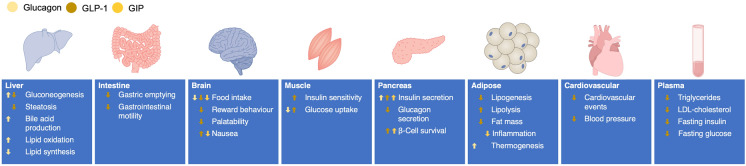
“Created by BioRender.com liraglutide and semaglutide, but not exenatide, had a lower risk of non-fatal myocardial infarction and stroke [66, 70, 71] and another GLP-1R agonist, dulaglutide, reduced major adverse cardiovascular events [72].”
BackgroundSemaglutide and Cardiovascular Outcomes in Patients with Type 2 Diabetes
Marso, S. P., Bain, S. C., Consoli, A., Eliaschewitz, F. G., Jódar, E., Leiter, L. A., Lingvay, I., Rosenstock, J., Seufert, J., Warren, M. L., et al. (2016) · New England Journal of Medicine · doi:10.1056/nejmoa1607141 · Cited by 6,900 · cited 2×
“A once-weekly injection of 2.4 mg of semaglutide resulted in a remarkable reduction in body weight by − 14.9% in adults with obesity, along with substantial improvements in glucose homeostasis and reduced risk of cardiovascular events [66, 67].”
BackgroundInfluentialOnce-Weekly Semaglutide in Adults with Overweight or Obesity
Wilding, J. P. H., Batterham, R. L., Calanna, S., Davies, M., Van Gaal, L. F., Lingvay, I., McGowan, B. M., Rosenstock, J., Tran, M. T. D., Wadden, T. A., et al. (2021) · New England Journal of Medicine · doi:10.1056/nejmoa2032183 · Cited by 5,205 · cited 1×
“A once-weekly injection of 2.4 mg of semaglutide resulted in a remarkable reduction in body weight by − 14.9% in adults with obesity, along with substantial improvements in glucose homeostasis and reduced risk of cardiovascular events [66, 67].”
BackgroundInfluentialGenetic studies of body mass index yield new insights for obesity biology
Study, T. L. C., Locke, A. E., The ADIPOGen Consortium, The AGEN-BMI Working Group, The CARDIOGRAMplusC4D Consortium, The CKDGen Consortium, The, G. L. G. C., The, I. C. B. P., The MAGIC Investigators, The MuTHER Consortium, et al. (2015) · Nature · doi:10.1038/nature14177 · Cited by 4,534 · cited 1×
“…of leptin has revolved around the idea that BMI has a genetic basis, with approximately 40–70% of the variation in BMI in the population being attributable to heritable factors [9], and that the majority of genetic variation associated with BMI is in the central nervous sys-tem (CNS) [10].”
BackgroundGhrelin induces adiposity in rodents
Tschöp, M., Smiley, D. L., & Heiman, M. L. (2000) · Nature · doi:10.1038/35038090 · Cited by 3,949 · cited 1×
“This was followed by the discovery of an opposing hormone, ghrelin, which facilitates signaling from the gut and acts on agouti-related peptide (AgRP) neurons in the hypothalamus to increase food intake [7, 8].”
BackgroundSelf-citationTirzepatide Once Weekly for the Treatment of Obesity
Jastreboff, A. M., Aronne, L. J., Ahmad, N. N., Wharton, S., Connery, L., Alves, B., Kiyosue, A., Zhang, S., Liu, B., Bunck, M. C., et al. (2022) · New England Journal of Medicine · doi:10.1056/nejmoa2206038 · Cited by 3,838 · cited 1×
“In its phase 3 trial in adults with obesity, the highest dose of 15 mg once weekly produced an average reduction in body weight of 22.5% after 72 weeks of treatment [91], and a 15.7% reduction in body weight in patients with obesity and diabetes [92].”
BackgroundInfluentialSemaglutide and Cardiovascular Outcomes in Obesity without Diabetes
Lincoff, A. M., Brown-Frandsen, K., Colhoun, H. M., Deanfield, J., Emerson, S. S., Esbjerg, S., Hardt-Lindberg, S., Hovingh, G. K., Kahn, S. E., Kushner, R. F., et al. (2023) · New England Journal of Medicine · doi:10.1056/nejmoa2307563 · Cited by 3,236 · cited 1×
“…patients with overweight or obesity and established cardiovascular disease, but no diabetes, that were treated with semaglutide had a significantly lower composite of cardiovascular events (death from cardiovascular causes, nonfatal myocardial infarction, and nonfatal stroke) than placebo [73].”
Background
Research works printed but not linked: 2
- IDF Diabetes Atlas 10th edition. International Diabetes Federation; 2021. (IDF Diabetes Atlas). Report no. 10. https://diabetesatlas.org/atlas/tenth-edition/.
- Ji L Gao L Jiang H Safety and efficacy of a GLP-1 and glucagon receptor dual agonist mazdutide (IBI362) 9 mg and 10 mg in Chinese adults with overweight or obesity: a randomised, placebo-controlled, multiple-ascending-dose phase 1b trial EClinicalMedicine 2022 54 101691 10.1016/j.eclinm.2022.101691 36247927 PMC9561728 · DOI · Paper page
Cited by
GPCR drug discovery: new agents, targets and indications
Lorente, J. S., Sokolov, A. V., Ferguson, G., Schiöth, H. B., Hauser, A. S., & Gloriam, D. E. (2025) · Nature Reviews Drug Discovery · doi:10.1038/s41573-025-01139-y · Cited by 251
Billings, L. K., Hsia, S. H., Bays, H. E., Tidemann‐Miller, B., O’Hagan, J., Tham, L. S., Butler, A., KAZDA, C. M., Mather, K. J., & Coşkun, T. (2025) · The Lancet · doi:10.1016/s0140-6736(25)02155-5 · Cited by 47
Amylin: From Mode of Action to Future Clinical Potential in Diabetes and Obesity
Volčanšek, Š., Koceva, A., Jensterle, M., Janež, A., & Muzurović, E. M. (2025) · Diabetes Therapy · doi:10.1007/s13300-025-01733-8 · Cited by 35
Anastasiou, I. A., Argyrakopoulou, G., Dalamaga, Μ., & Kokkinos, A. D. (2025) · Current Obesity Reports · doi:10.1007/s13679-025-00623-1 · Cited by 29
“…exact mechanisms underlying the weight loss are still not clear, especially in light of the enhanced effects seen with multi-agonism, despite the large number of incretin agonists presently undergoing clinical trials and their remarkable effectiveness in managing obesity and T2DM [5, 14, 146, 147].”
Ostrominski, J. W., Ortega-Montiel, J., Tesfaye, H., ALIX, C., DiCesare, E., CROMER, S. J., Wexler, D. J., Paik, J. M., & Patorno, E. (2025) · Annals of Internal Medicine · doi:10.7326/annals-24-02870 · Cited by 29
Briere, D. A., Qu, H., Lansu, K., He, M. M., Moyers, J. S., Coşkun, T., Long, A., Allen, D., O’Farrell, L. S., Bowen, B., et al. (2025) · Molecular Metabolism · doi:10.1016/j.molmet.2025.102271 · Cited by 26
Wulff, B. S., Chambers, A. P., Contreras, C. K. O., Kirkeby, K., Rinnov, A. R., Sustarsic, R. K., Østergaard, S., Laabs, J. E., & O'Neil, P. M. (2025) · Obesity · doi:10.1002/oby.24329 · Cited by 19
Repurposing glucose-lowering drugs for cancer therapy
Luconi, M., Cantini, G., & Crescioli, C. (2025) · Trends in cancer · doi:10.1016/j.trecan.2025.04.010 · Cited by 21
Overweight and Obesity in Adults with Type 1 Diabetes: A Growing Challenge
Majanović, S. K., Detel, D., Igrec, M., Bergoč, A., Rahelić, V., & Rahelić, D. (2024) · Diabetology · doi:10.3390/diabetology5030018 · Cited by 23
“The triple GIP-GLP-1-glucagon co-agonists designed in 2015 are also a promising therapy for type 2 diabetes and obesity [71,72].”
BackgroundStoicovy, R. A., Cora, N., Perez, A., Nagliya, D., Calvo, G. D., Lopez, T. B., Weinstein, E., Borges, J. I., Maning, J., & Lymperopoulos, A. (2024) · Inflammation Research · doi:10.1007/s00011-024-01950-0 · Cited by 19
“…very well be the mechanism behind the anti-obesity and anti-diabetic efficacies of the new multi-incretin receptor agonists, such as tirzepatide and retatrutide [52], since the more Gs protein-coupled receptors a drug activates, the higher the cAMP levels presumably attained inside the cell are.”
Adipose Tissue, at the Core of the Action of Incretin and Glucagon-Based Anti-Obesity Drugs
Villarroya, F., Peyrou, M., & Giralt, M. (2025) · Current Obesity Reports · doi:10.1007/s13679-025-00660-w · Cited by 15
“Several tri-agonist peptides have been developed to date [93]; they show superior results in regulating body weight, liver lipid metabolism, and gly - caemic control compared to existing treatments.”
Pharmacological therapies for type 2 diabetes: future approaches
Bailey, C. J. (2025) · Diabetologia · doi:10.1007/s00125-025-06581-6 · Cited by 29
Glucagon-like peptide-1 receptor agonism and end-organ protection
Daniels, S. J., Karlsson, C., Schrauwen, P., & Parker, V. (2025) · Trends in Endocrinology and Metabolism · doi:10.1016/j.tem.2025.01.002 · Cited by 20
Mazdutide reduces body weight in adults with overweight or obesity: A high‐dose Phase 1 trial
Bhattachar, S., Tham, L. S., Yan, L., Chua, L., Ng, S., Tang, Y., Ibriga, H., Ni, W., Gurbuz, S., Mather, K. J., et al. (2025) · Diabetes Obesity and Metabolism · doi:10.1111/dom.70040 · Cited by 15
Liu, L., Rashid, M., & Wess, J. (2025) · Biochemistry · doi:10.1021/acs.biochem.4c00867 · Cited by 16
Hypothalamus and brainstem circuits in the regulation of glucose homeostasis
Lin, Z., Xuan, Y., Zhang, Y., Zhou, Q., & Qiu, W. (2025) · American Journal of Physiology-Endocrinology and Metabolism · doi:10.1152/ajpendo.00474.2024 · Cited by 16
Prolonging parathyroid hormone analog action in vitro and in vivo through peptide lipidation
Höppner, J., Noda, H., Anitha, A. K., Cheloha, R. W., Dean, T., Bruce, M., Brooks, D. J., Mannstadt, M., Bouxsein, M., Gellman, S. H., et al. (2025) · Nature Communications · doi:10.1038/s41467-025-59665-7 · Cited by 16
Bridging the Gap: A Literature Review of Advancements in Obesity and Diabetes Mellitus Management
Pop, G. N., Manole, F., Buleu, F. N., Motofelea, A. C., Bircea, S., Popa, D. I., Motofelea, N., & Pîrvu, C. A. (2024) · Applied Sciences · doi:10.3390/app14156565 · Cited by 12
Liu, Y., Chen, W., He, X., He, A., Zhao, L., Xie, T., Li, Y., Zhao, J., Hunt, A., Shi, A., et al. (2025) · Diabetes Obesity and Metabolism · doi:10.1111/dom.16285 · Cited by 11
“17 It remains unclear whether there is superior efficacy for multi-target incretin analogs versus single-target incretins in obesity treatment.”
Corrao, S., Falcone, F., Mirarchi, L., Amodeo, S., & Calvo, L. (2025) · Diabetes Therapy · doi:10.1007/s13300-025-01761-4 · Cited by 13
“Promising new treatments, including dual and triple agonists, are currently under investigation and may offer additional therapeutic options, though extensive preclinical and clinical studies are still needed [56].”
Progress in structure-based drug development targeting chemokine receptors
Wang, J., Qu, C., Xiao, P., Liu, S., Sun, J., & Ping, Y.-Q. (2025) · Frontiers in Pharmacology · doi:10.3389/fphar.2025.1603950 · Cited by 18
“Biologics like monoclonal antibodies/nanobodies expand GPCR targeting, with Glucagon-Like Peptide-1 (GLP-1) agonist/Gastric Inhibitory Polypeptide (GIP) antagonist combos showing ef fi cacy against obesity/diabetes (Gutgesell et al., 2024).”
IUPHAR review: From foe to friend: Repurposing glucagon to treat obesity and type 2 diabetes
Elmendorf, A. J., Yousefian, M., Kim, I., Hardaway, J. A., Habegger, K. M., & Flak, J. N. (2025) · Pharmacological Research · doi:10.1016/j.phrs.2025.108077 · Cited by 8
“As pharmacologic agents, GLP-1R agonists have been used separately and in combination with GIPR agonists to induce durable weight loss and improve glucose homeostasis in patients [7].”
Alqatari, S. G., Alwaheed, A., Hasan, M. A., Argan, R. A., Alabdullah, M. M., & Shubbar, M. D. A. (2025) · Medicina · doi:10.3390/medicina61071292 · Cited by 11
“However, glucagon-induced hyperglycemia remains a potential risk when not adequately counterbalanced [32].”
Aydos, D., Aksoy, Z. B., Ünal, M. A., Akçalı, K. C., Bitirim, C. V., & Turan, B. (2025) · Cardiovascular Diabetology · doi:10.1186/s12933-025-02828-z · Cited by 7
Alavi, S. E., Boshrouyeh, R., Raza, A., & Shahmabadi, H. E. (2026) · European Journal of Medicinal Chemistry · doi:10.1016/j.ejmech.2026.118587 · Cited by 6
In vivo antibody-selective conjugation technology for long-acting drugs
Kitahara, K., Rondon, A., Miller, E., Mak, H. H., Loas, A., & Pentelute, B. L. (2025) · Chem · doi:10.1016/j.chempr.2025.102705 · Cited by 4
Patil, M., Thapa, D., Warne, L. N., Lareu, R. R., Dallerba, E., Lian, J., Massi, M., Carlessi, R., & Falasca, M. (2024) · Biomedicine & Pharmacotherapy · doi:10.1016/j.biopha.2024.117675 · Cited by 4
Manchanda, Y., Jones, B. J., Carrat, G., Ramchunder, Z., Marchetti, P., Leclerc, I., Thennati, R., BURADE, V. S., Natarajan, M., Shahi, P. K., et al. (2025) · Diabetes Obesity and Metabolism · doi:10.1111/dom.16652 · Cited by 5
Gabery, S., Glendorf, T., Ballarín-González, B., Pedersen, K., Kruse, T., Raun, K., & Kuhre, R. E. (2025) · Life Sciences · doi:10.1016/j.lfs.2025.123845 · Cited by 4
Improving incretin-mediated body weight loss via energy expenditure
Elmendorf, A. J., Douros, J. D., Knerr, P. J., & Flak, J. N. (2026) · Trends in Endocrinology and Metabolism · doi:10.1016/j.tem.2025.12.004 · Cited by 5
Zheng, N., 涂龙芳, Xu, P., Chen, R., Lu, J., Dai, W., Lin, Y., Ouyang, J., Qiu, J., Wang, Y., et al. (2026) · Journal of Medicinal Chemistry · doi:10.1021/acs.jmedchem.5c03845 · Cited by 2
Ahmed, I. S., Tapponi, S. L., Manaa, H. M., Soltani, A., Hussein, E. S., Parvaresh, F. A., & Hussain, Z. (2026) · Journal of Obesity · doi:10.1155/jobe/6556057 · Cited by 5
Emerging concepts in obesity management: focus on glucagon receptor agonist combinations
Anderson, S. L. (2025) · Drugs in Context · doi:10.7573/dic.2025-4-8 · Cited by 4
Thottappillil, A., Kouser, S., Badiger, A. V., Pinto, P. G., Ramachandran, S., Janadri, S., Mudagal, M. P., Kukkupuni, S. K., Suma Mohan, S., & Vishnuprasad, C. N. (2024) · bioRxiv (Cold Spring Harbor Laboratory) · doi:10.1101/2024.06.29.601306 · Cited by 2
Future Perspectives in the Management of Obesity
Garcha, S. C., & Kalra, S. (2025) · Springer eBooks · doi:10.1007/978-981-96-1651-0_6 · Cited by 2
Zhao, W., Niu, X., Zhou, X., Shi, R., & Zhou, X. (2025) · Elsevier eBooks · doi:10.1016/b978-0-443-33885-4.00007-x · Cited by 1
The perspectives in obesity and type 2 diabetes therapy: the present and future of incretin therapy
Shestakova, M. V., & Bashlykova, R. O. (2025) · Terapevticheskii arkhiv · doi:10.26442/00403660.2025.10.203366 · Cited by 6
Tirzepatide vs. semaglutide: clinical decision-making in the GLP-1 landscape
Mondoh, A., Crotty, M., & le Roux, C. W. (2025) · Expert Opinion on Pharmacotherapy · doi:10.1080/14656566.2025.2601060 · Cited by 3
“…(GLP-1) receptor agonists and dual glucose-dependent insulinotropic polypeptide (GIP)/GLP-1 receptor agonists have transformed the management of obesity and metabolic diseases, a significant physiological concern is the reduction of lean body mass (LBM) associated with rapid weight loss [79].”
Insights into the mechanisms of body weight control
Pereira, S. (2025) · AJP Advances in Physiology Education · doi:10.1152/advan.00091.2025 · Cited by 1
Targeting mineralocorticoid receptors to treat metabolic diseases via the adipocyte
Armani, A., Gorini, S., Feraco, A., Mammi, C., Bellucci, E., & Caprio, M. (2026) · Endocrinology · doi:10.1210/endocr/bqag004 · Cited by 3
A review of survodutide: a new dual acting agonist
Yathindra, M. R., BHATTACHARJEE, A., PUNDIR, N., PATEL, P., Jacob, N. E., Jossy, P. E., & Seetharaman, R. (2026) · Minerva Endocrinology · doi:10.23736/s2724-6507.26.04406-4 · Cited by 2
Behery, M. E., Elsayed, H. A., Almaaty, A. H. A., et al. (2026) · Future Medicinal Chemistry · doi:10.1080/17568919.2026.2688852 · Cited by 1
In vivo Antibody Painting for Next Generation Weight Loss DrugsPreprint
Kitahara, K., Rondon, A., Miller, E., Mak, H. H., Loas, A., & Pentelute, B. L. (2024) · bioRxiv (Cold Spring Harbor Laboratory) · doi:10.1101/2024.08.22.609257
“The development of long-acting GLP-1 analogs is currently moving towards the combination of two or more incretin co-agonists to boost the effect on T2DM and weight loss ( 16 , 42 ).”
BackgroundInkretine als Grundlage der Adipositastherapie
Freibothe, I., & Müller, T. D. (2025) · Die Innere Medizin · doi:10.1007/s00108-025-01893-6
Self-citationLi, X., Wang, Y., Chen, Z., & Tan, Z. (2025) · ChemBioChem · doi:10.1002/cbic.202500270
Peptide drugs for obesity and type 2 diabetes mellitus: an overview of clinical trials
Barzgar, H., Darmadi, D., Nafisa, J., Narkulov, S., & Sviridova, M. B. (2025) · Clinica Chimica Acta · doi:10.1016/j.cca.2025.120772 · Cited by 2
Insulin Resistance: Pathophysiology, Molecular Mechanisms, and Genetic Insights
Häring, H., & Gallwitz, B. (2026) · Elsevier eBooks · doi:10.1016/b978-0-323-87862-3.00002-1
Incretin polyagonists as an alternative to bariatric surgery to manage obesity
Manoj, R. J., Fernandez, C. J., Nair, S., & Pappachan, J. M. (2026) · World Journal of Gastrointestinal Pathophysiology · doi:10.4291/wjgp.v17.i1.118132
Next-generation anti-obesity drugs: Mechanisms, molecules, and momentum
Mukheja, Y., Kondepudi, K. K., Chopra, K., & Bishnoi, M. (2026) · Obesity Medicine · doi:10.1016/j.obmed.2026.100701 · Cited by 1
Gupta, M., & Shukla, J. (2026) · The Indian Journal of Medical Research · doi:10.25259/ijmr_2041_2025 · Cited by 2
“52,55 • Leverage synergistic hormonal effects that mimic post-bariatric physiology, thereby delivering greater weight loss (up to 24%), profound hepatic fat reduction (~82%), and robust glycaemic improvement compared with dual or single agonists.”
Prodan, A. M., Dzyubanovsky, I. Y., Halabitska, I., Petakh, P., Kamyshna, I. I., & Kamyshnyi, O. (2026) · Frontiers in Endocrinology · doi:10.3389/fendo.2026.1841033
“Glucagon-like peptide-1 receptor agonists and dual incretin agonists have demonstrated signi fi cant ef fi cacy in promoting weight loss and improve glycemic control in obese patients (113 – 116).”
Andrade, L. J. D. O., de Oliveira, G. C. M., Bittencourt, A. M. V., Salles, O. J. D. M., & de Oliveira, L. M. (2026) · Research Square · doi:10.21203/rs.3.rs-9783878/v1
Tirzepatide: A Paradigm Shift in the Management of Type 2 Diabetes and Obesity
Sonawane, R. A., Gulave, O. K., Kale, P. A., & Rasal, P. B. (2026) · Journal of Bio-X Research · doi:10.34133/jbioxresearch.0092
Thottappillil, A., Kouser, S., Badiger, A. V., Pinto, P. G., Ramachandran, S., Janadri, S., Mudagal, M. P., Kukkupuni, S. K., Suma Mohan, S., & Vishnuprasad, C. N. (2026) · Journal of Ayurveda and Integrative Medicine · doi:10.1016/j.jaim.2026.101359 · Cited by 3
Current diabetes drugs: Lessons learned and implications for next-generation therapeutics
Liao, J., Cong, Z., Liu, K., Que, H., & Liu, F. (2026) · The Innovation Drug Discovery · doi:10.59717/j.xinn-drugdisc.2026.100008
Lari, S. A., Zumot, M. S., & Alrashid, M. A. (2026) · Cureus · doi:10.7759/cureus.112694
“Unlike GLP-1R, which is sparsely expressed in adipocytes, GIPR is highly expressed in white adipose tissue and acts as a dynamic coordinator of lipid-buffering systems [3,8].”
InfluentialRoser, U. (2026) · German Journal of Sports Medicine · doi:10.5960/dzsm.2026.667
Decoding Immunometabolic Dynamics of Adipose Tissue in Obesity: Evolving Evidence and Way Forward
Kumari, K., Verma, K., Yadav, R., Dwivedi, J., Paliwal, S., & Sharma, S. K. (2026) · ACS Pharmacology & Translational Science · doi:10.1021/acsptsci.6c00071
Specificity-driven protein binder design with Odin-MultiPreprint
Brasas, V., Christensen, C. R., Björnsson, K. H., Møller, V. E., Scapolo, B., Benard-Valle, M., Nygaard, M. M., Nielsen, J. C., Hadrup, S. R., Johansen, K. H., et al. (2026) · bioRxiv (Cold Spring Harbor Laboratory) · doi:10.64898/2026.09.08.749745 · Cited by 3
“…from selective receptor agonists towards single peptides with activity across multiple members of this receptor family, including dual GLP-1R/GIPR and triple GLP-1R/GIPR/GCGR agonists, design of a single peptide able to engage multiple receptors would be directly applica-118 ble [31, 25, 26].”
Nava, A. M., & Alencar, M. A. V. D. S. D. (2026) · LUMEN ET VIRTUS · doi:10.56238/levv17n64-135
Metadata
- Authors
- Gutgesell, R. M., Nogueiras, R., Tschöp, M. H., & Müller, T. D.
- Affiliations
- Helmholtz Munich (DE)
- Universidade de Santiago de Compostela (ES)
- Corresponding author
- Müller, Timo D.
- Venue
- Diabetes Therapy
- Published
- 2024-04-04
- Volume
- 15
- Issue
- 5
- Pages
- 1069-1084
- ISSN
- 1869-6953 (ISSN-L)
- 1869-6961
- PMC
- PMC11043266
- OpenAlex
- W4393932284
- Semantic Scholar
- 5c836077804f02f246d45c218f15d363cf31e9e6
- Cited by
- 61
- References
- 113
- Citations by year
- 2026: 22 · 2025: 33 · 2024: 6
- FWCI
- 3.56
- Type
- journal article
- Language
- en
- Open access
- gold
- doi.org
- Licence
- cc-by-nc
- creativecommons.org/licenses/by-nc/4.0 (tdm)
- creativecommons.org/licenses/by-nc/4.0 (vor)
- Locations
- Diabetes Therapy (publishedVersion, cc-by-nc)
- PubMed Central (publishedVersion, cc-by-nc)
- PubMed (publishedVersion)
- PuSH - Publication Server of Helmholtz Zentrum München (submittedVersion, cc-by-nc)
- mediaTUM (Technical University of Munich) (submittedVersion)
- Funders
- European Research Council (ERC-CoG Trusted no.101044)
- Topics
- Health Sciences › Medicine › Endocrinology, Diabetes and Metabolism › Diabetes Treatment and Management
- Health Sciences › Medicine › Pharmacology (medical) › Pharmacology and Obesity Treatment
- Life Sciences › Neuroscience › Endocrine and Autonomic Systems › Regulation of Appetite and Obesity
- Keywords
- exendin-4, obesity, type 2 diabetes, glucose-dependent insulinotropic polypeptide, GLP-1 receptor, glucagon receptor, weight loss, gut-brain signaling, bariatric surgery alternatives
About these checks
Registry, retraction, Cites and statistics results are computed, not judged, with one exception: a printed reference that no index lists is read once by a model before it counts as a citation error. Claims are extracted by a model and kept only when their quote appears verbatim in the text; each cited source is then checked, with a model’s help, for whether it says what the claim relies on. Those verdicts can be wrong — read the claim’s quote and the cited source before relying on one.
The claim verdicts this report counts are experimental: their accuracy is not yet measured.
A language model drew the claims from the paper on 2026-09-28, under version 3 of the claim definition (model deepseek-v4.1-flash, prompt extract-v3).
A second model labelled each claim on 2026-09-28 (model jev-1.13-20260917, definition revision gold-guideline-v0.2).
Cited sources are checked with a language model’s help (gpt-6-sol).
Statistics and arithmetic are recomputed, not judged.
Confidence bands are shown only for fields calibrated on our annotated test set. None is calibrated yet, so no band is shown.
What counts as a claim ›How we measure confidence ›How we check this ›
Are you an author, or do you see a problem with this page? Request a review
Data sources
Bibliographic data: Semantic Scholar, OpenAlex, Crossref.
Contains information from the Semantic Scholar Academic Graph Datasets, made available under the ODC Attribution License (ODC-BY 1.0).
Semantic Scholar’s data is described in: Kinney, R., et al. (2023). The Semantic Scholar Open Data Platform. arXiv:2301.10140.
