

The selective androgen receptor modulator GTx‐024 (enobosarm) improves lean body mass and physical function in healthy elderly men and postmenopausal women: results of a double‐blind, placebo‐controlled phase II trial
Open accessThe DOI matches its Crossref record; 41 of the 41 references it cites were found in a registry or an index.
Abstract
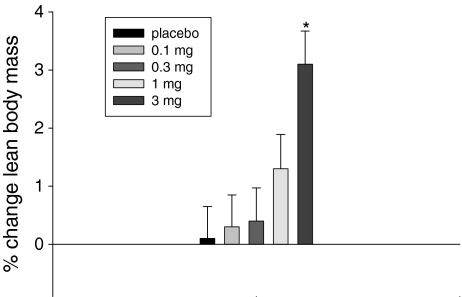
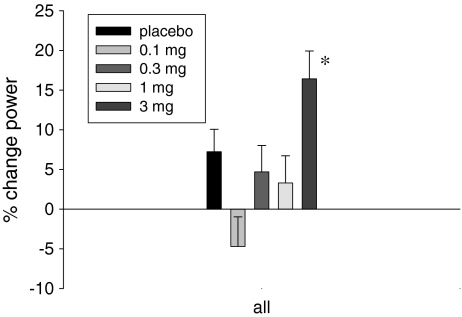
BACKGROUND: Cachexia, also known as muscle wasting, is a complex metabolic condition characterized by loss of skeletal muscle and a decline in physical function. Muscle wasting is associated with cancer, sarcopenia, chronic obstructive pulmonary disease, end-stage renal disease, and other chronic conditions and results in significant morbidity and mortality. GTx-024 (enobosarm) is a nonsteroidal selective androgen receptor modulator (SARM) that has tissue-selective anabolic effects in muscle and bone, while sparing other androgenic tissue related to hair growth in women and prostate effects in men. GTx-024 has demonstrated promising pharmacologic effects in preclinical studies and favorable safety and pharmacokinetic profiles in phase I investigation. METHODS: A 12-week double-blind, placebo-controlled phase II clinical trial was conducted to evaluate GTx-024 in 120 healthy elderly men (>60 years of age) and postmenopausal women. The primary endpoint was total lean body mass assessed by dual energy X-ray absorptiometry, and secondary endpoints included physical function, body weight, insulin resistance, and safety. RESULTS: GTx-024 treatment resulted in dose-dependent increases in total lean body mass that were statistically significant (P < 0.001, 3 mg vs. placebo) and clinically meaningful. There were also significant improvements in physical function (P = 0.013, 3 mg vs. placebo) and insulin resistance (P = 0.013, 3 mg vs. placebo). The incidence of adverse events was similar between treatment groups. CONCLUSION: GTx-024 showed a dose-dependent improvement in total lean body mass and physical function and was well tolerated. GTx-024 may be useful in the prevention and/or treatment of muscle wasting associated with cancer and other chronic diseases.
Overview
The claims and statistics of this paper haven’t been checked yet.
Free: it reads the open-access text and checks the first 5 claims that cite a source we can check. Create a free account to check every claim.
Integrity signals
Registry
Cites
Statistics
Figures
Verification
Claims the paper makes
The claims and statistics of this paper haven’t been checked yet.
Free: it reads the open-access text and checks the first 5 claims that cite a source we can check. Create a free account to check every claim.
Claims other papers make about this one
Each is checked against this paper’s own text: does it say what the citing paper says it does?
The source backs part of the claim, not all of it — or backs it for a different population, condition or comparison.
In the citing paper
“Early trials demonstrated a greater total lean mass of 1.3 kg (P < 0.001), better physical function as measured by reduced stair climb time (P = 0.013), a trend towards lower blood levels of glucose of 6.9 ± 2.5 mg/dl (P = 0.052) and lower insulin sensitivity (−27.5% versus 2.6%; P = 0.013) with 3 mg per day of GTx-024 (an orally bioavailable nonsteroidal SARM) than with placebo429.”
From Sarcopenic obesity in older adults: aetiology, epidemiology and treatment strategies (2018) · cites this paper as [429]
Experimental — accuracy not yet measuredThe source backs part of the claim, not all of it — or backs it for a different population, condition or comparison.
In the citing paper
“Enobosarm significantly increased lean mass compared with baseline (1.0 kg, 95% CI −4.8 to 11.5; P = 0.046) versus controls (0.02 kg, 95% CI −5.8 to 6.7; P = 0.88).”
From Sarcopenic obesity in older adults: aetiology, epidemiology and treatment strategies (2018) · cites this paper as [429]
Experimental — accuracy not yet measuredThe source backs part of the claim, not all of it — or backs it for a different population, condition or comparison.
In the citing paper
“Enobosarm, a non-steroidal SARM, successfully increased muscle mass and physical function in patients without cancer and in those with advanced lung, colorectal or breast cancer or lymphoma427–429.”
From Sarcopenic obesity in older adults: aetiology, epidemiology and treatment strategies (2018) · cites this paper as [429]
Experimental — accuracy not yet measuredThe cited source says what the claim attributes to it.
In the citing paper
“There is some evidence supporting enobosarm’s efficacy for lean mass preservation in elderly men and women [48].”
From New drugs for the treatment of obesity: do we need approaches to preserve muscle mass? (2025) · cites this paper as [48]
The cited source says what the claim attributes to it.
In the citing paper
“Selective androgen receptor modulators (SARMs), such as enobosarm (GTx-024), increase lean mass and may improve function, but phase III results have been mixed and no agent has regulatory approval for sarcopenia [71].”
From Muscle loss and GLP-1R agonists use (2025) · cites this paper as [71]
4 more claims about this paper
Create a free account to see every claim other papers make about this one.
Self-check
Percentages, sums and reported differences re-computed from the paper’s own numbers.
The self-check needs the paper’s full text.
Citations
Cites
Matthews, D. R., Hosker, J. P., Rudenski, A. S., Naylor, B. A., Treacher, D. F., & Turner, R. C. (1985) · Diabetologia · doi:10.1007/bf00280883 · Cited by 31,502
Lower-extremity function in persons over the age of 70 years as a predictor of subsequent disability
Guralnik, J. M., Ferrucci, L., Simonsick, E. M., Salive, M. E., & Wallace, R. B. (1995) · New England Journal of Medicine · doi:10.1056/nejm199503023320902 · Cited by 4,083
Epidemiology of Sarcopenia among the Elderly in New Mexico
Baumgartner, R. N., Koehler, K. M., Gallagher, D., Romero, L., Heymsfield, S. B., Ross, R. R., Garry, P. J., & Lindeman, R. D. (1998) · American Journal of Epidemiology · doi:10.1093/oxfordjournals.aje.a009520 · Cited by 4,004 · cited 1×
“estimates that 13–24% of persons under the age of 70 and up to 50% of individuals over the age of 80 suffer from significant muscle loss [8].”
BackgroundPrado, C. M., Lieffers, J. R., McCargar, L. J., Reiman, T., Sawyer, M. B., Martin, L., & Baracos, V. E. (2008) · The Lancet Oncology · doi:10.1016/s1470-2045(08)70153-0 · Cited by 3,238 · cited 1×
“Muscle wasting is associated with significant morbidity and mortality [11, 13, 14].”
BackgroundCLINICAL ASSESSMENT OF BODY HAIR GROWTH IN WOMEN
FERRIMAN, D., & GALLWEY, J. D. (1961) · The Journal of Clinical Endocrinology & Metabolism · doi:10.1210/jcem-21-11-1440 · Cited by 2,506
Prognostic effect of weight loss prior tochemotherapy in cancer patients
Dewys, W. D., Begg, C., Lavin, P. T., Band, P. R., Bennett, J. M., Bertino, J. R., Cohen, M. H., Douglass, H. O., Engstrom, P. F., Ezdinli, E. Z., et al. (1980) · The American Journal of Medicine · doi:10.1016/s0149-2918(05)80001-3 · Cited by 2,354
The effects of supraphysiologic doses of testosterone on muscle size and strength in normal men
Bhasin, S., Storer, T. W., Berman, N., Callegari, C., Clevenger, B., Phillips, J., Bunnell, T. J., Tricker, R., Shirazi, A., & Casaburi, R. (1996) · New England Journal of Medicine · doi:10.1056/nejm199607043350101 · Cited by 1,659 · cited 1×
“The reductions in SHBG in men and women (−61% and −80%, respectively, at the 3-mg dose) exceed those observed in men treated with a 600-mg intramuscular testosterone enanthate (−31%)[ 41 ].”
ResultAdverse Events Associated with Testosterone Administration
Basaria, S., Coviello, A. D., Travison, T. G., Storer, T. W., Farwell, W. R., Jette, A. M., Eder, R., Tennstedt, S., Ulloor, J., Zhang, A., et al. (2010) · New England Journal of Medicine · doi:10.1056/nejmoa1000485 · Cited by 1,494 · cited 1×
“Concerns related to increased risk or severity of benign prostatic hyperplasia or prostate cancer in men, virilization in women, and cardiovascular side effects in certain populations limit widespread use of testosterone and other anabolic steroids [19].”
BackgroundHughes, V. A., Frontera, W. R., Roubenoff, R., Evans, W. J., & Singh, M. A. F. (2002) · The American Journal of Clinical Nutrition · doi:10.1093/ajcn/76.2.473 · Cited by 804 · cited 1×
“Healthy adults lose approximately 1–2% of their skeletal muscle mass per year after the age of 50 [7].”
BackgroundSkeletal muscle loss: cachexia, sarcopenia, and inactivity
Evans, W. J. (2010) · The American Journal of Clinical Nutrition · doi:10.3945/ajcn.2010.28608a · Cited by 723
Research works printed but not linked: 1
- 10.1002/1097-0142(20010915)92:6 · doi:10.1002/1097-0142(20010915)92:6
Cited by
Items 401–466 of 466
Henrotin, Y., Florin, A., Sanchez, C., Centonze, P., Coelho, T. P., Bekisz, S., Dubuc, J., Galand, O., & Lambert, C. (2026) · Journal of Cachexia Sarcopenia and Muscle · doi:10.1002/jcsm.70385
Impact of Sarcopenia in Healthy Aging and Suggested Interventions
Erdoğan, T., Bahat, G., & Karan, M. A. (2018) · Springer eBooks · doi:10.1007/978-981-13-1699-9_20
Pharmacological Intervention for Sarcopenia in Chronic Kidney Disease
Sakuma, K., & Yamaguchi, A. (2020) · Springer eBooks · doi:10.1007/978-981-15-2365-6_11
Ormoni e plasticità delle fibre del muscolo scheletrico. Ruolo nella patogenesi della sarcopenia
Galfano, V., & Donini, L. M. (2018) · L Endocrinologo · doi:10.1007/s40619-018-00470-4
O’Leary, M. F. (2018) · University of Birmingham Institutional Research Archive (University of Birmingham)
Sex Steroid Hormones and Osteosarcopenia
Girgis, C. M. (2019) · Springer eBooks · doi:10.1007/978-3-030-25890-0_8
The relationship between sarcopenia and breast cancer: mechanistic pathways and clinical relevance
Wu, Y., Cao, H., Li, M., Hong, J., Zhou, H., Gao, X., & Song, D. (2026) · Frontiers in Cell and Developmental Biology · doi:10.3389/fcell.2026.1731822
Skeletal Muscle Aging Is a Significant Contributor to Systemic Aging
Li, M.-M., Liu, X., Li, Y., Li, H., Wang, Y., Qiu, K., & Kong, W. (2026) · Biomolecules · doi:10.3390/biom16101527
Freitas, T. M., Gonçalves, A. D. C., Carvalho, G. M. V., Cavalcanti, G. C. P., & Bretas, M. G. D. M. (2024) · Revista Foco · doi:10.54751/revistafoco.v17n4-049
Carstens, J. C. (2022) · eDiss (Georg-August-Universität Göttingen) · doi:10.53846/goediss-9446
Gadallah, A. I., Abdelhaffez, A., Hussein, O. A., Sayed, S. A., Abdelhakiem, M. A. H., & El-Mottaleb, N. A. A. (2026) · Canadian Journal of Physiology and Pharmacology · doi:10.1139/cjpp-2025-0063
Xu, W., Xu, F., Fan, M., Liu, Y., & Song, Z. (2026) · Orthopaedic Surgery · doi:10.1111/os.70375
Adolf, J., & Enev, G. (2026) · Drug Testing and Analysis · doi:10.1002/dta.70174
Cachexia and Postoperative Outcomes in Elderly Patients with Gastrointestinal Cancer
Fukuta, A., & Ono, R. (2022) · Springer eBooks · doi:10.1007/978-981-19-6710-8_24
Xie, A., Shuzhou, W., Zeng, W., Zhang, M., Wang, J., Shi, L., Wu, N., Hu, B., Ye, J., Zou, Z., et al. (2026) · Frontiers in Cell and Developmental Biology · doi:10.3389/fcell.2026.1929088
Selective Androgen Receptor Modulators in Women: What Do We Know, and What Is Still Missing
Vasilev, V., Georgieva, K. N., Kraeva, M. I., Ardasheva, R., Etova, R., & Boyadjiev, N. (2026) · Life · doi:10.3390/life16020359
Beneficial and Adverse Effects of Selective Androgen Receptor Modulators (SARMs)
Shehzadi, M., Hasanat, M., Shahzad, M., bin Khawar, M. H., Jabbar, M. A., & Siddiqui, M. (2024) · Journal of Society of Prevention Advocacy and Research KEMU
A new trend in use of performance enhancing drugs in CrossFit®
Schlegel, P. (2020) · Tělesná kultura · doi:10.5507/tk.2020.010
Ostafin, K., Edyko, K., Petryla, P., Minkner, M., Bieńkowski, B., Feja, K., Suwała, Z., REKTOR, N., Łuczak, E., & Marchewka, U. (2023) · Journal of Education Health and Sport · doi:10.12775/jehs.2023.45.01.030
Sonntag, T. (2019) · Infoscience (Ecole Polytechnique Fédérale de Lausanne) · doi:10.5075/epfl-thesis-9471
Campeche-Leão, A., Arruda, M. R., Batista, A. C. V., Garcêz, L. S., de Jesús, R. P., Cotrim, H. P., & Cavalcante, L. N. (2026) · Arquivos de Gastroenterologia · doi:10.1590/s0004-2803.24612026-017
S4 Induces Apoptosis, Cell Cycle Arrest, and Metabolic Alterations in Breast Cancer Cells
Yavuz, M., & Demircan, T. (2026) · Anti-Cancer Agents in Medicinal Chemistry · doi:10.2174/0118715206494213260708101802
Heinze, S. S., Sapp, D. G., Young, A. P., & Howlett, S. E. (2026) · GeroScience · doi:10.1007/s11357-026-02151-9
Pharmakologische Therapie der Kachexie
von Haehling, S. (2017) · doi:10.1007/978-3-89935-305-1_9
Identification of PDLIM7 as a Nedd4-1 Substrate in the Regulation of Skeletal Muscle Mass
D’Cruz, R. (2016) · TSpace (University of Toronto)
Chen, Y., Zhang, H., Wu, J., Chen, F., Li, C., Peng, S., Luan, Z., Wang, S., & Sun, G. (2026) · Frontiers in Medicine · doi:10.3389/fmed.2026.1928185
Le‐Rademacher, J. G., & Jatoi, A. (2020) · Elsevier eBooks · doi:10.1016/b978-0-323-47674-4.00038-4
SARMS vs. anabolic steroids: comparative analysis of mechanisms, effects and health implications
Contreras Melnikova, J. (2025) · Buleria (Universidad de León)
Characterizing FDA-Approved Drugs Targeting Staufen1 as Therapeutics Against Skeletal Muscle Atrophy
Patel, D. (2026) · uO Research (University of Ottawa) · doi:10.20381/ruor-32187
Rodolphi, M. S. (2025) · Lume (Universidade Federal do Rio Grande do Sul)
A study of the function of RORγ in cancer using synthetic and natural small-molecule modulators
Zou, H. (2024) · eScholarship (California Digital Library)
Kościów, Z., & Gutowska, K. (2026) · Oncology in Clinical Practice · doi:10.5603/ocp.113525
Gawin, K., Zawiślak, W., & Dąbrowska, M. (2026) · Quality in Sport · doi:10.12775/qs.2026.65.74151
Selective androgen receptor modulators effect on metabolic indices and sleep duration in male rats
Vasilev, V., Georgiev, N., Kraeva, M. I., Stanchev, P., & Boyadjiev, N. (2025) · Comparative Exercise Physiology · doi:10.1163/17552559-bja10074
Kubra, S., Badshah, F., & Abdi, G. (2026) · Experimental Gerontology · doi:10.1016/j.exger.2026.113373
DIAGNÓSTICO E TRATAMENTO DE VOLVO SIGMOIDE EM PACIENTE JOVEM
Pareja, H. B. J., Bermudes, F. T., da Motta, L. L., Cunha, I. R., & Nogueira, V. D. (2024) · doi:10.54751/edfoco.978-65-83117-11-3_8
BindingDB (2017) · UC San Diego · doi:10.7270/q2k35wmn
CARNEIRO, F. S. M., Giachini, F. R. C., Fonseca, M. P., Porto, A. A., Santos, J. D., & Tostes, R. C. (2026) · Pharmacological Reviews · doi:10.1016/j.pharmr.2026.100173
[Being attentive to sarcopenia in elderly patients with refractory wounds].
Zhu, F., & Guo, G. H. (2026) · PubMed Central · doi:10.3760/cma.j.cn501225-20260529-00220
Monserrat, L., García-García, J., Molina, C., Òdena, A., Duda, T. Y., Agustí-Barea, I., Flamen, G., Viaplana, C., Nagornyuk, A., Maldonado-Padrol, R., et al. (2026) · npj Breast Cancer · doi:10.1038/s41523-026-00993-2
Will sarcopenia preventative pharmacology ensure the long-term success of GLP-1-derived therapies?
Mota, C. T., Aguiar, A. M., & da Fonseca, G. W. P. (2026) · Expert Opinion on Pharmacotherapy · doi:10.1080/14656566.2026.2764003
Malafarina, V. (2019) · Depósito Académico Digital Universidad de Navarra (University of Navarra)
Identification and targeting of novel cellular mechanisms to ameliorate cancer associated cachexia
Hagg, A. (2021) · Monash University · doi:10.26180/14138441
Huang, R., Chen, L., Tian, F., Xie, Y., Zhang, Y., Lin, F., Zhang, Z., & Lu, W. (2026) · Journal of Thoracic Disease · doi:10.21037/jtd-2026-1097
Kume, M. H., Furlan, B., Boaventura, C. G., Probst, M. A., Peracchi, E., & Ribas, C. A. P. M. (2026) · Advances In Clinical And Medical Research · doi:10.52793/acmr.2026.7(2)-119
Furtwängler, J. (2023) · eDiss (Georg-August-Universität Göttingen) · doi:10.53846/goediss-9714
Staub, M. A. (2024) · eDiss (Georg-August-Universität Göttingen) · doi:10.53846/goediss-10942
Mechanisms of androgen-induced hypertrophy: lessons from muscle cell models
Hughes, D. C. (2014) · University of Bedfordshire Repository (University of Bedfordshire) · Cited by 1
YEE, M. L. (2021) · Figshare · doi:10.26180/15071934
Sagmeister, M. S. (2024) · University of Birmingham Institutional Research Archive (University of Birmingham)
Lenk, J. (2015) · Universitätsbibliothek der FU Berlin Hochschulschriftenstelle u. Dokumentenserver · doi:10.17169/refubium-5409
Study of nuclear receptor dynamics by BRET
Cotnoir‐White, D. (2014) · doi:10.71781/28997
Araujo, Y. Y. S. (2016) · Portuguese National Funding Agency for Science, Research and Technology (RCAAP Project by FCT) · doi:10.34626/m5v0-c822
DOMINGUEZ RODRIGUEZ, L. J., & BARBAGALLO, M. (2014) · Nova Science Publishers (Nova Science Publishers, Inc.)
Noisser, L. (2024) · eDiss (Georg-August-Universität Göttingen) · doi:10.53846/goediss-10839
Selective Androgen Receptor Modulators (SARMS) : avenir thérapeutique et produits dopants
Lesiak, S. (2023) · HAL
Hormone anabolic therapy for the treatment of sarcopenia
Kurmaev, D. P., & Treneva, E. V. (2026) · Экспериментальная и клиническая гастроэнтерология · doi:10.31146/1682-8658-ecg-248-4-235-252
Gewichtsentwicklung bei Patienten nach der Resektion eines Ösophaguskarzinoms
Schultheiß, K. B. (2019) · mediaTUM (Technical University of Munich)
Application of Histone Deacetylase Inhibitor AR-42 in the Treatment of Cancer-induced Cachexia
Tseng, Y.-C. (2017) · OhioLink ETD Center (Ohio Library and Information Network)
Prevention and Treatment of Sarcopenia
Testa, G. (2021) · MDPI eBooks · doi:10.3390/books978-3-0365-1535-9
SARMs: una nuova classe di farmaci o sostanze dopanti?
CIOCE, T. (2019) · Electronic Theses and Dissertations Repository (University of Pisa)
Shao, X., Gao, X., Di, Y., Wang, R., Gu, Y., Jiang, Q., & Chen, Y. (2026) · Frontiers in Medicine · doi:10.3389/fmed.2026.1919416
Metadata
- Authors
- Dalton, J. T., Barnette, K. G., Bohl, C. E., Hancock, M. L., Rodriguez, D., Dodson, S. T., Morton, R. A., & Steiner, M. S.
- Affiliations
- GTx (United States) (US)
- Corresponding author
- Dalton, James T.
- Venue
- Journal of Cachexia, Sarcopenia and Muscle
- Publisher
- Wiley
- Published
- 2011-08-02
- Volume
- 2
- Issue
- 3
- Pages
- 153-161
- ISSN
- 2190-5991 (ISSN-L)
- 2190-6009
- PMC
- PMC3177038
- OpenAlex
- W2020213864
- Semantic Scholar
- dde14e3bb7bd6bf0ebc598a0d977d27ca1a25ec4
- Cited by
- 403
- References
- 41
- Citations by year
- 2026: 29 · 2025: 33 · 2024: 24 · 2023: 28 · 2022: 29 · 2021: 30 · 2020: 30 · 2019: 27 · 2018: 30 · 2017: 29 · 2016: 29 · 2015: 18 · 2014: 32 · 2013: 19 · 2012: 11
- FWCI
- 14.14
- Type
- journal article
- Language
- en
- Open access
- gold
- doi.org
- Licence
- cc-by-nc
- creativecommons.org/licenses/by-nc/4.0/ (vor)
- doi.wiley.com/10.1002/tdm_license_1.1 (tdm)
- Locations
- Journal of Cachexia Sarcopenia and Muscle (publishedVersion, cc-by-nc)
- Europe PMC (PubMed Central) (publishedVersion, cc-by-nc)
- PubMed Central (publishedVersion, cc-by-nc)
- PubMed (publishedVersion)
- Topics
- Health Sciences › Medicine › Physiology (medical) › Nutrition and Health in Aging
- Health Sciences › Medicine › Endocrinology, Diabetes and Metabolism › Hormonal and reproductive studies
- Life Sciences › Biochemistry, Genetics and Molecular Biology › Molecular Biology › Muscle Physiology and Disorders
- Keywords
- enobosarm, selective androgen receptor modulators, lean body mass, muscle atrophy, cachexia, physical function, insulin resistance, older men, postmenopausal women, dose-dependent effects, drug safety
About these checks
Registry, retraction, Cites and statistics results are computed, not judged, with one exception: a printed reference that no index lists is read once by a model before it counts as a citation error. Claims are extracted by a model and kept only when their quote appears verbatim in the text; each cited source is then checked, with a model’s help, for whether it says what the claim relies on. Those verdicts can be wrong — read the claim’s quote and the cited source before relying on one.
Statistics and arithmetic are recomputed, not judged.
Confidence bands are shown only for fields calibrated on our annotated test set. None is calibrated yet, so no band is shown.
What counts as a claim ›How we measure confidence ›How we check this ›
Are you an author, or do you see a problem with this page? Request a review
Data sources
Bibliographic data: Semantic Scholar, OpenAlex, Crossref.
Contains information from the Semantic Scholar Academic Graph Datasets, made available under the ODC Attribution License (ODC-BY 1.0).
Semantic Scholar’s data is described in: Kinney, R., et al. (2023). The Semantic Scholar Open Data Platform. arXiv:2301.10140.
