

The DOI matches its Crossref record; 58 of the 59 references it cites were found in a registry or an index.
Increasing precision of clinical diagnosis of Alzheimer’s disease using a combined algorithm incorporating clinical and novel biomarker data
Open accessAbstract
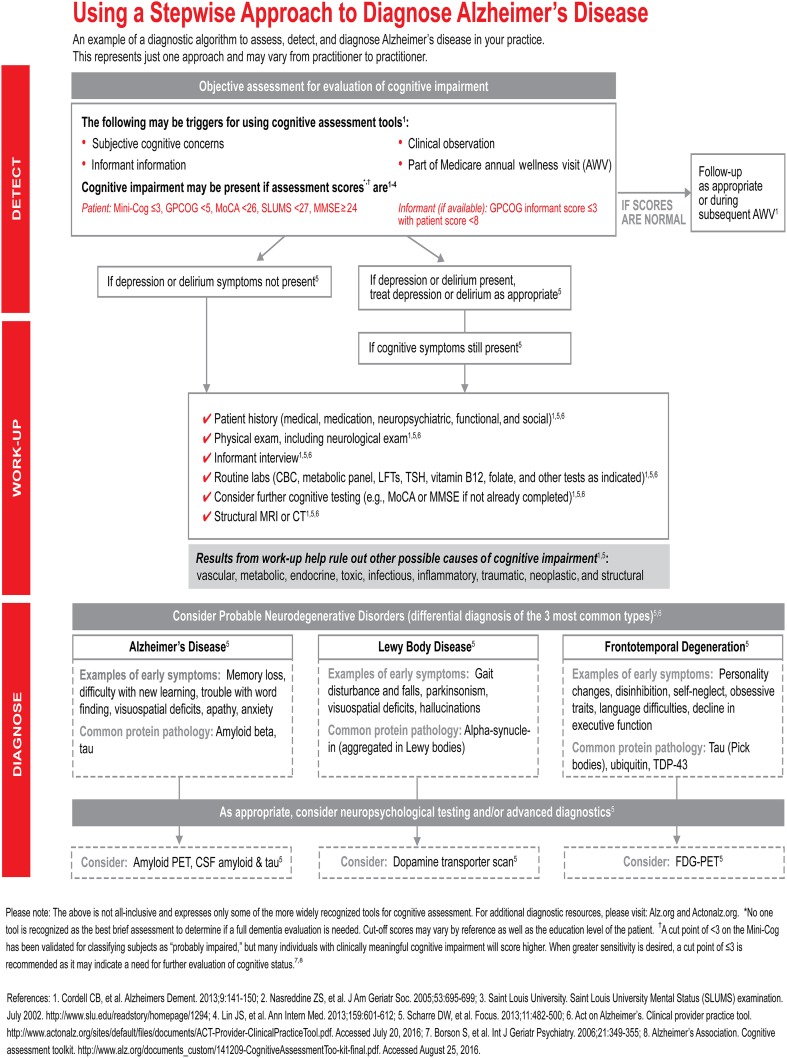
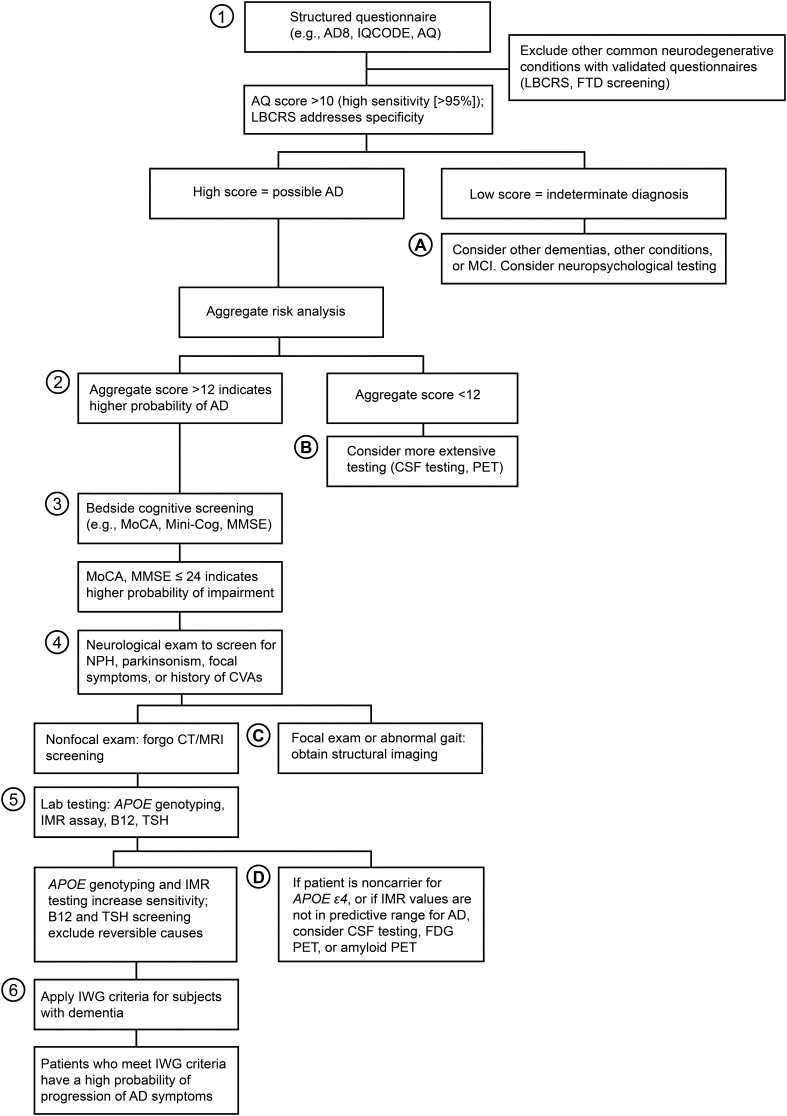
Establishing the in vivo diagnosis of Alzheimer’s disease (AD) or other dementias relies on clinical criteria; however, the accuracy of these criteria can be limited. The diagnostic accuracy is 77% for a clinical diagnosis of AD, even among experts. We performed a review through PubMed of articles related to specific diagnostic modalities, including APOE genotyping, cerebrospinal fluid (CSF) testing, fludeoxyglucose F 18 positron emission tomography (PET), amyloid PET, tau PET, computed tomography (CT), single-photon emission CT, magnetic resonance imaging (MRI), and B12 and thyroid-stimulating hormone screening, to determine the specificity and sensitivity of each test used in the clinical diagnosis of AD. We added a novel immunomagnetic reduction assay that provides ultrasensitivity for analyzing the levels of plasma tau and beta amyloid 42 (Aβ 42 ). The sensitivity and specificity of the current diagnostic approach (structural CT or MRI with screening labs) remain low for clinical detection of AD and are primarily used to exclude other conditions. Because of limited diagnostic capabilities, physicians do not feel comfortable or skilled in rendering a clinical diagnosis of AD. Compounding this problem is the fact that inexpensive, minimally invasive diagnostic tests do not yet exist. Biomarkers (obtained through CSF testing or PET imaging), which are not routinely incorporated in clinical practice, correlate well with pathologic changes. While PET is particularly costly and difficult to assess, CSF measures of tau and beta amyloid are not costly, and these tests may be worthwhile when the tiered approach proposed here warrants further testing. There is a need for developing bloodborne biomarkers that can aid in the clinical diagnosis of AD. Here we present a streamlined questionnaire-enriched, biomarker-enriched approach that is more cost-effective than the current diagnosis of exclusion and is designed to increase clinical confidence for a diagnosis of dementia due to AD.
Overview
The claims and statistics of this paper haven’t been checked yet.
Run the check — free, no account needed. It reads the open-access text and checks the sources it cites.
Integrity signals
Registry
Cites
Statistics
Figures
Verification
Claims the paper makes
The claims and statistics of this paper haven’t been checked yet.
Run the check — free, no account needed. It reads the open-access text and checks the sources it cites.
Claims other papers make about this one
Each is checked against this paper’s own text: does it say what the citing paper says it does?
The cited source says what the claim attributes to it.
In the citing paper
“In a clinical imaging/pathology series of 57 individuals clinically diagnosed with AD, 13 (23%) had no or sparse beta amyloid (Ab) plaques at autopsy.”
From Concordance of Clinical Alzheimer Diagnosis and Neuropathological Features at Autopsy (2020) · cites this paper as [7]
The cited source says what the claim attributes to it.
In the citing paper
“The study concluded that diagnostic accuracy of clinical AD is variable, even among experts (7).”
From Concordance of Clinical Alzheimer Diagnosis and Neuropathological Features at Autopsy (2020) · cites this paper as [7]
Self-check
Percentages, sums and reported differences re-computed from the paper’s own numbers.
The self-check needs the paper’s full text.
Citations
Cites
Folstein, M. F., Folstein, S. E., & McHugh, P. R. (1975) · Journal of Psychiatric Research · doi:10.1016/0022-3956(75)90026-6 · Cited by 88,282
McKhann, G., Drachman, D., Folstein, M., Katzman, R., Price, D., & Stadlan, E. M. (1984) · Neurology · doi:10.1212/wnl.34.7.939 · Cited by 27,915
The Montreal Cognitive Assessment, MoCA: a brief screening tool for mild cognitive impairment
Nasreddine, Z. S., Phillips, N. A., Bédirian, V., Charbonneau, S., Whitehead, V., Collin, I., Cummings, J. L., & Chertkow, H. (2005) · Journal of the American Geriatrics Society · doi:10.1111/j.1532-5415.2005.53221.x · Cited by 25,553 · cited 11×
“AD8 Ascertain Dementia 8-Item Informant Questionnaire, AQ Alzheimer’s Questionnaire, CSF cerebrospinal fluid, CT computed tomography, FDG fludeoxyglucose F 18, FTD frontotemporal dementia, IMR immunomagnetic reduction, IQCODE Informant Questionnaire on Cognitive Decline in the Elderly, IWG International Working Group,…”
MethodInfluentialHirono, N., Mori, E., Ikejiri, Y., Imamura, T., Shimomura, T., Hashimoto, M., Yamashita, H., & Ikeda, M. (1997) · PubMed · Cited by 21,012
Kok, J. S., Berg, I. J., & Scherder, E. J. A. (2013) · Dementia and Geriatric Cognitive Disorders Extra · doi:10.1159/000353441 · Cited by 20,589
Older Adults' Reasons for Using Technology while Aging in Place
Peek, S. T. M., Luijkx, K. G., Rijnaard, M. D., Nieboer, M. E., van der Voort, C. S., Aarts, S., van Hoof, J., Vrijhoef, H. J., & Wouters, E. (2015) · Gerontology · doi:10.1159/000430949 · Cited by 19,852
Sensitivity and False Alarm Rate of a Fall Sensor in Long-Term Fall Detection in the Elderly
Kangas, M., Korpelainen, R., Vikman, I., Nyberg, L., & Jämsä, T. J. (2014) · Gerontology · doi:10.1159/000362720 · Cited by 19,007
McKhann, G. M., Knopman, D. S., Chertkow, H., Hyman, B. T., Jack, C. R., Kawas, C. H., Klunk, W. E., Koroshetz, W. J., Manly, J. J., Mayeux, R., et al. (2011) · Alzheimer's & Dementia · doi:10.1016/j.jalz.2011.03.005 · Cited by 18,657 · cited 5×
“The current practice guideline is to incorporate structural imaging as part of the diagnostic evaluation for AD [2, 3] to exclude other conditions.”
BackgroundMethodInfluentialAlbert, M. S., DeKosky, S. T., Dickson, D., Dubois, B., Feldman, H. H., Fox, N. C., Gamst, A., Holtzman, D. M., Jagust, W. J., Petersen, R. C., et al. (2011) · Alzheimer's & Dementia · doi:10.1016/j.jalz.2011.03.008 · Cited by 10,152
Corder, E. H., Saunders, A. M., Strittmatter, W. J., Schmechel, D. E., Gaskell, P. C., Small, G. W., Roses, A. D., Haines, J. L., & Pericak-Vance, M. A. (1993) · Science · doi:10.1126/science.8346443 · Cited by 9,429 · cited 1×
“The lifetime risk for developing AD for a patient who is homozygotic for the APOE e4 is 91%, and the lifetime risk for a patient who is heterozygotic for APOE e4 is 47% [37].”
Background
Research works printed but not linked: 1
- Lue LF, Sabbagh MN, Chiu MJ, Leung N, Snyder N, Schmitz C et al. Plasma levels of Ab40, Ab42, and tau measured by ultra-sensitive immunomagnetic reduction assays identified probable Alzheimer’s dementia: Findings from two cohorts. Front Neurosci (in Press).
Cited by
Sorted by citations
Diagnosis of Early Alzheimer's Disease: Clinical Practice in 2021
Porsteinsson, A. P., Isaacson, R. S., Knox, S., Sabbagh, M. N., & Rubino, I. (2021) · The Journal of Prevention of Alzheimer's Disease · doi:10.14283/jpad.2021.23 · Cited by 744
“Historically, a diagnosis of AD has been one of exclusion, and one only made in the latter stages of disease (26); however, the disease process can take years”
Self-citationLiss, J. L., Seleri Assunção, S., Cummings, J., Atri, A., Geldmacher, D. S., Candela, S. F., Devanand, D. P., Fillit, H. M., Susman, J., Mintzer, J., et al. (2021) · Journal of Internal Medicine · doi:10.1111/joim.13244 · Cited by 312
Self-citationDubois, B., von Arnim, C. A. F., Burnie, N., Bozeat, S., & Cummings, J. (2023) · Alzheimer's Research & Therapy · doi:10.1186/s13195-023-01314-6 · Cited by 288
“Even among experts, the diagnostic accuracy for a clinical determination of AD is about 75–80% [63].”
BackgroundEpigenetics of Alzheimer’s Disease
Perković, M. N., Paska, A. V., Konjevod, M., Kouter, K., Štrac, D. Š., Erjavec, G. N., & Pivac, N. (2021) · Biomolecules · doi:10.3390/biom11020195 · Cited by 192
“The biggest problem in AD is accurate diagnosis, estimated to be around 77%, as it relies on the clinical criteria and presence of the symptoms [22].”
BackgroundEarly Detection of Alzheimer's Disease with Blood Plasma Proteins Using Support Vector Machines
Eke, C. S., Jammeh, E., Li, X., Carroll, C., Pearson, S., & Ifeachor, E. (2020) · IEEE Journal of Biomedical and Health Informatics · doi:10.1109/jbhi.2020.2984355 · Cited by 136
“This is on the grounds that the diagnostic accuracy of human experts reaches 77% [43] with sensitivity and specificity reaching 81% and 70% [5], respectively.”
BackgroundBlood-brain barrier leakage in Alzheimer’s disease: From discovery to clinical relevance
Nehra, G., Bauer, B., & Hartz, A. M. S. (2022) · Pharmacology & Therapeutics · doi:10.1016/j.pharmthera.2022.108119 · Cited by 127
Alawode, D. O. T., Heslegrave, A., Ashton, N. J., Karikari, T. K., Simrén, J., Montoliu‐Gaya, L., Pannee, J., O’Connor, A., Weston, P. S. J., Lantero‐Rodriguez, J., et al. (2021) · Journal of Internal Medicine · doi:10.1111/joim.13332 · Cited by 107
Huggins, C. J., Escudero, J., Parra, M. A., Scally, B., Anghinah, R., Vitória Lacerda De Araújo, A., Basile, L. F., & Abasolo, D. (2021) · Journal of Neural Engineering · doi:10.1088/1741-2552/ac05d8 · Cited by 105
“The reported diagnostic accuracy of AD by experts alone is only 77% (Sabbagh et al 2017).”
Preanalytical sample handling recommendations for Alzheimer's disease plasma biomarkers
Rózga, M., Bittner, T., Batrla, R., & Karl, J. (2019) · Alzheimer's & Dementia: Diagnosis, Assessment & Disease Monitoring · doi:10.1016/j.dadm.2019.02.002 · Cited by 99
“Methods: Amyloid b peptides (Ab[1-40], Ab[1-42]) and total Tau plasma concentrations were quantified using fully automated Roche Elecsys assays.”
Optical coherence tomography angiography of the retina and choroid in systemic diseases
Chua, J., Tan, B., Wong, D. W. K., Garhöfer, G., Liew, X. W., Popa‐Cherecheanu, A., Chin, C. W. L., Miléa, D., Chen, C., & Schmetterer, L. F. (2024) · Progress in Retinal and Eye Research · doi:10.1016/j.preteyeres.2024.101292 · Cited by 98
An overview of the genes and biomarkers in Alzheimer’s disease
Krishnamurthy, H. K., Jayaraman, V., Krishna, K., Wang, T., Bei, K., Changalath, C., & Rajasekaran, J. J. (2024) · Ageing Research Reviews · doi:10.1016/j.arr.2024.102599 · Cited by 89
“The current available diagnostic tools can diagnose AD with an accuracy of 77% (Sabbagh et al., 2017).”
Breath-based non-invasive diagnosis of Alzheimer’s disease: a pilot study
Tiele, A., Wicaksono, A. N., Daulton, E., Ifeachor, E., Eyre, V., Clarke, S., Timings, L., Pearson, S., Covington, J. A., & Li, X. (2019) · Journal of Breath Research · doi:10.1088/1752-7163/ab6016 · Cited by 73
Alzheimer’s Disease Diagnosis Using Machine Learning: A Survey
Dara, O. A., López-Guede, J. M., Raheem, H. I., Rahebi, J., Zulueta, E., & Fernández‐Gámiz, U. (2023) · Applied Sciences · doi:10.3390/app13148298 · Cited by 80
d’Abramo, C., D'adamio, L., & Giliberto, L. (2020) · Journal of Personalized Medicine · doi:10.3390/jpm10030116 · Cited by 71
Shea, D. W., Colasurdo, E. A., Smith, A. S. T., Paschall, C. J., Jayadev, S., Keene, C. D., Galasko, D. R., Ko, A. L., Li, G., Peskind, E. R., et al. (2022) · Proceedings of the National Academy of Sciences · doi:10.1073/pnas.2213157119 · Cited by 61
“1A) (16), but there is interest in establishing new biomarkers to provide earlier and more accurate diagnoses (17, 18).”
Feed-forward LPQNet based Automatic Alzheimer's Disease Detection Model
Kaplan, E., Doğan, Ş., Tuncer, T., Bayğın, M., & Altunışık, E. (2021) · Computers in Biology and Medicine · doi:10.1016/j.compbiomed.2021.104828 · Cited by 52
Hajjo, R., Sabbah, D. A., Abusara, O. H., & Bawab, A. Q. A. (2022) · Diagnostics · doi:10.3390/diagnostics12122975 · Cited by 57
Renner, H., Schöler, H. R., & Bruder, J. M. (2021) · Movement Disorders · doi:10.1002/mds.28775 · Cited by 47
“164,165 Here, data from very different techniques need to be correlated, and novel AI and ML techniques can aid in this process.”
BackgroundGenetic architecture of common non-Alzheimer’s disease dementias
Guerreiro, R. J., Gibbons, E., Tábuas‐Pereira, M., Kun‐Rodrigues, C., Cordeiro, G., & Brás, J. (2020) · Neurobiology of Disease · doi:10.1016/j.nbd.2020.104946 · Cited by 48
Concordance of Clinical Alzheimer Diagnosis and Neuropathological Features at Autopsy
Gauthreaux, K., Bonnett, T. A., Besser, L. M., Brenowitz, W. D., Teylan, M., Mock, C., Chen, Y.-C., Chan, K. C. G., Keene, C. D., Zhou, X.-H., et al. (2020) · Journal of Neuropathology & Experimental Neurology · doi:10.1093/jnen/nlaa014 · Cited by 44
“The study concluded that diagnostic accuracy of clinical AD is variable, even among experts (7).”
BackgroundScreening for Early-Stage Alzheimer’s Disease Using Optimized Feature Sets and Machine Learning
Kleiman, M. J., Barenholtz, E., Galvin, J. E., & Initiative, F. T. A. D. N. (2021) · Journal of Alzheimer s Disease · doi:10.3233/jad-201377 · Cited by 42
Lucke Wold, B. (2017) · Journal of Neurology and Neurosurgery · doi:10.19104/jnn.2017.40 · Cited by 41
“It is the location and amount of tau found on autopsy in AD subjects that correlates best with stage and severity of symptomatology, not the amyloid plaque [14].”
BackgroundComputational Methods for the Discovery of Metabolic Markers of Complex Traits
Lee, M. Y., & Hu, T. (2019) · Metabolites · doi:10.3390/metabo9040066 · Cited by 39
“Overall, AD research is trending in the direction of using computationally-robust, multivariate methods to develop new diagnostic tests that are safer, more cost-efficient, and have similar or greater accuracy rates than current neuropsychological and imaging techniques (which are estimated at 77%) [37].”
BackgroundResidual-Based Multi-Stage Deep Learning Framework for Computer-Aided Alzheimer’s Disease Detection
Hassan, N., Miah, A. S. M., & Shin, J. (2024) · Journal of Imaging · doi:10.3390/jimaging10060141 · Cited by 37
“Assessments of patients involve medical history, physical condition examination, and various diagnostic tests, including Nero’s logical examination such as muscle tone and reflex coordination [11].”
MethodEnhancing Alzheimer’s disease diagnosis and staging: a multistage CNN framework using MRI
Ali, M. U., Kim, K., Khalid, M., Farrash, M., Zafar, A., & Lee, S. W. (2024) · Frontiers in Psychiatry · doi:10.3389/fpsyt.2024.1395563 · Cited by 42
A Network-Based Perspective in Alzheimer's Disease: Current State and an Integrative Framework
Dragomir, A., Vrahatis, A. G., & Bezerianos, A. (2018) · IEEE Journal of Biomedical and Health Informatics · doi:10.1109/jbhi.2018.2863202 · Cited by 34
Arnerić, S. P., Kern, V. D., & Stephenson, D. T. (2018) · Biochemical Pharmacology · doi:10.1016/j.bcp.2018.01.043 · Cited by 31
“Additional biomarkers under investigation include fMRI, DTI, ASL, CSF proteomic biomarkers, blood biomarkers, TMS and optical biomarkers [43,44].”
Grasso, G. (2018) · Mass Spectrometry Reviews · doi:10.1002/mas.21566 · Cited by 31
Rabaneda‐Bueno, R., Mena‐Montes, B., Torres‐Castro, S., Torres‐Carrillo, N., & Torres-Carrillo, N. M. (2021) · Genes · doi:10.3390/genes12121959 · Cited by 30
“Overall, then, the diagnosis of AD is increasingly one of exclusion and would require the development of biomarkers in the blood to confirm the correct clinical diagnosis [6].”
BackgroundMetabolic profiling of Alzheimer's disease: Untargeted metabolomics analysis of plasma samples
Milos, T., Rojo, D., Erjavec, G. N., Konjevod, M., Tudor, L., Vuić, B., Štrac, D. Š., Uzun, S., Mimica, N., Kozumplik, O., et al. (2023) · Progress in Neuro-Psychopharmacology and Biological Psychiatry · doi:10.1016/j.pnpbp.2023.110830 · Cited by 28
Prathap, L. (2021) · Bioinformation · doi:10.6026/97320630017348 · Cited by 28
de la Monte, S. M. (2023) · Journal of Alzheimer s Disease · doi:10.3233/jad-230555 · Cited by 28
“Nonetheless, the combined use of neuroimaging, clinical diagnostics, and the continually evolving array of CSF and serum-based biomarkers have greatly improved our diagnostic acumen and expanded eligibility for early interventional treatments [9].”
Llano, D. A., Devanarayan, P., & Devanarayan, V. (2022) · Neurobiology of Aging · doi:10.1016/j.neurobiolaging.2022.07.015 · Cited by 23
Borzage, M., Saunders, A., Hughes, J. N., McComb, J. G., Blüml, S., & King, K. S. (2021) · American Journal of Neuroradiology · doi:10.3174/ajnr.a7294 · Cited by 21
“7%,(24) and the diagnostic accuracy for AD of 77%.(25) Thus, if a patient is diagnosed with AD, the probabilities of the true disease processes are 96.”
Sharma, G., Vijayvargiya, A., & Kumar, R. (2021) · IEEE Uttar Pradesh Section International Conference on Electrical, Electronics and Computer Engineering (UPCON) · doi:10.1109/upcon52273.2021.9667607 · Cited by 19
Doke, R. R., Lamkhade, G., Vinchurkar, K., & Singh, S. K. (2024) · ACS Pharmacology & Translational Science · doi:10.1021/acsptsci.4c00457 · Cited by 24
MRI-Driven Alzheimer’s Disease Diagnosis Using Deep Network Fusion and Optimal Selection of Feature
Ali, M. U., Hussain, S. J., Khalid, M., Farrash, M., Lahza, H. F. M., & Zafar, A. (2024) · Bioengineering · doi:10.3390/bioengineering11111076 · Cited by 17
Carbon Nanostructure-Based Materials: A Novel Tool for Detection of Alzheimer’s Disease
Ashfaq, M., Talreja, N., Chuahan, D., & Srituravanich, W. (2019) · Springer eBooks · doi:10.1007/978-981-13-9636-6_4 · Cited by 16
Lazli, L., Boukadoum, M., & Mohamed, O. A. (2018) · IEEE Life Sciences Conference (LSC) · doi:10.1109/lsc.2018.8572122 · Cited by 16
“In that case, many studies have shown no increase in sensitivity or specificity or even a decreased specificity without an improvement in correct diagnostic rate [8].”
BackgroundExosomes in Age-Related Cognitive Decline: Mechanistic Insights and Improving Outcomes
Duggan, M. R., Lu, A., Foster, T. C., Wimmer, M. E., & Parikh, V. (2022) · Frontiers in Aging Neuroscience · doi:10.3389/fnagi.2022.834775 · Cited by 15
Zhang, H., Shi, F., Yan, Y., Deng, C., & Sun, N. (2023) · Advanced Healthcare Materials · doi:10.1002/adhm.202301136 · Cited by 14
Cell-free amplification of prions: Where do we stand?
Cazzaniga, F. A., Luca, C. M. G. D., Bistaffa, E., Consonni, A., Legname, G., Giaccone, G., & Moda, F. (2020) · Progress in molecular biology and translational science · doi:10.1016/bs.pmbts.2020.08.005 · Cited by 14
Jin, Z. Y., Wang, X., Lang, Y., Song, Y., Zhan, H., Shama, W., Shen, Y., Zeng, G., Zhou, F., Gao, H., et al. (2025) · Alzheimer s Research & Therapy · doi:10.1186/s13195-025-01676-z · Cited by 13
Novel techniques for early diagnosis and monitoring of Alzheimer’s disease
Parul, P., Singh, A. K., & Shukla, S. (2024) · Expert Review of Neurotherapeutics · doi:10.1080/14737175.2024.2415985 · Cited by 13
“In the past, AD used to be only diagnosed in the later stages of the illness, although the disease process could take years to manifest and would have a severe impact on the patient, caregiver, and healthcare system during that time [110].”
Validation of a novel and accurate ApoE4 assay for automated chemistry analyzers
Veiga, S. J., Rodríguez‐Martín, A., García‐Ribas, G., Arribas, I., Menacho-Román, M., & Calero, M. (2020) · Scientific Reports · doi:10.1038/s41598-020-58841-7 · Cited by 14
Song, Y., Kim, H., Lee, J., & Kim, K. (2024) · Biosensors and Bioelectronics · doi:10.1016/j.bios.2024.116431 · Cited by 11
Contributions of Molecular and Optical Techniques to the Clinical Diagnosis of Alzheimer’s Disease
Bistaffa, E., Tagliavini, F., Matteini, P., & Moda, F. (2020) · Brain Sciences · doi:10.3390/brainsci10110815 · Cited by 11
“At present, the in vivo diagnostic accuracy for AD is about 77%, even among expert neurologists [75].”
BackgroundThe role of pragmatics in the diagnosis of dementia
Cummings, L. (2020) · East Asian Pragmatics · doi:10.1558/eap.39716 · Cited by 9
Gaubert, S., Garcés, P., Hipp, J. F., Bruña, R., López, M. E., Maestú, F., Vaghari, D., Henson, R. N., Paquet, C., & Engemann, D. A. (2025) · EBioMedicine · doi:10.1016/j.ebiom.2025.105659 · Cited by 10
Stereoscopic Depth Perception and Visuospatial Dysfunction in Alzheimer’s Disease
Kim, N.-G., & Lee, H. (2021) · Healthcare · doi:10.3390/healthcare9020157 · Cited by 10
Using CatBoost and Other Supervised Machine Learning Algorithms to Predict Alzheimer's Disease
An, J. (2022) · International Conference on Machine Learning and Applications · doi:10.1109/icmla55696.2022.00265 · Cited by 12
“The clinical diagnosis accuracy of AD is about 77% [2].”
BackgroundPrecision Medicine: Role of Biomarkers in Early Prediction and Diagnosis of Alzheimer’s Disease
Shen, L., Xia, S., Zhang, H., Yao, F., Liu, X., Zhao, Y., Ying, M., Iqbal, J., & Liu, Q. (2019) · IntechOpen eBooks · doi:10.5772/intechopen.82035 · Cited by 9
“On the other hand, in clinical practice, a diagnosis of AD is primarily made on the base of clinical features, results of neurological and neuropsychological tests, and by exclusion of other causes of dementia, including vascular and frontotemporal dementia or other neurological diseases [11].”
BackgroundStatsenko, Y. A., Meribout, S., Habuza, T., Almansoori, T. M., Gorkom, K., Gelovani, J. G., & Ljubisavljević, M. (2023) · Frontiers in Aging Neuroscience · doi:10.3389/fnagi.2022.943566 · Cited by 10
“Contrarily, a combination of structural and functional data seems to be a reasonable alternative: it is easy to conduct, more affordable, and reliable (Sabbagh et al., 2017).”
BackgroundEratne, D., Li, Q.-X., Lewis, C. C., Dang, C., Kang, M. J., Grewal, J. K., Loi, S. M., Walterfang, M., Evans, A. H., Malpas, C. B., et al. (2024) · Journal of Neurology · doi:10.1007/s00415-024-12732-3 · Cited by 12
“This is likely a reflection of the real-world clinically heterogenous clinical cohort and ranges, that many non-AD disorders have A+T− and other abnormal CSF profiles [35, 36], as well as the recognised challenges (and inaccuracies) of in vivo clinical diagnosis [13, 24, 25, 29, 30].”
Kirimtat, A., Krejcar, O., Marešová, P., Selamat, A., & Kuča, K. (2024) · IEEE Access · doi:10.1109/access.2024.3484928 · Cited by 8
“In addition to this, according to [60], even among professionals, the diagnostic accuracy for a traditional clinical diagnosis of AD is 77%.”
BackgroundZalianty, F. R., Sirait, D. R. E. S., Wijayanto, I., & Hadiyoso, S. (2024) · IEEE International Conference on Artificial Intelligence and Mechatronics Systems (AIMS) · doi:10.1109/aims61812.2024.10512538 · Cited by 8
“Physicians employ a combination of diagnostic tools along with medical records and additional data, such as neurological examinations, evaluations of cognition and function, brain imaging methods (MRI, CT, PET), and tests on blood or cerebrospinal fluid samples, to arrive at a precise diagnosis [5].”
MethodJuengling, F. D., Allenbach, G., Bruehlmeier, M., Klaeser, B., Wissmeyer, M., Garibotto, V., Felbecker, A., & Georgescu, D. (2020) · Nuklearmedizin - NuclearMedicine · doi:10.1055/a-1277-6014 · Cited by 8
Chen, T., Lee, W., Chen, J., Chang, S.-Y., Lin, C.-F., & Chen, H.-C. (2022) · Alzheimer s Research & Therapy · doi:10.1186/s13195-022-01083-8 · Cited by 8
“A diagnostic accuracy was reported to range from 70 to 80% for a clinical diagnosis of AD [70].”
BackgroundHyperspectral Retinal Imaging as a Non-Invasive Marker to Determine Brain Amyloid Status
Poudel, P., Frost, S. M., Eslick, S., Sohrabi, H. R., Taddei, K., Martins, R. N., & Hone, E. (2024) · Journal of Alzheimer s Disease · doi:10.3233/jad-240631 · Cited by 7
Vesković, A., Nakarada, Đ. J., Pavićević, A. A., Prokić, B., Perović, M., Kanazir, S., Popović-Bijelić, A. D., & Mojović, M. (2021) · Current Alzheimer Research · doi:10.2174/1567205018666210324121156 · Cited by 7
Kim, S., Kim, K., Nho, K. T., Myung, W., & Won, H. (2021) · Journal of Alzheimer s Disease · doi:10.3233/jad-200671 · Cited by 7
Tousi, B., & Sabbagh, M. N. (2021) · Neurology and Therapy · doi:10.1007/s40120-021-00286-9 · Cited by 7
Self-citationJuday, T. R., Holub, A. A., Mattke, S., Betts, K. A., Kitchen, S. A., Liu, H., Batrla, R., Frech, F. H., & Khachaturian, A. S. (2024) · Journal of Alzheimer s Disease · doi:10.1177/13872877241297128 · Cited by 6
“7,8 In light of new therapies, which work by slowing disease progression in the early stages of disease, a timely diagnosis, particularly during the earlier stages of disease, represents a critical window when intervention can be initiated.”
Variability in Alzheimer’s disease mortality from European vital statistics, 2012–2020
Zuin, M., Brombo, G., Polastri, M., Romagnoli, T., Cervellati, C., & Zuliani, G. (2024) · International Journal of Geriatric Psychiatry · doi:10.1002/gps.6068 · Cited by 6
“23 Therefore, the increasing AD ‐ related mortality trend observed in some Countries may be related to the improved AD diagnosis.”
BackgroundKao, C.-C., Hsieh, H., Chang, Y., Chu, H.-C., Yang, Y., & Sheu, S. (2023) · Journal of Personalized Medicine · doi:10.3390/jpm13071118 · Cited by 6
“However, cognitive assessment of AD using the Mini-Mental State Examination (MMSE) score and Clinical Dementia Rating (CDR) score is time-consuming and reaching diagnostic accuracy is difficult, even by experts [4].”
Neuropsychiatric Symptoms Among Hispanics: Results of the Maracaibo Aging Study
Gil, M., Alliey‐Rodriguez, N., López-Alvarenga, J. C., Diego, V. P., Gaona, C. A., Mata, L., Pirela, R. V., Chavez, C. A., de Erausquin, G. A., Melgarejo, J. D., et al. (2021) · Journal of Alzheimer s Disease · doi:10.3233/jad-201144 · Cited by 5
“If these two phenotypes are incorporated within the patient’s medical history, risk assessment, neurological examination, and biomarkers such APOE genotype, there is approximately a 90% improvement of the dementia diagnosis [24].”
A Bayesian hierarchical change point model with parameter constraints
Li, H., Benitez, A. M., & Neelon, B. (2020) · Statistical Methods in Medical Research · doi:10.1177/0962280220948097 · Cited by 4
Noncoding RNAs in Alzheimer’s Disease: Overview of Functional and Therapeutic Significance
Adiga, D., Eswaran, S., Sriharikrishnaa, S., Khan, N. G., Kumar, D., & Kabekkodu, S. P. (2024) · Current Topics in Medicinal Chemistry · doi:10.2174/0115680266293212240405042540 · Cited by 4
Stefanidis, K. B., Summers, M. J., & Clark, M. S. G. (2025) · Journal of Transport & Health · doi:10.1016/j.jth.2025.102020 · Cited by 4
The Role of the Ganglion Cell Layer as an OCT Biomarker in Neurodegenerative Diseases
Ruggeri, F., Fumi, D., Bassis, L., Pippo, M. D., & Abdolrahimzadeh, S. (2025) · Journal of Integrative Neuroscience · doi:10.31083/jin26039 · Cited by 5
Exploring Frailty Status and Blood Biomarkers: A Multidimensional Approach to Alzheimer’s Diagnosis
Cermelli, A., Crisafi, A., Chiarandon, A. M., Mirabelli, G., Lombardo, C., Batti, V., Boschi, S., Piella, E. M., Roveta, F., Rainero, I., et al. (2025) · Geriatrics · doi:10.3390/geriatrics10050133 · Cited by 3
“Studies have shown that individuals with cognitive frailty may exhibit a specific subcortical-frontal pattern of dysfunction that is distinct from typical AD [45] and may represent an intermediate stage in the trajectory from healthy aging to dementia.”
Involvement of neuroinflammatory mediators in the pathogenesis of neurodegeneration
Singh, R. K., & Srivastava, A. (2020) · Asian Journal of Pharmacy and Pharmacology · doi:10.31024/ajpp.2020.6.1.2 · Cited by 3
Nanomaterials for Point of Care Disease Detection
Sharma, C., Walia, S., & Acharya, A. (2020) · Springer eBooks · doi:10.1007/978-981-15-4280-0_4 · Cited by 3
Genetic Risk Factors for Sporadic Frontotemporal Dementia
Ferrari, R., Manzoni, C., & Momeni, P. (2018) · Springer eBooks · doi:10.1007/978-3-319-72938-1_9 · Cited by 3
Matrix Factorization-based Improved Classification of Gene Expression Data
Malik, S., & Bansal, P. (2019) · Recent Advances in Computer Science and Communications · doi:10.2174/2213275912666190715165034 · Cited by 3
Zou, Y., Deng, T., Xu, Y., Zheng, Q. Y., Wu, Y., Hui, S., Liu, C., & An, W. (2024) · Journal of Patient Safety · doi:10.1097/pts.0000000000001307 · Cited by 2
“18 The depression was fi ltered by the PHQ-2 scale, patients with a PHQ-2 scoring ≥ 3 were considered as high risk.”
Ojha, V. P., Riahi, S., Bobo, R. H., Moravveji, S., Meteumba, L. G., & Yarahmadian, S. (2025) · Discover Psychology · doi:10.1007/s44202-025-00335-6 · Cited by 2
“This can be improved by including biomarkers and imaging [5, 17, 35].”
Elmaaty, A. A. A., Eissa, M. A., El-Rashedy, S. K., Zehry, H. I., Mosa, A. A. H., Zarad, C. A., Abdel-Dayem, M. A., Nokrashy, A. E., & Elsherifi, S. S. (2024) · The Egyptian Journal of Neurology Psychiatry and Neurosurgery · doi:10.1186/s41983-024-00912-x · Cited by 1
Charanya, T. N., Marimuthu, A., & Nanditha, S. (2025) · International Conference on Data Science, Agents & Artificial Intelligence (ICDSAAI) · doi:10.1109/icdsaai65575.2025.11011613 · Cited by 1
Ragonese, P., Buscarinu, M. C., Cellerino, M., Colombo, E., Frau, J., Frigo, M., Puthenparampil, M., Rigoni, E., Zancan, V., Pinto, L., et al. (2025) · BMJ Neurology Open · doi:10.1136/bmjno-2025-001269 · Cited by 1
“Future research should validate the model through real-world studies and reassess its feasibility, adaptability and impact on patient outcomes as biomarkers enter routine use.”
Roth, S., Yan, J. T., Patru, M.-M., Mattke, S., Gustavsson, A., & Ortsäter, G. (2026) · Journal of Alzheimer s Disease · doi:10.1177/13872877251406909 · Cited by 1
Perna, P., Alessandra, C., Stasolla, F., & Nappo, R. (2026) · Technologies · doi:10.3390/technologies14030183 · Cited by 1
Cognitive Impairment Prediction by Normal Cognitive Brain MRI Scans Using Deep Learning
Bardwell, J., Hassan, G. M., Salami, F., & Akhtar, N. (2022) · Lecture notes in computer science · doi:10.1007/978-3-031-22695-3_40 · Cited by 1
Epigenetics of Alzheimer’s Disease: Past, Present and Future
Adiga, D., Eswaran, S., Sriharikrishnaa, S., Khan, N. G., Kabekkodu, S. P., & Kumar, D. (2023) · BENTHAM SCIENCE PUBLISHERS eBooks · doi:10.2174/9789815136142123010005 · Cited by 1
Lange, B., Pathak, S., Vijayarani, K. R., DeRuiter, J., Alharbi, H. F., Bhupathyraaj, M., Mohandoss, K., & Dhanasekaran, M. (2024) · Nutritional neurosciences · doi:10.1007/978-981-97-2577-9_1 · Cited by 1
Konishi, K., Spets, D. S., Fisher, P., Aroner, S. A., Sant, S. M., Prokopenko, D., Lokhande, H. A., Patel, R. P., Aizley, H. G., Smith, B., et al. (2025) · Journal of Alzheimer s Disease · doi:10.1177/13872877251366701 · Cited by 1
Sabbagh, M. N. (2017) · Neurology and Therapy · doi:10.1007/s40120-017-0068-6
Self-citation25.脳性麻痺側彎の追跡調査(脳性麻痺・その他)(第25回日本リハビリテーション医学会総会)
荒井, 久., 岩崎, 光., 大城, み., 油川, 研., 川口, 宏., 村岡, 真., & 佐々木, 淳. (1988) · リハビリテーション医学 : 日本リハビリテーション医学会誌
Multi-stratification feature selection for diagnostic analysis of Alzheimer's disease
Zhang, L., Xin, B., Yan, S., Zheng, C., Zhou, Y., Lu, J., & Wang, X. (2021) · International Conference on Digital Image Computing: Techniques and Applications (DICTA) · doi:10.1109/dicta52665.2021.9647043
Progress of Nanotechnology-Based Detection and Treatment of Alzheimer’s Disease Biomarkers
Singh, Y. R., Shukla, A., & Pattanayek, S. K. (2022) · Springer eBooks · doi:10.1007/978-981-16-3667-7_3
Detection Method of Early Data Based on SVM Classifier
Zhan, Y. (2022) · IEEE International Conference on Data Science and Computer Application (ICDSCA) · doi:10.1109/icdsca56264.2022.9988340
Alzheimer’s Disease MRI Identification, Recognition, & Evaluation - Deep LearningPreprint
Muniagurria, T. P., & Rowlands, S. (2023) · Research Square · doi:10.21203/rs.3.rs-3124095/v1
Exploring Laboratory Findings in Psychotic Patients
Yamani, I. A. J. (2024) · African Journal of Biomedical Research · doi:10.53555/ajbr.v27i3s.2770
“…as transaminases in decreased liver function, increased levels of white blood counts and C-reactive protein in inflammation, serum autoantibodies in autoimmune encephalitis, and some deficiencies such as vitamin B12, folic acid, vitamin D, and zinc (Ronkainen and Okon, 2014; Sabbagh et al., 2017).”
Prospecting salivary tau as a diagnostic for Alzheimer’s type dementia
dos Santos, G. A. A., Vale, F. A. C., & Fazan, V. P. S. (2025) · Dementia & Neuropsychologia · doi:10.1590/1980-5764-dn-2024-0253
“Furthermore, it needs to evolve so that it is conclusive and not performed with the aim of excluding possibilities 48 .”
Revolutionizing Alzheimer’s Diagnostics: AI Tool Shows Superior Accuracy over Traditional Methods
Svanishvili, G. (2025) · Premier Journal of Neuroscience · doi:10.70389/pjn.100004
Characteristics of Study Design and Statistical Analysis in OCT-Based Studies of Neurodegeneration
Caplash, S., Song, H., Waldman, A. T., Ying, G., & Kim, B. J. (2025) · Ophthalmology Science · doi:10.1016/j.xops.2025.100961
“33,36 As only a small percent of Alzheimer disease cases are familial, the use of CSF and PET biomarkers for Alzheimer disease in clinical studies deserves evaluation as these biomarkers have > 90% sensitivity and specificity.”
Chen, T.-B., Lee, W.-J., Chen, J.-P., Chang, S.-Y., Lin, C.-F., & Chen, H.-C. (2022) · Figshare · doi:10.6084/m9.figshare.21256971
Li, Q., Alexopoulou, Z.-S., Dyrba, M., Mallick, E., Tröger, J., Spruth, E. J., Altenstein, S., Bartels, C., Glanz, W., Incesoy, E. I., et al. (2026) · Alzheimer s Research & Therapy · doi:10.1186/s13195-026-01993-x
“These remote automated methods can both improve efficiency and reduce the burden on-site, whilst enabling the recruitment of participants from a broader and more diverse range of groups [4, 5].”
Metadata
- Authors
- Sabbagh, M. N., Lue, L.-F., Fayard, D., & Shi, J.
- Affiliations
- Barrow Neurological Institute (US)
- Arizona State University (US)
- Corresponding author
- Sabbagh, Marwan N.
- Venue
- Neurology and Therapy
- Published
- 2017-07
- Volume
- 6
- Issue
- S1
- Pages
- 83-95
- ISSN
- 2193-6536 (ISSN-L)
- 2193-8253
- PMC
- PMC5520815
- OpenAlex
- W2737462298
- Cited by
- 107
- References
- 59
- Citations by year
- 2026: 10 · 2025: 12 · 2024: 20 · 2023: 9 · 2022: 11 · 2021: 19 · 2020: 12 · 2019: 6 · 2018: 5 · 2017: 2
- FWCI
- 1.04
- Type
- journal article
- Language
- en
- Open access
- gold
- doi.org
- Licence
- cc-by-nc
- Locations
- Neurology and Therapy (publishedVersion, cc-by-nc)
- PubMed Central (publishedVersion, cc-by-nc)
- PubMed (publishedVersion)
- Arizona State University Library Digital Repository (Arizona State University) (submittedVersion, cc-by)
- Funders
- Barrow Neurological Foundation (NIA P30 AG019610)
- National Institute on Aging (AG019610, P30AG019610)
- Topics
- Health Sciences › Medicine › Psychiatry and Mental health › Dementia and Cognitive Impairment Research
- Life Sciences › Neuroscience › Cellular and Molecular Neuroscience › Alzheimer's disease research and treatments
- Health Sciences › Medicine › Clinical Neurology › Cerebrospinal fluid and hydrocephalus
- Keywords
- Alzheimer's disease, diagnosis, diagnostic accuracy, biomarkers, cerebrospinal fluid, amyloid PET, tau PET, FDG-PET, APOE genotyping, plasma tau, amyloid-beta 42, blood-based biomarkers, dementia, sensitivity and specificity
About these checks
Registry, retraction, Cites and statistics results are computed, not judged, with one exception: a printed reference that no index lists is read once by a model before it counts as a citation error. Claims are extracted by a model and kept only when their quote appears verbatim in the text; each cited source is then checked, with a model’s help, for whether it says what the claim relies on. Those verdicts can be wrong — read the claim’s quote and the cited source before relying on one.
Statistics and arithmetic are recomputed, not judged.
Confidence bands are shown only for fields calibrated on our annotated test set. None is calibrated yet, so no band is shown.
What counts as a claim ›How we measure confidence ›How we check this ›
Are you an author, or do you see a problem with this page? Request a review
