

Interpretable Machine Learning for Early Prediction of Prognosis in Sepsis: A Discovery and Validation Study
Open accessThe DOI matches its Crossref record; 29 of the 29 references it cites were found in a registry or an index.
Abstract
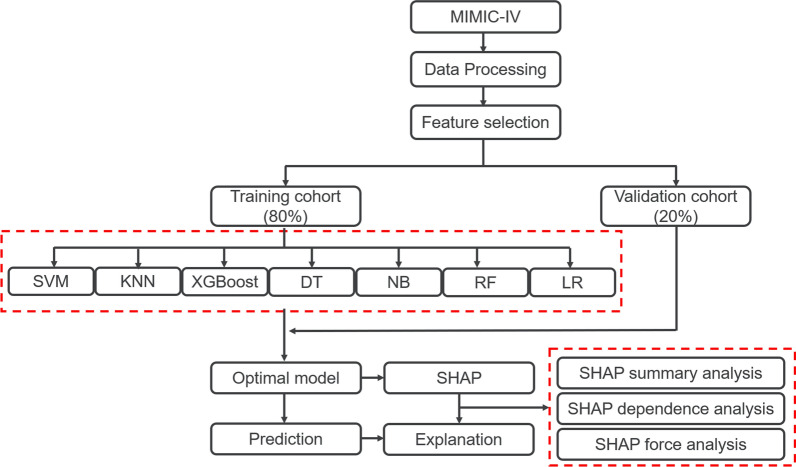
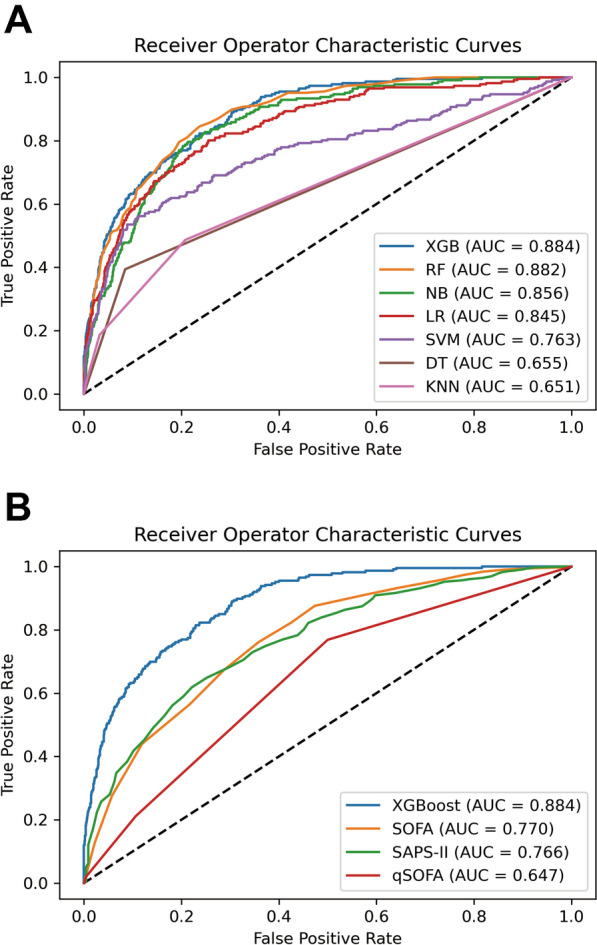
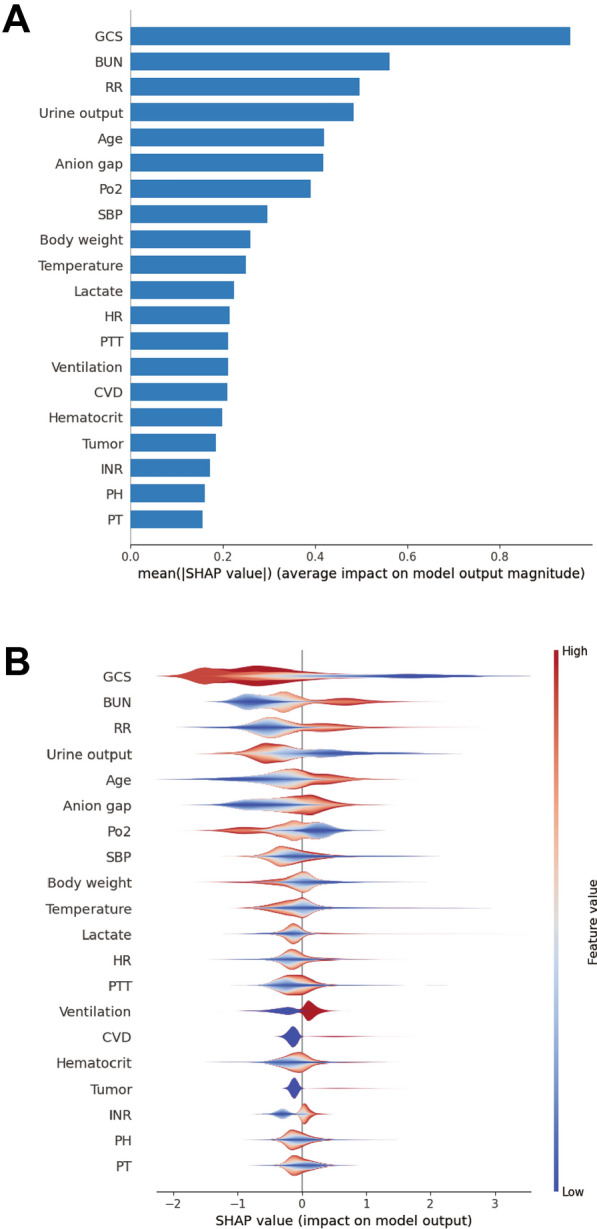
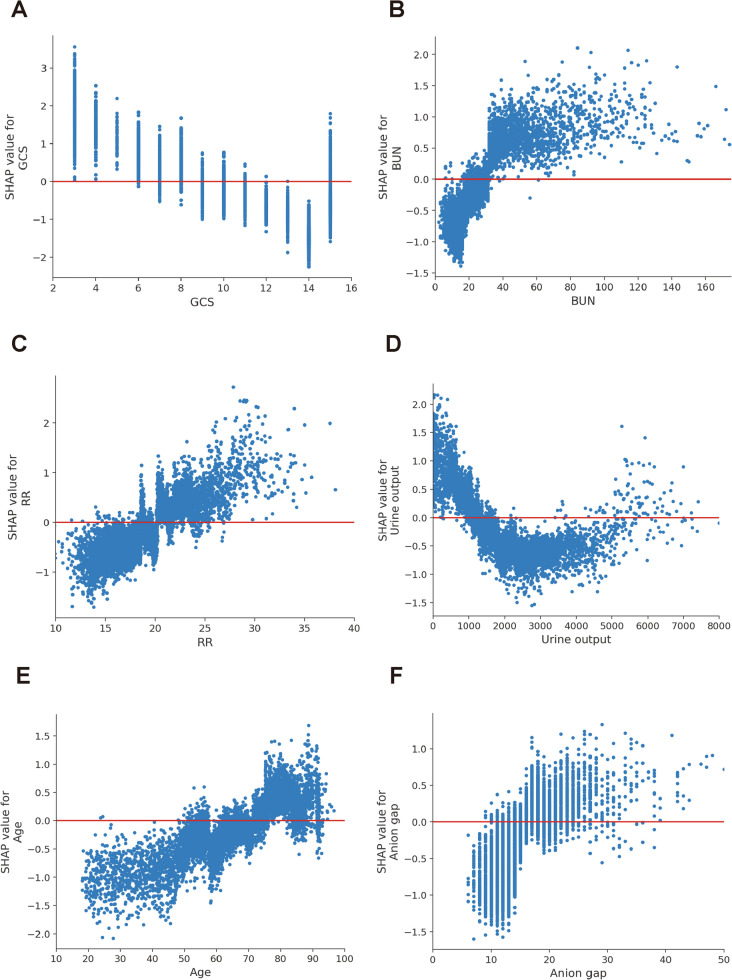
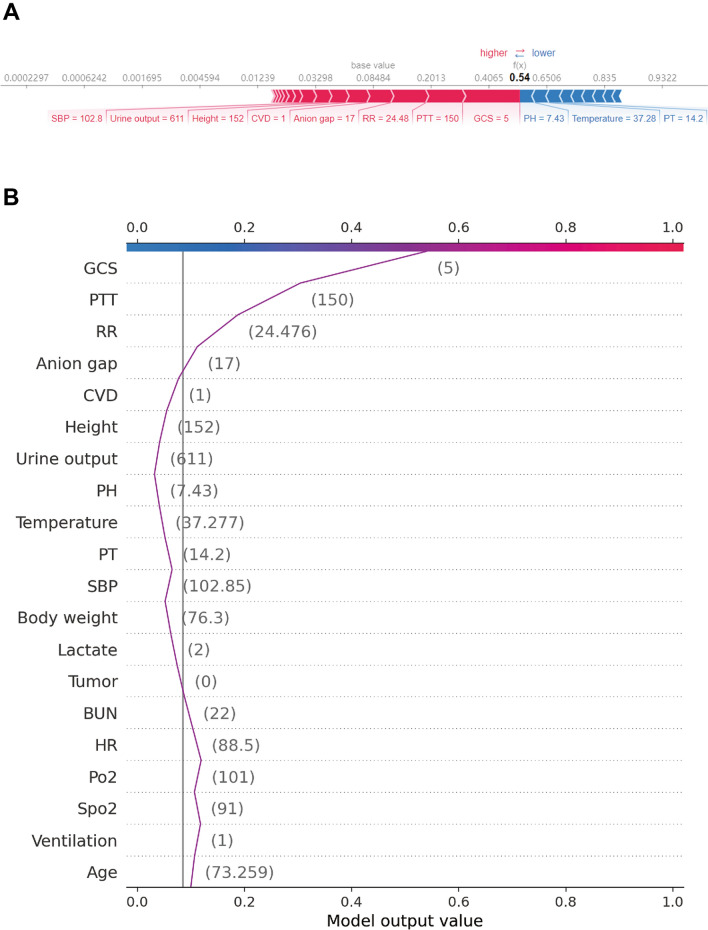
INTRODUCTION: This study aimed to develop and validate an interpretable machine-learning model based on clinical features for early predicting in-hospital mortality in critically ill patients with sepsis. METHODS: We enrolled all patients with sepsis in the Medical Information Mart for Intensive Care IV (MIMIC-IV, v.1.0) database from 2008 to 2019. Lasso regression was used for feature selection. Seven machine-learning methods were applied to develop the models. The best model was selected based on its accuracy and area under curve (AUC) in the validation cohort. Furthermore, we employed the SHapley Additive exPlanations (SHAP) method to illustrate the effects of the features attributed to the model, and to analyze how the individual features affect the output of the model, and to visualize the Shapley value for a single individual. RESULTS: In total, 8,817 patients with sepsis were eligible for participation, the median age was 66.8 years (IQR, 55.9-77.1 years), and 3361 of 8817 participants (38.1%) were women. After selection, 25 of a total 57 clinical parameters collected on day 1 after ICU admission remained associated with prognosis and were used for developing the machine-learning models. Among seven constructed models, the eXtreme Gradient Boosting (XGBoost) model achieved the best performance with an AUC of 0.884 and an accuracy of 89.5% in the validation cohort. Feature importance analysis showed that Glasgow Coma Scale (GCS) score, blood urea nitrogen, respiratory rate, urine output, and age were the top 5 features of the XGBoost model with the greatest impact. Furthermore, SHAP force analysis illustrated how the constructed model visualized the individualized prediction of death. CONCLUSIONS: We have demonstrated the potential of machine-learning approaches for predicting outcome early in patients with sepsis. The SHAP method could improve the interpretability of machine-learning models and help clinicians better understand the reasoning behind the outcome.
Overview
The claims and statistics of this paper haven’t been checked yet.
Free: it reads the open-access text and checks the first 5 claims that cite a source we can check. Create a free account to check every claim.
Integrity signals
Registry
Cites
Statistics
Figures
Verification
Claims the paper makes
The claims and statistics of this paper haven’t been checked yet.
Free: it reads the open-access text and checks the first 5 claims that cite a source we can check. Create a free account to check every claim.
Claims other papers make about this one
Each is checked against this paper’s own text: does it say what the citing paper says it does?
The source backs part of the claim, not all of it — or backs it for a different population, condition or comparison.
In the citing paper
“Furthermore, multi-centre validation and prospective testing remain rare [12, 13, 18], making it difficult to identify which interpretability techniques are most reliable in real-world practice.”
From Explainable AI for critical care: a systematic review of interpretable models for sepsis and ICU mortality prediction (2026) · cites this paper as [13]
Experimental — accuracy not yet measuredThe source backs part of the claim, not all of it — or backs it for a different population, condition or comparison.
In the citing paper
“Moreover, comprehensive comparisons of different XAI approaches across diverse ICU datasets are lacking [12, 13, 18].”
From Explainable AI for critical care: a systematic review of interpretable models for sepsis and ICU mortality prediction (2026) · cites this paper as [13]
Experimental — accuracy not yet measuredThe source backs part of the claim, not all of it — or backs it for a different population, condition or comparison.
In the citing paper
“Most models reported AUC values exceeding 0.84, with some attaining up to 0.89 for early sepsis prediction [7, 12, 13, 17, 19, 22].”
From Explainable AI for critical care: a systematic review of interpretable models for sepsis and ICU mortality prediction (2026) · cites this paper as [13]
Experimental — accuracy not yet measuredThe source backs part of the claim, not all of it — or backs it for a different population, condition or comparison.
In the citing paper
“These interpretability strategies enabled the identification of key physiological variables driving model predictions, such as respiratory rate (RR), Glasgow Coma Scale, mean arterial pressure (MAP), lactate, creatinine, heart rate (HR), blood urea nitrogen (BUN), body temperature, platelet count, and urine output [7, 12–18, 22, 24, 25, 39].”
From Explainable AI for critical care: a systematic review of interpretable models for sepsis and ICU mortality prediction (2026) · cites this paper as [13]
Experimental — accuracy not yet measuredThe cited source says what the claim attributes to it.
In the citing paper
“Explainable AI addresses this need by providing human-interpretable outputs and highlighting clinically important features that drive model decisions [4–6, 11–13].”
From Explainable AI for critical care: a systematic review of interpretable models for sepsis and ICU mortality prediction (2026) · cites this paper as [13]
3 more claims about this paper
Create a free account to see every claim other papers make about this one.
Self-check
Percentages, sums and reported differences re-computed from the paper’s own numbers.
The self-check needs the paper’s full text.
Citations
Cites
The third international consensus definitions for sepsis and septic shock (Sepsis-3).
Singer, M., Deutschman, C. S., Seymour, C. W., Shankar-Hari, M., Annane, D., Bauer, M., Bellomo, R., Bernard, G. R., Chiche, J.-D., Coopersmith, C. M., et al. (2016) · JAMA · doi:10.1001/jama.2016.0287 · Cited by 28,250
Vincent, J. L., Moreno, R., Takala, J., Willatts, S., De Mendonça, A., Bruining, H., Reinhart, C. K., Suter, P. M., & Thijs, L. G. (1996) · Intensive Care Medicine · doi:10.1007/bf01709751 · Cited by 11,674 · cited 5×
“The illness severity scoring systems including SOFA, SAPS-II, and qSOFA were assessed to predict the risk of death and were compared with our final model in validation cohort.”
MethodInfluentialFrom local explanations to global understanding with explainable AI for trees
Lundberg, S. M., Erion, G., Chen, H., DeGrave, A., Prutkin, J. M., Nair, B., Katz, R., Himmelfarb, J., Bansal, N., & Lee, S.-I. (2020) · Nature Machine Intelligence · doi:10.1038/s42256-019-0138-9 · Cited by 10,551 · cited 1×
“Fortunately, a new interpretation model in ML, called the SHapley Additive exPlanations (SHAP), was first articulated by Lundberg and Lee to explain individual predictions for both kernel-based approaches and tree-based models [14].”
MethodMIMIC-III, a freely accessible critical care database
Johnson, A. E. W., Pollard, T. J., Shen, L., Lehman, L.-W. H., Feng, M., Ghassemi, M., Moody, B., Szolovits, P., Anthony Celi, L., & Mark, R. G. (2016) · Scientific Data · doi:10.1038/sdata.2016.35 · Cited by 8,141
Rajkomar, A., Dean, J., & Kohane, I. (2019) · New England Journal of Medicine · doi:10.1056/nejmra1814259 · Cited by 4,579
Collins, G. S., Reitsma, J. B., Altman, D. G., & Moons, K. G. M. (2015) · BMJ · doi:10.1136/bmj.g7594 · Cited by 4,388
Collins, G. S., Reitsma, J. B., Altman, D. G., & Moons, K. G. M. (2015) · British Journal of Cancer · doi:10.1038/bjc.2014.639 · Cited by 3,293
Epidemiology of acute kidney injury in critically ill patients: the multinational AKI-EPI study
Hoste, E. A. J., Bagshaw, S. M., Bellomo, R., Cely, C. M., Colman, R., Cruz, D. N., Edipidis, K., Forni, L. G., Gomersall, C. D., Govil, D., et al. (2015) · Intensive Care Medicine · doi:10.1007/s00134-015-3934-7 · Cited by 3,061
Cecconi, M., Evans, L., Levy, M., & Rhodes, A. (2018) · The Lancet · doi:10.1016/s0140-6736(18)30696-2 · Cited by 2,254
Explainable machine-learning predictions for the prevention of hypoxaemia during surgery
Lundberg, S. M., Nair, B., Vavilala, M. S., Horibe, M., Eisses, M. J., Adams, T., Liston, D. E., Low, D. K.-W., Newman, S.-F., Kim, J., et al. (2018) · Nature Biomedical Engineering · doi:10.1038/s41551-018-0304-0 · Cited by 1,967
Cited by
Items 101–160 of 160
Wang, X., Xie, R., Li, M., Zhao, Z., Liu, Z., Wang, B., & Liu, X. (2026) · Frontiers in Neurology · doi:10.3389/fneur.2026.1718794 · Cited by 1
Naseri, E., Hedayati, M., Mobayen, M., Sedighian, H., & Fooladi, A. A. I. (2026) · BMC Infectious Diseases · doi:10.1186/s12879-026-12776-y · Cited by 1
Tefik, T., Ergul, R. B., Ozervarli, M. F., Castellani, D., Lim, E. J., Yuen, S. K. K., Nedbal, C., Herrmann, T., Somani, B. K., & Gauhar, V. (2026) · World Journal of Urology · doi:10.1007/s00345-026-06262-y · Cited by 1
Zhu, X., Wang, T., Jiang, J., Zhang, M., Liu, T., Zhang, X., & Wang, Y. (2026) · Clinica Chimica Acta · doi:10.1016/j.cca.2026.120928 · Cited by 1
Liu, T., & Li, Q.-P. (2026) · Cardiology Research and Practice · doi:10.1155/crp/6487136 · Cited by 2
Yang, H., Jiang, M.-H., Yu, F., Yang, L.-J., Zhang, X., Li, D.-M., Guo, Y., Zhu, J.-D., Yin, S., & He, G. (2025) · Technology and Health Care · doi:10.1177/09287329251346284 · Cited by 2
Gonzalez-Ibañez, A. M., Rojas-Salinas, P. A., Frodden, E., Jaureguiberry-Bravo, M., & Jara, M. (2022) · SSRN Electronic Journal · doi:10.2139/ssrn.4133586
Mao, B., Zhang, R., Pan, Y., Zheng, R., Shen, Y., Lu, W., Lu, Y., Xu, S., Wu, J., Wang, M., et al. (2023) · medRxiv · doi:10.1101/2023.08.15.23294147
Liu, J., Duan, X., Duan, M., Jiang, Y., Mao, W., Wang, L., & Liu, G. (2023) · Research Square · doi:10.21203/rs.3.rs-3298895/v1
Self-citationSun, P., Zhao, W., Wen, J., Yang, Y., Guo, W., & Shang, L. (2023) · Research Square · doi:10.21203/rs.3.rs-3409615/v1
Hu, X., Chen, M., Zhu, Q., Lu, Y., Zeng, L., Wai, A. K. C., & Wang, Y. (2024) · Research Square · doi:10.21203/rs.3.rs-3963612/v1
Liu, Q., Zhou, L., Hou, L., Chen, Y., He, Y., & Li, G. (2024) · doi:10.2196/preprints.69401
Human in vivo footprints from blood plasma samples for improved diagnostics in septic patientsPreprint
Sonntag, M., Müller, J., Brenner, T., Decker, S., von Haeseler, A., Sohn, K., & the German Anaesthesia and Intensive Care Trials Group (GAIN-CARE) (2025) · medRxiv · doi:10.1101/2025.01.29.25320179
Chintalapati, A., Senapati, A., Pal, S., Angappan, K., & Subramanian, M. (2025) · Communications in computer and information science · doi:10.1007/978-3-031-79086-7_16
Hutchison, A. L., Narula, S., Rinella, M. E., Faubert, B., Mirmira, R. G., & Parker, W. F. (2025) · medRxiv · doi:10.1101/2025.02.10.25321897
Machine Learning Based Early Sepsis Prediction for Diabetic Foot Patient
Tasneem, Z., & Hossain, M. S. (2024) · International Conference on Electrical and Computer Engineering Researches (ICECER) · doi:10.1109/icecer62944.2024.10920472
Prediction Model of Mortality Risk of Sepsis Patients Based on Stacking Algorithm
李, 文. (2025) · Modeling and Simulation · doi:10.12677/mos.2025.143220
Early Sepsis Prediction Method Based on Improved LF-Transformer
冯, 晓. (2025) · Artificial Intelligence and Robotics Research · doi:10.12677/airr.2025.142033
Howard, K. A., Anderson, W., Podichetty, J. T., Gould, R., Boyce, D. M., Dasher, P., Evans, L., Kao, C., Kumar, V. K., Hamilton, C., et al. (2025) · International Journal of Environmental Research and Public Health · doi:10.3390/ijerph22040464
STE-Model: Stack-Vote Ensemble Model for Predicting 30-Day Mortality in Sepsis Patients
Li, W., Wu, R., Liu, M., Li, J., Hou, Y., & Fan, Z. (2025) · Lecture notes in electrical engineering · doi:10.1007/978-981-96-2432-4_9
Zhou, Y., Xiang, X., She, H., Wu, Y., Ouyang, X., Zhou, X., Shunxin, Y., Liu, L., & Li, T. (2025) · BMC Medical Informatics and Decision Making · doi:10.1186/s12911-025-03216-z
Xu, J., Zhu, Z., Dai, B., Lin, M., Yang, H., Liu, S., & Nan, Z. (2025) · Archives of Gerontology and Geriatrics · doi:10.1016/j.archger.2025.106058
Zhang, Q., Li, J., Wang, S., Chen, L., Bai, X., Zhen, W., Li, Z., Zhang, Y., Zhang, Z., & Li, X. (2025) · Research Square · doi:10.21203/rs.3.rs-8226880/v1
Zhang, G., Shao, F., Yuan, W., Wu, J., Qi, X., Gao, J., Shao, R., Tang, Z., & Wang, T. (2024) · Figshare · doi:10.6084/m9.figshare.26689937
Zhang, G., Shao, F., Yuan, W., Wu, J., Qi, X., Gao, J., Shao, R., Tang, Z., & Wang, T. (2024) · Figshare · doi:10.6084/m9.figshare.25357824
Zhang, Y., Xu, W., Yang, P., & Zhang, A. (2023) · Figshare · doi:10.6084/m9.figshare.24792237
Zhang, G., Shao, F., Yuan, W., Wu, J., Qi, X., Gao, J., Shao, R., Tang, Z., & Wang, T. (2024) · Figshare · doi:10.6084/m9.figshare.26689934
Li, X., Wang, P., Zhu, Y., Zhao, W., Pan, H., & Wang, D. (2024) · Figshare · doi:10.6084/m9.figshare.25951876
Zhang, G., Shao, F., Yuan, W., Wu, J., Qi, X., Gao, J., Shao, R., Tang, Z., & Wang, T. (2024) · Figshare · doi:10.6084/m9.figshare.26689928
Zhang, G., Shao, F., Yuan, W., Wu, J., Qi, X., Gao, J., Shao, R., Tang, Z., & Wang, T. (2024) · Figshare · doi:10.6084/m9.figshare.25358000
Zhang, G., Shao, F., Yuan, W., Wu, J., Qi, X., Gao, J., Shao, R., Tang, Z., & Wang, T. (2024) · Figshare · doi:10.6084/m9.figshare.26689919
Zhang, G., Shao, F., Yuan, W., Wu, J., Qi, X., Gao, J., Shao, R., Tang, Z., & Wang, T. (2024) · Figshare · doi:10.6084/m9.figshare.26689922
Zhang, G., Shao, F., Yuan, W., Wu, J., Qi, X., Gao, J., Shao, R., Tang, Z., & Wang, T. (2024) · Figshare · doi:10.6084/m9.figshare.26689916
Zhang, G., Shao, F., Yuan, W., Wu, J., Qi, X., Gao, J., Shao, R., Tang, Z., & Wang, T. (2024) · Figshare · doi:10.6084/m9.figshare.26689931
Zhang, G., Shao, F., Yuan, W., Wu, J., Qi, X., Gao, J., Shao, R., Tang, Z., & Wang, T. (2024) · Figshare · doi:10.6084/m9.figshare.26689925
Li, F., Huang, W., Zeng, Y., Long, Y., Peng, J., Hu, J., Li, J., Chen, X., & Li, L. (2026) · International Journal of Nursing Studies · doi:10.1016/j.ijnurstu.2026.105344 · Cited by 1
Self-citationA Channel-Correlation-Driven Hierarchical Attention Framework for Sepsis Time-Series Analysis
Peng, X., Zhao, Y., Li, J., Wang, K., Wang, Z., & Lei, Y. (2026) · IEEE Signal Processing Letters · doi:10.1109/lsp.2026.3657996
Wang, L., Zhao, X., Fan, Y., Peng, L., Cui, Y., Peng, J., Li, G., Li, X. M., Chen, Y., Wang, L., et al. (2026) · Canadian Journal of Cardiology · doi:10.1016/j.cjca.2026.01.064 · Cited by 1
Aji, K., Maimaijiang, M., & Song, G. (2026) · World Journal of Urology · doi:10.1007/s00345-026-06208-4
Assogba, A. S., Gladius Jennifer, H., Gayi, K. S., Tchakondo, S., Kandjoni, Y., Tugbeh, R. S., & Das, R. (2026) · Research Square · doi:10.21203/rs.3.rs-8737800/v1
Wang, X., Shang, M., Zhao, C., Sun, Y., Feng, L., Xia, L., & Liu, Q. (2026) · iScience · doi:10.1016/j.isci.2026.115611
Kebbeh, N., & Jelsma, E. B. (2026) · Scientific Reports · doi:10.1038/s41598-026-46864-5
Predicting adolescent depression: an interpretable machine learning model
Chen, X., Yang, B., Han, L., Li, X., Jin, W., Xie, Z., Tao, M., Chen, Y., Gu, Y., Solomon, O. M., et al. (2026) · BMC Medical Informatics and Decision Making · doi:10.1186/s12911-026-03482-5
Self-citationCao, L.-C., Ye, J.-J., Mei, W.-Q., Hu, X.-Y., Meng, F., & Sheng, X.-A. (2026) · Frontiers in Oncology · doi:10.3389/fonc.2026.1711801
Geetha, A., Nisha, K. S., Sankar, M. S. A., & Rajeev, S. P. (2026) · Machine Learning and Knowledge Extraction · doi:10.3390/make8060150
SeqBoost: a sequential explainable model for predicting ED revisits within 72 hours
Vatiwutipong, P., & Noraset, T. (2026) · BMC Medical Informatics and Decision Making · doi:10.1186/s12911-026-03582-2
Lyu, W., Deng, Z., Lin, X., Yang, Q., Jia, T., Wang, X., Wang, H., Chen, M., Tang, J., Xu, G., et al. (2026) · Journal of Energy Storage · doi:10.1016/j.est.2026.122970
Li, Q., Liu, C., Yang, F., Zhang, H., Liu, Z. H., Ren, J., & Zhang, J. (2026) · Research Square · doi:10.21203/rs.3.rs-9446449/v1
Prediction models for mortality in patients with sepsis: a systematic review and meta-analysis
Lei, S., Ruan, H., Wang, J., Zhao, G., Zhao, H., Liu, J., & Li, J. (2026) · Frontiers in Medicine · doi:10.3389/fmed.2026.1730156 · Cited by 1
Self-citationMino, T., Matsuoka, Y., Morooka, K., Tokumoto, K., Shimizu, H., Kurosaki, Y., Kimura-Ono, A., Kishimoto, H., Kuboki, T., & Maekawa, K. (2026) · International Journal of Implant Dentistry · doi:10.1186/s40729-026-00696-0
Chen, X., 卓惠长, Wang, Y., Wang, D., Li, X., Lin, J., Liao, X., Lin, X., & Lin, X. (2026) · PLoS ONE · doi:10.1371/journal.pone.0346532
Mansour, M., & Donmez, T. B. (2026) · Chaos and fractals. · doi:10.69882/adba.chf.2026072
Wang, D., Wang, F., & Chen, L. (2026) · BMC Medical Informatics and Decision Making · doi:10.1186/s12911-026-03734-4
Zhang, Y. F., Liang, L., Zhang, X., & Zhao, Y. (2026) · Frontiers in Cellular and Infection Microbiology · doi:10.3389/fcimb.2026.1856196
Sun, Y., Wang, L., You, H., Liu, X., Ren, J., Wu, Y., & He, Z. (2026) · Injury · doi:10.1016/j.injury.2026.113643
Al-Sayed, A., & Khalid, O. (2026) · Journal of Artificial Intelligence for Healthcare Systems · doi:10.68159/w932931125
Zhao, T.-Y., Wen, K.-X., Han, X.-M., Tan, R.-M., Wang, Y.-T., & Du, Q.-S. (2026) · Frontiers in Medicine · doi:10.3389/fmed.2026.1889209
Tuti, T., Muema, T., English, M., & Aluvaala, J. (2026) · PLoS ONE · doi:10.1371/journal.pone.0359212
Zhong, Z., Xie, Z., Liu, S., Lv, L., Fan, M., Li, K., Chen, C., Wang, G., Ye, L., & Xu, P. (2026) · Open Medicine · doi:10.1515/med-2026-1522
Early Detection of Ebola Virus Disease Using a Hybrid TabPFN–Kan–Mamba Model
Karthick, N., & Gayathri, M. (2026) · International Conference on Soft Computing for Security Applications (ICSCSA) · doi:10.1109/icscsa69367.2026.11707990
Metadata
- Authors
- Hu, C., Li, L., Huang, W., Wu, T., Xu, Q., Liu, J., & Hu, B.
- Affiliations
- Zhongnan Hospital of Wuhan University (CN)
- Wuhan University (CN)
- Corresponding author
- Liu, Juan
- Hu, Bo
- Venue
- Infectious Diseases and Therapy
- Published
- 2022-04-10
- Volume
- 11
- Issue
- 3
- Pages
- 1117-1132
- ISSN
- 2193-6382 (ISSN-L)
- 2193-8229
- PMC
- PMC9124279
- OpenAlex
- W4223567832
- Cited by
- 160
- References
- 29
- Citations by year
- 2026: 34 · 2025: 43 · 2024: 56 · 2023: 20 · 2022: 7
- FWCI
- 22.74
- Type
- journal article
- Language
- en
- Open access
- gold
- doi.org
- Licence
- cc-by-nc
- creativecommons.org/licenses/by-nc/4.0 (tdm)
- creativecommons.org/licenses/by-nc/4.0 (vor)
- Locations
- Infectious Diseases and Therapy (publishedVersion, cc-by-nc)
- PubMed Central (publishedVersion, cc-by-nc)
- PubMed (publishedVersion)
- Funders
- Chinese Medical Information and Big Data Association (Z-2019-1-003)
- Translational Medicine and Interdisciplinary Research Joint Fund of Zhongnan Hospital of Wuhan University (ZNJC202011)
- Topics
- Health Sciences › Medicine › Critical Care and Intensive Care Medicine › Sepsis Diagnosis and Treatment
- Physical Sciences › Computer Science › Artificial Intelligence › Machine Learning in Healthcare
- Health Sciences › Medicine › Nephrology › Acute Kidney Injury Research
- Keywords
- sepsis, in-hospital mortality prediction, early prognosis, model interpretability, SHAP, XGBoost, clinical features, Glasgow Coma Scale, MIMIC-IV, intensive care unit patients, feature importance
About these checks
Registry, retraction, Cites and statistics results are computed, not judged, with one exception: a printed reference that no index lists is read once by a model before it counts as a citation error. Claims are extracted by a model and kept only when their quote appears verbatim in the text; each cited source is then checked, with a model’s help, for whether it says what the claim relies on. Those verdicts can be wrong — read the claim’s quote and the cited source before relying on one.
Statistics and arithmetic are recomputed, not judged.
Confidence bands are shown only for fields calibrated on our annotated test set. None is calibrated yet, so no band is shown.
What counts as a claim ›How we measure confidence ›How we check this ›
Are you an author, or do you see a problem with this page? Request a review
Data sources
Bibliographic data: Semantic Scholar, OpenAlex, Crossref.
Contains information from the Semantic Scholar Academic Graph Datasets, made available under the ODC Attribution License (ODC-BY 1.0).
Semantic Scholar’s data is described in: Kinney, R., et al. (2023). The Semantic Scholar Open Data Platform. arXiv:2301.10140.
