

Explainable Machine-Learning Model for Prediction of In-Hospital Mortality in Septic Patients Requiring Intensive Care Unit Readmission
Open accessThe DOI matches its Crossref record; 50 of the 50 references it cites were found in a registry or an index.
Abstract
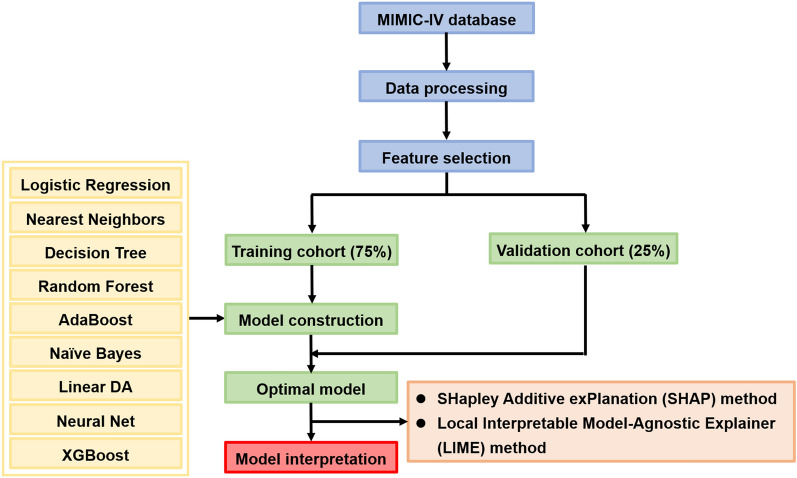
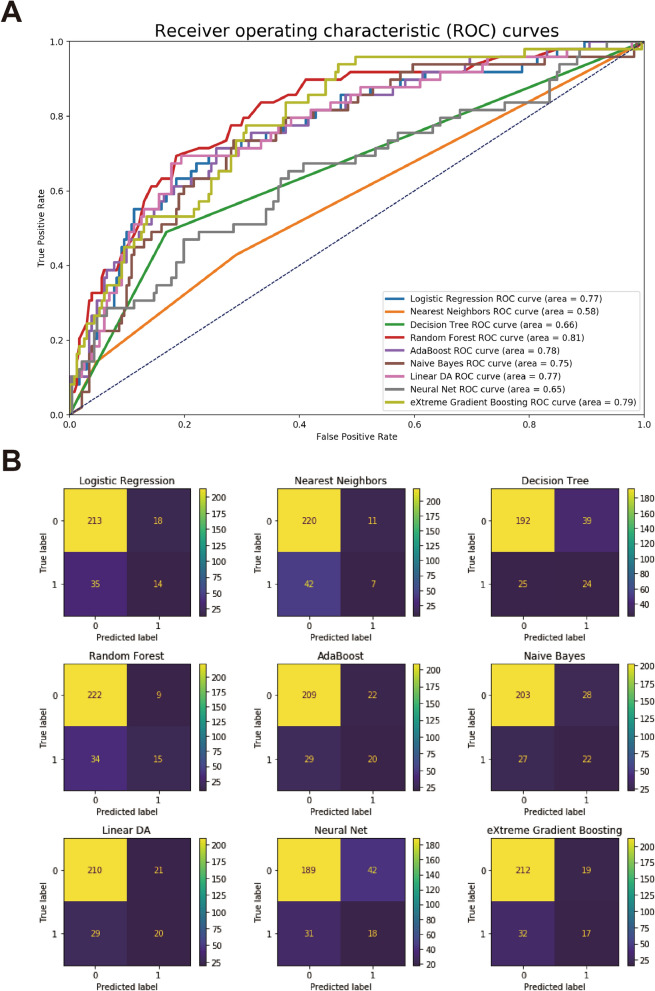
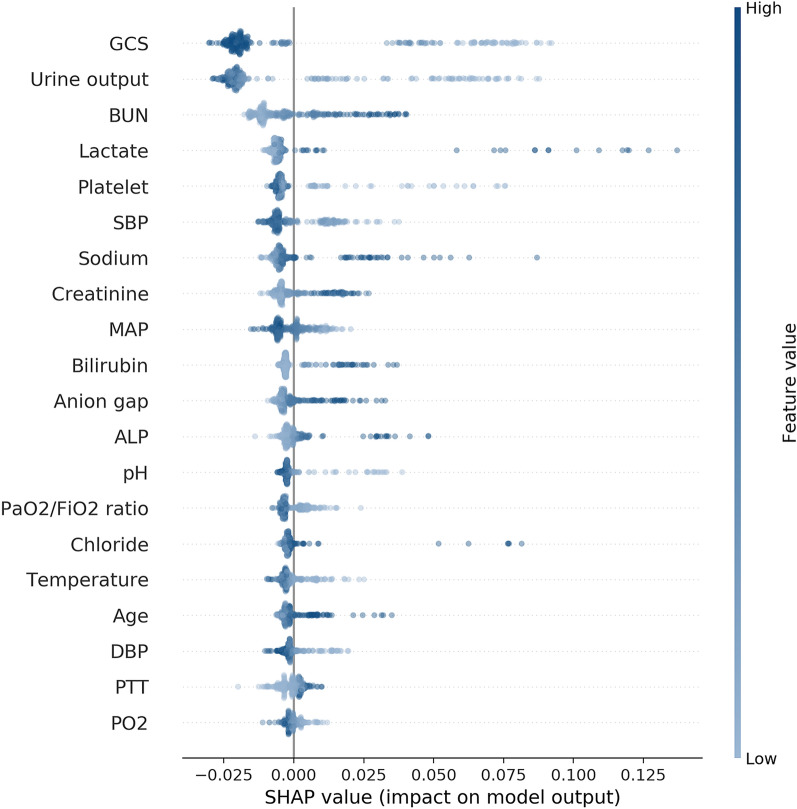
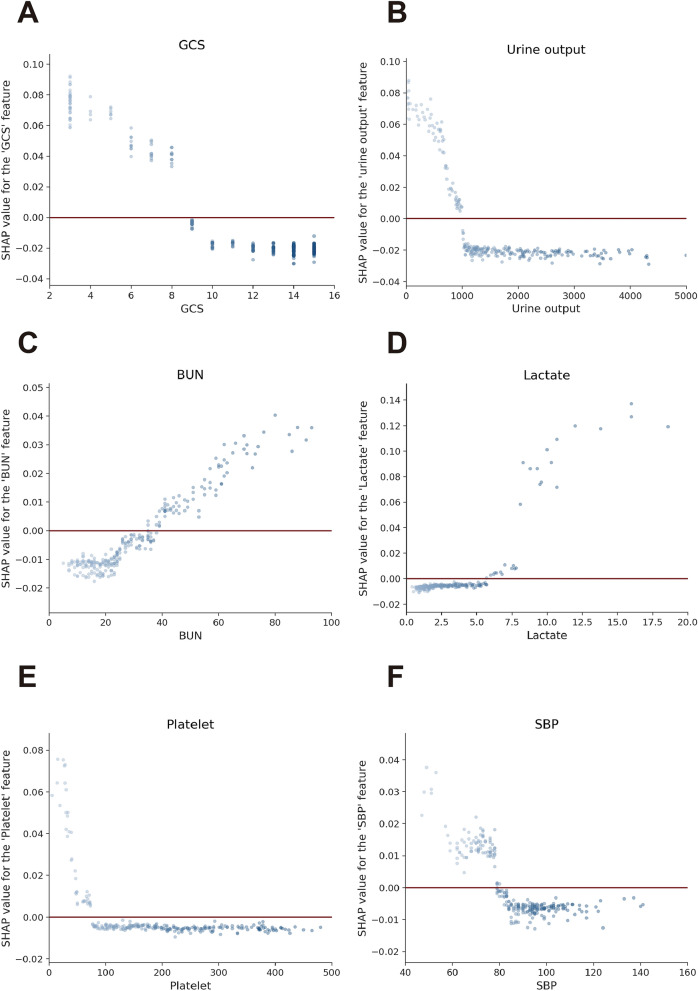
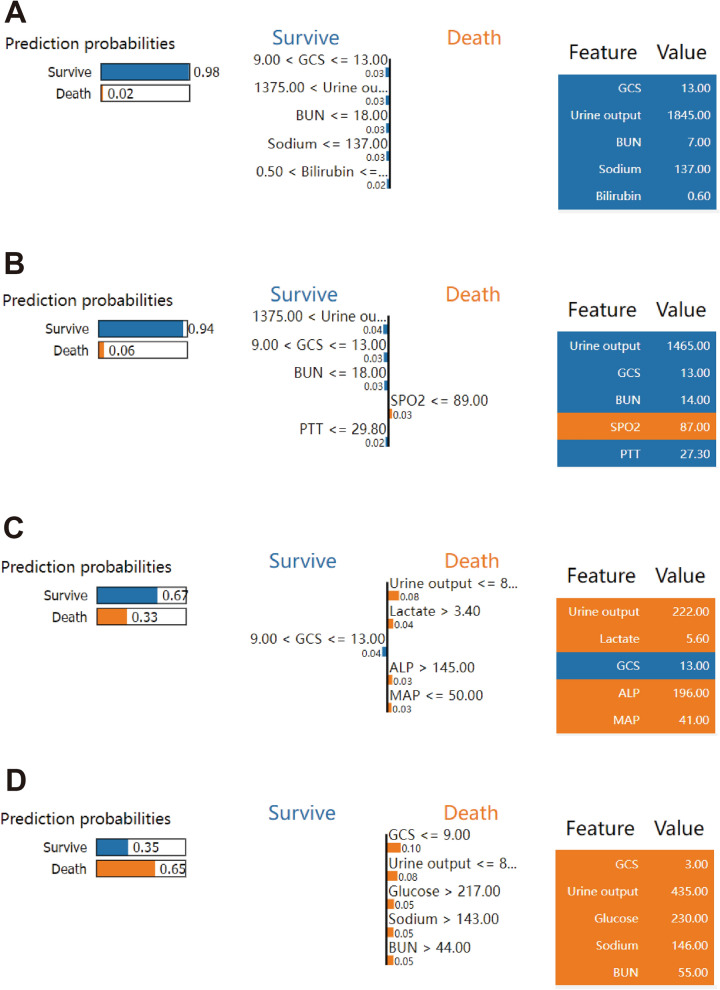
INTRODUCTION: Septic patients requiring intensive care unit (ICU) readmission are at high risk of mortality, but research focusing on the association of ICU readmission due to sepsis and mortality is limited. The aim of this study was to develop and validate a machine learning (ML) model for predicting in-hospital mortality in septic patients readmitted to the ICU using routinely available clinical data. METHODS: The data used in this study were obtained from the Medical Information Mart for Intensive Care (MIMIC-IV, v1.0) database, between 2008 and 2019. The study cohort included patients with sepsis requiring ICU readmission. The data were randomly split into a training (75%) data set and a validation (25%) data set. Nine popular ML models were developed to predict mortality in septic patients readmitted to the ICU. The model with the best accuracy and area under the curve (A.C.) in the validation cohort was defined as the optimal model and was selected for further prediction studies. The SHAPELY Additive explanations (SHAP) values and Local Interpretable Model-Agnostic Explanation (LIME) methods were used to improve the interpretability of the optimal model. RESULTS: A total of 1117 septic patients who had required ICU readmission during the study period were enrolled in the study. Of these participants, 434 (38.9%) were female, and the median (interquartile range [IQR]) age was 68.6 (58.4-79.2) years. The median (IQR) ICU interval duration was 2.60 (0.64-5.78) days. After feature selection, 31 of 47 clinical factors were ultimately chosen for use in model construction. Of the nine ML models tested, the best performance was achieved with the random forest (RF) model, with an A.C. of 0.81, an accuracy of 85% and a precision of 62% in the validation cohort. The SHAP summary analysis revealed that Glasgow Coma Scale score, urine output, blood urea nitrogen, lactate, platelet count and systolic blood pressure were the top six most important factors contributing to the RF model. Additionally, the LIME method demonstrated how the RF model works in terms of explaining risk of death prediction in septic patients requiring ICU readmission. CONCLUSION: The ML models reported here showed a good prognostic prediction ability in septic patients requiring ICU readmission. Of the features selected, the parameters related to organ perfusion made the largest contribution to outcome prediction during ICU readmission in septic patients.
Overview
The claims and statistics of this paper haven’t been checked yet.
Free: it reads the open-access text and checks the first 5 claims that cite a source we can check. Create a free account to check every claim.
Integrity signals
Registry
Cites
Statistics
Figures
Verification
Claims the paper makes
The claims and statistics of this paper haven’t been checked yet.
Free: it reads the open-access text and checks the first 5 claims that cite a source we can check. Create a free account to check every claim.
Claims other papers make about this one
Each is checked against this paper’s own text: does it say what the citing paper says it does?
The source backs part of the claim, not all of it — or backs it for a different population, condition or comparison.
In the citing paper
“Most published studies rely on retrospective data and are often based on a single institution or dataset [12–17].”
From Explainable AI for critical care: a systematic review of interpretable models for sepsis and ICU mortality prediction (2026) · cites this paper as [16]
Experimental — accuracy not yet measuredThe source backs part of the claim, not all of it — or backs it for a different population, condition or comparison.
In the citing paper
“These interpretability strategies enabled the identification of key physiological variables driving model predictions, such as respiratory rate (RR), Glasgow Coma Scale, mean arterial pressure (MAP), lactate, creatinine, heart rate (HR), blood urea nitrogen (BUN), body temperature, platelet count, and urine output [7, 12–18, 22, 24, 25, 39].”
From Explainable AI for critical care: a systematic review of interpretable models for sepsis and ICU mortality prediction (2026) · cites this paper as [16]
Experimental — accuracy not yet measuredThe cited source says what the claim attributes to it.
In the citing paper
“Interpretability methods were widely applied across these studies, with SHAP emerging as the most frequently used technique [12, 13, 15, 16, 18, 19, 22, 24, 39].”
From Explainable AI for critical care: a systematic review of interpretable models for sepsis and ICU mortality prediction (2026) · cites this paper as [16]
Self-check
Percentages, sums and reported differences re-computed from the paper’s own numbers.
The self-check needs the paper’s full text.
Citations
Cites
The third international consensus definitions for sepsis and septic shock (Sepsis-3).
Singer, M., Deutschman, C. S., Seymour, C. W., Shankar-Hari, M., Annane, D., Bauer, M., Bellomo, R., Bernard, G. R., Chiche, J.-D., Coopersmith, C. M., et al. (2016) · JAMA · doi:10.1001/jama.2016.0287 · Cited by 28,250 · cited 1×
“Septis, defined as life-threatening organ dysfunction caused by a dysregulated host response to infection, is among the most important reasons for ICU readmission [6] and has a considerable negative impact on critically ill patients [7].”
BackgroundFrom local explanations to global understanding with explainable AI for trees
Lundberg, S. M., Erion, G., Chen, H., DeGrave, A., Prutkin, J. M., Nair, B., Katz, R., Himmelfarb, J., Bansal, N., & Lee, S.-I. (2020) · Nature Machine Intelligence · doi:10.1038/s42256-019-0138-9 · Cited by 10,551 · cited 1×
“For this reason, Lundberg and colleagues first identified an efficient and trustworthy method to significantly enhance the interpretability of ML models by incorporating desirable properties from game theory [26].”
MethodMIMIC-III, a freely accessible critical care database
Johnson, A. E. W., Pollard, T. J., Shen, L., Lehman, L.-W. H., Feng, M., Ghassemi, M., Moody, B., Szolovits, P., Anthony Celi, L., & Mark, R. G. (2016) · Scientific Data · doi:10.1038/sdata.2016.35 · Cited by 8,141 · cited 1×
“Therefore, the ethical approval statement and the need for informed consent from each individual patient were waived for this study because the project did not impact clinical care and all protected health information was deidentified [30].”
BackgroundSterne, J. A. C., White, I. R., Carlin, J. B., Spratt, M., Royston, P., Kenward, M. G., Wood, A. M., & Carpenter, J. R. (2009) · BMJ · doi:10.1136/bmj.b2393 · Cited by 7,299 · cited 1×
“For this study, we proposed a five-stage feature selection method: (1) find columns with a missing fraction [ 50%, and features with a missing percentage of not[50% were retained and filled in with the method of multivariate imputation by chained equations in the R statistical environment [37] (ESM Table S2); (2) find…”
MethodThe Surviving Sepsis Campaign Guidelines Committee including The Pediatric Subgroup*, Dellinger, R. P., Levy, M. M., Rhodes, A., Annane, D., Gerlach, H., Opal, S. M., Sevransky, J. E., Sprung, C. L., Douglas, I. S., et al. (2013) · Intensive Care Medicine · doi:10.1007/s00134-012-2769-8 · Cited by 7,290
Dellinger, R. P., Levy, M. M., Carlet, J. M., Bion, J., Parker, M. M., Jaeschke, R., Reinhart, K., Angus, D. C., Brun-Buisson, C., Beale, R., et al. (2008) · Intensive Care Medicine · doi:10.1007/s00134-007-0934-2 · Cited by 6,772
Surviving sepsis campaign: international guidelines for management of sepsis and septic shock 2021
Evans, L., Rhodes, A., Alhazzani, W., Antonelli, M., Coopersmith, C. M., French, C., Machado, F. R., Mcintyre, L., Ostermann, M., Prescott, H. C., et al. (2021) · Intensive Care Medicine · doi:10.1007/s00134-021-06506-y · Cited by 5,082 · cited 1×
“Despite constant updates to the Surviving Sepsis Campaign (SSC) guidelines between 2004 and 2021 [12–16], the incidence of sepsis-related deaths remained unacceptably high [9].”
Seymour, C. W., Liu, V. X., Iwashyna, T. J., Brunkhorst, F. M., Rea, T. D., Scherag, A., Rubenfeld, G., Kahn, J. M., Shankar-Hari, M., Singer, M., et al. (2016) · JAMA · doi:10.1001/jama.2016.0288 · Cited by 3,939
Surviving Sepsis Campaign: International guidelines for management of sepsis and septic shock: 2016.
Rhodes, A., Evans, L. E., Alhazzani, W., Levy, M. M., Antonelli, M., Ferrer, R., Kumar, A., Sevransky, J. E., Sprung, C. L., Nunnally, M. E., et al. (2017) · Critical Care Medicine · doi:10.1097/ccm.0000000000002255 · Cited by 3,652
Surviving Sepsis Campaign guidelines for management of severe sepsis and septic shock
Dellinger, R. P., Carlet, J. M., Masur, H., Gerlach, H., Calandra, T., Cohen, J., Gea-Banacloche, J., Keh, D., Marshall, J. C., Parker, M. M., et al. (2004) · Intensive Care Medicine · doi:10.1007/s00134-004-2210-z · Cited by 3,321
Collins, G. S., Reitsma, J. B., Altman, D. G., & Moons, K. G. M. (2015) · Annals of Internal Medicine · doi:10.7326/m14-0697 · Cited by 3,267
Surviving Sepsis Campaign guidelines for management of severe sepsis and septic shock
Dellinger, R. P., Carlet, J. M., Masur, H., Gerlach, H., Calandra, T., Cohen, J., Gea-Banacloche, J., Keh, D., Marshall, J. C., Parker, M. M., et al. (2004) · Critical Care Medicine · doi:10.1097/01.ccm.0000117317.18092.e4 · Cited by 3,018 · cited 1×
“Despite constant updates to the Surviving Sepsis Campaign (SSC) guidelines between 2004 and 2021 [12–16], the incidence of sepsis-related deaths remained unacceptably high [9].”
Cecconi, M., Evans, L., Levy, M., & Rhodes, A. (2018) · The Lancet · doi:10.1016/s0140-6736(18)30696-2 · Cited by 2,254
Explainable machine-learning predictions for the prevention of hypoxaemia during surgery
Lundberg, S. M., Nair, B., Vavilala, M. S., Horibe, M., Eisses, M. J., Adams, T., Liston, D. E., Low, D. K.-W., Newman, S.-F., Kim, J., et al. (2018) · Nature Biomedical Engineering · doi:10.1038/s41551-018-0304-0 · Cited by 1,967 · cited 1×
“This powerful method has also been successfully used in prediction of the prevention of hypoxemia in patients during surgery [27], prediction of the development of acute kidney injury in patients following cardiac surgery [28] and prediction of sepsis in patients with COVID-19 [29].”
MethodIncidence and trends of sepsis in US hospitals using clinical vs claims data, 2009-2014.
Rhee, C., Dantes, R., Epstein, L., Murphy, D. J., Seymour, C. W., Iwashyna, T. J., Kadri, S. S., Angus, D. C., Danner, R. L., Fiore, A. E., et al. (2017) · JAMA · doi:10.1001/jama.2017.13836 · Cited by 1,884 · cited 2×
“Despite constant updates to the Surviving Sepsis Campaign (SSC) guidelines between 2004 and 2021 [12–16], the incidence of sepsis-related deaths remained unacceptably high [9].”
BackgroundCharlson Comorbidity Index: A Critical Review of Clinimetric Properties
Charlson, M. E., Carrozzino, D., Guidi, J., & Patierno, C. (2022) · Psychotherapy and Psychosomatics · doi:10.1159/000521288 · Cited by 1,686 · cited 1×
“Then, we collected data on comorbidities, including hypertension, diabetes, congestive heart failure, cerebrovascular disease, chronic pulmonary disease, liver disease, renal disease and tumor, and we calculated the Charlson Comorbidity Index (CCI) [33].”
MethodRecognizing Sepsis as a Global Health Priority — A WHO Resolution
Reinhart, K., Daniels, R., Kissoon, N., Machado, F. R., Schachter, R. D., & Finfer, S. (2017) · New England Journal of Medicine · doi:10.1056/nejmp1707170 · Cited by 1,356 · cited 1×
“7 million persons annually in the USA alone, with an estimated mortality of 10–40% [9, 10], and it is increasingly recognized as a serious, worldwide public health priority [11].”
BackgroundKripalani, S., Jackson, A. T., Schnipper, J. L., & Coleman, E. A. (2007) · Journal of Hospital Medicine · doi:10.1002/jhm.228 · Cited by 821 · cited 1×
“The transition of patients from the intensive care unit (ICU) to a hospital ward is one of the highest-risk transitions of care [1, 2].”
BackgroundLe Gall, J.-R. (1996) · JAMA · doi:10.1001/jama.1996.03540100046027 · Cited by 735
Hou, N., Li, M., He, L., Xie, B., Wang, L., Zhang, R., Yu, Y., Sun, X., Pan, Z., & Wang, K. (2020) · Journal of Translational Medicine · doi:10.1186/s12967-020-02620-5 · Cited by 568 · cited 1×
“These findings are in keeping with previous observational studies that confirmed the important role of applying artificial intelligence to predict mortality in patients with sepsis [20, 40].”
ResultGall, J. R. L. (1996) · JAMA · doi:10.1001/jama.276.10.802 · Cited by 543
Clinical applications of machine learning algorithms: beyond the black box
Watson, D. S., Krutzinna, J., Bruce, I. N., Griffiths, C. E., McInnes, I. B., Barnes, M. R., & Floridi, L. (2019) · BMJ · doi:10.1136/bmj.l886 · Cited by 450 · cited 1×
“However, almost all of the ML models are black boxes, and the decision-making procedure is complex and hard to interpret and explain in detail [24, 25].”
BackgroundPrediction of the development of acute kidney injury following cardiac surgery by machine learning
Tseng, P.-Y., Chen, Y.-T., Wang, C.-H., Chiu, K.-M., Peng, Y.-S., Hsu, S.-P., Chen, K.-L., Yang, C.-Y., & Lee, O. K.-S. (2020) · Critical Care · doi:10.1186/s13054-020-03179-9 · Cited by 442 · cited 1×
“This powerful method has also been successfully used in prediction of the prevention of hypoxemia in patients during surgery [27], prediction of the development of acute kidney injury in patients following cardiac surgery [28] and prediction of sepsis in patients with COVID-19 [29].”
MethodInfluentialRosenberg, A. L., & Watts, C. (2000) · Chest · doi:10.1378/chest.118.2.492 · Cited by 386
Automated Identification of Adults at Risk for In-Hospital Clinical Deterioration
Escobar, G. J., Liu, V. X., Schuler, A., Lawson, B., Greene, J. D., & Kipnis, P. (2020) · New England Journal of Medicine · doi:10.1056/nejmsa2001090 · Cited by 314 · cited 1×
“Delays in identifying clinical deterioration in critically ill patients usually result in increased morbidity and mortality [17] while, conversely, early prediction of deterioration could provide a critical window of time for clinical interventions that might reduce severity [18].”
BackgroundJohnson, A. E. W., Kramer, A. A., & Clifford, G. D. (2013) · Critical Care Medicine · doi:10.1097/ccm.0b013e31828a24fe · Cited by 297 · cited 5×
“Finally, we calculated the Glasgow Coma Scale (GCS), SOFA score [34], Oxford Acute Severity of Illness Score (OASIS) [35] and Logistic Organ Dysfunction System (LODS) score [36].”
MethodInfluentialBig data and black-box medical algorithms
Price, W. N. (2018) · Science Translational Medicine · doi:10.1126/scitranslmed.aao5333 · Cited by 254 · cited 1×
“ML models are usually considered to be a black box: the data go in and the decisions come out, but the processes between input and output are opaque [42–44].”
BackgroundExplainability and artificial intelligence in medicine
Reddy, S. (2022) · The Lancet Digital Health · doi:10.1016/s2589-7500(22)00029-2 · Cited by 234 · cited 1×
“However, almost all of the ML models are black boxes, and the decision-making procedure is complex and hard to interpret and explain in detail [24, 25].”
BackgroundMachine learning model for early prediction of acute kidney injury (AKI) in pediatric critical care
Dong, J., Feng, T., Thapa-Chhetry, B., Cho, B. G., Shum, T., Inwald, D. P., Newth, C. J. L., & Vaidya, V. U. (2021) · Critical Care · doi:10.1186/s13054-021-03724-0 · Cited by 233 · cited 1×
“Delays in identifying clinical deterioration in critically ill patients usually result in increased morbidity and mortality [17] while, conversely, early prediction of deterioration could provide a critical window of time for clinical interventions that might reduce severity [18].”
BackgroundOpening the black box of machine learning
Medicine, T. L. R. (2018) · The Lancet Respiratory Medicine · doi:10.1016/s2213-2600(18)30425-9 · Cited by 172
The Association Between ICU Readmission Rate and Patient Outcomes*
Kramer, A. A., Higgins, T. L., & Zimmerman, J. E. (2013) · Critical Care Medicine · doi:10.1097/ccm.0b013e3182657b8a · Cited by 165 · cited 2×
“such as increased mortality and increased lengths of stay [3].”
BackgroundHu, C., Li, L., Huang, W., Wu, T., Xu, Q., Liu, J., & Hu, B. (2022) · Infectious Diseases and Therapy · doi:10.1007/s40121-022-00628-6 · Cited by 160 · cited 4×
“This result is partly in agreement with our earlier observations, which showed that GCS score, BUN and cumulative urine output on day 1 were the key factors contributing to the XGBoost model in predicting mortality among patients with sepsis [22].”
BackgroundResultInfluentialSelf-citationThe four dimensions of contestable AI diagnostics - A patient-centric approach to explainable AI
Ploug, T., & Holm, S. (2020) · Artificial Intelligence in Medicine · doi:10.1016/j.artmed.2020.101901 · Cited by 148 · cited 1×
“Explainability of ML is of great importance to help enhance the trust of medical professionals, because it shows why predictions are made and how parameters contribute to the model [23].”
BackgroundThe Epidemiology of Intensive Care Unit Readmissions in the United States
Brown, S. E. S., Ratcliffe, S. J., Kahn, J. M., & Halpern, S. D. (2012) · American Journal of Respiratory and Critical Care Medicine · doi:10.1164/rccm.201109-1720oc · Cited by 136 · cited 1×
“Septis, defined as life-threatening organ dysfunction caused by a dysregulated host response to infection, is among the most important reasons for ICU readmission [6] and has a considerable negative impact on critically ill patients [7].”
BackgroundBreaking into the black box of artificial intelligence
Savage, N. (2022) · Nature · doi:10.1038/d41586-022-00858-1 · Cited by 124
Applying Artificial Intelligence to Identify Physiomarkers Predicting Severe Sepsis in the PICU*
Kamaleswaran, R., Akbilgic, O., Hallman, M. A., West, A. N., Davis, R. L., & Shah, S. H. (2018) · Pediatric Critical Care Medicine · doi:10.1097/pcc.0000000000001666 · Cited by 114
Factors associated with increased risk of readmission to intensive care in Australia
Renton, J., Pilcher, D. V., Santamaria, J. D., Stow, P. J., Bailey, M., Hart, G. K., & Duke, G. J. (2011) · Intensive Care Medicine · doi:10.1007/s00134-011-2318-x · Cited by 98 · cited 1×
“ICU readmission is associated with higher mortality and longer ICU and hospital lengths of stay [4, 5].”
Backgroundvan Doorn, W. P. T. M., Stassen, P. M., Borggreve, H. F., Schalkwijk, M. J., Stoffers, J., Bekers, O., & Meex, S. J. R. (2021) · PLOS ONE · doi:10.1371/journal.pone.0245157 · Cited by 96
Evaluating machine learning models for sepsis prediction: A systematic review of methodologies
Deng, H., Sun, M., Wang, Y., Zeng, J., Yuan, T., Li, T., Li, D.-H., Chen, W., Zhou, P., Wang, Q., et al. (2021) · iScience · doi:10.1016/j.isci.2021.103651 · Cited by 84
Banerjee, S., Mohammed, A., Wong, H. R., Palaniyar, N., & Kamaleswaran, R. (2021) · Frontiers in Immunology · doi:10.3389/fimmu.2021.592303 · Cited by 83
A Machine Learning-Based Prediction of Hospital Mortality in Patients With Postoperative Sepsis
Yao, R.-Q., Jin, X., Wang, G.-W., Yu, Y., Wu, G.-S., Zhu, Y.-B., Li, L., Li, Y.-X., Zhao, P.-Y., Zhu, S.-Y., et al. (2020) · Frontiers in Medicine · doi:10.3389/fmed.2020.00445 · Cited by 79 · cited 1×
“These findings are in keeping with previous observational studies that confirmed the important role of applying artificial intelligence to predict mortality in patients with sepsis [20, 40].”
ResultSelf-citationHosein, F. S., Roberts, D. J., Turin, T. C., Zygun, D., Ghali, W. A., & Stelfox, H. T. (2014) · Critical Care · doi:10.1186/s13054-014-0715-6 · Cited by 67 · cited 1×
“The transition of patients from the intensive care unit (ICU) to a hospital ward is one of the highest-risk transitions of care [1, 2].”
BackgroundWernly, B., Mamandipoor, B., Baldia, P. H., Jung, C., & Osmani, V. (2020) · International Journal of Medical Informatics · doi:10.1016/j.ijmedinf.2020.104312 · Cited by 62
Temporal Differential Expression of Physiomarkers Predicts Sepsis in Critically Ill Adults
Mohammed, A., van Wyk, F., Chinthala, L. K., Khojandi, A., Davis, R. L., Coopersmith, C. M., & Kamaleswaran, R. (2020) · Shock · doi:10.1097/shk.0000000000001670 · Cited by 48 · cited 1×
“4 Recently, the combination of higher-fre-quency physiological data streams and artificial intelligence offer promising applications for predicting the onset of sepsis, which can allow for early identification of at-risk patients [45–47].”
BackgroundPeltan, I. D., McLean, S. R., Murnin, E., Butler, A. M., Wilson, E. L., Samore, M. H., Hough, C. L., Dean, N. C., Bledsoe, J. R., & Brown, S. M. (2022) · JAMA Network Open · doi:10.1001/jamanetworkopen.2021.47882 · Cited by 35 · cited 1×
“7 million persons annually in the USA alone, with an estimated mortality of 10–40% [9, 10], and it is increasingly recognized as a serious, worldwide public health priority [11].”
BackgroundThe Utility of ICU Readmission as a Quality Indicator and the Effect of Selection*
Maharaj, R., Terblanche, M., & Vlachos, S. (2018) · Critical Care Medicine · doi:10.1097/ccm.0000000000003002 · Cited by 32 · cited 1×
“Additionally, survivors of critical illness with sepsis usually have a high ICU readmission rate [38].”
BackgroundPrediction of Sepsis in COVID-19 Using Laboratory Indicators
Tang, G., Luo, Y., Lu, F., Li, W., Liu, X., Nan, Y., Ren, Y., Liao, X., Wu, S., Jin, H., et al. (2021) · Frontiers in Cellular and Infection Microbiology · doi:10.3389/fcimb.2020.586054 · Cited by 24 · cited 1×
“This powerful method has also been successfully used in prediction of the prevention of hypoxemia in patients during surgery [27], prediction of the development of acute kidney injury in patients following cardiac surgery [28] and prediction of sepsis in patients with COVID-19 [29].”
MethodInfluentialPrediction of Sepsis Related Mortality: An Optimization Approach
Agor, J., Paramita, N. L. P. S. P., & Özaltın, O. Y. (2021) · IEEE Journal of Biomedical and Health Informatics · doi:10.1109/jbhi.2021.3096470 · Cited by 12 · cited 1×
“Recently, a considerable body of literature has grown up around the theme of early detection of clinical outcomes in sepsis by utilizing advanced technologies [19–22], such as machine learning (ML) and artificial intelligence.”
BackgroundDellinger, R. P., Levy, M. M., Carlet, J. M., Bion, J., Parker, M. M., Jaeschke, R., Reinhart, K., Angus, D. C., Brun-Buisson, C., Beale, R., et al. (2008) · Critical Care Medicine · doi:10.1097/01.ccm.0000298158.12101.41 · Cited by 9
Cited by
A., S., & R., S. (2023) · Decision Analytics Journal · doi:10.1016/j.dajour.2023.100230 · Cited by 432
Baker, S., & Xiang, W. (2023) · IEEE Communications Surveys & Tutorials · doi:10.1109/comst.2023.3256323 · Cited by 178
“In another study focusing on an adult cohort of septic patients, mortality was predicted using an RF and then explained with both SHAP and LIME scores [227].”
MethodExplainable AI approaches in deep learning: Advancements, applications and challenges
Hosain, M. T., Jim, J. R., Mridha, M. F., & Kabir, M. M. (2024) · Computers & Electrical Engineering · doi:10.1016/j.compeleceng.2024.109246 · Cited by 167
Hassan, S. U., Abdulkadir, S. J., Zahid, M. S. M., & Al-Selwi, S. M. (2025) · Computers in Biology and Medicine · doi:10.1016/j.compbiomed.2024.109569 · Cited by 108
Zhang, G., Shao, F., Wei, Y., Wu, J., Qi, X., Gao, J., Shao, R., Tang, Z., & Wang, T. (2024) · European journal of medical research · doi:10.1186/s40001-024-01756-0 · Cited by 79
“Lastly, to strengthen the model’s credibility, we recruited patients from three reputable medical centers, namely MIMIC-IV, eICU-CRD, and AmsterdamUM-Cdb, compared to single-center studies that have been prevalent in previous predictive models for sepsis [19, 23].”
Metadata
- Authors
- Hu, C., Li, L., Li, Y., Wang, F., Hu, B., & Peng, Z.
- Affiliations
- Zhongnan Hospital of Wuhan University (CN)
- Corresponding author
- Hu, Bo
- Peng, Zhiyong
- Venue
- Infectious Diseases and Therapy
- Published
- 2022-07-14
- Volume
- 11
- Issue
- 4
- Pages
- 1695-1713
- ISSN
- 2193-6382 (ISSN-L)
- 2193-8229
- PMC
- PMC9282631
- OpenAlex
- W4285388690
- Cited by
- 63
- References
- 49
- Citations by year
- 2026: 13 · 2025: 16 · 2024: 21 · 2023: 13
- FWCI
- 9.02
- Type
- journal article
- Language
- en
- Open access
- gold
- doi.org
- Licence
- cc-by-nc
- creativecommons.org/licenses/by-nc/4.0 (tdm)
- creativecommons.org/licenses/by-nc/4.0 (vor)
- Locations
- Infectious Diseases and Therapy (publishedVersion, cc-by-nc)
- PubMed Central (publishedVersion, cc-by-nc)
- PubMed (publishedVersion)
- Funders
- National Natural Science Foundation of China (81772046, 81971816)
- Special Project for Significant New Drug Research and Development in the Major National Science and Technology Projects of China (2020ZX09201007)
- Subject Cultivation Project of Zhongnan Hospital of Wuhan University (ZNXKPY2021001, ZNXKPY2021002)
- Translational Medicine and Interdisciplinary Research Joint Fund of Zhongnan Hospital of Wuhan University (ZNJC202011)
- the Open Project Program of the Jiangsu Provincial Key Laboratory of Critical Care Medicine (JSKLCCM-2021-02-003)
- Topics
- Health Sciences › Medicine › Critical Care and Intensive Care Medicine › Sepsis Diagnosis and Treatment
- Physical Sciences › Computer Science › Artificial Intelligence › Machine Learning in Healthcare
- Health Sciences › Health Professions › Health Information Management › Artificial Intelligence in Healthcare
- Keywords
- sepsis, in-hospital mortality, ICU readmission, mortality prediction, explainable machine learning, SHAP, lime, random forest, prognostic factors, Glasgow Coma Scale, lactate, urine output, MIMIC-IV, intensive care unit patients, clinical decision support, risk stratification, sepsis severity scoring systems, sepsis mortality
About these checks
Registry, retraction, Cites and statistics results are computed, not judged, with one exception: a printed reference that no index lists is read once by a model before it counts as a citation error. Claims are extracted by a model and kept only when their quote appears verbatim in the text; each cited source is then checked, with a model’s help, for whether it says what the claim relies on. Those verdicts can be wrong — read the claim’s quote and the cited source before relying on one.
Statistics and arithmetic are recomputed, not judged.
Confidence bands are shown only for fields calibrated on our annotated test set. None is calibrated yet, so no band is shown.
What counts as a claim ›How we measure confidence ›How we check this ›
Are you an author, or do you see a problem with this page? Request a review
Data sources
Bibliographic data: Semantic Scholar, OpenAlex, Crossref.
Contains information from the Semantic Scholar Academic Graph Datasets, made available under the ODC Attribution License (ODC-BY 1.0).
Semantic Scholar’s data is described in: Kinney, R., et al. (2023). The Semantic Scholar Open Data Platform. arXiv:2301.10140.
