

Established and Emerging Lipid-Lowering Drugs for Primary and Secondary Cardiovascular Prevention
Open accessThe DOI matches its Crossref record; 204 of the 207 references it cites were found in a registry or an index; 164 of the 253 sources its claims cite were checked for support.
Abstract
Despite treatment with statins, patients with elevated low-density lipoprotein cholesterol (LDL-C) and triglycerides remain at increased risk for adverse cardiovascular events. Consequently, novel pharmaceutical drugs have been developed to control and modify the composition of blood lipids to ultimately prevent fatal cardiovascular events in patients with dyslipidaemia. This article reviews established and emerging lipid-lowering drugs regarding their mechanism of action, development stage, ongoing clinical trials, side effects, effect on blood lipids and reduction in cardiovascular morbidity and mortality. We conducted a keyword search to identify studies on established and emerging lipid modifying drugs. Results were summarized in a narrative overview. Established pharmaceutical treatment options include the Niemann-Pick-C1 like-1 protein (NPC1L1) inhibitor ezetimibe, the protein convertase subtilisin-kexin type 9 (PCSK9) inhibitors alirocumab and evolocumab, fibrates as peroxisome proliferator receptor alpha (PPAR-α) activators, and the omega-3 fatty acid icosapent ethyl. Statins are recommended as the first-line therapy for primary and secondary cardiovascular prevention in patients with hypercholesterinaemia and hypertriglyceridemia. For secondary prevention in hypercholesterinaemia, second-line options such as statin add-on or statin-intolerant treatments are ezetimibe, alirocumab and evolocumab. For secondary prevention in hypertriglyceridemia, second-line options such as statin add-on or statin-intolerant treatments are icosapent ethyl and fenofibrate. Robust data for these add-on therapeutics in primary cardiovascular prevention remains scarce. Recent biotechnological advances have led to the development of innovative small molecules (bempedoic acid, lomitapide, pemafibrate, docosapentaenoic and eicosapentaenoic acid), antibodies (evinacumab), antisense oligonucleotides (mipomersen, volanesorsen, pelcarsen, olezarsen), small interfering RNA (inclisiran, olpasiran), and gene therapies for patients with dyslipidemia. These molecules specifically target new cellular pathways, such as the adenosine triphosphate-citrate lyase (bempedoic acid), PCSK9 (inclisiran), angiopoietin-like 3 (ANGPTL3: evinacumab), microsomal triglyceride transfer protein (MTP: lomitapide), apolipoprotein B-100 (ApoB-100: mipomersen), apolipoprotein C-III (ApoC-III: volanesorsen, olezarsen), and lipoprotein (a) (Lp(a): pelcarsen, olpasiran). The authors are hopeful that the development of new treatment modalities alongside new therapeutic targets will further reduce patients' risk of adverse cardiovascular events. Apart from statins, data on new drugs' use in primary cardiovascular prevention remain scarce. For their swift adoption into clinical routine, these treatments must demonstrate safety and efficacy as well as cost-effectiveness in randomized cardiovascular outcome trials.
Overview
CoChat Summary
TL;DR
This narrative review summarizes established and emerging lipid-lowering drugs for primary and secondary cardiovascular prevention, with emphasis on mechanisms, trial results, side effects, and guideline positioning. It concludes that statins remain first-line, while newer agents such as bempedoic acid, inclisiran, pelacarsen, and olpasiran may expand treatment options but still need stronger outcomes and cost-effectiveness data.
Key findings
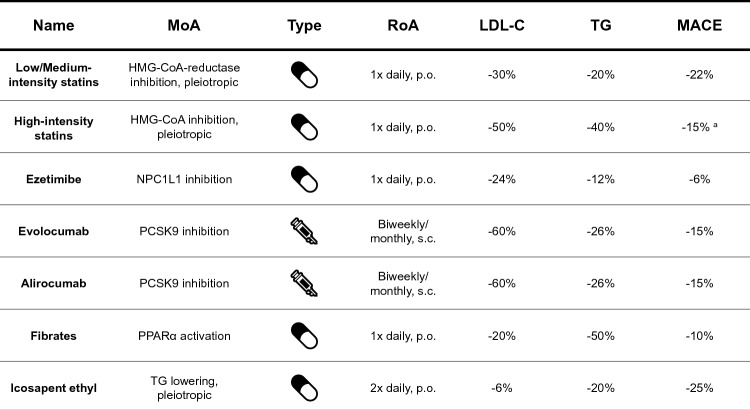
- Statins are first-line therapy; a 1 mmol/L LDL-C reduction was associated with a 22% lower risk of MACE, and low-/moderate-intensity statins reduced MACE by 22% (95% CI 19–24), with an additional 15% reduction from intensification.
- Ezetimibe added to simvastatin in 18,144 post-ACS patients reduced MACE by 6% (95% CI 1–11, p = 0.016); in EWTOPIA 75, ezetimibe monotherapy in 3,796 patients aged ≥75 years reduced MACE by 34% (HR 0.66, 95% CI 0.50–0.86, p = 0.002).
- PCSK9 inhibitors reduced LDL-C by about 60% and lowered MACE by 15% in FOURIER and ODYSSEY; the trials randomized 27,564 and 18,924 patients, respectively.
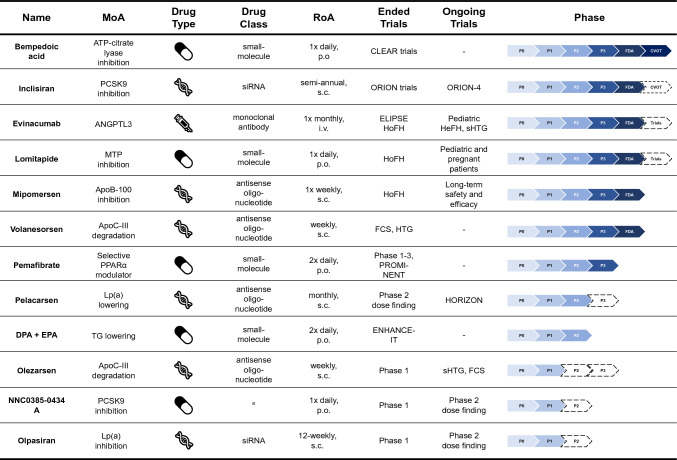
- Bempedoic acid in CLEAR Outcomes randomized 13,970 statin-intolerant/high-risk patients and reduced MACE by 13% (HR 0.87, 95% CI 0.79–0.96, p = 0.004) with a 21.1% greater LDL-C reduction versus placebo; pemafibrate lowered triglycerides by 26% in PROMINENT but did not significantly reduce MACE (HR 1.03, 95% CI 0.91–1.15).
Methods
- Narrative review of established and emerging lipid-lowering drugs for primary and secondary cardiovascular prevention, covering mechanism of action, developmental stage, safety, lipid effects, and cardiovascular outcomes.
- The authors state they conducted a keyword search to identify studies on established and emerging lipid-modifying drugs and summarized results in a narrative overview.
- Evidence synthesized includes guidelines, randomized controlled trials, meta-analyses, and ongoing cardiovascular outcomes trials.
Limitations
- The paper states that robust data for add-on therapies in primary cardiovascular prevention remain scarce.
- It also states that many new drugs still need to demonstrate safety, efficacy, and cost-effectiveness in randomized cardiovascular outcome trials before routine adoption.
- Evident from the text: this is a narrative review, so conclusions depend on heterogeneous studies and many outcomes are reported across different populations and follow-up periods rather than from one uniform analysis.
Model-written summary. Check it against the paper before relying on it.
Integrity signals
Registry
Cites
Statistics
Figures
Verification
Claims the paper makes
85 Valid · 15 Not valid · 32 Not checked · 13 Own results and interpretations
Some cited sources support this claim and some don’t — read each source’s verdict below.
In the paper
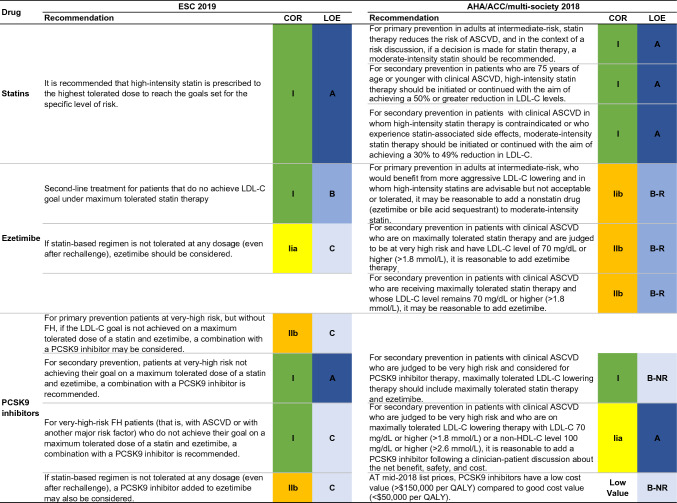
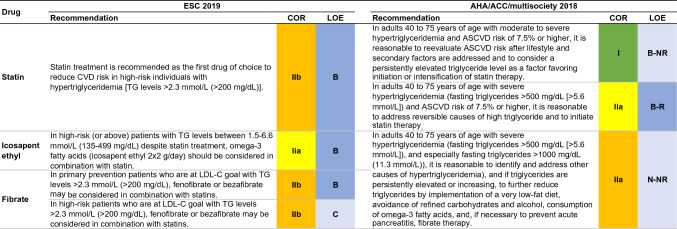
“For secondary prevention in hypertriglyceridemia, second-line options such as statin add-on or statin-intolerant treatments are icosapent ethyl and fenofibrate.”
§ Established and Emerging Lipid-Lowering Drugs for Primary and Secondary Cardiovascular Prevention > Abstract Despite treatment with statins, patients with elevated low-density lipoprotein cholesterol (LDL-C) and triglycerides remain at increased risk for adverse cardiovascular events. Consequently, novel pharmaceutical drugs have been developed to control and modify the composition of blood lipids to ultimately prevent fatal cardiovascular events in patients with dyslipidaemia. This article reviews established and emerging lipid-lowering drugs regarding their mechanism of action, development stage, ongoing clinical trials, side effects, effect on blood lipids and reduction in cardiovascular morbidity and mortality. We conducted a keyword search to identify studies on established and emerging lipid modifying drugs. Results were summarized in a narrative overview. Established pharmaceutical treatment options include the Niemann-Pick-C1 like-1 protein (NPC1L1) inhibitor ezetimibe, the protein convertase subtilisin-kexin type 9 (PCSK9) inhibitors alirocumab and evolocumab, fibrates as peroxisome proliferator receptor alpha (PPAR-α) activators, and the omega-3 fatty acid icosapent ethyl. Statins are recommended as the first-line therapy for primary and secondary cardiovascular prevention in patients with hypercholesterinaemia and hypertriglyceridemia. For secondary prevention in hypercholesterinaemia, second-line options such as statin add-on or statin-intolerant treatments are ezetimibe, alirocumab and evolocumab. For secondary prevention in hypertriglyceridemia, second-line options such as statin add-on or statin-intolerant treatments are icosapent ethyl and fenofibrate. Robust data for these add-on therapeutics in primary cardiovascular prevention remains scarce. Recent biotechnological advances have led to the development of innovative small molecules (bempedoic acid, lomitapide, pemafibrate, docosapentaenoic and eicosapentaenoic acid), antibodies (evinacumab), antisense oligonucleotides (mipomersen, volanesorsen, pelcarsen, olezarsen), small interfering RNA (inclisiran, olpasiran), and gene therapies for patients with dyslipidemia. These molecules specifically target new cellular pathways, such as the adenosine triphosphate-citrate lyase (bempedoic acid), PCSK9 (inclisiran), angiopoietin-like 3 (ANGPTL3: evinacumab), microsomal triglyceride transfer protein (MTP: lomitapide), apolipoprotein B-100 (ApoB-100: mipomersen), apolipoprotein C-III (ApoC-III: volanesorsen, olezarsen), and lipoprotein (a) (Lp(a): pelcarsen, olpasiran). The authors are hopeful that the development of new treatment modalities alongside new therapeutic targets will further reduce patients’ risk of adverse cardiovascular events. Apart from statins, data on new drugs’ use in primary cardiovascular prevention remain scarce. For their swift adoption into clinical routine, these treatments must demonstrate safety and efficacy as well as cost-effectiveness in randomized cardiovascular outcome trials.
What the sources say
- Partly supportedcites [19] Mach F Baigent C Catapano AL 2019 ESC/EAS Guidelines for the management of dyslipidaemias: lipid modification to reduce cardiovascular risk: the Task Force for the management of dyslipidaemias of the European Society of Cardiology (ESC) and European Atherosclerosis Society (EAS) Eur Heart J 2020 41 111 188 10.1093/eurheartj/ehz455 31504418 sourceExperimental — accuracy not yet measured
The drug-treatment recommendations for hypertriglyceridaemia consider icosapent ethyl with a statin for high-risk patients whose triglycerides remain elevated, and fenofibrate with a statin for certain patients who have reached their LDL-C goal. They do not present either drug as a statin-intolerance treatment; the statin-intolerance recommendations instead discuss ezetimibe and PCSK9 inhibitors. The claim also omits the conditions attached to the hypertriglyceridaemia recommendations. Page numbers were not available in our copy. (LLM, conf=0.88)
- Disputedcites [20] Grundy SM Stone NJ Bailey AL 2018 AHA/ACC/AACVPR/AAPA/ABC/ACPM/ADA/AGS/APhA/ASPC/NLA/PCNA Guideline on the management of blood cholesterol: a report of the American College of Cardiology/American Heart Association Task Force on Clinical Practice Guidelines Circulation 2019 139 e1082 e1143 10.1161/CIR.0000000000000625 30586774 PMC7403606 sourceExperimental — accuracy not yet measured
Section 3.1 (page unavailable) identifies fibrates as triglyceride-lowering drugs but says randomized trials do not support adding them to statin therapy—the opposite of presenting fenofibrate as a statin add-on for secondary prevention. The secondary-prevention guidance instead discusses ezetimibe and PCSK9 inhibitors as add-ons; the retrieved passages do not identify icosapent ethyl or fenofibrate as the claimed second-line options. (LLM, conf=0.86)
Checked by a reasoning model — may be wrong.
plain- Asserted: passes — The authors put it forward as true.
- Checkable: passes — It can be checked against evidence.
- Load-bearing: passes — The paper’s conclusions depend on it.
- Based: passes — The paper gives a reason why it holds.
- Partly supported
Some cited sources support this claim and some don’t — read each source’s verdict below.
In the paper
“For example, the recommended LDL-C level for very high-risk patients has been lowered from < 70 to < 55 mg/mL.”
§ Established and Emerging Lipid-Lowering Drugs for Primary and Secondary Cardiovascular Prevention > Introduction
What the sources say
- Not checked — no full text of the sourcecites [18] Wang N Fulcher J Abeysuriya N Intensive LDL cholesterol-lowering treatment beyond current recommendations for the prevention of major vascular events: a systematic review and meta-analysis of randomised trials including 327 037 participants Lancet Diabetes Endocrinol 2020 8 36 49 10.1016/S2213-8587(19)30388-2 31862150 source
- Partly supportedcites [19] Mach F Baigent C Catapano AL 2019 ESC/EAS Guidelines for the management of dyslipidaemias: lipid modification to reduce cardiovascular risk: the Task Force for the management of dyslipidaemias of the European Society of Cardiology (ESC) and European Atherosclerosis Society (EAS) Eur Heart J 2020 41 111 188 10.1093/eurheartj/ehz455 31504418 sourceExperimental — accuracy not yet measured
The LDL-C treatment-goals section recommends <55 mg/dL for very-high-risk patients. It does not establish that their previous goal was <70; it lists <70 mg/dL as the current goal for high-risk patients. The citing sentence also prints mg/mL, whereas the guideline uses mg/dL. (LLM, conf=0.88)
- Disputedcites [20] Grundy SM Stone NJ Bailey AL 2018 AHA/ACC/AACVPR/AAPA/ABC/ACPM/ADA/AGS/APhA/ASPC/NLA/PCNA Guideline on the management of blood cholesterol: a report of the American College of Cardiology/American Heart Association Task Force on Clinical Practice Guidelines Circulation 2019 139 e1082 e1143 10.1161/CIR.0000000000000625 30586774 PMC7403606 sourceExperimental — accuracy not yet measured
The guideline’s very-high-risk ASCVD recommendation (passage [1], page not specified) uses an LDL-C threshold of 70 mg/dL for considering additional treatment, not a lowered threshold of 55. Passage [7] likewise identifies ≥70 mg/dL as the trigger for adding nonstatin therapy. The guideline gives units in mg/dL, not mg/mL. (LLM, conf=0.90)
Checked by a reasoning model — may be wrong.
plainstates a cause- Asserted: passes — The authors put it forward as true.
- Checkable: passes — It can be checked against evidence.
- Load-bearing: unclear — It is unclear whether the paper’s conclusions depend on it.
- Based: passes — The paper gives a reason why it holds.
Some cited sources support this claim and some don’t — read each source’s verdict below.
In the paper
“These results were consistent across European countries [13–15].”
§ Established and Emerging Lipid-Lowering Drugs for Primary and Secondary Cardiovascular Prevention > Introduction
What the sources say
- Disputedcites [13] Vrablik M Seifert B Parkhomenko A Lipid-lowering therapy use in primary and secondary care in Central and Eastern Europe: DA VINCI observational study Atherosclerosis 2021 334 66 75 10.1016/j.atherosclerosis.2021.08.035 34482090 sourceExperimental — accuracy not yet measured
The Discussion (page unavailable) explicitly reports marked differences in LDL-C goal attainment among the Central and Eastern European countries studied. Section 3.7 (page unavailable) also reports lower attainment in Central and Eastern Europe than in Northern and Western Europe. The paper therefore does not describe its results as consistent across European countries. (LLM, conf=0.88)
Checked by a reasoning model — may be wrong.
- Partly supportedcites [14] Gouni-Berthold I Schaper F Schatz U Low-density lipoprotein cholesterol goal attainment in Germany: results from the DA VINCI study Atheroscler Plus 2022 50 10 16 10.1016/j.athplu.2022.07.024 36643801 PMC9833225 sourceExperimental — accuracy not yet measured
The Discussion (page not available) says the main conclusion—a gap between guidelines and clinical practice—was confirmed in all countries. It also says LDL-C goal-attainment results differed by country, so it does not support the broader claim that the results generally were consistent. (LLM, conf=0.86)
- Partly supportedcites [15] van de Borne P Peeters A Janssens L Lipid-lowering therapy and risk-based LDL-C goal attainment in Belgium: DA VINCI observational study Acta Cardiol 2022 10.1080/00015385.2022.2030568 35442151 sourceExperimental — accuracy not yet measured
The Discussion (p. 8) says Belgian LDL-C goal-attainment results were generally in line with those for the overall European DA VINCI population. That supports similarity between Belgium and the European aggregate, but the paper does not establish that results were consistent across individual European countries. (LLM, conf=0.85)
plainn = 5,888- Asserted: passes — The authors put it forward as true.
- Checkable: passes — It can be checked against evidence.
- Load-bearing: unclear — It is unclear whether the paper’s conclusions depend on it.
- Based: passes — The paper gives a reason why it holds.
- Disputed
Some cited sources support this claim and some don’t — read each source’s verdict below.
In the paper
“Despite the widespread availability of low-cost statins, the majority of patients with dyslipidaemia do not attain adequate LDL-C levels by existing lifestyle modifications and pharmacological treatment strategies [7–11].”
§ Established and Emerging Lipid-Lowering Drugs for Primary and Secondary Cardiovascular Prevention > Introduction
What the sources say
- Partly supportedcites [7] März W Dippel F-W Theobald K Utilization of lipid-modifying therapy and low-density lipoprotein cholesterol goal attainment in patients at high and very-high cardiovascular risk: real-world evidence from Germany Atherosclerosis 2018 268 99 107 10.1016/j.atherosclerosis.2017.11.020 29197254 sourceExperimental — accuracy not yet measured
The Results (p. 2) report that only 30% of the studied patients attained guideline-recommended LDL-C targets. But this was a German cohort selected for high or very-high cardiovascular risk, not patients with dyslipidaemia generally. The Discussion (p. 8) also reports that 63.7% received no current lipid-lowering therapy, so the study does not show that lifestyle modifications and pharmacological treatment failed for most patients. (LLM, conf=0.88)
- Disputedcites [8] Santos RD Waters DD Tarasenko L A comparison of non-HDL and LDL cholesterol goal attainment in a large, multinational patient population: the Lipid Treatment Assessment Project 2 Atherosclerosis 2012 224 150 153 10.1016/j.atherosclerosis.2012.06.052 22818564 sourceExperimental — accuracy not yet measured
The Results report that 73% of the 9,955 patients attained their LDL-C goals, contrary to the claim that a majority did not. The paper reports lower attainment in some high-risk subgroups, but not in the overall study population; it also does not evaluate lifestyle modifications as a treatment strategy. (LLM, conf=0.90)
Checked by a reasoning model — may be wrong.
- Partly supportedcites [9] Kuiper JG Sanchez RJ Houben E Use of lipid-modifying therapy and LDL-C goal attainment in a high-cardiovascular-risk population in the Netherlands Clin Ther 2017 39 819 827.e1 10.1016/j.clinthera.2017.03.001 28347514 sourceExperimental — accuracy not yet measured
The Discussion (page not provided) says only 19% of this Dutch high-cardiovascular-risk cohort met the stricter ESC/EAS LDL-C threshold, supporting substantial nonattainment. But the Results and Discussion say 55% met the Dutch guideline goal; the study does not establish that a majority of patients with dyslipidaemia generally fail to attain adequate levels, or assess lifestyle modifications. (LLM, conf=0.87)
- Not checked — no full text of the sourcecites [10] Chi MD Vansomphone SS Liu I-LA Adherence to statins and LDL-cholesterol goal attainment Am J Manag Care 2014 20 e105 112 24884955
- Partly supportedcites [11] Parris ES Lawrence DB Mohn LA Adherence to statin therapy and LDL cholesterol goal attainment by patients with diabetes and dyslipidemia Diabetes Care 2005 28 595 599 10.2337/diacare.28.3.595 15735194 sourceExperimental — accuracy not yet measured
The RESULTS section reports that only 44% of the study’s patients with diabetes and dyslipidemia reached their LDL-C goal. The MPR and LDL cholesterol goal attainment section also reports a survey in which 38% reached their targets. These passages support the majority-not-at-goal point, but they do not establish that lifestyle modifications were among the strategies used or assess the claim for all patients with dyslipidemia. (LLM, conf=0.84)
plain- Asserted: passes — The authors put it forward as true.
- Checkable: passes — It can be checked against evidence.
- Load-bearing: passes — The paper’s conclusions depend on it.
- Based: passes — The paper gives a reason why it holds.
- Partly supported
Some cited sources support this claim and some don’t — read each source’s verdict below.
In the paper
“The cardioprotective effects of PCSK9 inhibitors were subsequently confirmed in other clinical trials and meta-analyses [80–85].”
§ Established and Emerging Lipid-Lowering Drugs for Primary and Secondary Cardiovascular Prevention > Established Pharmaceutical Therapies > PCSK9 Inhibitors
What the sources say
- Not checked — no full text of the sourcecites [80] Schmidt AF Carter J-PL Pearce LS PCSK9 monoclonal antibodies for the primary and secondary prevention of cardiovascular disease Cochrane Database Syst Rev 2020 10 CD011748 10.1002/14651858.CD011748.pub3 33078867 PMC8094613 source
- Supportedcites [81] Karatasakis A Danek BA Karacsonyi J Effect of PCSK9 inhibitors on clinical outcomes in patients with hypercholesterolemia: a meta-analysis of 35 randomized controlled trials J Am Heart Assoc 2017 6 e006910 10.1161/JAHA.117.006910 29223954 PMC5779013 source
The Discussion reports that this meta-analysis of 35 randomized trials found significant reductions in myocardial infarction, stroke, and coronary revascularization with PCSK9 inhibitors. That supports the cited statement about cardioprotective effects, although the paper found no significant mortality benefit. (LLM, conf=0.93)
- Partly supportedcites [82] Sahebkar A Di Giosia P Stamerra CA Effect of monoclonal antibodies to PCSK9 on high-sensitivity C-reactive protein levels: a meta-analysis of 16 randomized controlled treatment arms Br J Clin Pharmacol 2016 81 1175 1190 10.1111/bcp.12905 26861255 PMC4876179 sourceExperimental — accuracy not yet measured
The Discussion (page unavailable) reports that preliminary data suggest PCSK9 inhibitors reduce cardiovascular events and says their effects on clinical outcomes have been established. But this meta-analysis measured hs-CRP, not cardiovascular outcomes; its own findings therefore do not confirm the cardioprotective effect attributed to it. (LLM, conf=0.86)
- Not checked — no full text of the sourcecites [83] Monami M Sesti G Mannucci E PCSK9 inhibitor therapy: a systematic review and meta-analysis of metabolic and cardiovascular outcomes in patients with diabetes Diabetes Obes Metab 2019 21 903 908 10.1111/dom.13599 30485622 source
- Disputedcites [84] Zhang X-L Zhu Q-Q Zhu L Safety and efficacy of anti-PCSK9 antibodies: a meta-analysis of 25 randomized, controlled trials BMC Med 2015 13 123 10.1186/s12916-015-0358-8 26099511 PMC4477483 sourceExperimental — accuracy not yet measured
The Discussion (page unavailable) says that whether anti-PCSK9 antibodies improve cardiovascular outcomes “remains to be confirmed.” It reports lower cardiovascular-event risk in exploratory trial analyses, but says longer-term outcome trials are needed for definite answers. Thus this meta-analysis does not confirm the cardioprotective effect attributed to it. (LLM, conf=0.87)
Checked by a reasoning model — may be wrong.
- Not checked — no full text of the sourcecites [85] Talasaz AH Ho A-CJ Bhatty F Meta-analysis of clinical outcomes of PCSK9 modulators in patients with established ASCVD Pharmacotherapy 2021 41 1009 1023 10.1002/phar.2635 34657313 source
plainstates a cause- Asserted: passes — The authors put it forward as true.
- Checkable: passes — It can be checked against evidence.
- Load-bearing: unclear — It is unclear whether the paper’s conclusions depend on it.
- Based: passes — The paper gives a reason why it holds.
80 more claims · 55 with their cited sources checked
Create a free account to see all 145 claims and to verify the 3 references still open.
- Probably not a substantial claim. 12
- It may state two separate claims as one. 48
- The quote only partly states this claim. 1
Self-check
Percentages, sums and reported differences re-computed from the paper’s own numbers.
Each contradiction between two passages listed here was confirmed by an independent check.
Rated major: it would touch a result — a value a result rests on, reported and recomputed p-values on opposite sides of the significance level, two passages that conflict with no sign which is right, or a cited work retracted before this paper was published.
In the paper
“For example, the recommended LDL-C level for very high-risk patients has been lowered from < 70 to < 55 mg/mL.”
§ Established and Emerging Lipid-Lowering Drugs for Primary and Secondary Cardiovascular Prevention > Introduction
Reported 55 · recomputed 0.785714
Rated minor: it would not touch a result — a value no result rests on, a p-value that stays on the same side of the significance level, or a conflict that is clerical, resolved elsewhere in the paper, or outside its own findings.
In the paper
§ Established and Emerging Lipid-Lowering Drugs for Primary and Secondary Cardiovascular Prevention > Abstract
“antisense oligonucleotides (mipomersen, volanesorsen, pelcarsen, olezarsen), small interfering RNA (inclisiran, olpasiran)”
§ Established and Emerging Lipid-Lowering Drugs for Primary and Secondary Cardiovascular Prevention > Emerging Pharmaceutical Therapies > Pelacarsen
“Pelacarsen is a second-generation hepatocyte-directed antisense oligonucleotide that lowers Lp(a) levels [181].”
Rated minor: it would not touch a result — a value no result rests on, a p-value that stays on the same side of the significance level, or a conflict that is clerical, resolved elsewhere in the paper, or outside its own findings.
In the paper
§ Established and Emerging Lipid-Lowering Drugs for Primary and Secondary Cardiovascular Prevention > Established Pharmaceutical Therapies
“AHA/ACC/multi-society guidelines specify that treatment with PSCK9 inhibitors should include a physician–patient discussion about the net benefit and cost, given that PCSK9 inhibitors were found to be of low value.”
§ Established and Emerging Lipid-Lowering Drugs for Primary and Secondary Cardiovascular Prevention > Established Pharmaceutical Therapies
“PCSK9 inhibitors are recommended by both guidelines for secondary cardiovascular prevention in very high-risk patients who do not reach their LDL-C goal with maximum tolerated statin therapy and ezetimibe.”
Citations
Cites
Ahmed, A., Jorna, T., & Bhandari, S. (2016) · Nephron · doi:10.1159/000447068 · Cited by 11,717
Global Burden of Cardiovascular Diseases and Risk Factors, 1990–2019
Roth, G. A., Mensah, G. A., Johnson, C. O., Addolorato, G., Ammirati, E., Baddour, L. M., Barengo, N. C., Beaton, A. Z., Benjamin, E. J., Benziger, C. P., et al. (2020) · Journal of the American College of Cardiology · doi:10.1016/j.jacc.2020.11.010 · Cited by 11,449
Mach, F., Baigent, C., Catapano, A. L., Koskinas, K. C., Casula, M., Badimon, L., Chapman, M. J., De Backer, G. G., Delgado, V., Ference, B. A., et al. (2020) · European Heart Journal · doi:10.1093/eurheartj/ehz455 · Cited by 8,961
Cholesterol Treatment Trialists' (CTT) Collaboration (2010) · The Lancet · doi:10.1016/s0140-6736(10)61350-5 · Cited by 6,550
Grundy, S. M., Stone, N. J., Bailey, A. L., Beam, C., Birtcher, K. K., Blumenthal, R. S., Braun, L. T., de Ferranti, S., Faiella-Tommasino, J., Forman, D. E., et al. (2019) · Circulation · doi:10.1161/cir.0000000000000625 · Cited by 6,185
Mach, F., Baigent, C., Catapano, A. L., Koskinas, K. C., Casula, M., Badimon, L., Chapman, M. J., De Backer, G. G., Delgado, V., Ference, B. A., et al. (2019) · Atherosclerosis · doi:10.1016/j.atherosclerosis.2019.08.014 · Cited by 4,854
Ezetimibe Added to Statin Therapy after Acute Coronary Syndromes
Cannon, C. P., Blazing, M. A., Giugliano, R. P., McCagg, A., White, J. A., Theroux, P., Darius, H., Lewis, B. S., Ophuis, T. O., Jukema, J. W., et al. (2015) · New England Journal of Medicine · doi:10.1056/nejmoa1410489 · Cited by 4,487
Rubins, H. B., Robins, S. J., Collins, D., Fye, C. L., Anderson, J. W., Elam, M. B., Faas, F. H., Linares, E., Schaefer, E. J., Schectman, G., et al. (1999) · New England Journal of Medicine · doi:10.1056/nejm199908053410604 · Cited by 3,439
Research works printed but not linked: 2
- Ollendorf DA, McQueen RB, Campbell JD, et al. Additive therapies for cardiovascular disease: effectiveness and value. 2019. http://icer-review.org/material/cvd-final-evidence-report/. Accessed 22 Mar 2021.
- Amgen. Amgen announces positive topline phase 2 data for investigational olpasiran in adults with elevated lipoprotein(a). 2022. https://www.amgen.com/newsroom/press-releases/2022/05/amgen-announces-positive-topline-phase-2-data-for-investigational-olpasiran-in-adults-with-elevated-lipoproteina. Accessed 21 Sep 2022.
Cited by
Lipid metabolism in homeostasis and disease
Li, Z., Deng, W., Yang, L., Tang, C., Yue, J.-M., Monteiro, O., Baptista‐Hon, D. T., & Li, T. (2026) · Signal Transduction and Targeted Therapy · doi:10.1038/s41392-025-02357-x · Cited by 74
“497 Pema fi brate is currently being explored for its potential in treating diabetic retinopathy, atrial fi brillation, and primary mitochondrial diseases.”
ApoB100 and Atherosclerosis: What’s New in the 21st Century?
Kounatidis, D. C., Vallianou, N. G., Poulaki, A., Evangelopoulos, A. A., Panagopoulos, F., Stratigou, T., Geladari, E. V., Karampela, Ι., & Dalamaga, Μ. (2024) · Metabolites · doi:10.3390/metabo14020123 · Cited by 56
“Bempedoic acid’s safety and efficacy in patients with statin intolerance have been investigated in phase 3 CLEAR trials, showing that BA may promote a 12–19% reduction in ApoB100 [150].”
BackgroundToma, L., Deleanu, M., Sanda, G. M., Barbălată, T., Niculescu, L. S., Sima, A. V., & Stancu, C. S. (2024) · International Journal of Molecular Sciences · doi:10.3390/ijms25084162 · Cited by 44
“Another class of drugs used for this purpose are Niemann-Pick C1-Like 1 (NPC1L1) inhibitors, such as ezetimibe, which inhibits the absorption of cholesterol in the intestine [143].”
BackgroundRegulatory effects of statins on Akt signaling for prevention of cancers
Hosseini, F. S., Ahmadi, A., Kesharwani, P., Hosseini, H., & Sahebkar, A. (2024) · Cellular Signalling · doi:10.1016/j.cellsig.2024.111213 · Cited by 30
Lee, G., Yang, J., Kim, S., Tran, T., Lee, S. Y., Park, K. H., Kwon, S., Chung, K., Koh, J., Huh, Y. H., et al. (2024) · Arthritis & Rheumatology · doi:10.1002/art.42984 · Cited by 31
Angiopoietin-Like 3 Antibody Therapy in Patients With Suboptimally Controlled Hyperlipidemia
Xie, X., Shi, X., Zhang, Y., Su, S., Jiang, C., Liu, M., Wang, J., Peng, D., Lv, L., Chai, X., et al. (2025) · Journal of the American College of Cardiology · doi:10.1016/j.jacc.2025.03.008 · Cited by 27
Luteolin: a natural product with multiple mechanisms for atherosclerosis
Wan, C., Liang, Q., Ma, Y., Wang, Y., Liqiang, S., Lai, J., Wu, J., & Chen, Z. (2025) · Frontiers in Pharmacology · doi:10.3389/fphar.2025.1503832 · Cited by 25
Zhang, C., Li, Y., Wang, Y., Hu, S., Liu, Y., Liang, X., Chen, Z., Zhang, Y., & Zhao, H. (2024) · Journal of Advanced Research · doi:10.1016/j.jare.2024.10.038 · Cited by 21
“Licensed drugs in clinical use for the management of dyslipidemia, T2D, and obesity were categorized according to their primary pharmacological actions: LDL-c lowering drugs, TG lowering drugs, HDL-c elevating drugs, antidiabetic drugs, and anti-obesity drugs [18–20].”
Wang, C., Fu, H., Xu, H., Yang, H., Min, X., Wu, W., Liu, Z., Li, D., Dong, Y., & Chen, J. (2025) · Frontiers in Endocrinology · doi:10.3389/fendo.2025.1576602 · Cited by 26
Mahmoudi, A. A., Katsiki, N., Vrablík, M., & SAHEBKAR, A. (2026) · Current Atherosclerosis Reports · doi:10.1007/s11883-025-01386-9 · Cited by 22
Liu, H., Zhang, Y., Zhao, Y., Li, Y., Zhang, X., Bao, L., Yan, R., Yang, Y., Zhou, H., Zhang, J., et al. (2025) · Genes · doi:10.3390/genes16010098 · Cited by 15
“Statins are recommended as the first-line therapy for primary and secondary cardiovascular prevention in patients with hypercholesterinaemia and hypertriglyceridemia [95].”
Jianu, N., Nițu, E.-T., Merlan, C., Nour, A., Buda, S., Suciu, M., Luca, S. A., Sbârcea, L., Andor, M., & Buda, V. O. (2025) · Pharmaceuticals · doi:10.3390/ph18081150 · Cited by 20
Allahwala, M. A., Marathe, C. S., Nelson, A. J., Psaltis, P. J., & Marathe, J. (2025) · Heart Lung and Circulation · doi:10.1016/j.hlc.2025.07.005 · Cited by 17
Lipid-Lowering Medications for Managing Dyslipidemia: A Narrative Review
Alqahtani, M. S., Alzibali, K. F., Mahdi, A. M. M., Alharbi, O. M. A., Harbi, R. H. A., Alkhaldi, H. S. M., Alsayafi, Z. A. A., Bisher, F. H. A., Buqurayn, M. H., & Alharbi, M. M. (2024) · Cureus · doi:10.7759/cureus.65202 · Cited by 21
“It should be considered for patients who don’t tolerate stains at any dose [52].”
BackgroundGugliucci, A. (2024) · Journal of Clinical Medicine · doi:10.3390/jcm13175229 · Cited by 11
“Increased activity of endothelial lipase (EL) and lipoprotein lipase (LPL) is caused by this and other methods have been developed for ANGPTL3 , liver-targeted Though there are clear ethical concerns, gene editing is possible, and CRISPR has been tested on animals [47,79,81,82].”
BackgroundMethodInfluentialZhao, C., Fu, J. F., Wang, Y., & Zhou, Y. (2025) · Journal of Cardiovascular Pharmacology · doi:10.1097/fjc.0000000000001670 · Cited by 14
“31,32 Treatment strategies for CVD also encompass antiarrhythmic drugs.”
Jyothi, M. V., Ashoka Babu, V. L., Wagh, V. D., Rasheed, A., Dayaramani, R. A., Panigrahy, U. P., Wal, P., & Gunjal, S. D. (2024) · Current Drug Safety · doi:10.2174/0115748863289321240424063819 · Cited by 11
Mahjoubin‐Tehran, M., Rezaei, S., Santos, R. D., Jamialahmadi, T., Almahmeed, W. A., & Sahebkar, A. (2024) · Lipids in Health and Disease · doi:10.1186/s12944-024-02151-8 · Cited by 11
“This has led to the introduction of several classes of newer LDL-lowering agents [27–30].”
BackgroundImpact of statin therapy on CD40:CD40L signaling: mechanistic insights and therapeutic opportunities
Askarizadeh, F., Karav, S., Jamialahmadi, T., & Sahebkar, A. (2024) · Pharmacological Reports · doi:10.1007/s43440-024-00678-2 · Cited by 13
“Moreover, compelling evidence supports the protective effects of statins, either alone or in combination with newer lipid-lower agents [286–289], against atherosclerotic cardiovascular disease [290].”
Cordyceps as potential therapeutic agents for atherosclerosis
Zhang, Y., & Liu, S. (2024) · Journal of Chinese Integrative Medicine · doi:10.1016/j.joim.2024.03.004 · Cited by 13
Iannuzzo, G., Kamboj, G., Barman, P., Dongare, S., & Jawla, S. (2024) · Atherosclerosis Plus · doi:10.1016/j.athplu.2024.10.001 · Cited by 13
Budiman, A., Mutmainah, L., Anjelina, M., Fitriawati, M. K., Pilihanto, E. I., Amaliah, S., & Aulifa, D. L. (2025) · International Journal of Nanomedicine · doi:10.2147/ijn.s538100 · Cited by 10
Cheng, H., Zhong, W., Li, H., Wang, L., He, C., Huang, L., Fu, C., & Wei, Q. (2025) · Mediators of Inflammation · doi:10.1155/mi/3302911 · Cited by 7
“Among these CVD, ischemic heart disease (9.1 million deaths), and stroke (6.6 million deaths) accounted for as much as 85 % of the deaths [2].”
InfluentialXu, Q., Xie, C., Yang, S., Li, Y., Zhang, M., Wan, Z., Song, L., Lv, Y., Chen, H., Wang, Y., et al. (2024) · Environmental Science and Pollution Research · doi:10.1007/s11356-024-34411-6 · Cited by 10
“Numerous studies have recognized hyperlipidemia (HPL) as a significant risk factor for cardiovascular diseases (CVDs) (Michaeli et al. 2023).”
The protective effects of statins in traumatic brain injury
Pordel, S., McCloskey, A. P., Almahmeed, W. A., & Sahebkar, A. (2024) · Pharmacological Reports · doi:10.1007/s43440-024-00582-9 · Cited by 8
Beyond cardiovascular health: The pharmacotherapeutic potential of statins in oncology
Abdelhamid, A., Nasrallah, D., Ahmed, E. A., Sahebkar, A., & Eid, A. H. (2025) · Seminars in Cancer Biology · doi:10.1016/j.semcancer.2025.10.003 · Cited by 9
Jamialahmadi, T., Reiner, Ž., Simental‐Mendía, L. E., Almahmeed, W. A., Karav, S., Eid, A. H., Giammarile, F., & Sahebkar, A. (2024) · Journal of Inflammation · doi:10.1186/s12950-024-00421-x · Cited by 6
Pebriana, R. B., Chen, T., Derks, R. J. E., Blomberg, N., Grefhorst, A., Mohammed, Y., Nieuwdorp, M., Verheij, J., Doukas, M., Rensen, P. C. N., et al. (2025) · Journal of Lipid Research · doi:10.1016/j.jlr.2025.100845 · Cited by 7
Rajendran, Y., Nandhakumar, M., Eerike, M., Kondampati, N., Mali, K. R., Chalissery, L. F., Konda, V. G. R., & Nagireddy, U. M. (2024) · Cureus · doi:10.7759/cureus.69900 · Cited by 8
“Recently, various systematic reviews and meta-analyses were conducted with the newer hypolipidemic drugs, which focused mainly on MACE and all the lipid profile parameters [11,12].”
BackgroundMolecular targets of bempedoic acid and related decoy fatty acids
Supplee, J., Marmorstein, R., & Wellen, K. E. (2025) · Trends in Endocrinology and Metabolism · doi:10.1016/j.tem.2025.04.002 · Cited by 7
Wang, Z., Wang, Z., Lin, M., Zheng, B., & Zhang, J. (2023) · Journal of Pharmaceutical and Biomedical Analysis · doi:10.1016/j.jpba.2023.115933 · Cited by 5
Abavisani, M., Sajjadi, S. M., Ebadpour, N., Karav, S., & Sahebkar, A. (2025) · Nutrition & Metabolism · doi:10.1186/s12986-025-01051-7 · Cited by 8
“Although several classes of lipid-lowering agents have been introduced for the management of hypercholesterolemia hypercholesterolemia [6–9], the burden of the problem is still high [6].”
Rossi, R., Nouri, A., Akman, Z., Nezhad, S. A., Damluji, A. A., & Nanna, M. G. (2025) · Current Cardiology Reports · doi:10.1007/s11886-025-02329-1 · Cited by 5
Identification and analysis of the molecular targets of statins in colorectal cancer
Firouzjaei, A. A., Mahmoudi, A. A., Almahmeed, W. A., Teng, Y., Kesharwani, P., & Sahebkar, A. (2024) · Pathology - Research and Practice · doi:10.1016/j.prp.2024.155258 · Cited by 5
Tian, F., Xu, Q., Yu, Z. S., Song, F., Luo, Q., Wang, S., Tang, H., & Li, H. (2024) · Journal of Ethnopharmacology · doi:10.1016/j.jep.2024.118779 · Cited by 6
Nanozymes: A novel approach to upgrade atherosclerosis treatment
Mahjoubin‐Tehran, M., Kesharwani, P., Almahmeed, W. A., Karav, S., & Sahebkar, A. (2025) · Pathology - Research and Practice · doi:10.1016/j.prp.2025.156005 · Cited by 4
Reduction of serum lipids by liver-specific knockout of chemerin in DIO mice
Zhao, Z., & Yang, Z. (2025) · Biochemical and Biophysical Research Communications · doi:10.1016/j.bbrc.2025.152321 · Cited by 5
Fu, L., Liu, Q., Cheng, H., Zhao, X., Xiong, J., & Mi, J. (2025) · Journal of the American Heart Association · doi:10.1161/jaha.124.038857 · Cited by 6
Gong, Z., Wu, D., Ku, Y., Zou, C., Qiu, L., Hao, X., & Liu, L. (2025) · BMC Pulmonary Medicine · doi:10.1186/s12890-025-03527-x · Cited by 4
“Lipid-lowering medications were initially created to treat lipid problems and have since been extensively researched for their efficacy in reducing cardiovascular morbidity and death in both primary and secondary preventive scenarios [7].”
Szinay, D., Szabó, K., Molnár, H., Béldi, T. G., Bencs, V., Lőrincz, H., Harangi, M., Griger, Z., & Nagy‐Vincze, M. (2025) · Journal of Clinical Medicine · doi:10.3390/jcm14103404 · Cited by 4
“In cases of contraindication of statin use, such as anti-HMGCR antibody positivity, disease activity, or previous statin-induced complaints, PCSK9 inhibitors or alternative therapies such as niacin or phytosterols could be chosen [13,38,39,44–46].”
Wang, P., Li, J., Kong, Y., Zheng, S., & Miao, C. (2025) · Pharmaceuticals · doi:10.3390/ph18030281 · Cited by 4
“…role of disrupted lipid metabolism in the pathogenesis of atherosclerosis, lipid-lowering drugs have been utilized as the cornerstone of clinical treatment for it, including statins, cholesterol absorption inhibitors, and proprotein convertase subtilisin kexin/type9 (PCSK9) inhibitor [15,16].”
Wierzbicki, A. S. (2024) · Expert Opinion on Pharmacotherapy · doi:10.1080/14656566.2024.2444986 · Cited by 10
“Epidemiological and imaging studies have evolved favoring tighter control of lipid profiles and more lipid-lowering therapies have been developed; there has been increasing interest in combination therapies [7].”
InfluentialThe 10 essential questions regarding lipoprotein(a)
Kostner, K., & Kostner, G. M. (2023) · Current Opinion in Clinical Nutrition & Metabolic Care · doi:10.1097/mco.0000000000000994 · Cited by 5
Eicosapentaenoic Acid: between Cardiovascular Benefits and the Risk of Atrial Fibrillation
Egalini, F., Rossi, M., Massussi, M., Gaggero, G., Beccuti, G., Benso, A. S., Piepoli, M. F., & Broglio, F. (2023) · Endocrine Metabolic & Immune Disorders - Drug Targets · doi:10.2174/0118715303280825231122153024 · Cited by 3
“…recently gained popularity due to the distinctive new evidence of a reduction in residual cardiovascular risk (LDLc) but also to exert a great reduction in both major adverse cardiovascular events (MACEs) (up to 40% reduction) and all-cause mortality (9% per 1.0 mmol/L of LDLc reduction) [12-15].”
BackgroundInfluentialGanjali, S., Cardenia, V., Bonciolini, A., Santos, R. D., Al‐Rasadi, K., & Sahebkar, A. (2024) · Clinical Biochemistry · doi:10.1016/j.clinbiochem.2024.110812 · Cited by 5
Razi, B., Imani, D., Aslani, S., Reiner, Ž., & Sahebkar, A. (2024) · Current Drug Targets · doi:10.2174/0113894501302428240909150925 · Cited by 3
An exploration of molecular signaling in drug reprocessing for Oral Squamous Cell Carcinoma
Nakhaei, A., Marzoughi, S., Ghoflchi, S., Hosseini, H., Afshari, A. R., Jalili‐Nik, M., Kesharwani, P., & Sahebkar, A. (2025) · European Journal of Medicinal Chemistry · doi:10.1016/j.ejmech.2025.117816 · Cited by 4
Gut Microbiota-Targeted Intervention of Hyperlipidemia Using Monascus-Fermented Ginseng
Zhou, Q., Yang, C., Jia, M., Qu, Q., Peng, X., Ren, W., Li, G., Xie, Y., Li, B., & Shi, X. (2025) · Pharmaceuticals · doi:10.3390/ph18050661 · Cited by 3
“While current therapeutic regimens involving hypolipidemic agents such as acipimox and simvastatin demonstrate clinical efficacy, their chronic administration is frequently accompanied by Pharmaceuticals 2025 , 18 , 661 2 of 20 iatrogenic complications [5].”
Hou, J., Chen, P., Chen, F., Li, J., Deng, Z., & Luo, T. F. (2025) · Food Bioscience · doi:10.1016/j.fbio.2025.107272 · Cited by 3
Yang, L., Wang, Q., He, Z., Wang, Y., Miao, Z., Li, H., & Yang, Y. (2025) · Clinical Epigenetics · doi:10.1186/s13148-025-01938-5 · Cited by 2
“Statins are recommended as first-line therapy for patients, while ezetimibe and PCSK9 inhibitors are available for those on statin add-on therapy or with statin intolerance [32].”
Lin, L., Li, X., Li, T., et al. (2025) · Journal of Ethnopharmacology · doi:10.1016/j.jep.2025.120991 · Cited by 2
Dyslipidemia management in stroke prevention: An individualized approach
Stefanou, M., Panagiotopoulos, E., Liberopoulos, E. N., Milionis, H. J., Theodorou, A., Mira, K., de Sousa, D. A., Palaiodimou, L., Vlachopoulos, C., Siasos, G., et al. (2026) · International Journal of Stroke · doi:10.1177/17474930261418388 · Cited by 6
“4 Accordingly, evidence from discordance analyses comparing ApoB with LDL-C or International Journal of Stroke, 21(6) non-HDL-C demonstrates that ASCVD risk correlates more strongly with ApoB, confirming its superior accuracy for assessing atherogenic particle burden.”
Edwards, A., Singh, P., Shah, V., Chander, V., & Mishra, S. (2026) · Cells · doi:10.3390/cells15060529 · Cited by 5
“Statins inhibit HMG-CoA reductase, reducing endogenous cholesterol synthesis and upregulating LDL receptors to enhance LDL clearance [130,131].”
Wang, Y., Zhang, Y., Bao, Z., Li, D., Jafari, S. M., & Pan, Q. (2026) · Advances in Colloid and Interface Science · doi:10.1016/j.cis.2026.103963 · Cited by 2
Therapeutic approach in the treatment of dyslipidemia: Novelties and challenges
Lalic, K. S., Rajkovic, N., Popović, L., Lukač, S. S., Rasulić, I., Petakov, A., Krstic, M., & Mitrović, M. (2024) · Galenika Medical Journal · doi:10.5937/galmed2409031l · Cited by 2
Anghel, L., Tudurachi, B.-S., Tudurachi, A., Benchea, L.-C., Clément, A., Zanfirescu, R.-L., Sascău, R. A., & Stătescu, C. (2024) · Journal of Personalized Medicine · doi:10.3390/jpm14070771 · Cited by 2
“Effective lipid management could significantly reduce the progression of coronary artery disease, thereby potentially diminishing the necessity for further reperfusion procedures, reflecting its pivotal role in maintaining vascular health post-STEMI [14,35,36].”
BackgroundZhang, P., Wang, K., Hu, T., Xu, M., You, X., Chen, M., Tang, X. L., Hu, H., Jiang, Y., Zhao, W., et al. (2024) · The FASEB Journal · doi:10.1096/fj.202301564rr · Cited by 1
“6 Therefore, novel lipid-lowering agents with different mechanisms of action are required to be investigated.”
BackgroundAljabri, B. K., Saber, W., Alzahrani, S., & Dada, A. M. (2024) · JCEM Case Reports · doi:10.1210/jcemcr/luae054 · Cited by 1
“Other effective medications include statin medications, niacin, bile acid seques-trants, and omega-3 fatty acids (1, 2, 8, 9).”
BackgroundExploration of Novel Metabolic Features Reflecting Statin Sensitivity in Lung Cancer Cells
Tashiro, J., Warita, T., Sugiura, A., Mizoguchi, K., Ishikawa, T., & Warita, K. (2024) · Biological and Pharmaceutical Bulletin · doi:10.1248/bpb.b24-00346 · Cited by 1
Kobuchi, S., Sugiyama, D., Iima, A., Obuchi, A., Osaka, A., Doi, A., Ueta, H., Yokoyama, S., Hosomi, K., Takada, M., et al. (2025) · International Journal of Medical Sciences · doi:10.7150/ijms.109034 · Cited by 3
Tang, Z., Qiu, T., Ma, R., Wang, R., Wang, B., Lu, Y., Huang, B., Luo, S., & Liu, G. (2025) · Scientific Reports · doi:10.1038/s41598-025-01910-6 · Cited by 1
“Lastly, despite the established protective effects of lipid-lowering drugs against cardiovascular events 66,67 , these patients present relatively higher cholesterol levels and lower utilization rates of lipid-lowering medications, thereby diminishing the potential protective benefits.”
Huang, H. X., Ran, F., Chen, J., et al. (2026) · Archives of Biochemistry and Biophysics · doi:10.1016/j.abb.2026.110730 · Cited by 1
Association between three lipid-lowering drugs and amnesia: a real-world pharmacovigilance study
Chen, J., Wu, Y., Liu, Y., Zhai, X., Xu, Y., Tang, X., Zhu, Q., Chen, Z., Li, W., Zhu, Y., et al. (2026) · Naunyn-Schmiedeberg s Archives of Pharmacology · doi:10.1007/s00210-026-05023-3 · Cited by 1
Marnell, C. S., Köenig, W., Bittner, V., Watson, K. E., Muntner, P., Nordestgaard, B. G., Yan, L. L., Verbakel, M., & Rosenson, R. S. (2026) · Circulation Population Health and Outcomes · doi:10.1161/circoutcomes.125.012330 · Cited by 3
Bilirubin Ameliorates Oleic and Palmitic Acid Accumulation in an In Vitro Model of MASLD
Pospíšilová, K., Tulachova, N., Onhajzer, J., Dvořák, A., & Vítek, L. (2026) · Physiological Research · doi:10.33549/physiolres.935696 · Cited by 1
“Therefore, the objective of our study was to assess the potential beneficiary effects of BR in this in vitro model of MASLD, and to compare these effects with fenofibrate (FF), a PPAR α agonist clinically used as a hypolipidemic drug [29].”
Sun, H., Li, Z., Hu, X., Zhang, X., Ma, K., Zhang, J., Liu, C., & Xiao, R. (2026) · Life Metabolism · doi:10.1093/lifemeta/loag013 · Cited by 2
Effect of pitavastatin treatment on PON1 lactonase activity in patients with hypercholesterolaemia
Kotani, K., Sakane, N., & Gugliucci, A. (2024) · Archives of Medical Science - Atherosclerotic Diseases · doi:10.5114/amsad/178105 · Cited by 1
“For patients with cardiovascular disease who are at risk, 3-hydroxy-3-methylglutaryl-coenzyme A reductase inhibitors, statins, are the most commonly used medications to reduce LDL cholesterol levels [3].”
Background▼Icosapent ethyl for CV risk reduction
BMJ Publishing Group Ltd (2024) · Drug and Therapeutics Bulletin · doi:10.1136/dtb.2024.000038 · Cited by 1
Nazir, A., Nisa, M. U., Mahmoud, M. H., El-Gazzar, A. M., & Zongo, E. (2024) · Cogent Food & Agriculture · doi:10.1080/23311932.2024.2417836 · Cited by 2
“This leads to decreased blood ldl-c and triglyceride levels. in conclusion, the hypotriglyceridemic action of fibrates is mediated by the increased catabolism of triglyceride-rich particles and reduced production of Vldl, whereas their impact on hdl metabolism is mediated by changes in hdl apolipoprotein-e (deerochana…”
InfluentialSu, Z., Liao, Z., Chen, X., Tang, J., & Wang, Y. (2024) · Expert Opinion on Drug Safety · doi:10.1080/14740338.2024.2438753 · Cited by 3
“The second-line treatment includes the addition of well-tolerated ezetimibe to statin and reduces LDL-C by a further 15% [4].”
Comment traiter une hypertriglycéridémie ?
Charrière, S. (2024) · La Presse Médicale Formation · doi:10.1016/j.lpmfor.2023.12.002 · Cited by 1
Research Progress on the Relationship between Triglyceride Glucose Index and Carotid Atherosclerosis
蒋, 叶. (2024) · Advances in Clinical Medicine · doi:10.12677/acm.2024.142440
Sergeeva, V. A., & Te, L. (2024) · Russian Medical Inquiry · doi:10.32364/2587-6821-2024-8-1-2
Liu, Y., Zhang, Z., Wang, Z., Zhang, L., Ni, M., Ding, W., Fang, K., Pan, X., Lu, Z., & Liu, J. (2024) · Research Square · doi:10.21203/rs.3.rs-4856942/v1
Impact of Newly Diagnosed Left Bundle Branch Block on Long-Term Outcomes in Patients with STEMI
Anghel, L., Stătescu, C., Sascău, R. A., et al. (2024) · Journal of Clinical Medicine · doi:10.3390/jcm13185479
“Effective lipid management is essential for slowing the progression of coronary artery disease and potentially reducing the need for additional reperfusion procedures, thus maintaining vascular health after STEMI [13–15].”
BackgroundPei, L., Su, M., Yakeya, R., Hu, Z., Abudurexiti, A., Lin, X., Zhao, H., Abudourexiti, G., Sidike, A., & Li, X. (2025) · Frontiers in Public Health · doi:10.3389/fpubh.2025.1554858 · Cited by 1
McCormick, D., Taub, P. R., Carter, J., Moreo, K., & Heggen, C. L. (2025) · Journal of Managed Care & Specialty Pharmacy · doi:10.18553/jmcp.2025.31.7.723 · Cited by 1
CORRECTION OF DYSLIPIDEMIA: HISTORICAL ASPECT AND CURRENT VIEW OF THE PROBLEM (REVIEW, PART IІ)
Diachuk, D. D., Moroz, G. Z., & Tkalenko, O. M. (2025) · Clinical and Preventive Medicine · doi:10.31612/2616-4868.4.2025.17
Treatment of dyslipidemia: PCSK-9 in focus
Lukač, S. S., Popović, L., Rasulić, I., Petakov, A., Bogdanović, J. M., Mitrović, M., Krstic, M., & Lalic, K. S. (2025) · Medicinska istrazivanja · doi:10.5937/medi0-55356
Post-transcriptional targeting of PCSK9 by microRNAs: From mechanisms to therapeutic potential
Mahjoubin‐Tehran, M., Rezaei, S., Jamialahmadi, T., Kesharwani, P., & Sahebkar, A. (2025) · Human Gene · doi:10.1016/j.humgen.2025.201456
Pharmacological targets in metabolic syndrome related dyslipidemia
Cariño‐Cortés, R., Manuel, M.-P. V., Ortiz, M. I., Luis, J.-S., Fernández‐Martínez, E., & Fernanda, V.-C. (2025) · Elsevier eBooks · doi:10.1016/b978-0-443-27370-4.00005-6 · Cited by 1
Preferences of patients and healthcare professionals on lipid-lowering therapies for ASCVD
Olmo, R. F., Hermida, Á. B. Á., Castellanos, M., Cerezo, J. F. G., Guaita, M., Jansen‐Chaparro, S., Obaya, J. C., Parrondo, J., Mitjana, L. M., Reimóndez-Troitiño, S., et al. (2025) · REC CardioClinics · doi:10.1016/j.rccl.2025.08.007 · Cited by 1
Spiridonov, A. N., Иванощук, Д. Е., Kashtanova, E. V., & Шахтшнейдер, Е. В. (2025) · Ateroscleroz · doi:10.52727/2078-256x-2025-21-3-237-247
廖, 济. (2025) · Advances in Clinical Medicine · doi:10.12677/acm.2025.15102888
Time-Restricted Eating, ANGPTL4, and Reduction in Residual Cardiovascular Risk
Gugliucci, A. (2025) · Journal of Clinical Medicine · doi:10.3390/jcm14197026 · Cited by 1
“While high-dose EPA showed a significant risk reduction in the REDUCE-IT trial, this was not replicated in other studies, possibly due to placebo effects [3,5,12,165,166].”
Uniyal, D., Durgapal, S., Prabahar, E., Bisht, L., Kumar, P., & Kukreti, G. (2025) · Journal of Pharmaceutical Innovation · doi:10.1007/s12247-025-10105-5
Hajjo, R., Sabbah, D. A., Sweidan, K., & Shattat, G. F. (2025) · Letters in Drug Design & Discovery · doi:10.1016/j.lddd.2025.100166 · Cited by 1
Elhiny, R., O’Keeffe, L. M., Millar, S., Byrne, S., Bermingham, M., & Donovan, M. D. (2026) · Clinical Epidemiology and Global Health · doi:10.1016/j.cegh.2026.102286 · Cited by 1
Samburov, A. V., Khaibulina, N. A., Kulik, T. L., & Галеев, Ш. Р. (2026) · Russian Journal of Transplantology and Artificial Organs · doi:10.15825/1995-1191-2025-4-158-172
Management and Therapy of Dyslipidemia
Marschang, P. (2026) · Springer eBooks · doi:10.1007/978-3-031-82232-2_23
Low Statin Doses Have No Effect on Plasma Concentrations of cfDNA or Muscle-Specific miRNA
Vrablík, M., Hubacek, J. A., Janoušková, K., Dlouhá, D., Laštůvka, J., & Adámková, V. (2025) · Folia Biologica · doi:10.14712/fb2025.0010
“Of several types of lipid-lowering drugs available (ezetimibe, inhibitors of PCSK9 or ANGTPL3, and bem - pedoic acid), statins remain the most commonly pre - scribed pharmacotherapy for dyslipidaemia (Michaeli et al., 2023).”
Shi, Y., Ye, Y., Chang, S., Lu, D., & Chu, Y. (2026) · Cardiovascular Drugs and Therapy · doi:10.1007/s10557-026-07864-9
Molecular genetic determinants of refractory hypercholesterolemia
Шестак, А. Г., Dorofeeva, O. D., Shirokova, N. S., & Иванощук, Д. Е. (2026) · Ateroscleroz · doi:10.52727/2078-256x-2026-22-1-84-98
Anokye, R. (2026) · European Journal of Cardiovascular Nursing · doi:10.1093/eurjcn/zvag061
Yi, Z., Ding, S., Liu, X., Liu, S., & Zhenyan, F. (2026) · Frontiers in Nutrition · doi:10.3389/fnut.2026.1790394
“When pharmacotherapy is needed, fibrates, prescription omega-3 formulations, and niacin are commonly used to lower TG, reduce pancreatitis risk, and improve cardiovascular outcome (10).”
Al-Muzafar, H. M., & Amin, K. A. (2026) · International Journal of Preventive Medicine · doi:10.4103/ijpvm.ijpvm_71_25
“[6] Statins, for example, which inhibit cholesterol biosynthesis, can cause muscle pain.”
Song, J., Cho, S.-J., Kang, D. W., Kim, J. H., Kim, H., Chung, H., & Cho, H. (2026) · Integrative Medicine Research · doi:10.1016/j.imr.2026.101370
Cost-Effectiveness of Pitavastatin in Dyslipidemia: A Systematic Review
Vo, N. X., Pham, H. L., Bui, T. T., & Bui, T. T. (2026) · Healthcare · doi:10.3390/healthcare14131847
“Statins are an effective therapy to reduce LDL-C concentration to optimal levels, thereby lowering the risk of AS-CVD [8,13–16].”
Li, S., Zhang, C., & Liu, Y. (2026) · BMC Cardiovascular Disorders · doi:10.1186/s12872-026-06261-2
“These pleiotropic lipid effects beyond LDL-C are important components of the overall cardiovascular benefit, as emphasized in recent reviews on PCSK9-targeted therapies [4, 5].”
Xue, C., Kui, W., Li, X., Li, L., Song, L., Mao, D., Speakman, J. R., Qin, L., Tong, L., & Chen, D. (2026) · Life Medicine · doi:10.1093/lifemedi/lnag029
Metadata
- Authors
- Michaeli, D. T., Michaeli, J. C., Albers, S., Boch, T., & Michaeli, T.
- Affiliations
- University Hospital Heidelberg (DE)
- LMU Klinikum (DE)
- TUM Klinikum (DE)
- German Cancer Research Center (DE)
- Corresponding author
- Michaeli, Daniel Tobias
- Venue
- American Journal of Cardiovascular Drugs
- Published
- 2023-07-24
- Volume
- 23
- Issue
- 5
- Pages
- 477-495
- ISSN
- 1175-3277 (ISSN-L)
- 1179-187X
- PMC
- PMC10462544
- OpenAlex
- W4385186774
- Cited by
- 109
- References
- 207
- Citations by year
- 2026: 31 · 2025: 40 · 2024: 35 · 2023: 3
- FWCI
- 29.07
- Type
- journal article
- Language
- en
- Open access
- hybrid
- doi.org
- Licence
- cc-by-nc
- creativecommons.org/licenses/by-nc/4.0 (tdm)
- creativecommons.org/licenses/by-nc/4.0 (vor)
- Locations
- American Journal of Cardiovascular Drugs (publishedVersion, cc-by-nc)
- PubMed Central (publishedVersion, cc-by-nc)
- PubMed (publishedVersion)
- Informationszentrum Lebenswissenschaften (ZB MED) (submittedVersion, cc-by-nc)
- Funders
- Universitätsklinikum Heidelberg
- Topics
- Health Sciences › Medicine › Cardiology and Cardiovascular Medicine › Lipoproteins and Cardiovascular Health
- Health Sciences › Medicine › Cardiology and Cardiovascular Medicine › Lipid metabolism and disorders
- Life Sciences › Biochemistry, Genetics and Molecular Biology › Biochemistry › Cholesterol and Lipid Metabolism
- Keywords
- lipid-lowering drugs, dyslipidemia, hypercholesterolemia, hypertriglyceridemia, cardiovascular disease prevention, statins, ezetimibe, PCSK9 inhibitors, fibrates, icosapent ethyl, fenofibrate, bempedoic acid, lomitapide, evinacumab, mipomersen, volanesorsen, olpasiran, inclisiran, olaparib, PCSK9, ANGPTL3, microsomal triglyceride transfer protein, LDL-C
- MeSH terms
- Ezetimibe, Proprotein Convertase 9, Angiopoietin-Like Protein 3, Anticholesteremic Agents, Hypolipidemic Agents, Cardiovascular Diseases, Dicarboxylic Acids, Pharmaceutical Preparations, Fatty Acids, Humans, Hypertriglyceridemia, Hydroxymethylglutaryl-CoA Reductase Inhibitors, RNA, Small Interfering, Secondary Prevention
About these checks
Registry, retraction, Cites and statistics results are computed, not judged, with one exception: a printed reference that no index lists is read once by a model before it counts as a citation error. Claims are extracted by a model and kept only when their quote appears verbatim in the text; each cited source is then checked, with a model’s help, for whether it says what the claim relies on. Those verdicts can be wrong — read the claim’s quote and the cited source before relying on one.
The claim verdicts this report counts are experimental: their accuracy is not yet measured.
A language model drew the claims from the paper on 2026-10-01, under version 3 of the claim definition (model deepseek-v4.1-flash, prompt extract-v3).
A second model labelled each claim on 2026-10-01 (model jev-1.13-20260917, definition revision gold-guideline-v0.2).
Cited sources are checked with a language model’s help (gpt-6-sol).
Statistics and arithmetic are recomputed, not judged.
Confidence bands are shown only for fields calibrated on our annotated test set. None is calibrated yet, so no band is shown.
What counts as a claim ›How we measure confidence ›How we check this ›
Are you an author, or do you see a problem with this page? Request a review
Data sources
Bibliographic data: Semantic Scholar, OpenAlex, Crossref.
Contains information from the Semantic Scholar Academic Graph Datasets, made available under the ODC Attribution License (ODC-BY 1.0).
Semantic Scholar’s data is described in: Kinney, R., et al. (2023). The Semantic Scholar Open Data Platform. arXiv:2301.10140.
