

Oral Spironolactone for Acne Vulgaris in Adult Females: A Hybrid Systematic Review
Open accessThe DOI matches its Crossref record; 115 of the 116 references it cites were found in a registry or an index.
Abstract
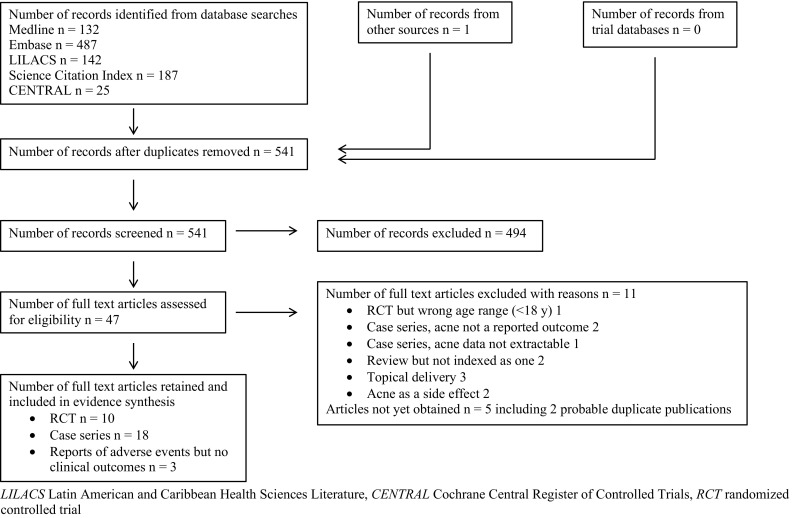
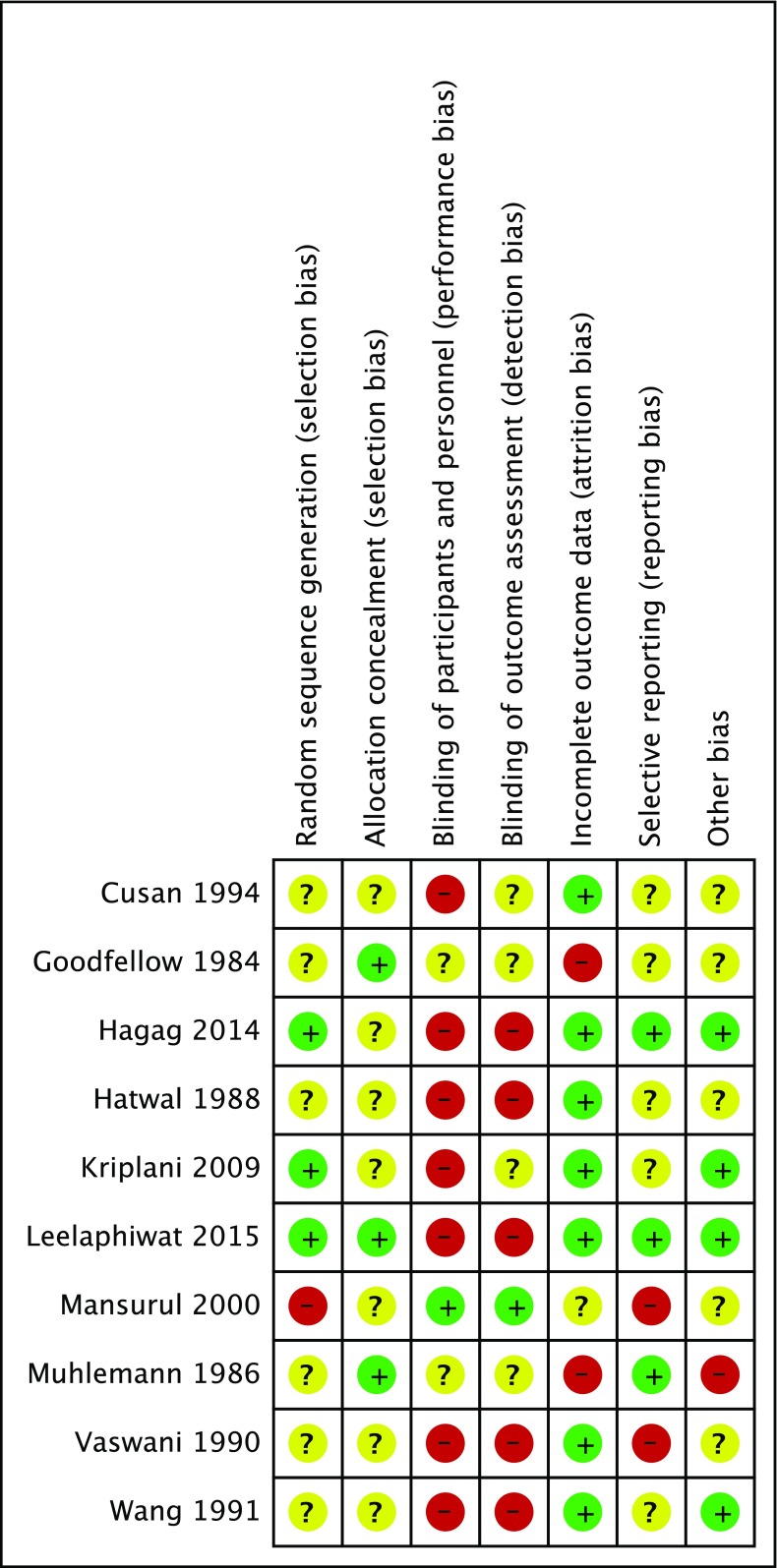
BACKGROUND: The management of acne in adult females is problematic, with many having a history of treatment failure and some having a predisposition to androgen excess. Alternatives to oral antibiotics and combined oral contraceptives (COCs) are required. OBJECTIVE: Our aim was to conduct a hybrid systematic review of the evidence for benefits and potential harms of oral spironolactone in the management of acne in adult females. METHODS: The review was conducted according to a previously published protocol. Three reviewers independently selected relevant studies from the search results, extracted data, assessed the risk of bias, and rated the quality of the evidence using the Grading of Recommendations Assessment, Development and Evaluation (GRADE) approach. RESULTS: Ten randomized controlled trials (RCTs) and 21 case series were retrieved. All trials were assessed as being at a 'high risk' of bias, and the quality of evidence was rated as low or very low for all outcomes. Apart from one crossover trial that demonstrated statistical superiority of a 200 mg daily dose versus inflamed lesions compared with placebo, data from the remaining trials were unhelpful in establishing the degree of efficacy of lower doses versus active comparators or placebo. Menstrual side effects were significantly more common with the 200 mg dose; frequency could be significantly reduced by concomitant use of a COC. Pooling of results for serum potassium supported the recent recommendation that routine monitoring is not required in this patient population. CONCLUSION: This systematic review of RCTs and case series identified evidence of limited quality to underpin the expert endorsement of spironolactone at the doses typically used (≤100 mg/day) in everyday clinical practice.
Overview
The claims and statistics of this paper haven’t been checked yet.
Free: it reads the open-access text and checks the first 5 claims that cite a source we can check. Create a free account to check every claim.
Integrity signals
Registry
Cites
Statistics
Figures
Verification
Claims the paper makes
The claims and statistics of this paper haven’t been checked yet.
Free: it reads the open-access text and checks the first 5 claims that cite a source we can check. Create a free account to check every claim.
Claims other papers make about this one
Each is checked against this paper’s own text: does it say what the citing paper says it does?
The cited source says what the claim attributes to it.
In the citing paper
“Menstrual irregularities were commonly reported (40.6% vs 0%; RR, 10.89 [1.54, 77.08]), 140,141 may be dose-dependent, 232 and are less common among those using COC.233”
From Guidelines of care for the management of acne vulgaris (2024) · cites this paper as [232]
Self-check
Percentages, sums and reported differences re-computed from the paper’s own numbers.
The self-check needs the paper’s full text.
Citations
Cites
Hay, R. J., Johns, N. E., Williams, H. C., Bolliger, I. W., Dellavalle, R. P., Margolis, D. J., Marks, R., Naldi, L., Weinstock, M. A., Wulf, S. K., et al. (2014) · Journal of Investigative Dermatology · doi:10.1038/jid.2013.446 · Cited by 1,706 · cited 1×
“1 Introduction Acne is the eighth most prevalent disease globally [1].”
BackgroundGuidelines of care for the management of acne vulgaris
Zaenglein, A. L., Pathy, A. L., Schlosser, B. J., Alikhan, A., Baldwin, H. E., Berson, D. S., Bowe, W. P., Graber, E. M., Harper, J. C., Kang, S., et al. (2016) · Journal of the American Academy of Dermatology · doi:10.1016/j.jaad.2015.12.037 · Cited by 1,597 · cited 2×
“It is interesting to note that several current acne guidelines and treatment recommendations include spironolactone on the basis of consensus and/or expert opinion [112, 116, 117].”
BackgroundAndrogen Excess in Women: Experience with Over 1000 Consecutive Patients
Azziz, R., Sanchez, L. A., Knochenhauer, E. S., Moran, C., Lazenby, J., Stephens, K. C., Taylor, K., & Boots, L. R. (2004) · The Journal of Clinical Endocrinology & Metabolism · doi:10.1210/jc.2003-031122 · Cited by 1,132
Classification and pharmacology of progestins
Schindler, A. E., Campagnoli, C., Druckmann, R., Huber, J., Pasqualini, J. R., Schweppe, K. W., & Thijssen, J. H. H. (2003) · Maturitas · doi:10.1016/j.maturitas.2003.09.014 · Cited by 745
A comparison of current acne grading systems and proposal of a novel system
Doshi, A., Zaheer, A., & Stiller, M. J. (1997) · International Journal of Dermatology · doi:10.1046/j.1365-4362.1997.00099.x · Cited by 638 · cited 1×
“Assessed using the global acne grading system [80], both treatments were similarly effective in reducing the acne severity score from baseline, with an MD of -2.”
MethodEuropean evidence-based (S3) guideline for the treatment of acne - update 2016 - short version
Nast, A., Dréno, B., Bettoli, V., Bukvic Mokos, Z., Degitz, K., Dressler, C., Finlay, A. Y., Haedersdal, M., Lambert, J., Layton, A., et al. (2016) · Journal of the European Academy of Dermatology and Venereology · doi:10.1111/jdv.13776 · Cited by 393
Self-citationHow to formulate research recommendations
Brown, P., Brunnhuber, K., Chalkidou, K., Chalmers, I., Clarke, M., Fenton, M., Forbes, C., Glanville, J., Hicks, N. J., Moody, J., et al. (2006) · BMJ · doi:10.1136/bmj.38987.492014.94 · Cited by 381 · cited 1×
“[125] Oral Spironolactone for Acne in Women 187”
BackgroundThe assessment of acne vulgaris—the Leeds technique
BURKE, B. M., & CUNLIFFE, W. J. (1984) · British Journal of Dermatology · doi:10.1111/j.1365-2133.1984.tb04020.x · Cited by 376 · cited 2×
“Using their own grading method [81], Burke and Cunliffe [43] observed a 35% reduction in acne severity at month 3, and an average 52% reduction at month 6, in eight women receiving a spironolactone dose of 200 mg/day (no measures of dispersion or p values were reported).”
MethodCombined oral contraceptive pills for treatment of acne
Arowojolu, A. O., Gallo, M. F., Lopez, L. M., & Grimes, D. A. (2012) · Cochrane Database of Systematic Reviews · doi:10.1002/14651858.cd004425.pub6 · Cited by 308
Adult female acne: a new paradigm
Dréno, B., Layton, A., Zouboulis, C. C., López‐Estebaranz, J. L., Zalewska‐Janowska, A., Bagatin, E., Zampeli, V. A., Yutskovskaya, Y., & Harper, J. C. (2013) · Journal of the European Academy of Dermatology and Venereology · doi:10.1111/jdv.12061 · Cited by 224
Self-citationReprint of Classification and pharmacology of progestins
Schindler, A. E., Campagnoli, C., Druckmann, R., Huber, J., Pasqualini, J. R., Schweppe, K. W., & Thijssen, J. H. H. (2008) · Maturitas · doi:10.1016/j.maturitas.2008.11.013 · Cited by 223
Spironolactone versus placebo or in combination with steroids for hirsutism and/or acne
Brown, J., Farquhar, C., Lee, O., Toomath, R., & Jepson, R. G. (2009) · Cochrane Database of Systematic Reviews · doi:10.1002/14651858.cd000194.pub2 · Cited by 196 · cited 2×
“A Cochrane review focusing primarily on hirsutism included only one randomized controlled trial (RCT) of oral spironolactone for acne in its analyses and concluded there was insufficient evidence for effectiveness in treating acne [23].”
ResultThe evolution of aldosterone antagonists
Garthwaite, S. M., & McMahon, E. G. (2004) · Molecular and Cellular Endocrinology · doi:10.1016/j.mce.2003.10.005 · Cited by 189 · cited 1×
“Spironolactone, a synthetic 17-lactone steroid, acts as a non-selective mineralocorticoid receptor antagonist with moderate affinity for both progesterone and androgen receptors [15].”
BackgroundPropionibacterium acnes Promotes Th17 and Th17/Th1 Responses in Acne Patients
Kistowska, M., Meier, B., Proust, T., Feldmeyer, L., Cozzio, A., Kuendig, T., Contassot, E., & French, L. E. (2015) · Journal of Investigative Dermatology · doi:10.1038/jid.2014.290 · Cited by 185 · cited 1×
“Characteristically, a cell-mediated inflammatory response ensues, in which macrophages and T helper (Th)-1 and Th-17 cells predominate [13, 14].”
BackgroundCusan, L., Dupont, A., Gomez, J.-L., Tremblay, R. R., & Labrie, F. (1994) · Fertility and Sterility · doi:10.1016/s0015-0282(16)56518-2 · Cited by 178 · cited 10×
“Inadequate data reporting did not permit calculation of RRs or MDs for any of the outcomes in four trials [30, 31, 34, 36].”
BackgroundMethodInfluentialProfile of acne vulgaris-A hospital-based study from South India
Thappa, D. M., & Adityan, B. (2009) · Indian Journal of Dermatology Venereology and Leprology · doi:10.4103/0378-6323.51244 · Cited by 174 · cited 1×
“Using the Indian grading system [79], one study [34] found no difference in the rate of improvement or magnitude of the reduction in severity score for spironolactone plus cyproterone acetate/ EE compared with finasteride plus the same COC (p[ 0.”
Methodvan Vloten, W. A., van Haselen, C. W., van Zuuren, E. J., Gerlinger, C., & Heithecker, R. (2002) · PubMed · Cited by 173
Oral spironolactone improves acne vulgaris and reduces sebum excretion
GOODFELLOW, A., ALAGHBAND-ZADEH, J., CARTER, G., CREAM, J. J., HOLLAND, S., SCULLY, J., & WISE, P. (1984) · British Journal of Dermatology · doi:10.1111/j.1365-2133.1984.tb04045.x · Cited by 172 · cited 9×
“Inadequate data reporting did not permit calculation of RRs or MDs for any of the outcomes in four trials [30, 31, 34, 36].”
BackgroundMethodResultInfluentialHuber, J., Foidart, J. M., Wuttke, W., Merki-Feld, G. S., The, H. S., Gerlinger, C., Schellschrmdt, I., & Heithecker, R. (2000) · The European Journal of Contraception & Reproductive Health Care · doi:10.1080/13625180008500375 · Cited by 148
Large‐scale international study enhances understanding of an emerging acne population: adult females
Dréno, B., Thiboutot, D., Layton, A. M., Berson, D., Perez, M., Kang, S., & the Global Alliance to Improve Outcomes in Acne (2015) · Journal of the European Academy of Dermatology and Venereology · doi:10.1111/jdv.12757 · Cited by 147 · cited 1×
“‘Hormonal acne’ is widely perceived as predominantly inflammatory with a paucity of comedones; however, such cases represent a minority of women with acne and, in most instances, comedones will be present [113].”
BackgroundSelf-citationEffects of Oral Zinc and Vitamin A in Acne
MICHAELSSON, G. (1977) · Archives of Dermatology · doi:10.1001/archderm.1977.01640010033003 · Cited by 145
Oral spironolactone: an effective treatment for acne vulgaris in women
MUHLEMANN, M. F., CARTER, G. D., CREAM, J. J., & WISE, P. (1986) · British Journal of Dermatology · doi:10.1111/j.1365-2133.1986.tb05722.x · Cited by 144 · cited 5×
“One provided useful data for a 200 mg daily dose in a crossover trial that examined 29 women [37].”
BackgroundMethodResultInfluentialShaw, J. C. (2000) · Journal of the American Academy of Dermatology · doi:10.1067/mjd.2000.105557 · Cited by 143 · cited 4×
“5%) in two case series [51, 57], one that used doses C200 mg/day (4/18) and the other 50–100 mg/day (10/73), were reported to have slightly raised levels post-treatment.”
BackgroundInfluentialAcne Vulgaris in Women: Prevalence Across the Life Span
Perkins, A. C., Maglione, J., Hillebrand, G. G., Miyamoto, K., & Kimball, A. B. (2012) · Journal of Women's Health · doi:10.1089/jwh.2010.2722 · Cited by 128
Low Usefulness of Potassium Monitoring Among Healthy Young Women Taking Spironolactone for Acne
Plovanich, M., Weng, Q. Y., & Mostaghimi, A. (2015) · JAMA Dermatology · doi:10.1001/jamadermatol.2015.34 · Cited by 125 · cited 4×
“As well as these, three additional articles included some data on side effects in women with acne [53, 56, 58]; they did not address clinical effectiveness.”
BackgroundMethodInfluentialA consensus‐based practical and daily guide for the treatment of acne patients
Gollnick, H. P., Bettoli, V., Lambert, J., Araviiskaia, E., Binic, I., Dessinioti, C., Galadari, I., Ganceviciene, R., Ilter, N., Kaegi, M., et al. (2016) · Journal of the European Academy of Dermatology and Venereology · doi:10.1111/jdv.13675 · Cited by 125 · cited 1×
“It is interesting to note that several current acne guidelines and treatment recommendations include spironolactone on the basis of consensus and/or expert opinion [112, 116, 117].”
BackgroundKarrer-Voegeli, S., Rey, F., Reymond, M. J., Meuwly, J.-Y., Gaillard, R. C., & Gomez, F. (2009) · Medicine · doi:10.1097/md.0b013e3181946a2c · Cited by 124
Oral spironolactone therapy for female patients with acne, hirsutism or androgenic alopecia
Burke, B. M., & Cunliffe, W. J. (1985) · British Journal of Dermatology · doi:10.1111/j.1365-2133.1985.tb02305.x · Cited by 114 · cited 5×
“The only other clinical outcomes reported in the case series were change in acne grade [43, 59], change in lesion count [54, 60] and post-treatment relapse rate [40, 60].”
BackgroundMethodInfluentialCombined oral contraceptive pills for treatment of acne
Arowojolu, A. O., Gallo, M. F., Lopez, L. M., & Grimes, D. A. (2012) · Cochrane Database of Systematic Reviews · doi:10.1002/14651858.cd004425.pub5 · Cited by 111
Barbieri, J. S., Spaccarelli, N., Margolis, D. J., & James, W. D. (2019) · Journal of the American Academy of Dermatology · doi:10.1016/j.jaad.2018.09.055 · Cited by 110
The Cochrane collaboration's tool for assessing risk of bias
Ford, J., Cummins, E., Sharma, P., Elders, A., Stewart, F. A., Johnston, R. D., Royle, P., Jones, R. A., Mulatero, C., Todd, R., et al. (2013) · Cited by 109
Spironolactone in dermatologic therapy
Shaw, J. C. (1991) · Journal of the American Academy of Dermatology · doi:10.1016/0190-9622(91)70034-y · Cited by 108 · cited 6×
“Expert reviews [24, 56], commentaries [111], and acne treatment guidelines that include spironolactone, such as the recent US guidelines [112], are silent on this important point.”
BackgroundInfluentialThorneycroft, L. H., Gollnick, H., & Schellschmidt, I. (2004) · PubMed · Cited by 103
Kim, G. K., & Rosso, J. Q. D. (2012) · Europe PMC (PubMed Central) · Cited by 101
Menard, R. H., Guenthner, T. M., Kon, H., & Gillette, J. R. (1979) · Journal of Biological Chemistry · doi:10.1016/s0021-9258(17)37833-x · Cited by 99 · cited 1×
“The systemic effects of spironolactone on adrenal synthesis of androgen precursors may also contribute to clinical efficacy, although at therapeutic doses this may be unlikely [18].”
BackgroundManagement of acne: Canadian clinical practice guideline
Asai, Y., Baibergenova, A., Dutil, M., Humphrey, S., Hull, P., Lynde, C., Poulin, Y., Shear, N. H., Tan, J., Toole, J., et al. (2016) · Canadian Medical Association Journal · doi:10.1503/cmaj.140665 · Cited by 95 · cited 1×
“regarded as ineffective, not recommended [122, 123] or there is insufficient evidence to support its use [124].”
BackgroundIsotretinoin: state of the art treatment for acne vulgaris
Gancevičienė, R., & Zouboulis, C. C. (2010) · JDDG Journal der Deutschen Dermatologischen Gesellschaft · doi:10.1111/j.1610-0387.2009.07238.x · Cited by 90 · cited 1×
“As an anti-androgen and potential inhibitor of sebogenesis, spironolactone represents a possible alternative to oral isotretinoin and combined oral contraceptives (COCs), the only licensed anti-acne medications that significantly reduce sebum secretion, but which may be associated with serious adverse effects in some…”
BackgroundKrunic, A. L., Ciurea, A. M., & Scheman, A. J. (2007) · Journal of the American Academy of Dermatology · doi:10.1016/j.jaad.2007.09.024 · Cited by 90
Anti-androgen treatment in women with acne: a controlled trial
MILLER, J. A., WOJNAROWSKA, F. T., DOWD, P. M., ASHTON, R. E., O'BRIEN, T. J., GRIFFITHS, W. A. D., & JACOBS, H. S. (1986) · British Journal of Dermatology · doi:10.1111/j.1365-2133.1986.tb04880.x · Cited by 90
Adult female acne and associated risk factors: Results of a multicenter case-control study in Italy
Landro, A. D., Cazzaniga, S., Cusano, F., Bonci, A., Cardinali, C., Musumeci, M. L., Patrizi, A., Bettoli, V., Pezzarossa, E., Caproni, M., et al. (2016) · Journal of the American Academy of Dermatology · doi:10.1016/j.jaad.2016.06.060 · Cited by 87
Postadolescent Acne in Females
HOLZMANN, R. D., & Shakery, K. (2013) · Skin Pharmacology and Physiology · doi:10.1159/000354887 · Cited by 86
Long-term safety of spironolactone in acne: results of an 8-year followup study
Shaw, J. C., & White, L. E. (2002) · Journal of Cutaneous Medicine and Surgery · doi:10.1177/120347540200600604 · Cited by 86
Calaf, J., López, E., Millet, A., Alcañiz, J., Fortuny, A., Vidal, O., Callejo, J., Escobar-Jiménez, F., Torres, E., & Espinós, J. J. (2007) · The Journal of Clinical Endocrinology & Metabolism · doi:10.1210/jc.2006-2798 · Cited by 80
Carmina, E., & Løbo, R. A. (2002) · Clinical Endocrinology · doi:10.1046/j.1365-2265.2002.01594.x · Cited by 77
Callender, V. D., Alexis, A. F., Daniels, S. R., Kawata, A. K., Burk, C. T., Wilcox, T. K., & Taylor, S. C. (2014) · PubMed Central · Cited by 76
Hughes, B. R., & Cunliffe, W. J. (1988) · British Journal of Dermatology · doi:10.1111/j.1365-2133.1988.tb02571.x · Cited by 75
Greenwood, R., Brummitt, L., Burke, B., & Cunliffe, W. J. (1985) · BMJ · doi:10.1136/bmj.291.6504.1231 · Cited by 73
Evidence-based approach to cutaneous hyperandrogenism in women
Schmidt, T. H., & Shinkai, K. (2015) · Journal of the American Academy of Dermatology · doi:10.1016/j.jaad.2015.05.026 · Cited by 70
Akamatsu, H., Zouboulis, C. C., & Orfanos, C. E. (1993) · Journal of Investigative Dermatology · doi:10.1111/1523-1747.ep12472325 · Cited by 70 · cited 1×
“A reduction in sebum may be achieved by blocking dihydrotestosterone binding to the androgen receptor within sebocytes and inhibiting androgen-induced sebocyte proliferation [16, 17].”
BackgroundEffects and side‐effects of spironolactone therapy in women with acne
Yemisci, A., Gorgulu, A., & Piskin, S. (2005) · Journal of the European Academy of Dermatology and Venereology · doi:10.1111/j.1468-3083.2005.01072.x · Cited by 70 · cited 5×
“[60], the mean lesion count in 28 women (PP population) had decreased by month 3, from 32.”
BackgroundInfluentialFalsetti, L., Gambera, A., Andrico, S., & Sartori, E. (2002) · Gynecological Endocrinology · doi:10.1080/713603096 · Cited by 65 · cited 1×
“Serum profiles of androgens and gonadotrophins are often normal [10, 11].”
BackgroundAndrogenic Hormone Profile of Adult Women with Acne
da Cunha, M. G., Fonseca, F. L. A., & Machado, C. D. A. S. (2013) · Dermatology · doi:10.1159/000347196 · Cited by 62 · cited 1×
“Serum profiles of androgens and gonadotrophins are often normal [10, 11].”
BackgroundTan, J. K. L., Li, Y., Fung, K., Gupta, A. K., Thomas, D. R., Sapra, S., Lynde, C. W., Poulin, Y. P., Gulliver, W. P. F., & Sebaldt, R. J. (2008) · Journal of Cutaneous Medicine and Surgery · doi:10.2310/7750.2008.07053 · Cited by 62
Is hormonal treatment still an option in acne today?
Bettoli, V., Zauli, S., & Virgili, A. (2015) · British Journal of Dermatology · doi:10.1111/bjd.13681 · Cited by 59 · cited 1×
“However, experts also recommend dose escalation [24, 56, 111, 114, 115], which, paradoxically, was rarely used in the included trials or case series as a potential, but as yet untested, means of improving tolerance and adherence.”
BackgroundFalsetti, L., & Galbignani, E. (1990) · Contraception · doi:10.1016/0010-7824(90)90002-d · Cited by 58
Goh, C. L., Abad‐Casintahan, F., Aw, D. C. W., Baba, R., Chan, L. C., Hung, N. T., Kulthanan, K., Leong, H. N., Medina‐Oblepias, M. S., Noppakun, N., et al. (2015) · The Journal of Dermatology · doi:10.1111/1346-8138.12993 · Cited by 56
S2k‐Leitlinie zur Therapie der Akne
Nast, A., Bayerl, C., Borelli, C., Degitz, K., Dirschka, T., ERDMANN, R., Fluhr, J. W., Gieler, U., Hartwig, R., Meigel, E., et al. (2010) · JDDG Journal der Deutschen Dermatologischen Gesellschaft · doi:10.1111/j.1610-0387.2010.07466.x · Cited by 55
Rosso, J. Q. D., WEBSTER, G. F., Rosén, T., Thiboutot, D. M., Leyden, J. J., Gallo, R. L., Walker, C., Zhanel, G. G., & Eichenfield, L. F. (2016) · Europe PMC (PubMed Central) · Cited by 54
EXPLANATION FOR PREMENSTRUAL ACNE
Williams, M. C., & Cunliffe, W. J. (1973) · The Lancet · doi:10.1016/s0140-6736(73)92661-5 · Cited by 53 · cited 1×
“The diuretic effect of spironolactone may benefit women who experience a premenstrual acne flare associated with fluid retention [19].”
BackgroundAnti-androgenic Therapy Using Oral Spironolactone for Acne Vulgaris in Asians
Sato, K., Matsumoto, D., Iizuka, F., Aiba-Kojima, E., Watanabe-Ono, A., Suga, H., Inoue, K., Gonda, K., & Yoshimura, K. (2006) · Aesthetic Plastic Surgery · doi:10.1007/s00266-006-0081-0 · Cited by 52 · cited 1×
“7%, with the highest rates associated with the 200 mg/day dose [46, 55].”
BackgroundErkkola, R., Hirvonen, E., Luikku, J., Lumme, R., Männikkö, H., & Avdinlik, S. (1990) · Acta Obstetricia et Gynecologica Scandinavica · doi:10.3109/00016349009021041 · Cited by 51
Kohler, C., Tschumi, K., Bodmer, C., Schneiter, M., & Birkhaeuser, M. (2007) · Gynecological Endocrinology · doi:10.1080/09513590701214463 · Cited by 51
Ketoconazole Therapy for Women with Acne and/or Hirsutism
Venturoli, S., Fabbri, R., Prato, L. D., Mantovani, B., CAPELLI, M., MAGRINI, O., & Flamigni, C. (1990) · The Journal of Clinical Endocrinology & Metabolism · doi:10.1210/jcem-71-2-335 · Cited by 49
Cremoncini, C., Vignati, E., & Libroia, A. (1976) · PubMed · Cited by 43
Uniqueness of oral contraceptive progestins
Carr, B. R. (1998) · Contraception · doi:10.1016/s0010-7824(98)00079-1 · Cited by 42
The pathophysiology of acne vulgaris in children and adolescents, Part 1.
Bergfeld, W. F. (2004) · PubMed · Cited by 37
Antiandrogenic properties of spironolactone. Clinical trial in the management of female hirsutism
Messina, M., Manieri, C., Biffignandi, P. M., Massucchetti, C., Novi, R. F., & Molinatti, G. M. (1983) · Journal of Endocrinological Investigation · doi:10.1007/bf03350556 · Cited by 35 · cited 2×
“Two studies [46, 51] did not report any quantifiable outcomes data and two followed-up patients after treatment ended [40, 60].”
BackgroundLam, C., & Zaenglein, A. L. (2014) · Clinics in Dermatology · doi:10.1016/j.clindermatol.2014.05.002 · Cited by 32 · cited 1×
“As an anti-androgen and potential inhibitor of sebogenesis, spironolactone represents a possible alternative to oral isotretinoin and combined oral contraceptives (COCs), the only licensed anti-acne medications that significantly reduce sebum secretion, but which may be associated with serious adverse effects in some…”
BackgroundAdalatkhah, H., Pourfarzi, F., & Sadeghi-Bazargani, H. (2011) · Clinical Cosmetic and Investigational Dermatology · doi:10.2147/ccid.s20543 · Cited by 32
Spironolactone and cimetidine in treatment of acne.
Hatwal, A., Bhatt, R. P., Agrawal, J. K., Singh, G., & Bajpai, H. S. (1988) · PubMed · Cited by 31
Post-adolescent acne in women: more common and more clinical considerations.
Kim, G. K., & Michaels, B. D. (2012) · PubMed · Cited by 30
Adverse Effects of Spironolactone Therapy in Women With Acne
Lubbos, H., Hasinski, S., Rose, L. I., Pollock, J., & Spielvogel, R. L. (1998) · Archives of Dermatology · doi:10.1001/archderm.134.9.1162-a · Cited by 26 · cited 1×
“The most commonly used outcome measure was physician-assessed global improvement in acne severity, which was reported in all but three case series [46, 49, 54].”
MethodLow-dose spironolactone in the treatment of female hirsutism.
Ylöstalo, P., Heikkinen, J., Kauppila, A., Pakarinen, A., & Järvinen, P. A. (1987) · PubMed · Cited by 25
Effect of a desogestrel-containing oral contraceptive on the skin
Katz, H. I., Kempers, S. E., Akin, M., DUNLAP, F. E., Whiting, D., & Norbart, T. C. J. (2000) · The European Journal of Contraception & Reproductive Health Care · doi:10.1080/13625180008500411 · Cited by 25
Ketoconazole therapy: hormonal and clinical effects in non-tumoral hyperandrogenism
Vidal‐Puig, A., Muñoz‐Torres, M., Jódar-Gimeno, E., Garcia-Calvente, C., Lardelli, P., Ruiz-Requena, M. E., & Escobar‐Jiménez, F. (1994) · European Journal of Endocrinology · doi:10.1530/eje.0.1300333 · Cited by 25
Leelaphiwat, S., Jongwutiwes, T., Lertvikool, S., Tabcharoen, C., Sukprasert, M., Rattanasiri, S., & Weerakiet, S. (2014) · Journal of obstetrics and gynaecology research · doi:10.1111/jog.12543 · Cited by 24
Toward evidence‐based practice in acne: Consensus of an Asian Working Group
Abad‐Casintahan, M. F., Chow, S., Goh, C. L., Kubba, R., Miyachi, Y., Noppakun, N., See, J., Suh, D. H., Yang, L., & Kang, S. (2011) · The Journal of Dermatology · doi:10.1111/j.1346-8138.2011.01266.x · Cited by 24
INHIBITION OF SEBUM EXCRETION BY AN H2 BLOCKER
LYONS, F., Cook, J., & Shuster, S. (1979) · The Lancet · doi:10.1016/s0140-6736(79)92011-7 · Cited by 24
Wang, H.-S., Wang, T. H., & Soong, Y. K. (1999) · PubMed · Cited by 20
Berardesca, E., Gabba, P., Ucci, G., Borroni, G., & Rabbiosi, G. (1988) · PubMed · Cited by 20
Importance of spironolactone in the treatment of acne in adult women
Saint-Jean, M., Ballanger, F., Nguyen, J., Khammari, A., & Dréno, B. (2010) · Journal of the European Academy of Dermatology and Venereology · doi:10.1111/j.1468-3083.2010.03926.x · Cited by 19 · cited 4×
“The most commonly used outcome measure was physician-assessed global improvement in acne severity, which was reported in all but three case series [46, 49, 54].”
BackgroundMethodInfluentialSterry, W. (2009) · JDDG Journal der Deutschen Dermatologischen Gesellschaft · doi:10.1111/j.1610-0387.2009.07324.x · Cited by 19
Acne vulgaris related to androgens - a review.
Khondker, L., & Khan, S. (2014) · PubMed · Cited by 18
Jaisamrarn, U., Chaovisitsaree, S., Angsuwathana, S., & Nerapusee, O. (2014) · Contraception · doi:10.1016/j.contraception.2014.06.002 · Cited by 18
S2k – Guideline on the Therapy of Acne
Nast, A., Bayerl, C., Borelli, C., Degitz, K., Dirschka, T., ERDMANN, R., Fluhr, J. W., Gieler, U., Hartwig, R., Meigel, E., et al. (2010) · JDDG Journal der Deutschen Dermatologischen Gesellschaft · doi:10.1111/j.1610-0387.2010.07466.supp.x · Cited by 17
Oral and topical spironolactone therapies in skin androgenization.
Messina, M., Manieri, C., MUSSO, M.-J., & Pastorino, R. (1990) · PubMed · Cited by 16
Turowski, C. B., & James, W. D. (2007) · Advances in Dermatology · doi:10.1016/j.yadr.2007.07.003 · Cited by 16 · cited 2×
“Turowski and James [59] recorded a dramatic improvement in acne score in 39 women, from a median of two pretreatment to eight post-treatment (no measure of dispersion) on a scale of 1–10 (lower is worse).”
BackgroundAntiandrogens in the treatment of acne and hirsutism.
Rs, J., Spielvogel, R. L., & Rose, L. I. (1992) · PubMed · Cited by 15
The role of combined oral contraceptives in the management of acne and seborrhea
del Mármol, V., Teichmann, A. T., & Герцен, К. А. (2004) · The European Journal of Contraception & Reproductive Health Care · doi:10.1080/1362518042000221508 · Cited by 14
The effect of ketoconazole on sebum secretion in patients suffering from acne and seborrhoea.
Pedrini, P. D., Rapisarda, R., & Spanò, G. (1988) · PubMed · Cited by 14
Spironolactone and topical retinoids in adult female cyclical acne.
Lessner, E., Fisher, S., Kobraei, K. B., Osleber, M., Lessner, R., Elliott, L., & Wesson, S. K. (2014) · PubMed · Cited by 13
Tratamiento del hirsutismo con espironolactona y con espironolactona más dexametasona
Devoto C, E., Aravena C, L., & Ríos S, R. (2000) · Revista médica de Chile · doi:10.4067/s0034-98872000000800006 · Cited by 12
Effects of a phasic oral contraceptive containing desogestrel on facial seborrhea and acne
Prilepskaya, V. N., Serov, V. N., Zharov, E. V., Golousenko, I. Y., Mejevitinova, E. A., Гогаева, Е. В., Yaglov, V. V., & Golubeva, O. N. (2003) · Contraception · doi:10.1016/s0010-7824(03)00167-7 · Cited by 12
Hagag, P., Steinschneider, M., & Weiss, M. (2014) · PubMed · Cited by 11
The effect of a phasic oral contraceptive containing Desogestrel on seborrhea and acne
Kränzlin, H. T., & Nap, M. A. (2006) · The European Journal of Contraception & Reproductive Health Care · doi:10.1080/13625180500252638 · Cited by 11
Jb, S. (1998) · Dermatology · doi:10.1159/000017850 · Cited by 11
Spironolactone for Adult Female Acne.
Friedman, A. (2015) · PubMed · Cited by 10
Ketoconazole in the treatment of acne in women.
Ghetti, P., Patrone, P., & Tosti, A. (1986) · PubMed · Cited by 9
Rosso, J. Q. D., Harper, J. C., Graber, E., Thiboutot, D. M., Silverberg, N. B., Eichenfield, D. Z., & Eichenfield, L. F. (2015) · PubMed · Cited by 9
Effect of Ketoconazole on Sebum Excretion Rate
Norris, J. F. B., & Cunliffe, W. J. (1987) · Archives of Dermatology · doi:10.1001/archderm.1987.01660270033010 · Cited by 7
Cunliffe, W. J., & HULL, S. M. (1992) · Journal of the American Academy of Dermatology · doi:10.1016/s0190-9622(08)80535-x · Cited by 6
Ketoconazole in the Treatment of Acne in Women
Ghetti, P. (1986) · Archives of Dermatology · doi:10.1001/archderm.1986.01660180029008 · Cited by 6
LACK OF EFFECT OF CIMETIDINE IN ACNE
Jones, H., Simpson, N., Blanc, D., FORSTER, R. A., & Cunliffe, W. J. (1980) · The Lancet · doi:10.1016/s0140-6736(80)92640-9 · Cited by 5
Kriplani, A., Thulkar, J., Agrawal, N. K., Kulshrestha, V., Ammini, A. C., & Kumar, G. T. (2009) · Intern J Endocrinol Metab · Cited by 5
Spironolactone therapy for hyperandrogenic anovulatory women--clinical and endocrinological study.
Masahashi, T., Wu, M.-C., Ohsawa, M., Asai, M., Ichikawa, Y., Hanai, K., Kikkawa, H., Mizutani, S., Narita, O., & Tomoda, Y. (1986) · PubMed · Cited by 4
Treatment of acne vulgaris with anti-androgens
Vaswani, N., & Pandhi, R. K. (1990) · Indian Journal of Dermatology Venereology and Leprology · Cited by 3
Danby, F. W. (1992) · Journal of the American Academy of Dermatology · doi:10.1016/s0190-9622(08)80534-8 · Cited by 3
[Anti-seborrhea effect of cimetidine].
Caron, P. J., Chateauneuf, C., Bazex, J., & Jp, L. (1987) · PubMed · Cited by 2
ESPIRONOLACTONA EN EL TRATAMIENTO DEL ACNE
de Castro, G. C., Pacheco, A., Naranjo, H., & Palacios, A. (1986) · Dermatología Venezolana · Cited by 1
Ibáñez, L., Díaz, M., Sebastiani, G., López‐Bermejo, A., & de, Z. F. (2015) · 54th Annual ESPE · Cited by 1
[Treatment of hirsutism with spironolactone and progestagen combination].
Pugeat, M., Elmidani, M., Déchaud, H., Garoscio-Cholet, M., Lejeune, H., & TOURNIAIRE, J. (1990) · PubMed · Cited by 1
[Long-term treatment of hirsutism with spirolactone].
Hána, V., Marek, J., & Gregorova, I. (1984) · PubMed · Cited by 1
[Treatment of acne with antiandrogens: validity of treatment with spironolactone].
Pizzino, D., Bettoli, V., & Varotti, C. (1987) · PubMed · Cited by 1
[The therapeutic effect of spironolactone in the hyperandrogenism syndrome].
Shilin, D. E., Dedov, I. I., & Grigor'eva, E. A. (1994) · PubMed · Cited by 1
Spironolactone therapeutic effect in the hyperandrogenism syndrome
Shilin, D. Y., Dedov, I. I., & Grigoryeva, Y. A. (1993) · Problems of Endocrinology · doi:10.14341/probl11979 · Cited by 1
Research works printed but not linked: 14
- Review Manager (RevMan) (computer program). Version 5.3. Copenhagen: The Nordic Cochrane Centre, The Cochrane Collaboration; 2014.
- Mansurul A Islam AZM Effect of spironolactone on acne vulgaris: a double blind study Bangladesh J Dermatol Venereol Leprol. 2000 17 1 4
- Wang XM Zhang XP Li CH Comparative observation on the therapeutic effect of acne vulgaris with spironolactone, ketoconazole and cimetidine J Clin Dermatol. 1991 20 303 305
- Azizlerli G Özarmagan G Taklifi B Südogan S Azizlerli H Spironolactone therapy in acne patients [Aknede spironolatone ile tedavi] Deri Hastalıkları ve Frengi Arşivi 1988 22 125 129
- Beksac MS Önderglu LS Atac B Idiopathic hirsutism with spironolactone Adv Contracept Deliv Syst. 1990 6 265 269
- Bravo Garcia M Barroeta S Mejia de Alejos M, Franco de Arias M, Yustiz MA, Mascia S. Use of spironoactone in patients with acne [Uso de spironolactona en pacientes con acne] Arch Argent Dermatol 1987 37 231 238
- Anonymous. Different concentrations of spironolactone in the treatment of acne. Chinese J Dermatol. 1989;22:258-9.
- Molinatti GM Messina M Biffignandi P Manieri C Therapeutic possibilities in women with skin androgenic manifestations [Possibilita terapeutichein donne affette da manifestazionidi androgenizzazione a livello cutaneo] G Ital Dermatol Venereol 1980 115 579 584
- Arenberger P Vohradnikova O Zaruba F Treatment of acne vulgaris with spironolactone Cesk Dermatol. 1988 63 224 227
- Cortez de Castro G, Pacheco A, Naranjo H, Palacios A. Acnevulgaris: treatment with spironolactone [Acne vulgar: tratamiento con espironolactona]. Salus Militia. 1987;12:34–7.
- Havrenne JED Halbe HW Treatment of idiopathic hirsutism with spironolactone [Tratamento do hirsutismo idiopático com espironolactona] Ginecol Obstet Bras 1985 8 73 74
- Vohradnikova O Arenberger P Kratochvilova M Zaruba F Treatment of acne vulgaris with spironolactone and Androcur Cesk Dermatol. 1988 63 308 310
- Yemisci A Gorgulu A Piskin S Spironolactone therapy in acne vulgaris [Acne vulgaris tedavisinde spironolakton] Türkderm Deri Hastaliklari ve Frengi Arivi 1994 28 209 212
- vanVloten WA, van Haselen CW, van Zuuren EJ, Gerlinger C, Heithecker R. The effect of 2 combined oral contraceptives containing either drospirenone or cyproterone acetate on acne and seborrhea. Cutis. 2002;69(4 Suppl):2–15. 12096825
Cited by
Guidelines of care for the management of acne vulgaris
Reynolds, R. V., Yeung, H., Cheng, C. E., Cook-Bolden, F., Desai, S. R., Druby, K. M., Freeman, E. E., Keri, J. E., Stein Gold, L. F., Tan, J. K. L., et al. (2024) · Journal of the American Academy of Dermatology · doi:10.1016/j.jaad.2023.12.017 · Cited by 518
Adult female acne: a guide to clinical practice
Bagatin, E., Freitas, T. H. P. D., Rivitti-Machado, M. C., Ribeiro, B. M., Nunes, S., & Rocha, M. A. D. D. (2019) · Anais Brasileiros de Dermatologia · doi:10.1590/abd1806-4841.20198203 · Cited by 172
Reviewing the global burden of acne: how could we improve care to reduce the burden?*
Layton, A. M., Thiboutot, D., & Tan, J. (2021) · British Journal of Dermatology · doi:10.1111/bjd.19477 · Cited by 172
Self-citationAcne Vulgaris: Diagnosis and Treatment.
Oge, L. K., Broussard, A., & Marshall, M. D. (2019) · PubMed · Cited by 189
Exploring Acne Treatments: From Pathophysiological Mechanisms to Emerging Therapies
Kim, H. J., & Kim, Y. H. (2024) · International Journal of Molecular Sciences · doi:10.3390/ijms25105302 · Cited by 183
“Spironolactone can be initiated at doses ranging from 50 to 200 mg/day, adjusted based on clinical response and side effects, and is generally well tolerated [216].”
Background
Metadata
- Authors
- Layton, A. M., Eady, E. A., Whitehouse, H., Del Rosso, J. Q., Fedorowicz, Z., & van Zuuren, E. J.
- Affiliations
- Harrogate and District NHS Foundation Trust (GB)
- Corresponding author
- Eady, E. Anne
- Venue
- American Journal of Clinical Dermatology
- Published
- 2017-02-02
- Volume
- 18
- Issue
- 2
- Pages
- 169-191
- ISSN
- 1175-0561 (ISSN-L)
- 1179-1888
- PMC
- PMC5360829
- OpenAlex
- W2585329337
- Cited by
- 126
- References
- 116
- Citations by year
- 2026: 9 · 2025: 7 · 2024: 20 · 2023: 15 · 2022: 20 · 2021: 15 · 2020: 19 · 2019: 11 · 2018: 6 · 2017: 2
- FWCI
- 1.86
- Type
- journal article
- Language
- en
- Open access
- hybrid
- doi.org
- Licence
- Locations
- American Journal of Clinical Dermatology (publishedVersion, cc-by-nc)
- PubMed Central (publishedVersion, cc-by-nc)
- PubMed (publishedVersion)
- Leiden Repository (Leiden University) (submittedVersion)
- Data Archiving and Networked Services (DANS) (submittedVersion, other-oa)
- Topics
- Health Sciences › Medicine › Dermatology › Acne and Rosacea Treatments and Effects
- Health Sciences › Medicine › Dermatology › Dermatologic Treatments and Research
- Health Sciences › Medicine › Reproductive Medicine › Ovarian function and disorders
- Keywords
- spironolactone, acne, adult female acne, hyperandrogenism, combined oral contraceptives, serum potassium monitoring, treatment efficacy, risk of bias
- MeSH terms
- Acne Vulgaris, Administration, Oral, Adult, Mineralocorticoid Receptor Antagonists, Androgens, Anti-Bacterial Agents, Contraceptives, Oral, Combined, Female, Humans, Sebaceous Glands, Spironolactone, Randomized Controlled Trials as Topic, Treatment Failure, Hyperandrogenism
About these checks
Registry, retraction, Cites and statistics results are computed, not judged, with one exception: a printed reference that no index lists is read once by a model before it counts as a citation error. Claims are extracted by a model and kept only when their quote appears verbatim in the text; each cited source is then checked, with a model’s help, for whether it says what the claim relies on. Those verdicts can be wrong — read the claim’s quote and the cited source before relying on one.
Statistics and arithmetic are recomputed, not judged.
Confidence bands are shown only for fields calibrated on our annotated test set. None is calibrated yet, so no band is shown.
What counts as a claim ›How we measure confidence ›How we check this ›
Are you an author, or do you see a problem with this page? Request a review
Data sources
Bibliographic data: Semantic Scholar, OpenAlex, Crossref.
Contains information from the Semantic Scholar Academic Graph Datasets, made available under the ODC Attribution License (ODC-BY 1.0).
Semantic Scholar’s data is described in: Kinney, R., et al. (2023). The Semantic Scholar Open Data Platform. arXiv:2301.10140.
