

Oral Spironolactone for Acne Vulgaris in Adult Females: A Hybrid Systematic Review
Open accessThe DOI matches its Crossref record; 115 of the 116 references it cites were found in a registry or an index.
Abstract
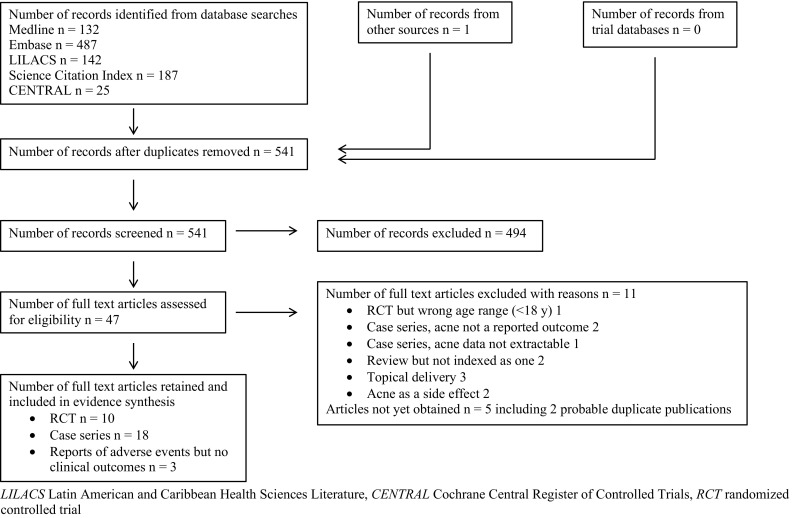
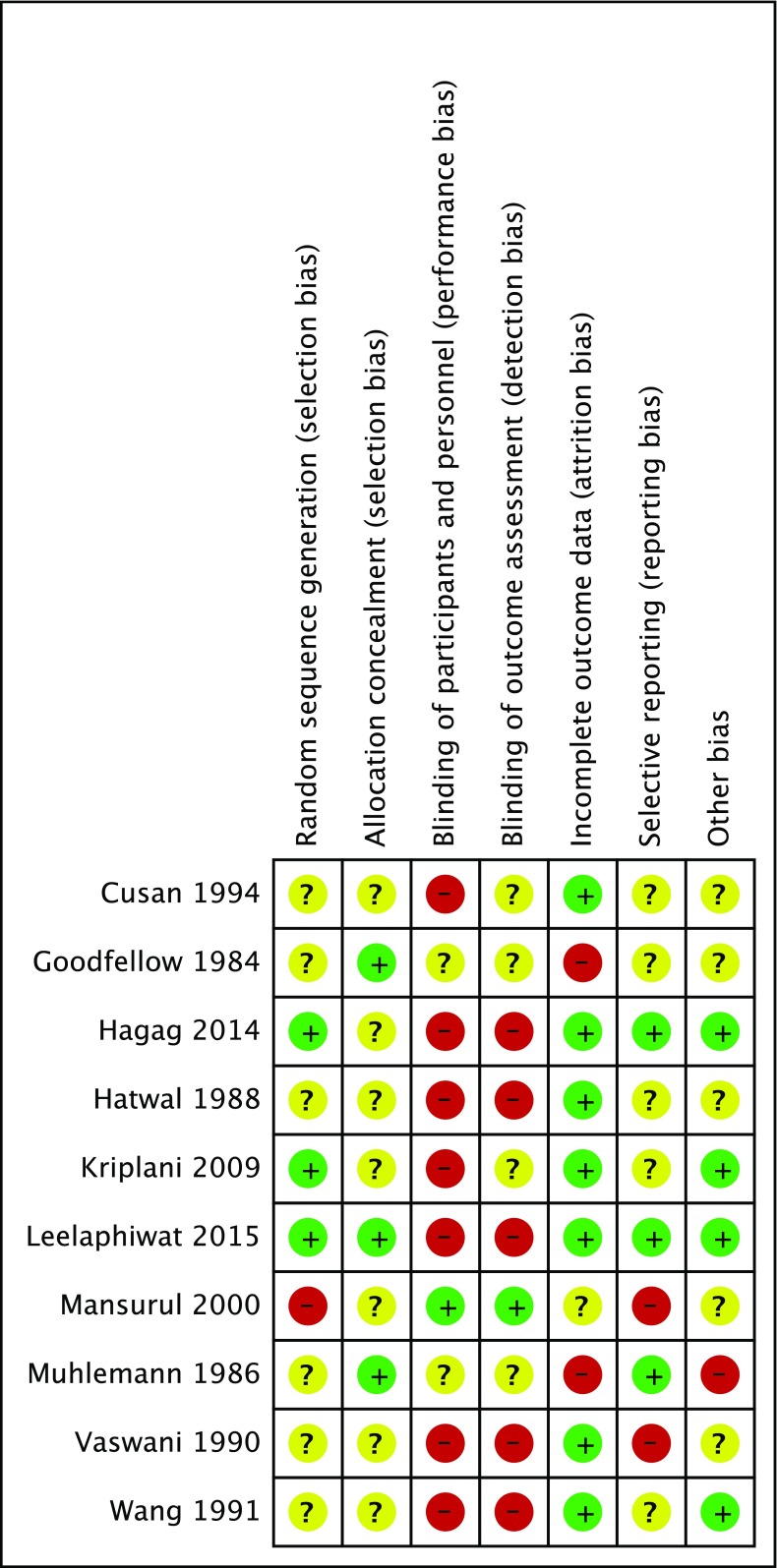
BACKGROUND: The management of acne in adult females is problematic, with many having a history of treatment failure and some having a predisposition to androgen excess. Alternatives to oral antibiotics and combined oral contraceptives (COCs) are required. OBJECTIVE: Our aim was to conduct a hybrid systematic review of the evidence for benefits and potential harms of oral spironolactone in the management of acne in adult females. METHODS: The review was conducted according to a previously published protocol. Three reviewers independently selected relevant studies from the search results, extracted data, assessed the risk of bias, and rated the quality of the evidence using the Grading of Recommendations Assessment, Development and Evaluation (GRADE) approach. RESULTS: Ten randomized controlled trials (RCTs) and 21 case series were retrieved. All trials were assessed as being at a 'high risk' of bias, and the quality of evidence was rated as low or very low for all outcomes. Apart from one crossover trial that demonstrated statistical superiority of a 200 mg daily dose versus inflamed lesions compared with placebo, data from the remaining trials were unhelpful in establishing the degree of efficacy of lower doses versus active comparators or placebo. Menstrual side effects were significantly more common with the 200 mg dose; frequency could be significantly reduced by concomitant use of a COC. Pooling of results for serum potassium supported the recent recommendation that routine monitoring is not required in this patient population. CONCLUSION: This systematic review of RCTs and case series identified evidence of limited quality to underpin the expert endorsement of spironolactone at the doses typically used (≤100 mg/day) in everyday clinical practice.
Overview
The claims and statistics of this paper haven’t been checked yet.
Free: it reads the open-access text and checks the first 5 claims that cite a source we can check. Create a free account to check every claim.
Integrity signals
Registry
Cites
Statistics
Figures
Verification
Claims the paper makes
The claims and statistics of this paper haven’t been checked yet.
Free: it reads the open-access text and checks the first 5 claims that cite a source we can check. Create a free account to check every claim.
Claims other papers make about this one
Each is checked against this paper’s own text: does it say what the citing paper says it does?
The cited source says what the claim attributes to it.
In the citing paper
“Menstrual irregularities were commonly reported (40.6% vs 0%; RR, 10.89 [1.54, 77.08]), 140,141 may be dose-dependent, 232 and are less common among those using COC.233”
From Guidelines of care for the management of acne vulgaris (2024) · cites this paper as [232]
Self-check
Percentages, sums and reported differences re-computed from the paper’s own numbers.
The self-check needs the paper’s full text.
Citations
Cites
Hay, R. J., Johns, N. E., Williams, H. C., Bolliger, I. W., Dellavalle, R. P., Margolis, D. J., Marks, R., Naldi, L., Weinstock, M. A., Wulf, S. K., et al. (2014) · Journal of Investigative Dermatology · doi:10.1038/jid.2013.446 · Cited by 1,706 · cited 1×
“1 Introduction Acne is the eighth most prevalent disease globally [1].”
BackgroundGuidelines of care for the management of acne vulgaris
Zaenglein, A. L., Pathy, A. L., Schlosser, B. J., Alikhan, A., Baldwin, H. E., Berson, D. S., Bowe, W. P., Graber, E. M., Harper, J. C., Kang, S., et al. (2016) · Journal of the American Academy of Dermatology · doi:10.1016/j.jaad.2015.12.037 · Cited by 1,597 · cited 2×
“It is interesting to note that several current acne guidelines and treatment recommendations include spironolactone on the basis of consensus and/or expert opinion [112, 116, 117].”
BackgroundAndrogen Excess in Women: Experience with Over 1000 Consecutive Patients
Azziz, R., Sanchez, L. A., Knochenhauer, E. S., Moran, C., Lazenby, J., Stephens, K. C., Taylor, K., & Boots, L. R. (2004) · The Journal of Clinical Endocrinology & Metabolism · doi:10.1210/jc.2003-031122 · Cited by 1,132
Classification and pharmacology of progestins
Schindler, A. E., Campagnoli, C., Druckmann, R., Huber, J., Pasqualini, J. R., Schweppe, K. W., & Thijssen, J. H. H. (2003) · Maturitas · doi:10.1016/j.maturitas.2003.09.014 · Cited by 745
A comparison of current acne grading systems and proposal of a novel system
Doshi, A., Zaheer, A., & Stiller, M. J. (1997) · International Journal of Dermatology · doi:10.1046/j.1365-4362.1997.00099.x · Cited by 638 · cited 1×
“Assessed using the global acne grading system [80], both treatments were similarly effective in reducing the acne severity score from baseline, with an MD of -2.”
MethodEuropean evidence-based (S3) guideline for the treatment of acne - update 2016 - short version
Nast, A., Dréno, B., Bettoli, V., Bukvic Mokos, Z., Degitz, K., Dressler, C., Finlay, A. Y., Haedersdal, M., Lambert, J., Layton, A., et al. (2016) · Journal of the European Academy of Dermatology and Venereology · doi:10.1111/jdv.13776 · Cited by 393
Self-citationHow to formulate research recommendations
Brown, P., Brunnhuber, K., Chalkidou, K., Chalmers, I., Clarke, M., Fenton, M., Forbes, C., Glanville, J., Hicks, N. J., Moody, J., et al. (2006) · BMJ · doi:10.1136/bmj.38987.492014.94 · Cited by 381 · cited 1×
“[125] Oral Spironolactone for Acne in Women 187”
BackgroundThe assessment of acne vulgaris—the Leeds technique
BURKE, B. M., & CUNLIFFE, W. J. (1984) · British Journal of Dermatology · doi:10.1111/j.1365-2133.1984.tb04020.x · Cited by 376 · cited 2×
“Using their own grading method [81], Burke and Cunliffe [43] observed a 35% reduction in acne severity at month 3, and an average 52% reduction at month 6, in eight women receiving a spironolactone dose of 200 mg/day (no measures of dispersion or p values were reported).”
MethodCombined oral contraceptive pills for treatment of acne
Arowojolu, A. O., Gallo, M. F., Lopez, L. M., & Grimes, D. A. (2012) · Cochrane Database of Systematic Reviews · doi:10.1002/14651858.cd004425.pub6 · Cited by 308
Adult female acne: a new paradigm
Dréno, B., Layton, A., Zouboulis, C. C., López‐Estebaranz, J. L., Zalewska‐Janowska, A., Bagatin, E., Zampeli, V. A., Yutskovskaya, Y., & Harper, J. C. (2013) · Journal of the European Academy of Dermatology and Venereology · doi:10.1111/jdv.12061 · Cited by 224
Self-citation
Research works printed but not linked: 14
- Review Manager (RevMan) (computer program). Version 5.3. Copenhagen: The Nordic Cochrane Centre, The Cochrane Collaboration; 2014.
- Mansurul A Islam AZM Effect of spironolactone on acne vulgaris: a double blind study Bangladesh J Dermatol Venereol Leprol. 2000 17 1 4
- Wang XM Zhang XP Li CH Comparative observation on the therapeutic effect of acne vulgaris with spironolactone, ketoconazole and cimetidine J Clin Dermatol. 1991 20 303 305
- Azizlerli G Özarmagan G Taklifi B Südogan S Azizlerli H Spironolactone therapy in acne patients [Aknede spironolatone ile tedavi] Deri Hastalıkları ve Frengi Arşivi 1988 22 125 129
- Beksac MS Önderglu LS Atac B Idiopathic hirsutism with spironolactone Adv Contracept Deliv Syst. 1990 6 265 269
- Bravo Garcia M Barroeta S Mejia de Alejos M, Franco de Arias M, Yustiz MA, Mascia S. Use of spironoactone in patients with acne [Uso de spironolactona en pacientes con acne] Arch Argent Dermatol 1987 37 231 238
- Anonymous. Different concentrations of spironolactone in the treatment of acne. Chinese J Dermatol. 1989;22:258-9.
- Molinatti GM Messina M Biffignandi P Manieri C Therapeutic possibilities in women with skin androgenic manifestations [Possibilita terapeutichein donne affette da manifestazionidi androgenizzazione a livello cutaneo] G Ital Dermatol Venereol 1980 115 579 584
- Arenberger P Vohradnikova O Zaruba F Treatment of acne vulgaris with spironolactone Cesk Dermatol. 1988 63 224 227
- Cortez de Castro G, Pacheco A, Naranjo H, Palacios A. Acnevulgaris: treatment with spironolactone [Acne vulgar: tratamiento con espironolactona]. Salus Militia. 1987;12:34–7.
- Havrenne JED Halbe HW Treatment of idiopathic hirsutism with spironolactone [Tratamento do hirsutismo idiopático com espironolactona] Ginecol Obstet Bras 1985 8 73 74
- Vohradnikova O Arenberger P Kratochvilova M Zaruba F Treatment of acne vulgaris with spironolactone and Androcur Cesk Dermatol. 1988 63 308 310
- Yemisci A Gorgulu A Piskin S Spironolactone therapy in acne vulgaris [Acne vulgaris tedavisinde spironolakton] Türkderm Deri Hastaliklari ve Frengi Arivi 1994 28 209 212
- vanVloten WA, van Haselen CW, van Zuuren EJ, Gerlinger C, Heithecker R. The effect of 2 combined oral contraceptives containing either drospirenone or cyproterone acetate on acne and seborrhea. Cutis. 2002;69(4 Suppl):2–15. 12096825
Cited by
Guidelines of care for the management of acne vulgaris
Reynolds, R. V., Yeung, H., Cheng, C. E., Cook-Bolden, F., Desai, S. R., Druby, K. M., Freeman, E. E., Keri, J. E., Stein Gold, L. F., Tan, J. K. L., et al. (2024) · Journal of the American Academy of Dermatology · doi:10.1016/j.jaad.2023.12.017 · Cited by 518
Adult female acne: a guide to clinical practice
Bagatin, E., Freitas, T. H. P. D., Rivitti-Machado, M. C., Ribeiro, B. M., Nunes, S., & Rocha, M. A. D. D. (2019) · Anais Brasileiros de Dermatologia · doi:10.1590/abd1806-4841.20198203 · Cited by 172
Reviewing the global burden of acne: how could we improve care to reduce the burden?*
Layton, A. M., Thiboutot, D., & Tan, J. (2021) · British Journal of Dermatology · doi:10.1111/bjd.19477 · Cited by 172
Self-citationAcne Vulgaris: Diagnosis and Treatment.
Oge, L. K., Broussard, A., & Marshall, M. D. (2019) · PubMed · Cited by 189
Exploring Acne Treatments: From Pathophysiological Mechanisms to Emerging Therapies
Kim, H. J., & Kim, Y. H. (2024) · International Journal of Molecular Sciences · doi:10.3390/ijms25105302 · Cited by 183
“Spironolactone can be initiated at doses ranging from 50 to 200 mg/day, adjusted based on clinical response and side effects, and is generally well tolerated [216].”
BackgroundHebert, A., Thiboutot, D., Stein Gold, L., Cartwright, M., Gerloni, M., Fragasso, E., & Mazzetti, A. (2020) · JAMA Dermatology · doi:10.1001/jamadermatol.2020.0465 · Cited by 155
Adolescent acne vulgaris: current and emerging treatments
Layton, A., & Ravenscroft, J. (2022) · The Lancet Child & Adolescent Health · doi:10.1016/s2352-4642(22)00314-5 · Cited by 137
Self-citationBarbieri, J. S., Spaccarelli, N., Margolis, D. J., & James, W. D. (2019) · Journal of the American Academy of Dermatology · doi:10.1016/j.jaad.2018.09.055 · Cited by 110
Adult-onset acne: prevalence, impact, and management challenges
Rocha, M. A., & Bagatin, E. (2018) · Clinical, Cosmetic and Investigational Dermatology · doi:10.2147/ccid.s137794 · Cited by 111
“Randomized, double-blind, and controlled studies are required to assess its effectiveness.(137)”
A review on critical appraisal and pathogenesis of polycystic ovarian syndrome
Hajam, Y. A., Rather, H. A., Neelam, Kumar, R., Basheer, M., & Reshi, M. S. (2024) · Endocrine and Metabolic Science · doi:10.1016/j.endmts.2024.100162 · Cited by 65
Carmina, E., Dréno, B., LUCKY, W., Agak, G. W., Dokras, A., Kim, J., Løbo, R. A., Tehrani, F. R., & Dumesic, D. A. (2022) · Journal of the Endocrine Society · doi:10.1210/jendso/bvac003 · Cited by 105
The Role of the Skin Microbiome in Acne: Challenges and Future Therapeutic Opportunities
Niedźwiedzka, A., Micallef, M. P., Biazzo, M., & Podrini, C. (2024) · International Journal of Molecular Sciences · doi:10.3390/ijms252111422 · Cited by 100
Santer, M., Lawrence, M. M., Renz, S., Eminton, Z. B., Stuart, B. L., Sach, T., Pyne, S., Ridd, M. J., Francis, N. A., Soulsby, I., et al. (2023) · BMJ · doi:10.1136/bmj-2022-074349 · Cited by 86
Self-citationDel Rosso, J. Q., & Kircik, L. (2024) · Journal of Dermatological Treatment · doi:10.1080/09546634.2023.2296855 · Cited by 68
Azarchi, S., Bienenfeld, A., Sicco, K. L., Marchbein, S., Shapiro, J., & Nagler, A. R. (2018) · Journal of the American Academy of Dermatology · doi:10.1016/j.jaad.2018.08.061 · Cited by 71
New Acne Therapies and Updates on Use of Spironolactone and Isotretinoin: A Narrative Review
Han, J., Faletsky, A., Barbieri, J. S., & Mostaghimi, A. (2021) · Dermatology and Therapy · doi:10.1007/s13555-020-00481-w · Cited by 50
Rosso, J. Q. D., WEBSTER, G. F., Rosén, T., Thiboutot, D. M., Leyden, J. J., Gallo, R. L., Walker, C., Zhanel, G. G., & Eichenfield, L. F. (2016) · Europe PMC (PubMed Central) · Cited by 54
COVID-19—The Potential Beneficial Therapeutic Effects of Spironolactone during SARS-CoV-2 Infection
Kotfis, K., Lechowicz, K., Drożdżal, S., Niedźwiedzka‐Rystwej, P., Wojdacz, T. K., Grywalska, E., Biernawska, J., Wiśniewska, M., & Parczewski, M. (2021) · Pharmaceuticals · doi:10.3390/ph14010071 · Cited by 44
“Additionally, stimulation of this system causes vascular stiffness and remodeling, as well as intensification of cardiac inflammation, fibrosis and remodeling [9].”
BackgroundSex hormones and acne: State of the art
Hu, T., Wei, Z., Ju, Q., & Chen, W. (2021) · JDDG Journal der Deutschen Dermatologischen Gesellschaft · doi:10.1111/ddg.14426 · Cited by 48
Menopausal Acne – Challenges And Solutions
Khunger, N., & Mehrotra, K. (2019) · International Journal of Women s Health · doi:10.2147/ijwh.s174292 · Cited by 65
“A recent review reported that 200 mg/ day of spironolactone effectively reduces inflamed lesion counts, though good quality evidence is lacking for lower doses.(54) However, Grandhi et al(55) reported 86% of 400 patients reported improvement, with only 4% experiencing any side effects.”
BackgroundPatiyasikunt, M., Chancheewa, B., Asawanonda, P., Noppakun, N., & Kumtornrut, C. (2020) · The Journal of Dermatology · doi:10.1111/1346-8138.15559 · Cited by 37
Dréno, B., Nguyen, J., Hainaut, E., Machet, L., Leccia, M. ‐., Bénéton, N., Claudel, J. P., Celérier, P., Moigne, M. L., Naour, S. L., et al. (2024) · Acta Dermato Venereologica · doi:10.2340/actadv.v104.26002 · Cited by 39
“V e n e r e o l o g i ca As spironolactone has a slow onset of action, treatment success might not have been optimal after 3 months, as the primary end-point of the study was to confirm the efficacy of spironolactone compared with doxycycline using AFAST after 4 or 6 months of treatment (25).”
ResultDermatology today and tomorrow: from symptom control to targeted therapy
Blume‐Peytavi, U., Bagot, M., Tennstedt, D., Aroman, M. S., Stockfleth, E., Zlotogorski, A., Mengeaud, V., Schmitt, A.-M., Paul, C. F., Lim, H. W., et al. (2018) · Journal of the European Academy of Dermatology and Venereology · doi:10.1111/jdv.15335 · Cited by 41
Spironolactone in dermatology: uses in acne and beyond
Searle, T., Al‐Niaimi, F., & Ali, F. R. (2020) · Clinical and Experimental Dermatology · doi:10.1111/ced.14340 · Cited by 40
Treatment challenges in adult female acne and future directions
Bagatin, E., Rocha, M., de Freitas, T. H. P., & Costa, C. S. (2021) · Expert Review of Clinical Pharmacology · doi:10.1080/17512433.2021.1917376 · Cited by 37
“Administration with food positively influences the absorption of the drug [151,152].”
BackgroundThe Use of Hormonal Antiandrogen Therapy in Female Patients with Acne: A 10-Year Retrospective Study
Park, J. H., Bienenfeld, A., Orlow, S. J., & Nagler, A. R. (2018) · American Journal of Clinical Dermatology · doi:10.1007/s40257-018-0349-6 · Cited by 37
Managing acne vulgaris: an update
Santer, M., Burden‐Teh, E., & Ravenscroft, J. (2023) · Drug and Therapeutics Bulletin · doi:10.1136/dtb.2023.000051 · Cited by 41
Update in the management of acne in adolescence
Mwanthi, M., & Zaenglein, A. L. (2018) · Current Opinion in Pediatrics · doi:10.1097/mop.0000000000000649 · Cited by 36
Vargas‐Mora, P., & Morgado‐Carrasco, D. (2020) · Actas Dermo-Sifiliográficas · doi:10.1016/j.ad.2020.03.001 · Cited by 36
Practical Guidelines for Managing Patients With Hidradenitis Suppurativa: An Update
Johnston, L., Alhusayen, R. O., Bourcier, M., Delorme, I., George, R., O’Brien, E. A., Wong, S. M., & Poelman, S. (2022) · Journal of Cutaneous Medicine and Surgery · doi:10.1177/12034754221116115 · Cited by 39
Sudhakar, D., Huang, Z., Zietkowski, M., Powell, N., & Fisher, A. R. (2022) · Neurourology and Urodynamics · doi:10.1002/nau.25097 · Cited by 33
Karnan, C., Ram Kumar, A., & Selvaraj, S. (2024) · International Research Journal of Multidisciplinary Technovation · doi:10.54392/irjmt2444 · Cited by 41
“However, the effectiveness of this treatment is limited due to the risk factors associated with these medications [8, 9].”
BackgroundThe role of hypothalamus-pituitary-adrenal (HPA)-like axis in inflammatory pilosebaceous disorders
Saric, S., Clark, A. K., Sivamani, R. K., & Shi, V. Y. (2020) · Dermatology Online Journal · doi:10.5070/d3262047430 · Cited by 36
Wang, Y., & Lipner, S. R. (2020) · International Journal of Women’s Dermatology · doi:10.1016/j.ijwd.2020.05.002 · Cited by 30
A New Class of Topical Acne Treatment Addressing the Hormonal Pathogenesis of Acne
Barbieri, J. S. (2020) · JAMA Dermatology · doi:10.1001/jamadermatol.2020.0464 · Cited by 30
Treating Acne in Transgender Persons Receiving Testosterone: A Practical Guide
Radi, R., Gold, S., Acosta, J. P., Barron, J., & Yeung, H. (2022) · American Journal of Clinical Dermatology · doi:10.1007/s40257-021-00665-w · Cited by 33
“However, for transmasculine patients receiving testosterone, spironolactone may not be acceptable since it systemically blocks the masculinizing effects of testosterone and may cause adverse effects such as irregular bleeding, breast tenderness, and gynecomastia [56].”
BackgroundDrug-induced gynecomastia: A systematic review and meta-analysis of randomized clinical trials
Trinchieri, A., Perletti, G., Magri, V., Stamatiou, K. N., Trinchieri, M., & Montanari, E. (2021) · Archivio Italiano di Urologia e Andrologia · doi:10.4081/aiua.2021.4.489 · Cited by 26
Tezuka, Y., & Ito, S. (2022) · Current Hypertension Reports · doi:10.1007/s11906-022-01177-6 · Cited by 25
Influence of contraception class on incidence and severity of acne vulgaris
Barbieri, J. S., Mitra, N., Margolis, D. J., Harper, C. C., Mostaghimi, A., & Abuabara, K. (2020) · Obstetrics & Gynecology · doi:10.1097/aog.0000000000003880 · Cited by 22
Mitchell, L. S., Govind, V., Barela, K., & Goldstein, A. T. (2019) · The Journal of Sexual Medicine · doi:10.1016/j.jsxm.2019.06.012 · Cited by 21
Spironolactone in adolescent acne vulgaris
Dhurat, R. S., Shukla, D., Lim, R. K., Wambier, C. G., & Goren, A. (2020) · Dermatologic Therapy · doi:10.1111/dth.14680 · Cited by 23
“It is currently recommended in women who experience premenstrual flares, use oral contraceptives, are refractory to standard treatment with topical therapies, systemic antibiotics, or isotretinoin, are not candidates for oral isotretinoin, show clinical signs of hyperandrogenism, have coexisting symptoms of premenstru…”
BackgroundAn Overview of Acne Therapy, Part 2
Marson, J. W., & Baldwin, H. E. (2019) · Dermatologic Clinics · doi:10.1016/j.det.2018.12.002 · Cited by 26
Poinas, A., Moigne, M. L., Naour, S. L., Nguyen, J., Schirr-Bonnans, S., Riche, V.-P., Vrignaud, F., Machet, L., Claudel, J., Leccia, M. ‐., et al. (2020) · Trials · doi:10.1186/s13063-020-04432-w · Cited by 18
Alkhodaidi, S. T., Hawsawi, K. A. A., Alkhudaidi, I. T., Magzoub, D., & Abu‐Zaid, A. (2020) · Dermatologic Therapy · doi:10.1111/dth.14609 · Cited by 22
“While the use of certain combined oral contraceptives is greenlighted by the Food and Drug Administration,(6) the use of spironolactone is off-label.(7) Combined oral contraceptives act”
BackgroundDaniele, S. G., Kim, S. R., Grada, A. A., Moore, A. Y., Suozzi, K. C., & Bunick, C. G. (2022) · American Journal of Clinical Dermatology · doi:10.1007/s40257-022-00746-4 · Cited by 17
“Even though it has not been approved by the FDA for AV, it is commonly used and small studies have reported success in treating AV [190].”
MethodVargas‐Mora, P., & Morgado‐Carrasco, D. (2020) · Actas Dermo-Sifiliográficas · doi:10.1016/j.adengl.2020.03.015 · Cited by 25
“In the scalp, androgens exert a paradoxical effect in the dermal papillae, namely, the transition from terminal hairs to vellus hair in genetically predisposed individuals.2,49 For several years, spironolactone has been used off label for treatment of FPHL.”
BackgroundInfluentialRenz, S., Chinnery, F., Stuart, B. L., Day, L., Müller, I., Soulsby, I., Nuttall, J., Thomas, K., Thomas, K. S., Sach, T., et al. (2021) · BMJ Open · doi:10.1136/bmjopen-2021-053876 · Cited by 19
Self-citationIshikawa, T., Morimoto, S., & Ichihara, A. (2021) · Hypertension Research · doi:10.1038/s41440-021-00836-6 · Cited by 14
“It has been reported that females receiving 200 mg/day of SPL experienced menstrual disturbances [24].”
BackgroundRehan, S. T., Khan, Z., Abbas, S. G., Imran, L., Munir, S., Tahir, M. J., Kheljee, A. Z., Eljack, M. M. F., & Ahmed, A. (2022) · The Journal of Dermatology · doi:10.1111/1346-8138.16637 · Cited by 15
Systemic pharmacological treatments for acne: an overview of systematic reviews
Costa, C. S., Bagatin, E., Yang, Z., Pacheco, R. L., Magin, P. J., Santos, L. D. S. U., Pereira, T., & Riera, R. (2021) · Cochrane Database of Systematic Reviews · doi:10.1002/14651858.cd014917 · Cited by 18
Ganie, M. A., Bashir, R., Asrar, M. M., Shah, I. A., & Wani, I. A. (2023) · Current Pharmaceutical Design · doi:10.2174/1381612829666230331093912 · Cited by 13
Managing Dermatologic Effects of Gender-Affirming Therapy in Transgender Adolescents
Huang, C. Y., Gold, S., Radi, R., Amos, S., & Yeung, H. (2022) · Adolescent Health Medicine and Therapeutics · doi:10.2147/ahmt.s344078 · Cited by 16
“transmasculine patients, although spironolactone may hypothetically improve acne, it may contradict transition goals by causing irregular bleeding and gynecomastia.(94) As an anti-androgen, spironolactone is counterproductive to testosterone therapy.”
BackgroundBasendwh, M. A., Alharbi, A. A., Bukhamsin, S., Abdulwahab, R. A., & Alaboud, S. A. (2024) · PLoS ONE · doi:10.1371/journal.pone.0298155 · Cited by 13
Basu, P., Elman, S. A., Abudu, B., Beckles, A., Salian, P., Yanes, D. A., Porter, M. L., & Reynolds, R. V. (2019) · Journal of the American Academy of Dermatology · doi:10.1016/j.jaad.2019.07.102 · Cited by 11
What’s New After NICE Acne Guidelines
Layton, A., Gupta, G., Seukeran, D. C., Maruthappu, T., Gaillard, S. L., Whitehouse, H., Ali, F. R., Razzaque, A., Al‐Niaimi, F., & Copperwheat, S. (2024) · Dermatology and Therapy · doi:10.1007/s13555-024-01275-0 · Cited by 10
Self-citationAn update on the pharmacological management of acne vulgaris: the state of the art
de Sousa, I. C. V. D. (2024) · Expert Opinion on Pharmacotherapy · doi:10.1080/14656566.2024.2418986 · Cited by 11
“Combined oral contraceptives [89] and spironolactone [90], both androgen receptor blockers, are commonly prescribed for the treatment of acne vulgaris in females due to their antiandrogenic effects [91].”
Sabina, M., Trube, J., Shah, S., Lurie, A., Grimm, M., & Bizanti, A. (2024) · Journal of Clinical Medicine · doi:10.3390/jcm13216398 · Cited by 11
“Hence, it is an off-label, non-Food and Drug Administration (FDA)-approved medication for the treatment of hirsutism and acne vulgaris [16].”
BackgroundFrom Breakouts to Bargains: Strategies for Patient-Centered, Cost-effective Acne Care
Shields, A., & Barbieri, J. S. (2023) · Cutis · doi:10.12788/cutis.0844 · Cited by 10
Santer, M., Lawrence, M. M., Pyne, S., Renz, S., Stuart, B. L., Sach, T., Ridd, M. J., Thomas, K. S., Nuttall, J., Permyakova, N. V., et al. (2024) · Health Technology Assessment · doi:10.3310/myjt6804 · Cited by 10
Self-citationElhesaisy, N. A., Swidan, S. A., Tawfiq, R. A., El-Nabarawi, M. A., & Teaima, M. H. M. (2023) · International Journal of Pharmaceutics · doi:10.1016/j.ijpharm.2023.122816 · Cited by 9
Ibrahim, A. S., Attwa, E. M., El-Halim, M. A., & Mahmoud, H. (2019) · Egyptian Journal of Dermatology and Venerology · doi:10.4103/ejdv.ejdv_36_18 · Cited by 10
Oral Spironolactone for Acne Vulgaris in Adult Females: An Update of the Literature
Barker, R. A., Wilcox, C. R., & Layton, A. (2020) · American Journal of Clinical Dermatology · doi:10.1007/s40257-020-00511-5 · Cited by 9
Self-citationAdelman, M. J., Sivesind, T. E., Weber, I., Bosma, G., Hochheimer, C. J., Karimkhani, C., Schilling, L. M., Barbieri, J. S., & Dellavalle, R. P. (2023) · JMIR Dermatology · doi:10.2196/42883 · Cited by 8
“Another potential explanation for this discrepancy could be that female patients have access to other systemic acne treatment options that male patients do not, namely, oral contraceptive pills (OCPs) and spironolactone [1,14-16].”
BackgroundPotassium Concentrations in Transgender Women Using Spironolactone: A Retrospective Chart Review
Gupta, P., Suppakitjanusant, P., Stevenson, M. O., Goodman, M. G., & Tangpricha, V. (2022) · Endocrine Practice · doi:10.1016/j.eprac.2022.08.007 · Cited by 9
Jarrett, P. (2019) · Elsevier eBooks · doi:10.1016/b978-0-12-812735-3.00552-5 · Cited by 9
Oral and topical spironolactone in acne treatment: A meta-analysis of effectiveness and safety
AlEdani, E. M., Zeid, M. A., khalefa, K. A., Abbas, A. W., Aboali, A. A., Raslan, H. A. S., Shakhatreh, Z., Yakout, I. A., & Elrosasy, A. (2025) · Naunyn-Schmiedeberg s Archives of Pharmacology · doi:10.1007/s00210-025-03840-6 · Cited by 7
“Dermatologists have utilized spironolactone's antiandrogenic properties to lessen the impact of testosterone on women's skin and hair (Layton et al. 2017; Searle et al. 2020; Noaimi and Al-Saadi 2021; Ayatollahi et al. 2021; Garg et al. 2021; Dhurat et al. 2021; Roberts et al. 2021).”
Update to acne vulgaris treatment for Canadian practice
Keow, S., Xiong, G., & Abu‐Hilal, M. (2025) · Canadian Family Physician · doi:10.46747/cfp.710708455 · Cited by 8
What do we know about prescribing spironolactone for acne?
Santer, M., & Layton, A. (2023) · BMJ · doi:10.1136/bmj.p1114 · Cited by 7
Self-citationAnalyzing real-world adverse events of spironolactone with the FAERS database
Lin, G., Chen, R., Wen, C., Li, Z., Yan, X., & Li, L. (2025) · PLoS ONE · doi:10.1371/journal.pone.0330659 · Cited by 5
Pyne, S., Sach, T., Lawrence, M. M., Renz, S., Eminton, Z. B., Stuart, B. L., Thomas, K. S., Francis, N. A., Soulsby, I., Thomas, K., et al. (2023) · BMJ Open · doi:10.1136/bmjopen-2023-073245 · Cited by 6
Self-citationBarbieri, J. S., Ellenberg, S. S., Grice, E. A., Tierney, A. M., Báez, S., Papadopoulos, M., Mason, J. B., Mason, A. C., Dattilo, J., & Margolis, D. J. (2024) · Clinical Trials · doi:10.1177/17407745241265094 · Cited by 9
Treatment of acne in the aesthetic patient: A round table update
Fabi, S. G., Beleznay, K., Berson, D. S., Cohen, J. L., Lee, S., & Dayan, S. H. (2023) · Journal of Cosmetic Dermatology · doi:10.1111/jocd.15913 · Cited by 6
La spironolactone en relais de l’acétate de cyprotérone dans l’hyperandrogénie féminine
Broux, E., Dewailly, D., & Catteau-Jonard, S. (2020) · Gynécologie Obstétrique Fertilité & Sénologie · doi:10.1016/j.gofs.2020.01.001 · Cited by 8
The challenging role of antiandrogens in the management of polycystic ovary syndrome
Papadimitriou, K., Anagnostis, P. G., & Goulis, D. G. (2021) · Elsevier eBooks · doi:10.1016/b978-0-12-823045-9.00013-4 · Cited by 5
Sen, R., Sengupta, D., & Mukherjee, A. (2021) · Environmental Science and Pollution Research · doi:10.1007/s11356-021-16356-2 · Cited by 5
Ghanem, L., Kirmani, N., Fernández, N. D. L., Palacios‐Ortiz, M. P., Rodriguez-Parra, J. D., & Rusu, C. A. (2025) · Journal of Cosmetic Dermatology · doi:10.1111/jocd.70411 · Cited by 4
“Although it was not possible to perform a dosage-based subgroup analysis in our meta-analysis, a previous systematic review was performed based on cumulative low-quality evidence, analyzing the dose of 200 mg/day of spironolactone for acne [6, 15, 16].”
Sexualhormone und Akne: Aktueller Stand
Hu, T., Wei, Z., Ju, Q., & Chen, W. (2021) · JDDG Journal der Deutschen Dermatologischen Gesellschaft · doi:10.1111/ddg.14426_g · Cited by 4
Acne Protection: Measures & Miseries
(2019) · ARC Journal of Pharmaceutical Sciences · doi:10.20431/2455-1538.0502004 · Cited by 5
Scientometric analysis of trends in global research on acne treatment
Золотарев, О., Khakimova, A. K., Rahim, F., Şenel, E., Zatsman, I., & Gu, D. (2023) · International Journal of Women’s Dermatology · doi:10.1097/jw9.0000000000000082 · Cited by 5
The impact of current investigational drugs for acne on future treatment strategies
Patel, H. A., Guo, L., & Feldman, S. R. (2024) · Expert Opinion on Investigational Drugs · doi:10.1080/13543784.2024.2313091 · Cited by 4
“Spironolactone has been widely used off label to inhibit aldosterone and androgen receptors to exert its effects [15].”
BackgroundSteroids Used to Treat Acne Vulgaris: A Review of Efficacy, Safety, and Clinical Considerations
Cantrell, W., Easley, L., & Squittieri, K. (2024) · Journal of Drugs in Dermatology · doi:10.36849/jdd.7846 · Cited by 4
Farrag, M., Elnaga, A. A. A., Alsaied, M. A., Serag, I., Elkholy, M. K. A., Ibrahim, O. H., & Elettreby, A. M. (2025) · Archives of Dermatological Research · doi:10.1007/s00403-025-03815-w · Cited by 6
Ferreira, B. R., Cardoso, J. C., Reis, J. P., & Figueiredo, A. (2019) · Wiley eBooks · doi:10.1002/9781119476009.ch4 · Cited by 3
Gharib, K. M., Samir, M. A., Mohamed, G. N., & Rageh, M. A. (2024) · Archives of Dermatological Research · doi:10.1007/s00403-024-03430-1 · Cited by 3
“Spironolactone’s capacity to prevent dihydrotestoster - one from binding to the androgen receptor in sebocytes and so preventing androgen-stimulated sebocyte proliferation accounts for the decreased sebogenesis linked to its use [13].”
Progress of different treatment modalities to limit the use of antibiotics in the treatment of acne
Sanjel, K., & Zhang, X. M. (2022) · Our Dermatology Online · doi:10.7241/ourd.20221.23 · Cited by 3
“As it decreases sebum production, it is used for acne for more than thirty years [19].”
BackgroundSkin Androgen-Related Disorders: Hormonal Treatment
Frizza, F., Maggi, M., & Lotti, F. (2023) · Springer eBooks · doi:10.1007/978-3-031-15130-9_147 · Cited by 3
Layton, A., Zouboulis, C. C., & Whitehouse, H. (2024) · Wiley eBooks · doi:10.1002/9781119709268.rook088 · Cited by 4
Self-citationOral spironolactone for acne vulgaris in females: Evidence review and practical recommendations
Selvaraj, K. J., James, W., & Fallah, H. (2025) · JAAD reviews. · doi:10.1016/j.jdrv.2025.05.004 · Cited by 2
Solanki, D., Badani, R. S., TIWASKAR, M. H., Sandeep Sandeep, S., Bhalla, N., Nadeem, M., Garg, V., Reddy, P., Kamat, S., Joshi, P., et al. (2026) · Journal of the Association of Physicians of India · doi:10.59556/japi.74.1295 · Cited by 2
Antiandrogens and Androgen Inhibitors
Somani, N., & Sawaya, M. E. (2020) · Elsevier eBooks · doi:10.1016/b978-0-323-61211-1.00034-6 · Cited by 2
Hameed, M. M., Rasheed, A. M., & Hameed, F. F. M. (2022) · AL-Kindy College Medical Journal · doi:10.47723/kcmj.v18i1.668 · Cited by 2
Lefoulon, N., Begon, E., Perrissin-Fabert, M., Grouthier, V., Hocké, C., & Bernard, V. (2022) · Gynécologie Obstétrique Fertilité & Sénologie · doi:10.1016/j.gofs.2022.06.001 · Cited by 4
High-value dermatology: 5 Laboratory tests to reconsider
Ogbechie-Godec, O. A., Wang, J. F., Feng, H., & Orlow, S. J. (2017) · Journal of the American Academy of Dermatology · doi:10.1016/j.jaad.2017.12.034 · Cited by 2
Acne Management in Polycystic Ovary SyndromePreprint
Dagash, R., Daghash, A., & Abu-Taha, M. I. (2020) · Authorea · doi:10.22541/au.158758005.54259309 · Cited by 2
Guide to the management of acne in primary care
Solomon, K., & Yip, V. L. M. (2024) · Prescriber · doi:10.1002/psb.2125 · Cited by 1
TRADITIONAL AND ALTERNATIVE METHODS OF ACNE TREATMENT
Bezeha, O. V., Yemchenko, Y. О., Vasylyeva, К. V., Попова, І. Б., & Kameniev, V. I. (2024) · Актуальні проблеми сучасної медицини Вісник Української медичної стоматологічної академії · doi:10.31718/2077-1096.24.2.244 · Cited by 1
Gregoire, S., Dewey, E., Sanchez, K., Biba, U., Ershadi, S., Cheng, D., Acevedo-Fontanez, L. A., Bensellam, N., Barbieri, J. S., & Mostaghimi, A. (2026) · Journal of the American Academy of Dermatology · doi:10.1016/j.jaad.2026.02.009 · Cited by 1
Beyond Isotretinoin: A Narrative Review of Emerging Systemic Therapies for Moderate‐to‐Severe Acne
Tommasino, N., Annunziata, M. C., Potestio, L., & Napolitano, M. (2026) · Journal of Cosmetic Dermatology · doi:10.1111/jocd.70812 · Cited by 1
“A recent meta-analysis involving 1086 patients showed that oral spironolactone at 100 mg/day significantly reduced total lesion count by a mean difference (MD) of − 6.85 and improved Acne Severity Index (ASI) by MD − 6.33 compared to placebo, with favorable safety outcomes [37].”
InfluentialSong, L., Cui, H., Xu, X., Duan, Z., & Meng, G. (2026) · Frontiers in Physiology · doi:10.3389/fphys.2026.1791680 · Cited by 1
“Systemic therapies-including adrenal and ovarian androgen inhibitors and 5 a -reductase inhibitors-are reserved for severe cases and may carry potential side effects, necessitating supervision by healthcare professionals (Layton et al., 2017; Perez, 2004; Rosette et al., 2019; Searle et al., 2020).”
Handog, E. B., & Macarayo, M. J. (2022) · Springer eBooks · doi:10.1007/978-981-16-6065-8_5 · Cited by 1
Metadata
- Authors
- Layton, A. M., Eady, E. A., Whitehouse, H., Del Rosso, J. Q., Fedorowicz, Z., & van Zuuren, E. J.
- Affiliations
- Harrogate and District NHS Foundation Trust (GB)
- Corresponding author
- Eady, E. Anne
- Venue
- American Journal of Clinical Dermatology
- Published
- 2017-02-02
- Volume
- 18
- Issue
- 2
- Pages
- 169-191
- ISSN
- 1175-0561 (ISSN-L)
- 1179-1888
- PMC
- PMC5360829
- OpenAlex
- W2585329337
- Cited by
- 126
- References
- 116
- Citations by year
- 2026: 9 · 2025: 7 · 2024: 20 · 2023: 15 · 2022: 20 · 2021: 15 · 2020: 19 · 2019: 11 · 2018: 6 · 2017: 2
- FWCI
- 1.86
- Type
- journal article
- Language
- en
- Open access
- hybrid
- doi.org
- Licence
- Locations
- American Journal of Clinical Dermatology (publishedVersion, cc-by-nc)
- PubMed Central (publishedVersion, cc-by-nc)
- PubMed (publishedVersion)
- Leiden Repository (Leiden University) (submittedVersion)
- Data Archiving and Networked Services (DANS) (submittedVersion, other-oa)
- Topics
- Health Sciences › Medicine › Dermatology › Acne and Rosacea Treatments and Effects
- Health Sciences › Medicine › Dermatology › Dermatologic Treatments and Research
- Health Sciences › Medicine › Reproductive Medicine › Ovarian function and disorders
- Keywords
- spironolactone, acne, adult female acne, hyperandrogenism, combined oral contraceptives, serum potassium monitoring, treatment efficacy, risk of bias
- MeSH terms
- Acne Vulgaris, Administration, Oral, Adult, Mineralocorticoid Receptor Antagonists, Androgens, Anti-Bacterial Agents, Contraceptives, Oral, Combined, Female, Humans, Sebaceous Glands, Spironolactone, Randomized Controlled Trials as Topic, Treatment Failure, Hyperandrogenism
About these checks
Registry, retraction, Cites and statistics results are computed, not judged, with one exception: a printed reference that no index lists is read once by a model before it counts as a citation error. Claims are extracted by a model and kept only when their quote appears verbatim in the text; each cited source is then checked, with a model’s help, for whether it says what the claim relies on. Those verdicts can be wrong — read the claim’s quote and the cited source before relying on one.
Statistics and arithmetic are recomputed, not judged.
Confidence bands are shown only for fields calibrated on our annotated test set. None is calibrated yet, so no band is shown.
What counts as a claim ›How we measure confidence ›How we check this ›
Are you an author, or do you see a problem with this page? Request a review
Data sources
Bibliographic data: Semantic Scholar, OpenAlex, Crossref.
Contains information from the Semantic Scholar Academic Graph Datasets, made available under the ODC Attribution License (ODC-BY 1.0).
Semantic Scholar’s data is described in: Kinney, R., et al. (2023). The Semantic Scholar Open Data Platform. arXiv:2301.10140.
