

SAGE-217, a novel GABAA receptor positive allosteric modulator: clinical pharmacology and tolerability in randomized phase i dose-finding studies.
Open accessThe DOI matches its Crossref record; 30 of the 30 references it cites were found in a registry or an index.
Abstract
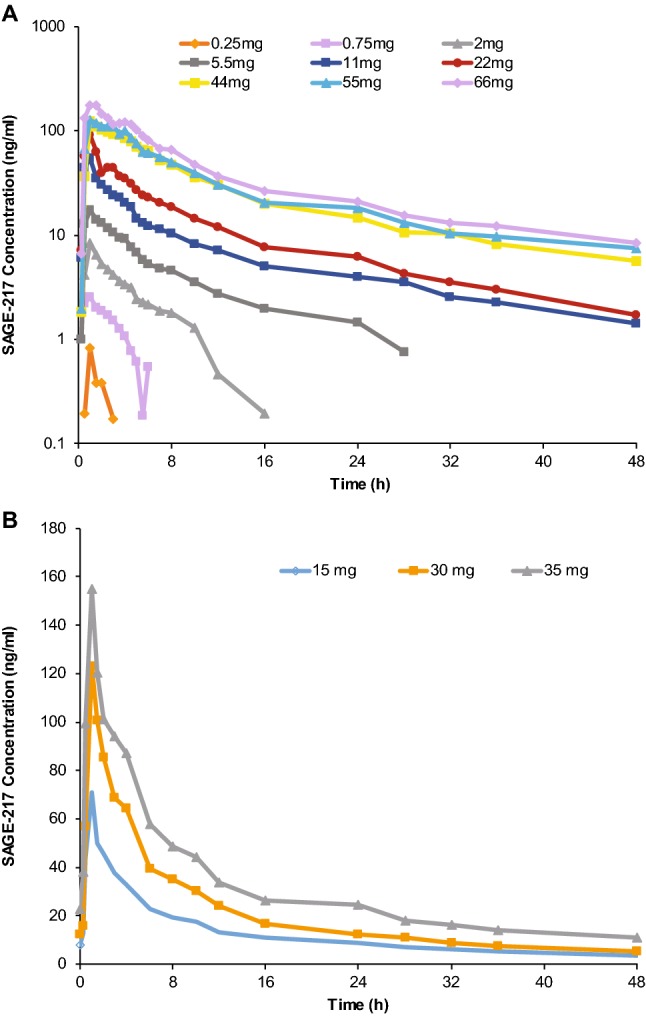
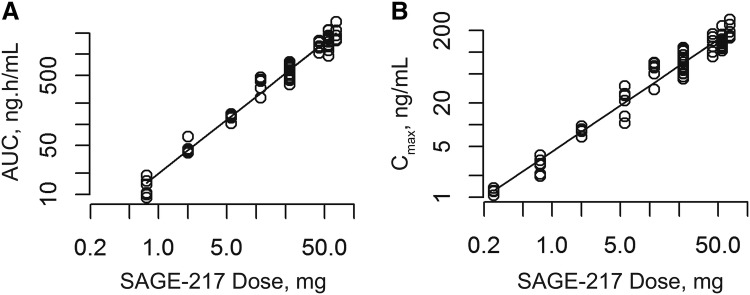
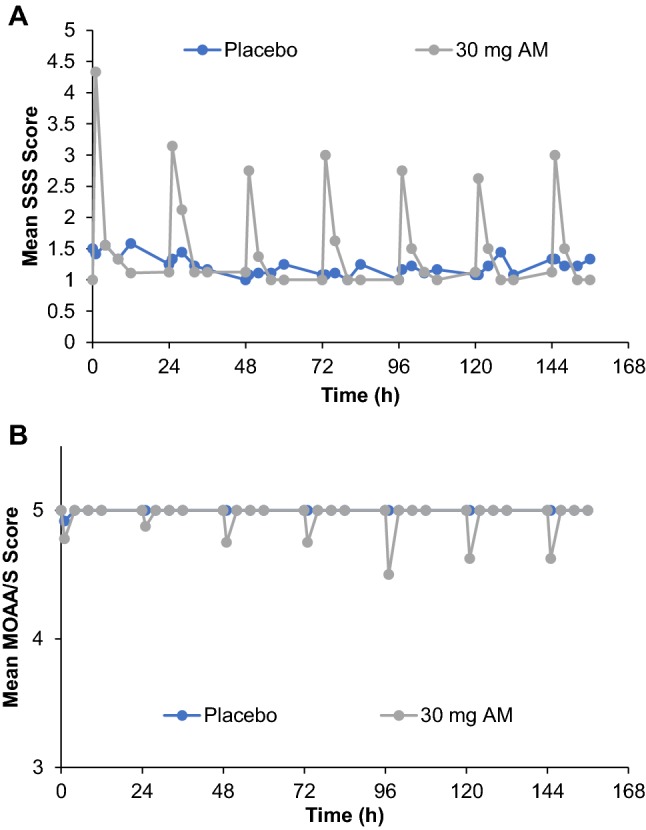
SAGE-217, a novel γ-aminobutyric acid A (GABA A ) receptor positive allosteric modulator, was evaluated in phase I, double-blind, placebo-controlled, single ascending dose (SAD) and multiple ascending dose (MAD) studies to assess the safety and pharmacokinetics (PK) of SAGE-217 following administration as an oral solution. In the SAD study, subjects were randomized 6:2 to a single dose of SAGE-217 or placebo. Doses ranged from 0.25 to 66 mg across nine cohorts. In the MAD study, subjects were randomized 9:3 and received SAGE-217 (15, 30, or 35 mg) or placebo once daily for 7 days. In both studies, PK, maximum tolerated dose (MTD; against predetermined criteria), safety, and tolerability were assessed. A total of 108 healthy volunteers enrolled in the studies—72 subjects in the SAD study and 36 subjects in the MAD study. SAGE-217 was orally bioavailable, with a terminal-phase half-life of 16–23 h and a t max of approximately 1 h. The MTDs for the oral solution of SAGE-217 in the SAD and MAD studies were determined to be 55 and 30 mg daily, respectively. In both studies, SAGE-217 was generally well tolerated, and no serious adverse events (SAEs) were reported. Most AEs were mild, dose-dependent, transient, occurred around the t max , and related to drug pharmacology. SAGE-217 was generally well tolerated, and its PK profile was well characterized. Based on this profile, SAGE-217 has been advanced into multiple phase II clinical programs and pivotal studies of major depressive disorder and postpartum depression.
Overview
The claims and statistics of this paper haven’t been checked yet.
Free: it reads the open-access text and checks the first 5 claims that cite a source we can check. Create a free account to check every claim.
Integrity signals
Registry
Cites
Statistics
Figures
Verification
Claims the paper makes
The claims and statistics of this paper haven’t been checked yet.
Free: it reads the open-access text and checks the first 5 claims that cite a source we can check. Create a free account to check every claim.
Claims other papers make about this one
Each is checked against this paper’s own text: does it say what the citing paper says it does?
The cited source says what the claim attributes to it.
In the citing paper
“Zuranolone (SAGE-217; Sage Therapeutics, Inc) is an investigational NAS GABAAR PAM with a similar mechanism of action and a pharmacokinetic profile suitable for once-daily oral dosing.39”
From Effect of Zuranolone vs Placebo in Postpartum Depression (2021) · cites this paper as [39]
The cited source says what the claim attributes to it.
In the citing paper
“NAS GABAAR PAMs have pharmacological profiles and binding sites distinct from benzodiazepines,40,41 with the ability to modulate the activity of both synaptic and extrasynaptic GABAARs.39,42”
From Effect of Zuranolone vs Placebo in Postpartum Depression (2021) · cites this paper as [39]
Self-check
Percentages, sums and reported differences re-computed from the paper’s own numbers.
The self-check needs the paper’s full text.
Citations
Cites
Posner, K., Brown, G. K., Stanley, B., Brent, D. A., Yershova, K. V., Oquendo, M. A., Currier, G. W., Melvin, G. A., Greenhill, L., Shen, S., et al. (2011) · American Journal of Psychiatry · doi:10.1176/appi.ajp.2011.10111704 · Cited by 5,157
Quantification of Sleepiness: A New Approach
Hoddes, E., Zarcone, V., Smythe, H., Phillips, R., & Dement, W. C. (1973) · Psychophysiology · doi:10.1111/j.1469-8986.1973.tb00801.x · Cited by 2,538
Validity and Reliability of the Observer??s: Assessment of Alertness/Sedation Scale
CHERNIK, D. A., GILLINGS, D., LAINE, H., HENDLER, J., SILVER, J. M., DAVIDSON, A. B., SCHWAM, E. M., & SIEGEL, J. L. (1990) · Journal of Clinical Psychopharmacology · doi:10.1097/00004714-199008000-00003 · Cited by 1,246
The GABAergic deficit hypothesis of major depressive disorder
Luscher, B., Shen, Q., & Sahir, N. (2011) · Molecular Psychiatry · doi:10.1038/mp.2010.120 · Cited by 934
GABAergic Mechanisms in Epilepsy
Treiman, D. M. (2001) · Epilepsia · doi:10.1046/j.1528-1157.2001.042suppl.3008.x · Cited by 836
Meltzer-Brody, S., Colquhoun, H., Riesenberg, R., Epperson, C. N., Deligiannidis, K. M., Rubinow, D. R., Li, H., Sankoh, A. J., Clemson, C., Schacterle, A., et al. (2018) · The Lancet · doi:10.1016/s0140-6736(18)31551-4 · Cited by 795
Self-citationBrexanolone (SAGE-547 injection) in post-partum depression: a randomised controlled trial.
Kanes, S., Colquhoun, H., Gunduz-Bruce, H., Raines, S., Arnold, R., Schacterle, A., Doherty, J., Epperson, C. N., Deligiannidis, K. M., Riesenberg, R., et al. (2017) · The Lancet · doi:10.1016/s0140-6736(17)31264-3 · Cited by 479
Self-citationLener, M. S., Niciu, M. J., Ballard, E. D., Park, M., Park, L. T., Nugent, A. C., & Zarate, C. A. (2017) · Biological Psychiatry · doi:10.1016/j.biopsych.2016.05.005 · Cited by 468
Extrasynaptic GABA A Receptors: Form, Pharmacology, and Function
Belelli, D., Harrison, N. L., Maguire, J., Macdonald, R. L., Walker, M. C., & Cope, D. W. (2009) · The Journal of Neuroscience · doi:10.1523/jneurosci.3340-09.2009 · Cited by 464
The role of reproductive hormones in postpartum depression
Schiller, C. E., Meltzer-Brody, S., & Rubinow, D. R. (2015) · CNS Spectrums · doi:10.1017/s1092852914000480 · Cited by 451
Cited by
Pharmacotherapy of Anxiety Disorders: Current and Emerging Treatment Options
Garakani, A., Murrough, J. W., Freire, R. C., Thom, R. P., Larkin, K., Buono, F. D., & Iosifescu, D. V. (2020) · Frontiers in Psychiatry · doi:10.3389/fpsyt.2020.595584 · Cited by 440
“SAGE-17 GABA-A (+) allosteric modulator (180) None None GAD (179)”
BackgroundEffect of Zuranolone vs Placebo in Postpartum Depression
Deligiannidis, K. M., Meltzer-Brody, S., Gunduz-Bruce, H., Doherty, J., Jonas, J., Li, S., Sankoh, A. J., Silber, C., Campbell, A. D., Werneburg, B., et al. (2021) · JAMA Psychiatry · doi:10.1001/jamapsychiatry.2021.1559 · Cited by 277
Self-citationCutler, A. J., Mattingly, G. W., & Maletic, V. (2023) · Translational Psychiatry · doi:10.1038/s41398-023-02514-2 · Cited by 194
“Zuranolone has a pharmacokinetic profile that enables oral once-daily dosing with increased bioavailability [226, 227].”
BackgroundAlthaus, A. L., Ackley, M. A., Belfort, G. M., Gee, S. M., Dai, J., Nguyen, D. P., Kazdoba, T. M., Modgil, A., Davies, P. A., Moss, S. J., et al. (2020) · Neuropharmacology · doi:10.1016/j.neuropharm.2020.108333 · Cited by 135
“Phase 1 studies in healthy volunteers have demonstrated that zuranolone was generally well tolerated and exhibited predictable pharmacokinetics following oral administration (Hoffmann et al., 2019).”
BackgroundSelf-citationAllopregnanolone-based treatments for postpartum depression: Why/how do they work?
Walton, N., & Maguire, J. (2019) · Neurobiology of Stress · doi:10.1016/j.ynstr.2019.100198 · Cited by 103
Patterson, R., Balan, I. S., Morrow, A. L., & Meltzer-Brody, S. E. (2023) · Neuropsychopharmacology · doi:10.1038/s41386-023-01721-1 · Cited by 95
“For example, pro-in fl ammatory signaling is associated with major depression [29 – 34], and PPD [35 – 38].”
BackgroundCerne, R., LIPPA, A. S., Poe, M. M., Smith, J. L., Jin, X., Ping, X., Golani, L. K., Cook, J. M., & Witkin, J. M. (2021) · Pharmacology & Therapeutics · doi:10.1016/j.pharmthera.2021.108035 · Cited by 97
Sze, Y., & Brunton, P. J. (2020) · European Journal of Neuroscience · doi:10.1111/ejn.14615 · Cited by 85
“It is not known whether such treatments are also effective in treating other types of psychiatric disorders, such as major depressive disorder in men or non-pregnant women; however, phase 2 clinical trials are currently underway (Hoffman et al., 2019).”
BackgroundClayton, A. H., Lasser, R. A., Nandy, I. M., Sankoh, A. J., Jonas, J. M., & Kanes, S. (2023) · The Journal of Clinical Psychiatry · doi:10.4088/jcp.22m14445 · Cited by 86
Self-citationGABAergic implications in anxiety and related disorders
Arora, I., Mal, P., Arora, P., Paul, A., & Kumar, M. (2024) · Biochemical and Biophysical Research Communications · doi:10.1016/j.bbrc.2024.150218 · Cited by 84
Allopregnanolone in mood disorders: Mechanism and therapeutic development
Chen, S., Gao, L., Li, X., & Ye, Y. (2021) · Pharmacological Research · doi:10.1016/j.phrs.2021.105682 · Cited by 75
Effect of Zuranolone on Concurrent Anxiety and Insomnia Symptoms in Women With Postpartum Depression
Deligiannidis, K. M., Citrome, L., Huang, M., Acaster, S., Fridman, M., Bonthapally, V., Lasser, R. A., & Kanes, S. (2023) · The Journal of Clinical Psychiatry · doi:10.4088/jcp.22m14475 · Cited by 64
Self-citationWitkin, J. M., LIPPA, A. S., Smith, J. L., Jin, X., Ping, X., Biggerstaff, A., Kivell, B. M., Knutson, D. E., Sharmin, D., Pandey, K. P., et al. (2022) · Pharmacology Biochemistry and Behavior · doi:10.1016/j.pbb.2021.173321 · Cited by 51
Parikh, S. V., Aaronson, S. T., Mathew, S. J., Alva, G., DeBattista, C., Kanes, S., Lasser, R. A., Bullock, A. E., Kotecha, M., Jung, J., et al. (2023) · Neuropsychopharmacology · doi:10.1038/s41386-023-01751-9 · Cited by 38
Self-citationPharmacological Tools to Modulate Autophagy in Neurodegenerative Diseases
Suresh, S. N., Chakravorty, A., Giridharan, M., Garimella, L., & Manjithaya, R. (2020) · Journal of Molecular Biology · doi:10.1016/j.jmb.2020.02.023 · Cited by 32
Faden, J., & Citrome, L. (2020) · Therapeutic Advances in Psychopharmacology · doi:10.1177/2045125320968658 · Cited by 35
Vasiliu, O. (2022) · Frontiers in Pharmacology · doi:10.3389/fphar.2022.884143 · Cited by 35
Meltzer-Brody, S. E., Gerbasi, M. E., Mak, C., Toubouti, Y. M., Smith, S. C., Roskell, N., TAN, R. S.-H., Chen, S., & Deligiannidis, K. M. (2024) · Journal of Medical Economics · doi:10.1080/13696998.2024.2334160 · Cited by 34
“Zuranolone is a positive allosteric modulator of both synaptic and extrasynaptic GABA A receptors and a neuroactive steroid 20,24,25 .”
Zuranolone as an oral adjunct to treatment of Parkinsonian tremor: A phase 2, open-label study
Bullock, A. E., Kaul, I., Li, S., Silber, C., Doherty, J., & Kanes, S. (2020) · Journal of the Neurological Sciences · doi:10.1016/j.jns.2020.117277 · Cited by 32
“These data support the further investigation of NAS GABAA receptor PAMs as adjunctive treatments for tremor in patients with PD.”
BackgroundInfluentialSelf-citationPharmacotherapy of Anxiety Disorders: Current and Emerging Treatment Options
Garakani, A., Murrough, J. W., Freire, R. C. R., Thom, R. P., Larkin, K., Buono, F. D., & Iosifescu, D. V. (2021) · FOCUS The Journal of Lifelong Learning in Psychiatry · doi:10.1176/appi.focus.19203 · Cited by 31
Gao, Q., Sun, W., Wang, Y.-R., Li, Z., Zhao, F., Geng, X., Xu, K., Chen, D., Liu, K., Xing, Y., et al. (2023) · Frontiers in Psychiatry · doi:10.3389/fpsyt.2023.1140796 · Cited by 27
Li, Z., Wu, Q., Peng, P., Wu, M., Liu, S., & Liu, T. (2023) · Psychiatry Research · doi:10.1016/j.psychres.2023.115640 · Cited by 26
Deligiannidis, K. M., Bullock, A. E., Nandy, I. M., Dunbar, J., Lasser, R. A., Witte, M. M., Leclair, B., & Wald, J. (2024) · Journal of Clinical Psychopharmacology · doi:10.1097/jcp.0000000000001873 · Cited by 27
“51,52 Therewas a mean decrease of 8.3% in breast milk volume collected at steady state over day 3 to day 5 compared with a 3-day period at baseline (day − 3 to day − 1).”
BackgroundInfluentialSelf-citationDold, M., Bartova, L., Fugger, G., Mitschek, M. M. M., Kautzky, A., Frey, R., Montgomery, S., Zohar, J., Mendlewicz, J., Souery, D., et al. (2020) · European Neuropsychopharmacology · doi:10.1016/j.euroneuro.2020.09.636 · Cited by 25
Suthoff, E. D., Kosinski, M. R., Arnaud, A. M., Hodgkins, P., Gunduz‐Bruce, H., Lasser, R. A., Silber, C., Sankoh, A. J., Li, H., WERNEBURG, B. G., et al. (2022) · Journal of Affective Disorders · doi:10.1016/j.jad.2022.03.068 · Cited by 25
Self-citationClinical efficacy and safety of Zuranolone (SAGE-217) in individuals with major depressive disorder
Meshkat, S., Teopiz, K. M., Vincenzo, J. D. D., Bailey, J., Rosenblat, J. D., Ho, R., Rhee, T. G., Ceban, F., Kwan, A. T. H., Cao, B., et al. (2023) · Journal of Affective Disorders · doi:10.1016/j.jad.2023.08.027 · Cited by 24
Hart, X. M., Gründer, G., Unterecker, S., Schoretsanitis, G., Hiemke, C., Adamovic, I., Amann, F., Baumann, P., Bergemann, N., Brandt, C., et al. (2026) · Pharmacopsychiatry · doi:10.1055/a-2860-7861 · Cited by 25
Roehrs, T., Auciello, J., Tseng, J., & Whiteside, G. T. (2020) · Neuropsychopharmacology Reports · doi:10.1002/npr2.12117 · Cited by 20
Bullock, A. E., Gunduz‐Bruce, H., Zammit, G. K., Qin, M., Li, H., Sankoh, A. J., Silber, C., Kanes, S., Jonas, J. M., & Doherty, J. (2021) · Human Psychopharmacology Clinical and Experimental · doi:10.1002/hup.2806 · Cited by 20
“The pharmacokinetics of zuranolone are suitable for once daily dosing (Hoffmann et al., 2019), and zuranolone has previously been examined in Phase 2 (Gunduz‐Bruce et al.”
BackgroundResultSelf-citationThe emergence of antidepressant drugs targeting GABAA receptors: A concise review
Gonda, X., Tarazi, F. I., & Döme, P. (2024) · Biochemical Pharmacology · doi:10.1016/j.bcp.2024.116481 · Cited by 20
An update on the pharmacotherapy of postpartum depression
Arifunhera, J., & Ravichandran, M. (2024) · International Journal of Gynecology & Obstetrics · doi:10.1002/ijgo.15980 · Cited by 18
Zawilska, J. B., & Zwierzyńska, E. (2025) · International Journal of Molecular Sciences · doi:10.3390/ijms26136545 · Cited by 17
“For both single and repeated dose administration, t 1/2 and t max showed dose independence [79].”
Cutler, A. J., Mattingly, G. W., Kornstein, S. G., Aaronson, S. T., Lasser, R. A., Zhang, H., Rana, N., Brown, C., Levin, S. N., Miller, C., et al. (2023) · The Journal of Clinical Psychiatry · doi:10.4088/jcp.23m14845 · Cited by 15
Self-citationRaja, A., Ahmed, S., Siddiqui, M. B. A., Mir, S. L., Kumar, R., Ahmed, M. M., Raja, S., Amin, S. B., Rahman, H. A. U., Deepak, F., et al. (2024) · Frontiers in Psychiatry · doi:10.3389/fpsyt.2024.1425295 · Cited by 17
Sonoyama, T., Shimizu, R., Kubota, R., Matsuo, Y., Okutsu, D., Yamanaka, H., Takasu, K., Ogawa, K., & Motomiya, T. (2023) · Neuropsychopharmacology Reports · doi:10.1002/npr2.12359 · Cited by 13
Fayoud, A. M., Orebi, H. A., Elshnoudy, I. A., Elsebaie, M. A. T., Elewidi, M. M. M., & Sabra, H. K. (2024) · Psychopharmacology · doi:10.1007/s00213-024-06611-y · Cited by 14
“This finding aligns with a study assessing the tolerability of zuranolone among U.S. patients (Hoffmann et al. 2020) This is supported by studies conducted by Sage Therapeutics and Biogen, where no notable difference was found in adverse events related to discontinuation of the drug between the…”
ResultApproche GABAergique de la dépression du post-partum : une revue critique translationnelle
Verbe, J., Dubertret, C., El‐Hage, W., Bonnet‐Brilhault, F., & Duriez, P. (2019) · L Encéphale · doi:10.1016/j.encep.2019.09.007 · Cited by 13
Importance of achieving rapid treatment response in major depressive disorder
Alva, G. (2023) · CNS Spectrums · doi:10.1017/s1092852923002213 · Cited by 12
“39-41 Targeting both synaptic and extrasynaptic GABA A Rs distinguishes zuranolone from other GABAergic drugs, such as benzodiazepines, which only target synaptic receptors.”
BackgroundZuranolone and its role in treating major depressive disorder: a narrative review
Ali, M., Ullah, I., Diwan, M. N., Aamir, A., Awan, H. A., Durrani, A. W., Qudrat, Q. U., Shoib, S., & Berardis, D. D. (2023) · Hormone Molecular Biology and Clinical Investigation · doi:10.1515/hmbci-2022-0042 · Cited by 10
Autophagy and Biomaterials: A Brief Overview of the Impact of Autophagy in Biomaterial Applications
Pirmoradi, L., Shojaei, S., Ghavami, S., Zarepour, A., & Zarrabi, A. (2023) · Pharmaceutics · doi:10.3390/pharmaceutics15092284 · Cited by 10
“…(idalopirdine) [104], SB-742457 [105], nicotinamide [106], resveratrol [107], lithium [108], latrepirdine [109], and metformin [110], and SAGE217 is known to modulate autophagy in PD [111], all of which are under investigation in clinical trials, with potential future therapeutic objectives.”
BackgroundZuranolone for treatment of major depressive disorder: a systematic review and meta-analysis
Ahmad, A., Awan, A. R., Nadeem, N., Javed, A. S., Farooqi, M., Daniyal, M., & Mumtaz, H. (2024) · Frontiers in Neuroscience · doi:10.3389/fnins.2024.1361692 · Cited by 11
Understanding and treating postpartum depression: a narrative review
Cardaci, V., Carminati, M., Tondello, M., Pecorino, B., Serretti, A., & Zanardi, R. (2024) · International Clinical Psychopharmacology · doi:10.1097/yic.0000000000000560 · Cited by 9
“Evening dosing is associated with fewer adverse effects than daytime dosing (Hoffmann et al ., 2020).”
Jin, L., Yang, K., Wu, X., & Zhang, J. (2024) · Expert Opinion on Drug Safety · doi:10.1080/14740338.2024.2387316 · Cited by 7
“The development and post-marketing monitoring and reporting of new drugs are essential [33].”
Extra-synaptic modulation of GABAA and efficacy in bipolar disorder
El‐Mallakh, R. S., & Ali, Z. (2021) · Medical Hypotheses · doi:10.1016/j.mehy.2021.110501 · Cited by 6
Gupta, J. K., Singh, K., Bhatt, A., Porwal, P., Rani, R., Dubey, A., Jain, D., & Nand, S. (2024) · 3 Biotech · doi:10.1007/s13205-024-04104-5 · Cited by 5
Perinatal Neuroendocrine Mechanisms in Postpartum Depression and Therapeutic Opportunities
Abey, N. O., Oweh, O. T., & Ebuehi, O. A. T. (2025) · SN Comprehensive Clinical Medicine · doi:10.1007/s42399-025-02023-x · Cited by 4
“It acts by modulating the activity of both synaptic and extra-synaptic GABAA receptors [164].”
Lian, J., Lin, Z., Li, X., Chen, G., & Wu, D. (2024) · Journal of Affective Disorders · doi:10.1016/j.jad.2024.03.057 · Cited by 6
Cha, D. S., Kleine, N., Teopiz, K. M., Vincenzo, J. D. D., Ho, R., Galibert, S. L., Samra, A., Zilm, S. P. M., Cha, R. H., d’Andrea, G., et al. (2024) · Expert Opinion on Pharmacotherapy · doi:10.1080/14656566.2023.2298340 · Cited by 4
“However, fewer sedation-related adverse events occurred in those who received zuranolone in the evening when compared to in the morning – an observation that informed Phase II studies toward optimizing patient outcomes and minimizing adverse events [39].”
BackgroundInfluentialSupportive care of female hormones in brain health: what and how?
Zhu, A., Song, S., Pei, L., & Huang, Y. (2024) · Frontiers in Pharmacology · doi:10.3389/fphar.2024.1403969 · Cited by 3
TO MARKET, TO MARKET—2023: SMALL MOLECULES
Araujo, E., Bartels, B., Bell, I. M., Castanedo, G. M., Zeng, M., Dhar, T. G. M., Holmberg‐Douglas, N., Welin, E. R., Koester, D. C., León, B., et al. (2024) · Medicinal chemistry reviews · doi:10.1021/mc-2024-vol59.ch19 · Cited by 3
Modeling the efficacy of a novel antidepressant zuranolone for major depressive disorder
Liu, J., Hong, L.-M., Qian, Y., Chen, R., & Lin, W.-W. (2025) · Journal of Affective Disorders · doi:10.1016/j.jad.2025.120158 · Cited by 2
Premenstrual Dysphoric Disorder, Peripartum (Perinatal) Depression, and Perimenopausal Depression
Cox, E., Barker, L. C., Vigod, S. N., & Meltzer-Brody, S. E. (2024) · Springer eBooks · doi:10.1007/978-3-030-51366-5_58 · Cited by 2
Premenstrual Dysphoric Disorder and Peripartum Depression
Cox, E., Barker, L. C., Vigod, S. N., & Meltzer-Brody, S. E. (2023) · Springer eBooks · doi:10.1007/978-3-030-42825-9_58-1 · Cited by 2
Novel Neurosteroid Pharmaceuticals
Susser, L. C., Swanson, C., & Hermann, A. D. (2021) · Advances in Psychiatry and Behavioral Health · doi:10.1016/j.ypsc.2021.05.017 · Cited by 2
Prabhakar, M. (2024) · Journal of chemical health risks · doi:10.52783/jchr.v14.i2.3484 · Cited by 1
Kumar, S. A., & V., R. C. C. (2022) · International Journal of Basic & Clinical Pharmacology · doi:10.18203/2319-2003.ijbcp20221045
Research Topics in Perinatal Mental Health: The Current State of the Art
Cogoni, C., Brenna, V., Bramante, A., & Percudani, M. (2022) · Springer eBooks · doi:10.1007/978-3-030-91832-3_25
Sage 217 (Zuranolone) for Treatment of Major Depressive Disorder
Beresis, R. T. (2022) · Wiley eBooks · doi:10.1002/9781119847281.ch14
GABA System in Anxiety Disorders: A Review of Current and Novel GABAergic Drugs
Cai, Y., & Xu, E. (2023) · Journal of Education Humanities and Social Sciences · doi:10.54097/ehss.v22i.12411
“This trial reveals that most side effects are mild, dose-dependent, and well-tolerated [28].”
BackgroundChapter 24. Brexanolone and Other Neurosteroids
Patterson, R., Krohn, H., & Meltzer-Brody, S. E. (2024) · American Psychiatric Association Publishing eBooks · doi:10.1176/appi.books.9781615375523.as24
Rai, R. (2024) · Revista Electronica de Veterinaria · doi:10.69980/redvet.v25i2.1702
Innovative Pharmacologic Strategies for Depression in the Postpartum Period
Spada, M. L., Puzanov, M., Shenai, N., Nichols, N., Lim, G., & Gopalan, P. R. (2025) · Advances in Psychiatry and Behavioral Health · doi:10.1016/j.ypsc.2025.03.001
Hazelgrove, K. M., & Dazzan, P. (2025) · Cambridge University Press eBooks · doi:10.1017/9781009028967.013
Metadata
- Authors
- Hoffmann, E., Nomikos, G. G., Kaul, I., Raines, S., Wald, J., Bullock, A., Sankoh, A. J., Doherty, J., Kanes, S. J., & Colquhoun, H.
- Affiliations
- Sage Therapeutics (United States) (US)
- Biogen (United States) (US)
- Corresponding author
- Hoffmann, Ethan
- Venue
- Clinical Pharmacokinetics
- Published
- 2019-07-24
- Volume
- 59
- Issue
- 1
- Pages
- 111-120
- ISSN
- 0312-5963 (ISSN-L)
- 1179-1926
- PMC
- PMC6994455
- OpenAlex
- W2963972855
- Cited by
- 59
- References
- 30
- Citations by year
- 2026: 1 · 2025: 4 · 2024: 18 · 2023: 14 · 2022: 5 · 2021: 7 · 2020: 7 · 2019: 3
- FWCI
- 2.63
- Type
- journal article
- Language
- en
- Open access
- hybrid
- doi.org
- Licence
- cc-by-nc
- creativecommons.org/licenses/by-nc/4.0 (tdm)
- creativecommons.org/licenses/by-nc/4.0 (vor)
- Locations
- Clinical Pharmacokinetics (publishedVersion, cc-by-nc)
- Europe PMC (PubMed Central) (publishedVersion, cc-by-nc)
- PubMed Central (publishedVersion, cc-by-nc)
- PubMed (publishedVersion)
- Funders
- Sage Therapeutics, Inc.
- Topics
- Life Sciences › Neuroscience › Cellular and Molecular Neuroscience › Neuroscience and Neuropharmacology Research
- Health Sciences › Medicine › Clinical Neurology › Epilepsy research and treatment
- Health Sciences › Medicine › Pediatrics, Perinatology and Child Health › Pharmaceutical studies and practices
- Keywords
- GABAA receptor, positive allosteric modulators, pharmacokinetics, tolerability, maximum tolerated dose, dose-finding, healthy volunteers, major depressive disorder, postpartum depression, oral bioavailability
- MeSH terms
- Administration, Oral, Adult, Allosteric Regulation, Major Depressive Disorder, Dose-Response Relationship, Drug, Double-Blind Method, Drug Administration Schedule, Female, Humans, Male, Middle Aged, Pharmacology, Clinical, Placebos, Pregnanes, Pregnanolone, Pyrazoles, Safety, Depression, Postpartum, GABA-A Receptor Agonists, Healthy Volunteers
About these checks
Registry, retraction, Cites and statistics results are computed, not judged, with one exception: a printed reference that no index lists is read once by a model before it counts as a citation error. Claims are extracted by a model and kept only when their quote appears verbatim in the text; each cited source is then checked, with a model’s help, for whether it says what the claim relies on. Those verdicts can be wrong — read the claim’s quote and the cited source before relying on one.
Statistics and arithmetic are recomputed, not judged.
Confidence bands are shown only for fields calibrated on our annotated test set. None is calibrated yet, so no band is shown.
What counts as a claim ›How we measure confidence ›How we check this ›
Are you an author, or do you see a problem with this page? Request a review
Data sources
Bibliographic data: Semantic Scholar, OpenAlex, Crossref.
Contains information from the Semantic Scholar Academic Graph Datasets, made available under the ODC Attribution License (ODC-BY 1.0).
Semantic Scholar’s data is described in: Kinney, R., et al. (2023). The Semantic Scholar Open Data Platform. arXiv:2301.10140.
