

Health-Related Quality of Life and Functional Outcomes from a Randomized-Withdrawal Study of Long-Term Lisdexamfetamine Dimesylate Treatment in Children and Adolescents with Attention-Deficit/Hyperactivity Disorder
Open accessThe DOI matches its Crossref record; 30 of the 31 references it cites were found in a registry or an index.
Abstract
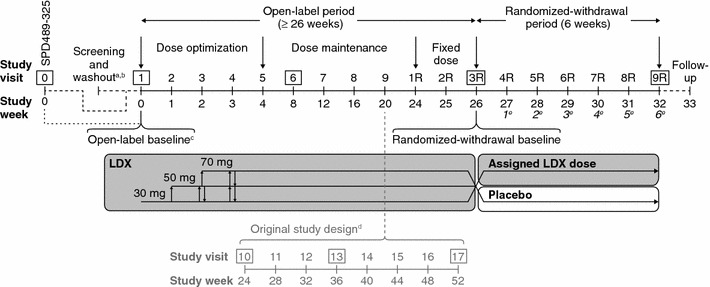
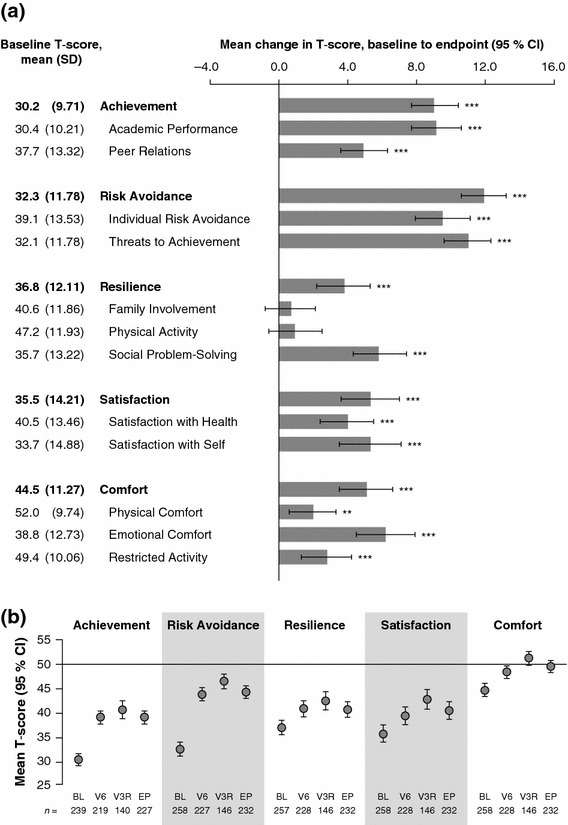
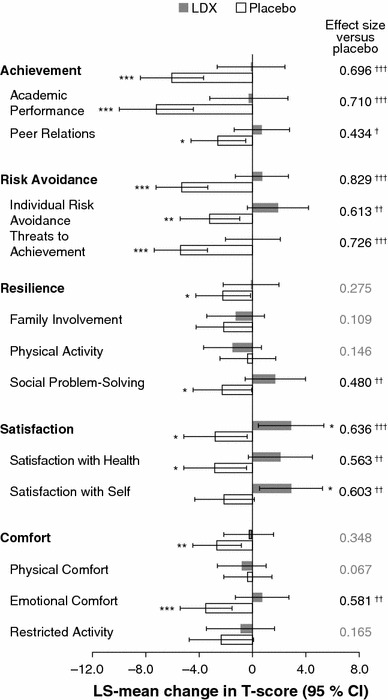
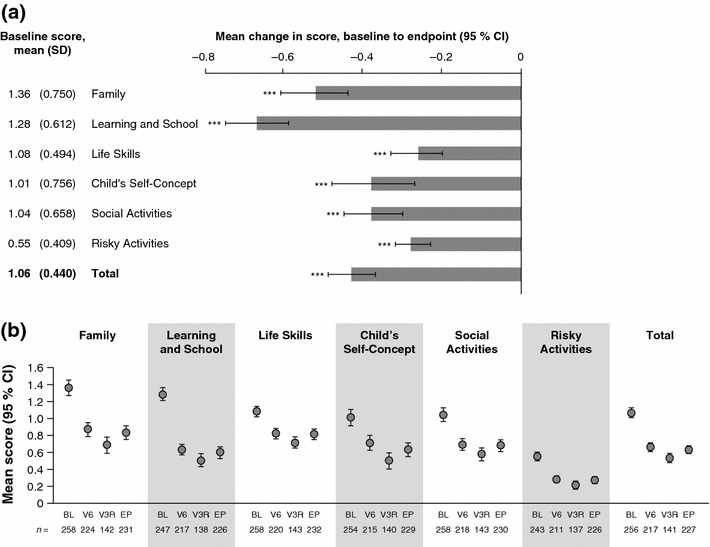
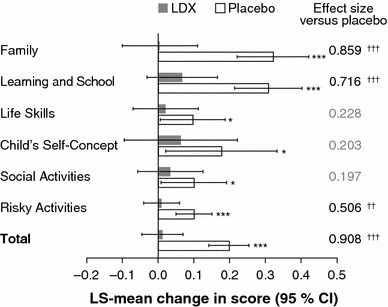
BACKGROUND: The stimulant prodrug lisdexamfetamine dimesylate (LDX) is an effective and generally well tolerated treatment for the symptoms of attention-deficit/hyperactivity disorder (ADHD). Positive impacts of LDX on health-related quality of life and functional impairment have previously been demonstrated in a 7-week, randomized, double-blind, placebo-controlled, phase III study in children and adolescents in Europe. Maintenance of these broad benefits, as well as symptomatic control, is a key goal of long-term management of ADHD. OBJECTIVE: Secondary objectives of this multinational study in children and adolescents with ADHD were to assess the long-term maintenance of effectiveness of LDX in improving health-related quality of life and reducing functional impairment, as gauged using the Child Health and Illness Profile-Child Edition: Parent Report Form (CHIP-CE: PRF) and the Weiss Functional Impairment Rating Scale-Parent Report (WFIRS-P), respectively. METHODS: Patients aged 6-17 years with diagnosed ADHD and a baseline ADHD Rating Scale IV total score of at least 28 were enrolled from the previous European study and from US sites. Patients who completed an open-label LDX treatment period of at least 26 weeks were randomized (1:1) to continue on their optimized dose of LDX or to switch to placebo for a 6-week, double-blind, withdrawal period. Parents completed CHIP-CE: PRF and WFIRS-P questionnaires at weeks 0, 8 and 26 of the open-label period and at weeks 0 and 6 of the randomized-withdrawal period, or at early termination. The endpoint of each period was defined as the last visit with valid data. Effect sizes were the difference (LDX minus placebo) in least-squares (LS)-mean change from baseline to endpoint divided by root-mean-square error. P values were nominal and not adjusted for multiple comparisons. RESULTS: The open-label and randomized full analysis sets comprised 262 and 153 (LDX n = 76; placebo n = 77) patients, respectively. Mean pretreatment CHIP-CE: PRF T-scores were more than one standard deviation below the normative mean in four of the five domains, and there was significant improvement across all domains from baseline to endpoint of the open-label period. In the randomized-withdrawal period, LS-mean CHIP-CE: PRF T-scores deteriorated in all domains in the placebo group, but not in the LDX group. Compared with placebo, the effect of LDX was significant in the Risk Avoidance (effect size 0.829; p < 0.001), Achievement (0.696; p < 0.001) and Satisfaction (0.636; p < 0.001) domains. Mean pretreatment WFIRS-P scores were lowest in the Family domain and the Learning and School domain. WFIRS-P total score and scores in all domains improved significantly from baseline to endpoint of the open-label period. In the randomized-withdrawal period, LS-mean scores deteriorated in the placebo group but not in the LDX group. Compared with placebo, the effect of LDX was significant in the Family, Learning and School, and Risky Activities domains and in total (effect size 0.908; p < 0.001). CONCLUSIONS: Using parent-rated instruments, long-term maintenance of the beneficial effect of LDX in multiple domains of health-related quality of life and functional impairment was demonstrated by comparison of treatment continuation and withdrawal under randomized, double-blind, placebo-controlled conditions.
Overview
The claims and statistics of this paper haven’t been checked yet.
Free: it reads the open-access text and checks the first 5 claims that cite a source we can check. Create a free account to check every claim.
Integrity signals
Registry
Cites
Statistics
Figures
Verification
Claims the paper makes
The claims and statistics of this paper haven’t been checked yet.
Free: it reads the open-access text and checks the first 5 claims that cite a source we can check. Create a free account to check every claim.
Claims other papers make about this one
Each is checked against this paper’s own text: does it say what the citing paper says it does?
The source backs part of the claim, not all of it — or backs it for a different population, condition or comparison.
In the citing paper
“one study found that medication-related improvement of HRQOL persisted following medication withdrawal, even when symptom severity increased 236 , indicating that any potential causeeffect relationships between medication use, symptom and functional impairment reduction and HRQOL require further investigation.”
From Attention-deficit/hyperactivity disorder (2015) · cites this paper as [236]
Experimental — accuracy not yet measured
Self-check
Percentages, sums and reported differences re-computed from the paper’s own numbers.
The self-check needs the paper’s full text.
Citations
Cites
Diagnostic and Statistical Manual of Mental Disorders
American Psychiatric Association (2013) · doi:10.1176/appi.books.9780890425596 · Cited by 116,369
Diagnostic and Statistical Manual of Mental Disorders
Williams, J. B. W., & First, M. (2013) · Encyclopedia of Social Work · doi:10.1093/acrefore/9780199975839.013.104 · Cited by 109,519
Cohen, J. (1992) · Psychological Bulletin · doi:10.1037//0033-2909.112.1.155 · Cited by 8,771
The quality of life of children with attention deficit/hyperactivity disorder: a systematic review
Danckaerts, M., Sonuga-Barke, E. J. S., Banaschewski, T., Buitelaar, J., Döpfner, M., Hollis, C., Santosh, P., Rothenberger, A., Sergeant, J., Steinhausen, H.-C., et al. (2010) · European Child & Adolescent Psychiatry · doi:10.1007/s00787-009-0046-3 · Cited by 516 · cited 2×
“These observations are consistent with the hypothesis that functional impairment and HRQoL are neither wholly dependent on, nor wholly independent of, ADHD symptoms, even in the domains that are most responsive to stimulant therapy [21–23, 31].”
BackgroundResultSelf-citationBiederman, J., Krishnan, S., Zhang, Y., McGough, J. J., & Findling, R. L. (2007) · Clinical Therapeutics · doi:10.1016/s0149-2918(07)80083-x · Cited by 404
MICHELSON, D., BUITELAAR, J. K., DANCKAERTS, M., GILLBERG, C., SPENCER, T. J., ZUDDAS, A., FARIES, D. E., ZHANG, S., & BIEDERMAN, J. (2004) · Journal of the American Academy of Child & Adolescent Psychiatry · doi:10.1097/01.chi.0000125089.35109.81 · Cited by 307 · cited 1×
“016) [32].”
Self-citationThe Child Report Form of the CHIP–Child Edition: Reliability and Validity
Riley, A. W., Forrest, C. B., Rebok, G. W., Starfield, B., Green, B. F., Robertson, J. A., & Friello, P. (2004) · Medical Care · doi:10.1097/01.mlr.0000114910.46921.73 · Cited by 243
Adler, L. A., Goodman, D. W., Kollins, S. H., Weisler, R. H., Krishnan, S., Zhang, Y., & Biederman, J. (2008) · The Journal of Clinical Psychiatry · doi:10.4088/jcp.v69n0903 · Cited by 218 · cited 1×
“The efficacy of oncedaily LDX in relieving the symptoms of ADHD compared with placebo has been demonstrated in a series of 4-week US-based clinical trials in children [4], adolescents [5] and adults [6], and more recently in a 7-week European study in children and adolescents (SPD489-325) [7].”
BackgroundAbsorption of lisdexamfetamine dimesylate and its enzymatic conversion to d-amphetamine
Pennick (2010) · Neuropsychiatric Disease and Treatment · doi:10.2147/ndt.s9749 · Cited by 170 · cited 1×
“Lisdexamfetamine dimesylate (LDX), the first long-acting stimulant prodrug, undergoes rate-limiting enzymatic bioconversion to d-amfetamine in the bloodstream [1] and provides a daily duration of efficacy of at least 13 h post-dose in children and 14 h in adults, as determined in laboratory school and simulated workpl…”
BackgroundFacts, values, and Attention-Deficit Hyperactivity Disorder (ADHD): an update on the controversies
Parens, E., & Johnston, J. (2009) · Child and Adolescent Psychiatry and Mental Health · doi:10.1186/1753-2000-3-1 · Cited by 158
Research works printed but not linked: 1
- Riley AW Robertson JA Forrest CB Green BF Rebok GW Starfield B Technical manual for the Child Health and Illness Profile-Child Edition (CHIP-CE) Parent and Child Report Forms (Version 1.0) 2001 Baltimore Johns Hopkins University
Cited by
Attention-deficit/hyperactivity disorder
Faraone, S. V., Asherson, P., Banaschewski, T., Biederman, J., Buitelaar, J. K., Ramos-Quiroga, J. A., Rohde, L. A., Sonuga-Barke, E. J. S., Tannock, R., & Franke, B. (2015) · Nature Reviews Disease Primers · doi:10.1038/nrdp.2015.20 · Cited by 1,479
Self-citationEvidence-based pharmacological treatment options for ADHD in children and adolescents
Mechler, K., Banaschewski, T., Hohmann, S., & Häge, A. (2022) · Pharmacology & Therapeutics · doi:10.1016/j.pharmthera.2021.107940 · Cited by 293
Self-citationCoghill, D. R., Banaschewski, T., Soutullo, C., Cottingham, M. G., & Zuddas, A. (2017) · European Child & Adolescent Psychiatry · doi:10.1007/s00787-017-0986-y · Cited by 122
“…GXR 0.52*** 0.11NS 0.22NS 0.10NS –0.15NS 0.06NS –0.01-NS 0.14NS Stein et al. 2015 [70, 86] GXR 0.77*** 0.53*** 0.46*** 0.17NS 0.05NS 0.42*** 0.34* 0.45*** Banaschewski et al. 2014 [14] LDX con nua on 1.49*** 0.86*** 0.72*** 0.23NS 0.20NS 0.20NS 0.51** 0.91*** Effect sizes have been rounded to 2…”
InfluentialSelf-citationWeiss, M. D., McBride, N. M., Craig, S. G., & Jensen, P. S. (2018) · Evidence-Based Mental Health · doi:10.1136/ebmental-2018-300025 · Cited by 120
Wilens, T. E., Robertson, B., Sikirica, V., Harper, L., Young, J. L., Bloomfield, R., Lyne, A., Rynkowski, G., & Cutler, A. J. (2015) · Journal of the American Academy of Child & Adolescent Psychiatry · doi:10.1016/j.jaac.2015.08.016 · Cited by 77
Liang, S. H.-Y., Yang, Y.-H., Kuo, T.-Y., Liao, Y.-T., Lin, T.-C., Lee, Y., McIntyre, R. S., Kelsen, B. A., Wang, T.-N., & Chen, V. C.-H. (2018) · Research in Developmental Disabilities · doi:10.1016/j.ridd.2017.10.023 · Cited by 58
“It is well established that ADHD is significantly associated with impairments in day-to-day life, daily functioning at school or at work, as well as on social and emotional development (Buitelaar &Medori, 2010), family stress and healthcare consumption (Banaschewski et al., 2014), increased risk of accident and injury…”
BackgroundTargeting Functional Impairments in the Treatment of Children and Adolescents with ADHD
Sasser, T. R., Schoenfelder, E. N., & Stein, M. A. (2016) · CNS Drugs · doi:10.1007/s40263-016-0400-1 · Cited by 58
“Interestingly though, in a 26-week, open-label maintenance trial of LDX with the latter sample [52], participants showed significant improvement across all WFIRS-P subscale scores after an additional 8 weeks, suggesting that stimulant responders who continue with treatment may display broader improvements in functioni…”
Attention Deficit Hyperactivity Disorder: Diagnosis and Treatment in Children and Adolescents
Kemper, A. R., Maslow, G. R., Hill, S., Namdari, B., Allen LaPointe, N. M., Goode, A. P., Coeytaux, R. R., Befus, D., Kosinski, A. S., Bowen, S. E., et al. (2018) · doi:10.23970/ahrqepccer203 · Cited by 53
Wong, I. C. K., Banaschewski, T., Buitelaar, J., Cortese, S., Döpfner, M., Simonoff, E., & Coghill, D. (2019) · The Lancet Psychiatry · doi:10.1016/s2215-0366(19)30096-3 · Cited by 39
Self-citationSchwörer, M. C., Reinelt, T., Petermann, F., & Petermann, U. (2020) · Quality of Life Research · doi:10.1007/s11136-019-02394-4 · Cited by 39
Intentional Discontinuation of Psychostimulants Used to Treat ADHD in Youth: A Review and Analysis
Lohr, W. D., Wanta, J. W., Baker, M., Grudnikoff, E., Morgan, W. S., Chhabra, D., & Lee, T. (2021) · Frontiers in Psychiatry · doi:10.3389/fpsyt.2021.642798 · Cited by 36
“Subsequent analysis showed improvement in health-related quality of life and functional status during the lead-in phase and then maintained in the lisdexamfetamine arm while those in the placebo arm had significant deterioration for both (26).”
BackgroundLong-term medication for ADHD and development of cognitive functions in children and adolescents
Johnson, M., Johnels, J. Å., Östlund, S., Cedergren, K., Omanovic, Z., Hjalmarsson, K., Jakobsson, K., Högstedt, J., & Billstedt, E. (2021) · Journal of Psychiatric Research · doi:10.1016/j.jpsychires.2021.07.055 · Cited by 35
Self-citationPharmacological treatment of attention-deficit/hyperactivity disorder: assessing outcomes
Adamo, N., Seth, S., & Coghill, D. (2015) · Expert Review of Clinical Pharmacology · doi:10.1586/17512433.2015.1050379 · Cited by 35
Self-citationAttention-Deficit/Hyperactivity Disorder and Transitional Aged Youth
Wilens, T. E., Isenberg, B. M., Kaminski, T. A., Lyons, R. M., & Quintero, J. (2018) · Current Psychiatry Reports · doi:10.1007/s11920-018-0968-x · Cited by 35
Lisdexamfetamine Dimesylate: A Review in Paediatric ADHD
Frampton, J. E. (2018) · Drugs · doi:10.1007/s40265-018-0936-0 · Cited by 34
“Data from this study demonstrated that the efficacy of lisdexamfetamine in terms of improving ADHD symptoms, HRQOL and functional impairment was maintained during long-term treatment and, furthermore, showed that treatment needed to be continued in order for the beneficial effects to be maintained [26, 39].”
BackgroundResultNagy, P., Häge, A., Coghill, D., Caballero, B., Adeyi, B. A., Anderson, C. S., Sikirica, V., & Cardo, E. (2015) · European Child & Adolescent Psychiatry · doi:10.1007/s00787-015-0718-0 · Cited by 35
“Secondly, most, but not all, of the improvement from baseline in WFIRS-P scores in the open-label period of the subsequent randomized-withdrawal study occurred before week 8 [4].”
BackgroundInfluentialSelf-citationTsujii, N., Okada, T., Usami, M., Kuwabara, H., Fujita, J., Negoro, H., Kawamura, M., Iida, J., & Saito, T. (2020) · The Journal of Clinical Psychiatry · doi:10.4088/jcp.19r13015 · Cited by 31
Coghill, D., Joseph, A., Sikirica, V., Kosinski, M. R., Bliss, C. A., & Huß, M. (2017) · Journal of Attention Disorders · doi:10.1177/1087054717723984 · Cited by 31
“Many interventional and observational studies in children and adolescents with ADHD have included the CHIPCE:PRF as an outcome measure (Banaschewski et al., 2014; Banaschewski et al., 2013; Coghill & Hodgkins, 2016; Dell’Agnello et al., 2009; Escobar et al., 2009; Escobar et al., 2010; Hodgkins et…”
BackgroundMethodInfluentialSelf-citationMulraney, M., Giallo, R., Sciberras, E., Lycett, K., Mensah, F. K., & Coghill, D. (2017) · Journal of Attention Disorders · doi:10.1177/1087054717707046 · Cited by 32
“To date, only a few rigorously designed trials have reported the impact of stimulants on QoL (Banaschewski et al., 2014; Banaschewski et al., 2013), although there is a reasonable body of research investigating the impact of atomoxetine on QoL (Cheng, Chen, Ko, & Ng, 2007; Wehmeier et al., 2010).”
BackgroundSelf-citationWeiss, M., Childress, A., Mattingly, G., Nordbrock, E., Kupper, R. J., & Adjei, A. L. (2018) · Journal of Child and Adolescent Psychopharmacology · doi:10.1089/cap.2017.0166 · Cited by 30
“Previous clinical trials have demonstrated that the WFIRS-P is sensitive to change in functional impairment (Banaschewski et al. 2013, 2014; Stein et al. 2015; Wilens et al. 2015; Nagy et al. 2016) and sensitive to change as measured against change in ADHD symptoms (Gajria et al. 2015).”
ResultCervelló, X. C., Ramon, M., Cunill, R., Olivé, C., & Serrano, D. (2020) · Journal of Attention Disorders · doi:10.1177/1087054720903372 · Cited by 28
Stikkelbroek, Y. A. J., & Bodden, D. H. M. (2015) · European Child & Adolescent Psychiatry · doi:10.1007/s00787-015-0714-4 · Cited by 24
Huang, Y., Xu, H., Au, W. W., Chong-tao, X., & Wu, K. (2018) · Psychology Research and Behavior Management · doi:10.2147/prbm.s178080 · Cited by 23
“37 Compared with the younger age group, the older group had more problems in life skills which would further increase with age due to symptoms in delay.”
The Quality of Life (QoL) in Attention Deficit Hyperactivity Disorder (ADHD)
Üneri, Ö. Ş., Şenses-Dinç, G., & Göker, Z. (2015) · InTech eBooks · doi:10.5772/60955 · Cited by 20
“Banaschewski et al. (2014) evaluated the effectiveness of LDX on QoL in a total of 262 children, aged 6–17, with ADHD [96].”
Hadianfard, H., Kiani, B., & Weiss, M. D. (2017) · Journal of Attention Disorders · doi:10.1177/1087054717738084 · Cited by 18
“The WFIRS-P has also shown sensitivity to treatment effects (e.g., Banaschewski et al., 2014; Hantson et al., 2012; Stein et al., 2015) with a significant correlation to ADHD symptom change (CADDRA, 2011).”
Madhyastha, S., Rao, M. S. R., & Renno, W. M. (2024) · International Journal of Molecular Sciences · doi:10.3390/ijms25042300 · Cited by 16
Najib, J. S., Didenko, E., Meleshkina, D., Yusupov, K., Maw, K., Ramnarain, J., & Tabassum, M. (2020) · Current Medical Research and Opinion · doi:10.1080/03007995.2020.1815002 · Cited by 16
Coghill, D., Werner‐Kiechle, T., Farahbakhshian, S., Bliss, C. A., Robertson, B., & Huß, M. (2020) · European Child & Adolescent Psychiatry · doi:10.1007/s00787-020-01586-5 · Cited by 13
Self-citationKorfmacher, A.-K., Hirsch, O., Chavanon, M., Albrecht, B., & Christiansen, H. (2022) · Frontiers in Psychiatry · doi:10.3389/fpsyt.2022.969351 · Cited by 13
Zheng, Y., Liu, H., Wang, X., Li, H., Ruhmann, M., Mayer, A., Dangel, O., & Ammer, R. (2024) · CNS Drugs · doi:10.1007/s40263-024-01136-6 · Cited by 10
McDowell, M., & Lesslie, J. (2018) · Journal of Paediatrics and Child Health · doi:10.1111/jpc.13871 · Cited by 10
Pediatric ADHD Medication Errors Reported to United States Poison Centers, 2000 to 2021
DeCoster, M., Spiller, H. A., Badeti, J., Casavant, M. J., Rine, N. I., Michaels, N. L., Zhu, M., & Smith, G. A. (2023) · PEDIATRICS · doi:10.1542/peds.2023-061942 · Cited by 8
Lisdexamfetamine Dimesylate (Vyvanse) for the Treatment of Neurogenic Anejaculation
Lyons, M. D., Lentz, A., & Coward, R. M. (2016) · American Journal of Men s Health · doi:10.1177/1557988316658640 · Cited by 8
“…is a prodrug that is converted by the liver to the active dextroamphetamine (a noncatecholamine, sympathomimetic amine), which causes release of dopamine and norepinephrine from the presynaptic nerve terminals and blocks catecholamine re-uptake by competitive inhibition (Banaschewski et al., 2014).”
BackgroundStimulant drugs to promote the awake state and cognitive performance: do they really work?
Carrillo‐Mora, P., Rodríguez, Y. L., Franyutti-Prado, K. F., Rodríguez-Barragán, M. A., & Cervera-Delgadillo, N. G. (2022) · Revista de Fomento Social · doi:10.24875/rmn.21000064 · Cited by 7
Coghill, D., Newcorn, J. H., Chen, J., Werner‐Kiechle, T., & Banaschewski, T. (2020) · Journal of Psychopharmacology · doi:10.1177/0269881120904949 · Cited by 6
“, 1998), with or without a Clinical Global Impressions – Improvement (CGI-I) score of 1 (very much improved) or 2 (much improved; Banaschewski et al., 2014; Busner and Targum, 2007; Coghill et al., 2013; Dittmann et al., 2013, 2014; Soutullo et al., 2013; Steele et al., 2006).”
BackgroundSelf-citationPınar, Z. V., Çimen, İ. D., Tarakçıoğlu, M. C., & Gündoğdu, Ö. Y. (2022) · Çocuk ve Gençlik Ruh Sağlığı Dergisi / Turkish Journal of Child and Adolescent Mental Health · doi:10.4274/tjcamh.galenos.2021.44154 · Cited by 3
Sikes, C. R., Stark, J. G., McMahen, R., & Engelking, D. (2017) · Journal of Attention Disorders · doi:10.1177/1087054717743329 · Cited by 3
Lee, H., Chen, V. C., Yang, Y., Kuo, T., Lin, T.-C., Wu, S., Kao, K., Weng, J., Kelsen, B. A., & Liang, S. H. (2020) · Neuropsychiatric Disease and Treatment · doi:10.2147/ndt.s242519 · Cited by 2
Experiencia en la utilización de lisdexanfetamina en el manejo del TDAH de niños y adolescentes
Russi, M. (2018) · Revista de Psiquiatría Infanto-Juvenil · doi:10.31766/revpsij.v35n3a2 · Cited by 2
Herreros, Ó., Atienza, F. D., Gastaminza, X., Monzón, J., Rubio, B., & Muñoz, A. (2015) · Revista de Psiquiatría Infanto-Juvenil · Cited by 2
Therapeutic Use of Dopamine Enhancers (Stimulants)
Zuddas, A., & Carucci, S. (2023) · Springer eBooks · doi:10.1007/978-3-030-42825-9_138-1 · Cited by 1
Self-citationRamos, M. C., Pereira, V. C., & Elias, F. T. S. (2026) · Vigilância Sanitária em Debate · doi:10.22239/2317-269x.02484 · Cited by 1
Punyapas, S., Puranachaikere, T., Chaiyasingh, P., Chanpen, S., & Pornnoppadol, C. (2026) · Journal of korean Academy of Child and Adolescent Psychiatry · doi:10.5765/jkacap.260016 · Cited by 1
Comiran, E. (2015) · Lume (Universidade Federal do Rio Grande do Sul) · Cited by 1
Fernández‐Jaén, A., Fernández-Mayoralas, D. M., Perrone, A. L. F., Pérez, B. C., Bitaubé, J. A., López‐Martín, S., & Arribas, S. L. (2016) · Revista de Neurología · doi:10.33588/rn.62s01.2015527 · Cited by 1
Shepard, E. (2022) · Digital Commons - URI (University of Rhode Island) · doi:10.23860/thesis-shepard-emily-2022 · Cited by 1
González, P., Díaz, J. M., Herrera, P. Q., Girbau-Ronda, J. P., Morell, B. R., & Benítez, M. H. (2016) · Revista de Psiquiatría Infanto-Juvenil · doi:10.31766/revpsij.v33n3a6
Therapeutic Use of Dopamine Enhancers (Stimulants)
Zuddas, A., & Carucci, S. (2024) · Springer eBooks · doi:10.1007/978-3-030-51366-5_138
Self-citationStein, H. E. (2025) · Gutenberg Open Science · doi:10.25358/openscience-11084
Vpliv telesne aktivnosti na motnjo pozornosti s hiperaktivnostjo pri otrocih in mladostnikih
Unuk, T. (2023) · University of Maribor digital library (University of Maribor)
Fageera, W. (2020) · eScholarship@McGill (McGill) · doi:10.82308/53446
Baykova, E. (2026) · DUGiDocs (Universitat de Girona)
Korfmacher, A.-K., Hirsch, O., Chavanon, M.-L., Albrecht, B., & Christiansen, H. (2022) · doi:10.3389/fpsyt.2022.969351.s001
Metadata
- Authors
- Banaschewski, T., Johnson, M., Lecendreux, M., Zuddas, A., Adeyi, B., Hodgkins, P., Squires, L. A., & Coghill, D. R.
- Affiliations
- Heidelberg University (DE)
- Drottning Silvias barn- och ungdomssjukhus (SE)
- Hôpital Robert-Debré (FR)
- University of Cagliari (IT)
- Takeda (United States) (US)
- University of Dundee (GB)
- Corresponding author
- Banaschewski, Tobias
- ORCID
- Venue
- CNS Drugs
- Published
- 2014-08-20
- Volume
- 28
- Issue
- 12
- Pages
- 1191-1203
- ISSN
- 1172-7047 (ISSN-L)
- 1179-1934
- PMC
- PMC4246127
- OpenAlex
- W2045793565
- Cited by
- 41
- References
- 31
- Citations by year
- 2024: 3 · 2023: 2 · 2022: 4 · 2021: 3 · 2020: 6 · 2019: 1 · 2018: 7 · 2017: 6 · 2016: 4 · 2015: 5
- FWCI
- 3.81
- Type
- journal article
- Language
- en
- Open access
- hybrid
- doi.org
- Licence
- Locations
- CNS Drugs (publishedVersion, cc-by-nc)
- Europe PMC (PubMed Central) (publishedVersion, cc-by-nc)
- PubMed Central (publishedVersion, cc-by-nc)
- PubMed (publishedVersion)
- Discovery Research Portal (University of Dundee) (publishedVersion)
- UNICA IRIS Institutional Research Information System (University of Cagliari) (submittedVersion)
- Minerva Access (University of Melbourne) (submittedVersion, cc-by-nc)
- Funders
- Bristol-Myers Squibb
- Eli Lilly and Company
- Pfizer
- AstraZeneca
- Vertex Pharmaceuticals
- University of Oxford
- Vifor Pharma
- H. Lundbeck A/S
- Cilag
- Topics
- Health Sciences › Medicine › Psychiatry and Mental health › Attention Deficit Hyperactivity Disorder
- Health Sciences › Medicine › Pediatrics, Perinatology and Child Health › Pharmaceutical studies and practices
- Health Sciences › Medicine › Pharmacology (medical) › Pharmacology and Obesity Treatment
- Keywords
- lisdexamfetamine dimesylate, attention deficit hyperactivity disorder, children and adolescents, health-related quality of life, functional disability, Weiss Functional Impairment Rating Scale, parent-reported outcomes, ADHD symptoms, treatment efficacy and tolerability
- MeSH terms
- Lisdexamfetamine Dimesylate, Adolescent, Attention Deficit Disorder with Hyperactivity, Child, Dextroamphetamine, Double-Blind Method, Europe, Female, Humans, Male, Psychiatric Status Rating Scales, Psychotropic Drugs, Quality of Life, Treatment Outcome
About these checks
Registry, retraction, Cites and statistics results are computed, not judged, with one exception: a printed reference that no index lists is read once by a model before it counts as a citation error. Claims are extracted by a model and kept only when their quote appears verbatim in the text; each cited source is then checked, with a model’s help, for whether it says what the claim relies on. Those verdicts can be wrong — read the claim’s quote and the cited source before relying on one.
Statistics and arithmetic are recomputed, not judged.
Confidence bands are shown only for fields calibrated on our annotated test set. None is calibrated yet, so no band is shown.
What counts as a claim ›How we measure confidence ›How we check this ›
Are you an author, or do you see a problem with this page? Request a review
Data sources
Bibliographic data: Semantic Scholar, OpenAlex, Crossref.
Contains information from the Semantic Scholar Academic Graph Datasets, made available under the ODC Attribution License (ODC-BY 1.0).
Semantic Scholar’s data is described in: Kinney, R., et al. (2023). The Semantic Scholar Open Data Platform. arXiv:2301.10140.
