

Painful Diabetic Peripheral Neuropathy: Results of a Survey Characterizing the Perspectives and Misperceptions of Patients and Healthcare Practitioners
Open accessThe DOI matches its Crossref record; 22 of the 22 references it cites were found in a registry or an index.
Abstract
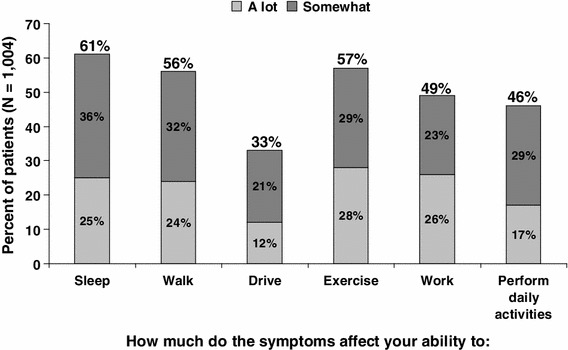
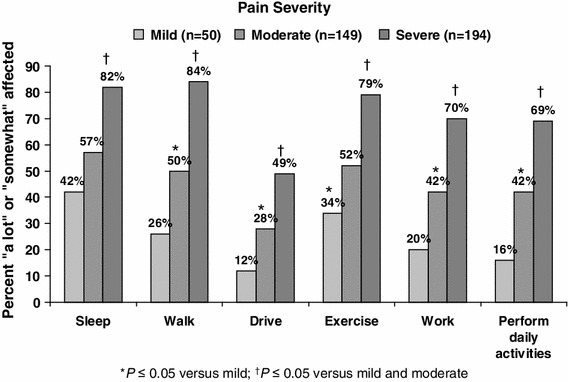
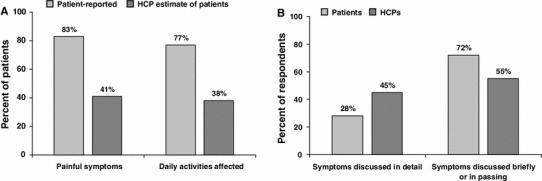
BACKGROUND: Little information exists on the understanding and management of painful diabetic peripheral neuropathy (pDPN) between patients and healthcare practitioners (HCPs). OBJECTIVE: The objective of this study was to characterize the patient perspective of pDPN and identify gaps in patient and HCP perceptions of pDPN. METHODS: An online survey of patients with type 1 or 2 diabetes mellitus who reported experiencing any symptoms consistent with diabetic peripheral neuropathy (DPN) and HCPs who treat diabetes was conducted in 2012 in the USA. Patients were recruited via the Survey Sampling national consumer research panel, and HCPs were recruited from Epocrates' national research panel. Survey questions focused on the impact, understanding, and management of pDPN, and interactions between patients and their HCPs. Respondents who reported pain were re-contacted to obtain further information on pain severity using a numerical rating scale (0 = no pain, 10 = most pain). RESULTS: Respondents included 1,004 patients (53 % female, average age 55 years) and 500 HCPs (250 generalists, 150 specialists, and 100 nurses/physician assistants). While 83 % of patients reported pDPN symptoms, only 41 % of these patients had been diagnosed with DPN. Eighty-five percent of those with pDPN reported that it impacts daily activities. In contrast, HCPs estimated that of their patients who experienced any type of DPN symptom, 41 % experienced pain and 38 % had daily activity limitations because of their symptoms. Most HCPs (64 %) never had their patients complete a DPN assessment questionnaire, and only 41 % perform specific diagnostic tests on all patients who report DPN symptoms. Patients and HCPs both showed substantial clinical misperceptions regarding the cause and management of pDPN; 53 % of HCPs believed that adequate blood glucose control could reverse DPN, and 43 % of pDPN patients were not sure if DPN was reversible. There was also substantial discordance between patients and HCPs regarding discussions of DPN; only 49 % of pDPN patients reported that they speak about symptoms at "every" or "most" appointments with their HCP but 73 % of HCPs reported discussing DPN symptoms at "every" or "most" visits. CONCLUSIONS: Not only do misperceptions exist on the cause and management of pDPN among patients and HCPs, but there are additional disparities between the patient and HCP perspectives. These results suggests a need for (1) educational initiatives on pDPN that target patients and HCPs, and (2) initiating improved dialogue between patients and their HCPs for discussing appropriate management of pDPN that is distinct from treatment of the underlying diabetes.
Overview
The claims and statistics of this paper haven’t been checked yet.
Free: it reads the open-access text and checks the first 5 claims that cite a source we can check. Create a free account to check every claim.
Integrity signals
Registry
Cites
Statistics
Figures
Verification
Claims the paper makes
The claims and statistics of this paper haven’t been checked yet.
Free: it reads the open-access text and checks the first 5 claims that cite a source we can check. Create a free account to check every claim.
Claims other papers make about this one
Each is checked against this paper’s own text: does it say what the citing paper says it does?
The source backs part of the claim, not all of it — or backs it for a different population, condition or comparison.
In the citing paper
“Neuropathic pain may be the first symptom that prompts persons to seek medical care and is present in up to 25% to 30% of individuals with DPN.547,555–559”
From American Association of Clinical Endocrinology Clinical Practice Guideline: Developing a Diabetes Mellitus Comprehensive Care Plan-2022 Update. (2022) · cites this paper as [559]
Experimental — accuracy not yet measuredThe check wasn’t confident either way, so it gives no verdict — never disputed.
In the citing paper
“Neuropathic pain may be the first symptom that prompts persons to seek medical care and is present in up to 25% to 30% of individuals with DPN.547,555–559”
From American Association of Clinical Endocrinology Clinical Practice Guideline: Developing a Diabetes Mellitus Comprehensive Care Plan-2022 Update. (2022) · cites this paper as [559]
Experimental — accuracy not yet measured
Self-check
Percentages, sums and reported differences re-computed from the paper’s own numbers.
The self-check needs the paper’s full text.
Citations
Cites
Microvascular and Macrovascular Complications of Diabetes
Fowler, M. J. (2008) · Clinical Diabetes · doi:10.2337/diaclin.26.2.77 · Cited by 1,954
Bril, V., England, J., Franklin, G. M., Backonja, M., Cohen, J., Del Toro, D., Feldman, E., Iverson, D. J., Perkins, B., Russell, J. W., et al. (2011) · Neurology · doi:10.1212/wnl.0b013e3182166ebe · Cited by 634
Painful diabetic polyneuropathy: epidemiology, pain description, and quality of life
Galer, B. S., Gianas, A., & Jensen, M. P. (2000) · Diabetes Research and Clinical Practice · doi:10.1016/s0168-8227(99)00112-6 · Cited by 601 · cited 2×
“The painful symptoms generally manifest as sensations typically described by patients with neuropathic pain and may include the qualitative pain descriptors of burning, tingling, electric, sharp, shooting, and lancinating [5].”
BackgroundGore, M., Brandenburg, N. A., Dukes, E., Hoffman, D. L., Tai, K.-S., & Stacey, B. (2005) · Journal of Pain and Symptom Management · doi:10.1016/j.jpainsymman.2005.04.009 · Cited by 525
Daousi, C., MacFarlane, I. A., Woodward, A., Nurmikko, T. J., Bundred, P. E., & Benbow, S. J. (2004) · Diabetic Medicine · doi:10.1111/j.1464-5491.2004.01271.x · Cited by 454 · cited 2×
“[17], where nearly 13 % of patients never reported their symptoms to their treating physician.”
BackgroundVan Acker, K., Bouhassira, D., De Bacquer, D., Weiss, S., Matthys, K., Raemen, H., Mathieu, C., & Colin, I. M. (2009) · Diabetes & Metabolism · doi:10.1016/j.diabet.2008.11.004 · Cited by 408 · cited 1×
“optimally treated, and that satisfaction with treatment is low among patients [22, 23].”
BackgroundDiabetic peripheral neuropathy and quality of life
Benbow, S. (1998) · QJM · doi:10.1093/qjmed/91.11.733 · Cited by 262 · cited 1×
“do not have pDPN [8–13].”
Burden of Illness in Painful Diabetic Peripheral Neuropathy: The Patients’ Perspectives
Gore, M., Brandenburg, N. A., Hoffman, D. L., Tai, K.-S., & Stacey, B. (2006) · The Journal of Pain · doi:10.1016/j.jpain.2006.04.013 · Cited by 239 · cited 2×
“optimally treated, and that satisfaction with treatment is low among patients [22, 23].”
BackgroundResultZelman, D. C., Dukes, E., Brandenburg, N., Bostrom, A., & Gore, M. (2005) · Pain · doi:10.1016/j.pain.2005.01.028 · Cited by 236
Tölle, T., Xu, X., & Sadosky, A. B. (2006) · Journal of Diabetes and its Complications · doi:10.1016/j.jdiacomp.2005.09.007 · Cited by 199 · cited 1×
“4 %) was almost twice as high as that reported in two previous patient-level studies (*25 %) [9, 18], although it was similar to that of a different study (51 %) [19].”
ResultSelf-citation
Cited by
Blonde, L., Umpierrez, G. E., Reddy, S. S., McGill, J. B., Berga, S. L., Bush, M., Chandrasekaran, S., DeFronzo, R. A., Einhorn, D., Galindo, R. J., et al. (2022) · Endocrine Practice · doi:10.1016/j.eprac.2022.08.002 · Cited by 507
The global and regional burden of diabetic peripheral neuropathy
Savelieff, M. G., Elafros, M. A., Viswanathan, V., Jensen, T. S., Bennett, D., & Feldman, E. L. (2024) · Nature Reviews Neurology · doi:10.1038/s41582-024-01041-y · Cited by 199
“Knowledge gaps include DPN being the least recognized diabetes complication despite its relatively high prevalence compared with retinopathy and nephropathy 167,168 , and the misconception that DPN can be reversed with adequate blood glucose control alone 167,169,170 .”
Treating pain in diabetic neuropathy: current and developmental drugs
Alam, U., Sloan, G., & Tesfaye, S. (2020) · Drugs · doi:10.1007/s40265-020-01259-2 · Cited by 104
“[26] also reported significant clinical misperceptions by healthcare professionals in the perceived prevalence of pDPN compared to actual estimates reported by patients.”
ResultMalik, R. A., Aldinc, E., Chan, S.-P., Deerochanawong, C., Hwu, C., Rosales, R. L., Yeung, C., Fujii, K., & Parsons, B. (2017) · Advances in Therapy · doi:10.1007/s12325-017-0536-5 · Cited by 67
“Recent results from a survey of physicians and patients in the US identified misperceptions on the cause and management of pDPN between these two groups [24].”
ResultSelf-citationPrevalence and risk factors of painful diabetic neuropathy: A systematic review and meta-analysis
Tao, Y. K., Zhang, H. Y., MacGilchrist, C., Kirwan, E., & McIntosh, C. D. (2025) · Diabetes Research and Clinical Practice · doi:10.1016/j.diabres.2025.112099 · Cited by 77
Painful Diabetic Peripheral Neuropathy: Practical Guidance and Challenges for Clinical Management
Preston, F., Riley, D. R. J., Azmi, S., & Alam, U. (2023) · Diabetes Metabolic Syndrome and Obesity · doi:10.2147/dmso.s370050 · Cited by 73
Win, M. M. T. M., Fukai, K., Nyunt, H. H., Hyodo, Y., & Linn, K. Z. (2019) · Nursing and Health Sciences · doi:10.1111/nhs.12618 · Cited by 49
Durán, A. M., Salto, L., Camara, J. R., Basu, A., Perez‐Paquien, I., Beeson, W. L., Firek, A. F., Cordero‐MacIntyre, Z., & León, M. A. D. (2019) · Diabetes Metabolic Syndrome and Obesity · doi:10.2147/dmso.s187268 · Cited by 46
“Additionally, not only is painful DN undertreated, it has been reported that painful DN is underdiagnosed.(54) These findings are of significant importance, since early interventions can improve pain symptoms and may slow disease progression.”
Tesfaye, S. H., Brill, S., Eerdekens, M., Labrador, M. M., Petersen, G., de Rooij-Peek, A., Reta, A., Ryan, D., Schaper, N. C., Tölle, T. R., et al. (2023) · Journal of Diabetes and its Complications · doi:10.1016/j.jdiacomp.2023.108417 · Cited by 44
Zheng, Y., Yang, F., Han, L., Gou, X., Lian, F., Liu, W., Zhao, L., Pang, B., Zhao, X., & Tong, X. (2019) · Journal of Diabetes Research · doi:10.1155/2019/4035861 · Cited by 38
“As one of the severest and most disabling complications of diabetes mellitus, pDPN leads to impaired quality of life and increased mortality, resulting in a significant healthcare burden [7].”
BackgroundElafros, M. A., Callaghan, B. C., Skolarus, L. E., Vileikytė, L., Lawrenson, J. G., & Feldman, E. L. (2022) · Reviews in Endocrine and Metabolic Disorders · doi:10.1007/s11154-022-09754-5 · Cited by 44
State-of-the-art pharmacotherapy for diabetic neuropathy
Azmi, S., Alam, U., Burgess, J., & Malik, R. A. (2020) · Expert Opinion on Pharmacotherapy · doi:10.1080/14656566.2020.1812578 · Cited by 32
“Symptomatic painful DPN (pDPN) can affect up to one-third of people with diabetes [7] and is generally underreported by healthcare professionals [8,9].”
BackgroundTrippe, B. S., Barrentine, L. W., Curole, M. V., & Tipa, E. V. (2015) · Current Medical Research and Opinion · doi:10.1185/03007995.2015.1103215 · Cited by 26
Perspectives on the impact of painful diabetic peripheral neuropathy in a multicultural population
Eichholz, M., Alexander, A. H., Cappelleri, J. C., Hlavacek, P., Parsons, B., Sadosky, A., & Tuchman, M. M. (2017) · Clinical Diabetes and Endocrinology · doi:10.1186/s40842-017-0051-2 · Cited by 24
“The survey (Additional file 1) consisted of batteries of questions that were in part derived from a previous, similar survey [8].”
BackgroundResultSelf-citationMohr, N. M., Wong, T. S., Faine, B. A., Schlichting, A. B., Noack, J., & Ahmed, A. (2015) · The Journal of Rural Health · doi:10.1111/jrh.12125 · Cited by 23
Ko, Y., Lee, C., Wu, C., & Huang, Y. (2021) · International Journal of Clinical Practice · doi:10.1111/ijcp.14576 · Cited by 24
Zhang, Y., Zhang, S., Pan, L., Wang, B., Sun, Y., Gao, L., Wang, L., Cui, L., Zhang, Q., Heng, S., et al. (2021) · Pain and Therapy · doi:10.1007/s40122-021-00281-w · Cited by 22
“Another American study reported the sensory symptoms of numbness and tingling, pricking or pins and needles, shooting pain or sharp jabbing, burning or feeling of heat, stinging or throbbing, electric shock-like feeling and extreme sensitivity to even light touches as the main pain phenotypes [18].”
BackgroundEbata, N., Nozawa, K., Murakami, A., Toyoda, T., Haga, Y., & Fujii, K. (2017) · PLoS ONE · doi:10.1371/journal.pone.0187250 · Cited by 28
Diabetes Distal Peripheral Neuropathy: Subtypes and Diagnostic and Screening Technologies
Lew, K. N., Arnold, T. C., Cantelmo, C. B., Jacque, F., Posada-Quintero, H. F., Luthra, P., & Chon, K. H. (2022) · Journal of Diabetes Science and Technology · doi:10.1177/19322968211035375 · Cited by 20
Juhn, M. S., Parsons, B., Varvara, R., & Sadosky, A. (2015) · Current Medical Research and Opinion · doi:10.1185/03007995.2015.1030375 · Cited by 18
Self-citationDeguchi, T., Takatsuna, H., Yokoyama, M., Shiosakai, K., Inoue, T., Seki, H., & Uetake, Y. (2021) · Advances in Therapy · doi:10.1007/s12325-021-01810-x · Cited by 18
“Our findings of low overall satisfaction with treatment and the strong influence of patient–doctor communication on satisfaction with treatment are in line with the findings of the US survey study, suggesting a need for improved communication regarding management of DPNP between patients and their doctors [31].”
BackgroundResultText Messaging to Improve Disease Management in Patients With Painful Diabetic Peripheral Neuropathy
Bauer, V., Goodman, N., Lapin, B., Cooley, C., Wang, E., Craig, T. L., Glosner, S. E., Juhn, M. S., Cappelleri, J. C., Sadosky, A. B., et al. (2018) · The Diabetes Educator · doi:10.1177/0145721718767400 · Cited by 13
Self-citationWei, W., Zhang, Y., Chen, R., Qiu, X., Gao, Y., & Chen, Q. (2020) · Medicine · doi:10.1097/md.0000000000020871 · Cited by 16
“huge medical burden.([4]) In America, the total medical cost of diabetics is $6632 a year, while PDN patients with severe pain spend about four times as much as diabetics.”
BackgroundPainful Diabetic Peripheral Neuropathy – A Survey of Patient Experiences
Abd-Elsayed, A. A., MARCONDES, L. P., Loris, Z. B., & Reilly, D. (2023) · Journal of Pain Research · doi:10.2147/jpr.s409876 · Cited by 17
Ziegler, D., Landgraf, R., Lobmann, R., Reiners, K., Kristian, R. E. T. T., Schnell, O., & Strom, A. (2022) · Primary care diabetes · doi:10.1016/j.pcd.2022.09.009 · Cited by 11
Boulton, A. J. M., Jensen, T. S., Luecke, T. D., Petersen, E., Pop‐Busui, R., Taylor, R. S., Tesfaye, S. H., Vileikytė, L., & Ziegler, D. (2023) · Diabetes Research and Clinical Practice · doi:10.1016/j.diabres.2023.110763 · Cited by 7
Komalasari, D. R., Vongsirinavarat, M., Hiengkaew, V., & Nualnim, N. (2024) · PeerJ · doi:10.7717/peerj.17287 · Cited by 11
“The range of the NRS ranges from zero to ten, with zero indicating ‘‘no pain’’ and 10 indicating ‘‘the worst pain imaginable’’ ( Kugbey, Oppong Asante & Adulai, 2017 ; Sadosky, Hopper & Parsons, 2014 ).”
BackgroundHakim, M., Kurniani, N., Pinzon, R. T., Tugasworo, D., Basuki, M., Haddani, H., Pambudi, P., Fithrie, A., & Wuysang, A. D. (2019) · doi:10.35248/2161-1459.19.9.262 · Cited by 7
“Factors contributing to this gap globally and especially in developing countries are low disease awareness among both physicians and patients, the lack of simple guidance for diagnosis, physicians’ lack of time for patient examination but also low awareness of patients for the need to consult a physician when experien…”
BackgroundNayan, N. A. M., Chien, C., Lokman, N., Alrashdi, M., & Daud, A. Z. C. (2025) · Annals of Rehabilitation Medicine · doi:10.5535/arm.250003 · Cited by 8
“These activities, including sleep, walking, and exercise, are particularly impacted as the severity of pain increases [14].”
L-Methylfolate in Diabetic Peripheral Neuropathy: A Narrative Review
Christofides, E. A., & Valentine, V. (2023) · Endocrine Practice · doi:10.1016/j.eprac.2023.04.005 · Cited by 6
Gad, H., Dinamarca, J. L., Fletcher, P. E., Chen-Ku, C. H., Lira, R., Longa, J., Mendivil, C. O., Palacios, L., Pedrosa, H. C., Román-Pintos, L. M., et al. (2024) · Current Medical Research and Opinion · doi:10.1080/03007995.2024.2443109 · Cited by 5
“…symptoms to nerve damage, and therefore only consult their physicians at an advanced stage of PN. Additionally, patients identified that they had difficulty in describing their symptoms and were reluctant to talk about these symptoms as it may reflect poorly on their ability to manage diabetes 19 .”
Peoples’ experiences of painful diabetic neuropathy: are pain management programmes appropriate?
Davies, B. R., Cramp, F. L., Gauntlett‐Gilbert, J., & McCabe, C. (2021) · British Journal of Pain · doi:10.1177/2049463721989753 · Cited by 6
McNamara, V. F., Vinik, A. I., Barrentine, L. W., & Vol, E. B. D. (2016) · Journal of Diabetes Mellitus · doi:10.4236/jdm.2016.62018 · Cited by 5
Prevalence and Risk Factors of Sensory Symptoms in Diabetes Patients in Taiwan
Tseng, C., Chong, C., & Sheu, J. (2021) · Frontiers in Endocrinology · doi:10.3389/fendo.2020.580426 · Cited by 4
“A USA study showed that while 83% of diabetes patients might report symptoms of pDNP at study, only 41% of them had ever been diagnosed as having DPN by healthcare practitioners (11).”
BackgroundTuina for diabetic peripheral neuropathy: A protocol for a systematic review and meta-analysis
Wang, F., Wang, F., Pan, T. J., Wu, Z., Wang, Y., Liu, P., Yu, Z., Shang, R., & Song, B. (2021) · Medicine · doi:10.1097/md.0000000000026222 · Cited by 3
Najjar, Y. W., Finlayson, K. J., Aljarrah, Q. M., Moosa, S., ALBashtawy, M., Alkouri, O. A., & Ababneh, A. (2024) · Current Diabetes Reviews · doi:10.2174/0115733998328984240923115409 · Cited by 2
Taguchi, T., Nozawa, K., Zeniya, S., Murata, T., Laurent, T., Hirano, T., & Fujii, K. (2021) · Journal of Pain Research · doi:10.2147/jpr.s289396 · Cited by 3
Qualitative insights into the experience of pain in older Australian women with arthritis
de Luca, K. E., Parkinson, L., Hunter, S., & Byles, J. (2018) · Australian Journal on Ageing · doi:10.1111/ajag.12557 · Cited by 2
Role of Lacosamide in Diabetic Neuropathy: An Experience at Tertiary Care Hospital in Rural Sindh
Rehman, M.-U., Ahmed, Z., Mujtaba, G., Ali, A., Shah, S., & Singh, J. (2022) · Pakistan Journal of Medical and Health Sciences · doi:10.53350/pjmhs20221611293 · Cited by 1
Meabed, H. S. A., Elanwar, R., Hosny, H., Elgaly, M. A., Gaber, M. M., Ewais, T. A. A., Mehleb, M. F., & Sabry, R. M. (2025) · The Egyptian Journal of Neurology Psychiatry and Neurosurgery · doi:10.1186/s41983-025-00975-4 · Cited by 1
“Approximately 8% of individuals with chronic pain experience some type of neuropathic pain, which affects—according to the American Chronic Pain Association—almost 15 million in both U.S. and Europe [2].”
Alshaikh, A., Alattar, A., Hassoun, A. A. K., Alshammary, A., ElBadawi, H., Aldossari, K. K., Busaidi, N. A., Alsifri, S. N., Muzaffar, T. H., Hussein, W. I., et al. (2026) · Journal of Diabetes Investigation · doi:10.1111/jdi.70411
Hsu, C.-Y., & Lee, I. (2026) · Medical Sciences · doi:10.3390/medsci14060605
“Because the pathophysiology and treatment of peripheral neuropathic pain are different from those of other types of DPN, screening for peripheral neuropathic pain should not be performed only in patients with established DPN, which has been underdiagnosed in clinical settings [12].”
Influential
Metadata
- Authors
- Sadosky, A., Hopper, J., & Parsons, B.
- Affiliations
- Pfizer (United States) (US)
- Corresponding author
- Sadosky, Alesia
- ORCID
- Parsons, Bruce
- Venue
- The Patient - Patient-Centered Outcomes Research
- Published
- 2013-11-22
- Volume
- 7
- Issue
- 1
- Pages
- 107-114
- ISSN
- 1178-1653 (ISSN-L)
- 1178-1661
- PMC
- PMC3929775
- OpenAlex
- W2003504000
- Cited by
- 42
- References
- 22
- Citations by year
- 2026: 2 · 2025: 3 · 2024: 4 · 2023: 5 · 2022: 5 · 2021: 7 · 2020: 3 · 2019: 4 · 2018: 2 · 2017: 3 · 2016: 1 · 2015: 3
- FWCI
- 0.93
- Type
- journal article
- Language
- en
- Open access
- hybrid
- doi.org
- Licence
- Locations
- Patient (publishedVersion, cc-by-nc)
- Europe PMC (PubMed Central) (publishedVersion, cc-by-nc)
- PubMed Central (publishedVersion, cc-by-nc)
- PubMed (publishedVersion)
- RePEc: Research Papers in Economics (submittedVersion)
- Funders
- Pfizer
- Topics
- Health Sciences › Medicine › Physiology (medical) › Pain Mechanisms and Treatments
- Health Sciences › Medicine › Endocrinology, Diabetes and Metabolism › Diabetes Management and Education
- Health Sciences › Medicine › Clinical Neurology › Peripheral Neuropathies and Disorders
- Keywords
- diabetic neuropathic pain, diabetic peripheral neuropathy, patient perspectives, patient-physician communication, neuropathy diagnosis, neuropathy assessment, neuropathic pain, glycemic control, type 1 diabetes, type 2 diabetes, pain intensity, daily activity limitations, diabetes management education, patient education materials
- MeSH terms
- Diabetes Mellitus, Diabetic Neuropathies, Female, Humans, Male, Middle Aged, Patients, Perception, Physicians, Quality of Life, Internet, Diabetes Complications
About these checks
Registry, retraction, Cites and statistics results are computed, not judged, with one exception: a printed reference that no index lists is read once by a model before it counts as a citation error. Claims are extracted by a model and kept only when their quote appears verbatim in the text; each cited source is then checked, with a model’s help, for whether it says what the claim relies on. Those verdicts can be wrong — read the claim’s quote and the cited source before relying on one.
Statistics and arithmetic are recomputed, not judged.
Confidence bands are shown only for fields calibrated on our annotated test set. None is calibrated yet, so no band is shown.
What counts as a claim ›How we measure confidence ›How we check this ›
Are you an author, or do you see a problem with this page? Request a review
Data sources
Bibliographic data: Semantic Scholar, OpenAlex, Crossref.
Contains information from the Semantic Scholar Academic Graph Datasets, made available under the ODC Attribution License (ODC-BY 1.0).
Semantic Scholar’s data is described in: Kinney, R., et al. (2023). The Semantic Scholar Open Data Platform. arXiv:2301.10140.
