

Effects of strength training using unstable surfaces on strength, power and balance performance across the lifespan: a systematic review and meta-analysis.
Open accessThe DOI matches its Crossref record; 64 of the 64 references it cites were found in a registry or an index.
Abstract
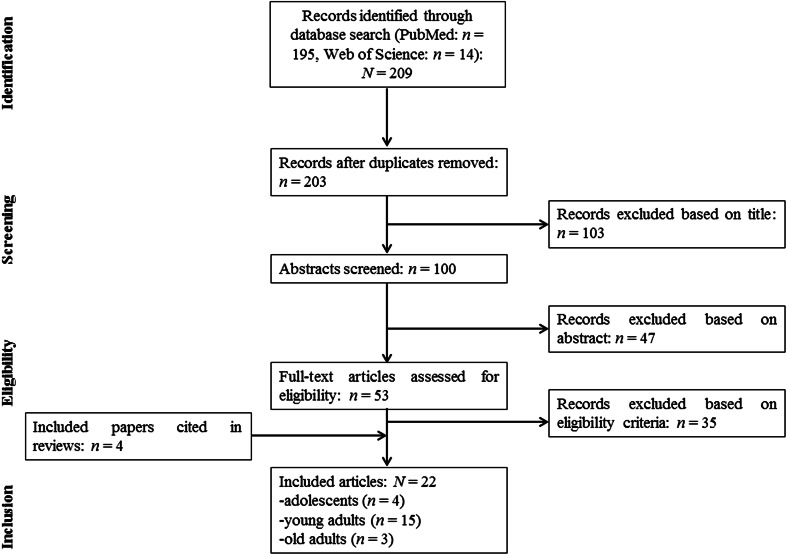
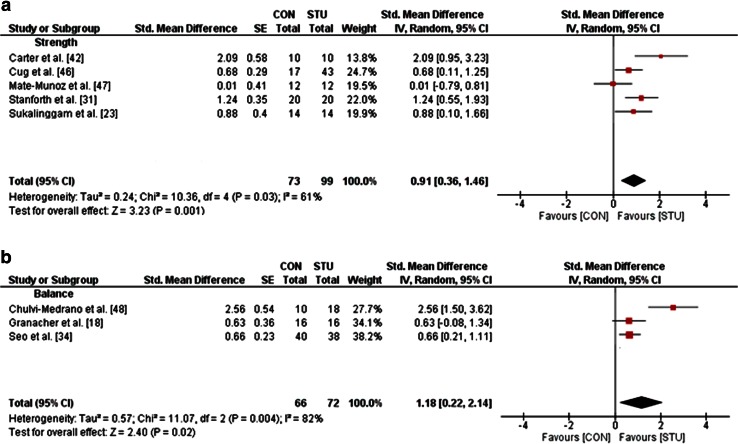
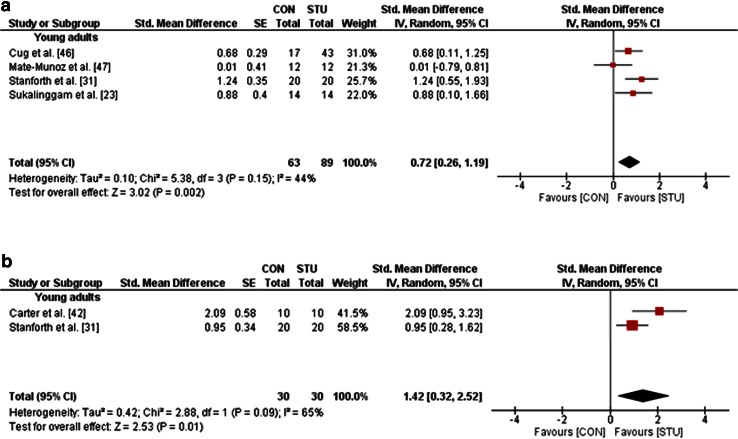
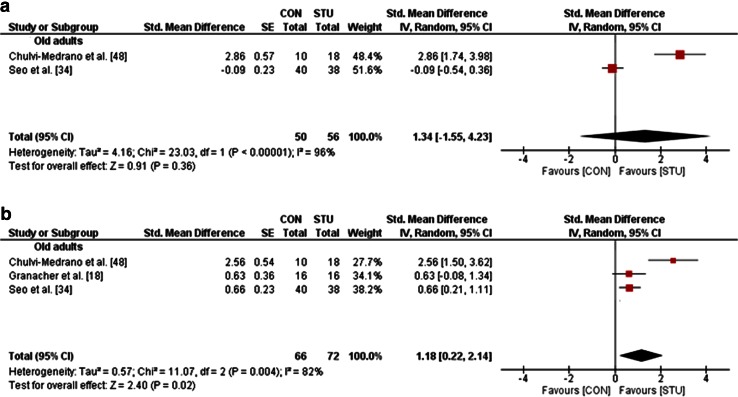
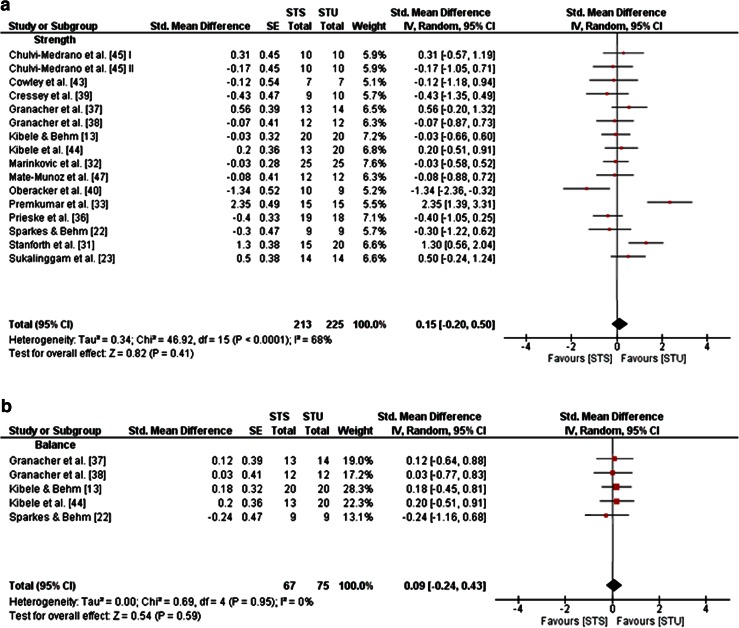
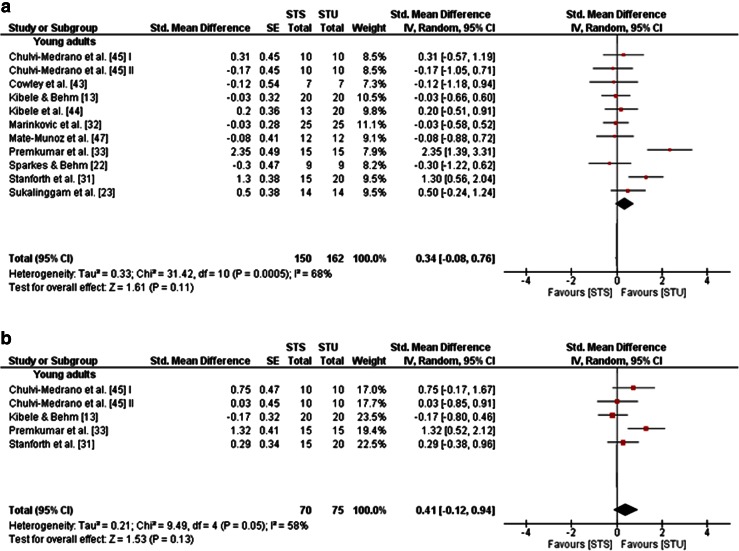
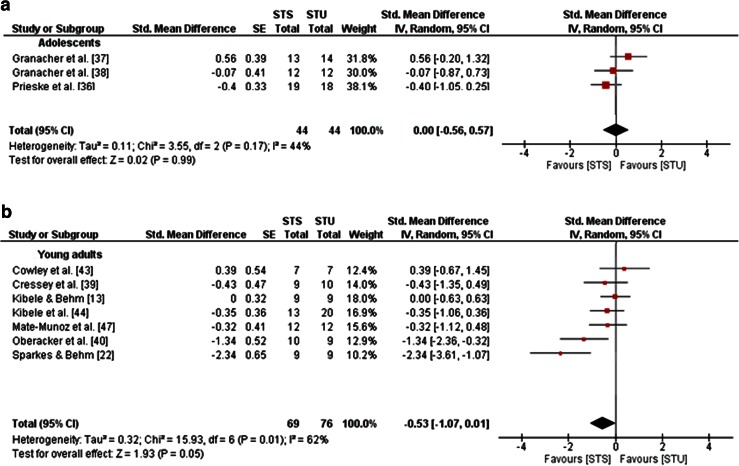
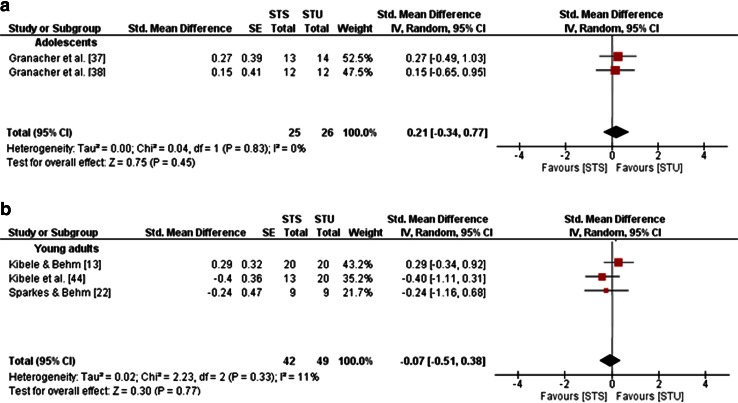
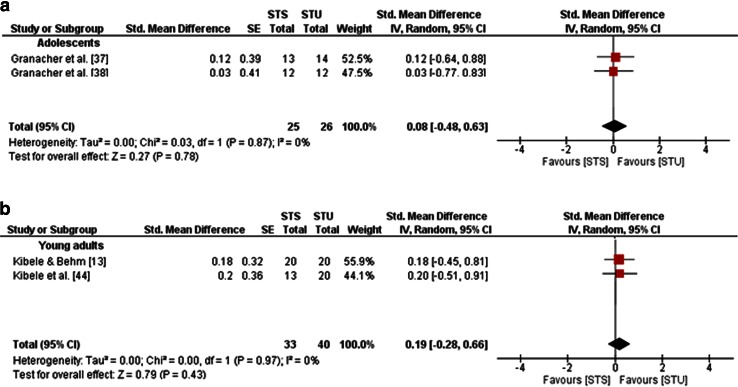
BACKGROUND: The effectiveness of strength training on unstable surfaces (STU) versus stable surfaces (STS) or a control condition (CON; i.e., no training or regular training only) for strength, power and balance performance across the lifespan has not yet been investigated in a systematic review and meta-analysis. OBJECTIVE: The aims of this systematic review and meta-analysis were to determine the general effects of STU versus STS or CON on muscle strength, power and balance in healthy individuals across the lifespan and to investigate whether performance changes following STU are age specific. DATA SOURCES: A computerized systematic literature search was performed in the electronic databases PubMed and Web of Science from January 1984 up to February 2015. STUDY ELIGIBILITY CRITERIA: Initially, 209 articles were identified for review. Only controlled trials were included if they investigated STU in healthy individuals and tested at least one measure of maximal strength, strength endurance, muscle power, or static/dynamic balance. In total, 22 studies met the inclusion criteria. STUDY APPRAISAL AND SYNTHESIS METHODS: The included studies were coded for the following criteria: age, sex, training status, training modality, exercise and test modality. Effect size measures included within-subject standardized mean differences (SMDw) and weighted between-subject standardized mean differences (SMDb). Heterogeneity between studies was assessed using I2 and χ2 statistics. The methodological quality of each study was assessed using the Physiotherapy Evidence Database (PEDro) Scale. RESULTS: Our search failed to identify studies that examined the effects of STU versus STS or CON in children and middle-aged adults. However, four studies were identified that investigated the effects of STU versus CON or STS in adolescents, 15 studies were identified in young adults and three studies were identified in old adults. Compared with CON, STU produced medium effects on maximal strength in young adults and no effects to medium effects in old adults. In addition, large effects were detected on strength endurance in adolescents and in young adults; in old adults, a small effect was found. With regard to muscle power, medium effects were observed in young adults and small effects were observed in old adults. Further, large effects were found for static and dynamic balance in old adults, but only a small effect was found for dynamic balance in young adults. The comparison of STU and STS revealed inconsistent results as indicated by training-induced changes in favour of STU, as well as STS. Small to medium effects were found for maximal strength in adolescents in favour of STS, and small effects were found in young adults in favour of STU. With regard to strength endurance, large effects were found in adolescents in favour of STS and small effects were found in favour of STU. Additionally, we detected small effects in young adults in favour of STU. In terms of muscle power, no effects were observed in adolescents but medium effects were found in favour of STS in young adults. With regard to balance, small effects were detected in adolescents for static and dynamic balance in favour of STU. In young adults, small effects were found for static balance in favour of STS. With regard to dynamic balance, the analysis revealed small effects in young adults in favour of STU. LIMITATIONS: The quality of the included studies was rather low, with mean PEDro scores of 5.8, 4.0 and 5.0 for studies including adolescents, young adults and old adults, respectively. Further, trivial to considerable heterogeneity between studies (i.e., 0% ≤ I2 ≤ 96%) was detected. CONCLUSIONS: Compared with CON, STU is effective in improving muscle strength, power and balance in adolescents, young adults and old adults. However, inconsistent results were particularly found in adolescents and young adults when the specific effects of STU were compared with those of STS. We conclude that the performance of STU compared with STS has limited extra effects on muscle strength, power and balance performance in healthy adolescents and young adults. Given that our systematic search did not identify studies that examined the effects of STU versus STS in children, middle-aged adults and old adults, further research of high methodological quality is needed to determine whether there are additive effects of STU as compared with STS in those age groups.
Overview
The claims and statistics of this paper haven’t been checked yet.
Free: it reads the open-access text and checks the first 5 claims that cite a source we can check. Create a free account to check every claim.
Integrity signals
Registry
Cites
Statistics
Figures
Verification
Claims the paper makes
The claims and statistics of this paper haven’t been checked yet.
Free: it reads the open-access text and checks the first 5 claims that cite a source we can check. Create a free account to check every claim.
Claims other papers make about this one
Each is checked against this paper’s own text: does it say what the citing paper says it does?
The cited source doesn’t support the claim as written.
In the citing paper
“There were insufficient data to determine if eccentric flywheel RT (67), Nordic hamstring RT (68), Olympic-style weightlifting (69), and unstable surface RT (70) impacted strength compared with CTRL.”
From American College of Sports Medicine Position Stand. Resistance Training Prescription for Muscle Function, Hypertrophy, and Physical Performance in Healthy Adults: An Overview of Reviews (2026) · cites this paper as [70]
Checked by a reasoning model — may be wrong.
Experimental — accuracy not yet measuredThe cited source doesn’t support the claim as written.
In the citing paper
“There were insufficient data to determine if power was affected by fatigue/failure (99), unstable surfaces (70), or concurrent training (123,124,151).”
From American College of Sports Medicine Position Stand. Resistance Training Prescription for Muscle Function, Hypertrophy, and Physical Performance in Healthy Adults: An Overview of Reviews (2026) · cites this paper as [70]
Checked by a reasoning model — may be wrong.
Experimental — accuracy not yet measuredThe cited source doesn’t support the claim as written.
In the citing paper
“There were insufficient data to determine if muscular endurance was affected by load (82), unstable surfaces (70), power training (82), volume (82), or set structure (107,108).”
From American College of Sports Medicine Position Stand. Resistance Training Prescription for Muscle Function, Hypertrophy, and Physical Performance in Healthy Adults: An Overview of Reviews (2026) · cites this paper as [70]
Checked by a reasoning model — may be wrong.
Experimental — accuracy not yet measuredThe cited source doesn’t support the claim as written.
In the citing paper
“There were insufficient data to determine whether unstable surface RT (70) or velocity-based RT (66) impacted muscular endurance compared with CTRL.”
From American College of Sports Medicine Position Stand. Resistance Training Prescription for Muscle Function, Hypertrophy, and Physical Performance in Healthy Adults: An Overview of Reviews (2026) · cites this paper as [70]
Checked by a reasoning model — may be wrong.
Experimental — accuracy not yet measuredThe cited source doesn’t support the claim as written.
In the citing paper
“In comparisons between distinct RTx, there were insufficient data to determine if unstable surfaces (70) or concurrent training (158) affected balance.”
From American College of Sports Medicine Position Stand. Resistance Training Prescription for Muscle Function, Hypertrophy, and Physical Performance in Healthy Adults: An Overview of Reviews (2026) · cites this paper as [70]
Checked by a reasoning model — may be wrong.
Experimental — accuracy not yet measured
1 more claim about this paper
Create a free account to see every claim other papers make about this one.
Self-check
Percentages, sums and reported differences re-computed from the paper’s own numbers.
The self-check needs the paper’s full text.
Citations
Cites
Preferred Reporting Items for Systematic Reviews and Meta-Analyses: the PRISMA statement
Moher, D., Liberati, A., Tetzlaff, J., Altman, D. G., & for the PRISMA Group (2009) · BMJ · doi:10.1136/bmj.b2535 · Cited by 83,823
Preferred reporting items for systematic reviews and meta-analyses: the PRISMA Statement.
(2009) · PubMed Central · Cited by 44,859
Cochrane Handbook for Systematic Reviews of Interventions: Cochrane Book Series
(2008) · doi:10.1002/9780470712184 · Cited by 25,048
Preferred Reporting Items for Systematic Reviews and Meta-Analyses: The PRISMA Statement
Moher, D., Liberati, A., Tetzlaff, J., & Altman, D. G. (2009) · Journal of Clinical Epidemiology · doi:10.1016/j.jclinepi.2009.06.005 · Cited by 19,575
Statistical Methods for Meta-Analysis
Wasserman, S., Hedges, L. V., & Olkin, I. (1988) · Journal of Educational Statistics · doi:10.2307/1164953 · Cited by 10,326
(2014) · Medical Entomology and Zoology · Cited by 9,400
Evidence-Based Medicine: How to Practice and Teach EBM
Sackett, D. L. (2000) · Cited by 5,950
Reliability of the PEDro Scale for Rating Quality of Randomized Controlled Trials
Maher, C. G., Sherrington, C., Herbert, R. D., Moseley, A. M., & Elkins, M. (2003) · Physical Therapy · doi:10.1093/ptj/83.8.713 · Cited by 4,808 · cited 1×
“The PEDro Scale rates internal study validity and the presence of statistical replicable information on a scale from 0 to 10, with C6 representing a cut-off score for high-quality studies [26].”
BackgroundChapter 9: Analysing Data and Undertaking Meta-Analyses
Deeks, J. J., Higgins, J. P. T., & Altman, D. G. (2008) · Cited by 2,782
Thompson, P. D., Arena, R., Riebe, D., & Pescatello, L. S. (2013) · Current Sports Medicine Reports · doi:10.1249/jsr.0b013e31829a68cf · Cited by 1,823
Research works printed but not linked: 5
- Chek P Physioball exercise for swimming, soccer, and basketball Sports Coach. 1999 21 30 33
- Verstegen M Williams P Verstegen M Williams P Physioball routine Core performance 2004 New York Rodale 73 88
- Cohen J Statistical power for the behavioral sciences 1988 Hillsdale Erlbaum
- Marinkovic M Bratic M Ignjatovic A Effects of 8-week instability resistance training on maximal strength in inexperienced young individuals Serb J Sports Sci. 2012 6 1 17 21
- Premkumar M Alagesan J Vaidya N Effect of instability resistance training of abdominal muscles in healthy young females—an experimental study Int J Pharm Sci Health Care. 2012 2 3 91 97
Cited by
Granacher, U., Lesinski, M., Büsch, D., Muehlbauer, T., Prieske, O., Puta, C., Gollhofer, A., & Behm, D. G. (2016) · Frontiers in Physiology · doi:10.3389/fphys.2016.00164 · Cited by 298
“While RT on unstable surfaces is quite popular, Behm et al. (2015) concluded from their meta-analysis that the performance of unstable RT compared with stable RT has limited extra effects onmuscular strength, power, and balance performance in healthy adolescents.”
BackgroundSelf-citationPlasticity of the postural function to sport and/or motor experience
Paillard, T. (2017) · Neuroscience & Biobehavioral Reviews · doi:10.1016/j.neubiorev.2016.11.015 · Cited by 241
Specificity of Balance Training in Healthy Individuals: A Systematic Review and Meta-Analysis
Kümmel, J., Kramer, A., Giboin, L.-S., & Gruber, M. (2016) · Sports Medicine · doi:10.1007/s40279-016-0515-z · Cited by 231
Hammami, R., Granacher, U., Makhlouf, I., Behm, D. G., & Chaouachi, A. (2016) · The Journal of Strength and Conditioning Research · doi:10.1519/jsc.0000000000001425 · Cited by 145
“Trials were discarded and repeated if the participant (1) did not touch the line with the reach foot while maintaining weight bearing on the stance leg, (2) lifted the stance foot from the center grid, (3) lost balance at any point during the trial, (4) did not maintain start and return positions for 1 full second, or…”
MethodSelf-citationBouteraa, I., Negra, Y., Shephard, R. J., & Chelly, M. S. (2018) · The Journal of Strength and Conditioning Research · doi:10.1519/jsc.0000000000002546 · Cited by 128
“In accord with the concept of training specificity (4), one would expect that a program that included balance activities would enhance balance scores relative to a program without such exercises.”
BackgroundInfluentialEckardt, N. (2016) · BMC Geriatrics · doi:10.1186/s12877-016-0366-3 · Cited by 133
“With enhanced activation of trunk muscles and stabilising function of smaller and major muscles the transfer of angular momentum and power between the lower and upper extremities is facilitated [14, 19], resulting in improved postural control.”
BackgroundInfluentialRamírez‐Campillo, R., Moran, J., Chaabène, H., Granacher, U., Behm, D. G., García‐Hermoso, A., & Izquierdo, M. (2020) · Scandinavian Journal of Medicine and Science in Sports · doi:10.1111/sms.13633 · Cited by 132
Self-citationJunker, D. H., & STÖGGL, T. L. (2019) · PubMed Central · Cited by 88
La Scala Teixeira, C. V., Evangelista, A. L., Novaes, J. S., Da Silva Grigoletto, M. E., & Behm, D. G. (2017) · Frontiers in Physiology · doi:10.3389/fphys.2017.00643 · Cited by 69
“These tools stimulate strength development concomitantly with the development of balance, motor coordination, and body/postural perception (Behm and Colado, 2012; Behm et al., 2015).”
BackgroundSelf-citationZemková, E., & Kovačíková, Z. (2023) · Frontiers in Human Neuroscience · doi:10.3389/fnhum.2022.1007804 · Cited by 69
“Long-term adaptations in postural balance control following a variety of exercises have been extensively researched (Behm et al., 2015; Hammami et al., 2016; Granacher and Behm, 2022).”
BackgroundInfluentialAlshewaier, S. A., Yeowell, G., & Fatoye, F. (2016) · Clinical Rehabilitation · doi:10.1177/0269215516628617 · Cited by 67
“Usually, this item is not included in the assessment of study; hence, the assessment was based on items 2 to 11 in the present study as recommended by Maher et al 19 and has been previously used elsewhere 20 .”
MethodOlivares-Jabalera, J., Fílter, A., Dos’Santos, T., Afonso, J. R., Villa, F. D., Morente-Sánchez, J., Soto-Hermoso, V. M., & Requena, B. (2021) · International Journal of Environmental Research and Public Health · doi:10.3390/ijerph182413351 · Cited by 90
“Additionally, the absence of clear differences between unstable and stable surfaces [69] in balance are in line with previous works [90], although the potential reductions in strength and power application as a consequence of training on unstable surfaces should be considered when they are implemented [91].”
ResultCURRIER, B. S., D’SOUZA, A. C., SINGH, M. A. F., LOWISZ, C. V., RAWSON, E. S., SCHOENFELD, B. J., SMITH-RYAN, A. E., STEEN, J. P., THOMAS, G. A., TRIPLETT, N. T., et al. (2026) · Medicine & Science in Sports & Exercise · doi:10.1249/mss.0000000000003897 · Cited by 105
Pirauá, A. L. T., Cavalcante, B. R., de Oliveira, V. M. A., Beltrão, N. B., Batista, G. D. A., Pitangui, A. C. R., Behm, D. G., & de Araújo, R. C. (2019) · Scandinavian Journal of Medicine and Science in Sports · doi:10.1111/sms.13510 · Cited by 65
Self-citationCherni, Y., Jlid, M. C., Hammami, M., Shephard, R. J., Paillard, T., Chelly, M. S., & Hermassi, S. (2019) · Frontiers in Physiology · doi:10.3389/fphys.2019.00726 · Cited by 76
“, 2006) and reflect positive functional adaptations (Hrysomallis, 2011; Behm et al., 2015), particularly enhanced proactive and feed-forward adjustments that activate appropriate muscles before landing (Marigold and Patla, 2002; Paillard et al.”
BackgroundLago‐Fuentes, C., Rey, E., Padrón-Cabo, A., Sal-de-Rellán, A., Fragueiro-Rodríguez, A., & García-Núñez, J. (2018) · Journal of Human Kinetics · doi:10.2478/hukin-2018-0029 · Cited by 52
“, 2010), core strength training must attempt to closely address the demands of the respective sport-specific activity using unstable surfaces (Behm et al., 2015).”
BackgroundResultInfluentialMaïano, C., Hue, O. A., Lepage, G., Morin, A. J. S., Tracey, D., & Moullec, G. (2019) · Physical Therapy · doi:10.1093/ptj/pzz012 · Cited by 61
Zhong, Y.-J., Meng, Q., & Su, C.-H. (2024) · Healthcare · doi:10.3390/healthcare12232394 · Cited by 85
“Agility training also sharpens reflexes and reduces reaction times, enabling faster corrections during balance disturbances [61,62].”
Neuromuscular performance of balance and posture control in childhood and adolescence
Ludwig, O., Kelm, J., Hammes, A., Schmitt, E., & Fröhlich, M. (2020) · Heliyon · doi:10.1016/j.heliyon.2020.e04541 · Cited by 71
Zhao, W., Wang, C., Bi, Y., & Chen, L. (2021) · BioMed Research International · doi:10.1155/2021/5555853 · Cited by 68
“[43, 44] showed that core stability training can improve Table 6: Physical fitness test results.”
BackgroundMuscle activity of Bulgarian squat. Effects of additional vibration, suspension and unstable surface
Aguilera-Castells, J., Buscà, B., Morales, J., Solana–Tramunt, M., Vanmeerhaeghe, A. F., Rey-Abella, F., Janot, J. B. I., & Peña, J. (2019) · PLoS ONE · doi:10.1371/journal.pone.0221710 · Cited by 51
Eckardt, N., & Rosenblatt, N. J. (2018) · Human Movement Science · doi:10.1016/j.humov.2018.09.008 · Cited by 41
The short- and long-term effects of resistance training with different stability requirements
Sæterbakken, A. H., Olsen, A., Behm, D. G., Bårdstu, H. B., & Andersen, V. S. (2019) · PLoS ONE · doi:10.1371/journal.pone.0214302 · Cited by 38
Self-citationExercise Prescription Using the Borg Rating of Perceived Exertion to Improve Fitness
Garnacho‐Castaño, M. V., Domínguez, R., Muñoz-González, A., Felíu-Ruano, R., Serra‐Payá, N., & Maté‐Muñoz, J. L. (2017) · International Journal of Sports Medicine · doi:10.1055/s-0043-120761 · Cited by 42
“(2015) [8] concluded that instability resistance training has limited additional effects on muscle strength, power and balance in healthy adolescents and young adults.”
BackgroundInfluentialComparison of Core Muscle Activation Between a Prone Bridge and 6-RM Back Squats
van den Tillaar, R., & Sæterbakken, A. H. (2018) · Journal of Human Kinetics · doi:10.1515/hukin-2017-0176 · Cited by 28
“Adequately developed core strength is widely regarded as an important prerequisite for sports performance (Behm et al., 2015; Borghuis et al., 2008; Kibler et al., 2006).”
BackgroundCavalcante, B. R., de Souza, M. F., Falck, R. S., Liu-Ambrose, T. Y. L., Behm, D. G., Pitangui, A. C. R., & de Araújo, R. C. (2020) · Journal of Alzheimer s Disease · doi:10.3233/jad-200349 · Cited by 38
Self-citationKnee and Hip Isometric Force Steadiness Are Impaired in Women With Patellofemoral Pain
Ferreira, A. S., Silva, D. D. O., Ferrari, D., Magalhães, F. H., Pappas, E., Briani, R. V., Pazzinatto, M. F., & de Azevedo, F. M. (2019) · The Journal of Strength and Conditioning Research · doi:10.1519/jsc.0000000000003215 · Cited by 24
“alterations in muscle function of individuals with PFP (2,4,22).”
BackgroundBlasco, J., Tolsada-Velasco, C., Beltrán, M., Momparler, A.-M., Sanchiz-Benavente, R., & Hernández‐Guillén, D. (2019) · Gait & Posture · doi:10.1016/j.gaitpost.2019.02.029 · Cited by 24
Lauber, B., Gollhofer, A., & Taube, W. (2021) · Scandinavian Journal of Medicine and Science in Sports · doi:10.1111/sms.13939 · Cited by 23
Ditroilo, M., O’Sullivan, R., Harnan, B., Crossey, A., Gillmor, B., Dardis, W., & Grainger, A. (2018) · Journal of Sports Sciences · doi:10.1080/02640414.2018.1431868 · Cited by 21
Attar, W. S. A. A., Faude, O., Husain, M. A., Soomro, N., & Sanders, R. H. (2021) · Sports Health A Multidisciplinary Approach · doi:10.1177/1941738121993479 · Cited by 21
Biscarini, A., Contemori, S., & Grolla, G. (2018) · Journal of Sport Rehabilitation · doi:10.1123/jsr.2018-0089 · Cited by 23
Kurz, A., Lauber, B., Franke, S., & Leukel, C. (2018) · The Journal of Strength and Conditioning Research · doi:10.1519/jsc.0000000000002597 · Cited by 18
“In fact, postural instability can cause a 40–70% reduction in force output (1,2).”
BackgroundInfluentialRizzato, A., Bozzato, M., Rotundo, L., Zullo, G., VITO, G. D., Paoli, A., & Marcolin, G. (2024) · European Review of Aging and Physical Activity · doi:10.1186/s11556-024-00353-8 · Cited by 20
“Indeed, given the need for continuous adaptation to unstable surfaces, exercising with unstable devices might cause reduced force production during training [40].”
BackgroundLohmann, L. H., Zech, A., Plöschberger, G., Oraže, M., Jochum, D., & Warneke, K. (2024) · Frontiers in Medicine · doi:10.3389/fmed.2024.1451180 · Cited by 21
Sobhani, S., Sinaei, E., Motealleh, A., Hooshyar, F., Kashkooli, N. S., & Yoosefinejad, A. K. (2018) · Archives of Gerontology and Geriatrics · doi:10.1016/j.archger.2018.05.016 · Cited by 20
Walker, S., Piitulainen, H., Manlangit, T., Avela, J., & Baker, S. N. (2020) · Experimental Physiology · doi:10.1113/ep088468 · Cited by 20
Biçer, M. (2020) · Science & Sports · doi:10.1016/j.scispo.2020.02.006 · Cited by 24
Hammami, R., Nobarı, H., Werfelli, H., Gené‐Morales, J., Rebai, H., Colado, J. C., & Ardigò, L. P. (2023) · BMC Sports Science Medicine and Rehabilitation · doi:10.1186/s13102-023-00652-0 · Cited by 19
“In contrast, its use is only partially recommended [8].”
BackgroundBatista, G. D. A., Picón, S. P. B., dos Passos, M. H. P., Calixtre, L. B., Santos, L. R. D. H., & de Araújo, R. C. (2024) · Sports · doi:10.3390/sports12040111 · Cited by 15
“Training on unstable surfaces has been commonly adopted in geriatric [7,8] contexts and rehabilitation programs due to the possibility of obtaining good neuromuscular activation using low loads [9,10] and improving proprioception and balance stimuli [11,12].”
BackgroundEvaluation of Training Load During Suspension Exercise
Giancotti, G. F., Fusco, A., Varalda, C., Capelli, G., & Cortis, C. (2019) · The Journal of Strength and Conditioning Research · doi:10.1519/jsc.0000000000003100 · Cited by 15
“The addition of instability to traditional body mass resistance exercises has become a common method for increasing sport specificity (1), promoting high level of functional health and performance benefits (4,5,20).”
MethodCore Muscle Activation With Foam Rolling and Static Planks
Zahiri, A., Alizadeh, S., Daneshjoo, A., Pike, N., Konrad, A., & Behm, D. G. (2022) · Frontiers in Physiology · doi:10.3389/fphys.2022.852094 · Cited by 17
Self-citationNieto, M. M., Calvo, J. L., Rivilla-García, J., García-Aliaga, A., & Refoyo, I. (2021) · International Journal of Environmental Research and Public Health · doi:10.3390/ijerph18031026 · Cited by 25
“An additional article was identified from the reference lists of included papers and review articles already published [24,63,76,77].”
BackgroundZuo, C., Bo, S., Wang, T., & Zhang, W. (2022) · Frontiers in Physiology · doi:10.3389/fphys.2022.868195 · Cited by 17
“For example, if an athlete needs to develop optimal strength and power, then training under unstable surfaces that require reduced external load and force is not very efficacious for trained athletes (Behm and Colado, 2012; Behm et al., 2015; La Scala Teixeira et al., 2017).”
BackgroundRavichandran, H., Sharma, H. R., Gebreyesus, T., Gelaw, A. Y., Gebremeskel, B. F., & Janakiraman, B. (2020) · Journal of Exercise Rehabilitation · doi:10.12965/jer.2040292.146 · Cited by 14
“The result of this systematic review is similar to the previous review conducted by Behm et al. (2015).”
Resultde Oliveira, V. M. A., Pirauá, A. L. T., Cavalcante, B. R., Beltrão, N. B., de Farias, W. M., Pitangui, A. C. R., & de Araújo, R. C. (2020) · Journal of Aging and Physical Activity · doi:10.1123/japa.2020-0050 · Cited by 20
Sánchez-Sánchez, J., González, J. R., Ramírez‐Campillo, R., Chaabène, H., Petisco, C., & Nakamura, F. Y. (2020) · The Journal of Strength and Conditioning Research · doi:10.1519/jsc.0000000000003590 · Cited by 16
“, BOSU), to both, increase muscle activation, and to minimize the reduction of ground reaction force and rate of force development (9,10) that may be associated with highly unstable surfaces.”
BackgroundResultInfluentialJiang, G., Tan, X., Zou, J., & Wu, X. (2024) · The Journal of Strength and Conditioning Research · doi:10.1519/jsc.0000000000004941 · Cited by 23
García-Liñeira, J., Leirós‐Rodríguez, R., Romo-Pérez, V., & Soidán, J. L. G. (2021) · Gait & Posture · doi:10.1016/j.gaitpost.2021.04.027 · Cited by 13
Promsri, A., Pitiwattanakulchai, P., Saodan, S., & Thiwan, S. (2024) · Sensors · doi:10.3390/s24216846 · Cited by 17
“Incorporating balance training on unstable surfaces could enhance postural control by challenging and improving the neuromuscular system’s ability to respond to dynamic changes, thus potentially reducing fall risk [55,56].”
BackgroundWang, Y., Zhang, C., Wang, B., Zhang, D., & Song, X. (2024) · Scientific Reports · doi:10.1038/s41598-024-77536-x · Cited by 16
“Recently, the adoption of instability resistance training (IRT) has gained attention in practical applications, demonstrating its potential to exert stronger stimuli to the neuromuscular system compared to traditional training methods, resulting in enhanced muscle strength and balance 11 .”
BackgroundLesinski, M., Prieske, O., Borde, R., Beurskens, R., & Granacher, U. (2018) · The Journal of Strength and Conditioning Research · doi:10.1519/jsc.0000000000002556 · Cited by 11
Self-citationde Araújo, R. C., da Silva, H. A., dos Passos, M. H. P., de Oliveira, V. M. A., & Pitangui, A. C. R. (2020) · Journal of Bodywork and Movement Therapies · doi:10.1016/j.jbmt.2020.12.010 · Cited by 11
Chumacero, E., Yang, J., & Chagdes, J. R. (2019) · Journal of Computational and Nonlinear Dynamics · doi:10.1115/1.4042693 · Cited by 11
A Practice Guide for Physical Therapists Prescribing Physical Exercise for Older Adults
Baptista, F., Andias, R., Rocha, N. P., & Silva, A. G. (2024) · Journal of Aging and Physical Activity · doi:10.1123/japa.2023-0283 · Cited by 22
Rogan, S., & Taeymans, J. (2023) · Frontiers in Sports and Active Living · doi:10.3389/fspor.2023.1083617 · Cited by 13
“Slackline training improves postural balance in young and elderly individuals in a one-leg stance (56, 57).”
BackgroundYakut, H., & Talu, B. (2021) · Baltic Journal of Health and Physical Activity · doi:10.29359/bjhpa.13.4.09 · Cited by 18
“[31], strength training was shown to be effective in improving parameters of muscle strength, as well as power and balance.”
BackgroundBezerra, E. D. S., Orssatto, L. B. R., Werlang, L. C., Generoso, A. M., Moraes, G. K., & Sakugawa, R. L. (2019) · Journal of Bodywork and Movement Therapies · doi:10.1016/j.jbmt.2019.09.004 · Cited by 9
There Is No Cross Effect of Unstable Resistance Training on Power Produced during Stable Conditions
Zemková, E., Jeleň, M., Cepková, A., & Uvaček, M. (2021) · Applied Sciences · doi:10.3390/app11083401 · Cited by 9
“[70] showed that the application of strength training on unstable surfaces compared with the one under stable conditions has limited additional effects on muscle power, strength and balance in adolescents and young adults.”
BackgroundWilliams, A. D., Boser, Q. A., Kumawat, A. S., Agarwal, K., Rouhani, H., & Vette, A. H. (2018) · Journal of Biomechanical Engineering · doi:10.1115/1.4038747 · Cited by 10
Arrangement Order Effects of Neuromuscular Training on the Physical Fitness of Youth Soccer Players
Lee, K.-J., Seon, S., & An, K.-O. (2024) · Applied Sciences · doi:10.3390/app14114748 · Cited by 8
Amiri, B., & Zemková, E. (2025) · Scientific Reports · doi:10.1038/s41598-025-98284-6 · Cited by 12
“While foam rolling exercises do not surpass traditional strengthening exercises on unstable surfaces 58 , they are deemed sufficient, feasible, and more accessible for sedentary individuals in workplace settings.”
Gao, J., Liu, D., Zhu, J., Guo, Q. Y., & Wang, X. (2025) · PeerJ · doi:10.7717/peerj.20212 · Cited by 11
“By incorporating instability to simulate sport-speci fi c conditions and increase training dif fi culty, ICT aims to enhance ef fi ciency and effectiveness ( Behm et al., 2015 ).”
Roth, R., Donath, L., Faude, O., & Cresswell, A. G. (2020) · Journal of Sports Sciences · doi:10.1080/02640414.2020.1800358 · Cited by 8
The effect of ankle strengthening exercise on balance in youth basketball players
Nugraha, P. D., Soegiyanto, S., Kristiyanto, A., & Azam, M. (2022) · Pedagogy of Physical Culture and Sports · doi:10.15561/26649837.2022.01.07 · Cited by 8
“Bosu ball is a sporting instrument in a hemispherical ball (half ball) with a bulging side like a dome with an unstable surface and a flat side made of hard rubber [34].”
BackgroundSwitching between pitch surfaces: practical applications and future perspectives for soccer training
Rago, V., Silva, J. R., Brito, J., Barreira, D., Mohr, M., Krustrup, P., & Rebelo, A. (2019) · The Journal of Sports Medicine and Physical Fitness · doi:10.23736/s0022-4707.18.08278-6 · Cited by 13
Bernard, P. L., Blain, H., Gerazime, A., Maurelli, O., Bousquet, J. J., & Ninot, G. (2018) · European Review of Aging and Physical Activity · doi:10.1186/s11556-018-0203-0 · Cited by 11
Anomalous jugular veins system in an adult male cadaver.
Fabian, F. M., & Gesase, A. P. (2006) · PubMed · Cited by 8
Kang, S., & Park, I. (2024) · Journal of Functional Morphology and Kinesiology · doi:10.3390/jfmk9010050 · Cited by 12
“Furthermore, Behm et al. [15] stated that the optimal method for increasing balance, proprioception, and spinal stability is practicing on the same surface where the skill is performed.”
MethodChen, Q., Li, Y., Heng, X., Zhao, L., & Wu, B. (2025) · Frontiers in Physiology · doi:10.3389/fphys.2025.1541639 · Cited by 16
A meta-analysis of the effects of strength training on physical fitness in dancers
Yang, Y., Deng, N., & Yang, X. (2025) · Frontiers in Physiology · doi:10.3389/fphys.2025.1511833 · Cited by 17
Ge, Y., Gao, H., Huang, X., Luo, X., Liu, Y., Wang, D., Shen, P., Guo, L., & Song, Q. (2025) · Frontiers in Sports and Active Living · doi:10.3389/fspor.2025.1618683 · Cited by 8
sEMG Activity in Superimposed Vibration on Suspended Supine Bridge and Hamstring Curl
Aguilera-Castells, J., Buscà, B., Arboix-Alió, J., Miró, A., Vanmeerhaeghe, A. F., & Peña, J. (2021) · Frontiers in Physiology · doi:10.3389/fphys.2021.712471 · Cited by 8
Jiang, G., & Wu, X. (2022) · BMJ Open · doi:10.1136/bmjopen-2022-062486 · Cited by 13
Arghadeh, R., Alizadeh, M. H., Minoonejad, H., Sheikhhoseini, R., Asgari, M., & Jaitner, T. (2023) · Frontiers in Physiology · doi:10.3389/fphys.2023.1296279 · Cited by 9
Effect of core stabilization versus rebound therapy on balance in children with cerebral palsy
AL-Nemr, A., & Kora, A. N. (2024) · Acta Neurologica Belgica · doi:10.1007/s13760-023-02430-8 · Cited by 7
Lafère, P., Gatzoff, Y., Guerrero, F., Provyn, S., & Balestra, C. (2020) · International Maritime Health · doi:10.5603/imh.2020.0007 · Cited by 7
Core musculature co-contraction during suspension training exercises
Jordan, S. L., Brinkman, B., Harris, S. M., Cole, T., & Ortíz, A. (2022) · Journal of Bodywork and Movement Therapies · doi:10.1016/j.jbmt.2022.02.018 · Cited by 9
Villalba, M. M., Eltz, G. D., Fujita, R. A., Panhan, A. C., Cardozo, A. C., & Gonçalves, M. (2022) · Sport Sciences for Health · doi:10.1007/s11332-022-00968-3 · Cited by 10
The Effect of Unicycle Riding Course on Trunk Strength and Trunk Stability Functions in Children
Kocjan, A., & Šarabon, N. (2017) · The Journal of Strength and Conditioning Research · doi:10.1519/jsc.0000000000002151 · Cited by 7
Aras, D., Güler, Ö., Gülü, M., Akça, F., Arslan, E., & Akalan, C. (2018) · Physical Education of Students · doi:10.15561/20755279.2018.0602 · Cited by 7
Pirauá, A. L. T., de Oliveira, V. M. A., Cavalcante, B. R., Beltrão, N. B., Batista, G. D. A., Pitangui, A. C. R., & de Araújo, R. C. (2020) · Isokinetics and Exercise Science · doi:10.3233/ies-204187 · Cited by 8
Stanković, N., Stupar, D., Ignjatovic, A. M., Milošević, N., & Trajković, N. (2024) · Sports · doi:10.3390/sports12120352 · Cited by 6
“Larger effectiveness of unstable training on abdominal muscle strength could be explained by the greater extent of abdominal and paraspinal muscle activation under unstable compared to stable conditions [11,21].”
InfluentialGürkan, A. C., Eraslan, M., Aydın, S., Altuğ, T., Türkmen, M., Söyler, M., Mülhim, M. A., Şahin, M., Karataş, B., Akcan, İ. O., et al. (2025) · Frontiers in Physiology · doi:10.3389/fphys.2025.1536885 · Cited by 9
Chae, J.-S., Choe, Y.-W., & Kim, M.-K. (2020) · Journal of the Korean Society of Physical Medicine · doi:10.13066/kspm.2020.15.1.65 · Cited by 6
“하지만 각 그룹 내 전 후 비교에서 Y-balance test의 거리가 중재 후 두 그룹 모두에서 유의하게 증가 하였으며, 이와 같은 결 과는 균형 훈련을 통하여 자세조절에 필요한 근육들의 협력 및 근수축 조절을 통하여 안정성이 증가하여 지지 면내에 몸의 중심을 적절하게 유지 할 수 있게 되고[32], 인지과제를 수행 할 때 요구되는 집중과 그로 인한 자세 동요의 감소가 균형 훈련과 더불어 동적 균형을 효율적 으로 유지할 수 있게 한다고 여겨진다.”
Marciniak, K., Maciaszek, J., Cyma-Wejchenig, M., Szeklicki, R., & Stemplewski, R. (2021) · Healthcare · doi:10.3390/healthcare9030267 · Cited by 6
“This situation is similar to exercises on unstable surfaces which are commonly used to improve the balance of the body in rehabilitation [29].”
BackgroundKurzeja, P., Gąsienica-Walczak, B., Ogrodzka-Ciechanowicz, K., & Prusak, J. (2022) · Journal of Clinical Medicine · doi:10.3390/jcm11061653 · Cited by 8
Abdel‐Raouf, O., Abdel-aziem, A. A., Ghally, S. A. O., Osama, L. A., Dawood, R. S., Yehia, A. M., Eed, E. M., El-Gendy, A. M., & Radwan, R. E. (2022) · Medicina · doi:10.3390/medicina58111631 · Cited by 10
“[40] concluded that the specific comparison of STU with strength training on a stable surface (STS) in adolescents and young adults culminated with contradictory findings, and thus the unstable surfaces′ use for training was not recommended in this specific population.”
BackgroundInfluentialCarretti, G., Spano, F., Sgambati, E., Manetti, M., & Marini, M. (2024) · Medicina · doi:10.3390/medicina60071136 · Cited by 9
“For such reasons, our AST protocol expressly focused on core recruitment and strengthening, also combined with upper and lower limb motion and unstable surface utilization [76–78], since it represents the fulcrum of the whole-body functional kinetic chain.”
Methodchenari, R. H., Firouzjah, E. M. A. N., & Roshani, S. (2025) · Scientific Reports · doi:10.1038/s41598-025-00840-7 · Cited by 8
“Additionally, another component includes strength training, which has been shown in various studies to enhance balance 38,39 .”
Cavalcante, B. R., de Souza, M. F., Liu-Ambrose, T. Y. L., Behm, D. G., Pitangui, A. C. R., & de Araújo, R. C. (2019) · Motriz Revista de Educação Física · doi:10.1590/s1980-6574201900020004 · Cited by 5
Self-citationUse of unstable surfaces and conscious abdominal contraction on the activity of periscapular muscles
Ferreira, F. L. S., de Oliveira, V. M. A., Santos, M. R., Nascimento, V. Y. S., Pitangui, A. C. R., & de Araújo, R. C. (2020) · International Journal of Therapy and Rehabilitation · doi:10.12968/ijtr.2018.0138 · Cited by 4
García-Sillero, M., Peruzzi, C., Chulvi‐Medrano, I., Peña, J., Diego, M. D., & Vargas-Molina, S. (2022) · Retos · doi:10.47197/retos.v44i0.91771 · Cited by 5
Bai, X., Xiao, W., Soh, K. G., & Zhang, Y. (2024) · Frontiers in Public Health · doi:10.3389/fpubh.2024.1415477 · Cited by 5
The effect of Wrestling+ warm-up program on balance and proprioception of adolescent wrestlers
Esmailnezhad, S., Daneshmandi, H., Samami, N., & Mirzaei, B. (2024) · Journal of Kinesiology and Exercise Sciences · doi:10.5604/01.3001.0054.6754 · Cited by 4
Promsri, A. (2025) · Signals · doi:10.3390/signals6010006 · Cited by 4
“Their role diminishes on unstable surfaces, supporting prior assumptions that unstable surfaces challenge postural stability [12,25–27], disrupting upright stances by reducing sensory input and compromising ankle torque, thereby requiring a shift in muscle recruitment and postural strategies to…”
Kibele, A. (2017) · The Open Sports Sciences Journal · doi:10.2174/1875399x01710010114 · Cited by 4
“Unfortunately, so far, inconsistent results were provided for any clear superiority of IRT over traditional resistance training [5].”
BackgroundInfluentialSelf-citationImbiriba, L. A., Correia, M. R. A., Farias, S. G., Silva, J. M., Ferreira, I. D. N., Garcia, M. A. C., Sperandei, S., & de Macedo, A. R. (2020) · Journal of Bodywork and Movement Therapies · doi:10.1016/j.jbmt.2020.02.008 · Cited by 4
Gonçalves, C., Bezerra, P., Clemente, F. M., Vila-Chã, C. J. F., Leão, C., Brandão, A. C., & Carral, J. M. C. (2020) · Research in Sports Medicine · doi:10.1080/15438627.2020.1853544 · Cited by 5
“Additionally, alternative challenges involving the use of unstable surfaces can be included in training to provide progressive overload and to stimulate strength and balance adaptations (Behm et al., 2015).”
BackgroundResultHernández, F. J. M., Barbado, D., Caballero, C., Urban, T., & Sabido, R. (2023) · PeerJ · doi:10.7717/peerj.14434 · Cited by 5
Metadata
- Authors
- Behm, D. G., Muehlbauer, T., Kibele, A., & Granacher, U.
- Affiliations
- Memorial University of Newfoundland (CA)
- University of Potsdam (DE)
- University of Kassel (DE)
- Corresponding author
- Granacher, Urs
- Venue
- Sports Medicine
- Published
- 2015-09-10
- Volume
- 45
- Issue
- 12
- Pages
- 1645-1669
- ISSN
- 0112-1642 (ISSN-L)
- 1179-2035
- PMC
- PMC4656700
- OpenAlex
- W1423633260
- Cited by
- 209
- References
- 61
- Citations by year
- 2026: 23 · 2025: 25 · 2024: 27 · 2023: 34 · 2022: 14 · 2021: 12 · 2020: 21 · 2019: 20 · 2018: 15 · 2017: 8 · 2016: 9
- FWCI
- 1.77
- Type
- journal article
- Language
- en
- Update notices
- correction (2016-02-10)
- Open access
- hybrid
- doi.org
- Locations
- Sports Medicine (publishedVersion, cc-by)
- PubMed Central (publishedVersion)
- PubMed (publishedVersion)
- Funders
- Deutsche Forschungsgemeinschaft (DE) (MU 3327/2-1)
- Topics
- Health Sciences › Medicine › Orthopedics and Sports Medicine › Sports Performance and Training
- Health Sciences › Health Professions › Physical Therapy, Sports Therapy and Rehabilitation › Balance, Gait, and Falls Prevention
- Health Sciences › Health Professions › Physical Therapy, Sports Therapy and Rehabilitation › Physical Education and Training Studies
- Keywords
- resistance training, unstable surfaces, balance training, muscle strength, muscle power, strength endurance, balance, aging, lifespan, adolescents, young adults, older adults, age-specific effects, exercise training intervention, static and dynamic balance, maximal strength, training-induced changes, sex differences, training status, exercise duration, exercise frequency, exercise volume
- MeSH terms
- Adolescent, Adult, Aged, Aging, Environment Design, Postural Balance, Humans, Middle Aged, Muscle Strength, Resistance Training, Young Adult
About these checks
Registry, retraction, Cites and statistics results are computed, not judged, with one exception: a printed reference that no index lists is read once by a model before it counts as a citation error. Claims are extracted by a model and kept only when their quote appears verbatim in the text; each cited source is then checked, with a model’s help, for whether it says what the claim relies on. Those verdicts can be wrong — read the claim’s quote and the cited source before relying on one.
Statistics and arithmetic are recomputed, not judged.
Confidence bands are shown only for fields calibrated on our annotated test set. None is calibrated yet, so no band is shown.
What counts as a claim ›How we measure confidence ›How we check this ›
Are you an author, or do you see a problem with this page? Request a review
Data sources
Bibliographic data: Semantic Scholar, OpenAlex, Crossref.
Contains information from the Semantic Scholar Academic Graph Datasets, made available under the ODC Attribution License (ODC-BY 1.0).
Semantic Scholar’s data is described in: Kinney, R., et al. (2023). The Semantic Scholar Open Data Platform. arXiv:2301.10140.
