

Effects of strength training using unstable surfaces on strength, power and balance performance across the lifespan: a systematic review and meta-analysis.
Open accessThe DOI matches its Crossref record; 64 of the 64 references it cites were found in a registry or an index.
Abstract
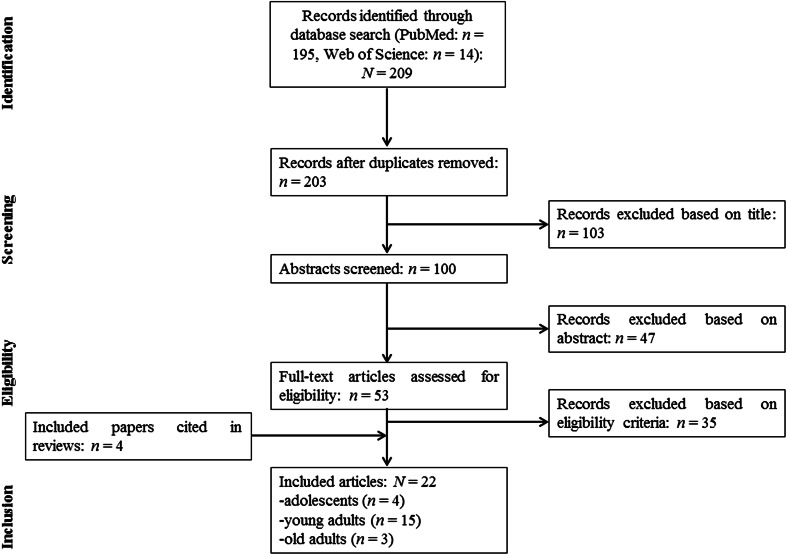
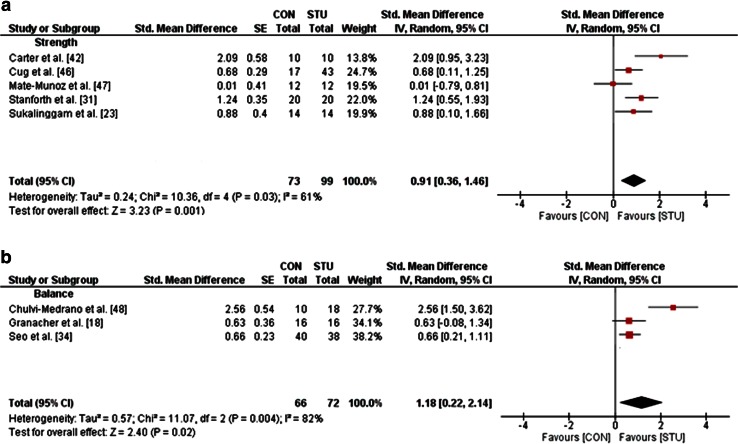
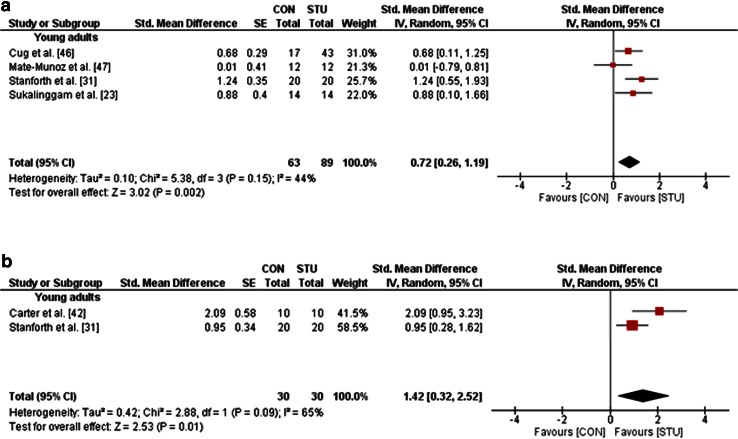
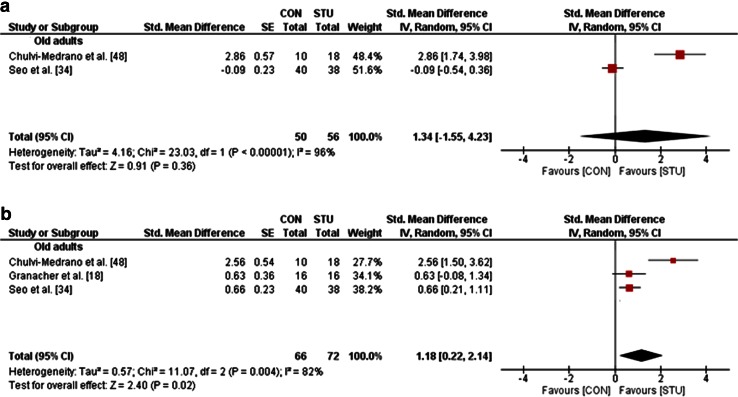
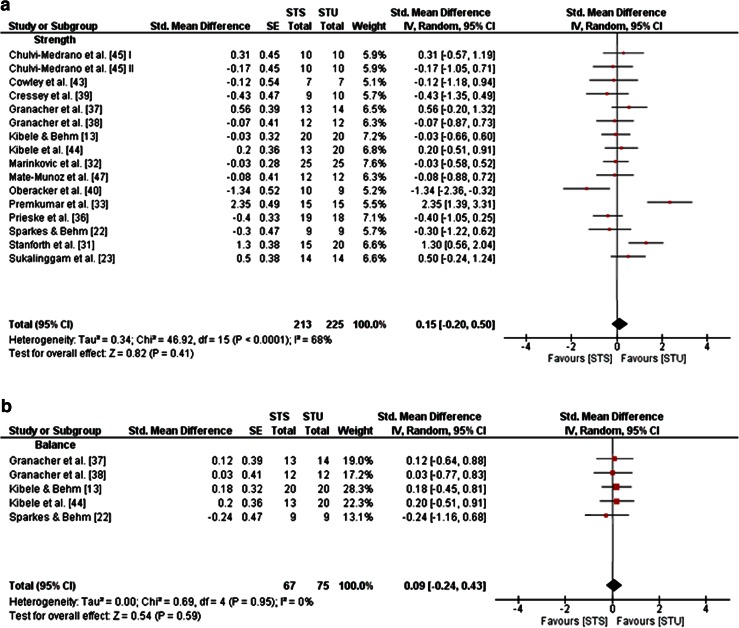
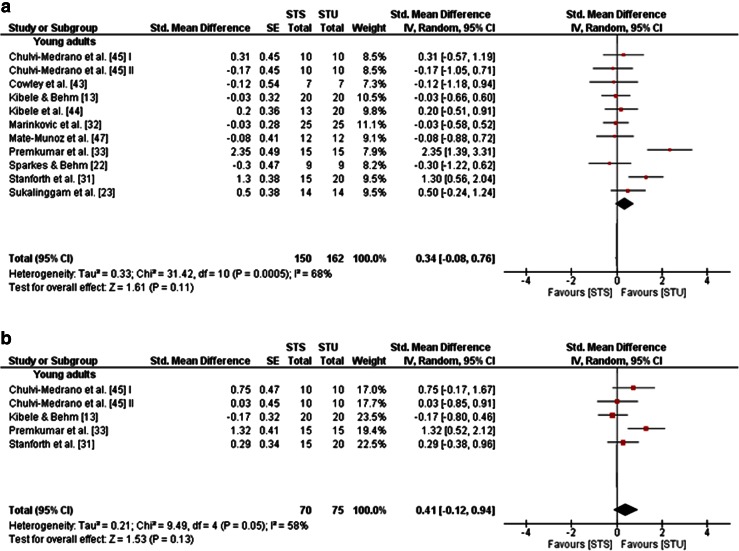
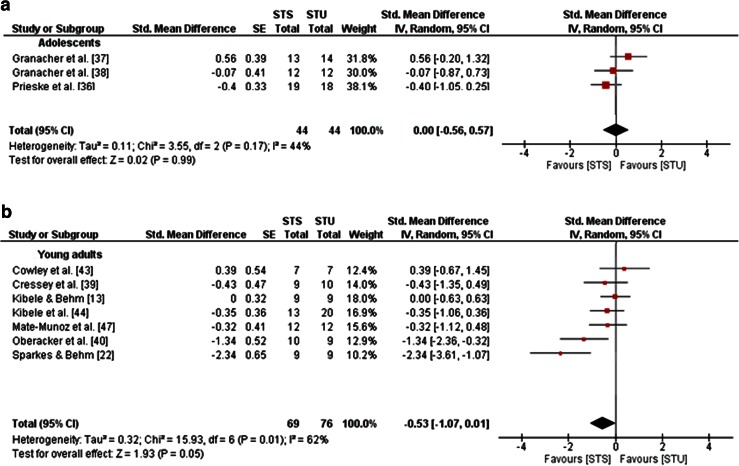
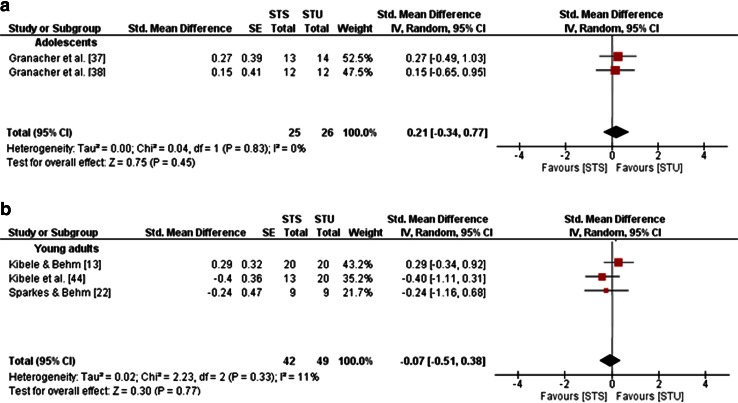
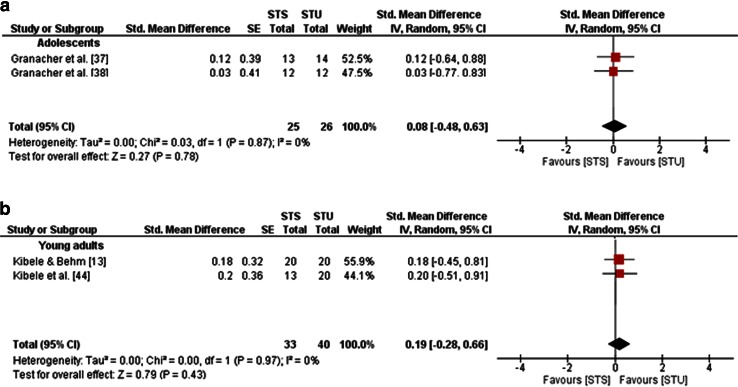
BACKGROUND: The effectiveness of strength training on unstable surfaces (STU) versus stable surfaces (STS) or a control condition (CON; i.e., no training or regular training only) for strength, power and balance performance across the lifespan has not yet been investigated in a systematic review and meta-analysis. OBJECTIVE: The aims of this systematic review and meta-analysis were to determine the general effects of STU versus STS or CON on muscle strength, power and balance in healthy individuals across the lifespan and to investigate whether performance changes following STU are age specific. DATA SOURCES: A computerized systematic literature search was performed in the electronic databases PubMed and Web of Science from January 1984 up to February 2015. STUDY ELIGIBILITY CRITERIA: Initially, 209 articles were identified for review. Only controlled trials were included if they investigated STU in healthy individuals and tested at least one measure of maximal strength, strength endurance, muscle power, or static/dynamic balance. In total, 22 studies met the inclusion criteria. STUDY APPRAISAL AND SYNTHESIS METHODS: The included studies were coded for the following criteria: age, sex, training status, training modality, exercise and test modality. Effect size measures included within-subject standardized mean differences (SMDw) and weighted between-subject standardized mean differences (SMDb). Heterogeneity between studies was assessed using I2 and χ2 statistics. The methodological quality of each study was assessed using the Physiotherapy Evidence Database (PEDro) Scale. RESULTS: Our search failed to identify studies that examined the effects of STU versus STS or CON in children and middle-aged adults. However, four studies were identified that investigated the effects of STU versus CON or STS in adolescents, 15 studies were identified in young adults and three studies were identified in old adults. Compared with CON, STU produced medium effects on maximal strength in young adults and no effects to medium effects in old adults. In addition, large effects were detected on strength endurance in adolescents and in young adults; in old adults, a small effect was found. With regard to muscle power, medium effects were observed in young adults and small effects were observed in old adults. Further, large effects were found for static and dynamic balance in old adults, but only a small effect was found for dynamic balance in young adults. The comparison of STU and STS revealed inconsistent results as indicated by training-induced changes in favour of STU, as well as STS. Small to medium effects were found for maximal strength in adolescents in favour of STS, and small effects were found in young adults in favour of STU. With regard to strength endurance, large effects were found in adolescents in favour of STS and small effects were found in favour of STU. Additionally, we detected small effects in young adults in favour of STU. In terms of muscle power, no effects were observed in adolescents but medium effects were found in favour of STS in young adults. With regard to balance, small effects were detected in adolescents for static and dynamic balance in favour of STU. In young adults, small effects were found for static balance in favour of STS. With regard to dynamic balance, the analysis revealed small effects in young adults in favour of STU. LIMITATIONS: The quality of the included studies was rather low, with mean PEDro scores of 5.8, 4.0 and 5.0 for studies including adolescents, young adults and old adults, respectively. Further, trivial to considerable heterogeneity between studies (i.e., 0% ≤ I2 ≤ 96%) was detected. CONCLUSIONS: Compared with CON, STU is effective in improving muscle strength, power and balance in adolescents, young adults and old adults. However, inconsistent results were particularly found in adolescents and young adults when the specific effects of STU were compared with those of STS. We conclude that the performance of STU compared with STS has limited extra effects on muscle strength, power and balance performance in healthy adolescents and young adults. Given that our systematic search did not identify studies that examined the effects of STU versus STS in children, middle-aged adults and old adults, further research of high methodological quality is needed to determine whether there are additive effects of STU as compared with STS in those age groups.
Overview
The claims and statistics of this paper haven’t been checked yet.
Free: it reads the open-access text and checks the first 5 claims that cite a source we can check. Create a free account to check every claim.
Integrity signals
Registry
Cites
Statistics
Figures
Verification
Claims the paper makes
The claims and statistics of this paper haven’t been checked yet.
Free: it reads the open-access text and checks the first 5 claims that cite a source we can check. Create a free account to check every claim.
Claims other papers make about this one
Each is checked against this paper’s own text: does it say what the citing paper says it does?
The cited source doesn’t support the claim as written.
In the citing paper
“There were insufficient data to determine if eccentric flywheel RT (67), Nordic hamstring RT (68), Olympic-style weightlifting (69), and unstable surface RT (70) impacted strength compared with CTRL.”
From American College of Sports Medicine Position Stand. Resistance Training Prescription for Muscle Function, Hypertrophy, and Physical Performance in Healthy Adults: An Overview of Reviews (2026) · cites this paper as [70]
Checked by a reasoning model — may be wrong.
Experimental — accuracy not yet measuredThe cited source doesn’t support the claim as written.
In the citing paper
“There were insufficient data to determine if power was affected by fatigue/failure (99), unstable surfaces (70), or concurrent training (123,124,151).”
From American College of Sports Medicine Position Stand. Resistance Training Prescription for Muscle Function, Hypertrophy, and Physical Performance in Healthy Adults: An Overview of Reviews (2026) · cites this paper as [70]
Checked by a reasoning model — may be wrong.
Experimental — accuracy not yet measuredThe cited source doesn’t support the claim as written.
In the citing paper
“There were insufficient data to determine if muscular endurance was affected by load (82), unstable surfaces (70), power training (82), volume (82), or set structure (107,108).”
From American College of Sports Medicine Position Stand. Resistance Training Prescription for Muscle Function, Hypertrophy, and Physical Performance in Healthy Adults: An Overview of Reviews (2026) · cites this paper as [70]
Checked by a reasoning model — may be wrong.
Experimental — accuracy not yet measuredThe cited source doesn’t support the claim as written.
In the citing paper
“There were insufficient data to determine whether unstable surface RT (70) or velocity-based RT (66) impacted muscular endurance compared with CTRL.”
From American College of Sports Medicine Position Stand. Resistance Training Prescription for Muscle Function, Hypertrophy, and Physical Performance in Healthy Adults: An Overview of Reviews (2026) · cites this paper as [70]
Checked by a reasoning model — may be wrong.
Experimental — accuracy not yet measuredThe cited source doesn’t support the claim as written.
In the citing paper
“In comparisons between distinct RTx, there were insufficient data to determine if unstable surfaces (70) or concurrent training (158) affected balance.”
From American College of Sports Medicine Position Stand. Resistance Training Prescription for Muscle Function, Hypertrophy, and Physical Performance in Healthy Adults: An Overview of Reviews (2026) · cites this paper as [70]
Checked by a reasoning model — may be wrong.
Experimental — accuracy not yet measured
1 more claim about this paper
Create a free account to see every claim other papers make about this one.
Self-check
Percentages, sums and reported differences re-computed from the paper’s own numbers.
The self-check needs the paper’s full text.
Citations
Cites
Preferred Reporting Items for Systematic Reviews and Meta-Analyses: the PRISMA statement
Moher, D., Liberati, A., Tetzlaff, J., Altman, D. G., & for the PRISMA Group (2009) · BMJ · doi:10.1136/bmj.b2535 · Cited by 83,823
Preferred reporting items for systematic reviews and meta-analyses: the PRISMA Statement.
(2009) · PubMed Central · Cited by 44,859
Cochrane Handbook for Systematic Reviews of Interventions: Cochrane Book Series
(2008) · doi:10.1002/9780470712184 · Cited by 25,048
Preferred Reporting Items for Systematic Reviews and Meta-Analyses: The PRISMA Statement
Moher, D., Liberati, A., Tetzlaff, J., & Altman, D. G. (2009) · Journal of Clinical Epidemiology · doi:10.1016/j.jclinepi.2009.06.005 · Cited by 19,575
Statistical Methods for Meta-Analysis
Wasserman, S., Hedges, L. V., & Olkin, I. (1988) · Journal of Educational Statistics · doi:10.2307/1164953 · Cited by 10,326
(2014) · Medical Entomology and Zoology · Cited by 9,400
Evidence-Based Medicine: How to Practice and Teach EBM
Sackett, D. L. (2000) · Cited by 5,950
Reliability of the PEDro Scale for Rating Quality of Randomized Controlled Trials
Maher, C. G., Sherrington, C., Herbert, R. D., Moseley, A. M., & Elkins, M. (2003) · Physical Therapy · doi:10.1093/ptj/83.8.713 · Cited by 4,808 · cited 1×
“The PEDro Scale rates internal study validity and the presence of statistical replicable information on a scale from 0 to 10, with C6 representing a cut-off score for high-quality studies [26].”
BackgroundChapter 9: Analysing Data and Undertaking Meta-Analyses
Deeks, J. J., Higgins, J. P. T., & Altman, D. G. (2008) · Cited by 2,782
Thompson, P. D., Arena, R., Riebe, D., & Pescatello, L. S. (2013) · Current Sports Medicine Reports · doi:10.1249/jsr.0b013e31829a68cf · Cited by 1,823
Research works printed but not linked: 5
- Chek P Physioball exercise for swimming, soccer, and basketball Sports Coach. 1999 21 30 33
- Verstegen M Williams P Verstegen M Williams P Physioball routine Core performance 2004 New York Rodale 73 88
- Cohen J Statistical power for the behavioral sciences 1988 Hillsdale Erlbaum
- Marinkovic M Bratic M Ignjatovic A Effects of 8-week instability resistance training on maximal strength in inexperienced young individuals Serb J Sports Sci. 2012 6 1 17 21
- Premkumar M Alagesan J Vaidya N Effect of instability resistance training of abdominal muscles in healthy young females—an experimental study Int J Pharm Sci Health Care. 2012 2 3 91 97
Cited by
Items 101–200 of 210
Test-retest reliability of the range of motion and stiffness based on discomfort perception
Beltrão, N. B., SANTOS, C. X. M., de Oliveira, V. M. A., Pirauá, A. L. T., Pitangui, A. C. R., & de Araújo, R. C. (2017) · Isokinetics and Exercise Science · doi:10.3233/ies-169162 · Cited by 4
“For this reason, stretching protocols are widely used for rehabilitation [6–8] and training [9].”
A Vibrotactile Feedback Device for Seated Balance Assessment and Training
Williams, A. D., & Vette, A. H. (2019) · Journal of Visualized Experiments · doi:10.3791/58611 · Cited by 6
Pentewar, S., Sawant, S., & Deshmukh, P. (2023) · International Journal of Health Sciences and Research · doi:10.52403/ijhsr.20230642 · Cited by 3
Warneke, K., Afonso, J. R., Thomas, E., Rittweger, J., Konrad, A., Moser, O., Lohmann, L. H., Zech, A., Schoenfeld, B. J., & Behm, D. G. (2025) · Sports Medicine · doi:10.1007/s40279-025-02237-y · Cited by 4
“While sensorimotor control is frequently triggered when performing a variety of exercises on unstable surfaces [67], the aforementioned American panel [66] emphasized the need for strength-increasing exercise routines.”
Self-citationPeng, D., Zhang, S., Zhang, Y., Wu, H., Zou, X., Zhang, G., Ma, Y., Ma, T., & Wang, L. (2025) · Experimental Gerontology · doi:10.1016/j.exger.2025.112843 · Cited by 4
“…resistance training on unstable surfaces (URT) stands out as a complex, multi-component approach that enhances both strength and balance simultaneously (Behm et al., 2015), thus, effectively reduce fall incidence in older adults (Col ´ on-Emeric et al., 2024; Liu-Ambrose et al., 2019).”
Niering, M., & Muehlbauer, T. (2023) · The Journal of Strength and Conditioning Research · doi:10.1519/jsc.0000000000004467 · Cited by 10
“The statistical analyses indicated significant main effects of test for DJ height (F(3, 93) 5 55.”
BackgroundMethodInfluentialSelf-citationMohammadian, Z., Alimoradi, M., & Ramírez‐Campillo, R. (2024) · Physiotherapy Research International · doi:10.1002/pri.2135 · Cited by 4
Sánchez-Barbadora, M., Moreno‐Segura, N., Alepuz-Moner, V., & Agustín, R. M. (2024) · Journal of Functional Morphology and Kinesiology · doi:10.3390/jfmk9040240 · Cited by 3
Lee, J. H., Shin, K. H., Han, S.-B., Hwang, K., Lee, S. J., & Jang, K.-M. (2022) · Medicine · doi:10.1097/md.0000000000030631 · Cited by 7
“[21,47,48] Therefore, muscle coordination and muscle synergy in the symptomatic knees may have been more enhanced to reduce perturbation for multiple-directions[21] during the knee alignment-oriented DBE than during the knee alignment-oriented SBE; the neuromuscular system may have been more enhanced by dynamic postur…”
BackgroundElectromyographic and Stabilometric Analysis of the Static and Dynamic “Standing Bird Dog” Exercise
Losavio, R., Contemori, S., Bartoli, S., Dieni, C. V., Panichi, R., & Biscarini, A. (2023) · Sports · doi:10.3390/sports11060119 · Cited by 3
Jebavý, R., Blažek, D., Vomackova, H., Vavra, J., Bušta, J., Pisz, A., & Šťastný, P. (2023) · Baltic Journal of Health and Physical Activity · doi:10.29359/bjhpa.15.4.08 · Cited by 4
Effects of Instability Resistance Training on Physical and Cognitive Function in Adults
Cavalcante, B. R., Falck, R. S., da Silva, D. T., Campos, I. R. A., Silva, M. S., Eckardt, N., Batista, G. A., Ferreira, F. M., Pirauá, A. L. T., de Souza, M. F., et al. (2025) · International Journal of Sports Medicine · doi:10.1055/a-2674-4030 · Cited by 5
Escriche-Escuder, A., Calatayud, J., Aiguadé, R., Andersen, L. L., Ezzatvar, Y., & Casaña, J. (2019) · Strength and conditioning journal · doi:10.1519/ssc.0000000000000456 · Cited by 4
Mirmohammad, R., Minoonejhad, H., & Sheikhhoseini, R. (2019) · Physical Treatments - Specific Physical Therapy · doi:10.32598/ptj.9.3.147 · Cited by 3
“, plank) might be associated with increased lumbosacral muscles’ activity [9].”
BackgroundBalance control of the orthostatic body pose in physical education of students
Zanevskyy, І., & Nowak, S. B. (2020) · Physical Education of Students · doi:10.15561/20755279.2020.0108 · Cited by 3
de Farias, W. M., de Oliveira, A. S., Sousa, D. N., Behm, D. G., Pitangui, A. C. R., & de Araújo, R. C. (2020) · Isokinetics and Exercise Science · doi:10.3233/ies-203129 · Cited by 3
“However, high levels of instability may impair muscle recruitment and consequently decrease EMG activity [22–24].”
Self-citationGhigiarelli, J. J., Pelton, L. M., Gonzalez, A. M., Fulop, A. M., Gee, J. Y., & Sell, K. M. (2018) · The Journal of Strength and Conditioning Research · doi:10.1519/jsc.0000000000002430 · Cited by 3
“Similar to the findings from unstable surface training (3), this lack of positive change in the target muscle may not produce enough stimuli to induce strength adaptations.”
ResultBoolani, A., Moghaddam, M., Fuller, D., Mondal, S., Sur, S., Martin, R. A., Kadry, A. M., Torad, A. A. M., Elwan, M. A., & Kakar, R. S. (2022) · Vision · doi:10.3390/vision6030047 · Cited by 3
“These findings may be compared to the literature on training in unstable environments, as those environments lead to increase proprioceptor activation, given the lack of reliable input from the visual system resulting in increased isotonic strength in young adults [27].”
BackgroundSilva, Y. A., Cavalcante, B. R., Calixtre, L. B., Tomaz, M., de Souza, M. F., Pitangui, A. C. R., & de Araújo, R. C. (2024) · Canadian Geriatrics Journal · doi:10.5770/cgj.27.730 · Cited by 2
“(3,6,7,16,21,22) A previous study that looked at the effects of REI observed significant improvements in isometric MVIC.”
Amiri, B., & Zemková, E. (2024) · Frontiers in Physiology · doi:10.3389/fphys.2024.1490041 · Cited by 6
Jeong, L. H. (2024) · The Journal of Korean Academy of Physical Therapy Science · doi:10.26862/jkpts.2024.12.31.4.57 · Cited by 3
Sánchez-Barbadora, M., Alepuz-Moner, V., Moreno‐Segura, N., & Agustín, R. M. (2025) · PeerJ · doi:10.7717/peerj.19461 · Cited by 2
Šćepanović, T., Kojić, M., Mikić, M. J., Štajer, V., Ödek, U., & Penjak, A. (2024) · Frontiers in Sports and Active Living · doi:10.3389/fspor.2024.1323515 · Cited by 2
The Duration of Non-Local Muscle Fatigue Effects
Zahiri, A., Goudini, R., Alizadeh, S., Daneshjoo, A., Mahmoud, M. M. I., Konrad, A., Granacher, U., & Behm, D. G. (2024) · Journal of Sports Science and Medicine · doi:10.52082/jssm.2024.425 · Cited by 6
Self-citationEffects of Stable and Unstable Surfaces on Cable-Based Resistive Exercises
O’Meara, S., Lostroscio, K. H., Quiocho, L. J., Joshi, S. P., & Vetter, K. (2021) · IEEE Aerospace Conference (AERO) · doi:10.1109/aero50100.2021.9438268 · Cited by 2
“The effects of unstable surfaces are further complicated by age and not wellunderstood [9].”
BackgroundHealth influence of functional training on the organism of women of the second period of mature age
Şevcenko, U. D. S. D. T. «., Samoliuc, O., Cheban, T., & Şevcenko, U. D. S. D. T. «. (2022) · This bulletin of the Kamianets-Podilskyi National Ivan Ohiienko University Physical education Sport and Human Health · doi:10.32626/2309-8082.2022-27.183-189 · Cited by 4
Dwidarti, S. J., Prabowo, T., & Sungkar, E. (2018) · International Journal of Integrated Health Sciences · doi:10.15850/ijihs.v6n1.1050 · Cited by 2
Bahamondes-Ávila, C., Ponce‐Fuentes, F., Hernández-Mosqueira, C., Medina, L., Navarrete, L. A. S., & de la Rosa, F. J. B. (2020) · Human Movement · doi:10.5114/hm.2021.100016 · Cited by 1
“This physiological environment must be taken into account, since in a regular training with PBFR, the metabolic condition of acidosis in the muscle would have a dominant role in the hypertrophic effects that support this type of training [11] or be an adjunct to the effects mainly observed in unstable exercises [1].”
Backgroundde Lira, D. C., Silva, J. D. D. A., Angelo, F. D. D. A., Aniceto, R. R., Farah, B. Q., & Pirauá, A. L. T. (2023) · Geriatrics Gerontology and Aging · doi:10.53886/gga.e0000016_en · Cited by 1
“Thus, contrary to expectations, the greater neuromuscular demand under these conditions 22 was not considered sufficiently problematic to produce displeasure.”
BackgroundMuscle Activity of Superimposed Vibration in Suspended Kneeling Rollout
Huertas, P., Buscà, B., Arboix-Alió, J., Miró, A., Esquerrà, L. H., Peña, J., Vicens‐Bordas, J., & Aguilera-Castells, J. (2025) · Applied Sciences · doi:10.3390/app15031637 · Cited by 1
Differences in Shoulder Muscle Activation during Flexi-bar and Dumbbell Exercise : a Pilot Study
Junghee, K., Taesu, E., Gingkuk, M., & Mintae, C. (2025) · The Journal of Korean Academy of Physical Therapy Science · doi:10.26862/jkpts.2025.06.32.2.1 · Cited by 1
Yang, X., Li, S., Li, X., Guo, G., Song, X., Ni, Y., Ren, C., Shi, M., & Sun, Y. (2025) · Clinical Interventions in Aging · doi:10.2147/cia.s537889 · Cited by 2
“39 Given the high prevalence and serious consequences of falls among older adults, particularly in rural environments, such balance-focused interventions are crucial.”
Claußen, L., Groß, J., & Kibele, A. (2025) · BMC Geriatrics · doi:10.1186/s12877-025-06438-y · Cited by 6
“Recent research highlights that MRT can significantly enhance muscle strength, balance, and mobility in older adults when implemented progressively and under appropriate supervision [34, 35].”
Self-citationEffects of resistance training on fitness parameters in older adults: a systematic review
Ilić, T., Mijalković, S., Stojanović, S., Ilbak, İ., Pavlović, R., Radulović, N., Vrcić, M., & Nikolić, S. (2025) · Health sport rehabilitation · doi:10.58962/hsr.2025.1263 · Cited by 1
“These findings indicate that resistance training on unstable surfaces can elicit positive locomotor system adaptations in a relatively short time, which aligns with existing literature [14, 31-32].”
Feng, G., Chen, R., Wu, C., & Liu, Y. (2026) · PLoS ONE · doi:10.1371/journal.pone.0346232 · Cited by 6
García-Orea, G. P., Santos, M. S., Elvar, J. R. H., & Silva‐Grigoletto, M. E. D. (2016) · Brazilian Journal of Kinanthropometry and Human Performance · doi:10.5007/1980-0037.2016v18n6p722 · Cited by 1
Metastable Strength Performance-A Complementary View to Training and Assessment
Kibele, A. (2017) · Sports Injuries & Medicine · doi:10.29011/2576-9596.100001
Self-citationChoursiya, P., Tanwar, T., & Veqar, Z. (2022) · Journal of Bodywork and Movement Therapies · doi:10.1016/j.jbmt.2022.04.007 · Cited by 1
Centemeri, R., Riva, M. A., Belingheri, M., Paladino, M. E., D'Orso, M. I., & Intra, J. (2023) · Journal of Functional Morphology and Kinesiology · doi:10.3390/jfmk8040159 · Cited by 1
“Several studies have demonstrated that decreased balance and muscle strength are associated with early age-related decline [11,12].”
BackgroundSporda Stresle Başa Çıkma Stratejileri
Sakallı, D. (2023) · Özgür Yayınları eBooks · doi:10.58830/ozgur.pub373.c1578 · Cited by 2
Exercise With Unstable Objects: A Descriptive Survey Among Health Care and Fitness Professionals
Cheatham, S. W., Baker, R. T., Batts, W. N., Ambler-Wright, T., & Sutton, B. G. (2024) · International Journal of Athletic Therapy & Training · doi:10.1123/ijatt.2023-0128 · Cited by 1
Liu, S., Gou, B., Zhao, Z., & Wang, Q. (2024) · Archives of Rehabilitation Research and Clinical Translation · doi:10.1016/j.arrct.2024.100365 · Cited by 1
Lehmann, T., Visser, A., Havers, T., Büchel, D., & Baumeister, J. (2025) · Experimental Brain Research · doi:10.1007/s00221-025-07039-2 · Cited by 2
Human gait structure on stable and unstable surfaces
Bukowska, J. M., Krawczyński, M., & Jaszczur-Nowicki, J. (2019) · Journal of Kinesiology and Exercise Sciences · doi:10.5604/01.3001.0014.3308 · Cited by 1
“[8] also performed a systematic literature review and metaanalysis to investigate the effect of strength training on unstable surfaces.”
BackgroundMethodZhao, J., Shao, E., Teo, E.-C., Baker, J. S., & Gu, Y. (2024) · Preprints.org · doi:10.20944/preprints202401.0721.v1 · Cited by 1
Palma, B. P. (2016) · Digital Library of Theses and Dissertations (Universidade de São Paulo) · doi:10.11606/d.39.2016.tde-27042016-113927
Physiotherapy Management of Pediatric Rheumatology Conditions
Maillard, S. M. (2016) · Technical report · doi:10.1016/b978-0-444-63596-9.00025-6 · Cited by 1
Instrumenting and Validating a Vibrotactile Device to Assess and Rehabilitate Dynamic Seated Balance
Williams, A. D. (2017) · ERA: Education and Research Archive (University of Alberta) · doi:10.7939/r3hd7p63q
Manlangit, P. (2019) · Jyväskylä University Digital Archive (University of Jyväskylä)
Khajooei, M., Lin, C., Mayer, F., & Mueller, S. (2019) · Isokinetics and Exercise Science · doi:10.3233/ies-182206
“The use of unstable surfaces like balance balls and wobble boards as an element in resistance training has in recent years gained a special niche in rehabilitation and sport programs [5].”
Maroto‐Izquierdo, S. (2019) · Buleria (Universidad de León) · doi:10.18002/10612/11089
Pediatric physical therapy intervention in leigh’s syndrome: a clinical case report
Frata, B., Sonza, A., Menegol, N. A., Montemezzo, D., & Sanada, L. S. (2020) · Saúde e Desenvolvimento Humano · doi:10.18316/sdh.v8i2.6592
Effect of Support Surface Quality for the Squat Exercise on Vertical Jump Performance
Kim, S., Kang, H.-M., Kim, S., Kim, H., Physical Therapist, D. O. P. T. K. N. U., Park, H.-J., & Lee, J. (2021) · Indian Journal of Public Health Research & Development · doi:10.37506/ijphrd.v12i3.16068 · Cited by 2
Colorado, Y. T. C., & Villada, F. A. P. (2020) · Institutional Repository University of Antioquia (University of Antioquia)
Nascimento, V. Y. S., Cavalcante, B. R., Trombini-Souza, F., Silva, M. S., da Silva, D. T., de Souza, M. F., & de Araújo, R. C. (2023) · Isokinetics and Exercise Science · doi:10.3233/ies-220091
“…although some studies report improvements with isolated resistance training or using instability devices in the balance of healthy older adults [20,34,35], it is not yet clear whether individuals with cognitive impairment respond similarly to training compared to people without cognitive…”
Instability Functional Training: Evidence-Based Recommendations for Coaches
Horn, J. (2023) · Research Directs in Strength and Performance · doi:10.53520/rdsp2023.10561
Effectiveness of Specific Stabilization Exercise on Strength, Balance for Beginner Weightlifters
Deeb, M. E. (2023) · Journal of Theories and Applications of Physical Education Sport Sciences · doi:10.21608/jat.2023.281187
DENİZ, R., & Kayatekin, B. M. (2023) · Turkiye Klinikleri Journal of Sports Sciences · doi:10.5336/sportsci.2022-92837
Zając, B., Olszewski, M., Mika, A., & Maciejczyk, M. (2023) · Journal of Clinical Medicine · doi:10.3390/jcm12072715
“[49], it was shown that strength training on an unstable surface, as compared with control conditions (i.”
Background(2023) · Frontiers research topics · doi:10.3389/978-2-8325-3776-3
ПСИХОФІЗИЧНІ ОСОБЛИВОСТІ ДІЯЛЬНОСТІ ФУТБОЛЬНИХ АРБІТРІВ
Мироненко, Б. В. (2023) · Olympicus · doi:10.24195/olympicus/2023-3.18
Entrenamiento en inestabilidad : influencia en la fuerza, potencia y velocidad de ejecución
Nieto, M. M. (2023) · UPM Digital Archive (Technical University of Madrid) · doi:10.20868/upm.thesis.76780
de Lira, D. C., Silva, J. D. D. A., Angelo, F. D. D. A., Aniceto, R. R., Farah, B. Q., & Pirauá, A. L. T. (2023) · Geriatrics Gerontology and Aging · doi:10.53886/gga.e0000016_pt
Spor ve Atletik Zihinsel Enerji
Doğan, G., & Göral, K. (2023) · Özgür Yayınları eBooks · doi:10.58830/ozgur.pub373.c1582
Günlük Hedefler ve Günlük Hedefleri Gerçekleştirmenin Önemi
Menteş, G., & Akgül, A. (2023) · Özgür Yayınları eBooks · doi:10.58830/ozgur.pub373.c1579
Spor Yapan Çocuklarda Yetkinliği Geliştirmenin Psikolojik Özellikleri
Görgülü, R., & Şenel, E. (2023) · Özgür Yayınları eBooks · doi:10.58830/ozgur.pub373.c1577
Salman, K., & Menteş, G. (2023) · Özgür Yayınları eBooks · doi:10.58830/ozgur.pub373.c1580 · Cited by 1
Spor ve Egzersiz Psikolojisinde Güncel Yaklaşımlar
Şenel, E., Şenel, E., Görgülü, R., Yılmaz, B., Sakallı, D., Menteş, G., Akgül, A., Salman, K., Doğan, G., & Göral, K. (2023) · Özgür Yayınları eBooks · doi:10.58830/ozgur.pub373
Sporda Zihinsel Dayanıklılık ve Ölçüm Stratejileri
Şenel, E., Görgülü, R., & Yılmaz, B. (2023) · Özgür Yayınları eBooks · doi:10.58830/ozgur.pub373.c1576
Голод, Н. Р. (2023) · Реабілітаційні та фізкультурно-рекреаційні аспекти розвитку людини (Rehabilitation & recreation) · doi:10.32782/2522-1795.2023.17.5 · Cited by 1
Lee, D.-H., Jo, S., & Song, C. (2023) · Physical therapy rehabilitation science · doi:10.14474/ptrs.2023.12.4.454
Ameer, M. A., Abbad, A. M. A., Khan, A., Alanazi, F., ALsakhri, A. H., Abdullhadi, G. E., ALbilasi, M. H., ALRashed, M. S., Ali, S. B., & Homoud, W. S. (2024) · International journal of human movement and sports sciences · doi:10.13189/saj.2024.120218
Zhao, J., Shao, E., Baker, J. S., Teo, E.-C., & Gu, Y. (2024) · Molecular & cellular biomechanics · doi:10.62617/mcb.v21.162
“These devices rely on deformable surfaces, contributing to postural instability in the human body, which allows for increased core stability and muscle control during exercises performed on them [19].”
BackgroundPlank Variations and Surface Instability: A Study on Core Muscle Activation in Males and Females
Choi, G., Choi, J., Kim, B., Jeong, H., & Kim, S. (2025) · Physical Therapy Korea · doi:10.12674/ptk.2025.32.1.83
Effects of Plyometric Training on the Movement Speed Among Youth Male Basketball Players
Wang, S., Shuai, Y., Kueh, Y. C., & Kuan, G. (2025) · Lecture notes in bioengineering · doi:10.1007/978-981-96-8757-2_22
Keyf, E. (2025) · Journal of Optimal Zenith Sport Sciences · doi:10.70736/jozss.2054
Determinants of static balance performance across lifespan vary with sensory conditions
Theodosiadou, A., Papavasileiou, A., Sahinis, C., Fabre, M., Lapole, T., Patikas, D., Amiridis, I. G., & Baudry, S. (2025) · European Journal of Applied Physiology · doi:10.1007/s00421-025-06059-8
“Bal - ance impairment, in contrast, is a major factor for falls risk, performance across lifespan (Behm et al. 2015 ; Kiss et al. 2018; Woollacott and Shumway-Cook 1990).”
Djajadikarta, Z. J., Dongés, S. C., Diong, J. H. L., Hoang, P. D., Kennedy, D. S., Menant, J. C., Lord, S. R., Taylor, J. L., & Gandevia, S. C. (2025) · PeerJ · doi:10.7717/peerj.20354
“In the general population, exercise can improve performance of sensorimotor tasks including balance, as well muscle strength and endurance through muscle and neural adaptations ( e.g. , Bakker et al., 2024 ; Behm et al., 2015 ).”
The Effects of Functional Exercises on Isoinertial Performance in Elite Wrestlers
Aydın, R., Genç, A., Kasap, M., Demırhan, B., & Gürcan, H. H. (2025) · Spor ve Performans Araştırmaları Dergisi · doi:10.17155/omuspd.1810554
Choi, G.-S., & Hwangbo, G. (2025) · The Journal of Korean Academy of Physical Therapy Science · doi:10.26862/jkpts.2025.12.32.4.29
Xu, B., Wang, B., Chow, C. M., Cross, T. J., Halaki, M., & Hackett, D. A. (2026) · Translational Journal of the American College of Sports Medicine · doi:10.1249/tjx.0000000000000335
Bao, Z., Gao, J., & WANG, S. J. (2026) · Journal of Bodywork and Movement Therapies · doi:10.1016/j.jbmt.2026.03.022
Khowailed, I. A., Moustafa, I. M., Hemdan, D. I., Caniaz, E. S., Peters-Brinkerhoff, C., Almurdi, M. M., & Alsubiheen, A. M. (2026) · Research Square · doi:10.21203/rs.3.rs-8663548/v1
Die Stabilität des Stehens und Gehens – Koordination, Kraft und Ausdauer
Laube, W. (2026) · Springer eBooks · doi:10.1007/978-3-662-72826-0_5
Zhou, J., Liu, S., Sun, H., & Zheng, X. (2026) · Frontiers in Physiology · doi:10.3389/fphys.2026.1827904 · Cited by 1
Baccouch, R., Maatoug, H., Borji, R., Ammar, A., Fendri, T., Rebai, H., & Sahli, S. (2026) · Scientific Reports · doi:10.1038/s41598-026-53232-w
“Moreover, it has been reported that strength training on unstable surfaces significantly improves PF in adolescents, young adults, and older adults without VI 80 .”
Instability resistance training in collegiate basketball: a multitheoretical experimental study
Li, H., Li, X., Gao, W., & Jeong, H.-C. (2026) · Frontiers in Sports and Active Living · doi:10.3389/fspor.2026.1827231
He, J., Su, X., Wang, L., Men, J., & Yu, Q. (2026) · Frontiers in Public Health · doi:10.3389/fpubh.2026.1868830
“Compared with stable resistance training, unstable resistance training may be especially relevant for balance-related outcomes (16).”
Dong, K., & Abdullah, B. (2026) · Life · doi:10.3390/life16061036
“Previous studies have demonstrated that the BOSU ball can be effectively applied to squat strength training, enabling lower-limb strength exercises in an unstable state [6,7].”
Woo, J.-Y., & Kim, T.-H. (2026) · Journal of Musculoskeletal Science and Technology · doi:10.29273/jmst.2026.10.1.33
“42 Given that both groups received the same proprioceptive training, it is likely that improvements in neuromuscular control played an important role in enhancing dynamic balance.”
Andrades-Ramírez, O., Castillo, B. S. A., Romero-Vera, L., Castillo-Quezada, H., & Seguel-López, M. E. (2026) · Revista Iberoamericana de Ciencias de la Actividad Física y el Deporte · doi:10.24310/riccafd.15.2.2026.23043
Lin, S., Yan, Z., Xu, Z., Zhou, M., Zhang, D., & Liu, R. (2026) · Journal of Science in Sport and Exercise · doi:10.1007/s42978-026-00392-w
Instability and blood flow restriction: do they contribute to resistance training adaptations?
Christ, M. C. C., Carvalho, L., Truffi, G. A., Concon, V., Sander, R., Serra, A. L., Loenneke, J. P., & Barroso, R. (2026) · German Journal of Exercise and Sport Research · doi:10.1007/s12662-026-01142-4
Metadata
- Authors
- Behm, D. G., Muehlbauer, T., Kibele, A., & Granacher, U.
- Affiliations
- Memorial University of Newfoundland (CA)
- University of Potsdam (DE)
- University of Kassel (DE)
- Corresponding author
- Granacher, Urs
- Venue
- Sports Medicine
- Published
- 2015-09-10
- Volume
- 45
- Issue
- 12
- Pages
- 1645-1669
- ISSN
- 0112-1642 (ISSN-L)
- 1179-2035
- PMC
- PMC4656700
- OpenAlex
- W1423633260
- Cited by
- 209
- References
- 61
- Citations by year
- 2026: 23 · 2025: 25 · 2024: 27 · 2023: 34 · 2022: 14 · 2021: 12 · 2020: 21 · 2019: 20 · 2018: 15 · 2017: 8 · 2016: 9
- FWCI
- 1.77
- Type
- journal article
- Language
- en
- Update notices
- correction (2016-02-10)
- Open access
- hybrid
- doi.org
- Locations
- Sports Medicine (publishedVersion, cc-by)
- PubMed Central (publishedVersion)
- PubMed (publishedVersion)
- Funders
- Deutsche Forschungsgemeinschaft (DE) (MU 3327/2-1)
- Topics
- Health Sciences › Medicine › Orthopedics and Sports Medicine › Sports Performance and Training
- Health Sciences › Health Professions › Physical Therapy, Sports Therapy and Rehabilitation › Balance, Gait, and Falls Prevention
- Health Sciences › Health Professions › Physical Therapy, Sports Therapy and Rehabilitation › Physical Education and Training Studies
- Keywords
- resistance training, unstable surfaces, balance training, muscle strength, muscle power, strength endurance, balance, aging, lifespan, adolescents, young adults, older adults, age-specific effects, exercise training intervention, static and dynamic balance, maximal strength, training-induced changes, sex differences, training status, exercise duration, exercise frequency, exercise volume
- MeSH terms
- Adolescent, Adult, Aged, Aging, Environment Design, Postural Balance, Humans, Middle Aged, Muscle Strength, Resistance Training, Young Adult
About these checks
Registry, retraction, Cites and statistics results are computed, not judged, with one exception: a printed reference that no index lists is read once by a model before it counts as a citation error. Claims are extracted by a model and kept only when their quote appears verbatim in the text; each cited source is then checked, with a model’s help, for whether it says what the claim relies on. Those verdicts can be wrong — read the claim’s quote and the cited source before relying on one.
Statistics and arithmetic are recomputed, not judged.
Confidence bands are shown only for fields calibrated on our annotated test set. None is calibrated yet, so no band is shown.
What counts as a claim ›How we measure confidence ›How we check this ›
Are you an author, or do you see a problem with this page? Request a review
Data sources
Bibliographic data: Semantic Scholar, OpenAlex, Crossref.
Contains information from the Semantic Scholar Academic Graph Datasets, made available under the ODC Attribution License (ODC-BY 1.0).
Semantic Scholar’s data is described in: Kinney, R., et al. (2023). The Semantic Scholar Open Data Platform. arXiv:2301.10140.
