

The Effect of Weekly Set Volume on Strength Gain: A Meta-Analysis
Open accessThe DOI matches its Crossref record; 47 of the 47 references it cites were found in a registry or an index; none of the 87 sources its claims cite is checked for support yet.
Abstract
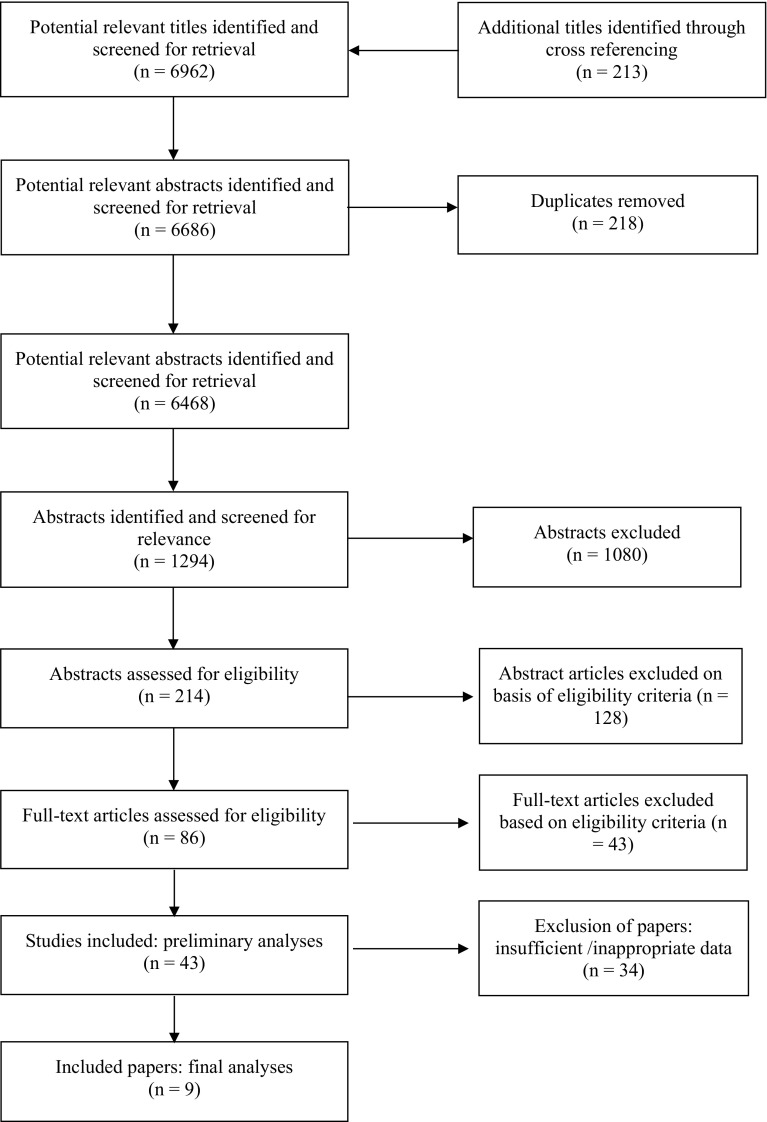
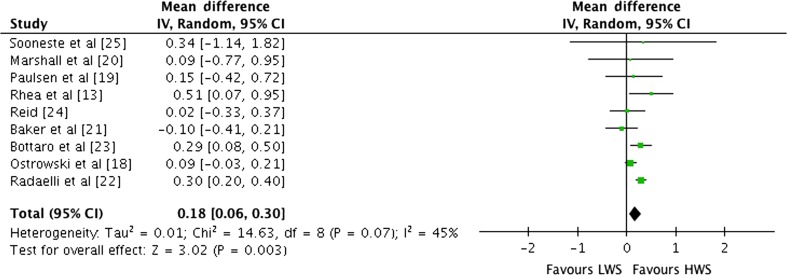
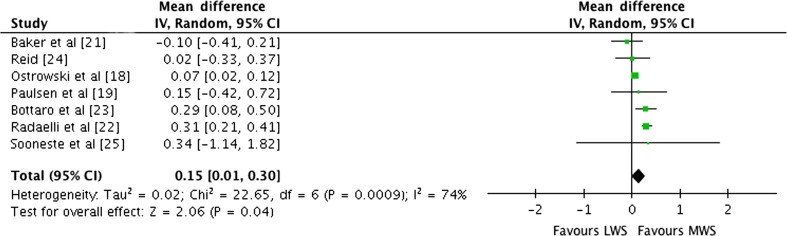
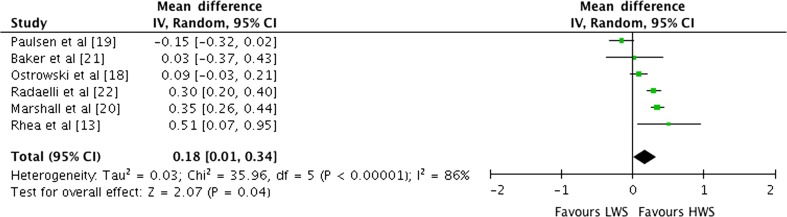
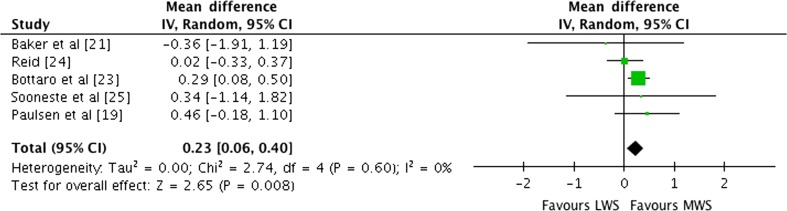
Strength training set organisation and its relationship to the development of muscular strength have yet to be clearly defined. Current meta-analytical research suggests that different population groups have distinctive muscular adaptations, primarily due to the prescription of the strength training set dose. We conducted a meta-analysis with restrictive inclusion criteria and examined the potential effects of low (LWS), medium (MWS) or high weekly set (HWS) strength training on muscular strength per exercise. Secondly, we examined strength gain variations when performing multi-joint or isolation exercises, and probed for a potential relationship between weekly set number and stage of subjects’ training (trained versus untrained). Computerised searches were performed on PubMed, MEDLINE, SWETSWISE, EMBASE and SPORTDiscus™ using the terms ‘strength training’, ‘resistance training’, ‘single sets’, ‘multiple sets’ and ‘volume’. As of September 2016, 6962 potentially relevant studies were identified. After review, nine studies were deemed eligible per pre-set inclusion criteria. Primary data were pooled using a random-effect model. Outcomes for strength gain, strength gain with multi-joint and isolation exercise were analysed for main effects. Sensitivity analyses were calculated for several subgroups by separating the data set and by calculation of separate analyses for each subgroup. Heterogeneity between studies was assessed using the Cochran Q and I 2 statistics. Pre- versus post-training strength analysis comprised 61 treatment groups from nine studies. For combined multi-joint and isolation exercises, pre- versus post- training strength gains were greater with HWS compared with LWS [mean effect size (ES) 0.18; 95% CI 0.06–0.30; p = 0.003]. The mean ES for LWS was 0.82 (95% CI 0.47–1.17). The mean ES for HWS was 1.01 (95% CI 0.70–1.32). Separate analysis of the effects of pre- versus post-training strength for LWS or MWS observed marginally greater strength gains with MWS compared with LWS (ES 0.15; 95% CI 0.01–0.30; p = 0.04). The mean ES for LWS was 0.83 (95% CI 0.53–1.13). The mean ES for MWS was 0.98 (95% CI 0.62–1.34). For multi-joint exercises, greater strength gains were observed with HWS compared with LWS (ES 0.18; 95% CI 0.01–0.34; p = 0.04). The mean ES for LWS was 0.81 (95% CI 0.65–0.97). The mean ES for HWS was 1.00 (95% CI 0.77–1.23). For isolation exercises, greater strength gains were observed with HWS compared with LWS (ES 0.23; 95% CI 0.06–0.40; p = 0.008). The mean ES for LWS was 0.95 (95% CI 0.30–1.60). The mean ES for HWS was 1.10 (95% CI 0.26–1.94). For multi-joint and isolation exercise-specific one repetition maximum (1 RM), marginally greater strength gains were observed with HWS compared with LWS (ES 0.14; 95% CI −0.01 to 0.29; p = 0.06). The mean ES for LWS was 0.80 (95% CI 0.47–1.13). The mean ES for HWS was 0.97 (95% CI 0.68–1.26). This meta-analysis presents additional evidence regarding a graded dose–response relationship between weekly sets performed and strength gain. The use of MWS and HWS was more effective than LWS, with LWS producing the smallest pre- to post-training strength difference. For novice and intermediate male trainees, the findings suggest that LWSs do not lead to strength gains compared with MWS or HWS training. For those trainees in the middle ground, not a novice and not advanced, the existing data provide a relationship between weekly sets and strength gain as set configurations produced different pre- to post-training strength increases. For well trained individuals, the use of either MWS or HWS may be an appropriate dose to produce strength gains.
Overview
CoChat Summary
## TL;DR
This meta-analysis of 9 studies (223 male subjects) found a graded dose–response relationship: more weekly sets generally produced greater strength gains than low weekly set volume. The authors conclude that medium or high weekly set volume is preferable to low weekly set volume, though the observed effects were often trivial to small.
## Key findings
- Across combined multi-joint and isolation exercise outcomes, the pooled effect was ES 0.18 (95% CI 0.06–0.30; p = 0.003) for high weekly set volume (HWS) versus low weekly set volume (LWS), with I² = 45%.
- For LWS versus medium weekly set volume (MWS), the pooled effect was ES 0.15 (95% CI 0.01–0.30; p = 0.04) with I² = 74%.
- In multi-joint-only exercises, HWS versus LWS showed ES 0.18 (95% CI 0.01–0.34; p = 0.04) with I² = 86%.
- In isolation exercises, HWS versus LWS showed ES 0.23 (95% CI 0.06–0.40; p = 0.008) with I² = 0%.
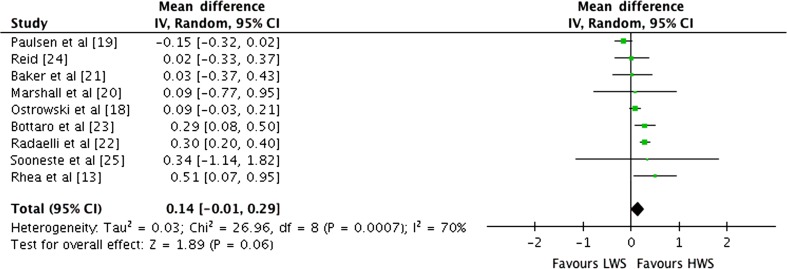
- For exercise-specific 1RM outcomes across multi-joint and isolation exercises, HWS versus LWS showed ES 0.14 (95% CI −0.01 to 0.29; p = 0.06) with I² = 70%, indicating a trend but not statistical significance at p < 0.05.
## Methods
- Systematic review and meta-analysis of randomized controlled trials (RCTs) and randomly assigned trials (RANs) comparing single versus multiple sets per exercise in adult males aged 18–60 years.
- Searches covered PubMed, MEDLINE, SWETSWISE, EMBASE, and SPORTDiscus™ through September 2016; 9 studies with 223 subjects met inclusion criteria.
- Main analyses used random-effects models in RevMan and meta-regressions on weekly set volume, with weekly set categories defined as LWS (≤5), MWS (5–9), and HWS (≥10).
## Limitations
- The paper states that the number of suitable studies was small and that there were differences in design and control among included studies.
- It notes that only one of the nine included studies used a randomized control design; the other eight lacked a control group and used repeated-measures designs, so strength gains may reflect repeated 1RM testing or learning effects rather than training volume alone.
- Evident from the text: the evidence base was restricted to male subjects and several analyses had limited data, making some comparisons not feasible (for example, MWS vs HWS in certain subgroups).
Model-written summary. Check it against the paper before relying on it.
Integrity signals
Registry
Cites
Statistics
Figures
Verification
Claims the paper makes
0 Valid · 2 Not valid · 41 Not checked · 67 Own results and interpretations
In the paper
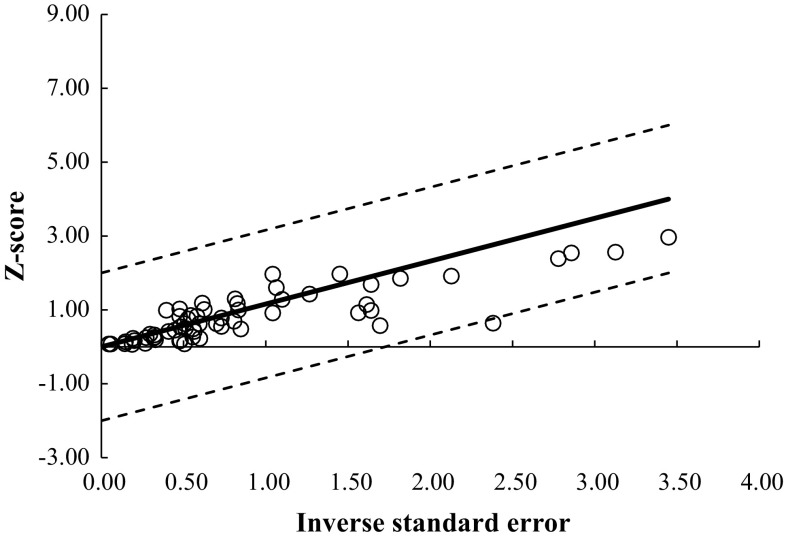
“Removal of Reid [ 24 ] data reduced the impact of the weekly number of sets on strength gain (Table 3 ).”
What the sources say
- Not checked yetcites [24] Reid CM. Weight training and strength, cardiorespiratory functioning and body composition of men. Br J Sports Med. 1987;21:40–4. source
plainstates a cause- Asserted: passes — The authors put it forward as true.
- Checkable: passes — It can be checked against evidence.
- Load-bearing: unclear — It is unclear whether the paper’s conclusions depend on it.
- Based: passes — The paper gives a reason why it holds.
A result the paper reports from its own data — it cites no other source for it, so there is none to check. The quote shows it is in the paper.
In the paper
“Pre- to post-intervention strength gain was marginally greater with MWS compared with LWS (ES difference = 0.15).”
plain- Asserted: passes — The authors put it forward as true.
- Checkable: passes — It can be checked against evidence.
- Load-bearing: passes — The paper’s conclusions depend on it.
- Based: passes — The paper gives a reason why it holds.
- Rests on an assumption not shown here.
In the paper
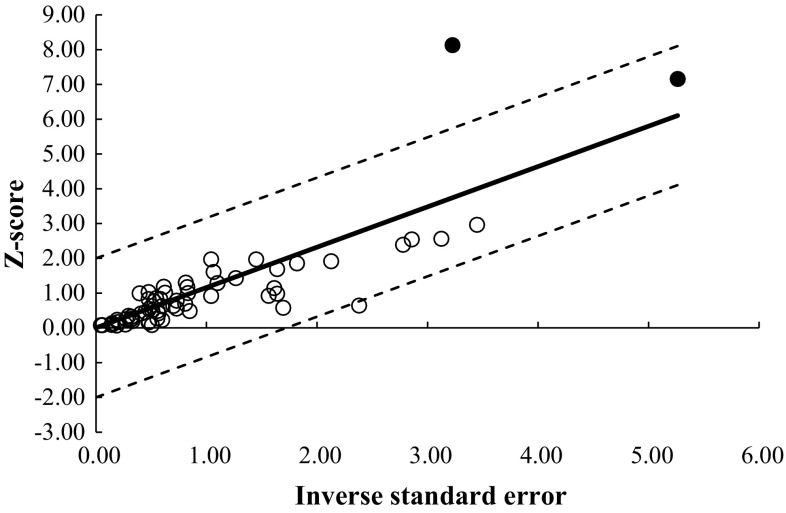
“Examination Galbraith plots revealed that Reid [ 24 ] elbow extension and shoulder flexion data were influential (Fig. 3 ).”
What the sources say
- Not checked yetcites [24] Reid CM. Weight training and strength, cardiorespiratory functioning and body composition of men. Br J Sports Med. 1987;21:40–4. source
plainstates an association- Asserted: passes — The authors put it forward as true.
- Checkable: passes — It can be checked against evidence.
- Load-bearing: passes — The paper’s conclusions depend on it.
- Based: passes — The paper gives a reason why it holds.
A result the paper reports from its own data — it cites no other source for it, so there is none to check. The quote shows it is in the paper.
In the paper
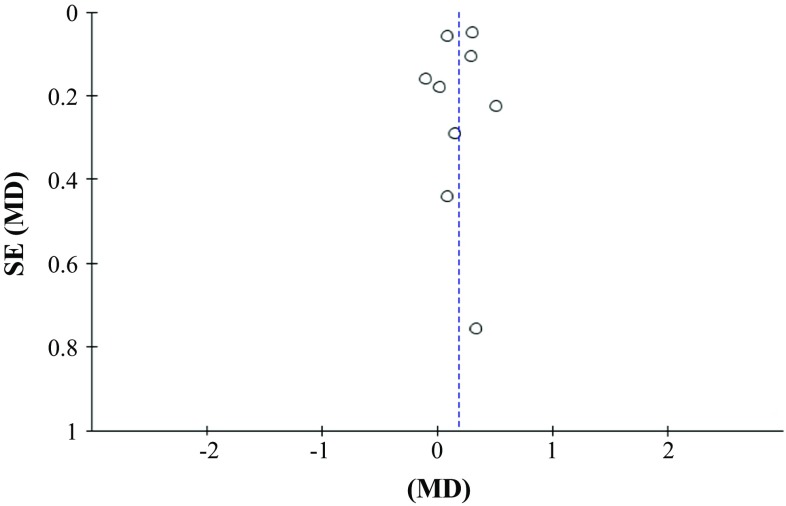
“The shape of the funnel plot did not reveal any evidence of obvious asymmetry (Fig. 4 ).”
plain- Asserted: passes — The authors put it forward as true.
- Checkable: passes — It can be checked against evidence.
- Load-bearing: unclear — It is unclear whether the paper’s conclusions depend on it.
- Based: passes — The paper gives a reason why it holds.
A result the paper reports from its own data — it cites no other source for it, so there is none to check. The quote shows it is in the paper.
In the paper
“Pre- to post-intervention strength gain was greater with HWS compared with LWS (ES difference 0.19).”
plainstates a cause- Asserted: passes — The authors put it forward as true.
- Checkable: passes — It can be checked against evidence.
- Load-bearing: passes — The paper’s conclusions depend on it.
- Based: passes — The paper gives a reason why it holds.
- Rests on an assumption not shown here.
50 more claims
Create a free account to see all 110 claims and to verify the 87 references still open.
- Probably not a substantial claim. 44
- It may state two separate claims as one. 24
- The quote only partly states this claim. 3
Claims other papers make about this one
Each is checked against this paper’s own text: does it say what the citing paper says it does?
The source backs part of the claim, not all of it — or backs it for a different population, condition or comparison.
In the citing paper
“Clearly, one set is superior to zero sets (CTRL), and two sets are superior to one set (17,24,88–93,128,131–133), but the exact number of sets required to optimize adaptations cannot be ascertained.”
From American College of Sports Medicine Position Stand. Resistance Training Prescription for Muscle Function, Hypertrophy, and Physical Performance in Healthy Adults: An Overview of Reviews (2026) · cites this paper as [89]
Experimental — accuracy not yet measuredThe source backs part of the claim, not all of it — or backs it for a different population, condition or comparison.
In the citing paper
“It seems that one weekly RT session is sufficient to induce strength gains in RT beginners with < 3 sets and loads below 50% of one-repetition maximum (1RM).”
From Minimalist Training: Is Lower Dosage or Intensity Resistance Training Effective to Improve Physical Fitness? A Narrative Review (2024) · cites this paper as [62]
Experimental — accuracy not yet measuredThe cited source says what the claim attributes to it.
In the citing paper
“However, voluntary strength was enhanced by lifting heavier loads (≥80% one-repetition maximum), through a complete range of motion, for 2–3 sets, at the beginning of training sessions, and ≥2 sessions/wk.”
The cited source says what the claim attributes to it.
In the citing paper
“Increasing the number of sets (volume) per exercise positively impacted strength (88–93) and hypertrophy (24,128,131–133), which aligns with a recent analysis by Swinton et al. (184).”
Self-check
Percentages, sums and reported differences re-computed from the paper’s own numbers.
Each contradiction between two passages listed here was confirmed by an independent check.
Rated minor: it would not touch a result — a value no result rests on, a p-value that stays on the same side of the significance level, or a conflict that is clerical, resolved elsewhere in the paper, or outside its own findings.
In the paper
“Examination of HWS pre- to post-intervention strength differences was not feasible due to limited study data.”
“The mean ES for HWS was 1.10 (95% CI 0.26–1.94).”
Rated minor: it would not touch a result — a value no result rests on, a p-value that stays on the same side of the significance level, or a conflict that is clerical, resolved elsewhere in the paper, or outside its own findings.
In the paper
“Outcomes for weekly sets categorised as LWS or MWS for isolation exercises are shown in the forest plot in Fig. 8 .”
“Pre- to post-intervention strength gain was greater with HWS compared with LWS (ES difference 0.15). The mean ES for LWS was 0.95 (95% CI 0.30–1.60). The mean ES for HWS was 1.10 (95% CI 0.26–1.94).”
Citations
Cites
Statistical Power Analysis for the Behavioral Sciences
Muller, K. (1989) · Technometrics · doi:10.1080/00401706.1989.10488618 · Cited by 99,167
Statistical power analysis for the behavioral sciences
(1990) · Computers, Environment and Urban Systems · doi:10.1016/0198-9715(90)90050-4 · Cited by 65,269
Meta-analysis in clinical trials
DerSimonian, R., & Laird, N. (1986) · Controlled Clinical Trials · doi:10.1016/0197-2456(86)90046-2 · Cited by 39,552 · cited 1×
“The analysis of ES was conducted with a random-effects model estimated using the DerSimonian and Laird method [16].”
MethodGarber, C. E., Blissmer, B., Deschenes, M. R., Franklin, B. A., Lamonte, M. J., Lee, I.-M., Nieman, D. C., & Swain, D. P. (2011) · Medicine & Science in Sports & Exercise · doi:10.1249/mss.0b013e318213fefb · Cited by 9,319 · cited 5×
“[10] cited four meta-analytical studies that contain contradicting recommendations [6–9].”
BackgroundInfluentialThe combination of estimates from different experiments
Cochran, W. G. (1954) · Biometrics · doi:10.2307/3001666 · Cited by 5,380
Progression Models in Resistance Training for Healthy Adults
(2009) · Medicine & Science in Sports & Exercise · doi:10.1249/mss.0b013e3181915670 · Cited by 4,332
Progression Models in Resistance Training for Healthy Adults
(2002) · Medicine and Science in Sports and Exercise · doi:10.1097/00005768-200202000-00027 · Cited by 2,979
A comparison of methods to detect publication bias in meta‐analysis
Macaskill, P., Walter, S. D., & Irwig, L. (2001) · Statistics in Medicine · doi:10.1002/sim.698 · Cited by 1,286
A Meta-analysis to Determine the Dose Response for Strength Development
RHEA, M. R., ALVAR, B. A., BURKETT, L. N., & BALL, S. D. (2003) · Medicine & Science in Sports & Exercise · doi:10.1249/01.mss.0000053727.63505.d4 · Cited by 666 · cited 6×
“[6] meta-analysis due to the inclusion of the Rhea et al.”
BackgroundMethodInfluentialAbe, T., DeHoyos, D. V., Pollock, M. L., & Garzarella, L. (2000) · European Journal of Applied Physiology and Occupational Physiology · doi:10.1007/s004210050027 · Cited by 523 · cited 1×
“Previous studies found similarities in relative strength and size changes after RT [34, 40].”
Result
Research works printed but not linked: 2
- Paulsen G, Myklestad D, Raastad T. The influence of volume of exercise on early adaptations to strength training. J Strength Cond Res. 2003;17(1):115–20.
- Chorney K, Bourgeois J. Gender differences in skeletal muscle histology and ultrastructure. In: Tarnopolsky MA, editor. Gender differences in metabolism. New York: CRC Press; 1999. p. 37–59.
Cited by
Items 101–200 of 218
A Comparison Between Total Body and Split Routine Resistance Training Programs in Trained Men
Bartolomei, S., Nigro, F., Lanzoni, I. M., Masina, F., Michele, R. D., & Hoffman, J. R. (2020) · The Journal of Strength and Conditioning Research · doi:10.1519/jsc.0000000000003573 · Cited by 18
“Training volume, and not training frequency, has been reported to be a more important factor contributing to increases in muscular strength (28).”
BackgroundChen, L. W., Glinsky, J. V., Islam, M. S., Hossain, M., Boswell‐Ruys, C. L., Kataria, C., Redhead, J., Xiong, Y., Gollan, E. J., Costa, P. D., et al. (2020) · Spinal Cord · doi:10.1038/s41393-020-0439-1 · Cited by 13
Enes, A. A. N., Oneda, G., Leonel, D. F., Lemos, L., Alves, F., Ferreira, L. H. B., Escalante, G., Schoenfeld, B. J., & de Souza, T. P. (2024) · European Journal of Sport Science · doi:10.1002/ejsc.12042 · Cited by 12
“Furthermore, training volume could be a confounding variable regarding muscular adaptations (Baz ‐ Valle et al., 2022; Ralston et al., 2017).”
BackgroundGrgić, J. (2022) · European Journal of Sport Science · doi:10.1080/17461391.2022.2033851 · Cited by 23
Buckinx, F., Croisier, J., Charles, A., Pétermans, J., Reginster, J., Rygaert, X., & Bruyère, O. (2019) · PubMed Central · Cited by 16
Strength and Conditioning for Volleyball: A Review
Rebelo, A., Valente‐dos‐Santos, J., Pires, I. G., Arrais, I., Pereira, J. R., & Turner, A. N. (2025) · Strength and conditioning journal · doi:10.1519/ssc.0000000000000895 · Cited by 21
Effects of training frequency on muscular strength for trained men under volume matched conditions
Johnsen, E., & van den Tillaar, R. (2021) · PeerJ · doi:10.7717/peerj.10781 · Cited by 15
“Manipulations to training intensity and volume have received most of the attention but training frequency has largely been overlooked (Grgic et al., 2018; Ralston et al., 2017).”
BackgroundHollingsworth, J. C., Young, K. C., Abdullah, S. F., Wadsworth, D. D., Abukhader, A., Elfenbein, B., & Holley, Z. (2020) · BMC Public Health · doi:10.1186/s12889-020-09355-4 · Cited by 15
Barsuhn, A., Wadhi, T., Murphy, A., Zazzo, S., Thompson, B., Barakat, C., Bradshaw, J. T., Walters, J., Andersen, J. C., Schoenfeld, B. J., et al. (2024) · Journal of Applied Physiology · doi:10.1152/japplphysiol.00476.2024 · Cited by 12
Cunha, P. M., Ribeiro, A. S., Padilha, C. S., Nunes, J. P., Schoenfeld, B. J., Cyrino, L. T., Tomeleri, C. M., Nascimento, M. A., Antunes, M., Fernandes, R. R., et al. (2020) · The Journal of Strength and Conditioning Research · doi:10.1519/jsc.0000000000003602 · Cited by 12
“The number of sets of an RT program has an important effect on the physiological adaptations occurring because of RT performance, with several studies showing a dose-response relationship between the number of sets and muscular adaptations (5,15,26,31).”
BackgroundRäntilä, A., Ahtiainen, J. P., & Häkkinen, K. (2023) · Journal of Sports Science and Medicine · doi:10.52082/jssm.2023.559 · Cited by 13
CORRÊA, D. A., BRIGATTO, F. A., BRAZ, T. V., CARMARGO, J. B. D., AOKI, M. S., MARCHETTI, P. H., & LOPES, C. R. (2022) · The Journal of Sports Medicine and Physical Fitness · doi:10.23736/s0022-4707.21.12118-8 · Cited by 11
Kassiano, W., Costa, M. D. C., Fonseca, F. D. S., de Lima-Júnior, D. R. A. A., Costa, B. D. D. V., & Fortes, L. D. S. (2021) · International Journal of Sports Medicine · doi:10.1055/a-1518-7537 · Cited by 10
“Regarding RT volume, different systematic reviews with metaanalysis have suggested that higher training dose may induce significant neuromuscular adaptations and performance improvements in young and older adults [9, 10].”
BackgroundJanicijevic, D. N., Miras‐Moreno, S., Morenas‐Aguilar, M. D., Moraga-Maureira, E., Weakley, J. J. S., & García‐Ramos, A. (2023) · Journal of Sports Sciences · doi:10.1080/02640414.2024.2317644 · Cited by 9
“Research has demonstrated that higher training volumes are generally associated with greater gains in muscle mass and strength (Ralston et al., 2017; B. Schoenfeld et al., 2017).”
Backgroundde Oliveira, N. T., López, P., Severo-Silveira, L., Almeida, G. P. L., & Baroni, B. M. (2023) · Physical Therapy in Sport · doi:10.1016/j.ptsp.2023.07.006 · Cited by 12
Igarashi, Y. (2022) · The Journal of Strength and Conditioning Research · doi:10.1519/jsc.0000000000004236 · Cited by 10
“Latest evidence from systematic reviews and meta-analyses suggests that RT with numerous sets at a high frequency produces increased muscle strength (23), regular RT with a heavy load produces increased maximum strength (27), and RT with a range of loads (light to heavy) produces equivalent muscle hypertrophy (27).”
BackgroundTeixeira, C. V. L. S., Pereira, E. F. M., Evangelista, A. L., Lopes, C. R., Júnior, D. P. G., Schoenfeld, B. J., & Bocalini, D. S. (2018) · Motriz Revista de Educação Física · doi:10.1590/s1980-6574201800020011 · Cited by 10
Impact of low-volume concurrent strength training distribution on muscular adaptation
Kilen, A., Bay, J., Bejder, J., Andersen, A. B., Bonne, T. C., Larsen, P. D., Carlsen, A., Egelund, J., Nybo, L., Mackey, A. L., et al. (2020) · Journal of science and medicine in sport · doi:10.1016/j.jsams.2020.03.013 · Cited by 8
Gomes, M., Fitas, A., Santos, P., Pezarat‐Correia, P., & Mendonça, G. V. (2025) · Journal of Sports Sciences · doi:10.1080/02640414.2025.2518827 · Cited by 8
“This aligns with the greatest dose-response for strength gains in trained individuals (Ralston et al., 2017; Swinton et al., 2024; Tan, 1999).”
Franke, R. D. A., Rodrigues, R., López, P., Nakamura, F. Y., & Baroni, B. M. (2025) · The Journal of Strength and Conditioning Research · doi:10.1519/jsc.0000000000005184 · Cited by 8
Park, J. H., Lim, N.-K., & Park, H. (2022) · International Journal of Environmental Research and Public Health · doi:10.3390/ijerph19042350 · Cited by 6
“Given that a recent meta-analysis reported a dose–response relationship between training volume and muscular fitness gains [32,33], these differences in the frequency and training period of RT likely explain the significant difference in the risk of NAFLD between the groups (Low-PA+RT vs.”
BackgroundChen, B.-Y., Chen, W.-H., Liu, Y., Fiolo, N. J., Fuchs, P. X., Huang, C., & Shiang, T.-Y. (2024) · International Journal of Sports Science & Coaching · doi:10.1177/17479541241244581 · Cited by 6
Zubčić, D., & Vučetić, V. (2022) · Kinesiology · doi:10.26582/k.54.1.14 · Cited by 5
“All components of the training process are based on findings from the studies conducted so far (ACSM, 2009; Peterson, Rhea, & Alvar, 2004; Ralston, Kilgore, Wyatt, & Baker, 2017; Rhea, Alvar, Burkett, & Ball, 2003; Wirth, Keiner, Hart-mann, & Sander, 2016).”
Rappelt, L., Micke, F., Held, S., Dörmann, U., Kleinöder, H., & Donath, L. (2023) · Journal of Sports Science and Medicine · doi:10.52082/jssm.2023.226 · Cited by 5
“…strength gain exists and especially in well-trained individuals a higher training volume is necessary to induce further gains in maximal strength (Ralston et al., 2017), the total training volume per muscle group in our study may be considered too low (~28.1 - 62.5% of the volume employed by…”
BackgroundMethodInfluentialCrawley, K., Adams, K. J., DeBeliso, M., & Lawrence, M. M. (2023) · The Journal of Strength and Conditioning Research · doi:10.1519/jsc.0000000000004592 · Cited by 6
“In the most recent meta-analysis on this topic that included 9 high-quality RT studies on males alone, Ralston et al. (23) found that medium (5 – 9 sets) and high ( $ 10 sets) weekly training sets per exercise were better for improvements in strength than low ( # 5 sets) weekly training sets per…”
BackgroundThe Effect of Time-Equated Concurrent Training Programs in Resistance-Trained Men
Dolan, C., Quiles, J. M., Goldsmith, J. A., Mendez, K. M., Klemp, A., Robinson, Z. P., Pelland, J. C., Coccia, C. C., & Zourdos, M. C. (2024) · Journal of Human Kinetics · doi:10.5114/jhk/185637 · Cited by 7
“Further, if circuit RT replaced the traditionally used modes of AT during CT, total RT volume would increase, which has a positive relationship with both hypertrophy (Schoenfeld et al., 2017a) and strength (Ralston et al., 2017).”
BackgroundMethodEvidenz von Trainingsempfehlungen für ein Hypertrophietraining
Gavanda, S., & Isenmann, E. (2021) · B&G Bewegungstherapie und Gesundheitssport · doi:10.1055/a-1382-2776 · Cited by 6
“Für Krafttraining im Allgemeinen werden für Anfänger 5–9 und für Fortgeschrittene>10 Sätze /Woche /Muskel empfohlen [11].”
BackgroundOrsatti, F. L., Nunes, P. R. P., Carneiro, M. A. S., Orsatti, C. L., & Souza, M. V. C. (2022) · Experimental Gerontology · doi:10.1016/j.exger.2022.111807 · Cited by 10
Steele, J., Fisher, J. P., Gießing, J., Androulakis‐Korakakis, P., Wolf, M., Kroeske, B., & Reuters, R. (2021) · doi:10.31236/osf.io/eq485 · Cited by 5
Pina, F. L. C., Nunes, J. P., Ribeiro, A. S., do Nascimento, M. A., Cyrino, L. T., Carneiro, N. H., Venturini, D., Barbosa, D. S., Mayhew, J. L., & Cyrino, E. S. (2020) · The Journal of Sports Medicine and Physical Fitness · doi:10.23736/s0022-4707.20.10315-3 · Cited by 6
Effects of Different Weekly Set Volumes on Strength and Perceptual Responses in Athletes
Enes, A. A. N., Spiess, B., Oneda, G., Leonel, D. F., Bernardo, M. F., Macedo, A. C. G., Alves, R. C., Souza, E. O. D., & de Souza, T. P. (2024) · International Journal of Sports Medicine · doi:10.1055/a-2312-5103 · Cited by 6
“Among these, training volume, herein defined as the weekly set number performed for a mus - cle group, seems to be a relevant variable for increasing muscle strength in trained individuals [3–5].”
BackgroundEffect of high-volume cluster sets versus lower-volume traditional sets on muscular performance
DAVIES, T. B., ANDERSEN, J. T., Halaki, M., Orr, R., & Hackett, D. A. (2022) · The Journal of Sports Medicine and Physical Fitness · doi:10.23736/s0022-4707.22.12994-4 · Cited by 7
Neuroprotective effects of strength training in a neuroinflammatory animal model
de Gregório, E., Gomes, G. C. M., Somensi, L. B., Freire, C. G., Lopes, L. F., Lima, K. R., Carrazoni, G. S., das Neves, B.-H. S., Picua, S. S., da Silva, L. M., et al. (2022) · BMC Neuroscience · doi:10.1186/s12868-022-00708-w · Cited by 5
Stahl, R. A., & Eckenrode, B. J. (2020) · International Journal of Sports Physical Therapy · doi:10.26603/ijspt20201211 · Cited by 4
Refsnes, P. E., Medbø, J. I., Jakobsen, V. E., Vilberg, A., & Vikne, H. (2025) · European Journal of Applied Physiology · doi:10.1007/s00421-025-05828-9 · Cited by 5
“Throughout the 12 weeks, all groups performed five sets of four repetitions per session to ensure sufficient training volume for strength development (Ralston et al. 2017).”
Mang, Z. A., Beam, J. R., & Kravitz, L. R. (2025) · The Journal of Strength and Conditioning Research · doi:10.1519/jsc.0000000000005246 · Cited by 4
Amdi, C. H., Spence, A., Helms, E. R., & McGuigan, M. R. (2025) · The Journal of Strength and Conditioning Research · doi:10.1519/jsc.0000000000005261 · Cited by 5
Ramos‐Campo, D. J., Benito-Peinado, P. J., Andreu‐Caravaca, L., Rojo‐Tirado, M. Á., & Rubio‐Arias, J. Á. (2024) · The Journal of Strength and Conditioning Research · doi:10.1519/jsc.0000000000004774 · Cited by 8
“This suggests a dose-response relationship between resistance training volume and muscular strength adaptations, as previously noted (26).”
ResultFiroozi, H., Arazi, H., & Asadi, A. (2020) · Biomedical Human Kinetics · doi:10.2478/bhk-2020-0019 · Cited by 3
“In general, RT programs for enhancing muscle hypertrophy are performed with a high volume of work per muscle group in a session [1, 7]; however, others suggest that split routine training per muscle group allows greater recovery between sessions and helps to increase muscle size [13, 14, 20, 21].”
BackgroundPulgar, V. V., Reyes, P. V., Carrasco, F. R., Navarrete, C. J. O., & Claudia, N.-H. (2020) · Retos · doi:10.47197/retos.v0i39.75645 · Cited by 6
“…en las primeras etapas del entrenamiento median- te la aplicación de ejercicios multiarticulares cuando se emplean medios y altos volúmenes semanales» (Ralston et al., 2017), esto es reafirmado por el autor Grgic, Schoenfeld, Davies, Lazinica, Krieger & Pedisic, (2018) al no encontrar efectos…”
BackgroundA Description of Exercise Programs Implemented During a Firefighter Training Academy
Mang, Z. A., Beam, J. R., Vigil, E. D., & Martinez, A. H. (2023) · Journal of Occupational and Environmental Medicine · doi:10.1097/jom.0000000000003030 · Cited by 5
Kassiano, W., Medeiros, A. I. A., Costa, B. D. D. V., Andrade, A. D., Simim, M. A. D. M., Fortes, L. D. S., Cyrino, E. S., & Assumpção, C. D. O. (2020) · The Journal of Sports Medicine and Physical Fitness · doi:10.23736/s0022-4707.20.10612-1 · Cited by 4
Cantwell, C. J., Schroeder, Z. S., Marshall-Ciochon, L. K., Campbell, B. A., Taber, C. B., & Suchomel, T. J. (2025) · The Journal of Strength and Conditioning Research · doi:10.1519/jsc.0000000000005282 · Cited by 2
Cowley, N., Nicholson, V., Timmins, R. G., Munteanu, G., & Weakley, J. J. S. (2026) · Sports Medicine · doi:10.1007/s40279-026-02428-1 · Cited by 5
“Therefore, the estimated differences between potentiation complexes and dropsets may be due to greater training volume load and overall stimulus [101, 102, 105].”
InfluentialImpact of Prior Fatigue on Velocity Loss as a Set-Termination Criterion in the Bench Press Exercise
Rodiles-Guerrero, L., Mena, B. B., & Sánchez‐Moreno, M. (2026) · Journal of Human Kinetics · doi:10.5114/jhk/214212 · Cited by 3
“Research indicates that multiple sets yield greater strength gains compared to a single set (Peterson et al., 2004; Ralston et al., 2017).”
Effect of Protein and Carbohydrate Combined with Resistance Training on Muscular Adaptation
Santos, P. C., Libardi, C. A., Nóbrega, S. R., de Carvalho, M. B., Galán, B. S. M., & de Freitas, E. C. (2020) · International Journal of Sports Medicine · doi:10.1055/a-1263-1185 · Cited by 4
“Current literature suggests that TTV has an important role in muscle strength and hypertrophy [25, 26].”
BackgroundMadsen, M. N., Mikkelsen, L. R., Rathleff, M. S., Thorborg, K., Kallemose, T., & Bandholm, T. (2024) · BMC Musculoskeletal Disorders · doi:10.1186/s12891-024-08057-x · Cited by 4
“Based on these studies in healthy subjects (Borde et al. 2015; Ralston et al. 2017), a dose-response relationship could have been expected, although exercise responses may differ between healthy adults and adults with”
InfluentialManaging Fatigue in Team Sports: A Brief Review of Concurrent Training Effects Within the Microcycle
Γραμμένου, Μ., & Nulty, C. D. (2025) · Strength and conditioning journal · doi:10.1519/ssc.0000000000000903 · Cited by 2
Kassiano, W., Assumpção, C. D. O., Cunha, U., de Jesus, K., Simim, M. A. D. M., & Medeiros, A. I. A. (2020) · Brazilian Journal of Kinanthropometry and Human Performance · doi:10.1590/1980-0037.2020v22e63257 · Cited by 2
Conceição, M. S., Derchain, S., VECHIN, F. C., Telles, G. D., MAGINADOR, G. F., Sarian, L. O., Libardi, C. A., & Ugrinowitsch, C. (2021) · Frontiers in Physiology · doi:10.3389/fphys.2021.655955 · Cited by 2
“These findings show that performing more than the recommended weekly sets (Schoenfeld et al., 2016; Ralston et al., 2017) may be beneficial for cancer patients who exercise regularly and are in good physical condition.”
BackgroundBrigatto, F. A., de Camargo, J. B. B., Machado, Y. B., Germano, M. D., Aoki, M. S., Braz, T. V., & Lopes, C. R. (2022) · International Journal of Strength and Conditioning · doi:10.47206/ijsc.v2i1.96 · Cited by 5
Gavanda, S., Eisenkolb, M., Held, S., Geisler, S., & Gehlert, S. (2024) · Translational Exercise Biomedicine · doi:10.1515/teb-2024-0015 · Cited by 1
“…and the training volume (total repetitions and sets per week) likely were chosen adequately based on results of previous studies [20, 24, 30, 54, 55], the lack of progression (volume or intensity) [24 – 26], the absence of muscular failure, and the participants ’ training level may have…”
Mochizuki, Y., Naito, T., Kikuchi, S., Homma, H., de Almeida, K. Y., & Kikuchi, N. (2024) · Isokinetics and Exercise Science · doi:10.3233/ies-240013 · Cited by 1
“The response to resistance training, such as muscle strength, power, and hypertrophy, is known to be influ-enced by training volume [1,2].”
Griest, T. D., McCarthy, C. M., Rentería, L. I., et al. (2025) · The Journal of Strength and Conditioning Research · doi:10.1519/jsc.0000000000005085 · Cited by 1
“Practically, perceiving repetitions performed at the same absolute intensity to be less challenging may result in selection of higher loads and/or greater number of repetitions performed during training sessions, thereby stimulating greater adaptations (26).”
The effect of physical training on hitting performance in sport: A systematic review
Brazier, T. A., Woodhead, A., Altai, Z., Ahmun, R., Callaghan, S., Howe, L., & Tallent, J. (2025) · International Journal of Sports Science & Coaching · doi:10.1177/17479541251397649 · Cited by 3
Pancar, Z., Ilhan, M.-J., Karaday, E., Karaca, B., Mainer-Pardos, E., Praça, G. M., Carneiro, L. S. R. D. S. F., & Nobarı, H. (2026) · BMC Sports Science Medicine and Rehabilitation · doi:10.1186/s13102-026-01598-9 · Cited by 2
“Therefore, these mechanisms should be interpreted as potential contributors rather than definitive explanations, particularly in applied resistance exercises such as the half-squat [25, 26].”
Catanho, F. (2019) · Revista Brasileira de Nutrição Funcional · doi:10.32809/2176-4522.44.79.05 · Cited by 2
de Freitas, M. C., Panissa, V. L. G., Cholewa, J. M., Franchini, É., Gobbo, L. A., & Rossi, F. E. (2020) · The Journal of Sports Medicine and Physical Fitness · doi:10.23736/s0022-4707.20.10227-5 · Cited by 1
Ribeiro, A. S., Belo, T., do Nascimento, M. A., Kassiano, W., Aguiar, A. F., & Mayhew, J. L. (2023) · Journal of Science in Sport and Exercise · doi:10.1007/s42978-023-00236-x · Cited by 1
“Among the training variables, volume plays an important role in promoting muscular adaptations [15, 18, 19].”
Räntilä, A., Ahtiainen, J. P., & Häkkinen, K. (2023) · Journal of Sports Science and Medicine · doi:10.52082/jssm.2023.558 · Cited by 1
Muscle Mass Is Associated with Depression in Adolescents and Young Adults
Fang, Z., Zhang, X., Wei, J., Li, Y., Huang, G., Wei, Y., Zhao, Y., Pan, Y., Su, Y., Guo, L., et al. (2024) · Journal of Biosciences and Medicines · doi:10.4236/jbm.2024.123012 · Cited by 1
Papst, R. R., Ribeiro, A. S., & Polito, M. D. (2024) · Science & Sports · doi:10.1016/j.scispo.2023.07.003 · Cited by 2
The minimum effective training dose required to increase 1RM strength in powerliftersPreprint
Androulakis‐Korakakis, P., Michalopoulos, N., Fisher, J. P., Keogh, J., Loenneke, J. P., Helms, E. R., Wolf, M., Nuckols, G. L., & Steele, J. (2021) · SportRxiv (OSF Preprints) · doi:10.31236/osf.io/wubps · Cited by 2
Neves, R. P. (2018) · Digital Library of Theses and Dissertations (Universidade de São Paulo) · doi:10.11606/d.39.2018.tde-08052018-143220
Delevatti, R. S., Renz, M. A. R., & Silveira, L. M. P. (2019) · Saúde em Revista · doi:10.15600/2238-1244/sr.v18n49p67-76
Strengthening interventions for people after stroke
de Sousa, D. G. (2020) · The Sydney eScholarship Repository (The University of Sydney) · Cited by 1
Barbosa, P. H., Batista, D. R., Col, L. O., Dias, W. G., Rosolem, J. M., Businari, G. B., de Camargo, J. B. B., de Ornelas, F., Braz, T. V., & Lopes, C. R. (2021) · Brazilian Journal of Development · doi:10.34117/bjdv7n2-408
Kassiano, W., Costa, B. D. D. V., de Lima-Júnior, D. R. A. A., Gantois, P., Fonseca, F. D. S., & Fortes, L. D. S. (2021) · Journal of Trainology · doi:10.17338/trainology.10.2_10 · Cited by 1
Effect of Prior Information of the Number of Sets on Training Volume in Women
Almeida, L. F. V., & Ribeiro, A. S. (2021) · Journal of Health Sciences · doi:10.17921/2447-8938.2021v22n3p238-242 · Cited by 1
Silva, N. R. S. (2021) · Digital Library of Theses and Dissertations (Universidade de São Paulo) · doi:10.11606/d.109.2021.tde-05102021-095408 · Cited by 1
Cadeo, G. M. (2021) · Digital Library of Theses and Dissertations (Universidade de São Paulo) · doi:10.11606/d.109.2021.tde-12112021-150714
Effects of Press Needle Intervention on Knee Flexion and Extension Movements: A Randomized Trial
Takahashi, K., Wang, X., Shinohara, D., Imai, K., & Usui, N. (2022) · Medical Acupuncture · doi:10.1089/acu.2022.0052
“19 The knee flexion exercises in the present study were performed once per week because they were of a ‘‘very hard’’ intensity.”
Resistance Training Guidelines for Active Females Throughout the Lifespan, from Childhood to Elderly
Fernández-del-Valle, M., & Naclerio, F. (2023) · Springer eBooks · doi:10.1007/978-3-031-15485-0_26 · Cited by 1
Augustin, N. (2023) · Springer eBooks · doi:10.1007/978-3-662-66208-3_5
BOSTAN, G., & Akalan, C. (2023) · Turkiye Klinikleri Journal of Sports Sciences · doi:10.5336/sportsci.2023-96333
The efficacy of the load-velocity profile to predict one repetition maximum
Thompson, S. W. (2022) · Sheffield Hallam University · doi:10.7190/shu-thesis-00591
Ruiz‐Alias, S. A., Ramírez‐Campillo, R., Quidel-Catrilelbún, M. E. L., García‐Pinillos, F., & Pérez‐Castilla, A. (2024) · The Journal of Strength and Conditioning Research · doi:10.1519/jsc.0000000000004805 · Cited by 1
“60% of 1 repetition maximum [1RM]), respectively (20,26,27).”
ENHANCING LEG ENDURANCE USING STRENGTHENING AND AEROBIC EXERCISES
Cadiz, L. J. (2026) · International Journal of Research Publications · doi:10.2139/ssrn.4854951
Mang, Z. A., Beam, J. R., Ruch, A. R., & Martinez, A. H. (2024) · Strength and conditioning journal · doi:10.1519/ssc.0000000000000858
“between weekly set volume and hypertrophy (64) and strength (52).”
Bax, T. F., Hofstee, D. J., Keijser, L. C. M., et al. (2024) · Journal of Orthopaedics · doi:10.1016/j.jor.2024.12.024
Kurth, J. D., Sciamanna, C., Danilovich, M., Conroy, D. E., Schmitz, K. H., Silvis, M. L., Rovniak, L. S., Creath, R. A., & Karakoleva, E. V. (2025) · PLoS ONE · doi:10.1371/journal.pone.0329684
“Systematic reviews observe that the first few sets of a strength exercise each week lead to the greatest strength gains [12].”
Preferred reporting items for resistance exercise studies (PRIRES) explanation and elaboration
Lin, T., Chueh, T., & Hung, T. (2025) · Journal of Sports Sciences · doi:10.1080/02640414.2025.2578030 · Cited by 1
“…when the figures vary among different exercises —is crucial, as the influence of training volume, indexed by the total number of sets within a given timeframe, has been extensively and continuously investigated (Baz-Valle et al., 2021; Ralston et al., 2017; Schoenfeld, Ogborn, et al., 2017).”
Lin, T.-Y., Chueh, T.-Y., & Hung, T.-M. (2024) · Figshare · doi:10.6084/m9.figshare.26648538
de Gregório, E., Mendes, G. C., Somensi, L. B., Freire, C. G., Lopes, L. F., Lima, K. R., Carrazoni, G. S., Neves, B.-H. S., Picua, S. S., da Silva, L. M., et al. (2022) · Figshare · doi:10.6084/m9.figshare.19581932
Lin, T.-Y., Chueh, T.-Y., & Hung, T.-M. (2023) · Figshare · doi:10.6084/m9.figshare.24715454
Lin, T.-Y., Chueh, T.-Y., & Hung, T.-M. (2024) · Figshare · doi:10.6084/m9.figshare.24715567
Lin, T.-Y., Chueh, T.-Y., & Hung, T.-M. (2024) · Figshare · doi:10.6084/m9.figshare.26648529
Lin, T.-Y., Chueh, T.-Y., & Hung, T.-M. (2024) · Figshare · doi:10.6084/m9.figshare.26648532
Lin, T.-Y., Chueh, T.-Y., & Hung, T.-M. (2024) · Figshare · doi:10.6084/m9.figshare.26648535
de Gregório, E., Mendes, G. C., Somensi, L. B., Freire, C. G., Lopes, L. F., Lima, K. R., Carrazoni, G. S., Neves, B.-H. S., Picua, S. S., da Silva, L. M., et al. (2022) · Figshare · doi:10.6084/m9.figshare.19581935
Lin, T.-Y., Chueh, T.-Y., & Hung, T.-M. (2024) · Figshare · doi:10.6084/m9.figshare.26648526
Metadata
- Authors
- Ralston, G. W., Kilgore, L., Wyatt, F. B., & Baker, J. S.
- Affiliations
- University of the West of Scotland (GB)
- Kilgore College (US)
- Midwestern State University (US)
- Corresponding author
- Ralston, Grant W.
- Venue
- Sports Medicine
- Published
- 2017-07-28
- Volume
- 47
- Issue
- 12
- Pages
- 2585-2601
- ISSN
- 0112-1642 (ISSN-L)
- 1179-2035
- PMC
- PMC5684266
- OpenAlex
- W2740008011
- Cited by
- 221
- References
- 46
- Citations by year
- 2026: 20 · 2025: 15 · 2024: 28 · 2023: 25 · 2022: 32 · 2021: 28 · 2020: 26 · 2019: 24 · 2018: 21 · 2017: 2
- FWCI
- 3.59
- Type
- journal article
- Language
- en
- Open access
- hybrid
- doi.org
- Locations
- Sports Medicine (publishedVersion, cc-by)
- PubMed Central (publishedVersion, cc-by)
- PubMed (publishedVersion)
- The UWS Academic Portal (University of the West of Scotland) (publishedVersion, other-oa)
- Topics
- Health Sciences › Medicine › Orthopedics and Sports Medicine › Sports Performance and Training
- Health Sciences › Medicine › Physiology (medical) › Cardiovascular and exercise physiology
- Health Sciences › Nursing › Nutrition and Dietetics › Muscle metabolism and nutrition
- Keywords
- resistance training, multiple sets, multi-joint exercises, training stages, strength adaptation, exercise intensity, training duration, exercise progression, training stress
- MeSH terms
- Hamstring Muscles, Adolescent, Adult, Humans, Male, Middle Aged, Exercise, Muscle, Skeletal, Muscle Strength, Resistance Training, Young Adult
About these checks
Registry, retraction, Cites and statistics results are computed, not judged, with one exception: a printed reference that no index lists is read once by a model before it counts as a citation error. Claims are extracted by a model and kept only when their quote appears verbatim in the text; each cited source is then checked, with a model’s help, for whether it says what the claim relies on. Those verdicts can be wrong — read the claim’s quote and the cited source before relying on one.
A language model drew the claims from the paper on 2026-10-11, under version 3 of the claim definition (model deepseek-v4.1-flash, prompt extract-v3).
A second model labelled each claim on 2026-10-11 (model jev-1.13-20260917, definition revision gold-guideline-v0.2).
Statistics and arithmetic are recomputed, not judged.
Confidence bands are shown only for fields calibrated on our annotated test set. None is calibrated yet, so no band is shown.
What counts as a claim ›How we measure confidence ›How we check this ›
Are you an author, or do you see a problem with this page? Request a review
Data sources
Bibliographic data: Semantic Scholar, OpenAlex, Crossref.
Contains information from the Semantic Scholar Academic Graph Datasets, made available under the ODC Attribution License (ODC-BY 1.0).
Semantic Scholar’s data is described in: Kinney, R., et al. (2023). The Semantic Scholar Open Data Platform. arXiv:2301.10140.
