

The role of intra-session exercise sequence in the interference effect: a systematic review with meta-analysis.
Open accessThe DOI matches its Crossref record; 39 of the 39 references it cites were found in a registry or an index.
Abstract
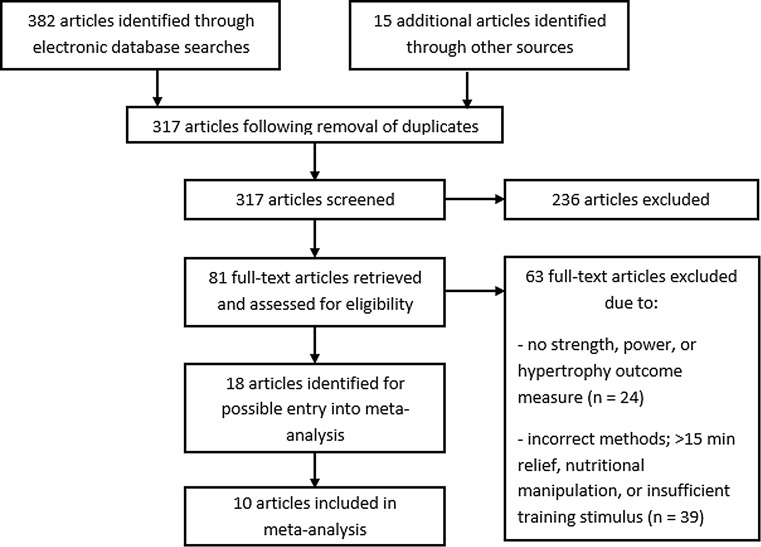
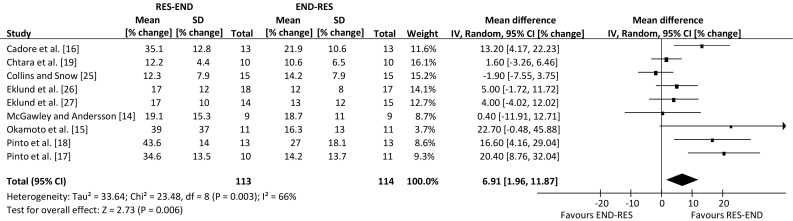
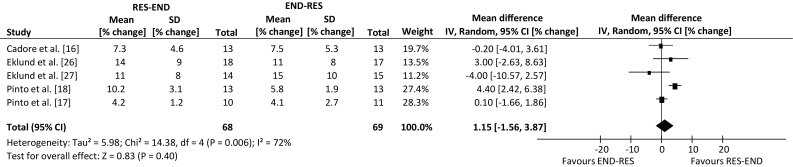
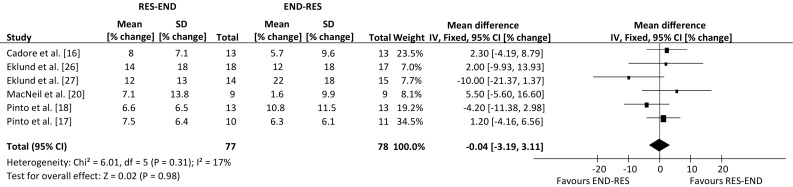
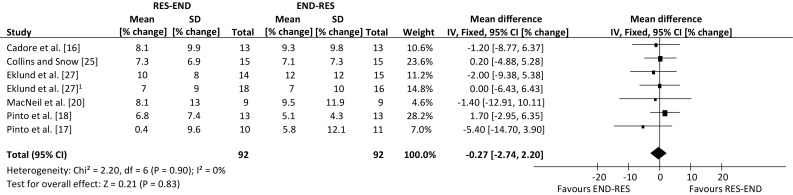
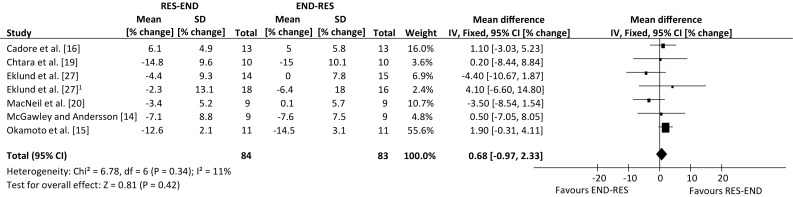
BACKGROUND: There is a necessity for numerous sports to develop strength and aerobic capacity simultaneously, placing a significant demand upon the practice of effective concurrent training methods. Concurrent training requires the athlete to perform both resistance and endurance exercise within a training plan. This training paradigm has been associated with an 'interference effect', with attenuated strength adaptation in comparison to that following isolated resistance training. The effectiveness of the training programme rests on the intricacies of manipulating acute training variables, such as exercise sequence. The research, in the most part, does not provide a clarity of message as to whether intra-session exercise sequence has the potential to exacerbate or mitigate the interference effect associated with concurrent training methods. OBJECTIVE: The aim of the systematic review and meta-analysis was to assess whether intra-session concurrent exercise sequence modifies strength-based outcomes associated with the interference effect. METHODS: Ten studies were identified from a systematic review of the literature for the outcomes of lower-body dynamic and static strength, lower-body hypertrophy, maximal aerobic capacity and body fat percentage. Each study examined the effect of intra-session exercise sequence on the specified outcomes, across a prolonged (≥5 weeks) concurrent training programme in healthy adults. RESULTS: Analysis of pooled data indicated that resistance-endurance exercise sequence had a positive effect for lower-body dynamic strength, in comparison to the alternate sequence (weighted mean difference, 6.91% change; 95% confidence interval 1.96, 11.87 change; p = 0.006), with no effect of exercise sequence for lower-body muscle hypertrophy (weighted mean difference, 1.15% change; 95% confidence interval -1.56, 3.87 change; p = 0.40), lower-body static strength (weighted mean difference, -0.04% change; 95% confidence interval -3.19, 3.11 change; p = 0.98), or the remaining outcomes of maximal aerobic capacity and body fat percentage (p > 0.05). CONCLUSION: These results indicate that the practice of concurrent training with a resistance followed by an endurance exercise order is beneficial for the outcome of lower-body dynamic strength, while alternating the order of stimuli offers no benefit for training outcomes associated with the interference effect.
Overview
The claims and statistics of this paper haven’t been checked yet.
Free: it reads the open-access text and checks the first 5 claims that cite a source we can check. Create a free account to check every claim.
Integrity signals
Registry
Cites
Statistics
Figures
Verification
Claims the paper makes
The claims and statistics of this paper haven’t been checked yet.
Free: it reads the open-access text and checks the first 5 claims that cite a source we can check. Create a free account to check every claim.
Claims other papers make about this one
Each is checked against this paper’s own text: does it say what the citing paper says it does?
The source backs part of the claim, not all of it — or backs it for a different population, condition or comparison.
In the citing paper
“However, voluntary strength was enhanced by lifting heavier loads (≥80% one-repetition maximum), through a complete range of motion, for 2–3 sets, at the beginning of training sessions, and ≥2 sessions/wk.”
From American College of Sports Medicine Position Stand. Resistance Training Prescription for Muscle Function, Hypertrophy, and Physical Performance in Healthy Adults: An Overview of Reviews (2026) · cites this paper as [94]
Experimental — accuracy not yet measured
Self-check
Percentages, sums and reported differences re-computed from the paper’s own numbers.
The self-check needs the paper’s full text.
Citations
Cites
Preferred Reporting Items for Systematic Reviews and Meta-Analyses: the PRISMA statement
Moher, D., Liberati, A., Tetzlaff, J., Altman, D. G., & for the PRISMA Group (2009) · BMJ · doi:10.1136/bmj.b2535 · Cited by 83,823
Preferred reporting items for systematic reviews and meta-analyses: the PRISMA Statement.
(2009) · PubMed Central · Cited by 44,859
The case of the misleading funnel plot
Lau, J., Ioannidis, J. P. A., Terrin, N., Schmid, C. H., & Olkin, I. (2006) · BMJ · doi:10.1136/bmj.333.7568.597 · Cited by 1,766
Standard Quality Assessment Criteria for Evaluating Primary Research Papers from a Variety of Fields
Kmet, L. M., Cook, L. S., & Lee, R. C. (2004) · University of Alberta Library · doi:10.7939/r37m04f16 · Cited by 1,682 · cited 1×
“The quantitative assessment tool ‘QualSyst’ was used to assess methodological quality [37].”
MethodInterference of strength development by simultaneously training for strength and endurance.
Hickson, R. C. (1980) · European Journal of Applied Physiology and Occupational Physiology · doi:10.1007/bf00421333 · Cited by 753 · cited 6×
“Investigations to identify mechanisms underpinning the potential interference effect followed the seminal work of Hickson [1].”
BackgroundResultInfluentialWilson, J. M., Marin, P. J., Rhea, M. R., Wilson, S. M., Loenneke, J. P., & Anderson, J. C. (2012) · Journal of Strength and Conditioning Research · doi:10.1519/jsc.0b013e31823a3e2d · Cited by 587 · cited 8×
“to interference from concurrent training methods [3], suggesting that velocity of contraction during maximal efforts”
BackgroundInfluentialNeuromuscular adaptations during concurrent strength and endurance training versus strength training
Häkkinen, K., Alen, M., Kraemer, W. J., Gorostiaga, E., Izquierdo, M., Rusko, H., Mikkola, J., Häkkinen, A., Valkeinen, H., Kaarakainen, E., et al. (2003) · European Journal of Applied Physiology · doi:10.1007/s00421-002-0751-9 · Cited by 527 · cited 2×
“The susceptibility of higher velocity actions to the interference effect has further support [6, 33].”
BackgroundNon-communicable diseases must have greater priority, says WHO
Zarocostas, J. (2009) · BMJ · doi:10.1136/bmj.b2857 · Cited by 517
Ultrasonographic assessment of human skeletal muscle size
Reeves, N. D., Maganaris, C. N., & Narici, M. V. (2004) · European Journal of Applied Physiology · doi:10.1007/s00421-003-0961-9 · Cited by 489
McCall, G. E., Byrnes, W. C., Dickinson, A., Pattany, P. M., & Fleck, S. J. (1996) · Journal of Applied Physiology · doi:10.1152/jappl.1996.81.5.2004 · Cited by 370
Cited by
Errors in search strategies used in systematic reviews and their effects on information retrieval
Salvador-Oliván, J. A., Marco-Cuenca, G., & Arquero-Avilés, R. (2019) · Journal of the Medical Library Association · doi:10.5195/jmla.2019.567 · Cited by 199
McGarty, A. M., & Melville, C. A. (2017) · Research in Developmental Disabilities · doi:10.1016/j.ridd.2017.12.007 · Cited by 168
Gäbler, M., Prieske, O., Hortobágyi, T., & Granacher, U. (2018) · Frontiers in Physiology · doi:10.3389/fphys.2018.01057 · Cited by 161
“01) in 1RM squat in athletic and non-athletic adults age 18 to 65 y (Eddens et al., 2017).”
BackgroundMethodInfluentialStone, M. H., Hornsby, W. G., Haff, G. G., Fry, A. C., Suarez, D. G., Liu, J., González‐Ravé, J. M., & Pierce, K. C. (2021) · The Journal of Strength and Conditioning Research · doi:10.1519/jsc.0000000000004050 · Cited by 173
A Brief Review on Concurrent Training: From Laboratory to the Field
Methenitis, S. (2018) · Sports · doi:10.3390/sports6040127 · Cited by 109
“However, in the majority of the above short-termed CT protocols indicating that exercise sequence is not important for the extent of training adaptations when strength training was performed prior to endurance, higher but not significant resistance training-induced adaptations were observed [31,86,88,89,92].”
BackgroundNeto, J. H. F., & Kennedy, M. D. (2019) · Sports · doi:10.3390/sports7020033 · Cited by 112
“Still, when performed in the same session, strength exercises should precede endurance ones, if the goal is strength development [48].”
BackgroundPetré, H., Hemmingsson, E., Rosdahl, H., & Psilander, N. (2021) · Sports Medicine · doi:10.1007/s40279-021-01426-9 · Cited by 71
Doma, K., Deakin, G. B., Schumann, M., & Bentley, D. J. (2019) · Sports Medicine · doi:10.1007/s40279-019-01072-2 · Cited by 80
Parental involvement in developmental disabilities across three cultures: A systematic review
Acar, S., Chen, C.-I., & Xie, H. (2021) · Research in Developmental Disabilities · doi:10.1016/j.ridd.2021.103861 · Cited by 67
Markov, A., Hauser, L., & Chaabene, H. (2023) · Sports Medicine · doi:10.1007/s40279-022-01764-2 · Cited by 66
“[117], where two studies only out of the ten included addressed older adults.”
BackgroundConcurrent Training for Sports Performance: The 2 Sides of the Medal
Berryman, N., Mujika, I., & Bosquet, L. (2019) · International Journal of Sports Physiology and Performance · doi:10.1123/ijspp.2018-0103 · Cited by 56
CURRIER, B. S., D’SOUZA, A. C., SINGH, M. A. F., LOWISZ, C. V., RAWSON, E. S., SCHOENFELD, B. J., SMITH-RYAN, A. E., STEEN, J. P., THOMAS, G. A., TRIPLETT, N. T., et al. (2026) · Medicine & Science in Sports & Exercise · doi:10.1249/mss.0000000000003897 · Cited by 105
Sutherland, L., McGarty, A. M., Melville, C. A., & Hughes-McCormack, L. A. (2021) · Journal of Intellectual Disability Research · doi:10.1111/jir.12811 · Cited by 53
“Resulting quality ratings were calculated in percentage form and were categorised as weak (<55%), moderate (55–75%) or strong (>75%) quality (Eddens et al. 2018).”
BackgroundLee, M. J. C., Ballantyne, J. K., Chagolla, J., Hopkins, W. G., Fyfe, J. J., Phillips, S. M., Bishop, D. J., & Bartlett, J. D. (2020) · PLOS ONE · doi:10.1371/journal.pone.0233134 · Cited by 46
“This conclusion was broadly supported by two recent meta-analyses [25, 26], at least for maximal dynamic strength development.”
BackgroundResultJones, T. W. A., Petersen, N., & Howatson, G. (2019) · Frontiers in Physiology · doi:10.3389/fphys.2019.00584 · Cited by 43
Self-citationShamim, B., Devlin, B. L., Timmins, R. G., Tofari, P., Lee Dow, C., Coffey, V. G., Hawley, J. A., & Camera, D. M. (2018) · Sports Medicine · doi:10.1007/s40279-018-0999-9 · Cited by 32
Benítez‐Flores, S., Medeiros, A. R., Voltarelli, F. A., Iglesias‐Soler, E., Doma, K., Simões, H. G., Rosa, T. D. S., & Boullosa, D. A. (2019) · European Journal of Applied Physiology · doi:10.1007/s00421-019-04125-6 · Cited by 38
Adami, P. E., Rocchi, J. E., Melke, N., VITO, G. D., Bernardi, M., & Macaluso, A. (2021) · European Journal of Applied Physiology · doi:10.1007/s00421-021-04858-3 · Cited by 38
Sharp, T., Grandou, C., Coutts, A. J., & Wallace, L. (2022) · Sports Medicine - Open · doi:10.1186/s40798-022-00434-x · Cited by 42
“This phenomenon describes compromised muscular fitness gains when aerobic or resistance training blocks precede each other in a single session [61].”
BackgroundMarkov, A., Chaabène, H., Hauser, L., Behm, S., Bloch, W., Puta, C., & Granacher, U. (2021) · Sports Medicine · doi:10.1007/s40279-021-01615-6 · Cited by 38
“As such, it is not always possible to follow the recommended SE-AE sequence [17, 18] in every single training session because of the training schedule or the availability of training facilities.”
BackgroundResultInfluentialBagheri, R., Kargarfard, M., Sadeghi, R., Scott, D. S., & CAMERA, D. M. (2023) · Journal of the International Society of Sports Nutrition · doi:10.1080/15502783.2023.2236053 · Cited by 39
“Based on previous reviews suggesting more beneficial lower strength adaptations [63,64], RT was performed before the ET component of the CT program in our current study.”
MethodSpiering, B. A., Clark, B. C., Schoenfeld, B. J., Foulis, S. A., & Pasiakos, S. M. (2022) · The Journal of Strength and Conditioning Research · doi:10.1519/jsc.0000000000004390 · Cited by 40
CAMERA, D. M. (2021) · Sports Medicine · doi:10.1007/s40279-021-01585-9 · Cited by 24
Training modalities for elder sarcopenic obesity: a systematic review and network meta-analysis
Qiu, H., Zheng, W., Zhou, X., Liu, Q., & Zhao, X. (2025) · Frontiers in Nutrition · doi:10.3389/fnut.2025.1537291 · Cited by 17
“Given that MCT incorporates a diverse array of components, this inherently leads to variability in the combinations and sequences of training programs (31, 103–105).”
Advanced Strength and Conditioning: An Evidence-based Approach
Turner, A. N., & Comfort, P. (2022) · Routledge eBooks · doi:10.4324/9781003044734 · Cited by 35
Mikkonen, R. S., Ihalainen, J. K., Hackney, A. C., & Häkkinen, K. (2023) · Sports Medicine · doi:10.1007/s40279-023-01955-5 · Cited by 23
“…including meta-analyses and systematic reviews that examine the influence of the sequence of concurrent strength and endurance training [14, 15], describe and analyze the “interference effect” [10, 16, 17], and assess the influence of training status on strength gains during concurrent…”
Garcia‐Lee, B., Strnadová, I., & Dowse, L. (2023) · Journal of Applied Research in Intellectual Disabilities · doi:10.1111/jar.13178 · Cited by 22
Timmins, R. G., Shamim, B., Tofari, P. J., Hickey, J. T., & Camera, D. M. (2020) · International Journal of Sports Physiology and Performance · doi:10.1123/ijspp.2019-0788 · Cited by 14
Jones, T. W. A., Eddens, L., Kupusarevic, J., Simoes, D. C. M., Furber, M., van Someren, K. A., & Howatson, G. (2021) · Scientific Reports · doi:10.1038/s41598-021-90274-8 · Cited by 16
Self-citationTaipale, R. S., Forssell, J., Ihalainen, J. K., Kyröläinen, H., & Häkkinen, K. (2020) · Frontiers in Sports and Active Living · doi:10.3389/fspor.2020.581305 · Cited by 22
“The order of exercise (strength or endurance first) does not appear to significantly affect training outcomes in all investigations (Eddens et al., 2018), however, training endurance and strength on separate days may be more effective than same-day combined training to improve endurance capacity…”
BackgroundGhodrat, L., Razeghian‐Jahromi, I., Jahromi, M. K., & Nemati, J. (2022) · European Journal of Applied Physiology · doi:10.1007/s00421-022-04980-w · Cited by 20
Hao, Y., & Razman, R. (2022) · Journal of Intellectual Disabilities · doi:10.1177/17446295221130913 · Cited by 12
“(Eddens et al., 2018).”
Concurrent Training and the Acute Interference Effect on Strength: Reviewing the Relevant Variables
Panissa, V. L. G., Greco, C. C., Ribeiro, N., Júlio, U. F., Tricoli, V., & Franchini, É. (2021) · Strength and conditioning journal · doi:10.1519/ssc.0000000000000668 · Cited by 14
“…with a minimum of 8 weeks of training and observed a difference of 3.96 kg (1 maximal repetition, only in lower-body exercises) between orders, whereas Eddens et al. (17) selected studies with a minimum of 5 weeks and showed a difference of 6.91% (lower-body dynamic strength) between orders.”
BackgroundInfluentialDelgado‐Floody, P., Soriano‐Maldonado, A., Rodríguez-Pérez, M. A., Román, P. Á. L., Martínez‐Salazar, C., Vargas, C. A., Navarrete, F. C., Jerez‐Mayorga, D., & Álvarez, C. (2021) · Frontiers in Physiology · doi:10.3389/fphys.2021.694798 · Cited by 16
Nájera-Ferrer, P., Pérez-Caballero, C., González‐Badillo, J. J., & Pareja‐Blanco, F. (2021) · International Journal of Sports Physiology and Performance · doi:10.1123/ijspp.2020-0483 · Cited by 16
Elnaggar, R. K., Ramírez‐Campillo, R., Azab, A. R., Alrawaili, S. M., Alghadier, M., Alotaibi, M., Alhowimel, A., Abdrabo, M. S., Elbanna, M. F., Aboeleneen, A. M., et al. (2024) · Children · doi:10.3390/children11020243 · Cited by 19
“However, the greater improvements in the combined PsCS–PlyoML group suggest combined physiological benefits (i.e., no interference effect) [43].”
BackgroundLi, Z., Gong, T., Ren, Z., Li, J., Zhang, Q., Zhang, J., Chen, X., & Zhou, Z. (2025) · Journal of Exercise Science & Fitness · doi:10.1016/j.jesf.2025.02.001 · Cited by 18
Maenhout, L., & Melville, C. A. (2023) · Journal of Intellectual Disability Research · doi:10.1111/jir.13095 · Cited by 15
Mathieu, B., Robineau, J., Piscione, J., & Babault, N. (2022) · Sports · doi:10.3390/sports10050075 · Cited by 18
“To mitigate these negative effects, several strategies have been implemented within concurrent training programming [12,13].”
Kayhan, R. F., Bayrakdaroğlu, S., Ceylan, H. İ., Eken, Ö., Bayrakdaroğlu, Y., Bădicu, G., Al-Mhanna, S. B., Enoiu, R. S., & Ardigò, L. P. (2024) · Journal of Men s Health · doi:10.22514/jomh.2024.064 · Cited by 13
Optimizing concurrent training programs: A review on factors that enhance muscle strength
Wang, T., & Bo, S. (2024) · Medicine · doi:10.1097/md.0000000000041055 · Cited by 11
“[36,54,73,74] This approach helps prevent overlapping activation of myofibrillar and mitochondrial protein synthesis molecules, resulting in greater physiological adaptations in both training modalities.”
Kang, J., Ye, Z., Yin, X., Zhou, C., & Gong, B. (2022) · International Journal of Environmental Research and Public Health · doi:10.3390/ijerph192214800 · Cited by 21
“Some investigators recently found that to maximize training adaptations there should be an adequate interval length between ST and ET within concurrent training; more specifically, if the aim is to maximize strength adaptations, the ST and ET bouts need to be separated by 3–6 h [11,42,43,53,55,62,63].”
BackgroundHao, Y., Zhou, X., Razman, R., Peng, S., & Ahmad, N. S. (2024) · BMC Public Health · doi:10.1186/s12889-024-19842-7 · Cited by 12
Shamim, B., Camera, D. M., & Whitfield, J. (2021) · Frontiers in Physiology · doi:10.3389/fphys.2021.625044 · Cited by 8
Li, Z., Qi, Y., Chen, X., Li, J., Zhang, J., Li, P., & Zhou, Z. (2024) · Scandinavian Journal of Medicine and Science in Sports · doi:10.1111/sms.14764 · Cited by 14
“Eddens, van Someren, and Howatson [70] and Murlasits, Kneffel, and Thalib [42] similarly suggest that positioning RT prior to ET may offer greater advantages for lower body strength adaptations compared to the reverse order.”
Gomes, M., Gonçalves, A. D., Pezarat‐Correia, P., & Mendonça, G. V. (2024) · Journal of Applied Physiology · doi:10.1152/japplphysiol.00680.2024 · Cited by 9
Concurrent Training in Children and Adolescents
Gäbler, M., & Granacher, U. (2018) · Springer eBooks · doi:10.1007/978-3-319-75547-2_17 · Cited by 7
Reljic, D., Herrmann, H. J., Neurath, M. F., & Zopf, Y. (2025) · Nutrients · doi:10.3390/nu17030561 · Cited by 11
Dalamitros, A. A., Orologas, P., Nousiou, S., Semaltianou, E., Zourladani, A., & Manou, V. (2021) · Human Movement · doi:10.5114/hm.2021.103293 · Cited by 9
“Since the training sequence is a significant parameter when designing concurrent training programs [22], rT was conducted prior to the in-water training in both LLT and HLT conditions in this study.”
MethodMartins, R. J. C., & Loureiro, N. (2023) · Sports Medicine and Health Science · doi:10.1016/j.smhs.2022.12.004 · Cited by 7
Solving the High-Intensity Multimodal Training Prescription Puzzle: A Systematic Mapping Review
(2024) · doi:10.1186/s40798-024-00747-z · Cited by 5
“This phenomenon described as the interference effect, refers to attenuated musculoskeletal adaptations when aerobic and resistance exercise blocks occur subsequently within a single session [154].”
BackgroundVelocity-Based Training for Monitoring Training Load and Assessing Training Effects
Pareja‐Blanco, F., & Loturco, I. (2021) · Lecture notes in bioengineering · doi:10.1007/978-3-030-81989-7_9 · Cited by 13
Power and Endurance: Polar Opposites or Willing Partners?
Ferguson, C., Furrer, R., Murach, K. A., Hepple, R. T., & Rossiter, H. B. (2025) · Medicine & Science in Sports & Exercise · doi:10.1249/mss.0000000000003793 · Cited by 8
“If it is not possible to separate the two training sessions, resistance preceding endurance exercise is more beneficial for strength gains (57 – 59).”
Petré, H., Ovendal, A., Westblad, N., ten Siethoff, L., Rosdahl, H. G., & Psilander, N. (2023) · The Journal of Strength and Conditioning Research · doi:10.1519/jsc.0000000000004556 · Cited by 10
Thomas, E., Scardina, A., Nakamura, M., Bellafiore, M., & Bianco, A. (2023) · The Journal of Sports Medicine and Physical Fitness · doi:10.23736/s0022-4707.23.15289-3 · Cited by 5
Gantois, P., Nakamura, F. Y., Alcázar, J., Fortes, L. D. S., Pareja‐Blanco, F., & Fonseca, F. D. S. (2021) · SportRxiv (OSF Preprints) · doi:10.31236/osf.io/v3tr9 · Cited by 8
Solving the High-Intensity Multimodal Training Prescription Puzzle: A Systematic Mapping Review.
(2024) · doi:10.21203/rs.3.rs-3996988/v1 · Cited by 5
Effect of Strength and Endurance Training Sequence on Endurance Performance
Vikestad, V., & Dalen, T. (2024) · Sports · doi:10.3390/sports12080226 · Cited by 12
Esazadeh, L., Khajeie, R., & Kakhk, A. H. (2020) · Medical Laboratory Journal · doi:10.52547/mlj.14.6.28 · Cited by 5
Jones, T. W. A., Eddens, L., Kupusarevic, J., Simoes, D. C. M., Furber, M., van Someren, K. A., & Howatson, G. (2022) · Frontiers in Physiology · doi:10.3389/fphys.2022.852595 · Cited by 4
Self-citationPérez‐Castilla, A., García‐Pinillos, F., Ramírez‐Campillo, R., & Ruiz‐Alias, S. A. (2022) · International Journal of Sports Science & Coaching · doi:10.1177/17479541221105458 · Cited by 5
Moraes, J. A. D., de Barcelos, G. T., Coneglian, J. C., Santo, B. C. D. R. D. E., Delevatti, R. S., & Gerage, A. M. (2022) · International Journal of Environmental Research and Public Health · doi:10.3390/ijerph192316009 · Cited by 7
“Different training modalities have been shown to be effective in reducing BP, such as aerobic, resistance, and combined training (CT), which refers to the combination of aerobic and resistance in the same training model [7,8].”
BackgroundFeng, Z., Ying, W., & Jun, W. (2026) · Frontiers in Sports and Active Living · doi:10.3389/fspor.2025.1692399 · Cited by 3
“The sequence of concurrent training may affect the improvement of strength, but has no impact on the increase in muscle mass (28), indicating that, regardless of the training sequence, endurance training does not affect the skeletal muscle hypertrophy caused by strength training.”
InfluentialDoes Sprint Interval Training Cause Interference in Concurrent Training? A Meta-Analysis Study
Ferraro-Farro, D., Bandeira‐Guimarães, M., Blanco‐Rambo, E., Vieira, A., Cadore, E. L., & Benítez‐Flores, S. (2026) · International Journal of Sports Medicine · doi:10.1055/a-2820-4527 · Cited by 2
Chang, Y., Tai, H.-L., Yang, C.-L., & Su, C.-H. (2026) · Life · doi:10.3390/life16030381 · Cited by 2
Maximizing Adaptations in Concurrent Training: An Umbrella Review of Meta-analyses
Held, S., Wolf, L., Rappelt, L., Bloch, W., Donath, L., Micke, F., Geisler, S., & Isenmann, E. (2026) · Sports Medicine · doi:10.1007/s40279-026-02401-y · Cited by 3
“Previous research has similarly found that any potential strength deficits induced by ET-first sequencing may be mitigated with adequate recovery and training perio-dization [15, 20].”
InfluentialZhang, M., Zhang, X., Fang, W., Wu, K., & Bian, J. (2026) · Journal of Sports Sciences · doi:10.1080/02640414.2026.2637247 · Cited by 3
“Higher frequency may lead to fatigue accumulation, negatively affecting CoD-specific adaptation (Behm & Sale, 1993; Gabbett, 2016 (Bernedo et al., 2024; Eddens et al., 2018; Mujika et al., 2018).”
Graça, Á., Fonseca, H. S., Pina, F. L. C., Fiorillo, R. G., Mayhew, J. L., Gerage, A. M., de Oliveira, D. V., & do Nascimento, M. A. (2022) · Geriatrics Gerontology and Aging · doi:10.53886/gga.e0220013 · Cited by 2
Managing Fatigue in Team Sports: A Brief Review of Concurrent Training Effects Within the Microcycle
Γραμμένου, Μ., & Nulty, C. D. (2025) · Strength and conditioning journal · doi:10.1519/ssc.0000000000000903 · Cited by 2
Silva, J. C., Brandão, E. M., Puga, G. M., & Kanitz, A. C. (2022) · Motriz Revista de Educação Física · doi:10.1590/s1980-657420220001922 · Cited by 2
Effects of the Concurrent Training Mode on Physiological Adaptations and Performance
Schumann, M. (2018) · Springer eBooks · doi:10.1007/978-3-319-75547-2_14 · Cited by 2
de Souza, D. B., Ribeiro, J. N., Simão, A. N. C., Aguilar‐Navarro, M., & Polito, M. D. (2022) · International journal of exercise science · doi:10.70252/rwzz6847 · Cited by 4
Canlı, U., & Prieto-González, P. (2023) · Human Movement · doi:10.5114/hm.2023.133923 · Cited by 1
The Effect of Exercise Order on Maximum Strength Development in Resistance Trainings
Özbay, S., Ulupınar, S., Çınar, V., & Akbulut, T. (2019) · Turkish Journal of Sport and Exercise · doi:10.15314/tsed.576159
“Exercise order is stated one of the many factors affecting the performance in resistance trainings, and some recommendations have been presented (1, 3).”
BackgroundLima, W. P. (2020) · Digital Library of Theses and Dissertations (Universidade de São Paulo) · doi:10.11606/d.39.2020.tde-13052021-120353
Efectos del entrenamiento concurrente sobre de la condición física en aprendices SENA
Cabrera, P. F. V. (2021) · REDIIS / Revista de Investigación e Innovación en Salud · doi:10.23850/rediis.v4i4.3558
Shamim, B., CAMERA, D. M., & Whitfield, J. (2021) · Frontiers in Physiology · doi:10.3389/fphys.2021.736848
The Physiological and Perceptual Responses to Concurrent Training in Soccer Players
Sparkes, W. (2022) · Cronfa (Swansea University) · doi:10.23889/suthesis.60294
Zhang, F., Moritz, S., Lin, J., Tian, H., & Wang, J. (2023) · Research Square · doi:10.21203/rs.3.rs-3257908/v1 · Cited by 1
Martins, R. J. C., & Loureiro, N. E. M. (2023) · Retos · doi:10.47197/retos.v50.99698 · Cited by 4
“, Monark 828E), this training order was employed due to less chance of concurrent effect for lower-body dynamic strength, whereas maximal aerobic capacity is not affected by CT order (Eddens et al., 2018).”
BackgroundMethodInfluentialAuswirkungen des Trainingsdesigns auf physiologische Anpassungen und die Leistungsfähigkeit
Schumann, M. (2023) · Springer eBooks · doi:10.1007/978-3-031-36310-8_14
Kombiniertes Ausdauer- und Krafttraining für Kinder und Jugendliche
Gäbler, M., & Granacher, U. (2023) · Springer eBooks · doi:10.1007/978-3-031-36310-8_17
Wu, Y., Wang, J., Liu, Y., Li, Y., Li, Y., Zhang, Y., Yan, X., Wu, M., & Li, Y. (2024) · Research Square · doi:10.21203/rs.3.rs-4424539/v1
Xiao, Y., Chen, W., Latchman, P. L., Zhou, Z., & Zhu, W. (2025) · European Journal of Applied Physiology · doi:10.1007/s00421-025-05710-8
“We propose that this was similar to the interference effect in concurrent exercise (Eddens et al. 2018).”
Claytor, R. P. (2023) · The Conversation · doi:10.64628/ade.saswshupe
¿Cardio o pesas primero? Cómo optimizar el orden de nuestra rutina de ejercicios
Claytor, R. P. (2024) · The Conversation · doi:10.64628/aao.jcrnt6xkf
Cardio or weights first? A kinesiologist explains how to optimize the order of your exercise routine
Claytor, R. P. (2023) · The Conversation · doi:10.64628/aai.74ecpkcyg
Du, X., Chenhang, Y., Huang, R., Zeng, Y., & Mao, S. (2025) · Journal of Science in Sport and Exercise · doi:10.1007/s42978-026-00375-x
Cheng, Y., Ma, J., Rong Ju, Y. E., Bo, S., & Li, Q. (2025) · BMC Sports Science Medicine and Rehabilitation · doi:10.1186/s13102-025-01464-0 · Cited by 1
“…consistently demonstrated that, regardless of intra-session CT sequence, performing RT prior to AT is more effective in enhancing lower-limb dynamic strength, whereas alterations in training order exert no significant influence on other interference-related outcomes, such as BF% or VO₂max [21].”
Lin, X., Li, G., Xie, J., & Wang, S. (2026) · BMC Public Health · doi:10.1186/s12889-026-26869-5
Maintien de la fonction musculaire : Exercice en hémodialyse : rôles physiologiques de eIF3f
Pavlin, L. (2021) · theses.fr (ABES) · doi:10.70675/47a22f7bz4659z43a7za47dzc83eaf9b4b66 · Cited by 1
One Step Further in Resistance Training Prescription: Do Recent Updates Require Reconsideration?
Santos, E. R. T., & Junior, R. F. S. (2026) · Medicine & Science in Sports & Exercise · doi:10.1249/mss.0000000000004058
Maldonado‐Martín, S., Zeberio, I., de Rituerto-Zeberio, M. M., Madinabeitia-Murillo, J., Tous‐Espelosin, M., de Viñaspre, A. V. G., & González, E. G. (2026) · Cancer Control · doi:10.1177/10732748261463777
“…volume was deliberately chosen to minimise the potential interference effect of aerobic exercise on neuromuscular adaptations during the early treatment period, 59 as well as to ensure tolerability in patients who may present with peak treatment-related fatigue in the first weeks of chemotherapy.”
Sharp, T., Wallace, D. L., Marques, C. D., Higham, S. M., Coutts, A. J., & Slattery, K. (2026) · Journal of science and medicine in sport · doi:10.1016/j.jsams.2026.07.005
Zhong, J., Wang, Y., Wu, H., Chen, H., & Li, M. (2026) · iScience · doi:10.1016/j.isci.2026.116888
“83 Second, the improvement in insulin resistance represents another core metabolic benefit of CE.”
Diurnal variability in mean heart rate during health-enhancing integrated cardio-strength sessions
Sedliar, Y., Kuziura, H., Redko, S., & Петрикей, О. (2026) · Scientific Journal of National Pedagogical Dragomanov University Series 15 Scientific and pedagogical problems of physical culture (physical culture and sports) · doi:10.31392/udu-nc.series15.2026.07(207).27
Dragoumis, D., Mavrovouniotis, F., Kouidi, E. J., & Κουτλιάνος, Ν. (2026) · Sports · doi:10.3390/sports14090368
“These results are consistent with the physiological demands of CrossFit and mixed training, which typically involve greater aerobic and metabolic stress than Pilates [7,9,11,14,18].”
Trujillo-Baameiro, D., Ferraro-Farro, D., Cadore, E. L., Astorino, T. A., Ferrando‐Castagnetto, F., & Benítez‐Flores, S. (2026) · Research Square · doi:10.21203/rs.3.rs-11000481/v1
Metadata
- Authors
- Eddens, L., van Someren, K., & Howatson, G.
- Affiliations
- Northumbria University (GB)
- North-West University (ZA)
- Corresponding author
- Howatson, Glyn
- Venue
- Sports Medicine
- Published
- 2017-09-15
- Volume
- 48
- Issue
- 1
- Pages
- 177-188
- ISSN
- 0112-1642 (ISSN-L)
- 1179-2035
- PMC
- PMC5752732
- OpenAlex
- W2756131155
- Cited by
- 100
- References
- 39
- Citations by year
- 2026: 15 · 2025: 8 · 2024: 10 · 2023: 14 · 2022: 15 · 2021: 18 · 2020: 7 · 2019: 6 · 2018: 6 · 2017: 1
- FWCI
- 0.99
- Type
- journal article
- Language
- en
- Open access
- hybrid
- doi.org
- Locations
- Sports Medicine (publishedVersion, cc-by)
- Europe PMC (PubMed Central) (publishedVersion, cc-by)
- PubMed Central (publishedVersion, cc-by)
- PubMed (publishedVersion)
- Northumbria Research Link (Northumbria University) (acceptedVersion)
- Funders
- Northumbria University
- Topics
- Health Sciences › Medicine › Orthopedics and Sports Medicine › Sports Performance and Training
- Health Sciences › Medicine › Physiology (medical) › Cardiovascular and exercise physiology
- Health Sciences › Nursing › Nutrition and Dietetics › Muscle metabolism and nutrition
- Keywords
- concurrent training, interference effects, exercise sequence, resistance training, endurance training, muscle hypertrophy, static strength, maximal aerobic capacity, body fat percentage, strength adaptation
- MeSH terms
- Adolescent, Adult, Female, Humans, Male, Middle Aged, Physical Endurance, Reproducibility of Results, Exercise, Muscle, Skeletal, Muscle Strength, Resistance Training, Young Adult, Healthy Volunteers
About these checks
Registry, retraction, Cites and statistics results are computed, not judged, with one exception: a printed reference that no index lists is read once by a model before it counts as a citation error. Claims are extracted by a model and kept only when their quote appears verbatim in the text; each cited source is then checked, with a model’s help, for whether it says what the claim relies on. Those verdicts can be wrong — read the claim’s quote and the cited source before relying on one.
Statistics and arithmetic are recomputed, not judged.
Confidence bands are shown only for fields calibrated on our annotated test set. None is calibrated yet, so no band is shown.
What counts as a claim ›How we measure confidence ›How we check this ›
Are you an author, or do you see a problem with this page? Request a review
Data sources
Bibliographic data: Semantic Scholar, OpenAlex, Crossref.
Contains information from the Semantic Scholar Academic Graph Datasets, made available under the ODC Attribution License (ODC-BY 1.0).
Semantic Scholar’s data is described in: Kinney, R., et al. (2023). The Semantic Scholar Open Data Platform. arXiv:2301.10140.
