

Untapping the Health Enhancing Potential of Vigorous Intermittent Lifestyle Physical Activity (VILPA): Rationale, Scoping Review, and a 4-Pillar Research Framework
Open accessThe DOI matches its Crossref record; 52 of the 52 references it cites were found in a registry or an index.
Abstract
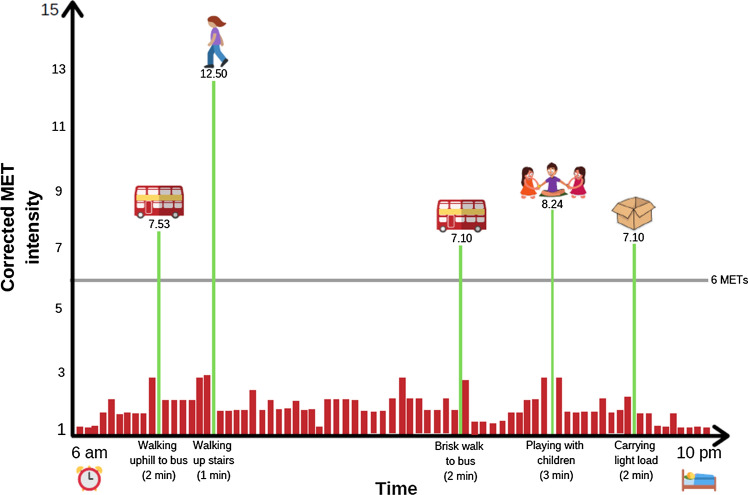
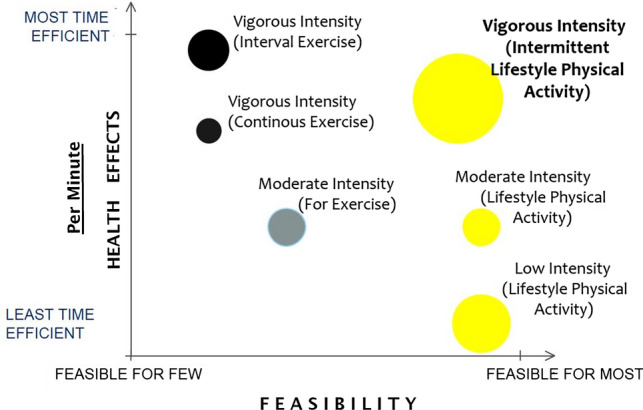
Recently revised public health guidelines acknowledge the health benefits of regular intermittent bouts of vigorous intensity incidental physical activity done as part of daily living, such as carrying shopping bags, walking uphill, and stair climbing. Despite this recognition and the advantages such lifestyle physical activity has over continuous vigorous intensity structured exercise, a scoping review we conducted revealed that current research in this area is, at best, rudimentary. Key gaps include the absence of an empirically-derived dose specification (e.g., minimum duration of lifestyle physical activity required to achieve absolute or relative vigorous intensity), lack of acceptable measurement standards, limited understanding of acute and chronic (adaptive) effects of intermittent vigorous bouts on health, and paucity of essential information necessary to develop feasible and scalable interventions (e.g., acceptability of this kind of physical activity by the public). To encourage collaboration and research agenda alignment among groups interested in this field, we propose a research framework to further understanding of vigorous intermittent lifestyle physical activity (VILPA). This framework comprises four pillars aimed at the development of: (a) an empirical definition of VILPA, (b) methods to reliably and accurately measure VILPA, (c) approaches to examine the short and long-term dose–response effects of VILPA, and (d) scalable and acceptable behavioural VILPA-promoting interventions. Graphic Abstract:
Overview
The claims and statistics of this paper haven’t been checked yet.
Free: it reads the open-access text and checks the first 5 claims that cite a source we can check. Create a free account to check every claim.
Integrity signals
Registry
Cites
Statistics
Figures
Verification
Claims the paper makes
The claims and statistics of this paper haven’t been checked yet.
Free: it reads the open-access text and checks the first 5 claims that cite a source we can check. Create a free account to check every claim.
Claims other papers make about this one
Each is checked against this paper’s own text: does it say what the citing paper says it does?
The cited source says what the claim attributes to it.
In the citing paper
“In contrast to questionnaires, wearable devices such as wrist24,25 or thigh26,27 accelerometers continuously record movement at a high resolution allowing them to capture fine-grain patterns of brief physical activity bouts, such as VILPA19.”
From Association of wearable device-measured vigorous intermittent lifestyle physical activity with mortality (2022) · cites this paper as [19]
In the citing paper
“Due to the incidental nature of MV-ILPA bouts, this type of activity requires no time commitment or preparation, no specialist equipment or facilities, and as such might be more practical and accessible than prolonged exercise done during leisure time, particularly among groups at risk, such as physically inactive and middle-aged to older adults (≥40 years) who are unfit and unaccustomed to exerc”
Self-check
Percentages, sums and reported differences re-computed from the paper’s own numbers.
The self-check needs the paper’s full text.
Citations
Cites
The Physical Activity Guidelines for Americans
Piercy, K. L., Troiano, R. P., Ballard, R. M., Carlson, S. A., Fulton, J. E., Galuska, D. A., George, S. M., & Olson, R. D. (2018) · JAMA · doi:10.1001/jama.2018.14854 · Cited by 9,755
Lee, I.-M., Shiroma, E. J., Lobelo, F., Puska, P., Blair, S. N., & Katzmarzyk, P. T. (2012) · The Lancet · doi:10.1016/s0140-6736(12)61031-9 · Cited by 8,215
2011 Compendium of Physical Activities: A Second Update of Codes and MET Values
AINSWORTH, B. E., HASKELL, W. L., HERRMANN, S. D., MECKES, N., BASSETT, D. R., TUDOR-LOCKE, C., GREER, J. L., VEZINA, J., WHITT-GLOVER, M. C., & LEON, A. S. (2011) · Medicine & Science in Sports & Exercise · doi:10.1249/mss.0b013e31821ece12 · Cited by 6,317 · cited 1×
“Quick bursts of activity that do not require specific equipment/preparation/time investments may be particularly attractive to older adults, especially those who care for grandchildren where opportunities for VILPA may include carrying a child or playing with children [53].”
BackgroundSelf-citationGuthold, R., Stevens, G. A., Riley, L. M., & Bull, F. C. (2018) · The Lancet Global Health · doi:10.1016/s2214-109x(18)30357-7 · Cited by 4,819
Fit Yourself and Take Your Lungs to Heart
Palange, P., & Bonini, M. (2013) · Respiration · doi:10.1159/000350831 · Cited by 2,779
Fletcher, G. F., Ades, P. A., Kligfield, P., Arena, R., Balady, G. J., Bittner, V. A., Coke, L. A., Fleg, J. L., Forman, D. E., Gerber, T. C., et al. (2013) · Circulation · doi:10.1161/cir.0b013e31829b5b44 · Cited by 2,235
Nahum-Shani, I., Smith, S. N., Spring, B. J., Collins, L. M., Witkiewitz, K., Tewari, A., & Murphy, S. A. (2018) · Annals of Behavioral Medicine · doi:10.1007/s12160-016-9830-8 · Cited by 2,171
Kwasnicka, D., Dombrowski, S. U., White, M., & Sniehotta, F. (2016) · Health Psychology Review · doi:10.1080/17437199.2016.1151372 · Cited by 1,476
Batacan, R. B., Duncan, M. J., Dalbo, V. J., Tucker, P. S., & Fenning, A. S. (2017) · British Journal of Sports Medicine · doi:10.1136/bjsports-2015-095841 · Cited by 799
Franco, M. R., Tong, A., Howard, K., Sherrington, C., Ferreira, P. H., Pinto, R. Z., & Ferreira, M. L. (2015) · British Journal of Sports Medicine · doi:10.1136/bjsports-2014-094015 · Cited by 723
Self-citation
Research works printed but not linked: 1
- Stamatakis E Johnson N Powell L Hamer M Rangul V Holtermann A Short and sporadic bouts in the 2018 US Physical Activity Guidelines: could high intensity incidental physical activity be the new HIIT? Br J Sports Med 2019 53 1137 1139 30786998 PMC6818666 · DOI · Paper page
Cited by
Stamatakis, E., Ahmadi, M. N., Gill, J. M. R., Thøgersen-Ntoumani, C., Gibala, M. J., Doherty, A., & Hamer, M. (2022) · Nature Medicine · doi:10.1038/s41591-022-02100-x · Cited by 336
“VILPA 19 refers to brief and sporadic (for example, up to 1 or up to 2 min long) bouts of vigorous-intensity physical activity done as part of daily living, such as bursts of very fast walking while commuting https://doi.org/10.1038/s41591-022-02100-x frequency) associated with all-cause, CVD and…”
InfluentialSelf-citationA Perspective on High-Intensity Interval Training for Performance and Health
Coates, A. M., Joyner, M. J., Little, J. P., Jones, A. M., & Gibala, M. J. (2023) · Sports Medicine · doi:10.1007/s40279-023-01938-6 · Cited by 246
“VILPA refers to brief intermittent bursts of vigorous-intensity physical activity embedded into everyday life rather than performed as structured leisure time exercise, such as stair climbing or carrying children or gro-ceries for short distances [116].”
BackgroundSelf-citationExercise Snacks: A Novel Strategy to Improve Cardiometabolic Health
Islam, H., Gibala, M. J., & Little, J. P. (2022) · Exercise and Sport Sciences Reviews · doi:10.1249/jes.0000000000000275 · Cited by 170
“These authors define VILPA as a single session of vigorous activity ( ≥ 14 or 15 on the Borg 6 – 20 scale or >6 MET) lasting no more than 5 min performed as part of activities of daily living or other lifestyle physical activities (43).”
Self-citationVigorous physical activity, incident heart disease, and cancer: how little is enough?
Ahmadi, M. N., Clare, P. J., Katzmarzyk, P. T., del Pozo Cruz, B., Lee, I. M., & Stamatakis, E. (2022) · European Heart Journal · doi:10.1093/eurheartj/ehac572 · Cited by 175
“VPA, defined as physical activity at an energy expenditure rate of at least six metabolic equivalents (METs) is a time-efficient way to achieve recommended physical activity levels and can lead to rapid cardiorespiratory adaptations.(3) For the first time, current physical activity guidelines(1,2,4,5) emphasize the va…”
BackgroundSelf-citationPhysical activity volume, intensity, and incident cardiovascular disease
Dempsey, P. C., Rowlands, A. V., Strain, T., Zaccardi, F., Dawkins, N., Razieh, C., Davies, M. J., Khunti, K. K., Edwardson, C. L., Wijndaele, K., et al. (2022) · European Heart Journal · doi:10.1093/eurheartj/ehac613 · Cited by 174
Self-citationHirsch, K. R., Wolfe, R. R., & Ferrando, A. A. (2021) · Nutrients · doi:10.3390/nu13051675 · Cited by 159
Ahmadi, M. N., Hamer, M., Gill, J. M. R., Murphy, M., Sanders, J. P., Doherty, A., & Stamatakis, E. (2023) · The Lancet Public Health · doi:10.1016/s2468-2667(23)00183-4 · Cited by 172
Self-citationStamatakis, E., Ahmadi, M. N., Friedenreich, C. M., Blodgett, J. M., Koster, A., Holtermann, A., Atkin, A., Rangul, V., Sherar, L. B., Teixeira-Pinto, A., et al. (2023) · JAMA Oncology · doi:10.1001/jamaoncol.2023.1830 · Cited by 163
Self-citationJones, M. D., Clifford, B. K., Stamatakis, E., & Gibbs, M. T. (2024) · Sports Medicine · doi:10.1007/s40279-023-01983-1 · Cited by 117
“In 2018, Stamatakis et al. proposed the use of short and sporadic bouts of high-intensity activity embedded incidentally/secondary to activities of daily living [51], an approach now referred to as VILPA [23].”
Self-citationFiedler, J., Eckert, T., Burchartz, A., Wöll, A., & Wunsch, K. (2021) · Sensors · doi:10.3390/s21082672 · Cited by 68
“Furthermore, the rising interest in short-time intermitted VPA for health benefits with a reduced time requirement is especially difficult to monitor using self-reports [20].”
BackgroundIntensity or volume: the role of physical activity in longevity
Schwendinger, F., Infanger, D., Lichtenstein, E., Hinrichs, T., Knaier, R., Rowlands, A. V., & Schmidt‐Trucksäss, A. (2024) · European Journal of Preventive Cardiology · doi:10.1093/eurjpc/zwae295 · Cited by 71
Thøgersen‐Ntoumani, C., Kritz, M., Grunseit, A. C., Chau, J. Y., Ahmadi, M., Holtermann, A., Koster, A., Tudor-Locke, C. E., Johnson, N. A., Sherrington, C., et al. (2023) · International Journal of Behavioral Nutrition and Physical Activity · doi:10.1186/s12966-023-01480-8 · Cited by 63
“Indeed, the premise of VILPA is that it is vigorous physical activity incorporated into people’s existing lifestyles [13].”
BackgroundSelf-citationRhodes, D., Valassakis, S., Bortnik, L., Eaves, R., Harper, D. J., & Alexander, J. (2021) · International Journal of Environmental Research and Public Health · doi:10.3390/ijerph18189913 · Cited by 91
Real-world gait speed estimation, frailty and handgrip strength: a cohort-based study
Soltani, A., Abolhassani, N., Marques-Vidal, P. M., Aminian, K., Vollenweider, P., & Paraschiv-Ionescu, A. (2021) · Scientific Reports · doi:10.1038/s41598-021-98359-0 · Cited by 50
Application of Exercise Snacks across Youth, Adult and Clinical Populations: A Scoping Review
Weston, K. L., Little, J. P., Weston, M., McCreary, S., Kitchin, V., Gill, A. J., Niven, A. G., McNarry, M. A., & Mackintosh, K. A. (2025) · Sports Medicine - Open · doi:10.1186/s40798-025-00829-6 · Cited by 61
“…“all-out” [23] and “as quickly as possible” [24, 39] is likely greater than the intensities associated with many moderate-to-vigorous incidental daily life activities, such as doing housework, marching on the spot and walking meetings at work [29] or brisk walking and playing with children [28].”
Stamatakis, E., Ahmadi, M. N., Biswas, R. K., Cruz, B. D. P., Thøgersen‐Ntoumani, C., MURPHY, M. H., Sabag, A., Lear, S. A., Gill, J. M., Chow, C. K., et al. (2024) · British Journal of Sports Medicine · doi:10.1136/bjsports-2024-108484 · Cited by 54
Self-citationRowlands, A. V., Maylor, B. D., Dawkins, N. P., Dempsey, P. C., Edwardson, C. L., Soczawa-Stronczyk, A. A., Bocian, M., Patterson, M., & Yates, T. (2022) · Journal of Sports Sciences · doi:10.1080/02640414.2022.2147134 · Cited by 39
Self-citationBlodgett, J. M., Ahmadi, M. N., Atkin, A. J., Pulsford, R. M., Rangul, V., CHASTIN, S. F. M., Chan, H., Suorsa, K., Bakker, E. A., Gupta, N., et al. (2024) · Circulation · doi:10.1161/circulationaha.124.069820 · Cited by 49
“For example, “vig-orous intermittent lifestyle physical activity” (VILPA) 14 is defined as short (typically up to 1 or 2 minutes) intermittent bouts of incidental, higher-intensity activity that happen during typical daily activities.”
InfluentialSelf-citationYin, M., Li, Y., Aziz, A. R., Buffey, A., Bishop, D. J., Bao, D., Nassis, G. P., Islam, H., Wang, H., Fyfe, J. J., et al. (2026) · Journal of Sport and Health Science · doi:10.1016/j.jshs.2025.101088 · Cited by 35
“Cohort studies also indicate that sitting for 60 min or more is associated with an increased risk of all-cause mortality, while sitting in shorter bouts of 1 (cid:2) 29 min is linked to a reduced risk.”
Ekkekakis, P., Vallance, J. K., Wilson, P. M., & Garber, C. E. (2023) · Psychology of sport and exercise · doi:10.1016/j.psychsport.2023.102399 · Cited by 37
Wan, K., Dai, Z., Wong, P., Huang, Y., Lei, E. F., Little, J. P., Lin, F., & Tam, B. T. (2025) · Scandinavian Journal of Medicine and Science in Sports · doi:10.1111/sms.70114 · Cited by 42
“…of vigorous-intensity lifestyle physical activity (VILPA) also emphasizes brief, high-intensity activity, but it differs in that VILPA occurs spontaneously during daily tasks, such as climbing stairs or carrying heavy groceries, rather than through structured and intentional efforts [17, 18].”
Rodríguez, M. Á., Quintana-Cepedal, M., Cheval, B., Thøgersen-Ntoumani, C., Crespo, I., & Olmedillas, H. (2026) · British Journal of Sports Medicine · doi:10.1136/bjsports-2025-110027 · Cited by 39
“14 Conceptually, VILPA could be viewed as an incidental subtype of exercise snacks that relies entirely on the opportunities presented by daily life.”
Self-citationNicholson, B., Dinsdale, A., Jones, B. L., & Till, K. (2021) · Sports Medicine · doi:10.1007/s40279-021-01552-4 · Cited by 42
Wójcik, M., Pitti, J. Á., Kozioł-Kozakowska, A., Brzeziński, M., Gabbianelli, R., Herceg-Čavrak, V., Wühl, E., Lucas, I., Radovanović, D. S., Melk, A., et al. (2023) · Frontiers in Cardiovascular Medicine · doi:10.3389/fcvm.2023.1268364 · Cited by 49
Promoting healthy cardiovascular aging: emerging topics
Clayton, Z. S., Craighead, D. H., Darvish, S., Coppock, M. E., Ludwig, K. R., Brunt, V. E., Seals, D. R., & Rossman, M. J. (2022) · The Journal of Cardiovascular Aging · doi:10.20517/jca.2022.27 · Cited by 31
Yu, Q., Zhang, Z., Ludyga, S., Erickson, K. I., Cheval, B., Hou, M., Pindus, D. M., Hillman, C. H., Kramer, A. F., Falck, R. S., et al. (2025) · Advanced Science · doi:10.1002/advs.202406631 · Cited by 27
Adaptive R-Peak Detection on Wearable ECG Sensors for High-Intensity Exercise
Giovanni, E. D., Teijeiro, T., Millet, G. P., & Atienza, D. (2022) · IEEE Transactions on Biomedical Engineering · doi:10.1109/tbme.2022.3205304 · Cited by 29
“Furthermore, daily physical activity is highly recommended [4] to prevent NCDs, and in particular high-intensity interval training (HIIT) are postulated as a good alternative to moderate intensity for health improvement [5].”
Herold, F., Zou, L., Theobald, P., Manser, P., Falck, R. S., Yu, Q., Liu-Ambrose, T. Y. L., Hillman, C. H., Kramer, A. F., Erickson, K. I., et al. (2025) · European Journal of Applied Physiology · doi:10.1007/s00421-025-05858-3 · Cited by 44
“Such biological, sex-specific differences are consistent with the growing body of evidence suggesting that biological sex is an important moderator in the relationship between PA and brain health (Barha et al. 2020, 2017a, 2017c, 2019, 2023; Barha and Liu-Ambrose 2018, 2020).”
Self-citationEkkekakis, P., Hartman, M. E., & Ladwig, M. A. (2023) · Journal of Sport & Exercise Psychology · doi:10.1123/jsep.2022-0029 · Cited by 23
Daley, A., Griffin, R. A., Sanders, J. P., Gokal, K., Ives, N. J., Skrybant, M., Parretti, H. M., Edwardson, C. L., Biddle, S., Jolly, K. B., et al. (2025) · International Journal of Behavioral Medicine · doi:10.1007/s12529-025-10352-3 · Cited by 23
Self-citationJenkins, D. G., Devin, J. L., Weston, K. L., Jenkins, J. G., & Skinner, T. L. (2023) · The Journal of Physiology · doi:10.1113/jp284985 · Cited by 20
“In the present context, exercise snacks can be considered as planned, structured and repetitive bouts of physical activity (Caspersen et al., 1985) rather than more general advice to increase vigorous intermittent lifestyle physical activity (VILPA; Stamatakis et al., 2021).”
BackgroundSanders, J. P., Gokal, K., Thomas, J. J. C., Rawstorn, J. C., Sherar, L. B., Maddison, R., Greaves, C. J., Esliger, D., Daley, A., & Snacktivity Investigators (2023) · JMIR Formative Research · doi:10.2196/41114 · Cited by 16
“Other types of short-bout physical activity interventions already exist such as high-intensity interval training [17]; however, Snacktivity differs in purpose, duration, and intensity as an intervention approach.”
BackgroundSelf-citationMaternal 24-h movement patterns across pregnancy and postpartum: The LIFE-Moms consortium
Kracht, C. L., Drews, K. L., Flanagan, E. W., Keadle, S. K., Gallagher, D., Horn, L. V., Haire-Joshu, D. L., Phelan, S., Pomeroy, J. J., & Redman, L. M. (2024) · Preventive Medicine Reports · doi:10.1016/j.pmedr.2024.102740 · Cited by 13
Zhao, X., Wu, X., Ma, T., Xiao, J., Chen, X., Tang, M., Zhang, L., Zhang, T., Fan, M., Liao, J., et al. (2025) · International Journal of Behavioral Nutrition and Physical Activity · doi:10.1186/s12966-024-01691-7 · Cited by 12
Pang, B., Moullin, J. C., Thompson, C., Thøgersen‐Ntoumani, C., Stamatakis, E., & McVeigh, J. A. (2024) · Journal of Aging and Physical Activity · doi:10.1123/japa.2022-0405 · Cited by 13
Self-citationHistory and perspectives on interval training in sport, health, and disease
Foster, C., Casado, A., Bok, D., Hofmann, P., Bakken, M., Tjelta, A. R., Manso, J. G., Boullosa, D. A., & de Koning, J. J. (2025) · Applied Physiology, Nutrition, and Metabolism · doi:10.1139/apnm-2023-0611 · Cited by 19
Cruz, B. D. P., Ahmadi, M. N., Sabag, A., Saint‐Maurice, P. F., Lee, I.-M. M., & Stamatakis, E. (2025) · Annals of Internal Medicine · doi:10.7326/annals-25-01547 · Cited by 14
Self-citationYin, M., Li, H., Zhang, B., & Li, Y. (2024) · Sports Medicine · doi:10.1007/s40279-024-02080-7 · Cited by 13
“Finally, we commend the inclusion of future research directions for ES, inspired by the VILPA research framework proposed by Stamatakis et al. [33].”
Lifestyle and patterns of physical activity in Hadza foragers
Sayre, M. K., Anyawire, M., Paolo, B., Mabulla, A. Z. P., Pontzer, H., Wood, B. M., & Raichlen, D. A. (2023) · American Journal of Biological Anthropology · doi:10.1002/ajpa.24846 · Cited by 10
“Regular engagement in even small amounts of vigorous-intensity PA may offer several cardioprotective benefits (e.g., Rankin et al., 2012; Stamatakis et al., 2021).”
Liao, Y., Yu, J., Zhan, Y., Liu, Y., Zhou, Y., Wang, H., Liu, X., Wang, W., Ma, Y., & Lan, F. (2024) · PLoS ONE · doi:10.1371/journal.pone.0303858 · Cited by 11
“…comorbid, isolated, and young participants also described the challenges of participating in activities, which may need to be addressed by increasing the dosage of Vigorous Intermittent Lifestyle Physical Activity (VILPA) [47], while also preventing Physical Activity-Related Injuries (PARI) [48].”
BackgroundMove less, spend more: the metabolic demands of short walking bouts
Luciano, F., Ruggiero, L., Minetti, A. E., & Pavei, G. (2024) · Proceedings of the Royal Society B Biological Sciences · doi:10.1098/rspb.2024.1220 · Cited by 8
“Moreover, the increasing recognition of short locomotor bouts as a means to promote physical activity [16,21] highlights the need to better quantify their intensity.”
Reyes‐Molina, D., Zapata‐Lamana, R., Nazar, G., Cigarroa, I., Ruiz, J. R., Parrado, E., Losilla, J.-M., & Celis-Morales, C. A. (2025) · Scandinavian Journal of Medicine and Science in Sports · doi:10.1111/sms.70015 · Cited by 14
“Consequently, in order to advance in this line of research, it is necessary to have a theoretical definition of the concept of IPA [15, 21] as well as to know the main empirical findings in IPA research.”
InfluentialZeng, Z., Hsu, C. L., Sit, C. H. P., Wong, S. H., & Yang, Y. (2025) · JMIR Aging · doi:10.2196/75887 · Cited by 14
“The positive association between vigorous PA and improved frailty status suggests that higher-inten-sity activities may stimulate physiological adaptations that counteract the decline in physical function associated with aging [50,51].”
Associations of novel 24-h accelerometer-derived metrics with adiposity in children and adolescents
Dygrýn, J., Medrano, M., Molina‐García, P., Rubín, L., Jakubec, L., Janda, D., & Gába, A. (2021) · Environmental Health and Preventive Medicine · doi:10.1186/s12199-021-00987-5 · Cited by 9
“It appears that children’s movement behaviours are characterised by a higher number of brief bouts of vigorous PA [33] such as spontaneous running or very fast movements during active play, than those of adolescents.”
BackgroundThøgersen‐Ntoumani, C., Grunseit, A. C., Holtermann, A., Steiner, S., Tudor‐Locke, C., Koster, A., Johnson, N. A., Maher, C. A., Ahmadi, M. N., Chau, J. Y., et al. (2024) · BMC Public Health · doi:10.1186/s12889-024-19549-9 · Cited by 12
“The concept of Vigorous Inter-mittent Lifestyle Physical Activity, referred to as “VILPA” [10], was developed to address these barriers.”
Self-citationPang, B., McVeigh, J. A., Thompson, C., Thøgersen‐Ntoumani, C., Stamatakis, E., & Moullin, J. C. (2025) · Health Promotion Journal of Australia · doi:10.1002/hpja.957 · Cited by 10
Self-citationDu, Y., Peng, R., Wan, X., Zhang, C., Guo, Y., Chang, J., Feng, H., & Cao, Z. (2024) · Public Health Nursing · doi:10.1111/phn.13495 · Cited by 9
“…exercise snack in the form of vigorous intermittent lifestyle physical activity (VILPA) which is defined as a single bout of relatively or absolutely strenuous physical activity lasting up to 5 min that occurs during activities of daily living or other lifestyle activities (Stamatakis et al. 2021).”
Wallmann-Sperlich, B., Düking, P., Müller, M., Froböse, I., & Sperlich, B. (2022) · BMC Public Health · doi:10.1186/s12889-022-12999-z · Cited by 8
“To date, the knowledge about vigorous intermitted (short) lifestyle PAs is limited [18] and the relatively high contribution of these activities in our study sample supports the importance and need for the recently established research framework to better understand the health potential of vigorous intermitted lifesty…”
BackgroundIannetta, D., Inglis, E. C., Maturana, F. M., Spigolon, G., Pogliaghi, S., & Murias, J. M. (2022) · Experimental Gerontology · doi:10.1016/j.exger.2022.111826 · Cited by 7
Device-measured vigorous intermittent lifestyle physical activity and major cardiovascular eventsPreprint
Stamatakis, E. A., Ahmadi, M. N., Biswas, R. K., Cruz, B. D. P., Thøgersen‐Ntoumani, C., MURPHY, M. H., Sabag, A., Lear, S. A., Gill, J. M. R., Chow, C. K., et al. (2023) · medRxiv · doi:10.1101/2023.10.23.23297430 · Cited by 6
Self-citationPang, B., Moullin, J. C., Thompson, C., Thøgersen‐Ntoumani, C., Stamatakis, E., Ahmadi, M. N., & McVeigh, J. A. (2025) · Age and Ageing · doi:10.1093/ageing/afaf244 · Cited by 10
“One potential strategy to encourage PA is through short bouts ( < 1–2 min [5]) of vigorous intermittent lifestyle physical activity (VILPA; e.g. climbing a few flights of stairs, carrying a small load of shopping) [6].”
Self-citationWang, L., Liang, L., Zhang, X., Chi, H., & Peng, F. L. (2025) · Scientific Reports · doi:10.1038/s41598-024-82243-8 · Cited by 8
“Researchers have begun to focus on VILPA.”
Babir, F. J., Marcotte‐Chénard, A., Sandilands, R. E., D'Amico, A., Falkenhain, K., Mulkewich, N., Islam, H., Richards, D. L., Madden, K., Singer, J., et al. (2026) · Diabetologia · doi:10.1007/s00125-026-06741-2 · Cited by 4
“VILPA is the ‘non-exercise’ equivalent of exercise snacks, and involves physical activity embedded into daily living [28].”
Self-citationHopkins, J., McVeigh, J. A., Hill, K., & Burton, E. (2024) · Journal of Aging and Physical Activity · doi:10.1123/japa.2023-0176 · Cited by 5
Jones, M. D., Clifford, B. K., Stamatakis, E., & Gibbs, M. T. (2024) · Sports Medicine · doi:10.1007/s40279-024-02081-6 · Cited by 7
“…(Borg Rating Scale ≥ 14 or > 15) or absolute (> 6 MET) vigorous physical activity that occurs during activities of daily living or during other lifestyle physical activity” [5], with this definition later refined through empirical evidence [8] to incorporate physical activity bouts of 1–2 min.”
Self-citationMarçal, I. R., & Ciolac, E. G. (2021) · Brazilian Journal of Motor Behavior · doi:10.20338/bjmb.v15i1.217 · Cited by 3
Franssen, W. M. A., Jermei, J., Savelberg, H. H. C. M., & Eijnde, B. O. (2023) · Journal of Activity Sedentary and Sleep Behaviors · doi:10.1186/s44167-023-00015-7 · Cited by 3
“proposed a new paradigm that allows VPA to be more accessible with the aid of the regular accumulation of vigorous intermittent lifestyle physical activity (VILPA) as part of daily living, such as carrying shopping bags and stair climbing [41].”
BackgroundMacDonald, E. E., Morrison, E., Shivgulam, M. E., Pellerine, L. P., Kimmerly, D. S., Bray, N. W., Mekari, S., & O'Brien, M. W. (2024) · Frontiers in Sports and Active Living · doi:10.3389/fspor.2024.1393214 · Cited by 3
Manaenkova, Z., & Santanna, E. A. (2025) · Frontiers. · doi:10.11648/j.frontiers.20250503.16 · Cited by 3
Yang, Q., Zhang, Y.-H., Wong, A. Y. L., Xu, H.-R., Bi, X., Ching, Y.-L., Du, S.-H., Wang, Y.-C., & Wang, X. (2024) · Journal of the American Medical Directors Association · doi:10.1016/j.jamda.2024.03.121 · Cited by 182
Halliwell, C., O'Brien, M. W., & Moyer, R. F. (2025) · Musculoskeletal Care · doi:10.1002/msc.70046 · Cited by 2
“…more practical to recommend incorporating brief, vigorous bursts of physical activity throughout daily routines (Vigorous intermittent lifestyle physical activity) as a more manageable approach to increasing overall physical activity until sustained MVPA becomes feasible (Stamatakis et al. 2021).”
Herold, F., Giurgiu, M., Ebner‐Priemer, U., Brakenridge, C. J., Hallgren, M. Å., Owen, N. G., & Gronwald, T. (2025) · Exercise and Sport Sciences Reviews · doi:10.1249/jes.0000000000000377 · Cited by 4
Verga, G. I., Baltă, A. A. Ș., Costin, S. A., Ailene, D. M., Apostol, L. L., Gurau, T. V., Dinu, C. A., Stuparu-Crețu, M., & Voinescu, D.-C. (2025) · Nutrients · doi:10.3390/nu17223499 · Cited by 2
“While nutrition provides a biochemical foundation for immune modulation, physical activity represents another critical pillar of lifestyle intervention [21].”
Chanteau, A., Faity, G. V., Mahé, G., Sabia, S., & Faucheur, A. L. (2026) · Sports Medicine - Open · doi:10.1186/s40798-026-01039-4 · Cited by 2
“Indeed, these recent epidemiological studies revealed new associations between health and accelerometry-measured “PA micropatterns”, defined as short bursts of intermittent PA lasting ≤ 3 min, introducing the concept of Vigorous Intermittent Lifestyle Physical Activity (VILPA) [117].”
Walkability der Stadt Regensburg – eine Mixed-methods-Untersuchung mittels QGIS und Walk Audits
Heudobler, M., Fina, S., Gerten, C., Voß, S., & Jung-Sievers, C. (2024) · Prävention und Gesundheitsförderung · doi:10.1007/s11553-024-01165-5 · Cited by 2
24-h movement behaviors and the perinatal period
Kracht, C. L., & Redman, L. M. (2023) · International Journal of Obesity · doi:10.1038/s41366-023-01348-8 · Cited by 2
“, vigorous intermittent lifestyle PA) [6], and steps via varying devices [7].”
BackgroundLoginov, S. I. (2023) · CARDIOVASCULAR THERAPY AND PREVENTION · doi:10.15829/1728-8800-2023-3388 · Cited by 1
Nishiyama, N., Konda, S., Ogasawara, I., & Nakata, K. (2024) · PLoS ONE · doi:10.1371/journal.pone.0309917 · Cited by 1
A Novel Scale of Lifestyle Physical Activity: Measure Description and Intervention Responsiveness
Browne, J., Halverson, T. F., Battle, C. L., Stein, M. D., Bergeron, A., & Abrantes, A. M. (2024) · American Journal of Lifestyle Medicine · doi:10.1177/15598276241300473 · Cited by 1
“15 Therefore, research efforts are needed to develop and evaluate both LPA programs and measurement tools to advance the physical activity fi eld.”
Reyes‐Molina, D., Zapata‐Lamana, R., Bustos, C., Mella-Norambuena, J., Zañartu, I., Chávez-Castillo, Y., Aguayo, J. G., Castillo-Carreño, A., Cabezas, M.-F., Riquelme, V. C., et al. (2025) · Behavioral Sciences · doi:10.3390/bs15020114 · Cited by 2
Pang, B., Moullin, J. C., McVeigh, J. A., Thøgersen‐Ntoumani, C., Stamatakis, E., & Thompson, C. (2025) · Journal of Aging and Physical Activity · doi:10.1123/japa.2024-0126 · Cited by 2
Self-citationFairclough, S. J., Clifford, L., Banks, J., Edwards, P., Gilmour, A.-M., Tyler, R., Brown, D. M. Y., Rowlands, A. V., & MacDonald, M. J. (2025) · Journal of Activity Sedentary and Sleep Behaviors · doi:10.1186/s44167-025-00091-x · Cited by 2
“Such findings are consistent with those from adult epidemiology studies demonstrating how short bouts of moderate and vigorous intensity intermittent non-exercise physical activity are associated with reduced cardiovascular event incidence and mortality [59, 60].”
Caro-Crous, M., Santos, J. M., Jabardo-Camprubí, G., Brown, W. J., & Puig-Ribera, A. M. (2025) · BMJ Open · doi:10.1136/bmjopen-2025-107357 · Cited by 1
Cai, Y., Ma, T., Sirard, J. R., Xie, Y. J., Yang, Q., Lee, C.-D., Wang, X., Liang, X., Li, Y., Lei, J., et al. (2026) · Communications Medicine · doi:10.1038/s43856-026-01421-z · Cited by 2
“Some of the proposed mechanisms include improvements in cardiorespiratory fi tness, insulin sensitivity, and vascularfunction 40,41 .”
Gray, C. E., Lim, K., Palladino, J., Rowland, B., Wan, P., McVeigh, J. A., & Pang, B. (2026) · Journal of Health Psychology · doi:10.1177/13591053261434374 · Cited by 1
Ye, S., Ding, Y., Hu, B., Zhou, N., Huang, R., & Zhuang, Y. (2026) · Frontiers in Public Health · doi:10.3389/fpubh.2026.1810516 · Cited by 4
Peng, Z., Peng, L., Sun, W., Liu, X., Zhou, M., Chen, M., Ren, J., Chen, A., & Guo, C. (2026) · Frontiers in Physiology · doi:10.3389/fphys.2026.1805547 · Cited by 3
Vigorous intermittent lifestyle physical activity improves mortality risk
(2022) · Nature Medicine · doi:10.1038/s41591-022-02101-w · Cited by 1
Associations of physical activity and quality of life in parapneumonic effusion patients
López, P., Fitzgerald, D. B., McVeigh, J. A., Badiei, A., Muruganandan, S., Newton, R. U., Straker, L. M., Lee, G., & Peddle‐McIntyre, C. J. (2023) · ERJ Open Research · doi:10.1183/23120541.00209-2023 · Cited by 1
“Vigorous-intensity physical activity (or vigorous intermittent lifestyle physical activity) (53), such as suggesting the patient taking the stairs on a normal day, may offer a promising opportunity to increase moderate-to-vigorous physical activity in this group of patients.”
Der Einsatz von Short Bouts als Paradigmenwechsel bei der Ausgestaltung von Bewegungsinterventionen
Köppel, M., & Peters, S. (2023) · B&G Bewegungstherapie und Gesundheitssport · doi:10.1055/a-2152-4192 · Cited by 2
Reyes‐Molina, D., Zapata‐Lamana, R., Cigarroa, I., Palma-Leal, X., Aguilar-Farías, N., & Nazar, G. (2023) · Revista médica de Chile · doi:10.4067/s0034-98872023000400530 · Cited by 2
Dempsey, P., Rowlands, A., Strain, T., Zaccardi, F., Dawkins, N., Razieh, C., Davies, M., Khunti, K., Edwardson, C., Wijndaele, K., et al. (2022) · medRxiv · doi:10.1101/2022.02.23.22271386 · Cited by 1
“, walking faster, or completing chores more quickly/enthusiastically) would also take up less time, which may be particularly attractive for time-poor individuals or for intervention strategies aimed at freeing up time to increase overall PA levels (19).”
BackgroundSelf-citationHöher-intensive Bewegung im Alltag und ihr Potenzial für die Bewegungsförderung
Wallmann-Sperlich, B. (2022) · B&G Bewegungstherapie und Gesundheitssport · doi:10.1055/a-1870-9877 · Cited by 1
Franssen, W. M. A. (2022) · Research Publications (Maastricht University) · doi:10.26481/dis.20221121wf · Cited by 1
Thøgersen‐Ntoumani, C., Grunseit, A., Holtermann, A., Steiner, S., Tudor-Locke, C., Koster, A., Johnson, N. A., Maher, C. A., Ahmadi, M. N., Chau, J. Y., et al. (2024) · medRxiv · doi:10.1101/2024.05.07.24306973
Self-citationHua, P., Li, C., Sun, X., & Ni, S. (2024) · Lecture notes in computer science · doi:10.1007/978-3-031-60458-4_4
Zeng, Y., Ke, Z., Zhuang, X., Huang, Z., Wang, S., Zhang, X. D., Cai, S., & Liao, L. (2024) · Research Square · doi:10.21203/rs.3.rs-4953032/v1
Mortensen, S. R., Mork, P. J., Skou, S. T., Kongsvold, A., Åsvold, B. O., Nilsen, T. I. L., & Skarpsno, E. S. (2024) · Journal of Activity Sedentary and Sleep Behaviors · doi:10.1186/s44167-024-00066-4 · Cited by 1
Seasonal changes in the volume and intensity of children’s school year physical activityPreprint
Fairclough, S. J., Clifford, L., Banks, J., Edwards, P., Gilmour, A.-M., Tyler, R., Brown, D. M. Y., Rowlands, A. V., & MacDonald, M. (2025) · Research Square · doi:10.21203/rs.3.rs-7122314/v1
Studer, M. (2025) · Journal of Rehabilitation Practices and Research · doi:10.33790/jrpr1100168
Highlights del 58.° Congreso de la Sociedad Española de Neumología y Cirugía Torácica (SEPAR)
Peña-Otero, D., Tenes, A., Pitarch, M. D. M., Restegui, T. G.-B., Lobera, E. S., Arribas, M. B., Fernández, C., Zamarrón, E., & de Toro, M. Á. S. (2025) · Open Respiratory Archives · doi:10.1016/j.opresp.2025.100501
Yu, L., Liu, Y., Xing, X., Wang, M., Zhang, B., Tong, Z., Sun, G., Zhang, Q., Zhao, J. V., Zhang, X., et al. (2025) · Journal of Physical Activity and Health · doi:10.1123/jpah.2025-0195
Thøgersen‐Ntoumani, C., Grunseit, A. C., Holtermann, A., Steiner, S., Tudor‐Locke, C., Koster, A., Johnson, N. A., Maher, C., Ahmadi, M., Chau, J. Y., et al. (2024) · Figshare · doi:10.6084/m9.figshare.26759453
Self-citationThøgersen‐Ntoumani, C., Kritz, M., Grunseit, A., Chau, J., Ahmadi, M., Holtermann, A., Koster, A., Tudor‐Locke, C., Johnson, N., Sherrington, C., et al. (2024) · Figshare · doi:10.6084/m9.figshare.26602000
Self-citationThøgersen‐Ntoumani, C., Grunseit, A. C., Holtermann, A., Steiner, S., Tudor‐Locke, C., Koster, A., Johnson, N. A., Maher, C., Ahmadi, M., Chau, J. Y., et al. (2024) · Figshare · doi:10.6084/m9.figshare.26759444
Self-citationThøgersen‐Ntoumani, C., Kritz, M., Grunseit, A., Chau, J., Ahmadi, M., Holtermann, A., Koster, A., Tudor‐Locke, C., Johnson, N., Sherrington, C., et al. (2024) · Figshare · doi:10.6084/m9.figshare.26602003
Self-citationThøgersen‐Ntoumani, C., Grunseit, A. C., Holtermann, A., Steiner, S., Tudor‐Locke, C., Koster, A., Johnson, N. A., Maher, C., Ahmadi, M., Chau, J. Y., et al. (2024) · Figshare · doi:10.6084/m9.figshare.26759450
Self-citationThøgersen‐Ntoumani, C., Grunseit, A. C., Holtermann, A., Steiner, S., Tudor‐Locke, C., Koster, A., Johnson, N. A., Maher, C., Ahmadi, M., Chau, J. Y., et al. (2024) · Figshare · doi:10.6084/m9.figshare.26549324
Self-citationThøgersen‐Ntoumani, C., Grunseit, A. C., Holtermann, A., Steiner, S., Tudor‐Locke, C., Koster, A., Johnson, N. A., Maher, C., Ahmadi, M., Chau, J. Y., et al. (2024) · Figshare · doi:10.6084/m9.figshare.26759456
Self-citationThøgersen‐Ntoumani, C., Grunseit, A. C., Holtermann, A., Steiner, S., Tudor‐Locke, C., Koster, A., Johnson, N. A., Maher, C., Ahmadi, M., Chau, J. Y., et al. (2024) · Figshare · doi:10.6084/m9.figshare.26759447
Self-citation
Metadata
- Authors
- Stamatakis, E., Huang, B.-H., Maher, C., Thøgersen-Ntoumani, C., Stathi, A., Dempsey, P. C., Johnson, N., Holtermann, A., Chau, J. Y., Sherrington, C., Daley, A. J., Hamer, M., Murphy, M. H., Tudor-Locke, C., & Gibala, M. J.
- Affiliations
- The University of Sydney (AU)
- University of South Australia (AU)
- University of Birmingham (GB)
- Baker Heart and Diabetes Institute (AU)
- National Research Centre for the Working Environment (DK)
- Macquarie University (AU)
- Loughborough University (GB)
- University College London (GB)
- University of Ulster (GB)
- University of North Carolina at Charlotte (US)
- McMaster University (CA)
- Corresponding author
- Stamatakis, Emmanuel
- ORCID
- Venue
- Sports Medicine
- Published
- 2020-10-26
- Volume
- 51
- Issue
- 1
- Pages
- 1-10
- ISSN
- 0112-1642 (ISSN-L)
- 1179-2035
- PMC
- PMC7806564
- OpenAlex
- W3081669190
- Cited by
- 113
- References
- 52
- Citations by year
- 2026: 16 · 2025: 27 · 2024: 33 · 2023: 17 · 2022: 12 · 2021: 8
- FWCI
- 5.54
- Type
- journal article
- Language
- en
- Open access
- hybrid
- doi.org
- Licence
- cc-by
- creativecommons.org/licenses/by/4.0 (tdm)
- creativecommons.org/licenses/by/4.0 (vor)
- Locations
- Sports Medicine (publishedVersion, cc-by)
- Europe PMC (PubMed Central) (publishedVersion, other-oa)
- PubMed Central (publishedVersion, cc-by)
- PubMed (publishedVersion)
- UniSA Research Outputs Repository (University of South Australia) (acceptedVersion, other-oa)
- Adelaide Research & Scholarship (AR&S) (University of Adelaide) (submittedVersion, cc-by)
- Ulster University Research Portal (Ulster University) (submittedVersion, cc-by)
- UCL Discovery (University College London) (submittedVersion)
- Figshare (submittedVersion, cc-by)
- OPUS - Open Publications of UTS Scholars (University of Technology Sydney) (submittedVersion)
- University of Birmingham Research Portal (University of Birmingham) (submittedVersion, cc-by)
- Edinburgh Research Explorer (University of Edinburgh) (submittedVersion, cc-by)
- Funders
- National Health and Medical Research Council (APP1180812)
- Topics
- Health Sciences › Medicine › Public Health, Environmental and Occupational Health › Physical Activity and Health
- Health Sciences › Medicine › Physiology (medical) › Cardiovascular and exercise physiology
- Physical Sciences › Computer Science › Computer Vision and Pattern Recognition › Context-Aware Activity Recognition Systems
- Keywords
- incidental physical activity, dose-response relationship, physical activity measurement, physical activity and health, physical activity interventions, research framework, public health recommendations
- MeSH terms
- Humans, Life Style, Public Health, Exercise
About these checks
Registry, retraction, Cites and statistics results are computed, not judged, with one exception: a printed reference that no index lists is read once by a model before it counts as a citation error. Claims are extracted by a model and kept only when their quote appears verbatim in the text; each cited source is then checked, with a model’s help, for whether it says what the claim relies on. Those verdicts can be wrong — read the claim’s quote and the cited source before relying on one.
Statistics and arithmetic are recomputed, not judged.
Confidence bands are shown only for fields calibrated on our annotated test set. None is calibrated yet, so no band is shown.
What counts as a claim ›How we measure confidence ›How we check this ›
Are you an author, or do you see a problem with this page? Request a review
Data sources
Bibliographic data: Semantic Scholar, OpenAlex, Crossref.
Contains information from the Semantic Scholar Academic Graph Datasets, made available under the ODC Attribution License (ODC-BY 1.0).
Semantic Scholar’s data is described in: Kinney, R., et al. (2023). The Semantic Scholar Open Data Platform. arXiv:2301.10140.
