

Untapping the Health Enhancing Potential of Vigorous Intermittent Lifestyle Physical Activity (VILPA): Rationale, Scoping Review, and a 4-Pillar Research Framework
Open accessThe DOI matches its Crossref record; 52 of the 52 references it cites were found in a registry or an index.
Abstract
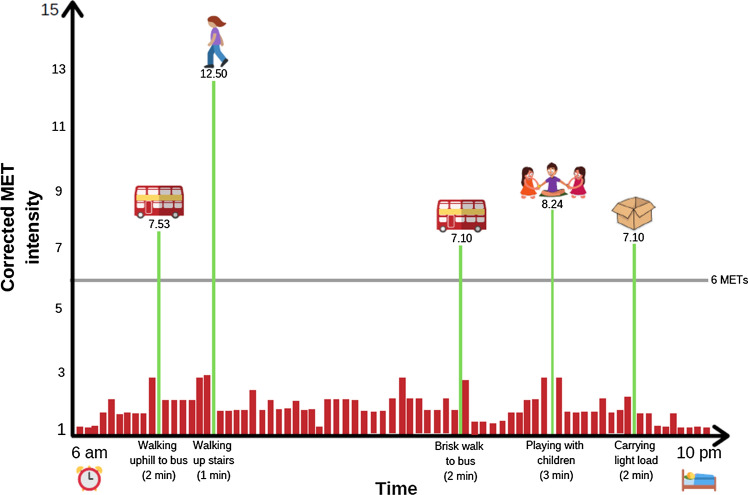
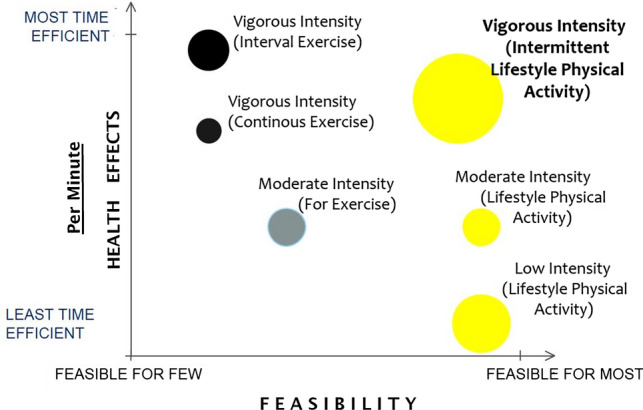
Recently revised public health guidelines acknowledge the health benefits of regular intermittent bouts of vigorous intensity incidental physical activity done as part of daily living, such as carrying shopping bags, walking uphill, and stair climbing. Despite this recognition and the advantages such lifestyle physical activity has over continuous vigorous intensity structured exercise, a scoping review we conducted revealed that current research in this area is, at best, rudimentary. Key gaps include the absence of an empirically-derived dose specification (e.g., minimum duration of lifestyle physical activity required to achieve absolute or relative vigorous intensity), lack of acceptable measurement standards, limited understanding of acute and chronic (adaptive) effects of intermittent vigorous bouts on health, and paucity of essential information necessary to develop feasible and scalable interventions (e.g., acceptability of this kind of physical activity by the public). To encourage collaboration and research agenda alignment among groups interested in this field, we propose a research framework to further understanding of vigorous intermittent lifestyle physical activity (VILPA). This framework comprises four pillars aimed at the development of: (a) an empirical definition of VILPA, (b) methods to reliably and accurately measure VILPA, (c) approaches to examine the short and long-term dose–response effects of VILPA, and (d) scalable and acceptable behavioural VILPA-promoting interventions. Graphic Abstract:
Overview
The claims and statistics of this paper haven’t been checked yet.
Free: it reads the open-access text and checks the first 5 claims that cite a source we can check. Create a free account to check every claim.
Integrity signals
Registry
Cites
Statistics
Figures
Verification
Claims the paper makes
The claims and statistics of this paper haven’t been checked yet.
Free: it reads the open-access text and checks the first 5 claims that cite a source we can check. Create a free account to check every claim.
Claims other papers make about this one
Each is checked against this paper’s own text: does it say what the citing paper says it does?
The cited source says what the claim attributes to it.
In the citing paper
“In contrast to questionnaires, wearable devices such as wrist24,25 or thigh26,27 accelerometers continuously record movement at a high resolution allowing them to capture fine-grain patterns of brief physical activity bouts, such as VILPA19.”
From Association of wearable device-measured vigorous intermittent lifestyle physical activity with mortality (2022) · cites this paper as [19]
In the citing paper
“Due to the incidental nature of MV-ILPA bouts, this type of activity requires no time commitment or preparation, no specialist equipment or facilities, and as such might be more practical and accessible than prolonged exercise done during leisure time, particularly among groups at risk, such as physically inactive and middle-aged to older adults (≥40 years) who are unfit and unaccustomed to exerc”
Self-check
Percentages, sums and reported differences re-computed from the paper’s own numbers.
The self-check needs the paper’s full text.
Citations
Cites
The Physical Activity Guidelines for Americans
Piercy, K. L., Troiano, R. P., Ballard, R. M., Carlson, S. A., Fulton, J. E., Galuska, D. A., George, S. M., & Olson, R. D. (2018) · JAMA · doi:10.1001/jama.2018.14854 · Cited by 9,755
Lee, I.-M., Shiroma, E. J., Lobelo, F., Puska, P., Blair, S. N., & Katzmarzyk, P. T. (2012) · The Lancet · doi:10.1016/s0140-6736(12)61031-9 · Cited by 8,215
2011 Compendium of Physical Activities: A Second Update of Codes and MET Values
AINSWORTH, B. E., HASKELL, W. L., HERRMANN, S. D., MECKES, N., BASSETT, D. R., TUDOR-LOCKE, C., GREER, J. L., VEZINA, J., WHITT-GLOVER, M. C., & LEON, A. S. (2011) · Medicine & Science in Sports & Exercise · doi:10.1249/mss.0b013e31821ece12 · Cited by 6,317 · cited 1×
“Quick bursts of activity that do not require specific equipment/preparation/time investments may be particularly attractive to older adults, especially those who care for grandchildren where opportunities for VILPA may include carrying a child or playing with children [53].”
BackgroundSelf-citationGuthold, R., Stevens, G. A., Riley, L. M., & Bull, F. C. (2018) · The Lancet Global Health · doi:10.1016/s2214-109x(18)30357-7 · Cited by 4,819
Fit Yourself and Take Your Lungs to Heart
Palange, P., & Bonini, M. (2013) · Respiration · doi:10.1159/000350831 · Cited by 2,779
Fletcher, G. F., Ades, P. A., Kligfield, P., Arena, R., Balady, G. J., Bittner, V. A., Coke, L. A., Fleg, J. L., Forman, D. E., Gerber, T. C., et al. (2013) · Circulation · doi:10.1161/cir.0b013e31829b5b44 · Cited by 2,235
Nahum-Shani, I., Smith, S. N., Spring, B. J., Collins, L. M., Witkiewitz, K., Tewari, A., & Murphy, S. A. (2018) · Annals of Behavioral Medicine · doi:10.1007/s12160-016-9830-8 · Cited by 2,171
Kwasnicka, D., Dombrowski, S. U., White, M., & Sniehotta, F. (2016) · Health Psychology Review · doi:10.1080/17437199.2016.1151372 · Cited by 1,476
Batacan, R. B., Duncan, M. J., Dalbo, V. J., Tucker, P. S., & Fenning, A. S. (2017) · British Journal of Sports Medicine · doi:10.1136/bjsports-2015-095841 · Cited by 799
Franco, M. R., Tong, A., Howard, K., Sherrington, C., Ferreira, P. H., Pinto, R. Z., & Ferreira, M. L. (2015) · British Journal of Sports Medicine · doi:10.1136/bjsports-2014-094015 · Cited by 723
Self-citationAssociation of daily step count and step intensity with mortality among US adults
Saint-Maurice, P. F., Troiano, R. P., Bassett, D. R., Graubard, B. I., Carlson, S. A., Shiroma, E. J., Fulton, J. E., & Matthews, C. E. (2020) · JAMA · doi:10.1001/jama.2020.1382 · Cited by 660
O’Donovan, G., Lee, I.-M., Hamer, M., & Stamatakis, E. (2017) · JAMA Internal Medicine · doi:10.1001/jamainternmed.2016.8014 · Cited by 462
Self-citationTHE NATIONAL HEART FOUNDATION OF AUSTRALIA
(1969) · Medical Journal of Australia · doi:10.5694/j.1326-5377.1969.tb92217.x · Cited by 453
Detection of Physical Activity Types Using Triaxial Accelerometers
Skotte, J., Korshøj, M., Kristiansen, J., Hanisch, C., & Holtermann, A. (2014) · Journal of Physical Activity and Health · doi:10.1123/jpah.2011-0347 · Cited by 446
Self-citationTudor-Locke, C., Han, H., Aguiar, E. J., Barreira, T. V., Schuna Jr, J. M., Kang, M., & Rowe, D. A. (2018) · British Journal of Sports Medicine · doi:10.1136/bjsports-2017-097628 · Cited by 394
Self-citationGillen, J. B., Martin, B. J., MacInnis, M. J., Skelly, L. E., Tarnopolsky, M. A., & Gibala, M. J. (2016) · PLoS ONE · doi:10.1371/journal.pone.0154075 · Cited by 363 · cited 1×
“Other trials have documented comparable effects using similar protocols [42, 43].”
ResultSelf-citationBiddle, S. J. H., & Batterham, A. M. (2015) · International Journal of Behavioral Nutrition and Physical Activity · doi:10.1186/s12966-015-0254-9 · Cited by 355
Gebel, K., Ding, D., Chey, T., Stamatakis, E., Brown, W. J., & Bauman, A. E. (2015) · JAMA Internal Medicine · doi:10.1001/jamainternmed.2015.0541 · Cited by 344
Self-citationBollyky, T. J., Templin, T., Cohen, M., & Dieleman, J. L. (2017) · Health Affairs · doi:10.1377/hlthaff.2017.0708 · Cited by 284
Exploring Motivation and Barriers to Physical Activity among Active and Inactive Australian Adults
Hoare, E., Stavreski, B., Jennings, G., & Kingwell, B. (2017) · Sports · doi:10.3390/sports5030047 · Cited by 262 · cited 2×
“At the individual level, perceived lack of time and low priority are commonly cited reasons for physical inactivity [5].”
BackgroundBarriers to Exercise Behavior among Older Adults: A Focus-Group Study
Lees, F. D., Clark, P. G., Nigg, C. R., & Newman, P. (2005) · Journal of Aging and Physical Activity · doi:10.1123/japa.13.1.23 · Cited by 237
Walking cadence (steps/min) and intensity in 21–40 year olds: CADENCE-adults
Tudor-Locke, C., Aguiar, E. J., Han, H., Ducharme, S. W., Schuna, J. M., Barreira, T. V., Moore, C. C., Busa, M. A., Lim, J., Sirard, J. R., et al. (2019) · International Journal of Behavioral Nutrition and Physical Activity · doi:10.1186/s12966-019-0769-6 · Cited by 205
Self-citationFrancois, M. E., Baldi, J. C., Manning, P. J., Lucas, S. J. E., Hawley, J. A., Williams, M. J. A., & Cotter, J. D. (2014) · Diabetologia · doi:10.1007/s00125-014-3244-6 · Cited by 204
Maher, C., Ferguson, M., Vandelanotte, C., Plotnikoff, R., De Bourdeaudhuij, I., Thomas, S., Nelson-Field, K., & Olds, T. (2015) · Journal of Medical Internet Research · doi:10.2196/jmir.4086 · Cited by 171
García-Hermoso, A., Ramirez-Vélez, R., Sáez de Asteasu, M. L., Martínez-Velilla, N., Zambom-Ferraresi, F., Valenzuela, P. L., Lucia, A., & Izquierdo, M. (2020) · Sports Medicine · doi:10.1007/s40279-020-01259-y · Cited by 167 · cited 1×
“Ensuring safety among people at higher risk of falls, or people with major musculoskeletal problems would be paramount.[54].”
BackgroundZenko, Z., Ekkekakis, P., & Ariely, D. (2016) · Journal of Sport and Exercise Psychology · doi:10.1123/jsep.2015-0286 · Cited by 161
Motivators and Barriers for Older People Participating in Resistance Training: A Systematic Review
Burton, E., Farrier, K., Lewin, G., Pettigrew, S., Hill, A.-M., Airey, P., Bainbridge, L., & Hill, K. D. (2017) · Journal of Aging and Physical Activity · doi:10.1123/japa.2015-0289 · Cited by 159
Evenson, K. R., Wen, F., & Herring, A. H. (2016) · American Journal of Epidemiology · doi:10.1093/aje/kww070 · Cited by 154
Vollaard, N. B. J., & Metcalfe, R. S. (2017) · Sports Medicine · doi:10.1007/s40279-017-0727-x · Cited by 129 · cited 1×
“Other trials have documented comparable effects using similar protocols [42, 43].”
ResultThe Effects of Continuous Compared to Accumulated Exercise on Health: A Meta-Analytic Review
Murphy, M. H., Lahart, I., Carlin, A., & Murtagh, E. (2019) · Sports Medicine · doi:10.1007/s40279-019-01145-2 · Cited by 129 · cited 2×
“A recent systematic review [31] concluded that splitting a continuous exercise bout into shorter bouts of equivalent total volume interspersed across a day does not diminish the potential to provide cardiometabolic health benefits.”
BackgroundSelf-citationBrage, S., Brage, N., Ekelund, U., Luan, J., Franks, P. W., Froberg, K., & Wareham, N. J. (2006) · European Journal of Applied Physiology · doi:10.1007/s00421-005-0112-6 · Cited by 127
Multidimensional Physical Activity: An Opportunity, Not a Problem
Thompson, D., Peacock, O., Western, M., & Batterham, A. M. (2015) · Exercise and Sport Sciences Reviews · doi:10.1249/jes.0000000000000039 · Cited by 119 · cited 1×
“This approach, which is aligned with previous calls proposing a shift towards integrated and multidimensional PA paradigms [20, 21], refers to brief intermittent bursts of vigorous intensity PA embedded incidentally/ secondary to regular activities of daily living.”
Brief Intense Stair Climbing Improves Cardiorespiratory Fitness
ALLISON, M. K., BAGLOLE, J. H., MARTIN, B. J., MACINNIS, M. J., GURD, B. J., & GIBALA, M. J. (2017) · Medicine & Science in Sports & Exercise · doi:10.1249/mss.0000000000001188 · Cited by 116
Self-citationDo stair climbing exercise "snacks" improve cardiorespiratory fitness?
Jenkins, E. M., Nairn, L. N., Skelly, L. E., Little, J. P., & Gibala, M. J. (2019) · Applied Physiology, Nutrition, and Metabolism · doi:10.1139/apnm-2018-0675 · Cited by 116
Self-citationStamatakis, E., Kelly, P., Strain, T., Murtagh, E. M., Ding, D., & Murphy, M. H. (2018) · British Journal of Sports Medicine · doi:10.1136/bjsports-2017-098677 · Cited by 112 · cited 1×
“Modulation of intensity by walking pace [45], and/ or weight carried (to mimic bodyweight interval training) is relatively easily achievable and can be standardized in free living.”
BackgroundSelf-citationChau, J. Y., Chey, T., Burks‐Young, S., Engelen, L., & Bauman, A. E. (2017) · Australian and New Zealand Journal of Public Health · doi:10.1111/1753-6405.12699 · Cited by 96 · cited 1×
“Global data show that physical inactivity (defined as not meeting the World Health Organization (WHO) aerobic PA recommendation [2]) has increased by 15% between 2001 and 2016 in high income countries [3, 4].”
BackgroundSelf-citationComparison of accelerometer cut points to estimate physical activity in US adults
Watson, K. B., Carlson, S. A., Carroll, D. D., & Fulton, J. E. (2013) · Journal of Sports Sciences · doi:10.1080/02640414.2013.847278 · Cited by 84
Loprinzi, P. D., Lee, H., Cardinal, B. J., Crespo, C. J., Andersen, R. E., & Smit, E. (2012) · Research Quarterly for Exercise and Sport · doi:10.1080/02701367.2012.10599877 · Cited by 74
Sprint exercise snacks: a novel approach to increase aerobic fitness
Little, J. P., Langley, J., Lee, M., Myette-Côté, E., Jackson, G., Durrer, C., Gibala, M. J., & Jung, M. E. (2019) · European Journal of Applied Physiology · doi:10.1007/s00421-019-04110-z · Cited by 74
Self-citationFeasibility of Measuring Sedentary Time Using Data From a Thigh-Worn Accelerometer
Hamer, M., Stamatakis, E., CHASTIN, S. F. M., Pearson, N., Brown, M., Gilbert, E., & Sullivan, A. (2020) · American Journal of Epidemiology · doi:10.1093/aje/kwaa047 · Cited by 70
Self-citationImplementing Exercise in Healthcare Settings: The Potential of Implementation Science
Czosnek, L., Rankin, N. M., Zopf, E. M., Richards, J. A., Rosenbaum, S., & Cormie, P. (2019) · Sports Medicine · doi:10.1007/s40279-019-01228-0 · Cited by 65
Extremely short duration interval exercise improves 24-h glycaemia in men with type 2 diabetes
Metcalfe, R. S., Fitzpatrick, B., Fitzpatrick, S., McDermott, G., Brick, N., McClean, C., & Davison, G. W. (2018) · European Journal of Applied Physiology · doi:10.1007/s00421-018-3980-2 · Cited by 54
Towards Integrated Physical Activity Profiling
Thompson, D., & Batterham, A. M. (2013) · PLoS ONE · doi:10.1371/journal.pone.0056427 · Cited by 53
Rey Lopez, J. P., Gebel, K., Chia, D., & Stamatakis, E. (2019) · BMJ Open Sport & Exercise Medicine · doi:10.1136/bmjsem-2019-000596 · Cited by 52
Self-citationStamatakis, E., Johnson, N. A., Powell, L., Hamer, M., Rangul, V., & Holtermann, A. (2019) · British Journal of Sports Medicine · doi:10.1136/bjsports-2018-100397 · Cited by 49
Self-citationThe Palgrave Handbook of Ageing and Physical Activity Promotion
(2018) · Springer eBooks · doi:10.1007/978-3-319-71291-8 · Cited by 43
Stamatakis, E., Straker, L. M., Hamer, M., & Gebel, K. (2019) · Journal of Orthopaedic and Sports Physical Therapy · doi:10.2519/jospt.2019.0609 · Cited by 41
Self-citationGodkin, F. E., Jenkins, E. M., Little, J. P., Nazarali, Z., Percival, M. E., & Gibala, M. J. (2018) · Applied Physiology, Nutrition, and Metabolism · doi:10.1139/apnm-2018-0135 · Cited by 26
Self-citationCardiorespiratory Fitness Levels and its Correlates Among Adults with Diabetes
Loprinzi, P. D., & Pariser, G. L. (2013) · Cardiopulmonary Physical Therapy Journal · doi:10.1097/01823246-201324020-00005 · Cited by 24
Stathi, A., Western, M. J., de Koning, J. L., Perkin, O. J., & Withall, J. (2018) · Springer eBooks · doi:10.1007/978-3-319-71291-8_20 · Cited by 22 · cited 1×
“Extensive consultation with older people about potential strategies and co-creation of a menu of appropriate approaches would be essential [52].”
BackgroundSelf-citationHamer, M., Stamatakis, E., CHASTIN, S. F. M., Pearson, N., Brown, M., Gilbert, E., & Sullivan, A. (2019) · SSRN Electronic Journal · doi:10.2139/ssrn.3464422 · Cited by 9 · cited 1×
“With relatively few exceptions [35, 36], the opportunities for PA intensity classification offered by existing walking cadence-based standards [37, 38] have not been widely explored in large observational accelerometry studies.”
BackgroundSelf-citationMartenstyn, J. A., Powell, L., Nassar, N., Hamer, M., & Stamatakis, E. (2019) · Journal of Physical Activity and Health · doi:10.1123/jpah.2019-0117 · Cited by 3
Self-citation
Research works printed but not linked: 1
- Stamatakis E Johnson N Powell L Hamer M Rangul V Holtermann A Short and sporadic bouts in the 2018 US Physical Activity Guidelines: could high intensity incidental physical activity be the new HIIT? Br J Sports Med 2019 53 1137 1139 30786998 PMC6818666 · DOI · Paper page
Cited by
Stamatakis, E., Ahmadi, M. N., Gill, J. M. R., Thøgersen-Ntoumani, C., Gibala, M. J., Doherty, A., & Hamer, M. (2022) · Nature Medicine · doi:10.1038/s41591-022-02100-x · Cited by 336
“VILPA 19 refers to brief and sporadic (for example, up to 1 or up to 2 min long) bouts of vigorous-intensity physical activity done as part of daily living, such as bursts of very fast walking while commuting https://doi.org/10.1038/s41591-022-02100-x frequency) associated with all-cause, CVD and…”
InfluentialSelf-citationA Perspective on High-Intensity Interval Training for Performance and Health
Coates, A. M., Joyner, M. J., Little, J. P., Jones, A. M., & Gibala, M. J. (2023) · Sports Medicine · doi:10.1007/s40279-023-01938-6 · Cited by 246
“VILPA refers to brief intermittent bursts of vigorous-intensity physical activity embedded into everyday life rather than performed as structured leisure time exercise, such as stair climbing or carrying children or gro-ceries for short distances [116].”
BackgroundSelf-citationExercise Snacks: A Novel Strategy to Improve Cardiometabolic Health
Islam, H., Gibala, M. J., & Little, J. P. (2022) · Exercise and Sport Sciences Reviews · doi:10.1249/jes.0000000000000275 · Cited by 170
“These authors define VILPA as a single session of vigorous activity ( ≥ 14 or 15 on the Borg 6 – 20 scale or >6 MET) lasting no more than 5 min performed as part of activities of daily living or other lifestyle physical activities (43).”
Self-citationVigorous physical activity, incident heart disease, and cancer: how little is enough?
Ahmadi, M. N., Clare, P. J., Katzmarzyk, P. T., del Pozo Cruz, B., Lee, I. M., & Stamatakis, E. (2022) · European Heart Journal · doi:10.1093/eurheartj/ehac572 · Cited by 175
“VPA, defined as physical activity at an energy expenditure rate of at least six metabolic equivalents (METs) is a time-efficient way to achieve recommended physical activity levels and can lead to rapid cardiorespiratory adaptations.(3) For the first time, current physical activity guidelines(1,2,4,5) emphasize the va…”
BackgroundSelf-citationPhysical activity volume, intensity, and incident cardiovascular disease
Dempsey, P. C., Rowlands, A. V., Strain, T., Zaccardi, F., Dawkins, N., Razieh, C., Davies, M. J., Khunti, K. K., Edwardson, C. L., Wijndaele, K., et al. (2022) · European Heart Journal · doi:10.1093/eurheartj/ehac613 · Cited by 174
Self-citation
Metadata
- Authors
- Stamatakis, E., Huang, B.-H., Maher, C., Thøgersen-Ntoumani, C., Stathi, A., Dempsey, P. C., Johnson, N., Holtermann, A., Chau, J. Y., Sherrington, C., Daley, A. J., Hamer, M., Murphy, M. H., Tudor-Locke, C., & Gibala, M. J.
- Affiliations
- The University of Sydney (AU)
- University of South Australia (AU)
- University of Birmingham (GB)
- Baker Heart and Diabetes Institute (AU)
- National Research Centre for the Working Environment (DK)
- Macquarie University (AU)
- Loughborough University (GB)
- University College London (GB)
- University of Ulster (GB)
- University of North Carolina at Charlotte (US)
- McMaster University (CA)
- Corresponding author
- Stamatakis, Emmanuel
- ORCID
- Venue
- Sports Medicine
- Published
- 2020-10-26
- Volume
- 51
- Issue
- 1
- Pages
- 1-10
- ISSN
- 0112-1642 (ISSN-L)
- 1179-2035
- PMC
- PMC7806564
- OpenAlex
- W3081669190
- Cited by
- 113
- References
- 52
- Citations by year
- 2026: 16 · 2025: 27 · 2024: 33 · 2023: 17 · 2022: 12 · 2021: 8
- FWCI
- 5.54
- Type
- journal article
- Language
- en
- Open access
- hybrid
- doi.org
- Licence
- cc-by
- creativecommons.org/licenses/by/4.0 (tdm)
- creativecommons.org/licenses/by/4.0 (vor)
- Locations
- Sports Medicine (publishedVersion, cc-by)
- Europe PMC (PubMed Central) (publishedVersion, other-oa)
- PubMed Central (publishedVersion, cc-by)
- PubMed (publishedVersion)
- UniSA Research Outputs Repository (University of South Australia) (acceptedVersion, other-oa)
- Adelaide Research & Scholarship (AR&S) (University of Adelaide) (submittedVersion, cc-by)
- Ulster University Research Portal (Ulster University) (submittedVersion, cc-by)
- UCL Discovery (University College London) (submittedVersion)
- Figshare (submittedVersion, cc-by)
- OPUS - Open Publications of UTS Scholars (University of Technology Sydney) (submittedVersion)
- University of Birmingham Research Portal (University of Birmingham) (submittedVersion, cc-by)
- Edinburgh Research Explorer (University of Edinburgh) (submittedVersion, cc-by)
- Funders
- National Health and Medical Research Council (APP1180812)
- Topics
- Health Sciences › Medicine › Public Health, Environmental and Occupational Health › Physical Activity and Health
- Health Sciences › Medicine › Physiology (medical) › Cardiovascular and exercise physiology
- Physical Sciences › Computer Science › Computer Vision and Pattern Recognition › Context-Aware Activity Recognition Systems
- Keywords
- incidental physical activity, dose-response relationship, physical activity measurement, physical activity and health, physical activity interventions, research framework, public health recommendations
- MeSH terms
- Humans, Life Style, Public Health, Exercise
About these checks
Registry, retraction, Cites and statistics results are computed, not judged, with one exception: a printed reference that no index lists is read once by a model before it counts as a citation error. Claims are extracted by a model and kept only when their quote appears verbatim in the text; each cited source is then checked, with a model’s help, for whether it says what the claim relies on. Those verdicts can be wrong — read the claim’s quote and the cited source before relying on one.
Statistics and arithmetic are recomputed, not judged.
Confidence bands are shown only for fields calibrated on our annotated test set. None is calibrated yet, so no band is shown.
What counts as a claim ›How we measure confidence ›How we check this ›
Are you an author, or do you see a problem with this page? Request a review
Data sources
Bibliographic data: Semantic Scholar, OpenAlex, Crossref.
Contains information from the Semantic Scholar Academic Graph Datasets, made available under the ODC Attribution License (ODC-BY 1.0).
Semantic Scholar’s data is described in: Kinney, R., et al. (2023). The Semantic Scholar Open Data Platform. arXiv:2301.10140.
