

No Time to Lift? Designing Time-Efficient Training Programs for Strength and Hypertrophy: A Narrative Review
Open accessThe DOI matches its Crossref record; 109 of the 109 references it cites were found in a registry or an index.
Abstract
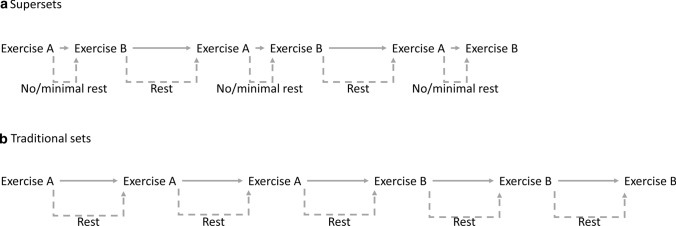
Lack of time is among the more commonly reported barriers for abstention from exercise programs. The aim of this review was to determine how strength training can be most effectively carried out in a time-efficient manner by critically evaluating research on acute training variables, advanced training techniques, and the need for warm-up and stretching. When programming strength training for optimum time-efficiency we recommend prioritizing bilateral, multi-joint exercises that include full dynamic movements (i.e. both eccentric and concentric muscle actions), and to perform a minimum of one leg pressing exercise (e.g. squats), one upper-body pulling exercise (e.g. pull-up) and one upper-body pushing exercise (e.g. bench press). Exercises can be performed with machines and/or free weights based on training goals, availability, and personal preferences. Weekly training volume is more important than training frequency and we recommend performing a minimum of 4 weekly sets per muscle group using a 6–15 RM loading range (15–40 repetitions can be used if training is performed to volitional failure). Advanced training techniques, such as supersets, drop sets and rest-pause training roughly halves training time compared to traditional training, while maintaining training volume. However, these methods are probably better at inducing hypertrophy than muscular strength, and more research is needed on longitudinal training effects. Finally, we advise restricting the warm-up to exercise-specific warm-ups, and only prioritize stretching if the goal of training is to increase flexibility. This review shows how acute training variables can be manipulated, and how specific training techniques can be used to optimize the training response: time ratio in regard to improvements in strength and hypertrophy. Graphic Abstract:
Overview
The claims and statistics of this paper haven’t been checked yet.
Free: it reads the open-access text and checks the first 5 claims that cite a source we can check. Create a free account to check every claim.
Integrity signals
Registry
Cites
Statistics
Figures
Verification
Claims the paper makes
The claims and statistics of this paper haven’t been checked yet.
Free: it reads the open-access text and checks the first 5 claims that cite a source we can check. Create a free account to check every claim.
Claims other papers make about this one
Each is checked against this paper’s own text: does it say what the citing paper says it does?
The source backs part of the claim, not all of it — or backs it for a different population, condition or comparison.
In the citing paper
“One multi-joint exercise compared to various single-joint exercises (with the same set and repetition range compared to the multi-joint exercise) can increase muscle strength and power to an even greater extent [38, 115–117].”
From Minimalist Training: Is Lower Dosage or Intensity Resistance Training Effective to Improve Physical Fitness? A Narrative Review (2024) · cites this paper as [38]
Experimental — accuracy not yet measuredThe cited source says what the claim attributes to it.
In the citing paper
“Other advanced RT routines such as drop sets and rest-pause sets can also decrease training time, but may be more effective for inducing greater hypertrophy than strength [38], while the increased intensity and discomfort would probably discourage the reluctant RT individual.”
From Minimalist Training: Is Lower Dosage or Intensity Resistance Training Effective to Improve Physical Fitness? A Narrative Review (2024) · cites this paper as [38]
The cited source says what the claim attributes to it.
In the citing paper
“Consequently, it is suggested that multi-joint exercises can be considered as more time efficient by reducing the overall number of exercises (i.e., less training time with similar results) [38, 120].”
From Minimalist Training: Is Lower Dosage or Intensity Resistance Training Effective to Improve Physical Fitness? A Narrative Review (2024) · cites this paper as [38]
Self-check
Percentages, sums and reported differences re-computed from the paper’s own numbers.
The self-check needs the paper’s full text.
Citations
Cites
Garber, C. E., Blissmer, B., Deschenes, M. R., Franklin, B. A., Lamonte, M. J., Lee, I.-M., Nieman, D. C., & Swain, D. P. (2011) · Medicine & Science in Sports & Exercise · doi:10.1249/mss.0b013e318213fefb · Cited by 9,319 · cited 3×
“A typical strength and hypertrophy program for untrained or intermediately trained healthy adults involves training all major muscle groups with 2–4 sets of 8–10 exercises for 3–12 repetitions with 2–5 min rest between sets, carried out 2–4 times per week [1, 8].”
BackgroundGuthold, R., Stevens, G. A., Riley, L. M., & Bull, F. C. (2018) · The Lancet Global Health · doi:10.1016/s2214-109x(18)30357-7 · Cited by 4,819 · cited 1×
“However, a majority of people refrain from performing strength training and other forms of exercise, and as much as a quarter of the world’s population are at risk for developing health-related problems and diseases linked to inactivity [4].”
BackgroundProgression Models in Resistance Training for Healthy Adults
(2009) · Medicine & Science in Sports & Exercise · doi:10.1249/mss.0b013e3181915670 · Cited by 4,332
Progression Models in Resistance Training for Healthy Adults
(2002) · Medicine and Science in Sports and Exercise · doi:10.1097/00005768-200202000-00027 · Cited by 2,979
Williams, M. A., Haskell, W. L., Ades, P. A., Amsterdam, E. A., Bittner, V., Franklin, B. A., Gulanick, M., Laing, S. T., & Stewart, K. J. (2007) · Circulation · doi:10.1161/circulationaha.107.185214 · Cited by 1,211
The importance of muscular strength: Training considerations
Suchomel, T. J., Nimphius, S., Bellon, C. R., & Stone, M. H. (2018) · Sports Medicine · doi:10.1007/s40279-018-0862-z · Cited by 940 · cited 4×
“This advice is reflected in recent reviews, where it was concluded that rest intervals should vary from 2–5 min depending on whether the goal is hypertrophy or strength and power [41].”
BackgroundInfluentialSchoenfeld, B. J., Grgic, J., Ogborn, D., & Krieger, J. W. (2017) · Journal of Strength and Conditioning Research · doi:10.1519/jsc.0000000000002200 · Cited by 851 · cited 2×
“Furthermore, although the use of heavyloads was superior for inducing strength gains, considerable strength increases were shown for low-load training as well (increases in 1RM of 35% and 28%, respectively) [25].”
BackgroundSelf-citationSchoenfeld, B. J., Ogborn, D., & Krieger, J. W. (2017) · Journal of Sports Sciences · doi:10.1080/02640414.2016.1210197 · Cited by 671 · cited 1×
“stratified hypertrophic gains across the pooled literature for < 5 weekly sets, 5–9 weekly sets, and 10 + weekly sets, reporting increases of ~ 5%, ~ 7%, and ~ 10%, respectively [23].”
BackgroundSelf-citationEssentials of strength training and conditioning
Haff, G. G., & Triplett, N. T. (2016) · Edith Cowan University Research Online (Edith Cowan University) · Cited by 566
Bird, S. P., Tarpenning, K. M., & Marino, F. E. (2005) · Sports Medicine · doi:10.2165/00007256-200535100-00002 · Cited by 533 · cited 4×
“A traditional belief has been that adaptations following strength training are load dependent, with heavy loads, moderate loads and low loads used for increasing maximum strength, hypertrophy and muscular endurance, respectively [9].”
BackgroundInfluential
Research works printed but not linked: 2
- WHO guidelines approved by the guidelines review committee. Global recommendations on physical activity for health. Geneva: World Health Organization. Copyright (c) World Health Organization 2010.; 2010.
- Carpinelli R A critical analysis of the strength and conditioning association`s opinion that free weights are superior to machines for increasing muscular strength and power Med Sport Pract 2017 18 21 39
Cited by
Cormier, P., Freitas, T. T., Loturco, I., Turner, A., Virgile, A., Haff, G. G., Blazevich, A. J., Agar-Newman, D., Henneberry, M., Baker, D. G., et al. (2022) · Sports Medicine · doi:10.1007/s40279-022-01715-x · Cited by 92
Nuzzo, J. L., Pinto, M. D., Kirk, B. J. C., & Nosaka, K. (2024) · Sports Medicine · doi:10.1007/s40279-024-02009-0 · Cited by 56
Isenmann, E., Kaluza, D., Havers, T., Elbeshausen, A., Geisler, S., Hofmann, K., Flenker, U., Diel, P. R., & Gavanda, S. (2023) · BMC Women s Health · doi:10.1186/s12905-023-02671-y · Cited by 58
“These findings corroborated observations from previous studies based on younger participants [37, 51, 52].”
BackgroundResultBarrea, L., Caprio, M., Camajani, E., Verde, L., Perrini, S., Cignarelli, A., Prodam, F., Gambineri, A., Isidori, A. M., Colao, A., et al. (2024) · Journal of Endocrinological Investigation · doi:10.1007/s40618-023-02258-2 · Cited by 54
Marques, D. L., Neiva, H. P., Marinho, D. A., & Marques, M. C. (2022) · Sports Medicine · doi:10.1007/s40279-022-01769-x · Cited by 55
Jacinto, M., Oliveira, R. F. S., Brito, J. P., Martins, A. D., Matos, R. M. N., & Ferreira, J. P. (2021) · Sports · doi:10.3390/sports9090125 · Cited by 51
Behm, D. G., Granacher, U., Warneke, K., Aragão-Santos, J. C., Da Silva-Grigoletto, M. E., & Konrad, A. (2024) · Sports Medicine · doi:10.1007/s40279-023-01949-3 · Cited by 45
“Other advanced RT routines such as drop sets and rest-pause sets can also decrease training time, but may be more effective for inducing greater hypertrophy than strength [38], while the increased intensity and discomfort would probably discourage the reluctant RT individual.”
BackgroundResultReljic, D., Dieterich, W., Herrmann, H. J., Neurath, M. F., & Zopf, Y. (2022) · Nutrients · doi:10.3390/nu14101996 · Cited by 52
“However, research reports, including a recent study from our group [39], have documented that single-set RT (1-RT) protocols may (at least initially) evoke similar health benefits as multiple-set RT programs in previously sedentary populations and various clinical cohorts [30,40,41].”
BackgroundMethodResultMelo, G. L. R., Neto, I. V. D. S., da Fonseca, E. F., Stone, W. J., & Nascimento, D. D. C. (2022) · Frontiers in Physiology · doi:10.3389/fphys.2022.948439 · Cited by 41
“In most studies, exercise on machines was chosen because it guides the movement and is safer in the initial phase of training (Weber and French, 1988; Shields et al., 2008; Shields and Taylor, 2010; Cowley et al., 2011; Rosety-Rodriguez et al., 2013; Shields et al., 2013; Fornieles et al., 2014; Seron et al., 2014; Se…”
BackgroundDynamic and Static Workout of In Vitro Skeletal Muscle Tissue through a Weight Training Device
Jo, B., Motoi, K., Morimoto, Y., & Takeuchi, S. (2024) · Advanced Healthcare Materials · doi:10.1002/adhm.202401844 · Cited by 33
Deng, N., Soh, K. G., Abdullah, B., Huang, D., Sun, H., & Xiao, W. (2023) · Frontiers in Physiology · doi:10.3389/fphys.2023.1234114 · Cited by 40
Haugen, M. E., Vårvik, F. T., Larsen, S., Haugen, A. S., van den Tillaar, R., & Bjørnsen, T. (2023) · BMC Sports Science, Medicine and Rehabilitation · doi:10.1186/s13102-023-00713-4 · Cited by 32
“Therefore, free-weight exercises are often suggested to be more “functional” than machine-based exercises [1] with a better transfer to improvements in daily physical function [11].”
BackgroundCuthbert, M., Haff, G. G., McMahon, J. J., Evans, M., & Comfort, P. (2023) · Strength and conditioning journal · doi:10.1519/ssc.0000000000000786 · Cited by 39
Zhang, X., Weakley, J. J. S., Li, H., Li, Z., & García‐Ramos, A. (2025) · Sports Medicine · doi:10.1007/s40279-025-02176-8 · Cited by 28
“However, this approach requires substantial time to be spent resting between sets and exercises [21–23].”
Faghy, M. A., Duncan, R. F., Hume, E., Gough, L. A., Roscoe, C. M. P., Laddu, D., Arena, R. A., Ashton, R. E. M., & Dalton, C. (2024) · Progress in Cardiovascular Diseases · doi:10.1016/j.pcad.2024.03.003 · Cited by 28
Effects of Drop Sets on Skeletal Muscle Hypertrophy: A Systematic Review and Meta-analysis
Sødal, L. K., Kristiansen, E. L., Larsen, S., & van den Tillaar, R. (2023) · Sports Medicine - Open · doi:10.1186/s40798-023-00620-5 · Cited by 28
“When including a warm-up and stretching, training traditional strength training often lasts for over an hour in length per training session [3].”
BackgroundMethodInfluentialČurović, I. (2025) · Frontiers in Physiology · doi:10.3389/fphys.2025.1549609 · Cited by 26
A Comparison of Affective Responses Between Time Efficient and Traditional Resistance Training
Andersen, V. S., Fimland, M. S., Iversen, V. M., Pedersen, H., Balberg, K., Gåsvær, M., Rise, K., Solstad, T. E. J., Stien, N., & Sæterbakken, A. H. (2022) · Frontiers in Psychology · doi:10.3389/fpsyg.2022.912368 · Cited by 25
Self-citationHernández‐Belmonte, A., Buendía‐Romero, Á., Pallarés, J. G., & Martínez-Cava, A. (2023) · The Journal of Strength and Conditioning Research · doi:10.1519/jsc.0000000000004480 · Cited by 24
“The free-weight variant is usually trained because of its versatility, efficiency, and similarity with real-life and sport-specific movements (23), whereas the use of machine-based exercises is supported by the high safety, simplicity, and stability of this modality (13).”
BackgroundBell, L., Strafford, B. W., Coleman, M., Androulakis‐Korakakis, P., & Nolan, D. (2023) · Sports Medicine - Open · doi:10.1186/s40798-023-00633-0 · Cited by 24
“Previous literature has shown that undertaking extended periods of high-volume resistance exercise training can result in NFOR [4] and that integrating short-term periods of low training volume can still be effective in maintaining or promoting meaningful increases in muscular strength and hypertrophy, even in resista…”
BackgroundBays, H. E., Gonsahn-Bollie, S., Younglove, C., & Wharton, S. (2022) · Obesity Pillars · doi:10.1016/j.obpill.2022.100044 · Cited by 24
Bersiner, K., Park, S., Schaaf, K., Yang, W., Theis, C., Jacko, D., & Gehlert, S. (2023) · Physical Activity and Nutrition · doi:10.20463/pan.2023.0021 · Cited by 23
Posnakidis, G., Aphamis, G., Giannaki, C. D., Mougios, V., & Bogdanis, G. C. (2022) · Sports · doi:10.3390/sports10120207 · Cited by 19
“, 6–15 RM) can result in significant muscle and strength gains [14].”
BackgroundNuzzo, J. L., Pinto, M. D., & Nosaka, K. (2023) · European Journal of Applied Physiology · doi:10.1007/s00421-023-05157-9 · Cited by 20
“Thus, CARE technology has potential to facilitate drop setting as a time-efficient way to complete resistance exercise (Iversen et al. 2021; Ozaki et al. 2020; Schoenfeld and Grgic 2018).”
BackgroundInfluentialAlsirhani, A. A., Muaidi, Q. I., Nuhmani, S., Thorborg, K., Husain, M. A., & Attar, W. S. A. A. (2024) · The Physician and Sportsmedicine · doi:10.1080/00913847.2024.2321958 · Cited by 20
“This eight-week program with bi-weekly sessions is based on literature that supports this duration for significant muscle adaptation [32], and the frequency is in line with guidelines that recommend an optimal balance between training stimulus and recovery [33,34].”
Core Muscle Activation With Foam Rolling and Static Planks
Zahiri, A., Alizadeh, S., Daneshjoo, A., Pike, N., Konrad, A., & Behm, D. G. (2022) · Frontiers in Physiology · doi:10.3389/fphys.2022.852094 · Cited by 17
Nuzzo, J. L., Pinto, M. D., & Nosaka, K. (2023) · Scandinavian Journal of Medicine and Science in Sports · doi:10.1111/sms.14330 · Cited by 16
Nuzzo, J. L., Pinto, M. D., & Nosaka, K. (2023) · Sports Medicine · doi:10.1007/s40279-023-01842-z · Cited by 20
Bonder, I. J., & Shim, A. (2022) · Strength and conditioning journal · doi:10.1519/ssc.0000000000000741 · Cited by 16
Louis, J. B., Bennett, S. E., Owens, D. J., Tiollier, E., Brocherie, F., Carneiro, M. A. S., Nunes, P. R. P., Costa, B. D. D. V., Castro-e-Souza, P., Lima, L., et al. (2022) · Journal of Applied Physiology · doi:10.1152/japplphysiol.00613.2022 · Cited by 14
Reljic, D., Hermann, H. J., Dieterich, W., Neurath, M. F., & Zopf, Y. (2025) · Gut Microbes · doi:10.1080/19490976.2025.2579354 · Cited by 16
“These time-efficient exercise approaches, such as low-volume high-intensity interval training (LOW-HIIT) 25 or single-set resistance training (1-RT), 26 have gained increasing attention in both research and clinical contexts.”
HERMANN, T., MOHAN, A. E., ENES, A., SAPUPPO, M., PIÑERO, A., ZAMANZADEH, A., ROBERTS, M., COLEMAN, M., KORAKAKIS, P. A., WOLF, M., et al. (2025) · Medicine & Science in Sports & Exercise · doi:10.1249/mss.0000000000003728 · Cited by 12
Self-citationReljic, D., Koller, A., Herrmann, H. J., Ekici, A. B., Neurath, M. F., & Zopf, Y. (2023) · Antioxidants · doi:10.3390/antiox12101847 · Cited by 13
Nuzzo, J. L., & Nosaka, K. (2022) · Sports Medicine · doi:10.1007/s40279-022-01661-8 · Cited by 14
“Such an exercise would be appropriate for time-efficient, minimal effective dose workouts [20].”
BackgroundLiu, P., Han, Y., Lu, Y., & Gao, Z. (2024) · Frontiers in Physiology · doi:10.3389/fphys.2024.1424216 · Cited by 12
Latt, C. M. L., Alldredge, C. T., Williams, S. E., Vinson, M. L., Moris, J. M., & Elkins, G. R. (2024) · International Journal of Clinical and Experimental Hypnosis · doi:10.1080/00207144.2024.2346609 · Cited by 10
“Every training session consisted of three compound movements: a squat variation, a pressing variation, and a deadlift variation as suggested by Iversen et al. (2021) for the purpose of time-efficiency and improving strength.”
BackgroundIversen, V. M., Eide, V. B., Unhjem, B. J., & Fimland, M. S. (2024) · The Journal of Strength and Conditioning Research · doi:10.1519/jsc.0000000000004819 · Cited by 10
“That is, they did not include a complete workout using more metabolically taxing multiple joint resistance exercises, as recommended by the ACSM (1) and a recent review (9).”
InfluentialSelf-citationChen, Z., Zhang, X., & García‐Ramos, A. (2024) · Journal of Human Kinetics · doi:10.5114/jhk/193975 · Cited by 10
“…2-point method could be more consistent with resistance training practices, as typical resistance training sessions do not commence with a prolonged warm-up protocol consisting of six incremental loads lifted at maximal intended concentric velocity (Iversen et al., 2021; Tsoukos et al., 2023).”
Reljic, D., Herrmann, H. J., Neurath, M. F., & Zopf, Y. (2025) · Nutrients · doi:10.3390/nu17030561 · Cited by 11
Şentürk, D., Akyıldız, Z., Janicijevic, D. N., & García‐Ramos, A. (2024) · The Journal of Strength and Conditioning Research · doi:10.1519/jsc.0000000000005037 · Cited by 10
“Finally, recognizing the time constraints faced by both athletic and nonathletic individuals participating in RT programs (17), future studies should investigate whether L-V relationships derived from the 2-point method (using only 2 loads) remain sufficiently sensitive in detecting fatigue induced…”
Pedersen, H., Sæterbakken, A. H., Fimland, M. S., Iversen, V. M., Schoenfeld, B. J., Stien, N., & Andersen, V. S. (2022) · Frontiers in Psychology · doi:10.3389/fpsyg.2022.1010596 · Cited by 10
“Thus, from a time-efficiency point of view, and in support of previous findings (Iversen et al., 2021), people should choose between performing one long or two shorter sessions in 1 day depending on what suits their individual calendar and preferences.”
ResultSelf-citationKojić, F., Mandić, D., & Đurić, S. (2025) · Frontiers in Physiology · doi:10.3389/fphys.2024.1531926 · Cited by 11
Enes, A. A. N., Oneda, G., Leonel, D. F., Ramos, R. A., Kvas-Cabral, V. C., Bernardo, M. F., Escalante, G., & de Souza, T. P. (2023) · Perceptual and Motor Skills · doi:10.1177/00315125231176729 · Cited by 10
“Both drop-set (DS) training and descending pyramid (DP) training are popular ResisT methods that are designed to elicit distinct training effects in a time-efficient manner (Iversen et al., 2021).”
BackgroundDu, Y., Peng, R., Wan, X., Zhang, C., Guo, Y., Chang, J., Feng, H., & Cao, Z. (2024) · Public Health Nursing · doi:10.1111/phn.13495 · Cited by 9
“Lack of time is a major obstacle to dropping out of their exercise programs (Iversen et al. 2021).”
Carpenter, S. L., Helms, E. R., Pendakur, R. C., Hibbert, J. E., & Schubert, M. M. (2025) · European Journal of Sport Science · doi:10.1002/ejsc.12298 · Cited by 8
Jiménez-Morcillo, J., Rodríguez-Besteiro, S., & Clemente‐Suárez, V. J. (2024) · Behavioral Sciences · doi:10.3390/bs14040267 · Cited by 10
“The previous literature and studies confirm our results [41–43]; athletes who train at a lower intensity spend less time on their training sessions.”
ResultRehabilitating Soldiers for Load Carriage Tasks: An International Perspective
Orr, R. M., Knapik, J. J., Rodgers, R., Cassidy, R. P., Rousseau, J., Tiggelen, D. V., & Pope, R. (2025) · International Journal of Environmental Research and Public Health · doi:10.3390/ijerph22081286 · Cited by 7
“Likewise, if time is limited, training for strength and hypertrophy could be facilitated with a repetition range of 6–15 RM to a total of 4 sets per week for each major muscle group preferably using compound bilateral movements [125].”
Tendencias iberoamericanas del fitness para 2025: un estudio comparativo regional
Palos, J. J., Valcarce-Torrente, M., Amaral, P. C., Franco, S. C. A., Santos‐Rocha, R., Ramalho, F., Simões, V., Vieira, I., Ramos, L., Chávez, L. F. J. G., et al. (2025) · Retos · doi:10.47197/retos.v71.116451 · Cited by 7
Resistance Training with Blood Flow Restriction and Ocular Health: A Brief Review
Krzysztofik, M., Zygadło, D., Trybek, P., Jarosz, J., Zając, A., Rolnick, N. D., & Wilk, M. (2022) · Journal of Clinical Medicine · doi:10.3390/jcm11164881 · Cited by 7
“However, determining the appropriate training intensity and maintaining progression over time, as well as achieving high involvement of particular lower body muscles are more challenging with these forms [8].”
BackgroundEffect of Plyometric Training and Body Weight Training on Volleyball Player's Leg Muscle Power
Maliki, O., Suherman, W. S., Prasetyo, Y., Pradipta, G. D., Yudhistira, D., Paryadi, P., Dillah, W. U., & Wibisono, R. E. (2025) · International journal of human movement and sports sciences · doi:10.13189/saj.2025.130111 · Cited by 6
Takeuchi, K., Inoue, H., Fujiwara, M., Shimizu, T., Nagai, C., Mizuno, K., & Nakamura, M. (2025) · Frontiers in Sports and Active Living · doi:10.3389/fspor.2024.1483972 · Cited by 6
Hooshmandi, Z., Daryanoosh, F., Hekmatikar, A. H. A., & Daud, D. M. A. (2023) · Expert Review of Endocrinology & Metabolism · doi:10.1080/17446651.2023.2294091 · Cited by 7
“In line with the present study, Iverson et al. (2021) [37] stated that the period reducing the training volume can maintain the adaptations created in the older.”
BackgroundResultNew Trend of Physical Activity and Exercise for Health Promotion and Functional Ability
Park, W., & Park, H. (2022) · International Journal of Environmental Research and Public Health · doi:10.3390/ijerph19137939 · Cited by 6
“After becoming used to these training methods to some extent, the exercise time increases and the rest time shortens to increase the amount of exercise and interval intensity [43].”
MethodAmdi, C. H., Spence, A., Helms, E. R., & McGuigan, M. R. (2025) · The Journal of Strength and Conditioning Research · doi:10.1519/jsc.0000000000005261 · Cited by 5
A Strong Approach for Overcoming the FoRE: Fear of Resistance Exercise
Faigenbaum, A. D., Kamis, D., & Rebullido, T. R. (2024) · ACSMʼs Health & Fitness Journal · doi:10.1249/fit.0000000000000958 · Cited by 6
“When designing RE programs to optimize time efficiency, prioritize multijoint, dynamic movements that are associated with activities of daily living and involve as many muscle groups as possible (18,38).”
BackgroundWang, P., Tadeo, X., Chew, H. S. J., Sapanel, Y., Ong, Y. H., Leung, N. Y. T., Chow, E. K., & Ho, D. (2024) · PNAS Nexus · doi:10.1093/pnasnexus/pgae214 · Cited by 6
“Fitness regimens consisting of either cardiovascular or strength training were designed to best suit subject N001 and more import-antly, to improve N001’s functional ability, cardio-metabolic health, and well-being (115, 116).”
BackgroundSymptom management and lifestyle interventions for people with fibromyalgia
Brown, C. E., & Nelson, A. R. (2024) · Advanced Exercise and Health Science · doi:10.1016/j.aehs.2024.09.004 · Cited by 5
Kim, J., Kim, E.-S., Kim, D., & Yoon, S. (2024) · Journal of Exercise Science & Fitness · doi:10.1016/j.jesf.2024.10.002 · Cited by 5
Kadota, M., Nakamura, M., Yoshida, R., & Takeuchi, K. (2024) · Frontiers in Sports and Active Living · doi:10.3389/fspor.2024.1497979 · Cited by 5
Kong, P. W., Kan, T. Y. W., Jamil, R. A. G. B. M., Teo, W., Pan, J. W., Halim, M. N. H. A., Maricar, H. K. A. B., & Hostler, D. P. (2022) · Frontiers in Bioengineering and Biotechnology · doi:10.3389/fbioe.2022.918315 · Cited by 6
“, squats, push-ups) that were included in both groups, which may have overshadowed other subtle differences (Iversen et al., 2021).”
BackgroundAlthobaiti, S., Jiménez‐Grande, D., Deane, J. A., & Falla, D. (2025) · Scientific Reports · doi:10.1038/s41598-025-93280-2 · Cited by 4
“These warm-up sets consisted of one set of 10 repetitions at 50% of the training load 107 , followed by two sets of resistance exercises with one-minute rest intervals 108 .”
Mang, Z. A., Beam, J. R., & Kravitz, L. R. (2025) · The Journal of Strength and Conditioning Research · doi:10.1519/jsc.0000000000005246 · Cited by 4
Mera, V. B. P., & Morán, G. X. H. (2026) · Ciencia y Educación · doi:10.5281/zenodo.20737662 · Cited by 4
Less time, same gains: Comparison of superset vs. traditional set training on muscular adaptations
Burke, R., Hermann, T. M., Piñero, A., Mohan, A., Augustin, F., Sapuppo, M., Coleman, M., Wolf, M., Korakakis, P. A., Swinton, P. A., et al. (2025) · Science & Sports · doi:10.1016/j.scispo.2025.07.011 · Cited by 6
Self-citationA Discussion of Exercise Programs Performed During Firefighter Training Academies
Mang, Z. A., Beam, J. R., & Martinez, A. H. (2023) · Strength and conditioning journal · doi:10.1519/ssc.0000000000000826 · Cited by 4
Althobaiti, S., Deane, J. A., & Falla, D. (2025) · BMC Musculoskeletal Disorders · doi:10.1186/s12891-025-08325-4 · Cited by 4
Carlson, L., Smith, D., & Fisher, J. P. (2021) · Sports Medicine · doi:10.1007/s40279-021-01591-x · Cited by 4
“[1] were not addressing an optimal approach to strength training for an athletic population.”
BackgroundResultInfluentialResistance Training is Medicine: Stay Active and Reap the Reward, Live in your Life!
Ernandini, E., & Mulyanaga, W. G. (2023) · IntechOpen eBooks · doi:10.5772/intechopen.109973 · Cited by 4
MacDonald, C., Bennekou, M., Nielsen, S. M., Junker, A. E., Biering‐Sørensen, T., Langberg, H., Christensen, R., Lieberman, D. E., Zachariae, C. O. C., & Pallisgaard, J. L. (2024) · Scandinavian Journal of Medicine and Science in Sports · doi:10.1111/sms.14770 · Cited by 4
“These strength sessions should target all major muscle groups, involving 8–10 exercises and 2–4 sets of 8–12 repetitions per exercise [54, 64–66].”
Myraunet, P. A., Sæterbakken, A. H., & Andersen, V. S. (2025) · Frontiers in Sports and Active Living · doi:10.3389/fspor.2025.1536747 · Cited by 3
Rodríguez-Rodríguez, S., Canet‐Vintró, M., López-de–Celis, C., Shen-Chen, Z., Caballero-Martínez, I., García-Ribell, E., & Rodríguez‐Sanz, J. (2025) · Journal of Functional Morphology and Kinesiology · doi:10.3390/jfmk10010060 · Cited by 3
“In this sense, new modalities have been investigated in recent years to reduce monotony, increase treatment efficacy, and improve performance [17].”
Evidenzbasiertes und individualisiertes Training für Schmerzpatient*innen
Zebisch, J., & Diemer, F. (2022) · Schmerz Therapie · doi:10.1055/a-1756-8998 · Cited by 2
Maximizing the efficiency of resistance training
Pawlina, M., Ziętara, K. J., Raksa, K., Nowakowska, K., & Lewkowicz, M. (2022) · Journal of Education Health and Sport · doi:10.12775/jehs.2022.12.07.002 · Cited by 3
“Wykazano także zależność zmniejszonej ilość powtórzeń wykonywanych podczas RT ze zmniejszeniem odczuwanego przez ćwiczącego dyskomfortu, umożliwiając indukcję odpowiedniego poziomu stresu metabolicznego w komórkach mięśniowych, niezbędnego do stymulacji ich hipertrofii [5].”
BackgroundInfluentialPeng, W., Qu, W., Lu, D., Sun, J., & Li, D. (2026) · Journal of Sports Science and Medicine · doi:10.52082/jssm.2026.195 · Cited by 2
Brummer, J., Herbolsheimer, F., & Köllner, M. G. (2026) · Sport Sciences for Health · doi:10.1007/s11332-026-01663-3 · Cited by 2
“Indeed, resistance bands can be a viable option for performing effective resistance training [29–32], further underscoring the potential of this cheap, versatile, portable, and easy-to-use type of equipment for undertaking MSAs.”
Rodrigues, M. Y., Takito, M. Y., Kafouri, G. A., Pires, R. S., Mello, F. G., Zare, R., Hernandez, S. V., Heinrich, K. M., & Franchini, É. (2026) · Sports · doi:10.3390/sports14030094 · Cited by 2
Tomschi, F., Meder, K., & Hilberg, T. (2026) · Journal of Back and Musculoskeletal Rehabilitation · doi:10.1177/10538127261448967 · Cited by 2
Staheli, N., Cowley, J. C., & Lawrence, M. M. (2024) · International journal of exercise science · doi:10.70252/qtxb6775 · Cited by 3
Peinado, P. J. B., & Sotillo, A. A. (2024) · IntechOpen eBooks · doi:10.5772/intechopen.1007051 · Cited by 2
Effects of 12 weeks of short-duration isometric strength training in university students
Santisteban, A. (2024) · European journal of human movement · doi:10.21134/eurjhm.2024.52.8 · Cited by 3
Acute Physiological and Perceptual Responses to Six Body-Weight Squat Exercise Variations
Santarém, D., Teixeira, A., Amaral, A., Sampaio, J. E., & Abrantes, C. G. (2025) · Sensors · doi:10.3390/s25072018 · Cited by 2
Bellissimo, G. F., Bailly, A. R., Bourbeau, K., Mermier, C. M., Campitelli, A., Berkemeier, Q., Specht, J. W., Smith, J. M., Ducharme, J. B., Stork, M., et al. (2025) · Frontiers in Physiology · doi:10.3389/fphys.2025.1527171 · Cited by 3
Managing Fatigue in Team Sports: A Brief Review of Concurrent Training Effects Within the Microcycle
Γραμμένου, Μ., & Nulty, C. D. (2025) · Strength and conditioning journal · doi:10.1519/ssc.0000000000000903 · Cited by 2
Ferreira, L., Júnior, M. B., Nagata, G. Y., Barroso, L. S. S., Fernandes, H. D. B., Souza-Gomes, A. F., de Miranda, A. S., & Nunes-Silva, A. (2023) · Research Square · doi:10.21203/rs.3.rs-3263741/v1 · Cited by 3
Harris, D. M., Thwaites, C. K., Callisaya, M. L., Blazé, R., & Morris, M. E. (2024) · medRxiv · doi:10.1101/2024.05.06.24306601 · Cited by 2
ABDOMINAL CORE MUSCLE STRENGTH TRAINING IN WEIGHTLIFTERS
Bi, W., Zhao, Y., & Hui, Z. (2023) · Revista Brasileira de Medicina do Esporte · doi:10.1590/1517-8692202329012022_0594 · Cited by 1
Quadriceps Architectural Adaptations in Team Sports Players: A Meta-analysis
Pecci, J., Sañudo, B., Sánchez-Trigo, H., Reverte-Pagola, G., & Pareja-Galeano, H. (2024) · International Journal of Sports Medicine · doi:10.1055/a-2369-5900 · Cited by 2
“It has been suggested that weekly training volume is more important than frequency [70], so strength and”
Madarsa, N. I., Shalan, N. A. A. M., Nadzalan, A. M., & Mohamad, N. I. (2024) · Jurnal Pendidikan Bitara UPSI · doi:10.37134/bitara.vol17.sp2.12.2024 · Cited by 1
Pinto, M. D., Ughini, C. C., Nunes, J. P., Cadore, E. L., & Pinto, R. S. (2025) · The Journal of Strength and Conditioning Research · doi:10.1519/jsc.0000000000005045 · Cited by 1
“…one single-joint exercise, the pec deck, and therefore, our volume counting was 1:1 ratio (39), so we specifically examined the effect of 1S vs. 3S (2S vs. 6S per week), which falls within the “ minimal dose ” concept (20,29) and the lowest volume recommended by professional organizations (17,37).”
InfluentialNazir, A., Heryaman, H., Juli, C., Ugusman, A., Martha, J. W., Moeliono, M. A., & Atik, N. (2025) · Journal of Multidisciplinary Healthcare · doi:10.2147/jmdh.s516441 · Cited by 1
“16,22 The Rationale of RE in CVD Patients The rationale for supporting RE as an adjunct to aerobic exercise is that RE can improve CRF in addition to improving muscular fitness.”
Time-Efficient Resistance Training: Bridging Science and Practical Implementation
Gonzalez, A. M., Harhash, T. S., Krawczyk, M. P., & Wang, D. (2025) · Journal of Fitness Wellness and Human Performance · doi:10.70834/jfwhp-25-0002 · Cited by 1
Naser, I. A., Adheem, R. N. A., Ali, A. K., Al-Araji, W. H. M., Khadir, H. A., Hadi, A. H., & Abuzaid, S. M. (2024) · International Sports Science Alexandria Journal · doi:10.21608/isalexu.2024.434099 · Cited by 1
Martins, T. B., Costella, T., Miguel, A. C., Fassicollo, C. E., Okubo, R., do Nascimento, I. B., Mochizuki, L., & Santos, G. M. (2025) · Journal of Bodywork and Movement Therapies · doi:10.1016/j.jbmt.2025.07.005 · Cited by 1
The Effect of Warm-Up on Muscle Strength and Body Temperature in Athletes with Disabilities
Prata, P. S., Aidar, F. J., Santos, T. P., Paz, Â. D. A., da Silva, S. L., Alves, R. C., Moreira, O. C., & Nikolaidis, P. Τ. (2025) · Biomechanics · doi:10.3390/biomechanics5040083 · Cited by 1
“Warm-ups utilizing PAPE involve submaximal or maximal loads followed by a specific rest period to enhance strength output [22–24].”
Havers, T., Wagner, N., Held, S., Geisler, S., & Wiewelhove, T. (2025) · European Journal of Sport Science · doi:10.1002/ejsc.70087 · Cited by 2
Universidad Estatal Península de Santa Elena, E., & Lozano, C. M. R. (2024) · Polo del Conocimiento · doi:10.23857/pc.v10i11.10745 · Cited by 1
Aprilo, I., Arfanda, P. E., Mappaompo, M. A., Hasanuddin, M. I., Nurulita, R. F., & Zakaria, A. (2025) · ETDC Indonesian Journal of Research and Educational Review · doi:10.51574/ijrer.v5i1.4196 · Cited by 1
Mitsui, R., 高璿凱, & Morimoto, Y. (2026) · Biofabrication · doi:10.1088/1758-5090/ae6c5e · Cited by 1
“Among various exercise modalities, resistance training using mechanical loads is considered one of the most practical methods for inducing muscle hypertrophy and functional improvement [3– 5].”
Brummer, J., Herbolsheimer, F., Fyfe, J. J., & Steindorf, K. (2026) · Frontiers in Public Health · doi:10.3389/fpubh.2026.1872337 · Cited by 1
“Various previous articles have explored time-efficient RT programs (12, 46–49).”
Lessa, R. (2026) · Sport Sciences for Health · doi:10.1007/s11332-026-01884-6 · Cited by 1
“Likewise, prioritizing multi-joint exercises and adjusting training load and volume according to individuals' perceived readiness may help maintain stimulus quality and long-term sustainability [12, 15, 43].”
Influential
Metadata
- Authors
- Iversen, V. M., Norum, M., Schoenfeld, B. J., & Fimland, M. S.
- Affiliations
- Norwegian University of Science and Technology (NO)
- Lehman College (US)
- Corresponding author
- Iversen, Vegard M.
- Venue
- Sports Medicine
- Published
- 2021-06-14
- Volume
- 51
- Issue
- 10
- Pages
- 2079-2095
- ISSN
- 0112-1642 (ISSN-L)
- 1179-2035
- PMC
- PMC8449772
- OpenAlex
- W3168884713
- Cited by
- 122
- References
- 108
- Citations by year
- 2026: 18 · 2025: 34 · 2024: 25 · 2023: 22 · 2022: 19 · 2021: 4
- FWCI
- 3.73
- Type
- journal article
- Language
- en
- Open access
- hybrid
- doi.org
- Licence
- cc-by
- creativecommons.org/licenses/by/4.0 (tdm)
- creativecommons.org/licenses/by/4.0 (vor)
- Locations
- Sports Medicine (publishedVersion, cc-by)
- Europe PMC (PubMed Central) (publishedVersion, other-oa)
- PubMed Central (publishedVersion, cc-by)
- PubMed (publishedVersion)
- Funders
- NTNU Norwegian University of Science and Technology
- Topics
- Health Sciences › Medicine › Orthopedics and Sports Medicine › Sports Performance and Training
- Health Sciences › Medicine › Physiology (medical) › Cardiovascular and exercise physiology
- Health Sciences › Nursing › Nutrition and Dietetics › Muscle metabolism and nutrition
- Keywords
- resistance training, hypertrophy, training duration, training volume, exercise frequency, leg press, pull-ups, bench press, free weights, supersets, warm-up, stretching, flexibility
- MeSH terms
- Humans, Hypertrophy, Exercise, Muscle, Skeletal, Muscle Strength, Resistance Training
About these checks
Registry, retraction, Cites and statistics results are computed, not judged, with one exception: a printed reference that no index lists is read once by a model before it counts as a citation error. Claims are extracted by a model and kept only when their quote appears verbatim in the text; each cited source is then checked, with a model’s help, for whether it says what the claim relies on. Those verdicts can be wrong — read the claim’s quote and the cited source before relying on one.
Statistics and arithmetic are recomputed, not judged.
Confidence bands are shown only for fields calibrated on our annotated test set. None is calibrated yet, so no band is shown.
What counts as a claim ›How we measure confidence ›How we check this ›
Are you an author, or do you see a problem with this page? Request a review
Data sources
Bibliographic data: Semantic Scholar, OpenAlex, Crossref.
Contains information from the Semantic Scholar Academic Graph Datasets, made available under the ODC Attribution License (ODC-BY 1.0).
Semantic Scholar’s data is described in: Kinney, R., et al. (2023). The Semantic Scholar Open Data Platform. arXiv:2301.10140.
