

The DOI matches its Crossref record; 145 of the 145 references it cites were found in a registry or an index.
Recommendations and Nutritional Considerations for Female Athletes: Health and Performance
Open accessAbstract
Optimal nutrition is an important aspect of an athlete’s preparation to achieve optimal health and performance. While general concepts about micro- and macronutrients and timing of food and fluids are addressed in sports science, rarely are the specific effects of women’s physiology on energy and fluid needs highly considered in research or clinical practice. Women differ from men not only in size, but in body composition and hormonal milieu, and also differ from one another. Their monthly hormonal cycles, with fluctuations in estrogen and progesterone, have varying effects on metabolism and fluid retention. Such cycles can change from month to month, can be suppressed with exogenous hormones, and may even be manipulated to capitalize on ideal timing for performance. But before such physiology can be manipulated, its relationship with nutrition and performance must be understood. This review will address general concepts regarding substrate metabolism in women versus men, common menstrual patterns of female athletes, nutrient and hydration needs during different phases of the menstrual cycle, and health and performance issues related to menstrual cycle disruption. We will discuss up-to-date recommendations for fueling female athletes, describe areas that require further exploration, and address methodological considerations to inform future work in this important area.
Overview
The claims and statistics of this paper haven’t been checked yet.
Run the check — free, no account needed. It reads the open-access text and checks the sources it cites.
Integrity signals
Registry
Cites
Statistics
Figures
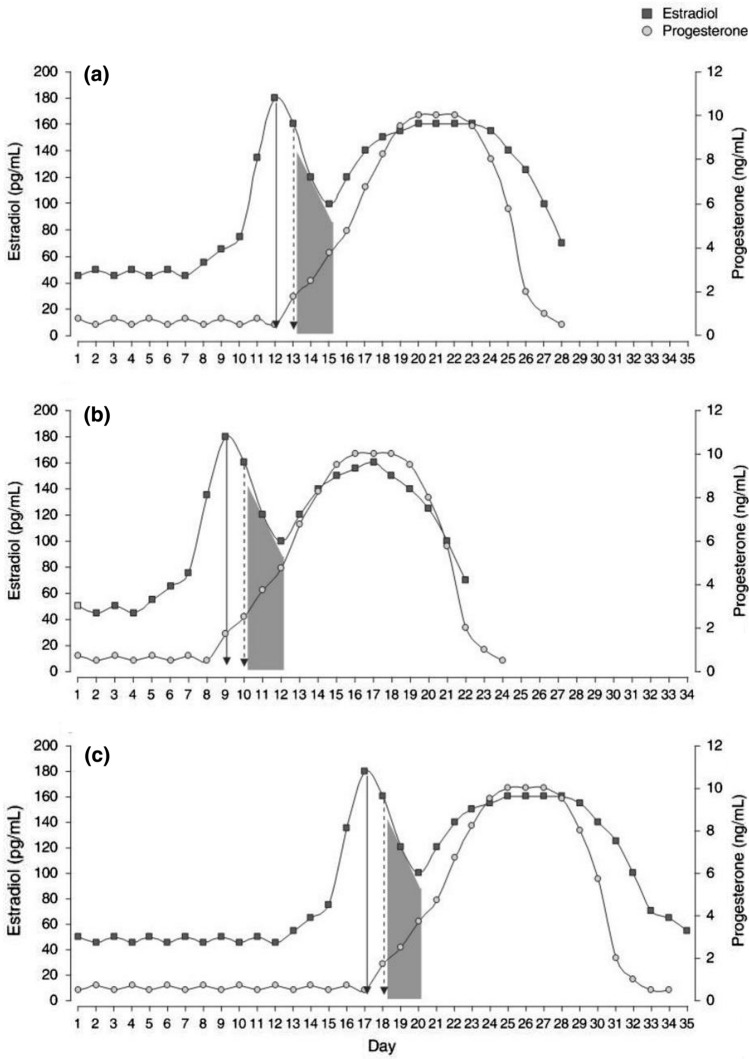
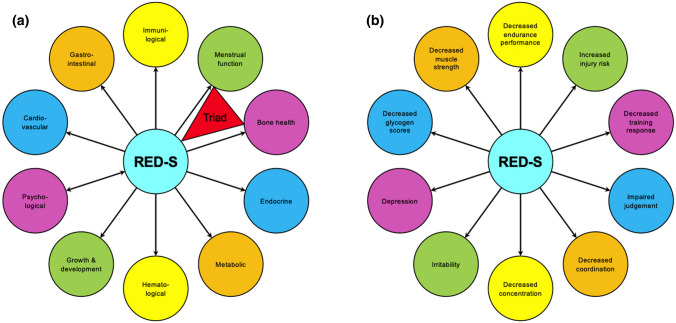
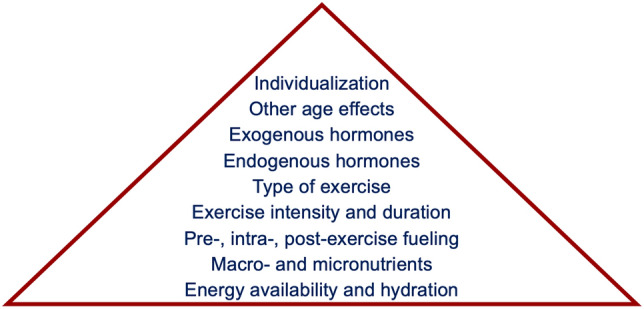
Verification
Claims the paper makes
The claims and statistics of this paper haven’t been checked yet.
Run the check — free, no account needed. It reads the open-access text and checks the sources it cites.
Claims other papers make about this one
Each is checked against this paper’s own text: does it say what the citing paper says it does?
The source backs part of the claim, not all of it — or backs it for a different population, condition or comparison.
In the citing paper
“To determine the EA, the calculation requires accurately measured FFM, EI and exercise EE of the athlete, in which errors of validity and reliability will undoubtedly occur [150].”
From International society of sports nutrition position stand: nutritional concerns of the female athlete (2023) · cites this paper as [150]
Experimental — accuracy not yet measuredThe source backs part of the claim, not all of it — or backs it for a different population, condition or comparison.
In the citing paper
“Established EA thresholds may not be appropriate for reducing the risk of LEA in aging women due to the changing ratios of estrogen and progesterone in perimenopause, the subsequent absence of estrogen and progesterone in menopause and the known biological impact on resting metabolic rate and body composition [150].”
From International society of sports nutrition position stand: nutritional concerns of the female athlete (2023) · cites this paper as [150]
Experimental — accuracy not yet measuredThe source backs part of the claim, not all of it — or backs it for a different population, condition or comparison.
In the citing paper
“Reduced CHO availability is disadvantageous to exercise performance due to the following pathways: (1) reduced muscle glycogen causes muscular fatigue and a drop in intensity (<60% VO2max), and (2) reduced circulating CHO (e.g., blood glucose) for central neural nourishment impairs cognition [5].”
From Considerations of Low Carbohydrate Availability (LCA) to Relative Energy Deficiency in Sport (RED-S) in Female Endurance Athletes: A Narrative Review (2023) · cites this paper as [5]
Experimental — accuracy not yet measuredThe source backs part of the claim, not all of it — or backs it for a different population, condition or comparison.
In the citing paper
“This is important to consider as it can significantly limit performance in exercise lasting < 90 min in duration [5].”
From Considerations of Low Carbohydrate Availability (LCA) to Relative Energy Deficiency in Sport (RED-S) in Female Endurance Athletes: A Narrative Review (2023) · cites this paper as [5]
Experimental — accuracy not yet measuredThe cited source says what the claim attributes to it.
In the citing paper
“the current acute recommendation for CHO intake for 4–6 h following a glycogen-depleting exercise session is ≥1.2 g CHO/kg BW/h [5].”
From Considerations of Low Carbohydrate Availability (LCA) to Relative Energy Deficiency in Sport (RED-S) in Female Endurance Athletes: A Narrative Review (2023) · cites this paper as [5]
The cited source says what the claim attributes to it.
In the citing paper
“Since glucose metabolized from muscle glycogen cannot enter systemic circulation, CHO availability in the muscles can be adequate while CHO availability systemically is low [5].”
From Considerations of Low Carbohydrate Availability (LCA) to Relative Energy Deficiency in Sport (RED-S) in Female Endurance Athletes: A Narrative Review (2023) · cites this paper as [5]
The cited source says what the claim attributes to it.
In the citing paper
“As estrogen is associated with decreased gluconeogenesis, reduced exogenous CHO intake can compound these unfavorable rates of gluconeogenesis [5].”
From Considerations of Low Carbohydrate Availability (LCA) to Relative Energy Deficiency in Sport (RED-S) in Female Endurance Athletes: A Narrative Review (2023) · cites this paper as [5]
The cited source says what the claim attributes to it.
In the citing paper
“There is a bi-directional association between iron deficiency and LEA.”
From Considerations of Low Carbohydrate Availability (LCA) to Relative Energy Deficiency in Sport (RED-S) in Female Endurance Athletes: A Narrative Review (2023) · cites this paper as [5]
The cited source says what the claim attributes to it.
In the citing paper
“Energy-deficient athletes are at risk for iron deficiency due to decreased dietary intake, impaired absorption, and foot strike hemolysis [5,54].”
From Considerations of Low Carbohydrate Availability (LCA) to Relative Energy Deficiency in Sport (RED-S) in Female Endurance Athletes: A Narrative Review (2023) · cites this paper as [5]
The cited source says what the claim attributes to it.
In the citing paper
“Reduced CHO availability is disadvantageous to exercise performance due to the following pathways: (1) reduced muscle glycogen causes muscular fatigue and a drop in intensity (<60% VO2max), and (2) reduced circulating CHO (e.g., blood glucose) for central neural nourishment impairs cognition [5].”
From Considerations of Low Carbohydrate Availability (LCA) to Relative Energy Deficiency in Sport (RED-S) in Female Endurance Athletes: A Narrative Review (2023) · cites this paper as [5]
The cited source says what the claim attributes to it.
In the citing paper
“Women oxidize less CHO and more fat at the same relative intensities of exercise compared to men [5].”
From Considerations of Low Carbohydrate Availability (LCA) to Relative Energy Deficiency in Sport (RED-S) in Female Endurance Athletes: A Narrative Review (2023) · cites this paper as [5]
The cited source says what the claim attributes to it.
In the citing paper
“Despite no current recommendations for CHO intake before activity specific to female athletes, it is suggested that consuming a high CHO snack (e.g., granola bar, dried fruit, pretzels, and/or fruit juice) 3–4 h before exercise can help mitigate the effects of reduced gluconeogenesis rates during the luteal phase and help protect against associated performance decrements [5].”
From Considerations of Low Carbohydrate Availability (LCA) to Relative Energy Deficiency in Sport (RED-S) in Female Endurance Athletes: A Narrative Review (2023) · cites this paper as [5]
The cited source says what the claim attributes to it.
In the citing paper
“Additionally, iron deficiency from decreased dietary intake can also promote energy deficiency by shifting ATP production away from oxidative phosphorylation [5,54].”
From Considerations of Low Carbohydrate Availability (LCA) to Relative Energy Deficiency in Sport (RED-S) in Female Endurance Athletes: A Narrative Review (2023) · cites this paper as [5]
The cited source says what the claim attributes to it.
In the citing paper
“Gluconeogenesis rates are higher in the follicular phase, compared to the luteal phase of the menstrual cycle, at exercise intensities > 50% of VO2max [5].”
From Considerations of Low Carbohydrate Availability (LCA) to Relative Energy Deficiency in Sport (RED-S) in Female Endurance Athletes: A Narrative Review (2023) · cites this paper as [5]
The cited source says what the claim attributes to it.
In the citing paper
“Reduced CHO availability is disadvantageous to exercise performance due to the following pathways: (1) reduced muscle glycogen causes muscular fatigue and a drop in intensity (<60% VO2max), and (2) reduced circulating CHO (e.g., blood glucose) for central neural nourishment impairs cognition [5].”
From Considerations of Low Carbohydrate Availability (LCA) to Relative Energy Deficiency in Sport (RED-S) in Female Endurance Athletes: A Narrative Review (2023) · cites this paper as [5]
The check wasn’t confident either way, so it gives no verdict — never disputed.
In the citing paper
“The current recommended amount of CHO for athletes is 55–75% of total calories [5,43].”
From Considerations of Low Carbohydrate Availability (LCA) to Relative Energy Deficiency in Sport (RED-S) in Female Endurance Athletes: A Narrative Review (2023) · cites this paper as [5]
Experimental — accuracy not yet measured
Self-check
Percentages, sums and reported differences re-computed from the paper’s own numbers.
The self-check needs the paper’s full text.
Citations
Cites
Trumbo, P., Schlicker, S., Yates, A. A., & Poos, M. (2002) · Journal of the American Dietetic Association · doi:10.1016/s0002-8223(02)90346-9 · Cited by 5,993
Dietary Reference Intakes for Calcium and Vitamin D
(2018) · American Academy of Pediatrics eBooks · doi:10.1542/9781610021494-part06-dietary_reference_int · Cited by 2,712
Dietary Reference Intakes for Calcium and Vitamin D
Institute of Medicine (2011) · National Academies Press eBooks · doi:10.17226/13050 · Cited by 2,597
ACSM Position Stand: Exercise and Fluid Replacement
Convertino, V. A., Armstrong, L. E., Coyle, E. F., Mack, G. W., Sawka, M. N., Senay, L. C., & Sherman, W. M. (1996) · Medicine & Science in Sports & Exercise · doi:10.1097/00005768-199610000-00045 · Cited by 1,977
Psychological Stress and Susceptibility to the Common Cold
Cohen, S., Tyrrell, D. A. J., & Smith, A. P. (1991) · New England Journal of Medicine · doi:10.1056/nejm199108293250903 · Cited by 1,712
(2007) · Medicine & Science in Sports & Exercise · doi:10.1249/mss.0b013e318149f111 · Cited by 1,554
Exercise and Fluid Replacement
(2007) · Medicine & Science in Sports & Exercise · doi:10.1249/mss.0b013e31802ca597 · Cited by 1,497
Macronutrients, P. O., Fiber, P. O. T. D. O. D., Nutrients, S. O. U. R. L. O., Intakes, S. O. I. A. U. O. D. R., Standing Committee on the Scientific Evaluation of Dietary Reference Intakes, Food and Nutrition Board, & Institute of Medicine (2005) · doi:10.17226/10490 · Cited by 1,482
Mountjoy, M., Sundgot-Borgen, J., Burke, L., Carter, S., Constantini, N., Lebrun, C., Meyer, N., Sherman, R., Steffen, K., Budgett, R., et al. (2014) · British Journal of Sports Medicine · doi:10.1136/bjsports-2014-093502 · Cited by 1,469
Thomas, D. T., Erdman, K. A., & Burke, L. M. (2016) · Journal of the Academy of Nutrition and Dietetics · doi:10.1016/j.jand.2015.12.006 · Cited by 1,359
Research works printed but not linked: 3
- Melin ATÅB, Skouby S, Faber J, Ritz C, Sjödin A, Sundgot-Borgen J. The LEAF questionnaire: a screening tool for the identification of female athletes at risk for the female athlete triad. Br J Sports Med. 2014;48:540–5. · DOI · Paper page
- Casanova R, Chaung A, Goepfert AR, Hueppchen NA, Weiss PM, Beckmann CR, et al. Beckmann and Ling’s obstetrics and gynecology. 8th ed. Philadelphia: Wolters Kluwer; 2019.
- Erdman J, Appel L. Dietary reference intake for water, potassium, sodium, chloride, and sulfate. Washington: Institute of Medicine Washington; 2005. p. 93–185.
Cited by
Sorted by citations
Martín-Rodríguez, A., Belinchón-deMiguel, P., Rubio-Zarapuz, A., Tornero-Aguilera, J. F., Martínez‐Guardado, I., Villanueva-Tobaldo, C. V., & Clemente‐Suárez, V. J. (2024) · Nutrients · doi:10.3390/nu16040571 · Cited by 130
Relative Energy Deficiency in Sport (REDs): Endocrine Manifestations, Pathophysiology and Treatments
Angelidi, A. M., Stefanakis, K., Chou, S. H.-H., Valenzuela‐Vallejo, L., Δίπλα, Κ., Boutari, C., Ntoskas, K. T., Tokmakidis, P., Kokkinos, A. D., Goulis, D. G., et al. (2024) · Endocrine Reviews · doi:10.1210/endrev/bnae011 · Cited by 101
International society of sports nutrition position stand: nutritional concerns of the female athlete
Sims, S. T., Kerksick, C. M., Smith-Ryan, A. E., Janse de Jonge, X. A. K., Hirsch, K. R., Arent, S. M., Hewlings, S. J., Kleiner, S. M., Bustillo, E., Tartar, J. L., et al. (2023) · Journal of the International Society of Sports Nutrition · doi:10.1080/15502783.2023.2204066 · Cited by 129
“As such, reducing the discrepancy between training energy expenditure and energy intake, with careful attention to nutrient timing, should be considered [151].”
BackgroundGiraldo-Vallejo, J. E., Cardona-Guzmán, M. Á., Rodríguez-Alcivar, E. J., Kočí, J., Petro, J. L., Kreider, R. B., Cannataro, R., & Bonilla, D. A. (2023) · Nutrients · doi:10.3390/nu15040819 · Cited by 67
Female Athlete Triad and Relative Energy Deficiency in Sport (REDs): Nutritional Management
Grabia, M., Perkowski, J., Socha, K., & Markiewicz‐Żukowska, R. (2024) · Nutrients · doi:10.3390/nu16030359 · Cited by 72
Metadata
- Authors
- Holtzman, B., & Ackerman, K. E.
- Affiliations
- Boston Children's Hospital (US)
- Corresponding author
- Ackerman, Kathryn E.
- Venue
- Sports Medicine
- Published
- 2021-09
- Volume
- 51
- Issue
- S1
- Pages
- 43-57
- ISSN
- 0112-1642 (ISSN-L)
- 1179-2035
- PMC
- PMC8566643
- OpenAlex
- W3201155639
- Cited by
- 111
- References
- 145
- Citations by year
- 2026: 20 · 2025: 31 · 2024: 35 · 2023: 15 · 2022: 9 · 2021: 1
- FWCI
- 3.20
- Type
- journal article
- Language
- en
- Open access
- hybrid
- doi.org
- Licence
- Locations
- Sports Medicine (publishedVersion, cc-by)
- PubMed Central (publishedVersion, cc-by)
- PubMed (publishedVersion)
- Funders
- Gatorade Sports Science Institute
- Topics
- Health Sciences › Medicine › Orthopedics and Sports Medicine › Sports Performance and Training
- Health Sciences › Nursing › Nutrition and Dietetics › Muscle metabolism and nutrition
- Health Sciences › Medicine › Public Health, Environmental and Occupational Health › Menstrual Health and Disorders
- Keywords
- female athletes, female athlete triad, menstrual cycle, menstrual cycle disruption, hydration, macronutrient requirements, estrogen and progesterone, body composition, menstrual suppression, sports nutrition, athletic performance
- MeSH terms
- Female, Humans, Menstrual Cycle, Sports, Exercise, Athletes, Sports Nutritional Physiological Phenomena
About these checks
Registry, retraction, Cites and statistics results are computed, not judged, with one exception: a printed reference that no index lists is read once by a model before it counts as a citation error. Claims are extracted by a model and kept only when their quote appears verbatim in the text; each cited source is then checked, with a model’s help, for whether it says what the claim relies on. Those verdicts can be wrong — read the claim’s quote and the cited source before relying on one.
Statistics and arithmetic are recomputed, not judged.
Confidence bands are shown only for fields calibrated on our annotated test set. None is calibrated yet, so no band is shown.
What counts as a claim ›How we measure confidence ›How we check this ›
Are you an author, or do you see a problem with this page? Request a review
