

Exercise in the Management of Metabolic-Associated Fatty Liver Disease (MAFLD) in Adults: A Position Statement from Exercise and Sport Science Australia
Open accessThe DOI matches its Crossref record; 184 of the 184 references it cites were found in a registry or an index.
Abstract
Metabolic-associated fatty liver disease (MAFLD) is the most prevalent chronic liver disease worldwide, affecting 25% of people globally and up to 80% of people with obesity. MAFLD is characterised by fat accumulation in the liver (hepatic steatosis) with varying degrees of inflammation and fibrosis. MAFLD is strongly linked with cardiometabolic disease and lifestyle-related cancers, in addition to heightened liver-related morbidity and mortality. This position statement examines evidence for exercise in the management of MAFLD and describes the role of the exercise professional in the context of the multi-disciplinary care team. The purpose of these guidelines is to equip the exercise professional with a broad understanding of the pathophysiological underpinnings of MAFLD, how it is diagnosed and managed in clinical practice, and to provide evidence- and consensus-based recommendations for exercise therapy in MAFLD management. The majority of research evidence indicates that 150–240 min per week of at least moderate-intensity aerobic exercise can reduce hepatic steatosis by ~ 2–4% (absolute reduction), but as little as 135 min/week has been shown to be effective. While emerging evidence shows that high-intensity interval training (HIIT) approaches may provide comparable benefit on hepatic steatosis, there does not appear to be an intensity-dependent benefit, as long as the recommended exercise volume is achieved. This dose of exercise is likely to also reduce central adiposity, increase cardiorespiratory fitness and improve cardiometabolic health, irrespective of weight loss. Resistance training should be considered in addition to, and not instead of, aerobic exercise targets. The information in this statement is relevant and appropriate for people living with the condition historically termed non-alcoholic fatty liver disease (NAFLD), regardless of terminology.
Overview
The claims and statistics of this paper haven’t been checked yet.
Free: it reads the open-access text and checks the first 5 claims that cite a source we can check. Create a free account to check every claim.
Integrity signals
Registry
Cites
Statistics
Figures
Verification
Claims the paper makes
The claims and statistics of this paper haven’t been checked yet.
Free: it reads the open-access text and checks the first 5 claims that cite a source we can check. Create a free account to check every claim.
Self-check
Percentages, sums and reported differences re-computed from the paper’s own numbers.
The self-check needs the paper’s full text.
Citations
Cites
The Pittsburgh Sleep Quality Index: a new instrument for psychiatric practice and research
Buysse, D. J., Reynolds, C. F., Monk, T. H., Berman, S. R., & Kupfer, D. J. (1989) · Psychiatry Research · doi:10.1016/0165-1781(89)90047-4 · Cited by 35,234 · cited 2×
“…of participants, and a one-stage regression in hepatocyte ballooning in 67% of participants ( n = 12) following 12 weeks of moder-ate-to-vigorous [40–75% heart rate reserve (HRR)] aerobic exercise intervention on 3–5 days per week; however, there was no control group for comparison and there was…”
Younossi, Z. M., Koenig, A. B., Abdelatif, D., Fazel, Y., Henry, L., & Wymer, M. (2016) · Hepatology · doi:10.1002/hep.28431 · Cited by 10,781
Guralnik, J. M., Simonsick, E. M., Ferrucci, L., Glynn, R. J., Berkman, L. F., Blazer, D. G., Scherr, P. A., & Wallace, R. B. (1994) · Journal of Gerontology · doi:10.1093/geronj/49.2.m85 · Cited by 9,792 · cited 1×
“Further clinical assessment to establish sarcopenia [37] and frailty via imaging and/ or relevant clinical measures such as the short physical performance battery (SPPB) [38] may be clinically appropriate to consider based on individual presentation.”
(2014) · Medical Entomology and Zoology · Cited by 9,400
Chalasani, N., Younossi, Z., Lavine, J. E., Charlton, M., Cusi, K., Rinella, M., Harrison, S. A., Brunt, E. M., & Sanyal, A. J. (2018) · Hepatology · doi:10.1002/hep.29367 · Cited by 7,239
Global burden of NAFLD and NASH: trends, predictions, risk factors and prevention
Younossi, Z., Anstee, Q. M., Marietti, M., Hardy, T., Henry, L., Eslam, M., George, J., & Bugianesi, E. (2018) · Nature Reviews Gastroenterology & Hepatology · doi:10.1038/nrgastro.2017.109 · Cited by 5,249 · cited 1×
“…end-stage liver disease and primary liver cancer, MAFLD plays a central role in the development of type 2 diabetes (T2D), cardiovascular disease (CVD) and extrahepatic lifestyle-related cancers [5], reducing life expectancy by 4 years and increasing time spent living with high metabolic burden [6].”
Self-citationEASL–EASD–EASO Clinical Practice Guidelines for the management of non-alcoholic fatty liver disease
(2016) · Journal of Hepatology · doi:10.1016/j.jhep.2015.11.004 · Cited by 4,836
Eslam, M., Newsome, P. N., Sarin, S. K., Anstee, Q. M., Targher, G., Romero-Gomez, M., Zelber-Sagi, S., Wai-Sun Wong, V., Dufour, J.-F., Schattenberg, J. M., et al. (2020) · Journal of Hepatology · doi:10.1016/j.jhep.2020.03.039 · Cited by 4,472 · cited 3×
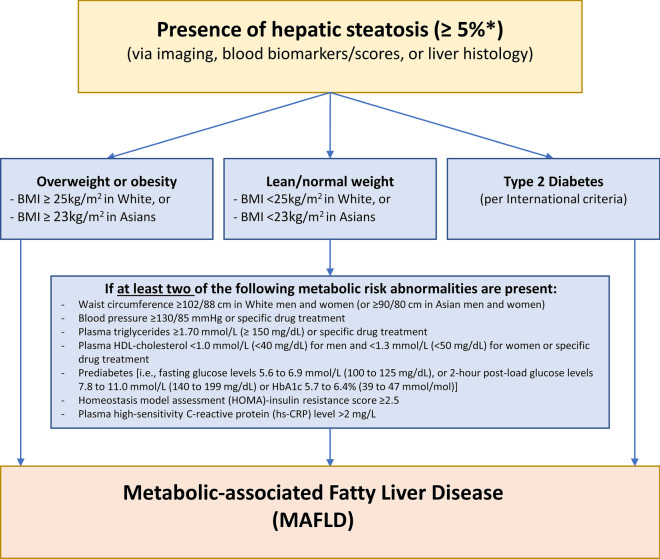
“MAFLD is defined by the presence of hepatic steatosis in the setting of metabolic dysfunction characterised by having overweight/obesity or T2D, or specific features of metabolic dysregulation [1] (Fig.”
InfluentialSelf-citationBurden of liver diseases in the world
Asrani, S. K., Devarbhavi, H., Eaton, J., & Kamath, P. S. (2019) · Journal of Hepatology · doi:10.1016/j.jhep.2018.09.014 · Cited by 3,783 · cited 1×
“MAFLD affects at least 25% of people globally and within Australia [2–4].”
Donnelly, K. L., Smith, C. I., Schwarzenberg, S. J., Jessurun, J., Boldt, M. D., & Parks, E. J. (2005) · Journal of Clinical Investigation · doi:10.1172/jci23621 · Cited by 3,604 · cited 2×
“Dietary fats, which deliver FFA from the gut via chylomicrons, account for the remaining 15% [13].”
Research works printed but not linked: 3
- European Association for the Study of the Liver (EASL); European Association for the Study of Diabetes (EASD); European Association for the Study of Obesity (EASO). EASL-EASD-EASO Clinical Practice Guidelines for the management of non-alcoholic fatty liver disease. J Hepatol. 2016;64(6):1388–402. 10.1016/j.jhep.2015.11.004. 27062661 · DOI · Paper page
- Sabag A Barr L Armour M The effect of high-intensity interval training vs moderate-intensity continuous training on liver fat: a systematic review and meta-analysis J Clin Endocrinol Metab 2022 107 3 862 881 10.1210/clinem/dgab795 34724062 · DOI · Paper page
- Ye YCL Yang X The efficacy of resistance training for non-alcoholic fatty liver disease: a meta-anlaysis of randomized controlled trials Int J Clin Exp Med 2019 12 2 13188 13195
Cited by
Eslam, M., Fan, J.-G., Yu, M.-L., Wong, V. W.-S., Cua, I. H., Liu, C.-J., Tanwandee, T., Gani, R., Seto, W.-K., Alam, S., et al. (2025) · Hepatology International · doi:10.1007/s12072-024-10774-3 · Cited by 170
“There are no evidence-supported recommendations regarding the intensity, frequency, number of sets and repetitions of resistance exercise required for hepatic benefit [170].”
InfluentialSelf-citationMiller, D. M., McCauley, K. F., & Dunham‐Snary, K. J. (2025) · Endocrinology Diabetes & Metabolism · doi:10.1002/edm2.70132 · Cited by 155
“Conversely, structured physical activity (e.g., moderate- to-vigorous aerobic exercise for 135–240 min/week) improves hepatic steatosis and reduces intrahepatic triglycerides, even without significant weight loss [24].”
Cól, J. P. D., de Lima, E. P., Pompeu, F. M., Araújo, A. C., Goulart, R. D. Á., Bechara, M. D., Laurindo, L. F., Méndez‐Sánchez, N., & Barbalho, S. M. (2024) · International Journal of Molecular Sciences · doi:10.3390/ijms25073694 · Cited by 92
“Currently, non-drug treatment for MAFLD is based on changing eating habits, aiming to reduce visceral lipid accumulation, combined with the initiation of physical activity, responsible for reducing the inflammatory markers characteristic of the pathophysiology of the disease [188,189].”
BackgroundBeygi, M., Ahi, S., Zolghadri, S., & Stanek, A. (2024) · Nutrients · doi:10.3390/nu16142220 · Cited by 78
“Incorporating activities such as lifting weights, resistance band exercises, and bodyweight exercises into a workout regimen can be highly beneficial [37].”
BackgroundDua, A., KUMARI, R. R., Singh, M., Kumar, R., Pradeep, S., Ojesina, A. I., & Kumar, R. (2025) · Frontiers in Medicine · doi:10.3389/fmed.2025.1618275 · Cited by 73
Sabag, A., Patten, R. K., Moreno‐Asso, A., Colombo, G. E., Bouzo, X. D., Moran, L., Harrison, C. L., Kazemi, M., Mousa, A., Tay, C. T., et al. (2024) · Journal of science and medicine in sport · doi:10.1016/j.jsams.2024.05.015 · Cited by 68
Self-citationThe Role of Exercise in Steatotic Liver Diseases: An Updated Perspective
Razzak, I. A., Fares, A., Stine, J. G., & Trivedi, H. D. (2024) · Liver International · doi:10.1111/liv.16220 · Cited by 61
Self-citationKeating, S. E., Chawla, Y. K., De, A., & George, E. S. (2024) · Hepatology International · doi:10.1007/s12072-024-10663-9 · Cited by 49
“Whilst some studies have demonstrated significant improvement in hepatic steatosis with resistance training, others have not reported benefit with no clear indications for effective resistance training prescriptions (i.e. intensity, frequency, sets, repetitions etc. [reviewed in [17]).”
BackgroundInfluentialSelf-citationA public health perspective on mitigating the global burden of chronic liver disease
Balakrishnan, M., & Rehm, J. T. (2023) · Hepatology · doi:10.1097/hep.0000000000000679 · Cited by 45
“[18] A recent meta-analysis of randomized control trials has also shown that the WHO-recommended dose of PA, compared to a lower dose, is associated with a pooled 3-fold greater odds of ≥ 30% reduction in MRI-measured hepatic steatosis.”
BackgroundAl‐Beltagi, M., Saeed, N. K., Bediwy, A. S., El-Sawaf, Y., Elbatarny, A. M., & Elbeltagi, R. M. (2025) · World Journal of Gastroenterology · doi:10.3748/wjg.v31.i22.106835 · Cited by 78
“Exercise is also associated with better management of risk factors for GI bleeding, such as obesity, type 2 diabetes, and non-alcoholic fatty liver disease[170].”
Li, X., Chen, W., Jia, Z., Xiao, Y., Shi, A., & Ma, X. (2025) · International Journal of Molecular Sciences · doi:10.3390/ijms26094256 · Cited by 63
“In addition, 12 weeks of high-intensity interval training (HIIT) exercise reduced blood glucose levels and waist circumference in patients with NAFLD [124].”
Ivancovsky Wajcman, D., Byrne, C. J., Dillon, J. F., Brennan, P. N., Villota-Rivas, M., Younossi, Z. M., Allen, A. M., Crespo, J., Gerber, L. H., & Lazarus, J. V. (2026) · Hepatology · doi:10.1097/hep.0000000000001058 · Cited by 33
“[114] There is some evidence that high-intensity interval treatment might be comparable to moderate-intensity continuous training for reducing hepatic steatosis, but a clear recommendation cannot be made.”
InfluentialAbassi, W., Ouerghi, N., Hammami, M. B., Jebabli, N., Feki, M., Bouassida, A., Weiss, K., & Knechtle, B. (2025) · Nutrients · doi:10.3390/nu17010164 · Cited by 32
“Physical training intervention is a therapeutic strategy against MASLD and MASH [10,18,19,50].”
Physical exercise in liver diseases
Zhang, Y., Cao, C., Li, C., Witt, R. G., Huang, H., Tsung, A., & Zhang, H. (2024) · Hepatology · doi:10.1097/hep.0000000000000941 · Cited by 26
“[39] For instance, Keating et al [40] showed that the minimum effective dose of exercise to improve hepatic steatosis was 135 minutes of moderate-intensity aerobic exercise per week and that increasing the intensity of exercise (including HIIT approaches) had no additional benefit for hepatic…”
Endocrine Disorders and Metabolic Dysfunction-Associated Steatotic Liver Disease: A Narrative Review
Betlejewska, J., Hubska, J., Roszkowska, Z., Maciejczyk, A., Bachurska, D., Domański, J., Miarka, M., Raszeja‐Wyszomirska, J., Bobrowicz, M., & Ambroziak, U. (2025) · Biomedicines · doi:10.3390/biomedicines13102500 · Cited by 20
“The MASLD nomenclature emphasizes the centrality of metabolic dysfunction and no longer relies on excluding other etiologies, including alcohol consumption [1–3].”
InfluentialJamalinia, M., Saeian, S., Nikkhoo, N., Nazerian, A., & Lankarani, K. B. (2025) · Metabolism and Target Organ Damage · doi:10.20517/mtod.2025.131 · Cited by 20
Wu, H., Wei, J., Chen, W., Chen, L., Zhang, J., Wang, N., Wang, S., & Tan, X. W. (2024) · Arteriosclerosis Thrombosis and Vascular Biology · doi:10.1161/atvbaha.124.321214 · Cited by 21
Irisin alleviates hepatic steatosis by activating the autophagic SIRT3 pathway
Zhao, Y., Li, J., Ma, A., Wang, Z., Ni, Y., Wu, D., Zhou, Y., Zhang, N., Zhang, L., Chang, Y., et al. (2025) · Chinese Medical Journal · doi:10.1097/cm9.0000000000003427 · Cited by 19
“[7–9] The mechanism of fat loss independent of weight loss is unknown.”
REYTOR-GONZÁLEZ, C., ANNUNZIATA, G., CAMPUZANO-DONOSO, M., MORALES-LÓPEZ, T., BASANTES-TITUAÑA, C., FASCÌ-SPURIO, F., VERDE, L., MUSCOGIURI, G., BARREA, L., FRIAS-TORAL, E., et al. (2025) · Minerva Endocrinology · doi:10.23736/s2724-6507.24.04314-8 · Cited by 12
Metabolic dysfunction-associated fatty liver disease: bridging cardiology and hepatology
Zhou, X., Targher, G., Byrne, C. D., Shapiro, M. D., Chen, L.-L., & Zheng, M. (2024) · Cardiology Plus · doi:10.1097/cp9.0000000000000106 · Cited by 15
Allen, M. J., Tulleners, R., Brain, D., O’Beirne, J. P., Powell, E. E., Barnett, A. G., Valery, P. C., Kularatna, S., & Hickman, I. J. (2025) · BMC Health Services Research · doi:10.1186/s12913-025-12580-5 · Cited by 16
“Hybrid effectiveness-implementation studies are needed to test treatment strategies incorporating patient centred dietary approaches [44], targeted exercise prescriptions [31] and promising eHealth implementation strategies [45] in a primary care setting.”
Self-citationNtikoudi, A., Papachristou, A., Tsalkitzi, A., Margari, N., Evangelou, E., & Vlachou, E. D. (2025) · Diabetology · doi:10.3390/diabetology6040023 · Cited by 16
“For instance, 150–240 min per week of at least moderate-intensity aerobic exercise can reduce hepatic steatosis by ~2–4% (absolute reduction), but as little as 135 min/week has been shown to be effective [45].”
The transition from NAFLD to MASLD: implications for Diagnosis, Prognosis, and Clinical Management
Acierno, C., Nevola, R., Barletta, F., Zielińska, K., Rinaldi, L., Sasso, F. C., Conte, C., Adinolfi, L. E., & Caturano, A. (2025) · Exploration of Medicine · doi:10.37349/emed.2025.1001365 · Cited by 14
Wajcman, D. I., Nicolàs, A., Picchio, C. A., van Selm, L., Dusheiko, G. M., Younossi, Z. M., Dillon, J. F., Alqahtani, S. A., Razavi, H. A., Colombo, M. G., et al. (2025) · JHEP Reports · doi:10.1016/j.jhepr.2025.101436 · Cited by 17
“Despite the evidence, and at a time when global viral hepatitis elimination efforts have stagnated, there remains little focus on viral hepatitis management as an important aspect of HCC prevention.”
Tan, X., Zou, H., Guo, M., Liu, J., Huang, X., Yu, R., Liu, X., & Qin, C. (2026) · Journal of sport and health science/Journal of Sport and Health Science · doi:10.1016/j.jshs.2026.101125 · Cited by 8
“12,13 An evidence summary 14 indicates exercise reduces patients’ body mass index by 0.8 kg/m 2 , waist circumference by 1.2 cm, and improves their cardiopulmonary function by 3.5 (cid:1) 8.0 mL/kg/min.”
InfluentialLiao, J., Zhou, Z., Lv, Y., Zhang, Y., Liu, S., Tang, H., Qv, F., Wang, S., Yang, L., Lu, Y., et al. (2026) · Frontiers in Immunology · doi:10.3389/fimmu.2026.1667180 · Cited by 9
Xi, J., Wang, Y., Li, X., Sun, N., Ming, R., Yan, H., Cai, H., Bai, J., Xiang, Y., Gu, J., et al. (2025) · Diabetes Obesity and Metabolism · doi:10.1111/dom.16289 · Cited by 8
“26,27 It has been demonstrated that patients with MASLD who lose more than 7-10% of their body weight experience the most substantial benefits in terms of improvement in histologic features.”
Zakaria, A. Y., Badawi, R., Osama, H., Abdelrahman, M. A., & El-Kalaawy, A. M. (2025) · Pharmaceuticals · doi:10.3390/ph18050650 · Cited by 9
Fouad, Y., Elwakil, R., Sanai, F. M., Ojo, O. S., Awadhi, S. A., Ocama, P., Abdelkader, N. A., Al‐Busafi, S. A., Awuku, Y. A., Zaki, S., et al. (2026) · Annals of Hepatology · doi:10.1016/j.aohep.2026.102180 · Cited by 10
Wu, W., Ye, J., Yuan, S., Li, X., Tang, Y., Zeng, F., Liu, W., Zhao, Z., Wang, Y., Wang, Y., et al. (2024) · Food & Function · doi:10.1039/d4fo02984d · Cited by 8
Lin, G., Ou, W., Yang, J., Chen, D., Wang, Y., Wu, A., Gao, L., Qu, W., Lin, C., & Liang, Y. (2025) · Frontiers in Cellular and Infection Microbiology · doi:10.3389/fcimb.2025.1586212 · Cited by 8
Khalafi, M., Fatolahi, S., Symonds, M. E., Rosenkranz, S. K., Dinizadeh, F., & Batrakoulis, A. (2025) · Obesity Reviews · doi:10.1111/obr.70052 · Cited by 13
Elangovan, H., Gunton, J. E., Zheng, M., Fan, J.-G., Goh, G. B., Grønbæk, H., & George, J. (2025) · Hepatology International · doi:10.1007/s12072-025-10795-6 · Cited by 7
“In this regard, the incorporation of regular resistance exercise is a simple strategy to improve both muscle quality and reduce frailty [72].”
Self-citationYilmaz, Y. N. (2025) · Frontiers in Pharmacology · doi:10.3389/fphar.2025.1615809 · Cited by 5
Zhang, F., Zhao, J., Zhang, Y., Tian, Z., Li, J., Lü, Q., Wang, W., Hong, T., Shan, Z., Yan, L., et al. (2026) · Journal of sport and health science/Journal of Sport and Health Science · doi:10.1016/j.jshs.2026.101124 · Cited by 10
Wang, B., Zeng, X., Deng, H., Qiu, B., Xu, K., Tao, M., Zhang, Y., Zheng, H., Xu, Q., Li, S., et al. (2026) · Metabolism · doi:10.1016/j.metabol.2026.156677 · Cited by 8
Couret, A., King, J. A., Pereira, B., Courteix, D., Obert, P., Vinet, A., Walther, G., Lesourd, B., Chapier, R., Žák, M., et al. (2024) · Clinics and Research in Hepatology and Gastroenterology · doi:10.1016/j.clinre.2024.102461 · Cited by 6
Misceo, D., Mocciaro, G., D’Amore, S., & Vacca, M. (2024) · Nutrition & Metabolism · doi:10.1186/s12986-024-00871-3 · Cited by 7
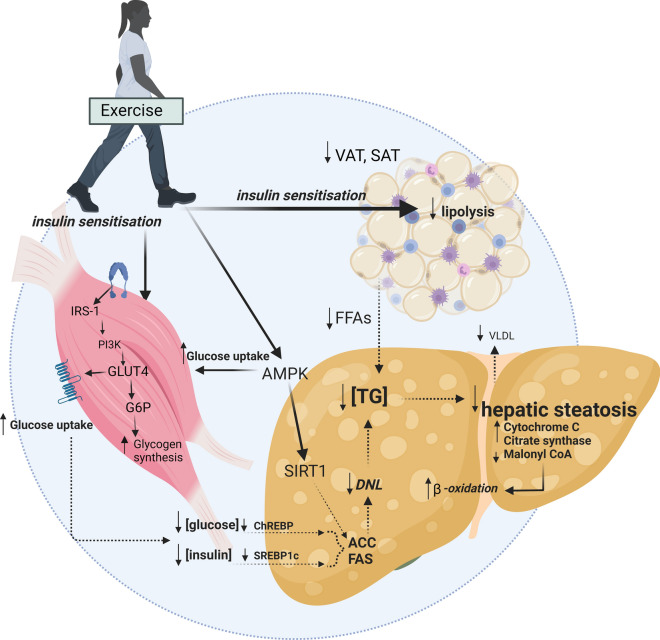
“…and visceral AT mass reduction, consequently lowering FFA delivery to the liver [227]; (2) PA increases insulin sensitivity in the skeletal muscle by stimulating the upregulation of the glucose transporter GLUT4 (thus lowering circulating plasma glucose/insulin and, in turn, hepatic DNL) [228].”
Guan, Q., Dong, R., Zhang, M., Chang, D., Zhang, R., Wang, Y., Zhang, W., & Wang, J. (2025) · Journal of Nutrition Education and Behavior · doi:10.1016/j.jneb.2024.12.010 · Cited by 6
Fukuda, T., Okamoto, T., Fukaishi, T., Kawakami, A., Tanaka, M., Yamada, T., & Monzen, K. (2024) · Frontiers in Endocrinology · doi:10.3389/fendo.2024.1392280 · Cited by 5
“Exercise therapy improves NAFLD independent of weight loss based on meta-analyses (22), therefore, it might contribute to MAFLD improvement.”
BackgroundKeating, S. E., Owen, P. J., Pugh, C. J. A., Cuthbertson, D. J., & Stine, J. G. (2025) · Hepatology Communications · doi:10.1097/hc9.0000000000000681 · Cited by 5
“[1,2] Despite the benefits of hepatic steatosis, even in the absence of clinically meaningful weight loss, the effects of exercise training on histological features of metabolic dysfunction – associated steatohepatitis (MASH) are uncertain due to the relative lack of randomized controlled trials.”
Self-citationWang, R., Wu, N., Qu, H., Zheng, X., Zhang, H., Zhu, L., Wang, X., Yao, X., & Zhang, L. (2025) · Frontiers in Endocrinology · doi:10.3389/fendo.2024.1499735 · Cited by 8
“In addition, moderate-intensity aerobic exercise can lead to a 2-4% absolute reduction in liver fat degeneration in adults with MAFLD (44).”
Exploring Strategies to Promote Exercise as a Viable Obesity and Chronic Disease Treatment
Flack, K. D., Stults‐Kolehmainen, M., Anderson, R. E., Handlery, R., Creasy, S. A., & Catenacci, V. A. (2025) · Nutrients · doi:10.3390/nu17121997 · Cited by 5
Gut-liver axis: An emerging target for exercise in obesity management
Ramos-da-Silva, L. A., Souza-Tavares, H., Medeiros, G. R., Dantas-Miranda, N. S., Lima-de-Figueiredo, G., Santana-Oliveira, D. A., Silva-Veiga, F. M., Martins, F. F., & Souza‐Mello, V. (2025) · Clinics and Research in Hepatology and Gastroenterology · doi:10.1016/j.clinre.2025.102687 · Cited by 4
Liu, J., Niu, Y.-J., Cui, X., Lu, S., Zhang, J., Wang, K., Zhu, Z., & Cao, Z. (2025) · Cellular Signalling · doi:10.1016/j.cellsig.2025.112260 · Cited by 4
Brouwer, W. P., Vonghia, L., Thiele, M. S., Schattenberg, J. M., Anastasiou, F., Beckmann, S., Bugianesi, E., Castéra, L., Caussy, C., Cordie, A., et al. (2026) · JHEP Reports · doi:10.1016/j.jhepr.2026.101798 · Cited by 12
“6,205,206 However, many of the individuals with SLD are a long way from meeting this target.”
Self-citationRausch, L. K., Birklbauer, A., Federolf, P., Hecksteden, A., Hofmann, P., Niebauer, J., Reich, B., Rieder, F., Ruin, S., Scharhag, J., et al. (2024) · Current Issues in Sport Science (CISS) · doi:10.36950/2024.9ciss001 · Cited by 4
“This includes disorders of the cardiovascular system, diabetes, lung diseases and cancer, fatty liver disease, and obesity (Keating et al., 2023; I.-M. Lee et al., 2012; Stine et al., 2023).”
BackgroundSoni, J., Pathak, N., Gharia, M., Aswal, D., Parikh, J., Sharma, P., Mishra, A., Lalan, D., & Maheshwari, T. (2025) · World Journal of Hepatology · doi:10.4254/wjh.v17.i1.101630 · Cited by 6
Huang, C., Chen, M., Sun, Y., Zhang, L., & Liu, W. (2025) · Frontiers in Nutrition · doi:10.3389/fnut.2025.1689280 · Cited by 4
Tan, S., Huang, T., Zhang, Z., Zhou, J., Chen, H., Tu, T., Lin, Q., Xiao, Y., & Liu, Q. (2026) · Diabetes Research and Clinical Practice · doi:10.1016/j.diabres.2026.113092 · Cited by 5
Martínez-Díaz, F. M., Jiménez-Cuevas, E. A., Ramírez-Mejía, M. M., Gómez-Camacho, S., & Méndez‐Sánchez, N. (2026) · Exploration of Digestive Diseases · doi:10.37349/edd.2026.1005115 · Cited by 3
Wang, Y., & Zhang, L. (2026) · Frontiers in Medicine · doi:10.3389/fmed.2026.1783519 · Cited by 5
“Moreover, EA appears to confer hepatic benefits comparable to aerobic interval training (AIT), a widely accepted non-pharmacologic intervention for MASLD (85, 86).”
Cobbold, J., Miller, H., Hallsworth, K., Manousou, P., Marjot, T., Allison, M. E., Anstee, Q. M., Armstrong, M., Avery, L., Azzu, V., et al. (2026) · The Lancet. Gastroenterology & hepatology · doi:10.1016/s2468-1253(26)00077-4 · Cited by 6
Self-citationDevelopment and validation of a predictive nomogram for the risk of MAFLD in postmenopausal women
Yang, M., Chen, X., Shen, Q., Xiong, Z., Liu, T., Leng, Y., & Jiao, Y. (2024) · Frontiers in Endocrinology · doi:10.3389/fendo.2024.1334924 · Cited by 3
Metformin: Beyond Type 2 Diabetes Mellitus
Ahmad, R., & Haque, M. (2024) · Cureus · doi:10.7759/cureus.71730 · Cited by 6
“Adequate aerobic physical exercise of modest intensity (150-240 minutes per week) single-handedly salvages abnormal preservation of lipids (fat) in the liver and viscera, avert fibrosis and cirrhosis, and diminish fatal outcomes [111-113].”
Non-alcoholic fatty liver disease in people with normal body weight
Туркина, С. В., Андреевна, Т. И., & Титаренко, М. Н. (2024) · Экспериментальная и клиническая гастроэнтерология · doi:10.31146/1682-8658-ecg-230-10-36-48 · Cited by 3
Aerobic Exercise Training Leads to MASH Resolution as Defined by the MASH Resolution Index
Channapragada, T., Batra, S., Hummer, B. L., Chinchilli, V. M., Huang, D., Loomba, R., Schreibman, I. R., & Stine, J. G. (2026) · Digestive Diseases and Sciences · doi:10.1007/s10620-025-09361-9 · Cited by 2
“…cycling, can reduce hepatic steatosis at clinically meaningful thresholds, and this amount of physical activity or its equivalent (e.g., 75 min/week of vigorous intensity aerobic activity) is recommended by multiple leading scientific societies including the AASLD, ACSM, AGA, and EASL [28, 29].”
Self-citationDick, S., Wheeler, K., & Keating, S. E. (2024) · Australian and New Zealand Journal of Public Health · doi:10.1016/j.anzjph.2024.100138 · Cited by 2
Self-citationEnjoyment of spinning exercise performed in a group session as compared to an individual session
Beck, K. T., Lowater, K. S., Rafn, J., & Hansen, E. A. (2025) · Frontiers in Sports and Active Living · doi:10.3389/fspor.2024.1501862 · Cited by 2
Keating, S. E., Wilkinson, S. A., Macdonald, G. A., Hickman, I. J., & Mayr, H. L. (2025) · Journal of Health Services Research & Policy · doi:10.1177/13558196251362133 · Cited by 2
Self-citationSood, S., Roberts, S. K., Scott, D. S., Keating, S. E., Tan, S., George, J., Kiss, N. K., Daly, R. M., Dunstan, D. W., Tucker, R. M., et al. (2025) · Journal of Telemedicine and Telecare · doi:10.1177/1357633x251366098 · Cited by 2
“8 Similarly, sleep quality and duration plays a crucial role in liver health, contributing to better liver health outcomes, maintaining hormonal balance and promoting weight management.”
Self-citationMa, L., Yuan, C., Cao, X., & Sun, Y. (2026) · Pathology - Research and Practice · doi:10.1016/j.prp.2026.156482 · Cited by 2
Neto, W. H. J., Ramos, C. D. O., & de Souza, C. T. (2026) · Physiology & Behavior · doi:10.1016/j.physbeh.2026.115427 · Cited by 2
Jarvis, H., Brennan, P., Casanovas, T., Casler, K., Desai, M., Evans, P. H., Dillon, J. F., Grattagliano, I., Hallsworth, K., Hebditch, V., et al. (2026) · The Lancet. Gastroenterology & hepatology · doi:10.1016/s2468-1253(26)00015-4 · Cited by 5
Self-citationExploring the therapeutic potential of glucagon-like peptide 1 agonists in metabolic disorders
Cortés‐Martín, A., & Plaza‐Díaz, J. (2025) · World Journal of Gastroenterology · doi:10.3748/wjg.v31.i4.101436 · Cited by 2
Nash, E., & Liu, K. (2024) · HepatoBiliary Surgery and Nutrition · doi:10.21037/hbsn-23-686 · Cited by 3
“For instance, the combination of exercise with dietary modification has been consistently shown to be synergistic and associated with greater weight loss and reduction in hepatic steatosis compared to exercise alone (4,10).”
InfluentialDeng, J., Ma, J., Zhang, X., Wang, K., Wang, Y., Gao, N., Feng, D., Jia, X., Liu, X., Dang, S., et al. (2025) · Nutrition & Metabolism · doi:10.1186/s12986-025-00906-3 · Cited by 3
Hsu, L., Wu, S., TRAN, N. Y., Chou, H., & Ko, Y. (2025) · Medicine & Science in Sports & Exercise · doi:10.1249/mss.0000000000003815 · Cited by 1
Sridevi, S., Nirenjen, S., Begum, R. F., Harikrishnan, N., & Ankul Singh, S. (2025) · Current Nutrition & Food Science · doi:10.2174/0115734013384230250710024703 · Cited by 1
Self-Reported Weight Gain After the Age of 20 and Risk of Steatotic Liver Disease
Iwasa, M., Ozu, N., Yamakage, H., Kato, H., Ishikawa, M., Kanasaki, M., Masuda, I., Tanaka, M., & Satoh‐Asahara, N. (2025) · Nutrients · doi:10.3390/nu17152566 · Cited by 2
“Although previous studies reported beneficial effects of exercise on NAFLD [29,30] and MAFLD [31,32], the preventive effects were limited to participants with baseline BMI 22 to 25, with no significant effects on those with BMI 22 or BMI ≥ 25, in this study.”
Bhadoria, A. S., & Sinha, S. (2025) · Gastroenterology · doi:10.1053/j.gastro.2025.09.047 · Cited by 2
Xiong, K.-G., Kong, J., Lin, T.-S., Lin, Q.-B., & Ke, K.-Y. (2026) · Medicine · doi:10.1097/md.0000000000047290 · Cited by 1
“[10,11] MiRNAs, noncoding RNA molecules approximately 21 to 25 nucleotides in length, regulate essential physiological processes including adipocyte proliferation and differentiation, primarily through posttranscriptional gene silencing by targeting mRNA transcripts for degradation or translational…”
Erlich, M. N., Ghidanac, D., Mejía, S. B., Ayoub‐Charette, S., Combe, C. V., Khan, T. A., Ramdath, D. P., Crewson, H., Beck, A., Silva, C. J., et al. (2026) · Nutrients · doi:10.3390/nu18071026 · Cited by 1
Lifespan approaches for the prevention and management of steatotic liver disease
Zelber‐Sagi, S., Ivancovsky-Wajcman, D., Kugelmas, C., Weinstein, A. A., Wong, V. W., Castéra, L., Moore, J. B., Mouzaki, M., Hallsworth, K., Paik, J. M., et al. (2026) · Nature Reviews Gastroenterology & Hepatology · doi:10.1038/s41575-026-01198-5 · Cited by 2
“…level of fitness, comorbidities, personal preferences, time constraints, socioeconomic circumstances and access to physical activity options 99,274 For children not meeting guidelines, gradually increase activity in ways the child enjoys 273 Steps towards integrating physical activity…”
InfluentialSelf-citationZhang, F.-R., Kim, C.-B., Ahn, D., Sung, J., Oh, J. H., Heo, H. R., Jo, E., Kim, H.-S., & Park, J.-J. (2026) · Nutrients · doi:10.3390/nu18081272 · Cited by 1
Exercise as a Metabolic Therapy for MASLD: Beyond Weight Loss Toward Sustainable Exercise Strategies
Roh, H., & Bae, J. Y. (2026) · Medicina · doi:10.3390/medicina62040784 · Cited by 1
“Both exercise modalities have been shown to reduce hepatic fat content, and comparative studies have generally failed to demonstrate a clear superiority of one modality over the other [118].”
Yang, M., Liu, T., Yang, Q., Cai, R., Yang, X., & Tang, C. (2026) · Arab Journal of Gastroenterology · doi:10.1016/j.ajg.2026.03.005 · Cited by 1
Vaz, K., Clayton‐Chubb, D., Kemp, W. W., Roberts, S. K., & Majeed, A. (2026) · The Medical Journal of Australia · doi:10.5694/mja2.70195 · Cited by 1
Chartrand, D. J., Larose, É., Poirier, P., Mathieu, P., Alméras, N., Pîbarot, P., Lamarche, B., Rhéaume, C., Lemieux, I., Després, J., et al. (2025) · Applied Physiology, Nutrition, and Metabolism · doi:10.1139/apnm-2024-0478 · Cited by 1
A journey of a thousand miles begins with one small step
Roeb, E. (2024) · HepatoBiliary Surgery and Nutrition · doi:10.21037/hbsn-23-612
“With a very high probability this position statement includes NALFD as well as MAFLD and especially MASLD.”
BackgroundMethodInfluentialFahmy, L. M., Elhady, A. A. A., Ali, A. A., Ali, A. H., & Ali, G. (2024) · Bulletin of Rehabilitation Medicine · doi:10.38025/2078-1962-2024-23-3-14-20
Guidelines for the evolving landscape of liver disease: From viral hepatitis to MAFLD
Elangovan, H., & George, J. (2025) · Chinese Medical Journal · doi:10.1097/cm9.0000000000003616
“[5] In addition, the intensity and energy consumption associated with resistance exercise is significantly lower than for aerobic exercise, and hence, may be more feasible than aerobic exercise for older patients with MAFLD (as frequently seen in clinical practice) with poor cardiorespiratory…”
Self-citationMicro-Wellness Interventions and Well-Being of Medical Doctors in Lagos State, Nigeria
Azeez, R. O., & JAYEOBA, F. I. (2025) · IGI Global eBooks · doi:10.4018/979-8-3693-8819-8.ch020
Lestari, B., Rusdiawan, A., Kusuma, D. A., Özman, C., Fikri, M. D., Rasyid, M. L. S. A., Irmawati, F., Munandar, R. A., & Ilmah, N. K. (2025) · doi:10.56984/8zg7d19fz3b
Spillman, L. N., Backhouse, D., Cox, L., Ballesteros, K., Ramos, K., & Williams, F. R. (2025) · Frontline Gastroenterology · doi:10.1136/flgastro-2025-103110 · Cited by 1
Kim, M.-J., & Lee, I. (2025) · Preventive Medicine Reports · doi:10.1016/j.pmedr.2025.103182
“Physical activity and fitness enhancement, critical factors in improving fatty liver in the general population, play a positive role in MAFLD prevention (Lee et al., 2023; Keating et al., 2023).”
Keating, S. E., de Boer, J., Catsoulis, G., Stine, J. G., Goode, A. D., Macdonald, G. A., Powell, E. E., & Hickman, I. J. (2025) · Journal of Clinical and Translational Hepatology · doi:10.14218/jcth.2025.00155 · Cited by 3
“These are consistent with broader literature exploring barriers to exercise adoption and maintenance in people with MASLD, 5,11,12,23,28–30 but this is the first study to illustrate a patient-led ranking of issues that require targeted strategies before or alongside further efforts to refine…”
InfluentialSelf-citationWu, Y., Gao, H., Liu, C., & Gao, S. (2025) · IntechOpen eBooks · doi:10.5772/intechopen.1011924
Lara‐Romero, C., Fernández-Gómez, M. A., Martín, F., Castilla‐Guerra, L., Funuyet‐Salas, J., Berná, G., Millán-Domínguez, R., & Romero‐Gómez, M. (2025) · Expert Review of Gastroenterology & Hepatology · doi:10.1080/17474124.2025.2584022
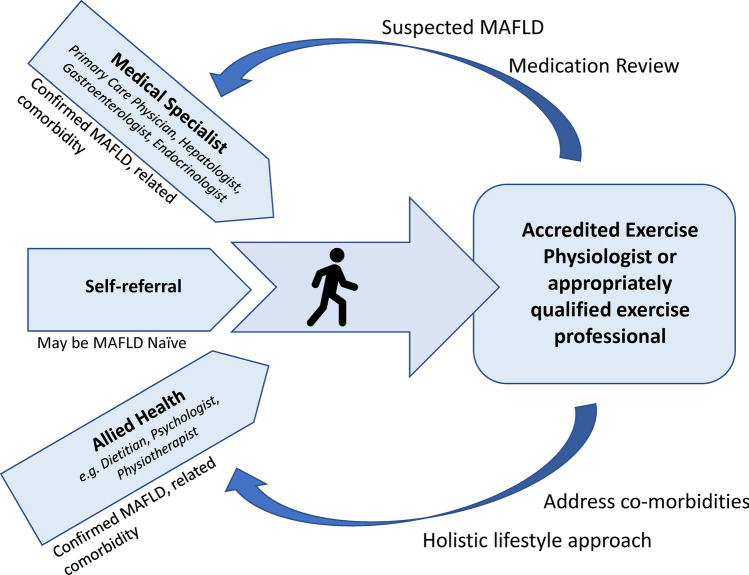
“…referral to a structured weight management and exercise program within a sports medicine center enables integration of sports physicians, physiotherapists, and exercise specialists to optimize lifestyle interventions beyond the generic recommendations of clinical practice guidelines [37].”
Kresevic, S., Giuffrè, M., Moretto, C., Zucchini, L., Miladinović, A., Bongiovanni, M., Bortolotto, A., Discipio, M., Stella, A. B., Accardo, A., et al. (2025) · Annual International Conference of the IEEE Engineering in Medicine and Biology Society (EMBC) · doi:10.1109/embc58623.2025.11253032
“Current management relies heavily on lifestyle interventions, including dietary modifications, weight loss, and structured physical activity programs [2], [7].”
Liu, P., Zhao, W., Qiu, D., & Li, Y. (2026) · Science Progress · doi:10.1177/00368504261420942
“42,43 The cost of measuring height and weight is minimal, making the monitoring of WWI a highly cost-effective method.”
Huang, W., He, Y., Chen, R., Huo, C., Xie, Y., Lin, Y., Wang, T., Dai, X., Wang, J., Ruan, W., et al. (2026) · Frontiers in Endocrinology · doi:10.3389/fendo.2026.1711420
Wang, H., Zhang, J., Li, Y., Chen, Y., Yan, N., Luo, Z., & Liu, Y. (2026) · Biochemical Pharmacology · doi:10.1016/j.bcp.2026.117938
Drogy, M. S., Minto, S. T., & Frishman, W. H. (2026) · Cardiology in Review · doi:10.1097/crd.0000000000001259 · Cited by 3
Evidence Summary for Self-Management Education in Patients with Non-Alcoholic Fatty Liver Disease
Yang, Y., Cao, J., Zhang, L., Liu, J., & Li, M. T. (2026) · Patient Preference and Adherence · doi:10.2147/ppa.s590068
“32 For the consensus statements by Zeng et al 21 and Keating et al, 31 all appraisal items were rated “yes”, and the positions were clearly expressed; both were included For the consensus statements by Long et al, 29 Younossi et al 30 and the Chinese Society of Endocrinology of the Chinese Medical…”
InfluentialWhen Fat Goes Astray: Your Liver and Pancreas Get Into Trouble
Chen, Y., Ding, L., Zhao, S., Wang, W. B., Zhong, J., & Yan, Q. (2026) · Portal hypertension & cirrhosis · doi:10.1002/poh2.70049
George, E. S., Sood, S., Sualeheen, A., Cartledge, S. H., Roberts, S. K., Daly, R. M., Tan, S., Scott, D., Wheeler, K., George, J., et al. (2026) · Proceedings of The Nutrition Society · doi:10.1017/s0029665126103048 · Cited by 1
“These include lack of access to and affordability of healthy foods, limited nutritional knowledge and cooking skills, lack of convenience and an obesogenic environment and difficulty in translating MedDiet cuisine to multiethnic traditional cuisines (3,54) .”
InfluentialSelf-citationUzyanbaev, I. A., Timoshenko, S., Спирина, Л. В., & Матвеева, М. В. (2026) · Current Drug Targets · doi:10.2174/0113894501398066251211070417
Hepatic steatosis: A pandemic disease causing serious secondary diseases
Canbay, A., Figge, A., Patsalis, P., Baars, T., Özcürümez, M. K., & Götze, O. (2026) · Deutsches Ärzteblatt international · doi:10.3238/arztebl.m2026.0074
Jiang, J., Qin, L., & Shen, Y. (2026) · European Journal of Pediatrics · doi:10.1007/s00431-026-07112-0
Metadata
- Authors
- Keating, S. E., Sabag, A., Hallsworth, K., Hickman, I. J., Macdonald, G. A., Stine, J. G., George, J., & Johnson, N. A.
- Affiliations
- The University of Queensland (AU)
- The University of Sydney (AU)
- Newcastle upon Tyne Hospitals NHS Foundation Trust (GB)
- Pennsylvania State University (US)
- Corresponding author
- Keating, Shelley E.
- ORCID
- Venue
- Sports Medicine
- Published
- 2023-09-11
- Volume
- 53
- Issue
- 12
- Pages
- 2347-2371
- ISSN
- 0112-1642 (ISSN-L)
- 1179-2035
- PMC
- PMC10687186
- OpenAlex
- W4386592430
- Semantic Scholar
- 3f9f356bbc6ad9970d3a24315a05acf17011f463
- Cited by
- 119
- References
- 184
- Citations by year
- 2026: 49 · 2025: 47 · 2024: 22 · 2023: 1
- FWCI
- 23.76
- Type
- journal article
- Language
- en
- Open access
- hybrid
- doi.org
- Licence
- cc-by
- creativecommons.org/licenses/by/4.0 (tdm)
- creativecommons.org/licenses/by/4.0 (vor)
- Locations
- Sports Medicine (publishedVersion, cc-by)
- PubMed Central (publishedVersion, cc-by)
- PubMed (publishedVersion)
- Newcastle University ePrints (Newcastle Univesity) (cc-by)
- Funders
- The University of Queensland
- Topics
- Health Sciences › Medicine › Hepatology › Liver Disease Diagnosis and Treatment
- Health Sciences › Medicine › Public Health, Environmental and Occupational Health › Physical Activity and Health
- Health Sciences › Medicine › Physiology (medical) › Cardiovascular and exercise physiology
- Keywords
- metabolic-associated fatty liver disease, exercise therapy, aerobic exercise, high-intensity interval training, resistance training, hepatic steatosis, cardiometabolic health, abdominal obesity, fitness professionals, multidisciplinary care, non-alcoholic fatty liver disease, obesity
- MeSH terms
- Adult, Australia, Exercise Therapy, Humans, Obesity, Sports, Exercise, Non-alcoholic Fatty Liver Disease
About these checks
Registry, retraction, Cites and statistics results are computed, not judged, with one exception: a printed reference that no index lists is read once by a model before it counts as a citation error. Claims are extracted by a model and kept only when their quote appears verbatim in the text; each cited source is then checked, with a model’s help, for whether it says what the claim relies on. Those verdicts can be wrong — read the claim’s quote and the cited source before relying on one.
Statistics and arithmetic are recomputed, not judged.
Confidence bands are shown only for fields calibrated on our annotated test set. None is calibrated yet, so no band is shown.
What counts as a claim ›How we measure confidence ›How we check this ›
Are you an author, or do you see a problem with this page? Request a review
Data sources
Bibliographic data: Semantic Scholar, OpenAlex, Crossref.
Contains information from the Semantic Scholar Academic Graph Datasets, made available under the ODC Attribution License (ODC-BY 1.0).
Semantic Scholar’s data is described in: Kinney, R., et al. (2023). The Semantic Scholar Open Data Platform. arXiv:2301.10140.
