

Exercise in the Management of Metabolic-Associated Fatty Liver Disease (MAFLD) in Adults: A Position Statement from Exercise and Sport Science Australia
Open accessThe DOI matches its Crossref record; 184 of the 184 references it cites were found in a registry or an index.
Abstract
Metabolic-associated fatty liver disease (MAFLD) is the most prevalent chronic liver disease worldwide, affecting 25% of people globally and up to 80% of people with obesity. MAFLD is characterised by fat accumulation in the liver (hepatic steatosis) with varying degrees of inflammation and fibrosis. MAFLD is strongly linked with cardiometabolic disease and lifestyle-related cancers, in addition to heightened liver-related morbidity and mortality. This position statement examines evidence for exercise in the management of MAFLD and describes the role of the exercise professional in the context of the multi-disciplinary care team. The purpose of these guidelines is to equip the exercise professional with a broad understanding of the pathophysiological underpinnings of MAFLD, how it is diagnosed and managed in clinical practice, and to provide evidence- and consensus-based recommendations for exercise therapy in MAFLD management. The majority of research evidence indicates that 150–240 min per week of at least moderate-intensity aerobic exercise can reduce hepatic steatosis by ~ 2–4% (absolute reduction), but as little as 135 min/week has been shown to be effective. While emerging evidence shows that high-intensity interval training (HIIT) approaches may provide comparable benefit on hepatic steatosis, there does not appear to be an intensity-dependent benefit, as long as the recommended exercise volume is achieved. This dose of exercise is likely to also reduce central adiposity, increase cardiorespiratory fitness and improve cardiometabolic health, irrespective of weight loss. Resistance training should be considered in addition to, and not instead of, aerobic exercise targets. The information in this statement is relevant and appropriate for people living with the condition historically termed non-alcoholic fatty liver disease (NAFLD), regardless of terminology.
Overview
The claims and statistics of this paper haven’t been checked yet.
Free: it reads the open-access text and checks the first 5 claims that cite a source we can check. Create a free account to check every claim.
Integrity signals
Registry
Cites
Statistics
Figures
Verification
Claims the paper makes
The claims and statistics of this paper haven’t been checked yet.
Free: it reads the open-access text and checks the first 5 claims that cite a source we can check. Create a free account to check every claim.
Self-check
Percentages, sums and reported differences re-computed from the paper’s own numbers.
The self-check needs the paper’s full text.
Citations
Cites
The Pittsburgh Sleep Quality Index: a new instrument for psychiatric practice and research
Buysse, D. J., Reynolds, C. F., Monk, T. H., Berman, S. R., & Kupfer, D. J. (1989) · Psychiatry Research · doi:10.1016/0165-1781(89)90047-4 · Cited by 35,234 · cited 2×
“…of participants, and a one-stage regression in hepatocyte ballooning in 67% of participants ( n = 12) following 12 weeks of moder-ate-to-vigorous [40–75% heart rate reserve (HRR)] aerobic exercise intervention on 3–5 days per week; however, there was no control group for comparison and there was…”
Younossi, Z. M., Koenig, A. B., Abdelatif, D., Fazel, Y., Henry, L., & Wymer, M. (2016) · Hepatology · doi:10.1002/hep.28431 · Cited by 10,781
Guralnik, J. M., Simonsick, E. M., Ferrucci, L., Glynn, R. J., Berkman, L. F., Blazer, D. G., Scherr, P. A., & Wallace, R. B. (1994) · Journal of Gerontology · doi:10.1093/geronj/49.2.m85 · Cited by 9,792 · cited 1×
“Further clinical assessment to establish sarcopenia [37] and frailty via imaging and/ or relevant clinical measures such as the short physical performance battery (SPPB) [38] may be clinically appropriate to consider based on individual presentation.”
(2014) · Medical Entomology and Zoology · Cited by 9,400
Chalasani, N., Younossi, Z., Lavine, J. E., Charlton, M., Cusi, K., Rinella, M., Harrison, S. A., Brunt, E. M., & Sanyal, A. J. (2018) · Hepatology · doi:10.1002/hep.29367 · Cited by 7,239
Global burden of NAFLD and NASH: trends, predictions, risk factors and prevention
Younossi, Z., Anstee, Q. M., Marietti, M., Hardy, T., Henry, L., Eslam, M., George, J., & Bugianesi, E. (2018) · Nature Reviews Gastroenterology & Hepatology · doi:10.1038/nrgastro.2017.109 · Cited by 5,249 · cited 1×
“…end-stage liver disease and primary liver cancer, MAFLD plays a central role in the development of type 2 diabetes (T2D), cardiovascular disease (CVD) and extrahepatic lifestyle-related cancers [5], reducing life expectancy by 4 years and increasing time spent living with high metabolic burden [6].”
Self-citationEASL–EASD–EASO Clinical Practice Guidelines for the management of non-alcoholic fatty liver disease
(2016) · Journal of Hepatology · doi:10.1016/j.jhep.2015.11.004 · Cited by 4,836
Eslam, M., Newsome, P. N., Sarin, S. K., Anstee, Q. M., Targher, G., Romero-Gomez, M., Zelber-Sagi, S., Wai-Sun Wong, V., Dufour, J.-F., Schattenberg, J. M., et al. (2020) · Journal of Hepatology · doi:10.1016/j.jhep.2020.03.039 · Cited by 4,472 · cited 3×
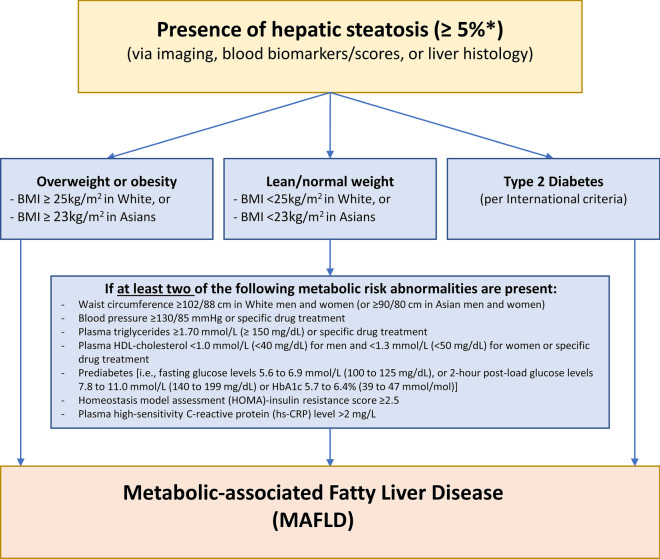
“MAFLD is defined by the presence of hepatic steatosis in the setting of metabolic dysfunction characterised by having overweight/obesity or T2D, or specific features of metabolic dysregulation [1] (Fig.”
InfluentialSelf-citationBurden of liver diseases in the world
Asrani, S. K., Devarbhavi, H., Eaton, J., & Kamath, P. S. (2019) · Journal of Hepatology · doi:10.1016/j.jhep.2018.09.014 · Cited by 3,783 · cited 1×
“MAFLD affects at least 25% of people globally and within Australia [2–4].”
Donnelly, K. L., Smith, C. I., Schwarzenberg, S. J., Jessurun, J., Boldt, M. D., & Parks, E. J. (2005) · Journal of Clinical Investigation · doi:10.1172/jci23621 · Cited by 3,604 · cited 2×
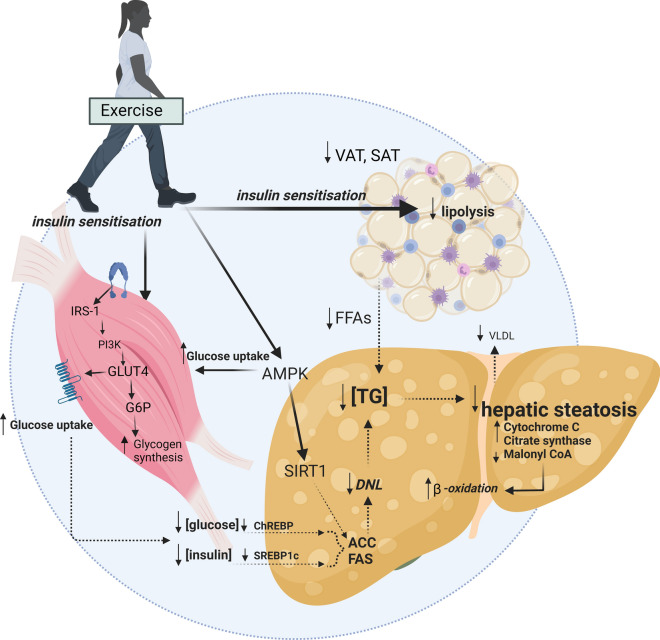
“Dietary fats, which deliver FFA from the gut via chylomicrons, account for the remaining 15% [13].”
Research works printed but not linked: 3
- European Association for the Study of the Liver (EASL); European Association for the Study of Diabetes (EASD); European Association for the Study of Obesity (EASO). EASL-EASD-EASO Clinical Practice Guidelines for the management of non-alcoholic fatty liver disease. J Hepatol. 2016;64(6):1388–402. 10.1016/j.jhep.2015.11.004. 27062661 · DOI · Paper page
- Sabag A Barr L Armour M The effect of high-intensity interval training vs moderate-intensity continuous training on liver fat: a systematic review and meta-analysis J Clin Endocrinol Metab 2022 107 3 862 881 10.1210/clinem/dgab795 34724062 · DOI · Paper page
- Ye YCL Yang X The efficacy of resistance training for non-alcoholic fatty liver disease: a meta-anlaysis of randomized controlled trials Int J Clin Exp Med 2019 12 2 13188 13195
Cited by
Items 101–119 of 119
Singh, A. K., Gupta, P., Kumar, V., & Sharma, N. (2026) · Egyptian Liver Journal · doi:10.1186/s43066-026-00517-4
“Urbanization and sedentary living coupled with changes in diet have significantly elevated the rate of prevalence; nonetheless, there is now considerable evidence showing that genetic variation is an influential determining factor of individual vulnerability and disease progression [2].”
Huang, W., He, Y., Lu, H., Wang, J., Liang, Y., Zeng, L., Li, L., Lu, H., Li, Z., Wang, Z., et al. (2026) · Frontiers in Sports and Active Living · doi:10.3389/fspor.2026.1854220
Khalafi, M., Fatolahi, S., Symonds, M. E., Sayeaftabi, A., Rosenkranz, S. K., Sakhaei, M. H., & Batrakoulis, A. (2026) · Medicine & Science in Sports & Exercise · doi:10.1249/mss.0000000000004073
Prescribing Exercise in MASLD: From Evidence to a Structured, Measurable Intervention
Rodriguez, L. A. M., Olivera, M. R. G., Espinosa, C. S. G., Velazquez, Y. V., Flores-Lázaro, J. R., & Torre, A. (2026) · Current Hepatology Reports · doi:10.1007/s11901-026-00740-y
“…per week of moderate-intensity aerobic exercise or 75 min per week of vigorous-intensity exercise reduces hepatic steatosis by approximately 2–4% [33], improves insulin resistance, liver inflammation, fibrosis, cardiometabolic health, liver inflam - mation and fibrosis [ 2, 34–36], improves body…”
Macrophages in MASLD: from inflammatory and metabolic crosstalk to exercise intervention
Sun, Y. (2026) · Frontiers in Immunology · doi:10.3389/fimmu.2026.1894884 · Cited by 2
“Exercise and Sport Science Australia (ESSA) also points out that as little as 135 min/week of aerobic exercise of at least moderate-intensity may be effective in reducing hepatic steatosis (133).”
Reytor-González, C., Loor-Cedeño, A., Gavilanes, D. J., Matos, A., Parise-Vasco, J. M., Angamarca-Iguago, J., Cagua-Ordoñez, J. C., Campuzano-Donoso, M., & Simancas‐Racines, D. (2026) · Nutrients · doi:10.3390/nu18142280
“Exercise training may also improve blood pressure, insulin resistance, and intrahepatic fat in adults with overweight or obesity, but higher-intensity approaches require attention to symptoms, supervision, and musculoskeletal tolerance [49,58].”
InfluentialMa, L., & Abudureyimu, M. (2026) · Medicine · doi:10.1097/md.0000000000049980
“[38] Previous research reported that among adults physically active, those with PA levels of ≥8000 MET minutes/week displayed a 37% reduction in NAFLD risk.”
Samajdar, S. S., Joshi, S., Bhaduri, G., Saboo, B., Roy, K., Mukherjee, S., Bansode, S., & Bandyopadhyay, S. (2026) · Clinics and Research in Hepatology and Gastroenterology · doi:10.1016/j.clinre.2026.102898
Zhu, Q., Su, C., 姚巧巧, Yang, T., Xu, Y., Li, M., Liu, Q., Luo, Y., & Yang, P. (2026) · Frontiers in Immunology · doi:10.3389/fimmu.2026.1920121
“…centered on moderate-intensity aerobic activities, such as brisk walking, cycling, and swimming, with a cumulative duration of at least 150 minutes per week, combined with appropriate resistance training to improve insulin sensitivity, promote fat utilization, and preserve muscle mass (68).”
Xu, L., Li, C., Liu, Y., & Wang, S. (2026) · Metabolites · doi:10.3390/metabo16090626 · Cited by 1
Xu, J., Sang, K., & Zhang, J. (2026) · Metabolites · doi:10.3390/metabo16090666
“However, they derive mainly from general physical activity and MASLD guidance rather than ALD-specific intervention trials [20,40].”
Application of artificial intelligence in hepatology
Hu, Z., Lin, Y., Gao, H., Shuai, L., Tong, Z., Nie, C., Yang, Z., & Zhao, J. (2026) · Frontiers in Digital Health · doi:10.3389/fdgth.2026.1851723
Fatty liver disease in patients with colorectal polyps and colorectal cancer
Mihajlović, M., Obradović, A., Radanović, D., Misić-Mandić, V., & Micić, D. (2026) · Zdravstvena zastita · doi:10.5937/zdravzast55-65699
Changjian, W., Furui, W., Yanyu, F., Yü, Y., & Wei, J. (2026) · Experimental Neurology · doi:10.1016/j.expneurol.2026.116058
Wu, C., Zheng, Y., Fan, Y., Wang, J., Li, Y., Yuan, Y., Zhao, W., & Tang, Y. (2026) · Contemporary Clinical Trials · doi:10.1016/j.cct.2026.108500
New perspectives in alleviating MASLD: synergism and prospects of exercise and natural products
Wu, Q., Li, J., Lin, B., Xu, H., & Chen, N. (2026) · Food Science and Human Wellness · doi:10.26599/fshw.2026.9251137
Sleep and Sedentary Behavior Predict Severity in MASLD but Not MetALD/ALD: A Compositional Analysis
Gerber, L. H., Paik, J. M., Kalligeros, M., Keating, S. E., Weinstein, A. A., Stine, J. G., Zelber‐Sagi, S., Alqahtani, S. A., Hallsworth, K., Pekas, E. J., et al. (2026) · JHEP Reports · doi:10.1016/j.jhepr.2026.102071
Self-citationAntifibrotic therapy in MASLD: fibrosis reversal and HCC prevention
Roeb, E., & Weiskirchen, R. (2026) · Hepatoma Research · doi:10.20517/2394-5079.2026.90
Metadata
- Authors
- Keating, S. E., Sabag, A., Hallsworth, K., Hickman, I. J., Macdonald, G. A., Stine, J. G., George, J., & Johnson, N. A.
- Affiliations
- The University of Queensland (AU)
- The University of Sydney (AU)
- Newcastle upon Tyne Hospitals NHS Foundation Trust (GB)
- Pennsylvania State University (US)
- Corresponding author
- Keating, Shelley E.
- ORCID
- Venue
- Sports Medicine
- Published
- 2023-09-11
- Volume
- 53
- Issue
- 12
- Pages
- 2347-2371
- ISSN
- 0112-1642 (ISSN-L)
- 1179-2035
- PMC
- PMC10687186
- OpenAlex
- W4386592430
- Semantic Scholar
- 3f9f356bbc6ad9970d3a24315a05acf17011f463
- Cited by
- 119
- References
- 184
- Citations by year
- 2026: 49 · 2025: 47 · 2024: 22 · 2023: 1
- FWCI
- 23.76
- Type
- journal article
- Language
- en
- Open access
- hybrid
- doi.org
- Licence
- cc-by
- creativecommons.org/licenses/by/4.0 (tdm)
- creativecommons.org/licenses/by/4.0 (vor)
- Locations
- Sports Medicine (publishedVersion, cc-by)
- PubMed Central (publishedVersion, cc-by)
- PubMed (publishedVersion)
- Newcastle University ePrints (Newcastle Univesity) (cc-by)
- Funders
- The University of Queensland
- Topics
- Health Sciences › Medicine › Hepatology › Liver Disease Diagnosis and Treatment
- Health Sciences › Medicine › Public Health, Environmental and Occupational Health › Physical Activity and Health
- Health Sciences › Medicine › Physiology (medical) › Cardiovascular and exercise physiology
- Keywords
- metabolic-associated fatty liver disease, exercise therapy, aerobic exercise, high-intensity interval training, resistance training, hepatic steatosis, cardiometabolic health, abdominal obesity, fitness professionals, multidisciplinary care, non-alcoholic fatty liver disease, obesity
- MeSH terms
- Adult, Australia, Exercise Therapy, Humans, Obesity, Sports, Exercise, Non-alcoholic Fatty Liver Disease
About these checks
Registry, retraction, Cites and statistics results are computed, not judged, with one exception: a printed reference that no index lists is read once by a model before it counts as a citation error. Claims are extracted by a model and kept only when their quote appears verbatim in the text; each cited source is then checked, with a model’s help, for whether it says what the claim relies on. Those verdicts can be wrong — read the claim’s quote and the cited source before relying on one.
Statistics and arithmetic are recomputed, not judged.
Confidence bands are shown only for fields calibrated on our annotated test set. None is calibrated yet, so no band is shown.
What counts as a claim ›How we measure confidence ›How we check this ›
Are you an author, or do you see a problem with this page? Request a review
Data sources
Bibliographic data: Semantic Scholar, OpenAlex, Crossref.
Contains information from the Semantic Scholar Academic Graph Datasets, made available under the ODC Attribution License (ODC-BY 1.0).
Semantic Scholar’s data is described in: Kinney, R., et al. (2023). The Semantic Scholar Open Data Platform. arXiv:2301.10140.
