

Maximal number of repetitions at percentages of the one repetition maximum: a meta-regression and moderator analysis of sex, age, training status, and exercise.
Open accessPublished version of a preprint
The DOI matches its Crossref record; 303 of the 303 references it cites were found in a registry or an index.
Abstract
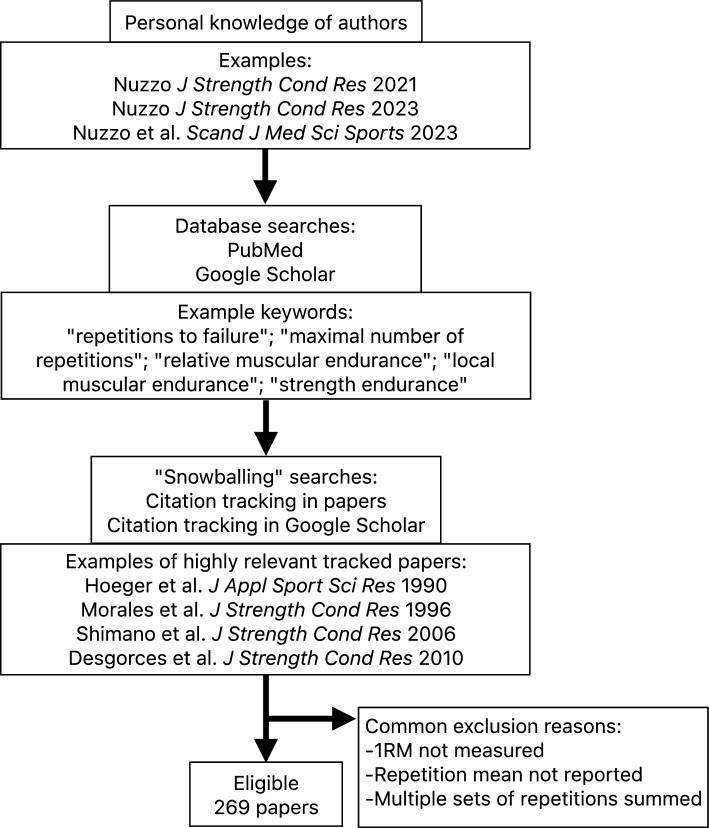
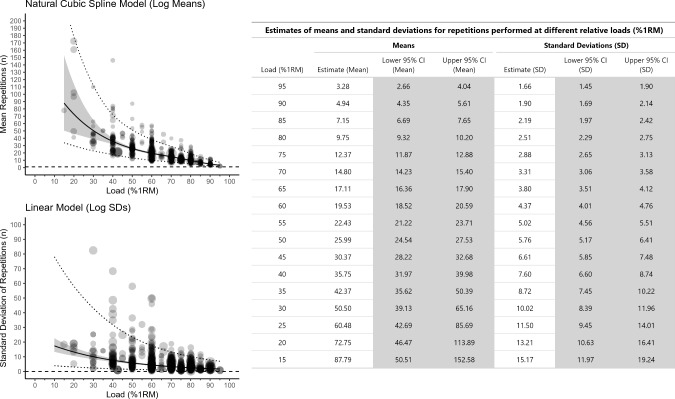
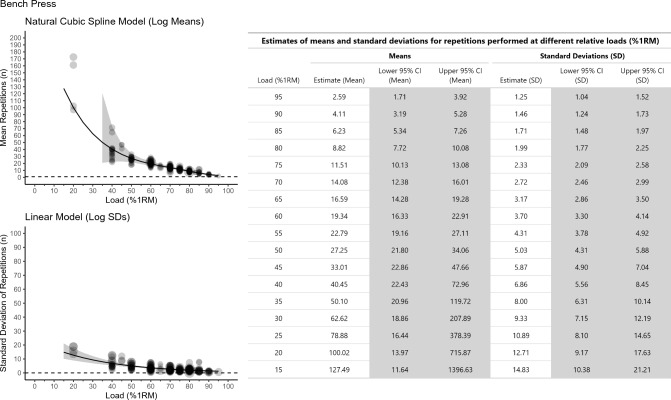
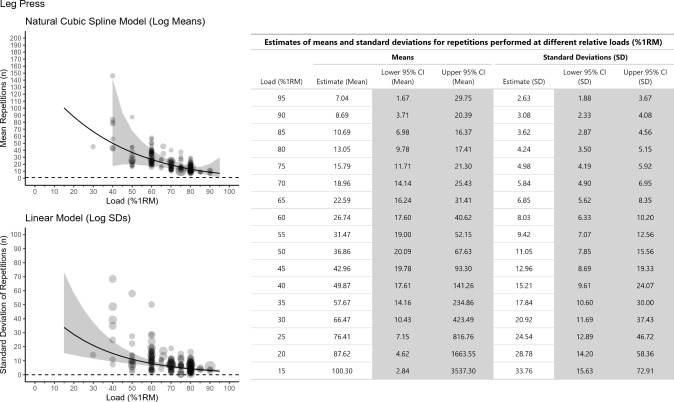
The maximal number of repetitions that can be completed at various percentages of the one repetition maximum (1RM) [REPS ~ %1RM relationship] is foundational knowledge in resistance exercise programming. The current REPS ~ %1RM relationship is based on few studies and has not incorporated uncertainty into estimations or accounted for between-individuals variation. Therefore, we conducted a meta-regression to estimate the mean and between-individuals standard deviation of the number of repetitions that can be completed at various percentages of 1RM. We also explored if the REPS ~ %1RM relationship is moderated by sex, age, training status, and/or exercise. A total of 952 repetitions-to-failure tests, completed by 7289 individuals in 452 groups from 269 studies, were identified. Study groups were predominantly male (66%), healthy (97%), < 59 years of age (92%), and resistance trained (60%). The bench press (42%) and leg press (14%) were the most commonly studied exercises. The REPS ~ %1RM relationship for mean repetitions and standard deviation of repetitions were best described using natural cubic splines and a linear model, respectively, with mean and standard deviation for repetitions decreasing with increasing %1RM. More repetitions were evident in the leg press than bench press across the loading spectrum, thus separate REPS ~ %1RM tables were developed for these two exercises. Analysis of moderators suggested little influences of sex, age, or training status on the REPS ~ %1RM relationship, thus the general main model REPS ~ %1RM table can be applied to all individuals and to all exercises other than the bench press and leg press. More data are needed to develop REPS ~ %1RM tables for other exercises.
Overview
The claims and statistics of this paper haven’t been checked yet.
Free: it reads the open-access text and checks the first 5 claims that cite a source we can check. Create a free account to check every claim.
Integrity signals
Registry
Cites
Statistics
Figures
Verification
Claims the paper makes
The claims and statistics of this paper haven’t been checked yet.
Free: it reads the open-access text and checks the first 5 claims that cite a source we can check. Create a free account to check every claim.
Self-check
Percentages, sums and reported differences re-computed from the paper’s own numbers.
The self-check needs the paper’s full text.
Citations
Cites
Conducting Meta-Analyses in R with the metafor Package
Viechtbauer, W. (2010) · Journal of Statistical Software · doi:10.18637/jss.v036.i03 · Cited by 20,464
Sontrop, J. M., Dixon, S. N., Garg, A. X., Buendia-Jimenez, I., Dohein, O., Huang, S.-H. S., & Clark, W. F. (2013) · American Journal of Nephrology · doi:10.1159/000350377 · Cited by 5,871
performance: An R Package for Assessment, Comparison and Testing of Statistical Models
Lüdecke, D., Ben-Shachar, M., Patil, I., Waggoner, P., & Makowski, D. (2021) · Journal of Open Source Software · doi:10.21105/joss.03139 · Cited by 5,836 · cited 1×
“Effect size calculation and main modeling was performed using the ‘metafor’ package [26], ‘emmeans’ [27] used for moderator contrasts, and ‘performance’ [28] and ‘bayestestR’ [29] used for model comparison.”
MethodA practical solution to the pervasive problems ofp values
Wagenmakers, E.-J. (2007) · Psychonomic Bulletin & Review · doi:10.3758/bf03194105 · Cited by 2,490 · cited 1×
“We then compared fit statistics for all log mean models (see https:// osf. io/ 4v32n) and also compared the models using Bayes factors calculated with approximate Bayesian information criterion (see https:// osf. io/ 432gn [35]).”
MethodGreenhalgh, T., & Peacock, R. (2005) · BMJ · doi:10.1136/bmj.38636.593461.68 · Cited by 2,045 · cited 1×
“We used a mixed approach similar to that described by Greenhalgh and Peacock [20] and imple-menteded in our previous work [16].”
MethodConfidence intervals rather than P values: estimation rather than hypothesis testing.
Gardner, M. J., & Altman, D. G. (1986) · BMJ · doi:10.1136/bmj.292.6522.746 · Cited by 2,010 · cited 1×
“Given the aim of this research was descriptive, we opted to take a model-based [23] and estimation-based approach [24].”
MethodMakowski, D., Ben-Shachar, M., & Lüdecke, D. (2019) · Journal of Open Source Software · doi:10.21105/joss.01541 · Cited by 1,483 · cited 1×
“Effect size calculation and main modeling was performed using the ‘metafor’ package [26], ‘emmeans’ [27] used for moderator contrasts, and ‘performance’ [28] and ‘bayestestR’ [29] used for model comparison.”
MethodReproducible Summary Tables with the gtsummary Package
Sjoberg, D., Whiting, K., Curry, M., Lavery, J., & Larmarange, J. (2021) · The R Journal · doi:10.32614/rj-2021-053 · Cited by 1,290 · cited 1×
“Tables were produced using ‘gt’ [32], ‘gtsummary’ [33], and ‘kableExtra’ [34].”
Gender differences in strength and muscle fiber characteristics
Miller, A. E. J., MacDougall, J. D., Tarnopolsky, M. A., & Sale, D. G. (1993) · European Journal of Applied Physiology and Occupational Physiology · doi:10.1007/bf00235103 · Cited by 1,094
Campos, G., Luecke, T., Wendeln, H., Toma, K., Hagerman, F., Murray, T., Ragg, K., Ratamess, N., Kraemer, W., & Staron, R. (2002) · European Journal of Applied Physiology · doi:10.1007/s00421-002-0681-6 · Cited by 1,066
Research works printed but not linked: 7
- Hoeger WWK Hopkins DR Barette SL Hale DF Relationship between repetitions and selected percentages of one repetition maximum: a comparison between untrained and trained males and females J Appl Sport Sci Res 1990 4 2 47 54
- Gillespie J Gabbard C A test of three theories of muscular endurance development J Hum Mov Stud 1984 10 213 223
- Moraes E Alves HB Teixeira AL Dias MR Miranda H Simao R Relationship between repetitions and selected percentage of one repetition maximum in trained and untrained adolescent subjects J Exerc Physiol Online 2014 17 2 27 35
- Morales J Sobonya S Use of submaximal repetition tests for predicting 1-RM strength in class athletes J Strength Cond Res 1996 10 3 186 189
- Panza P Vianna JM Damasceno VO Aranda LC Bentes CM da Silva NJ Energy cost, number of maximum repetitions, and rating of perceived exertion in resistance exercise with stable and unstable platforms J Exerc Physiol Online 2014 17 3 77 87
- Pedrosa G Boaventura S Abreu E Gonçalves R Prestes J Gordon M Resistance exercise type but no training status affects the relationships between the maximum number of repetitions and the selected percentages of one repetition maximum Gazz Med Ital 2015 175 9 371 377
- Pick J Becque D The relationship between training status and intensity on muscle activation and relative submaximal lifting capacity during the back squat J Strength Cond Res 2000 14 2 175 181
Cited by
CURRIER, B. S., D’SOUZA, A. C., SINGH, M. A. F., LOWISZ, C. V., RAWSON, E. S., SCHOENFELD, B. J., SMITH-RYAN, A. E., STEEN, J. P., THOMAS, G. A., TRIPLETT, N. T., et al. (2026) · Medicine & Science in Sports & Exercise · doi:10.1249/mss.0000000000003897 · Cited by 105
“Several methods have been used to convert loads between %1RM and repetition maximum (17,184,185), including a recent analysis that considered exercise-specific conversions and between-subject variability (186).”
Xu, K., Blazevich, A. J., Boullosa, D. A., Ramírez‐Campillo, R., Yin, M., Zhong, Y., Tian, Y., Finlay, M. J., Byrne, P. J., Cuenca‐Fernández, F., et al. (2025) · Sports Medicine · doi:10.1007/s40279-024-02170-6 · Cited by 101
Robinson, Z. P., Pelland, J. C., Remmert, J. F., Refalo, M. C., Jukic, I., Steele, J., & Zourdos, M. C. (2024) · Sports Medicine · doi:10.1007/s40279-024-02069-2 · Cited by 63
“Previous research suggests that the number of repetitions performed at a given load is highly individual [124–127].”
Self-citationNuzzo, J. L., Pinto, M. D., Kirk, B. J. C., & Nosaka, K. (2024) · Sports Medicine · doi:10.1007/s40279-024-02009-0 · Cited by 56
“We have used similar nonsystematic approaches (e.g., “snowballing” searches) in several comprehensive literature reviews [27, 50–54].”
MethodSelf-citationNuzzo, J. L., & Pinto, M. D. (2025) · European Journal of Sport Science · doi:10.1002/ejsc.12282 · Cited by 54
“…and checking of personal digital files from previous research (Nuzzo 2023; Nuzzo 2025; Nuzzo et al. 2023; Nuzzo, Pinto, Nosaka, et al., 2023; Nuzzo et al. 2024); (b) relevant keyword searches performed in PubMed and Google Scholar; and (c) “snow-balling” strategies (i.e., reference and…”
Self-citationSteele, J., Fisher, J. P., Smith, D., Schoenfeld, B. J., Yang, Y., & Nakagawa, S. (2023) · Journal of Sports Sciences · doi:10.1080/02640414.2023.2286748 · Cited by 40
“Despite this, the use of effect sizes like the ln RR has been limited in previous meta-analyses in sport and exercise science (Deb et al., 2018; Nuzzo et al., 2023) and to our knowledge only a couple of meta-analyses of RT interventions has used this kind of effect size (Swinton et al., 2022; Wolf…”
BackgroundMethodSelf-citationChen, Y. C., Chen, W.-C., Liu, C.-W., Huang, W.-Y., Lu, I., Lin, C. W., Huang, R. Y., Chen, J. S., & Huang, C. H. (2023) · European Review of Aging and Physical Activity · doi:10.1186/s11556-023-00333-4 · Cited by 34
“Given that 50% of 1RM is roughly equivalent to an average of 26 repetitions [25], AT, which typically involves over 100 repetitive movements, can be categorized as LMRT.”
BackgroundSex Differences in Grip Strength From Birth to Age 16: A Meta‐Analysis
Nuzzo, J. L. (2025) · European Journal of Sport Science · doi:10.1002/ejsc.12268 · Cited by 25
Self-citationForelli, F., Marine, P., Moiroux-Sahraoui, A., Mazeas, J., Thoelen, M., Swinnen, B., Bizzini, M., van Melick, N., & Rambaud, A. J. M. (2025) · BMJ Open Sport & Exercise Medicine · doi:10.1136/bmjsem-2025-002503 · Cited by 16
“28 Two individuals following the same programme may not produce the same degree of effort.”
Coge, M., Neiva, H. P., Pereira, A., Faíl, L. B., Ribeiro, B., & Esteves, D. (2024) · Journal of Functional Morphology and Kinesiology · doi:10.3390/jfmk9030111 · Cited by 14
“The calisthenics exercises were performed at maximal intended velocity and the weightlifting exercises started with 12 repetitions until failure (~70–75% of one repletion maximum load: 1RM) and progressed to 4 to 6 repetitions (~80–85% 1RM) [41].”
MethodFalch, H. N., Gundersen, A. H., Larsen, S., Haugen, M. E., & van den Tillaar, R. (2024) · PeerJ · doi:10.7717/peerj.16865 · Cited by 12
McMahon, G. E., Best, N., Coulter, T., & Erskine, R. M. (2024) · The Journal of Strength and Conditioning Research · doi:10.1519/jsc.0000000000004832 · Cited by 9
“However, recent analysis suggests that one could expect 10 6 2 reps for an 80% 1RM loading intensity (25).”
Biological sex differences in fatigue in resistance-trained individuals: A scoping review
Amdi, C. H., Fyfe, J. J., Yoon, S., Nuckols, G., & Refalo, M. C. (2025) · International Journal of Sports Medicine · doi:10.1055/a-2563-9449 · Cited by 9
Bagherpour, F., Arazi, H., Rajabi, H., & Campbell, B. I. (2025) · International Journal of Sport Nutrition and Exercise Metabolism · doi:10.1123/ijsnem.2025-0010 · Cited by 8
Hickmott, L. M., Butcher, S. J., & Chilibeck, P. D. (2025) · European Journal of Applied Physiology · doi:10.1007/s00421-025-05709-1 · Cited by 8
Davies, R. W., Lynch, A. E., Kumar, U., & Jakeman, P. M. (2024) · Translational Sports Medicine · doi:10.1155/2024/3184356 · Cited by 7
“Te conficting results between workload, volume, and/ or intensity-matched trials may be because when taken to the limit of “exercise tolerance” (i.e., task failure), the relationship between intensity and volume/workload is hyperbolic, not linear [87, 88].”
BackgroundNuzzo, J. L. (2024) · The Journal of Strength and Conditioning Research · doi:10.1519/jsc.0000000000004794 · Cited by 7
Self-citationAccuracy of 1RM Prediction Equations Before and After Resistance Training in Three Different Lifts
Ribeiro, A. S., da Silva, J. A., Nascimento, M., Martinho, D. V., dos Santos, L., Salles, B. D. F., Mayhew, J. L., & Cyrino, E. S. (2024) · International Journal of Strength and Conditioning · doi:10.47206/ijsc.v4i1.327 · Cited by 7
Song, X., Hou, Y., Lei, Z., & Zhou, S. (2025) · Frontiers in Psychology · doi:10.3389/fpsyg.2025.1632555 · Cited by 7
More Training, Less Trainability: True? A muscle Swelling Analysis
Pedrosa, G. F., Laporta, L., Rigo, M. E. C., de Souza, L. A. C., Leite-Nunes, T. D., Saccol, M. F., Castro, H. D. O., Costa, G. D. C. T., & Bischoff, A. B. G. (2024) · Muscles Ligaments and Tendons Journal · doi:10.32098/mltj.03.2024.03 · Cited by 6
Brekke, A. F., Bjørklund, J., Holse, R. C., Larsen, C., & Hjortshoej, M. H. (2025) · International Journal of Sports Physical Therapy · doi:10.26603/001c.126963 · Cited by 6
Khemiri, A., Amor, A. B., Dhahbi, W., Padulo, J., Hachana, Y., & Attia, A. (2025) · Acta kinesiologica · doi:10.51371/issn.1840-2976.2025.19.2.5 · Cited by 6
Luders, J. G., Gleadhill, S., Garrett, J. M., & Bennett, H. (2024) · International Journal of Sports Science & Coaching · doi:10.1177/17479541241272256 · Cited by 6
“38 While these recommendations may seem logical considering they align with the ACSM guidelines for strength development 3 and meta-analytic research 39,40 indicating that high intensities and low repetition ranges often lead to superior increases in strength, it is important to highlight that do…”
Gismondi, A., Iellamo, F., Caminiti, G., Sposato, B., Gregorace, E., D’Antoni, V., Biasio, D. D., Vadalà, S., Franchini, A., Mancuso, A., et al. (2024) · Journal of Cardiovascular Development and Disease · doi:10.3390/jcdd12010008 · Cited by 6
Simpson, C., Moore, K. S., Smith, H. K., Coşkun, B., & Hamlin, M. J. (2025) · Journal of Sports Sciences · doi:10.1080/02640414.2025.2457859 · Cited by 6
“This enabled sustained performance that others in review have found estimated to be very close to 10 reps (leg press 80% 1RM mean 13.05 ± 4.24; CI = 9.78–17.41 reps) (Nuzzo et al., 2024).”
InfluentialQin, X., Liu, B., & García‐Ramos, A. (2025) · BMC Sports Science Medicine and Rehabilitation · doi:10.1186/s13102-025-01098-2 · Cited by 5
“Specifically for the bench press, Nuzzo et al. [10] found minimal influence of factors such as sex, age, or training status on the %1RM-RTF relationship, recommending the use of the same generalized relationship for all individuals performing this exercise.”
InfluentialShibata, K., Yamaguchi, T., Shimamori, K., Yamazaki, Y., Takizawa, K., & Nosaka, K. (2025) · The Journal of Strength and Conditioning Research · doi:10.1519/jsc.0000000000005046 · Cited by 5
“For example, it has been stated that 8 – 10 repetitions could be performed at 80% 1RM load, and 3 – 5 repetitions could be performed at 90% 1RM load (17,19).”
Self-citationGomes, M., Gonçalves, A. D., Pezarat‐Correia, P., & Mendonça, G. V. (2025) · European Journal of Applied Physiology · doi:10.1007/s00421-025-05775-5 · Cited by 5
Sex differences in sit-and-reach flexibility in children and adolescents: A meta-analysis
Nuzzo, J. L. (2026) · Journal of Bodywork and Movement Therapies · doi:10.1016/j.jbmt.2026.05.012 · Cited by 5
Self-citationVasquez-Bonilla, A. A., Boschetti, F., Sepulveda, R. A. Y., & Sillero‐Quintana, M. (2025) · Journal of Thermal Biology · doi:10.1016/j.jtherbio.2025.104132 · Cited by 4
Knee extensor training in patients with patellofemoral pain: a systematic review and synthesis
Gunhamn, T., Pojskić, H., & Augustsson, S. R. (2025) · Frontiers in Rehabilitation Sciences · doi:10.3389/fresc.2025.1641054 · Cited by 4
Wang, H., Wang, S., & Cheng, G. (2026) · Frontiers in Psychiatry · doi:10.3389/fpsyt.2026.1742882 · Cited by 4
Jiang, Y., Chávez-Guevara, I. A., Amaro‐Gahete, F. J., Castagna, C., Krustrup, P., Helge, J. W., Peng, H., Fan, X., Đurić, S., Čuk, I., et al. (2026) · Scandinavian Journal of Medicine and Science in Sports · doi:10.1111/sms.70230 · Cited by 4
“Model selection was based on both statistical fit parameters and physiological plausibility [58], recognizing that a simple linear relationship predicting greater weight loss with increasing exercise volume would be biologically implausible, thus warranting nonlinear modeling.”
Cruz‐Montecinos, C., López, L., Núñez‐Cortés, R., López‐Bueno, R., Suso‐Martí, L., Méndez-Rebolledo, G., Morral, A., Andersen, L. L., Casaña, J., & Calatayud, J. (2024) · American Journal of Physical Medicine & Rehabilitation · doi:10.1097/phm.0000000000002462 · Cited by 4
“12 Recent research on brain mechanisms related to fatigue highlights the importance of interoceptive (e.g., muscle tension, pain, etc.) and exteroceptive sensory processing (e.g., visual/auditory stimuli and distracting actions) on the perception of effort.”
The Impact of Stance Width on Kinematics and Kinetics During Maximum Back Squats
Larsen, S., de Zee, M., & van den Tillaar, R. (2024) · The Journal of Strength and Conditioning Research · doi:10.1519/jsc.0000000000004949 · Cited by 4
“For instance, meta-analytic data related to the leg press indicate that individuals could be capable of performing 14 – 25 repetitions (95% confidence intervals [CI]) at 70% of 1RM (30).”
Morin, T., Caillet, A. H., Nordez, A., Doguet, V., & Lacourpaille, L. (2025) · Journal of Applied Physiology · doi:10.1152/japplphysiol.00237.2025 · Cited by 4
Amdi, C. H., Cleather, D. J., & Tallent, J. (2025) · International Journal of Sports Science & Coaching · doi:10.1177/17479541251371308 · Cited by 4
The effects of biological sex on fatigue during and recovery from resistance exercise
Nuckols, G., Overpeck, C. A., Hanson, E. D., & Battaglini, C. L. (2026) · PeerJ · doi:10.7717/peerj.20542 · Cited by 5
Martikainen, O., Niiranen, H., Rytkönen, T., Schoenfeld, B. J., Ahtiainen, J. P., & Hulmi, J. J. (2025) · Journal of Science in Sport and Exercise · doi:10.1007/s42978-025-00338-8 · Cited by 4
Relación optima entre fuerza-velocidad para mejorar la fuerza aplicada en el deporte
Tauda, M., Bravo, E. J. C., & Schleef, D. I. E. (2025) · Retos · doi:10.47197/retos.v65.109362 · Cited by 3
Russo, F., Marconcin, P., Gomes, D. C. L., Peralta, M., Flôres, F. S., & Casanova, N. (2025) · Physical Therapy Reviews · doi:10.1080/10833196.2025.2564026 · Cited by 3
Takeda, R., Sumura, K., Nishikawa, T., & Watanabe, K. (2025) · European Journal of Applied Physiology · doi:10.1007/s00421-025-06024-5 · Cited by 3
Impact of Prior Fatigue on Velocity Loss as a Set-Termination Criterion in the Bench Press Exercise
Rodiles-Guerrero, L., Mena, B. B., & Sánchez‐Moreno, M. (2026) · Journal of Human Kinetics · doi:10.5114/jhk/214212 · Cited by 3
“On the one hand, one can establish a maximum number of repetitions (MNR), since there is an approximate number of repetitions per set that can be completed with each relative load (%1RM) (Nuzzo et al., 2024; Sheppard and Triplett, 2016).”
He, Z., Xue, Z., Qiang, L., Lu, Z., Wang, Q., Zhang, R., Xu, Y., Tu, J., Bao, D., & Zhou, J. (2026) · European Journal of Sport Science · doi:10.1002/ejsc.70183 · Cited by 3
Lundberg, T. R., Larsson, G., Alstermark, R., Mandić, M., & Fernandez‐Gonzalo, R. (2024) · BMC Sports Science Medicine and Rehabilitation · doi:10.1186/s13102-024-00830-8 · Cited by 3
“Nuzzo et al. reported on the maximum number of repetitions at different percentages of the 1RM and found that sex had little effect on the outcome [12].”
BackgroundBayonas‐Ruiz, A., Muñoz‐Franco, F. M., Molina, M. S., González-Moro, I. M., Gimeno, J. R., & Bonacasa, B. (2024) · Journal of Clinical Medicine · doi:10.3390/jcm13082324 · Cited by 3
“The participants were instructed to choose a weight for each set, allowing them to complete between 16 and 24 repetitions, which corresponds to the specified relative intensities [21].”
BackgroundIacono, A. D., Henry, S., Ben-Ari, A., Halperin, I., & Carey, L. (2025) · Sports Medicine - Open · doi:10.1186/s40798-025-00890-1 · Cited by 2
de Loock, A. V., Vandecauter, J., Ullrich, M., Lievens, E., Schroé, H., Moreno‐Justicia, R., Weyns, A., Thienen, R. V., Calders, P., Deshmukh, A. S., et al. (2025) · The Journal of Physiology · doi:10.1113/jp289240 · Cited by 2
Puppyn, N. F. T., Hofmeyr, S., Brughelli, M., & Amdi, C. H. (2025) · International Journal of Sports Science & Coaching · doi:10.1177/17479541251391967 · Cited by 3
Equating Unilateral and Bilateral Half-Squat Loads: Neuromuscular and Kinetic Analysis
Migliaccio, G. M., Iuliano, E., Picerno, P., Russo, L., Dhahbi, W., Padulo, J., Čular, D., Kuvačić, G., Racil, G., & Ene-Voiculescu, C. (2025) · International Journal of Sports Medicine · doi:10.1055/a-2719-7934 · Cited by 2
Neves, P. P., Marques, D. L., Neiva, H. P., & Alves, A. R. (2026) · Journal of Science in Sport and Exercise · doi:10.1007/s42978-025-00361-9 · Cited by 2
Hammert, W. B., Moreno, E. N., Sallberg, R. W., Yamada, Y., Metcalf, E. E., Young, E. W., Kataoka, R., & Loenneke, J. P. (2026) · European Journal of Applied Physiology · doi:10.1007/s00421-026-06129-5 · Cited by 2
“Yet, it should be acknowledged that, because individuals can com - plete more repetitions (to task failure) using lower loads (Morton et al. 2019b ; Nuzzo et al. 2023 ), the proximity to task failure, and thus relative effort required to complete each set, would inevitably differ between groups.”
Rodrigues, M. Y., Takito, M. Y., Kafouri, G. A., Pires, R. S., Mello, F. G., Zare, R., Hernandez, S. V., Heinrich, K. M., & Franchini, É. (2026) · Sports · doi:10.3390/sports14030094 · Cited by 2
“…size was calculated using four factors: (a) number of maximum repetitions at 80% of 1RM, 9 ± 2 repetitions for BP and 13 ± 4 repetitions for LP [27]; (b) in a study, Panissa et al. [28], observed a drop of 30%, 40% and 40% of repetitions for the second, third and fourth sets of a half squat…”
Tomschi, F., Meder, K., & Hilberg, T. (2026) · Journal of Back and Musculoskeletal Rehabilitation · doi:10.1177/10538127261448967 · Cited by 2
“36,37 Therefore, using one fi xed percentage would not have resulted in a comparable relativeeffortortime-under-tensionacross allmachines,which is common in resistance training studies (e.g., with CLBP patients 28 ).”
Steele, J., Fisher, J. P., & Dettmann, T. (2026) · Communications in Kinesiology · doi:10.51224/cik.2026.8030 · Cited by 2
Self-citationGonçalves, L. D. S., Benjamim, C. J. R., Sousa, Y. B. A., da Silva, L. S. L., Júnior, M. F. T., Rebelo, M. A., Tanus-Santos, J. E., & Júnior, C. R. B. (2025) · BMJ Open Sport & Exercise Medicine · doi:10.1136/bmjsem-2025-002717 · Cited by 1
“11”
Montemurro, A., Ruiz-Cárdenas, J. D., Gruet, M., & Souron, R. (2025) · European Journal of Applied Physiology · doi:10.1007/s00421-025-06010-x · Cited by 1
Fatigue and its reciprocal relationship with motor imagery
Rienzo, F. D., Pageaux, B., Monjo, F., Millet, G. Y., & Guillot, A. (2025) · Elsevier eBooks · doi:10.1016/b978-0-443-24080-5.00023-0 · Cited by 1
Developing a Repetition-Based Inter-Set Rest Adjustment Method in Resistance Training
Zhang, X., Chen, Z., Li, H., Weakley, J. J. S., Li, Z., & García‐Ramos, A. (2026) · Sports Health A Multidisciplinary Approach · doi:10.1177/19417381251398823 · Cited by 1
“…point is used as the adjustment variable, as repetition volume reflects both individual differences and fatigue accumulation during RT. Participants may complete a different number of repetitions at the same relative load, both when reaching failure, 23 and when surpassing a velocity cut-off point.”
Flück, M., Protte, C., Giraud, M.-N., Häusler, E., Zueger, R., & Dössegger, A. (2026) · International Journal of Molecular Sciences · doi:10.3390/ijms27031340 · Cited by 1
“Compared to reference values from active populations, participants demonstrated good-to-very-good levels of strength, strength–endurance, and aerobic/anaerobic capacity [37–40] under exercise tests with additional load to simulate the operational demand of tactical athletes.”
Wang, X., Lu, S., Cheng, X., He, J., Wei, J., Sun, Q., Zhou, T., & Yu, Y. (2026) · Frontiers in Sports and Active Living · doi:10.3389/fspor.2026.1772269 · Cited by 1
“This feature makes VL useful in acute PAPE protocols, where the goal is to manage fatigue rather than accumulate training volume (43).”
Puente-Alcaraz, C., Herrera-Bermudo, J. C., Yáñez‐García, J. M., Rojas-Jaramillo, A., González‐Badillo, J. J., & Rodríguez‐Rosell, D. (2026) · The Journal of Strength and Conditioning Research · doi:10.1519/jsc.0000000000005547 · Cited by 1
Amaya-Campos, M. D. M., Jiménez, R. Z., Fernández‐Jiménez, R., Vegas-Aguilar, I. M., García-Olivares, M. A., Rego, M. D.-C., Molina, Y. R., Gómez-González, A. M., Trujillo, Á. M., Tinahones-Madueño, F., et al. (2026) · Journal of Clinical Medicine · doi:10.3390/jcm15114336 · Cited by 1
McMahon, G., Morse, C. I., Burden, A., Winwood, K. L., & Onambélé-Pearson, G. L. (2026) · The Journal of Strength and Conditioning Research · doi:10.1519/jsc.0000000000005561 · Cited by 1
Sugimoto, H., Taga, M., Fukushima, K., Akashi, Y., & Momose, K. (2025) · Journal of Physical Therapy Science · doi:10.1589/jpts.37.77 · Cited by 1
Iacono, A. D., Jukić, I., & Swinton, P. A. (2026) · Research Square · doi:10.21203/rs.3.rs-9970394/v1 · Cited by 1
Kennerley, C. (2023) · Sheffield Hallam University · doi:10.7190/shu-thesis-00630
Viviers, W. K., & Jordre, B. D. (2024) · Topics in Geriatric Rehabilitation · doi:10.1097/tgr.0000000000000455
“139 , 140 As such, an updated REPS ~ %1 R-M table for adults aged 50+, derived by a recent meta-regression of data from 269 studies, 139 is provided in Table 3.”
Grine, W., Belfritas, Y., & Kessouri, O. (2024) · Journal of Applied Sports Sciences · doi:10.37393/jass.2024.02.3
Spudić, D., & Štirn, I. (2024) · Kinesiologia Slovenica scientific journal on sport · doi:10.52165/kinsi.30.3.112-129
Pedrosa, G. F., Bischoff, A. B. G., Rigo, M. E. C., Litcth, J., Leite-Nunes, T. D., & Lanferdini, F. J. (2024) · Revista Portuguesa de Ciências do Desporto · doi:10.5628/rpcd.24.01.35
Editorial: Análise do movimento humano
Amadio, A. C. (2024) · Revista Portuguesa de Ciências do Desporto · doi:10.5628/rpcd.24.01.09
Junior, R. Z. (2024) · Digital Library of Theses and Dissertations (Universidade de São Paulo) · doi:10.11606/d.39.2024.tde-07042025-181442
Campos, B. T., Silveira-Rodrigues, J. G., & Abad, C. C. C. (2025) · International Journal of Sports Science & Coaching · doi:10.1177/17479541251341501
“9,10 It is well described a linear relationship between the percentage of 1 RM and the load relative to the percentage of body mass. 32,33 Thus, the hypothesis that there is a difference in OPL %BW between limbs was con fi rmed in the present study.”
Lawson, D. J., Olmos, A. A., Mosiman, S. J., Sontag, S. A., Goodin, J. R., & Dawes, J. J. (2025) · The Journal of Strength and Conditioning Research · doi:10.1519/jsc.0000000000005228
Real-Time Nitric Oxide Bioactivity Response to a Bout of High- vs Low-Load Resistance Exercise
Gonzalez, A. M., Krawczyk, M. P., Mangine, G. T., Pinzone, A. G., & Harhash, T. S. (2025) · Journal of Fitness Wellness and Human Performance · doi:10.70834/jfwhp-25-0001
Markarian, A. M., Taaffe, D. R., Galvao, D. A., Wilkie, J. C., Peddle‐McIntyre, C. J., Markarian, M. B., Schiferl, D. J., & Newton, R. U. (2025) · Bone · doi:10.1016/j.bone.2025.117720
Berndt, P. (2024) · Publication Server of Kaiserslautern University of Technology (Kaiserslautern University of Technology) · doi:10.26204/kluedo/7845
Lee, J., 천우호, & Lee, K. (2025) · International journal of human movement and sports sciences · doi:10.13189/saj.2025.130125
European journal of sport science EJSS ; official journal of the European College of Sport Science
European College of Sport Science (n.d.)
Resistance training to momentary failure for muscle hypertrophy : A scoping review
Todorovski, F. (2024) · DiVA (Linnaeus University)
Skillnaden i repetitioner på 70% av 1RMbänkpress mellan män och kvinnor
Hahr, C., & Franzén, E. (2024) · KTH Publication Database DiVA (KTH Royal Institute of Technology)
Nässén, O., & Noordh, C. (2025) · KTH Publication Database DiVA (KTH Royal Institute of Technology)
Sigurðsson, D. M. (2024) · Skemman
Áætlun á hámarksstyrk í hællyftu byggt á hámarksendurtekningum í hællyftu
Atlason, N. M. (2024) · Skemman
Accuracy in predicting proximity to failure during resistance training
Holmes, G. (2025) · UNSWorks (UNSW Sydney) · doi:10.26190/unsworks/31658
Wang, B., Halaki, M., Tran, D., Davies, T. B., Way, K. L., Tran, J., Wilson, G. C., Davis, G. M., Singh, M. F., & Hackett, D. A. (2026) · Aging Clinical and Experimental Research · doi:10.1007/s40520-026-03324-4
Fukushima, K., Sue, K., Oyake, K., Kurobe, Y., Akashi, Y., Endo, T., & Momose, K. (2026) · Journal of Physical Therapy Science · doi:10.1589/jpts.38.63
Ammar, A., Salem, A., Kerkeni, M., Mera, T. A., Baťalík, L., Toral-Noristz, M., Jahrami, H., Tounsi, S., Żmijewski, P., Ghazzawi, H., et al. (2026) · International Journal of Food Sciences and Nutrition · doi:10.1080/09637486.2026.2625827
“It should be noted that the number of repetitions achieved across intensities, especially in the BP, was lower than the estimated mean repetition ranges recently reported for resistance exercise at comparable %1RM loads (Nuzzo et al. 2024).”
Response to “Is exercise intensity only a part of exercise, or all the exercise?”
Bishop, D. J. (2026) · Journal of science and medicine in sport · doi:10.1016/j.jsams.2026.02.019
Burges, P. B. (2025) · Academica-e (Universidad Pública de Navarra)
Steele, J. (2026) · doi:10.51224/sportrxiv.783
Self-citationMéndez-delCanto, R., Aidar, F. J., Díaz-de-Durana, A. L., Aedo-Muñoz, E., Brito, C. J., Garrido, N. D., Reis, V. M., & Nikolaidis, P. Τ. (2026) · Physiologia · doi:10.3390/physiologia6020025
“For loads ranging from 80% to 90% of 1RM, athletes can perform 4 to 8 maximal repetitions before failure in a single bench press set, while only 1 repetition can be executed with a 1RM load [19].”
Hermosilla-Perona, F., Martín-Castellanos, A., Monteiro, M. R. P., García, J. I., Barba-Ruíz, M., & Elvar, J. R. H. (2026) · Sports · doi:10.3390/sports14040141
“This is in line with evidence that the maximal number of repetitions achievable at a given relative load varies (REPS-%1RM) substantially across exercises, and that between-individual variability in the REPS-%1RM relationship is considerable [25].”
Effects of a repetition-based rest adjustment strategy on superset training performance and fatigue
Zhang, X., Chen, Z., Li, H., Weakley, J. J. S., Li, Z., Guarino, A. J. S., & García‐Ramos, A. (2026) · International Journal of Sports Science & Coaching · doi:10.1177/17479541261437701
Repeatability of Knee Extension Muscle Endurance Between 20% and 40% of One Repetition Maximum
Hillen, S. J., Fliss, M. D., & Mitchell, C. J. (2026) · Muscles · doi:10.3390/muscles5020026
“The relationship between relative load and the number of repetitions that can be completed (REPS~%1RM relationship) is a negatively sloped, non-linear monotonic function that is often modelled using hyperbolic, cubic or exponential equations [2–4], where heavier loads yield earlier task failure.”
InfluentialFerrari, L., Pochetti, M., Vialetto, L., & Bochicchio, G. (2026) · Research Square · doi:10.21203/rs.3.rs-8899476/v1
Bradshaw, J. T., Sanzo, K., Barakat, C., Barshun, A., Inglima, S., Gotla, T. Z., Thompson, B. K., Souza, E. O. D., & Walters, J. (2026) · The Journal of Strength and Conditioning Research · doi:10.1519/jsc.0000000000005388
Heavy or light: is muscle fiber growth load-specific? A systematic review and meta‐regression
Varović, D., Larsen, S., & Grgić, J. (2026) · Frontiers in Physiology · doi:10.3389/fphys.2026.1953601
Metadata
- Authors
- Nuzzo, J. L., Pinto, M. D., Nosaka, K., & Steele, J.
- Affiliations
- Edith Cowan University (AU)
- Southampton Solent University (GB)
- Corresponding author
- Nuzzo, James L.
- Venue
- Sports Medicine
- Published
- 2023-10-04
- Volume
- 54
- Issue
- 2
- Pages
- 303-321
- ISSN
- 0112-1642 (ISSN-L)
- 1179-2035
- PMC
- PMC10933212
- OpenAlex
- W4387326757
- Semantic Scholar
- e3bb10354f0adcd03c4bc48bf3a995ae8e9ef6bf
- Cited by
- 85
- References
- 301
- Citations by year
- 2026: 37 · 2025: 30 · 2024: 16 · 2023: 2
- FWCI
- 4.70
- Type
- journal article
- Language
- en
- Open access
- hybrid
- doi.org
- Licence
- cc-by
- creativecommons.org/licenses/by/4.0 (tdm)
- creativecommons.org/licenses/by/4.0 (vor)
- Locations
- Sports Medicine (publishedVersion, cc-by)
- PubMed Central (publishedVersion, cc-by)
- PubMed (publishedVersion)
- Australasian Journal of Paramedicine (submittedVersion, cc-by)
- Solent University Research Portal (Solent University) (submittedVersion, cc-by)
- Funders
- Edith Cowan University
- Topics
- Health Sciences › Medicine › Orthopedics and Sports Medicine › Sports Performance and Training
- Health Sciences › Medicine › Physiology (medical) › Cardiovascular and exercise physiology
- Health Sciences › Medicine › Public Health, Environmental and Occupational Health › Physical Activity and Health
- Keywords
- repetitions to failure, one-repetition maximum, resistance training, sex differences, age effects, training status, bench press, leg press, exercise selection, interindividual variability
- MeSH terms
- Exercise Therapy, Female, Humans, Male, Weight Lifting, Exercise, Linear Models, Muscle, Skeletal, Muscle Strength, Resistance Training
About these checks
Registry, retraction, Cites and statistics results are computed, not judged, with one exception: a printed reference that no index lists is read once by a model before it counts as a citation error. Claims are extracted by a model and kept only when their quote appears verbatim in the text; each cited source is then checked, with a model’s help, for whether it says what the claim relies on. Those verdicts can be wrong — read the claim’s quote and the cited source before relying on one.
Statistics and arithmetic are recomputed, not judged.
Confidence bands are shown only for fields calibrated on our annotated test set. None is calibrated yet, so no band is shown.
What counts as a claim ›How we measure confidence ›How we check this ›
Are you an author, or do you see a problem with this page? Request a review
Data sources
Bibliographic data: Semantic Scholar, OpenAlex, Crossref.
Contains information from the Semantic Scholar Academic Graph Datasets, made available under the ODC Attribution License (ODC-BY 1.0).
Semantic Scholar’s data is described in: Kinney, R., et al. (2023). The Semantic Scholar Open Data Platform. arXiv:2301.10140.
