

Maximal number of repetitions at percentages of the one repetition maximum: a meta-regression and moderator analysis of sex, age, training status, and exercise.
Open accessPublished version of a preprint
The DOI matches its Crossref record; 303 of the 303 references it cites were found in a registry or an index.
Abstract
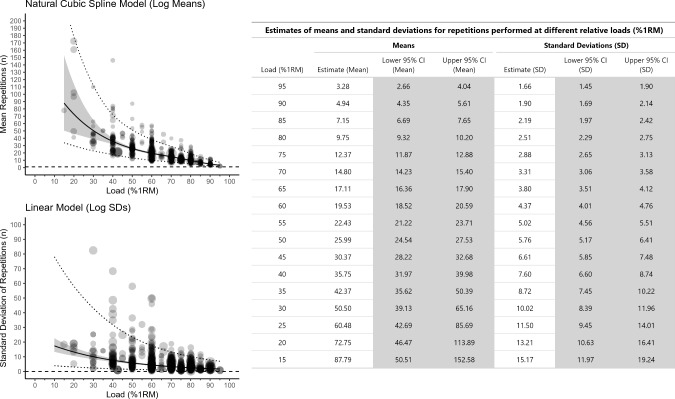
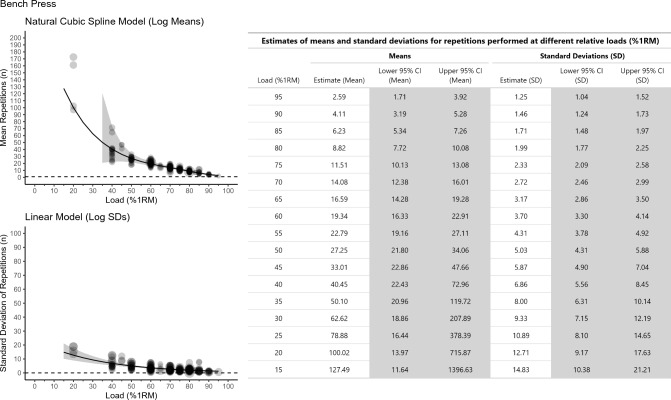
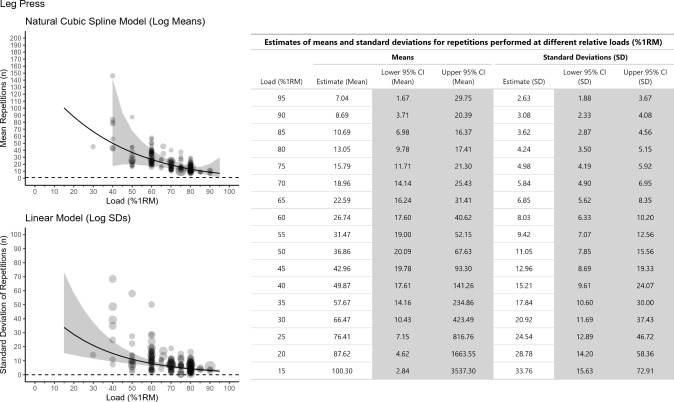
The maximal number of repetitions that can be completed at various percentages of the one repetition maximum (1RM) [REPS ~ %1RM relationship] is foundational knowledge in resistance exercise programming. The current REPS ~ %1RM relationship is based on few studies and has not incorporated uncertainty into estimations or accounted for between-individuals variation. Therefore, we conducted a meta-regression to estimate the mean and between-individuals standard deviation of the number of repetitions that can be completed at various percentages of 1RM. We also explored if the REPS ~ %1RM relationship is moderated by sex, age, training status, and/or exercise. A total of 952 repetitions-to-failure tests, completed by 7289 individuals in 452 groups from 269 studies, were identified. Study groups were predominantly male (66%), healthy (97%), < 59 years of age (92%), and resistance trained (60%). The bench press (42%) and leg press (14%) were the most commonly studied exercises. The REPS ~ %1RM relationship for mean repetitions and standard deviation of repetitions were best described using natural cubic splines and a linear model, respectively, with mean and standard deviation for repetitions decreasing with increasing %1RM. More repetitions were evident in the leg press than bench press across the loading spectrum, thus separate REPS ~ %1RM tables were developed for these two exercises. Analysis of moderators suggested little influences of sex, age, or training status on the REPS ~ %1RM relationship, thus the general main model REPS ~ %1RM table can be applied to all individuals and to all exercises other than the bench press and leg press. More data are needed to develop REPS ~ %1RM tables for other exercises.
Overview
The claims and statistics of this paper haven’t been checked yet.
Free: it reads the open-access text and checks the first 5 claims that cite a source we can check. Create a free account to check every claim.
Integrity signals
Registry
Cites
Statistics
Figures
Verification
Claims the paper makes
The claims and statistics of this paper haven’t been checked yet.
Free: it reads the open-access text and checks the first 5 claims that cite a source we can check. Create a free account to check every claim.
Self-check
Percentages, sums and reported differences re-computed from the paper’s own numbers.
The self-check needs the paper’s full text.
Citations
Cites
Conducting Meta-Analyses in R with the metafor Package
Viechtbauer, W. (2010) · Journal of Statistical Software · doi:10.18637/jss.v036.i03 · Cited by 20,464
Sontrop, J. M., Dixon, S. N., Garg, A. X., Buendia-Jimenez, I., Dohein, O., Huang, S.-H. S., & Clark, W. F. (2013) · American Journal of Nephrology · doi:10.1159/000350377 · Cited by 5,871
performance: An R Package for Assessment, Comparison and Testing of Statistical Models
Lüdecke, D., Ben-Shachar, M., Patil, I., Waggoner, P., & Makowski, D. (2021) · Journal of Open Source Software · doi:10.21105/joss.03139 · Cited by 5,836 · cited 1×
“Effect size calculation and main modeling was performed using the ‘metafor’ package [26], ‘emmeans’ [27] used for moderator contrasts, and ‘performance’ [28] and ‘bayestestR’ [29] used for model comparison.”
MethodA practical solution to the pervasive problems ofp values
Wagenmakers, E.-J. (2007) · Psychonomic Bulletin & Review · doi:10.3758/bf03194105 · Cited by 2,490 · cited 1×
“We then compared fit statistics for all log mean models (see https:// osf. io/ 4v32n) and also compared the models using Bayes factors calculated with approximate Bayesian information criterion (see https:// osf. io/ 432gn [35]).”
MethodGreenhalgh, T., & Peacock, R. (2005) · BMJ · doi:10.1136/bmj.38636.593461.68 · Cited by 2,045 · cited 1×
“We used a mixed approach similar to that described by Greenhalgh and Peacock [20] and imple-menteded in our previous work [16].”
MethodConfidence intervals rather than P values: estimation rather than hypothesis testing.
Gardner, M. J., & Altman, D. G. (1986) · BMJ · doi:10.1136/bmj.292.6522.746 · Cited by 2,010 · cited 1×
“Given the aim of this research was descriptive, we opted to take a model-based [23] and estimation-based approach [24].”
MethodMakowski, D., Ben-Shachar, M., & Lüdecke, D. (2019) · Journal of Open Source Software · doi:10.21105/joss.01541 · Cited by 1,483 · cited 1×
“Effect size calculation and main modeling was performed using the ‘metafor’ package [26], ‘emmeans’ [27] used for moderator contrasts, and ‘performance’ [28] and ‘bayestestR’ [29] used for model comparison.”
MethodReproducible Summary Tables with the gtsummary Package
Sjoberg, D., Whiting, K., Curry, M., Lavery, J., & Larmarange, J. (2021) · The R Journal · doi:10.32614/rj-2021-053 · Cited by 1,290 · cited 1×
“Tables were produced using ‘gt’ [32], ‘gtsummary’ [33], and ‘kableExtra’ [34].”
Gender differences in strength and muscle fiber characteristics
Miller, A. E. J., MacDougall, J. D., Tarnopolsky, M. A., & Sale, D. G. (1993) · European Journal of Applied Physiology and Occupational Physiology · doi:10.1007/bf00235103 · Cited by 1,094
Campos, G., Luecke, T., Wendeln, H., Toma, K., Hagerman, F., Murray, T., Ragg, K., Ratamess, N., Kraemer, W., & Staron, R. (2002) · European Journal of Applied Physiology · doi:10.1007/s00421-002-0681-6 · Cited by 1,066
patchwork: The Composer of Plots
Pedersen, T. L. (2019) · CRAN: Contributed Packages · doi:10.32614/cran.package.patchwork · Cited by 818
Abandon Statistical Significance
McShane, B. B., Gal, D., Gelman, A., Robert, C., & Tackett, J. L. (2019) · The American Statistician · doi:10.1080/00031305.2018.1527253 · Cited by 791
Resistance exercise load does not determine training-mediated hypertrophic gains in young men
Mitchell, C. J., Churchward-Venne, T. A., West, D. W. D., Burd, N. A., Breen, L., Baker, S. K., & Phillips, S. M. (2012) · Journal of Applied Physiology · doi:10.1152/japplphysiol.00307.2012 · Cited by 627
Sex differences in human fatigability: mechanisms and insight to physiological responses
Hunter, S. K. (2014) · Acta Physiologica · doi:10.1111/apha.12234 · Cited by 595 · cited 2×
“Muscle endurance or “strength endurance,” the attribute evaluated by a repetitions-to-failure test at a submaximal loads, may be impacted by sex [8–11], age [12–14], or muscle group [15].”
BackgroundEssentials of strength training and conditioning
Haff, G. G., & Triplett, N. T. (2016) · Edith Cowan University Research Online (Edith Cowan University) · Cited by 566
The aging neuromuscular system and motor performance
Hunter, S. K., Pereira, H. M., & Keenan, K. G. (2016) · Journal of Applied Physiology · doi:10.1152/japplphysiol.00475.2016 · Cited by 532
SHIMANO, T., KRAEMER, W. J., SPIERING, B. A., VOLEK, J. S., HATFIELD, D. L., SILVESTRE, R., VINGREN, J. L., FRAGALA, M. S., MARESH, C. M., FLECK, S. J., et al. (2006) · Journal of Strength and Conditioning Research · doi:10.1519/00124278-200611000-00015 · Cited by 320
Izquierdo, M., Ibañez, J., González-Badillo, J. J., Häkkinen, K., Ratamess, N. A., Kraemer, W. J., French, D. N., Eslava, J., Altadill, A., Asiain, X., et al. (2006) · Journal of Applied Physiology · doi:10.1152/japplphysiol.01400.2005 · Cited by 316
Optimal load for increasing muscle power during explosive resistance training in older adults.
de Vos, N. J., Singh, N. A., Ross, D. A., Stavrinos, T. M., Orr, R., & Fiatarone Singh, M. A. (2005) · The Journals of Gerontology Series A: Biological Sciences and Medical Sciences · doi:10.1093/gerona/60.5.638 · Cited by 309
Time‐restricted feeding in young men performing resistance training: A randomized controlled trial †
Tinsley, G. M., Forsse, J. S., Butler, N. K., Paoli, A., Bane, A. A., La Bounty, P. M., Morgan, G. B., & Grandjean, P. W. (2017) · European Journal of Sport Science · doi:10.1080/17461391.2016.1223173 · Cited by 307
Nuzzo, J. L. (2023) · Journal of Strength & Conditioning Research · doi:10.1519/jsc.0000000000004329 · Cited by 304 · cited 1×
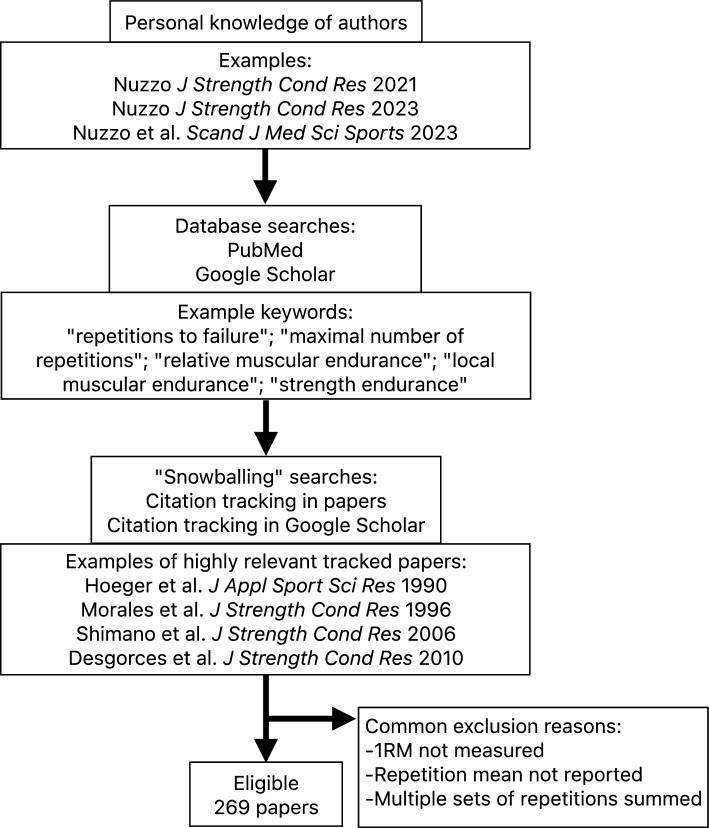
“The approach relied on the investigators’ personal knowledge [21, 22], checking of personal digital files, relevant keyword searches in PubMed and Google Scholar, and “snowballing” strategies (i.e., reference and citation tracking).”
MethodSelf-citationEARNEST, C. P., SNELL, P. G., RODRIGUEZ, R., ALMADA, A. L., & MITCHELL, T. L. (1995) · Acta Physiologica Scandinavica · doi:10.1111/j.1748-1716.1995.tb09854.x · Cited by 300
The Relevance of Sex Differences in Performance Fatigability
HUNTER, S. K. (2016) · Medicine & Science in Sports & Exercise · doi:10.1249/mss.0000000000000928 · Cited by 298
Resistance Exercise and Physical Performance in Adults Aged 60 to 83
Vincent, K. R., Braith, R. W., Feldman, R. A., Magyari, P. M., Cutler, R. B., Persin, S. A., Lennon, S. L., Md, A. H. G., & Lowenthal, D. T. (2002) · Journal of the American Geriatrics Society · doi:10.1046/j.1532-5415.2002.50267.x · Cited by 296
Increased Protein Intake Reduces Lean Body Mass Loss during Weight Loss in Athletes
METTLER, S., MITCHELL, N., & TIPTON, K. D. (2010) · Medicine & Science in Sports & Exercise · doi:10.1249/mss.0b013e3181b2ef8e · Cited by 288
Low-volume circuit versus high-volume periodized resistance training in women
MARX, J. O., RATAMESS, N. A., NINDL, B. C., GOTSHALK, L. A., VOLEK, J. S., DOHI, K., BUSH, J. A., GÓMEZ, A. L., MAZZETTI, S. A., FLECK, S. J., et al. (2001) · Medicine & Science in Sports & Exercise · doi:10.1097/00005768-200104000-00019 · Cited by 283
Resistance Training Volume Enhances Muscle Hypertrophy but Not Strength in Trained Men
SCHOENFELD, B. J., CONTRERAS, B., KRIEGER, J., GRGIC, J., DELCASTILLO, K., BELLIARD, R., & ALTO, A. (2019) · Medicine & Science in Sports & Exercise · doi:10.1249/mss.0000000000001764 · Cited by 281
TRUNK MUSCLE ELECTROMYOGRAPHIC ACTIVITY WITH UNSTABLE AND UNILATERAL EXERCISES
BEHM, D. G., LEONARD, A. M., YOUNG, W. B., C. BONSEY, W. A., & MACKINNON, S. N. (2005) · Journal of Strength and Conditioning Research · doi:10.1519/00124278-200502000-00033 · Cited by 274
Seynnes, O., Fiatarone Singh, M. A., Hue, O., Pras, P., Legros, P., & Bernard, P. L. (2004) · The Journals of Gerontology Series A: Biological Sciences and Medical Sciences · doi:10.1093/gerona/59.5.m503 · Cited by 274
The influence of direct supervision of resistance training on strength performance
MAZZETTI, S. A., KRAEMER, W. J., VOLEK, J. S., DUNCAN, N. D., RATAMESS, N. A., G??MEZ, A. L., NEWTON, R. U., H??KKINEN, K., & FLECK, S. J. (2000) · Medicine & Science in Sports & Exercise · doi:10.1097/00005768-200006000-00023 · Cited by 258
Maximum Strength-Power-Performance Relationships in Collegiate Throwers
STONE, M. H., SANBORN, K., OʼBRYANT, H. S., HARTMAN, M., STONE, M. E., PROULX, C., WARD, B., & HRUBY, J. (2003) · Journal of Strength and Conditioning Research · doi:10.1519/00124278-200311000-00019 · Cited by 254
Galvão, D. A., & Taaffe, D. R. (2005) · Journal of the American Geriatrics Society · doi:10.1111/j.1532-5415.2005.00494.x · Cited by 246
Izquierdo, M., González-Badillo, J., Häkkinen, K., Ibáñez, J., Kraemer, W., Altadill, A., Eslava, J., & Gorostiaga, E. (2006) · International Journal of Sports Medicine · doi:10.1055/s-2005-872825 · Cited by 227
Garhammer, J. (1993) · The Journal of Strength and Conditioning Research · doi:10.1519/1533-4287(1993)007<0076:aropos>2.3.co;2 · Cited by 226
Interaction between concurrent strength and endurance training
Sale, D. G., MacDougall, J. D., Jacobs, I., & Garner, S. (1990) · Journal of Applied Physiology · doi:10.1152/jappl.1990.68.1.260 · Cited by 225
Endurance capacity of untrained males and females in isometric and dynamic muscular contractions
Maughan, R. J., Harmon, M., Leiper, J. B., Sale, D., & Delman, A. (1986) · European Journal of Applied Physiology and Occupational Physiology · doi:10.1007/bf00422739 · Cited by 206
Anderson, T., & Kearney, J. T. (1982) · Research Quarterly for Exercise and Sport · doi:10.1080/02701367.1982.10605218 · Cited by 197
The Interference Effects of Training for Strength and Endurance Simultaneously.
Hennessy, L. C., & Watson, A. W. S. (1994) · Journal of Strength and Conditioning Research · doi:10.1519/00124278-199402000-00003 · Cited by 193
Wernbom, M., Järrebring, R., Andreasson, M. A., & Augustsson, J. (2009) · Journal of Strength and Conditioning Research · doi:10.1519/jsc.0b013e3181bc1c2a · Cited by 191
SIMÃO, R., DE TARSO VERAS FARINATTI, P., POLITO, M. D., MAIOR, A. S., & FLECK, S. J. (2005) · Journal of Strength and Conditioning Research · doi:10.1519/00124278-200502000-00026 · Cited by 189
Lanza, I. R., Russ, D. W., & Kent-Braun, J. A. (2004) · Journal of Applied Physiology · doi:10.1152/japplphysiol.01351.2003 · Cited by 185 · cited 2×
“Muscle endurance or “strength endurance,” the attribute evaluated by a repetitions-to-failure test at a submaximal loads, may be impacted by sex [8–11], age [12–14], or muscle group [15].”
BackgroundLonger Interset Rest Periods Enhance Muscle Strength and Hypertrophy in Resistance-Trained Men
Schoenfeld, B. J., Pope, Z. K., Benik, F. M., Hester, G. M., Sellers, J., Nooner, J. L., Schnaiter, J. A., Bond-Williams, K. E., Carter, A. S., Ross, C. L., et al. (2016) · Journal of Strength and Conditioning Research · doi:10.1519/jsc.0000000000001272 · Cited by 184
Effect of caffeine ingestion on one-repetition maximum muscular strength
Astorino, T. A., Rohmann, R. L., & Firth, K. (2007) · European Journal of Applied Physiology · doi:10.1007/s00421-007-0557-x · Cited by 183
Sex differences in fatigability of dynamic contractions
Hunter, S. K. (2016) · Experimental Physiology · doi:10.1113/ep085370 · Cited by 173
Chronic Static Stretching Improves Exercise Performance
KOKKONEN, J., NELSON, A. G., ELDREDGE, C., & WINCHESTER, J. B. (2007) · Medicine & Science in Sports & Exercise · doi:10.1249/mss.0b013e3181238a2b · Cited by 165
Jessee, M. B., Buckner, S. L., Mouser, J. G., Mattocks, K. T., Dankel, S. J., Abe, T., Bell, Z. W., Bentley, J. P., & Loenneke, J. P. (2018) · Frontiers in Physiology · doi:10.3389/fphys.2018.01448 · Cited by 164
Wernbom, M., Augustsson, J., & Thomeé, R. (2006) · The Journal of Strength and Conditioning Research · doi:10.1519/r-16884.1 · Cited by 162
Rodríguez-Rosell, D., Yáñez-García, J. M., Sánchez-Medina, L., Mora-Custodio, R., & González-Badillo, J. J. (2020) · Journal of Strength and Conditioning Research · doi:10.1519/jsc.0000000000002881 · Cited by 161
Shields, N., Taylor, N. F., & Dodd, K. (2008) · Archives of Physical Medicine and Rehabilitation · doi:10.1016/j.apmr.2007.11.056 · Cited by 158
Citrulline Malate Enhances Athletic Anaerobic Performance and Relieves Muscle Soreness
Pérez-Guisado, J., & Jakeman, P. M. (2010) · Journal of Strength and Conditioning Research · doi:10.1519/jsc.0b013e3181cb28e0 · Cited by 155
Single versus multiple sets in long-term recreational weightlifters
HASS, C. J., GARZARELLA, L., DE HOYOS, D., & POLLOCK, M. L. (2000) · Medicine & Science in Sports & Exercise · doi:10.1097/00005768-200001000-00035 · Cited by 155
Richens, B., & Cleather, D. (2014) · Biology of Sport · doi:10.5604/20831862.1099047 · Cited by 154 · cited 2×
“A second limitation of the current study is that the amount of data available did not permit formal analyses that might be of interest to some exercise practitioners, for example, whether the REPS ~ %1RM relationship differs between different types of athletes [92, 202, 237].”
BackgroundRelationship Between Repetitions and Selected Percentages of One Repetition Maximum
Hoeger, W. W. K., Barette, S. L., Hale, D. F., & Hopkins, D. R. (1987) · The Journal of Strength and Conditioning Research · doi:10.1519/1533-4287(1987)001<0011:rbrasp>2.3.co;2 · Cited by 153 · cited 3×
“…1RM was tested rather than estimated; (e) a repetitions-to-failure test was performed (i.e., maximal number of repetitions at % 1RM); (f) the test was performed in a non-fatigued state and without concurrent experimental intervention [5] were later reported in a more extensive paper in 1990 [6].”
MethodMuscle activation during three sets to failure at 80 vs. 30 % 1RM resistance exercise
Jenkins, N. D. M., Housh, T. J., Bergstrom, H. C., Cochrane, K. C., Hill, E. C., Smith, C. M., Johnson, G. O., Schmidt, R. J., & Cramer, J. T. (2015) · European Journal of Applied Physiology · doi:10.1007/s00421-015-3214-9 · Cited by 140
Caffeine enhances upper body strength in resistance-trained women
Goldstein, E., Jacobs, P. L., Whitehurst, M., Penhollow, T., & Antonio, J. (2010) · Journal of the International Society of Sports Nutrition · doi:10.1186/1550-2783-7-18 · Cited by 140
Mandic, S., Tymchak, W. J., Kim, D., Daub, B., Quinney, H. A., Taylor, D. A., Al-Kurtass, S., & Haykowsky, M. J. (2009) · Clinical Rehabilitation · doi:10.1177/0269215508095362 · Cited by 123
Progressive resistance exercise for people with multiple sclerosis
Taylor, N. F., Dodd, K., Prasad, D., & Denisenko, S. M. (2006) · Disability and Rehabilitation · doi:10.1080/09638280500531834 · Cited by 122
Muscle activation during low- versus high-load resistance training in well-trained men
Schoenfeld, B. J., Contreras, B., Willardson, J. M., Fontana, F., & Tiryaki-Sonmez, G. (2014) · European Journal of Applied Physiology · doi:10.1007/s00421-014-2976-9 · Cited by 121
Effect of betaine supplementation on power performance and fatigue
Hoffman, J. R., Ratamess, N. A., Kang, J., Rashti, S. L., & Faigenbaum, A. D. (2009) · Journal of the International Society of Sports Nutrition · doi:10.1186/1550-2783-6-7 · Cited by 118
Buckley, S., Knapp, K., Lackie, A., Lewry, C., Horvey, K., Benko, C., Trinh, J., & Butcher, S. (2015) · Applied Physiology, Nutrition, and Metabolism · doi:10.1139/apnm-2015-0238 · Cited by 114
Effects of Self-Selected Music on Strength, Explosiveness, and Mood
Biagini, M. S., Brown, L. E., Coburn, J. W., Judelson, D. A., Statler, T. A., Bottaro, M., Tran, T. T., & Longo, N. A. (2011) · The Journal of Strength and Conditioning Research · doi:10.1519/jsc.0b013e318237e7b3 · Cited by 112
Kraemer, W. J., Fleck, S. J., Maresh, C. M., Ratamess, N. A., Gordon, S. E., Goetz, K. L., Harman, E. A., Frykman, P. N., Volek, J. S., Mazzetti, S. A., et al. (1999) · Canadian Journal of Applied Physiology · doi:10.1139/h99-034 · Cited by 112
RICHMOND, S. R., & GODARD, M. P. (2004) · Journal of Strength and Conditioning Research · doi:10.1519/00124278-200411000-00028 · Cited by 111
The Effect of Caffeine Ingestion on Mood State and Bench Press Performance to Failure
Duncan, M. J., & Oxford, S. W. (2011) · Journal of Strength and Conditioning Research · doi:10.1519/jsc.0b013e318201bddb · Cited by 111
Chromiak, J. A., Smedley, B., Carpenter, W., Brown, R., Koh, Y., Lamberth, J., Joe, L. A., Abadie, B. R., & Altorfer, G. (2004) · Nutrition · doi:10.1016/j.nut.2004.01.005 · Cited by 106
de Souza Nery, S., Gomides, R. S., Silva, G. V. D., de Moraes Forjaz, C. L., Mion, D., & Tinucci, T. (2010) · Clinics · doi:10.1590/s1807-59322010000300006 · Cited by 106
ACUTE EFFECT OF TWO AEROBIC EXERCISE MODES ON MAXIMUM STRENGTH AND STRENGTH ENDURANCE
DE SOUZA, E. O., TRICOLI, V., FRANCHINI, E., PAULO, A. C., REGAZZINI, M., & UGRINOWITSCH, C. (2007) · Journal of Strength and Conditioning Research · doi:10.1519/00124278-200711000-00053 · Cited by 102
Sterba, S. K. (2009) · Multivariate Behavioral Research · doi:10.1080/00273170903333574 · Cited by 102 · cited 1×
“Given the aim of this research was descriptive, we opted to take a model-based [23] and estimation-based approach [24].”
MethodFatigue and recovery from dynamic contractions in men and women differ for arm and leg muscles
Senefeld, J., Yoon, T., Bement, M. H., & Hunter, S. K. (2013) · Muscle & Nerve · doi:10.1002/mus.23836 · Cited by 101 · cited 1×
“Muscle endurance or “strength endurance,” the attribute evaluated by a repetitions-to-failure test at a submaximal loads, may be impacted by sex [8–11], age [12–14], or muscle group [15].”
Background(2016) · Europe PMC (PubMed Central) · Cited by 101
Strength/Endurance Effects From Three Resistance Training Protocols With Women
Stone, W. J., & Coulter, S. P. (1994) · Journal of Strength and Conditioning Research · doi:10.1519/00124278-199411000-00005 · Cited by 101
Kanitz, A. C., Delevatti, R. S., Reichert, T. L., Liedtke, G. V., Ferrari, R., Almada, B. P., Pinto, S. S., Alberton, C. L., & Kruel, L. F. M. (2015) · Experimental Gerontology · doi:10.1016/j.exger.2015.02.013 · Cited by 100
SIMÃO, R., DE TARSO VERAS FARINATTI, P., POLITO, M. D., VIVEIROS, L., & FLECK, S. J. (2007) · Journal of Strength and Conditioning Research · doi:10.1519/00124278-200702000-00005 · Cited by 95
Instructions to Adopt an External Focus Enhance Muscular Endurance
Marchant, D. C., Greig, M., Bullough, J., & Hitchen, D. (2011) · Research Quarterly for Exercise and Sport · doi:10.1080/02701367.2011.10599779 · Cited by 94
Peddle‐McIntyre, C. J., Bell, G. J., Fenton, D. W., McCargar, L., & Courneya, K. S. (2011) · Lung Cancer · doi:10.1016/j.lungcan.2011.05.026 · Cited by 92
Effects of Ephedrine, Caffeine, and Their Combination on Muscular Endurance
JACOBS, I., PASTERNAK, H., & BELL, D. G. (2003) · Medicine & Science in Sports & Exercise · doi:10.1249/01.mss.0000069916.49903.70 · Cited by 91
The Perceptual Responses to Occluded Exercise
Loenneke, J. P., Balapur, A., Thrower, A. D., Barnes, J., & Pujol, T. J. (2010) · International Journal of Sports Medicine · doi:10.1055/s-0030-1268472 · Cited by 91
Ryan, E. D., Everett, K. L., Smith, D. B., Pollner, C., Thompson, B. J., Sobolewski, E. J., & Fiddler, R. E. (2014) · Clinical Physiology and Functional Imaging · doi:10.1111/cpf.12122 · Cited by 89
Muscle endurance is greater for old men compared with strength-matched young men
Hunter, S. K., Critchlow, A., & Enoka, R. M. (2005) · Journal of Applied Physiology · doi:10.1152/japplphysiol.00243.2005 · Cited by 89 · cited 2×
“Muscle endurance or “strength endurance,” the attribute evaluated by a repetitions-to-failure test at a submaximal loads, may be impacted by sex [8–11], age [12–14], or muscle group [15].”
BackgroundUnique activation of the quadriceps femoris during single- and multi-joint exercises
Ema, R., Sakaguchi, M., Akagi, R., & Kawakami, Y. (2016) · European Journal of Applied Physiology · doi:10.1007/s00421-016-3363-5 · Cited by 89
Wilk, M., Krzysztofik, M., Filip, A., Zajac, A., & Del Coso, J. (2019) · Nutrients · doi:10.3390/nu11081912 · Cited by 89
Coratella, G., & Schena, F. F. (2016) · Applied Physiology, Nutrition, and Metabolism · doi:10.1139/apnm-2016-0321 · Cited by 87
Acute Effects of Different Stretching Exercises on Muscular Endurance
Franco, B. L., Signorelli, G. R., Trajano, G. S., & de Oliveira, C. G. (2008) · The Journal of Strength and Conditioning Research · doi:10.1519/jsc.0b013e31818218e1 · Cited by 86
CONTRIBUTION OF BLOOD LACTATE TO THE ENERGY EXPENDITURE OF WEIGHT TRAINING
SCOTT, C. B. (2006) · Journal of Strength and Conditioning Research · doi:10.1519/00124278-200605000-00029 · Cited by 85
Progressive strength training in sedentary, older African American women
ADAMS, K. J., SWANK, A. M., BERNING, J. M., SEVENE-ADAMS, P. G., BARNARD, K. L., & SHIMP-BOWERMAN, J. (2001) · Medicine & Science in Sports & Exercise · doi:10.1097/00005768-200109000-00021 · Cited by 83
Glenn, J. M., Gray, M., Wethington, L. N., Stone, M. S., Stewart, R. W., & Moyen, N. E. (2017) · European Journal of Nutrition · doi:10.1007/s00394-015-1124-6 · Cited by 83
Muscle fatigue induced by two different resistances: Elastic tubing versus weight machines
Melchiorri, G., & Rainoldi, A. (2011) · Journal of Electromyography and Kinesiology · doi:10.1016/j.jelekin.2011.07.015 · Cited by 82
Skeletal muscle adaptations in elastic resistance-trained young men and women
Hostler, D. P., Schwirian, C. I., Campos, G. E. R., Toma, K., Crill, M. T., Hagerman, G. R., Hagerman, F. C., & Staron, R. S. (2001) · European Journal of Applied Physiology · doi:10.1007/s004210100495 · Cited by 82
Ingestion of a Nitric Oxide Enhancing Supplement Improves Resistance Exercise Performance
Mosher, S. L., Sparks, S. A., Williams, E. L., Bentley, D. J., & Mc Naughton, L. R. (2016) · Journal of Strength and Conditioning Research · doi:10.1519/jsc.0000000000001437 · Cited by 82
Effect of Acute Beetroot Juice Supplementation on Bench Press Power, Velocity, and Repetition Volume
Williams, T. D., Martin, M. P., Mintz, J. A., Rogers, R. R., & Ballmann, C. G. (2020) · Journal of Strength and Conditioning Research · doi:10.1519/jsc.0000000000003509 · Cited by 78
Nuzzo, J. L., Pinto, M. D., Nosaka, K., & Steele, J. (2023) · Sports Medicine · doi:10.1007/s40279-023-01851-y · Cited by 76 · cited 2×
“We used a mixed approach similar to that described by Greenhalgh and Peacock [20] and imple-menteded in our previous work [16].”
BackgroundMethodSelf-citationConcurrent Training with Different Aerobic Exercises
Silva, R., Cadore, E., Kothe, G., Guedes, M., Alberton, C., Pinto, S., Pinto, R., Trindade, G., & Kruel, L. F. (2012) · International Journal of Sports Medicine · doi:10.1055/s-0031-1299698 · Cited by 75
Barker, M., Wyatt, T. J., Johnson, R. L., Stone, M. H., OʼBryant, H. S., Poe, C., & Kent, M. (1993) · Journal of Strength and Conditioning Research · doi:10.1519/00124278-199311000-00007 · Cited by 75
The effect of carbohydrate mouth rinse on maximal strength and strength endurance
Painelli, V. D. S., Roschel, H., Gualano, B., Favero, S. M. D., Benatti, F. B., Ugrinowitsch, C., Tricoli, V., & Lancha, A. H. (2011) · European Journal of Applied Physiology · doi:10.1007/s00421-011-1865-8 · Cited by 73
Zourdos, M. C., Goldsmith, J. A., Helms, E. R., Trepeck, C., Halle, J. L., Mendez, K. M., Cooke, D. M., Haischer, M. H., Sousa, C. A., Klemp, A., et al. (2021) · Journal of Strength and Conditioning Research · doi:10.1519/jsc.0000000000002995 · Cited by 73
Decreased muscle strength following management of breast cancer
Merchant, C. R., Chapman, T., Kilbreath, S. L., Refshauge, K. M., & Krupa, K. (2008) · Disability and Rehabilitation · doi:10.1080/09638280701478512 · Cited by 72
Gender Differences in Perceived Exertion during Fatiguing Knee Extensions
PINCIVERO, D. M., COELHO, A. J., & CAMPY, R. M. (2004) · Medicine & Science in Sports & Exercise · doi:10.1249/01.mss.0000106183.23941.54 · Cited by 72
Clarke, N. D., Kornilios, E., & Richardson, D. L. (2015) · Journal of Strength and Conditioning Research · doi:10.1519/jsc.0000000000000945 · Cited by 71
Wax, B., Kavazis, A. N., Weldon, K., & Sperlak, J. (2015) · Journal of Strength and Conditioning Research · doi:10.1519/jsc.0000000000000670 · Cited by 71
Walker, S., Hulmi, J. J., Wernbom, M., Nyman, K., Kraemer, W. J., Ahtiainen, J. P., & Häkkinen, K. (2013) · European Journal of Applied Physiology · doi:10.1007/s00421-013-2653-4 · Cited by 70
Brigatto, F. A., Braz, T. V., Zanini, T. C. D. C., Germano, M. D., Aoki, M. S., Schoenfeld, B. J., Marchetti, P. H., & Lopes, C. R. (2019) · Journal of Strength and Conditioning Research · doi:10.1519/jsc.0000000000002563 · Cited by 69
Acute Effects of Two Different Stretching Methods on Local Muscular Endurance Performance
Gomes, T. M., Junior, R. F. S., Marques, M. C., Costa, P. B., & Novaes, J. D. S. (2010) · The Journal of Strength and Conditioning Research · doi:10.1519/jsc.0b013e3181cc236a · Cited by 67
Martorelli, S., Cadore, E. L., Izquierdo, M., Celes, R., Martorelli, A., Cleto, V. A., Alvarenga, J. G., & Bottaro, M. (2017) · European Journal of Translational Myology · doi:10.4081/ejtm.2017.6339 · Cited by 67
Rana, S. R., Chleboun, G. S., Gilders, R. M., Hagerman, F. C., Herman, J. R., Hikida, R. S., Kushnick, M. R., Staron, R. S., & Toma, K. (2008) · Journal of Strength and Conditioning Research · doi:10.1519/jsc.0b013e31815f30e7 · Cited by 65
Wankhede, S., Mohan, V., & Thakurdesai, P. (2016) · Journal of Sport and Health Science · doi:10.1016/j.jshs.2014.09.005 · Cited by 64
Low-load bench press and push-up induce similar muscle hypertrophy and strength gain
Kikuchi, N., & Nakazato, K. (2017) · Journal of Exercise Science & Fitness · doi:10.1016/j.jesf.2017.06.003 · Cited by 64
Acute Capsaicin Supplementation Improves Resistance Training Performance in Trained Men
de Freitas, M. C., Cholewa, J. M., Freire, R. V., Carmo, B. A., Bottan, J., Bratfich, M., Bandeira, M. P. D., Gonçalves, D. C., Caperuto, É. C., Lira, F. S., et al. (2017) · The Journal of Strength and Conditioning Research · doi:10.1519/jsc.0000000000002109 · Cited by 64
Akima, H., & Saito, A. (2013) · European Journal of Applied Physiology · doi:10.1007/s00421-013-2721-9 · Cited by 63
Mills, S., Candow, D. G., Forbes, S. C., Neary, J. P., Ormsbee, M. J., & Antonio, J. (2020) · Nutrients · doi:10.3390/nu12061880 · Cited by 63
Physiological Profile of Women's Lacrosse Players
Enemark-Miller, E. A., Seegmiller, J. G., & Rana, S. R. (2009) · The Journal of Strength and Conditioning Research · doi:10.1519/jsc.0b013e318185f07c · Cited by 62
Scott, C. B., Leighton, B. H., Ahearn, K. J., & McManus, J. J. (2010) · The Journal of Strength and Conditioning Research · doi:10.1519/jsc.0b013e3181c6a128 · Cited by 62
Placebo Effects of Caffeine on Short-Term Resistance Exercise to Failure
Duncan, M. J., Lyons, M., & Hankey, J. (2009) · International Journal of Sports Physiology and Performance · doi:10.1123/ijspp.4.2.244 · Cited by 62
Arazi, H., Asadi, A., & Roohi, S. (2014) · Journal of Musculoskeletal Research · doi:10.1142/s0218957714500079 · Cited by 61
Aube, D., Wadhi, T., Rauch, J., Anand, A., Barakat, C., Pearson, J., Bradshaw, J., Zazzo, S., Ugrinowitsch, C., & De Souza, E. O. (2022) · Journal of Strength & Conditioning Research · doi:10.1519/jsc.0000000000003524 · Cited by 61
FATIGUE EFFECTS ON BAR KINEMATICS DURING THE BENCH PRESS
DUFFEY, M. J., & CHALLIS, J. H. (2007) · Journal of Strength and Conditioning Research · doi:10.1519/00124278-200705000-00046 · Cited by 60
Klemp, A., Dolan, C., Quiles, J. M., Blanco, R., Zoeller, R. F., Graves, B. S., & Zourdos, M. C. (2016) · Applied Physiology, Nutrition, and Metabolism · doi:10.1139/apnm-2015-0707 · Cited by 60
Effects of coffee and caffeine anhydrous on strength and sprint performance
Trexler, E. T., Smith‐Ryan, A. E., Roelofs, E. J., Hirsch, K. R., & Mock, M. G. (2016) · European Journal of Sport Science · doi:10.1080/17461391.2015.1085097 · Cited by 59
Effect of creatine supplementation and drop-set resistance training in untrained aging adults
Johannsmeyer, S., Candow, D. G., Brahms, C. M., Michel, D., & Zello, G. A. (2016) · Experimental Gerontology · doi:10.1016/j.exger.2016.08.005 · Cited by 59
Strength Training for Skeletal Muscle Endurance after Stroke
Ivey, F. M., Prior, S. J., Hafer‐Macko, C. E., Katzel, L. I., Macko, R. F., & Ryan, A. S. (2016) · Journal of Stroke and Cerebrovascular Diseases · doi:10.1016/j.jstrokecerebrovasdis.2016.10.018 · Cited by 59
Johnson, D., Lynch, J. M., Nash, K., Cygan, J., & Mayhew, J. L. (2009) · The Journal of Strength and Conditioning Research · doi:10.1519/jsc.0b013e3181a2d7f5 · Cited by 57
Singh, F., Galvao, D. A., Newton, R. U., Spry, N. A., Baker, M. K., & Taaffe, D. R. (2018) · Integrative Cancer Therapies · doi:10.1177/1534735418781736 · Cited by 57
Silva, N. R. S., Rizardi, F. G., Fujita, R. A., Villalba, M. M., & Gomes, M. M. (2020) · Perceptual and Motor Skills · doi:10.1177/0031512520945084 · Cited by 56
Krzysztofik, M., Wilk, M., Filip-Stachnik, A., Żmijewski, P., Zając, A., & Tufano, J. J. (2020) · International Journal of Environmental Research and Public Health · doi:10.3390/ijerph17072554 · Cited by 55
Local Muscular Endurance and Prediction of 1 Repetition Maximum for Bench In 4 Athletic Populations
Desgorces, F. D., Berthelot, G., Dietrich, G., & Testa, M. S. A. (2010) · Journal of Strength and Conditioning Research · doi:10.1519/jsc.0b013e3181c7c72d · Cited by 53 · cited 2×
“A second limitation of the current study is that the amount of data available did not permit formal analyses that might be of interest to some exercise practitioners, for example, whether the REPS ~ %1RM relationship differs between different types of athletes [92, 202, 237].”
BackgroundDoes Regular Post-exercise Cold Application Attenuate Trained Muscle Adaptation?
Yamane, M., Ohnishi, N., & Matsumoto, T. (2015) · International Journal of Sports Medicine · doi:10.1055/s-0034-1398652 · Cited by 51
Prestes, J., A. Tibana, R., de Araujo Sousa, E., da Cunha Nascimento, D., de Oliveira Rocha, P., F. Camarço, N., Frade de Sousa, N. M., & Willardson, J. M. (2019) · Journal of Strength and Conditioning Research · doi:10.1519/jsc.0000000000001923 · Cited by 51
Chilibeck, P. D., Magnus, C., & Anderson, M. (2007) · Applied Physiology, Nutrition, and Metabolism · doi:10.1139/h07-072 · Cited by 50
Steele, J., Fisher, J. P., Gießing, J., Androulakis‐Korakakis, P., Wolf, M., Kroeske, B., & Reuters, R. (2022) · Research Quarterly for Exercise and Sport · doi:10.1080/02701367.2022.2070592 · Cited by 50 · cited 1×
“As some resistance training protocols employ long repetition durations and low repetition numbers (e.g., 6 repetitions at 10-s concentric and 10-s eccentric) [303], the REPS ~ %1RM relationship might differ at more extreme repetition durations, and thus further research can explore this topic.”
BackgroundSelf-citationHedley, A. M., Climstein, M., & Hansen, R. (2002) · The Journal of Strength and Conditioning Research · doi:10.1519/00124278-200208000-00004 · Cited by 49
Acute Neuromuscular and Metabolic Responses to Concurrent Endurance and Resistance Exercise
Reed, J. P., Schilling, B. K., & Murlasits, Z. (2012) · The Journal of Strength and Conditioning Research · doi:10.1519/jsc.0b013e31825c2d3e · Cited by 48
Effects of Self-Selected Music on Maximal Bench Press Strength and Strength Endurance
Bartolomei, S., Michele, R. D., & Merni, F. (2015) · Perceptual and Motor Skills · doi:10.2466/06.30.pms.120v19x9 · Cited by 48
Saric, J., Lisica, D., Orlic, I., Grgic, J., Krieger, J. W., Vuk, S., & Schoenfeld, B. J. (2019) · Journal of Strength and Conditioning Research · doi:10.1519/jsc.0000000000002909 · Cited by 48
Filip-Stachnik, A., Wilk, M., Krzysztofik, M., Lulińska, E., Tufano, J. J., Zajac, A., Stastny, P., & Del Coso, J. (2021) · Journal of the International Society of Sports Nutrition · doi:10.1186/s12970-021-00421-9 · Cited by 48
A Review: The Effects of Combined Strength and Endurance Training on Strength Development
Chromiak, J. A., & Mulvaney, D. R. (1990) · The Journal of Strength and Conditioning Research · doi:10.1519/1533-4287(1990)004<0047:rbrasp>2.3.co;2 · Cited by 47 · cited 3×
“…1RM was tested rather than estimated; (e) a repetitions-to-failure test was performed (i.e., maximal number of repetitions at % 1RM); (f) the test was performed in a non-fatigued state and without concurrent experimental intervention [5] were later reported in a more extensive paper in 1990 [6].”
MethodOzaki, H., Kubota, A., Natsume, T., Loenneke, J. P., Abe, T., Machida, S., & Naito, H. (2018) · Journal of Sports Sciences · doi:10.1080/02640414.2017.1331042 · Cited by 47
ADORA2A C Allele Carriers Exhibit Ergogenic Responses to Caffeine Supplementation
Grgic, J., Pickering, C., Bishop, D. J., Del Coso, J., Schoenfeld, B. J., Tinsley, G. M., & Pedisic, Z. (2020) · Nutrients · doi:10.3390/nu12030741 · Cited by 47
Karayigit, R., Naderi, A., Akca, F., Cruz, C. J. G. D., Sarshin, A., Yasli, B. C., Ersoz, G., & Kaviani, M. (2020) · Nutrients · doi:10.3390/nu13010002 · Cited by 47
Wilk, M., Krzysztofik, M., Filip-Stachnik, A., Lockie, R. G., & Zając, A. (2020) · Frontiers in Physiology · doi:10.3389/fphys.2020.00567 · Cited by 46
Duncan, M. J., & Oxford, S. W. (2012) · PubMed · Cited by 45
Brechue, W. F., & Mayhew, J. L. (2009) · The Journal of Strength and Conditioning Research · doi:10.1519/jsc.0b013e3181b1ae5f · Cited by 45
Durkalec‐Michalski, K., Domagalski, A., Główka, N., Kamińska, J., Szymczak, D., & Podgórski, T. (2022) · Nutrients · doi:10.3390/nu14040894 · Cited by 45
Effect of Pre-Exercise Music on Bench Press Power, Velocity, and Repetition Volume
Ballmann, C. G., Favre, M. L., Phillips, M. T., Rogers, R. R., Pederson, J. A., & Williams, T. D. (2021) · Perceptual and Motor Skills · doi:10.1177/00315125211002406 · Cited by 44
Effects of Oral ATP Supplementation on Anaerobic Power and Muscular Strength
JORDAN, A. N., JURCA, R., ABRAHAM, E. H., SALIKHOVA, A., MANN, J. K., MORSS, G. M., CHURCH, T. S., LUCIA, A., & EARNEST, C. P. (2004) · Medicine & Science in Sports & Exercise · doi:10.1249/01.mss.0000128198.97260.8b · Cited by 43
Norum, M., Risvang, L. C., Bjørnsen, T., Dimitriou, L., Rønning, P. O., Bjørgen, M., & Raastad, T. (2020) · Scandinavian Journal of Medicine & Science in Sports · doi:10.1111/sms.13776 · Cited by 43
Terzis, G. D., Spengos, K. M., Manta, P., Sarris, N., & Georgiadis, G. V. (2008) · The Journal of Strength and Conditioning Research · doi:10.1519/jsc.0b013e31816a5ee4 · Cited by 42
Flanagan, S. D., Mills, M. D., Sterczala, A. J., Mala, J., Comstock, B. A., Szivak, T. K., DuPont, W. H., Looney, D. P., McDermott, D. M., Hooper, D. R., et al. (2013) · The Journal of Strength and Conditioning Research · doi:10.1519/jsc.0000000000000337 · Cited by 42
Babault, N., Deley, G., Le Ruyet, P., Morgan, F., & Allaert, F. A. (2014) · Journal of the International Society of Sports Nutrition · doi:10.1186/1550-2783-11-36 · Cited by 42
Assunção, A. R., Bottaro, M., Ferreira-Junior, J. B., Izquierdo, M., Cadore, E. L., & Gentil, P. (2016) · PLOS ONE · doi:10.1371/journal.pone.0160650 · Cited by 42
Eckerson, J. M., Bull, A. J., Baechle, T. R., Fischer, C. A., O’Brien, D. C., Moore, G. A., Yee, J. C., & Pulverenti, T. S. (2012) · Journal of Strength and Conditioning Research · doi:10.1519/jsc.0b013e31827e14f2 · Cited by 41
DAWSON, B., VLADICH, T., & BLANKSBY, B. A. (2002) · Journal of Strength and Conditioning Research · doi:10.1519/00124278-200211000-00001 · Cited by 41
Herda, T. J., Beck, T. W., Ryan, E. D., Smith, A. E., Walter, A. A., Hartman, M. J., Stout, J. R., & Cramer, J. T. (2009) · Journal of Strength and Conditioning Research · doi:10.1519/jsc.0b013e3181a2ed11 · Cited by 41
Panissa, V. L. G., Tricoli, V., Júlio, U. F., Ribeiro, N., Neto, R. M. D. A., do Carmo, E. C., & Franchini, É. (2014) · The Journal of Strength and Conditioning Research · doi:10.1519/jsc.0000000000000706 · Cited by 41
Prior Resistance Training and Sex Influence Muscle Responses to Arm Suspension
MILES, M. P., HEIL, D. P., LARSON, K. R., CONANT, S. B., & SCHNEIDER, S. M. (2005) · Medicine & Science in Sports & Exercise · doi:10.1249/01.mss.0000176302.99185.be · Cited by 41
Anabolic steroid: effectiveness as an ergogenic aid to experienced weight trainers.
Stamford, B. A., & Moffatt, R. (1974) · PubMed · Cited by 41
Cooke, D. M., Haischer, M. H., Carzoli, J. P., Bazyler, C. D., Johnson, T. K., Varieur, R., Zoeller, R. F., WHITEHURST, M. A., & Zourdos, M. C. (2019) · The Journal of Strength and Conditioning Research · doi:10.1519/jsc.0000000000003021 · Cited by 41
The Effects of Manual Resistance Training on Improving Muscular Strength and Endurance
Dorgo, S., King, G. A., & Rice, C. A. (2009) · Journal of Strength and Conditioning Research · doi:10.1519/jsc.0b013e318183a09c · Cited by 40
Douris, P. C., WHITE, B. P., Cullen, R. R., KELTZ, W. E., Meli, J., Mondiello, D. M., & WENGER, D. (2006) · The Journal of Strength and Conditioning Research · doi:10.1519/17204.1 · Cited by 40
Strength and Functional Characteristics of Men and Women 65 Years and Older
Peiffer, J. J., Galvão, D. A., Gibbs, Z., Smith, K., Turner, D., Foster, J., Martins, R., & Newton, R. U. (2010) · Rejuvenation Research · doi:10.1089/rej.2009.0916 · Cited by 40
Steele, J., Fisher, J. P., Smith, D., Schoenfeld, B. J., Yang, Y., & Nakagawa, S. (2023) · Journal of Sports Sciences · doi:10.1080/02640414.2023.2286748 · Cited by 40 · cited 1×
“This result may reflect the commonly observed mean–variance relationship (i.e., as means increase so do their corresponding SDs) that has been reported for other exercise outcomes such as muscle strength [301].”
ResultSelf-citationBECK, T. W., HOUSH, T. J., JOHNSON, G. O., COBURN, J. W., MALEK, M. H., & CRAMER, J. T. (2007) · Journal of Strength and Conditioning Research · doi:10.1519/00124278-200702000-00019 · Cited by 39
Costa, E., Moreira, A., Cavalcanti, B., Krinski, K., & Aoki, M. (2014) · Biology of Sport · doi:10.5604/20831862.1126326 · Cited by 39
Carbohydrate mouth rinse improves morning high‐intensity exercise performance
Clarke, N. D., Hammond, S., Kornilios, E., & Mundy, P. D. (2017) · European Journal of Sport Science · doi:10.1080/17461391.2017.1333159 · Cited by 39
Postactivation Potentiation Improves Performance in a Resistance Training Session in Trained Men
Alves, R. R., Viana, R. B., Silva, M. H., Guimarães, T. C., Vieira, C. A., Santos, D. D. A. T., & Gentil, P. (2019) · The Journal of Strength and Conditioning Research · doi:10.1519/jsc.0000000000003367 · Cited by 39
Odgers, J. B., Zourdos, M. C., Helms, E. R., Candow, D. G., Dahlstrom, B. K., Bruno, P. A., & Sousa, C. A. (2021) · The Journal of Strength and Conditioning Research · doi:10.1519/jsc.0000000000003905 · Cited by 39
WARBER, J. P., THARION, W. J., PATTON, J. E., CHAMPAGNE, C. M., MITOTTI, P., & LIEBERMAN, H. R. (2002) · Journal of Strength and Conditioning Research · doi:10.1519/00124278-200211000-00003 · Cited by 39
Brown, E. C., Hew-Butler, T., Marks, C. R. C., Butcher, S. J., & Choi, M. D. (2018) · BioResearch Open Access · doi:10.1089/biores.2018.0032 · Cited by 38
Ischemic Preconditioning Improves Strength Endurance Performance
Carvalho, L., & Barroso, R. (2019) · The Journal of Strength and Conditioning Research · doi:10.1519/jsc.0000000000002846 · Cited by 38
Schoenfeld, B. J., Grgić, J., Contreras, B. M., Delcastillo, K., Alto, A., Haun, C. T., Souza, E. O. D., & Vigotsky, A. D. (2020) · Frontiers in Physiology · doi:10.3389/fphys.2019.01571 · Cited by 38
The Effect of Sodium Bicarbonate Ingestion on Back Squat and Bench Press Exercise to Failure
Duncan, M. J., Weldon, A., & Price, M. J. (2014) · Journal of Strength and Conditioning Research · doi:10.1519/jsc.0000000000000277 · Cited by 37
Wilk, M., Krzysztofik, M., Maszczyk, A., Chycki, J., & Zajac, A. (2019) · Journal of the International Society of Sports Nutrition · doi:10.1186/s12970-019-0275-x · Cited by 37
Pakulak, A., Candow, D. G., Totosy de Zepetnek, J., Forbes, S. C., & Basta, D. (2022) · Journal of Dietary Supplements · doi:10.1080/19390211.2021.1904085 · Cited by 36
Karayiğit, R., Ali, A., Rezaei, S., Ersöz, G., Lago-Rodríguez, Á., Domínguez, R., & Naderi, A. (2021) · Journal of the International Society of Sports Nutrition · doi:10.1186/s12970-021-00462-0 · Cited by 36
Physiological responses to different neuromuscular movement task during eccentric bench press.
Wilk, M., Šťastný, P., Gołaś, A., Nawrocka, M., Jelen, K., Zając, A., & Tufano, J. J. (2018) · PubMed · Cited by 35
Maszczyk, A., Wilk, M., Krzysztofik, M., Gepfert, M., Zając, A., Petr, M., & Šťastný, P. (2020) · Biology of Sport · doi:10.5114/biolsport.2019.83008 · Cited by 35
Williams, T. D., Langley, H., Roberson, C. C., Rogers, R. R., & Ballmann, C. G. (2021) · International Journal of Environmental Research and Public Health · doi:10.3390/ijerph18136953 · Cited by 35
Effect of Resistance Exercise Performed to Volitional Failure on Ratings of Perceived Exertion
Vasquez-Huot, L. M., McBride, J. M., Paul, J. A., Alley, J., Carson, L. T., & Goodman, C. L. (2013) · Perceptual and Motor Skills · doi:10.2466/27.29.pms.117x30z8 · Cited by 34
Eccentric Strength Training: A Review of the Available Technology
Tinwala, F., CRONIN, J. W., Haemmerle, E., & Ross, A. (2016) · Strength and conditioning journal · doi:10.1519/ssc.0000000000000262 · Cited by 34 · cited 2×
“If these results are replicated in future research, a REPS ~ %1RM table specific to eccentric muscle actions will be needed, particularly as eccentric resistance exercise is growing in popularity and new technologies are making its prescription more feasible [11, 18, 19].”
BackgroundNunes, J. A., Crewther, B. T., Viveiros, L., Rose, D. D., & Aoki, M. S. (2011) · PubMed · Cited by 33
Silva, V. L., Messias, F. R., Zanchi, N. E., Gerlinger‐Romero, F., Duncan, M. J., & Guimarães‐Ferreira, L. (2015) · PubMed · Cited by 33
Faigenbaum, A. D., Westcott, W. L., Long, C., Loud, R. L., Delmonico, M., & Micheli, L. J. (1998) · Pediatric Physical Therapy · doi:10.1097/00001577-199801030-00004 · Cited by 33
Effects of Varied Versus Constant Loading Zones on Muscular Adaptations in Trained Men
Schoenfeld, B., Contreras, B., Ogborn, D., Galpin, A., Krieger, J., & Sonmez, G. (2016) · International Journal of Sports Medicine · doi:10.1055/s-0035-1569369 · Cited by 33
Airflow-Restricting Mask Reduces Acute Performance in Resistance Exercise
Motoyama, Y. L., Joel, G. B., Pereira, P. E., Esteves, G., & de Azevedo, P. H. S. M. (2016) · Sports · doi:10.3390/sports4040046 · Cited by 33
Buckner, S. L., Jessee, M. B., Dankel, S. J., Mattocks, K. T., Mouser, J. G., Bell, Z. W., Abe, T., & Loenneke, J. P. (2018) · Clinical Physiology and Functional Imaging · doi:10.1111/cpf.12557 · Cited by 33
Gonzalez, A. M., Ghigiarelli, J. J., Sell, K. M., Shone, E. W., Kelly, C. F., & Mangine, G. T. (2017) · Muscle & Nerve · doi:10.1002/mus.25509 · Cited by 32
Cesareo, K. R., Mason, J., Saracino, P. G., Morrissey, M. C., & Ormsbee, M. J. (2019) · Journal of the International Society of Sports Nutrition · doi:10.1186/s12970-019-0316-5 · Cited by 32
The Effects of Lifting Lighter and Heavier Loads on Subjective Measures
Emanuel, A., Smukas, I. I. R., & Halperin, I. (2020) · International Journal of Sports Physiology and Performance · doi:10.1123/ijspp.2020-0065 · Cited by 32
Arazi, H., Aboutalebi, S., Taati, B., Cholewa, J. M., & Candow, D. G. (2022) · Journal of the International Society of Sports Nutrition · doi:10.1080/15502783.2022.2041988 · Cited by 31
Miras‐Moreno, S., Pérez‐Castilla, A., & García‐Ramos, A. (2022) · International Journal of Sports Physiology and Performance · doi:10.1123/ijspp.2021-0534 · Cited by 31
The effects of acute stretching on hamstring muscle fatigue and perceived exertion
Laur, D. J., Anderson, T., Geddes, G., Crandall, A., & Pincivero, D. M. (2003) · Journal of Sports Sciences · doi:10.1080/0264041031000070886 · Cited by 30
Aguiar, A. F., Buzzachera, C. F., Pereira, R. M., Sanches, V. C., Januário, R. S. B., da Silva, R. A., Rabelo, L. M., & Gil, A. W. D. O. (2015) · European Journal of Applied Physiology · doi:10.1007/s00421-015-3150-8 · Cited by 29
Effects of fixed vs. self‐suggested rest between sets in upper and lower body exercises performance
de Salles, B. F., Polito, M. D., Goessler, K. F., Mannarino, P., da Matta, T. T., & Junior, R. F. S. (2016) · European Journal of Sport Science · doi:10.1080/17461391.2016.1161831 · Cited by 29
Effects of blood flow restriction during moderate-intensity eccentric knee extensions
Behringer, M., Heinke, L. N., Leyendecker, J., & Mester, J. (2017) · The Journal of Physiological Sciences · doi:10.1007/s12576-017-0568-2 · Cited by 29
Separate and combined effects of local and systemic hypoxia in resistance exercise
Girard, O., Willis, S. J., Purnelle, M., Scott, B. R., & Millet, G. P. (2019) · European Journal of Applied Physiology · doi:10.1007/s00421-019-04217-3 · Cited by 29
Are Caffeine’s Effects on Resistance Exercise and Jumping Performance Moderated by Training Status?
Berjisian, E., Naderi, A., Mojtahedi, S., Grgić, J., Ghahramani, M. H., Karayiğit, R., Forbes, J. L., Amaro‐Gahete, F. J., & Forbes, S. C. (2022) · Nutrients · doi:10.3390/nu14224840 · Cited by 29
Hass, C. J., Garzarella, L., Hoyos, D., Connaughton, D. P., & Pollock, M. L. (2001) · European Journal of Applied Physiology · doi:10.1007/s004210100435 · Cited by 28
Resistance exercise performance variability at submaximal intensities in older and younger adults
Grosicki, G. J., Miller, M. E., & Marsh, A. P. (2014) · Clinical Interventions in Aging · doi:10.2147/cia.s55719 · Cited by 28
Panissa, V. L. G., Neto, R. M. D. A., Júlio, U. F., Andreato, L. V., Silva, C. M. P. E., & Franchini, É. (2013) · Biology of Sport · doi:10.5604/20831862.1044458 · Cited by 28
Gerosa-Neto, J., Rossi, F. E., Campos, E. Z., Antunes, B. M., Cholewa, J. M., & Lira, F. S. (2016) · The Journal of Strength and Conditioning Research · doi:10.1519/jsc.0000000000001413 · Cited by 28
Crouter, S. E., Salas, C., & Wiecha, J. L. (2016) · Journal of Sports Sciences · doi:10.1080/02640414.2016.1209305 · Cited by 28
Effect of Carbohydrate Mouth Rinse on Training Load Volume in Resistance Exercises
Bastos‐Silva, V. J., Prestes, J., & Geraldes, A. A. R. (2017) · The Journal of Strength and Conditioning Research · doi:10.1519/jsc.0000000000002092 · Cited by 28
Research works printed but not linked: 7
- Hoeger WWK Hopkins DR Barette SL Hale DF Relationship between repetitions and selected percentages of one repetition maximum: a comparison between untrained and trained males and females J Appl Sport Sci Res 1990 4 2 47 54
- Gillespie J Gabbard C A test of three theories of muscular endurance development J Hum Mov Stud 1984 10 213 223
- Moraes E Alves HB Teixeira AL Dias MR Miranda H Simao R Relationship between repetitions and selected percentage of one repetition maximum in trained and untrained adolescent subjects J Exerc Physiol Online 2014 17 2 27 35
- Morales J Sobonya S Use of submaximal repetition tests for predicting 1-RM strength in class athletes J Strength Cond Res 1996 10 3 186 189
- Panza P Vianna JM Damasceno VO Aranda LC Bentes CM da Silva NJ Energy cost, number of maximum repetitions, and rating of perceived exertion in resistance exercise with stable and unstable platforms J Exerc Physiol Online 2014 17 3 77 87
- Pedrosa G Boaventura S Abreu E Gonçalves R Prestes J Gordon M Resistance exercise type but no training status affects the relationships between the maximum number of repetitions and the selected percentages of one repetition maximum Gazz Med Ital 2015 175 9 371 377
- Pick J Becque D The relationship between training status and intensity on muscle activation and relative submaximal lifting capacity during the back squat J Strength Cond Res 2000 14 2 175 181
Cited by
CURRIER, B. S., D’SOUZA, A. C., SINGH, M. A. F., LOWISZ, C. V., RAWSON, E. S., SCHOENFELD, B. J., SMITH-RYAN, A. E., STEEN, J. P., THOMAS, G. A., TRIPLETT, N. T., et al. (2026) · Medicine & Science in Sports & Exercise · doi:10.1249/mss.0000000000003897 · Cited by 105
“Several methods have been used to convert loads between %1RM and repetition maximum (17,184,185), including a recent analysis that considered exercise-specific conversions and between-subject variability (186).”
Xu, K., Blazevich, A. J., Boullosa, D. A., Ramírez‐Campillo, R., Yin, M., Zhong, Y., Tian, Y., Finlay, M. J., Byrne, P. J., Cuenca‐Fernández, F., et al. (2025) · Sports Medicine · doi:10.1007/s40279-024-02170-6 · Cited by 101
Robinson, Z. P., Pelland, J. C., Remmert, J. F., Refalo, M. C., Jukic, I., Steele, J., & Zourdos, M. C. (2024) · Sports Medicine · doi:10.1007/s40279-024-02069-2 · Cited by 63
“Previous research suggests that the number of repetitions performed at a given load is highly individual [124–127].”
Self-citationNuzzo, J. L., Pinto, M. D., Kirk, B. J. C., & Nosaka, K. (2024) · Sports Medicine · doi:10.1007/s40279-024-02009-0 · Cited by 56
“We have used similar nonsystematic approaches (e.g., “snowballing” searches) in several comprehensive literature reviews [27, 50–54].”
MethodSelf-citationNuzzo, J. L., & Pinto, M. D. (2025) · European Journal of Sport Science · doi:10.1002/ejsc.12282 · Cited by 54
“…and checking of personal digital files from previous research (Nuzzo 2023; Nuzzo 2025; Nuzzo et al. 2023; Nuzzo, Pinto, Nosaka, et al., 2023; Nuzzo et al. 2024); (b) relevant keyword searches performed in PubMed and Google Scholar; and (c) “snow-balling” strategies (i.e., reference and…”
Self-citation
Metadata
- Authors
- Nuzzo, J. L., Pinto, M. D., Nosaka, K., & Steele, J.
- Affiliations
- Edith Cowan University (AU)
- Southampton Solent University (GB)
- Corresponding author
- Nuzzo, James L.
- Venue
- Sports Medicine
- Published
- 2023-10-04
- Volume
- 54
- Issue
- 2
- Pages
- 303-321
- ISSN
- 0112-1642 (ISSN-L)
- 1179-2035
- PMC
- PMC10933212
- OpenAlex
- W4387326757
- Cited by
- 85
- References
- 301
- Citations by year
- 2026: 37 · 2025: 30 · 2024: 16 · 2023: 2
- FWCI
- 4.70
- Type
- journal article
- Language
- en
- Open access
- hybrid
- doi.org
- Licence
- cc-by
- creativecommons.org/licenses/by/4.0 (tdm)
- creativecommons.org/licenses/by/4.0 (vor)
- Locations
- Sports Medicine (publishedVersion, cc-by)
- PubMed Central (publishedVersion, cc-by)
- PubMed (publishedVersion)
- Australasian Journal of Paramedicine (submittedVersion, cc-by)
- Solent University Research Portal (Solent University) (submittedVersion, cc-by)
- Funders
- Edith Cowan University
- Topics
- Health Sciences › Medicine › Orthopedics and Sports Medicine › Sports Performance and Training
- Health Sciences › Medicine › Physiology (medical) › Cardiovascular and exercise physiology
- Health Sciences › Medicine › Public Health, Environmental and Occupational Health › Physical Activity and Health
- Keywords
- repetitions to failure, one-repetition maximum, resistance training, sex differences, age effects, training status, bench press, leg press, exercise selection, interindividual variability
- MeSH terms
- Exercise Therapy, Female, Humans, Male, Weight Lifting, Exercise, Linear Models, Muscle, Skeletal, Muscle Strength, Resistance Training
About these checks
Registry, retraction, Cites and statistics results are computed, not judged, with one exception: a printed reference that no index lists is read once by a model before it counts as a citation error. Claims are extracted by a model and kept only when their quote appears verbatim in the text; each cited source is then checked, with a model’s help, for whether it says what the claim relies on. Those verdicts can be wrong — read the claim’s quote and the cited source before relying on one.
Statistics and arithmetic are recomputed, not judged.
Confidence bands are shown only for fields calibrated on our annotated test set. None is calibrated yet, so no band is shown.
What counts as a claim ›How we measure confidence ›How we check this ›
Are you an author, or do you see a problem with this page? Request a review
Data sources
Bibliographic data: Semantic Scholar, OpenAlex, Crossref.
Contains information from the Semantic Scholar Academic Graph Datasets, made available under the ODC Attribution License (ODC-BY 1.0).
Semantic Scholar’s data is described in: Kinney, R., et al. (2023). The Semantic Scholar Open Data Platform. arXiv:2301.10140.
