

Effect of Strength Training Programs in Middle- and Long-Distance Runners’ Economy at Different Running Speeds: A Systematic Review with Meta-analysis
Open accessThe DOI matches its Crossref record; 148 of the 149 references it cites were found in a registry or an index; 2 of the 119 sources its claims cite were checked for support.
Abstract
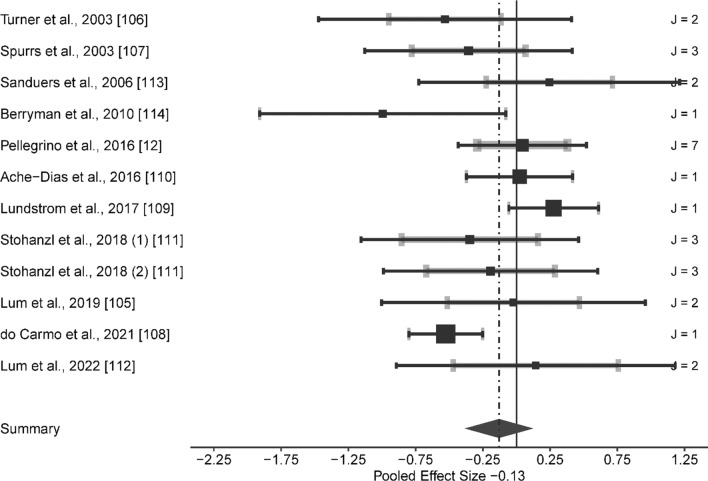
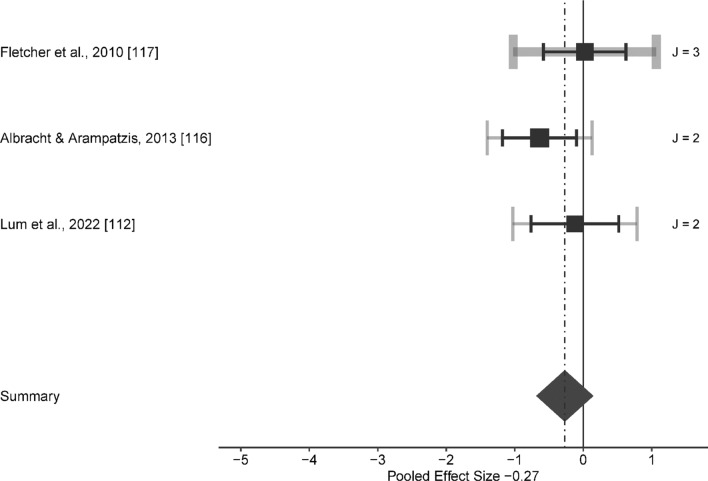
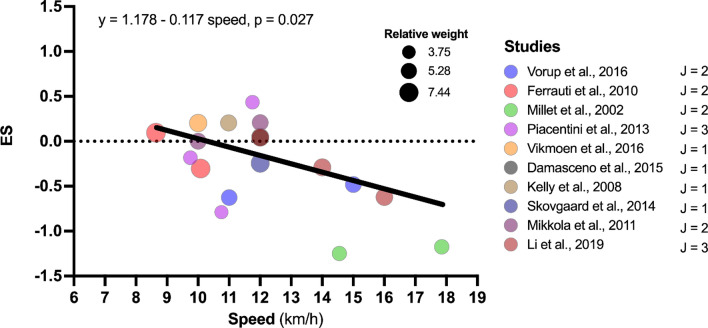
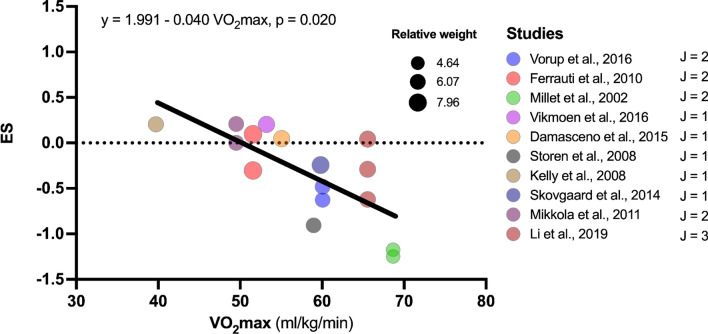
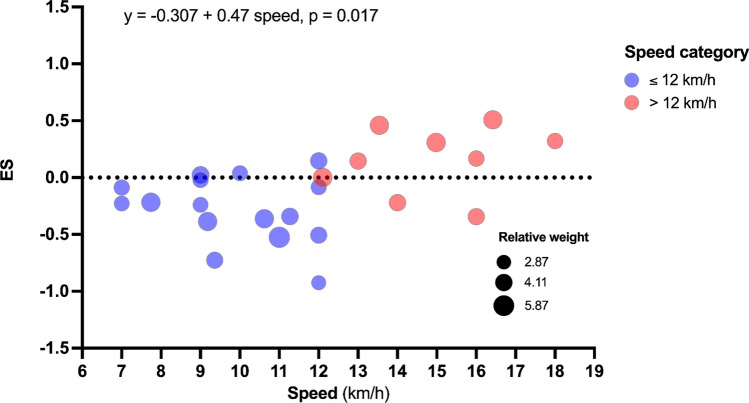
Background: Running economy is defined as the energy demand at submaximal running speed, a key determinant of overall running performance. Strength training can improve running economy, although the magnitude of its effect may depend on factors such as the strength training method and the speed at which running economy is assessed. Aim: To compare the effect of different strength training methods (e.g., high loads, plyometric, combined methods) on the running economy in middle- and long-distance runners, over different running speeds, through a systematic review with meta-analysis. Methods: A systematic search was conducted across several electronic databases including Web of Science, PubMed, SPORTDiscus, and SCOPUS. Using different keywords and Boolean operators for the search, all articles indexed up to November 2022 were considered for inclusion. In addition, the PICOS criteria were applied: Population : middle- and long-distance runners, without restriction on sex or training/competitive level; Intervention : application of a strength training method for ≥ 3 weeks (i.e., high loads (≥ 80% of one repetition maximum); submaximal loads [40–79% of one repetition maximum); plyometric; isometric; combined methods (i.e., two or more methods); Comparator : control group that performed endurance running training but did not receive strength training or received it with low loads (< 40% of one repetition maximum); Outcome : running economy, measured before and after a strength training intervention programme; Study design : randomized and non-randomized controlled studies. Certainty of evidence was assessed with the GRADE approach. A three-level random-effects meta-analysis and moderator analysis were performed using R software (version 4.2.1). Results: The certainty of the evidence was found to be moderate for high load training, submaximal load training, plyometric training and isometric training methods and low for combined methods. The studies included 195 moderately trained, 272 well trained, and 185 highly trained athletes. The strength training programmes were between 6 and 24 weeks’ duration, with one to four sessions executed per week. The high load and combined methods induced small (ES = − 0.266, p = 0.039) and moderate (ES = − 0.426, p = 0.018) improvements in running economy at speeds from 8.64 to 17.85 km/h and 10.00 to 14.45 km/h, respectively. Plyometric training improved running economy at speeds ≤ 12.00 km/h (small effect, ES = − 0.307, p = 0.028, β 1 = 0.470, p = 0.017). Compared to control groups, no improvement in running economy (assessed speed: 10.00 to 15.28 and 9.75 to 16.00 km/h, respectively) was noted after either submaximal or isometric strength training (all, p > 0.131). The moderator analyses showed that running speed ( β 1 = − 0.117, p = 0.027) and V O 2 max ( β 1 = − 0.040, p = 0.020) modulated the effect of high load strength training on running economy (i.e., greater improvements at higher speeds and higher V O 2 max). Conclusions: Compared to a control condition, strength training with high loads, plyometric training, and a combination of strength training methods may improve running economy in middle- and long-distance runners. Other methods such as submaximal load training and isometric strength training seem less effective to improve running economy in this population. Of note, the data derived from this systematic review suggest that although both high load training and plyometric training may improve running economy, plyometric training might be effective at lower speeds (i.e., ≤ 12.00 km/h) and high load strength training might be particularly effective in improving running economy (i) in athletes with a high V O 2 max, and (ii) at high running speeds. Protocol Registration: The original protocol was registered ( https://osf.io/gyeku ) at the Open Science Framework.
Overview
CoChat Summary
TL;DR
This systematic review with meta-analysis found that high-load, plyometric, and combined strength training methods can improve running economy in middle- and long-distance runners, while submaximal-load and isometric training did not. The effect of high-load training was moderated by running speed and VO2max, with greater benefits at higher speeds and higher VO2max.
Key findings
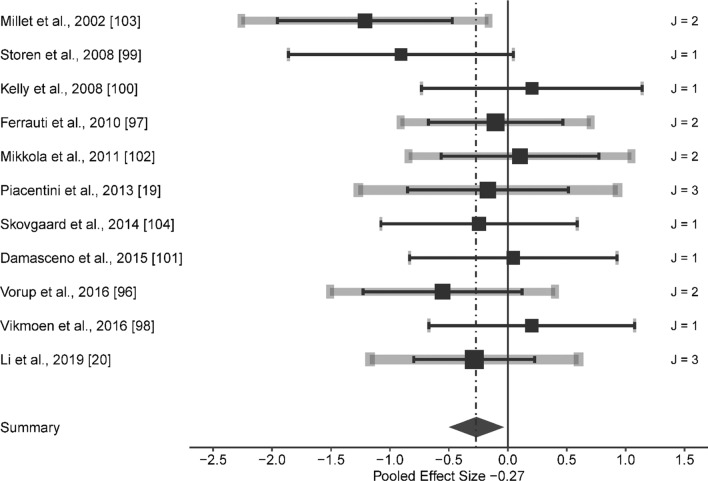
- High-load training improved running economy (small effect, ES = −0.266, p = 0.039) at speeds from 8.64 to 17.85 km/h; greater improvements were seen at higher running speeds (β1 = −0.117, p = 0.027) and higher initial VO2max (β1 = −0.040, p = 0.020).
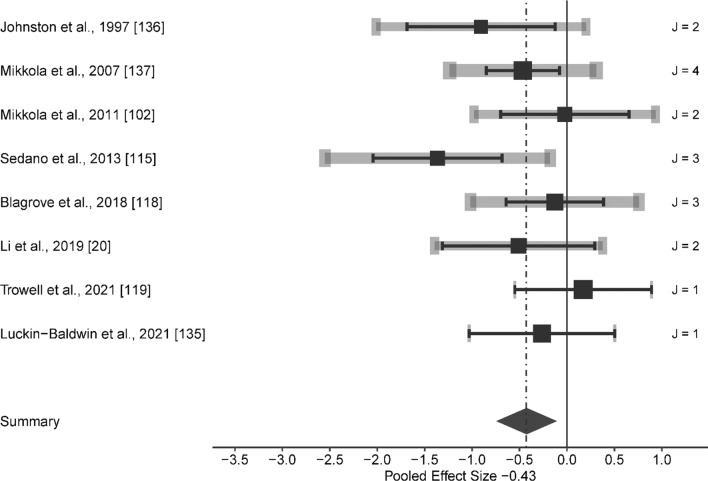
- Combined strength training methods improved running economy (moderate effect after outlier removal, ES = −0.426, p = 0.018; initial ES = −0.647, p = 0.013 with significant heterogeneity) at speeds from 10.00 to 14.45 km/h.
- Plyometric training improved running economy at speeds ≤ 12.00 km/h (small effect, ES = −0.307, p = 0.028; categorical speed moderator β1 = 0.470, p = 0.017), but not overall (p = 0.167).
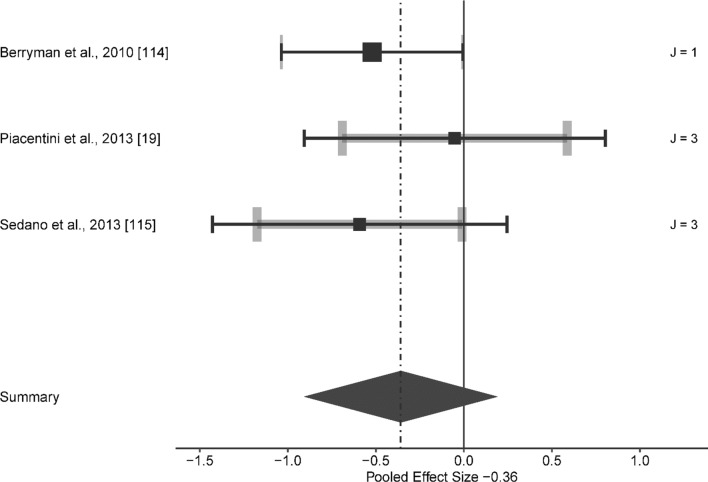
- Submaximal-load and isometric training showed no significant improvement in running economy (p = 0.131 and p = 0.253, respectively). Certainty of evidence was moderate for high-load, submaximal, plyometric, and isometric methods, and low for combined methods.
Methods
- Systematic review with meta-analysis following PRISMA, with a protocol registered on the Open Science Framework; searches were conducted in PubMed, Web of Science, Scopus, and SPORTDiscus up to November 2022 using PICOS criteria for middle- and long-distance runners, strength training ≥ 3 weeks, and controlled study designs.
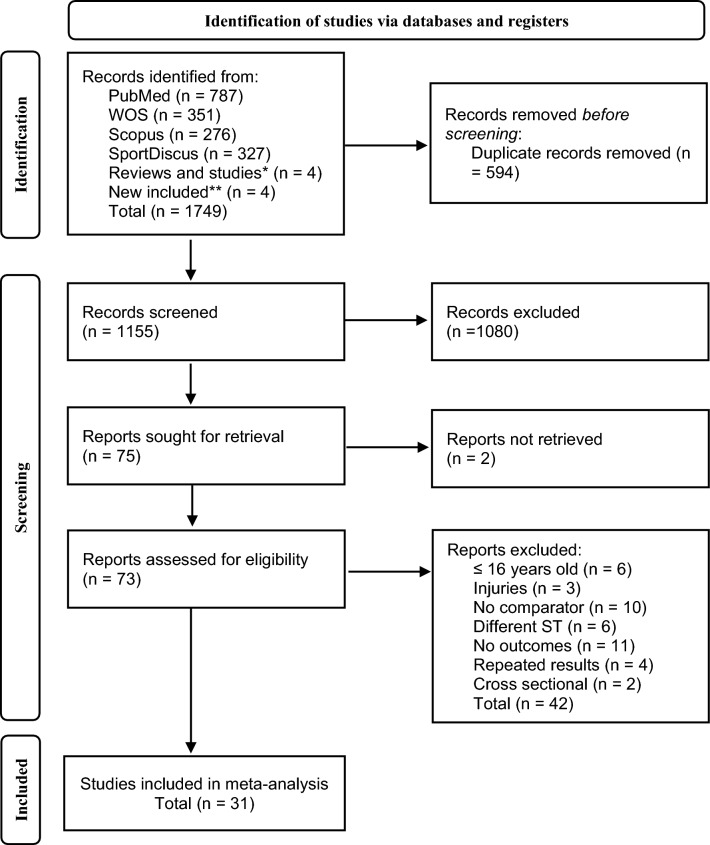
- Thirty-one studies were included, involving 652 participants (472 males, 180 females; 195 moderately trained, 272 well trained, 185 highly trained), aged 17–45 years; strength training programmes lasted 6–24 weeks with 1–4 sessions per week, yielding 80 effect sizes at running speeds from 7.00 to 18.00 km/h.
- A three-level random-effects meta-analysis was performed in R (version 4.2.1) using Hedges’ g, with moderator/meta-regression analyses; risk of bias was assessed with the PEDro scale, publication bias with funnel plots, and certainty of evidence with GRADE.
Limitations
- The paper states that analyses were performed separately for each strength training method, which limited the number of studies (< 8) available for moderator analysis of submaximal and isometric training; all but six studies used absolute speeds rather than speeds relative to anaerobic threshold or race pace.
- The paper states that submaximal and isometric analyses included only three studies each, with small sample sizes, and that combined methods had low certainty of evidence due to risk of bias and imprecision; future research is needed in under-researched populations such as females and highly trained athletes.
- Evident from the text: many running economy speeds were estimated or converted rather than directly measured relative to anaerobic threshold or VO2max, and only one study reported blood lactate values for correcting energy cost above anaerobic threshold.
Model-written summary. Check it against the paper before relying on it.
Integrity signals
Registry
Cites
Statistics
Figures
Verification
Claims the paper makes
2 Valid · 0 Not valid · 72 Not checked · 94 Own results and interpretations
The sources with a verdict support this claim; the rest weren’t checked yet, have no full text we could read, or their verdicts aren’t rated yet.
In the paper
“Therefore, we used a three-level meta-analysis model [47, 48], which is an extension of the random effect meta-analysis model [40], that considers sampling (level 1), within study (level 2) and between study (level 3) variation.”
§ Effect of Strength Training Programs in Middle- and Long-Distance Runners’ Economy at Different Running Speeds: A Systematic Review with Meta-analysis > Methods > Statistical Analyses
What the sources say
- Supportedcites [47] Van den Noortgate W López-López JA Marín-Martínez F Three-level meta-analysis of dependent effect sizes Behav Res Methods 2013 45 576 594 10.3758/s13428-012-0261-6 23055166 source
The Multilevel meta-analysis section (p. of our copy) states exactly what the claim attributes: 'we used a three-level model... a set of studies (level 3), experiments nested within studies (level two), and a sample of subjects for each experiment (level 1)... three sources of variance: population differences between study... effects, population differences between effects of experiments from the same study, and, finally, sampling variance.' The Conclusions further describe the multilevel model as more general than the two-level mixed-effects (random study effect) meta-analytic model, allowing an additional level, and the Abstract/simulation sections show the three-level model accounting for sampling covariation via an intermediate outcome-within-study level. The extension-to-random-effects framing is credited to a different citation ([40]) in the citing sentence, so it is not part of what this source must carry, and our copy supports it regardless. (LLM, conf=0.90)
- Not checked — no full text of the sourcecites [48] Cheung MW-L Modeling dependent effect sizes with three-level meta-analyses: a structural equation modeling approach Psychol Methods 2014 19 211 229 10.1037/a0032968 23834422 source
plain- Asserted: passes — The authors put it forward as true.
- Checkable: passes — It can be checked against evidence.
- Load-bearing: passes — The paper’s conclusions depend on it.
- Based: passes — The paper gives a reason why it holds.
- Supported
Every source the paper cites for this claim was checked and supports it.
In the paper
“it has been observed that the correlation between leg stiffness and RE increases with VO2max [127].”
§ Effect of Strength Training Programs in Middle- and Long-Distance Runners’ Economy at Different Running Speeds: A Systematic Review with Meta-analysis > Discussion > Strength Training and Running Economy Speed
What the sources say
- Supportedcites [127] Liu B Wu J Shi Q Running economy and lower extremity stiffness in endurance runners: a systematic review and meta-analysis Front Physiol 2022 13 1 13 10.3389/fphys.2022.1059221 PMC9742541 36518102 source
The Discussion section 'Leg stiffness and running economy' states directly that 'the correlation between leg stiffness and RE increased with the speed and runner VO2max.' The Pooled analyses report the supporting meta-regression (VO2max coefficient = −0.068, 95% CI −0.114 to −0.022, p = 0.010, r² = 0.92), i.e. the negative correlation strengthens as VO2max rises; the Abstract and Conclusion repeat the same point. The paraphrase matches, including its direction (magnitude of the association grows with VO2max). (LLM, conf=0.90)
plainstates an association- Asserted: passes — The authors put it forward as true.
- Checkable: passes — It can be checked against evidence.
- Load-bearing: unclear — It is unclear whether the paper’s conclusions depend on it.
- Based: passes — The paper gives a reason why it holds.
- Supported
A result the paper reports from its own data — it cites no other source for it, so there is none to check. The quote shows it is in the paper.
In the paper
“for PL at speeds ranging from 7.00 to 18.00 km/h (ES [95% CI] = − 0.122 [− 0.299 to 0.054], p = 0.167, Q(27) = 16.855, p = 0.935, LRTlevel2 = 0, p = 1, LRTlevel3 < 0.001, p = 0.999, Fig. 5)”
§ Effect of Strength Training Programs in Middle- and Long-Distance Runners’ Economy at Different Running Speeds: A Systematic Review with Meta-analysis > Results > Main Effects
plain- Asserted: passes — The authors put it forward as true.
- Checkable: passes — It can be checked against evidence.
- Load-bearing: passes — The paper’s conclusions depend on it.
- Based: passes — The paper gives a reason why it holds.
A result the paper reports from its own data — it cites no other source for it, so there is none to check. The quote shows it is in the paper.
In the paper
“The high load and combined methods induced small (ES = − 0.266, p = 0.039) and moderate (ES = − 0.426, p = 0.018) improvements in running economy at speeds from 8.64 to 17.85 km/h and 10.00 to 14.45 km/h, respectively.”
§ Effect of Strength Training Programs in Middle- and Long-Distance Runners’ Economy at Different Running Speeds: A Systematic Review with Meta-analysis > Abstract > Results
plainstates a cause- Asserted: passes — The authors put it forward as true.
- Checkable: passes — It can be checked against evidence.
- Load-bearing: passes — The paper’s conclusions depend on it.
- Based: passes — The paper gives a reason why it holds.
- Rests on 2 assumptions not shown here.
A result the paper reports from its own data — it cites no other source for it, so there is none to check. The quote shows it is in the paper.
In the paper
“In PL, moderator analysis showed significant detrimental moderation in categorical speed (β1 = 0.470, p = 0.017, Table 6 and Fig. 9).”
§ Effect of Strength Training Programs in Middle- and Long-Distance Runners’ Economy at Different Running Speeds: A Systematic Review with Meta-analysis > Results > Sub-group and Meta-regression Analysis
plainstates an association- Asserted: passes — The authors put it forward as true.
- Checkable: passes — It can be checked against evidence.
- Load-bearing: unclear — It is unclear whether the paper’s conclusions depend on it.
- Based: passes — The paper gives a reason why it holds.
69 more claims
Create a free account to see all 168 claims and to verify the 112 references still open.
- It may state two separate claims as one. 64
- Probably not a substantial claim. 47
- The quote only partly states this claim. 1
Statistics that don’t add up
Each reported p-value recomputed from its test statistic and degrees of freedom, each partial η² from its F, and each ratio, mean difference or B printed with a p checked against its own confidence interval.
Rated major: it would touch a result — a value a result rests on, reported and recomputed p-values on opposite sides of the significance level, two passages that conflict with no sign which is right, or a cited work retracted before this paper was published.
In the paper
“F(1,14) = 14.15, p = 0.439”
§ Effect of Strength Training Programs in Middle- and Long-Distance Runners’ Economy at Different Running Speeds: A Systematic Review with Meta-analysis > Results > Sub-group and Meta-regression Analysis
Reported p = .439 · recomputed p = .002
Rated minor: it would not touch a result — a value no result rests on, a p-value that stays on the same side of the significance level, or a conflict that is clerical, resolved elsewhere in the paper, or outside its own findings.
In the paper
“F(1,25) = 1.342, p = 0.280”
§ Effect of Strength Training Programs in Middle- and Long-Distance Runners’ Economy at Different Running Speeds: A Systematic Review with Meta-analysis > Results > Sub-group and Meta-regression Analysis
Reported p = .28 · recomputed p = .258
Rated minor: it would not touch a result — a value no result rests on, a p-value that stays on the same side of the significance level, or a conflict that is clerical, resolved elsewhere in the paper, or outside its own findings.
In the paper
“F(1,24) = 2.187, p = 0.134”
§ Effect of Strength Training Programs in Middle- and Long-Distance Runners’ Economy at Different Running Speeds: A Systematic Review with Meta-analysis > Results > Sub-group and Meta-regression Analysis
Reported p = .134 · recomputed p = .152
Statistics recomputed
Every reported test result, recomputed from its test statistic and degrees of freedom. A result shows as not adding up only once an independent check has confirmed it.
- Doesn’t add upF(1, 14) = 14.15reported p = .439 · recomputed p = .002The two fall on opposite sides of .05
“F(1,14) = 14.15, p = .439”
- Doesn’t add upF(1, 25) = 1.342reported p = .28 · recomputed p = .258
“F(1,25) = 1.342, p = .280”
- Doesn’t add upF(1, 24) = 2.187reported p = .134 · recomputed p = .152
“F(1,24) = 2.187, p = .134”
- ConsistentQ(18) = 16.816reported p = .536 · recomputed p = .536
“Q(18) = 16.816, p = .536”
- ConsistentQ(19) = 40.696reported p = .003 · recomputed p = .003
“Q(19) = 40.696, p = .003”
115 more recomputed tests
Create a free account to see every test the Stats check recomputed.
Self-check
Percentages, sums and reported differences re-computed from the paper’s own numbers.
Each contradiction between two passages listed here was confirmed by an independent check.
Rated minor: it would not touch a result — a value no result rests on, a p-value that stays on the same side of the significance level, or a conflict that is clerical, resolved elsewhere in the paper, or outside its own findings.
In the paper
§ Effect of Strength Training Programs in Middle- and Long-Distance Runners’ Economy at Different Running Speeds: A Systematic Review with Meta-analysis > Abstract > Results
“Plyometric training improved running economy at speeds ≤ 12.00 km/h (small effect, ES = − 0.307, p = 0.028, β1 = 0.470, p = 0.017).”
§ Effect of Strength Training Programs in Middle- and Long-Distance Runners’ Economy at Different Running Speeds: A Systematic Review with Meta-analysis > Results > Sub-group and Meta-regression Analysis
“| ≤ 12.00 km/h | 10 | 18 | − 0.307 (0.110) | − 0.532 to 0.081 | t(25) = − 2.802, p = 0.010 | | | | |”
Rated minor: it would not touch a result — a value no result rests on, a p-value that stays on the same side of the significance level, or a conflict that is clerical, resolved elsewhere in the paper, or outside its own findings.
In the paper
§ Effect of Strength Training Programs in Middle- and Long-Distance Runners’ Economy at Different Running Speeds: A Systematic Review with Meta-analysis > Abstract > Results
“The high load and combined methods induced small (ES = − 0.266, p = 0.039) and moderate (ES = − 0.426, p = 0.018) improvements in running economy”
§ Effect of Strength Training Programs in Middle- and Long-Distance Runners’ Economy at Different Running Speeds: A Systematic Review with Meta-analysis > Discussion > Main Analysis
“we found that combined methods group had a significant small effect on RE (ES = − 0.426, p = 0.018)”
Rated minor: it would not touch a result — a value no result rests on, a p-value that stays on the same side of the significance level, or a conflict that is clerical, resolved elsewhere in the paper, or outside its own findings.
In the paper
“| > AT | 4 | 6 | 0.109 (0.183) | − 0.804 to 0.094 | t(20) = − 1.650, p = 0.115 | 0.355 (0.215) | − 0.094 to 0.804 | t(20) = 1.650, p = 0.115 | |”
§ Effect of Strength Training Programs in Middle- and Long-Distance Runners’ Economy at Different Running Speeds: A Systematic Review with Meta-analysis > Results > Sub-group and Meta-regression Analysis
Reported -1.65 · recomputed 0.595628
Rated minor: it would not touch a result — a value no result rests on, a p-value that stays on the same side of the significance level, or a conflict that is clerical, resolved elsewhere in the paper, or outside its own findings.
In the paper
“| Speed relative to VO2max | 10 | 16 | 0.189 (1.019) | − 1.996 to 2.374 | t(14) = 0.186, p = 0.855 | − 0.006 (0.013) | − 0.035 to 0.023 | t(14) = − 0.464, p = 0.650 | F(1,14) = 14.15, p = 0.439 |”
§ Effect of Strength Training Programs in Middle- and Long-Distance Runners’ Economy at Different Running Speeds: A Systematic Review with Meta-analysis > Results > Sub-group and Meta-regression Analysis
Reported 14.15 · recomputed 0.215296
Rated minor: it would not touch a result — a value no result rests on, a p-value that stays on the same side of the significance level, or a conflict that is clerical, resolved elsewhere in the paper, or outside its own findings.
In the paper
§ Effect of Strength Training Programs in Middle- and Long-Distance Runners’ Economy at Different Running Speeds: A Systematic Review with Meta-analysis > Results > Sub-group and Meta-regression Analysis
“A beneficial moderation for the effect of HL on RE was noted for continuous absolute speed (β1 = − 0.177, p = 0.027, Table 5 and Fig. 7)”
§ Effect of Strength Training Programs in Middle- and Long-Distance Runners’ Economy at Different Running Speeds: A Systematic Review with Meta-analysis > Results > Sub-group and Meta-regression Analysis
“| Absolute speed (continuous) | 10 | 18 | 1.178 (0.588) | − 0.069 to 2.424 | t(16) = 2.003, p = 0.062 | − 0.117 (0.048) | − 0.219 to − 0.015 | t(16) = − 2.440, p = 0.027 | F(1,16) = 5.955, p = 0.027 |”
1 more finding
Create a free account to see every finding of this check.
Citations
Cites
The PRISMA 2020 statement: An updated guideline for reporting systematic reviews
Page, M. J., McKenzie, J. E., Bossuyt, P. M., Boutron, I., Hoffmann, T. C., Mulrow, C. D., Shamseer, L., Tetzlaff, J. M., Akl, E. A., Brennan, S. E., et al. (2021) · BMJ · doi:10.1136/bmj.n71 · Cited by 108,283
Cochrane Handbook for Systematic Reviews of Interventions: Cochrane Book Series
(2008) · doi:10.1002/9780470712184 · Cited by 25,048
Dermyshi, E., Wang, Y., Yan, C., Hong, W., Qiu, G., Gong, X., & Zhang, T. (2017) · Neonatology · doi:10.1159/000454668 · Cited by 24,451
Conducting Meta-Analyses in R with the metafor Package
Viechtbauer, W. (2010) · Journal of Statistical Software · doi:10.18637/jss.v036.i03 · Cited by 20,464
Cochrane Handbook for Systematic Reviews of Interventions
(2019) · doi:10.1002/9781119536604 · Cited by 14,828
Borenstein, M., Hedges, L. V., Higgins, J. P. T., & Rothstein, H. R. (2009) · doi:10.1002/9780470743386 · Cited by 14,225
GRADE guidelines: 1. Introduction—GRADE evidence profiles and summary of findings tables
Guyatt, G., Oxman, A. D., Akl, E. A., Kunz, R., Vist, G., Brozek, J., Norris, S., Falck-Ytter, Y., Glasziou, P., & deBeer, H. (2011) · Journal of Clinical Epidemiology · doi:10.1016/j.jclinepi.2010.04.026 · Cited by 10,681
Statistical Methods for Meta-Analysis
Wasserman, S., Hedges, L. V., & Olkin, I. (1988) · Journal of Educational Statistics · doi:10.2307/1164953 · Cited by 10,326
Cumpston, M., Li, T., Page, M. J., Chandler, J., Welch, V. A., Higgins, J. P., & Thomas, J. (2019) · Cochrane Database of Systematic Reviews · doi:10.1002/14651858.ed000142 · Cited by 7,218
Reliability of the PEDro Scale for Rating Quality of Randomized Controlled Trials
Maher, C. G., Sherrington, C., Herbert, R. D., Moseley, A. M., & Elkins, M. (2003) · Physical Therapy · doi:10.1093/ptj/83.8.713 · Cited by 4,808
Research works printed but not linked: 4
- Jones AM. Middle-and long-distance running. In: Sport and exercise physiology testing guidelines: volume I—Sport testing. Routledge; 2006. p. 167–74.
- Elgushy H The impact of concurrent training on certain pulmonary, physical variables and record level of middle distances for young athletics Sci Mov Health 2016 16 454 461
- Saud AA Nabia GM Effect of concurrent training on certain pulmonary, physical variables and record level of middle distances for young athletics Ovidius Univ Ann Ser Phys Educ Sport/Sci Mov Health 2016 16 247 254
- Machado AF De Castro JBP Bocalini DS Effects of plyometric training on the performance of 5-km road runners J Phys Educ Sport 2019 19 691 695 10.7752/jpes.2019.01099 · doi:10.7752/jpes.2019.01099
Cited by
Hooren, B. V., Aagaard, P., & Blazevich, A. J. (2024) · Sports Medicine · doi:10.1007/s40279-024-02110-4 · Cited by 58
“By using a low volume and heavy load, running economy can be improved more effectively than a higher volume low-load approach [281, 327, 328], which is typically used by endurance athletes [21, 23, 26].”
Yu, T., Xu, Y., Zhang, Z., Sun, Y., Zhong, J., & Ding, C. (2025) · BMC Sports Science Medicine and Rehabilitation · doi:10.1186/s13102-025-01159-6 · Cited by 46
Chaabène, H., Ramírez‐Campillo, R., Moran, J., Schega, L., Prieske, O., Sandau, I., Negra, Y., & Behrens, M. (2025) · Sports Medicine · doi:10.1007/s40279-025-02240-3 · Cited by 39
“Although the underlying mechanisms through which RT contributes to better cardiorespiratory fitness in youth have yet to be investigated, evidence in adults suggests that RT enhances running economy [221, 222], a key factor for endurance performance [223, 224].”
Self-citationGuo, Y., Jia, X., Dong, G., & Bao, D. (2024) · Frontiers in Physiology · doi:10.3389/fphys.2024.1449149 · Cited by 21
Analyzing Targeted Muscle Strength: Impact on Speed, Endurance, and Performance in Female Volleyball
Martin, Ș. A., Gavra, G. M., & Martin-Hadmaș, R. M. (2024) · Applied Sciences · doi:10.3390/app142310951 · Cited by 19
A review of uphill and downhill running: biomechanics, physiology and modulating factors
Lu, Z., Suo, B., Deng, L., Wang, J., Fu, W., Zhong, Y., & Jin, J. (2025) · Frontiers in Bioengineering and Biotechnology · doi:10.3389/fbioe.2025.1690023 · Cited by 14
Febrianta, Y., Yuwono, P. H., Darodjat, D., Irawan, D., Putro, D. E., Ismoko, A. P., Dewangga, M. W., Amal, A. I., Nugraheni, I., Pratiwi, R. D. C., et al. (2025) · Balneo and PRM Research Journal · doi:10.12680/balneo.2025.920 · Cited by 11
Yin, B., & Zhou, H. (2025) · Frontiers in Oncology · doi:10.3389/fonc.2025.1647757 · Cited by 10
Grivas, G. V. (2025) · European Journal of Applied Physiology · doi:10.1007/s00421-025-06085-6 · Cited by 9
“Additional trials confirm that combined resistance and plyometric protocols are especially effective at lowering oxygen cost in trained distance runners (Rønnestad and Mujika 2014; Berryman et al. 2018; Bla - grove et al. 2018; Llanos-Lagos et al. 2024).”
Fuentes-Barría, H., Aguilera-Eguía, R. A., Maureira-Sánchez, J., Alarcón-Rivera, M., Garrido-Osorio, V., López-Soto, O. P., Aristizábal-Hoyos, J. A., Angarita, L., Rojas-Gómez, D. M., Bermúdez, V., et al. (2025) · Journal of Functional Morphology and Kinesiology · doi:10.3390/jfmk10020195 · Cited by 8
Mesfen, A., & Melkamu, Z. (2024) · Asian Journal of Sports Medicine · doi:10.5812/asjsm-149375 · Cited by 7
Llanos-Lagos, C., Ramírez‐Campillo, R., & de Villarreal, E. S. (2025) · European Journal of Applied Physiology · doi:10.1007/s00421-025-05883-2 · Cited by 7
Self-citationWulandari, F. Y., Pambudi, N. A., Jatmikanto, R. S., Hafidz, A., Fajar, M. K., Daulay, D. A. A., Widohardhono, R., Andriana, L. M., & Adi, S. (2026) · Physical Education Theory and Methodology · doi:10.17309/tmfv.2026.1.19 · Cited by 5
“Improvements in stride frequency across HIIT and Fartlek further demonstrate refined motor control and rhythm regulation, which are essential for efficient running mechanics (Llanos-Lagos et al., 2024).”
Increase the speed of running 100 meters using the bench and skipping training methods
Rusli, M., Marsuna, M., & Jud, J. (2024) · Pedagogy of Physical Culture and Sports · doi:10.15561/26649837.2024.0501 · Cited by 5
“The focus was on measuring the development of leg muscle strength and its influence on running speed [24].”
BackgroundRibas, M. R., Ribas, D. I. R., Fernandes, P. V., Bădicu, G., Legnani, E., Paulo, A. C., Ardigò, L. P., & Bassan, J. C. (2025) · Nutrients · doi:10.3390/nu17050751 · Cited by 5
“Existing research [11,12] tends to focus on short-and middle-distance races, leaving a significant gap in the literature regarding physiological responses in women, who remain underrepresented in endurance sports research [4].”
Test–Retest Reliability of Ankle Mobility, Balance, and Jump Tests in Amateur Trail Running Athletes
Domínguez-Muñoz, A., Adsuar, J. C., Villafaina, S., Llamas, J. L. L., & Domínguez‐Muñoz, F. J. (2025) · Sports · doi:10.3390/sports13100352 · Cited by 4
Habits Related to Strength Training of Brazilian Recreational Runners
Santos, W. D. J., Forte, L. D. M., Silva, A. S., Rufino, H. V. O., Vieira, L. D. F., Silva, J. M. F. D. L., Thuany, M., Gonçalves, R., & Soares, Y. M. (2024) · Sports · doi:10.3390/sports13010003 · Cited by 5
“…adaptations—such as optimizing muscle elasticity and increasing muscle–tendon stiffness—and mechanical improvements, such as reducing energy cost through enhanced stride frequency, stance time, and stride length [8,18–21], many recreational runners still do not incorporate ST into their training.”
Thibault, D., Ellis, C., Toms, G., Schaefer, A., & Titcomb, D. A. (2025) · International journal of exercise science · doi:10.70252/skpq5840 · Cited by 4
“As RE is impacted by a large number of variables, 5,7 it is probable that an individual’s RE is influenced by each variable to different degrees.”
Telles, G. F., Souto, L. R., Pazzinatto, M. F., Serighelli, F., Nogueira, L. A. C., & Silva, D. D. O. (2025) · Journal of Sport Rehabilitation · doi:10.1123/jsr.2024-0410 · Cited by 4
Applying a Holistic Injury Prevention Approach to Elite Triathletes
Arévalo-Chico, H., Sellés, S., & Cejuela, R. (2024) · Sports · doi:10.3390/sports12080225 · Cited by 4
Association Between Reactive Strength Index and Metabolic Cost of Running in Male Master Athletes
Tanneau, M., Berryman, N., Mujika, I., Nguyen, A. P., Cappa, D. F., Barraud, J., & Bosquet, L. (2025) · International Journal of Sports Physiology and Performance · doi:10.1123/ijspp.2024-0291 · Cited by 4
Acute and Chronic Effects of Stretching on Running Economy: A Systematic Review with Meta-Analysis
Warneke, K., Zechner, M., Siegel, S. D., Jochum, D., Brunssen, L., & Konrad, A. (2025) · Sports Medicine - Open · doi:10.1186/s40798-025-00859-0 · Cited by 2
Widyawati, D. (2025) · Jurnal Kedokteran RAFLESIA · doi:10.33369/juke.v11i2.44565 · Cited by 2
24-Hour Ultra-Marathon Running: A Narrative Review of Performance Factors and Physiological Impacts
Knechtle, B., Braschler, L., Weiss, K., Scheer, V., Đurić, S., Leite, L. B., Forte, P. M., Nikolaidis, P. Τ., Chlíbková, D., & Rosemann, T. J. (2026) · Sports Medicine - Open · doi:10.1186/s40798-026-00997-z · Cited by 2
“This increases running economy at higher speeds and helps maintain pace in the late race [111].”
Ruiz‐Alias, S. A., Marcos‐Blanco, A., Fernández‐Navarrete, I., García‐Pinillos, F., & Pérez‐Castilla, A. (2024) · The Journal of Strength and Conditioning Research · doi:10.1519/jsc.0000000000004943 · Cited by 2
“Its various forms of training (e.g., maximal strength training, plyometric training, complex training) have been shown to be indispensable in the athlete training plan (20,27).”
Impact of strength training in long-distance runners on running performance: a systematic review
Machado, A. F., Ribeiro, M. D. S., Scartoni, F. R., Scudese, E., Panza, P. S., Vieira, J. G., Vianna, J. M., Rica, R. L., Bocalini, D. S., & Noaves, J. S. (2024) · Retos · doi:10.47197/retos.v58.105328 · Cited by 1
Efecto de la coactivación muscular sobre la economía de carrera en corredores de fondo entrenados
Jofré, C. M., Izquierdo, M., & Guzmán‐Venegas, R. (2025) · Retos · doi:10.47197/retos.v74.117355 · Cited by 1
Wen, J., Zhang, X., Ou, J., Qiu, Q., Zhu, Y., & Li, L. (2026) · Phytotherapy Research · doi:10.1002/ptr.70183 · Cited by 1
Martínez‐Navarro, I., Mampel, J. V., López-Grueso, R., Collado‐Boira, E., & Hernando, C. (2026) · International Journal of Sports Medicine · doi:10.1055/a-2813-3109 · Cited by 1
Du, J., Wu, J., Yan, Z., & Yu, L. (2026) · Journal of the American Medical Directors Association · doi:10.1016/j.jamda.2026.106164 · Cited by 1
Wang, W., Qin, X., Xu, J., Zhao, Y., & Ren, H. (2026) · European Journal of Applied Physiology · doi:10.1007/s00421-026-06329-z · Cited by 1
“Numerous studies have demonstrated that RT effectively improves exercise economy (Llanos-Lagos et al. 2024), through mechanisms such as enhanced neuromuscular function (Storniolo et al. 2022).”
Zhang, Y., & Jamnongsarn, S. (2024) · Journal of Multidisciplinary in Humanities and Social Sciences · Cited by 1
Effects of Different Exigencies on Physical Parameters Among Elite Women
-, P. K. M., & -, D. K. R. S. R. (2024) · International Journal For Multidisciplinary Research · doi:10.36948/ijfmr.2024.v06i03.23958
Filho, A. S. S., Inácio, P. A., Aprigliano, V., Leonardo, P. S., Silva, I. O., Cunha, R. M., Chiappa, G. R., Fajemiroye, J. O., Vieira, R. P., Lopes‐Martins, R. Á. B., et al. (2025) · Applied Sciences · doi:10.3390/app15020693
“Previous studies Movement professionals understand that strength is therefore a relevant element to include in a training program [20,22].”
Nagai, N., & Iso, S. (2025) · Scientific Journal of Sport and Performance · doi:10.55860/abcj7520
“Running economy is defined as the energy expended at sub-maximum running speeds and is considered a critical factor in running performance (Llanos-Lagos et al., 2024).”
Features of training runners for ultramarathon distances
Polishchuk, V. (2024) · Theory and practice of physical culture and sports · doi:10.69587/tppcs/2.2024.64
Hassoon, E. K. (2025) · Pubmedia Jurnal Pendidikan Olahraga · doi:10.47134/jpo.v3i1.2023
Yu, J., Jin, Y., Zhao, L., & Yang, Y. (2025) · Frontiers in Physiology · doi:10.3389/fphys.2025.1678604
Fernandes, L. A. P. P., de Souza, C. E. P., Telles, G. F., Lunkes, L. C., & Nogueira, L. A. C. (2025) · Revista Baiana Saúde Pública · doi:10.22278/2318-2660.2024.v48.n4.a4177
Nopeusvoimaharjoittelu ja sen vaikutus kestävyysjuoksijan suorituskykyyn
Kuikka, I., & Viinikainen, M. (2024) · Theseus (Ammattikorkeakoulujen)
Marcos Blanco, A. (2025) · Institutional Repository of the University of Granada (University of Granada)
Behardien, M. (2025) · Open University of Cape Town (University of Cape Town)
Correlation of Strength Characteristics with Running Economy in Well-Trained Male Distance Runners
Thaiyanont, T., Sairaya, T., Tanapin, P., Haowhan, P., Meepol, N., Surasartpisal, B., Patarachao, P., Konthasing, P., Keerasomboon, T., & Jamkrajang, P. (2026) · Lecture notes in bioengineering · doi:10.1007/978-981-95-0804-4_7
Fernandes, R. J., & Colaço, P. (2025) · Scientific Repository of Open Access of Portugal (RCAAP) · doi:10.6063/motricidade.42847
Rodríguez-Medina, J. (2025) · Buleria (Universidad de León) · doi:10.18002/10612/27428
da Silva, J. B., & Gurjão, E. C. (2026) · Research Society and Development · doi:10.33448/rsd-v15i3.50665
Zhang, Q., Hooren, B. V., Girard, O., Trowell, D. A., Jiang, S., Zeng, W., Chen, S., Zhang, Q., & Li, F. (2026) · iScience · doi:10.1016/j.isci.2026.115232
Advancements in Running Biomechanics: Bridging Research and Practical Applications
(2026) · Frontiers research topics · doi:10.3389/978-2-8325-7715-8
Abdel‐Raouf, O., Abdel-aziem, A. A., Alkhamees, N. H., Ibrahim, Z. M., Aboelela, E. M., Dawood, R. S., & Ashour, A. A. (2026) · Journal of Clinical Medicine · doi:10.3390/jcm15082815
“If the difference between the first and second tests was more than 5%, the procedures were repeated after another 72 h [13,15].”
InfluentialTraining Load, Workload Accumulation, and Injury Risk in Distance Runners: A Time-Series Analysis
Prasetya, M. R. A., Firmansyah, A., Wahyudi, H., Chang, C. L., & Zhuo, P. Y. (2026) · Indonesian Journal of Kinanthropology (IJOK) · doi:10.26740/ijok.v6n1.p37-46
Understanding and Prescribing Plyometrics for Endurance Runners: A Review
Wynne, K. (2026) · Strength and conditioning journal · doi:10.1519/ssc.0000000000000969
The complexity and dynamics of enhancing endurance performance
Chappell, S., Shahroudi, K. E., Troxell, W., Conrad, S., & Vijayasarathy, L. (2026) · doi:10.25675/3.027270
Zhe, Z. H. U., Zhu, J., Kang, L., Shao, H. T., & Ma, K. (2026) · Research Square · doi:10.21203/rs.3.rs-9772566/v1
ФІЗІОЛОГІЧНЕ ОБҐРУНТУВАННЯ ТРЕНУВАНЬ НА РОЗВИТОК СИЛИ: НЕЙРОМ’ЯЗОВА АДАПТАЦІЯ У МОЛОДІ
Козак, О. (2026) · Перспективи та інновації науки · doi:10.52058/2786-4952-2026-5(63)-2938-2950
Martín-Miguel, I., Moreno-Martín, A., Torrontegi, E., Montalvo, Z., & de Rozas, A. (2026) · International Journal of Sports Science & Coaching · doi:10.1177/17479541261459967
Omar Váldes, T., Chalchat, É., Rehbein, C. O., Nuñez, O., García-Vicencio, S., Martin, V., Ramírez‐Campillo, R., & Peñailillo, L. (2026) · Sports Medicine · doi:10.1007/s40279-026-02476-7
“The effect on force production in the non-trained muscle was assessed when at least three studies provided an outcome measure [84].”
Gajardo-Burgos, R. E., de la Barra, T. J., Ramírez‐Campillo, R., Waiteman, M. C., & de Villarreal, E. S. (2026) · Journal of Orthopaedic and Sports Physical Therapy · doi:10.2519/jospt.2026.14091
Chwajta, G., Chmielnicki, F., Pirga, G., Kaczor, G., Cepielik, B., Cichocka, W., Antos, M., Paczosa, K., Jędruszko, K., & Ostolski, M. (2026) · Quality in Sport · doi:10.12775/qs.2026.61.72956
Panthong, S., Tongsiri, N., Tanaka, H., & Suksom, D. (2026) · The Journal of Strength and Conditioning Research · doi:10.1519/jsc.0000000000005622
Cormier, P., Freitas, T. T., Loturco, I., Turner, A., Virgile, A., Haff, G. G., Blazevich, A. J., Agar-Newman, D. J., Henneberry, M. C., Baker, D. G., et al. (2026) · Sports Medicine · doi:10.1007/s40279-026-02512-6
Buitrago, P. J. M., de Oliveira, C. E. P., Franco, S. A. A., & Moreira, O. C. (2026) · Sportis Scientific Journal of School Sport Physical Education and Psychomotricity · doi:10.55040/nev3ke48
Çakır, F., Özer, Ö., Gürses, V. V., UYHAN, O., & Başaran, M. S. (2026) · Journal of Physical Education and Sports Studies · doi:10.55929/besad.1847982
Kikuchi, S., Zempo, H., Kamiya-Saito, M., Inoguchi, T., Oyabe, S., Homma, H., Shinchi, K., Mochizuki, Y., & Kikuchi, N. (2026) · International Journal of Sports Medicine · doi:10.1055/a-2943-8779
Dredge, K., Ingram, L. A., Gleadhill, S., Stanley, J., & Bennett, H. (2026) · International Journal of Sports Science & Coaching · doi:10.1177/17479541261488006
Why do runners get so many injuries? And does strength training really make a difference?
Bennett, H. (2026) · The Conversation · doi:10.64628/aa.p3ef4s5n7
Mayo‐Nieto, C., Cartón-Llorente, A., Ráfales-Perucha, A., Cardiel-Sánchez, S., Jaén‐Carrillo, D., & Roche-Seruendo, L. E. (2026) · Scandinavian Journal of Medicine and Science in Sports · doi:10.1111/sms.70385
“Experimental evidence shows that plyometric training increases musculotendinous stiffness and improves distance running performance [33] and running economy [34].”
Metadata
- Authors
- Llanos-Lagos, C., Ramirez-Campillo, R., Moran, J., & Sáez de Villarreal, E.
- Affiliations
- Universidad Pablo de Olavide (ES)
- University of Essex (GB)
- Venue
- Sports Medicine
- Published
- 2024-01-02
- Volume
- 54
- Issue
- 4
- Pages
- 895-932
- ISSN
- 0112-1642 (ISSN-L)
- 1179-2035
- PMC
- PMC11052887
- OpenAlex
- W4390500894
- Semantic Scholar
- b9c90bef97cdd2b80549227c455eb75f26e211fd
- Cited by
- 68
- References
- 148
- Citations by year
- 2026: 29 · 2025: 26 · 2024: 13
- FWCI
- 4.72
- Type
- journal article
- Language
- en
- Open access
- hybrid
- doi.org
- Licence
- cc-by
- creativecommons.org/licenses/by/4.0 (tdm)
- creativecommons.org/licenses/by/4.0 (vor)
- Locations
- Sports Medicine (publishedVersion, cc-by)
- PubMed Central (publishedVersion, cc-by)
- RIO (Universidad Pablo de Olavide) (publishedVersion, cc-by-nc-nd)
- PubMed (publishedVersion)
- Open Access at Essex (University of Essex) (acceptedVersion, other-oa)
- Repositorio Institucional Académico , Sistema de Bibliotecas Universidad Andrés Bello (UNAB) (Universidad Andrés Bello (UNAB)) (submittedVersion, cc-by)
- Funders
- Universidad Pablo de Olavide
- Topics
- Health Sciences › Medicine › Orthopedics and Sports Medicine › Sports Performance and Training
- Physical Sciences › Engineering › Biomedical Engineering › Lower Extremity Biomechanics and Pathologies
- Health Sciences › Medicine › Physiology (medical) › Cardiovascular and exercise physiology
- Keywords
- resistance training, middle-distance runners, long-distance runners, plyometric training, high-load training, isometric training, running speed, endurance running performance, energy cost of running, training load
- MeSH terms
- Humans, Physical Endurance, Running, Muscle Strength, Athletic Performance, Resistance Training, Plyometric Exercise
About these checks
Registry, retraction, Cites and statistics results are computed, not judged, with one exception: a printed reference that no index lists is read once by a model before it counts as a citation error. Claims are extracted by a model and kept only when their quote appears verbatim in the text; each cited source is then checked, with a model’s help, for whether it says what the claim relies on. Those verdicts can be wrong — read the claim’s quote and the cited source before relying on one.
A language model drew the claims from the paper on 2026-11-19, under version 3 of the claim definition (model deepseek-v4.1-flash, prompt extract-v3).
A second model labelled each claim on 2026-11-19 (model jev-1.13-20260917, definition revision gold-guideline-v0.2).
Cited sources are checked with a language model’s help (qwen3.8-omni-flash).
Statistics and arithmetic are recomputed, not judged.
Confidence bands are shown only for fields calibrated on our annotated test set. None is calibrated yet, so no band is shown.
What counts as a claim ›How we measure confidence ›How we check this ›
Are you an author, or do you see a problem with this page? Request a review
Data sources
Bibliographic data: Semantic Scholar, OpenAlex, Crossref.
Contains information from the Semantic Scholar Academic Graph Datasets, made available under the ODC Attribution License (ODC-BY 1.0).
Semantic Scholar’s data is described in: Kinney, R., et al. (2023). The Semantic Scholar Open Data Platform. arXiv:2301.10140.
