

Effect of Strength Training Programs in Middle- and Long-Distance Runners’ Economy at Different Running Speeds: A Systematic Review with Meta-analysis
Open accessThe DOI matches its Crossref record; 148 of the 149 references it cites were found in a registry or an index; 2 of the 119 sources its claims cite were checked for support.
Abstract
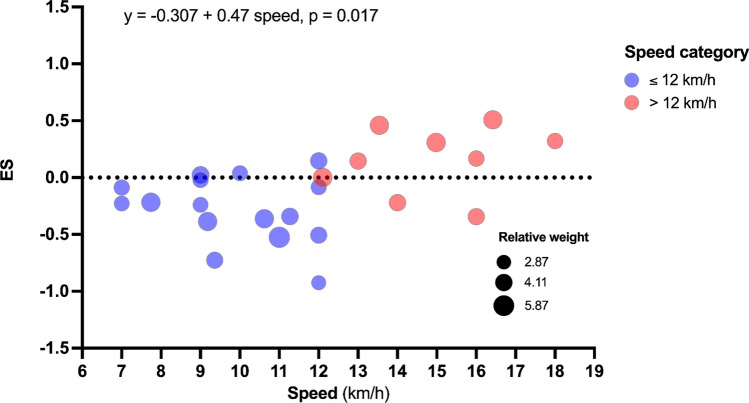
Background: Running economy is defined as the energy demand at submaximal running speed, a key determinant of overall running performance. Strength training can improve running economy, although the magnitude of its effect may depend on factors such as the strength training method and the speed at which running economy is assessed. Aim: To compare the effect of different strength training methods (e.g., high loads, plyometric, combined methods) on the running economy in middle- and long-distance runners, over different running speeds, through a systematic review with meta-analysis. Methods: A systematic search was conducted across several electronic databases including Web of Science, PubMed, SPORTDiscus, and SCOPUS. Using different keywords and Boolean operators for the search, all articles indexed up to November 2022 were considered for inclusion. In addition, the PICOS criteria were applied: Population : middle- and long-distance runners, without restriction on sex or training/competitive level; Intervention : application of a strength training method for ≥ 3 weeks (i.e., high loads (≥ 80% of one repetition maximum); submaximal loads [40–79% of one repetition maximum); plyometric; isometric; combined methods (i.e., two or more methods); Comparator : control group that performed endurance running training but did not receive strength training or received it with low loads (< 40% of one repetition maximum); Outcome : running economy, measured before and after a strength training intervention programme; Study design : randomized and non-randomized controlled studies. Certainty of evidence was assessed with the GRADE approach. A three-level random-effects meta-analysis and moderator analysis were performed using R software (version 4.2.1). Results: The certainty of the evidence was found to be moderate for high load training, submaximal load training, plyometric training and isometric training methods and low for combined methods. The studies included 195 moderately trained, 272 well trained, and 185 highly trained athletes. The strength training programmes were between 6 and 24 weeks’ duration, with one to four sessions executed per week. The high load and combined methods induced small (ES = − 0.266, p = 0.039) and moderate (ES = − 0.426, p = 0.018) improvements in running economy at speeds from 8.64 to 17.85 km/h and 10.00 to 14.45 km/h, respectively. Plyometric training improved running economy at speeds ≤ 12.00 km/h (small effect, ES = − 0.307, p = 0.028, β 1 = 0.470, p = 0.017). Compared to control groups, no improvement in running economy (assessed speed: 10.00 to 15.28 and 9.75 to 16.00 km/h, respectively) was noted after either submaximal or isometric strength training (all, p > 0.131). The moderator analyses showed that running speed ( β 1 = − 0.117, p = 0.027) and V O 2 max ( β 1 = − 0.040, p = 0.020) modulated the effect of high load strength training on running economy (i.e., greater improvements at higher speeds and higher V O 2 max). Conclusions: Compared to a control condition, strength training with high loads, plyometric training, and a combination of strength training methods may improve running economy in middle- and long-distance runners. Other methods such as submaximal load training and isometric strength training seem less effective to improve running economy in this population. Of note, the data derived from this systematic review suggest that although both high load training and plyometric training may improve running economy, plyometric training might be effective at lower speeds (i.e., ≤ 12.00 km/h) and high load strength training might be particularly effective in improving running economy (i) in athletes with a high V O 2 max, and (ii) at high running speeds. Protocol Registration: The original protocol was registered ( https://osf.io/gyeku ) at the Open Science Framework.
Overview
CoChat Summary
TL;DR
This systematic review with meta-analysis found that high-load, plyometric, and combined strength training methods can improve running economy in middle- and long-distance runners, while submaximal-load and isometric training did not. The effect of high-load training was moderated by running speed and VO2max, with greater benefits at higher speeds and higher VO2max.
Key findings
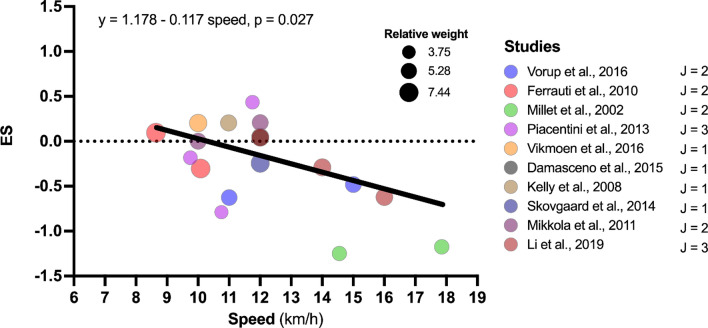
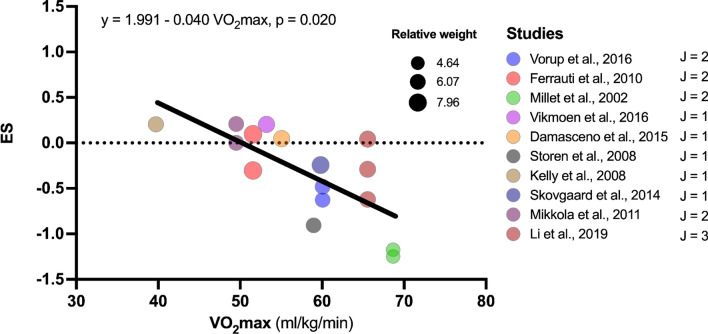
- High-load training improved running economy (small effect, ES = −0.266, p = 0.039) at speeds from 8.64 to 17.85 km/h; greater improvements were seen at higher running speeds (β1 = −0.117, p = 0.027) and higher initial VO2max (β1 = −0.040, p = 0.020).
- Combined strength training methods improved running economy (moderate effect after outlier removal, ES = −0.426, p = 0.018; initial ES = −0.647, p = 0.013 with significant heterogeneity) at speeds from 10.00 to 14.45 km/h.
- Plyometric training improved running economy at speeds ≤ 12.00 km/h (small effect, ES = −0.307, p = 0.028; categorical speed moderator β1 = 0.470, p = 0.017), but not overall (p = 0.167).
- Submaximal-load and isometric training showed no significant improvement in running economy (p = 0.131 and p = 0.253, respectively). Certainty of evidence was moderate for high-load, submaximal, plyometric, and isometric methods, and low for combined methods.
Methods
- Systematic review with meta-analysis following PRISMA, with a protocol registered on the Open Science Framework; searches were conducted in PubMed, Web of Science, Scopus, and SPORTDiscus up to November 2022 using PICOS criteria for middle- and long-distance runners, strength training ≥ 3 weeks, and controlled study designs.
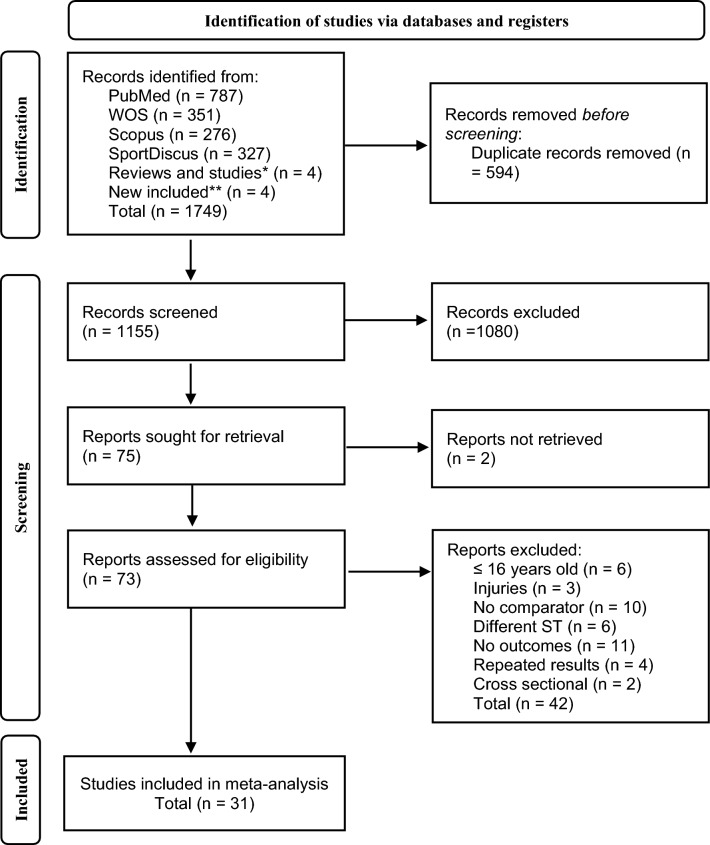
- Thirty-one studies were included, involving 652 participants (472 males, 180 females; 195 moderately trained, 272 well trained, 185 highly trained), aged 17–45 years; strength training programmes lasted 6–24 weeks with 1–4 sessions per week, yielding 80 effect sizes at running speeds from 7.00 to 18.00 km/h.
- A three-level random-effects meta-analysis was performed in R (version 4.2.1) using Hedges’ g, with moderator/meta-regression analyses; risk of bias was assessed with the PEDro scale, publication bias with funnel plots, and certainty of evidence with GRADE.
Limitations
- The paper states that analyses were performed separately for each strength training method, which limited the number of studies (< 8) available for moderator analysis of submaximal and isometric training; all but six studies used absolute speeds rather than speeds relative to anaerobic threshold or race pace.
- The paper states that submaximal and isometric analyses included only three studies each, with small sample sizes, and that combined methods had low certainty of evidence due to risk of bias and imprecision; future research is needed in under-researched populations such as females and highly trained athletes.
- Evident from the text: many running economy speeds were estimated or converted rather than directly measured relative to anaerobic threshold or VO2max, and only one study reported blood lactate values for correcting energy cost above anaerobic threshold.
Model-written summary. Check it against the paper before relying on it.
Integrity signals
Registry
Cites
Statistics
Figures
Verification
Claims the paper makes
2 Valid · 0 Not valid · 72 Not checked · 94 Own results and interpretations
The sources with a verdict support this claim; the rest weren’t checked yet, have no full text we could read, or their verdicts aren’t rated yet.
In the paper
“Therefore, we used a three-level meta-analysis model [47, 48], which is an extension of the random effect meta-analysis model [40], that considers sampling (level 1), within study (level 2) and between study (level 3) variation.”
§ Effect of Strength Training Programs in Middle- and Long-Distance Runners’ Economy at Different Running Speeds: A Systematic Review with Meta-analysis > Methods > Statistical Analyses
What the sources say
- Supportedcites [47] Van den Noortgate W López-López JA Marín-Martínez F Three-level meta-analysis of dependent effect sizes Behav Res Methods 2013 45 576 594 10.3758/s13428-012-0261-6 23055166 source
The Multilevel meta-analysis section (p. of our copy) states exactly what the claim attributes: 'we used a three-level model... a set of studies (level 3), experiments nested within studies (level two), and a sample of subjects for each experiment (level 1)... three sources of variance: population differences between study... effects, population differences between effects of experiments from the same study, and, finally, sampling variance.' The Conclusions further describe the multilevel model as more general than the two-level mixed-effects (random study effect) meta-analytic model, allowing an additional level, and the Abstract/simulation sections show the three-level model accounting for sampling covariation via an intermediate outcome-within-study level. The extension-to-random-effects framing is credited to a different citation ([40]) in the citing sentence, so it is not part of what this source must carry, and our copy supports it regardless. (LLM, conf=0.90)
- Not checked yetcites [48] Cheung MW-L Modeling dependent effect sizes with three-level meta-analyses: a structural equation modeling approach Psychol Methods 2014 19 211 229 10.1037/a0032968 23834422 source
plain- Asserted: passes — The authors put it forward as true.
- Checkable: passes — It can be checked against evidence.
- Load-bearing: passes — The paper’s conclusions depend on it.
- Based: passes — The paper gives a reason why it holds.
- Supported
Every source the paper cites for this claim was checked and supports it.
In the paper
“it has been observed that the correlation between leg stiffness and RE increases with VO2max [127].”
§ Effect of Strength Training Programs in Middle- and Long-Distance Runners’ Economy at Different Running Speeds: A Systematic Review with Meta-analysis > Discussion > Strength Training and Running Economy Speed
What the sources say
- Supportedcites [127] Liu B Wu J Shi Q Running economy and lower extremity stiffness in endurance runners: a systematic review and meta-analysis Front Physiol 2022 13 1 13 10.3389/fphys.2022.1059221 PMC9742541 36518102 source
The Discussion section 'Leg stiffness and running economy' states directly that 'the correlation between leg stiffness and RE increased with the speed and runner VO2max.' The Pooled analyses report the supporting meta-regression (VO2max coefficient = −0.068, 95% CI −0.114 to −0.022, p = 0.010, r² = 0.92), i.e. the negative correlation strengthens as VO2max rises; the Abstract and Conclusion repeat the same point. The paraphrase matches, including its direction (magnitude of the association grows with VO2max). (LLM, conf=0.90)
plainstates an association- Asserted: passes — The authors put it forward as true.
- Checkable: passes — It can be checked against evidence.
- Load-bearing: unclear — It is unclear whether the paper’s conclusions depend on it.
- Based: passes — The paper gives a reason why it holds.
- Supported
A result the paper reports from its own data — it cites no other source for it, so there is none to check. The quote shows it is in the paper.
In the paper
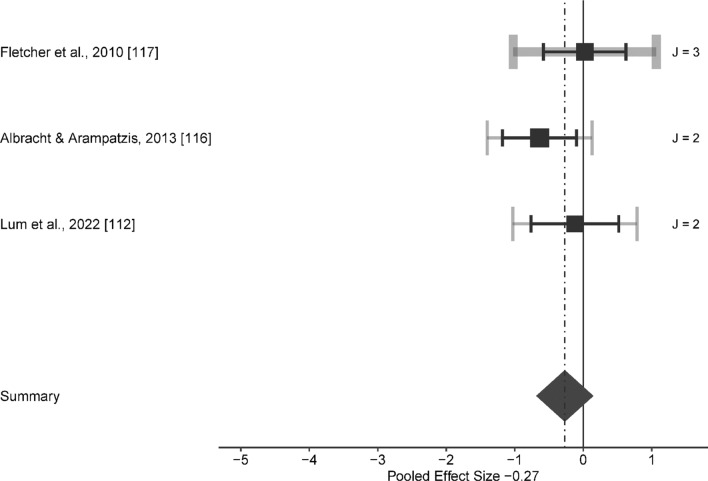
“for PL at speeds ranging from 7.00 to 18.00 km/h (ES [95% CI] = − 0.122 [− 0.299 to 0.054], p = 0.167, Q(27) = 16.855, p = 0.935, LRTlevel2 = 0, p = 1, LRTlevel3 < 0.001, p = 0.999, Fig. 5)”
§ Effect of Strength Training Programs in Middle- and Long-Distance Runners’ Economy at Different Running Speeds: A Systematic Review with Meta-analysis > Results > Main Effects
plain- Asserted: passes — The authors put it forward as true.
- Checkable: passes — It can be checked against evidence.
- Load-bearing: passes — The paper’s conclusions depend on it.
- Based: passes — The paper gives a reason why it holds.
A result the paper reports from its own data — it cites no other source for it, so there is none to check. The quote shows it is in the paper.
In the paper
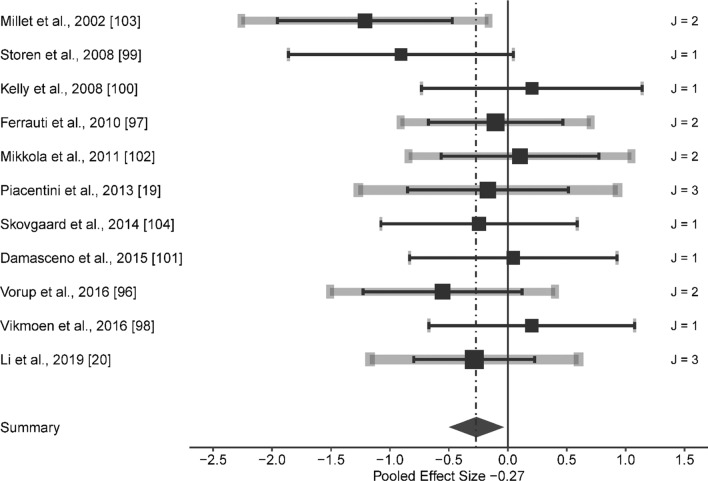
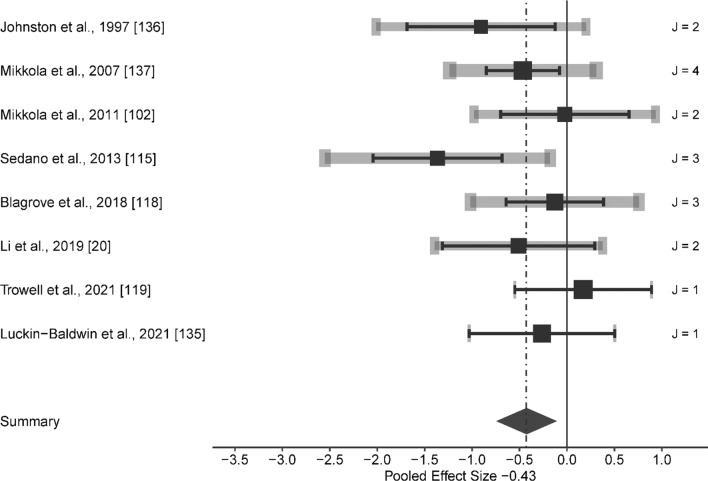
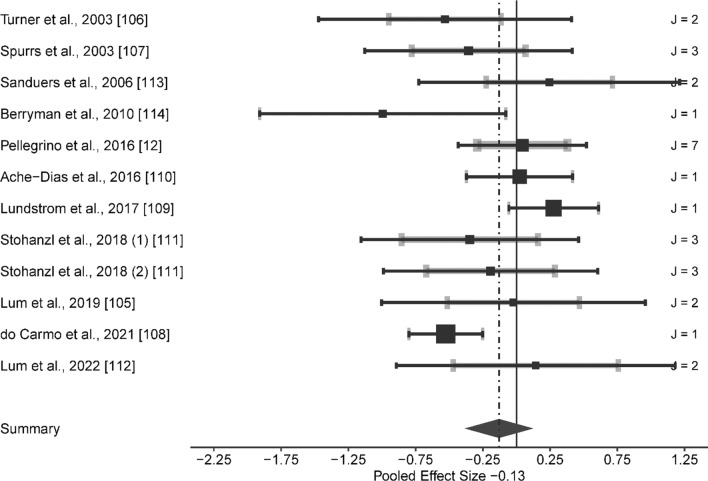
“The high load and combined methods induced small (ES = − 0.266, p = 0.039) and moderate (ES = − 0.426, p = 0.018) improvements in running economy at speeds from 8.64 to 17.85 km/h and 10.00 to 14.45 km/h, respectively.”
§ Effect of Strength Training Programs in Middle- and Long-Distance Runners’ Economy at Different Running Speeds: A Systematic Review with Meta-analysis > Abstract > Results
plainstates a cause- Asserted: passes — The authors put it forward as true.
- Checkable: passes — It can be checked against evidence.
- Load-bearing: passes — The paper’s conclusions depend on it.
- Based: passes — The paper gives a reason why it holds.
- Rests on 2 assumptions not shown here.
A result the paper reports from its own data — it cites no other source for it, so there is none to check. The quote shows it is in the paper.
In the paper
“In PL, moderator analysis showed significant detrimental moderation in categorical speed (β1 = 0.470, p = 0.017, Table 6 and Fig. 9).”
§ Effect of Strength Training Programs in Middle- and Long-Distance Runners’ Economy at Different Running Speeds: A Systematic Review with Meta-analysis > Results > Sub-group and Meta-regression Analysis
plainstates an association- Asserted: passes — The authors put it forward as true.
- Checkable: passes — It can be checked against evidence.
- Load-bearing: unclear — It is unclear whether the paper’s conclusions depend on it.
- Based: passes — The paper gives a reason why it holds.
69 more claims
Create a free account to see all 168 claims and to verify the 116 references still open.
- It may state two separate claims as one. 64
- Probably not a substantial claim. 47
- The quote only partly states this claim. 1
Statistics that don’t add up
Each reported p-value recomputed from its test statistic and degrees of freedom, each partial η² from its F, and each ratio, mean difference or B printed with a p checked against its own confidence interval.
Rated major: it would touch a result — a value a result rests on, reported and recomputed p-values on opposite sides of the significance level, two passages that conflict with no sign which is right, or a cited work retracted before this paper was published.
In the paper
“F(1,14) = 14.15, p = 0.439”
§ Effect of Strength Training Programs in Middle- and Long-Distance Runners’ Economy at Different Running Speeds: A Systematic Review with Meta-analysis > Results > Sub-group and Meta-regression Analysis
Reported p = .439 · recomputed p = .002
Rated minor: it would not touch a result — a value no result rests on, a p-value that stays on the same side of the significance level, or a conflict that is clerical, resolved elsewhere in the paper, or outside its own findings.
In the paper
“F(1,25) = 1.342, p = 0.280”
§ Effect of Strength Training Programs in Middle- and Long-Distance Runners’ Economy at Different Running Speeds: A Systematic Review with Meta-analysis > Results > Sub-group and Meta-regression Analysis
Reported p = .28 · recomputed p = .258
Rated minor: it would not touch a result — a value no result rests on, a p-value that stays on the same side of the significance level, or a conflict that is clerical, resolved elsewhere in the paper, or outside its own findings.
In the paper
“F(1,24) = 2.187, p = 0.134”
§ Effect of Strength Training Programs in Middle- and Long-Distance Runners’ Economy at Different Running Speeds: A Systematic Review with Meta-analysis > Results > Sub-group and Meta-regression Analysis
Reported p = .134 · recomputed p = .152
Statistics recomputed
Every reported test result, recomputed from its test statistic and degrees of freedom. A result shows as not adding up only once an independent check has confirmed it.
- Doesn’t add upF(1, 14) = 14.15reported p = .439 · recomputed p = .002The two fall on opposite sides of .05
“F(1,14) = 14.15, p = .439”
- Doesn’t add upF(1, 25) = 1.342reported p = .28 · recomputed p = .258
“F(1,25) = 1.342, p = .280”
- Doesn’t add upF(1, 24) = 2.187reported p = .134 · recomputed p = .152
“F(1,24) = 2.187, p = .134”
- ConsistentQ(18) = 16.816reported p = .536 · recomputed p = .536
“Q(18) = 16.816, p = .536”
- ConsistentQ(19) = 40.696reported p = .003 · recomputed p = .003
“Q(19) = 40.696, p = .003”
115 more recomputed tests
Create a free account to see every test the Stats check recomputed.
Self-check
Percentages, sums and reported differences re-computed from the paper’s own numbers.
Each contradiction between two passages listed here was confirmed by an independent check.
Rated minor: it would not touch a result — a value no result rests on, a p-value that stays on the same side of the significance level, or a conflict that is clerical, resolved elsewhere in the paper, or outside its own findings.
In the paper
§ Effect of Strength Training Programs in Middle- and Long-Distance Runners’ Economy at Different Running Speeds: A Systematic Review with Meta-analysis > Abstract > Results
“Plyometric training improved running economy at speeds ≤ 12.00 km/h (small effect, ES = − 0.307, p = 0.028, β1 = 0.470, p = 0.017).”
§ Effect of Strength Training Programs in Middle- and Long-Distance Runners’ Economy at Different Running Speeds: A Systematic Review with Meta-analysis > Results > Sub-group and Meta-regression Analysis
“| ≤ 12.00 km/h | 10 | 18 | − 0.307 (0.110) | − 0.532 to 0.081 | t(25) = − 2.802, p = 0.010 | | | | |”
Rated minor: it would not touch a result — a value no result rests on, a p-value that stays on the same side of the significance level, or a conflict that is clerical, resolved elsewhere in the paper, or outside its own findings.
In the paper
§ Effect of Strength Training Programs in Middle- and Long-Distance Runners’ Economy at Different Running Speeds: A Systematic Review with Meta-analysis > Abstract > Results
“The high load and combined methods induced small (ES = − 0.266, p = 0.039) and moderate (ES = − 0.426, p = 0.018) improvements in running economy”
§ Effect of Strength Training Programs in Middle- and Long-Distance Runners’ Economy at Different Running Speeds: A Systematic Review with Meta-analysis > Discussion > Main Analysis
“we found that combined methods group had a significant small effect on RE (ES = − 0.426, p = 0.018)”
Rated minor: it would not touch a result — a value no result rests on, a p-value that stays on the same side of the significance level, or a conflict that is clerical, resolved elsewhere in the paper, or outside its own findings.
In the paper
“| > AT | 4 | 6 | 0.109 (0.183) | − 0.804 to 0.094 | t(20) = − 1.650, p = 0.115 | 0.355 (0.215) | − 0.094 to 0.804 | t(20) = 1.650, p = 0.115 | |”
§ Effect of Strength Training Programs in Middle- and Long-Distance Runners’ Economy at Different Running Speeds: A Systematic Review with Meta-analysis > Results > Sub-group and Meta-regression Analysis
Reported -1.65 · recomputed 0.595628
Rated minor: it would not touch a result — a value no result rests on, a p-value that stays on the same side of the significance level, or a conflict that is clerical, resolved elsewhere in the paper, or outside its own findings.
In the paper
“| Speed relative to VO2max | 10 | 16 | 0.189 (1.019) | − 1.996 to 2.374 | t(14) = 0.186, p = 0.855 | − 0.006 (0.013) | − 0.035 to 0.023 | t(14) = − 0.464, p = 0.650 | F(1,14) = 14.15, p = 0.439 |”
§ Effect of Strength Training Programs in Middle- and Long-Distance Runners’ Economy at Different Running Speeds: A Systematic Review with Meta-analysis > Results > Sub-group and Meta-regression Analysis
Reported 14.15 · recomputed 0.215296
Rated minor: it would not touch a result — a value no result rests on, a p-value that stays on the same side of the significance level, or a conflict that is clerical, resolved elsewhere in the paper, or outside its own findings.
In the paper
§ Effect of Strength Training Programs in Middle- and Long-Distance Runners’ Economy at Different Running Speeds: A Systematic Review with Meta-analysis > Results > Sub-group and Meta-regression Analysis
“A beneficial moderation for the effect of HL on RE was noted for continuous absolute speed (β1 = − 0.177, p = 0.027, Table 5 and Fig. 7)”
§ Effect of Strength Training Programs in Middle- and Long-Distance Runners’ Economy at Different Running Speeds: A Systematic Review with Meta-analysis > Results > Sub-group and Meta-regression Analysis
“| Absolute speed (continuous) | 10 | 18 | 1.178 (0.588) | − 0.069 to 2.424 | t(16) = 2.003, p = 0.062 | − 0.117 (0.048) | − 0.219 to − 0.015 | t(16) = − 2.440, p = 0.027 | F(1,16) = 5.955, p = 0.027 |”
1 more finding
Create a free account to see every finding of this check.
Citations
Cites
The PRISMA 2020 statement: An updated guideline for reporting systematic reviews
Page, M. J., McKenzie, J. E., Bossuyt, P. M., Boutron, I., Hoffmann, T. C., Mulrow, C. D., Shamseer, L., Tetzlaff, J. M., Akl, E. A., Brennan, S. E., et al. (2021) · BMJ · doi:10.1136/bmj.n71 · Cited by 108,283
Cochrane Handbook for Systematic Reviews of Interventions: Cochrane Book Series
(2008) · doi:10.1002/9780470712184 · Cited by 25,048
Dermyshi, E., Wang, Y., Yan, C., Hong, W., Qiu, G., Gong, X., & Zhang, T. (2017) · Neonatology · doi:10.1159/000454668 · Cited by 24,451
Conducting Meta-Analyses in R with the metafor Package
Viechtbauer, W. (2010) · Journal of Statistical Software · doi:10.18637/jss.v036.i03 · Cited by 20,464
Cochrane Handbook for Systematic Reviews of Interventions
(2019) · doi:10.1002/9781119536604 · Cited by 14,828
Borenstein, M., Hedges, L. V., Higgins, J. P. T., & Rothstein, H. R. (2009) · doi:10.1002/9780470743386 · Cited by 14,225
GRADE guidelines: 1. Introduction—GRADE evidence profiles and summary of findings tables
Guyatt, G., Oxman, A. D., Akl, E. A., Kunz, R., Vist, G., Brozek, J., Norris, S., Falck-Ytter, Y., Glasziou, P., & deBeer, H. (2011) · Journal of Clinical Epidemiology · doi:10.1016/j.jclinepi.2010.04.026 · Cited by 10,681
Statistical Methods for Meta-Analysis
Wasserman, S., Hedges, L. V., & Olkin, I. (1988) · Journal of Educational Statistics · doi:10.2307/1164953 · Cited by 10,326
Cumpston, M., Li, T., Page, M. J., Chandler, J., Welch, V. A., Higgins, J. P., & Thomas, J. (2019) · Cochrane Database of Systematic Reviews · doi:10.1002/14651858.ed000142 · Cited by 7,218
Reliability of the PEDro Scale for Rating Quality of Randomized Controlled Trials
Maher, C. G., Sherrington, C., Herbert, R. D., Moseley, A. M., & Elkins, M. (2003) · Physical Therapy · doi:10.1093/ptj/83.8.713 · Cited by 4,808
Norderyd, O. M., Koch, G., Papias, A., Köhler, A. A., Helkimo, A. N., Brahm, C., Lindmark, U., Lindfors, N., Mattsson, A., Rolander, B., et al. (2015) · PubMed · Cited by 3,584
Statistical Methods for Meta-Analysis
(1985) · Elsevier eBooks · doi:10.1016/c2009-0-03396-0 · Cited by 2,521
de Morton, N. A. (2009) · Australian Journal of Physiotherapy · doi:10.1016/s0004-9514(09)70043-1 · Cited by 2,201
Improved tests for a random effects meta‐regression with a single covariate
Knapp, G., & Hartung, J. (2003) · Statistics in Medicine · doi:10.1002/sim.1482 · Cited by 2,075 · cited 1×
“We based the test statistic and CI in t -distribution with Knapp and Husting adjustment [50].”
MethodFundamentals of Resistance Training: Progression and Exercise Prescription
KRAEMER, W. J., & RATAMESS, N. A. (2004) · Medicine & Science in Sports & Exercise · doi:10.1249/01.mss.0000121945.36635.61 · Cited by 1,992
Doing Meta-Analysis with R: A Hands-On Guide
Harrer, M., Cuijpers, P., Furukawa, T. A., & Ebert, D. D. (2021) · doi:10.1201/9781003107347 · Cited by 1,850
Aagaard, P., Simonsen, E. B., Andersen, J. L., Magnusson, P., & Dyhre-Poulsen, P. (2002) · Journal of Applied Physiology · doi:10.1152/japplphysiol.00283.2002 · Cited by 1,844
Methods to estimate the between‐study variance and its uncertainty in meta‐analysis
Veroniki, A. A., Jackson, D., Viechtbauer, W., Bender, R., Bowden, J., Knapp, G., Kuss, O., Higgins, J. P., Langan, D., & Salanti, G. (2016) · Research Synthesis Methods · doi:10.1002/jrsm.1164 · Cited by 1,685 · cited 1×
“…variation between studies (e.g., training and participant characteristics), a randomized effect model with restricted maximum likelihood estimation method was conducted for estimating the parameters model ( 2 ) recommended over the traditional DerSimonian and Laird method for continuous data [49].”
MethodRate of force development: physiological and methodological considerations
Maffiuletti, N. A., Aagaard, P., Blazevich, A. J., Folland, J., Tillin, N., & Duchateau, J. (2016) · European Journal of Applied Physiology · doi:10.1007/s00421-016-3346-6 · Cited by 1,424
Cheung, M. W.-L. (2014) · Psychological Methods · doi:10.1037/a0032968 · Cited by 1,342
Fitting three-level meta-analytic models in R: A step-by-step tutorial
Assink, M., & Wibbelink, C. J. M. (2016) · The Quantitative Methods for Psychology · doi:10.20982/tqmp.12.3.p154 · Cited by 1,330 · cited 2×
“Additionally, the one-side log-likelihood-ratio test (LRT) was performed to determine whether the within-study variance (LRT level2 ) and between-study variance (LRT level3 ) are significant [52].”
MethodInfluentialEndurance exercise performance: the physiology of champions
Joyner, M. J., & Coyle, E. F. (2008) · The Journal of Physiology · doi:10.1113/jphysiol.2007.143834 · Cited by 1,307 · cited 1×
“RE is defined as the energy demanded at submaximal running speeds [6] and is one of the key determinants of overall running performance along with maximal oxygen uptake ( V O 2 max), anaerobic threshold and anaerobic capacity [7, 8].”
Background(1979) · PubMed · Cited by 1,302
Three-level meta-analysis of dependent effect sizes
Van den Noortgate, W., López-López, J. A., Marín-Martínez, F., & Sánchez-Meca, J. (2013) · Behavior Research Methods · doi:10.3758/s13428-012-0261-6 · Cited by 1,130
Intercoder Reliability and Validity of WebPlotDigitizer in Extracting Graphed Data
Drevon, D., Fursa, S. R., & Malcolm, A. L. (2017) · Behavior Modification · doi:10.1177/0145445516673998 · Cited by 1,006 · cited 1×
“In those articles where only figure data were available, the validated ( r = 0.99, p 0.001) [26] software WebPlotDigitizer (version 4.5, Pacifica, California, USA) was used to extract the data.”
MethodInfluentialRunning economy and distance running performance of highly trained athletes
Conley, D. L., & Krahenbuhl, G. S. (1980) · Medicine & Science in Sports & Exercise · doi:10.1249/00005768-198012050-00010 · Cited by 707
Explosive-strength training improves 5-km running time by improving running economy and muscle power
Paavolainen, L., Häkkinen, K., Hämäläinen, I., Nummela, A., & Rusko, H. (1999) · Journal of Applied Physiology · doi:10.1152/jappl.1999.86.5.1527 · Cited by 692
Wilson, J. M., Marin, P. J., Rhea, M. R., Wilson, S. M., Loenneke, J. P., & Anderson, J. C. (2012) · Journal of Strength and Conditioning Research · doi:10.1519/jsc.0b013e31823a3e2d · Cited by 587 · cited 1×
“Concurrent training involves the execution of both endurance and strength training within the same training cycle [1] and is effective in enhancing the running performance [2, 3] and running economy (RE) [2, 4, 5] of middle-and long-distance runners.”
BackgroundThe effect of plyometric training on distance running performance
Spurrs, R. W., Murphy, A. J., & Watsford, M. L. (2003) · European Journal of Applied Physiology · doi:10.1007/s00421-002-0741-y · Cited by 473
Running economy: Measurement, norms, and determining factors
Barnes, K. R., & Kilding, A. E. (2015) · Sports Medicine - Open · doi:10.1186/s40798-015-0007-y · Cited by 465 · cited 1×
“RE is defined as the energy demanded at submaximal running speeds [6] and is one of the key determinants of overall running performance along with maximal oxygen uptake ( V O 2 max), anaerobic threshold and anaerobic capacity [7, 8].”
BackgroundPre-post effect sizes should be avoided in meta-analyses
Cuijpers, P., Weitz, E., Cristea, I. A., & Twisk, J. (2017) · Epidemiology and Psychiatric Sciences · doi:10.1017/s2045796016000809 · Cited by 432
de Villarreal, E. S.-S., Kellis, E., Kraemer, W. J., & Izquierdo, M. (2009) · Journal of Strength and Conditioning Research · doi:10.1519/jsc.0b013e318196b7c6 · Cited by 400
Effects of Plyometric and Weight Training on Muscle-Tendon Complex and Jump Performance
KUBO, K., MORIMOTO, M., KOMURO, T., YATA, H., TSUNODA, N., KANEHISA, H., & FUKUNAGA, T. (2007) · Medicine & Science in Sports & Exercise · doi:10.1249/mss.0b013e31813e630a · Cited by 356 · cited 2×
“ISO can improve RFD [17] and tendon stiffness (i.e., Achilles tendon) [116, 117] without changes in joint stiffness [132, 133], adaptations that could be related to improved RE [117, 123].”
BackgroundRunning economy of elite male and elite female runners
DANIELS, J., & DANIELS, N. (1992) · Medicine & Science in Sports & Exercise · doi:10.1249/00005768-199204000-00015 · Cited by 345
Maximal Strength Training Improves Running Economy in Distance Runners
STØREN, Ø., HELGERUD, J., STØA, E. M., & HOFF, J. (2008) · Medicine & Science in Sports & Exercise · doi:10.1249/mss.0b013e318168da2f · Cited by 321
Biomechanical factors affecting running economy
KYR??L??INEN, H., BELLI, A., & KOMI, P. V. (2001) · Medicine and Science in Sports and Exercise · doi:10.1097/00005768-200108000-00014 · Cited by 320
Economy of running: beyond the measurement of oxygen uptake
Fletcher, J. R., Esau, S. P., & MacIntosh, B. R. (2009) · Journal of Applied Physiology · doi:10.1152/japplphysiol.00307.2009 · Cited by 299
Potential for strength and endurance training to amplify endurance performance
Hickson, R. C., Dvorak, B. A., Gorostiaga, E. M., Kurowski, T. T., & Foster, C. (1988) · Journal of Applied Physiology · doi:10.1152/jappl.1988.65.5.2285 · Cited by 295
Zhang, Y., Coello, P. A., Guyatt, G. H., Yepes-Nuñez, J. J., Akl, E. A., Hazlewood, G., Pardo-Hernandez, H., Etxeandia-Ikobaltzeta, I., Qaseem, A., Williams, J. W., et al. (2019) · Journal of Clinical Epidemiology · doi:10.1016/j.jclinepi.2018.05.011 · Cited by 285
The Effect of a Hip-Strengthening Program on Mechanics During Running and During a Single-Leg Squat
Willy, R. W., & Davis, I. S. (2011) · Journal of Orthopaedic & Sports Physical Therapy · doi:10.2519/jospt.2011.3470 · Cited by 282
Zhang, Y., Alonso-Coello, P., Guyatt, G. H., Yepes-Nuñez, J. J., Akl, E. A., Hazlewood, G., Pardo-Hernandez, H., Etxeandia-Ikobaltzeta, I., Qaseem, A., Williams, J. W., et al. (2019) · Journal of Clinical Epidemiology · doi:10.1016/j.jclinepi.2018.01.013 · Cited by 281
Moeyaert, M., Ugille, M., Natasha Beretvas, S., Ferron, J., Bunuan, R., & Van den Noortgate, W. (2017) · International Journal of Social Research Methodology · doi:10.1080/13645579.2016.1252189 · Cited by 274 · cited 1×
“However, in the first two approaches the sample size is reduced decreasing the statistical power [45], while in the third approach it may negatively impact the validity of the results due to overestimation of standard errors [46].”
BackgroundMaximum Strength-Power-Performance Relationships in Collegiate Throwers
STONE, M. H., SANBORN, K., OʼBRYANT, H. S., HARTMAN, M., STONE, M. E., PROULX, C., WARD, B., & HRUBY, J. (2003) · Journal of Strength and Conditioning Research · doi:10.1519/00124278-200311000-00019 · Cited by 254
Effects of concurrent endurance and strength training on running economy and &OV0312;O2 kinetics
MILLET, G. P., JAOUEN, B., BORRANI, F., & CANDAU, R. (2002) · Medicine & Science in Sports & Exercise · doi:10.1097/00005768-200208000-00018 · Cited by 247
The Effect of Strength Training on Performance in Endurance Athletes
Beattie, K., Kenny, I. C., Lyons, M., & Carson, B. P. (2014) · Sports Medicine · doi:10.1007/s40279-014-0157-y · Cited by 244
Power, precision, and sample size estimation in sport and exercise science research
Abt, G., Boreham, C., Davison, G., Jackson, R., Nevill, A., Wallace, E., & Williams, M. (2020) · Journal of Sports Sciences · doi:10.1080/02640414.2020.1776002 · Cited by 241
Sato, K., & Mokha, M. (2009) · Journal of Strength and Conditioning Research · doi:10.1519/jsc.0b013e31818eb0c5 · Cited by 233
SAUNDERS, P. U., TELFORD, R. D., PYNE, D. B., PELTOLA, E. M., CUNNINGHAM, R. B., GORE, C. J., & HAWLEY, J. A. (2006) · Journal of Strength and Conditioning Research · doi:10.1519/00124278-200611000-00036 · Cited by 231
Energetics of best performances in middle-distance running
Di Prampero, P. E., Capelli, C., Pagliaro, P., Antonutto, G., Girardis, M., Zamparo, P., & Soule, R. G. (1993) · Journal of Applied Physiology · doi:10.1152/jappl.1993.74.5.2318 · Cited by 223
Blagrove, R. C., Howatson, G., & Hayes, P. R. (2018) · Sports Medicine · doi:10.1007/s40279-017-0835-7 · Cited by 212
Albracht, K., & Arampatzis, A. (2013) · European Journal of Applied Physiology · doi:10.1007/s00421-012-2585-4 · Cited by 172
Balsalobre-Fernández, C., Santos-Concejero, J., & Grivas, G. V. (2016) · Journal of Strength and Conditioning Research · doi:10.1519/jsc.0000000000001316 · Cited by 166
Oxygen cost of running in trained and untrained men and women
BRANSFORD, D. R., & HOWLEY, E. T. (1977) · Medicine & Science in Sports & Exercise · doi:10.1249/00005768-197721000-00007 · Cited by 163
Changes in tendon stiffness and running economy in highly trained distance runners
Fletcher, J. R., Esau, S. P., & MacIntosh, B. R. (2010) · European Journal of Applied Physiology · doi:10.1007/s00421-010-1582-8 · Cited by 158
Running Economy from a Muscle Energetics Perspective
Fletcher, J. R., & MacIntosh, B. R. (2017) · Frontiers in Physiology · doi:10.3389/fphys.2017.00433 · Cited by 158
Strength Training in Female Distance Runners: Impact on Running Economy
Johnson, R. E., Quinn, T. J., Kertzer, R., & Vroman, N. B. (1997) · The Journal of Strength and Conditioning Research · doi:10.1519/1533-4287(1997)011<0224:stifdr>2.3.co;2 · Cited by 153
Brief Review: Effects of Isometric Strength Training on Strength and Dynamic Performance
Lum, D., & Barbosa, T. M. (2019) · International Journal of Sports Medicine · doi:10.1055/a-0863-4539 · Cited by 147
Mikkola, J., Rusko, H., Nummela, A., Pollari, T., & Häkkinen, K. (2007) · International Journal of Sports Medicine · doi:10.1055/s-2007-964849 · Cited by 139
Prieske, O., Behrens, M., Chaabene, H., Granacher, U., & Maffiuletti, N. A. (2020) · Sports Medicine · doi:10.1007/s40279-020-01300-0 · Cited by 139
Fernández-Castilla, B., Declercq, L., Jamshidi, L., Beretvas, S. N., Onghena, P., & Van den Noortgate, W. (2020) · Methodology · doi:10.5964/meth.4013 · Cited by 127
Taipale, R. S., Mikkola, J., Vesterinen, V., Nummela, A. T., & Häkkinen, K. (2012) · European Journal of Applied Physiology · doi:10.1007/s00421-012-2440-7 · Cited by 124
Effects of plyometric and isometric training on muscle and tendon stiffness in vivo
Kubo, K., Ishigaki, T., & Ikebukuro, T. (2017) · Physiological Reports · doi:10.14814/phy2.13374 · Cited by 123
Damasceno, M. V., Lima‐Silva, A. E., Pasqua, L. A., Tricoli, V., Duarte, M., Bishop, D. J., & Bertuzzi, R. (2015) · European Journal of Applied Physiology · doi:10.1007/s00421-015-3130-z · Cited by 116
Sasaki, K., & Neptune, R. R. (2006) · Gait & Posture · doi:10.1016/j.gaitpost.2005.05.002 · Cited by 112
Denadai, B. S., de Aguiar, R. A., de Lima, L. C. R., Greco, C. C., & Caputo, F. (2017) · Sports Medicine · doi:10.1007/s40279-016-0604-z · Cited by 109
The Effect of Strength Training on Performance Indicators in Distance Runners
Beattie, K., Carson, B. P., Lyons, M., Rossiter, A., & Kenny, I. C. (2017) · Journal of Strength and Conditioning Research · doi:10.1519/jsc.0000000000001464 · Cited by 104
Strength Training for Middle- and Long-Distance Performance: A Meta-Analysis
Berryman, N., Mujika, I., Arvisais, D., Roubeix, M., Binet, C., & Bosquet, L. (2018) · International Journal of Sports Physiology and Performance · doi:10.1123/ijspp.2017-0032 · Cited by 103 · cited 2×
“The main analysis revealed that HL induced a small improvement on RE (ES = − 0.266, p = 0.039), a result that is in line with other meta-analyses on this topic [4, 5, 24, 120].”
BackgroundResultInfluentialChelly, M. S., Hermassi, S., & Shephard, R. J. (2015) · The Journal of Strength and Conditioning Research · doi:10.1519/jsc.0000000000000860 · Cited by 100
Lazarczuk, S. L., Maniar, N., Opar, D. A., Duhig, S. J., Shield, A., Barrett, R. S., & Bourne, M. N. (2022) · Sports Medicine · doi:10.1007/s40279-022-01695-y · Cited by 99
Effects of isometric squat training on the tendon stiffness and jump performance
Kubo, K., Yata, H., Kanehisa, H., & Fukunaga, T. (2006) · European Journal of Applied Physiology · doi:10.1007/s00421-005-0087-3 · Cited by 97
Strength Training in Endurance Runners
Taipale, R., Mikkola, J., Nummela, A., Vesterinen, V., Capostagno, B., Walker, S., Gitonga, D., Kraemer, W., & Häkkinen, K. (2010) · International Journal of Sports Medicine · doi:10.1055/s-0029-1243639 · Cited by 97
Effects of Strength Training on Running Economy
Guglielmo, L., Greco, C., & Denadai, B. (2009) · International Journal of Sports Medicine · doi:10.1055/s-2008-1038792 · Cited by 96
Lai, A., Schache, A. G., Lin, Y.-C., & Pandy, M. G. (2014) · Journal of Experimental Biology · doi:10.1242/jeb.100826 · Cited by 94
Cormier, P., Freitas, T. T., Loturco, I., Turner, A., Virgile, A., Haff, G. G., Blazevich, A. J., Agar-Newman, D., Henneberry, M., Baker, D. G., et al. (2022) · Sports Medicine · doi:10.1007/s40279-022-01715-x · Cited by 92
Lower-Body Determinants of Running Economy in Male and Female Distance Runners
Barnes, K. R., Mcguigan, M. R., & Kilding, A. E. (2014) · Journal of Strength and Conditioning Research · doi:10.1519/jsc.0000000000000267 · Cited by 88
Mikkola, J., Vesterinen, V., Taipale, R., Capostagno, B., Häkkinen, K., & Nummela, A. (2011) · Journal of Sports Sciences · doi:10.1080/02640414.2011.589467 · Cited by 86 · cited 3×
“Various different studies implemented more than one strength training method, such as SL with PL [8, 102, 115, 118, 119], HL with SL [135, 136] and HL with PL [20].”
BackgroundMethodSedano, S., Marín, P. J., Cuadrado, G., & Redondo, J. C. (2013) · Journal of Strength and Conditioning Research · doi:10.1519/jsc.0b013e318280cc26 · Cited by 85
Ramírez-Campillo, R., Álvarez, C., Henríquez-Olguín, C., Baez, E. B., Martínez, C., Andrade, D. C., & Izquierdo, M. (2014) · Journal of Strength and Conditioning Research · doi:10.1519/jsc.0b013e3182a1f44c · Cited by 84
Humans Optimize Ground Contact Time and Leg Stiffness to Minimize the Metabolic Cost of Running
Moore, I. S., Ashford, K. J., Cross, C., Hope, J., Jones, H. S. R., & McCarthy-Ryan, M. (2019) · Frontiers in Sports and Active Living · doi:10.3389/fspor.2019.00053 · Cited by 73
Effect of Plyometric vs. Dynamic Weight Training on the Energy Cost of Running
Berryman, N., Maurel, D., & Bosquet, L. (2010) · Journal of Strength and Conditioning Research · doi:10.1519/jsc.0b013e3181def1f5 · Cited by 72
Vikmoen, O., Raastad, T., Seynnes, O., Bergstrøm, K., Ellefsen, S., & Rønnestad, B. R. (2016) · PLOS ONE · doi:10.1371/journal.pone.0150799 · Cited by 72
Ferrauti, A., Bergermann, M., & Fernandez-Fernandez, J. (2010) · Journal of Strength and Conditioning Research · doi:10.1519/jsc.0b013e3181d64e9c · Cited by 71
Skovgaard, C., Christensen, P. M., Larsen, S., Andersen, T. R., Thomassen, M., & Bangsbo, J. (2014) · Journal of Applied Physiology · doi:10.1152/japplphysiol.01226.2013 · Cited by 70
Vikmoen, O., Rønnestad, B. R., Ellefsen, S., & Raastad, T. (2017) · Physiological Reports · doi:10.14814/phy2.13149 · Cited by 70
Li, F., Newton, R. U., Shi, Y., Sutton, D., & Ding, H. (2021) · Journal of Strength & Conditioning Research · doi:10.1519/jsc.0000000000003446 · Cited by 65
Marshall, J., Bishop, C., Turner, A., & Haff, G. G. (2021) · Sports Medicine · doi:10.1007/s40279-021-01430-z · Cited by 64
Achilles tendon strain energy in distance running: consider the muscle energy cost
Fletcher, J. R., & MacIntosh, B. R. (2015) · Journal of Applied Physiology · doi:10.1152/japplphysiol.00732.2014 · Cited by 64
Effects of Resistance Training on Running Economy and Cross-country Performance
BARNES, K. R., HOPKINS, W. G., MCGUIGAN, M. R., NORTHUIS, M. E., & KILDING, A. E. (2013) · Medicine & Science in Sports & Exercise · doi:10.1249/mss.0b013e31829af603 · Cited by 63
Effects of intermittent sprint and plyometric training on endurance running performance
Lum, D., Tan, F. H. Y., Pang, J., & Barbosa, T. M. (2016) · Journal of sport and health science/Journal of Sport and Health Science · doi:10.1016/j.jshs.2016.08.005 · Cited by 63
Doma, K., Schumann, M., Sinclair, W. H., Leicht, A. S., Deakin, G. B., & Häkkinen, K. (2015) · European Journal of Applied Physiology · doi:10.1007/s00421-015-3159-z · Cited by 59
Concurrent Strength and Endurance Training Effects on Running Economy in Master Endurance Runners
Piacentini, M. F., De Ioannon, G., Comotto, S., Spedicato, A., Vernillo, G., & La Torre, A. (2013) · Journal of Strength and Conditioning Research · doi:10.1519/jsc.0b013e3182794485 · Cited by 56
Park, S., & Beretvas, S. N. (2018) · Behavior Research Methods · doi:10.3758/s13428-018-1156-y · Cited by 54
Li, F., Wang, R., Newton, R. U., Sutton, D., Shi, Y., & Ding, H. (2019) · PeerJ · doi:10.7717/peerj.6787 · Cited by 54
Impact of Pubertal Growth on Physical Fitness
Goswami, B., Singha Roy, A., Dalui, R., & Bandyopadhyay, A. (2014) · American Journal of Sports Science and Medicine · doi:10.12691/ajssm-2-5a-8 · Cited by 52
Mixed Maximal and Explosive Strength Training in Recreational Endurance Runners
Taipale, R. S., Mikkola, J., Salo, T., Hokka, L., Vesterinen, V., Kraemer, W. J., Nummela, A. T., & Häkkinen, K. (2013) · The Journal of Strength and Conditioning Research · doi:10.1519/jsc.0b013e3182a16d73 · Cited by 51
Effect of High-Intensity Resistance Training on Performance of Competitive Distance Runners
Hamilton, R. J., Paton, C. D., & Hopkins, W. G. (2006) · International Journal of Sports Physiology and Performance · doi:10.1123/ijspp.1.1.40 · Cited by 51
Moran, J., Liew, B., Ramirez-Campillo, R., Granacher, U., Negra, Y., & Chaabene, H. (2023) · Journal of Sport and Health Science · doi:10.1016/j.jshs.2021.05.005 · Cited by 51
Self-citationKarsten, B., Stevens, L., Colpus, M., Larumbe‐Zabala, E., & Naclerio, F. (2015) · International Journal of Sports Physiology and Performance · doi:10.1123/ijspp.2014-0559 · Cited by 50
Finatto, P., da Silva, E. S., Okamura, A. B., Almada, B. P., Oliveira, H. B., & Peyré‐Tartaruga, L. A. (2018) · PLoS ONE · doi:10.1371/journal.pone.0194057 · Cited by 47
Energy cost of running and Achilles tendon stiffness in man and woman trained runners
Fletcher, J. R., Pfister, T. R., & MacIntosh, B. R. (2013) · Physiological Reports · doi:10.1002/phy2.178 · Cited by 45
Enthalpy efficiency of the soleus muscle contributes to improvements in running economy
Bohm, S., Mersmann, F., Santuz, A., & Arampatzis, A. (2021) · Proceedings of the Royal Society B: Biological Sciences · doi:10.1098/rspb.2020.2784 · Cited by 45
Lum, D., Barbosa, T. M., Aziz, A. R., & Balasekaran, G. (2022) · Research Quarterly for Exercise and Sport · doi:10.1080/02701367.2021.1969330 · Cited by 45
Swinton, P. A., Burgess, K., Hall, A., Greig, L., Psyllas, J., Aspe, R., Maughan, P., & Murphy, A. (2022) · Journal of Sports Sciences · doi:10.1080/02640414.2022.2128548 · Cited by 45
Schumann, M., Mykkänen, O.-P., Doma, K., Mazzolari, R., Nyman, K., & Häkkinen, K. (2014) · Applied Physiology, Nutrition, and Metabolism · doi:10.1139/apnm-2014-0262 · Cited by 44
Andrade, D. C., Beltrán, A., Labarca, C., Manzo, O., Trujillo, E., Otero-Farias, P., Álvarez, C., García‐Hermoso, A., Toledo, C., Río, R. D., et al. (2018) · Frontiers in Physiology · doi:10.3389/fphys.2018.01415 · Cited by 44
Effect of Plyometrics on the Energy Cost of Running and MHC and Titin Isoforms
PELLEGRINO, J., RUBY, B. C., & DUMKE, C. L. (2016) · Medicine & Science in Sports & Exercise · doi:10.1249/mss.0000000000000747 · Cited by 42
Hedges, L. V., & Olkin, I. (1985) · Statistical Methods for Meta-Analysis · doi:10.1016/b978-0-08-057065-5.50006-3 · Cited by 41
Kelly, C. M., Burnett, A. F., & Newton, M. J. (2008) · Journal of Strength and Conditioning Research · doi:10.1519/jsc.0b013e318163534a · Cited by 39
Vorup, J., Tybirk, J., Gunnarsson, T. P., Ravnholt, T., Dalsgaard, S., & Bangsbo, J. (2016) · European Journal of Applied Physiology · doi:10.1007/s00421-016-3356-4 · Cited by 38
Eihara, Y., Takao, K., Sugiyama, T., Maeo, S., Terada, M., Kanehisa, H., & Isaka, T. (2022) · Sports Medicine - Open · doi:10.1186/s40798-022-00511-1 · Cited by 38
Ramirez-Campillo, R., Andrade, D. C., García-Pinillos, F., Negra, Y., Boullosa, D., & Moran, J. (2021) · Journal of Sports Sciences · doi:10.1080/02640414.2021.1916261 · Cited by 34
Self-citationGarcía-Pinillos, F., Lago-Fuentes, C., Latorre-Román, P. A., Pantoja-Vallejo, A., & Ramirez-Campillo, R. (2020) · International Journal of Sports Physiology and Performance · doi:10.1123/ijspp.2019-0529 · Cited by 33
Isokinetic Eccentric Exercise of Quadriceps Femoris Does Not Affect Running Economy
Paschalis, V., Baltzopoulos, V., Vassilis, M., Jamurtas, A. Z., Vassilis, T., Karatzaferi, C., & Koutedakis, Y. (2008) · The Journal of Strength and Conditioning Research · doi:10.1519/jsc.0b013e318173da21 · Cited by 32
Alcaraz-Ibañez, M., & Rodríguez-Pérez, M. (2018) · Journal of Sports Sciences · doi:10.1080/02640414.2017.1326618 · Cited by 31
Hutson, M. J., O’Donnell, E., Petherick, E., Brooke-Wavell, K. S. F., & Blagrove, R. C. (2021) · Journal of Sports Sciences · doi:10.1080/02640414.2021.1945184 · Cited by 31
Ache-Dias, J., Dellagrana, R. A., Teixeira, A. S., Dal Pupo, J., & Moro, A. R. P. (2016) · Applied Physiology, Nutrition, and Metabolism · doi:10.1139/apnm-2015-0368 · Cited by 30
Roschel, H., Barroso, R., Tricoli, V., Batista, M. A. B., Acquesta, F. M., Serrão, J. C., & Ugrinowitsch, C. (2015) · The Journal of Strength and Conditioning Research · doi:10.1519/jsc.0000000000000857 · Cited by 30
Effects of Strength Training on Postpubertal Adolescent Distance Runners
BLAGROVE, R. C., HOWE, L. P., CUSHION, E. J., SPENCE, A., HOWATSON, G., PEDLAR, C. R., & HAYES, P. R. (2018) · Medicine & Science in Sports & Exercise · doi:10.1249/mss.0000000000001543 · Cited by 30
Day, E. M., & Hahn, M. E. (2019) · Journal of Sports Sciences · doi:10.1080/02640414.2019.1661562 · Cited by 29
Effects of Flywheel Strength Training on the Running Economy of Recreational Endurance Runners
Festa, L., Tarperi, C., Skroče, K., Boccia, G., Lippi, G., Torre, A. L., & Schena, F. F. (2018) · The Journal of Strength and Conditioning Research · doi:10.1519/jsc.0000000000002973 · Cited by 28
Liu, B., Wu, J., Shi, Q., Hao, F., Xiao, W., Yu, J., Yu, F., & Ren, Z. (2022) · Frontiers in Physiology · doi:10.3389/fphys.2022.1059221 · Cited by 27 · cited 2×
“On the other hand, HL may improve RE due to changes in lower limb stiffness [123, 126, 127], which would result in more efficient energy storage and release from the lower limbs, thus reducing the energy cost of running [128].”
BackgroundEffects of Pelvic and Core Strength Training on High School Cross-Country Race Times
Clark, A., Goedeke, M. K., Cunningham, S. R., Rockwell, D. E., Lehecka, B. J., Manske, R. C., & Smith, B. (2016) · The Journal of Strength and Conditioning Research · doi:10.1519/jsc.0000000000001729 · Cited by 27
Schumann, M., Pelttari, P., Doma, K., Karavirta, L., & Häkkinen, K. (2016) · International Journal of Sports Medicine · doi:10.1055/s-0042-112592 · Cited by 26
Is There an Optimal Speed for Economical Running?
Black, M. I., Handsaker, J. C., Allen, S. J., Forrester, S. E., & Folland, J. P. (2018) · International Journal of Sports Physiology and Performance · doi:10.1123/ijspp.2017-0015 · Cited by 26
Strength-Training with Whole-Body Vibration in Long-Distance Runners: A Randomized Trial
Bertuzzi, R., Pasqua, L. A., Bueno, S. K. D. O., Damasceno, M. V., Lima‐Silva, A. E., Bishop, D. J., & Tricoli, V. (2013) · International Journal of Sports Medicine · doi:10.1055/s-0033-1333748 · Cited by 25
Mena, B. B., Pareja‐Blanco, F., & González‐Badillo, J. J. (2019) · The Journal of Strength and Conditioning Research · doi:10.1519/jsc.0000000000003066 · Cited by 23
Filipas, L., Bonato, M., Maggio, A., Gallo, G., & Codella, R. (2022) · Scandinavian Journal of Medicine and Science in Sports · doi:10.1111/sms.14257 · Cited by 23
Taipale, R. S., Forssell, J., Ihalainen, J. K., Kyröläinen, H., & Häkkinen, K. (2020) · Frontiers in Sports and Active Living · doi:10.3389/fspor.2020.581305 · Cited by 22
González-Mohíno, F., Santos-Concejero, J., Yustres, I., & González-Ravé, J. M. (2020) · Sports Medicine · doi:10.1007/s40279-019-01201-x · Cited by 21
Trowell, D. A., Fox, A. S., Saunders, N., Vicenzino, B., & Bonacci, J. (2021) · Scandinavian Journal of Medicine and Science in Sports · doi:10.1111/sms.14092 · Cited by 20
Strength Training Improves Exercise Economy in Triathletes During a Simulated Triathlon
Luckin, K. M., Badenhorst, C. E., Cripps, A. J., Landers, G. J., Merrells, R. J., Bulsara, M. K., & Hoyne, G. F. (2021) · International Journal of Sports Physiology and Performance · doi:10.1123/ijspp.2020-0170 · Cited by 19
Effects of Plyometric Training on Soft and Hard Surfaces for Improving Running Economy
Lännerström, J., Nilsson, L. C., Cardinale, D. A., Björklund, G., & Larsen, F. J. (2021) · Journal of Human Kinetics · doi:10.2478/hukin-2021-0071 · Cited by 17
Tanji, F., Shirai, Y., Tsuji, T., Shimazu, W., & Nabekura, Y. (2017) · The Journal of Physical Fitness and Sports Medicine · doi:10.7600/jpfsm.6.41 · Cited by 16
Isometric mid-thigh pull force-time characteristics: A good indicator of running performance
Lum, D., Chua, K., & Rashid Aziz, A. (2020) · Journal of Trainology · doi:10.17338/trainology.9.2_54 · Cited by 16
Mechanical Determinants of the U-Shaped Speed-Energy Cost of Running Relationship
Carrard, A., Fontana, E., & Malatesta, D. (2018) · Frontiers in Physiology · doi:10.3389/fphys.2018.01790 · Cited by 14
Patoz, A., Breine, B., Thouvenot, A., Mourot, L., Gindre, C., & Lussiana, T. (2021) · Frontiers in Physiology · doi:10.3389/fphys.2021.631637 · Cited by 13
Effects of Plyometric and Explosive Speed Training on Recreational Marathoners
Lundstrom, C. J., Betker, M. R., & Ingraham, S. J. (2017) · Journal of Sports Science · doi:10.17265/2332-7839/2017.01.001 · Cited by 13
Zhang, Q., Nassis, G. P., Chen, S., Shi, Y., & Li, F. (2022) · Frontiers in Physiology · doi:10.3389/fphys.2022.940761 · Cited by 13
A preliminary investigation into concurrent aerobic and resistance training in youth runners
Bluett, K. A., Croix, M. B. A. D. S., & Lloyd, R. S. (2015) · Isokinetics and Exercise Science · doi:10.3233/ies-150567 · Cited by 10
Can plyometric training change the pacing behaviour during 10‐km running?
do Carmo, E. C., Barroso, R., Gil, S. D. S., da Silva, N. R., Bertuzzi, R., Foster, C., & Tricoli, V. (2022) · European Journal of Sport Science · doi:10.1080/17461391.2021.2013952 · Cited by 10
Berryman, N., Mujika, I., & Bosquet, L. (2020) · Sports · doi:10.3390/sports9010001 · Cited by 9
Effects of minimal dose of strength training on running performance in female recreational runners
Štohanzl, M., Baláš, J., & Draper, N. (2018) · The Journal of Sports Medicine and Physical Fitness · doi:10.23736/s0022-4707.17.07124-9 · Cited by 8
An integrated core training program improves joint symmetry and metabolic economy in trained runners
Gottschall, J. S., & Hastings, B. (2020) · The Journal of Sports Medicine and Physical Fitness · doi:10.23736/s0022-4707.19.09619-1 · Cited by 7
Yamanaka, R., Wakasawa, S., Yamashiro, K., Kodama, N., & Sato, D. (2021) · International Journal of Sports Physiology and Performance · doi:10.1123/ijspp.2020-0206 · Cited by 6
Damasceno, M. V., Pasqua, L. A., Gáspari, A. F., de Araújo, G. G., De-Oliveira, F. R., Lima‐Silva, A. E., & Bertuzzi, R. (2018) · Science & Sports · doi:10.1016/j.scispo.2018.04.004 · Cited by 5
Improvement in Running Economy After 6 Weeks of Plyometric Training
TURNER, A. M., OWINGS, M., & SCHWANE, J. A. (2003) · The Journal of Strength and Conditioning Research · doi:10.1519/1533-4287(2003)017<0060:iireaw>2.0.co;2 · Cited by 5
Barrie, B. (2020) · Strength & Conditioning Journal · doi:10.1519/ssc.0000000000000528 · Cited by 4
Effect of neuromuscular resistance training on the performance of 5-km runners
Guimarães, M. P., Campos, Y. A. C., de Souza, H. L. R., da Silva, G. P., Hernández-Mosqueira, C., & da Silva, S. F. (2020) · Kinesiology · doi:10.26582/k.52.1.8 · Cited by 4
(1989) · PubMed
Research works printed but not linked: 4
- Jones AM. Middle-and long-distance running. In: Sport and exercise physiology testing guidelines: volume I—Sport testing. Routledge; 2006. p. 167–74.
- Elgushy H The impact of concurrent training on certain pulmonary, physical variables and record level of middle distances for young athletics Sci Mov Health 2016 16 454 461
- Saud AA Nabia GM Effect of concurrent training on certain pulmonary, physical variables and record level of middle distances for young athletics Ovidius Univ Ann Ser Phys Educ Sport/Sci Mov Health 2016 16 247 254
- Machado AF De Castro JBP Bocalini DS Effects of plyometric training on the performance of 5-km road runners J Phys Educ Sport 2019 19 691 695 10.7752/jpes.2019.01099 · doi:10.7752/jpes.2019.01099
Cited by
Hooren, B. V., Aagaard, P., & Blazevich, A. J. (2024) · Sports Medicine · doi:10.1007/s40279-024-02110-4 · Cited by 58
Yu, T., Xu, Y., Zhang, Z., Sun, Y., Zhong, J., & Ding, C. (2025) · BMC Sports Science Medicine and Rehabilitation · doi:10.1186/s13102-025-01159-6 · Cited by 46
Chaabène, H., Ramírez‐Campillo, R., Moran, J., Schega, L., Prieske, O., Sandau, I., Negra, Y., & Behrens, M. (2025) · Sports Medicine · doi:10.1007/s40279-025-02240-3 · Cited by 39
Self-citationGuo, Y., Jia, X., Dong, G., & Bao, D. (2024) · Frontiers in Physiology · doi:10.3389/fphys.2024.1449149 · Cited by 21
Analyzing Targeted Muscle Strength: Impact on Speed, Endurance, and Performance in Female Volleyball
Martin, Ș. A., Gavra, G. M., & Martin-Hadmaș, R. M. (2024) · Applied Sciences · doi:10.3390/app142310951 · Cited by 19
Metadata
- Authors
- Llanos-Lagos, C., Ramirez-Campillo, R., Moran, J., & Sáez de Villarreal, E.
- Affiliations
- Universidad Pablo de Olavide (ES)
- University of Essex (GB)
- Venue
- Sports Medicine
- Published
- 2024-01-02
- Volume
- 54
- Issue
- 4
- Pages
- 895-932
- ISSN
- 0112-1642 (ISSN-L)
- 1179-2035
- PMC
- PMC11052887
- OpenAlex
- W4390500894
- Semantic Scholar
- b9c90bef97cdd2b80549227c455eb75f26e211fd
- Cited by
- 68
- References
- 148
- Citations by year
- 2026: 29 · 2025: 26 · 2024: 13
- FWCI
- 4.72
- Type
- journal article
- Language
- en
- Open access
- hybrid
- doi.org
- Licence
- cc-by
- creativecommons.org/licenses/by/4.0 (tdm)
- creativecommons.org/licenses/by/4.0 (vor)
- Locations
- Sports Medicine (publishedVersion, cc-by)
- PubMed Central (publishedVersion, cc-by)
- RIO (Universidad Pablo de Olavide) (publishedVersion, cc-by-nc-nd)
- PubMed (publishedVersion)
- Open Access at Essex (University of Essex) (acceptedVersion, other-oa)
- Repositorio Institucional Académico , Sistema de Bibliotecas Universidad Andrés Bello (UNAB) (Universidad Andrés Bello (UNAB)) (submittedVersion, cc-by)
- Funders
- Universidad Pablo de Olavide
- Topics
- Health Sciences › Medicine › Orthopedics and Sports Medicine › Sports Performance and Training
- Physical Sciences › Engineering › Biomedical Engineering › Lower Extremity Biomechanics and Pathologies
- Health Sciences › Medicine › Physiology (medical) › Cardiovascular and exercise physiology
- Keywords
- resistance training, middle-distance runners, long-distance runners, plyometric training, high-load training, isometric training, running speed, endurance running performance, energy cost of running, training load
- MeSH terms
- Humans, Physical Endurance, Running, Muscle Strength, Athletic Performance, Resistance Training, Plyometric Exercise
About these checks
Registry, retraction, Cites and statistics results are computed, not judged, with one exception: a printed reference that no index lists is read once by a model before it counts as a citation error. Claims are extracted by a model and kept only when their quote appears verbatim in the text; each cited source is then checked, with a model’s help, for whether it says what the claim relies on. Those verdicts can be wrong — read the claim’s quote and the cited source before relying on one.
A language model drew the claims from the paper on 2026-11-19, under version 3 of the claim definition (model deepseek-v4.1-flash, prompt extract-v3).
A second model labelled each claim on 2026-11-19 (model jev-1.13-20260917, definition revision gold-guideline-v0.2).
Cited sources are checked with a language model’s help (qwen3.8-omni-flash).
Statistics and arithmetic are recomputed, not judged.
Confidence bands are shown only for fields calibrated on our annotated test set. None is calibrated yet, so no band is shown.
What counts as a claim ›How we measure confidence ›How we check this ›
Are you an author, or do you see a problem with this page? Request a review
Data sources
Bibliographic data: Semantic Scholar, OpenAlex, Crossref.
Contains information from the Semantic Scholar Academic Graph Datasets, made available under the ODC Attribution License (ODC-BY 1.0).
Semantic Scholar’s data is described in: Kinney, R., et al. (2023). The Semantic Scholar Open Data Platform. arXiv:2301.10140.
