

The Potential of Digital Phenotyping and Mobile Sensing for Psycho-Diagnostics of Internet Use Disorders
Open accessThe DOI matches its Crossref record; 64 of the 64 references it cites were found in a registry or an index.
Abstract
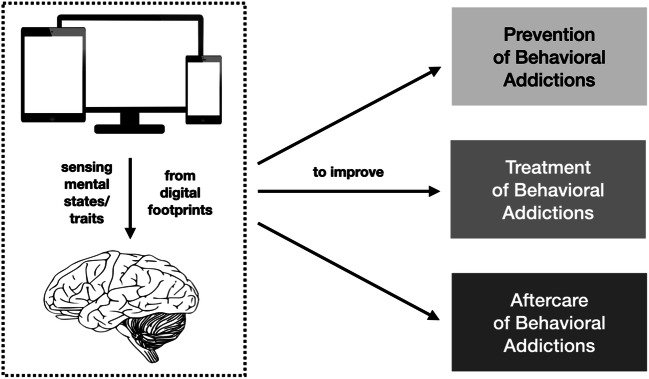
Purpose of Review: The present paper provides an accessible overview on the potential of digital phenotyping and mobile sensing not only shedding light on the nature of Internet Use Disorders (IUD), but also to provide new ideas on how to improve psycho-diagnostics of mental processes linked to IUD. Recent Findings: In detail, the psycho-diagnostic areas of prevention, treatment, and aftercare in the realm of IUDs are focused upon in this work. Before each of these areas is presented in more specificity, the terms digital phenotyping and mobile sensing are introduced against the background of an interdisciplinary research endeavor called Psychoinformatics. Obstacles to overcome problems in this emerging research endeavor—sensing psychological traits/states from digital footprints—are discussed together with risks and chances, which arise from the administration of online-tracking technologies in the field of IUDs. Summary: Given the limited validity and reliability of traditional assessment via questionnaires or diagnostic interviews with respect to recall bias and tendencies to answer towards social desirability, digital phenotyping and mobile sensing offer a novel approach overcoming recall bias and other limitations of usual assessment approaches. This will not only set new standards in precisely mapping behavior, but it will also offer scientists and practitioners opportunities to detect risky Internet use patterns in a timely manner and to establish tailored feedback as a means of intervention.
Overview
The claims and statistics of this paper haven’t been checked yet.
Free: it reads the open-access text and checks the first 5 claims that cite a source we can check. Create a free account to check every claim.
Integrity signals
Registry
Cites
Statistics
Figures
Verification
Claims the paper makes
The claims and statistics of this paper haven’t been checked yet.
Free: it reads the open-access text and checks the first 5 claims that cite a source we can check. Create a free account to check every claim.
Self-check
Percentages, sums and reported differences re-computed from the paper’s own numbers.
The self-check needs the paper’s full text.
Citations
Cites
Kardefelt-Winther, D. (2014) · Computers in Human Behavior · doi:10.1016/j.chb.2013.10.059 · Cited by 2,519
Brand, M., Young, K. S., Laier, C., Wölfling, K., & Potenza, M. N. (2016) · Neuroscience & Biobehavioral Reviews · doi:10.1016/j.neubiorev.2016.08.033 · Cited by 2,416 · cited 1×
“For an up-to-date theoretical framework to understand IUDs, please see the I-PACE model [22, 23].”
BackgroundBrand, M., Wegmann, E., Stark, R., Müller, A., Wölfling, K., Robbins, T. W., & Potenza, M. N. (2019) · Neuroscience & Biobehavioral Reviews · doi:10.1016/j.neubiorev.2019.06.032 · Cited by 2,126
Psychology of Computer Use: XL. Addictive Use of the Internet: A Case That Breaks the Stereotype
Young, K. S. (1996) · Psychological Reports · doi:10.2466/pr0.1996.79.3.899 · Cited by 1,108
Is smartphone addiction really an addiction?
Panova, T., & Carbonell, X. (2018) · Journal of behavioral addictions · doi:10.1556/2006.7.2018.49 · Cited by 976
Are we overpathologizing everyday life? A tenable blueprint for behavioral addiction research
Billieux, J., Schimmenti, A., Khazaal, Y., Maurage, P., & Heeren, A. (2015) · Journal of Behavioral Addictions · doi:10.1556/2006.4.2015.009 · Cited by 920
Global prevalence of gaming disorder: A systematic review and meta-analysis
Stevens, M. W., Dorstyn, D., Delfabbro, P. H., & King, D. L. (2021) · Australian & New Zealand Journal of Psychiatry · doi:10.1177/0004867420962851 · Cited by 863 · cited 1×
“In this context, also a study by Stevens et al. [6] is noteworthy showing that a focus on functional impairment when establishing prevalence rates for Gaming Disorder (a distinct IUD) also led to lower prevalence rates.”
BackgroundDigital Phenotyping: Technology for a New Science of Behavior
Insel, T. R. (2017) · JAMA · doi:10.1001/jama.2017.11295 · Cited by 833
Preventing problematic internet use during the COVID-19 pandemic: Consensus guidance
Király, O., Potenza, M. N., Stein, D. J., King, D. L., Hodgins, D. C., Saunders, J. B., Griffiths, M. D., Gjoneska, B., Billieux, J., Brand, M., et al. (2020) · Comprehensive Psychiatry · doi:10.1016/j.comppsych.2020.152180 · Cited by 820
Self-citationFacebook language predicts depression in medical records
Eichstaedt, J. C., Smith, R. J., Merchant, R. M., Ungar, L. H., Crutchley, P., Preoţiuc-Pietro, D., Asch, D. A., & Schwartz, H. A. (2018) · Proceedings of the National Academy of Sciences · doi:10.1073/pnas.1802331115 · Cited by 643 · cited 1×
“…use relatively robustly provide insights into negative affect accompanying addictive behavior: Withdrawal from society can be tracked via global position signal data [60] or less social interaction with others via phones and negative emotionality can be inferred from text mining messages [61].”
Background
Research works printed but not linked: 4
- Pathological Gambling - an overview | ScienceDirect Topics [Internet]. [cited 2020 Nov 13]. Available from: https://www.sciencedirect.com/topics/nursing-and-health-professions/pathological-gambling
- Elhai JD, Yang H, Levine JC. Applying fairness in labeling various types of internet use disorders: commentary on how to overcome taxonomical problems in the study of internet use disorders and what to do with “smartphone addiction”? Journal of Behavioral Addictions [Internet]. 2020;1 Akadémiai Kiadó; [cited 2020 Nov 10] Available from: https://akjournals.com/view/journals/2006/aop/article-10.1556-2006.2020.00071/article-10.1556-2006.2020.00071.xml.
- Shin M Lee K Measuring smartphone usage time is not sufficient to predict smartphone addiction J Theor Appl Inf Technol 2017 95 5296 5303
- Luo C, Sanger N, Singhal N, Pattrick K, Shams I, Shahid H, et al. A comparison of electronically-delivered and face to face cognitive behavioural therapies in depressive disorders: A systematic review and meta-analysis. EClinicalMedicine [Internet]. 2020;24 Elsevier · DOI · Paper page
Cited by
Building and breaking social media habits
Bayer, J. B., Anderson, I. A., & Tokunaga, R. S. (2022) · Current Opinion in Psychology · doi:10.1016/j.copsyc.2022.101303 · Cited by 98
Yao, N., Chen, J., Huang, S., Montag, C., & Elhai, J. D. (2023) · Computers in Human Behavior · doi:10.1016/j.chb.2023.107751 · Cited by 104
Self-citationRaneri, P. C., Montag, C., Rozgonjuk, D., Satel, J., & Pontes, H. M. (2022) · Addictive Behaviors Reports · doi:10.1016/j.abrep.2022.100415 · Cited by 115
“Future measuring of actual recorded behaviours and applying digital phenotyping principles may yield promising findings, but this clearly needs support from the industry (Montag & Rumpf, 2021).”
Self-citationMontag, C., & Elhai, J. D. (2023) · Current Addiction Reports · doi:10.1007/s40429-023-00494-3 · Cited by 52
Self-citationOn artificial intelligence and global mental health
Montag, C., Ali, R., Al‐Thani, D., & Hall, B. J. (2023) · Asian Journal of Psychiatry · doi:10.1016/j.ajp.2023.103855 · Cited by 45
Self-citationXiong, S., Chen, J., & Yao, N. (2024) · Frontiers in Psychiatry · doi:10.3389/fpsyt.2024.1361497 · Cited by 46
Matz, S., Beck, E. D., Atherton, O. E., White, M. J. D., Rauthmann, J. F., Mroczek, D. K., Kim, M.-H., & Bogg, T. (2023) · Perspectives on Psychological Science · doi:10.1177/17456916231191774 · Cited by 54
“…at-risk population segments, act as modifiable risk factors of disease and disorders, and highlight the promise of personality and other psychological phenomena in segmentation and customization (e.g., Coghlan & D’Alfonso, 2021; Cohen et al., 2020; Montag et al., 2020; Montag & Rumpf, 2021).”
Akbari, M., Seydavi, M., Jamshidi, S., Marino, C., & Spada, M. M. (2022) · Addictive Behaviors · doi:10.1016/j.addbeh.2022.107603 · Cited by 42
Ecological Momentary Interventions in Public Mental Health Provision
Schulte‐Strathaus, J. C. C., Rauschenberg, C., Baumeister, H., & Reininghaus, U. (2022) · Studies in neuroscience, psychology and behavioral economics · doi:10.1007/978-3-030-98546-2_25 · Cited by 34
The Use of Mobile Assessments for Monitoring Mental Health in Youth: Umbrella Review
Marciano, L., Vocaj, E., Bekalu, M. A., Tona, A. L., Rocchi, G., & Viswanath, K. (2023) · Journal of Medical Internet Research · doi:10.2196/45540 · Cited by 47
“In addition, in the review by Montag and Rumpf [71], it was extensively described how digital phenotyping and mobile sensing from an interdisciplinary perspective rooted in psychoinformatics can be used as a tool to improve, prevent, intervene, treat, and care for web-based addictive behaviors and…”
On fear of missing out, social networks use disorder tendencies and meaning in life
Montag, C., Müller, M., Pontes, H. M., & Elhai, J. D. (2023) · BMC Psychology · doi:10.1186/s40359-023-01342-9 · Cited by 44
“Third, it would be interesting to add digital phenotyping and mobile sensing principles [32] to the present study to obtain insights into objective social media use parameters.”
BackgroundSelf-citationSafer esports for players, spectators, and bettors: Issues, challenges, and policy recommendations
Czakó, A., Király, O., Koncz, P., Yu, S. M., Mangat, H. S., Glynn, J. A., Romero, P., Griffiths, M. D., Rumpf, H., & Demetrovics, Z. (2023) · Journal of Behavioral Addictions · doi:10.1556/2006.2023.00012 · Cited by 35
Self-citationThe cost burden of problematic internet usage
Rumpf, H., Effertz, T., & Montag, C. (2022) · Current Opinion in Behavioral Sciences · doi:10.1016/j.cobeha.2022.101107 · Cited by 36
Self-citationMontag, C., Yang, H., Wu, A. M. S., Ali, R., & Elhai, J. D. (2025) · Annals of the New York Academy of Sciences · doi:10.1111/nyas.15337 · Cited by 29
“48 We could imagine that after a certain amount of use time, the AI could recommend engaging in a different activity, 49 but will such an intervention be sufficient?”
Self-citationAndrade, A. L. M., Martins, G. D. G., Scatena, A., Lopes, F. M., de Oliveira, W. A., Kim, H. S. A., & de MICHELI, D. (2022) · International Journal of Mental Health and Addiction · doi:10.1007/s11469-022-00846-6 · Cited by 22
“However, we did not consider smart-phone or video game addiction, which can be a confounding variable with PIU (Montag & Rumpf, 2021).”
BackgroundMarengo, D., Montag, C., Mignogna, A., & Settanni, M. (2022) · Frontiers in Psychology · doi:10.3389/fpsyg.2022.830120 · Cited by 22
“In order to strive for unification of terminology in the study of Internet Use Disorders (Montag et al., 2021), we also use the term social networks use disorder (SNUD) from now on in this work, but mention that SNUD currently is not officially recognized as an official disorder and that we do not want to over-pathologize…”
BackgroundSelf-citationHussain, Z., Elhai, J. D., Montag, C., Wegmann, E., & Rozgonjuk, D. (2023) · Emerging Trends in Drugs Addictions and Health · doi:10.1016/j.etdah.2023.100140 · Cited by 27
Self-citationAhn, J. S., Jeong, I., Park, S., Lee, J., Jeon, M.-J., Lee, S., Do, G., Jung, D., & Park, J. Y. (2025) · Journal of Medical Internet Research · doi:10.2196/69320 · Cited by 22
Montag, C., Wegmann, E., Schmidt, L. D., Klein, L., Rozgonjuk, D., & Rumpf, H.-J. (2024) · BMC Research Notes · doi:10.1186/s13104-024-06833-5 · Cited by 10
“Frequency of use and the total number of social media apps used could serve as early signs in digital phenotyping or mobile sensing [37].”
BackgroundSelf-citationDemetrovics, Z., Czakó, A., Potenza, M. N., Griffiths, M. D., Fineberg, N. A., Stein, D. J., Ekhtiari, H., Brand, M., Montag, C., Lin, C., et al. (2026) · Journal of Behavioral Addictions · doi:10.1556/2006.2025.00105 · Cited by 17
Self-citationRozgonjuk, D., Montag, C., & Elhai, J. D. (2022) · Studies in neuroscience, psychology and behavioral economics · doi:10.1007/978-3-031-04772-5_4 · Cited by 12
Self-citationSuleimenov, I. E., Kostsova, M. V., Grishina, A. V., Matrassulova, D., & Vitulyova, Y. S. (2024) · Frontiers in Applied Mathematics and Statistics · doi:10.3389/fams.2024.1455500 · Cited by 7
Dysregulated Use of Mobile/Smartphone
Domoff, S. E., Elhai, J. D., Long, J., López-Fernández, O., Montag, C., Starčević, V., Szabó, A., Abeele, M. V., Demetrovics, Z., & Billieux, J. (2024) · Springer eBooks · doi:10.1007/978-3-031-69362-5_27 · Cited by 12
Self-citationMontag, C., Dagum, P., Hall, B. J., & Elhai, J. D. (2022) · Molecular Psychology Brain Behavior and Society · doi:10.12688/molpsychol.17401.1 · Cited by 6
“Research on the study of digital footprints within the context of brain disorders in general not only aims to establish early warning systems to detect psychiatric and neurodegenerative disorders, but also to use such digital footprints to obtain insights into the course of a disorder, covering the whole spectrum from…”
BackgroundSelf-citationPizzoli, S. F. M., Monzani, D., Conti, L., Ferraris, G., Grasso, R., & Pravettoni, G. (2023) · Frontiers in Psychology · doi:10.3389/fpsyg.2023.1103703 · Cited by 11
“Status updates, the number of pictures posted, and also text-mining analysis of posted comments are used to gain insights into individuals’ traits, preferences and likely future behaviour (Montag and Rumpf, 2021).”
BackgroundMethodStudents’ struggle with digital addiction: the truth of brain rot
Gül, M. (2025) · BMC Psychology · doi:10.1186/s40359-025-03880-w · Cited by 4
“Recent scholarship points to its adverse impact not only on individuals’ cognitive and emotional development but also on educational and societal systems at large [29, 30].”
Fineberg, N. A., Brandtner, A., Löchner, N., Kannen, C., Smith, M., Foster, S., Meinke, A., Mosler, K., Fine, S., Carmi, L., et al. (2025) · Comprehensive Psychiatry · doi:10.1016/j.comppsych.2025.152653 · Cited by 3
“[50] mines behavioural data (e.g., circadian rhythms, physical movement, internet usage) passively, without user involvement by sensor devices to overcome disjunctions between self-reports, informant reports and objective data and prevent experienced time distortions [82] due to the immersivity and…”
Self-citationZhou, X., Liu, Q., Wang, L., Gan, X., Zhang, R., Liu, X., Jiao, G., Montag, C., Zhao, W., & Becker, B. (2024) · Computers in Human Behavior · doi:10.1016/j.chb.2024.108310 · Cited by 4
Self-citationUser-avatar bond as diagnostic indicator for gaming disorder: A word on the side of caution
Infanti, A., Giardina, A., Razum, J., King, D. L., Baggio, S., Snodgrass, J. G., Vowels, M. J., Schimmenti, A., Király, O., Rumpf, H., et al. (2024) · Journal of Behavioral Addictions · doi:10.1556/2006.2024.00032 · Cited by 4
“First, digital phenotyping should provide data that is superior to self-report, and can use digital markers (Montag & Rumpf, 2021).”
Self-citationSchmidt, L. D., Wegmann, E., Bischof, A., Klein, L., Zhou, C., Rozgonjuk, D., Kannen, C., Borgwardt, S., Brand, M., Montag, C., et al. (2022) · SUCHT - Zeitschrift für Wissenschaft und Praxis / Journal of Addiction Research and Practice · doi:10.1024/0939-5911/a000782 · Cited by 3
Self-citationDigital Phenotyping for Problematic Technology Use: A Systematic Literature Review and Taxonomy
Schroeder, G. L., Francisco, R., & Barbosa, J. L. V. (2026) · Current Addiction Reports · doi:10.1007/s40429-026-00759-7 · Cited by 3
“Montag and Rumpf [20] provided a narrative overview of the potential of digital phenotyping and mobile sensing for improving psychodiagnostics, prevention, and intervention of Internet Use Disorders.”
Social Media use is Associated with, but is not a Major Cause of Mental Disorder among Adolescents
Elhai, J. D., Demetrovics, Z., Casale, S., & Montag, C. (2026) · Current Addiction Reports · doi:10.1007/s40429-026-00769-5 · Cited by 3
“Continued use of longitudinal studies, implementing standardized diagnostic interviews and objectively-measured social media use data relying on mobile sensing and digital phenotyping [65 ], would be required to offer such a conclusion.”
Self-citationAssociations between smoking status and social networks use disorder tendencies
Montag, C., Wegmann, E., Schmidt, L. D., Klein, L., Rozgonjuk, D., & Rumpf, H. (2023) · Emerging Trends in Drugs Addictions and Health · doi:10.1016/j.etdah.2023.100054 · Cited by 3
Self-citationStavropoulos, V., Prokofieva, M., Zarate, D., Carras, M. C., Ratan, R., Kowert, R., Schivinski, B., Burleigh, T. L., Poulus, D., Karimi, L., et al. (2024) · Journal of Behavioral Addictions · doi:10.1556/2006.2024.00063 · Cited by 3
Asché, L., Pakos, J., Schrage, H., Schuder, J., Jung, L., Sanchez, D., Selaskowski, B., Wiebe, A., Philipsen, A., & Braun, N. (2026) · JMIR Human Factors · doi:10.2196/85351 · Cited by 1
“While these methods provide the highest diagnostic accuracy to date, they are influenced by various confounding factors, such as varying introspective skills and recall bias [6,7].”
Data Interfaces in Mental Health: Supporting Awareness, Not Surveillance
Deshwal, P. (2025) · Journal of Computer Science and Technology Studies · doi:10.32996/jcsts.2025.7.4.37 · Cited by 1
“The technical implementation of these tools has become increasingly sophisticated, with research showing that 62.5% of users expect personalized features in mental health applications and 70.1% consider ease of use as a primary factor in continued engagement [2].”
InfluentialThe Problem of Generating Psychological Tests using Artificial Intelligence
Vitulyova, Y. S., Matrassulova, D., Kostsova, M. V., Anastasiya, G., Kabdushev, S., & Suleimenov, I. E. (2024) · International Conference on Machine Learning and Human-Computer Interaction (MLHMI) · doi:10.1109/mlhmi63000.2024.00018
“Modern digital technologies, in principle, open up quite broad prospects for carrying out such diagnostics remotely [3,4], however, analyzing the behavior of Internet users is an independent task due to the heterogeneous nature of the incoming information [5,6].”
Montag, C., Müller, M., Pontes, H. M., & Elhai, J. D. (2024) · Figshare · doi:10.6084/m9.figshare.26632606
Self-citationLavrentieva, O. (2025) · Alfred Nobel University Journal of Pedagogy and Psychology · doi:10.32342/3041-2196-2025-2-30-20 · Cited by 2
Association of Internet use disorder and the use of traditional watches
Wickord, L.-C., Bischof, A., Kannen, C., Löchner, D., Salbach, H., Mößle, T., Zumrode, L., Wölfling, K., Rumpf, H., & Montag, C. (2026) · Addictive Behaviors Reports · doi:10.1016/j.abrep.2026.100685 · Cited by 5
“Hence, mobile sensing and digital phenotyping approaches will be helpful to make progress in the present research field (Montag & Rumpf, 2021).”
Self-citationPontes, H. M., Raneri, P. C., & Satel, J. (2023) · OSF Preprints (OSF Preprints)
Karaköse, T., Tülübaş, T., Han, B., Kanadlı, S., Kardas, A., Polat, H., & Demirkol, M. (2026) · Frontiers in Public Health · doi:10.3389/fpubh.2026.1812488
“…which is conceptualized as a complex process shaped by the interactions between identity development, attachment styles, and emotional regulation mechanisms (99), has indeed become a growing social problem (1) and been linked to a range of psychological and behavioral challenges (100, 106).”
From narcissistic beliefs to problematic social media use: a serial mediation perspective
Savcı, M., Uğur, E., Demırcı, İ., Savcı, H., Montag, C., & Elhai, J. D. (2026) · Current Psychology · doi:10.1007/s12144-026-09614-4
“Fourth, the present study would also have profited from the actual investigation of digital footprints left when interacting with social media (digital phenotyping; Montag & Rumpf, 2021 ), but this research is at the moment hampered by the APIcalype (Bruns 2021 ; Montag et al. 2024a , b).”
Self-citationMachine learning of digital traces to detect risk for behavioural addictions online
Burleigh, T. L., Hao, Y., Schivinski, B., Prokofieva, M., Zarate, D., Brown, T., & Stavropoulos, V. (2026) · Nature Reviews Psychology · doi:10.1038/s44159-026-00604-8 · Cited by 1
“First, most studies rely on supervised machine learning trained on self-report scales rather than clinician-rated diagnoses or long-term outcomes, which makes it harder to judge the clinical meaning of the reported performance metrics 24,36,98,110 .”
Influential
Metadata
- Authors
- Montag, C., & Rumpf, H.-J.
- Affiliations
- Universität Ulm (DE)
- University of Lübeck (DE)
- Corresponding author
- Montag, Christian
- Venue
- Current Addiction Reports
- Published
- 2021-07-08
- Volume
- 8
- Issue
- 3
- Pages
- 422-430
- ISSN
- 2196-2952 (ISSN-L)
- PMC
- PMC8266294
- OpenAlex
- W3182365736
- Cited by
- 44
- References
- 64
- Citations by year
- 2026: 8 · 2025: 6 · 2024: 9 · 2023: 11 · 2022: 10
- FWCI
- 1.44
- Type
- journal article
- Language
- en
- Open access
- hybrid
- doi.org
- Licence
- cc-by
- creativecommons.org/licenses/by/4.0 (tdm)
- creativecommons.org/licenses/by/4.0 (vor)
- Locations
- Current Addiction Reports (publishedVersion, cc-by)
- PubMed Central (publishedVersion, cc-by)
- PubMed (publishedVersion)
- Informationszentrum Lebenswissenschaften (ZB MED) (submittedVersion, cc-by)
- OPen Access Repositorium der Universität Ulm (OPARU) (Ulm University) (submittedVersion, cc-by)
- Universität Ulm, Kommunikations- und Informationszentrum (kiz) (cc-by)
- Funders
- German Innovation Fund
- Topics
- Social Sciences › Sociology and Political Science › Impact of Technology on Adolescents
- Social Sciences › Psychology › Applied Psychology › Digital Mental Health Interventions
- Social Sciences › Psychology › Experimental and Cognitive Psychology › Mental Health Research Topics
- Keywords
- digital phenotyping, mobile sensing, internet use disorders, digital footprint, online tracking, recall bias, social desirability bias, prevention, treatment, follow-up care, personalized feedback
About these checks
Registry, retraction, Cites and statistics results are computed, not judged, with one exception: a printed reference that no index lists is read once by a model before it counts as a citation error. Claims are extracted by a model and kept only when their quote appears verbatim in the text; each cited source is then checked, with a model’s help, for whether it says what the claim relies on. Those verdicts can be wrong — read the claim’s quote and the cited source before relying on one.
Statistics and arithmetic are recomputed, not judged.
Confidence bands are shown only for fields calibrated on our annotated test set. None is calibrated yet, so no band is shown.
What counts as a claim ›How we measure confidence ›How we check this ›
Are you an author, or do you see a problem with this page? Request a review
Data sources
Bibliographic data: Semantic Scholar, OpenAlex, Crossref.
Contains information from the Semantic Scholar Academic Graph Datasets, made available under the ODC Attribution License (ODC-BY 1.0).
Semantic Scholar’s data is described in: Kinney, R., et al. (2023). The Semantic Scholar Open Data Platform. arXiv:2301.10140.
