

The DOI matches its Crossref record; 26 of the 27 references it cites were found in a registry or an index; none of the 11 sources its claims cite is checked for support yet.
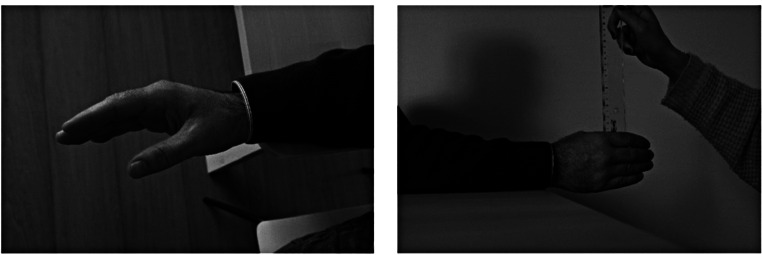
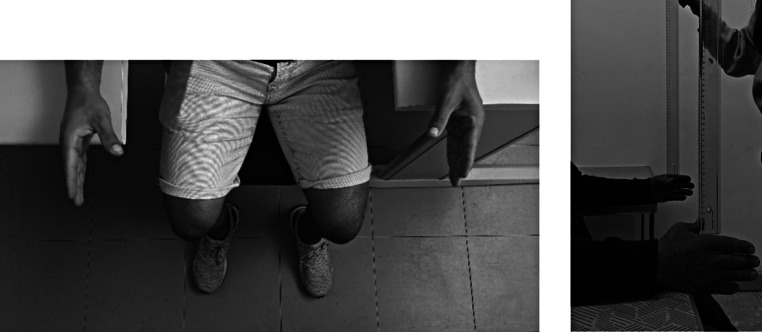
Validity and reliability of a ruler drop test to measure dual-task reaction time, choice reaction time and discrimination reaction time
Open accessAbstract
Background: The aim of this study was to determine the absolute and relative reliability of the Ruler Drop Test (RDT) for assessing dual-task, choice, and discrimination reaction time. In addition, the construct validity of the RDT is examined in comparison to the Deary-Liewald reaction time (DLRT). Methods: Tests were administered by the same evaluator, one week apart. Intraclass Correlation Coefficient (ICC3.1) was used to measure relative reliability, and the standard error of measurement (SEM) and minimal detectable change (MDC95) were used to measure absolute reliability. Spearman correlation test was used to measure construct validity. Results: The results showed that the relative reliability was good for the choice ruler drop (ICC = 0.81), moderate for the dual-task ruler drop test (ICC = 0.70) and discrimination ruler drop test (ICC = 0.72), and good for simple ruler drop test. However, the simple ruler drop test had poor reliability (ICC = 0.57). The RDT shows construct validity compared to the DLRT. Conclusion: We conclude that the RDT is a suitable instrument for measuring dual-task, choice and discrimination reaction time. Future studies should explore the reliability of these measures in other populations.
Overview
CoChat Summary
TL;DR
The ruler drop test adapted for choice, dual-task, and discrimination reaction time showed moderate-to-good relative reliability in community-dwelling older adults, with construct validity against the Deary-Liewald reaction time task. Simple ruler drop test reliability was lower (ICC = 0.57), and some error-count measures showed poor reliability.
Key findings
- In 51 older adults (mean age 72.67 ± 5.3 years), test-retest ICCs were 0.81 for RDT-C, 0.70 for RDT-DT, 0.72 for RDT-D, and 0.57 for RDT-S; RDT-C non-dominant-hand errors (ICC = 0.48) and RDT-D errors (ICC = 0.45) had poor reliability.
- Absolute reliability values were SEM = 12.5% for RDT-S, 10% for RDT-C, 12.4% for RDT-DT, and 17.1% for RDT-D; MDC95 values were 34.5%, 27.6%, 34.3%, and 47.2%, respectively.
- Construct validity was supported by significant Spearman correlations between RDT and DLRT measures: RDT-S vs DLRT-S (r = 0.423, p = 0.002), RDT-C vs DLRT-C (r = 0.394, p < 0.01), RDT-DT vs DLRT-SDT (r = 0.322, p < 0.01), and RDT-D vs DLRT-SDT and DLRT-C (r = 0.375, p < 0.01).
Methods
- Cross-sectional test-retest reliability and validity study with 51 community-dwelling volunteers in Évora, Portugal, aged ≥60 years without cognitive impairment; exclusions were low vision, cognitive impairment, or Parkinson’s disease.
- RDT-S, RDT-DT, RDT-C, RDT-D, and DLRT variants were administered twice, one week apart, by the same experienced kinesiologist after familiarization.
- Relative reliability was assessed with ICC3.1, absolute reliability with SEM and MDC95, and construct validity with Spearman correlation; the required sample size was calculated as 46, and analyses used SPSS 24.0 with p < 0.05.
Limitations
- The paper states that individuals with low peripheral vision could not perform the choice reaction time test, that results may not generalize to nursing home residents, and that different ruler materials might alter reaction time results.
- Evident from the text: several error-count measures had poor reliability (RDT-C non-dominant-hand errors ICC = 0.48; RDT-D errors ICC = 0.45), and RDT-C SEM exceeded the SEM < SD/2 criterion, indicating unacceptable measurement accuracy for that test.
Model-written summary. Check it against the paper before relying on it.
Integrity signals
Registry
Cites
Statistics
Figures
Verification
Claims the paper makes
0 Valid · 0 Not valid · 11 Not checked · 68 Own results and interpretations
A result the paper reports from its own data — it cites no other source for it, so there is none to check. The quote shows it is in the paper.
In the paper
“Relative reliability was good for the RDT-C and the number achieved in RDT-DT (ICCs = 0.81 and 0.80, respectively)”
§ Validity and reliability of a ruler drop test to measure dual-task reaction time, choice reaction time and discrimination reaction time > Results
plain- Asserted: passes — The authors put it forward as true.
- Checkable: passes — It can be checked against evidence.
- Load-bearing: passes — The paper’s conclusions depend on it.
- Based: passes — The paper gives a reason why it holds.
A result the paper states — it cites no source for it, so there is none to check. The quote shows it is in the paper.
In the paper
“Overall, test performance on the RDT-S, RDT-C, and RDT-D was significantly better on the second trial than on the first.”
§ Validity and reliability of a ruler drop test to measure dual-task reaction time, choice reaction time and discrimination reaction time > Discussion
plain- Asserted: passes — The authors put it forward as true.
- Checkable: passes — It can be checked against evidence.
- Load-bearing: unclear — It is unclear whether the paper’s conclusions depend on it.
- Based: passes — The paper gives a reason why it holds.
A result the paper reports from its own data — it cites no other source for it, so there is none to check. The quote shows it is in the paper.
In the paper
“and moderate for the RDT-S, total RDT-C errors, RDT-C dominant hand errors, RDT-DT, the number of errors in RDT-DT, and the RDT-D (ICCs = 0.57, 0.74, 0.69, 0.70, 0.69 and 0.71, respectively)”
§ Validity and reliability of a ruler drop test to measure dual-task reaction time, choice reaction time and discrimination reaction time > Results
plain- Asserted: passes — The authors put it forward as true.
- Checkable: passes — It can be checked against evidence.
- Load-bearing: passes — The paper’s conclusions depend on it.
- Based: passes — The paper gives a reason why it holds.
A result the paper reports from its own data — it cites no other source for it, so there is none to check. The quote shows it is in the paper.
In the paper
“and moderate for the RDT-S, total RDT-C errors, RDT-C dominant hand errors, RDT-DT, the number of errors in RDT-DT, and the RDT-D (ICCs = 0.57, 0.74, 0.69, 0.70, 0.69 and 0.71, respectively)”
- Also stated in: § Discussion · plain
“The ICC for the RDT-S was moderate (ICC = 0.57).”
§ Validity and reliability of a ruler drop test to measure dual-task reaction time, choice reaction time and discrimination reaction time > Results
plain- Asserted: passes — The authors put it forward as true.
- Checkable: passes — It can be checked against evidence.
- Load-bearing: passes — The paper’s conclusions depend on it.
- Based: passes — The paper gives a reason why it holds.
- Also stated in: § Discussion · plain
A result the paper reports from its own data — it cites no other source for it, so there is none to check. The quote shows it is in the paper.
In the paper
“The SEM values were 12.5% on the RDT-S, 10% on the RDT-C, 12.4% on the RDT-DT and 17.1% on RDT-D.”
§ Validity and reliability of a ruler drop test to measure dual-task reaction time, choice reaction time and discrimination reaction time > Results
plain- Asserted: passes — The authors put it forward as true.
- Checkable: passes — It can be checked against evidence.
- Load-bearing: unclear — It is unclear whether the paper’s conclusions depend on it.
- Based: passes — The paper gives a reason why it holds.
39 more claims
Create a free account to see all 79 claims and to verify the 10 references still open.
- Probably not a substantial claim. 25
- It may state two separate claims as one. 19
- The quote only partly states this claim. 1
Self-check
Percentages, sums and reported differences re-computed from the paper’s own numbers.
Each contradiction between two passages listed here was confirmed by an independent check.
Rated major: it would touch a result — a value a result rests on, reported and recomputed p-values on opposite sides of the significance level, two passages that conflict with no sign which is right, or a cited work retracted before this paper was published.
In the paper
§ Validity and reliability of a ruler drop test to measure dual-task reaction time, choice reaction time and discrimination reaction time > Results
“RDT-C and DLRT-C (r = 0.375; p = 0.006)”
§ Validity and reliability of a ruler drop test to measure dual-task reaction time, choice reaction time and discrimination reaction time > Results
“| RDT-C | 0.167 | 0.215 | 0.394** | |”
Rated major: it would touch a result — a value a result rests on, reported and recomputed p-values on opposite sides of the significance level, two passages that conflict with no sign which is right, or a cited work retracted before this paper was published.
In the paper
§ Validity and reliability of a ruler drop test to measure dual-task reaction time, choice reaction time and discrimination reaction time > Discussion
“The SEM suggests an acceptable measurement accuracy that meets the above criterion (8.25/2 = 4.12).”
§ Validity and reliability of a ruler drop test to measure dual-task reaction time, choice reaction time and discrimination reaction time > Results
“| RDT-DT | 51 | 36.69 (7.8) | 35.74 (8.7) | 0.701 (0.48–0.83) | 4.51 | 12.4 | 12.43 | 34.3 |”
Rated major: it would touch a result — a value a result rests on, reported and recomputed p-values on opposite sides of the significance level, two passages that conflict with no sign which is right, or a cited work retracted before this paper was published.
In the paper
§ Validity and reliability of a ruler drop test to measure dual-task reaction time, choice reaction time and discrimination reaction time > Results
“RDT-DT and DLRT-DT (r = 0.025; p = 0.025)”
§ Validity and reliability of a ruler drop test to measure dual-task reaction time, choice reaction time and discrimination reaction time > Results
“| RDT-DT | 0.375** | 0.322** | 0.375** | |”
Rated major: it would touch a result — a value a result rests on, reported and recomputed p-values on opposite sides of the significance level, two passages that conflict with no sign which is right, or a cited work retracted before this paper was published.
In the paper
§ Validity and reliability of a ruler drop test to measure dual-task reaction time, choice reaction time and discrimination reaction time > Discussion
“The SEM value was above the criterion, SEM < SD/2 (9.74/2 = 4.87), which indicates that the measurement accuracy can be considered unacceptable.”
§ Validity and reliability of a ruler drop test to measure dual-task reaction time, choice reaction time and discrimination reaction time > Discussion
“The absolute reliability for the RDT-C was slightly higher than for the RDT-S (SEM = 4.21 e MDC95 = 11.61).”
Rated major: it would touch a result — a value a result rests on, reported and recomputed p-values on opposite sides of the significance level, two passages that conflict with no sign which is right, or a cited work retracted before this paper was published.
In the paper
§ Validity and reliability of a ruler drop test to measure dual-task reaction time, choice reaction time and discrimination reaction time > Discussion
“The SEM was lower than the SEM < SD/2 criterion (5.59/2 = 2.80), suggesting acceptable measurement accuracy for this test.”
§ Validity and reliability of a ruler drop test to measure dual-task reaction time, choice reaction time and discrimination reaction time > Discussion
“SEM and MDC95 for the RDT-S, were relatively low (SEM = 3.90 and MDC95 = 10.75).”
5 more findings
Create a free account to see every finding of this check.
Citations
Cites
A guideline of selecting and reporting intraclass correlation coefficients for reliability research
Koo, T. K., & Li, M. Y. (2016) · Journal of Chiropractic Medicine · doi:10.1016/j.jcm.2016.02.012 · Cited by 31,709
Quality criteria were proposed for measurement properties of health status questionnaires
Terwee, C. B., Bot, S. D. M., de Boer, M. R., van der Windt, D. A. W. M., Knol, D. L., Dekker, J., Bouter, L. M., & de Vet, H. C. W. (2007) · Journal of Clinical Epidemiology · doi:10.1016/j.jclinepi.2006.03.012 · Cited by 10,764
QUANTIFYING TEST-RETEST RELIABILITY USING THE INTRACLASS CORRELATION COEFFICIENT AND THE SEM
WEIR, J. P. (2005) · Journal of Strength and Conditioning Research · doi:10.1519/00124278-200502000-00038 · Cited by 4,842
Measures of Reliability in Sports Medicine and Science
Hopkins, W. G. (2000) · Sports Medicine · doi:10.2165/00007256-200030010-00001 · Cited by 4,635
Motor Learning and Control : Concepts and Applications
Magill, R. A. (2020) · Civil War Book Review · Cited by 1,306
Robbins, T. W., James, M., Owen, A. M., Sahakian, B. J., McInnes, L., & Rabbitt, P. (1994) · Dementia and Geriatric Cognitive Disorders · doi:10.1159/000106735 · Cited by 1,078
Lord, S. R., Murray, S., Chapman, K. E., Munro, B., & Tiedemann, A. (2002) · The Journals of Gerontology Series A · doi:10.1093/gerona/57.8.m539 · Cited by 1,050
“Stops walking when talking” as a predictor of falls in elderly people
Lundin-Olsson, L., Nyberg, L., & Gustafson, Y. (1997) · The Lancet · doi:10.1016/s0140-6736(97)24009-2 · Cited by 975
Reliability: what is it, and how is it measured?
Bruton, A., Conway, J. H., & Holgate, S. T. (2000) · Physiotherapy · doi:10.1016/s0031-9406(05)61211-4 · Cited by 763
Age-related differences in walking stability
Menz, H. B. (2003) · Age and Ageing · doi:10.1093/ageing/32.2.137 · Cited by 643
Research works printed but not linked: 6
- Johnson BL, Nelson JK (1969) Practical measurements for evaluation in physical education. Fourth edi. Burgess Pub. Co, New York., p 477
- Cox B, Huppert F, Whichelow M (1993) The health and lifestyle survey: seven years on. UK: Dartmouth, Aldershot
- Jensen A (1987) Individual differences in the Hick paradigm. In: Vernon PA (ed) Speed of information-processing and intelligence. Ablex Publishing, pp. 101–175
- Schuhfried (2013) Vienna Test System: Psychological Assessment. Schuhfried, Moedling, Austria
- Guerreiro M, Silva A, Botelho M, Leitão O, Castro-Caldas A, Garcia C (1994) Adaptação à população Portuguesa Da tradução do Mini Mental State Examination (MMSE) – ScienceOpen. Rev Port Neurol 3(suppl):9–10
- Johnson BL, Nelson JK (1986) Practical measurements for evaluation in Physical Education. Fourth edi. Macmillan, New York
Cited by
Sabeti, S., Ardecani, F. B., & Shoghli, O. (2024) · Transportation Research Part C Emerging Technologies · doi:10.1016/j.trc.2024.104867 · Cited by 23
Warneke, K., Oraže, M., Plöschberger, G., Herbsleb, M., Afonso, J. R., & Wallot, S. (2025) · European Journal of Neuroscience · doi:10.1111/ejn.70117 · Cited by 8
Mahapatra, C., & Pradhan, K. C. (2025) · Bulletin of Faculty of Physical Therapy · doi:10.1186/s43161-025-00281-3 · Cited by 4
Features of the development of coordination abilities in young schoolchildren
Morozov, D., Kryventsova, I., & Prusik, K. (2024) · Pedagogy of Health · doi:10.15561/health.2024.0101 · Cited by 2
Fallahmorad, Z., Variani, A. S., Hematgar, M. A., Kouhi, M., & Varmazyar, S. (2026) · Scientific Reports · doi:10.1038/s41598-026-42454-7 · Cited by 1
Metadata
- Authors
- Ferreira, S., Raimundo, A., del Pozo-Cruz, J., Leite, N., Pinto, A., & Marmeleira, J.
- Affiliations
- University of Évora (PT)
- Corresponding author
- Ferreira, Soraia
- Venue
- Aging Clinical and Experimental Research
- Published
- 2024-03-07
- Volume
- 36
- Issue
- 1
- Pages
- 61-61
- ISSN
- 1594-0667 (ISSN-L)
- 1720-8319
- PMC
- PMC10920456
- OpenAlex
- W4392559705
- Semantic Scholar
- 17140f14df0db35596858545522d8310cb47ff15
- Cited by
- 23
- References
- 27
- Citations by year
- 2026: 17 · 2025: 2 · 2024: 4
- FWCI
- 10.83
- Type
- journal article
- Language
- en
- Open access
- hybrid
- dx.doi.org
- Licence
- cc-by
- creativecommons.org/licenses/by/4.0 (tdm)
- creativecommons.org/licenses/by/4.0 (vor)
- Locations
- Aging Clinical and Experimental Research (publishedVersion, cc-by)
- PubMed Central (publishedVersion, cc-by)
- PubMed (publishedVersion)
- Portuguese National Funding Agency for Science, Research and Technology (RCAAP Project by FCT) (submittedVersion, other-oa)
- Funders
- Universidade de Évora
- Topics
- Health Sciences › Health Professions › Physical Therapy, Sports Therapy and Rehabilitation › Balance, Gait, and Falls Prevention
- Social Sciences › Psychology › Experimental and Cognitive Psychology › Cognitive Functions and Memory
- Life Sciences › Neuroscience › Cognitive Neuroscience › Neural and Behavioral Psychology Studies
- Keywords
- ruler drop test, reaction time, dual-task performance, choice reaction time, test-retest reliability, construct validity, cognitive aging, neuropsychological assessment
- MeSH terms
- Humans, Reaction Time, Reproducibility of Results
About these checks
Registry, retraction, Cites and statistics results are computed, not judged, with one exception: a printed reference that no index lists is read once by a model before it counts as a citation error. Claims are extracted by a model and kept only when their quote appears verbatim in the text; each cited source is then checked, with a model’s help, for whether it says what the claim relies on. Those verdicts can be wrong — read the claim’s quote and the cited source before relying on one.
A language model drew the claims from the paper on 2026-11-14, under version 3 of the claim definition (model deepseek-v4.1-flash, prompt extract-v3).
A second model labelled each claim on 2026-11-14 (model jev-1.13-20260917, definition revision gold-guideline-v0.2).
Statistics and arithmetic are recomputed, not judged.
Confidence bands are shown only for fields calibrated on our annotated test set. None is calibrated yet, so no band is shown.
What counts as a claim ›How we measure confidence ›How we check this ›
Are you an author, or do you see a problem with this page? Request a review
How to cite
Cite CoChat for the checks on this page, and the paper for its own findings.
- This page
- CoChat. (2026). Citation check: Validity and reliability of a ruler drop test to measure dual-task reaction time, choice reaction time and discrimination reaction time. https://app.cochat.ai/papers/10.1007/s40520-024-02726-6
- The paper
- Ferreira, S., Raimundo, A., del Pozo-Cruz, J., Leite, N., Pinto, A., & Marmeleira, J. (2024). Validity and reliability of a ruler drop test to measure dual-task reaction time, choice reaction time and discrimination reaction time. Aging Clinical and Experimental Research. https://doi.org/10.1007/s40520-024-02726-6
Data sources
Bibliographic data: Semantic Scholar, OpenAlex, Crossref.
Contains information from the Semantic Scholar Academic Graph Datasets, made available under the ODC Attribution License (ODC-BY 1.0).
Semantic Scholar’s data is described in: Kinney, R., et al. (2023). The Semantic Scholar Open Data Platform. arXiv:2301.10140.
