

Sounding It Out: Auditory Stimulation and Overnight Memory Processing
Open accessThe DOI matches its Crossref record; 55 of the 55 references it cites were found in a registry or an index.
Abstract
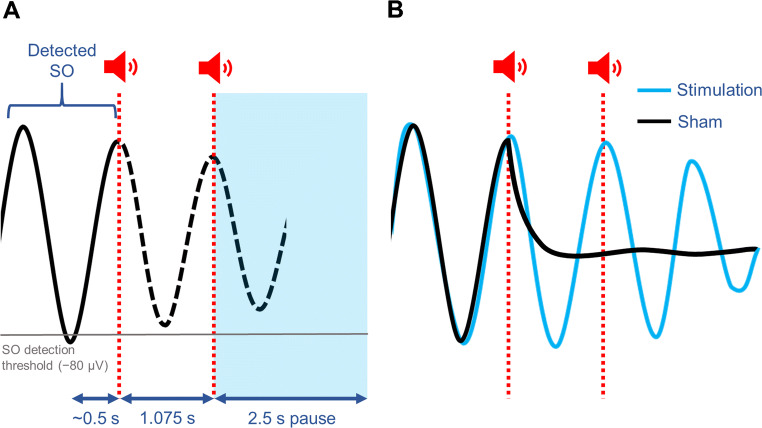
Purpose of Review: Auditory stimulation is a technique that can enhance neural oscillations linked to overnight memory consolidation. In this review, we evaluate the impacts of auditory stimulation on the neural oscillations of sleep and associated memory processes in a variety of populations. Recent Findings: Cortical EEG recordings of slow-wave sleep (SWS) are characterised by two cardinal oscillations: slow oscillations (SOs) and sleep spindles. Auditory stimulation delivered in SWS enhances SOs and phase-coupled spindle activity in healthy children and adults, children with ADHD, adults with mild cognitive impairment and patients with major depression. Under certain conditions, auditory stimulation bolsters the benefits of SWS for memory consolidation, although further work is required to fully understand the factors affecting stimulation-related memory gains. Recent work has turned to rapid eye movement (REM) sleep, demonstrating that auditory stimulation can be used to manipulate REM sleep theta oscillations. Summary: Auditory stimulation enhances oscillations linked to overnight memory processing and shows promise as a technique for enhancing the memory benefits of sleep.
Overview
The claims and statistics of this paper haven’t been checked yet.
Free: it reads the open-access text and checks the first 5 claims that cite a source we can check. Create a free account to check every claim.
Integrity signals
Registry
Cites
Statistics
Figures
Verification
Claims the paper makes
The claims and statistics of this paper haven’t been checked yet.
Free: it reads the open-access text and checks the first 5 claims that cite a source we can check. Create a free account to check every claim.
Claims other papers make about this one
Each is checked against this paper’s own text: does it say what the citing paper says it does?
The source backs part of the claim, not all of it — or backs it for a different population, condition or comparison.
In the citing paper
“Studies experimentally enhancing or suppressing SO activity through closed-loop auditory or electrical stimulation support the view of a causal role of SOs in enhancing the consolidation process.”
From Sleep—A brain-state serving systems memory consolidation (2023) · cites this paper as [52]
Experimental — accuracy not yet measuredThe cited source says what the claim attributes to it.
In the citing paper
“enhanced memory retention after applying noninvasive brain stimulation during sleep to induce slow waves.[50][51][52]63,175”
From Sleep—A brain-state serving systems memory consolidation (2023) · cites this paper as [52]
Self-check
Percentages, sums and reported differences re-computed from the paper’s own numbers.
The self-check needs the paper’s full text.
Citations
Cites
Ohayon, M. M., Carskadon, M. A., Guilleminault, C., & Vitiello, M. V. (2004) · Sleep · doi:10.1093/sleep/27.7.1255 · Cited by 3,349
Rasch, B., & Born, J. (2013) · Physiological Reviews · doi:10.1152/physrev.00032.2012 · Cited by 2,783
Sleep disturbance and psychiatric disorders: A longitudinal epidemiological study of young Adults
Breslau, N., Roth, T., Rosenthal, L., & Andreski, P. (1996) · Biological Psychiatry · doi:10.1016/0006-3223(95)00188-3 · Cited by 1,831
Boosting slow oscillations during sleep potentiates memory
Marshall, L., Helgadóttir, H., Mölle, M., & Born, J. (2006) · Nature · doi:10.1038/nature05278 · Cited by 1,792
Sleep and Psychiatric Disorders: A Meta-analysis
Benca, R. M. (1992) · Archives of General Psychiatry · doi:10.1001/archpsyc.1992.01820080059010 · Cited by 1,468
Mander, B. A., Winer, J. R., & Walker, M. P. (2017) · Neuron · doi:10.1016/j.neuron.2017.02.004 · Cited by 1,185
Odor cues during slow-wave sleep prompt declarative memory consolidation
Rasch, B., Büchel, C., Gais, S., & Born, J. (2007) · Science · doi:10.1126/science.1138581 · Cited by 1,181
Auditory closed-loop stimulation of the sleep slow oscillation enhances memory
Ngo, H.-V. V., Martinetz, T., Born, J., & Mölle, M. (2013) · Neuron · doi:10.1016/j.neuron.2013.03.006 · Cited by 885
System consolidation of memory during sleep
Born, J., & Wilhelm, I. (2012) · Psychological Research · doi:10.1007/s00426-011-0335-6 · Cited by 667
REM sleep, prefrontal theta, and the consolidation of human emotional memory
Nishida, M., Pearsall, J., Buckner, R. L., & Walker, M. P. (2009) · Cerebral Cortex · doi:10.1093/cercor/bhn155 · Cited by 603
Research works printed but not linked: 1
- Papalambros NA Santostasi G Malkani RG Braun R Weintraub S Paller KA Zee PC Acoustic enhancement of sleep slow oscillations and concomitant memory improvement in older adults Front Hum Neurosci 2017 11 109 10.3389/fnhum.2017.00109 28337134 PMC5340797 · DOI · Paper page
Cited by
Sleep—A brain-state serving systems memory consolidation
Brodt, S., Inostroza, M., Niethard, N., & Born, J. (2023) · Neuron · doi:10.1016/j.neuron.2023.03.005 · Cited by 343
Understanding the Need for Sleep to Improve Cognition
Leong, R. L. F., & Chee, M. W. L. (2022) · Annual Review of Psychology · doi:10.1146/annurev-psych-032620-034127 · Cited by 109
Billig, A. J., Lad, M., Sedley, W., & Griffiths, T. D. (2022) · Progress in Neurobiology · doi:10.1016/j.pneurobio.2022.102326 · Cited by 100
Sleep’s contribution to memory formation
Lutz, N. D., Harkotte, M., & Born, J. (2025) · Physiological Reviews · doi:10.1152/physrev.00054.2024 · Cited by 59
The Portiloop: A deep learning-based open science tool for closed-loop brain stimulation
Valenchon, N., Bouteiller, Y., Jourde, H. R., L'Heureux, X., Sobral, M., Coffey, E. B. J., & Beltrame, G. (2022) · PLoS ONE · doi:10.1371/journal.pone.0270696 · Cited by 28
“Closed-loop stimulation has also been used in the context of preventing drowsiness [2], enhancing attention and engagement [4], and reducing central nervous system damage after strokes [3].”
No benefit of auditory closed-loop stimulation on memory for semantically-incongruent associations
Harrington, M. O., Ngo, H.-V. V., & Cairney, S. A. (2021) · Neurobiology of Learning and Memory · doi:10.1016/j.nlm.2021.107482 · Cited by 26
Self-citationThe neurophysiology of closed‐loop auditory stimulation in sleep: A magnetoencephalography study
Jourde, H. R., Merlo, R., Brooks, M., Rowe, M., & Coffey, E. B. J. (2023) · European Journal of Neuroscience · doi:10.1111/ejn.16132 · Cited by 27
Leach, S., Krugliakova, E., Sousouri, G., Snipes, S., Skoručak, J., Schühle, S., Müller, M., Ferster, M. L., Poian, G. D., Karlen, W., et al. (2024) · Scientific Reports · doi:10.1038/s41598-024-67701-7 · Cited by 24
“Consistent with studies demonstrating stronger coupling to slow waves at around 1 Hz [e.g., 45], this positive correlation 436 was evident solely for sleep spindles coupled to 1 Hz slow waves, moved to a frontal location for spindles coupled to 2 Hz slow 438 waves, observed in a cluster of 6…”
BackgroundAuditory processing up to cortex is maintained during sleep spindles
Jourde, H. R., & Coffey, E. B. J. (2024) · PNAS Nexus · doi:10.1093/pnasnexus/pgae479 · Cited by 19
How do the sleep features that characterise depression impact memory?
Harrington, M. O., Reeve, S., Bower, J. L., & Renoult, L. (2023) · Emerging Topics in Life Sciences · doi:10.1042/etls20230100 · Cited by 17
Self-citationRicciardiello, A., McKinnon, A. C., Mowszowski, L., LaMonica, H. M., Schrire, Z. M., Haroutonian, C., Lam, A. K. F., Hickie, I. B., D'Rozario, A. L., & Naismith, S. L. (2023) · Journal of Affective Disorders · doi:10.1016/j.jad.2023.12.032 · Cited by 16
Electrophysiological Mechanisms of Memory Consolidation in Human Non-rapid Eye Movement Sleep
Denis, D., & Cairney, S. A. (2024) · Current Sleep Medicine Reports · doi:10.1007/s40675-024-00291-y · Cited by 15
“1C), have also gained traction in recent years [17].”
Self-citationNeurophysiological effects of targeting sleep spindles with closed-loop auditory stimulation
Jourde, H. R., Sobral, M., Beltrame, G., & Coffey, E. B. J. (2025) · SLEEP Advances · doi:10.1093/sleepadvances/zpaf007 · Cited by 15
“These results have now been replicated and extended (see [17–20] for reviews), demonstrating the effectiveness of precisely timed noninvasive auditory stimulation in modulating neural events—and the techniques’ scientific value for investigating the neural substrates of memory processes.”
Denis, D., Bottary, R. M., Cunningham, T. J., Davidson, P., Yüksel, Ç., Milad, M. R., & Pace-Schott, E. F. (2025) · Biological Psychiatry Cognitive Neuroscience and Neuroimaging · doi:10.1016/j.bpsc.2025.08.009 · Cited by 10
Personalizing brain stimulation: continual learning for sleep spindle detection
Sobral, M., Jourde, H. R., Bajestani, S. E. M., Coffey, E. B. J., & Beltrame, G. (2025) · Journal of Neural Engineering · doi:10.1088/1741-2552/adebb1 · Cited by 5
“Sleeping participants are rarely awakened or even aware of the quiet sounds used as stimulation, yet they reliably evoke additional slow oscillations and coupled spindles, the number and strength of which are both correlated with next-day memory gains (see [8–11] for reviews).”
Sleep State Influences Early Sound Encoding at Cortical But Not Subcortical Levels
Jourde, H. R., & Coffey, E. B. J. (2025) · Journal of Neuroscience · doi:10.1523/jneurosci.0368-25.2025 · Cited by 5
Memory consolidation during sleep: a facilitator of new learning?
Guttesen, A. Á. V., Harrington, M. O., Fleming, M. K., Gaskell, M. G., & Cairney, S. A. (2025) · Neuropsychologia · doi:10.1016/j.neuropsychologia.2025.109320 · Cited by 8
“One such approach would be to enhance overnight consolidation through non-invasive interventions that can boost NREM sleep oscillations, such as closed-loop auditory stimulation (Esfahani et al., 2023; Harrington and Cairney, 2021).”
Self-citationModulating sleep: slow oscillation and spindle stimulation effects on physiology and memory
Jourde, H. R., Sita, K. Z., Eyqvelle, Z., Brooks, M., & Coffey, E. B. J. (2026) · npj Science of Learning · doi:10.1038/s41539-025-00383-6 · Cited by 5
“This approach (SO-CLAS) has since been used extensively (for recent reviews, see 34,35 ).”
Campos-Beltrán, D., Zhang, S., & Marshall, L. (2026) · Frontiers in Sleep · doi:10.3389/frsle.2026.1802882 · Cited by 5
“Moreover, the use of auditory closed-loop stimulation has given positive results on the ongoing sleep rhythms and enhanced the declarative memory in humans (Ngo et al., 2013; Harrington and Cairney, 2021; Moreira et al., 2021; Wunderlin et al., 2021; Schreiner et al., 2024).”
Fattinger, S., Leach, S., & Huber, R. (2025) · Sleep Medicine Reviews · doi:10.1016/j.smrv.2025.102177 · Cited by 6
Manipulations of sleep‐like slow‐wave activity by noninvasive brain stimulation
DiNuzzo, M., Mangia, S., & Giove, F. (2022) · Journal of Neuroscience Research · doi:10.1002/jnr.25029 · Cited by 5
“…in learning and memory tasks has relied on studies based on sleep deprivation/restriction (Alkadhi et al., 2013; Colavito et al., 2013), while noninvasive brain stimulation allows the investigation of memory function using detailed perturbation of sleep stages (Harrington & Cairney, 2021).”
MethodDoes overnight memory consolidation support next-day learning?
Guttesen, A. Á. V., Harrington, M. O., Gaskell, M. G., & Cairney, S. A. (2025) · Cognition · doi:10.1016/j.cognition.2025.106241 · Cited by 4
“…next-day learning, future studies could boost NREM sleep oscillations using non-invasive interventions such as phase-locked auditory stimulation (Harrington & Cairney, 2021) and investigate whether the benefit of stimulation for memory consolidation is proportional to its benefit for new…”
Self-citationThe effectiveness of auditory stimulation in sleep varies with thalamocortical spindle phase
Jourde, H. R., Ujevco, A., & Coffey, E. B. J. (2025) · NeuroImage · doi:10.1016/j.neuroimage.2025.121530 · Cited by 3
Age-related hearing loss: possible associations with Alzheimer’s disease
Ma, Y., Yang, Y., Zhou, Y.-F., Le, W., & Chai, R. (2024) · Ageing and Neurodegenerative Diseases · doi:10.20517/and.2024.24 · Cited by 1
Sabaghypour, S., Navi, F. F. T., & Batterink, L. J. (2025) · The Neuroscientist · doi:10.1177/10738584251403967 · Cited by 1
“…2017; Salfi et al. 2020; Simor et al. 2018; Zeller et al. 2024), spindle activity (Choi et al. 2018; Choi and Jun 2022), and memory consolidation (Harrington and Cairney 2021; Leminen et al. 2017; Papalambros et al. 2017; Wunderlin et al. 2024), though improved memory consolidation is not always…”
Learning, Memory, and Synaptic Plasticity
Born, J., & Diekelmann, S. (2025) · Oxford University Press eBooks · doi:10.1093/med/9780197756782.003.0023
Sleep and Sensory Processing in Infants at Elevated and Typical Likelihood for Autism
Laet, A. D. (2024) · UEA Digital Repository (University of East Anglia)
Wang, T., Wang, M., & Yuan, Y. (2026) · Journal of Neural Engineering · doi:10.1088/1741-2552/ae584a
“Notably, closed-loop auditory stimulation enhances SO activity and promotes memory retention (Harrington and Cairney 2021).”
Doan, T. H., Liu, Z., Timofeev, I., Gerashchenko, D., & Kastanenka, K. V. (2026) · Molecular Neurodegeneration Advances · doi:10.1186/s44477-026-00056-7
“Phase-locked pink noise stimulation delivered during slow wave sleep enhanced slow wave activity and sleep spindles, leading to improved memory consolidation in older adults [283– 285].”
Metadata
- Authors
- Harrington, M. O., & Cairney, S. A.
- Affiliations
- University of York (GB)
- Corresponding author
- Cairney, Scott A.
- Venue
- Current Sleep Medicine Reports
- Published
- 2021-07-16
- Volume
- 7
- Issue
- 3
- Pages
- 112-119
- ISSN
- 2198-6401 (ISSN-L)
- PMC
- PMC8550047
- OpenAlex
- W3186977637
- Semantic Scholar
- 975486514dadaf9b21ca5e6c8f4d7824de17013f
- Cited by
- 28
- References
- 55
- Citations by year
- 2026: 4 · 2025: 11 · 2024: 4 · 2023: 4 · 2022: 4 · 2021: 1
- FWCI
- 0.48
- Type
- journal article
- Language
- en
- Open access
- hybrid
- doi.org
- Licence
- cc-by
- creativecommons.org/licenses/by/4.0 (tdm)
- creativecommons.org/licenses/by/4.0 (vor)
- Locations
- Current Sleep Medicine Reports (publishedVersion, cc-by)
- Europe PMC (PubMed Central) (publishedVersion, other-oa)
- PubMed Central (publishedVersion, cc-by)
- PubMed (publishedVersion)
- White Rose Research Online (University of Leeds, The University of Sheffield, University of York) (submittedVersion)
- UEA Digital Repository (University of East Anglia) (submittedVersion)
- Funders
- Medical Research Council (MR/P020208/1)
- Topics
- Life Sciences › Neuroscience › Cognitive Neuroscience › Sleep and Wakefulness Research
- Social Sciences › Psychology › Experimental and Cognitive Psychology › Sleep and related disorders
- Life Sciences › Neuroscience › Cognitive Neuroscience › Neural dynamics and brain function
- Keywords
- auditory stimulation, sleep, memory consolidation, slow-wave sleep, slow oscillations, sleep spindles, REM sleep, neural oscillations, attention deficit hyperactivity disorder, mild cognitive impairment, major depressive disorder, children
About these checks
Registry, retraction, Cites and statistics results are computed, not judged, with one exception: a printed reference that no index lists is read once by a model before it counts as a citation error. Claims are extracted by a model and kept only when their quote appears verbatim in the text; each cited source is then checked, with a model’s help, for whether it says what the claim relies on. Those verdicts can be wrong — read the claim’s quote and the cited source before relying on one.
Statistics and arithmetic are recomputed, not judged.
Confidence bands are shown only for fields calibrated on our annotated test set. None is calibrated yet, so no band is shown.
What counts as a claim ›How we measure confidence ›How we check this ›
Are you an author, or do you see a problem with this page? Request a review
Data sources
Bibliographic data: Semantic Scholar, OpenAlex, Crossref.
Contains information from the Semantic Scholar Academic Graph Datasets, made available under the ODC Attribution License (ODC-BY 1.0).
Semantic Scholar’s data is described in: Kinney, R., et al. (2023). The Semantic Scholar Open Data Platform. arXiv:2301.10140.
