

Technological considerations for 4D printing: an overview
Open accessThe DOI matches its Crossref record, with a small difference in title or year; 49 of the 49 references it cites were found in a registry or an index.
Abstract
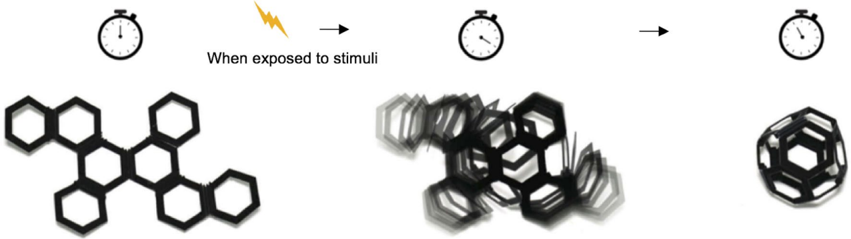
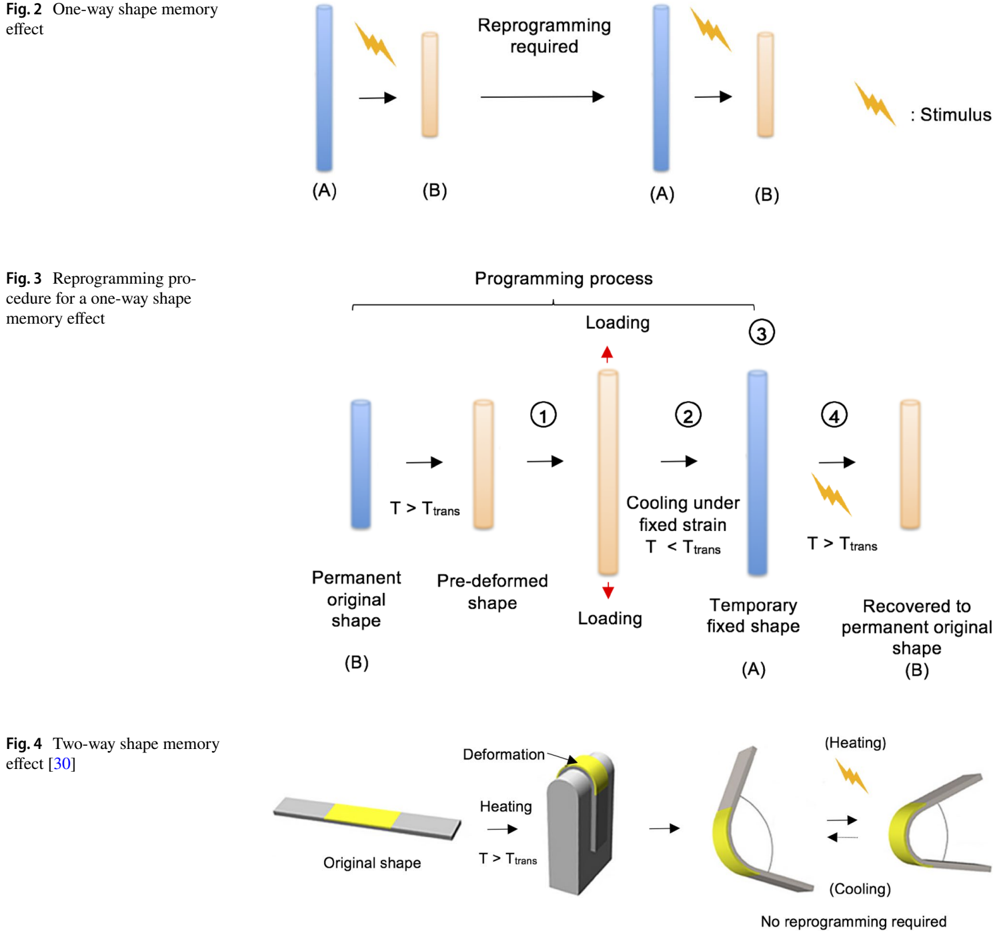
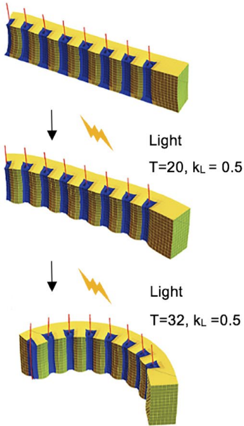
4D printing utilizes additive manufacturing methods to produce stimulus-responsive components that can change its shape from one to another when subject to appropriate stimuli. The use of 4D printing technology is expected to significantly become more widespread with more applications across bio-medical, aerospace, and defence industries. This paper discusses emerging applications for 4D printing and suitable stimulus-responsive materials for 4D printing. In terms of designing for 4D printing, aspects of the shape memory effect (SME) including one-way SMEs, two-way SMEs and three-way SMEs are presented. Materials and structures in the form of homogenous compositions and heterogeneous compositions are discussed, as well as different types of shape-shifting behaviours such as self-folding, self-assemblies, and self-dis-assemblies. Finally, current software and examples are presented together with the existing limitations that need to be overcome to achieve widespread adoption of 4D printing.
Overview
The claims and statistics of this paper haven’t been checked yet.
Free: it reads the open-access text and checks the first 5 claims that cite a source we can check. Create a free account to check every claim.
Integrity signals
Registry
Cites
Statistics
Figures









Verification
Claims the paper makes
The claims and statistics of this paper haven’t been checked yet.
Free: it reads the open-access text and checks the first 5 claims that cite a source we can check. Create a free account to check every claim.
Claims other papers make about this one
Each is checked against this paper’s own text: does it say what the citing paper says it does?
The source backs part of the claim, not all of it — or backs it for a different population, condition or comparison.
In the citing paper
“In the last few years, considerable advances in soft robotic technology have been made thanks to 4Dprinting, which allows one to realize structures with arbitrarily complex or customized architectures, capable of evolving their shape, properties, or functionalities along time (denoting the 4th dimension) under the application of proper stimuli [178-189].”
From Two-Way and Multiple-Way Shape Memory Polymers for Soft Robotics: An Overview (2020) · cites this paper as [186]
Experimental — accuracy not yet measured
Self-check
Percentages, sums and reported differences re-computed from the paper’s own numbers.
The self-check needs the paper’s full text.
Citations
Cites
Sydney Gladman, A., Matsumoto, E. A., Nuzzo, R. G., Mahadevan, L., & Lewis, J. A. (2016) · Nature Materials · doi:10.1038/nmat4544 · Cited by 3,027
Lendlein, A., & Kelch, S. (2002) · Kirk-Othmer Encyclopedia of Chemical Technology · doi:10.1002/0471238961.1908011612051404.a01 · Cited by 2,566
Review of progress in shape-memory polymers
Liu, C., Qin, H., & Mather, P. T. (2007) · Journal of Materials Chemistry · doi:10.1039/b615954k · Cited by 1,942
Taylor, D. L., & in het Panhuis, M. (2016) · Advanced Materials · doi:10.1002/adma.201601613 · Cited by 1,340
4D Printing: Multi‐Material Shape Change
Tibbits, S. (2014) · Architectural Design · doi:10.1002/ad.1710 · Cited by 1,188
Momeni, F., M.Mehdi Hassani.N, S., Liu, X., & Ni, J. (2017) · Materials & Design · doi:10.1016/j.matdes.2017.02.068 · Cited by 1,165
Stimulus-responsive shape memory materials: a review
Sun, L., Huang, W. M., Ding, Z., Zhao, Y., Wang, C. C., Purnawali, H., & Tang, C. (2012) · Materials & Design · doi:10.1016/j.matdes.2011.04.065 · Cited by 1,105 · cited 1×
“Shape memory materials (SMMs) include shape memory alloys (SMAs), shape memory polymers (SMPs), shape memory gels (SMGs), shape memory ceramics (SMCs), and other shape memory hybrid (SMHs) materials [28].”
BackgroundMultifunctional Shape‐Memory Polymers
Behl, M., Razzaq, M. Y., & Lendlein, A. (2010) · Advanced Materials · doi:10.1002/adma.200904447 · Cited by 971
Active materials by four-dimension printing
Ge, Q., Qi, H. J., & Dunn, M. L. (2013) · Applied Physics Letters · doi:10.1063/1.4819837 · Cited by 785
Ge, Q., Dunn, C. K., Qi, H. J., & Dunn, M. L. (2014) · Smart Materials and Structures · doi:10.1088/0964-1726/23/9/094007 · Cited by 726
Research works printed but not linked: 1
- Loh GH (2017) Building a conceptual understanding of functionally graded additive manufacturing (FGAM) and its limitation. In: 15th rapid design, prototyping and manufacturing conference. Northumbria University, 28th April 2017
Cited by
Additive manufacturing by digital light processing: a review
Chaudhary, R., Fabbri, P., Leoni, E., Mazzanti, F., Akbari, R., & Antonini, C. (2023) · Progress in Additive Manufacturing · doi:10.1007/s40964-022-00336-0 · Cited by 450
4D Printing of Hydrogels: A Review
Champeau, M., Heinze, D. A., Viana, T. N., de Souza, E. R., Chinellato, A. C., & Titotto, S. (2020) · Advanced Functional Materials · doi:10.1002/adfm.201910606 · Cited by 443
Khorsandi, D., Fahimipour, A., Abasian, P., Saber, S. S., Seyedi, M., Ghanavati, S., Ahmad, A., De Stephanis, A. A., Taghavinezhaddilami, F., Leonova, A., et al. (2021) · Acta Biomaterialia · doi:10.1016/j.actbio.2020.12.044 · Cited by 428
4D printing: Fundamentals, materials, applications and challenges
Ahmed, A., Arya, S., Gupta, V., Furukawa, H., & Khosla, A. (2021) · Polymer · doi:10.1016/j.polymer.2021.123926 · Cited by 350
Khalid, M. Y., Arif, Z. U., Noroozi, R., Zolfagharian, A., & Bodaghi, M. (2022) · Journal of Manufacturing Processes · doi:10.1016/j.jmapro.2022.07.035 · Cited by 336
Metadata
- Authors
- Pei, E., & Loh, G. H.
- Affiliations
- Brunel University of London (GB)
- Corresponding author
- Pei, Eujin
- Venue
- Progress in Additive Manufacturing
- Published
- 2018-05-22
- Volume
- 3
- Issue
- 1-2
- Pages
- 95-107
- ISSN
- 2363-9512 (ISSN-L)
- 2363-9520
- OpenAlex
- W2804084313
- Cited by
- 171
- References
- 49
- Citations by year
- 2026: 11 · 2025: 23 · 2024: 23 · 2023: 25 · 2022: 24 · 2021: 33 · 2020: 19 · 2019: 11 · 2018: 2
- FWCI
- 10.38
- Type
- journal article
- Language
- en
- Open access
- hybrid
- doi.org
- Licence
- cc-by
- creativecommons.org/licenses/by/4.0 (tdm)
- Locations
- Progress in Additive Manufacturing (publishedVersion, cc-by)
- Brunel University Research Archive (BURA) (Brunel University London) (submittedVersion)
- Topics
- Physical Sciences › Engineering › Mechanical Engineering › Advanced Materials and Mechanics
- Physical Sciences › Engineering › Industrial and Manufacturing Engineering › Additive Manufacturing and 3D Printing Technologies
- Physical Sciences › Materials Science › Polymers and Plastics › Polymer composites and self-healing
- Keywords
- 4D printing, stimulus-responsive materials, shape memory effect, two-way shape memory, self-folding, self-assembly, additive manufacturing
About these checks
Registry, retraction, Cites and statistics results are computed, not judged, with one exception: a printed reference that no index lists is read once by a model before it counts as a citation error. Claims are extracted by a model and kept only when their quote appears verbatim in the text; each cited source is then checked, with a model’s help, for whether it says what the claim relies on. Those verdicts can be wrong — read the claim’s quote and the cited source before relying on one.
Statistics and arithmetic are recomputed, not judged.
Confidence bands are shown only for fields calibrated on our annotated test set. None is calibrated yet, so no band is shown.
What counts as a claim ›How we measure confidence ›How we check this ›
Are you an author, or do you see a problem with this page? Request a review
How to cite
Cite CoChat for the checks on this page, and the paper for its own findings.
- This page
- CoChat. (2026). Citation check: Technological considerations for 4D printing: an overview. https://app.cochat.ai/papers/10.1007/s40964-018-0047-1
- The paper
- Pei, E., & Loh, G. H. (2018). Technological considerations for 4D printing: an overview. Progress in Additive Manufacturing. https://doi.org/10.1007/s40964-018-0047-1
Data sources
Bibliographic data: Semantic Scholar, OpenAlex, Crossref.
Contains information from the Semantic Scholar Academic Graph Datasets, made available under the ODC Attribution License (ODC-BY 1.0).
Semantic Scholar’s data is described in: Kinney, R., et al. (2023). The Semantic Scholar Open Data Platform. arXiv:2301.10140.
