

Technological considerations for 4D printing: an overview
Open accessThe DOI matches its Crossref record, with a small difference in title or year; 49 of the 49 references it cites were found in a registry or an index.
Abstract
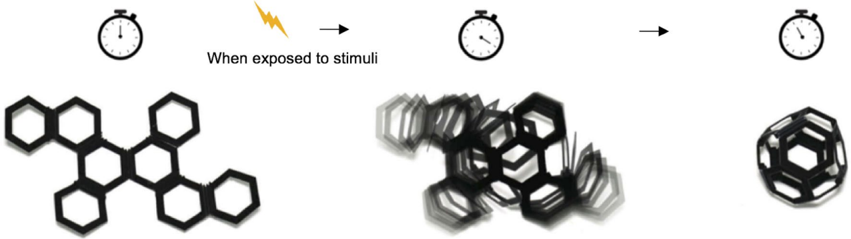
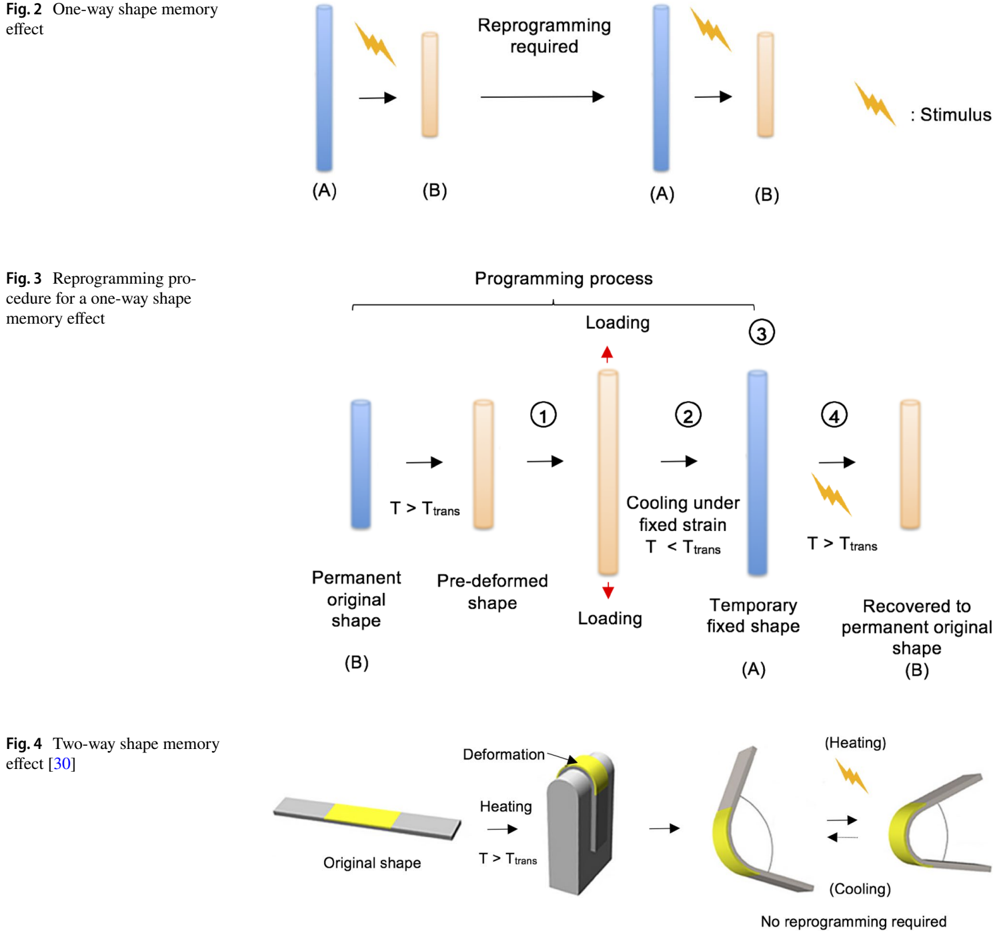
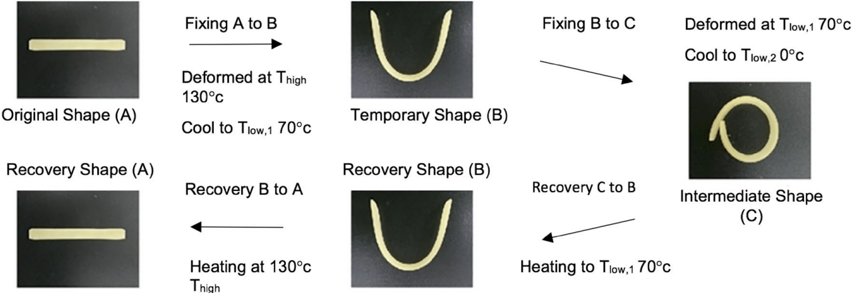
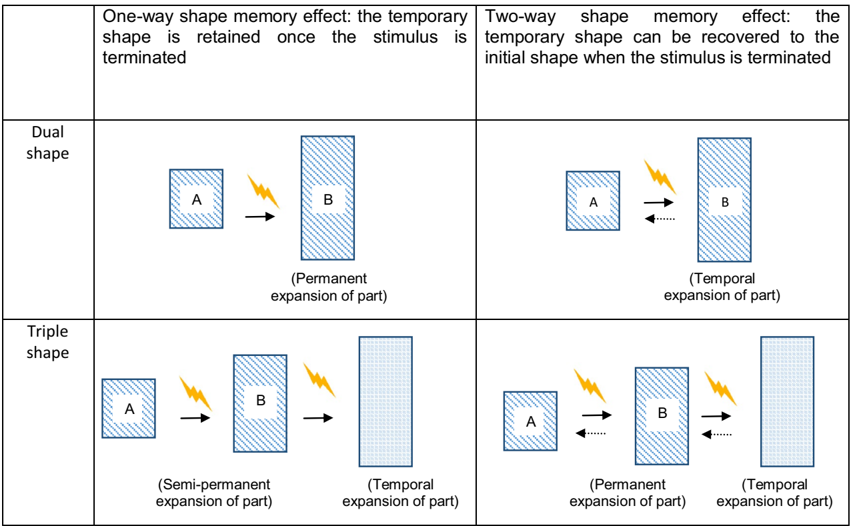
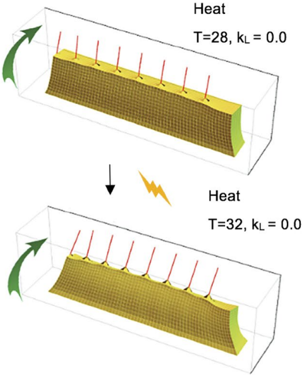
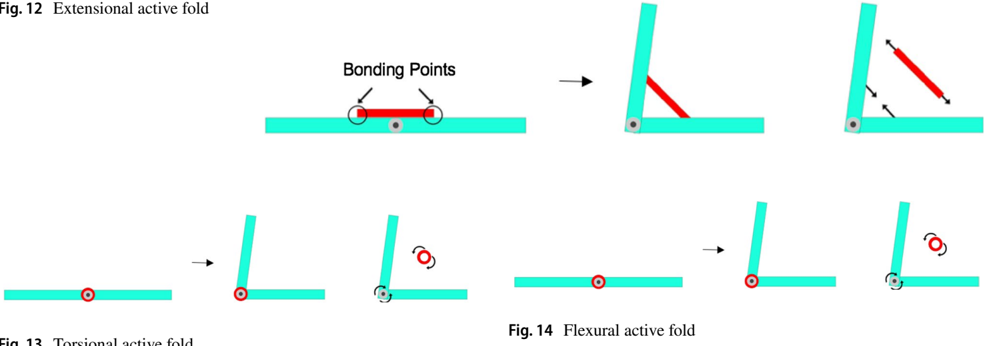
4D printing utilizes additive manufacturing methods to produce stimulus-responsive components that can change its shape from one to another when subject to appropriate stimuli. The use of 4D printing technology is expected to significantly become more widespread with more applications across bio-medical, aerospace, and defence industries. This paper discusses emerging applications for 4D printing and suitable stimulus-responsive materials for 4D printing. In terms of designing for 4D printing, aspects of the shape memory effect (SME) including one-way SMEs, two-way SMEs and three-way SMEs are presented. Materials and structures in the form of homogenous compositions and heterogeneous compositions are discussed, as well as different types of shape-shifting behaviours such as self-folding, self-assemblies, and self-dis-assemblies. Finally, current software and examples are presented together with the existing limitations that need to be overcome to achieve widespread adoption of 4D printing.
Overview
The claims and statistics of this paper haven’t been checked yet.
Free: it reads the open-access text and checks the first 5 claims that cite a source we can check. Create a free account to check every claim.
Integrity signals
Registry
Cites
Statistics
Figures




Verification
Claims the paper makes
The claims and statistics of this paper haven’t been checked yet.
Free: it reads the open-access text and checks the first 5 claims that cite a source we can check. Create a free account to check every claim.
Claims other papers make about this one
Each is checked against this paper’s own text: does it say what the citing paper says it does?
The source backs part of the claim, not all of it — or backs it for a different population, condition or comparison.
In the citing paper
“In the last few years, considerable advances in soft robotic technology have been made thanks to 4Dprinting, which allows one to realize structures with arbitrarily complex or customized architectures, capable of evolving their shape, properties, or functionalities along time (denoting the 4th dimension) under the application of proper stimuli [178-189].”
From Two-Way and Multiple-Way Shape Memory Polymers for Soft Robotics: An Overview (2020) · cites this paper as [186]
Experimental — accuracy not yet measured
Self-check
Percentages, sums and reported differences re-computed from the paper’s own numbers.
The self-check needs the paper’s full text.
Citations
Cites
Sydney Gladman, A., Matsumoto, E. A., Nuzzo, R. G., Mahadevan, L., & Lewis, J. A. (2016) · Nature Materials · doi:10.1038/nmat4544 · Cited by 3,027 · cited 1×
“Most experimental studies focused on the use of water [6–9], heat [10–15], a combination of heat and water [16, 17] as well as a combination of heat and light [18].”
BackgroundLendlein, A., & Kelch, S. (2002) · Kirk-Othmer Encyclopedia of Chemical Technology · doi:10.1002/0471238961.1908011612051404.a01 · Cited by 2,566
Review of progress in shape-memory polymers
Liu, C., Qin, H., & Mather, P. T. (2007) · Journal of Materials Chemistry · doi:10.1039/b615954k · Cited by 1,942
Taylor, D. L., & in het Panhuis, M. (2016) · Advanced Materials · doi:10.1002/adma.201601613 · Cited by 1,340
4D Printing: Multi‐Material Shape Change
Tibbits, S. (2014) · Architectural Design · doi:10.1002/ad.1710 · Cited by 1,188 · cited 1×
“The software can simulate self-assemblies and programmable materials, and specify the optimisation parameters for geometrical transformation, shape constraints, and the folding sequence [6].”
MethodMomeni, F., M.Mehdi Hassani.N, S., Liu, X., & Ni, J. (2017) · Materials & Design · doi:10.1016/j.matdes.2017.02.068 · Cited by 1,165 · cited 3×
“4D printed component is time-dependent yet predictable [2].”
BackgroundInfluentialStimulus-responsive shape memory materials: a review
Sun, L., Huang, W. M., Ding, Z., Zhao, Y., Wang, C. C., Purnawali, H., & Tang, C. (2012) · Materials & Design · doi:10.1016/j.matdes.2011.04.065 · Cited by 1,105 · cited 1×
“Shape memory materials (SMMs) include shape memory alloys (SMAs), shape memory polymers (SMPs), shape memory gels (SMGs), shape memory ceramics (SMCs), and other shape memory hybrid (SMHs) materials [28].”
BackgroundMultifunctional Shape‐Memory Polymers
Behl, M., Razzaq, M. Y., & Lendlein, A. (2010) · Advanced Materials · doi:10.1002/adma.200904447 · Cited by 971
Active materials by four-dimension printing
Ge, Q., Qi, H. J., & Dunn, M. L. (2013) · Applied Physics Letters · doi:10.1063/1.4819837 · Cited by 785
Ge, Q., Dunn, C. K., Qi, H. J., & Dunn, M. L. (2014) · Smart Materials and Structures · doi:10.1088/0964-1726/23/9/094007 · Cited by 726
Research works printed but not linked: 1
- 46. Loh GH (2017) Building a conceptual understanding of function- ally graded additive manufacturing (FGAM) and its limitation. In: 15th rapid design, prototyping and manufacturing conference. Northumbria University, 28th April 2017
Cited by
Additive manufacturing by digital light processing: a review
Chaudhary, R., Fabbri, P., Leoni, E., Mazzanti, F., Akbari, R., & Antonini, C. (2023) · Progress in Additive Manufacturing · doi:10.1007/s40964-022-00336-0 · Cited by 450
“In the last decade, all manufacturing technologies have reached a significant landmark due to the development of innovative materials [23, 138] for manufacturing (Fig.”
Background4D Printing of Hydrogels: A Review
Champeau, M., Heinze, D. A., Viana, T. N., de Souza, E. R., Chinellato, A. C., & Titotto, S. (2020) · Advanced Functional Materials · doi:10.1002/adfm.201910606 · Cited by 443
Khorsandi, D., Fahimipour, A., Abasian, P., Saber, S. S., Seyedi, M., Ghanavati, S., Ahmad, A., De Stephanis, A. A., Taghavinezhaddilami, F., Leonova, A., et al. (2021) · Acta Biomaterialia · doi:10.1016/j.actbio.2020.12.044 · Cited by 428
“Smart materials fall into two major categories, shape-memory materials which recover their original shape following a stimulus and shape-changing materials which maintain their original shape and undergo morphology change in response to a stimulus [164,168].”
Background4D printing: Fundamentals, materials, applications and challenges
Ahmed, A., Arya, S., Gupta, V., Furukawa, H., & Khosla, A. (2021) · Polymer · doi:10.1016/j.polymer.2021.123926 · Cited by 350
Khalid, M. Y., Arif, Z. U., Noroozi, R., Zolfagharian, A., & Bodaghi, M. (2022) · Journal of Manufacturing Processes · doi:10.1016/j.jmapro.2022.07.035 · Cited by 336
4D printing and stimuli-responsive materials in biomedical aspects
Lui, Y. S., Sow, W. T., Tan, L. P., Wu, Y., Lai, Y., & Li, H. (2019) · Acta Biomaterialia · doi:10.1016/j.actbio.2019.05.005 · Cited by 333
Biopolymeric sustainable materials and their emerging applications
Arif, Z. U., Khalid, M. Y., Sheikh, M. F., Zolfagharian, A., & Bodaghi, M. (2022) · Journal of Environmental Chemical Engineering · doi:10.1016/j.jece.2022.108159 · Cited by 288
Breakthrough in the printing tactics for stimuli-responsive materials: 4D printing
Rastogi, P., & Kandasubramanian, B. (2019) · Chemical Engineering Journal · doi:10.1016/j.cej.2019.02.085 · Cited by 267
4D printing of shape memory polylactic acid (PLA)
Mehrpouya, M., Vahabi, H., Janbaz, S., Darafsheh, A., Mazur, T. R., & Ramakrishna, S. (2021) · Polymer · doi:10.1016/j.polymer.2021.124080 · Cited by 258
4D Printing for Biomedical Applications
Yarali, E., Mirzaali, M. J., Ghalayaniesfahani, A., Accardo, A., Diaz‐Payno, P. J., & Zadpoor, A. A. (2024) · Advanced Materials · doi:10.1002/adma.202402301 · Cited by 257
4D printing applications in medical field: A brief review
Javaid, M., & Haleem, A. (2019) · Clinical Epidemiology and Global Health · doi:10.1016/j.cegh.2018.09.007 · Cited by 212
Trends in 3D Printing Processes for Biomedical Field: Opportunities and Challenges
Ghilan, A., Chiriac, A. P., Nita, L. E., Rusu, A. G., Neamtu, I., & Chiriac, V. M. (2020) · Journal of Polymers and the Environment · doi:10.1007/s10924-020-01722-x · Cited by 210
Two-Way and Multiple-Way Shape Memory Polymers for Soft Robotics: An Overview
Scalet, G. (2020) · Actuators · doi:10.3390/act9010010 · Cited by 209
4D printing of shape memory polymers
Subash, A., & Kandasubramanian, B. (2020) · European Polymer Journal · doi:10.1016/j.eurpolymj.2020.109771 · Cited by 204
4D printing soft robotics for biomedical applications
Hann, S. Y., Cui, H., Nowicki, M., & Zhang, L. G. (2020) · Additive Manufacturing · doi:10.1016/j.addma.2020.101567 · Cited by 196
3D printing of magneto-active smart materials for advanced actuators and soft robotics applications
Khalid, M. Y., Arif, Z. U., Tariq, A., Hossain, M., Ahmed Khan, K., & Umer, R. (2024) · European Polymer Journal · doi:10.1016/j.eurpolymj.2023.112718 · Cited by 190
3D Printing of Physical Organ Models: Recent Developments and Challenges
Jin, Z., Li, Y., Yu, K., Liu, L., Fu, J., Yao, X., Zhang, A., & He, Y. (2021) · Advanced Science · doi:10.1002/advs.202101394 · Cited by 181
3D printing of tissue engineering scaffolds: a focus on vascular regeneration
Wang, P., Sun, Y., Shi, X., Shen, H., Ning, H., & Liu, H. (2021) · Bio-Design and Manufacturing · doi:10.1007/s42242-020-00109-0 · Cited by 176
Recent Inventions in Additive Manufacturing: Holistic Review
Fidan, I., Huseynov, O., Ali, M. A., Alkunte, S., Rajeshirke, M., Gupta, A., Hasanov, S., Tantawi, K., Yasa, E., Yilmaz, O., et al. (2023) · Inventions · doi:10.3390/inventions8040103 · Cited by 174
Significant roles of 4D printing using smart materials in the field of manufacturing
Haleem, A., Javaid, M., Singh, R. P., & Suman, R. (2021) · Advanced Industrial and Engineering Polymer Research · doi:10.1016/j.aiepr.2021.05.001 · Cited by 166
4D printing of products based on soy protein isolate via microwave heating for flavor development
Phuhongsung, P., Zhang, M., & Bhandari, B. (2020) · Food Research International · doi:10.1016/j.foodres.2020.109605 · Cited by 161
Banică, C.-F., Sover, A., & Anghel, D.-C. (2024) · Applied Sciences · doi:10.3390/app14219919 · Cited by 162
“By harnessing human capabilities, AR offers effective and complementary tools to aid in manufacturing tasks [172,194].”
Recent Advances in the Additive Manufacturing of Stimuli‐Responsive Soft Polymers
Tariq, A., Arif, Z. U., Khalid, M. Y., Hossain, M., Rasool, P. I., Umer, R., & Ramakrishna, S. (2023) · Advanced Engineering Materials · doi:10.1002/adem.202301074 · Cited by 158
4D Printing: Future Insight in Additive Manufacturing
Zafar, M. Q., & Zhao, H. (2019) · Metals and Materials International · doi:10.1007/s12540-019-00441-w · Cited by 147
A review on four-dimensional (4D) bioprinting in pursuit of advanced tissue engineering applications
Arif, Z. U., Khalid, M. Y., Ahmed, W., & Arshad, H. (2022) · Bioprinting · doi:10.1016/j.bprint.2022.e00203 · Cited by 147
3D printing of stimuli-responsive hydrogel materials: Literature review and emerging applications
Arif, Z. U., Khalid, M. Y., Tariq, A., Hossain, M., & Umer, R. (2023) · Giant · doi:10.1016/j.giant.2023.100209 · Cited by 148
Mahmood, A., Akram, T., Chen, H., & Chen, S. (2022) · Polymers · doi:10.3390/polym14214698 · Cited by 145
Mahmood, A., Akram, T., Shenggui, C., & Chen, H. (2023) · Composites Part B Engineering · doi:10.1016/j.compositesb.2023.110952 · Cited by 145
The status, barriers, challenges, and future in design for 4D printing
Demoly, F., Dunn, M. L., Wood, K. L., Qi, H. J., & André, J. (2021) · Materials & Design · doi:10.1016/j.matdes.2021.110193 · Cited by 143
Review of 4D printing materials and reinforced composites: Behaviors, applications and challenges
Alshahrani, H. (2021) · Journal of Science Advanced Materials and Devices · doi:10.1016/j.jsamd.2021.03.006 · Cited by 134
4D Printing: Materials, Technologies, and Future Applications in the Biomedical Field
Bajpai, A., Baigent, A., Raghav, S., Brádaigh, C. M. Ó., Koutsos, V., & Radacsi, N. (2020) · Sustainability · doi:10.3390/su122410628 · Cited by 126
“This is called the two-way shape memory effect (SME) and has been exploited by material scientists to produce objects that can be actuated after printing [16,17].”
BackgroundHierarchical chemomechanical encoding of multi-responsive hydrogel actuators via 3D printing
Odent, J., Vanderstappen, S., Toncheva, A., Pichon, E., Wallin, T. J., Wang, K., Shepherd, R. F., Dubois, P., & Raquez, J.-M. (2019) · Journal of Materials Chemistry A · doi:10.1039/c9ta03547h · Cited by 115
Design for 4D printing: Modeling and computation of smart materials distributions
Sossou, G., Demoly, F., Belkebir, H., Qi, H. J., Gomes, S., & Montavon, G. (2019) · Materials & Design · doi:10.1016/j.matdes.2019.108074 · Cited by 117
“[17].”
4D printing composite with electrically controlled local deformation
Shao, L., Zhao, B., Zhang, Q., Xing, Y., & Zhang, K. (2020) · Extreme Mechanics Letters · doi:10.1016/j.eml.2020.100793 · Cited by 112
“The method in our work can be further combined with the hybrid printing [35,36], which could more precisely control the 3D printed structures to achieve the multifunction.”
MethodMomeni, F., & Ni, J. (2020) · Engineering · doi:10.1016/j.eng.2020.01.015 · Cited by 104
“Although some studies demonstrated single-material 4D printed structures, the future of 4D printing will lie in multi-material structures [2, 10-17].”
Background4D printing: a critical review of current developments, and future prospects
Ali, M. H., Abilgaziyev, A., & Adair, D. (2019) · The International Journal of Advanced Manufacturing Technology · doi:10.1007/s00170-019-04258-0 · Cited by 101
Current progress of 4D-printing technology
Subeshan, B., Baddam, Y., & Asmatulu, E. (2021) · Progress in Additive Manufacturing · doi:10.1007/s40964-021-00182-6 · Cited by 100
Țigmeanu, C. V., Ardelean, L. C., Rusu, L. C., & Negruțiu, M. L. (2022) · Polymers · doi:10.3390/polym14173658 · Cited by 99
“and materials which maintain their original shape and undergo morphology change in response to a stimulus [210].”
BackgroundRevolutionising textile manufacturing: a comprehensive review on 3D and 4D printing technologies
Manaia, J. P., Cerejo, F., & Duarte, J. (2023) · Fashion and Textiles · doi:10.1186/s40691-023-00339-7 · Cited by 98
“…process and is also known as programmable materials or smart materials which are dependent on time-material-stimuli and structure–function correlations (Ali et al., 2019; Fu et al., 2022; Khare et al., 2017) as well as mathematical modelling and simulation (Pei & Loh, 2018; Zafar & Zhao, 2020).”
BackgroundNew Trends in 4D Printing: A Critical Review
Vatanparast, S., Boschetto, A., Bottini, L., & Gaudenzi, P. (2023) · Applied Sciences · doi:10.3390/app13137744 · Cited by 90
“Furthermore, strain recovery outperforms SMAs by 400% [104].”
Noirbent, G., & Dumur, F. (2020) · European Polymer Journal · doi:10.1016/j.eurpolymj.2020.110109 · Cited by 88
Navaf, M., Sunooj, K. V., Aaliya, B., Akhila, P. P., Sudheesh, C., Mir, S. A., & George, J. (2022) · Applied Food Research · doi:10.1016/j.afres.2022.100150 · Cited by 84
4D Textiles Made by Additive Manufacturing on Pre-Stressed Textiles—An Overview
Koch, H., Schmelzeisen, D., & Gries, T. (2021) · Actuators · doi:10.3390/act10020031 · Cited by 83
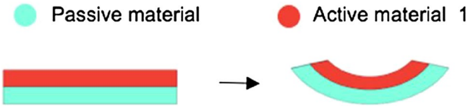
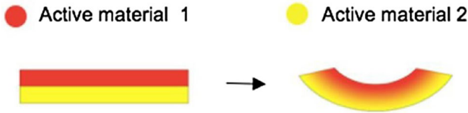
“A distinction is made between active and passive materials and their homogenous or heterogeneous composition, gradationally varying in the manufacturing process [14,15].”
BackgroundA review on spacers and membranes: Conventional or hybrid additive manufacturing?
Koo, J. W., Ho, J. S., An, J., Zhang, Y., Chua, C. K., & Chong, T. H. (2020) · Water Research · doi:10.1016/j.watres.2020.116497 · Cited by 81
The clinical significance of 4D printing
Sheikh, A., Abourehab, M. A. S., & Kesharwani, P. (2022) · Drug Discovery Today · doi:10.1016/j.drudis.2022.103391 · Cited by 77
Advances in 4D‐printed physiological monitoring sensors
Mahmud, M. A. P., Tat, T., Xiao, X., Adhikary, P., & Chen, J. (2021) · Exploration · doi:10.1002/exp.20210033 · Cited by 78
Additive Manufacturing of Shape Memory Polymer Composites for Futuristic Technology
Patadiya, J., Gawande, A., Joshi, G. N., & Kandasubramanian, B. (2021) · Industrial & Engineering Chemistry Research · doi:10.1021/acs.iecr.1c03083 · Cited by 74
ten Brink, T., Damanik, F., Rotmans, J. I., & Moroni, L. (2024) · Advanced Healthcare Materials · doi:10.1002/adhm.202301939 · Cited by 71
Akbar, I., Elhadrouz, M., Mansori, M. E., & Lagoudas, D. C. (2022) · European Polymer Journal · doi:10.1016/j.eurpolymj.2022.111106 · Cited by 68
Progress in 4D printing of stimuli responsive materials
Patdiya, J., & Kandasubramanian, B. (2021) · Polymer-Plastics Technology and Materials · doi:10.1080/25740881.2021.1934016 · Cited by 67
“4D printing of 2 W SME is based on (a) Bilinear and gradient structure or (b) Embed configuration.([161]) Wenbing Li et al.”
MethodPourmasoumi, P., Moghaddam, A., Mahand, S. N., Heidari, F., Moghaddam, Z. S., Arjmand, M., Kuehnert, I., Kruppke, B., Wiesmann, H., & Khonakdar, H. A. (2022) · Journal of Biomaterials Science Polymer Edition · doi:10.1080/09205063.2022.2110480 · Cited by 66
“LAB with a small droplet size can be used for 4D printing of microorgans [183].”
BackgroundMethod4D Printing Applications in the Development of Smart Cardiovascular Implants
Kabirian, F., Mela, P., & Heying, R. (2022) · Frontiers in Bioengineering and Biotechnology · doi:10.3389/fbioe.2022.873453 · Cited by 66
“Between these states, a large reversible change of elastic modulus is observable (Pei and Loh, 2018).”
BackgroundAdvances and Applications of 4D-Printed High-Strength Shape Memory Polymers
Zhang, J., Xu, M., Zhang, N., Wang, T., Zhang, Y., Yang, Z., & Wang, Q. (2024) · Additive Manufacturing Frontiers · doi:10.1016/j.amf.2024.200115 · Cited by 62
The Emerging 4D Printing of Shape‐Memory Thermomorphs for Self‐Adaptative Biomedical Implants
Ding, A., Tang, F., & Alsberg, E. (2025) · Advanced Functional Materials · doi:10.1002/adfm.202418348 · Cited by 64
Mierke, C. T. (2024) · Cells · doi:10.3390/cells13191638 · Cited by 59
Frachini, E., & Petri, D. F. S. (2019) · Journal of the Brazilian Chemical Society · doi:10.21577/0103-5053.20190074 · Cited by 58
An insight into biomimetic 4D printing
Kanu, N. J., Gupta, E., Vates, U. K., & Singh, G. K. (2019) · RSC Advances · doi:10.1039/c9ra07342f · Cited by 56
Recent advances in 4D printing of fiber-reinforced polymer composites: A review and outlook
Qiu, W., Xu, X., Dong, K., Wang, Y., & Xiong, Y. (2024) · Composites Part B Engineering · doi:10.1016/j.compositesb.2024.111645 · Cited by 54
Sharma, K. S. (2022) · Current Drug Delivery · doi:10.2174/1567201820666221207140956 · Cited by 52
Evaluation in 4D printing – A review
Kumar, S. B., JEEVAMALAR, J., Ramu, P., Suresh, G., & Senthilnathan, K. (2020) · Materials Today Proceedings · doi:10.1016/j.matpr.2020.07.335 · Cited by 52
Exploring Smart Material Applications for COVID-19 Pandemic Using 4D Printing Technology
Javaid, M., & Haleem, A. (2020) · Journal of Industrial Integration and Management · doi:10.1142/s2424862220500219 · Cited by 49
Current status and future outlook of 4D printing of polymers and composites-A prospective
Hassan, M., Mohanty, A. K., Wang, T., Dhakal, H. N., & Misra, M. (2025) · Composites Part C Open Access · doi:10.1016/j.jcomc.2025.100602 · Cited by 49
Ayushi, A., Vates, U. K., Mishra, S. K., & Kanu, N. J. (2021) · Materials Today Proceedings · doi:10.1016/j.matpr.2021.07.148 · Cited by 50
Plant-Based Fish Analogs—A Review
Nowacka, M., Trusińska, M., Chraniuk, P., Piątkowska, J., Pakulska, A., Wisniewska, K., Wierzbicka, A., Rybak, K., & Pobiega, K. (2023) · Applied Sciences · doi:10.3390/app13074509 · Cited by 48
Azher, K., Nazir, A., Farooq, M. U., Haq, M. R. U., Ali, Z., Dalaq, A. S., Abubakar, A. A., Hussain, S., Syed, M. N., Ullah, A., et al. (2025) · Advanced Materials Technologies · doi:10.1002/admt.202401369 · Cited by 48
Review of Tailoring Methods for Joints with Additively Manufactured Adherends and Adhesives
Frascio, M., Marques, E. A. S., Carbas, R. J. C., da Silva, L. F. M., Monti, M., & Avalle, M. (2020) · Materials · doi:10.3390/ma13183949 · Cited by 45
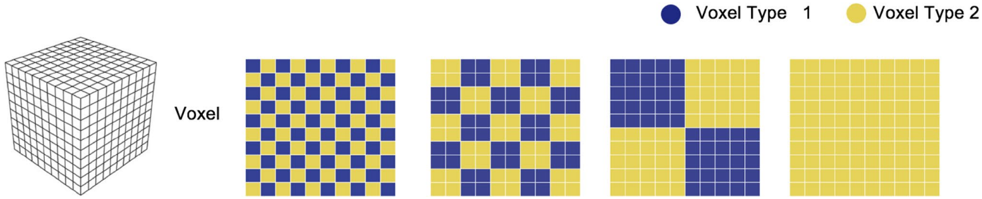
“All of these design concepts can be taken to an extreme by exploiting the material properties and geometrical AM controlled at the voxel resolution [14].”
BackgroundMethod4D Printing of Magnetically Responsive Materials and Their Applications
Bai, Y., Zhu, S., Liang, J., Xing, R., & Kong, J. (2025) · Research · doi:10.34133/research.0847 · Cited by 47
3D 4D printing of chitosan-based scaffolds for wound dressing applications
Naghib, S. M., Hosseini, S. N., & Beigi, A. (2024) · Carbohydrate Polymer Technologies and Applications · doi:10.1016/j.carpta.2024.100594 · Cited by 43
Ko, H., Ratri, M. C., Kim, K., Jung, Y., Tae, G., & Shin, K. (2020) · Scientific Reports · doi:10.1038/s41598-020-64457-8 · Cited by 43
Ferreira, F. V., Otoni, C. G., Lopes, J. H., de Souza, L. P., Mei, L. H. I., Lona, L. M. F., Lozano, K., Lobo, A. O., & Mattoso, L. H. C. (2021) · Materials Science and Engineering C · doi:10.1016/j.msec.2020.111853 · Cited by 42
Smart Additive Manufacturing: The Path to the Digital Value Chain
Araújo, N., Pacheco, V., & Costa, L. (2021) · Technologies · doi:10.3390/technologies9040088 · Cited by 42
“On the other hand, manufacturing systems must be sufficiently reliable to ensure that the spacing between the voxels that represent the materials is adequate and reproducible, and it is also important that new metrology equipment or other forms of measurement be developed to ensure the quality of parts [55].”
BackgroundAdvances in 4D printing of polymeric composite smart materials
Olhan, S., Antil, B., Maimí, P., & Behera, B. K. (2025) · Composite Structures · doi:10.1016/j.compstruct.2025.119859 · Cited by 41
Sequential Motion of 4D Printed Photopolymers with Broad Glass Transition
Inverardi, N., Pandini, S., Bignotti, F., Scalet, G., Marconi, S., & Auricchio, F. (2020) · Macromolecular Materials and Engineering · doi:10.1002/mame.201900370 · Cited by 39
3D and 4D additive manufacturing techniques for vascular-like structures – A review
Solis, D. M., & Czekanski, A. (2021) · Bioprinting · doi:10.1016/j.bprint.2021.e00182 · Cited by 39
Functional applications of 4D printing: a review
Mohol, S. S., & Sharma, V. (2021) · Rapid Prototyping Journal · doi:10.1108/rpj-10-2020-0240 · Cited by 38
A Review on Printing of Responsive Smart and 4D Structures Using 2D Materials
Cataldi, P., Liu, M., Bissett, M. A., & Kinloch, I. A. (2022) · Advanced Materials Technologies · doi:10.1002/admt.202200025 · Cited by 38
Development and testing of material extrusion additive manufactured polymer–textile composites
Loh, G. H., Sotayo, A., & Pei, E. (2021) · Fashion and Textiles · doi:10.1186/s40691-020-00232-7 · Cited by 35
“3D Printing and Additive Manufacturing, 3(2), 71–78. https ://doi.org/10 .1089/3dp.2016.0026.”
BackgroundSelf-citationAnsaripour, A., Heidari‐Rarani, M., Mahshid, R., & Bodaghi, M. (2024) · The International Journal of Advanced Manufacturing Technology · doi:10.1007/s00170-024-13470-6 · Cited by 36
Khalid, M. Y., Otabil, A., Mamoun, O. S., Askar, K. A., & Bodaghi, M. (2025) · Advanced Materials Technologies · doi:10.1002/admt.202500309 · Cited by 37
Concepts and Terminologies in 4D Printing
Pei, E., Loh, G. H., & Nam, S. (2020) · Applied Sciences · doi:10.3390/app10134443 · Cited by 34
“They can be a combination of smart or conventional materials or using various smart materials that react di ff erently under various stimuli [36].”
BackgroundSelf-citationCurrent trends in additive manufacturing based 4D food printing technology: A review
Kokane, S. B., Anjaly, P., Thangalakshmi, S., & Arora, V. K. (2024) · Future Foods · doi:10.1016/j.fufo.2024.100450 · Cited by 32
Review on development and application of 4D-printing technology in smart textiles
Li, S. (2023) · Journal of Engineered Fibers and Fabrics · doi:10.1177/15589250231177448 · Cited by 32
“10 Among these, smart materials and their strong reaction to particular environmental stimuli are crucial factors for promoting 4D printing technology.”
BackgroundExperimental Investigation on Effect of Temperature on FDM 3D Printing Polymers: ABS, PETG, and PLA
Mendenhall, R., & Eslami, B. (2023) · Applied Sciences · doi:10.3390/app132011503 · Cited by 33
Ghosh, S., Chaudhuri, S., Roy, P., & Lahiri, D. (2022) · Regenerative Engineering and Translational Medicine · doi:10.1007/s40883-022-00288-5 · Cited by 32
Jung, Y.-S., Lee, S., Park, J., & Shin, E. J. (2023) · Materials · doi:10.3390/ma16031072 · Cited by 30
“, strength, elongation, and hardness) compared to synthetic materials [33].”
Background4D Thermo-Responsive Smart hiPSC-CM Cardiac Construct for Myocardial Cell Therapy
Hann, S.-Y., Cui, H., Esworthy, T. J., & Zhang, L. G. (2023) · International Journal of Nanomedicine · doi:10.2147/ijn.s402855 · Cited by 30
“Generally, SMPs experience a substantial change from a rigid to an elastic state once exposed to a designated stimulation,(45) and they provide a broad range of Tg from −70 °C up to 100 °C to permit their mechanical properties and shape recovery speed to vary depending on the temperature change.(45,46) Specifically, c…”
BackgroundExploration of 4D Printing and its Applications in the Biomedical Sciences
Rana, A., Mittal, A., Vashist, C., Rajput, S., Sridhar, S. B., & Malviya, R. (2025) · Current Pharmaceutical Design · doi:10.2174/0113816128358473250331175536 · Cited by 26
Yi, H. (2021) · Engineering Construction & Architectural Management · doi:10.1108/ecam-05-2021-0428 · Cited by 23
Single-Layer 4D Printing System Using Focused Light: A Tool for Untethered Microrobot Applications
Li, H., Darmawan, B. A., Go, G., Kim, S., Nan, M., Kang, B., Kim, H., Lee, S. B., Bang, D., Park, J., et al. (2021) · Chemistry of Materials · doi:10.1021/acs.chemmater.1c01854 · Cited by 23
Abidaryan, S., Akhoundi, B., & Hajami, F. (2022) · Journal of Elastomers & Plastics · doi:10.1177/00952443221147028 · Cited by 23
Vasishta, B. V., Preetham, T. H., Akhil, U. V., & Radhika, N. (2024) · Progress in Additive Manufacturing · doi:10.1007/s40964-024-00831-6 · Cited by 22
“These sophisticated tools can efficiently standardize and bring about revolutionary advances [38].”
Smart polymers for 3D printing applications: current status and future outlook
Singh, N., Sinha, P., Sinha, D. K., & Banerjee, S. (2025) · Polymer Chemistry · doi:10.1039/d5py00741k · Cited by 22
Human–Material Interaction Enabled by Fused Filament Fabrication 4D Printing
Dezaki, M. L., Zolfagharian, A., Demoly, F., & Bodaghi, M. (2024) · Advanced Engineering Materials · doi:10.1002/adem.202301917 · Cited by 23
Sondagar, H. D., Kumar, S., & Sharma, V. S. (2024) · Materials Today Proceedings · doi:10.1016/j.matpr.2024.01.006 · Cited by 21
Rane, N. L., Choudhary, S., & Rane, J. (2025) · doi:10.61577/scpnmia.2025.100002 · Cited by 20
Chakravorty, P., & Das, A. B. (2024) · Discover Food · doi:10.1007/s44187-024-00222-4 · Cited by 19
“The proper kind of stimulus-responsive materials is the primary prerequisite for the effectiveness of self-transformation and changing the characteristics and functionality of the component in 4D printing [48].”
Application of 3D and 4D Printing in Electronics
Aronne, M., Polano, M., Bertana, V., Ferrero, S., Frascella, F., Scaltrito, L., & Marasso, S. L. (2024) · Journal of Manufacturing and Materials Processing · doi:10.3390/jmmp8040164 · Cited by 18
“…obtained by the dilution of Isopropylthioxanthone/1,2-Dibromoethane/PLMC/Dichloromethane (ITX/EDB/PLMC/DCM) with a weight ratio of 0.01:0.03:1:20 Isopropylthioxanthone/1,2-Dibromoethane/PLMC/Dichloromethane (ITX/EDB/PLMC/DCM) with a weight ratio of 0.01:0.03:1:20 and 10% wt. of CNT.”
BackgroundMethodInfluentialSinha, A., Rajak, D. K., Shaik, N. B., Mohapatra, R. K., Saxena, K. K., Singh, R., Xu, J., & Behera, A. (2023) · Proceedings of the Institution of Mechanical Engineers Part E Journal of Process Mechanical Engineering · doi:10.1177/09544089231154416 · Cited by 18
Polymers for additive manufacturing and 4D-printing for tissue regenerative applications
Subramanian, B., Das, P., Biswas, S., Roy, A., & Basak, P. (2023) · Elsevier eBooks · doi:10.1016/b978-0-323-88524-9.00001-2 · Cited by 17
Saptaji, K., Rochmad, C. O., Juniasih, O. A., Sunnardianto, G. K., Triawan, F., Ramadhan, A. I., & Azhari, A. (2023) · Progress in Additive Manufacturing · doi:10.1007/s40964-023-00551-3 · Cited by 17
“The employment of this process enables freeform objects to be directly fabricated from digital information without additional shaping process required [29].”
Metadata
- Authors
- Pei, E., & Loh, G. H.
- Affiliations
- Brunel University of London (GB)
- Corresponding author
- Pei, Eujin
- Venue
- Progress in Additive Manufacturing
- Published
- 2018-05-22
- Volume
- 3
- Issue
- 1-2
- Pages
- 95-107
- ISSN
- 2363-9512 (ISSN-L)
- 2363-9520
- OpenAlex
- W2804084313
- Cited by
- 171
- References
- 49
- Citations by year
- 2026: 11 · 2025: 23 · 2024: 23 · 2023: 25 · 2022: 24 · 2021: 33 · 2020: 19 · 2019: 11 · 2018: 2
- FWCI
- 10.38
- Type
- journal article
- Language
- en
- Open access
- hybrid
- doi.org
- Licence
- cc-by
- creativecommons.org/licenses/by/4.0 (tdm)
- Locations
- Progress in Additive Manufacturing (publishedVersion, cc-by)
- Brunel University Research Archive (BURA) (Brunel University London) (submittedVersion)
- Topics
- Physical Sciences › Engineering › Mechanical Engineering › Advanced Materials and Mechanics
- Physical Sciences › Engineering › Industrial and Manufacturing Engineering › Additive Manufacturing and 3D Printing Technologies
- Physical Sciences › Materials Science › Polymers and Plastics › Polymer composites and self-healing
- Keywords
- 4D printing, stimulus-responsive materials, shape memory effect, two-way shape memory, self-folding, self-assembly, additive manufacturing
About these checks
Registry, retraction, Cites and statistics results are computed, not judged, with one exception: a printed reference that no index lists is read once by a model before it counts as a citation error. Claims are extracted by a model and kept only when their quote appears verbatim in the text; each cited source is then checked, with a model’s help, for whether it says what the claim relies on. Those verdicts can be wrong — read the claim’s quote and the cited source before relying on one.
Statistics and arithmetic are recomputed, not judged.
Confidence bands are shown only for fields calibrated on our annotated test set. None is calibrated yet, so no band is shown.
What counts as a claim ›How we measure confidence ›How we check this ›
Are you an author, or do you see a problem with this page? Request a review
Data sources
Bibliographic data: Semantic Scholar, OpenAlex, Crossref.
Contains information from the Semantic Scholar Academic Graph Datasets, made available under the ODC Attribution License (ODC-BY 1.0).
Semantic Scholar’s data is described in: Kinney, R., et al. (2023). The Semantic Scholar Open Data Platform. arXiv:2301.10140.
