

Technological considerations for 4D printing: an overview
Open accessThe DOI matches its Crossref record, with a small difference in title or year; 49 of the 49 references it cites were found in a registry or an index.
Abstract
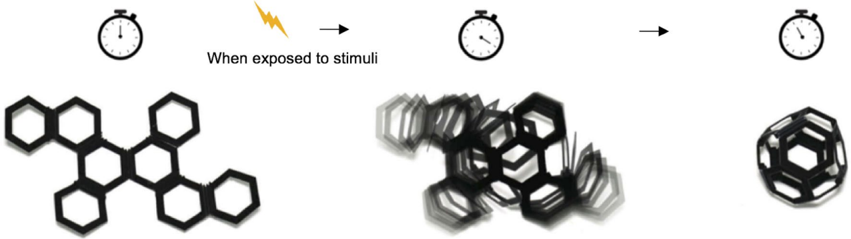
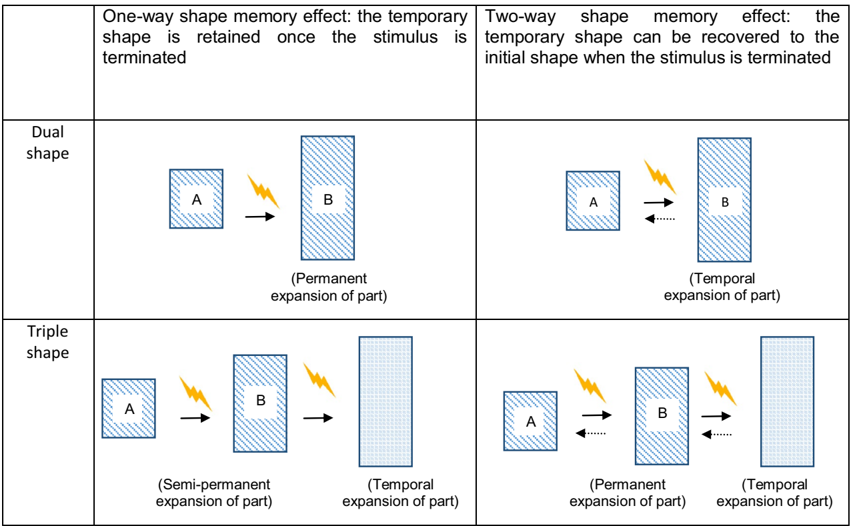
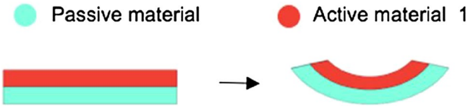
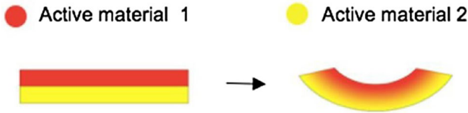
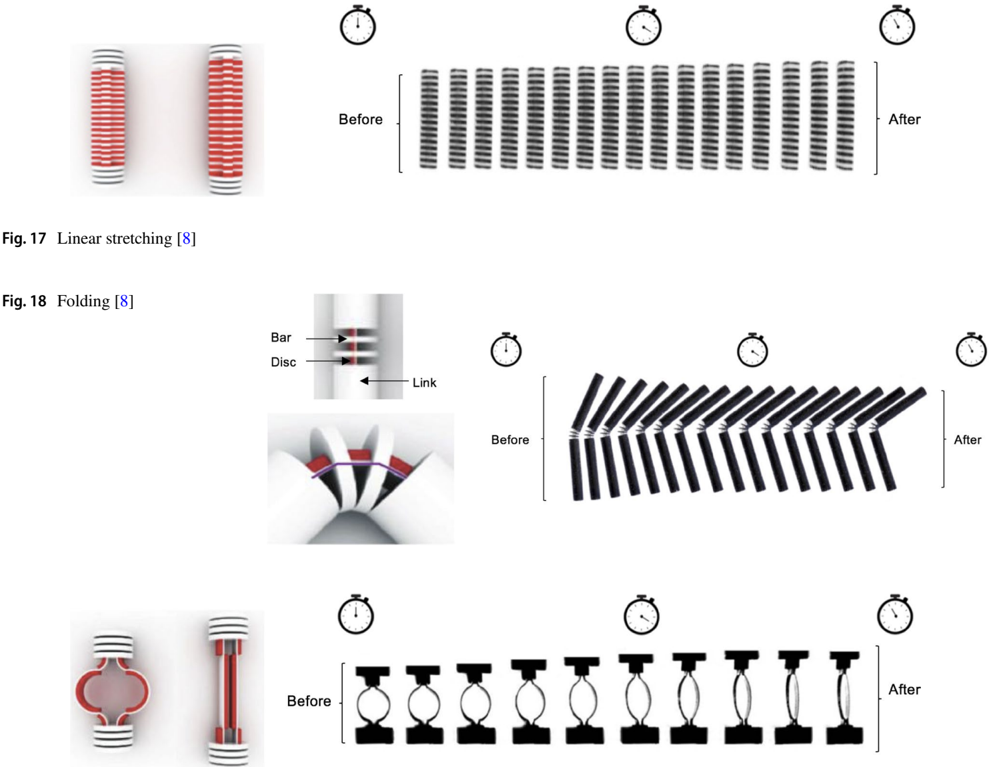
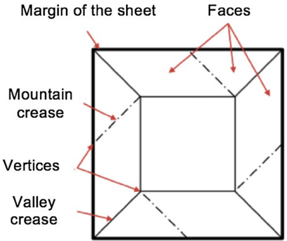
4D printing utilizes additive manufacturing methods to produce stimulus-responsive components that can change its shape from one to another when subject to appropriate stimuli. The use of 4D printing technology is expected to significantly become more widespread with more applications across bio-medical, aerospace, and defence industries. This paper discusses emerging applications for 4D printing and suitable stimulus-responsive materials for 4D printing. In terms of designing for 4D printing, aspects of the shape memory effect (SME) including one-way SMEs, two-way SMEs and three-way SMEs are presented. Materials and structures in the form of homogenous compositions and heterogeneous compositions are discussed, as well as different types of shape-shifting behaviours such as self-folding, self-assemblies, and self-dis-assemblies. Finally, current software and examples are presented together with the existing limitations that need to be overcome to achieve widespread adoption of 4D printing.
Overview
The claims and statistics of this paper haven’t been checked yet.
Free: it reads the open-access text and checks the first 5 claims that cite a source we can check. Create a free account to check every claim.
Integrity signals
Registry
Cites
Statistics
Figures




Verification
Claims the paper makes
The claims and statistics of this paper haven’t been checked yet.
Free: it reads the open-access text and checks the first 5 claims that cite a source we can check. Create a free account to check every claim.
Claims other papers make about this one
Each is checked against this paper’s own text: does it say what the citing paper says it does?
The source backs part of the claim, not all of it — or backs it for a different population, condition or comparison.
In the citing paper
“In the last few years, considerable advances in soft robotic technology have been made thanks to 4Dprinting, which allows one to realize structures with arbitrarily complex or customized architectures, capable of evolving their shape, properties, or functionalities along time (denoting the 4th dimension) under the application of proper stimuli [178-189].”
From Two-Way and Multiple-Way Shape Memory Polymers for Soft Robotics: An Overview (2020) · cites this paper as [186]
Experimental — accuracy not yet measured
Self-check
Percentages, sums and reported differences re-computed from the paper’s own numbers.
The self-check needs the paper’s full text.
Citations
Cites
Sydney Gladman, A., Matsumoto, E. A., Nuzzo, R. G., Mahadevan, L., & Lewis, J. A. (2016) · Nature Materials · doi:10.1038/nmat4544 · Cited by 3,027 · cited 1×
“Most experimental studies focused on the use of water [6–9], heat [10–15], a combination of heat and water [16, 17] as well as a combination of heat and light [18].”
BackgroundLendlein, A., & Kelch, S. (2002) · Kirk-Othmer Encyclopedia of Chemical Technology · doi:10.1002/0471238961.1908011612051404.a01 · Cited by 2,566
Review of progress in shape-memory polymers
Liu, C., Qin, H., & Mather, P. T. (2007) · Journal of Materials Chemistry · doi:10.1039/b615954k · Cited by 1,942
Taylor, D. L., & in het Panhuis, M. (2016) · Advanced Materials · doi:10.1002/adma.201601613 · Cited by 1,340
4D Printing: Multi‐Material Shape Change
Tibbits, S. (2014) · Architectural Design · doi:10.1002/ad.1710 · Cited by 1,188 · cited 1×
“The software can simulate self-assemblies and programmable materials, and specify the optimisation parameters for geometrical transformation, shape constraints, and the folding sequence [6].”
MethodMomeni, F., M.Mehdi Hassani.N, S., Liu, X., & Ni, J. (2017) · Materials & Design · doi:10.1016/j.matdes.2017.02.068 · Cited by 1,165 · cited 3×
“4D printed component is time-dependent yet predictable [2].”
BackgroundInfluentialStimulus-responsive shape memory materials: a review
Sun, L., Huang, W. M., Ding, Z., Zhao, Y., Wang, C. C., Purnawali, H., & Tang, C. (2012) · Materials & Design · doi:10.1016/j.matdes.2011.04.065 · Cited by 1,105 · cited 1×
“Shape memory materials (SMMs) include shape memory alloys (SMAs), shape memory polymers (SMPs), shape memory gels (SMGs), shape memory ceramics (SMCs), and other shape memory hybrid (SMHs) materials [28].”
BackgroundMultifunctional Shape‐Memory Polymers
Behl, M., Razzaq, M. Y., & Lendlein, A. (2010) · Advanced Materials · doi:10.1002/adma.200904447 · Cited by 971
Active materials by four-dimension printing
Ge, Q., Qi, H. J., & Dunn, M. L. (2013) · Applied Physics Letters · doi:10.1063/1.4819837 · Cited by 785
Ge, Q., Dunn, C. K., Qi, H. J., & Dunn, M. L. (2014) · Smart Materials and Structures · doi:10.1088/0964-1726/23/9/094007 · Cited by 726
Research works printed but not linked: 1
- 46. Loh GH (2017) Building a conceptual understanding of function- ally graded additive manufacturing (FGAM) and its limitation. In: 15th rapid design, prototyping and manufacturing conference. Northumbria University, 28th April 2017
Cited by
Items 101–190 of 190
Qiu, W., He, X., Fang, Z., Wang, Y., Dong, K., Zhang, G., Xu, X., Ge, Q., & Xiong, Y. (2023) · ACS Applied Materials & Interfaces · doi:10.1021/acsami.3c10210 · Cited by 16
Preliminary studies on the suitability of PETG for 4D printing applications
Hassan, M. H., Omar, A. M., Daskalakis, E., Liu, F., & Bártolo, P. (2020) · MATEC Web of Conferences · doi:10.1051/matecconf/202031801010 · Cited by 16
Smart Materials for 4D Printing: A Review on Developments, Challenges and Applications
Sreenivasulu, R. (2021) · Lecture notes in mechanical engineering · doi:10.1007/978-981-16-4222-7_1 · Cited by 16
Modern concepts and application of soft robotics in 4D printing
Kumar, S. B., Sekar, S., Sivakumar, G., Srinivas, J., Lavanya, R., & Suresh, G. (2021) · Journal of Physics Conference Series · doi:10.1088/1742-6596/2054/1/012056 · Cited by 16
“On the basis of different types of smart materials, the printer should be carefully selected as shown in the figure 1 [7-9].”
BackgroundSimulation of Starch Gel Printing and Deformation Process Using COMSOL
Zhou, Q., Li, Z., Zou, X., Guo, Z., Wang, S., & Chen, Z. (2024) · Foods · doi:10.3390/foods13060881 · Cited by 15
“In 4D printing, these choices can control changes in the color [14] and shape of the printed object [15].”
BackgroundInsight into constitutive theories of 4D printed polymer materials: a review
Rodriguez-Morales, J. A., Duan, H., Gu, J., Zeng, H., & Sun, H. (2024) · Smart Materials and Structures · doi:10.1088/1361-665x/ad523c · Cited by 13
Fereydoonpour, F., Dezianian, S., & Azadi, M. (2025) · Polymer Testing · doi:10.1016/j.polymertesting.2025.108802 · Cited by 13
Sathishkumar, M., Dhorajiwala, M. M., Kumar, M. S., Gaba, S., Vignesh, M., & Anbuchezhiyan, G. (2025) · Materials Today Communications · doi:10.1016/j.mtcomm.2025.114490 · Cited by 12
Azhar, F. E., & Pei, E. (2021) · Designs · doi:10.3390/designs6010003 · Cited by 12
“The smart material reacts with the water nd gains shape without mecha ical energy [9].”
BackgroundInfluentialSelf-citationKumar, S., Malviya, R., Sridhar, S. B., Shareef, J., & Wadhwa, T. (2025) · Medicine in Novel Technology and Devices · doi:10.1016/j.medntd.2025.100369 · Cited by 11
Introduction to 4D Printing: Concepts and Material Systems
Kuang, X., Yue, L., & Qi, H. J. (2023) · Wiley eBooks · doi:10.1002/9783527833931.ch1 · Cited by 11
Characterizing the shape-morphing behaviour of 4D printed PLA structures
Georgantzinos, S. K., Kostopoulos, G., & Stamoulis, K. (2024) · Journal of Physics Conference Series · doi:10.1088/1742-6596/2716/1/012034 · Cited by 10
Kumar, S., Singh, R., Singh, T. P., & Batish, A. (2022) · Advances in Materials and Processing Technologies · doi:10.1080/2374068x.2022.2087844 · Cited by 10
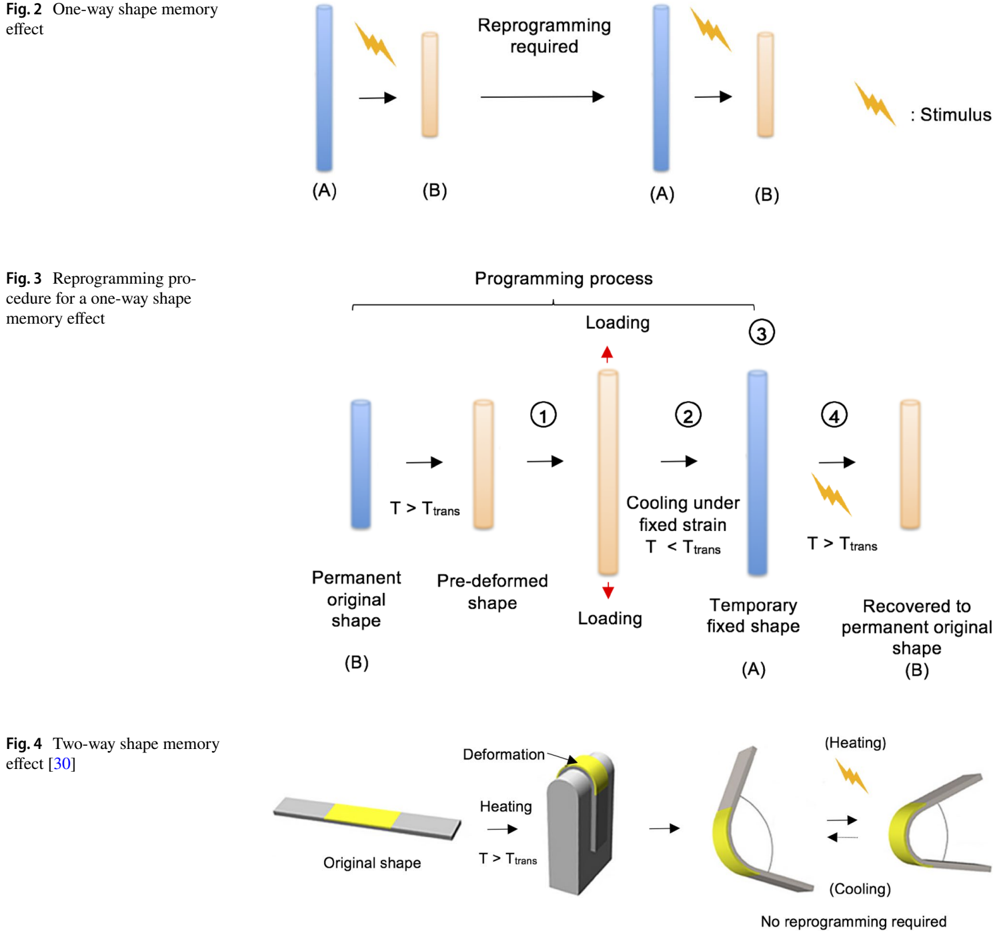
“Single-way programmed material can only attain the required shape when triggered by an external stimulus but cannot regain its previous stage [23].”
BackgroundProgressive transpose from 3D to 4D printed materials for drug delivery and biomedical applications
Sharma, M., Sah, S. K., Roy, S., & Kaity, S. (2025) · Reactive and Functional Polymers · doi:10.1016/j.reactfunctpolym.2025.106455 · Cited by 9
Um, J., Park, J., & Stroud, I. A. (2021) · Applied Sciences · doi:10.3390/app11188292 · Cited by 9
“Advanced production technology, such as 4D printing, has also been launched [13].”
Aphid‐Inspired and Thermally‐Actuated Soft Gripper Using 3D Printing Technology
Lee, J., & So, H. (2023) · Macromolecular Rapid Communications · doi:10.1002/marc.202300352 · Cited by 9
4D printing innovations and the embracing of additive manufacturing transformations
Chakraborty, D. D., Chakraborty, P., Pramanik, S., Dutta, M., Sen, A., Borah, S., Nath, P. K., & Nargis, S. (2026) · RSC Pharmaceutics · doi:10.1039/d5pm00192g · Cited by 8
Roshith, P. (2026) · Canadian Metallurgical Quarterly · doi:10.1080/00084433.2026.2635285 · Cited by 9
Review of the 3D bioprinting methods and materials applicable in 4D bioprinting
Rahman, M., Prodhan, S. A.-H., Islam, R., Mahmud, A., & Hossain, K. R. (2024) · Tribology and Materials · doi:10.46793/tribomat.2024.009 · Cited by 8
4D printing electro-induced shape memory polymers
Mitkus, R., Cerbe, F., & Sinapius, M. (2022) · Elsevier eBooks · doi:10.1016/b978-0-323-95430-3.00002-6 · Cited by 10
4D Printing and Characterization of Shape Memory Polymer (SMP) Based Smart Gripper
Maina, F. I., Osinde, N. O., Odira, J. K., Wanjiru, P. K., & Mwangi, M. W. (2020) · European Journal of Engineering and Technology Research · doi:10.24018/ejeng.2020.5.10.2174 · Cited by 8
Eryıldız, M., Kadırhan, Ö. A., Demırci, M., Karakus, A., & Altan, M. (2025) · Progress in Additive Manufacturing · doi:10.1007/s40964-025-01185-3 · Cited by 6
“A promising strategy to enhance MISF further is the integration of four-dimensional (4D) printing technologies, which introduce time as a design parameter by allowing the material to change shape when exposed to environmental triggers like temperature [7–9].”
Zaid, O., Alanquri, O. K., & Al-Dala’ien, R. N. (2026) · Advanced Engineering Materials · doi:10.1002/adem.202503170 · Cited by 6
“These processes, defined under ASTM ISO/ ASTM 52900-21 [33], enable precise layer-by-layer fabrication of complex structures through controlled photopolymerization reactions.”
Biodegradable and biocompatible polymer nanocomposites for tissue engineering applications
Rashdan, H. R. M., & El‐Naggar, M. E. (2023) · Elsevier eBooks · doi:10.1016/b978-0-323-91696-7.00002-7 · Cited by 6
Mohammad, I., Jeshurun, A., & Reddy, B. M. (2025) · Nano-Structures & Nano-Objects · doi:10.1016/j.nanoso.2025.101550 · Cited by 5
Henriques, J., Sousa, A. M., & Piedade, A. P. (2025) · 4D Printing · doi:10.1108/4dp-12-2024-0002 · Cited by 5
Recent Developments on 4D Printings and Applications
Ponnamma, D., Reddy, M. S. B., Maurya, M. R., Kulkarni, O. K., Paswan, M., Sadasivuni, K. K., Geetha, M., & Al-Maadeed, M. A. (2022) · Springer eBooks · doi:10.1007/978-3-030-94114-7_16 · Cited by 5
4D Printing Technology and Its Application Possibilities in Unmanned Aerial Vehicles (UAVs)
Kalay, E., & Özkul, İ. (2025) · Türkiye İnsansız Hava Araçları Dergisi · doi:10.51534/tiha.1663442 · Cited by 4
Additive manufacturing for structuring stimuli-responsive materials
Lazarus, N. S., Jahan, S., Wade, J. D., Kierzewski, I. M., Langrock, A., & Hanrahan, B. (2026) · MRS Communications · doi:10.1557/s43579-026-00919-w · Cited by 4
Thanigachalam, M., Chinnappan, B. A., & Raghavan, P. (2023) · Applied Science and Engineering Progress · doi:10.14416/j.asep.2023.01.007 · Cited by 4
Review of Materials and Processes Used in 4D Printing
Singholi, A. K. S., & Sharma, A. (2021) · Lecture notes in mechanical engineering · doi:10.1007/978-981-33-6029-7_62 · Cited by 4
4D Printing of Shape Memory Polymers: A Concise Review of Photopolymerized Acrylate-Based Materials
Sosa, R. S. B., Baldos, D. T., & Basilia, B. A. (2023) · Diffusion Foundations and Materials Applications · doi:10.4028/p-46xy6h · Cited by 4
“Lastly Chemical stimulus includes chemicals, pH level, and oxidants [23].”
BackgroundInfluentialProgramming 4D Printed Parts Through Shape-Memory Polymers and Computer-Aided-Design
Pei, E., Loh, G. H., Nam, S. W., & Azhar, F. E. (2019) · Lecture notes in mechanical engineering · doi:10.1007/978-3-030-29041-2_19 · Cited by 4
Self-citationKhan, Z., He, H. W., Chen, X., Sydanheimo, L. T., Ukkonen, L., & Virkki, J. (2021) · Textile Research Journal · doi:10.1177/0040517521994678 · Cited by 4
The revolution of design by programmable materials
Berkan, S. T. (2022) · IDA: International Design and Art Journal · Cited by 4
Biodegradable Food Packaging and Additive Manufacturing Technology
Bahndral, A., Shams, R., & Choudhary, P. (2025) · Wiley eBooks · doi:10.1002/9781119875154.ch11 · Cited by 3
KORKMAZ, M. E., & Gupta, M. K. (2026) · Archives of Computational Methods in Engineering · doi:10.1007/s11831-026-10658-9 · Cited by 3
“…a common yet revealing trend: despite a wide range of material physics and actuation mechanisms, most exist - ing computational approaches focus on instantaneous or short-term functional responses, and time-specific behavior is interpreted based on reversible shape or actuation cycles [ 124].”
Functionalized 4D-printed sensor systems
Alshawabkeh, M., & Faller, L.-M. (2022) · Elsevier eBooks · doi:10.1016/b978-0-12-824082-3.00003-9 · Cited by 3
Processing Techniques and Challenges of 3D-, 4D-, and 5D-Printed Polymer Composites
Parida, S. K. (2025) · Engineering materials · doi:10.1007/978-981-96-4214-4_4 · Cited by 3
Kawish, S. M., Sharma, S., Almalki, W. H., Alghamdi, S. A., Afzal, O., Kazmi, I. A., Altamimi, A. S. A., Al-Abbasi, F. A., Beg, S., & Ahmad, F. J. (2022) · Current Drug Metabolism · doi:10.2174/1389200223666220616123842 · Cited by 3
Lee, C., Liu, C.-Y., Hadaš, Z., & Stachiv, I. (2024) · Smart Materials and Structures · doi:10.1088/1361-665x/ad65a9 · Cited by 3
“Recently, the development of 4D printing further advances the performance of the 3D printed parts with the capability to tune their geometrical shapes after printing process [1–5].”
Sanayi 4.0 Dönüşümünde 4 Boyutlu Baskı Teknolojisinin Yeri ve Tedarik Zinciri Yönetimine Etkileri
Ünal, A., & SAYGILI, M. S. (2019) · Düzce Üniversitesi Bilim ve Teknoloji Dergisi · doi:10.29130/dubited.421606 · Cited by 3
Integrating 4D Printing Processes into STEM Education
Baddam, Y., Uddin, M. N., Don, T., & Asmatulu, E. (2024) · ASEE Midwest Section Conference · doi:10.18260/1-2-1153-33915 · Cited by 4
Perspective of 4D Printing in Additive Manufacturing
Sharma, A., & Singholi, A. K. S. (2021) · Lecture notes on multidisciplinary industrial engineering · doi:10.1007/978-3-030-73495-4_2 · Cited by 3
3D printing in membrane technology
Sreedhar, N., Mavukkandy, M. O., Kharraz, J. A., Liu, Y., & Arafat, H. A. (2023) · Elsevier eBooks · doi:10.1016/b978-0-323-95165-4.00003-3 · Cited by 3
Venkatesh, P., Krishna, P. V., Kiran, B. U., Rao, B. L., Kumar, P. R. V., Dhanunjayarao, B. N., Neigapula, V. S. N., Phaneendra, Y., & Ben, B. A. (2023) · Materials science forum · doi:10.4028/p-cd5xfu · Cited by 3
“Due to their outstanding capacity to shift in shape and properties in response to external stimuli like heat, light, or pH [2][3], shape memory polymers (SMPs) become highly preferred materials in 4D printing applications [14].”
BackgroundSmart Materials for 4-D Printing: A Comprehensive Review
Gupta, A. K., Rao, P. S., & Khan, M. Y. (2021) · Lecture notes on multidisciplinary industrial engineering · doi:10.1007/978-3-030-73495-4_33 · Cited by 3
Sreenivasulu, R. (2022) · GAZI UNIVERSITY JOURNAL OF SCIENCE · doi:10.35378/gujs.906652 · Cited by 3
4D Printing as a New Paradigm for Advanced Manufacturing
Momeni, F. (2018) · Deep Blue (University of Michigan) · Cited by 3
Fox, A. R. (2022) · Brunel University Research Archive (BURA) (Brunel University London) · Cited by 3
A holistic approach to design for 4D Printing
Sossou, C. (2019) · theses.fr (ABES) · doi:10.70675/bcd2ace9z750bz4d59zaea8z68988a46feec · Cited by 4
A Human Centred Design Approach to Improve 4D Printing Application
Bai, J., Pei, E., Elsouri, M., & Perry, M. (2025) · Communications in computer and information science · doi:10.1007/978-3-031-94168-9_2 · Cited by 2
Self-citation4D Bioprinting Using Biomaterials: A Future of 3D Printing
Dwivedi, A., Sharma, S., Sharma, D., Derashri, A., & Vinchurkar, K. (2025) · Springer eBooks · doi:10.1007/978-981-96-9075-6_17 · Cited by 2
Katre, J., & Jain, P. K. (2020) · Lecture notes on multidisciplinary industrial engineering · doi:10.1007/978-981-15-4619-8_3 · Cited by 2
Roadmapping 4D printing through disruptive ideas
Demoly, F., & André, J. (2022) · Elsevier eBooks · doi:10.1016/b978-0-12-824082-3.00008-8 · Cited by 2
Smart biomaterials and constructs for Bone tissue regeneration
Hassan, M. H., Omar, A. M., Daskalakis, E., Grieve, B., & Bártolo, P. (2023) · Elsevier eBooks · doi:10.1016/b978-0-323-85671-3.00007-5 · Cited by 2
4D-printed composite actuators
Delbart, R., Roumy, L., Harcourt, M., Robert, C., Touchard, F., Truong-Hoang, T. Q., & Martínez-Hergueta, F. (2024) · Elsevier eBooks · doi:10.1016/b978-0-443-15917-6.00005-0 · Cited by 3
Optimizing 4D-printed grippers: the role of finger design and thermal stimulus
Saptaji, K., Wijaya, R. A., & Juniasih, O. A. (2025) · Progress in Additive Manufacturing · doi:10.1007/s40964-025-00973-1 · Cited by 2
“This process also facilitates the direct fabrication of freeform objects from digital information, eliminating the need for additional shaping processes [13].”
4D printing: an overview of medical and biomedical applications
Pei, E., Loh, G. H., & Mansaray, J. A. (2025) · Elsevier eBooks · doi:10.1016/b978-0-443-24861-0.00006-x · Cited by 2
Self-citationImpression 4D : Une cécité de confort et/ou une approche systémique empêchée ?
Demoly, F., & André, J. (2021) · Entropie thermodynamique – énergie – environnement – économie · doi:10.21494/iste.op.2021.0609 · Cited by 3
Fundamentals and Uses of 4D Printing on Textiles
Urquiza, E. A. F., & Cabrera, F. L. (2026) · Textiles · doi:10.3390/textiles6010010 · Cited by 1
Characterisation and effective monitoring of 4D printed structures through microgeometry analysis
Trych-Wildner, A., & Wildner, K. (2021) · Measurement Science and Technology · doi:10.1088/1361-6501/abfb1d · Cited by 1
“As with all new technologies, the development of monitoring andmeasurement methods that would enable an effective evaluation of the structure within its life cycle, could be beneficial and might allow prolonged use of the 4D printed elements [19].”
Smart materials for four-dimensional printing: An overview
Wazeer, A., Das, A., & Sinha, A. (2022) · Proceedings of the Institution of Mechanical Engineers Part E Journal of Process Mechanical Engineering · doi:10.1177/09544089221117945 · Cited by 1
“For one multi-material print, a 3D printer proficient in multiplematerial printing requires to associate two or more two components for generating a heterogeneous composition.(8) Figure 1 shown below illustrates the different techniques employed for smart material manufacturing.”
BackgroundAnandharamakrishnan, C., Moses, J. A., & Anukiruthika, T. (2022) · Wiley eBooks · doi:10.1002/9781119669838.ch10 · Cited by 1
A Brief Technical Review On 4d Printing And Application In Medical And Pharmaceutical Sector
Swati Swagatika Swain, S. L. M. (2023) · Journal of Pharmaceutical Negative Results · doi:10.47750/pnr.2023.14.03.430 · Cited by 2
State-of-the-art, challenges, applications and future prospects in 4D printing technology
Nikkanen, V. (2022) · Tampere University Institutional Repository (Tampere University) · Cited by 2
Solis, D. M., & Czekanski, A. (2021) · Progress in Canadian Mechanical Engineering. Volume 4 · doi:10.32393/csme.2021.226
“The advent of 4D printing, in which time was added as the 4th dimension, urged a need to develop new materials able to respond to external stimuli in a controlled manner in such a way that their shape could be tunable with time [1].”
BackgroundThe Role of Self-Assembly in Additive Manufacturing of Aerospace Applications
Vargas-Bernal, R. (2021) · Advances in chemical and materials engineering book series · doi:10.4018/978-1-7998-7864-3.ch013
Membrane fouling mitigation with 3D/4D printed feed spacers
Koo, J. W. (2022) · DR-NTU (Nanyang Technological University) · doi:10.32657/10356/157769
Is There External Creativity to Support 4D Printing?
Demoly, F., & André, J. (2022) · Wiley eBooks · doi:10.1002/9781394163786.ch2
Experimental analysis of FDM structures in shape memory polylactic acid
Desole, M. P. (2023) · Materials research proceedings · doi:10.21741/9781644902714-23
Pei, E., & Leung, C. (2023) · doi:10.23967/c.simam.2023.016
Self-citationDirect 4D printing of composite materials
Singh, M., Singh, G., & Farina, I. (2024) · Elsevier eBooks · doi:10.1016/b978-0-443-21518-6.00003-x
Printing Foods in the Fourth Dimension
Anandharamakrishnan, C., Moses, J. A., & Santhoshkumar, P. (2025) · Wiley eBooks · doi:10.1002/9781394305285.ch6
Fundamentals of 4D Printing Technology
Anandharamakrishnan, C., Moses, J. A., & Santhoshkumar, P. (2025) · Wiley eBooks · doi:10.1002/9781394305285.ch4
Üç Boyutlu Yazıcıların Diş Hekimliğindeki Yeri ve Geleceği
Özel, H. E., & Şirin, A. F. (2025) · Akademisyen Kitabevi eBooks · doi:10.37609/akya.3816.c746
Mechanical design, 4D printing, and programming of smart composite actuators
Lalegani Dezaki, M. (2024) · Nottingham Trent University's Institutional Repository (Nottingham Trent Repository)
The Fourth Dimension Transforming Manufacturing With 4D Printing
Madhukumar, K. (2026) · IGI Global eBooks · doi:10.4018/979-8-3373-5473-6.ch006
Exploring 4D Printing Technology for Biomedical Applications
Ranjan, R., Kumar, V., Kumar, M., Kurmi, B. D., & Pal, R. R. (2026) · Current Pharmaceutical Design · doi:10.2174/0113816128438937251121104312
Aravind, A. R., & Raghavamsi, R. V. B. S. (2026) · SSRN Electronic Journal · doi:10.2139/ssrn.6333521
3D printing of functional polymer composite materials for energy transducing in microsystems
Kulkarni, O. A. (2024) · theses.fr (ABES) · doi:10.70675/95f94673zccf8z412cz9360zeb1519cc583d
Construction d'un jumeau numérique pour l'impression 4D de matériaux intelligents
Akbar, I. (2023) · theses.fr (ABES) · doi:10.70675/9ee64acczf6c9z4eabz93d0z069f07635da6
32Chapter 2 4D Printing in Healthcare of Smart Materials
Malviya, R., Kumar, S., Sridhar, S. B., & Shivappa, P. (2026) · De Gruyter eBooks · doi:10.1515/9783111634609-002
142Chapter 7 4D Printing in Stimuli-Responsive Materials
Malviya, R., Kumar, S., Sridhar, S. B., & Shivappa, P. (2026) · De Gruyter eBooks · doi:10.1515/9783111634609-007
Dewangan, K. (2026) · Journal of Thermoplastic Composite Materials · doi:10.1177/08927057261481036
Khan, A., Khan, A., Ali, S. S., Saxena, A. K., Sharma, A., & Saroj, P. (2026) · Wiley eBooks · doi:10.1002/9781394440399.ch9
Multimaterial additive manufacturing with digital light processing and stereolithography
Kuang, X., & Zhang, Z. (2026) · Elsevier eBooks · doi:10.1016/b978-0-443-30161-2.00007-9
4D Printing for space mechanisms: shape memory high performance polymer-based blends and composites
Miseri, L. (2026) · Cineca Institutional Research Information System (Tor Vergata University) · doi:10.58015/miseri-lucrezia_phd2026-10-22
The status, challenges, and future in design for 4D printing
Akbar (2023) · शोध प्रकाशन SHODH PRAKASHAN
Kushwaha, S. P., Hasan, S. M., Ved, A., Kumar, A., Singh, K., Hafeez, A., Kushwaha, P., Pandey, M., SINGH, S., & Dubey, B. (2026) · Elsevier eBooks · doi:10.1016/b978-0-443-43816-5.00017-2
Metadata
- Authors
- Pei, E., & Loh, G. H.
- Affiliations
- Brunel University of London (GB)
- Corresponding author
- Pei, Eujin
- Venue
- Progress in Additive Manufacturing
- Published
- 2018-05-22
- Volume
- 3
- Issue
- 1-2
- Pages
- 95-107
- ISSN
- 2363-9512 (ISSN-L)
- 2363-9520
- OpenAlex
- W2804084313
- Cited by
- 171
- References
- 49
- Citations by year
- 2026: 11 · 2025: 23 · 2024: 23 · 2023: 25 · 2022: 24 · 2021: 33 · 2020: 19 · 2019: 11 · 2018: 2
- FWCI
- 10.38
- Type
- journal article
- Language
- en
- Open access
- hybrid
- doi.org
- Licence
- cc-by
- creativecommons.org/licenses/by/4.0 (tdm)
- Locations
- Progress in Additive Manufacturing (publishedVersion, cc-by)
- Brunel University Research Archive (BURA) (Brunel University London) (submittedVersion)
- Topics
- Physical Sciences › Engineering › Mechanical Engineering › Advanced Materials and Mechanics
- Physical Sciences › Engineering › Industrial and Manufacturing Engineering › Additive Manufacturing and 3D Printing Technologies
- Physical Sciences › Materials Science › Polymers and Plastics › Polymer composites and self-healing
- Keywords
- 4D printing, stimulus-responsive materials, shape memory effect, two-way shape memory, self-folding, self-assembly, additive manufacturing
About these checks
Registry, retraction, Cites and statistics results are computed, not judged, with one exception: a printed reference that no index lists is read once by a model before it counts as a citation error. Claims are extracted by a model and kept only when their quote appears verbatim in the text; each cited source is then checked, with a model’s help, for whether it says what the claim relies on. Those verdicts can be wrong — read the claim’s quote and the cited source before relying on one.
Statistics and arithmetic are recomputed, not judged.
Confidence bands are shown only for fields calibrated on our annotated test set. None is calibrated yet, so no band is shown.
What counts as a claim ›How we measure confidence ›How we check this ›
Are you an author, or do you see a problem with this page? Request a review
Data sources
Bibliographic data: Semantic Scholar, OpenAlex, Crossref.
Contains information from the Semantic Scholar Academic Graph Datasets, made available under the ODC Attribution License (ODC-BY 1.0).
Semantic Scholar’s data is described in: Kinney, R., et al. (2023). The Semantic Scholar Open Data Platform. arXiv:2301.10140.
