

The DOI matches its Crossref record; 53 of the 53 references it cites were found in a registry or an index.
Responding to the COVID-19 emergency: student and academic staff perceptions of academic integrity in the transition to online exams at three Australian universities
Open accessAbstract
This paper explores the perceptions of academic staff and students to student cheating behaviours in online exams and other online assessment formats. The research took place at three Australian universities in July and August 2020 during the emergency transition to online learning and assessment in response to the COVID-19 pandemic. The study sought to inform decision making about the future of online exams at the participating universities. Quantitative and qualitative data were collected using online surveys. The findings of the study led to seven key observations, most notably the need to redefine the characteristics of academic misconduct to account for changes wrought to examinations in a digital world. The study concludes with lessons learned in relation to enhancing academic integrity in digital examinations and assessments.
Overview
The claims and statistics of this paper haven’t been checked yet.
Run the check — free, no account needed. It reads the open-access text and checks the sources it cites.
Integrity signals
Registry
Cites
Statistics
Figures
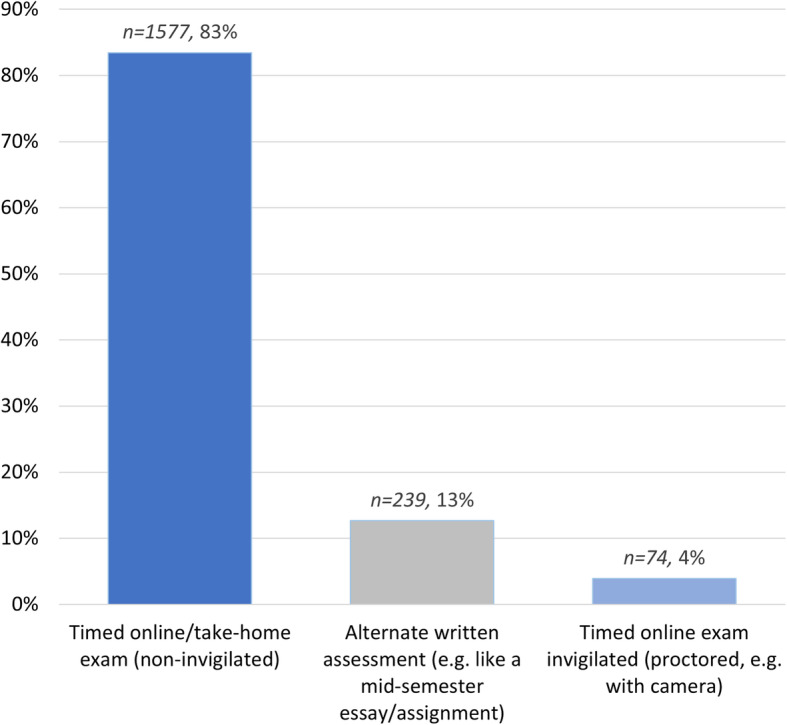
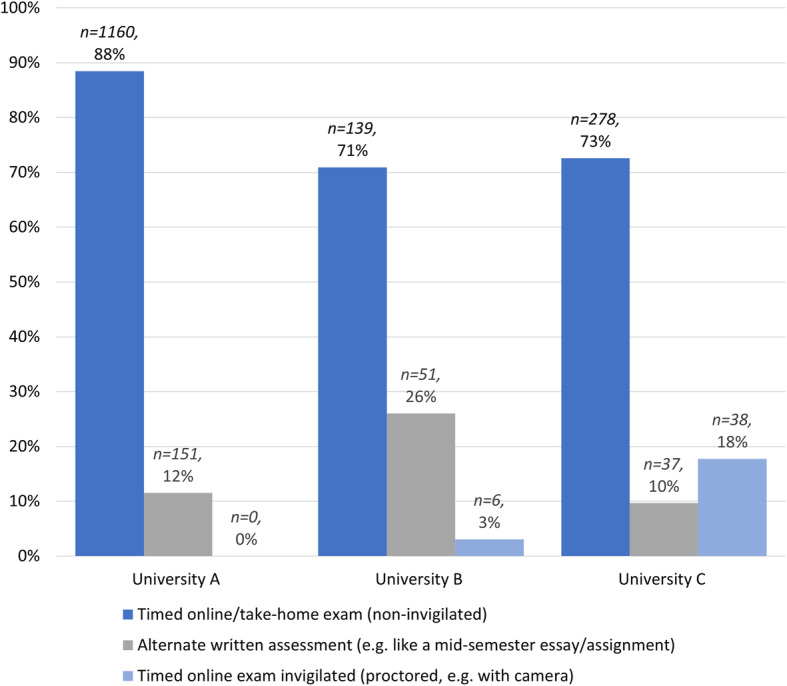
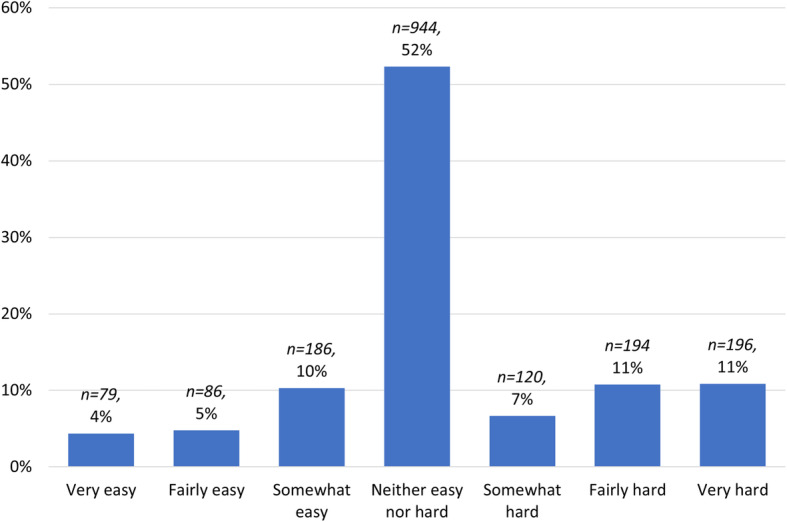
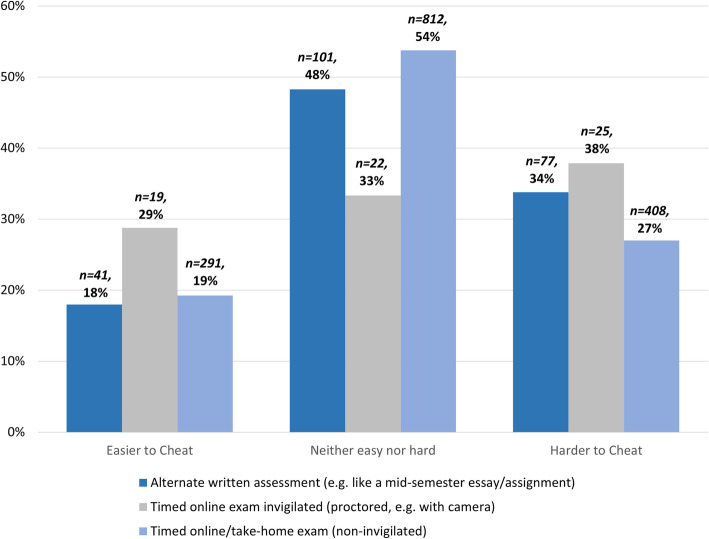
Verification
Claims the paper makes
The claims and statistics of this paper haven’t been checked yet.
Run the check — free, no account needed. It reads the open-access text and checks the sources it cites.
Claims other papers make about this one
Each is checked against this paper’s own text: does it say what the citing paper says it does?
The cited source says what the claim attributes to it.
In the citing paper
“as well as increases in student or academic staff perceptions of AD (Amzalag et al., 2021; Reedy et al., 2021; Walsh et al., 2021) occurring.”
From Academic Integrity considerations of AI Large Language Models in the post-pandemic era: ChatGPT and beyond (2023) · cites this paper as Reedy et al., 2021
The cited source says what the claim attributes to it.
In the citing paper
“as well as increases in student or academic staff perceptions of academic dishonesty occurring (Amzalag et al., 2021; Reedy et al., 2021; Walsh et al., 2021).”
From Academic Integrity considerations of AI Large Language Models in the post-pandemic era: ChatGPT and beyond (2023) · cites this paper as Reedy et al., 2021
Self-check
Percentages, sums and reported differences re-computed from the paper’s own numbers.
The self-check needs the paper’s full text.
Citations
Cites
Online teaching-learning in higher education during lockdown period of COVID-19 pandemic
Mishra, L., Gupta, T., & Shree, A. (2020) · International Journal of Educational Research Open · doi:10.1016/j.ijedro.2020.100012 · Cited by 2,542
Manual or electronic? The role of coding in qualitative data analysis
Basit, T. N. (2003) · Educational Research · doi:10.1080/0013188032000133548 · Cited by 1,447
Group decision and social change.
Lewin, K. (2004) · American Psychological Association eBooks · doi:10.1037/10319-010 · Cited by 1,424
The reflective institution: Assuring and enhancing the quality of teaching and learning
BIGGS, J. B. (2001) · Higher Education · doi:10.1023/a:1004181331049 · Cited by 460
Cheating in online courses: Evidence from online proctoring
Dendir, S., & Maxwell, R. S. (2020) · Computers in Human Behavior Reports · doi:10.1016/j.chbr.2020.100033 · Cited by 301
Elzainy, A., Sadik, A. E., & Abdulmonem, W. A. (2020) · Journal of Taibah University Medical Sciences · doi:10.1016/j.jtumed.2020.09.005 · Cited by 280
Marsden, H., Carroll, M., & Neill, J. T. (2005) · Australian Journal of Psychology · doi:10.1080/00049530412331283426 · Cited by 267
Are Online Exams an Invitation to Cheat?
Harmon, O. R., & Lambrinos, J. (2008) · The Journal of Economic Education · doi:10.3200/jece.39.2.116-125 · Cited by 219
‘Not necessarily a bad thing …’: a study of online plagiarism amongst undergraduate students
Selwyn, N. (2008) · Assessment & Evaluation in Higher Education · doi:10.1080/02602930701563104 · Cited by 207
Contract cheating and assessment design: exploring the relationship
Bretag, T., Harper, R., Burton, M., Ellis, C., Newton, P., van Haeringen, K., Saddiqui, S., & Rozenberg, P. (2019) · Assessment & Evaluation in Higher Education · doi:10.1080/02602938.2018.1527892 · Cited by 201
Research works printed but not linked: 2
- Reich RW, Milhano C, Valentine D (2018) A comparison of proctored on ground exams vs. unproctored online exams in undergraduate finance courses. Paper presented at the annual meeting of the academy of business research international conference
- Wiley (2020) Academic integrity in the age of online learning. Survey shows sharp rise in instructor perception of cheating https://www.wiley.com/network/instructors-students/covid-19-online-teaching-resources-1/is-student-cheating-on-the-rise-how-you-can-discourage-it-in-your-classroom
Cited by
Sorted by citations
Perkins, M. (2023) · Journal of University Teaching and Learning Practice · doi:10.53761/1.20.02.07 · Cited by 839
Koh, J. H. L., & Daniel, B. K. (2022) · International Journal of Educational Technology in Higher Education · doi:10.1186/s41239-022-00361-7 · Cited by 189
Exploring the potential of micro-credentials: A systematic literature review
Tamoliūnė, G., Greenspon, R., Teresevičienė, M., Volungevičienė, A., Trepulė, E., & Daukšienė, E. (2023) · Frontiers in Education · doi:10.3389/feduc.2022.1006811 · Cited by 148
Artificial intelligence: threat or asset to academic integrity? A bibliometric analysis
Rodrigues, M. M. M., Silva, R., Borges, A. P., Franco, M., & Oliveira, C. (2024) · Kybernetes · doi:10.1108/k-09-2023-1666 · Cited by 157
A systematic review of academic dishonesty in online learning environments
Chiang, F., Zhu, D., & Yu, W. (2022) · Journal of Computer Assisted Learning · doi:10.1111/jcal.12656 · Cited by 135
Metadata
- Authors
- Reedy, A., Pfitzner, D., Rook, L., & Ellis, L.
- Affiliations
- Charles Darwin University (AU)
- University of Wollongong (AU)
- University of Tasmania (AU)
- Corresponding author
- Reedy, Alison
- Venue
- International Journal for Educational Integrity
- Published
- 2021-03-26
- Volume
- 17
- Issue
- 1
- ISSN
- 1833-2595 (ISSN-L)
- PMC
- PMC7995680
- OpenAlex
- W3139679515
- Cited by
- 168
- References
- 53
- Citations by year
- 2026: 10 · 2025: 18 · 2024: 40 · 2023: 48 · 2022: 32 · 2021: 20
- FWCI
- 43.76
- Type
- journal article
- Language
- en
- Open access
- gold
- doi.org
- Locations
- International Journal for Educational Integrity (publishedVersion, cc-by)
- PubMed Central (publishedVersion, cc-by)
- Research Online (University of Wollongong) (submittedVersion)
- DOAJ (DOAJ: Directory of Open Access Journals) (submittedVersion, cc-by-sa)
- Topics
- Social Sciences › Education › Academic integrity and plagiarism
- Social Sciences › Education › Education during COVID-19 pandemic
- Social Sciences › Law › Legal Issues in Education
- Keywords
- academic integrity, online examinations, academic dishonesty, academic misconduct, online assessment, COVID-19 pandemic, emergency remote teaching, student perceptions, academic staff perceptions, digital examination, higher education
About these checks
Registry, retraction, Cites and statistics results are computed, not judged, with one exception: a printed reference that no index lists is read once by a model before it counts as a citation error. Claims are extracted by a model and kept only when their quote appears verbatim in the text; each cited source is then checked, with a model’s help, for whether it says what the claim relies on. Those verdicts can be wrong — read the claim’s quote and the cited source before relying on one.
Statistics and arithmetic are recomputed, not judged.
Confidence bands are shown only for fields calibrated on our annotated test set. None is calibrated yet, so no band is shown.
What counts as a claim ›How we measure confidence ›How we check this ›
Are you an author, or do you see a problem with this page? Request a review
