

Critical Correlation of Predictors for an Efficient Risk Prediction Framework of ICU Patient Using Correlation and Transformation of MIMIC-III Dataset
Open accessThe DOI matches its Crossref record; 24 of the 25 references it cites were found in a registry or an index.
Abstract
Various predictive frameworks have evolved over the last decade to facilitate the efficient diagnosis of critical diseases in the healthcare sector. Some have been commercialized, while others are still in the research and development stage. An effective early predictive principle must provide more accurate outcomes in complex clinical data and various challenging environments. The open-source database system medical information mart for intensive care (MIMIC) simplifies all of the attributes required in predictive analysis in this regard. This database contains clinical and non-clinical information on a patient’s stay at a healthcare facility, gathered during their duration of stay. Regardless of the number of focused research attempts employing the MIMIC III database, a simplified and cost-effective computational technique for developing the early analysis of critical problems has not yet been found. As a result, the proposed study provides a novel and cost-effective machine learning framework that evolves into a novel feature engineering methodology using the MIMIC III dataset. The core idea is to forecast the risk associated with a patient’s clinical outcome. The proposed study focused on the diagnosis and clinical procedures and found distinct variants of independent predictors from the MIMIC III database and ICD-9 code. The proposed logic is scripted in Python, and the outcomes of three common machine learning schemes, namely Artificial Neural Networks, K-Nearest Neighbors, and Logistic Regression, have been evaluated. Artificial Neural Networks outperform alternative machine learning techniques when accuracy is taken into account as the primary performance parameter over the MIMIC III dataset.
Overview
The claims and statistics of this paper haven’t been checked yet.
Free: it reads the open-access text and checks the first 5 claims that cite a source we can check. Create a free account to check every claim.
Integrity signals
Registry
Cites
Statistics
Figures
Verification
Claims the paper makes
The claims and statistics of this paper haven’t been checked yet.
Free: it reads the open-access text and checks the first 5 claims that cite a source we can check. Create a free account to check every claim.
Self-check
Percentages, sums and reported differences re-computed from the paper’s own numbers.
The self-check needs the paper’s full text.
Citations
Cites
Key challenges for delivering clinical impact with artificial intelligence
Kelly, C. J., Karthikesalingam, A., Suleyman, M., Corrado, G., & King, D. (2019) · BMC Medicine · doi:10.1186/s12916-019-1426-2 · Cited by 3,136 · cited 1×
“It is because of the trade-off between explainability and performance [11] Although deep learning approaches suit well for more extensive data (i.”
Background$\mathtt {Deepr}$: A Convolutional Net for Medical Records
Nguyen, P., Tran, T., Wickramasinghe, N., & Venkatesh, S. (2017) · IEEE Journal of Biomedical and Health Informatics · doi:10.1109/jbhi.2016.2633963 · Cited by 352
Early Prediction of Sepsis in the ICU Using Machine Learning: A Systematic Review
Moor, M., Rieck, B., Horn, M., Jutzeler, C. R., & Borgwardt, K. (2021) · Frontiers in Medicine · doi:10.3389/fmed.2021.607952 · Cited by 231 · cited 1×
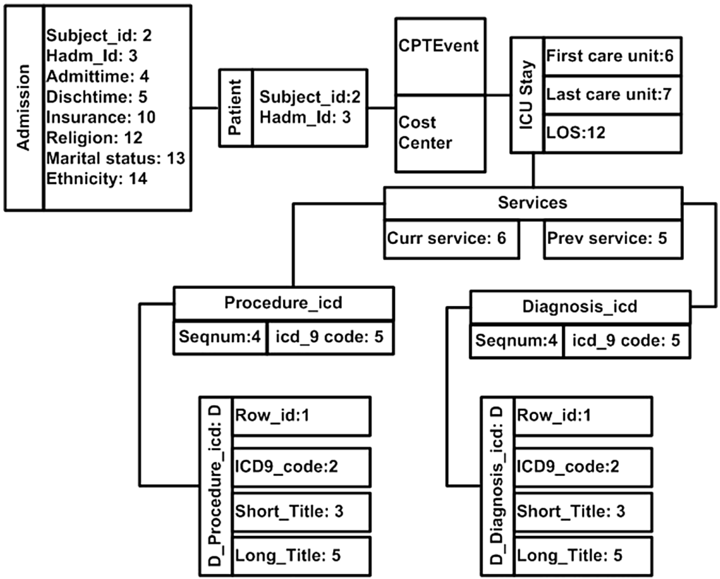
“The meta-data structure of the source data (S) for the predictive learning model(PLM) is defined as a set: α : [2,3,4,5,10,12,13,14], β :[4], γ :[6,7,12], δ :[5,6], θ :[3,4], ϑ :[4,5], ρ :[4,5].”
BackgroundMIMIC-Extract: a data extraction, preprocessing, and representation pipeline for MIMIC-III
Wang, S., McDermott, M. B. A., Chauhan, G., Ghassemi, M., Hughes, M. C., & Naumann, T. (2020) · Proceedings of the ACM Conference on Health, Inference, and Learning · doi:10.1145/3368555.3384469 · Cited by 147
De Georgia, M. A., Kaffashi, F., Jacono, F. J., & Loparo, K. A. (2015) · The Scientific World Journal · doi:10.1155/2015/727694 · Cited by 131
Intensive Care Unit Mortality Prediction: An Improved Patient-Specific Stacking Ensemble Model
El-Rashidy, N., El-Sappagh, S., Abuhmed, T., Abdelrazek, S., & El-Bakry, H. M. (2020) · IEEE Access · doi:10.1109/access.2020.3010556 · Cited by 116 · cited 2×
“[4] indicated that; using a stacking ensemble approach where a predictive model could be developed to predict mortality rates.”
BackgroundMethodProspective Medicine: The Next Health Care Transformation
Snyderman, R., & Sanders Williams, R. (2003) · Academic Medicine · doi:10.1097/00001888-200311000-00002 · Cited by 107 · cited 1×
“The PHCM is a probabilistic model to predict the possibilities of future medical conditions in advance so that - an optimal healthcare plan can be perceived from both the patient and the hospital management perspectives [19].”
BackgroundCDSS-RM: a clinical decision support system reference model
Zikos, D., & DeLellis, N. (2018) · BMC Medical Research Methodology · doi:10.1186/s12874-018-0587-6 · Cited by 78 · cited 1×
“Concurrently, research interests are growing exponentially to build efficient prediction models to provide an automatic decision support system to be beneficial for both patients and caretaking personnel [23, 24, 29].”
BackgroundMonitoring ICU Mortality Risk with A Long Short-Term Memory Recurrent Neural Network
Yu, K., Zhang, M., Cui, T., & Hauskrecht, M. (2019) · Pacific Symposium on Biocomputing (PSB) · doi:10.1142/9789811215636_0010 · Cited by 60 · cited 1×
“Yu et al.’s [27] publication used a recurrent neural network for mortality risk prediction.”
BackgroundPredicting Medical Provider Specialties to Detect Anomalous Insurance Claims
Bauder, R. A., Khoshgoftaar, T. M., Richter, A. N., & Herland, M. (2016) · IEEE International Conference on Tools with Artificial Intelligence (ICTAI) · doi:10.1109/ictai.2016.0123 · Cited by 58 · cited 2×
“There is a growing trend in data processing and artificial intelligence to build reporting and billing applications in the healthcare industry using these data [2, 26].”
BackgroundMethod
Research works printed but not linked: 2
- 10. Johnson AE, Pollard TJ, Mark RG (2017) Reproducibility in criti- cal care: a mortality prediction case study. In: Machine Learning for Healthcare Conference, pp. 361-376. PMLR
- 28. Zeng X, Feng Y, Moosavinasab S, Lin D, Lin S, Liu C (2020) Multilevel self-attention model and its use on medical risk predic- tion. In: Pac Symp Biocomput. World Scientific
Cited by
Tabular data synthesis with generative adversarial networks: design space and optimizations
Liu, T., Fan, J., Li, G., Tang, N., & Du, X. (2023) · The VLDB Journal · doi:10.1007/s00778-023-00807-y · Cited by 47
Diagnostic Codes in AI Prediction Models and Label Leakage of Same-Admission Clinical Outcomes
Ramadan, B., Liu, M.-C., Burkhart, M. C., Parker, W. F., & Beaulieu‐Jones, B. K. (2025) · JAMA Network Open · doi:10.1001/jamanetworkopen.2025.50454 · Cited by 35
Taşkın, Z. İ., Yıldırak, K., & Aladağ, Ç. H. (2023) · Journal Of Big Data · doi:10.1186/s40537-023-00720-9 · Cited by 18
“The efficiency of the resulting models is measured via AUC and a value of AUC is reached 0.819 with RF. Khope and Elias [28] examine the MIMIC-III data set over KNN, LR and ANN and compare the results obtained with the confusion matrix on accuracy.”
ResultInfluentialHeart Disease Prediction using Clustered Genetic Optimization Algorithm
Vijaya, J. (2023) · International Conference on Intelligent and Innovative Technologies in Computing, Electrical and Electronics (IITCEE) · doi:10.1109/iitcee57236.2023.10091050 · Cited by 11
Enhanced deep learning and quantum variational classifier for large-scale data analysis
Sudha, D. N., Anju, A., & Ezhilarasi, K. (2025) · Knowledge-Based Systems · doi:10.1016/j.knosys.2025.114611 · Cited by 9
Processing of clinical notes for efficient diagnosis with feedback attention–based BiLSTM
Kolukula, N. R., Puli, S., Babi, C., Kalapala, R. P., Gandhi, O., & Chinta, V. M. K. (2024) · Medical & Biological Engineering & Computing · doi:10.1007/s11517-024-03126-8 · Cited by 8
“Table 6 displays the accuracy, precision, F1 score, and recall for the different classification methods such as ANN (artificial neural network) [15], KNN (K-nearest neighbors) [15], logistic regression [15], MEGACare [16], CoDMO [17], Med7 [22], and proposed FABiLSTM method.”
TPFL: Test Input Prioritization for Deep Neural Networks Based on Fault Localization
Tao, Y., Tao, C., Guo, H., & Li, B. (2022) · Lecture notes in computer science · doi:10.1007/978-3-031-22064-7_27 · Cited by 8
Multimodal learning for enhanced SPECT/CT imaging in sports injury diagnosis
Jiang, Z., & Shen, Y. (2025) · Frontiers in Physiology · doi:10.3389/fphys.2025.1605426 · Cited by 6
Death Comes But Why: An Interpretable Illness Severity Predictions in ICU
Shen, S., Xu, M., Yue, L., Boots, R. J., & Chen, W. (2023) · Lecture notes in computer science · doi:10.1007/978-3-031-25158-0_6 · Cited by 6
Zarantonello, F., De Cassai, A., Pettenuzzo, T., Sella, N., Mormando, G., Bolzon, A., Fulvio, G. A., Bertoncello, C. A., & Boscolo, A. (2026) · Korean journal of anesthesiology · doi:10.4097/kja.251142 · Cited by 3
“…addressed postoperative ICU admission decisions [16], ICU readmission and mortality risk predictions [107], clinical deterioration predictions [101], ICU length of stay predictions [24,28], early warning systems for elevated-risk inpatients [108], and ICU patient phenotyping using EHR data [109].”
Analysis of Multiple Imputation Techniques in Healthcare Data
Fathima Begum, M., & Narayan, S. (2023) · International Conference on Circuits, Power and Intelligent Systems (CCPIS) · doi:10.1109/ccpis59145.2023.10291545 · Cited by 3
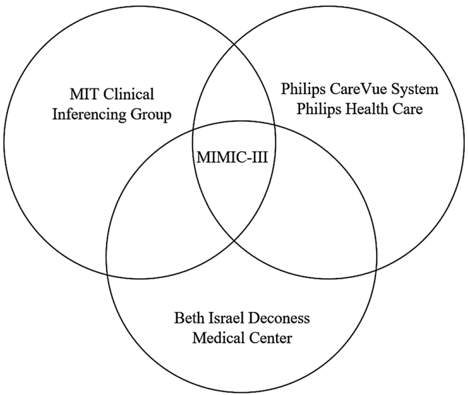
“Between 2001 and 2012, patients admitted to the intensive care units at Beth Israel Deaconess Medical Centre were examined [18].”
MethodGraph Convolution Synthetic Transformer for Chronic Kidney Disease Onset Prediction
Zhu, D., Liu, Y., Chen, W., Wang, Y., Huang, Y., Wang, X., Cai, K., & Li, B. (2023) · Lecture notes in computer science · doi:10.1007/978-3-031-46671-7_3 · Cited by 1
Zhu, Y., & Sang, Y. (2024) · International Conference on Electronic Information Engineering and Computer Communication (EIECC) · doi:10.1109/eiecc64539.2024.10929223 · Cited by 1
“By melding multi-scale convolutional networks, deep attention mechanisms, and bidirectional LSTMs, it offers a nuanced approach to interpreting complex clinical narratives [8].”
A Novel Integrated Learning Scheme for Predictive Diagnosis of Critical Care燩atient
Khope, S. R., & Elias, S. (2022) · Computers, materials & continua/Computers, materials & continua (Print) · doi:10.32604/cmc.2022.029423 · Cited by 1
Self-citationA Novel Approach for Post Recovery Comorbidity Prediction Using Knowledge Graphs Approach
Shah, D. R., Dhawan, D. A., & Nanade, A. (2022) · Advances in intelligent systems and computing · doi:10.1007/978-981-19-3590-9_31
Integrated Deep Learning Model for Predictive Diagnosis of Life-Threatening Disease Condition
Khope, S. R., & Hulle, N. B. (2024) · IEEE Pune Section International Conference (PuneCon) · doi:10.1109/punecon63413.2024.10895583
Self-citationGenerative Adversarial Networks for Longitudinal Data Imputation and Classification
Pingi, S. T. (2025) · Queensland University of Technology · doi:10.5204/thesis.eprints.258292 · Cited by 1
Machine Learning Decision Support for Elderly Healthcare Using MIMIC Dataset
Mir, A. A., Khalid, A. S., Musa, S., Fauzi, M. F. A., Razak, N. N. A., & Tang, T. B. (2025) · IEEE International Symposium in Robotics and Manufacturing Automation (ROMA) · doi:10.1109/roma66616.2025.11155742
“All experiments were conducted using Python libraries such as 143 pandas, scikit-learn and XGBoost, and run on a secure environment with 16-core CPUs and 128GB RAM, demonstrating practical feasibility for deployment [11][13].”
Metadata
- Authors
- Khope, S. R., & Elias, S.
- Affiliations
- Vellore Institute of Technology University (IN)
- Corresponding author
- Elias, Susan
- Venue
- Data Science and Engineering
- Published
- 2022-02-08
- Volume
- 7
- Issue
- 1
- Pages
- 71-86
- ISSN
- 2364-1185 (ISSN-L)
- 2364-1541
- OpenAlex
- W4210858885
- Cited by
- 17
- References
- 25
- Citations by year
- 2025: 5 · 2024: 3 · 2023: 6 · 2022: 3
- FWCI
- 1.40
- Type
- journal article
- Language
- en
- Open access
- gold
- doi.org
- Licence
- cc-by
- creativecommons.org/licenses/by/4.0 (tdm)
- creativecommons.org/licenses/by/4.0 (vor)
- Locations
- Data Science and Engineering (publishedVersion, cc-by)
- Greater South Information System
- Topics
- Physical Sciences › Computer Science › Artificial Intelligence › Machine Learning in Healthcare
- Health Sciences › Health Professions › Health Information Management › Artificial Intelligence in Healthcare
- Health Sciences › Medicine › Critical Care and Intensive Care Medicine › Sepsis Diagnosis and Treatment
- Keywords
- feature engineering, clinical outcome prediction, ICD-9 codes, artificial neural networks, k-nearest neighbors, logistic regression, intensive care unit, clinical data
About these checks
Registry, retraction, Cites and statistics results are computed, not judged, with one exception: a printed reference that no index lists is read once by a model before it counts as a citation error. Claims are extracted by a model and kept only when their quote appears verbatim in the text; each cited source is then checked, with a model’s help, for whether it says what the claim relies on. Those verdicts can be wrong — read the claim’s quote and the cited source before relying on one.
Statistics and arithmetic are recomputed, not judged.
Confidence bands are shown only for fields calibrated on our annotated test set. None is calibrated yet, so no band is shown.
What counts as a claim ›How we measure confidence ›How we check this ›
Are you an author, or do you see a problem with this page? Request a review
Data sources
Bibliographic data: Semantic Scholar, OpenAlex, Crossref.
Contains information from the Semantic Scholar Academic Graph Datasets, made available under the ODC Attribution License (ODC-BY 1.0).
Semantic Scholar’s data is described in: Kinney, R., et al. (2023). The Semantic Scholar Open Data Platform. arXiv:2301.10140.
